The things you learn when you look into your family tree

Or … the duty of a bard

This week, I thought I’d write a little bit about genealogy.  I’m not going to post any of my family trees (I have three, though they’re incomplete and slightly out of date) … I’m just going to write about the wonderful things you can learn when you do a bit of digging.

The first is this: genealogy is one of the duties of the bard.

Whether you think of a bard as a bard, or filidh, or ollamh, a bard wasn’t just a collector of tales, a memorizer of songs and poems, but they also held the responsibility to guard the family history and bloodlines.  They were scholars, doctors, law-givers, and just darned cool, and as a writer, I feel that I have some connection to that tradition, and some responsibility for the history of my family.

I’m a Celtophile, and unabashedly so (hence the interest in filidh and ollamhs), but the family I can trace is Finnish.  Yes, Marttila is a Finnish name.  You can generally tell because of the three consonants together.  That, or the double vowels (e.g. Saarinen) are pretty clear give-aways.

The larger family name in my genealogy is Wiirtanen.  There is a large Finnish community in the Sudbury area, many of them coming from the Long Lake area of town and the Pennala subdivision there.  That’s where the Wiirtanens settled.

One of my Wiirtanen relatives still lives out at Beaver Lake, a bit of a drive out of town.  He’s a trapper and owns a farm.  Other Finnish families moved into town around Lake Nepawin (Maki Avenue was named after one of them) and there have been a few books published on the Finnish roots of Sudbury.

A number of years ago, a genealogist visited me out of the blue.  I sat with him for a few hours in an afternoon and he taught me a few things about my family, which happened to be part of his family tree, which is why he looked me up.

In Finland, at the beginning of the last century (give or take a few years) families gave up their names, and took on the names of the farms or cities where they worked.

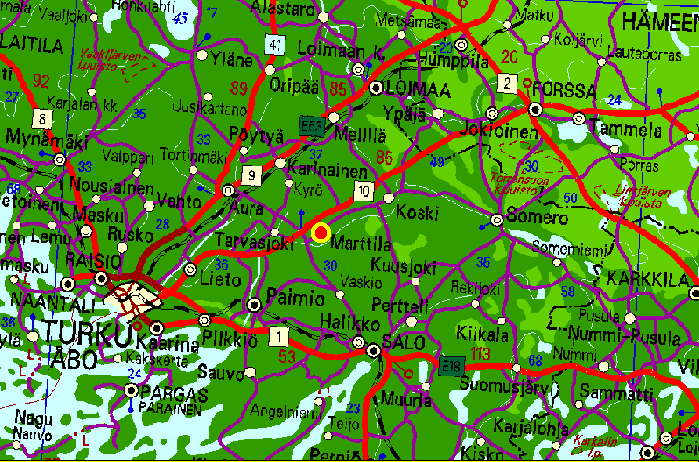
There’s a city in Finland called Marttila.  My uncle Walter and aunt Margaret visited it years ago.  Here’s a wee map and the city’s crest from their Web site:

Notice the image on the crest: It’s St. Martin of Tours cutting his cloak in half to give to a beggar.  So Marttila roughly translates to St. Martin, not a particularly Finnish icon, but at least I know where my family name comes from.

So I started keeping a few files on my family tree.

Something else I did was to look into the kalevala, the national epic poem of Finland.  It’s a creation myth, set of legends, and features magicians and the mystical sampo, which could be, among other things, an analogy for an instrument that could track the precession of the stars.

It’s no wonder I’m into the fantasy 🙂

My mother was adopted and has no interest in looking into her family, so I’m kind of stumped there, though she tells me that she was Irish, something my grandfather liked to tease her with.  So maybe there’s a reason, I’m so enamoured of all things gaelic.

Have you delved into your genealogy?  What did you discover?

The endless, stuttering, intermittent draft

As promised, I’m taking a break from worldbuilding, itself a fairly endless task, to talk about my most recent draft.

Officially, this is number six (oh gawd, will I ever be finished?) but I’ve actually been through the MS once, and now I’m editing in fits and starts between critiquing and platform-building, and working.

I’m so tired, I feel like I’m sleepwalking.  With my somnabulant history, maybe I am …

I started honing number six in January when I joined my critique group on Author Salon.  The focus, at first, was my profile, which only featured about six pages of my writing, plus a short synopsis, hook line, conflict statement, protagonist, antagonist, and other character sketches, unique world, climax and denouement.

I still haven’t got the hang of it.

In February, AS announced their first Showcase, and I submitted my bits and pieces, only to be advised that my novel was far too long to be considered.  This happened at the same time that my original blog, labbydog, was hacked.

Faced with two fairly substantial pieces of bad news, I was initially paralyzed.  As I cobbled together my online life, I tried to figure out how I was going to compress a 250,000 word novel into 110,000 words (the AS upper limit).  I sat in a stunned boggle for days trying to think of what I could cut without sacrificing the story.

When my mind stopped spinning long enough to have a coherent thought, I realized the solution was simple, and had been staring me in the face the whole time: cut the bloody thing in half, revise, and edit down from there.  It was a far less daunting task that the one I was considering, and eminently doable.

So I cut, and went through the whole thing, tweaking as I went.  My mid-point was actually a little more than half-way through the original MS and even after that first review, I was still at 150,000 words.

In March, I also posted my first 50 pages to the AS critique group.  Well it was supposed to be the first 50 pages, but mine was close to 90.  The feedback I got was great, but meant that I would have to rewrite a fair chunk of my first act.  I started thinking about how I was going to do that.

Then life got a bit crazy.  March 14 would have been my dad’s 71st birthday, followed in quick succession by the anniversary of his death and funeral in April.  I wanted the world to stop at that point, but the crazy continued with some unexpected kudos at work and a new position in May.

At that point, I was just struggling to keep up, treading water and taking big gulps of air while the waves washed over me.  I know I was overwhelmed.  I knew it even then, I just didn’t have the time to feel it.  I didn’t work on my novel for the entire month of May.

Since then, I’ve conquered the rewrite, revised 30 pages out of the first part of Initiate of Stone, and just recently returned to the critiquing world.

So I haven’t finished this strange draft yet.  I have to work through the three remaining parts of the novel and cut the words/pages to the point where IoS is a streamlined machine, within the AS word limits, and hopefully suitable for a future AS Showcase.

I also have to revise my profile (again) to try and reflect the unique angle my novel presents.  This is a challenge, because IoS is a straight up, traditional fantasy.

What this process has taught me so far:

  • Life continues to happen while you’re making other plans.  It doesn’t stop because you want or even need it to.  The good and the bad crop up at the most inconvenient times and you just have to deal, take care of yourself, and stop worrying about what everyone else thinks.
  • Balance is the thing.  Time and project management skills come to the fore when you’re under stress.  Do what you can and don’t feel guilty.  It is enough.  You are enough.  All will be well.
  • Don’t stop writing.  Even though I wasn’t working on my novel, I was still writing, critiquing, and blogging.  Return to the words every day, and they will reward you every time.
  • Have a plan, or, if the plan you have isn’t working, change it up.  You can be the most meticulously organized person in the world, and something will always happen that sets everything awry.  It’s not a failure unless you quit.  Sometimes you just have to angle into the wind a bit more to keep sailing in a straight line 🙂
  • Write what you want to write, but then you have to find a way to make the concept of your novel interesting to an agent or publisher.  I’m still working on this one.

Will let you know how it goes.

A wee side note here: I’ve started using the super-cool journal my friend Margaret gave me for Christmas.  Embossed leather cover with a nifty semi-precious stone embedded in the leather, home-made, recycled paper laced into the cover.  I even have a refill that I can lace in when I’ve used up all of these pages.

Isn’t it just the coolest writer-gift ever?  I think so.

How is your creative project going?

What I’d like to do, but can’t …

Now I know what you’re thinking.  Those are the words of a whiner, but I’m stating a fact and not trying to make excuses.  Honest.  There’s only one of me, and I don’t have a time-turner, like the one Dumbledore gave Hermione in The Prisoner of Azkaban.

Last week, I expressed my coulda-woulda-shouldas with respect to a piece of computer-based training.  What I’m talking about this week is part of the same training beast.  The virtually-delivered piece.

In my role as training coordinator, it’s not my task to deliver the training or to design it, and though I am training this week, it’s because I’ve no choice in the matter.  If I didn’t step in, the project would have stalled, possibly fatally.

Even as a trainer though, I’m a total n00b.  I’ve only been a trainer for three years, and though I enjoy it, and believe I’m good at it, I know I have a lot to learn and am far from perfect.  I’m even greener with respect to instructional design.  I only started doing that last year.

But if I can think of a better way to design and deliver training, then it must need improvement.

I have to step back a bit and explain a couple of things before I get to the meat of the post.

About a month ago, the task of organizing the training of all staff in Ontario on a new initiative was assigned to me.  The training products were given to the two consultants who agreed to deliver the training.  I had two weeks to get everything together, the training schedule, WebEx meetings, and invitations.  I didn’t have time to read, let alone critique or redesign the course material for virtual delivery.

So now we’re into week three of the WebEx sessions and I’ve just started my week of training.  Already, I’ve received reports back on how boring the session is.  It wasn’t designed with virtual delivery in mind.  On average, the sessions are running two hours, which is too long to sit in front of your computer, staring at a screen.

What I’d do for this course (if I could):

  • There is a policy bulletin for the new initiative and a Job Aid.  Though technically, this was all supposed to be a “pre-read,” I’d like to have had the time to turn it into a true pre-course assignment with some form of assessment, submitted to the trainers in advance, so they could have some indication of the group’s level of understanding of the new initiative prior to the course.
  • Start with an activity reviewing the four aspects of their job that this new initiative will change and conduct a proper debrief.
  • Have the exercises on a PowerPoint or Notebook presentation with answers on a reveal.  Use the annotate feature in WebEx to have participants complete the blank assignments (one “scribe” with group support) and debrief using the revealed answers.
  • Let the participants “play” with the online tool designed to help them implement the new initiative by assigning them control of the application through WebEx.  Alternately, this could be a post-course assignment to assist with skill transfer.

Now of course, all of this would make the session considerably longer and comfort breaks would have to be worked in, or the session broken up into smaller pieces (four 30 minute sessions would be my preference).

Why none of this could happen:

This is our busiest time of year, compounded by summer leave.  The timing of this new initiative couldn’t be worse.  As a result, we had to fight for the time to do the one-cheeked job we’re doing.

The initiative will be effective in August.  The training had to be completed before then.

There simply wasn’t time to roll this out differently given the tools and the resources we have.

This is why I often wish I was Shakti, one of the Hindu goddesses of multiple aspects and multiple arms 🙂  Then I might really be able to be in two places at once, doing two (or even three) jobs.  The word “shak” in Sanskrit means “to be able.”

Ah well, so much for dreaming 🙂

Timing is everything, they say.  Have you had a situation in which you’ve been “under the gun” with respect to training?  Were you able to pull a rabbit out of your hat or did you have to make do?  Is good enough really good enough?

That’s all from the Learning Mutt this week.

Ten things I’ve learned from giving and receiving critique

You may remember from previous posts, that I’m part of an online critique group in Author Salon.  It’s intense.  AS does not want thin-skinned writers who wither and whine, nor do they want wimpy critiquers.  They have stringent guidelines and templates to follow.  The questions to answer make you think critically, analyze, dig deep, and justify every comment.

It’s hard as hell, but it’s also teh awesome (misspelling intentional) 🙂

I’m not going to blog about finding a critique group, group dynamics, or any of that stuff.  I’m just focusing in on what I’ve learned from being on both ends of the process.

I’ll start on the giving end, and really, the way to think about a critique is that you are not just giving one, but gifting one.   I’m not saying I’m all that and a bag of chips, but if you do the job well, and put your heart and soul into it, you’re giving your absolute best to your partners.  You’re giving them a gift.  It takes me forever to do what I think is a good job, and I’m still not great at it.  I apologize at some point in every one, because ultimately, it’s just my opinion.

And away we go!

Five things I’ve learned from giving critique

  1. Be honest.  If you like what you’ve read, great, but don’t stop there.  Figure out why you like it and explain your thinking honestly to your partners.  If you don’t like something that you’ve read, that’s fine too, but you can’t leave it there.  Figure out why it bothers you and articulate those thoughts honestly to your partners.
  2. Be specific.   Rather than writing, “S/he needs to figure this out sooner,” again, explain it in detailed and concrete terms.  So, “The character you’ve written is smart and thinks on her feet (you may want to summarize an example from the piece).  You’ve placed several clues in his/her way (again detail the clues) but she’s/he’s not picking up on them.  Your protagonist needs to be at least as smart as the reader.  Have him/her connect the dots along with the reader.  It will be a more immersive/engaging experience.”
  3. Be reflective.  One thing I discovered almost immediately is that as I started analyzing the work of others I figured out a few things about my own writing.  Make notes to carry back to your own work in revision.
  4. Be consistent.  This is about bringing your A game every time.  Feeling tired/uninspired?  Write through it anyway.  The words will come just like they do when you’re writing your novel.  You can always edit out the unintelligible crap later 🙂
  5. Be better.  The more you critique, the better you get, the deeper you can go, the more articulate you can be about why a certain change will improve your partner’s work.

Five things I’ve learned from receiving critique

  1. Be grateful.  If you’ve given your best, expect that your partners have done the same.  Thank them for all their hard work.
  2. Be receptive.  You won’t like everything your partners tell you about the weaknesses in your work.  Get out of your own way and consider every point.  Then …
  3. Be selective.  You don’t have to enact every change your partners recommend.  In doing that, you’ll try to please everyone and end up pleasing no one.  But …
  4. Be critical.  If you choose not to accept the blood, sweat, and tears that is the advice of your partners, then start digging again.  Find the compelling reason that this won’t work in your novel.  Defend your decision, but don’t get defensive.  Finally …
  5. Be honest (redux).  There comes a time when all your justifications and refutations fall apart into the random collection of words that they are and you have to admit that you still have work to do.  You could see this as a defeat, but I’d rather reframe it as an epiphany.  When you finally understand what needs to be done and can see how to do it, the way forward will appear as a glowing path through the darkness.  It won’t be easy.  It never is, but if you keep the path in sight and walk it faithfully, it will lead you to a better novel.

Do you have any critiquing experiences to share?  What have you learned from them?

Like, comment share, subscribe!

Writerly Goodness, signing off.  Good writing to you all!

How the magick works

Last time on Work in progress: I told you how I came up with my idea for Tellurin’s magic system, and the dark history of the craft.

But how does it work, you ask?  We all have Robert Heinlein to thank for that.

Ever read Stranger in a Strange Land?  Excellent, then you’ll know what I mean when I say “grok.”  You might even grok it 🙂

Grokking was what Martians did.  They raised Valentine Michael Smith and taught him how to do it.  When Val eventually came to earth, he started to teach humans how to do it too.

Grokking, is not just understanding a thing, it is understanding it in every way possible, through all the senses, emotionally, intellectually, physically, and sub-atomically.  Val could grok something so completely, it would cease to exist, having achieved its greatest purpose in having been so completely understood.  Yes, extreme grokking means understanding something into non-existence.

It’s not exactly the same thing, but sourcery and magick work in a similar way.  Sourcerors manipulate a thing by understanding its nature.  They understand a thing in its molecular structure, by its DNA, though they don’t call it that, and perhaps even to its atomic structure, but no further, and this understanding works on an instinctual basis.  No sourceror ever thinks in terms of modern science.  It’s just not a part of their vocabulary.

As I wrote in last week’s post, the source is a special kind of energy, but it’s still energy, and everything in Tellurin possesses its share.

Those born with a talent are also born with the innate understanding of how to use that talent.  The Agrothe magi have attempted to subvert those talents to their own ends.  They delay the expression of latent talents through their arduous initiation process and indoctrinate their students into thinking that their powers must somehow be “unlocked.”  If left to their own devices, anyone with talent could figure out how to use it on their own.  The Agrothe just want to ensure that the talent develops in an ethical framework.  Theirs.

Georges Merle’s The Sorceress.

As a child, the first creatures Ferathainn understood were the spirits of things: grass, flowers, rocks and trees all “talked” to her.  Because of this talent, Ferathainn understands the spirits of things well enough to evoke their qualities.  She can summon them too, though Aeldred hasn’t explained that what she’s doing is summoning.  He doesn’t want her to run amok.

With people, this understanding takes the form of being able to use thought speech.  Though she does not know it, Ferathainn can also read minds and project her thoughts into the minds of others.  Aeldred, not being a skilled mind-mage, has discouraged this avenue of Ferathainn’s development to the best of his ability.

Ferathainn’s understanding of spirits is also what makes it possible for her to excel at spirit travel.

Ultimately, her understanding of spirits will enable Ferathainn to master all of the elemental powers and talents, beginning with the earth, geomancy.  Hence, Initiate of Stone.

A note on source theft, farming, or poaching

As I mentioned last week, a person’s share of source is attached to their spirit or soul.  It’s part of what makes each person what he or she is.  Because of this, the soul and source may be called at the moment of death and taken by another sourceror.  This is usually accomplished by calling the source by its name, which for most people, is their everyday name.

Clever sourcerors have adopted source names, but these can easily be discovered by an adept mind-mage and so are no guarantee of protection.

In taking another person’s source, the sourceror risks taking not only the victim’s power, but also their personality and memories.  This can lead to insanity unless the sourceror can figure out a way to filter out the undesirable bits of the victim.

Waterhouse’s The Sorceress.

So … everything Ferathainn does is magic 🙂

Next week: a worldbuilding vacation.  I’m going to write about my most recent draft of IoS and what it’s taught me.  Stay tuned.

8 Good things I’ve learned from bad computer-based training

So … we were provided this computer-based training (CBT) product to help roll out what may appear on the surface to be a fairly minor change, but turns out to be quite a complicated change that has an impact of several aspects of the work our front-line and processing staff perform.

The intent was to send the product and its accompanying Job Aid out to all staff, and let them have at.  There would, of course, be a policy brief released and online tools to help with the adjustment.

At first blush, the CBT looked great: interactive, with exercises and self-assessment tools …  That was before anyone actually tried to work through it.  Early on in the process, when it had already been decided that the CBT would be insufficient for our needs (thank goodness) I and several of my colleagues had a chance to go through the CBT.

I had no problem, but I’m tech savvy, I know how these things are generally designed, and I also play with things.  I click in apparently inappropriate places.  I muck about until I figure out how something ticks, and then I git ‘er done 🙂

The first problem was the site onto which the CBT was loaded.  It wasn’t particularly user friendly and several people couldn’t figure out whether they needed to log in, set up a new account, or reset their passwords.  The system was a little glitchy too, and offered errors when the CBT was accessed, requiring a re-log.

After I helped everyone get logged in and set up, I waited for the reviews.  This is what we discovered:

  1. Though pretty, the CBT was very much of the “clicky-clicky, bling-bling” species that Cammy Bean reviles.  Read about it on her blog.  Go on, I’ll wait.
  2. There were no clear and easily accessible instructions to inform learners what they needed to do on any given page (e.g. you have a picture of a luggage rack on the screen … and … ?).
  3. Navigation was accomplished through varied small or awkwardly-positioned cues.
  4. Exercises and tests contained no clear instructions, nor any mention of the purpose of the activity or how it would apply to the learner’s work.
  5. When working through examples, the learner can not navigate back to the scenario page and so has to write everything down and work it out by hand, or muddle through on a memory and a guess.
  6. All the assessments were self-assessments.  How could anyone determine if learning had taken place?
  7. The CBT was filled with acronyms, but no definitions.
  8. There were errors in the examples.

Turn all these negatives on their heads, and you have 8 take-aways for elearning.  See how that works?

When the CBT was given to staff, many of them were so frustrated with the experience, they stuck to (and got more out of) reading the print material.

Ultimately, the CBT was about how to get through the CBT, and the real learning was lost.

Admittedly, we don’t have the time to correct the existing CBT, or to develop a new product.  As flawed as it is, it’s what we have to use.

Next time, though, I hope the development team keeps a few things in mind:

  1. The importance of bringing subject matter experts (SMEs) who have some course design experience and technical aptitude into the fold. There are a few of us out there.  Use your networks and resources wisely!  Even if I had the time, I couldn’t redesign the CBT: I don’t have a license for the tool used to create it, or anything similar.
  2. Design for how people think.  This means keeping the end-user in mind.  It has to be a product that both your mother and your ten-year-old nephew could navigate through equally easily.  This means beta-testing on a group of your target audience and taking their criticisms seriously.
  3. Assessment is not just for the learner, it’s for team leaders and the advisors who are going to have to answer all the questions your learners have after the CBT experience.  It’s also for trainers, course designers, and IT, so they can figure out how to make a better product next time.

In the end, the CBT has to facilitate learning, support retention, and help the learner apply the knowledge when he or she returns to work.

Oh, if I were king of my little learning world 🙂  And yes, I’m a woman and I want to be king.  Got a problem with that, do ya?  I didn’t think so 😉

How have the best-laid plans of upper management and IT gone awry for you?  Did you tuck any lessons away for future application?  Have you learned good things from a bad CBT?

The Learning Mutt is signing off for another week.

Mage or magus, magi or mages?

Last time on work in progress: The dull detailing of days, weeks, months, and years in Tellurin.

As promised, here is my theory of magic in Tellurin.  It actually starts about thirty years ago with me in confirmation class …

You may think confirmation a strange place for this, but I started theorizing things that had nothing to do with Christianity.  And you know what?  I was indulged, even encouraged by my instructors, two wonderful, open-minded people.  Shout of gratitude going out to Rick Shore and Marg Flath!  For them, it was healthy to question, explore the questions, and come to your own conclusions.

One of the things I theorized about was the nature of energy, consciousness, the soul, what might be termed miracles, and what might happen after we die … to me it was all connected.

In science (incidentally one of my confirmation instructors was also my grade 9 and 10 science teacher) we were learning that matter and energy were the same thing.  We learned about the laws of thermodynamics, including: energy can never be created or destroyed, but only changes form.

So to me, it wasn’t that far a leap to think that if we, humans, were made of matter (therefore energy) that thought, the soul, and all the wonderful things that made each of us uniquely ourselves was a kind of energy.  It couldn’t be destroyed when we died, it could only change forms.

So how does this relate to Tellurin magic?  Well really this species of thought contributed to both the magic and religious systems of my world, but here’s what I drew from my theorizing about magic: it could exist, just like any other kind of energy.  It would all be a matter of trial and error to figure it out.  It would be a kind of scientific experiment …

You may remember from my post about the cosmology of Tellurin that my interpretation of the big bang was that something within the homogeneous whatever that existed before the universe (I called it the One) recognized its independence.  In that moment, everything else within the One had to become distinct.  Boom!

But in my universe, not all kinds of energy are distributed equally.  The thing that recognized its independence (what became Auraya) carried more than its fair share of a specific kind of energy, and Tellurin, the planet, bore an equivalent amount.  That’s why the world has its own spirit and consciousness.

So Tellurin is a magic-rich world, and potentially any of the beings living on or in Tellurin can access that energy if they have the talent.  Talents are another group of senses that allow their possessors to recognise source and influence or manipulate it in specific ways.

Aside from Auraya, Tellurin, and the other gods of the world, everything holds its own share of the source of all things, or, simply the source.  In the people of Tellurin, this energy is bound to the spirit or soul.  It’s part of what makes them what they are.

When the primitive Tellurin first discovered their talents and their ability to manipulate the source, they called themselves sourcerors.  They learned in communities, experimenting with their various talents and expressions of source, categorizing and naming them as they went.

Along came a man named Halthyon Morrhynd.  He was actually an eleph from Elphindar, crossed over into Tellurin through one of the Ways Between the Worlds.  Incidentally, these Ways are just another expression of the source in Tellurin, a natural phenomenon.   If worm-holes could exist and function in a stable manner without affecting the matter and energy around them, that’s what the Ways would be.

Halthyon, as I’ve mentioned in a previous post, is a bit of a megalomaniac.  In Elphindar, he’d tried to stage a coup against the anathas, or council of elders, and institute a kind of magocracy.  The eleph called source in their world the kaides esse, or the powers that be.  Sourcerors were called kaidin.

The result of Halthyon’s attempt to wrest power from the anathas was that he failed and was ostracized, or made shuriah.  The eleph were the only people in Elphindar.  Ostracism was generally a death-sentence.  Elphindar has no gods either, only the kaides esse, and those in significantly lower amounts than source in Tellurin.

Elphindar would not satisfy Halthyon’s ambitions, but once he found the Way and made it through to Tellurin, Halthyon saw this new world as a paradise.  He instantly made the connection between the source of all things, the kaides esse, and the gods of the new world.  He understood that if he could find a way to contain enough source within him, that he could transcend mortality and become a god himself.

The source existing in the things around him wouldn’t do.  He’d have to expend nearly as much source in the destruction of inanimate objects as he would receive from said destruction.  The gain would be negligible.  The people though, them he could use.

So he found the fledgling sourcerors of Tellurin and taught them.  In time, they “grew ripe” and he was able to “harvest” them by killing them and stealing the source carried with their souls.  The way to do this, was to call the deceased sourceror by name, and thus summon his soul.

Sourcerors began to take source-names, secret names to prevent Halthyon from learning the name that could call their soul and source to him, but Halthyon was skilled at telepathy, and could discover their secrets.

As he waited for some of them to ripen, other sourcerors grew powerful in their own rights, learned what he was doing to their fellows, and mimicked the practice to accrue their own stores of source.

The brothers Kane and Jareth were two of these surprising sourcerors.  Kane was as obsessed with gaining power as Halthyon, but he was also concerned that Halthyon would murder him before he could get very far, so he started to develop defences, the chief of them being binding.

His early experiments were with animals.  He bound his soul and source to a creature, and if he was killed, so the theory went, his soul and source would remain safe in the beast.  These he called familiars.  Kane was a good scientist, and decided to test his theory after sharing it with some of his fellow sourcerors.

Unfortunately, the consciousness of the animal interfered with that of the bound sourceror, and the animal hadn’t the capacity to use source, and so quickly fell prey to the predatory sourceror.

His next experiments involved people who had no noticeable talent.  These he referred to as homunculi.  Sadly the same thing happened with them as did with the animals, and these too, he discarded as a failed experiment.

Then he started playing with constructs, which he called golems.  These experiments were never wholly successful.

In the meantime, Kane’s brother Jareth, whose primary talent was geomancy, or manipulating the earth element, conducted experiments of his own.  He decided that inanimate objects would make better subjects for binding.  There would be no consciousness to interfere with the bound sourceror’s, but this would necessitate having a partner who would be able to release and restore the sourceror after the death of his or her body.

Jareth’s experiment was much more successful than Kane’s and was widely adopted, even by Kane himself, but no solution was perfect.

Sourcerors like Halthyon and Kane, after killing another sourceror, would search out the partner, and torture them until they revealed the secret of unbinding their victim.  If the partner was stubborn enough, or faithful enough, to keep the secret, then they could simply be killed.  Although the murderer would never benefit from the source of their victims this way, their victim would forever remain trapped in whatever object they’d bound themselves to.

This is eventually what happened to Jareth.  Halthyon slew him in sourcerous combat and went in search of his partner.  Kane got to her first.  Laleina was not only Jareth’s binding partner, but they were also lovers, a relationship that Kane always envied.

Laleina wasn’t cooperative and would not divulge Jareth’s secrets.  Kane knew, to his regret, that he could not keep her alive.  Halthyon would eventually come calling and Kane wasn’t ready to face the eleph.  In a twisted bit of experimentation, Kane bound Laleina’s soul and source to one of his failed golems.  He’d noticed that metal tended to dampen the effect of source.

And so Laleina was trapped in the thing that would eventually become the Machine.

The sourcerous world continued along the same violent lines for centuries, but Auremon eventually decided that he couldn’t let things go on this way.

His idea was to voluntarily surrender his godhood, and his god’s share of source, to Tellurin, hoping that more source in the world would allow Tellurin to even the playing field among the sourcerors, and keep the power-hungry ones from victimizing the rest.

It didn’t work out as well as he thought.  Too close to one of the Ways Between the Worlds, he tore it open and half the population of Elphindar was sucked into Tellurin before the Way could be repaired by Auraya.  The sourcerors didn’t behave any differently, and Auremon had to concede his failure.

The only thing he could think to do, was to teach young sourcerors how to use their powers responsibly.  So he set himself up as a sage in a mountainous island off the western coast of the main continent.  Auraya created a great castle for him there, and eventually all sourcerors found their way to Auremsart.

Auremon taught ethics more than anything else.  It was the sourcerors themselves who thought that if they changed the names of things, that they could change the way people behaved more effectively.  So source became magick, sourcerors became magi, and they instituted a rigorous initiation process that would so instil Auremon’s ethical code into their students that there would be no risk of any of them becoming monsters.  They called their new discipline Agrothe, the followers of the code, in the old language of the land.

They policed themselves too, and started setting up schools of magick in other cities.  Business was booming.  And then Yllel came in disguise and killed his father.  Auremsart crumbled, became the Spire, and two kindly elementals from Elphindar resurrected Auremon and bound his spirit to the stone that was all that remained of his earthly home.

How the Agrothe functions in Tellurin at the time of the novel:

  • As soon as the prospect’s talent begins to manifest, training begins.  This can be anywhere between five and thirteen suns of age.  The prospect becomes an aspirant.
  • This period is one of intense theoretical and ethical training, highly structured, lasting thirteen suns. This phase of training does not guarantee initiation.  If evidence of cruelty or insanity is detected by the Master, the aspirant is taken to a mind-mage, and their talent crippled.
  • The aspirant is initiated.  This phase of the training introduces the initiate to their talent(s) in a gradual, disciplined fashion, and also lasts thirteen suns.
  • The initiate is apprenticed, gains some autonomy and is allowed to experiment in a limited fashion.
  • After thirteen more years, the apprentice could become a master in his or her own right.  If further training is deemed necessary, an interim period of guided practice could be instituted.  The mage operated independently, but under the watchful eye of their master.  This period could also last thirteen suns.
  • At any time, if the student decides, they can withdraw from training, once more having their talent crippled so that it cannot be used in an unauthorized or unethical fashion.
  • This is why most women, wanting a family and life outside of the Agrothe, never make it to initiation.

Aeldred sensed Ferathainn’s potential at the eleph ceremony of Shir’Authe, when she was only a day old and newly abandoned in Hartsgrove.  Her talent was prodigious and he began her training when she was four suns old.

Most aspirants only evidence one or two talents, the rest developing with age and experience.  Most full-fledged magi might have five talents at their disposal, but it will be the one or two that showed themselves first that will be the mage’s primary talents.

Ferathainn possesses aliopathy, or the ability to speak to the spirits of things, which in turn feeds into her talent at evocation and summoning.  She is uncommonly talented in mind magick, able to communicate through thought speech with those who do not share the talent, and can travel in spirit with ease.

Aspirants are not allowed to use their talents prior to initiation, but Aeldred does not want to lose Ferathainn as a student, so he allows the girl latitude.  Besides, mind-magick is not one of his stronger talents, and he cannot prevent her from doing what comes naturally to her.

He does not want to call one of his Agrothe brothers in for fear that Fer will be taken away from him.  Further, he fears reprimand for his unorthodox training methods.  For similar reasons, he has not prevented Ferathainn from becoming betrothed or married.  He feels that if anyone can balance a life of magick and domesticity, it will be Ferathiann.

He hasn’t explained much of this to Ferathainn.  He hasn’t even explained her talents to her.  In truth, he’s a little afraid of what she might become, and that his lenience may lead her to the forbidden ways of sourcery.

She will be the first Agrotha initiated in two hundred suns.  That’s too great a prize for Aeldred to resist.

Next week: Everything little thing she does is magick!

Have a great weekend everyone!
Learning about learning coordination

There’s no guidebook or manual for what I do.  There’s no course that can teach me how to foresee the rough beast that slouches toward me, defend against it, or turn it away.

My title is training coordinator, and the main thrust of my job is to plan the year’s training, and try to keep everything within budget.  Along with that came a whole set of tasks that I was neither familiar nor comfortable with.

Still, I learned, I dealt, and I made the best of it.

My first big test was to plan the year’s training.  The skeleton was there, but surgery was required.  A titanium joint here, a transplanted bone there, the odd amputation and prosthesis, and voila: a training plan.  Call me Frankenstein.

Then I had to cost it all out given a reduced budget.

I did well though, made it through my first all-day meeting via conference call … for a moment there, I thought I understood what my job was all about.

I think I have to have another look at my job description.  There must be a clause in there somewhere that says “and all other duties as required.”  Or maybe the key phrase is “must tolerate ambiguity.”

I can do most of what’s been asked of me.  I can make pretty tables and Excel worksheets.  I can write proposals, and while my manager rewrites most of what I submit, that’s part of his job.  I haven’t quite learned to cater to my new audience yet.  Give me a defined task, and I’ll make it happen.  It’s all the little stuff that I wasn’t expecting that’s getting to me.  It’s all the chaos.  For a creative person, I don’t do chaos well …

It’s all the last-minute training that no one knows about until a week before it has to be delivered.  Add to that the reassignment of the training team to other duties (so no one to deliver the training) and the necessity of training nearly all the processing staff in the province, and you have a narsty beast indeed.

Though there’s a whole slew of other prioritized work that I need to get done, I’m stuck in scheduling hell.  Nearly 600 staff over 40 sessions, plus independent study groups.  My head spun with that alone, but then I was asked to co-facilitate 6 of the sessions.  Hey, I’m a trainer.  It’s what I did for 3 years.  I can hack it.

And then …  I was asked to do the invitations for all the sessions, and set up the sessions in WebEx because the trainers we recruited weren’t familiar with the technology.  It wasn’t what they signed up for, which is understandable.  They have their own overflowing workloads to deal with too.  Plus, each set of invitations I sent out returned half a dozen changes to the schedule. That is a lot of work for one person.  And it’s not over yet.

Once again, I’m managing.  I’m making it happen.  I’ve even made some suggestions in the event something like this happens in the future (which I think is inevitable).

Regardless what work they may have been assigned to, the best people to handle training is the training team.  They know the technology.  They’re experienced trainers.  They can set up their own sessions and create and send out their own invitations. If I was able to work with them, this training would have gone off without a hitch.  Well there’s still the schedule to consider, but I think that might be a problem under any circumstances (more on this in a moment).

With a team of 6, we could have rotated them through the sessions, so they still could have dedicated most of their time to their reassigned duties, the work would have been distributed, and everyone would have gotten what they needed to out of the deal … with a little compromise.

Failing that plan of action, we have to ensure that anyone recruited to deliver training will be able to fulfill all the duties that the training entails, such as setting up WebEx sessions and doing their own invitations.

I’ve figured out what to do about the schedule too.  Now this was my fault, because I didn’t think of asking for some key information that it turned out I needed.  Another learning experience.  That too, is on the books for “next time.”

For now, things are slowly starting to level out.  It’s still chaos, but it’s an organized kind of chaos.  The rough and slouching beast sits beside my desk, growing only occasionally, and I think we’ll all come out of this intact.  

This may sound like a blog-of-complaint, but I’m trying to keep this as a statement of facts rather than an indictment.  I’ll be fine.  These are just growing pains.  I’m essentially optimistic.  This has just been a heck of a couple of weeks.  It’s hard not to be overwhelmed when you’re … well, overwhelmed.

Had a trial by fire?  What did your rough beast look like?  Were you able to figure out a way to make things work?  Success stories welcome 🙂

I’m the Learning Mutt, circling three times and curling up for a nice nap.

Some of my favourite books on the craft

Several months ago, I read a post called “Confessions of a Craft Book Junkie.”  I had no choice but to comment, because reading books on the craft of writing is an addiction for me.  I’m always buying more!

I have no idea what brought this issue up for me again, but having thought of it, I’ve decided to share some of my favourite craft books with you, and may you reap their myriad benefits! I don’t care if you get them as ebooks, or from a used book shop.  Just get ‘em 🙂

In the beginning …

There was Natalie GoldbergWriting Down the Bones and Wild Mind were the first two books I read about writing, and they’ve stuck with me through the years.  Goldberg espouses a philosophy of “first thoughts.”  Writing in your journal first thing when you wake up.  Sound like morning pages to you?

Goldberg introduced me to free-writing, and weaves in wonderful exercises for journal writing with Buddhist philosophy.  Monkey mind and wild mind is a concept I come back to again and again.  Monkey mind is the nattering, distracted place in our heads we occupy most of the time. 

Wild mind … well, draw as big a circle as you can on a piece of paper.  Put a wee speck of a dot in the middle of it.  The dot is monkey mind.  The rest of the circle—you guessed it—that’s wild mind, the cosmic consciousness that will endow your writing with greatness.

The key is to let go.  Don’t worry.  Don’t pin all your hopes on the greatness you might achieve.  Just be in the moment and do it.

Word after word

Heather Sellers two books: Page After Page and Chapter After Chapter really changed my writing game.  It was time for some tough love, and Sellers delivered.  She was the first author I read who asked the question: do you want to be a writer, or are you a writer?  She made the distinction very clear.

Wanting to be a writer means that you’re letting things get in the way, making excuses, because the phrase is always followed by the word “but.”

If you are a writer, you write.  You write every day.  You’re dedicated to your craft and you don’t let excuses get in the way.

Sellers also writes about her struggles, how the disapproval of peers and professors affected her, how relationships, good and bad, can influence your work, and how serious life incidents like car crashes and disease can change things forever.

In the end, you can only keep writing, word after word, page after page, and chapter after chapter 🙂

The Maass Oeuvre

Donald Maass is an industry expert and he turned his expertise into several wonderful books.

His first, The Career Novelist, delved into the changing face of the publishing industry.  No longer the land of monster advances, runaway auctions, and multi-book contracts, Maass discussed the kinds of writers, the kinds of agents, the kinds of editors, and publishers that were emerging, how they might survive the new era, and he offered a lot of practical advice about the mathematics of publishing (what do the numbers mean and why should I care?).

In the current market, this book has lost some of its relevance, but I would argue that it is still an important read.  Understanding the changes that led to the current state of publishing offers the reading writer insight.  Learning from history, we hope not to repeat it.

Writing the Breakout Novel gets more into the mechanics of how to write a damn good novel.  Using his personal experience and that of some of his well-known clients, Maass explains what agents and publishers are looking for, and gives the reader tools to achieve their goals.

The Fire in Fiction is more of the same, but deeper.  Maass really asks the writer to dig deep in this one and offers exercises to deepen your understanding of exactly what it is you’re doing.  Analysis.  Critical thinking.  If you’re willing to work for it, Maass tells you how to write a novel that will WOW.

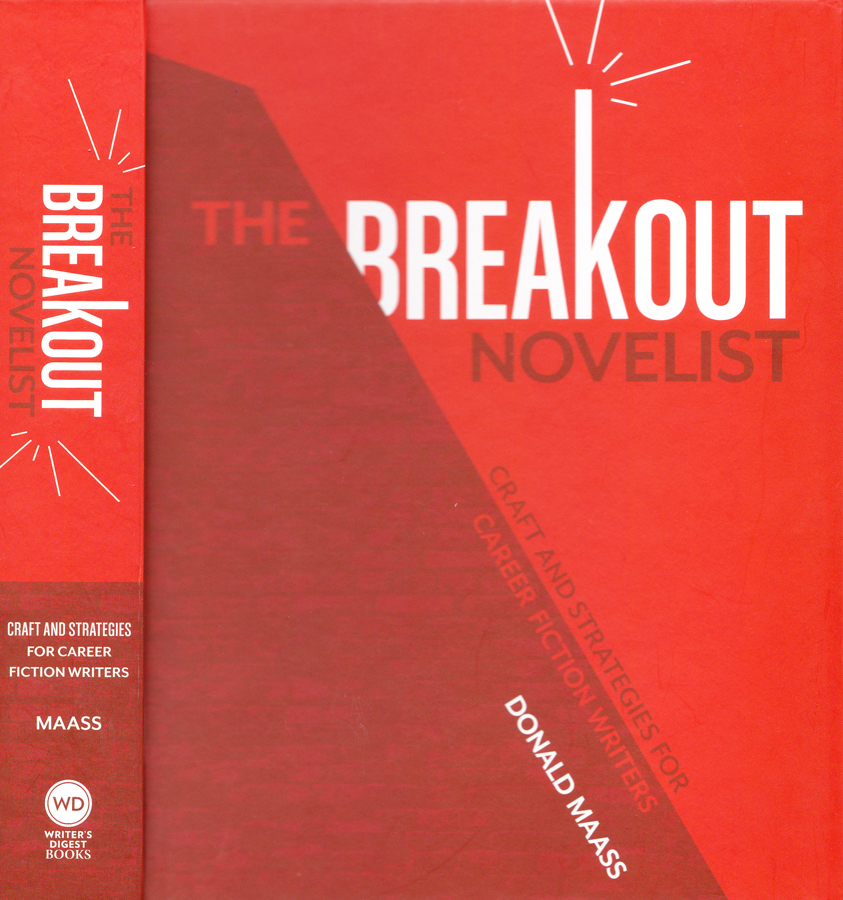
Finally, The Breakout Novelist, Maass’s most recent publication, is more of a workbook and reference than some of his other books.  It combines the best of Writing the Breakout Novel and The Fire in Fiction with extra exercises.  If you’re having trouble with a particular aspect of your novel, flip to that section and start working through the exercises.

Obviously, I’m a fan.

I’ll have more of these coming in future months.  I just thought I’d start with what I think are the best of the best 🙂

What are some of the craft books that you value and why?  How did they speak to you?  And as always, like, comment, share, subscribe!

World info, or the boring stuff that worldbuilding sometimes entails

Ok, so now that I’ve announced that I’m going to bore you all to death, you can all run away and do something fun with your Friday nights …

Last time, on WIP (before we were so rudely interrupted by the outage): The history be done!  For now.  You never know, I may have to go back a write a novel about the past of Tellurin someday …

As I’ve mentioned often, I’m a pantser.  I start with an idea, I write though the first draft, then I go back and start playing.  I do character sketches first, then history, then I start getting into the systems.  This post is about how the world works.

In reality, I know that a world like this probably can’t exist.  It’s too convenient.  Everything lines up exactly.  But this is a fantasy people.  And these are the rules as I’ve made them.

Tellurin has:

1 sun, very similar to earth’s sun, a young ‘un.

1 sunspan (or sun) = 364 dayspans, or days (exactly 13 moonspans of 28 days a piece)

A day is 24 hours, an hour is 60 minutes, a minute is 60 seconds … Gotta have something familiar!

1 moon, large enough to have the thinnest of atmospheres, completely covered in ice.  Looks blue because of the reflected light from Tellurin.

1 moonspan (or moon) = 28 days

There are 13 moons in a sun and they are called:

Isto, Sein, Terza, Quade, Cinquo, Sexta, Septo, Octa, Ninte, Dente, Isten, Seinen, and Terzen

The seasons are:

Shoudranya, the season of spring forth (most people don’t use the old names—they’re considered “stuffy”) comprised of Isto, Sein, and Terza

Zaidranya, the season of the bright sun comprised of Quade, Cinquo, and Sexta

Mardranya, the season of leaf fall comprised of Septo, Octo, and Ninte

Vedranya, the season of storms comprised of Dente, Isten, Seinen, and Terzen

And here’s where my paganish leanings enter the picture.

The sun begins in Shoudranya when the rains stop and the growing things begin to spring forth again.

On the first day of Isto, the festival of Kiestaya the awakening is celebrated.  Imbolc-like.

On the first day of Terza, the festival of Anestaya, the engendering or sowing is celebrated.  Day and night are equal.  Somewhere between the vernal equinox and Beltaine.

On the first day of Cinquo, the festival of Huostaya, the early harvest, is celebrated.  The longest day.  Summer solstice and Lunassadh-like.

On the first day of Septo, the festival of Uistaya the second harvest is celebrated.  Day and night are once again equal.  Autumnal equinox and Octoberfest-like.

On the first day of Ninte, the festival of Sestaya the final harvest is celebrated.  This is when the final slaughter is accomplished.  Samhain-like.

Vestaya or the closing, the only moveable festival, is observed on the first full day of storms.  Occasionally it can even occur before the final harvest.  Remembrance day-like.

The last festival of the year is celebrated on the first day of Seinen: Reshtaya the turning.  The longest night, though no one living can tell with the persistent cloud cover of Vedranya overhead.  Winter solstice-like.

Ferathainn is born on Sestaya.

Each moon is comprised of four seven-day weeks:

Selneth, the full week; Gebbeth, the waning week; Kiereth, the dark week; and Ebbeth, the waxing week.

The days of the week:

Sunday, Moonday, Stoneday, Windday, Waterday, Fireday, Spiritday

The older names for the days of the week:

Zaides, Azures, Telles, Zephes, Auges, Flames, Spirites

A date might be read Kiereth Zaides of Cinquo (Sunday of the third week of the fifth moon).  This also might be more commonly called Dark Sunday of Cinquo.  Most people no longer remember the old names or bother to keep that knowledge alive.

This was one of the things that I had to know about my world.  No one ever states or writes a date in the novels.  This is just for me to be able to keep things straight.  I even have a document in Word that I’ve set up as a calendar, so I can keep track of when things are happening.

I actually enjoy stuff like this.  I’m that much of a geek.

More systems next week (I can hear the screams already), but these systems will be more interesting.  I’ll get into the magic system, and this will be a little bit more like a story than a list of stuff 🙂  If there’s room, I might even fit in something about the religions of Tellurin.

And if I can get my brilliant man to fix my scanner, I might even share my rudimentary map of Tellurin.

I plan a little worldbuiling holiday too.  I have things to share about my current draft and the bizarre way it’s panning out.

So there’s good stuff ahead on WIP.  Stay tuned.

Writerly Goodness signing off.  Have a fan-tabulous weekend!