WorldCon 2016: Is cyberpunk still a thing?

Disclaimer: I am not perfect and neither are my notes. If you notice anything that requires clarification or correction, please email me at melanie (dot) marttila (at) gmail (dot) com and I will fix things post-hasty.

Panellists: Cory Doctorow (moderator), Matt Jacobson, Patrick Nielsen Hayden, James Patrick Kelly, Pat Cadigan

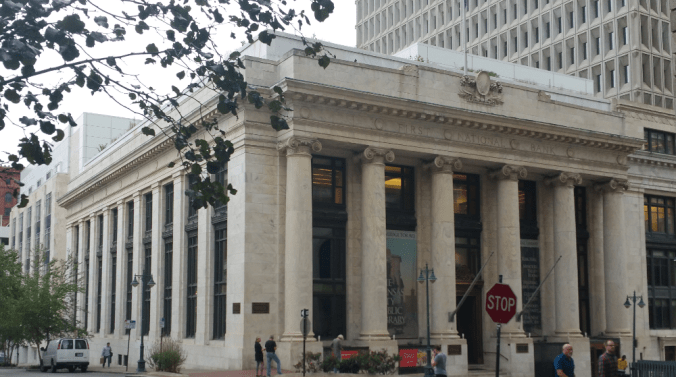
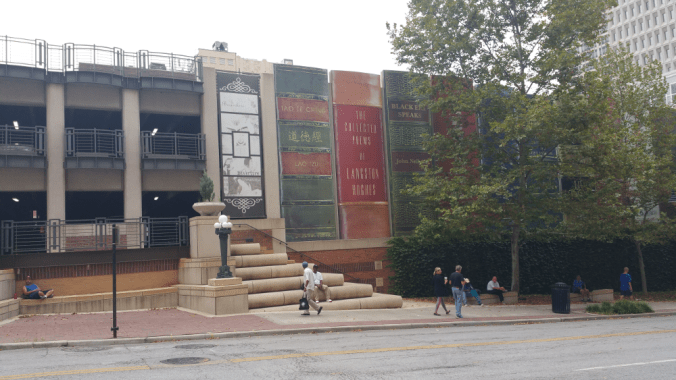
thecoolestparkinggarageevar

Joined in progress . . .

PNH: Cyberpunk is a course correction.

MJ: I think of cyberpunk in terms of the Max Headroom tagline: fifteen minutes into the future.

CD: The first generation/layer was written by people who were not computer professionals. The second focused on current technology and near future extrapolation. The third layer is an aesthetic.

PC: The first generation of cyberpunk writers was the first to grow up with mass media (television, radio, etc.). The Vietnam War was the first to be televised. They wrote about the influence of media and extrapolated what the influence of mass media might be in the future.

CD: In the 1980’s, money had a huge influence on the political process.

PNH: An aesthetic is a number of people who have similar intuitions about the world. It’s deliberately referencial.

JPK: Bruce Stirling tried to “end” cyberpunk, but the readers weren’t listening.

MJ: A thing would be whatever catches people’s attention.

PC: Cordwainer Smith and Alfred Bester were influences on cyberpunk.

PNH: Science fiction is one big conversation.

MJ: Cyberpunk has been taken over by tech noir. Shows like Mr. Robot and Person of Interest.

JPK: Cyberpunk emerged pre-Apple. For most users, a computer is indistinguishable from magic.

CD: The whole point of Mr. Robot is to strongly distinguish technology from magic.

MJ: Pokemon Go demonstrates just how easy it is to know where anyone is, anywhere in the world.

CD: Actually, your device uses the statistics from the game to triangulate your location and reports the information to Nintendo. That’s a lot more scary.

PC: In the early days of the internet, there were the BBS’s, the bulletin board services. Genie—the conversation never ends. Now mass media is to ambient, we’ve stopped seeing it. Information (and misinformation) is ubiquitous.

PNH: Science fiction has been doing the virtual presence thing since 1929 with the fanzines.

MJ: Cyberpunk intersects with maker culture. High tech is repurposed.

CD: The liminal moment was a queer programmer, Jennings. Cyberpunk concerns itself with the frontier of self and interrelatedness.

And that was time.

Next week: science fiction as epic.

And, of course, in the meantime, I’ll be curating Tipsday and Thoughty Thursday for you.

Be well. Stay safe. Love unconditionally.

That is all.

Thoughty Thursday: Things that made me go hmmmm on the interwebz, Oct 2-8, 2016

Thoughty Thursday’s all over the map!

The Vintage News reports that Amelia Earhart’s remains may have been found on an island.

Gabriel Samuels reports on a piece of engraved wood that suggests a Persian taught math in Japan 1,000 years ago. The Independent

Medievalists.net compiled this comprehensive list of online resources for researching the Black Death.

Medievalists.net shared this entertaining piece on Viking nicknames. My favourite? Eystein Foul-Fart 🙂

And, for the hat trick, Medievalists.net explains why cats were hated in medieval Europe.

An oldie from Barbara G. Walker of Church and State (2008!): local wise women who carried on ancient traditions were exterminated by Christianity.

Margaret Rhodes invites us to obsess over this infographic about the history of alternative music. Wired

Jonathan Jones looks at the legacy of painter Artemesia Gentileschi. The Guardian

Azeen Ghorayshi reports that transgender children as young as three are getting the help they need. Buzzfeed

Katrina Schwartz wonders why we’re so obsessed with teaching kids cursive handwriting. Mind/Shift

America is obsessed with happiness and it’s making everyone miserable. Ruth Whippman for Vox.

What it’s like to have “high-functioning” anxiety. The Mighty


Baby Boomers may be more susceptible to treatment-resistant depression. Anna Gorman for CNN.

Myke Cole writes about PTSD. This is from a few years ago (2013) but it’s still relevant.

Dominik Parisien shares his experience with Alice in Wonderland Syndrome. Uncanny

Justin Gammill lists ten things to keep in mind when loving a highly creative person. I heart intelligence

Paul Stamits talks about how fantastic fungi can save the world.


Bees are demonstrating problem-solving and transmission of knowledge. Daily Science

Scientists declare the dawn of the human-influenced epoch. Damian Carrington for The Guardian.

AI and deep machine learning are changing your life. Roger Parloff for Fortune.

What Emma Thompson learned from spending a week in the arctic. Time

Beware of dog, indeed. Upshout

Adieu until Saturday.

Be well until then 🙂

Thoughty Thursday

Tipsday: Writerly Goodness found on the interwebz, Oct 2-8, 2016

This week was just yummy 🙂

The Wordstock Sudbury 2016 schedule is up 🙂

Prism International interviews George Elliott Clarke, one of our Wordstock guests of honour.

Your #NaNoWriMo prep posts for the week:

Nina Amir guest posts on K.M. Weiland’s Helping writers become authors: how to get up close with your characters.

Chris Saylor guest posts on Marcy Kennedy’s blog: how to punctuate dialogue.

Roz Morris shares her insights on how to write emotions. Nail your novel

Donald Maass looks at four kinds of pace. Writer Unboxed

Joanna Penn: how to find and capture ideas for your novel. The Creative Penn

Janice Hardy guest posts on Writer Unboxed: a ten step guide to plotting a practice novel.

Therese Walsh explores dehumanization in fiction using one of my favourite movies, The Shawshank Redemption. Writer Unboxed

Cathy Yardley: just say yes. Writer Unboxed

Chris Winkle thinks the surprise kiss must go. Why? It’s a matter of consent. Mythcreants

Chuck Wendig offers some good writing (and life) advice: control what you can control. Terribleminds

Later in the week, he shares ten quick story tips to use or discard at your leisure.

Kameron Hurley shares her experience: five years a novelist.

Sarah Waters shares her ten rules of writing fiction. Aerogramme Writing Studio

Last Sunday I spent the day online in a short fiction intensive with Mary Robinette Kowal (!) Here’s one of the resources she shared on critiquing:


Carly Watters offers ten ways to personalize your query letter.

Kristen Lamb: what the dreaded synopsis reveals about our writing.

Anna Davis: how to prepare your submission package. Curtis Brown Creative

Awards news!

Ursula K. Le Guin has stopped writing fiction, but we need her more than ever. Zoë Carpenter for The Nation.

When Steven Musil reported that Amazon was cracking down on incentivized reviews, everyone panicked, until it was clarified that this policy change would not apply to ARCs provided for book review purposes. cnet

Sarah Gailey: why we write about witches. Tor.com

Lisa Rosman: what The Girl on the Train is really about. Signature Reads

Angelica Jade Bastièn says the price of fandom can be too high for women of colour. New Republic

Julia Alexander examines sexism in television in the microcosm of Adult Swim. Polygon

Shane Parrish: what you read changes your brain. Medium

If you can correctly pronounce every word in this poem, you speak English better than 90% of English speakers in the world. I must admit, I flubbed two or three <blushes>. The Poke

Ephrat Livni for Quartz: a linguist’s love letter to profanity and why it’s okay to swear in front of kids.

Dark Horse Comics will be producing the next two seasons of The Legend of Korra in print. Rob Bricken for i09. Moar Korra! Eeeeee!

Evan Narcisse talks to Greg Rucka about the reaction to Wonder Woman’s canon bisexuality. i09

Did you see the premiere of Westworld last Sunday? Here are a few pieces about it.

Michael Bennett Cohn looks at Westworld through the lens of the golem story. The Forward

Can Westworld do for science fiction what Game of Thrones did for fantasy? Charlie Jane Anders for Wired.

I’m watching and enjoying it. Phil, not so much, but then, he did see the original movie (which I haven’t) and he just doesn’t see how the writers can turn it into a series and so he’s closed to the possibilities.

Evan Narcisse explores how Luke Cage uses blackness for i09.

Netflix provides a release date (and teaser) for Iron Fist: March 17, 2017.

Outlander casts Marsali and adult Fergus. Entertainment Weekly

The Doctor Who Christmas special features superheroes (!) plus a wee teaser. Katharine Trendacosta for i09.

See you Thursday!

Tipsday

WorldCon 2016: What’s new in medicine

Disclaimer: I am not perfect and neither are my notes. If you notice anything that requires clarification or correction, please email me at melanie (dot) marttila (at) gmail (dot) com and I will fix things post-hasty.

Panellists: Dr. Brad Aiken, H.G. Stratmann, John Strickland Jr. (moderator), Dr. David Kushner

Research into slowing down the aging process:

  • Telomeres – the caps on the end of a chromosome that include instructions for replication
  • Mitochondria – have a role in regulating the aging process

There are currently 19 different areas of research. Some focus on the mechanism and some focus on the effects and process of aging.

Metformin is a drug used to treat type II diabetes. Some studies have shown that type II diabetics live longer.

Medicine in general is helping people live longer. The oldest documented human lived to be 122 years old.

We’re thinking in terms of health span versus life span. Quality of life is more important than simply living longer.

Aging is a complex process. We don’t fully understand it yet.

NASA has contributed data from their astronauts. The relief of gravity accelerates some aspects of aging.

Space medicine focuses on a small number of subjects, astronauts. Many of the changes that result from space travel reverse once the astronaut is exposed to gravity again.

There have been changes in the eyes. Vision can be negatively affected.

Artificial organs can be printed using 3D printers/matrix machines. An artificial heart has been created this way.

In neurosurgery, they’ve 3D printed skull fragments and in ortho, they’ve printed knee replacements.

In cancer research, they’re customizing treatments and addressing immunodeficiencies by individual genetic profiles.

Genetic medicine means there is no single treatment for a disease. Each treatment is customized to each patient.

In cardiology, they’re making stents that are absorbed into the body. Xenotransplantation, transplanting a pig’s heart into a human body, continues to be pursued.

Crisper is being used to edit genes.

Defibrillators and pace makers represent mechanical human enhancement.

In cases of patients who’ve suffered strokes or brain injury, doctors and researchers are using direct electrical stimulation and fMRI to prompt the brain to “rewire” itself.

Using a combination of a robotic exoskeleton and a brain/computer interface, like the Oculus Rift, paraplegic patients have regained some muscle control. They can’t walk, but they have a much higher quality of life because they’ve been able to overcome incontinence. And they have hope because they can move their limbs, even if it’s only a little bit. [Mel’s note: I actually shared an article on this a few weeks ago on Thoughty Thursday 🙂 ]

In both cases the brain is bypassing the area of damage.

Sensory loss attributable to peripheral nerve issues is still difficult to treat.

Artificial limbs and prosthetics are continuing to improve. Many now use neural interfaces to allow the brain to control the limb.

Spinal cord repair with respect to vertebrae (3D printing again) and discs is also making progress.

viewfrommyhotel

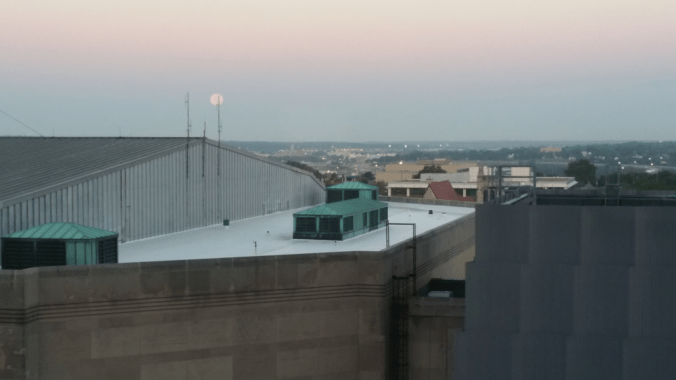
The view from my hotel room.

And that was time.

Unfortunately, I wasn’t close enough to see who was speaking at any given time, so I haven’t identified who was saying what.

Next week: Is cyberpunk still a thing?

And, of course, Tipsday and Thoughty Thursday will be making their regularly scheduled appearances.

See you on the interwebz!

Thoughty Thursday: Things that made me go hmmmm on the interwebz, Sept 25-Oct 1, 2016

I’m taking it easy on your mental popcorn, this week 🙂

Katie Hafner reports on the epidemic of loneliness among the elderly. The New York Times

Human trafficking is a hidden problem in north-eastern Ontario (and everywhere, unfortunately). CBC

Nora Caplan-Bricker reveals the risks of sexual assault on long haul flights. Slate

Marissa Fessenden shares how women in the early 1900s dealt with harassment. The Smithsonian

Library worker defends free speech and is arrested for it. The Bill of Right Defense Committee

Ronald W. Pies discusses the astonishing non-epidemic of mental illness. Psychiatric Times

Ivan Dikov reports on a shrine to Demeter and Persephone discovered in Bulgaria. Brewminate

Ria Misra reports on SpaceX’s major milestone en route to Mars. Gizmodo

Phil Plait shares Judy Schmidt’s astrophotography. Slate. Later in the week Phil shares the first photograph ever taken of the sun.

Maddie Stone shares the last image Rosetta captured before it crashed. Gizmodo

Fiona MacDonald reports on a 25 year old PhD student, Shu Lam’s, solution to antibiotic-resistant infections. Science Alert

Julien d’Hoy reports on how scientists have traced society’s myths to their primordial origins. Scientific American

The Vintage News shares the discovery of Britain’s Atlantis.

Medievalists.net lists the top ten scandals of the Middle Ages. Story fodder, anyone? 😉

Uninhabitable 1887 Queen Anne house is restored to its former glory. Laura Caseley for Little things.

Here’s a lovely local piece on NISA’s annual art show. South Side Story

Sad and Useless shares a Twitter stream on how God created some animals. Lolz aplenty.

Two guinea pigs discuss everything pumpkin spice.


Teddy Bear the porcupine’s Hallowe’en feast. He sounds like Woodstock from the Peanuts 🙂


Sheila Carabine releases her solo album 🙂 Here’s one of her songs: The Oak and the Maple.


Hope you enjoyed this week’s offerings.

See you on Saturday!

Thoughty Thursday

Tipsday: Writerly Goodness found on the interwebz, Sept 25-Oct 1, 2016

Yup. Lots of informal writerly learnings for you this week. LOTS!

K.M. Weiland answers reader questions about scenes versus chapters. Helping writers become authors. Later in the week, Kate invites Wordplayer, Usvaldo de Leon, Jr., to share his thoughts on setting up the potential for change in character arcs.

Lisa Cron guest posts on Writers Helping Writers: how your character’s misbelief drives the plot. Later in the week, Angela Ackerman provides this amazing list of resources for writers.

Karen Woodward explores C.S. Lewis’s writing advice.

Jo Eberhardt shares her lessons learned from watching Supernatural. Writer Unboxed

Kristen Lamb shows how Girl on the Train demonstrates the two elements that all great stories share.

Barbara O’Neal responds to the Merritt Tierce article I shared last week: money and the writer. Writer Unboxed

Joanna Penn interviews Toby Neal on The Creative Penn podcast.


Janice Hardy guest posts on Writers in the Storm: five reasons your revisions aren’t working.

Erika Robuck has a message for all of us about remembering why we started writing. Writer Unboxed

Steven Pressfield digs deeper into the reasons he writes.

Jami Gold explores how to strengthen your stakes. It’s not always about going big.

Veronica Sicoe discusses story world design and choosing the right time period.

Oren Ashkenazi lists six ways flight changes a fantasy setting. Mythcreants

Bonnie Randall guest posts on Janice Hardy’s Fiction University: on balance versus burn-out.

It’s NaNoWriMo prep season! Joe Bunting shares ten catalysts that will help you win NaNoWriMo. The Write Practice

Catherine McKenzie unpacks the issue of audience limiting covers for books by women authors. Writer Unboxed

More fallout from the Lionel Shriver keynote:

Stephanie Saul reports on how campuses are teaching freshmen about cultural sensitivity and microaggression. The New York Times. This was the kind of thing that Janet Reid ranted about last week.

Liz Dwyer closes the diversity gap in young adult literature. Take part

Tshaka Armstrong discusses Luke Cage, Black Panther, and why superheroes of colour matter. Rotten Tomatoes

Jenny Kay Dupuis shares her grandmother’s residential school story in honour of Orange Shirt Day. CBC

Heidi Ulrichsen interviews Danielle Daniel about her new memoir. Sudbury.com. Later in the week, Danielle was interviewed on CBC Sudbury’s Morning North.

Carl Slaughter of File 770 interviews Kelly Robson.

Haralambi Markov reviews Charlotte Ashley’s body of short fiction. Tor.com

Fran Wilde’s characters aren’t defined by their disabilities. Natalie Zutter for Tor.com.

PW Radio interviews Nisi Shawl on her novel, Everfair, and Writing the Other.

Rachel Cordasco reflects on the Three Body trilogy. Tor.com

Margaret Atwood writes about re-envisioning Shakespeare’s The Tempest in her novel, Hag-Seed. The Guardian

Laura Miller muses on the haunting of Shirley Jackson. Literary Hub

Michelle Fazekas and Tara Butters, the showrunners behind Marvel’s Agent Carter, sell series ideas to various networks, including a series based on Wesley Chu’s Tao series. Deadline

Susan Spann explains when you should walk away from a publishing deal. Writer Unboxed

Ed Nawotka of Publishers Weekly says the publishing world needs more Canada.

Wallace Immen visits the Penguin Random House offices where curling up with a good book is encouraged. The Globe and Mail

Award news! The British Fantasy Award winners announced 🙂

The Scotia Bank Giller Shortlist is announced.

Martha Schabas reviews Hannah Moscovitch’s Bunny and the play’s exploration of the double standard of consent. The Globe and Mail

Tori Amos: Trump is disrespectful to all women. The singer/songwriter talks about her response to Audrie and Daisy, the role of storytelling in her creative process, and accountability. The Daily Beast

And here’s her LA Times piece on the same issues.

Thu-Huong Ha lists 30 words and phrases that will soon be eliminated from American English. Quartz

Author Hannah Kent dives into the Irish world of faith and fantasy. Donna Liu for The Guardian.

John Plotz writes about the influence of Ursula K. Le Guin. The Guardian

Matt Santori-Griffith interviews Greg Rucka on Wonder Woman and queer narrative. Comicosity

Entertainment Weekly shares a fan-made mash-up between Stranger Things and Buffy the Vampire Slayer. Awesomesauce 🙂

Anne Perry recommends five Stephen King books you should read if you liked Stranger Things. Hodderscape

Estelle Tang talks to Sam Heughan about sweat, sheep-dipping, and Outlander spoilers. Elle

Lynette Rice of Entertainment Weekly takes a first look at Outlander’s new season. Later in the week, Lynette shares some breaking news on another actor cast for season three.

Film festival audiences say Split may be M. Night Shyamalan’s best movie yet.


Whew! I’m exhausted.

See you Thursday!

Tipsday

The next chapter: September 2016 update

Another month has passed and I don’t know where it went. Yes, September was a short month, but I spent most of it focusing on Initiate of Stone and Apprentice of Wind, working long hand, in my journal and on scrap paper, so none of it was spreadsheet-worthy.

So all I have to show for it is my month of blogging, 9,151 words, 158% of my goal.

septemberprogress

Surprisingly, even with two months of no revision, I’m still at 96% of my revision goal for the year. Yeah, I was kind of a beast January through July 🙂

This is to say that I’m making great progress, fine tuning my epic fantasy series. This month, if I finish a second round of revisions on AoW (which means I will be able to show some actual revision progress on my Writing and Revision Tracker*), I have some solid planning in place for the third novel in the series, which has a new working title—Wavedancer.

I should be well-placed to rock NaNoWriMo 2016. I must temper expectations by letting you know that I’ll once more be out of town, training, for the first few days of November (1st through 4th), and, I’ll be participating in Wordstock Sudbury 2016 ** the weekend following, November 5th.

I can’t guarantee a “win” this year, but, as I’ve said in the past, any words I write in the month of November are words that didn’t exist before. It’ll be a win, for me, regardless. I already expected to be drafting into December, in any case, because, epic 🙂

Querying has been temporarily suspended while I rework the first chapter, query letter, and synopsis for IoS.

Something that’s been very helpful is K.M. Weiland’s Character Arcs Course on the Digital Freedom Academy. I’m working through at my own pace. LURVE!

I’m also reading Kate’s Structuring Your Novel, and an ARC of her forthcoming Structuring Your Character Arcs. All of it is serving to, with my memories of the original blog/vlog/pocast posts that became the basis of these books and her course, ingrain Kate’s techniques in my long-term memory.

So helpful.

I can’t even.

Finally, I’m trying to find an editor/mentor with whom I can work, long-term, to develop my drafts into finished products. I will, of course, let you know how that goes.

kimnorthbay

In September, I also attended a couple of writerly events. The first was 100,000 Poets for Change in North Bay, Sept 22. I went on a poetic road trip with my friend and Sudbury Poet Laureate, Kim Fahner 🙂

Then, last night, I took a friend to the launch of Danielle Daniel’s memoir, The Dependent. Latitude 46, the publisher, put on a lovely event in the catering space at Verdiccio’s. There was music, food, and a reading by Danielle. And, of course, I bought her book 🙂thedependentlaunch2

It’s so nice to be able to support local arts and artists.

Today, despite it being Culture Days weekend here in Sudbury, and chock full of events, I had to retreat.

September also marked the first meeting of the 2016-17 Sudbury Writers’ Guild season, and it was anthology-palooza. We’re hoping to have Sudbury Ink, which features two of my speculative stories, printed in time for Wordstock.

The anthology is a promotional tool for the Guild and just shows the variety of the talent within the SWG. Having said that, it does have an ISBN and will be a formal, self-published, writing credit.

We hope to have a launch event, aside from Wordstock, later in the year. I’ll keep you posted 🙂

Although I attempted to gather my C.V. together for a Canada Council Works in Progress Grant, I realized the significant gaps in it. I haven’t kept track of the workshops I’ve attended, organized, or delivered. I haven’t kept track of the readings I’ve done. I have some forensic investigation of my writerly exploits to complete before December, when the Ontario Arts Council Northern Writers grant application is due.

I just couldn’t get my shit together for the CC app. It’s due today. Next year, the CC will be moving to a new funding model, so I might have a better chance then, in any case.

I’m also looking forward to how my writing life will take shape in coming years.

In past years, I was focused on writing in preference to everything else. I have six novels to show for it, but only one was even close to complete. This year, I focused on revision, but was only able to do a basic run-through of each novel, get the lay of the land, so to speak, and make notes for more in-depth revisions in the future.

I want to plan out a reasonable pattern which will balance writing and revising and hopefully allow me to get something to market.

The basic idea, for now, is to focus on in-depth revision on one project from January through to March, draft a new novel, April and May, revise another novel June through August, focus on NaNo prep and other projects (short fiction?) in September and October, participate in NaNo in November, and finally finish whatever might be outstanding from the NaNo project in December and prep for my next in-depth revision.

It may be ambitious, but my plans are always subject to change, given life 😉

And that was the month of September in this writer’s life.

Next week, I’ll get on with session reportage from WorldCon.

*Jamie Raintree, the creator of the Writing and Revision Tracker I use (and have used for years), is busy preparing the 2017 version. Watch this space for news on when the 2017 tracker is ready for order! Seriously, it’s worth it.

**Wordstock Sudbury 2016 will take place from November 3-5, 2017. Though I’ll be out of town training for the Thursday and Friday events, I will be manning the Indie Bookstore for a while on Saturday, and then participating in the commercial genre fiction panel in the afternoon! There will also be an opportunity to read at the open mic Saturday night. I’ll let you know more as the schedule is firmed up.

The Next Chapter

Thoughty Thursday: Things that made me go hmmmm on the interwebz, Sept 18-24, 2016

The thoughty is gaining strength again.

The Golden clock: how one simple time hack can increase your happiness at work. Steve Farber for Inc.

Eric Barker explains how mindfulness really works. The Week

Anna Lovind explores the truth about procrastinators and overachievers.

The Dalai Lama redefines the word terrorist. Patheos

Lolly Daskal lists seven reasons employees quit, even when they like their jobs. Inc.

Katharine Trendacosta lists this year’s Emmy winners, including Tatiana Maslany (eeee!). i09

Rami Malek is the Emmy’s first non-white best actor winner in 18 years. Tahirah Hairston for Fusion.

Toronto’s new street signs present the indigenous history of street names. CBC

A new generation suffers from mercury poisoning at Grassy Narrows. CBC

A DNA study confirms that indigenous Australians are the most ancient civilisation on Earth. Hannah Devlin for The Guardian.

The US faces a scathing UN human rights review. Natasja Sheriff for Aljazeera America.

Laura Kastner explores the boy code and toxic masculinity. This is another reason why everyone needs to be a feminist. Parent Map

Chelsea G. Summers: the politics of pockets. Racked

France has banned plastic cups, plates, and cutlery. Shehab Khan for The Independent.

Ancient Persians built really effective ice houses. The Vintage News

The Vintage News shares the good reasons why castle stairs were built spiralling clockwise.

Ross Kenneth Urkin reports on the forgotten Jewish pirates of Jamaica. The Smithsonian

Farnam Street shares The Feynman Technique, the best way to learn anything.

George Dvorsky reports that scientists have finally figured out why tardigrades are so indestructible. Gizmodo

No, NASA did not just change your astrological sign. Ria Misra for Gizmodo.

Futurism shares an infographic on human evolution into the near and far future.

Jennifer Ouellette: quantum cat experiment captured on camera. Gizmodo

Allyson Souza shares seven reasons your dog should sleep in your bed. Little Things

Dogs vs. stairs. Petcha


Here’s hoping your mental corn is well and truly popped.

See you Saturday for the September edition of the next chapter.

Thoughty Thursday

Tipsday: Writerly Goodness found on the interwebz, Sept 18-24, 2016

You want moar informal writerly learnings, you say?

Here they are!

K.M. Weiland shares the secret to writing dynamic characters: it’s always their fault. Helping writers become authors

Later in the week, Kate returns with more lessons from the MCU: stay true to your characters.

Tonia Marie Harris guest posts on Writer Unboxed: confessions of an intrepid mermaid.

Lisa Cron digs deeper into the response to her last Writer Unboxed post, in which she posited an alternative to the plotter/pantser dichotomy. It’s hard to own what you believe.

Dave King: give your characters roots. Writer Unboxed

Lisa Janice Cohen shares the seven lessons she’s learned over five years and six novels. Writer Unboxed

Dan Blank: share your voice. Writer Unboxed

Chuck Wendig: here’s how to finish that fucking book, you monster. Terribleminds
Later in the week, Chuck posts: it’s art that will help us survive.

Susan Brooks returns to Janice Hardy’s Fiction University: the importance of genre specificity, part two. Then, Janice guests on C.S. Lakin’s Live, write, thrive: are you making these three common revision mistakes?

Megan Hannum shares five apps that will help you revise your manuscript. DIYMFA

Laura Drake: nail that first line. Writers in the Storm

Chris Winkle shares her insights into creating your antagonist’s journey. Mythcreants

W.B. Sullivan shares six ways to cultivate urgency that will captivate readers. The Write Life

Rebecca Smith: what Jane Austin can teach us about building suspense. Literary Hub

Alice Sudlow posts on the proper order of adjectives.* The Write Practice

*It should be noted that I posted about this in past weeks, including Chuck Wendig’s take.

Indigenous or aboriginal, which is correct? CBC

Roz Morris offers her views on writing as a hobby, an art, a profession, a business, or a vocation. Is there a difference and why is it important? Nail your novel

Kimberly Brock embraces her inner weirdos on Writers in the Storm.

Kirsten Oliphant posts on Jane Friedman’s blog: how to leverage the power of someone else’s platform without being smarmy. Later in the week, Andrea Dunlop shares five questions you should ask yourself when you’re getting ready for a book launch.

So this was a thing that happened:

Writescape profiles Jenny Madore.

Leonard Cohen celebrates his birthday with a present to us. Bob Boilen for NPR.

Buzzfeed lists 28 underused words that you should start using.

Jane Friedman offers her annual state of publishing update.

Publishers Weekly shares the results from their publishing industry salary survey. The trends and disparity are still unsettling.

Susanne Althoff looks at The Bestseller Code and how algorithms could save publishing but ruin novels. Wired

Viet Thanh Nguyen unpacks the complicated issue of diversity in publishing. The Library Journal

Alyssa Wong, Alice Sola Kim, Cat Valente, and Seth Dickenson discuss diversity in science fiction. Leah Schnelbach for Tor.com.

The Fantasy Faction presents part five of their gender and stereotyping in fantasy series: bisexual characters.

Emily V. Gordon says that television writers are doing a better job at portraying characters with mental illness. The New York Times

Keri Walsh: the taming of the bard. Public Books

Watch the PBS trailer for their documentary, Maya Angelou: And still I Rise. The Vulture

More sadness: Terry Jones diagnosed with dementia 😦 The Telegraph

Cinephelia & Beyond takes an in-depth look at Alan Parker’s Angel Heart.

A Nigerian comics startup is creating African superheroes. Lily Kuo for Quartz.

Sarah Gailey posits that Hermione Granger is more than just a sidekick. Tor.com

Watch the Stranger Things kids warm up the Emmy audience with their version of “Uptown Funk.” Entertainment Weekly

And now, I’m a little exhausted.

See you Thursday!

Tipsday

Series discoveries: Midseason follies, part deux

Hey, gang!

This is going to be a short post to catch up on the few midseason series I watched after my last post of this nature in April.

Beware. Spoilers ahead.

Game of Thrones

After last season’s heap of misogyny, I was hoping for better in this season. I was (thankfully) not disappointed.

Yeah. Jon Snow died, but Melisandre brought him back and now claims that he is the one who was prophesied. Having died, however, Jon was free of his oath to the Nightswatch and moved south to retake Winterfell.

Sansa and Theon survived their leap from the walls. Sansa met up with Jon and together they retook Winterfell (not without great cost or the help of the young puppet of the Vale) and the bastard of Bolton got his just desserts.

Theon has reunited with his sister and they’ve taken (actually stolen) the ironborn fleet and offered it to Dani. Uncle Euron may still kill them, but I’m kind of liking the alliance.

Arya is finally a faceless one (yay!), but her story suffered the most from implausibility of any in the series this season. I have great hopes for her, and a theory that I won’t share in case I’m wrong. It would be so cool if I’m right, though 🙂

Bran has become the new three eyed raven, and we now know Hodor’s heart-wrenching backstory. I have no idea what’s going to happen now as most of the children of the forest appear to be dead. Even with his new powers, what can Bran do on his own?

Dani’s finally in control of her dragons and should be retaking the seven kingdoms with her fearsome brood, Dothraki hoard, Unsullied, and I’m kind of excited to see what happens with her. Also interesting, another red priestess has appeared and is saying that Dani is the one who was prophesied.

Does this mean Dani and Jon are destined to kill each other or share the throne after they’ve driven back the White Walkers?

Cersei is certifiably insane. I think her number will be up shortly.

So aside from some glaring plot holes, I was pleased. Even though the body count continued to rise, sometimes sensationally rather than for legitimate plot reasons, I could deal. With the new, compressed schedule, I’m thinking they had to eliminate a lot of secondary plot lines and subplots post-hasty.

Two short and delayed seasons until the end of all.

Stranger Things

OMG. Loved this series so much, I don’t know if I can properly express it without babbling.

80’s nostalgia. A truly kick-ass young female protagonist. Great, geeky supporting roles. Tonnes of Easter eggs and homage. Heaven!

The story was fast-paced and compelling. The end of the season was satisfying and I’m so happy they’re working on season two.

No spoilers here. I want you all to watch it. Go on. Binge!

The only movie/show I’m looking forward to more is the adaptation of Ready Player One.

Outcast

This was a recommendation from a work friend. Phil and I were looking for something to watch and decided to give it a try.

Though the story is about a man who has been surrounded by possessed people all his life (mother, wife) and discovers that he has the ability to drive out the possessing spirits, there was something off about the season, more than what you’d expect from a story about possession.

I wasn’t watching so much because I enjoyed it, but because I wanted to see if the writers would answer any of the story questions in a satisfying way. There were answers, and they were surprising, but not satisfying.

Lucky Man

This series is interesting. It’s billed as Stan Lee’s Lucky Man, but it doesn’t seem to have anything to do with any Marvel property.

In fact, it had the feel of a gritty police procedural with paranormal influences like River, which Phil and I also watched and enjoyed.

A London Police detective and addicted gambler inherits a mystical bracelet that endows him with incredible luck.

I’m not sure if I would have watched it if there was anything else on, but I have and don’t regret it.

Outlander season two was fabulous. Loved it. Too much of a fangirl to offer critique.

Orphan Black was awesomesauce and I’m so pleased Tatiana Maslany got her Emmy. So well-deserved.

My main guilty pleasure and only reality television I watch, So You Think You Can Dance, did a next generation version, and it was amazing and adorable.

I’ll probably do a Fall 2016 series discoveries toward the end of October when I’ve had the chance to see most of the new offerings. I can tell you, I’m not terribly optimistic with all of the retreads, but we’ll see.

Series Discoveries