On the road again … or managing life’s transitions

I don’t mind traveling for work, for all that it puts a cramp in my writing life.

This week, I’m attending the training for trainers on Managing Transitions, the change management course that two of my colleagues developed for staff this year.

My employer has embarked on a business transformation strategy and a lot of our staff are being affected.  Even more are feeling the pinch of budget cuts.

Enter Managing Transitions, a course designed to offer insight into and tools to manage change in your professional life.

A colleague and myself drove to Toronto from Sudbury this morning to attend.  Today was the first half-day of class.

A couple of the critical learnings of the day:

  • change is the event; transition is the process.
  • change is often beyond our control, but our reaction to it and attitude toward it never are.
Deutsch: Viktor Frankl

Deutsch: Viktor Frankl (Photo credit: Wikipedia)

It’s the whole Viktor Frankl thing.  You know Viktor Frankl?  Author of Man’s Search for Meaning?  Essentially, he was a prisoner in a Nazi death camp during WWII.  He survived the horrors, but only by making the critical realization that the only thing he could control in his dire circumstances was himself.

Now that’s a very simplistic take on his philosophy, but if it’s piqued your interest at all, pick up his book and read more about it.  See if you agree.  Don’t take my word for it.

Now few of us these days encounter changes that are so drastic or life-changing as Frankl’s, but it can still happen.  On a day like today, I think back to 9/11, and though it’s been eleven years since the tragedy, it’s one of those defining moments in history.  Everyone remembers where they were when they first heard that dreadful bit of news.

Tribute in Light, 9/11/03

Tribute in Light, 9/11/03 (Photo credit: Brendan Loy)

Me? I was having coffee with my parents before heading off to work.  The morning show that was on the TV was pre-empted by the special news report.  I watched what they would show of it on national TV.  It was surreal.  Disturbing.  Inconceivable.

Another bit of learning from today’s session: it doesn’t matter how relatively big or small the change appears, the effect it has is directly related to how the individual experiencing the change perceives it.

So I’m here for another day and a half, then travel home again Thursday afternoon.

Will likely give you an update on this course when I deliver it at some point in the future.

In other news

Does your CEO tweet?  Does it matter?  Nick Charney calls shenanigans on ‘the 1.3 trillion price of not tweeting at work.’

What ‘open’ means to me.  New on Connecting the Dots.

Just a couple of things of interest in the virtual working world of Mel.

Thanks for stopping by!

The learning mutt needs to sleep if she’s ever going to get up in time for the course tomorrow!

Nine (plus) world building resources

Open any book on writing fantasy or science fiction and you’ll find a section on world building.

Cover of "The Craft of Writing Science Fi...

Cover via Amazon

Four cases in point:

Bova writes a section on “Background in Science Fiction” in which he discusses the uses of background (back story and world building elements), offers a complete short story as an example, and then practical suggestions on how to apply the techniques he’s discussed in the context of the story.  Bova makes reference to the greats of SF (Bradbury, Niven) as well as to literary works to round out his advice.

Card also has a chapter on “World Creation” which he summarizes thusly:

How to build, populate, and dramatize a credible, inviting world that readers will want to share with you.

Kinda speaks for itself, doesn’t it?

Killian writes a chapter on “Creating Your Fictional World,” including the following topics: A symbolic reason; A sense of what is natural; Parallel worlds; and Fantasy worlds.

Gerrold’s book contains several chapters on world building: Setting the stage; To build a world; Detailing the world; Building aliens; Believability; and Fantasy worlds.

Once again, every book on writing SF or Fantasy will include a section on world building in one form or another.  The more you read about it, the more you learn and the better you get at this whole world-building thing.

Books specifically about world building

I’m going to start with a book by fellow Canadian Authors Association member, Sandra Stewart.  She offers workshops in world building based on this publication.  Go check out her site for more information, or to get a copy of her World-building Workshop Workbook.

Sandra’s philosophy is to build from the micro to the macro and she gets into all the details from arts and entertainment, through calendar, to war and wizards.  She covers common pitfalls too.

Three more from Writer’s Digest:

If you’re interested in creating planets and star systems, this is the book for you.  In fact, I’d recommend the whole of the Science Fiction Writing Series, which delves in-depth into Space Travel and Time Travel among other subjects.

Ochoa and Osier cover some topics, like space stations, spaceships, civilizations, and other technological jumping-off points that some of the other writers don’t treat in quite the same way.

Contributors include Terry Brooks and Sherrilyn Kenyon.  As detailed as the above references are regarding the creating of a science fiction world/universe, this book is just as thorough with respect to the creation of a fantasy world.  It covers law and commerce, costume, myths and legends, and castles among other topics.  It’s a great starting point for research.

And finally:

Though this book might more appropriately belong in the books on writing SF and Fantasy (above), Scott fills more than half of it, pp 27-120, with various aspects of world building.  Like Stewart’s World-Building Workshop Workbook, I’d recommend Scott’s book because it offers a woman’s perspective on the techniques of world-building.  Further, Scott was Harvard-educated, which makes her perspective even more unique.  Her apology, “A brief defense of Science fiction, or why does someone who went to Harvard write this stuff anyway?” is both a humorous and insightful look at how SF is really a way to deal with our essential discomfort about change.

If I’d wanted to go tub-diving in my basement storage, I could have come up with half a dozen more books to recommend, but it takes something really special to make me dare the Rubbermaid jungle 🙂  Yes, I’m a book-addict.  Ask my husband, and if you do, have a beer ready for him to cry into!

Do you have any books on or containing sections of world-building that you’d recommend?  Share in the comments so everyone can benefit!

As a friend of mine says … heading for Bedfordshire.

Ch-ch-ch-ch-changes! Rethinking my online strategy

I’ve been through a fair amount on this platform-building journey, from my first hesitant steps, through my experience of being hacked, and my triumphant return to the blogosphere.  I think it’s time that I took a little more control of my online life rather than letting it control me.

To this end, I’ve retooled my blogging schedule.  I’ll only be posting twice weekly now, Tuesdays and Thursdays.  Tuesdays (starting next week) for my learning and development category, and Thursdays for all things Writerly Goodness (it’s a grab bag folks!).  Fridays will be set aside for any guest blogs and other special events.

The truth is that I really have to get back to my novel.  If I don’t have a product, what’s the point of all this platform development?

Back in April I partook of Robert Lee Brewer’s Platform Challenge.  I’ve learned a lot from the experience and made a lot of online friends through the continually evolving Wordsmith Studio community.

Recently, I also volunteered to help develop Author Salon’s social media campaign.  With working, critiquing, curating, blogging, and hopefully writing, my schedule’s full enough.  I’m learning and growing though, as a writer and in social media.  As Christina Katz wrote, if it’s not painful, you’re not growing.

Actually, what she wrote was:

If you are frustrated to the point of tears or total exasperation, then wow, you must really be taking risks and stretching yourself. Good for you!

Think I’m getting there 😛

For the next six weeks, I’m participating in We Grow Media’s How to Build Your Author Platform course delivered by Dan Blank.  I’m hoping to learn how to make more efficient use of online tools to recapture some of my precious writing time.

Today, however, I want to share some pearls of online wisdom I’ve learned over the course of the past few months:

From Nathan Bransford:

  • When you post something to Facebook or G+, the link that you copy into your status will be embedded.  Once the post shows up, you can delete the pesky link and use the space to say something more apropos of your witty authorial persona.
  • Render unto Twitter that which is Twitter’s.  In short, if you tweet a lot, don’t link your Twitter feed to Facebook.  I experienced the negative side of this earlier this year, when a friend joined Twitter and I saw his half of every Twitter conversation he had.  It was excruciating clutter, but because he was a friend, I didn’t say anything.  He isn’t the “hey, you’ve got a booger in your nose” or a “that dress makes you look like a hoochie mama” kind of friend.  Sorry Dan.

From Kristin Lamb:

  • Don’t spam your friends.  Though tools like Hootsuite make it very convenient to post to multiple social media at multiple times, don’t do it unless you’re there to engage anyone who might respond.  Twitter is about having a conversation, forming a community.  If you’re automating you posts and someone replies to you or retweets saying that they liked it, you have no way to engage them if you’re not actually on line to respond.  Prove you’re not a robot?  Only post/tweet/share when you’re on line.  Got a day-job?  Tough.

Other points of etiquette:

  • Got published?  Yippee!  But I don’t need to see the same post every five minutes.  If I’m interested, I’ll check it out, but I find that half my Twitter feed consists of people trying to promote their books.  It becomes a visual kind of white noise and I tend to ignore those tweets after a while.  Pace your promo posts, and again, try to do it when you’re online to respond to any enquiries.
  • In the same vein: be professional.  In the early stages of any platform building effort, it can seem like you’re not getting anywhere.  It takes time.  Sometimes years.  Be patient.  If every time you post to Facebook, Twitter, LinkedIn, G+, or any of the other social media sites, you’re practically begging people to “share, please share” it smacks of desperation.  It’s off-putting.  If you write honestly and put out quality material, people will share of their own accord.  Again, it takes time to build a solid following.
  • If you’re interested in proposing a guest blog for someone and they’ve posted guidelines, treat them as seriously and professionally as you would submission guidelines to a magazine or journal.  Read the guidelines and follow them.  Respect the blogger you want to guest post for.
  • The other side of that coin is that if you’ve entered into an agreement, informal as it may be, to host a guest blog, or to interview someone, treat it with as much respect as a written contract.  If you can’t, for whatever reason, hold up your end of the deal, be up front and address the issues with your guest or interviewee.  If you have to decline after receiving the interview transcript or post, then do so in a timely manner.  Pretend you’re a publisher, because that’s what you’re doing when you host guests or conduct interviews, and treat your guest or interviewee as you would like to be treated if your positions were reversed.

It’s the golden rule.  Be polite.  Be professional.  Show respect.  You’ll be amazed how those three simple phrases will transform your online life and how much more quickly your platform will grow as a result.

Ok.  Kicking the soap box off to the side now 🙂

There might be some additional changes coming in the future as the result of Dan Blank’s course.  I’ve been considering a thematic revamp of the blog, but I want to hold off until I have some feedback.

On that note, if you have any of that for me (feedback) please feel free to comment.

How are your platform development efforts going?  Have there been bumps, or ruts in the road?  What have to done to work through these issues?  Do you have a plan moving forward?  Do tell 🙂

Writerly Goodness, signing off.

Where my fascination with language got me

I’ve always loved language.  Well, except in high school when, though I was good at it, I couldn’t wait until grade eleven when French class would not longer be a requirement.  I think that had more to do with my overall dislike of high school rather than any particular issues I might have had with learning French.

In university though, my favourite courses were Old English, Chaucer, and the History of the Language.  I think I had a crush on my OE professor just because of the passion he had for his subject.  He worked up a sweat during his lectures, so enraptured was he with the poetic forms.

I also took Latin for a semester in university and enjoyed that considerably as well.  Plus, during one of my contract jobs at Laurentian, I enrolled in conversational French.  See, I don’t hate it; it’s simply that I have no family and few friends who speak French.  Every time I learn a few things, they quickly fall away from disuse.

More recently, I downloaded a few Oxford lectures from I-Tunes University on Tolkien, and in particular, the linguistic basis for his languages in the Lord of the Rings trilogy.  He based his elvish language, in part, on Finnish 🙂  I think I might have mentioned my Finnish heritage once or twice?

Then there’s my husband, Phil.  He started to teach himself Japanese a few years ago, and more recently took some lessons in Chinese through one of the Y’s temporary employees in the Newcomers’ Centre.

Finally, there’s my own fascination with all things Celtic.

So I’m sure it’s hardly surprising that in writing my novel and developing my world, that I’d spend some time on my languages and that a little bit of everything got thrown into the mix.

The old language

This is the language that we might equate with proto-European, a language that we have no way to trace or understand except in its influence on the languages that developed from it.  This is the language that the Tellurin first spoke when communicating with each other, Auraya, and the akhis.

It only survives in the traditional names of the seasons and festivals, the names of the moons, weeks, and days.  It is also the language that the magi use in their rituals, though much of it has been bastardized since there is no written record of the language.

It’s also related to the language of the anogeni, but I’ll get to that in a bit.

I listed all of these, purely made up words, in my world info post.  I’ll just offer a couple of examples for clarification.  “-staya” is the suffix I chose to mean celebration of.  The prefixes combine to explain what celebration.  Kiestaya is the awakening; Anestaya, the engendering, and so on.  “-dranya” means the season of.  Thus, Shoudranya is the season of spring forth; Zaidranya, the season of the baked earth (though most people remember it as the season of the hot sun), etc.

The names of the moons are based on a rudimentary numbering system and you’ll notice the European influence there.

The days of the week are derived from the names of the akhis, which are also words from the old language.  “-akhi” means the spirit of. So Zaidesakhi is the spirit of the earth; Augesakhi, the spirit of the waters, and so forth.

The anogeni language

The anogeni were the special children of Zaidesakhi and Augesakhi.  They never communicated with anyone else and have lived in isolation, so it shouldn’t be surprising that while their language has some words in common with the old language, that it also has many of its own terms.

For their language, some of the words are made up, but others derive from some research into native languages, Ojibwe, Cree, and Oji-Cree, which are all slightly different.  Some Finnish and Japanese influences crept in here too.

Here’s a brief list of some of the words and phrases in anogeni:

  • mejni – eat
  • bizan – be still
  • hine – nothing
  • kabec – wait
  • gajachi – Tellurin (the pale people)
  • dimanzo – sight maker
  • oni – why
  • neesaimeno – prophecy
  • dimanzine – journey (shamanic)
  • mudashkiwine – bad medicine
  • namadiwine – bad thinking
  • bagan – if you/could you
  • gadga – explain, help understand, the ano understand through love
  • nimawe – contents
  • gadashki – love the greatest of the medicines
  • baska – head
  • gada – heart
  • onu mina – little teacher (f)
  • onen mina – little teacher, master (m)
  • no ashkida gadashki – there is no power greater than love
  • sagan nebawin – sword dancing
  • Ashki-Na – Grandmother, Auraya
  • Ashki-An – Auremon
  • Ashki-Nisa – Tryella
  • Namad-Ashki – Yllel, the destroyer
  • anzi – let’s go
  • anzi an dabo – let’s go to the one
  • ish nibi – she tries
  • ni – I am
  • gadana – thank you/I love you (they mean the same thing to the ano)
  • Anoashki – the great mystery (the spirit of the world)

Here is a list of the ashkiwine, or medicines:

agenewa – tea of three herbs; tadawa – cactus; swinnis – mushroom; yudana – woody herb; nabanda – tea again – cleansing; bishido – leafy herb; keshwara – nut (like nutmeg); angali – ground to a paste – placed in the cheek (stains the mouth); guryami – desiccated leaves easily powdered; shouba – like tobacco; nindaya – mushrooms again; gagini – seeds – crushed and held under the tongue.

To find out what they all do, you’ll have to wait for the book 🙂

The eleph language

Latin, Finnish, Japanese, and stuff I just made up.

Here’s another list:

  • finiris – Songmaster
  • sulonis – Dreamsinger
  • kaidin – sourceror/mage
  • damnasca – crazy one
  • shuriah – unwanteds
  • kishida – eleph kata
  • kishan – eleph martial arts
  • kishan-roh – the art of the sword
  • kishani – warrior
  • Felias es durithan – destiny is near
  • Felias es turia – what is your destiny? (formal)
  • Felias mariel es offiri portel – My destiny is to open the way (formal)
  • Tu kolue – I’ll kill you
  • Felarah, dalin – greetings sister
  • astaru – soul mate
  • astara – soul lights
  • umbriel – the shadow court
  • arbraith – special talent with the trees
  • norai, singular noraia – healer, healers
  • anathas – the Council of Elders
  • ardait – bastard
  • Ardai-rhone – the Destroyer – Yllel
  • rhanda – army (rhanda umbrielis)
  • kunia – queen (kunia umbrielis) (kunia me)
  • kaides esse – the powers that be
  • no te agi, astaru me – worry not, home of my soul

So that’s all of the original(ish) languages in Tellurin.  So far.

Next week: world building resources.  I’m certainly no authority.  You don’t have to do what I did, or do it in the way that I did it.  I just like to share 🙂

Have a fantabulous long weekend everyone!

Writerly Goodness, signing off.

The cities of Initiate of Stone

World building is winding down.  After this post, I’ll probably have one more about the languages of Tellurin, and another to cover some of the odds and sods I haven’t described elsewhere.  Following that, there will be a final post on world-building resources.

Cities, towns, villages, etc.

I’ll start with Hartsgrove, Ferathainn’s village.  Situated west of the mountains, Hartsgrove is one of many free towns, or free holds.  Except for the Parimi, Haldane, and Espanic lands, which are proper provinces, most of the people who live in the west are clustered into such communities.

The village proper contains The Silver Swan, Willow’s public house, which is a structure half built, and half shaped from a massive oak.  In the back rooms, she brews her beer and ferments her wine.  Her distillery is off-site, for safety’s sake.  The Swan is the closest thing Hartsgrove has to a town hall.  It’s where most community business and assemblies are held.

A small stable, blacksmith, and a builder complete the village’s services.  There is a mill down by the Chance River, built to withstand the seasonal floods, and with a mill-wheel that can be raised and lowered given the water level.

The rest of the village, set well back from the river, consists of families that work on the farms in the surrounding countryside to earn their share of the harvest.  Willow’s orchards and fields (behind The Swan) are tended only by her and her brothers, though they recruit assistance for the harvest.  Even Fer does her share during the sowing and reaping periods.

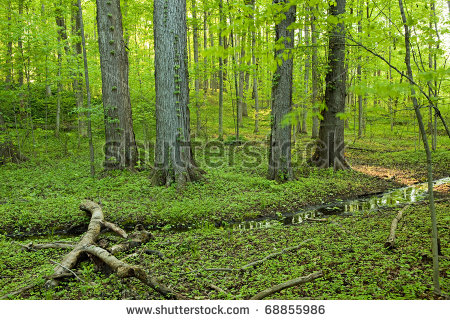
Hartsgrove is just north of the Deep Forest and many of the trees around the village are ancient.  Think about pictures you might have seen of century trees.  The eleph have shaped their homes from these.

North of the village is a sacred grove, planted hundreds of years before.  It’s where the name of the village derives.  That’s where all of the seasonal festivals are held.  They’re mostly communal affairs, as Hartsgrove isn’t big enough to rate a priest.  They have to petition one to be sent from one of the larger centres for important events like marriages.

Selene and Aeldred share the responsibility of the physical health of both animals and people.

Hartsgrove sends annual tributes to Aurayene, Drychtensart, and Gryphonskeep in the form of food and Willow’s excellent brews.  There is a fair demand for The Swan’s beer, wine, and whiskey.  These might be the village’s only export.

There is no wall.  Only ones made of stone can withstand Vedranya, and there is no quarry nearby.  There is rarely any need of defence, and the men of the village, with Aeldred’s magickal support, are more than equal to the few bandits who choose to try their luck.

Aurayene is a sprawling city state founded by the Parimi.  It is the capitol of Parime, and the spiritual centre of Tellurin.  The Archbishop, the highest ranking prelate in the land, makes his home there, and the Monastery of Aurayene is the biggest of its kind, taking up fully one third of the city’s area.

The Archbishop’s compound and tower are palatial.  Not only the compound, but the city as well, are guarded by massive stone walls.

Aurayene is one of the few cities to have survived the Cataclysm, though only barely.  When the western coast sheered away from Tellurin, Aurayene stood on the very brink.  In succeeding generations, they adapted to their inconvenient perch atop a cliff that dropped several hundred feet to the Jagged Sea below. 
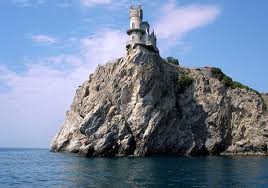
Miners and stone masons excavated The Long Stair, which descended through the stone beneath the city to the floating mass of docks that formed the port below.  A lift was also constructed to convey cargo up the cliff face to the city.

The Chance and the Aurayene Rivers flow respectively south and north of the city, cascading in incredible waterfalls to the sea below.  The land around Aurayene is mostly plain, though the coastal mountains, Les Bras d’Auraya, surround it.

Riversway is essentially a mercantile centre on the Aurayene River a day’s ride out of Aurayene.  Because goods coming into Aurayene from the port side have to be hauled up the cliff, and the city is so well developed, there’s not a lot of space, literal or figurative, to bundle things off to specific destinations.

Riversway serves as the place where shipments are sent in bulk, to be divided and repackaged for shipping further up the Aurayene, or by land into the continent.

Gryphonskeep is on the north shore of the Aurayene River.  Originally built by a discontented Alban lord (Murdo Christie)  who’d left the Island Kingdoms before the Cataclysm, the keep earned its name and reputation by virtue of several gryphon fledglings that the lord managed to capture on his journey through the mountains.

The keep was built for defence with thick walls and multiple sets of doors.  Christie was jealous of his new prize and distinction, and unwilling to lose either.

The aerie tower was built to simulate the gryphons’ mountainous home with broad balconies at the half-way mark and the top level allow the gryphons access.  During Vedranya, these are covered with massive wooden “shutters.”  The gryphons would much rather be up in the mountains, safe above the storms, but they like to humour their Tellurin caretakers.

Gryphonskeep has come into the hands of many lords over the years.  It is both a desirable reward—who wouldn’t want to be the Gryphonskeeper?—and a kind of back-handed compliment—who wants to be exiled to the western wilds?

The west of Tellurin is considered a barbarous and lawless land.  Few families have been eager to assume the burden when they could be living a life of relative comfort in the civilized east.

Killian’s father held Gryphonskeep before him, but his disreputable behaviour and abuse of the noble beasts caused him to be stripped of the honour.  Killian had to fight to prove his right and worthiness to hold Gryphonskeep.  Dairragh might be the first third generation Gryphonskeeper, if he can regain the honour.

Aumenburg is a small village nestled in a valley of the Great Ring Mountains southwest of Kriegstaff.  The mountains are Saxon land.  It is ruined by the time Ferathainn and Dairragh reach it, having been ravaged by Kane’s army and then abandoned to the storms.

Like Hartgrove, it has a grove.  Unlike Hartsgrove’s, Aumenburg’s grove has been forgotten and left to the wild things.  It also happens to be the site of a great sourcerous battle and the resting place of Jareth’s amulet.

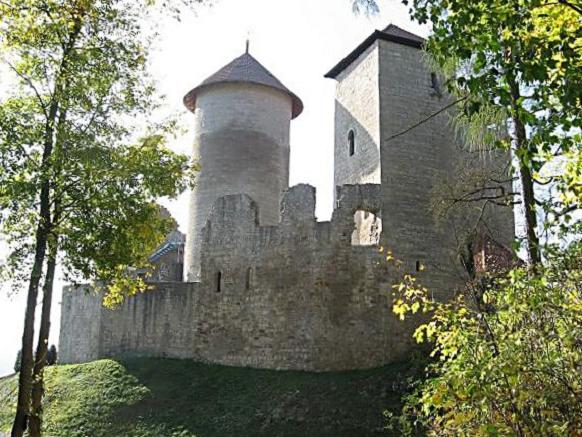
Finally, there are five mountain keeps that guard the passes through the mountains.  These were built by the Saxon in the days when defence, or at least provision for travelers and protection from Vedranya, were deemed necessary.  All five keeps were constructed in much the same manner; all tall, rectangular, utilitarian structures built out of the mountains themselves.  Each was built on top of caverns which served as storage and dungeons, the foundations of each keep reaching deep into the stone.

Each has an outer baily, or commons area, and an inner fortification.

That’s it for tonight.  Have a wonderful weekend everyone!

Sick days and life planning

sick

sick (Photo credit: jungmoon)

Today was a sick day.  Now I’m not sick very often.  This was my first since May.  The last time I had a cold was October of 2010.  I remember it well, because it was a doosie, I was delivering training, and I couldn’t take any time off.  Usually, the only “sick” time I take is for doctor’s appointments and tests and the last time I took more than a day off was when I got hit by the car (funny story that, remind me to tell you sometime), or when I had surgery.

This, of course, got me thinking.  To work, and to do your work well, you have to be healthy.

I’m not the epitome of health.  I’m overweight.  I smoke.  I drink on the weekends.  I eat junk food more than I should, and I don’t exercise as much as I should, but I do what I can.  I walk every day.  I generally eat healthy food.  I get enough sleep (though I think I could use more), and I manage stress to the degree that I can.

Still, I have to take the odd sick day.

One of the things that I took the opportunity to do today was to read Michael Hyatt’s “Creating a Life Plan.”  Michael wrote it based on his own experience in life coaching and in cooperation with Building Champions.

Now this experience took me back a few years.  There was a time, a long time ago, that I was in “seeker” mode.  I read Stephen Covey, Anthony Robbins, Elizabeth Hay, and dozens of other books, then classified as “self-help,” in an attempt to straighten out my rather messy life.  I made a personal constitution. I worked out a weekly schedule.  I was going to FIX MY LIFE.

I learned a couple of things in the process.

1. I’m a person of habit rather than a person of plan. 
I am very habitual.  I generally do the same things every day, at the same time.  I’m organized.  I’m disciplined, but write it all down, and I’m useless.  Don’t get me wrong, I make lists of important things I need to remember, and I keep my calendar updated with events and appointments, but I can’t schedule my day to within a minute of its life.  Stuff happens and I’m a creative kind of person.  If I tie myself to a schedule, I inevitably fail to meet some of my obligations, and when it’s in writing, it becomes a permanent testament to my failure.  I’d rather set goals and achieve them, in my own time.  And usually, I get things done before their respective due dates.

2. I’m my own dog.
I think that was an old “Spuds” Mackenzie saying, but I’ve found it to be true.  I generally find my own way, and though I may try everything (at least) once, what works for everyone else doesn’t necessarily work for me.  I let experience inform my life and decision-making process.

Having said all that, there was a lot of value in Michael’s .pdf book.  It reminded me of the things that I’ve done and the progress that I’ve made on a personal level.  Most of what I’ve learned has become internalized.  Frankly, I’ve come to take it for granted.  “Creating a Life Plan” made me aware that I do have a life plan and that I need to be more conscious of it, to honour it, and to ensure that I’m still in tune with it.

It’s important to keep your priorities straight.  This is one of the first steps in creating a life plan: knowing who and what is important to you.

Personally, I prefer the idea of a pool to a hierarchical list.  I know what’s important to me, and more significantly, I know why it’s important.  But life doesn’t often allow for rigid prioritization.  I can’t always put myself ahead of my spouse.  We’re a team, on par.  When my mom needs me, she becomes the priority.  So I’ve identified who and what is important to me and we all float in a pool together.  If I notice someone’s struggling, I toss a life jacket, or at least a pair of water wings.

Once you know what’s important, then you take each item, articulate why it’s important, set a goal for future achievement, describe where you are now, and create a plan to get you to point B from point A.

Finally, you set aside time every week, quarter, and year to review your plan and ensure you’re on track.

I think this last was the most valuable piece I got from Michael’s book, and that’s to make time to review, be conscious of your plan, and to be able to make adjustments as you go.

If you can get your life plan in order, then work becomes a lot easier to manage.  You’ll find you have the flexibility you need to stay on top of your projects and ensure that everything gets done, and done well.

English: Michael S. Hyatt, Thomas Nelson, Inc.

English: Michael S. Hyatt, Thomas Nelson, Inc. (Photo credit: Wikipedia)

I do recommend “Creating a Life Plan” and Michael’s blog, Intentional Leadership.  He’s got all kinds of good stuff: videos, podcasts, free documents with subscription.  I encourage you to check it out.

In the meantime, I’m heading to bed.  Still not feeling up to snuff and I have to rest up for tomorrow.

The peregrine and all that followed

A.K.A inspiration, happiness, desire, Buddhist philosophy, and semiotic journeys

The peregrine

This morning, as I walked my dog, we neared a series of well-manicured cedars … and something flew out of them.  It looked about pigeon-sized, but it didn’t fly like a pigeon.  I like watching birds, okay?  I know what pigeon-flight looks like.  I know what it sounds like too, the rhythmic pumping of the wings that seems to push a little sigh with each down-thrust.

Pigeons don’t “kree” either.

This happened fast and I noticed most of it peripherally, but my interest was piqued, and the motion drew my eye to a nearby rooftop where a peregrine falcon was just landing. I saw the markings on its tail feathers and wing tips, and when it turned, I saw the pale breast, its feathery “pants.”

I mock you with my feathery pants.

It was beautiful, perfect even.

The words were out before I even knew I’d spoken: thank you.  The world shifted around me slightly.  My day was made.  Gratitude can do that to you.

I let Nuala sniff about for a bit.  She hadn’t noticed the peregrine, so I was able to watch.  It bobbed its head, assessing the threat.  I figured we must have disturbed its breakfast, that it downed something tasty and was having at in between the cedars.

So we moved on and let the peregrine get back to business.

I know we have peregrines in Sudbury.  In the past, they’ve nested at the University and of some of the buildings down town, but it’s not often I get to see one, and rare that I see one so intimately.

It got me thinking of several things.  In no particular order, they are:

There’s a poem in this

In my Thursday poetry posts, I often write a few words about the inspiration for the poem.  When I see something like the peregrine, and it touches me, usually there’s a poem in the moment.

If the moment is fleeting, I have to get it down, and quick, but if it has some staying power, the moment has to rattle around in my head for a few days, maybe a few weeks, gathering images and words like a mental tumbleweed until it gets so weighed down it can’t move anymore.  Then it’s time to write.

That’s what’s happening now.  Wee little tumbleweed, rolling around in my skull … 🙂

Happiness

The thing that made the world shift around me, that made me utter thanks, it feels like a “ping.”  It makes me take notice.

Moments of happiness and gratitude are all around you.  You experience them all the time, every day.  Pay attention.  It really does make the rest of the madness of life easier to put into perspective.

I don’t want to sound all hokey, but there’s sacred in those pings.

Desire

Which got me thinking about want.  A writer-friend posted to Facebook last week that she’d enjoy writing so much more if she wasn’t so invested in the whole publication thing.

I didn’t want to preach, so I didn’t comment, but what I wanted to write was: then stop worrying about publishing.  Write.  Act with purpose.  Continue submitting, by all means, but don’t hang your hopes on publication.  Persistence and practice pay off.  If you’re not enjoying it anymore, then you shouldn’t be doing it.  Take a break.  Give yourself a chance to remember why you love writing, why you really don’t want to do anything else.  Find your passion again and just write.  When passion fuels your efforts, you will write amazing things.  Shop those amazing things around and someone will accept them.  But stop wanting.  Just be a writer.  Write.

Another writer-friend posted this on Facebook today:

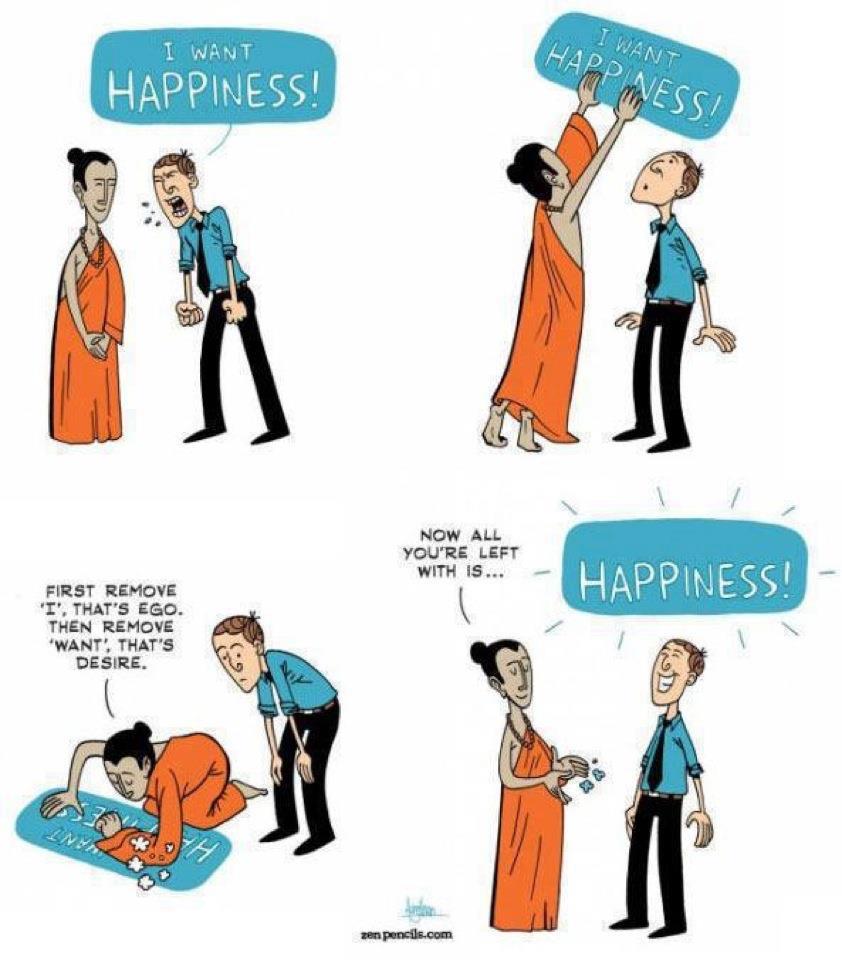
Take the “I want” out of anything, and you’ll find the happy.  It doesn’t come easily all the time, but if you can manage it even occasionally, you’ll be a happier person.  It’s this whole wibbley-wobbley, timey-wimey thing … No, that’s Doctor Who.  Sorry, obsession of mine 🙂

Really, it’s Buddhist philosophy

I read the Bhagavad-Gita not long ago, and that’s the central message of the text: stop wanting.  Stop desiring.  Be in the moment.  Act with conviction.

See the beauty, the power, and the terror (or the Krishna, if you’re a Buddhist) in everything.  It’s all connected.

Which brings me back to the peregrine.  Isn’t it a lovely little circle?

Oh, and something else

Peregrination.  Isn’t’ that a lovely word?  It means to take a journey, a pilgrimage.  Isn’t that what all of us writers do?

It’s all a wonderful semiotic mess 🙂

More insight into the mind of Mel.  Terrified yet?  Where has your mind been going lately?  Has it been going there without you?  How do your mental peregrinations influence your creativity, your art?  Do tell.

“What if” Fairy Tale Madness Blogfest, Part 2

Now, it isn’t really a fairy tale, so I don’t even know if it will be accepted on that basis alone, but Washington Irving‘s “The Legend of Sleepy Hollow” is a wonderful American short story, and one of my favourites.  It has the feel of a fairy tale to me, so to heck with it.  Caution, meet wind 🙂

Team Plot Twist

What if Katrina turned out to be totally vapid, and Ichabod couldn’t stand her family?  What if the only way he could extricate himself from this sticky mess was to fake his own death?  What if his perfect partner in crime was also his rival?

Please enjoy.

The heartless to the headless

An apparently headless Brom bent to extend his hand from horseback.

After clearing away broken bits of pumpkin and discarding his now-broken spectacles, Ichabod accepted the proffered assistance.

“You’re certain you won’t change your mind?” Brom asked.

“No, no,” said Ichabod, considering the book he’d clung to during the attack. “Katrina’s yours.  I only had to experience her family tonight to know I couldn’t countenance their relation.  It confirmed my suspicions.  Though her beauty affects me, a fickle-hearted girl like that could never make me happy.”

“You’re speaking of my bride-to-be!” Brom shrugged his head up through his cloak, his hair so awry it revealed a bald patch.  Ichabod stifled a laugh. “Watch it Ichy, or I might have to use this.”

“Put the sword away, Brom.  You’ve won.  I’ll be out of town before dawn.  You’ve nothing to fear.  You and Katrina shall be deliriously happy I should think.  I wish you nothing but the best, and several strapping, young boys such as yourself.”

Brom’s considerable brow furrowed for a moment as if trying to decide whether Ichabod was waxing sincere or sarcastic, then with a shake of his head he gave over, pulled his cloak back up over his head, and said, “You’re a strange man, and a fool to think you’d be suited to a place like Sleepy Hollow.  We’ll be as well-rid of you as you are of us.”

“Just so,” said Ichabod. “Thank you, Brom.”

“Fare well.”

“Be sure you’re well-seen tonight.”

As an answer, Brom pulled another pie-pumpkin from his saddlebag and threw at Ichabod’s feet.  Ichabod didn’t move.  The man knew his business right enough.

As he turned to fetch his donkey, Ichabod threw the book, unfinished, but not worth the effort, into the road to complete the picture.

“Rest in peace, Ichabod.”

300 words

What do you think?

“What if” Fairy Tale Madness Blogfest Part 1

Sorry to have missed a day on my blogging schedule, and a poetry day at that, but if was for a good reason.  A colleague, after 42 years of dedicated service, and service excellence, is retiring.  Her last day at work was today, but the BEA Hive took her out for dinner last night.  It was several hours of wonderful chat, memory-sharing, food and drink.  Ah, yes … there was much drinking 🙂

But so much for the excuses, and on to tonight’s post: I’m throwing my hat in the ring, the fairy ring at  that!

“What if” Fairy Tale Maddness Blogfest

So this post will tell you a bit about the blogfest, and you can join in up until 11:59 pm tonight, so get crackin’!

Part 2 will be my submission.

Onto the details.  The following is verbatim from Cassie Mae’s post (linked above).

WHAT IF?
Fairytale Madness BlogFest!
AUGUST 13th – 17th          
Have you noticed that by changing one detail; one event, one character trait, one thought…you can completely alter the rest of the story?For this bloghop we are exploring “What If?”
Not only do we want it to be fun, but it will hopefully be a fun writing exercise and make for some great reading during the hop!

To enter:
Think of your favorite “well known” fairytale and ask “What If…!”
Then, pick one of these four categories: (be sure to mention which category you’re joining, during your blog post!)

·       Best Plot Twist
·       Best Love Story
·       Best Tragedy
·       Best Comic Relief
 
Finally, write a scene(s) illustrating a new detail of the fabled fairy tale that changes our perspective.
To recap,
Is it a plot twist? (Cinderella gets knocked up by the Carriage Driver…)
An unknown romance that comes to light? (Snow White dumps the Prince for Grumpy…)
A tragic loss occurs? (The Three Little Pigs are too late to save their house…)

The wolf blows down the straw house in a 1904 ...

The wolf blows down the straw house in a 1904 adaptation of the fairy tale Three Little Pigs This is one one of the less intelligent pigs.. (Photo credit: Wikipedia)

A little comic relief? (Hansel and Gretel win a trip on Euro Rail, sponsored in part by M&M’s…)
Whatever the change…It’s limited only by your imagination – but please keep it PG-13 😉
Other Rules:
·       Post your story during the week of August 13 to 17.
·       Flash Fiction – 300 WORD MAX. (You don’t have to tell the whole story in three hundred words. Pick what works to illustrate your point.)

Got the flavour?  If you want to submit, the link is also on Cassie Mae’s post.

Good luck to all!  It’s been a fun challenge 🙂

Two lovely thinks, er, things, that fell in my lap today :)

Some say that knowledge is something sat in your lap.
Some say that knowledge is something that you never have. ~~Kate Bush, “Sat in your Lap

First

Partook of a Webinar this afternoon offered by Training Magazine Network and delivered by the inimitable Jane Bozarth on social and informal learning.  I follow her bog, the Bozarthzone, and have attended a few #lrnchat sessions on Twitter.

Jane promoted the power of social networking tools in the workplace, of curation, and the need to let learners have more control over their learning.

I’m all for this.  Unfortunately, my employer isn’t quite on the same page.  Facebook is blocked, because ours is a production environment and pressures are mounting.  Though Twitter is not blocked, our connection is so slow, in part due to the massive security measures we have in place, that it’s hardly worth the effort.

Though we have 2 internal Wikis with the capability to blog and curate, these tools are not promoted for use by our front line staff.  Again, operational requirements make it untenable.  The tools are mostly used to push information and email is still heavily relied upon as a means of communication.

We have SharePoint sites too, but again, for frontline staff, it’s used as any other Web page or site, as a means to push information, and not to engage staff in their own learning.  All of this on our sprawling Intranet, which, while it’s had a facelift, is still an unwieldy beast.

Only when staff reach the advisory or managerial level do they have the flexibility to dip their toes in those waters, and then to do so means some serious workload juggling.  Fortunately, aside from being the Learning Mutt, with a certain share of tenacity and feistiness, another of my workplace alter-egos is Shakti.  Multiple arms do tend to make the juggling easier 🙂  I could always evolve into a land-squid.

Still, informal and social learning is a wonderful dream I foster for my workplace and Jane gave me a few tools to add to my arsenal, courtesy of Diigo: http://www.diigo.com/user/jbo27712/upskilling

Second

The second gift of my day waited for me when I got home.  It arrived in the form of an email from a friend with a link: http://www.cpsrenewal.ca/2012/02/think-write-repeat.html

Think, Write, Repeat is a wonderful post.  I think I’m going to have to follow cpsrenewal 🙂  In his post, Nick Charney states that good writing and critical thinking are not only skills that can distinguish one in the workplace, but that they also support one another.

He offers a reminder: It’s a knowledge economy, stupid.  Indeed.

Charney promotes blogging as a kind of living portfolio, and one that will serve the knowledge worker well.  It’s better than a static resume that can hardly demonstrate any skill other than communication and editing.

Strong communities of practice and personal learning networks are also critical.

Once again, Writerly Goodness proves to be teh awesome (misspelling intentional) as a platform for both of my professions: writing and learning and development.

How has technology and the world of social media had an impact on your professional development?