Six questions with Michael Reaves and the producers of Blood Kiss

The husband brought this worthy project to my attention a couple of weeks ago and, of course, I just had to jump on board.  Noir vampire; how could I resist?

Truthfully, it was Amber Benson and Neil Gaiman who attracted me at first.  I’ve been a long-time fan of both authors/creative entrepreneurs, but when I viewed Michael’s Kickstarter video and realized his contributions to some of my favourite series (I absolutely adored Gargoyles!).  Then, I visited his Amazon page, I realized that though I didn’t know his name, I bloody well should have (!)

Also, I found his struggle with Parkinson’s Disease compelling.  I’ve often said that I’ll be writing until age AND infirmity rob me of the ability, because I’d beat out one or the other alone and still go down fighting, but Michael is the proof that even a disease as debilitating as PD can’t take a good writer out of the game.

So I backed the project.

And got a lovely thank you.

And an email that invited me to blog about Blood Kiss.

So here I am.

WG: Michael, I am inspired by your story, but it speaks so eloquently for you and your situation, I’ll steer clear of the obvious.  I’m a process geek at heart.  When did the idea for Blood Kiss first occur to you and how did the idea find its form as a screenplay?

MR: It started as a novel, back in the 90s. The way I usually decide is from how much inner life of the characters it’s necessary to reveal; past a certain point it just feels more like a book as opposed to a script.

WG: I’ve only dabbled in screen writing, so I don’t know much about the difference between novel and screenplay.  You’ve written both.  How long does it take to draft and revise a movie-length screenplay compared with a novel?  How has Blood Kiss adhered to and differed from that process?

MR: Well, everything’s different. Usually it’s about six months for me, be it novel or script.

WG: I’m going to respect Michael’s time and energy and ask the remainder of my questions of the producers, David Raiklen and Daniela di Mase.  First to you, David.  What attracted you to Blood Kiss?

DR: An amazingly talented team of artists including Neil Gaiman, Amber Benson, Michael Reaves and Tom Mandrake plus our wonderful production team. An chance to make a film noir, a style that every film lover appreciates. And a great story.

WG: You are not only a producer, but an award-winning composer.  How are your musical talents going to translate into Blood Kiss?

DR: More intense and exciting storytelling. A reimagining of the Golden Age sound, romantic and lush, plus scary.

WG: Daniela, you’ve studied film all over the world.  How is that experience going to inform Michael’s script?

DdM: I think that international indie films get very creative in order to execute their visions. Given that it doesn’t get any more indie than a Kickstarter film, we will be able to apply some of that to make the best film possible with the funds we raise.

WG: How did you get involved with the Blood Kiss project?

DdM: We met when he decided to do his film through Kickstarter. I offered to help with that. I was too fortunate to be in the right place at the right time!

WG: Thank you all so much for your time and excellent responses.  I’m even more excited to be a Blood Kiss Backer.

Blood Kiss has achieved its funding goal and I encourage anyone who has an interest to support the Blood Kiss project in reaching its stretch goals.  We all benefit!

____________________________________________________________________________________

About the Blood Kiss project and team:Blood Kiss by Michael Reaves
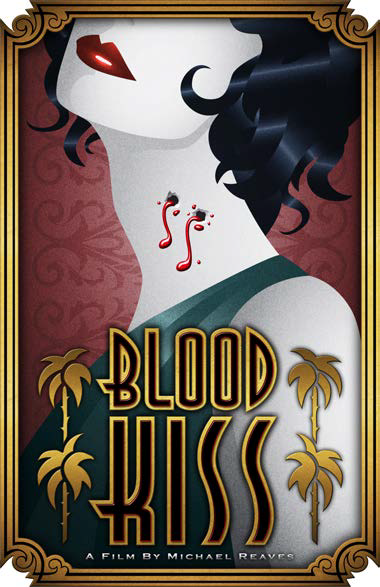
Emmy Award winning writer Michael Reaves is creating a new film, BLOOD KISS, and new genre, Vamp Noir. He’s discovered a fresh acting talent to co-star, superstar writer Neil Gaiman. Also starring fan favorite Amber Benson from Buffy the Vampire Slayer.

Blood Kiss revolves around detective Joe Belicek, who must solve the murder of a vampire before a deranged killer murders them all. Inspired by Film Noir, this supernatural thriller is set in 1940s Hollywood with famous haunts like the Brown Derby.

“Michael sent me the script. I told him, “it’s a terrific script.” and he said, “I want you to act in it.” I replied “There’s nobody else I would act for.”–Neil Gaiman

BLOOD KISS will bypass the Studios, going straight to the fans for funding to greenlight the film. Fans who contribute to BLOOD KISS’ Kickstarter campaign are eligible to receive exclusive rewards in exchange for individual pledges ranging from $5 to $10,000.

Because of Michael’s personal struggle with Parkinson’s Disease, Blood Kiss is proud to be associated with the American Parkinson’s Disease Association to promote awareness of the disease.

Follow us on Facebook & Twitter to see all the surprises we have for Blood Kiss’ evergrowing fan base!

Michael Reaves is amazingly prolific, writing and producing literally hundreds of scripts for various television series including Star Trek: The Next Generation, Twilight Zone, Sliders, The Flash, Father Dowling Mysteries, and Disney’s Gargoyles (the only animated TV series ever to be reviewed in The New York Times). He won the Emmy and was nominated for a second Emmy as a story editor and writer on Batman: The Animated Series. He’s also won a Howie Award for his H.P. Lovecraft-related work in film, as well as the prestigious Hampton’s Prize. In addition, he’s been nominated for the Hugo, Nebula and Writers Guild Awards.

Neil Gaiman is the author of novels, short fiction, comic books, graphic novels and films. His most notable works include the comic book series The Sandman and novels Coraline, Stardust, American Gods, and The Graveyard Book. He has won numerous awards, including The Hugo, Nebula, Bram Stoker, Newbery Medal, and The Carnegie Medal. He is the first author to win both the Newbery and the Carnegie medals for the same work, The Graveyard Book.

Amber Benson is a writer, director and actor. She currently writes the Calliope Reaper- Jones series for Ace/Roc and her middle grade book, Among the Ghosts, came out in paperback this past fall from Simon and Schuster. She co-directed the Slamdance feature, Drones and (co-wrote) and directed the BBC animated series, The Ghosts of Albion. Her acting work includes the Steven Soderbergh film, King of the Hill, and the indie feature, Race You to the Bottom, for which she won the Best Actress Award at Outfest. She spent three years as Tara Maclay on the television series Buffy the Vampire Slayer.

Tom Mandrake is a comic book illustrator whose moody style has made him the perfect choice to depict dark heroes and horror. Titles he has worked on include: Batman, The Spectre and Martian Manhunter (DC Comics); X-Files/ 30 Days of Night ( Wildstorm); Wolverine and The Punisher (Marvel Comics) and To Hell You Ride with Lance Henrikson and Joe Maddrey (Dark Horse Comics).

DavidRaiklenDavid Raiklen is a producer, composer, songwriter, host, and crowdfunder best known for the record breaking film series Space Command. He’s scored hundreds of films, television shows, and games, including Heist (New York Film Critics Choice), I Am Omega, Disney’s Sing Me a Story, Batgirl, The X-files Movie, the documentaries Atlantis and Worth—winner of over 30 international prizes and awards. He’s also won multiple awards including a 2004 American Music Center Grant, three Telly Awards, and the 2009 Park City Festival Audience Choice and Gold Medal. David is host of SciFi Soundtrack, appearing on the Hugo award winning Starship Sofa series. In addition to Neil Gaiman on Blood Kiss, David has worked with billionaire Jerry Buss, Academy Award© winner Elliott Gould, and director John Landis.

Daniela di Mase is a quadrilingual powerhouse actress/producer, originally from DanieladiMaseCaracas, Venezuela. A Meisner trained actress, she has studied filmmaking around the world, including Italy, France, Miami, and Los Angeles. Daniela brings years of experience, passion, and drive to Blood Kiss, and is excited to work with this amazing team. In addition to Blood Kiss, Daniela and her producing partners have four feature length films in various stages of development, including Mirgage with director Fred Keller.

Training trainers in Toronto

This past week, I was out of town.  The purpose: to teach a bunch of trainers the content of Business Writing Made Easy, so that they, in turn, can teach others.

The class was composed of three trainers from one business line and 6 from the other.  BWME Nov 19-22 001Though I may, as I mentioned last week, be returning to the training team in September, there are several possible alternatives that might prevent this from taking place.  I have to be prepared for the possibility that I won’t be able to help train staff much or at all in the future.

This was my fourth time co-facilitating the course, and I’ll be training it one more time this week coming.

The course is 15 hours, or two days, spread over three.  I added a day onto the end so that the participants could adapt portions of the course, present them, and get some focused feedback from the rest of the class.

The class is very participant-centered, that is, there are a lot of activities and the facilitators are constantly using questioning techniques to engage learners in their own learning.  This last is a challenging bit for me, because I’m a word-nerd and a total grammar-Nazi.  I have to restrain myself from talking about the things that I love.

The course went well.  I was able to help one of my colleagues get some experience co-facilitating the course because she may be turning around and delivering it to her business line in the future.  I also got the trainer’s high that come when you see the participants getting enthusiastic about the subject matter.

I think they’re all going to be brilliant 🙂

As I’ve mentioned before, the course involves learning a business letter writing model, tips on clarity, concision, and readability in writing, and a final module on grammar review.  The practical component is a letter that the participants draft as part of their pre-course work and revise as the course progresses.

Actually, looking back, every time I’ve blogged about BWME, it’s been about the process surrounding the course, not the course itself (eeps!).

I learn, or have something confirmed for me every time I teach this course.  I hope that my newly-minted business writing teachers feel the same way.

I still get nervous every time I have to train too, but I hide it well.  I’m introverted (as all get out) and training, though enjoyable, tires me.

I’m reading Susan Cain’s Quiet right now, and will likely post about introversion in the future.  For now, let’s just say that I’m learning a lot about myself 😉

Just yesterday, I saw a post on Facebook by the wonderful Nancy Kress, who said that in preparing for a 4-hour workshop, she was nervous, even after her many years of writing and teaching.

One of the comments that followed mine was that, if you care at all about the subject you are teaching, or presenting about, you will be nervous.  Every time.

I do find this to be true.

Getting back to the course, since it’s only two days, I can’t teach anyone who to write properly or how to use the principles of grammar.  The course is a combination of review and resource-building that we hope will give participants the tools to continue improving on their own.

Practise makes perfect.

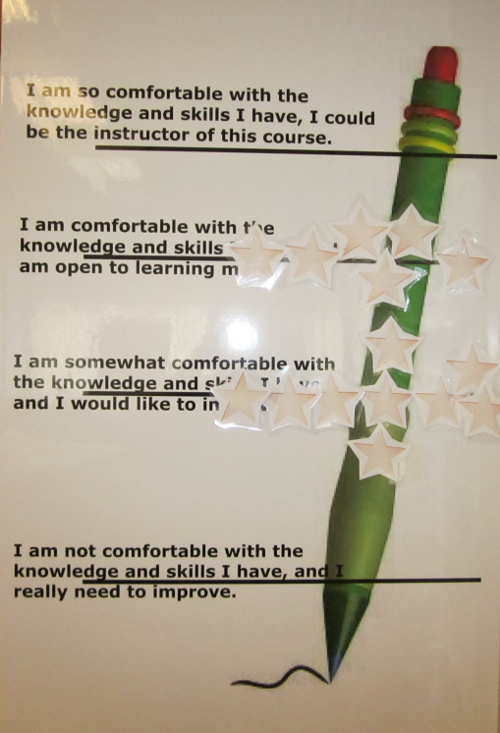
bunch of starsThe participants seem to enjoy the word pairs exercise most (affect/effect, practice/practise, principle/principal, further/farther, etc.).  The “snowball” fight is a great energizer, and the subject/verb agreement and punctuation exercises tend to confirm that most participants already know a lot about grammar, it’s just not something they’re aware of in their everyday work.

The key with BWME, as with so many other topics, is to cultivate that awareness, and promote its continuance on the job.


Have you had the opportunity to learn or teach something that you’re passionate about? How was the experience?  Do you practise after the fact?  What stayed with you most?


May submit-o-rama was a bust :(

I got side-tracked, in a marvellous way, but still side-tracked, by courses.

May Submit-o-rama ChoiceI know myself and my limits.  Further, I’m focusing on fiction at this time versus verse, so I opted for the Choose your own Challenge category, and set my goal, as I had back in October, at one submission per week.

At the time, I was working on two short stories for submission May 31, 2013, and so I thought maybe a couple of flash fiction pieces, or something equally non-angst-inducing and I’d be able to make it.  If necessary, I could polish up some of my older, unpublished poems and see what I could do, but then the learning opportunities came knocking, and I knew I wouldn’t have time to do more than the two stories.

Last week, the deadline on one of the submissions I had planned was extended, and frankly, I was glad. Being out of town for training derailed my writing plans.  So in the end, I submitted one short story in the entire month of May.

It was an original, though, so at least it counted toward Kasie Whitener’s Just Write short story challenge (13 original stories in 2013).  Unfortunately, it was April’s original 😛

I participated, but I don’t think that it could be considered a success.

I’m remarkably okay with that though.  I’ve got my fingers into so much right now, that something had to give.

Other perceived failures

I’d submitted a guest post that was to have gone live sometime in April but my colleague’s even more hectic schedule intervened.  There was some hope that the post might have been rescheduled in May, but the month has passed and it looks like it won’t see the light of day any time soon.  It’s only the second guest post I’ve submitted.  It’s also the second that didn’t pan out.

An interview that I arranged recently also seems to have fallen through.

Why it’s all good

There’s a saying that if you aren’t failing, that you aren’t doing enough to stretch yourself.

I agree with that, so long as the individual who perceives their actions as failure can put the attempt in a positive frame.  Otherwise, it can weigh on the soul.

My perspective: so long as you’ve tried your level best, you’ve upheld your part of the bargain.

I put my best effort into everything that I do, or try.  I can feel satisfied with that and I learn something important every time.  At the end of the day, it is enough.  I am enough.

Are you failing upward?  Have you had some perceived failures recently that have left you questioning yourself?  How have you overcome the negative and turned it into a positive?

Do share.  I’d love to hear what y’all have been up to 🙂

Sundog snippets: Spring is finally here!

So … spring has finally arrived in northern Ontario, but the black flies and mosquitoes have me hiding inside.  I also find that I’m not as motivated by outdoor tasks as I once was.

One thing I’d usually start doing is set up my outdoor writing spot, A.K.A. the patio, but this year, Phil and I have made the decision to rid ourselves of some potentially dangerous, though lovely, trees.

We have a stand of 6 birches that have in recent years been dropping what Phil describes as “widow-makers.”  If someone gets hit by one of those, it’s game over.  Plus, they’re older than I am and if one of them should rot and fall (which happens with old birches) they could damage either our house, or my mom’s.

Soon to be departed trees

These are the birches and poplar

They’re about 30 feet high.  The poplar (actually a large-toothed aspen) is coming down incidentally, because of its proximity to the birches and to my mom’s house.  Last year, we had to trim it back, rather it had to be trimmed back by the roofers because it overhung Mom’s roof and would have damaged the new shingles otherwise.

The poplar can be pretty

The poplar’s rather pretty in spring, with its new silvery leaves and catkins hanging down.

The work will be done on May 29th, while I’m away, but I’ll come home to a new view and that weekend, Phil and I will set up the patio.

Another sign of spring that always happens around the Victoria Day Long Weekend is the blooming of the pin cherry trees.  The blooms don’t last long, but they are glorious while they last.

Pin cherries in bloom

They herald the coming of the lilacs (in about a week).

Lilacs on the way

I have a massive bunch of rhubarb.  I need to take some in for the girls at work.  If they can help me get through some of it this year, it will be a good thing.  We always have so much more than we can use.

My massive rhubarb

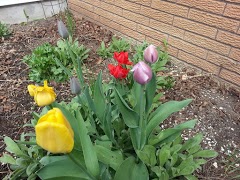
And one final gift: my one perfect tulip.

My one perfect tulip

Sundog snippet

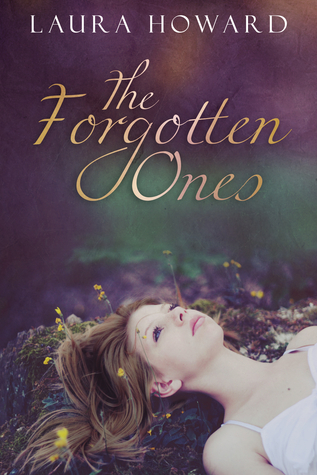
Review of Laura Howard’s The Forgotten Ones

What’s The Forgotten Ones about?

The Forgotten Ones coverAllison O’Malley’s plan is to go to grad school so she can get a good job and take care of her schizophrenic mother. She has carefully closed herself off from everything else, including a relationship with Ethan, who she’s been in love with for as long as she can remember.

What is definitely not part of the plan is the return of her long-lost father, who claims he can bring Allison’s mother back from the dark place her mind has gone. Allison doesn’t trust her father, so why would she believe his stories about a long forgotten Irish people, the Tuatha de Danaan? But truths have a way of revealing themselves. Secrets will eventually surface. And Allison must learn to set aside her plan and work with her father if there is even a small chance it could restore her mother’s sanity.

Read more reviews on Amazon and Goodreads.

My review

I enjoyed The Forgotten Ones if for no other reason than it featured the Tuatha de Danaan.  I am an unrepentant Celtophile and enjoyed rolling those lovely Irish names off my mental tongue 🙂  The fictive journey to Tir na n’Og also captured my interest.  TFO is more than just another urban faerie tale, though.

The protagonist, Allison, is dealing with some significant issues.  Her father abandoned her mother before Allison was born, and she suffers distrust of men, and a deep-seated fear that anyone she loves will leave her too.

Her mother is schizophrenic and for many years, Allison’s grandparents have been taking care of both their child and grandchild.  Allison has a plan to relieve her grandparents of this burden by taking it on herself.  Because of this, Allison tries to shut all other distractions from her life, including Ethan, the young man she’s had a crush on, well, forever.

The pack-your-bags-we’re-goin’-on-a-guilt-trip thing is that Allison believes that she is the cause of her mother’s illness.  She was still a child when her mother’s melancholy turned to depression and dissociation.  Allison also fears that she will end up just like her mother.  Mental illness has a genetic component, doesn’t it?

What if her mother’s illness wasn’t schizophrenia, though?  What if it is the sickness that assails all unfortunate humans who have been touched by the Danaan?

When she begins to have strange dreams and her absentee father turns up, Allison’s life takes a turn for the fantastic and her journey takes her to Thunder Bay (Canuck connection :D) and Tir na n’Og itself in search of a way to cure her mother.

Can she save her mother?  Can she protect her family and Ethan from the ethereal and mercurial Danaan?  Can Allison save herself?

Like I said, I enjoyed Laura’s debut novel.  She’s written it in a straight-forward, very readable style.  Allison, though understandably neurotic, takes action to solve her problems and save the people she loves.

TFO’s been framed as New Adult, but I have to say that if Laura hadn’t made the effort of framing the narrative as she did, and telling the reader that her protagonist and friends were in their early 20’s, I wouldn’t have been able to distinguish her story from YA.  Her characters share an innocence that feels more comfortable in YA than NA.

That would be my only criticism of TFO, however.

I look forward to Laura’s next book in the series and to see how she develops as an author.

My rating: Four stars

About the AuthorThe Forgotten Ones cover reveal blitz and five questions with Laura Conant Howard

Laura Howard lives in New Hampshire with her husband and four children. Her obsession with books began at the age of 6 when she got her first library card. Nancy Drew, Sweet Valley High and other girly novels were routinely devoured in single sittings. Books took a backseat to diapers when she had her first child. It wasn’t until the release of a little novel called Twilight, 8 years later, that she rediscovered her love of fiction. Soon after, her characters began to make themselves known. The Forgotten Ones is her first published novel.

Now go buy the book, peoples!

The Sundog Snippet: Thinking of Dad on Mother’s Day

Before you say anything, Phil and I treated Mom to a Mom’s Day Brunch at Culpepper’s.  We would have taken Phil’s Mom too, but she threw her back out last night and couldn’t make it 😦

Yesterday, though, during out traditional Caturday pancake breakfast, Mom asked me to take some pictures of the tulips she planted from Dad’s funeral arrangements.  They didn’t come up last year because of a killing frost, but this year, they look beautiful 🙂

Dad's Tulips DadsTulips2 DadsTulips3


Just  sharing.

Happy Mom’s Day, everyone!

Sundog snippet

How my life sentence with mortal punctuation has informed my writing

A.K.A. The period at the end of this series 🙂

I’ll preface this bit by saying that I don’t think I’m unique among writers in this respect.  In fact, I think every writer works, at core, with and through the same issues.  This past week, I read (and shared) a great interview with Chuck Wendig in which he talks about (among much other awesome) the themes that crop up in his work.  Surprise, surprise, death and family rank prominently.

In this morning’s The Sunday Edition with Michael Enright, one of the Canadian greats (with whom I was privileged to work, even though he didn’t like my genre/subject matter) Alistair MacLeod, mentioned the same influences and themes.

Think of just about any author you’re reading or have enjoyed, and I think you’ll find death and family cropping up: Rowling’s Potter books were all about death and the search for family despite its omnipresence; Martin’s Song of Fire and Ice is about a number of families and he keeps on killing off prominent members 😉 (note here: in this context, what is politics, but family drama writ large on the world stage?); Collins’s Hunger Games = Death/Family; Gabaldon’s novels are a series of time travelling family sagas and death plays a prominent role.

I could go on, but I won’t.  Search your own shelves/ereaders to find your own examples.

What’s unique about me is my story, my life, and I hope that translates to my characters so that even though the theme may be familar, the way that it is expressed through my characters and stories is something just a little different.

Death

Death finds its way into a lot of my stories in different ways:

In my first published short story, “Chlorophyll and Corruption” (which is probably the prologue to a YA sci-fi), my protagonist first saves his brother from being pushed out of their atmospheric containment bubble, then must flee an impending supernova. “For a Change” (which I have subsequently rewritten as “The Gabriel” and may yet become a sci-fi novel) my protagonist’s reaction to a world of sterile Transmat immortals is to attempt suicide, repeatedly.

In “Fox Fur,” my protagonist is trying to deal with the death of her parents by means of various encounters with foxes.  “Dead Issue,” is about a young woman who makes a personal discovery at a family funeral.

“Tonsillitis Blues” from my 1999 MA Thesis, Whispers in the Dark, is an interpretation of my adult exploration of the near-death experience prompted by my tonsillectomy trauma.  The protagonist of “Fool’s Journey” (subsequently rewritten as “A Terrible Thing” and likely a YA paranormal novel), another story from the same collection, attempts suicide because she can’t deal with the visions of danger and death she’s been gifted with.

Even my poetry is liberally sprinkled with death.

Ferathainn, the protagonist of Initiate of Stone, experiences the deaths of her best friend,

English: Colored version of the ancient Mesopo...

English: Colored version of the ancient Mesopotamian eight-pointed star symbol of the goddess Ishtar (Inana/Inanna), representing the planet Venus as morning or evening star. (Version not enclosed within a surrounding circle) Polski: Kolorowa wersja symbolu ze starożytnej Mezopotamii, ośmioramiennej gwiazdy Bogini Isztar (Inany/Inanny), reprezentujacej planetę Wenus jako poranną lub zachodnią gwiazdę. (Photo credit: Wikipedia)

fiancé, and father, and subsequently dies herself attempting to exact revenge.  She undergoes an Inanna-inspired journey into the underworld to reclaim herself and her will to live.  Eoghan witnesses the execution of his brother for heresy and when the goddess Auraya calls him to become her champion, or Kas’Hadden (hammer of light), he experiences an assassination of personality at her hands.  Dairragh, deeply affected by the death of his mother years earlier, inadvertently triggers the destruction of his home and the death of his father.  He succumbs to his wounds and is resurrected and set on a shamanic path by the mysterious anogeni.

I won’t get into the protagonists of my other unpublished works, but death and its impact are recurring themes.

Death is the period of every life sentence and so it is a universal.  Few readers will fail to be engaged by various explorations of death and its impact on those left behind.  Thrillers and mysteries are built around it and are two of the most popular genres in publishing today.

Family

Likewise, everyone has a family.  Even the only child who has chosen not to have children of her own (like me) has parents and understands the pull of the complicated legacy handed down to them.

In my, admittedly small, family, women proved to be the peace-makers, sacrificial lambs, care-takers, bread-winners, and all around protagonists of the story.

My maternal grandfather was an alcoholic and a womanizer.  He and my grandmother were unable to have children and adopted my mother and aunt.  My grandmother worked in a textile mill during the depression and worked for most of her life until her first major heart-attack forced her into early retirement.

On my father’s side, my grandfather died at a relatively young age because of heart failure and my grandmother was an entrepreneur.  I still meet people in Sudbury who hear my name and ask if it was my grandmother who owned Marttila Sewing Centre.  Yup.  That was her.  She remained fiercely independent until stroke and cancer eventually took her life.

My father was always an ill man and though he was the bread winner for most of his life, it was my mother who held the family together, getting her high school diploma and driver’s licence in her forty’s and starting a new career as a ward clerk in the hospital when my father had his breakdown.  My mother was the one who cared for her parents and my father until their respective deaths.  Though she doesn’t have to, she still takes care of me.

It’s no wonder then, that my work focuses primarily on strong female characters.

Incidentally, here are a couple of posts I came across this week from Marcy Kennedy on strong and likeable female characters.

I had trouble for many years writing strong and likeable men because that was an archetype largely absent from my experience.  I found my way to that eventually, though, because of Phil, and because I learned to recognize the good qualities in the men in my life and expand those into heroic proportions.

Everyone is a mix.  My paternal grandmother may have been a business woman, but she was a poor fiscal manager, and tried too hard to curry favour with the well-to-do women of Sudbury (read sycophantic).  She first promised my mom inheritance of her business, then rescinded the offer and sold the business to a third party.  I think this was because she was too embarrassed to let my mom see what a shambles she’d made of things.

Though family dynamics run through all of my stories and novels, I’ll just present one example, from IoS, because it’s going to take a while to break down for you 😉

Ferathainn’s family in IoS is complex.  Her parents, Selene and Devlin, can’t have children and adopted Fer when she was abandoned by a bedraggled, but clearly noble, woman who refused to speak and ran away before she could be made to explain anything.

Devlin, feeling the need of a child of his blood, fathered Fer’s half-sister Aislinn, with Willow, a family friend and eleph (read elf).  Willow is misanthropic and makes her living as a brew-master and owner of the local public house.  She readily gave Aislinn into Selene and Devlin’s care.

Aislinn is obviously a half-breed, and largely reviled by the Tellurin (human) villagers of Hartsgrove as a freak. She is destined to become a bridge between the eleph and Tellurin peoples, however, by virtue of her heritage.

When Selene and Devlin adopted Fer, the resident eleph, Willow and her brothers Oak and Leaf, invited the new family and Aeldred, the local mage, to a Shir’Authe.  The Shir’Authe foretells the destiny of the child in eleph culture.  At the ceremony, none of the eleph can see anything about Fer’s future, but Leaf sees his spirit-lights, or astara, in the baby’s eyes (if you’re an Elf Quester, this is recognition, if you’re a Meyers fan, it’s imprinting).  This is bizarre enough, because only eleph are supposed to bond with one another in this way.

Selene, understandably, freaks out, but Leaf promises never to act on this deep spiritual attraction unless Fer somehow miraculously sees her astara in his eyes, or otherwise returns his feelings once she is gown.

Aeldred senses a wild and powerful magickal talent in the infant.  He fears that he will not be able to control the child and that she will become a rogue mage.  She has the potential to wreak havoc on their world and her talents will be much sought after, by moral and immoral authorities, both magickal and political.

In an attempt to minimize Fer’s potentially negative impact, he merely tells the others that she has talent and that he will remain in Hartgrove to become her teacher.  He further tells them that Fer’s parents are powerful, but immoral, people and that they must protect the child in the event that either one, or both blood parents, come seeking her.

He gets everyone to agree to a magickal binding.  None of them will be able to speak of the circumstances of Fer’s birth or of her coming to Hartsgrove until the girl comes of age.  By then, Aeldred hopes that he will have thoroughly indoctrinated Fer in the disciplines of the Agrothe magicks and that he will therefore be able to control her chaotic potential and prevent her from doing harm.

In truth, Fer’s parents are Aline of Gryphonskeep and Halthyon, an eleph mage, or kaidin. Aline is descended from the de Corvus family and magick flows through the bloodline.  The original Kas’Hadden was a de Corvus, so the power of the gods has been passed down to Fer.  Aline is married to Killian of Gryphonskeep and mother to Dairragh (dun, dun, dun!).

Halthyon is one of those rogue magi that Aeldred worries about.  He has extended his lifespan far beyond the already lengthy eleph standard.  His goal is to accumulate magickal power (by draining it from others as he kills them) and to ascend to godhood (in the process of which he intends to kill the existing gods of Tellurin).

Halthyon is unable to extract the child’s location from Aline and subsequently kills her in the attempt.  He wants to find his child because he considers her the only person worthy of ascending with him.  In order to do that, Fer must become a god-killer as well.

Okaaaaaay.  So there, in a convoluted nutshell is the familial basis of the plot of not only

English: St. Etheldreda's Churchyard - Family ...

English: St. Etheldreda’s Churchyard – Family Plot with Snowdrops (Photo credit: Wikipedia)

IoS, but the ensuing novels in the series, which I have called Ascension.  You can see why I identify the book in the epic fantasy genre 😀

Family is an endlessly intriguing Gordian knot to unravel and I think you can see where I have mined my tapestry to create Fer’s.

It’s all variations on two essential themes.

How have your life experiences contributed to your creative work?  Do death and family inform your stories?  Do you have a family-plot?

I’d love to hear from you!

Here ends the series that was A life sentence with mortal punctuation.  I hope you have enjoyed it, and found it to be useful in your creative pursuits.

Coming soon: I’ll have a book review for Laura Howard’s The Forgotten Ones, and hopefully a couple of author interviews to throw your way.  I’ll definitely share my experience in Margie Lawson’s  A deep editing guide to making your openings pop course, and in Marcy Kennedy’s Crafting your logline and pitch workshop next weekend.  There might even be some Pupdates and Next Chapters in there.

The post in which I write about happiness: A life sentence with mortal punctuation, part 10

I’d wanted to wrap things up this week, but the happiness post seems to have a mind of its own 😉  So next week will be my finale for this series in which I will talk about how my life and experiences have influenced my writing.

For now, though:

What I’ve learned about happiness

supreme happiness

supreme happiness (Photo credit: Wikipedia)

First, it’s an amorphous thing.  It’s hard to pin down.  Sometimes you only realize in retrospect that you were happy because of its sudden absence.  Sometimes you know that you’re happy because your friends and family clearly aren’t and by comparison, you’re feeling pretty good.  Sometimes, you just need to find a still moment and let the happy come.

Here is the Dictionary.com definition (linked for your convenience):

hap·pi·ness [hap-ee-nis] noun

1. the quality or state of being happy.

2. good fortune; pleasure; contentment; joy.

Origin: 1520–30; happy + -ness

Related forms o·ver·hap·pi·ness, noun

Synonyms:
1, 2. pleasure, joy, exhilaration, bliss, contentedness, delight, enjoyment, satisfaction. Happiness, bliss, contentment, felicity imply an active or passive state of pleasure or pleasurable satisfaction. Happiness results from the possession or attainment of what one considers good: the happiness of visiting one’s family. Bliss is unalloyed happiness or supreme delight: the bliss of perfect companionship. Contentment is a peaceful kind of happiness in which one rests without desires, even though every wish may not have been gratified: contentment in one’s surroundings. Felicity is a formal word for happiness of an especially fortunate or intense kind: to wish a young couple felicity in life.

You can look at as many definitions as you like, but you won’t find one that actually conveys what happiness feels like.  It’s all just wordage, and one time when post-modernist or semiotic analysis might tell you more about what happiness actually means than reading a bunch of words on a page or website.

Last year, I finally got around to reading Gretchen Rubin’s The Happiness Project.  It came highly recommended by a colleague from work and a few online friends, but I have to say that I was less than impressed.

I appreciate Gretchin’s candid style and some of the insights she gains in her year-long happiness project (which has subsequently been renewed in ensuing years), but I couldn’t relate to a lot of what she wrote about.

She was honest about it, indicating that her life was pretty darned happy already.  She didn’t have many crises or tragedies to make her personal search for happiness compelling, and she admitted that this might make her happiness project ring hollow to some readers.

I didn’t really find this, but what I saw was someone who really didn’t have to dig deep to find the happy in her life.

I did agree to a certain extent with her philosophy of “act the way you want to feel,” but I found it to be disingenuous.  I’m not a gloomy Gus, generally speaking.  I smile and say hello.  I chat with people, but I don’t go out of my way to pretend that things are peachy when they are so definitely not (for me).

Still, I have to admit: I’m happy most of the time.  The key is to recognize your happiness and observe it.  Happiness is kind of a sacred moment that has to be respected and cherished.

Happiness

Happiness (Photo credit: Wikipedia)

Retrospective happiness, A.K.A. Big Yellow Taxi happiness
The first kind of happiness I noticed in my life was retrospective happiness.  This is the kind of happiness you realize after the fact because you’ve suddenly been faced with a sad or difficult situation and the change in your mood helps you to understand that you were, in fact, happy, before the situation arose.
It’s important to take some time, even a few moments, to think about that happiness.  What did it feel like?  How relatively easy was it to be productive, proactive, and socialized with friends and family?  This way, you can more readily recognize happiness the next time it enters your life.
Happiness is like a child.  It likes attention and will hang around if you show it that you appreciate it 🙂
I characterize this happiness with the lyrics to the song Big Yellow Taxi by Joni Mitchell: “Don’t it always seem to go/that you don’t know what you got ‘til it’s gone?”

Comparative happiness, relatively speaking
I often noticed when I was happy because Phil was not.  Often it seemed that when he was having a rough go of it at work, things were going swimmingly for me.  I like it when things turn out well and this makes me happy.  Currently, we’re both having a bit of a bad time at work, but interestingly, we’re both fairly happy at home.
Again, notice how this kind of happiness feels.  Is it based on accomplishment, recognition, or something else?  Is there a way that you can foster these happy-making elements in your life?  Happiness is an opportunity.  Learn how to invite it to come knocking 🙂

Happiness-in-the-moment, A.K.A. Zen happiness
Sometimes, you just have to take a moment to realize, regardless how you think you feel, or should feel, that you are happy.  It’s a weird phenomenon, owing in no small part to the inexact and un-pin-down-able nature of happiness.
Also, in the Buddhist tradition, there’s this idea of non-attachment.  In order to experience something, you have to stop wanting it, let it go, become disinterested in it.  Happiness can sneak up on you at the strangest times.  If you’ve been careful in your observation of your happiness in the past, you might be “surprised by joy” at an unexpected moment.
I also think of this as serendipity, or, as I like to say, surrend-ipity.  It’s only when you surrender to the moment that you can find your greatest happiness.

So that’s it.  Three ways to find happiness.

happiness

happiness (Photo credit: Wikipedia)

Do you have other techniques you use to find the happy moments in your life?  I’d love to hear about them.

Tonight’s TV line-up: Once Upon a Time, Game of Thrones, and Vikings.

Have a great evening!

The Next Chapter: Progress by inches (and bounds)

It’s been a while since I’ve posted about my progress, or lack thereof, on my writing.

Initiate of Stone

I’ve been struggling to rewrite my first chapter.  I’ve now made progress, after writing, and rewriting it several times.  I really had to go back and decide what it was necessary to accomplish in my opening chapter.

A short list:

  • Introduce my protagonist – Ferathainn, or Fer, is fifteen, and her coming of age is in two moons, at the next goddess festival, Sestaya.  She wants to become an Agrothe mage, and will be the first girl to do so in a very long time, but she chafes under the tutelage of her master, Aeldred.  Fer has been studying from the moment she wakes to the moment she sleeps (except festival days) with Master Aeldred for 12 turnings of the sun through the seasons, but it’s all been mundane. He’s forbidden her from using her innate talent, to speak with the spirits, or souls, of animals, plants, elements, and perhaps even people, like he controls who the spirits speak to …  Fer desperately wants to be initiated so she can start using her talent and learning “real” magick.  She knows she’s capable of more than what Master Aeldred permits her to do.  The process is long and demanding, though, and she will have to make sacrifices.  She loves Leaf, the eleph finiris, or song master, and will marry him on Sestaya as well.  She sees her astara, or soul-lights, in his eyes, something that only the eleph are supposed to see.  She’s not so sure about children, though they seem to be the natural consequence of marriage.  She’s just been so long separated from other girls her age by her studies that she wants something that everyone else takes for granted.  Fer worries that love, marriage, and family will be the sacrifices that she will have to make to become a mage.  She’s determined to have at least love in addition to the solitary life of a mage.
  • The “normal” world – Hartsgrove, Fer’s village, is a “free town” and the eleph and people of Tellurin live side-by-side in relative peace.  It’s an agrarian village that sends tributes to the surrounding, larger, towns and cities to show fealty and secure support in times of need.  The predominant religion is worship of the Goddess Auraya, creatrix of Tellurin.  Every year the season of Vedranya brings deadly storms to besiege the land.  This has been the way of things since the Cataclysm, two centuries before, changed the face of Tellurin and reduced much of Tellurin civilization to rubble.  Fer lives in a small, but sturdy cottage, with her mother and father, Selene and Devlin, a seer and a bard respectively, and her younger half-sister, Aislinn.  She has never left Hartsgrove.
  • Hook the reader – What’s the root cause of Fer’s resentment of her master, the man who could grant her wish to become a mage?  Why does he want to keep her from using her talent?
  • Ask a question (that needs to be answered by the end of the novel) – What is the secret Master Aeldred feared so much he magickally bound Fer’s friends and family to silence?
  • Foreshadow the inciting event – An earth elemental, or nomi, tells Fer the secret is a potentially deadly one though it cannot more than hint at the nature of the secret; she must be strong to face the trials to come.

So I’m slowly working my way through the list without dumping too much backstory or world building on the reader.  Beginnings, why are you so hard?

Some links about beginnings:

On a whim, I’ve signed up for Margie Lawson’s course, A Deep Editing Guide to Making Your Openings Pop, starting May 6, 2013.  She focuses on psycho-linguistic and rhetorical techniques to improve your writing.  My undergrad was focused on rhetoric and I love psychology, linguistics, and brain science, so this looks like it’s right up my alley.  Will let you know how it goes.

I might do the crazy and send my beginning (when I’m more or less happy with it) to Ray Rhamey’s Flogging the Quill to see if it passes his test.  Stay tuned.

Short Stories and poetry

Well, so far, I’ve kept up with Kasie Whitener’s Just Write short story challenge.  I’ve written a completely new short story for each of January, February, and March.  I’m a little behind in April, and may opt for flash fiction to make up the short fall.

The short story that I revised and sent to On Spec in January has been accepted (!)  I am very (like !!!!!!!!!!!!!!!!!!!!!!!!!!!!!!!!!!!!!!!!!!!!) excited about this, even though I know that it won’t be in print until sometime next year.  I’m looking forward to working with their editorial team to whip “Downtime” into shape.

“Beneath the Foundations (original story #2),” my attempt at medieval Cthulian for Sword and Mythos was rejected.

“A Terrible Thing” was rejected by the editors of Tesseracts 17.

It’s too early to have heard back from either Writers of the Future, to whom I sent “The Gabriel,” or In Places Between, to which I submitted “Molly Finder (original short story #3).”

There wasn’t room for my poem “peregrine” on the League of Canadian Poets National Poetry Month blog, but I have subsequently submitted that poem plus two more, “contain you” and “infant crawls,” to Sulphur.

From last year’s submissions, I learned that my submission to Mark Leslie’s Spooky Sudbury will be included in the publication, and my poem, “north of thule” was included in the fabulous Sopphey Vance’s Enhance no. 11.  It’s been a good month (and a bit) for happy dancing!

I’m going to work on something flashy this week to round out April’s short story quota, and set to work on another original for May in hopes of garnering some attention in the Rannu Fund competition.May Submit-o-rama Choice

I’ve joined Khara House’s May submit-o-rama and have committed to 1 submission per week in the Choose Your Own Challenge category.  Rannu will make up only one of those, so I’ll have to get my arse moving on identifying other submission opportunities (!)

Critiquing

Actually finished the BIG critique for my online group and am working on a review of the first 100 pages of another online critique buddy.

Have only three people left to critique for the Sudbury Writers’ Guild before I’m caught up with them.  We’re trying to get our stories and poetry together for an anthology.  I put forward “A Terrible Thing” and “Old Crow,” another short story of mine that was rejected by Tyche Books last year (Masked Mosaic anthology).  It looks like “Old Crow” might be salvageable as a short story, but that “A Terrible Thing,” as editors have said—and I’ve thought—in the past, is really a novel in the making.

Conferences

A local effort, Wordstock, will be happening June 7 and 8 at the Sudbury Theatre Centre.  This is the first year for the event, and the organizers are hoping to build on what they hope to be this year’s success.  The SWG has a block of time for readings.

I’ve registered for the Canadian Authors Association CanWrite! conference in Orillia, June 12-16, and booked my room in the Orillia campus of Lakehead University.

I’m still waffling about When Worlds Collide August 9-11.  The registration fee is reasonable in the extreme, but I still have to bear the cost of the flight and accommodation.

One reason I’m waffling is because I want to go to the Surrey International Writers’ Conference this year (Oct 25-27).  Domestic flights are sooooo expensive.  Right now, a return to either Calgary or Vancouver for the conference dates is showing as over $1000.  It may be an either/or kind of thing for me.  Or I might just cash in my Avion or Aeroplan points for one or the other flight.  That’s an idea!  Thanks for letting me suss that one out online 😛

I think that’s all the conferencing I can take for this year.  Next year, I hope to add some fancons like Ad Astra.  We’ll see how the financial situation sits.  And my various air rewards plan balances 🙂

Other stuff

Taxes done and refund received 🙂

Am still putting off the decision to move to WordPress.org.  I think I just need some dedicated time to devote to research and reflection.

Hope all is well with you and your writing lives.

I’d love to hear from you about your latest literary adventures!

Tonight’s viewing line-up: Doctor Who and Orphan Black!

Tomorrow, I’ll share my thoughts on happiness and how my experiences have influenced my writing in the final instalment of a life sentence with mortal punctuation.

The one where I post about Dad: A life sentence with mortal punctuation, part 9

You may have noticed that I didn’t post in my series last week.  Truth is, I needed a break from the angsty.  While I feel that this series is important to write, and that I have come to a point in my life that it is necessary to purge certain things, all this exposure of my tender bits is difficult for an introvert like myself.

In the last instalment, I wrote about some of my encounters with death I had during the sixteen years in which I sorted my depressive condition.

About Dad

I love my dad and that’s in the present tense because even though he’s gone in the physical sense, he’s still here with me every day.

In order to tell the tale of his last two years of life, I have to give it context and that begins with his birth.

Dad was the youngest of three brothers and in those days, they lived out at long lake.  Doctors still made house calls for deliveries and that day he was running late.  The woman attending my grandmother, I’m not sure whether she was an actual midwife, or just a family friend, but she told my grandmother to keep the baby in until the doctor got there.

In the story I was told, she said, “cross your legs.”

When the doctor eventually arrived and my father was delivered, he had a brain bleed (subdural haematoma) and almost died right there.  He was given a poor prognosis, but he survived.

Dad was subsequently diagnosed with epilepsy as a child and was on medication from a very young age.

When I was very young, I was his darling.  We’d watch wrestling on the weekends and he’d let me wrestle him on the couch.  Good times 🙂

Then, he fell off the car-port roof, and was hospitalized for a while as a result.

In the years that I was catching all the typical childhood diseases: chicken pox, measles, and mumps (that was terrible, I had them one side at a time so it lasted twice as long as normal 😦 ), by dad was hospitalized for various other reasons.

He had his gall bladder removed.  He developed a hiatus hernia, which was initially mistaken for a heart attack.  He had surgery for that too.  A haematoma developed after that surgery as well.

At home, he’d return from work absolutely exhausted, collapse into his recliner, and fall asleep before dinner was even ready.  After dinner and the evening news, he rarely stayed up late, or fell asleep in the recliner again.

When I hit puberty, things changed again.  I don’t think Dad really knew how to relate to me after that.  His sarcasm became biting, not only with me, but also with my friends.

By then, the malignant hyperthermia had been detected in my family and he had to get tested for that.

Only a few years afterward, Dad suffered his breakdown and was hospitalized for three months as a result.

The spectre of mental illness

For a while, Dad was doing well.  He was getting regular talk therapy and attending a support group.  He started walking everywhere: down to the corner to pick up groceries, out to his get-togethers with the support group (they had coffee klatches outside group).  It seemed, for all intents and purposes, that he was improving.

Then the therapist he was seeing indicated that their sessions would be coming to an end.  Dad should look at trying to get his life back on track, maybe going back to work.

There was a problem with that though.  His employer had disbanded his work unit and there was not job in Sudbury for him anymore.  He couldn’t imagine trying to start over and I’m sure he had anxiety attacks just thinking about it.

Plus, he’d successfully gotten on a disability pension and was, I think, comfortable not working.

Soon, he stopped attending the support group and he stopped walking.  He gained weight and developed sleep apnea.  He also got prostate cancer and though a combination of hormone therapy and radiation put the cancer into remission, Dad suffered the usual after-effects of prostate issues.

His behaviour became more erratic as he went through his manic and depressive phases.  When he was manic, he’d spend like crazy, buying things from the Shopping Channel and Readers’ Digest.  He’d enter every charity lottery he could and spent hundreds on provincial lotteries.

Toward the end of one of his manic cycles, he’d always get struck with buyers’ remorse and his guilt took an odd turn.  He’d start to accuse my mom of trying to leave him, or of hooking up with one of his friends.

When he was depressed, he slept much of the time and tried to undo his financial miscarriages until the next manic phase hit.

My mom was taking care of him as much as she was taking care of my grandfather.  And she was still working.  I worried about her.

Even after my grandfather passed away, Mom didn’t seem to get much time back for herself.  Dad demanded (without really understanding that he did it) every bit of her spare time.  Mom started to go out with friends more as a respite from his illnesses.

By then, he’s also developed an arrhythmia that required the insertion of a pace-maker and was in the early stages of Congestive Heart Failure (CHF).  He started to fall and though his knees required replacement surgery, he was too overweight and his doctor wouldn’t authorize the surgery.

The beginning of the end

On March 4, 2010, I was part of the training team at work and away training.  I got a call to my hotel room late at night.  Phil had had to take my dad to the hospital.  Nothing life threatening.  I was coming home in another day, in any case, and so it wasn’t a situation where I would have to come home, but he just wanted to let me know what was happening.

When I got home, Dad was already out of the hospital.  He was agitated and focused on financial matters.  He’d taken to bed instead of doing his taxes and Mom was worried.

Things got stranger from there and on March 18, 2010, we had to call the ambulance to come get him because he refused to leave bed and refused to eat or take his medications.  Earlier in the week, he had once again been obsessed with their financial situation.  He kept telling Mom that he’d bankrupted them, and while she assured him that was not the case, he kept insisting that she had no idea what he’d done.

At first, Dad was in what was referred to as “ground psych” at the soon to be closed St. Joseph site of the Sudbury Regional Hospital.  Due to his intransigence, he was catheterized, put on IV, and fed food and medications by syringe.  He had to wear diapers as well, because he wouldn’t get out of bed, even to go to the bathroom.

Mom and I visited daily and tried to get him to eat.  What made my heart hurt the most was how he screwed up his face like a little child and clamped his lips shut, turning his head away from the spoon.  This was definitely not my dad.

He continued to say crazy things, that the police were coming to get him; that they were going to have a news conference and put him up as an example of government fraud.  At the same time, he insisted that he didn’t need to be in the hospital.  He was still convinced that he’d bankrupted himself and Mom (not possible as Mom had separated her finances years before because of his manic spending).  He kept asking if we were living on the streets yet, had the bank not foreclosed on the house?

He thought his “fraud” so widespread that it even affected Phil and me, though we were both working full time by this time and doing well by all accounts.  I even told him that we had enough to support Mom, if she needed it, but it made no difference to Dad.

From ground psych, Dad was transferred to the Laurentian site of the hospital on their psychiatric floor.  It was determined that he had suffered a psychotic break, and though not violent, was living in delusion.

We still visited him daily and though still stubbornly clinging to his delusions, Dad eventually started to eat, got off the IV, and through our insistence started the process of getting the catheter removed and out of his diapers.

The psychiatrists on the floor could get nothing out of Dad after a while.  He decided that he’d just not talk about his delusions anymore if they got everyone into such a fluster.  They transferred him out to the medical floor as they could do nothing more for him, and he didn’t appear to be a danger to anyone.

On the medical floor, Dad succumbed to C-Difficile not once, but twice.  He was very inconsistent with his toileting, and remained in diapers.  He was so weak that he couldn’t get out of bed unassisted anymore.

At that point, we were in the position of having to get Dad into a nursing home.  The hospital couldn’t continue to care for him as a patient.  He’d already been there for five months.  Mom couldn’t care for him at home, as the hospital initially suggested.  There were stairs, and she couldn’t lift Dad on her own.  Home care could be inconsistent, and would only cover so many hours in a day.  What would happen at night should he fall or something else take place?

So, we had a family conference with the attending physician, the social worker, Mom, Phil, and me.  Dad seemed to understand what was going on and didn’t object to it.  Mom would have to do some financial manoeuvring to make the arrangement work.

You see, as soon as Dad was in the queue for a nursing home, he was considered an “alternate level of care” patient.  Even while he was in the hospital, he’d be charged the ACL rate, which was about what a nursing home would have cost.

Mom had to file papers for “involuntary separation” so that she and Dad could file their taxes completely separately, for the first time since they were married.

In ensuing weeks, the social worker guided us through the process of selecting a nursing home, and every time my mom signed a form, we were careful to ask, what does this mean?

Dad was transferred again to the hospital’s ALC facility while he waited to be placed in a home.  It was fall by then, and Dad caught C-Difficile at least twice more.  Mom and I became very adept at gowning and gloving before we went in to visit him.

Nurses redoubled their efforts to get Dad out of his diapers and physiotherapists tried to get him up and out of bed.  Sitting upright for a while was all he could manage.  He never supported his own weight again.

Eventually, Mom received the news that Dad would have a bed at Falconbridge Extendacare.  We went in for the intake meeting and left with a mass of reading material.  The place seemed ideal, though.

If Dad could eventually get mobile, even in a wheelchair, there was a pub (the main floor dining room was taken over by a musical group for the evening and they’d be allowed a beer if they wished), an interdenominational faith service several times a week, and an activity room with everything from the internet to flower arranging courses, and they kept canaries and parakeets for the residents.  There was a garden to putter around in outside if he wanted as well.  If he wanted.

The move took place in December of 2010 and Mom and I were impressed with the care he received there.  She still went out to visit him every day, but back in the summer, I’d cut back my own visits to 2 or 3 times per week.  Because of my training obligations, there were some weeks in which I couldn’t visit at all.

Things again began to look good for my dad.  The care was far more consistent at the nursing home, and they were fitting him for a wheelchair.  Mom and I were trying to figure out what his plan would cover and how much extra she could afford to pay for one when Dad set his heart on having a motorised wheelchair.

On Monday, April 4, 2011, Dad was zooming around the halls on what was to become his loaner chair pending the fitting and financial approval for the one we would purchase.  That night, Mom and I were called out to the nursing home.  Sometime after he’d been put to bed, Dad’s CHF went into overdrive and tried to drown him.

He was labouring to breathe, in-and-out of consciousness, unable to speak.  He’d shake and moan from time to time.  The doctor and the minister both came out to talk to us.

Dad was a DNR, that is, no extraordinary measures were to be taken to preserve his life.  He was declared palliative and all medication but those used to keep him “comfortable” were withdrawn.  Mom and I set up a vigil with one of Mom’s friends.

We stayed with him throughout the week and many friends came to visit him.  After the first couple of days, Dad didn’t regain consciousness.  Though I brought books and my laptop to help pass the time, I often sat and just watched him breathe for stretches, held his hand, changed the cold cloths on his head and behind his neck, swabbed his mouth with a damp sponge.

On April 9th, Mom came to relieve me for the evening shift and I went home to bed.  Just after 11, she called and told me to come back right away.  Dad passed away before I got there.

I was still able to say goodbye, though.  What was more important was that I had spent the time with him that week, bearing witness as he taught me what it was to die.  Really, he was showing me all along, and I treasure every moment I spent with him, even the difficult ones.

In memoriam

This is what I characterize as my season of sorrow: from the beginning of March, when he started to show signs of his psychotic break, through March 14, his birthday, March 18, the day he was admitted to hospital, April 4, the day he took his turn for the worse, April 9, the anniversary of his death, and April 15, the anniversary of his funeral.

In a maudlin mood, I might extend that as far as Father’s Day, but a month and a half is enough time to dwell on death.

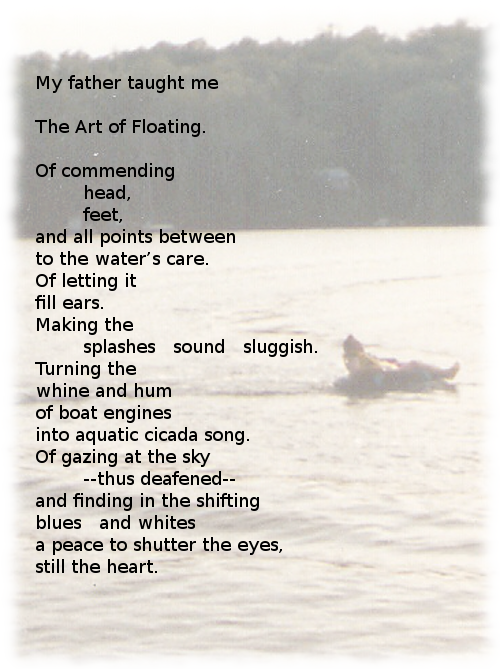
At his funeral, I read the following poem.  Afterward, I created the picture and we had copies made for the family.

ArtofFloating

The picture is one of my dad tubing at my uncle’s cottage. Sadly, we have no pictures of him floating.


Dad had a nigh on miraculous ability to float.  He could lie on his back in the water, put his hands behind his head, and just float, head, belly, and toes all poking above the surface.  He was unsinkable.  My cousin swears that he caught Dad sleeping that way.  I like to think of my Dad floating away in the afterlife, still unsinkable.

I chose The Water is Wide by Connie Dover as a song for the funeral recessional as well.  Though it’s more of a love song, the water theme prevailed.  While Dad’s gone before her, I like to think that he’ll be back for Mom with the boat when the time comes.

Sadly, I couldn’t find a version of the song to share with you, but I encourage you to give it a listen.  Connie Dover has one of the world’s most beautiful voices.

Next week, the final episode of a life sentence with mortal punctuation: Thoughts on Happiness.  That’s where I’ll tell you a bit about what my experiences with death have taught me about living.

Have a great evening, everyone.