Thoughty Thursday: Things that made me go hmmmm on the interwebz, Oct 16-22, 2016

Let’s get that mental corn a-poppin’!

Carol Mulligan explores the lore of the pour. The Sudbury Star

What are dreams? Drake Baer shares five of humanity’s best explanations for dreams. Science of Us

Anna Lovind: the shameless introvert.

Suzanne Lucas to employers: please stop punishing your employees for being introverted. Inc.

UpWorthy recommends Marzi’s cartoons to help others relate to intorversion and anxiety.

The Born Again Minimalist examines the gaslighting of the millennial generation.

Transgender rights bill passes key commons vote and heads to committee. The Globe and Mail

Too sweet, or too shrill? The double bind for women. Shankar Vedantam hosts the Hidden Brain podcast for NPR.

The transformative power of Moko. Michelle Duff for Broadly/Vice.

Cath Pound considers the great women artists that history forgot. BBC

Artist Toby Allen, who suffers from anxiety, illustrates mental illnesses as monsters. Bored Panda

Regina activists place warning labels on indigenous Hallowe’en costumes. CBC

I’m just going to leave this here. To the new culture cops, everything is appropriation. Cathy Young for the Washington Post.

Avaneesh Pandey: self-awareness may be a side effect of the brain trying to maximize entropy. International Business Times

Ben Paynter shares news about how the world is slowly winning the fight against Malaria. Fast Company

Sarah Knapton reports on how tool-making monkeys are prompting scientists to reconsider human evolution. The Telegraph

Bec Crew: scientists accidentally discover the process that turns CO2 into ethanol. This could change the world. Science Alert

Ross Pomeroy explains why Bill Nye changed his mind about GMOs. Real Clear Science

The mystery of the Bermuda Triangle may finally be solved . . . by meteorology. Cory Charlton for The New York Post.

Loren Grush explains how the ExoMars spacecraft will make its way to the surface of Mars. The Verge

Catch Space.com’s coverage of the landing and other astro-news.

Maddie Stone: Pluto’s skies look more Earth-like than we’d imagined. Gizmodo

A spiral galaxy defies the cosmic flow. In an expanding universe, it’s actually getting closer to us. Also: how big is Proxima Centauri’s planet? Later in the week, we learn that the Schiaparelli lander (crash) site can be seen from orbit. Phil Plait for Slate.

Can the multiverse explain the course of human history? Andrew Crummey for Aeon.

Puppers! Buzzfeed

Alex and Jumpy, the parkour dog 🙂


Just a reminder, this is your penultimate thoughty Thursday prior to my #NaNoWriMo break.

I’ll see you next Thursday, but after that, you won’t get your weekly dose of thoughty until December.

Respect your priorities.

Be well.

All my (virtual) love.

Mel

Thoughty Thursday

Tipsday: Writerly Goodness found on the interwebz, Oct 16-22, 2016

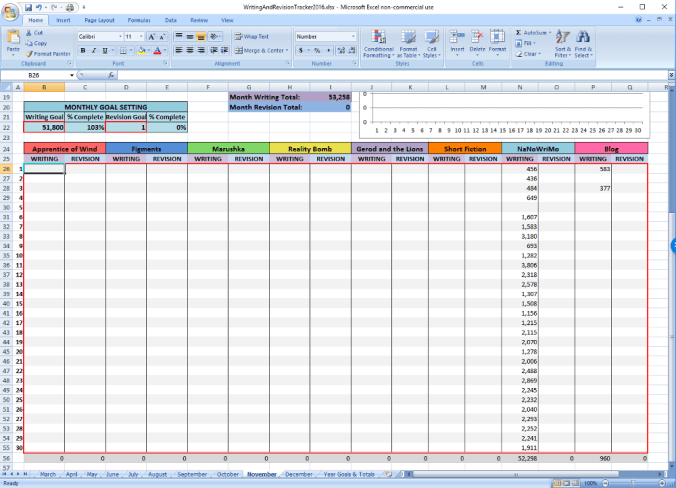
Just to let you know. I’m participating in #NaNoWriMo this year, but I wasn’t able to take much time off in November. So I’m working. And, I’ll be out of town, training for the day job, for the first week. And I’ll be at Wordstock Sudbury the weekend I get back. And I’ll be helping to launch the SWG anthology, Sudbury Ink. On the weekend of the 12th/13th (the day/date is yet to be determined).

So, it’s going to be a busy month.

As a result, I’m not going to be blogging at all in the month of November. I will be able to complete and schedule the curation posts for the first week (Tipsday on Nov 1st and Thoughty Thursday on Nov 3rd), but, after that, you won’t be seeing another post until December 3rd, when I’ll be doing a double monthly update for October and November.

I just wanted to let you know ahead of time, so you won’t be expecting posts, or wondering where the heck I am.

I’ll be well, and writing 🙂

Your #NaNoWriMo round up for the week:

K.M. Weiland reviews the WriteMind Planner (plus a chance to win!). Helping Writers Become Authors

Janice Hardy guest posts on Kate’s blog: three ways to instantly spot telling.

Chris Winkle shares five ways to hide your foreshadowing. Mythcreants

Vaughn Roycroft suggests the synopsis as a way to revision success. Writer Unboxed

Dave King helps you meet your characters on Writer Unboxed.

Janice Hardy asks, which character is the heart of your story? Fiction University

Writing a series: how much do you need to plan ahead? Jami Gold.

Alex Bloom makes a guest appearance on The Write Practice: what most writers don’t know about screenplay structure.

Steven Pressfield: what works and what doesn’t.

Gail Carriger discusses one of her literary influences, Mercedes Lackey.

Sabaa Tahir picks Patrick Rothfuss’s brain about writing sequels and impostor’s syndrome. Tor.com

Sarah Gailey wants to see more mentally ill women protagonists. Tor.com

Authors share their views on cultural appropriation. The Guardian

Marlon James: why I’m done talking about diversity. Literary Hub

Finally! An infographic that breaks down the big five and their imprints.

Kelsey Campbell-Dollaghan reports on a gorgeous typeface that drove men mad and sparked a 100-year mystery. Gizmodo

Charles Dickens and profanity. Bryan Kozlowski for The Millions.

Azhar A. Alkazwini documents the influence of the Norman Conquest on the English language. Medievalists.net

Five portmanteau words you want to start using. Sad and Useless

Hephzibah Anderson settles in with The Wide Sargasso Sea, the book that changed Jane Eyre forever. BBC

Looking forward to Guardians of the Galaxy, vol. 2? Check out this teaser trailer! Brian Raftery for Wired.

Women will direct every episode of Jessica Jones, season 2. Beth Elderkin for i09.

All the best until Thursday 🙂

See you then! *waves*

Tipsday

WorldCon 2016: Science fiction as epic

Disclaimer: I am not perfect and neither are my notes. If you notice anything that requires clarification or correction, please email me at melanie (dot) marttila (at) gmail (dot) com and I will fix things post-hasty.

Panellists: Frederick Turner, Walter Jon Williams, Cynthia Ward, John Kessel (moderator), Elizabeth Moon

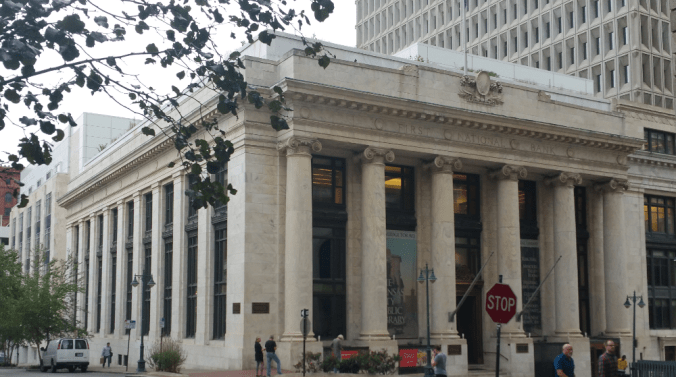
kcpubliclibrary

The Kansas City Public Library

Quick note: What’s with the non-panel pictures? In the first day, I wasn’t sure if it would be acceptable to take pictures without first asking permission. So I’m sharing pictures from Kansas City, which hosted WorldCon this year, because I took walking tours of the city Friday, Saturday, and Sunday mornings. Panel pictures will arrive with the Friday sessions.

Joined in progress.

FT: The classic epics were the science fiction of the past. They shared common themes and fundamental elements. They were from the oral tradition (storyteller). They featured a creation myth (cosmology), a hero, a quest, kinship and kinship troubles, the interplay of nature, culture, and the supernatural, descent into and emergence from the underworld, and/or the founding of a city.

EM: The SF epic can be set in a different world. One of the features in that case would be the technological difference between our world and the other one.

JK: Does scope equal epic? Northrop Frye espoused the high mimetic (imitative) as central to the epic form. Is there no everyman in the epic?

EM: The genius has epic intellect. The protagonist must be exceptional in some way.

CW: Walter Mitty is not epic.

FT: Many heroes start out as foundlings or shepherds.

WJW: Dune is a science fiction epic. Zelazny’s Lord of Light is an SF epic.

JK: Star Wars is an SF epic, a space opera. Edith Hamilton and Joseph Campbell have both analyzed it in their work.

CW: Foundation is an epic.

FT: Epic goes to the edge of the world, or humanity, or the universe. The world has to change as a result of the story.

WJW: So Epic science fiction is about man’s place in the universe.

FT: There’s an emotional, almost musical resonance.

EM: Modern readers need humour. That’s the secret spice in the stew.

JK: Economics doesn’t seem to be a factor.

CW: Not everyone appreciates an empire. Post-colonial narratives.

FT: Mad Max is dystopian and epic.

Aud: Wilson Tucker coined the term space opera in the early 40’s. It was meant to connote second rate science fiction that focused on adventure. It’s from horse opera, which was a pejorative term for a western.

Other epics were proposed by the panel and the audience: C.J. Cherryh, Leviathan Wakes, Hyperion, Babylon 5, Sagan, Clarke, David Brin, Gene Wolf. The theme of faith and religious belief was also proposed as another feature of the epic.

And that was time.

Next week: Mythology as the basis of science fiction.

Be well until then 🙂

Thoughty Thursday: Things that made me go hmmmm on the interwebz, Oct 9-15, 2016

Time to get your thoughty on!

This is the only post I’m sharing on the Trump thing from last week: every woman in America knows Donald Trump and Billy Bush. Erin Gloria Ryan for The Daily Beast. Seriously, after hearing him say that rapacious shit—I have no words.

Michelle Obama had plenty, however. I’ll let her speak for the outrage we should all be feeling right now:


John Ralston Saul on the CBC’s Unreserved: indigenous peoples don’t need your sympathy. They need you to take action.

And though he’s dying of brain cancer, this man is acting: watch Gord Downie’s Secret Path on CBC, October 23, 2016. It should be streamed on their web site, too, in case you’re not in Canada.

Colin Schultz remembers the day Canada burned the White House. The Smithsonian Magazine

The Roma in Peterborough. John Tyler Lyon for Canada’s History.

Medievalists.net lists ten great Anglo-Saxon girls’ names.

Marianne Ailes shares new Charlemagne research for the Medievlists.net.

This is what 18th century Paris sounded like. Erin Blakemore for The Smithsonian Magazine.

Lindsay Baker looks at the 20’s, the era that changed the way we dress. BBC

Meet the woman correspondent who scooped the world. Dominique Rowe for Time.

You know how much I love abandoned places and urban exploring. Sarah Laskow of Atlas Obscura takes us on a tour of the New York public library’s last, secret apartments.

Is there a limit to how long humans can live? Richard Faragher for Quartz.

Omid Safi states that being busy is a disease. On Being

Annette Heist looks at living with anosmia. NPR

Rose Eveleth reports that people put too much emphasis on Myers-Briggs Type Inventory results. The Smithsonian Magazine

Conversations with dolphins. CBC‘s The Nature of Things.

MIT creates a world of eternal May to help save bees. Mark Wilson for Fast Company.

The colonization of Mars could put astronauts at risk of chronic dementia. Victoria Woollaston for Wired.

Neil de Grasse Tyson and Bryan Cox debate the physics of lightsabers on StarTalk. National Geographic Channel

The good people of Minute Physics explain time’s arrow. Phil Plait for Slate.

Will you become a citizen of Asgardia, the first nation state in space? Nicola Davis for The Guardian.

And if you want to find out more, here’s the Asgardia web site.

Marcel Schwantes lists twenty ways to reduce your stress. Inc.

Grace Eire offers twelve signs that you may be an old soul. Little Things

Take a first listen to Tanya Tagaq’s Retribution, courtesy of Katie Presley of NPR.

And that’s how we pop your mental corn 🙂

See you Saturday for more WorldCon reportage.

Thoughty Thursday

Tipsday: Writerly Goodness found on the interwebz, Oct 9-15, 2016

Another harvest of informal writerly learnings for you 🙂

Moar Wordstock Sudbury 2016 news from Kim Fahner, Sudbury’s Poet Laureate. CBC

Emily Franceschini interviews Danielle Daniel for Our Crater.

This week’s #NaNoWriMo round up:

Eleana Sbokou guest posts on Kate’s blog: seven things you need to know about writing and editing.

Roz Morris provides a blueprint for keeping the reader gripped. Nail Your Novel

Juliette Wade guest posts on Janice Hardy’s Fiction University: backgrounding your world through point of view.

Veronica Sicoe continues her series on storyworld design with this instalment on communication technologies.

Gabriela Pereira interviews Amor Towles for DIYMFA radio: worldbuilding from the inside out.

The book monster, or, when writing gets hard. Kate Moretti on Writer Unboxed.

Allie Larkin writes about finding confidence. Writing Unboxed

David Corbett shares what he learned at the beach this summer. And I have another book for the TBR pile 🙂 Writer Unboxed

Lisa Cron explains where drama really comes from. Writer Unboxed

Orly Konig Lopez gives three reasons quitting is an option, and the one reason you won’t. Bonus: guinea pig pictures! Writers in the Storm

Steven Pressfield reminisces about writing “as if.”

Ok. I just can’t resist Harper Lee Hodges. The four steps cats use to explain how to do something. The Write Practice

Julie Phillips: the fantastic Ursula K. Le Guin. The New Yorker

Jamie Raintree shares her story: from agent to publisher, part 1.

Why is it so difficult to get an agent? Liza Dawson Associates

Kristen Lamb explains why we need a synopsis before we write the book.

Catherine Ryan Howard explores her hate/love relationship with writers’ workshops.

Susan Spann helps us understand advances in publishing deals. Writers in the Storm

Adrienne Raphel: a history of punctuation for the internet age. The New Yorker

Four writers share their stories about the search for happiness. The Telegraph

Claire Kirch reports on We Need Diverse Books new curated reading app. Publishers Weekly

The publishing industry risks becoming irrelevant. Tom Welson of Penguin Random House UK. The Guardian

Here’s a lovely bit of storytelling for you. Dia de los muertos from Film School Shorts.


And another  video on the role of geometry in visual storytelling. Now you see it


The indigenous science fiction film, Northlander, will be screened across Canada. CBC

Kameron Hurley digs into the first couple of episodes of Westworld.

Alex Cranz reviews the season premiere of Supergirl. i09

James Whitbrook says that DC’s Legends of Tomorrow is trying to be Doctor Who with superheroes, and that’s just fine by him. i09

Clara and Eleven were a couple. What we’ve all known, finally confirmed. Caitlin Busch for Inverse.

Katharine Trendacosta reviews the first Iron Fist footage from NYCC. i09

And The Nerdist shares the Iron Fist trailer.

Katharine Trendacosta shares what she learned about The Dark Tower trailer (leaked). i09

The Outlander, season two, gag reel 😀


I hope that you find some news you can use to help improve your craft.

All the best.

See you Thursday!

Tipsday

WorldCon 2016: Is cyberpunk still a thing?

Disclaimer: I am not perfect and neither are my notes. If you notice anything that requires clarification or correction, please email me at melanie (dot) marttila (at) gmail (dot) com and I will fix things post-hasty.

Panellists: Cory Doctorow (moderator), Matt Jacobson, Patrick Nielsen Hayden, James Patrick Kelly, Pat Cadigan

thecoolestparkinggarageevar

Joined in progress . . .

PNH: Cyberpunk is a course correction.

MJ: I think of cyberpunk in terms of the Max Headroom tagline: fifteen minutes into the future.

CD: The first generation/layer was written by people who were not computer professionals. The second focused on current technology and near future extrapolation. The third layer is an aesthetic.

PC: The first generation of cyberpunk writers was the first to grow up with mass media (television, radio, etc.). The Vietnam War was the first to be televised. They wrote about the influence of media and extrapolated what the influence of mass media might be in the future.

CD: In the 1980’s, money had a huge influence on the political process.

PNH: An aesthetic is a number of people who have similar intuitions about the world. It’s deliberately referencial.

JPK: Bruce Stirling tried to “end” cyberpunk, but the readers weren’t listening.

MJ: A thing would be whatever catches people’s attention.

PC: Cordwainer Smith and Alfred Bester were influences on cyberpunk.

PNH: Science fiction is one big conversation.

MJ: Cyberpunk has been taken over by tech noir. Shows like Mr. Robot and Person of Interest.

JPK: Cyberpunk emerged pre-Apple. For most users, a computer is indistinguishable from magic.

CD: The whole point of Mr. Robot is to strongly distinguish technology from magic.

MJ: Pokemon Go demonstrates just how easy it is to know where anyone is, anywhere in the world.

CD: Actually, your device uses the statistics from the game to triangulate your location and reports the information to Nintendo. That’s a lot more scary.

PC: In the early days of the internet, there were the BBS’s, the bulletin board services. Genie—the conversation never ends. Now mass media is to ambient, we’ve stopped seeing it. Information (and misinformation) is ubiquitous.

PNH: Science fiction has been doing the virtual presence thing since 1929 with the fanzines.

MJ: Cyberpunk intersects with maker culture. High tech is repurposed.

CD: The liminal moment was a queer programmer, Jennings. Cyberpunk concerns itself with the frontier of self and interrelatedness.

And that was time.

Next week: science fiction as epic.

And, of course, in the meantime, I’ll be curating Tipsday and Thoughty Thursday for you.

Be well. Stay safe. Love unconditionally.

That is all.

Thoughty Thursday: Things that made me go hmmmm on the interwebz, Oct 2-8, 2016

Thoughty Thursday’s all over the map!

The Vintage News reports that Amelia Earhart’s remains may have been found on an island.

Gabriel Samuels reports on a piece of engraved wood that suggests a Persian taught math in Japan 1,000 years ago. The Independent

Medievalists.net compiled this comprehensive list of online resources for researching the Black Death.

Medievalists.net shared this entertaining piece on Viking nicknames. My favourite? Eystein Foul-Fart 🙂

And, for the hat trick, Medievalists.net explains why cats were hated in medieval Europe.

An oldie from Barbara G. Walker of Church and State (2008!): local wise women who carried on ancient traditions were exterminated by Christianity.

Margaret Rhodes invites us to obsess over this infographic about the history of alternative music. Wired

Jonathan Jones looks at the legacy of painter Artemesia Gentileschi. The Guardian

Azeen Ghorayshi reports that transgender children as young as three are getting the help they need. Buzzfeed

Katrina Schwartz wonders why we’re so obsessed with teaching kids cursive handwriting. Mind/Shift

America is obsessed with happiness and it’s making everyone miserable. Ruth Whippman for Vox.

What it’s like to have “high-functioning” anxiety. The Mighty


Baby Boomers may be more susceptible to treatment-resistant depression. Anna Gorman for CNN.

Myke Cole writes about PTSD. This is from a few years ago (2013) but it’s still relevant.

Dominik Parisien shares his experience with Alice in Wonderland Syndrome. Uncanny

Justin Gammill lists ten things to keep in mind when loving a highly creative person. I heart intelligence

Paul Stamits talks about how fantastic fungi can save the world.


Bees are demonstrating problem-solving and transmission of knowledge. Daily Science

Scientists declare the dawn of the human-influenced epoch. Damian Carrington for The Guardian.

AI and deep machine learning are changing your life. Roger Parloff for Fortune.

What Emma Thompson learned from spending a week in the arctic. Time

Beware of dog, indeed. Upshout

Adieu until Saturday.

Be well until then 🙂

Thoughty Thursday

Tipsday: Writerly Goodness found on the interwebz, Oct 2-8, 2016

This week was just yummy 🙂

The Wordstock Sudbury 2016 schedule is up 🙂

Prism International interviews George Elliott Clarke, one of our Wordstock guests of honour.

Your #NaNoWriMo prep posts for the week:

Nina Amir guest posts on K.M. Weiland’s Helping writers become authors: how to get up close with your characters.

Chris Saylor guest posts on Marcy Kennedy’s blog: how to punctuate dialogue.

Roz Morris shares her insights on how to write emotions. Nail your novel

Donald Maass looks at four kinds of pace. Writer Unboxed

Joanna Penn: how to find and capture ideas for your novel. The Creative Penn

Janice Hardy guest posts on Writer Unboxed: a ten step guide to plotting a practice novel.

Therese Walsh explores dehumanization in fiction using one of my favourite movies, The Shawshank Redemption. Writer Unboxed

Cathy Yardley: just say yes. Writer Unboxed

Chris Winkle thinks the surprise kiss must go. Why? It’s a matter of consent. Mythcreants

Chuck Wendig offers some good writing (and life) advice: control what you can control. Terribleminds

Later in the week, he shares ten quick story tips to use or discard at your leisure.

Kameron Hurley shares her experience: five years a novelist.

Sarah Waters shares her ten rules of writing fiction. Aerogramme Writing Studio

Last Sunday I spent the day online in a short fiction intensive with Mary Robinette Kowal (!) Here’s one of the resources she shared on critiquing:


Carly Watters offers ten ways to personalize your query letter.

Kristen Lamb: what the dreaded synopsis reveals about our writing.

Anna Davis: how to prepare your submission package. Curtis Brown Creative

Awards news!

Ursula K. Le Guin has stopped writing fiction, but we need her more than ever. Zoë Carpenter for The Nation.

When Steven Musil reported that Amazon was cracking down on incentivized reviews, everyone panicked, until it was clarified that this policy change would not apply to ARCs provided for book review purposes. cnet

Sarah Gailey: why we write about witches. Tor.com

Lisa Rosman: what The Girl on the Train is really about. Signature Reads

Angelica Jade Bastièn says the price of fandom can be too high for women of colour. New Republic

Julia Alexander examines sexism in television in the microcosm of Adult Swim. Polygon

Shane Parrish: what you read changes your brain. Medium

If you can correctly pronounce every word in this poem, you speak English better than 90% of English speakers in the world. I must admit, I flubbed two or three <blushes>. The Poke

Ephrat Livni for Quartz: a linguist’s love letter to profanity and why it’s okay to swear in front of kids.

Dark Horse Comics will be producing the next two seasons of The Legend of Korra in print. Rob Bricken for i09. Moar Korra! Eeeeee!

Evan Narcisse talks to Greg Rucka about the reaction to Wonder Woman’s canon bisexuality. i09

Did you see the premiere of Westworld last Sunday? Here are a few pieces about it.

Michael Bennett Cohn looks at Westworld through the lens of the golem story. The Forward

Can Westworld do for science fiction what Game of Thrones did for fantasy? Charlie Jane Anders for Wired.

I’m watching and enjoying it. Phil, not so much, but then, he did see the original movie (which I haven’t) and he just doesn’t see how the writers can turn it into a series and so he’s closed to the possibilities.

Evan Narcisse explores how Luke Cage uses blackness for i09.

Netflix provides a release date (and teaser) for Iron Fist: March 17, 2017.

Outlander casts Marsali and adult Fergus. Entertainment Weekly

The Doctor Who Christmas special features superheroes (!) plus a wee teaser. Katharine Trendacosta for i09.

See you Thursday!

Tipsday

WorldCon 2016: What’s new in medicine

Disclaimer: I am not perfect and neither are my notes. If you notice anything that requires clarification or correction, please email me at melanie (dot) marttila (at) gmail (dot) com and I will fix things post-hasty.

Panellists: Dr. Brad Aiken, H.G. Stratmann, John Strickland Jr. (moderator), Dr. David Kushner

Research into slowing down the aging process:

  • Telomeres – the caps on the end of a chromosome that include instructions for replication
  • Mitochondria – have a role in regulating the aging process

There are currently 19 different areas of research. Some focus on the mechanism and some focus on the effects and process of aging.

Metformin is a drug used to treat type II diabetes. Some studies have shown that type II diabetics live longer.

Medicine in general is helping people live longer. The oldest documented human lived to be 122 years old.

We’re thinking in terms of health span versus life span. Quality of life is more important than simply living longer.

Aging is a complex process. We don’t fully understand it yet.

NASA has contributed data from their astronauts. The relief of gravity accelerates some aspects of aging.

Space medicine focuses on a small number of subjects, astronauts. Many of the changes that result from space travel reverse once the astronaut is exposed to gravity again.

There have been changes in the eyes. Vision can be negatively affected.

Artificial organs can be printed using 3D printers/matrix machines. An artificial heart has been created this way.

In neurosurgery, they’ve 3D printed skull fragments and in ortho, they’ve printed knee replacements.

In cancer research, they’re customizing treatments and addressing immunodeficiencies by individual genetic profiles.

Genetic medicine means there is no single treatment for a disease. Each treatment is customized to each patient.

In cardiology, they’re making stents that are absorbed into the body. Xenotransplantation, transplanting a pig’s heart into a human body, continues to be pursued.

Crisper is being used to edit genes.

Defibrillators and pace makers represent mechanical human enhancement.

In cases of patients who’ve suffered strokes or brain injury, doctors and researchers are using direct electrical stimulation and fMRI to prompt the brain to “rewire” itself.

Using a combination of a robotic exoskeleton and a brain/computer interface, like the Oculus Rift, paraplegic patients have regained some muscle control. They can’t walk, but they have a much higher quality of life because they’ve been able to overcome incontinence. And they have hope because they can move their limbs, even if it’s only a little bit. [Mel’s note: I actually shared an article on this a few weeks ago on Thoughty Thursday 🙂 ]

In both cases the brain is bypassing the area of damage.

Sensory loss attributable to peripheral nerve issues is still difficult to treat.

Artificial limbs and prosthetics are continuing to improve. Many now use neural interfaces to allow the brain to control the limb.

Spinal cord repair with respect to vertebrae (3D printing again) and discs is also making progress.

viewfrommyhotel

The view from my hotel room.

And that was time.

Unfortunately, I wasn’t close enough to see who was speaking at any given time, so I haven’t identified who was saying what.

Next week: Is cyberpunk still a thing?

And, of course, Tipsday and Thoughty Thursday will be making their regularly scheduled appearances.

See you on the interwebz!

Thoughty Thursday: Things that made me go hmmmm on the interwebz, Sept 25-Oct 1, 2016

I’m taking it easy on your mental popcorn, this week 🙂

Katie Hafner reports on the epidemic of loneliness among the elderly. The New York Times

Human trafficking is a hidden problem in north-eastern Ontario (and everywhere, unfortunately). CBC

Nora Caplan-Bricker reveals the risks of sexual assault on long haul flights. Slate

Marissa Fessenden shares how women in the early 1900s dealt with harassment. The Smithsonian

Library worker defends free speech and is arrested for it. The Bill of Right Defense Committee

Ronald W. Pies discusses the astonishing non-epidemic of mental illness. Psychiatric Times

Ivan Dikov reports on a shrine to Demeter and Persephone discovered in Bulgaria. Brewminate

Ria Misra reports on SpaceX’s major milestone en route to Mars. Gizmodo

Phil Plait shares Judy Schmidt’s astrophotography. Slate. Later in the week Phil shares the first photograph ever taken of the sun.

Maddie Stone shares the last image Rosetta captured before it crashed. Gizmodo

Fiona MacDonald reports on a 25 year old PhD student, Shu Lam’s, solution to antibiotic-resistant infections. Science Alert

Julien d’Hoy reports on how scientists have traced society’s myths to their primordial origins. Scientific American

The Vintage News shares the discovery of Britain’s Atlantis.

Medievalists.net lists the top ten scandals of the Middle Ages. Story fodder, anyone? 😉

Uninhabitable 1887 Queen Anne house is restored to its former glory. Laura Caseley for Little things.

Here’s a lovely local piece on NISA’s annual art show. South Side Story

Sad and Useless shares a Twitter stream on how God created some animals. Lolz aplenty.

Two guinea pigs discuss everything pumpkin spice.


Teddy Bear the porcupine’s Hallowe’en feast. He sounds like Woodstock from the Peanuts 🙂


Sheila Carabine releases her solo album 🙂 Here’s one of her songs: The Oak and the Maple.


Hope you enjoyed this week’s offerings.

See you on Saturday!

Thoughty Thursday