Six questions with Hally Willmott

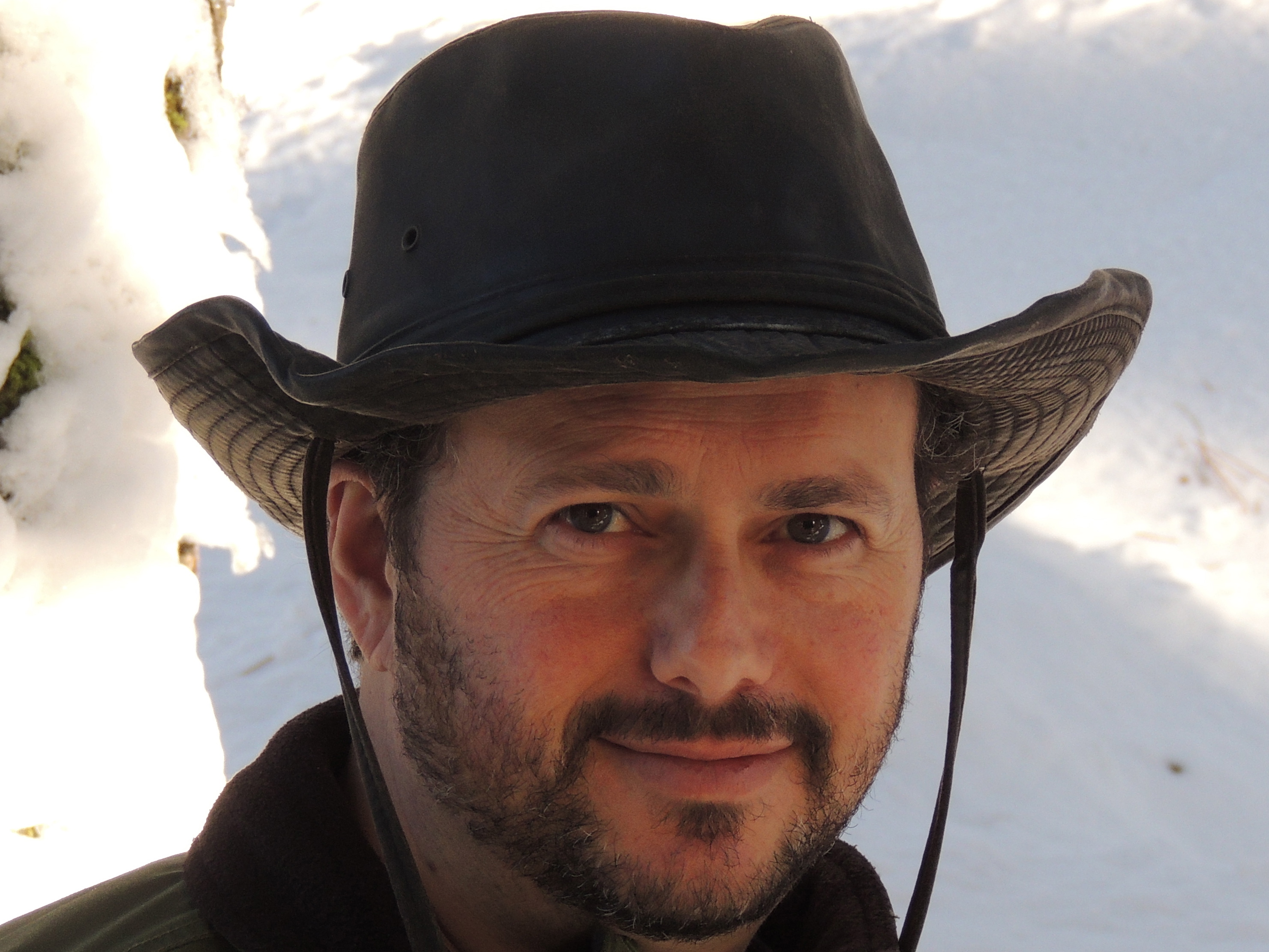
Hally WillmottHally was born in Sudbury, Ontario, Canada. She is a Police Officer with the Greater Sudbury Police Service. Hally enjoys reading both fiction and non-fiction. She is a self-proclaimed writer of all things imaginative (both poetry and novels). She also believes that if you put your mind to it, you can accomplish anything!

She met her forever partner Jerry, and married him thirteen years ago. Together, they have accomplished the greatest feat, being blessed with two gifts from God, their sons Jacob and Jordan.

Between working full time, being a wife and mother, Hally finds the time to write when her kids go to bed, when Jerry’s at work or when their new puppy Jersey decides to wake her up every morning around five a.m.

She and her family enjoy long summer nights by the campfire and cold winter nights snuggled up watching movies in their home.

In 2009, Hally had an idea to write a novel. The idea for Awakenings came to her in a dream, the first in a series of four.

_________________________________________________________________________________

I was amazed, and I have to say, a little freaked out when Hally reached out to me last week through my blog.  I had no idea that Writerly Goodness had that kind of influence or good will.  Ultimately, I’m flattered and grateful and very pleased to have made the acquaintance of another local writer of fantasy fiction.  A soon-to-be-published writer at that (yay)!

I think that’s what I’m most thankful for: that Writerly Goodness is creating a community and communicating to it in a meaningful way.

Since we live in the same city, I was able to meet with Hally this past weekend and we shared some of our writing ups and downs.

Now I feel privileged to share some of that with you.

Thank you for taking time out of your busy schedule to answer a few questions for me (and my readers).  Welcome to Writerly Goodness, Hally 🙂

HW:  Thank you for having me 🙂

WG: You mention in your bio (above) that the idea for Awakenings came to you in a dream.  Was it a single scene, or the story writ large, and how did you hang onto it long enough to get Jacey’s story down?

HW:   The actual part which outlined my main character Jacey Adison was only a flash.  Once I started telling Jacey’s story she pretty much took over and to this day is still writing it.

WG: For those who may not be aware, what is Awakenings about?

HW:  No matter how many times sixteen-year old Jacey Adison’s parents tell her they must move, she has never questioned their lifestyle. Until now. When Jacey was two, her parents fled the protection of their birthplace, the mystical dimension of Nemele. Leaving was the only solution her parents believed might allow them to keep their family together and alive.

The Adisons have been running from a sect of iniquitous beings from Nemele who covet Jacey. Her parents have repressed their adversaries’ relentless tracking efforts by not utilizing their own mystical powers. They have chosen to conceal themselves within the only realm they knew they’d be able to survive. They are living under their self-imposed powerless sanctions on Earth, which constitutes the nineteenth nation of Nemele.

Her parents have never revealed their true identities to Jacey, consequently keeping her true lineage and unique birthright from her. Jacey’s family has pretended to be non-magical humans as a ploy to prevent an ancient omnipotent entity from killing more innocent beings in its relentless quest to possess Jacey.

Born as an anomaly, Jacey possesses rare abilities that both virtuous and corrupt entities seek to use as their own. Should either side prevail, Jacey may be the saviour or downfall of every world within Nemele’s domains. Blindly thrust into life and death situations, Jacey learns of her true powers within her dreaming and conscious states.

WG: How long did it take you to write Awakenings?  Now the unpleasant second half of that question: how long has it taken you to edit?

HW:  Awakenings took me just under a year to write from start to finish.   ‘Awakenings’ is now in its final stage of edit through Limitless Publishing.

WG: You went through quite a journey to find your publisher.  Would you mind sharing some of that adventure?

HW:  Initially when I wrote it, I had only planned on writing a novel and saying hey I finished it!  It wasn’t until I received positive feedback from some ghost readers that I even thought of having it published.  Because I was green when it came to the publishing world, I thought hey – why not?  Can’t be that hard…can it?  Well, after at least one hundred rejections from both publishing houses and agents I finally got one YES – And that’s all it takes 😉

WG: Now for the introspective question: how do you keep everything balanced and find time for work, family, and writing?

HW:  I’ve never been one to do something half heartedly.  So, sometimes others facets of my life may take a back burner while I focus on something else.  I have to say I have an EXTREMELY supportive family.  Without them and God I would have never been able to get to where I am today.

WG: What’s coming up next for Hally Willmott, Author?

HW:  The cover reveal for my first novel is on Wednesday the 20th of March 2013, and ‘Awakenings’ is set to be released in late May early June 2013.  I’m excited about the release of my debut novel and I will be actively promoting its success over the next while.

Thanks again, Hally, and the best of luck with your future writing endeavours!  Knock our readerly socks off 🙂
Bits and pieces

First: Happy St. Patrick’s Day!

Though my mom was adopted, she was of Irish descent.  It was something my grandfather liked to tease her about.  So though my last name is Finnish, I claim Irish into the mix and feel very proud to do so.  Besides, isn’t everyone Irish on St. Patrick’s Day?

Second: Remembering Dad

I mentioned a few weeks ago that I was entering my “season of sorrow.”  The first of the sad anniversaries passed last Thursday, March 14th with Dad’s birthday.  He would have been 73 this year (I think, I’m beginning to lose track—it’s shameful).

I posted this to Facebook on the day, but I wanted to post it again, just because.

RememberingDad

Third: Mini Pupdate

I’d hoped not to have to write any more about Nuala in the near future, but it seems she now has a urinary infection, poor dear.  The snow reveals clear signs of blood in her urine 😦

We decided to take her off the Metacam last month, and the blood tests confirmed that her liver was being compromised by long-term use.  She’s still been limping, but it’s different than it was before.  Now we’re fairly confident that it is the arthritis in her knee that’s causing the her hobble, and we were looking to see if we could find some other treatment for her joint issues without resorting to the same kinds of medication (with the same kinds of side-effects).

So we’ll be making another appointment for Nu this week to see if we can figure out what she has.  It will be interesting and possibly messy getting the urine sample from her to get a proper diagnosis.

Have you ever had to collect pee from a female dog?  I have.  Interesting and messy is the nice way of putting it.

Best for Last: Upcoming excitement

This past week, I was contacted by a local writer who will be publishing her first young adult fantasy novel in May.  Her cover reveal is Wednesday, so I’m going to break the “weekend only” blogging rule to publish an interview with her on Tuesday.  I hope that you’ll all give a warm Writerly Goodness welcome to Hally Willmott!

A life sentence with mortal punctuation will continue next weekend as well, and I’ll keep you up to date with all things writerly as I continue on my journey toward publication.

That’s it for today.  Off to Mom’s for stew.  Is it Mulligan?  Don’t know, but it will be tasty 🙂  Kim, need you to make me some soda bread!  Or share the recipe?  All out of Guinness!  Oh, ‘tis a sad St. Patrick’s without Guinness!

Have a happy week, everyone!

Writerly Goodness, signing off *wags*


A life sentence with mortal punctuation: part 5

Last week: A second routine surgery turns complicated and results in my second near-death experience.

The hits don’t stop coming

1987 was a massive year for me, not only because of my appendix problems, but also due to several other events, both related and unrelated to that trauma.

I mentioned some of the related bits last week: the implosion of my first serious relationship, academic struggles, and the revelations of the second surgery.

My first serious relationship yielded to my second in a few short months.  By the time of the second surgery, I was firmly entrenched in coupledom again.  At that point, I really didn’t know how to function socially without a partner.  I was still so awkward on my own, still doubted my own value so much that it seemed the only option.

The man in question was attracted to wounded women.  This is not to disparage him in any way, because he was an excellent person, but I still have trouble seeing my virtues and can’t figure out why else he decided to enter into a relationship with me.  This is just a statement of fact, something he revealed to me later himself.

With regard to my academic difficulties, I missed a lot of school and because I tended to fall asleep toward the end of the day, I was doing poorly even in the courses I was there for.  In an attempt to catch up, I wanted to enrol in a correspondence course in history to offset my poor performance in other classes.  My mom and I met with a counsellor to discuss my options.

I was told, point blank, “You’re not smart enough to complete a correspondence course successfully.”  The counsellor in question was clearly looking at my recent marks, not on the A’s and B’s of previous years’ courses.  When I tried to press the issue, she said that I didn’t have the time and dedication to complete a correspondence course.

“You’re recovering from surgery and still pretty sick.  You’re heading for a second one in a few months.  You have enough to worry about without a correspondence course.”  Essentially, she thought I was too lazy to complete the course.  This was not the case, but I couldn’t convince her otherwise, so I left the session empty-handed.

Other events were converging to form a perfect emotional storm.

English: Tropical Depression One upon being de...

English: Tropical Depression One upon being declared (Photo credit: Wikipedia)

In the winter, my paternal grandmother had a stroke while driving home from visiting my aunt and uncle down south.  Her car shot through an intersection just after entering Sudbury and ended up on an embankment.  Fortunately, no one else was injured, but the car was totalled.  She was admitted to hospital, but as the days and weeks progressed, she did not wake up.

At first, they thought the stroke had caused more damage than they originally determined.  Further scans revealed that this was not the case.  As time went on and her coma continued, they needed to insert a feeding tube to keep her alive.  She could not continue to survive on intravenous alone.

They couldn’t insert the feeding tube.  Something was in the way.  A quick exploratory revealed that her abdomen was full of cancer.

We couldn’t imagine the kind of pain she must have been in during her long months of silence leading up to the stroke.  My grandmother was an intensely private and fiercely independent woman.

Due to my own health issues, I was not encouraged to visit my grandmother much.  Then, when my state of infection became clear, I was discouraged from seeing her at all.  Finally, I was brought up to say my goodbyes.  Without the intervention of a feeding tube, my grandmother would slowly starve, if the growing cancer didn’t get to her first.

The decision was made to remove all supportive measures and let nature take its course.

Family came up to visit and either stayed or returned for the funeral.  It was about that time that I started to cry for no reason.  I couldn’t cry when it seemed appropriate: when saying my goodbyes and at the funeral, but at odd times, I’d just sob uncontrollably or stare off into nothing.

I had no idea what depression was then and even though my boyfriend tried to tell me, I was closed to the message.

My friendship with Margaret suffered as well.  My first boyfriend was very jealous of my time and rarely let me do anything on my own.  He was everywhere and became sulky when I wanted a “girl’s night” or to do anything with Margaret that didn’t involve him.

My quick turnaround into my second relationship didn’t help matters.  This time I was the needy one and relied on my boyfriend, the picture of the strong, silent archetype, almost exclusively.  Margaret found a relationship of her own to fill the gap.  She needed someone she could rely on too.

Margaret’s mother was getting remarried and would be moving to Mississauga at the beginning of the summer.  Margaret was allowed to stay on with me for the summer, in my grandmother’s house until she joined her mother in Mississauga and I went away to the University of Guelph in the fall.

My parents had settled my grandmother’s estate in the spring and my father had to buy out his brothers of their shares.  My grandmother hadn’t left a proper will and a lawyer was hired to sort through the mess.  They would be moving into my grandmother’s house in September after I relocated to Guelph and renting out their house to pay off the second mortgage they had to take out to make the proper financial arrangements.

My grandmother’s house, though large, only had one bedroom.  My move down south would be a permanent one.  There was no place for me at home anymore.

Throughout this time, I didn’t write, or even think about writing.  There wasn’t any room for it in my life and I was too busy trying to fast-track through highschool and try to maintain some form of a healthy relationship with anyone to spare any time for my creativity.

In a relatively short period of time, I had a serious infection bookended by two surgeries, ended my first major relationship and entered my second, lost my grandmother, my home, and my best friend.  This was the beginning of a situational depression that it would take me years to recognize and sort through.

Next week: Fumbling toward stability.

Six questions with Alon Shalev

Alon ShalevAlon Shalev writes social justice-themed novels and YA epic fantasy. He swears there is a connection. His latest books include: Unwanted Heroes, At The Walls Of Galbrieth, and The First Decree. Alon tweets as@alonshalevsf and @elfwriter.

_________________________________________________________

Welcome to Writerly Goodness, Alon!  Thank you for taking the time to answer a few questions for my readers.  I must say that I’ve been following you with great interest since we “met” through Author Salon and I became aware of your progress through last year’s Amazon Breakthrough Novel Award (ABNA).

WG: I know you’ve probably written a lot about this, but I must ask about your experience with the ABNA.  Some of my friends have expressed interest in the competition (or entered) and I’m sure they would love to know about the process of getting to the quarterfinals and how it contributed to your success with At the Walls of Galbrieth.

AS: I think ABNA is an amazing opportunity even if you do not win. It pushes you to finish and polish a manuscript, and prepare what is essentially your media kit. I have reached the quarterfinals with three different books and enjoyed the tension around it (I had my acceptance speech all worked out!). When you reach the quarterfinals, experienced people in the industry critique your novel. It can be tough, but you do learn a lot. Finally, there are many agents trolling the competition, so it is an effective way to avoid the depressing slush piles.

WG: Now The First Decree, the second novel in your Wycaan Master series has been published.  How was writing the second novel in your series different from the first and what did it teach you about yourself as a writer?

AS: The most significant difference is allowing for a story arc that gives a satisfying climax, but also extends tendrils into the next book. In fact, there is a similarity at the beginning, because you want to bring the reader who has not read your first book (or read it a while ago) up to speed without imparting a huge information dump or giving away too much from the first book. I found this very challenging and had a number of friends critique this aspect in order to find the right balance.

What I love most about writing a series is that I can really develop my characters. They have time to grow up and mature. Outside of writing, I am a devoted father (which is what got me writing epic fantasy in the first place) and work with college students. So I realize that I am imbuing this love for seeing young people grow and develop into my writing and, I think, only a series can allow for this.

WG: How did Seanchai’s story begin for you and how did it evolve? 

AS: Every summer, my family goes camping for two weeks in Northern California. After we had set up camp, my sons (then 11 and 7) went off to explore the campground and I whipped out my laptop. They soon returned and objected to me writing during family time and this was the compromise we reached. During the two subsequent years, I wrote The First Decree and Ashbar, and read a couple of chapters each night either around the fire or snuggled in my tent.

I realized that many aspects of Seanchai are a mix of both sons, and perhaps how I would like them to turn out.  My fears that I will not be there for them one day plays out as Seanchai is denied a parent or mentor so many times. But there is also the desire to cultivate deep friendships, which I believe is central to the values that both boys have, as well as dealing with teenage romance and pressure.

All my characters are now part of my family. When I killed one off, I cried. When I edited that chapter several times, I cried…several times! I often imagine conversations with them, counselling and encouraging them, as I strive to do for my sons.

WG: I’m a big process geek.  Would you share something about your writing process? 

AS: I am not a good person to ask. I plunge in and trust the creative juices. I usually finish a 100,000-word manuscript (a rough draft full of mistakes) in three months, writing an hour a day and more on weekends. I keep a contents page for myself to track chapters and a characters page where I add physical traits or history. I also have ongoing plot notes that are threads between chapters and stories. This is written at the bottom of the chapter I am writing and I cut and paste on from word doc to word doc and erase an idea after it is included.

In terms of workspace, my desk is in the kitchen and I can write on the train, bus, anywhere. Once the idea is there, everything flows. It is a truly exhilarating experience. My family would probably tell you that I am a bit crazy when in the creative process. If I do not have the time to write I can become somewhat cranky and have a propensity to talk about little else. I am constantly worrying about my characters and the danger or emotional turmoil that I put them in.

WG: I’ve been told by industry experts that traditional fantasy is a hard sell in today’s market.  Did you find this to be true and what are your thoughts on the genre’s continuing potential? 

AS: My marketing guru is John Locke (the author) and I am fastidiously following his business model. He says it is better to have a smaller, clearly defined target audience, than a larger, less identifiable one. I have more problems placing my social justice-themed novels than fantasy.

Fantasy readers are passionate, fun, social and happy to share opinions. They are on line and engaging their peers all the time. In addition, every movie – Lord of the Rings, Eragon, Hobbit, Harry Potter, Oz, Jack and the Giant Slayer – brings waves of new and eager readers. Parents, who want to encourage their children to read, will buy them the books that reflect these movies. As long as these movies are being produced, as long as there are great authors writing quality stories, I think the future is bright and I am thrilled to be a part of it.

WG: What’s coming up for you and The First Decree?

AS: Following John Locke’s model, I am very focused on writing and publishing. Ashbar – the third book in the series is scheduled to come out in the fall. I will finish writing Book 4 during the summer and then spend the rest of the year editing it before turning it over to my editors.

The new marketing reality is that we are in an age of instant gratification. You finish Book 1 and if you enjoy it you want the next and you want it now! How smart were Amazon with their 1-Click? There is so much social media that to keep your readers waiting a year for a book is dangerous if your name doesn’t end in Brooks, Salvatore etc.  The First Decree

Meanwhile, I continue to build my online platform through my weekly blog (www.elfwriter.com) and twitter (@elfwriter – 22,000+ followers). I spend a fair amount of time here and on Facebook (and just getting into Goodreads), and I truly love the interaction with fellow writers, readers and fantasy fans.

Thanks for sharing your time and expertise, Alon.  All the best for your future writing endeavours!

Thank you, Mel, for this opportunity.

A life sentence with mortal punctuation: part 4

Last week: Friend wars.  Can a girl get post-traumatic stress disorder from those?

And now:

The appendicitis odyssey

I’m going to skip forward a few years.  They were largely unremarkable, trust me.  I wasn’t anything special in high school.

At fifteen, I entered my first serious relationship.  This pulled Margaret and I further apart, but in the summer I was sixteen, she invited me to go with her to a star party.

Margaret was and continues to be an amateur astronomer.  My interest lay mostly in continuing to spend time with her, though I did enjoy learning about the constellations and how to recognize them in the night sky.

Margaret and a group from the local astronomy club headed down to Star Fest that August with me in tow.  The weekend went well.  We stayed up late to look through various telescopes to see planets, nebulae, and galaxies far, far away.

The day we left, though, I wasn’t feeling so hot.  I had a stabbing pain in my gut.  That was the first attack.

Others followed and though I went to my doctor, my pain didn’t present as typical appendicitis.  It wasn’t in the right place.  So I had tests.  And more tests.  All with varied but negative results.

As the school year wore on, I started to fall asleep in science class, which had to that point been one of my favourites (organic chemistry-yay!).  I was still serving as acolyte at my parents’ church, looking more like Quasimodo as I walked, hunched over, to light and snuff the candles.  The pain got worse, and after a particularly terrible day, my parents took me to the hospital.

Typical presentation or not, emergency exploratory surgery was ordered.

Once again, I don’t remember the surgery, but I woke up feeling rotten with a drain poking out through my stomach.

For those of you who may not have had this particular medical procedure, let me describe it.  First, a six by six gel patch was placed over the incision site to stabilize the soft flesh.  Then a four inch incision was made.  There was a lot of infection inside of me (I’ll get to that in a bit) and so a length of surgical tubing was inserted to let it drain out, the wound packed, and I sent to recovery.

The doctor explained that I had not only an inflamed appendix, so inflamed that the complications were the same as if it had ruptured, but that I also had a grapefruit-sized (he described it to my parents as a softball) abscess on the appendix.  The reason it didn’t present as typical appendicitis was that my bowel was inverted (upside-down) and the reason ultrasounds had found nothing was that the massive, puss-filled abscess had obscured the appendix and unorthodox arrangement of my innards.

The appendix had not been removed.  The infection was so wide-spread that the surgeon would have had to remove most of my bowel along with it and leave me with a colostomy.  He had a daughter about my age and decided that he couldn’t do that to me (bless you, Dr. Keeley!) but this would mean a second surgery in a few months and intensive antibiotics in the meantime.

I was in the hospital for over a week.  They couldn’t get me back on solid food and I was so weakened by months of infection that my veins kept collapsing.  I had holes all over my hands, wrists, and arms by the end of it.  I wept when they had to change the intravenous site for the sixth time.

Other than the obvious, though, I had no clue that anything was amiss.  Friends and family all came in to visit, smiling, making small chat, all except my then boyfriend.  He came in and sat, silent and moping the whole time.  Eventually, I demanded to know what was wrong.  Why come to visit me if he wasn’t even going to bother talking to me?

“I almost lost you!” he blurted.  And that’s how I learned that I had nearly died.  Again.

He was certainly entitled to his feelings, but his selfishness astounded me.  In short order, as ill as I still felt, I returned his gifts to me and told him to hit the road.

The next three months were a trial.  Lots of antibiotics, and though the drain was removed before I left the hospital, the incision remained open and had to be packed, the dressings changed twice a day.

It stank.  Pus seeped through the dressings and my clothes on a regular basis.  The scar remains a puckered mess to this day.  My body is fond of forming cheloids.

The second surgery, the actual appendectomy, was coordinated with a test for malignant hyperthermia.  The condition had been detected in my family some years before and the test required the removal of a six inch strip of muscle.  Three were for the actual test and the other three for research.

Malignant hyperthermia is passed on genetically and is a condition which requires me to avoid both stimulants and standard anaesthetics.  Certain substances accumulate in my muscles and in situations of high stress, temperatures, or with exposure to certain anaesthetics, my body will go into a hyperthermic reaction.  My temperature rises until my muscles, including my heart and the intercostals, which facilitate breathing, shut down.  Cardiac arrest.

Fortunately, I’ve never had a full reaction, though I have always “run hot” and my muscles will twitch from time to time, often after exercise.

The surgeon for the second procedure was a clinician, and though excellent, was somewhat lacking in bedside manner.

Following that surgery, I was informed that Dr. Keeley should have removed the appendix and all the infected tissue the first time and that not to do so verged on malpractice.  A colostomy would have been better for me than the subsequent risks from the continuing infection.

She could not use the same incision site because, even after three months, I was still full of infection.  I had hoped that she would have been able to use the same location, if for no other reason than to remove the existing, twisted wound and create a more or less “normal” looking scar.

I was then informed that I had the highest level of the disease (there are eight) and that I could no longer have anything containing caffeine (coffee, tea, pop, or chocolate), alcohol, antihistamines, or any pain relievers that included muscle relaxants.  When I began to tear up (remember, I was only seventeen at the time, and I kind of enjoyed a lot of those things that she said I couldn’t have anymore) she looked at me, somewhat incredulously, and said, “I don’t know why you’re crying.  This is a good thing.  You’ll have a much longer, healthier life.”

At the time, researchers did not know everything about malignant hyperthermia and outlawed a lot of substances on the chance that they might predispose me to have a reaction.   Since then, I’ve learned that moderation is the key.

I missed a lot of school and barely made it through some of my courses.  It was my final year of high school too and though it was a little tense, I was actually accepted to my choice of universities for the following fall.  Other things happened that year too, but I’ll leave that for my next post in the series.

So that was my second brush with death.

Next week: Trauma mounts and depression rears its ugly head in earnest.

Has a routine surgery changed your life?  How so?  What came of your adventures under the knife?

The next chapter: Diving back in

The last of my caturday quickies is a bit of an update on the work in progress (WIP) and other writing projects I’m tackling these days.

I revised my short story “A Terrible Thing” for Tesseracts 17 and submitted that on February 27, just one day before the deadline (!)  I submitted a short story back in October for the competition, but was not successful at that time, though the rejection letter was of the very encouraging variety (please send us something else).  I followed the editors’ advice, and ATT is sufficiently different from the story I submitted last fall that I hope it will tickle some fancies 🙂

I also submitted a poem for the League of Canadian Poets’ National Poetry Month blog: “peregrine.”  I’ll link through when it’s posted.

In related news, I forwarded an opportunity to my friend, Kim Fahner, a couple of months ago, and she, in turn, asked her publisher to submit her poetry collection, The Narcoleptic Madonna, to the powers that be.  The result?  Kim will be participating in the Battle of the Bards at Harbourfront Centre April 3rd!

It’s inspired me to think more seriously about submitting some of my poetry to various publications.  We’ll see where that leads.

As of today, I’ll be diving back in to Initiate of Stone and the next set of revisions.  I’ll also be revising “The Michael” for the Writers of the Future competition and working on a new story, “Way Station,”  (which the Retro Suites inspired) for In places between.

Finally, after my bout of training fury and certification regret, I’ll be catching up with my critiquing crew.

I never did work further on Gerod and the Lions.  I am hoping that I got far enough into it that I’ll be able to pick up the threads when the time comes.

A not so pleasant writing-related task that I’ll be picking up shortly, is collecting all my various financial bits and pieces and submitting my taxes.  I claim writing as self-employment on my income tax.  My lack of recent publishing success is a bit of a concern, but it’s certainly not for lack of effort 🙂  Do you think auditors would accept this blog as evidence of my industry? 😉

Writerly Goodness

Writerly Goodness

What’s been happening in your writerly lives lately, my friends?  Are you writing “hard”?

What’s coming: I’ll continue my series, A life sentence with mortal punctuation, tomorrow, and in the future, I hope to have an interview with Amazon Breakthrough Novelist Award 2012 quarter-finalist Alon Shalev regarding his writing life and the second book in the Wycaan Master Series, The First Decree.

Caturday Quickies: On inspiration

Place as inspiration

As I mentioned in the first of today’s (not-so) quickies, I was in Chatham this week.

The place I stayed in was an amazing hotel called the Retro Suites.  If you’re ever in Chatham, I’d recommend it, just for the fabulous quirk factor.

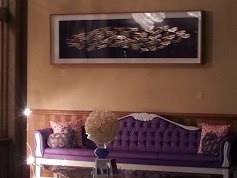
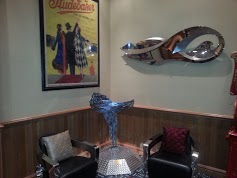
The owner restored classic cars for years and you can see a lot of that material  has made its way into the hotel.  Fenders turned into benches, tools turned into sculpture and art.

retro7

A “school” of vice-grips 🙂

retro6

An assemblage of dispirate art and antiques

The owner is a massive collector as well.  Throughout the suites, framed classic movie posters, old microphones (including one from Elvis and one from the Voice of America) and radios, vintage furniture, tables made out of the tail-pieces of WWII bombs, authentic Turkish samovars, and paintings by one of the owners’ family members grace the walls.  He even has a couple of the FAO Schwartz tin soldiers in there.  You can spend hours just wandering around the joint.

A pair of FAO Schwartz tin soldiers with automotive-part furniture

A pair of FAO Schwartz tin soldiers with automotive-part furniture

Each suite is decorated in theme.  My suite was the “Chrom-e-delic.”  I’m sure you can see the mod 70s influence 🙂  Go to the site (linked above) and see some of the other suites for yourselves.

retro8retro9

The hotel is actually a block of converted and renovated buildings.  It’s a wonderful maze in there and inspired an idea for my third (of thirteen) original short stories for Kasie Whitener’s Just Write: 2013 Short Story Challenge.

Books as inspiration

I started reading Catherynne M. Valente’s Palimpsest this past week.  Just previous, I finished Deborah Harkness’s A Discovery of Witches, which features as its MacGuffin, a palimpsest, or book within a book.  Picking up Valente’s book next just seemed the logical extension in my mind 🙂

I was struck by Valente’s lyrical style of writing.  It reminded me of a couple of other books I’ve read: Kathryn Davis’s The Thin Place, and Richard Grant’s Views from the Oldest House.  I’m not sure why I associate them, but I think that, once again, it has to be the quirk factor.

This too, is feeding into my new story 🙂

Dreams as inspiration

I’ve often mentioned that I, like many other authors, draw inspiration from my dreams.  I’ve had a couple this week that I’m going to keep in the idea file.

One, though I think I’m going to play with the particulars a bit, is about a family of vampires (hence the playing, I don’t think another book about vampires could be published any time in the next few decades), who hire a human investigator to discover why their fellow creatures want to kill them.

The dream was more detailed, of course, but this is just to give you the basics.

The second dream is a little more bizarre.  A group of refugees (what they’re running from was not clear in the dream) take refuge in what looks like the ruins of a castle, but turns out to be sentient.  Not only that, but as they explore the castle, they come across indications that at least one of them has travelled to the past, and left messages for them to find around the castle.

Definition of inspiration (courtesy of the Miriam-Webster Online Dictionary)

1
a : a divine influence or action on a person believed to qualify him or her to receive and communicate sacred revelation
b : the action or power of moving the intellect or emotions
c : the act of influencing or suggesting opinions

2
: the act of drawing in; specifically : the drawing of air into the lungs

3
a : the quality or state of being inspired
b : something that is inspired <a scheme that was pure inspiration>

4
: an inspiring agent or influence

in·spi·ra·tion·al adjective

in·spi·ra·tion·al·ly adverb

What inspires you?

Caturday Quickies: The certification run

This past week, I travelled to Chatham to deliver yet one more session of Business Writing Made Easy.  The critical difference this time?  I was assessed for my trainer certification.  Eeps!

An omen?

What started my week was the journey to Chatham, some six and a half hours away.  Phil dropped me off at the car rental place at 8 am (we only have the one car).  Past experience taught me that I’d be in and out in less than 15 minutes, back home to load up my luggage and boxes, and on the road by 8:30 am.

When I walked in, there were four people waiting, one of them had an insurance claim to deal with due to a dent in the rental, and another was returning a car from another rental company.  The rental location was two employees short-staffed, and I settled in for a wait.

The first car I was given had some issues.  I couldn’t afford to wait any longer, so gratefully accepted an upgrade and was finally on the road shortly after 9 am.

The loveliness of the ETR

The journey itself was great.  For the first time, I used the 407 express toll route (ETR).  In the time it would have normally taken me to reach the hotel near our regional headquarters from the ETR on-ramp, I was exiting at Halton Hills, not far away from Guelph.

The ETR saved me precious time and allowed me to reach Chatham before the end of the day.

Lusting after the Zzzzz’s

I quickly checked into my hotel (more about that in another caturday quickie to come) and toted my boxes to the office, arriving just before 4 pm.  I spent the next several hours setting up the training room with my co-facilitator, Carole.  About 8 pm, we gave up for the night, Carole checked into the hotel, and we enjoyed a late supper at the hotel’s rather excellent restaurant.

I rarely sleep well when I’m on the road, but that first night was especially challenging.  I don’t know whether it was nerves, the trains that passed by periodically all night, or something else, but from 2:25 am on, I couldn’t sleep.  I’d gone to be just after 11 pm, and there’s no way I can function properly with only three hours’ sleep.

Despite that, I met up with Carole for breakfast the next morning, we finished setting up the room and our activities, I met my assessors, and class got underway.

The assessment

Really, I’m trying not to think about it much, because every time I do, I start thinking of all the things I did wrong, all of the technical difficulties I encountered, and all of the other things that could potentially have done me in so far as certification went.

I started asking closed questions.  My SMART Board activity bombed.  Toward the end of the second morning, I was exhausted and running on instinct rather than cultivating the Zen awareness critical to my success.  I curtailed a couple of side bar conversations clumsily.  I forgot participant names.  What’s the expression?  I sucked so hard …

The assessors were very kind.  I’d actually worked with one of them before, delivering workshops in Cornwall a few years ago, but their job is to make sure that I can facilitate in a participant-centered manner in accordance with a set of 18 competencies.  They assessed me for a full day, 1 pm to 4:30 pm the first afternoon, and again from 8:30 am to noon the second day.  I had to facilitate the class solo.

At the end of the first afternoon, the assessors asked me a series of questions about the competencies that weren’t clearly visible in my facilitation and presentation skills.  Things like the room set up, placement of visuals, the joining instructions, utilization of pre-course assignment materials, continuing professional development, and so forth.

At noon the next day, I bid them farewell and was advised that I would be informed of the outcome of the assessment within a couple of weeks.

I’m kind of dreading it.  I think that having to go through the assessment again would be a little bit more than I can handle moving into the new fiscal year.  Thus the avoidance tactics 🙂

The good parts

My co-facilitator bought me a wee gift.  Isn’t it lovely? congratulations

I tried not to tell her she was counting my chickens before they were hatched and just appreciated the gesture.  Carole also asked me to focus on all the things I had done well in the class.  Though I was able to list several things, my mind quickly gravitated toward the negative and I returned to avoidance.

The final day of class, with Carole at my side, went well, and by the end of it, several of the participants not only told us how much they enjoyed the class, and what good resources they got out of it, but also told us that their colleagues were asking how they could get on the list to attend the course.

That kind of validation warms a facilitator’s heart 🙂

After class, we packed everything up, and had an hour or so to enjoy Chatham and some of the quaint shops in the area.

At breakfast on Friday morning, Carole asked me some very helpful questions about the certification process.  She has an interest in pursuing it, and was curious about what might be next for me given her expectations for my success.

It was another very helpful way of keeping my mind from dwelling on all of my short-comings.

I dropped the set of posters I’d borrowed for the delivery of the course back at regional headquarters on my way through Toronto, and was home by 4:30 pm.

At home, Phil reminded me that my focus on the negative wasn’t necessarily a bad thing.  Being conscious of what I did wrong means that I’ll be less likely to repeat those errors since I am, as always, my toughest critic.  I get so embarrassed about it that I determine never to fall into the same trap again.

It’s all about doubt, something that plagues me in both spheres of my professional life (training and writing).  I constantly question the value of what I do, regardless of the evidence to the contrary.

So … the next you’ll hear about this is whether I have, in fact, been successful or not.

Have you been assessed, or tested recently?  How did you feel about the process?  What did it teach you about yourself?

A life sentence with mortal punctuation: part 3

Last week: A near-death experience thanks to a narsty case of tonsillitis and some ripped stitches.

And now …

Friend wars

I had some friends before school, through Sunday School and swimming lessons, but they lived farther away from me than my mom would let me walk on my own, so I never got to see them outside certain structured activities.

There were also the children of my parents’ friends, but they moved away before I could develop much of an attachment, or hold any memories of them.  For a brief time, the family across the street had children my age, but they too, soon moved away.  Kindergarten was a bit of a blur, but I do remember some of the children I met there: Ronnie-Moe, whose Dad was a fireman, Mytie (I think that was how she spelled it), Paul, and a few others, but these were classmates, not friends per se.

For the most part, I was a happy child.  I was socially inept though.  Not really good at making friends or keeping them.  I compensated for this by being a little different.  I lived in my head a lot.  My teachers called it daydreaming and distraction.

I was also a giggle-puss.  I laughed at the drop of a hat, not only when I found something funny, but also when anything embarrassed me, frightened me, or made me angry.  Laughter was my catch-all reaction, because if other kids thought I was making some kind of joke, usually at my own expense and not theirs, they wouldn’t hate me outright.  They all thought I was weird though, and that didn’t earn me any friends.

My worst childhood crime was being a story-teller (read liar).  For show and tell, I’d make things up.  There was one particularly embarrassing stretch where I was really into cats and desperately wished I could have one.  I couldn’t though, so I made up stray cats that I’d take in and care of for a few days before they ran away.

Often, I wish this inclination had been harnessed earlier, that some kind teacher would have recognized in me the storyteller (not the story-teller, teller of tales, or liar) and helped me turn it in a different direction, but that didn’t happen until grade three.

Sir Ken Robinson

Sir Ken Robinson (Photo credit: eschipul)

I was just a creative kid with insufficient outlet within class to exercise my (even then) considerable abilities.  Last year, I discovered Sir Ken Robinson’s incredible TED Talk, “Do Schools Kill Creativity?”  It validated much of what I’d already figured out on my own.

So I was happy.  But lonely.

Then a young mother with twins (fraternal-brother and sister) my age moved into the apartment up the road from me.  When she saw that I walked to school, she asked my mom if we could all walk to school together.  So the girl, let’s call her Diana, became my first “friend.”

Soon, another young pedestrian joined our little gaggle.  She lived a few blocks further on, but we were all heading in the same direction, so I figured it was fine for her to join us.  Let’s call her Mary.  Diana got territorial, though.  I was her friend first.

Mary was small and thin.  I’m not sure why, but nobody much liked her in grade one.  I was her friend though, and when Diana started acting up, it became problematic.  Diana got physical and she had a temper.  She’d scream and push and punch.

Her behaviour toward Mary bothered me, and at one recess, as Diana was wailing away at me, rather ineffectually, after having pushed Mary down, I had enough.  I grabbed her arms and pinned her against the wall of the school so she couldn’t punch anymore.

I like to think I said something clever like “You don’t own me,” or “I don’t belong to you,” but I probably squeaked out a lame “I’m not your friend,” or just “stop it.”

Diana was in tears, frustrated that she couldn’t bully her way out of the situation.  I wasn’t small, or weak.  I think a teacher intervened, but the outcome was that Diana wasn’t my friend anymore.  She stopped walking to school with me, but Mary was now my BFF.  I’d defended her.  We became inseparable.

Mary was pretty much my only friend through grades one and two.  We’d walk to and from school every day.  Mary came over to play and we went to each other’s birthday parties.

I defended her again one winter from the attentions of a boy.  Of course, I had no clue that his shoving her around and making her cry meant that he liked her.  I just saw him as another bully, so I got into my first fist fight.  He clocked me good on the jaw, but I got my own licks in.  He didn’t bother Mary in front of me again, though.

Mary continued to be a small, thin child, and so to exert her power, she got devious.  She’d argue with me over nothing, routinely “breaking up” with me and then making up the next day as a means of keeping “drama” in our friendship.  When she came over to play at marbles, she decided to make things interesting, no longer content with claiming pretty marbles, by having each of us put up toys as a wager.  She liked to bend the rules in her favour too.  I was content to let her win when the stakes weren’t high but that stopped once I started losing toys.

First, I stopped playing marbles with her, then eventually, I stopped having her over to play altogether.  Mary’s friendship was exhausting.

In grade three, another single mother moved into the apartment up the street.  She had a daughter named Margaret.  No pseudonyms here.  Margaret’s still my BFF though she lives several hours away and most of our conversations are held over FB chat or by email.

While Margaret lived up the street, there was another girl who was interested in putting on talent shows and the like.  There were implications of bullying there too, but nothing that I witnessed.  Also, the other girl was much larger than I and I wouldn’t have been able to do anything about it, but things blew over before long.

Margaret’s Mom moved into a duplex, but it was still within walking distance.  Margaret was fun and funny.  We went to movies together, at first with parents in tow.  She had budgies and a hamster.  Margaret was also a big reader, something I hadn’t latched onto yet.

Mary got a little jealous at that point, but because I was already in the process of separating myself from her, the drama wasn’t as bad as it could have been.

In grade three, my parents got me my first pet, a dog I named Friskey because of her behaviour.  The dog book said to name your puppy according to what it did.  I did what the book said 🙂  I was so excited about my new pet, that I wrote a one-page report about her.  It wasn’t required for class, but when my teacher learned that I’d done it, she encouraged me to read it aloud.

That was the year I started reading and writing.

It was also the first year that cliques developed in the class.  Margaret was popular.  Me, not so much.  I was a tag-along at best.

Grade four was worse.  Years later, when I saw the movie “Heathers,” I could so relate.

Cover of "Heathers - 20th High School Reu...

Cover via Amazon

The Heathers of our school had other names, but they were no less manipulative or cruel, even though they were in elementary school.  I got into trouble a lot that year because of the drama between the cliques.  I think that was the summer I was grounded from seeing Margaret.

I also wrote a play for the Christmas pageant that year.  That didn’t help my popularity either.

Being alone wasn’t a problem for me.  I enjoyed being alone.  Envy was an issue, though.  Without thinking about why, I wanted to be in a clique.  I wanted to be popular.  Failing that, I wanted Margaret to be my friend to the exclusion of others.  When my desires were thwarted, I started to take my frustration out on Margaret, as Diana had on me.  Though it was to a much lesser degree (not that it excuses anything), I’d become the bully I’d previously defended others against.

In grade five, I was the first girl to hit puberty, or at least that’s the way it felt.  My growing breasts became a topic of discussion and ridicule in the change room as were my hairy legs.

The traits I exhibited in grade one had developed and changed over the years.  I now cultivated an air of “weirdo.”  To combat the change room taunting, I tried to claim my glorious boobage, a difficult thing to do when I felt that it was one of the things that made me a freak in the eyes of others.  It only served to cement my strange reputation.

Since grade three, I’d been writing little stories and I kept them in exercise books.  I had wild dreams and shared them with Margaret at recess.  I was a terrible storyteller, though, all rambling and out of order.  I know there were days when Margaret just wanted me to shut up or to get to the point, but I only realized the relative quality of my verbal diarrhoea after the fact.  Sorry Margaret.

When grade six arrived, the friend wars had settled down to a large extent, but there were still a few hard feelings that had to be resolved.

Mary, who’d still been in my life, but to a much lesser extent, made overtures to “bury the hatchet” between us.  She behaved like a real friend for the first time in years and when, after a short while, she asked to see my notebook of stories, I lent it to her.

She used most of a bottle of White-Out on it to obliterate my words.

After that, with the exception of Margaret, I was almost happy to be otherwise friendless.  New cliques formed, included Margaret, and I was again a hanger-on, just so I could remain in Margaret’s circle.  We were still BFFs, but we were also growing up, and apart.

The other members of the clique didn’t like me, and no wonder.  My laugh had become a hyena’s, and I routinely introduced myself in the following manner: Hi, I’m Mel.  I’m weird.  Just to get that out of the way.

I didn’t want any more friends.  Except for Margaret, I’d learned that friends just wanted to prove that they were better than you, to hurt you, and take you down in some way.  It wasn’t a problem with Margaret because she was always the better person in our friendship.  At least I stopped hitting her.  Sorry again, my friend.

Though I stopped sharing my stories even with Margaret, my creativity continued to be an albatross.  This might have been the skewed way I saw things in those days, but it felt true.

Following the friend wars, my self-confidence was shot.  Even in grade three, an off-hand comment could reduce me to tears.  I fled from conflict.  What happened to the girl who held Diana flailing arms and told her to stop?  I couldn’t stand up for anyone anymore, least of all myself.

These were the seeds sown that in later years would take root as depression.

If you haven’t yet, watch Shane Koyczan’s excellent “To this Day.”

Visit The Bully Project.  Watch the movie.

And last week, I saw an awesome documentary on Global’s Currents.  It’s from 2007, but it’s still relevant.  Erin Thomson’s The Bully’s Mark.

Did you have friend wars in the past?  Were you in a clique, or a hanger-on?  Were you a victim of bullying, or a bully?  Both?  How did it shape the person you would become?  How did it affect your creative development?  What lessons did you take away from the experience?  This is an important issue.  Please share if you feel you can.

Next week: Tummy troubles: Appendicitis and my second brush with death.

Caturday Quickies: The Very Inspiring Blog Award

Vikki Thompson nominated me for the Very Inspiring Blog Award!

Very Inspiring Blogger Award

It’s so nice to be recognized by your peers!

So without further ado, here are my seven deadlies:

  1. I’m a scorpio.
  2. I was born on Hallowe’en.  Yes, you can say it … I’m a witch 🙂
  3. I received my Master of Arts in English Literature and Creative Writing in 1999 from the University of Windsor.  Certain of my professors are probably cringing right now!
  4. I play the lottery in the vain hope of winning one day and being able to retire early.  I did say it was a vain hope, didn’t I?
  5. I used to play MMO’s (massively multi-player online role-playing games, for those of you not in the know).  In reverse order: Champions, WOW, Free Realms, Atlantica, City of Heroes/Villains, EverQuest, Asheron’s Call, Ultima Online.  Never hard core.
  6. Similarly, I used to play pen and paper RPG’s, but though the experience may have fed my creativity, I would never write a book based on any of my gaming sessions.
  7. I listen to music when I write, from Kate Bush to Lacuna Coil, Crosby, stills, Nash, and Young to 3 Doors Down.  Occasionally, I pull out the Eddas, Berlioz, or the Carmina Burana 😉

And my seven virtuous nominees:

I know some of you have been nominated before, so you don’t have to go through the process if you don’t want to.  Just want you wonder ladies to know how your online efforts inspire me 🙂

Tomorrow:  A life sentence with mortal punctuation continues with … the friends wars!

Caturday Quickies