CanWrite! 2013: Day 3 Traditional vs. self-publishing panel

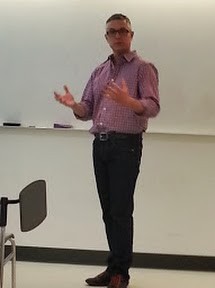
The day 3 (June 15) panel, featured Halli Villegas of Tightrope Books, Sheila Mahoney, Certified Copyeditor and Editors’ Association of Canada Director of Professional Standards, and Tom Taylor, self-published author of Brock’s Agent, Brock’s Railroad, and Brock’s Traitor.

Once again, James Dewar acted as moderator.

JD: Should an author go for a traditional deal, or self-publish?

TT: There are many ways to skin this cat.  I have a publisher in the UK, but did the Canadian editions myself.  All the big marketing budgets have gone by the wayside in any case (Penguin, ECW). You have to invest money in your own promotion regardless.

SM: Know what you’re willing to do.  If you know you can invest the time and money, then do it.  It cost one client $25000, but mistakes were made.  What’s an acceptable risk?

HV: It’s not either/or but how and when?  Speaking tours can be difficult to arrange depending on your genre.  Publishers do have a lot of resources that can help in some situations.  It’s a matter of choice.  For example for academic clients and libraries, there’s Coutts.  They’ll order a set number of copies for distribution to their clients.  Also, there’s BowkerLINK, which offers sales and marketing information.  Publishers can get the proper ISBN barcodes for the cover.  Your books can be featured in catalogues for booksellers and distributors.

TT: It’s business and you have to approach it like that.  Where will your books sell?  Blue Heron Books in Uxbridge is a rare bookstore, very entrepreneurial.  There’s a bakery in the Niagara region where I’ve sold more books (about 300) than at most bookstores.  The owner will talk the books up to customers, many of whom are tourists.  You have to know how to market wisely.

Here’s what I invested and how I recovered the costs:

  • Line edit: $1500
  • Substantive edit: $1500
  • Layout (internal and cover design): $3000
  • Printing: $4000 (2000 copies at $2 each)
  • Total: $10000

To break even, I had to sell 1000 copies of the book at $10 a piece.  Everything else was profit.

SM: Certified editors are best but they don’t come cheap.  Independent editors, some are good and some are bad.  Design is important.  You should make your book a pleasure to read.

TT: I don’t necessarily want everyone to spend $10000 only to fail.  Your comfort level must be considered.  Editing is paramount.  The package is the product (like the media is the message—Marshall McLuhan).

SM: The people who love you are not going to be honest with you.   There’s a difference between line editing and copy editing and substantive editing.  Know what you need and what you’re paying for.

JD: Agents can take over part of the substantive.

TT: Maybe self-publishing is not for you, but if you’ve done the work up front, if you have a fully edited manuscript and a beautiful layout and a lovely cover ready to go, how much more interested will a potential publisher be?  Media coverage is important as well.  Get the word out however you can.  Chapters will take books on consignment too.  Check with your local store.

Ultimately, there were no real answers in this presentation as to whether traditional or self-publishing is better.  It’s an individual decision for every author.  There was a lot of good information that could come in handy regardless of whether you go for a traditional deal or self-publish.

Tomorrow: The Gala and wrap-up post.

See you then!

CanWrite! 2013: Open mic, Andrew Pyper, and Cordelia Strube

I already mentioned the welcome reception and the morning creative writing circles, but have since launched into panels and sessions without mentioning what happened the evenings of June 13 and 14.

Back-pedalling now …

Open mic and shortlist readings

On June 13, interested parties were encouraged to sign up for the open mic.  I did and intended to read the revised opening of my novel as I had at Wordstock, then at supper I heard that the readings would be restricted to five minutes.  This was reduced to three by the time I arrived due to the number of last minute sign-ups.

Not having brought my poetry with me that night, I read as much of my opening as I could.  It was well-received.

Other readers offered their poetry and stories (one humorous one was about discovering one was having a heart attack while on the toilet – shades of Elvis) the organizers sticking strictly to the three-minute limit.

June 14 was to have been readings from the authors short listed for the CAA Literary Awards, but again, a last-minute change opened the floor to additional readers.  I signed up and brought my poetry, a much more appropriate genre for the three-minute limit.

I got to hear the end of the Elvis story and some more great poetry, fiction, and non-fiction.

I enjoyed the readings from the short listed works.  With one exception, none of them could show up in person.  The man who did was Michael S. Cross, author of A Biography of Robert Baldwin: The Morning-Star of Memory (Oxford University Press).

Michael’s reading was wonderful.  I didn’t know Robert Baldwin was such a fascinating character.

Another fascinating author was Jane Doe. She read from her book The Story of Jane Doe.  She is an advocate and activist and her story is a compelling one.  I encourage everyone who has an interest in women’s issues, advocacy, or the attitudes of the legal system to victims of rape and violent crime to pick up this book.

Andrew Pyper

Andrew Pyper

Andrew Pyper

Andrew Pyper is the author of six novels, most recently, The Demonologist.

Andrew’s session was on the afternoon of June 14, and it was as much workshop as presentation.

The session, Getting organized, getting started, focused on the essential elements required before an author begins to write a novel.

  1. An Idea;
  2. A Premise;
  3. A Protagonist;
  4. A Hook;
  5. A Structure; and
  6. An Outline.

He also offered six tips for overcoming roadblocks.

One of the most interesting pieces of his presentation was about ideas.  Yes, one must have at least one good idea to propel one’s plot, but the author shouldn’t stop there.

Traditional thought and misconception would imply that one idea must be made big enough to become the basis for a novel.  Andrew suggested that rather than one idea expanding to fit a novel, that a multitude of ideas should funnel down and feed into a single novel.

This made a lot of sense to me, and when I think about it, that’s how I write fiction.  I never write about one thing.

The premise is distinguished from the main idea of the novel because of its scope.  Andrew’s explanation reminded me of Larry Brooks’s.

He offered the following example:

Idea: A modern-day Frankenstein.

Premise: Archaeologists extract DNA from mosquitoes trapped in pre-historic amber and use it to clone dinosaurs. A philanthropist establishes a theme park around the beasts and invites a select group of scientists and family to witness his triumph; then the beasts escape (Jurassic Park).

The key to a premise is “high concept,” a concept that can be evasive.  This is why Larry Brooks is forever explaining the difference between idea, concept, and premise on his site 😉

Andrew had us write our premises for the Rob Ford story.  As expected, we all had different takes on the well-publicized scandal.

I won’t give away the whole of Andrew’s session, but I will say that it was informative and fun.

Cordelia Strube

Cordelia Strube’s session, on the afternoon of June 15, was mostly workshop.  She’d actually had workshops on both afternoons (14th and 15th) and anticipated that conference-goers would attend both, but a miscommunication occurred and the message was never conveyed to attendees.

Cordelia has published eight funny, powerful, sparse, cathartic and critically acclaimed novels, among them Alex & Zee, Teaching Pigs to Sing, The Barking Dog, Blind Night, and Lemon. Her ninth, Milosz was published last year.

Her plan was to have participants from the first session return and revise the work they had started the day before.  Those of us who only came on the second day would have to start from scratch.

Cordelia gave us a framework and some strategies for getting into our focused writing.  She then distributed horoscopes and a number of other prompts: postcards, small items, all of which were to inform our writing project for the afternoon.

After we were sent off to write however and wherever we wished, the class was asked to share the results of their writing.

It was an excellent session.

________________________________________________________________________

I should take a moment to mention that there were a number of sessions happening concurrently on Friday and Saturday afternoons.  I can only report on the ones that I attended.

Specialty sessions, at a nominal additional cost, also took place during the mornings.

There were also agent pitch sessions occurring Thursday, Friday, and Saturday mornings.  Though I did not opt into these, they were very popular and booked solid.

I like the way in which they were conducted.  Each author was to submit their query letter and first five pages of their novel in advance of the pitch session.  I think that this is a much better way to conduct pitches than to do them blindly.  It’s better for the agents because they have a sense of the author’s work.  It’s better for the writer because they don’t only have their two to five minutes to convey the meat of their novel.

A professional photographer was also on site to take author shots for the attendees.  I happily paid the (again, nominal) fee for this.  I should have the results next week and I hope they will be better than my efforts to date.

Tomorrow: The final panel, Traditional vs. Self-publishing.

G’night y’all 🙂

CanWrite! 2013: Day 2 agents’ panel

After another morning of creative writing and lunch, conference-goers again gathered in the academic building for the 1 pm Agents’ Panel Discussion.

James Dewar acted as moderator for the panel, which consisted of: Sam Hiyate, president of The Rights Factory and Carly Watters, agent at the P.S. Literary Agency.

JD: What are you looking for right now?

CW: Picture books; contemporary YA (thriller/mystery, romance); women’s fiction; upmarket; non-fiction; and multi-media.

SH: New agents are looking for new clients. I’m full up myself, right now, but occasionally I do sign the odd author.  For non-fiction, a platform is essential. Most non-fiction sells on proposal alone.

JD: What can a fiction writer do to obtain representation?

CW: Write an amazing novel.  Platform does not matter.

SH: Debut novelists—sometimes even established ones—can fail to sell.  I like a strong voice, someone who can perform acrobatics with a sentence.

CW: I have a more commercial taste, a Book Club book would appeal to me.

JD: How do you move an “almost there” author to “there”?

SH: I’m a different beast than most agents and will work with the writer to edit the work.  Most agents won’t.  Others will set the writer up with a freelance editor.

CW: I’ll write an edit letter to the writer if the good stuff is REALLY GOOD.  Some books are edited seven times before they are sent to a publisher.  If the writer has the ability to turn their MS around quickly, the chances are better.

SH: My best advice is to find an agent who “gets you.”

JD: What should authors NOT do?

SH: Don’t send your MS in too early.

CW: In a pitch session, do not go through your whole synopsis.

SH: Sometimes the pitch or query can be better than the book.

JD: We’ll open the floor to audience questions (AQ) now.

AQ: Do I need an agent first, or can I approach a publisher directly?

CW: Agent first.  Most larger publishers won’t accept unsolicited manuscripts.

SH: An agent can say “no,” however.  An editor will refer the author to an agent anyway.  Send it and see what happens.

AQ: What does an agent do?

SH: Our job is to create a competitive situation around your book.

AQ: Can you have more than one agent?

SH: We contract exclusively, much like a real estate agent would.  Your book is the property we’re selling.  Our commission is 15% on domestic and 20% on foreign sales.

AQ: In the context of the “Literary Apocalypse” of self- and ebook publishing, do writers even need publishers anymore?

CW: Some agencies have publishing arms, but it gets complicated.

SH: Self-publishing is a new way for agents to discover talent.  Eventually, all the good material gets scooped up by the publishers.  Cases in point: Amanda Hocking, E.L. James, and Hugh Howey.

CW: These are exceptions to the rule.  Agents can’t turn $10k ebook sales into a traditional deal, but if you sell $200k+, that’s different.

SH: In the future, writers will have more control.

AQ: If an author has published a book but is not happy with the rights (terms) is there anything that can be done?

SH: No, if the rights have already been contracted out, that’s it.  Most agents won’t negotiate a bad contract for you, though.  Publishing houses and agencies start out with really talented, committed, and enthusiastic people who are grossly underpaid, for like ten years.  In that time, the ones who can’t maintain their passion leave for greener pastures.  The ones who can, become successful.

The agents’ panel was great, and both Sam and Carly were professional and up front with their insiders’ looks into the publishing world.

Tomorrow: I’ll cover Day 1 and Day 2 evening events, and Day 2 and 3 afternoons with Andrew Pyper and Cordelia Strube.  That will leave the Awards Gala and wrap-up posts.  So three more days, and it’s all over!

Don’t despair, there will be lots more Writerly Goodness coming your way this summer.  Book reviews and hopefully some more author interviews, pupdates (yes, there’s at least one more coming), and updates regarding the backyard office (interesting things afoot there).  I’ll also have some updates on my work in progress and any other conferences or events that I get to.

I will be returning to my weekends-only posting schedule after this week, though.  Blogging every day, though fun for a short period, takes up a lot of writing time (!)  My goal is to have my current revision done before the summer’s out.

Until tomorrow!

CanWrite! 2013: Day 1 publicity and marketing sessions

As promised yesterday, I’m going to talk about the good, bad, and downright ugly.

To start with …

The Good

I’ll start with Vikki Vansickle’s Mapping your Market presentation.

Vikki was enthusiastic, energetic, and clearly loves what she does, on both sides of the board.  Vikki is an author and a marketer, recently moving to Penguin Books (congratulations!).

Vikki has published four middle-grade (MG) novels since 2010.

  • So what do you do when you get published?
  • Celebrate!  Tell EVERYONE.  You never know who your champion will be.  Word of mouth is still king.
  • Do some research (yes, it’s important in marketing too).  How do you find the books you like?  Work outward: How does someone like you in Houston, Whitehorse, or Harrison Hot Springs find the books she likes to read?  That’s where you want to go, to get in front of the wave.
  • Who wants to read your book?  Who needs to read your book?
  • Comparative novels (comps) are critical.  It doesn’t even need to be a novel, as long as it’s in popular culture.  “If you like X, you’ll love XXX!”  “It’s Dirty Dancing without the dirty :)”  “It’s Looking at the Moon meets The Summer I Turned Pretty.”
  • Who is your ideal reader?  Define her in every detail.  Who are your potential readers (again work outward)?
  • Your elevator pitch should be about the length of a Tweet.  You have to tell people what your novel is about in pithy, taut, engaging sentences.
  • Be prepared to wear different hats.
  • Instagram is big with kids.  Facebook’s where their parents are (ew!).
  • Goodreads is great for more mature readers.
  • Writers Cafe (dot) org can help you with critique, beta readers, contests, conferences, etc.
  • Find your niche and identify specialized groups that will help you reach your readers.
  • The Ontario Blog Squad will set up blog tours.  6 blogs.  You create the content.
  • Twitter giveaways.  People love free stuff!  Specify Canada only.  Make sure they enter using a Retweet (RT) and including a hashtag specific to you, your book, or blog.  This helps to spread the word to all of your participant’s followers (and so on, and so on).

The Bad

I won’t tell you the guy’s name, or who he works for, but he’s a publicist.  I thought a publicist would be better spoken, honestly.

His session had some good information, but he was almost too relaxed, too casual.  At times I thought he was bored with the topic.  At times he went off on tangents or mumbled.  He decided to wing it.  He didn’t have a plan.

  • Print ads are not an effective use of funds.
  • Look for web magazines that have “up fronts” (= previews) especially if they have a print tie in.
  • A platform is not essential for fiction writers, but is absolutely key for non-fiction.
  • In fiction, the publisher may work with the writer to build the platform.
  • Build your relationship with your publisher.
  • A P/L or profit /loss sheet may determine what will be expected.  Analysis determines what the most appropriate action or angle may be.
  • Do you have a business or profession related to your book?
  • Books = cultural entertainment product.
  • You have to engage your readership on social media (SoMe).
  • Some publishers spend more $$ on authors than others.  This will be different in the States.
  • If a publicist is assigned, it’s usually for 3 months.  On-shelf promotion (during the initial sales period of the book).
  • Marketing is different for every book.
  • Book trailers are too expensive to be effective.
  • Applications (apps) are even more inefficient and more expensive.

The Downright Ugly

One thing that emerged early on in the session and coloured the remainder of it was that this publicist works for a small imprint of a larger publisher and in non-fiction (politics, sports, world events).  His clients are men and of the imprints authors only a third were women.

He made an off-hand remark about the ladies liking their beach reads.  Fatal mistake when speaking to an audience of 90% women.

To be fair, I have to say that I don’t think the young man realized that he’d just insulted his audience unforgivably.  Even after several women from the audience spoke up and made some very salient points, I’m not sure our publicist got it, or if he did, he was so scared, he didn’t know how to save himself with any grace.

I think it has to do with the publishing environment he works in every day, his mentors, his colleagues.  I think the sexism is so ingrained, so rampant in his sector of the industry, that he wasn’t fully conscious of the prejudices he promoted.

For the remainder of the conference, our publicist was the topic of conversation, and not in a good way.

It immediately brought to mind Chuck Wendig’s posts on sexism and misogyny in publishing.

It’s not a problem that has an easy answer.

Tomorrow: I’ll be moving onto the Day 2 panel and session.

CanWrite! 2013: Day 1 Publishing Panel

For the most part, for the panels and sessions, I’m just going to be transcribing my notes, as written.  I’ll attempt to offer some context, however.

After the morning writing circle and some networking time at lunch, it was onto the Publishing Panel.  On the panel were Halli Villegas, publisher of Tightrope Books, Christie Harkin, children’s book publisher and editor at Fitzhenry & Whiteside, and Anita Chong, senior editor at McClelland & Stewart.

In later panels, I noted the speakers, but for this first one, I didn’t have the presence of mind to think of it.  My apologies to the publishers.

The panel was called Changes in the Publishing Landscape.

  • Larger publishers are finding that their biggest book-buyers are going to non-traditional (not brick and mortar bookstores) sellers to get their books (Costco, Walmart). Books are now competing with groceries (!)
  • Smaller presses are going back to events, launches, readings, etc.
  • Fewer stand-alone poetry books being published.
  • LGBT is gaining in popularity.  More mindful of the community they write for and have to market to.
  • Everyone feels like they have to dance to Amazon’s tune, though that may not be accurate.
  • Chapters/Indigo has a very short return policy now.  Books are being returned before they have a chance to get any traction.
  • Inventory control is important to the big booksellers.
  • Chapters/Indigo may buy 5000 copies of a book for all their chains.  Most come back (about 2/3).
  • Some publishers have to increase a print run, or go into a second printing to meet these orders.  This puts them further behind the eight ball.  They’ve suffered a loss before they’ve even got their books in stores.
  • All the indies order books too, increasing the pressure for a large print run.  Smaller publishers are suffering.
  • There is increasing specialization in publishing.  No more generalists.
  • What authors need to know most: DO YOUR RESEARCH!  All the information you need is on the websites of the publishers.
  • Go to the bookstore. Who’s publishing books like yours?  Look at the acknowledgements of these books: agents and editors are often among those thanked.
  • Don’t follow the trends. Erotic zombies?  (LOL)  Stick to your guns.  It’s not either/or but how far are you willing to go and how much are you willing to do?
  • Children’s books are not marketed to children, but to those who buy books for their children: parents, teachers, etc.
  • Print on demand (POD) doesn’t work in most cases.  There are restrictions.  Minimum print runs may still be required to break even.  POD kiosks offer poor quality product.  POD is not viable even at larger publishers.
  • Still on POD.  Short run = 250.  Medium run = 250-1000.  Watch how POD affects your contracts.  It has an impact on what’s considered to be in print.  If your rights don’t revert to you until after the book is out of print and POD technically means that the book never truly goes out of print, you may not get your rights back (!)
  • Electronic publishing is better, regardless of the venue chosen.
  • Publishers generally give 50% of their profits to distributors, booksellers, etc.  Publishing is not as lucrative as you think.  Ebooks lose only 30% (or less).
  • Publishers are looking for new talent all the time.
  • Unsolicited submissions can result in publication, but rarely.  Same with the slush pile.  DO. YOUR. RESEARCH.
  • Writers Reserve from the Ontario Arts Council.  $$ for writers.  Publishers apply for it and use the $$ to pay their authors.
  • Ask agents and publishers what they are looking for.  Write to order (if you can).

It was great to see three fabulous and articulate women take the stage.

Tomorrow: Publicity and marketing sessions: Good, bad, and downright ugly.

CanWrite! 2013: The arrival

Though events and sessions weren’t scheduled to get under way until June 13, strictly speaking, I’m pretty keen to show up and get ready.  I need a little time to rev up and get in the social way of things.  Any conference is pretty much a social marathon for however many days it lasts.  I have to work up to it.

My home for the week

My home for the week

Orillia is a little over three hours away from Sudbury.  I took the full day off on the 12th and relaxed for the morning, picked up my rental car, packed, and got underway just shy of 2 pm.

CanWrite! was hosted this year, as last, by the Orillia campus of Lakehead University.  It is a small campus, but it is a fairly recent construction.  I checked in, unpacked, and collapsed for a few minutes before heading out to my fend-for-yourself supper, returning in time to attend the welcome reception.

At the reception, I reconnected with some old acquaintances and made some new ones.  Among the old were Jake Hogeterp, who heads the virtual branch, Matt Bin, the prez, poet-on-demand, Jean Kay, Lamont Mackay of The Cooking Ladies, and Anita Purcell, our tireless Jacqueline-of-all-trades.  Among the new, Jennie Chabon and Kathleen Schmitt from BC and John McDonell from Nova Scotia.

Though I thought I was heading back to my room early, it was after ten by the time I made it up, and nearly midnight by the time I’d checked my precious social media (SoMe) and powered down for the evening.

The creative writing circles

Each morning of the first three days started off after breakfast with writing circles.  Either poetry or creative writing could be chosen.  Of course, I went for the creative writing.

The first morning, Ruth Walker led the session.  The second and third days were led by Sue Reynolds.

I’m not going to go into detail about these sessions, as the writing done is always intensely personal, but great material was produced all three days by all the participants.

I got some work done on some missing pieces of Initiate of Stone while I was there and that, along with some bits that might produce good stories, made the circles worthwhile for me.

Ruth was new to me, but I’d met Sue before.  I went to the University of Guelph with her sister, Sandy, and then I met her and her partner James last year at the Algonkian conference.

Other bits and pieces

Initially, I was a little concerned.  I could find no information on the Lakehead U site that would tell me what kind of internet would be available.  I’d hoped to try Tweeting some of the sessions.

When I checked in, I was advised that wifi was limited to the common areas of the residence building and required a password, but that I would be able to “plug in” up in my room.

In my room, I looked for a network cable, but couldn’t find one.  It took the kindness of Jean Kay to reveal the secret: the cable was coiled up and tucked into the base of the telephone.

So one problem solved, but the next day, when I attended the first panel discussion, I discovered that there was no signal in the academic building at all.  Bummer.

The food proved very good and was one of the consistent positives of the conference.

The rooms were nice, but the beds were a little harder than was comfortable.  Such is residence life.

Tomorrow, I’ll begin to document the panels and sessions for you.

Until then *waves*

Six questions with Anthony Armstrong

Tony Armstrong

Photo by Jana Armstrong (used with permission)

Find out more about Tony by visiting his web site: www.anthonyarmstrong.ca

___________________________________________________________________________________

I first met Tony through our mutual friend, Kim Fahner.  He’d been one of her teachers, and she credited Tony for setting her on the writer’s path.

Tony is an award-winning author of short stories, a published poet, spoken word performer, and photographer.  I may have missed a few things in there.  This man does a lot of creative work, all of it excellent.

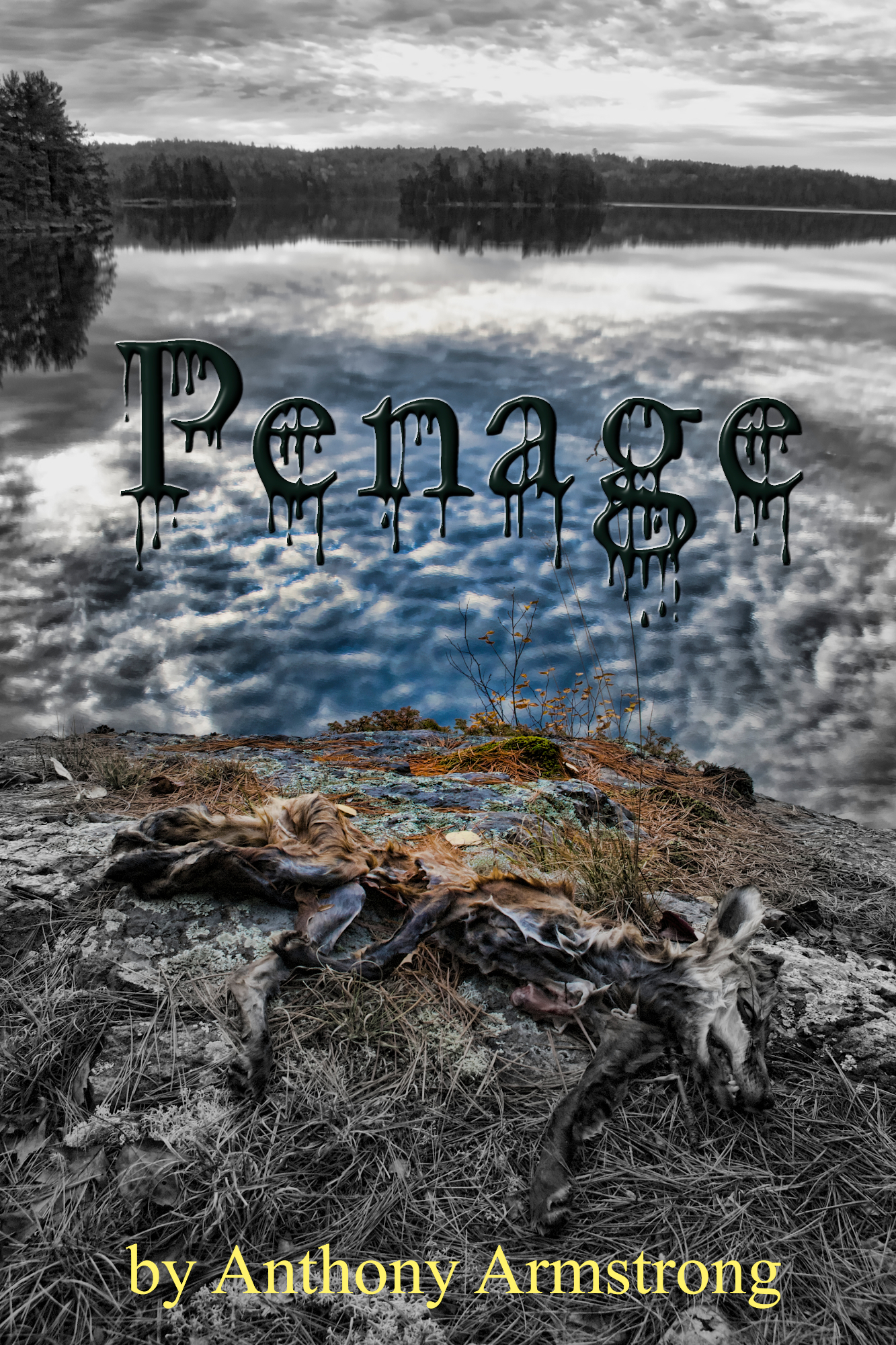
Now he’s published his first horror novel Penage.

Welcome, Tony!

WG: When did you first start writing, and when did you know that you were a writer?

AA: I realized the power of words when I was a boy and my father would tell us marvellous fantasy adventure stories at bedtime. In elementary school, I could amuse people with silly verse. My grade seven teacher read a poem I wrote and called me a communist. In high school I began writing for personal solace and satisfaction. But it was not until I was about twenty that I wrote anything that contained a poetic perception.

WG: You work in different genres and forms. How is each different, and what do you like best about each?

AA: Poems and short stories exist as completed entities before I record them. They seem to be whole when I bump into them, but I will do some mental editing before writing them down. The novel Penage was different in the sense that it was in progress for a long time, but it did seem to have its own existence. It flowed out of itself. Things I wrote down one night had a significance that became clear to me nights later as the story revealed itself.

WG: You were a teacher for many years.  How has that part of your career played into your writing, or was it the other way around?

AA: Sometimes my enthusiasm for literature was evident when I was in the classroom, but schools are the antithesis of a creative environment. Teachers and students are carried along by institutional inertia.

WG: When and how did the idea for Penage first strike you and how long did it take to bring your project to fruition?

AA: Judy and I have a small piece of land on the shore of Lake Penage. It was given to us by Judy’s parents. My father-in-law told me about a plane crash near our camp. He also told me about retrieving a frustrated fisherman’s lost gear. I was disappointed when electricity came to our area of the lake. All these events and a what if perspective blended together in my mind without much effort from me, and a horror novel was born. I wrote the story at camp over twenty years ago. During June and half of July, I would write for two or three hours beneath a propane light after everyone else went to bed. In the morning I would read the results to Judy. In July, my brother-in-law, who also had a camp on Lake Penage, died suddenly. I was staggered by his passing and can’t remember exactly when I got back to writing the story. Some time later, I did get back to my routine and finished Penage. It was not until this year that the original work got a serious editing by Ignatius Fay and me. The ebook is the final product.

WG: I’m a big process geek.  Would you mind sharing something about your process as a writer?

AA: I am not a process geek. I am even reluctant to emphasize the role of the writer. I feel more like a recording secretary. I bump into ideas and record them. I think this is especially true of my poetry. I perceive something and write it down. I am not responsible for what I perceive any more than I am responsible for what I hear or smell.

WG: What’s coming up next for you?

AA: A print version of Penage is in the works. I am toying with the idea of a short story collection. When I bump into poetic perceptions of godless spirituality (I hate the word spirituality), I record them. I may look for an opportunity to present them publicly in the future.

Thanks for this opportunity.

Thanks for a great interview, Tony.  Best wishes for your future creative endeavours.

______________________________________________________________________________

Penage is the story of Madison Green, a man with a violent, possessive personality. His distrust of others leads to his having too many x-rays. He pilots a plane that is struck by lightning—twice. The lightning and the overdose of radiation transform him into a physical and psychological beast. The plane crashes into Lake Penage, and the beast lives secretly in its waters for many years. The remains of the plane are his prized possessions, and when they are disturbed and displaced, unwanted contact with human beings becomes inevitable.

As the beast searches for its possessions, its anger increases. It secretes an ooze that

Penage Cover

Photo by Anthony Armstrong (used with permission) Graphics by Ignatius Fay

protects what is his but destroys almost anything else it makes contact with. As the beast reacquires his possessions he comes to see himself as master of the lake; he comes to think of himself as Penage.

Even some of those who encounter the beast doubt its existence, and any public suggestion of its presence brings ridicule. A drunk, a school teacher, a widow, a marina owner, and a truck driver are forced to deal with the beast. Facing the beast means facing danger, terror, and death.

Penage is available at Kobo, the itunes bookstore, Smashwords, the Sony ebook store, and most major ebook sellers. Smashwords will have the lowest price:  https://www.smashwords.com/books/view/318759

Sundog snippets: quick update

First, happy Fathers’ Day!

Second, I’ve been away at the Canadian Authors Association CanWrite! conference 2013.  There was much writerly goodness to be shared, but no signal in the lecture hall, so I couldn’t Tweet the sessions as I’d hoped to.

I will be blogging them, however, even if after the fact, and just so I don’t get completely out of step, I’m going to be doing something I haven’t done in a very long time: I’m going to blog daily until I’ve got it all transcribed!

Also, there are big things happening with the CAA, and I’ll save that for the wrap post.

Michael Reaves’s Blood Kiss has been funded through Kickstarter at over $88,000.  The movie is a go, but there’s still much work to be done.  I’ll pass along updates as I receive them for those who were partial.

Though the Margie Lawson course is now over, I’m not going to blog it.  Unfortunately, after about the half-way mark in the month, I fell behind and have not finished the course.  The information was great and I would definitely recommend Margie, but I think the best way to experience her courses is to participate in one of her in-person intensives.  I think that’s a critical piece of the puzzle that I missed out on.

Also, I would suggest starting out with the EDITS system course.  It is the foundation of the other courses Margie teaches, and though you can purchase and download the course materials, I don’t think that it can be a substitution for the live Margie experience.

I received my contract from On Spec this week.  This was the happy-dancing news I received back in April.  They wish to purchase one of my stories for the publication (over the moon).  On Spec is one of the most respected and longest running speculative fiction magazines in Canada.  It is a true pleasure to be honoured with their acceptance.

I manages a couple of submissions so far this month.  Things are definitely looking up 🙂

I’ll be posting an interview with Anthony Armstrong shortly.

Back in a few.  True Blood starts shortly and I have to book to make that deadline 🙂

Sundog snippet

Wordstock Sudbury

Today, I was pleased and privileged to be a part of Wordstock Sudbury, the first of what is hoped to be a biannual literary event.  At the Sudbury Theatre Centre (STC), Wordstock took over the main stage, lounge, and lobby areas for readings, workshops, and the essential selling of books.

If you would like to have a look at the full schedule, it is available on the site linked above.

I attended primarily to support my friend, poet Kim Fahner, and my fellow members of the Sudbury Writers’ Guild (SWG).  I also read the recently revamped opening of my novel.

Kim read with former Sudbury Poet Laureate Roger Nash, and Charlie Smith from Massey, all of them published by Your Scrivener Press (YSP).  The theme of their reading was Home and Away.  Though all three have very distinctive voices, the reading went well and had a seamless feel.  It’s always a pleasure to see such consummate professionals perform their works.

KimFahnerOf course, Kim was fabulous 🙂  She has a way of addressing the audience, slightly self-deprecating yet hilarious, that establishes a relationship.  We feel instantly at home with her, and completely comfortable as she shares pieces of her life in verse.

After a brief break, Sudbury Arts Council (SAC) president, Vicky Gilhula took the stage and presented the youth writing contest winners with their prizes.  One young man (forgive me, but I forget his name) came prepared to read and his story, based on his grandfather’s life in Sudbury and his career in the mining industry, was spectacular.  Amazing: a thirteen year old young man had the confidence and presence to bring us to tears.

He was that good.

Next, the SWG took over the auditorium, beginning with Rosanna Batigelli, who read a RosannaBatigellicouple of chapters from her historical novel, La Brigantessa.  The novel’s protagonist takes to a life of a brigand when she is assaulted and forced to leave her home by a tyrannical general.  Rosanna is in the process of revising her novel for publication.

EmilyDeangelisEmily Deangelis read from her middle grade/young adult novel about a young girl who loses her father in a car accident and subsequently experiences supernatural visitations when she is left with her great-aunt in Manitoulin Island’s Meldrum Bay.

Irene Golas read a selection of her poetry and flash fiction.IreneGolas

Tom Leduc read a number of his poems centering on his experience of Sudbury and its mining industry.

MargoLittleMargo Little from Manitoulin Island read some of her works published through projects of the Manitoulin Writers’ Circle including one on the War of 1812 and how the soldiers of the time became enamoured of their muskets, called Brown Betties.

Janice Leuschen, a member of both the SWG and of the JaniceLeuschenProfessional Writers Association of Canada (PWAC) read one of her stories, and Heather Campbell, also a member of PWAC, finished off the session with a discussion of creative non-fiction.

I read just after Margo and just before Janice.  I don’t have any pictures and I’ll reach out to my fellow guildies to share any pictures they may have of me at the event.  It would be a lovely remembrance of the day.  Sincere thanks in advance 🙂

As I mentioned, I read the revised opening of Initiate of Stone; it was my first public presentation and I received some excellent feedback from Kim and Emily.  The technical director of the STC also found me in the lobby and complimented me on my reading.

I have often been told that I have a great voice.  It’s one of the things that helps me both as a corporate trainer and as a writer, a learned skill from my days as a poet, honed by years of practise.  I tend to a literary style, even though I write genre, and the voice creates an appropriately dreamy backdrop for my words.

After the SWG session was over, playwright Matthew Heiti took the stage to host a series of readings from plays in which one friend, Paulette Dahl, was reading from a play by another, mutual friend, Louise Visneskie.

The English Arts Society of Laurentian University also hosted a reading, Heather Campbell hosted a workshop on the creative process, and Roger Nash and Daniel Aubin, Sudbury’s current Poet Laureate read their poetry.

And all of that wasn’t counting the Friday night cabaret, the children’s and young adult programming on the patio, or any of the other workshops and events that I couldn’t attend.

Though attendance was modest, I think that it was a good start.  The hope of the organizers is to grow Wordstock into a full literary festival at a larger venue, or at several venues throughout the city.  I wish them the best and applaud them for this year’s event.

I had a blast 🙂

Six questions with Barbara Kyle

Barbara KyleBarbara Kyle is the author of the acclaimed “Thornleigh” novels Blood Between Queens, The Queen’s Gamble, The Queen’s Captive, The King’s Daughter and The Queen’s Lady which follow a rising middle-class English family through three tumultuous Tudor reigns. She also writes contemporary thrillers, including B.R.A.G. Medallion winner Entrapped. Over 425,000 copies of her books have been sold in seven countries. Barbara has taught writers at the University of Toronto School of Continuing Studies and is known for her dynamic workshops for many writers organizations and conferences. Before becoming an author Barbara enjoyed a twenty-year acting career in television, film, and stage productions in Canada and the U.S. Visit www.barbarakyle.com

_____________________________________________________________________________

I met Barbara a couple of years ago at the Canadian Authors Association’s CanWrite! Conference.  Not only was she an excellent presenter and full of writerly goodness, but she was also generous with her time.  Her critique of what was then my first 20 pages was an eye-opener and she sent me off with a new direction for my novel (which has shifted twice more since, but we don’t need to talk about that here).

Then I started reading her Thornleigh saga and became a fan.

We met up again at the Algonkian conference in Niagara Falls last year, and I’m thrilled Barbara accepted my proposal for an interview.

Her latest novel in the Thornleigh saga, Blood Between Queens is available now.  I would, of course, suggest that you read the rest of the series too.  You’ll be hooked before the end of the first chapter of The Queen’s Lady, I promise.

Welcome, Barbara!

BK: Thanks for inviting me, Melanie, and for your very kind words.

WG: Before The Queen’s Lady was published, you wrote and published three thrillers under a pseudonym.  More recently, your novel entrapped, another thriller, was honoured with the B.R.A.G. Medallion.  You’ve also written screen plays.  What do you enjoy most about writing each genre or form?

BK: The glory of the novel is that the author can get inside a character’s head and heart, can write exactly what the character is thinking and feeling, so the reader gets that precise, deeply-felt emotion, whereas in writing a screenplay you’re limited to just action and dialogue; you’re totally dependent on the actor to convey the layers of emotion. So that’s a huge difference. The wise screenwriter resists the urge to overburden the dialogue with these layers, and leave room for the actor to supply them. (It’s why we pray to have fine actors cast!) On the other hand, when it comes to describing a setting or a character’s appearance, the screenwriter doesn’t have to do a thing, because one second of screen time shows what the novelist must work painstakingly to convey, slaving over paragraphs of description that film shows in a blink. As for what I enjoy about writing historical novels and thrillers respectively, my historicals actually are thrillers. If we define the thriller as having life-and-death stakes, a ticking clock (a crucial deadline), and the protagonist pitted against a powerful antagonist, then all my Thornleigh Saga books are thrillers. Seem it’s my métier.

WG: You are meticulous in your research, something I admire greatly.  When you begin to work on a new novel, do you start with an idea and plot firmly in mind and fill in the blanks with your research, or is your idea/plot general to begin with and informed and shaped by the research you do?

BK: When I start a book I have no plot firmly in mind; usually I have just a character who’s bent on doing something. My new release Blood Between Queens is Book #5 in my Thornleigh Saga, which follows a middle-class family through three Tudor reigns. My plots in these novels are quite complex, and I develop them through several drafts of an outline, which I work on for several months while concurrently doing research,  before I start writing the first draft of the book. When I talk to writers I call the outline a “storyline” because as writers we must never forget that we’re telling a story. For me, the outline is where all the heavy lifting of creation gets done: creating the characters and plot. As for research, I appreciate your compliment about mine being meticulous, because it’s so important to get the bedrock facts right, whether it’s the gate at the Tower of London through which Princess Elizabeth (later Elizabeth I) entered when her half-sister Queen Mary imprisoned her in The Queen’s Captive, or the technical aspects of an Alberta oil company drilling for “sour gas” in Entrapped. Readers love learning when they read fiction, and I love giving them the details.

WG: Owing in part to your extensive research, you’re considered an expert on the Tudors.  You’ve spoken at the University of Toronto and will appear at the Stratford Festival this summer speaking on the subject of the rival queens.  How did these opportunities emerge for you and how are you enjoying this evolution of your career?

BK: I developed my talk “Elizabeth and Mary, Rival Queens: Leadership Lost and Won” for the University of Toronto Lecture Series last winter. It’s about Elizabeth I and her cousin Mary, Queen of Scots, whom Elizabeth beheaded. They are the focus of my new release, Blood Between Queens. I told Vida Engstrand, the wonderful publicist with my publisher, Kensington Books in New York, about the U of T lecture, and she immediately contacted the Stratford Festival, because they were scheduling a production of Schiller’s play “Mary Stuart,” which is about these two famous queens, for their 2013 season. They loved the idea of my talk and invited me to give it as part of their Forum, and to also do a book signing of Blood Between Queens. So, I’ll be doing that on July 10th. I really enjoy speaking about these two queens, whose lives are the stuff of opera. Admission to the talk is free, so if any of your readers would like to attend I’d love to see them. Here’s the link:  https://www.stratfordfestival.ca/forum/speakers.aspx?id=20473

WG: You also conduct workshops and master classes on writing at various conferences and other venues as well as making time for manuscript evaluations.  How do you structure your professional life to make room for everything and still have time to write?

BK: Very carefully! It’s a juggling act. Mostly, I do manuscript evaluations when I’m between books – but that window doesn’t last long because my current three-book contract with Kensington requires me to deliver a new book each year. Still, I truly enjoy teaching emerging writers. Having been one myself, I know how hungry new writers are for guidance from someone who has helpful knowledge about the process. And I love seeing a writer experience a “light bulb” moment from something I’ve taught. That satisfaction is priceless.

WG: You’ve just completed a blog tour in celebration of Blood Between Queens.  How do you find social media has changed the way books are published and promoted?

BK: Social media has become crucial. For one thing, publishers want and expect their authors to be fully engaged with readers and potential readers on Facebook, Twitter, Pinterest etc. and even to blog, if they’re good at it (as you are, Melanie). Readers expect it too. For the author, it requires another chunk of time to maintain these networks, but most of us enjoy doing it. I love Twitter and have “met” many fascinating people there. My Twitter handle, if your readers would like to connect with me there, is @BKyleAuthor. I’ve learned three important lessons about using social media: 1) be yourself; 2) don’t constantly sell your book; 3) give: that is, share information that people truly want and can use, such as writing tips or links to author interviews. The blog tour I’ve just done with Blood Between Queens was beautifully organized by Amy Bruno of Historical Fiction Virtual Book Tours. Here’s the link: http://hfvirtualbooktours.com/bloodbetweenqueensvirtualtour/

Amy lined up fifteen blog hosts who asked for guest posts from me and/or interviews. Several of them also offered a giveaway of the book. The tour lasted three weeks and was a great success, with over 700 people entering one of the giveaways.

WG: Now that the blog tour is over, what is next for you and Blood Between Queens?

BK: Well, it’s only been out for five weeks, so I hope many more readers will be intrigued to pick it up! And I’ve just finished writing the next book in the Thornleigh Saga (Book #6) which carries on Adam Thornleigh’s story where Blood Between Queens left it. I won’t give any spoilers, but I can say that it’s set in 1572 and Adam joins the Dutch rebels who called themselves the Sea Beggars in their real-life fight against their Spanish occupiers. (I liken them to the Resistance in World War II fighting the Nazis.) Now, I’m deep into the research for Book #7. So there are lots more adventures of the Thornleigh family ahead. By the way, each “Thornleigh” story stands alone. To enjoy one book, a reader doesn’t have to have read any of the previous ones.

Thank you for a fascinating interview, Barbara!  All the best in your future writing endeavours 🙂

BK: Thank you, Melanie. I sincerely wish you the same.

_____________________________________________________________________________

Blood Between Queens Synopsis:Blood Between Queens by Barbara Kyle

Following her perilous fall from a throne she’d scarcely owned to begin with, Mary, Queen of Scots, has fled to England, hoping her cousin, Queen Elizabeth, will grant her asylum. But now Mary has her sights on the English crown, and Elizabeth enlists her most trusted subjects to protect it.

Justine Thornleigh is delighting in the thrill of Queen Elizabeth’s visit to her family’s estate when the festivities are cut short by Mary’s arrival. To Justine’s surprise, the Thornleighs appoint her to serve as a spy in Mary’s court. But bearing the guise of a lady-in-waiting is not Justine’s only secret. The weight of her task is doubled by fears of revealing to her fiancé that she is in truth the daughter of his family’s greatest enemy.

Duty-bound, Justine must sacrifice love as she navigates a deadly labyrinth of betrayal that could lead to the end of Elizabeth’s fledgling reign . . .

Praise for Blood Between Queens:

“Fact and fiction are expertly interwoven in this fast-paced saga…exudes authenticity.” – Historical Novel Society

Kyle illuminates the world of queens Mary and Elizabeth, exploring their rivalry from its beginning through the eyes of a young woman torn between loyalty to her queen and a growing friendship with the enemy . . .Kyle knows what historical fiction readers crave.” RT Book Reviews

“A  beautifully written and compelling novel. Again, Barbara Kyle reigns!” – New York Times bestselling author Karen Harper.