A.K.A. The period at the end of this series 🙂
I’ll preface this bit by saying that I don’t think I’m unique among writers in this respect. In fact, I think every writer works, at core, with and through the same issues. This past week, I read (and shared) a great interview with Chuck Wendig in which he talks about (among much other awesome) the themes that crop up in his work. Surprise, surprise, death and family rank prominently.
In this morning’s The Sunday Edition with Michael Enright, one of the Canadian greats (with whom I was privileged to work, even though he didn’t like my genre/subject matter) Alistair MacLeod, mentioned the same influences and themes.
Think of just about any author you’re reading or have enjoyed, and I think you’ll find death and family cropping up: Rowling’s Potter books were all about death and the search for family despite its omnipresence; Martin’s Song of Fire and Ice is about a number of families and he keeps on killing off prominent members 😉 (note here: in this context, what is politics, but family drama writ large on the world stage?); Collins’s Hunger Games = Death/Family; Gabaldon’s novels are a series of time travelling family sagas and death plays a prominent role.
I could go on, but I won’t. Search your own shelves/ereaders to find your own examples.
What’s unique about me is my story, my life, and I hope that translates to my characters so that even though the theme may be familar, the way that it is expressed through my characters and stories is something just a little different.
Death
Death finds its way into a lot of my stories in different ways:
In my first published short story, “Chlorophyll and Corruption” (which is probably the prologue to a YA sci-fi), my protagonist first saves his brother from being pushed out of their atmospheric containment bubble, then must flee an impending supernova. “For a Change” (which I have subsequently rewritten as “The Gabriel” and may yet become a sci-fi novel) my protagonist’s reaction to a world of sterile Transmat immortals is to attempt suicide, repeatedly.
In “Fox Fur,” my protagonist is trying to deal with the death of her parents by means of various encounters with foxes. “Dead Issue,” is about a young woman who makes a personal discovery at a family funeral.
“Tonsillitis Blues” from my 1999 MA Thesis, Whispers in the Dark, is an interpretation of my adult exploration of the near-death experience prompted by my tonsillectomy trauma. The protagonist of “Fool’s Journey” (subsequently rewritten as “A Terrible Thing” and likely a YA paranormal novel), another story from the same collection, attempts suicide because she can’t deal with the visions of danger and death she’s been gifted with.
Even my poetry is liberally sprinkled with death.
Ferathainn, the protagonist of Initiate of Stone, experiences the deaths of her best friend,

English: Colored version of the ancient Mesopotamian eight-pointed star symbol of the goddess Ishtar (Inana/Inanna), representing the planet Venus as morning or evening star. (Version not enclosed within a surrounding circle) Polski: Kolorowa wersja symbolu ze starożytnej Mezopotamii, ośmioramiennej gwiazdy Bogini Isztar (Inany/Inanny), reprezentujacej planetę Wenus jako poranną lub zachodnią gwiazdę. (Photo credit: Wikipedia)
fiancé, and father, and subsequently dies herself attempting to exact revenge. She undergoes an Inanna-inspired journey into the underworld to reclaim herself and her will to live. Eoghan witnesses the execution of his brother for heresy and when the goddess Auraya calls him to become her champion, or Kas’Hadden (hammer of light), he experiences an assassination of personality at her hands. Dairragh, deeply affected by the death of his mother years earlier, inadvertently triggers the destruction of his home and the death of his father. He succumbs to his wounds and is resurrected and set on a shamanic path by the mysterious anogeni.
I won’t get into the protagonists of my other unpublished works, but death and its impact are recurring themes.
Death is the period of every life sentence and so it is a universal. Few readers will fail to be engaged by various explorations of death and its impact on those left behind. Thrillers and mysteries are built around it and are two of the most popular genres in publishing today.
Family
Likewise, everyone has a family. Even the only child who has chosen not to have children of her own (like me) has parents and understands the pull of the complicated legacy handed down to them.
In my, admittedly small, family, women proved to be the peace-makers, sacrificial lambs, care-takers, bread-winners, and all around protagonists of the story.
My maternal grandfather was an alcoholic and a womanizer. He and my grandmother were unable to have children and adopted my mother and aunt. My grandmother worked in a textile mill during the depression and worked for most of her life until her first major heart-attack forced her into early retirement.
On my father’s side, my grandfather died at a relatively young age because of heart failure and my grandmother was an entrepreneur. I still meet people in Sudbury who hear my name and ask if it was my grandmother who owned Marttila Sewing Centre. Yup. That was her. She remained fiercely independent until stroke and cancer eventually took her life.
My father was always an ill man and though he was the bread winner for most of his life, it was my mother who held the family together, getting her high school diploma and driver’s licence in her forty’s and starting a new career as a ward clerk in the hospital when my father had his breakdown. My mother was the one who cared for her parents and my father until their respective deaths. Though she doesn’t have to, she still takes care of me.
It’s no wonder then, that my work focuses primarily on strong female characters.
Incidentally, here are a couple of posts I came across this week from Marcy Kennedy on strong and likeable female characters.
I had trouble for many years writing strong and likeable men because that was an archetype largely absent from my experience. I found my way to that eventually, though, because of Phil, and because I learned to recognize the good qualities in the men in my life and expand those into heroic proportions.
Everyone is a mix. My paternal grandmother may have been a business woman, but she was a poor fiscal manager, and tried too hard to curry favour with the well-to-do women of Sudbury (read sycophantic). She first promised my mom inheritance of her business, then rescinded the offer and sold the business to a third party. I think this was because she was too embarrassed to let my mom see what a shambles she’d made of things.
Though family dynamics run through all of my stories and novels, I’ll just present one example, from IoS, because it’s going to take a while to break down for you 😉
Ferathainn’s family in IoS is complex. Her parents, Selene and Devlin, can’t have children and adopted Fer when she was abandoned by a bedraggled, but clearly noble, woman who refused to speak and ran away before she could be made to explain anything.
Devlin, feeling the need of a child of his blood, fathered Fer’s half-sister Aislinn, with Willow, a family friend and eleph (read elf). Willow is misanthropic and makes her living as a brew-master and owner of the local public house. She readily gave Aislinn into Selene and Devlin’s care.
Aislinn is obviously a half-breed, and largely reviled by the Tellurin (human) villagers of Hartsgrove as a freak. She is destined to become a bridge between the eleph and Tellurin peoples, however, by virtue of her heritage.
When Selene and Devlin adopted Fer, the resident eleph, Willow and her brothers Oak and Leaf, invited the new family and Aeldred, the local mage, to a Shir’Authe. The Shir’Authe foretells the destiny of the child in eleph culture. At the ceremony, none of the eleph can see anything about Fer’s future, but Leaf sees his spirit-lights, or astara, in the baby’s eyes (if you’re an Elf Quester, this is recognition, if you’re a Meyers fan, it’s imprinting). This is bizarre enough, because only eleph are supposed to bond with one another in this way.
Selene, understandably, freaks out, but Leaf promises never to act on this deep spiritual attraction unless Fer somehow miraculously sees her astara in his eyes, or otherwise returns his feelings once she is gown.
Aeldred senses a wild and powerful magickal talent in the infant. He fears that he will not be able to control the child and that she will become a rogue mage. She has the potential to wreak havoc on their world and her talents will be much sought after, by moral and immoral authorities, both magickal and political.
In an attempt to minimize Fer’s potentially negative impact, he merely tells the others that she has talent and that he will remain in Hartgrove to become her teacher. He further tells them that Fer’s parents are powerful, but immoral, people and that they must protect the child in the event that either one, or both blood parents, come seeking her.
He gets everyone to agree to a magickal binding. None of them will be able to speak of the circumstances of Fer’s birth or of her coming to Hartsgrove until the girl comes of age. By then, Aeldred hopes that he will have thoroughly indoctrinated Fer in the disciplines of the Agrothe magicks and that he will therefore be able to control her chaotic potential and prevent her from doing harm.
In truth, Fer’s parents are Aline of Gryphonskeep and Halthyon, an eleph mage, or kaidin. Aline is descended from the de Corvus family and magick flows through the bloodline. The original Kas’Hadden was a de Corvus, so the power of the gods has been passed down to Fer. Aline is married to Killian of Gryphonskeep and mother to Dairragh (dun, dun, dun!).
Halthyon is one of those rogue magi that Aeldred worries about. He has extended his lifespan far beyond the already lengthy eleph standard. His goal is to accumulate magickal power (by draining it from others as he kills them) and to ascend to godhood (in the process of which he intends to kill the existing gods of Tellurin).
Halthyon is unable to extract the child’s location from Aline and subsequently kills her in the attempt. He wants to find his child because he considers her the only person worthy of ascending with him. In order to do that, Fer must become a god-killer as well.
Okaaaaaay. So there, in a convoluted nutshell is the familial basis of the plot of not only

English: St. Etheldreda’s Churchyard – Family Plot with Snowdrops (Photo credit: Wikipedia)
IoS, but the ensuing novels in the series, which I have called Ascension. You can see why I identify the book in the epic fantasy genre 😀
Family is an endlessly intriguing Gordian knot to unravel and I think you can see where I have mined my tapestry to create Fer’s.
It’s all variations on two essential themes.
How have your life experiences contributed to your creative work? Do death and family inform your stories? Do you have a family-plot?
I’d love to hear from you!
Here ends the series that was A life sentence with mortal punctuation. I hope you have enjoyed it, and found it to be useful in your creative pursuits.
Coming soon: I’ll have a book review for Laura Howard’s The Forgotten Ones, and hopefully a couple of author interviews to throw your way. I’ll definitely share my experience in Margie Lawson’s A deep editing guide to making your openings pop course, and in Marcy Kennedy’s Crafting your logline and pitch workshop next weekend. There might even be some Pupdates and Next Chapters in there.
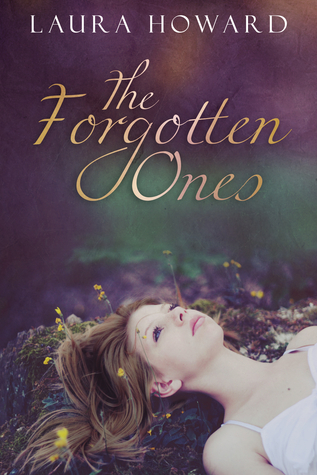 Allison O’Malley’s plan is to go to grad school so she can get a good job and take care of her schizophrenic mother. She has carefully closed herself off from everything else, including a relationship with Ethan, who she’s been in love with for as long as she can remember.


 Always Looking Up