The cities of Initiate of Stone

World building is winding down.  After this post, I’ll probably have one more about the languages of Tellurin, and another to cover some of the odds and sods I haven’t described elsewhere.  Following that, there will be a final post on world-building resources.

Cities, towns, villages, etc.

I’ll start with Hartsgrove, Ferathainn’s village.  Situated west of the mountains, Hartsgrove is one of many free towns, or free holds.  Except for the Parimi, Haldane, and Espanic lands, which are proper provinces, most of the people who live in the west are clustered into such communities.

The village proper contains The Silver Swan, Willow’s public house, which is a structure half built, and half shaped from a massive oak.  In the back rooms, she brews her beer and ferments her wine.  Her distillery is off-site, for safety’s sake.  The Swan is the closest thing Hartsgrove has to a town hall.  It’s where most community business and assemblies are held.

A small stable, blacksmith, and a builder complete the village’s services.  There is a mill down by the Chance River, built to withstand the seasonal floods, and with a mill-wheel that can be raised and lowered given the water level.

The rest of the village, set well back from the river, consists of families that work on the farms in the surrounding countryside to earn their share of the harvest.  Willow’s orchards and fields (behind The Swan) are tended only by her and her brothers, though they recruit assistance for the harvest.  Even Fer does her share during the sowing and reaping periods.

Hartsgrove is just north of the Deep Forest and many of the trees around the village are ancient.  Think about pictures you might have seen of century trees.  The eleph have shaped their homes from these.
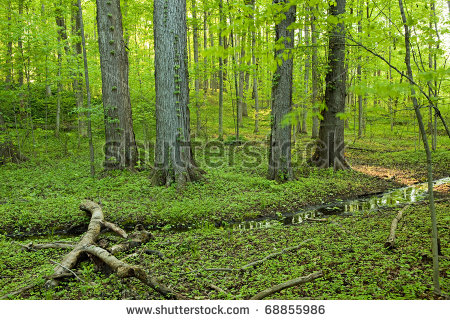
North of the village is a sacred grove, planted hundreds of years before.  It’s where the name of the village derives.  That’s where all of the seasonal festivals are held.  They’re mostly communal affairs, as Hartsgrove isn’t big enough to rate a priest.  They have to petition one to be sent from one of the larger centres for important events like marriages.

Selene and Aeldred share the responsibility of the physical health of both animals and people.

Hartsgrove sends annual tributes to Aurayene, Drychtensart, and Gryphonskeep in the form of food and Willow’s excellent brews.  There is a fair demand for The Swan’s beer, wine, and whiskey.  These might be the village’s only export.

There is no wall.  Only ones made of stone can withstand Vedranya, and there is no quarry nearby.  There is rarely any need of defence, and the men of the village, with Aeldred’s magickal support, are more than equal to the few bandits who choose to try their luck.

Aurayene is a sprawling city state founded by the Parimi.  It is the capitol of Parime, and the spiritual centre of Tellurin.  The Archbishop, the highest ranking prelate in the land, makes his home there, and the Monastery of Aurayene is the biggest of its kind, taking up fully one third of the city’s area.

The Archbishop’s compound and tower are palatial.  Not only the compound, but the city as well, are guarded by massive stone walls.

Aurayene is one of the few cities to have survived the Cataclysm, though only barely.  When the western coast sheered away from Tellurin, Aurayene stood on the very brink.  In succeeding generations, they adapted to their inconvenient perch atop a cliff that dropped several hundred feet to the Jagged Sea below. 

Miners and stone masons excavated The Long Stair, which descended through the stone beneath the city to the floating mass of docks that formed the port below.  A lift was also constructed to convey cargo up the cliff face to the city.

The Chance and the Aurayene Rivers flow respectively south and north of the city, cascading in incredible waterfalls to the sea below.  The land around Aurayene is mostly plain, though the coastal mountains, Les Bras d’Auraya, surround it.

Riversway is essentially a mercantile centre on the Aurayene River a day’s ride out of Aurayene.  Because goods coming into Aurayene from the port side have to be hauled up the cliff, and the city is so well developed, there’s not a lot of space, literal or figurative, to bundle things off to specific destinations.

Riversway serves as the place where shipments are sent in bulk, to be divided and repackaged for shipping further up the Aurayene, or by land into the continent.

Gryphonskeep is on the north shore of the Aurayene River.  Originally built by a discontented Alban lord (Murdo Christie)  who’d left the Island Kingdoms before the Cataclysm, the keep earned its name and reputation by virtue of several gryphon fledglings that the lord managed to capture on his journey through the mountains.

The keep was built for defence with thick walls and multiple sets of doors.  Christie was jealous of his new prize and distinction, and unwilling to lose either.

The aerie tower was built to simulate the gryphons’ mountainous home with broad balconies at the half-way mark and the top level allow the gryphons access.  During Vedranya, these are covered with massive wooden “shutters.”  The gryphons would much rather be up in the mountains, safe above the storms, but they like to humour their Tellurin caretakers.

Gryphonskeep has come into the hands of many lords over the years.  It is both a desirable reward—who wouldn’t want to be the Gryphonskeeper?—and a kind of back-handed compliment—who wants to be exiled to the western wilds?

The west of Tellurin is considered a barbarous and lawless land.  Few families have been eager to assume the burden when they could be living a life of relative comfort in the civilized east.

Killian’s father held Gryphonskeep before him, but his disreputable behaviour and abuse of the noble beasts caused him to be stripped of the honour.  Killian had to fight to prove his right and worthiness to hold Gryphonskeep.  Dairragh might be the first third generation Gryphonskeeper, if he can regain the honour.

Aumenburg is a small village nestled in a valley of the Great Ring Mountains southwest of Kriegstaff.  The mountains are Saxon land.  It is ruined by the time Ferathainn and Dairragh reach it, having been ravaged by Kane’s army and then abandoned to the storms.

Like Hartgrove, it has a grove.  Unlike Hartsgrove’s, Aumenburg’s grove has been forgotten and left to the wild things.  It also happens to be the site of a great sourcerous battle and the resting place of Jareth’s amulet.
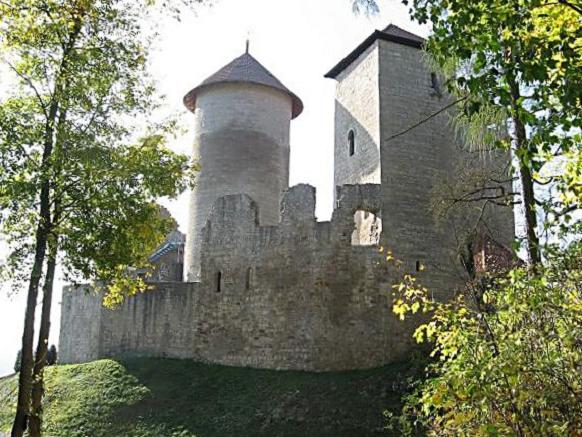
Finally, there are five mountain keeps that guard the passes through the mountains.  These were built by the Saxon in the days when defence, or at least provision for travelers and protection from Vedranya, were deemed necessary.  All five keeps were constructed in much the same manner; all tall, rectangular, utilitarian structures built out of the mountains themselves.  Each was built on top of caverns which served as storage and dungeons, the foundations of each keep reaching deep into the stone.

Each has an outer baily, or commons area, and an inner fortification.

That’s it for tonight.  Have a wonderful weekend everyone!

What does everyone else in Tellurin believe?

5 religions

Last week, I wrote about the two main religions of the Tellurin (humans): The Faithful, and the Holy Mother Church (HMC).  But what does everyone else in Tellurin believe?

You didn’t think I was going to stop at two, did you?

Well, I’m not.  But I’m not going to go into great gaudy detail about them either.  In the process, you’ll learn a little more about the various inhabitants of Tellurin.

Other Tellurin religions/belief systems

While the Parimi, Haldane, Espanic, Island Kingdoms, Saxon, Sami, and Skaldic all believe to a greater or lesser extend in Auraya and espouse The Faithful religion (some distinctively coloured by their own pagan belief systems), and the Caldone alone believe in the HMC, there are still other Tellurin cultures that believe in neither.

The Nubiin espouse a faith based in the divinity of their ruler, or Osire, and resulting cult of death.  The Osire (a man or woman) is tied to the land, responsible for the weather and tides that provide for a fruitful growing season in a relatively arid region.  Prosperity in the form of abundant crops and livestock result in a long rule, the opposite can result in a short one.

When an Osire ascends, work begins on his or her funerary monument.  The relative greatness of that monument and the treasures enclosed with the deceased is tied to the length of their rule.  Sound familiar?  It should.  The Nubiin are based losely on the Egyptian culture.

In the wake of the Cataclysm, and the advent of the devastating storms of Vedranya, the Nubiin faith was shaken.  If the Osire held no power over the storms, how could they be considered divine?  For nearly a hundred suns, the Nubiin struggled, even adopting a bastardized form of The Faithful religion for a while, but eventually, they returned to their traditions, rationalizing Vedranya as the cost of their prosperity otherwise.

The Hussar of the plains believe that the gods exist, but that they have no interest in what happens in Tellurin.  They believe in the power of a good horse, the strength in their limbs, and the pleasures of a life honourably lived.  They have an ethical code rather than a religion per se.

The Shooksa-Nai of the north-western region of Tellurin still live in a tribal fashion and have an animistic belief system, that is they believe in the spirits of things.  Their shaman are their spiritual leaders, healers, and advisors.  The Shanzu of the Deep Forest are similar.

A word about those pagan belief systems I mentioned off the top.  They relate to the first gods, the akhis.  Most revolve around the lord of the land (Zaidesakhi) and the lady of the waters (Augesahki).  Sacred groves were often consecrated to them.

Non-Tellurin religions

The okante (think orcs) territories are just south of the Shooksa-Nai and they too are a tribal, animistic people, and were largely peaceful until Yllel co-opted them into soul-slavery.  Now they live in fear of the mad god and do his bidding in the hope of saving their people from his wrath.

The krean (think trolls) are a seafaring people and revere the oceans and weather as their deities.  This has its roots in the akhis as well, Augesakhi and Freyesakhi.  Like the okante, they have been enslaved by Yllel and live in a similar fear of him.

The grunden (ogres), who live in the mountains, and blinsies (goblins), who live in the Deep Forest and love to harras the Shanzu, have no religion, but are also enslaved to Yllel.

The anogeni, as I’ve written in the past, were once the hands of Zaidesakhi, the fingers of Augesakhi.  The hidden people are special.  Though they’ve lost both “parents” they live in the belief that they will return to their children.  They have no true religion, because they know the true nature of the gods.  They do not require a structured religious practice as such.

They not only believe in the spirits of things, they actually study them and know them as friends.  There are twelve plants whose spirits have proven especially powerful: the ashkiwine.  It is through their relationships with the spirits that the anogeni practice their form of magic.

Because of their relationship to the akhis, they also know the spirit of the world, which they call the anoashki, the great mystery.  He is their grandfather, and they serve his purpose, one of the primary goals of which is to resurrect the fallen akhis.

Though the anogeni we meet in Initiate of Stone live in the earth, there are other groups of the anogeni that make their homes in the great trees, and in the oceans.  These last are an aquatic form of the anogeni, but they don’t have fish-tails 🙂

Another interesting thing about the anogeni is that they hold the memories of their ancestors, are born with them in fact.  As a result, they have a complex system of prophecies based on these memories and the patterns they have seen in them.  These prophecies and the anoashki guide them.

The dwergen, similarly, have no structured religion.  Dwergesakhi still lives in the heart of the earth, still speaks to them, and they know him well.  A self-evident god requires no faith.  Dwergesakhi is their creator, though, and as such they offer him respect and will do his bidding unquestioningly, as any good children might.

The eleph, being from Elphindar, are a little different.  Elphindar has no gods, but the eleph still revere the kaides esse, or the powers that be.  They believe in a kind of clock-maker, something beyond their understanding that created the universe, but then left the experiment to tick itself out in the fullness of time.  Like the Hussar, they have an ethical code by which they live.

When the eleph first arrived to Tellurin, Auremon came to them to try to make amends.  They were startled that the kaides esse of this new world took corporeal form and that they intervened in the affairs of mortals.  Since he confessed his role in their eviction from Elphindar and his inability to restore them, the eleph had no use for Auremon, and rebuffed him.

Not long afterward, the eleph encountered Yllel, when the mad god attempted to enslave them.  Yllel could not trick them, however, and this encounter only served to entrench the eleph enmity of the Tellurin gods and the people who worshiped them.

Finally, the favrard espoused an intricate system of ritual and discipline that did not focus on one god, but on all of them, past and present, known and unknown.  When Yllel enslaved them, he made them abandon their spirituality.  Some attempt to cling to their past, but Yllel punishes them for it.  The favrard are Yllel’s special pets, and one of the few peoples that he can possess.  The tortures he can inflict from within are fearsome indeed.

With this, we’re almost at the end of my world-building epic.  Next week, I’ll talk about some of the other distinctive features of Tellurin, some of the cities, keeps, towns, and villages that figure in Initiate of Stone, as well as a few odds and sods.

I hope you’ve enjoyed hearing about Tellurin and the characters in my novel.

I’m Writerly Goodness, circling three times and settling down for a nice sleep.  Until next week!

Overview of the geo-political history of Tellurin, part 2

Last time on Work in progress: The first Kas’Hadden saves the Parimi.

The Parimi now occupied the western coastal mountain region of the continent but they were happy.  Having brought with them the best and brightest of their people, they took root and created a province like no other.

The Haldani and Espanic peoples, also persecuted by the Caldone, settled on the western coast as well, but in smaller settlements, though, these two, became provinces in their own rights. The Haldani and Espanic espoused the Faithful religion.

The Parimi continued in their spiritual belief as well, and when the Caldone finally realized that they could no more eradicate the Parimi Faithful than they could the Haldani and Espanic survivors, they relented and struck a balance.  The Holy Mother Church established its own religious centre and their own archbishop in Impiranze, Caldone’s capitol city on the eastern coast. Still, it was the holy city of Aurayene and the Archbishop there that became the spiritual centre of the continent.

Each area and culture within Tellurin developed its own language and way of life.  Each developed its own economy and its own ruler.  Whether king or osire or emperor, Tigernos, Chieftain, or Horselord, each country had its own leader and its own soldiers.  They fought with each other to a greater or lesser extent.  Those displaced or exiled due to the fighting inevitably found themselves trickling through the mountain passes and establishing towns and villages and small city forts on the western side of the continent.

Each had its own sourcerors, though they may have been called witch doctors, shaman, druids, spirit walkers, or other things.  Tellurin developed and grew.  Its people developed and grew as well.

Eventually, they negotiated truces and trade routes.  Aurayene in the west and Drychtensart in the east became the two largest cities and began to amalgamate power (religious and political respectively) in those two centres.

Auremon’s mistake brought the eleph into Tellurin.  Their bitterness at being “trapped” in Tellurin caused them to turn every help away: Auremon, and delegations from Aurayene (the Parimi), Mersea (the Espanic), and Pax (the Haldani).  Their desire for isolation and distrust of outsiders was spread far and wide and the people of Tellurin decided to let the eleph live as they chose (so long as they didn’t cause trouble).

The Agrothe was established and its adherents prospered.  Soon nearly all developing persons of talent were sent to Auremsart off the western coast to be trained in the official art of magick.

The Saxon began to assert themselves as the new power in Tellurin.  Politically, things were moving slowly but inexorably toward a centralized government and high king in Drychtensart.

When Auremon was killed and Auremsart crumbled into the sea, the Agrothe magi on the mainland consolidated in Dychtensart, another coup for the increasingly powerful king.  King Druckert (later called the wise) established the King’s University in Drychtensart and the Agrothe disciplines survived there.

Then the Cataclysm happened.  This was the battle between Auraya, Tryella, and Yllel.  As described in a previous post, the world was shaken by natural disaster in every form.  Vedranya in its new and terrible incarnation came to be.  Millions of people died.  Much of the written history and accumulated knowledge of the previous centuries was lost or destroyed.

In the years following the Cataclysm, the world rebuilt.  The Saxon, the strongest nation before the Cataclysm, was the first to recover afterward.  The king in Drychtensart was the de facto king of all Tellurin, though there were kings and lords scattered throughout the lands.

The gods were silent and though the religion of Auraya still existed, in both its liberal (Aurayene) and fundamental (Impiranze) sects, it was a changed religion.  The Kas’Khoudum and the Rada’Khoudum had both been miraculously saved, but much of the scholarship on the ancient texts was lost and many of the elder scholars had not survived the Cataclysm.

New schools and scholars made it the work of their lives to try to find old texts and recover their knowledge.  They spoke to the oldest of the old, the wisest of the elders.  But there were pieces missing and there was no context for the pieces of history that were recovered in later years.

Some ambitious scholars tried to recreate history as they thought it should have occurred.  A new speculative branch of scholarship arose.  Many of them were simple fabulists and their fictions were transparent.  Others were more convincing and only served to confuse things further.

The Agrothe had also survived more or less intact, but they too had been changed by the Cataclysm.  In the same way as history was being reinvented, the Agrothe too experienced a queer kind of renaissance.  The knowledge of the sourcerors that they had so long tried to subsume with their own training and lore was now actively set aside and with the trauma of the Cataclysm so recent, it was a much easier thing to forget about the sourcerors than to try to deal with them.

As for the sourcerors themselves, they survived, but found it far easier to do so without the constant harassment of the Agrothe.  They were happy to be forgotten, and yet, new sourcerors continued to be found, quietly whisked away for training, and then set loose on an unsuspecting world.

At the opening of the novel, the political world is ruled by King Romnir Raethe in Drychtensart, High King in all but name.  Each of the other countries still have their own ruler, but most of these (Nubia, Caldone, Hussar, and the Island Kingdoms) sit on a council that advises King Raethe.  The Parimi are represented by Archbishop Hermann Manse, special advisor to the king.

The Caldone archbishop does not advise.  The Sami and Skaldic rulers sit on the council when they choose to go to Drychtensart, which is rarely.  The Saxon are represented only by King Raethe.

The Shooksa-Nai and the Saanzu never had representatives on the council, though trade envoys appear from time to time.  The eleph of Rosingthiel keep to themselves and by and large, most people are happy with that arrangement.

The dwergen and dwergini likewise have their own self-sufficient kingdom beneath the earth, their own king, and trade envoys. The deep-dwellers are more regular in their attentions, however, and visit Drychtensart twice each sun, once in Shoudranya and once again in Mardranya to trade raw ore and enchanted weapons and armour.

The favrard live scattered throughout Tellurin (though some remain on Tahesakhi), serving their dark lord.

The western lands, bordered by the mountains in the east, the Deep Forest in the south, Parime, Haldane, and Espania on the western coast, and The Wilds in the north, are largely independent settlements and free towns that owe fealty to Drychtensart, but pay annual tributes to the surrounding lords and provinces to ensure their safety.

The king doesn’t bother to enforce this fealty, however, with the exception of the mountain keeps, which were Saxon to begin with, and Gryphonskeep, the sole settlement with ties to the Island Kingdoms in western Tellurin.

The Caldone are secretly plotting to eradicate the Faithful and supplant Archbishop Manse with their own archbishop as the religious leader of Tellurin.  They are also plotting to take the throne from Raethe.  With both religious and scular power secured, they want to cleanse the known world of such blights as magi and eleph, really anyone who doesn’t adhere to the Holy Mother Church.

Everything else is being set in motion by Yllel and Kane.  Yllel directs the drogadi to place source bombs strategically throughout the dwergen empire.  Drogadi sourcerors detonate the bombs remotely and trap the dwergen in their own kingdom.

His people among the Faithful place the Rada’Khoudum firmly in the hands of Archbishop Manse so that he uses its spells to bind Auraya’s source to kill Callum, the rising Kas’Hadden.

The drogadi rise to the surface and foment chaos in the west.  The other enslaved races muster for the coming battle.

The okante, and otherwise peaceful, tribal people, usually live in harmony with the Shooksa-Nai in the Northern Steppes and in the southern part of the wilds, south of the Glass Sea.  The krean are sea-faring folk who still call Tahesakhi home for the most part.  The bakath live in the Southron Spine, and the grunden in the Northron Spine.  The blinsies harass the Saanzu in the Deep Forest, but steer clear of the eleph.

Kane’s sourcerors infiltrate the Agrothe into the very capital and the king’s own university.

Map of Tellurin

Map of Tellurin

This is my cartographically-challenged map of Tellurin. At least you’ll get the general lay of the land.

Next week: What’s a Tellurin year?  A month? The days of the week?  The seasons?  Calendrical mysteries revealed.  This stuff will likely never appear in the novel, so Writerly Goodness will be your only chance to see such arcane material 🙂

Until then, good luck and good writing.