Tipsday: Informal writerly learnings, April 2-8, 2023

Welcome to the last tipsday for the foreseeable. As I mentioned in my most recent next chapter weekly, I’m cutting back on social media to devote more time to writing and revision.
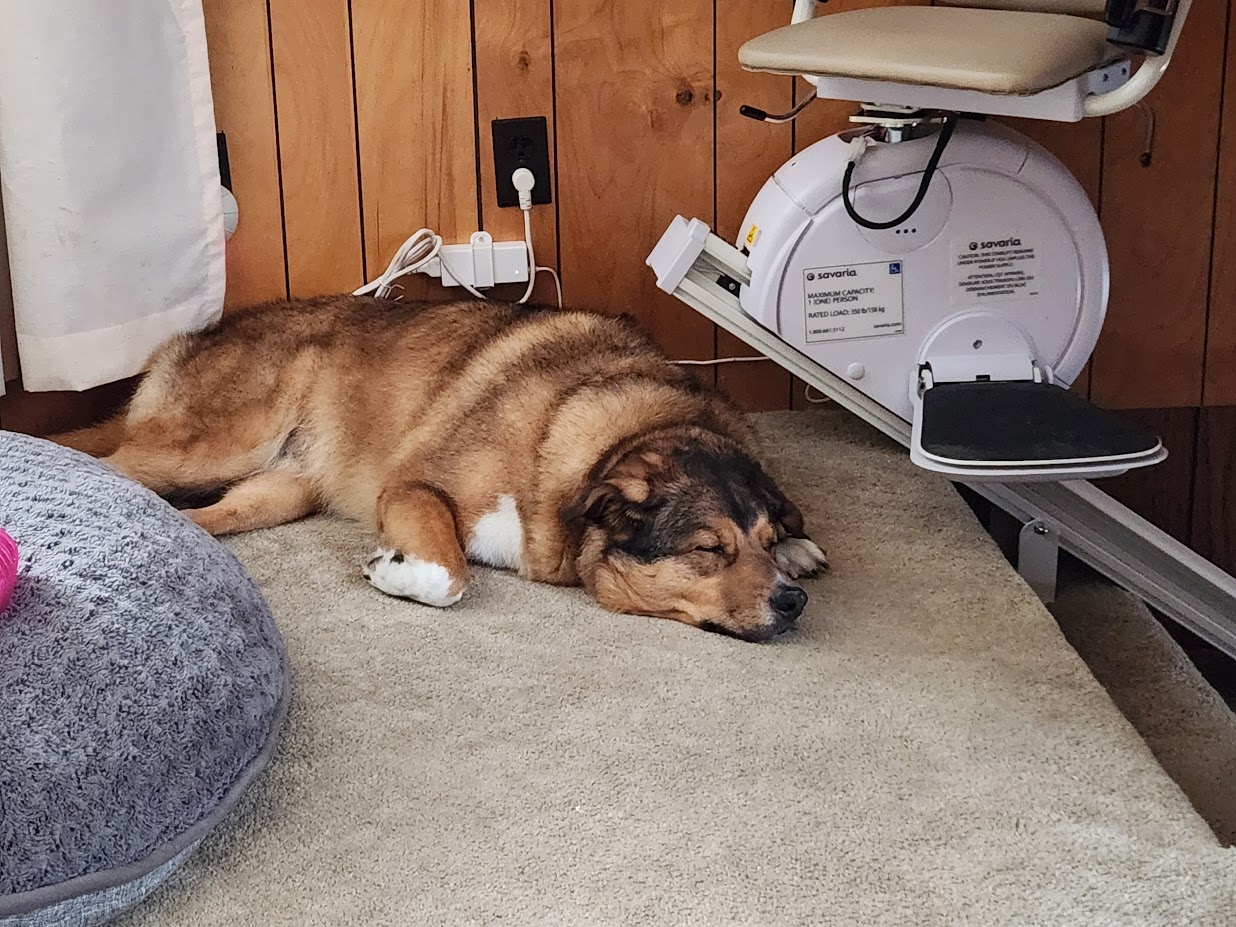
It’s been a while since Torvi made an appearance 🙂

Julianna Baggott: yes, I know how hard it is. Donald Maass explains where connection comes from. Then, Elizabeth Huergo muses on frigates and ChatGPT. Writer Unboxed

Margie Lawson is writing fresh: laughs, giggles, and snorts that carry power. Then, Hannah Jacobson explains what you can do with book awards and reviews. Stefan Emunds says characterization is one of the most vital writing skills. Writers in the Storm

What makes a movie “feminist”? Princess Weekes

Elizabeth Spann Craig is writing longhand.

Becca Puglisi says, if you need organizational help, try Trello. Then, Colleen M. Story shares six ways to make your author blog more successful. Writers Helping Writers

Is cyberpunk actually punk? Tale Foundry

Amy L. Bernstein provides a framework for moving beyond your first draft. Then, Matt Holmes lists the four pillars of book marketing, or how to sell more books in less time. Amy Goldmacher explains how to differentiate between desire and desperation in pursuit of publication. Next, John Matthew Fox helps you find comp titles using ChatGPT. Jane Friedman

My revision process—first draft to ready for publication. Shaelin Writes

Ashley Christiano shares chakras for storytellers, part 2: putting concept into practice. Then, Manuela Williams considers four poetry book cover design trends. Stacy Frazer explains how to recover from creative burnout and enhance your energy. Next, Lori Walker interviews Danielle Mitchell about reading and writing poetry. Brenda Rech shares five things she learned by entering writing contests. DIY MFA

Seven exercises to improve dialogue. Reedsy

Janice Hardy lists three steps to crafting a story arc that sucks (your readers in). Fiction University

Tiffany Yates Martin discovers how Camille Pagán revises—by betting on herself. Fox Print Editorial

Chris Winkle offers six tips for writing your first novel—and series. Then, Oren Ashkenazi analyzes five stories that undermine their own stakes. Mythcreants

Thank you for visiting, and I hope you found something to support your current work(s) in progress. You can always peruse the archives.

Until Thursday, keep staying safe and well, my writerly friends.
Tipsday: Informal writerly learnings, Jan 8-14, 2023

It’s tipsday! Your chance to stock up on informal writerly learnings!

Nick Taylor explains how to create authentic queer characters. Louise Harnby

Kelsey Allagood wonders, how do you explain climate change to a magnolia tree? Then, Jim Dempsey explains how to write a successful novel. Juliet Marillier muses on the power of story. Next, Kathryn Craft points out three key places where stakes will shape your story’s meaning. David Corbett is writing cromulent dialogue. Writer Unboxed

The poem no one understands. Tale Foundry

Elizabeth S. Craig offers some tips on how to handle reviews as an author. Spunk on a Stick

Hannah Jacobson explains how to find the best awards for your book. Then, Lisa Norman wants you to EAT your heart out to empower your web site. Jenny Hansen points out the importance of great mentors (for you and your books). Writers in the Storm

C.S. Lakin points out the intersection of voice and deep point of view. Live Write Thrive

Joanna Penn interviews Roz Morris about how to (finally) finish your novel. The Creative Penn

Write your book in 2023. Reedsy

Ambre Leffler helps you use water’s superpower of creative flow in winter. Then, Angela Yeh says flash fiction is no flash in the pan. Neil Chase shares seven tips to create a unique sidekick character. Next, AK Nevermore lists five things feeding the lie that there’s no time to write. DIY MFA

Tiffany Yates Martin says backstory is essential to story—except when it’s not. Then, Hattie Fletcher answers the question: Is it OK to ask for before/after examples from a freelance editor? Jane Friedman

Sue Coletta helps you make an unbreakable promise to readers. Becca Puglisi offers some thoughts on writing insecure characters. Writers Helping Writers

Nathan Bransford shows you how to live creatively.

Tiffany Yates Martin asked an AI, what does AI mean for writers? Fox Print Editorial

Chris Winkle lists 12 sources of wish fulfillment for your story. Then, Oren Ashkenazi hosts another three-way ANTS battle between Severance, Andor, and Interview with a Vampire. Mythcreants

Kristen Lamb wonders, is writing a career or a hobby?

Rebecca Solnit: why we need new stories about climate. The Guardian

The Idioms: Largest idioms dictionary. Courtesy of David Corbett (above).

Amanda Perry covers the Griffon Poetry Prize shakeup: new rules, new controversy. The Walrus

Guy Kawasaki interviews Julia Cameron (for the second time) about her new book Write for Life. The Remarkable People Podcast

Thanks for stopping by. I hope you found something to support your current work(s) in progress.

Until Thursday, keep staying safe and well.

Tipsday: Writerly Goodness found on the interwebz, Mar 17-23, 2019

Here is your weekly batch of informal writerly learnings. Enjoy 🙂

K.M. Weiland wants you to find your thematic principle. Helping Writers Become Authors

Vaughn Roycroft, inspired by Jo Eberhardt’s last post, writes about layers of antagonism and why you should embrace them. Dave King: the lessons of genre. “In fact, here’s a dirty little secret: literary fiction often behaves like just another genre.” Julie Carrick Dalton looks at novel writing intensives as an alternative to the MA. Stephanie Cowell explores her novelist’s journey: the ghost worlds within me. Writer Unboxed

Chris Winkle: narrating a close point of view. Mythcreants

Chris Winkle produces the next instalment in the goal-oriented storytelling series: novelty. Then, Sara Letourneau has a helpful strategy if you’re struggling with flashbacks: try using the PAST method. Writers Helping Writers

Lisa Cooper Ellison offers a primer on schmoozing for introverts: how to network like a pro. Then, Barbara Linn Probst stops by to talk about beta readers: who, when, why, and so what? Jane Friedman

Mary Robinette Kowal shares some great advice for debut authors: so, you’ve been nominated for an award …  She follows up with another pithy piece on status and hierarchy shifts. Check out the series navigation links. This stuff is GOLD.

Helen J. Darling is helping you build your publishing team: your cover designer. DIY MFA

Alexa Donne muddles through the middle.


Janice Hardy digs into her archives for this fun test to check your scene’s narrative drive. Fiction University

Piper Bayard and Jay Holmes (better known as Bayard & Holmes) help you figure out which firearms can’t be silenced. Then, Margie Lawson drops by to discuss creating compelling cadence. Writers in the Storm

Angela Ackerman visits Jami Gold’s blog: creating characters who clash.

Jenna Moreci helps you identify your category (not genre).


Bryan E. Robinson, PhD shares eight ways to stay mentally fit and mindful during the writing process. Writer’s Digest

Nina Munteanu: surfing Schumann’s wave and catching the ion spray. Everything in life is vibration.

And that was Tipsday.

Hope you found something that will take your craft to a new level. Come back on Thursday for some thoughty.

Until then, be well!

tipsday2016

Ad Astra 2015 day 2: Paying your grocery bill: Grants and writing grant applications

Panellists: Amanda Sun, Karina Sumner-Smith, Sandra Kasturi, Chadwick Ginther, Bob Boyczuk

SK: I apply for Toronto Arts Council (TAC), Ontario Arts Council (OAC), and Canada Council for the Arts (CCA) grants for ChiZine and as a writer. OAC runs the Writers’ Reserve. There’s also the Works in Progress (WIP) grant. There are three deadlines a year. If you’re successful, you can’t reapply for two years.

KSS: The first time I applied for a grant, I did everything wrong. Reframe your application in literary or academic terms. I went from applying for a WIP grant so I could write my science fiction novel, to applying for funding to support the creation of post-apocalyptic literature.

SK: The jury changes every round. Keep applying, even with the same application. If you’re turned down in one round, you may be successful the next depending on who’s on the jury.

CG: CCA is the most open to experimental projects, I find. The OAC is the most conservative.

SK: The Writer’s Reserve runs from September to January every year. You send your manuscript to select publishers and one form to the OAC. Publishers get a set amount. ChiZine gets $13,000. That means we can publish about nine books.

KSS: The Writer’s Reserve has funds set aside for residents of Ontario outside of the GTA.

SK: The Speculative Literature Foundation offers two grants per year.

A: Actually they’re up to four now. Check them out.

BB: For the TAC, they ask for five copies of the manuscript and your name is not supposed to be on them anywhere. The judges actually sneak a peek.

SK: Guidelines may be hazy.

Q: What can you tell us about reporting?

SK: It varies between grants and organizations.

CG: There are also literary awards. The CCA runs the Governor General’s Awards. Generally you have to have a publisher to put your book forward for awards.

AS: Register for Access Copyright and the Public Lending Right programs as well.

Mel’s notes: Municipal arts councils will vary in the amount of support they can offer. TAC has money because it’s a big city (may go without saying, but . . . ). The Sudbury Arts Council has to be more selective in the projects it supports and has more limited funding. Provincial arts councils also vary widely. I’ve heard great things about the Edmonton Arts Council and the Alberta Foundation for the Arts. Other arts organizations, like the Canadian Authors Association, offer literary awards. Check out the individual sites for further details. Finally, the CCA is currently restructuring its funding programs. Check them out.

Next week: Self-publishing 🙂