Ad Astra 2016, day 2: A guide to submitting your short stories

Disclaimer: I am not perfect and neither are my notes. If you notice anything that needs correction or clarification, please email me at melanie (dot) marttila (at) gmail (dot) com

Panellists: Bob Boyczuk, Gregory A. Wilson, Nicole Levigne, Kate Heartfield

NL: Read the submissions guidelines of the publications. Read the publication to get a feel for the kind of story they publish.

GAW: Don’t undersell or oversell your story. Don’t lie. What’s really important is the excellence of the work. Would you overlook stories just because they haven’t followed guidelines?

NL: We read everything. We give feedback, even if it’s just one sentence. One query that got to me used parenthetical snark. After noting that he’d conformed to the guidelines, he went on, in parentheses, to say that he didn’t understand why his story had to formatted in any particular way given today’s technology.

GAW: Someone who goes on and on about their experience may be an asshat. If you receive any feedback, it’s a win. You don’t have to follow the advice unless you see a pattern forming, though.

NL: Rejection often speaks more to fit versus quality of the story or the writing.

GAW: Don’t argue with the editor.

KH: You don’t have to respond to the rejection, even if it’s a nice one.

BB: You can use it if you meet in person, though. “You gave me some encouraging advice. Thank you.”

KH: If you talk to other writers, you learn that rejection is the default. Fantasy and Science Fiction (F&SF) gets over 1,000 submissions a month.

GAW: Don’t overlook anthology calls. Most of my publications have been in anthologies. The idea that anthologies don’t make a lot of money isn’t accurate. It depends on how it’s launched and the audience.

NL: For Second Contacts, the theme was 50 years after first contact. That’s not a theme you’d see in a magazine.

GAW: Athena’s Daughters was an all-female effort. Authors and editors were all women. Apollo’s Daughters was pro-feminist and had women editors, but the writers were men.

Q: How do you find anthologies?

GAW: Duotrope, Ralan, and Submission Grinder are your main resources.

NL: Duotrope is a for-pay service, but they tweet, so follow them on Twitter.

Q: Do you always get a response?

KH: Yes.

NL: If they don’t, it will be stated in the guidelines.

KH: Some editors will let you know you’ve made it to a second round. This is awesome news.

NL: For magazines and anthologies that use Submittable, you can track your submissions, which is useful. If you submit to Lightspeed, just watch your email. They respond at light speed, too.

GAW: It depends on the magazine’s internal process.

NL: Simultaneous submissions are fine for most publications. Read the guidelines, though. They may specify otherwise. Never send multiple submissions (that’s more than one story at once to one publication). Don’t resubmit, or submit another story unless you are asked to do so.

GAW: If you get a request to revise and resend, take advantage of it.

NL: There’s no guarantee they’ll accept it, even if you do, though.

KH: We should talk a bit about contracts, at least in the high level sense. A contract follows acceptance. They’ll usually ask for first North American rights for print or online, whatever format the publication is in. There will be a reversion clause to specify when rights will revert to the author. Payment conditions will also be specified. Check to see how long the publication has exclusivity.

NL: Have a writer friend read it over.

GAW: Check out the Writer Beware web site for fraudulent publishers.

And that was time.

There’s only one more Ad Astra session for me to report on and then I’m moving on to sessions from the Canadian Writer’s Summit 🙂

See y’all on Tipsday!

Have a fabulous weekend!
Trying new things with DIYMFA

Here is the QotW:

QOTW 14: Try a New Technique

Throughout the book, there are visual techniques, diagrams, and exercises to help your writing. These include story-mapping, the revision pyramid, the character compass, and so forth. This week, I want you to choose a technique that is new to you and try it out. Then report back and tell us how it went.

The technique I’ve chosen is TADA.

This is an acronym Gabriela created to assess character. The letters stand for Thoughts, Action, Dialogue, and Appearance.

The idea is that the writer wants to achieve a balance between all four aspects of character, and between characters, in each story. This could even be applied on a scene by scene basis.

So you can look at your characters individually, in scenes, in conjunction with one another, and overall in the story to ensure you’re keeping all of these character elements in the ratios you want.

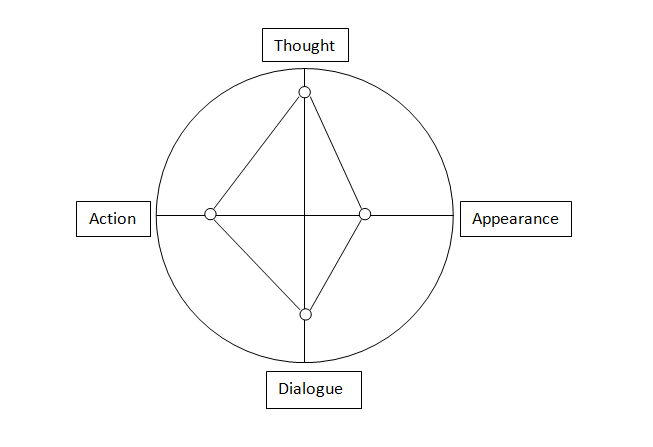
To visualize this, Gabriela provided a graph, which she calls the character compass. It’s a circle with the letters T, A, D, and A distributed over the cardinal directions. Lines divide the circle into four with Thought and Dialogue, and Action and Appearance, in opposition to each other.

CharacterCompass

I’ve done my best to create a facsimile with Word’s drawing tools, print screen, and The Gimp 🙂

In this particular compass, I’m looking at one character, Ferathainn, in general.

She’s my protagonist and her POV is first person, past tense. There’s a lot of thought and internal monologue with Fer.

She’s studying to become a mage, but at the beginning of the novel, it’s all been theoretical. Her studies have prevented her from maintaining friendships, and so she lives in her head a lot. Part of her studies include rhetoric. Intonation and presentation can affect certain types of magick.

Fer’s been allowed (yes, allowed, it’s a plot thing) to study with her father, who is a bard, and her betrothed, who is an eleph finiris, or songmaster, because magick can be sung. She’s extended this part of her training to include dance, because she’s realized she needs a physical outlet after all this theory and rote memorization.

One of her small rebellions is that she also trains with her best friend, the forester, who teaches her how to fight. Primarily unarmed combat and survival skills.

So Fer is a heavily thinky character, with a good side order of dialogue and action. She doesn’t often consider her appearance, however. There aren’t a lot of mirrors in her little village. It’s not something she’s ever placed a lot of value on.

So I have to be careful when I write a scene about Fer alone, because she’s lopsided.

When she interacts with other characters, it’s primarily through dialogue and action, but I have to pay attention to their reactions to her physically. It’s actually very good for the show versus tell thing.

For example, Fer’s mother has to reach up to hug her, because Fer is tall. She’s of a height with her father, though. Through little interactions like this, readers form a picture of Fer in their minds over time.

When I switch POV to the other characters, they get to describe Fer, but I try not to have them do the ‘classical’ romantic inventory.

In early romances, which were often more adventure tales than what we think of as romances, when the hero meets the love interest for the first time, he waxes poetic and describes her from head to toe. Bad thing to do in a modern novel, though.

When Eoghan first ‘meets’ Fer, she’s all but dead. Having tried and failed to save victims of the war in the wake of the army’s passing, Eoghan decides he’s going to make his stand. He’s going to save this raggedy girl if it’s the last thing he does. Her appearance, other than the severity of her wounds, is secondary to his efforts.

When Dairragh first sees Fer, it’s from a distance, and it’s what she’s doing—performing magick—that makes its biggest impression on him. Dairragh hates all magi with a passion for the sake of the mage who murdered his parents and destroyed his home, including the people and gryphons that were his charge to protect.

So, of course, he hates Fer on sight and his prejudice colours his every interaction with her. At least initially.

The way I see it, readers are going to form an image of Fer in their heads that’s probably nothing like the way I see her. And that’s okay. They get ownership of my characters and my story on a reader by reader basis.

That’s what I want.

Gabriela’s TADA acronym and character compass are going to be one tool I take from the DIYMFA book and incorporate into my writing process.

Since I’m a plantser (part plotter, part pantser) I tend to pants my way through the first draft, but in revision, I can see the character compass being a very useful tool to evaluate how balanced my characters are in any given scene.

I hope I’ve given you enough of a run down that you might be able to make use of this technique yourself. Of course, you could always go buy Gabriela’s DIYMFA book and get a more detailed explanation of TADA and the character compass. The official release date was yesterday.

Jus’ sayin’.

content_QOTW-14

Thoughty Thursday: Things that made me go hmmmm on the interwebz, June 26-July 2, 2016

Lightheaded this week, but it’s all guaranteed to pop your mental corn 🙂

The Toronto Star posts all 113 of the new Order of Canada recipients. Yay, Canada!

Samantha Bee does an awesome job of summarizing Brexit for the rest of us. And David Tennant helps out, too! The Week.

The chief who said no. One northern village rejected residential schools and built their own instead. Bob Weber for The National Post.

Lindsay Harrison shares ten lessons her mother’s death taught her about healing and happiness. Tiny Buddha.

Sarah Schuster shares what it’s like to have high functioning anxiety. The Mighty.

Pride Toronto members respond to messages of hate. Robin Levinson King for The Toronto Star.

The next time someone says women aren’t the victims of harassment, show them this. Tickld

John Pavlovitz writes about young men, sex, and urge ownership (and why it’s not the girl’s problem). Standing ovation. Bravo, man.

Wonder Woman became the feminist hero the 70’s needed. Gwen Ihnat for the A.V. Club.

Julie D’Aubigny, also known as La Maupin, is profiled on Badass of the Week.

A small meteorite punches through the roof of a house in Thailand. Phil Plait for Slate.

Maddie Stone reports on Jupiter’s stunning northern lights. Gizmodo

One of my recent faves. Nothing but thieves – Trip switch.


See you Saturday!

Thoughty Thursday

Tipsday: Writerly Goodness found on the interwebz, June 26-July 2, 2016

Easing back on the overwhelm of writerly goodness this week. You’re welcome 🙂

K.M. Weiland shares five secrets of creating complex supporting characters. Helping writers become authors. Kate returns with more lessons from the Marvel movies: use minor characters to flesh out your protagonist.

Bonnie Randall guests on Janice Hardy’s Fiction University: the Pandora ’s Box of having ‘been there.’

Steven Pressfield: The Dude abides, but in what genre?

Jami Gold helps you strengthen your writing with rhetorical devices (and the angels sing—I lurve rhetorical devices).

Angela Ackerman guest posts on DIYMFA: the top five mistakes writers make when it comes to setting.

Oren Ashkenazi offers a counterpoint to his post of last week. Five bad ideas science fiction teaches us to love. Mythcreants

Kristiana Willsey says that hunger is the beginning of every folktale. The Toast

Tim Grahl: how to use fear to beat resistance.

Marcy Kennedy asks, is it important for writers to be readers? Spoiler: It’s an emphatic, duh, yes!

Jeff Goins tell us everything we need to know about Facebook Live on the Portfolio Life podcast.

Alice Adams considers the question, why does anyone write? Literary Hub

Lincoln Michel teaches you everything you wanted to know about book sales but were afraid to ask. Electric Lit

This is shameful. The journalist who risked her life going undercover in North Korea had her expose marketed as an Eat, Pray, Love-style memoir. Anna Merlan for Jezebel.

Alison Stine explores Labyrinth and the dark heart of childhood. The Atlantic.

I think these Game of Thrones/Legend of Korra mash ups are amazing. What about you? Movie Pilot

The Game of Thrones finale confirms game-changing fan theory. Entertainment Weekly.

Also, Game of Thrones showrunners confirm that there are only 13 to 15 episodes left. Wah! They really pulled last year’s plot poopers out of the fire this year. Oh well. i09

Germain Lussler wonders why more people aren’t talking about the Preacher series. Phil and I are enjoying it 🙂 i09 Later in the week, he reports that Preacher season two will return with 13 episodes. YAY!

AMC’s Preacher series is different from the comics, but you’ll probably really like it anyway. James Hibberd for Entertainment Weekly.

And that was your informal writerly earnings for the week.

See you Thursday!

Tipsday

The next chapter: June 2016 update

Welcome to July! Half of 2016 is already past 😦

Let’s get right down to business.

June was a good month. As far as revision goes, I focused on Reality Bomb. It was another pleasant surprise. I didn’t hate what I wrote. This was just the first pass, and I’ve identified a number of things I need to work on, but I wasn’t writhing as I read 🙂 I don’t know if this means I’m a better writer now, or if I’ve just become inured to my failings (!)

I approached RB as I did Marushka before it, reading, mapping, editing, and making notes as I went. RB was my 2015 NaNoWriMo project and my second “win.”

I finished the first pass on July 1st (yes, Canada Day—the fireworks were for me, too) and the draft comes in at 282 pages and 67,808 words. Not bad for what I still consider a rough draft.

I’ve moved on to Gerod and the Lions, since. Early days, but not hating this one, either 😀 I should be finished this first run through of GatL in early August, just in time for another break—for WorldCon!

Since I’ve been a part of Gabriella Pereira’s Launch Team for DIYMFA, I’ve had extra blogging to do each weekend. As a result, I more than doubled my blogging goals for the month. I’ve also had some guest posting opportunities come my way, which has been another, validating surprise.

I went to the Canadian Writers’ Summit from June 17th to 19th and took a wee vacay from revising, blogging, and, in fact, most social media. It was a nice break.

My query, synopsis, and opening for Initiate of Stone have been revised and querying continues.

I’m starting work on some short fiction. It kind of just happened. It’s a good thing, though.

This is how the month settled out:

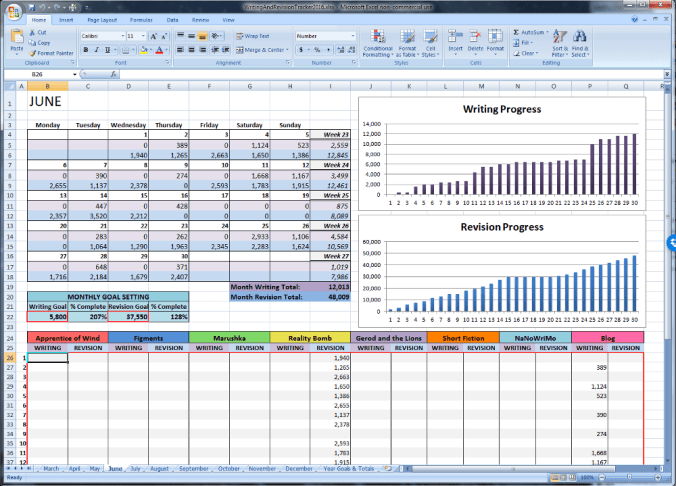
I achieved 128% on my revision goal with 48,009 words.

I achieved 207% of my blogging goal (yes, even with the vacay) with 12,013 words.

JuneProgress

The summer office is in operation, and I’ve been enjoying our lovely, lovely weather (so far). The garden is growing, though I haven’t been able to keep up with the weeding 😦 Still, we’ve been enjoying the fruits (literally) of what labour has been done and have had strawberries every day for the last three weeks. The raspberries are ripening. Phil’s been harvesting lettuces and herbs for the occasional meal.

It just makes you feel good to eat food out of your own garden.

In other news, I’m walking a little more, and getting some minor health issues sorted. I’ll be getting a new pair of glasses, not because my prescription has changed, but because my current pair is in disrepair. It’s time for a new perspective 🙂

Phil’s in good shape, now. He and his doctor have sorted his meds and he’s feeling well. All of his labs are showing results in the acceptable range, as well. I’m glad. Through the first few months of the year, it was not a good situation. Very stressful.

And that’s what June brought into this writer’s life.

Next weekend: I’ll be back to Ad Astra 2016 reportage.

Happy Independence Day to all of my American friends!

I’ll be back to work tomorrow.

The Next Chapter

Reviewing the four C’s of my to-be-read pile with DIYMFA

Here we are with question of the week thirteen!

QOTW 13: What’s On Your Reading List?

If you’re anything like me, you’ll never get around to reading every book on your to-read list. That’s why at DIY MFA I believe in reading with purpose and encourage you to focus on books in four main categories: comps, contextual, contemporary, and classics.

QOTW-13

As I mentioned previously, I have far too many books. It’s really to the point at which, if I were to be in my office when a serious earthquake hits, I’d probably die, buried under my to-be-read pile.

So it’s good that Gabriela limited this exercise and gave it some critical DIYMFA context 🙂

Comparative/competitive books

Because I’m working on multiple books in fantasy (and various sub-genres/categories, thereof) and science fiction, I’ve tried to line up a varied comp reading list.

  • One’s Aspect to the Sun – Sherry D. Ramsey (Canadian author, science fiction)
  • The Towers Trilogy – Karina Sumner-Smith (Canadian author, fantasy)
  • The Worldbreakers Saga – Kameron Hurley (American author, fantasy)
  • Binti – Nnedi Okorafor (American author, science fiction)
  • Signal to Noise – Silvia Moreno-Garcia (Canadian author, science fiction)

Some of these books are award-nominated and/or the authors are award-winning 🙂

Contextual books

These are books I’m reading to teach me something specific about craft/genre.

  • The Second Cadfael Omnibus – Ellis Peters
    My epic fantasy series is based in a world that is (I know, I know) derivative of medieval Europe, one of my characters is a postulant monk, and herbalism plays a role in the novels.
  • The Night Angel Trilogy – Brent Weeks
    I’m loving Weeks’s approach to worldbuilding. His world is a mash-up of European and Asian elements (and probably some others I’m not aware of, yet).
  • Under My Skin – Charles de Lint
    He’s a Canadian author of urban fantasy. A couple of my novels are YA urban fantasy. It’s good to learn from a master 😉
  • Children of Earth and Sky – Guy Gavriel Kay
    I would just love to be able to craft a story like Kay. His was one of the only books that moved me to tears.
  • Fish Tales – Sherri S. Tepper
    Just love where her books go in terms of plot and character. Science fiction with a hefty helping of social justice.

Contemporary books

  • The Madd Addam trilogy – Magaret Atwood
  • The Book of Negroes – Lawrence Hill
  • All the Light We Cannot See – Anthony Doerr
  • The Girl on the Train – Paula Hawkins
  • Quantum Night – Robert J. Sawyer

Classics

  • The Kalevala, the Finnish National Epic Poem (in translation)
    ‘Cause part of my heritage is Finn 🙂 And there’s magic and all sorts of cool stuff.
  • The Pickwick Papers – Charles Dickens
    Because I discovered I quite like Dickens 🙂
  • The Secret Garden – Frances Hodges Burnett
  • Boxen – C.S. Lewis and W.H. Lewis
  • The Great Gatsby – F. Scott Fitzgerald
    ‘Cause I never finished it in school—yeah, I know.

So there you go. You’ve had a peek at my TBR list.

I’ll be back tomorrow with my next chapter update.

Thoughty Thursday: Things that made me go hmmmm on the interwebz, June 19-25, 2016

Yes, I caught up on my YouTube viewing 😉 So, it’s another visual learning week.

Andrew J. Hawkins looks at the hyperloop pods competing in Elon Musk’s big race, later this year. The Verge.

Marissa Gertz presents astronaut, Tim Peake’s amazing photos from his time in space. TIME.

Does Pluto harbour an ocean under all that ice? Phil Plait for Slate. And later in the week, Hubble shows us the colours of the night.

Add This shares Dieter Ram’s ten principles of good design.

You see crisis after crisis. This is what we see. Attawapiskat youth create video. CBC.

Wab Kinew got on his soap box: five aboriginal stereotypes.


Before European Christians forced gender roles, Native Americans acknowledged five genders. Pearson McKinney for the Bipartisan Report.

I respond to Orlando from a Canadian perspective on my friend, Mel Walsh Jones’s blog, Mel’s Madness.

Vi Hart: Feeling sad about tragedy.


Russell Foster: Why do we sleep? Ted Talk.


Lena Dunham shares her conversation with Sheryl Sandberg. On navigating workplace culture, tackling personal issues, and (of course) leaning in. Esquire.

Women having a terrible time at parties in western art history. The Toast. On a sad note, I just heard that The Toast is . . . toast 😦

Adrienne Pieroth: she was done. Elephant Journal.

Eight amazing aquatic animals. ASAP Thought.


Science vs. art. ASAP Thought.


Tom Vanderbilt shares the secret of taste: why we like what we like. The Guardian.

How did the entire town of Ashley, Kansas, simply disappear? Gregory Burkhart for Blumhouse.com

The fun side of Sudbury, my city 🙂


Musical Tesla coils featuring Physics Girl. It’s Okay to be smart.


Northern Lights Festival Boreal announces that Steven Page will be the final headliner of this year’s event.

Also appearing at NLFB: Natalie McMaster and Donnell Leahy – here they are with The One.


And that was Thoughty Thursday.

Happy Canada Day and Happy Independence Day to all my friends, north and south of the border.

Happy weekend to all my other lovely friends out there 🙂

Thoughty Thursday

Tipsday: Writerly Goodness found on the interwebz, June 19-25, 2016

I have no idea where all this came from. It was a bountiful week for Writerly Goodness.

Julie Glover guest posts on Jami Gold’s blog: four steps to break grammar rules with style.

Anne Janzer guest posts on Jane Friedman’s blog: how to create an internal mindset conducive to writing.

Barbara O’Neal conducts an experiment in fostering creative flow. Writer Unboxed.

When you don’t want to write: Heather Webb on Writer Unboxed.

Joanna Penn discusses how to banish writer’s block with K.M. Weiland. The creative Penn.

How to plot a book: start with the antagonist. K.M. Weiland’s Helping writers become authors. Later in the week: how (not) to write satisfying action scenes. More lessons from the Marvel Universe movies.

Jami Gold wonders why “unlikable” can be a deal breaker for readers.

MJ Bush offers her keen insight into writing the perfect flaw. Writingeekery.

Dave King explores the work of a master for Writer Unboxed: Jaime Lannister and sympathetic monsters.

Kayla Dean explains how to use story archetypes to subvert expectations. DIYMFA.

DIYMFA radio, episode 100: Unleash your storytelling superpower with Gabriela Pereira.

C.S. Lakin takes a look at the first turning point in your novel. Live, write, thrive.

Chris Winkle offers three painless ways to patch plot holes. Mythcreants.

Jamie Raintree delves into the process of overcoming the emotional obstacles to a writing career. Writers in the Storm.

Five good ideas science fiction teaches us to fear. Oren Ashkenazi for Mythcreants.

Katherine Langrish shares some thoughts on writing meaningful fantasy. Tor.com

Women at WorldCon


Dan Blank: celebrate the arts where you live. Writer Unboxed.

Janet Reid lists the reasons she rejected 25 queries so you can avoid them. She later confesses: so I didn’t get it right the first time . . .

Sarah Negovetich: it’s not you, it’s really not.

Jonny Gellar’s Ted Talk: What makes a bestseller?


This is a weird story from the MFA world. Steven Galloway, chair of UBC’s creative writing program, was fired after an investigation, but under mysterious circumstances. Nobody’s willing to say exactly why. I think anyone reading the articles can infer, but . . . I’ll let y’all judge for yourselves.

Susan Spann explores the legal side of writing for anthologies. Writer Unboxed.

The Active Voice shares the story of Pauline Creeden, who lost her Amazon publishing account through no fault of her own.

Sadness. Lois Duncan died on June 15th at the age of 82. I loved her books. Publishers Weekly.

Jim C. Hines writes about racism and the backlash against black Hermione.

Cory Doctorow revisits Writing the Other, intensely practical advice for representing other cultures in fiction. BoingBoing

The Witch explores America’s essential fear of female power. Dianca Potts for Lenny.

Brainpickings presents Virginia Woolf’s thoughts on the connection between loneliness and creativity.

She-Ra and the fight against the token girl. Maria Teresa Hart for The Atlantic.

Publishers Weekly: Fall 2016 adult announcements in SF, fantasy, and horror.

Indie presses are starting bookstores. Jon Sealy for Literary Hub.

Chemistry explains why old books smell so good. Robin Burkes for Tech Times.

The short film, The Birch, may be creepy, but I think it’s rather heart rending warming 🙂 Rebekah McKendry for BlumHouse.com

James Whitbrook shares Geroge R.R. Martin and Stephen King in conversation: how the fuck to you write so fast? i09. Watch the whole talk. It’s awesome.

Who’s afraid of female Ghostbusters? Dave Itzkoff interviews the cast for The New York Times.

Michael Livingston gets medieval on Game of Thrones’ ‘battle of the bastards.’ Tor.com

Entertainment Weekly shares a sneak peek of the actors who will play Roger and Brianna on Outlander.

Exhausted? I am.

Until Thursday *waves*

Tipsday

Ad Astra 2016, day 2: How to get an agent

Disclaimer: I am not perfect and neither are my notes. If you notice anything that requires correction or clarification, please email me at melanie (dot) marttila (at) gmail (dot) com.

Panellists: Amanda Sun, Mary Fan, Gerald Brandt, Matt Bin

HowToGetAnAgentPanel

AS: Online resources that can help you get an agent: #MSWL, Miss Snark, Query Shark, Guide to Literary Agents blog.

MB: #MSWL is critical these days.

GB: You have to do the research.

MF: There are writers who get an agent and their first novel fails to sell, their second novel fails to sell, but then their third sells big.

MB: The agent has to love your book.

GB: If your query doesn’t match their submission guidelines, it will be rejected.

AS: I used to be an acquiring editor for Room. If a submission didn’t meet the submission requirements, I’d never see it. It would go straight to the spam folder.

Q: How formal does your query have to be? I write YA.

GB: You have to be professional up front. Your second paragraph, where you’re pitching the novel has to have the flavour of your book, but it’s a sales pitch.

MB: The agent wants to understand how your book works and why it will appeal to readers.

MF: 250 words is a good goal length for your query.

Q: At what point do you look for an agent?

GB: As soon as you have a book that’s finished and ready to go out into the world.

MB: Query agents first. If you submit to publishers, agents will have their sales channels limited. Remember, it’s your agent’s job to sell your book to publishers.

GB: Take advantage of pitch sessions at conferences and conventions.

AS: And work on your next book.

GB: The agent is in it with you for the life of your career.

Q: So querying an agent first is better? Is that because editor A might love you book and editor B might hate it?

GB: At Penguin Random House, if one editor rejects the book, all of them do.

MF: That can happen at agencies, too. Agents can move around, too.

Q: What happens when your agent leaves the agency?

GB: In my experience, I was given the option to follow the agent or stay with the agency.

MB: When agents send your novel to publishers, they do so with a different perspective.

MF: I know a writer whose agent is all business. Some agents will want to help edit or develop the work prior to submission to publishers.

MB: Look at the agent’s reputation before you sign with them. You have to be able to work with them.

GB: When an agent is interested in your work, the tables turn.

MF: When you get an offer, don’t be afraid to ask for references.

AS: Don’t be too eager. You don’t have to back down 100% of the time. It’s a partnership.

MF: There are some Schmagents who aren’t legitimate. There should be no reading fee.

GB: The money should flow to the author. Check out Writer Beware and Preditors and Editors.

MB: Querying is the traditional road. Networking at conferences and conventions can help.

GB: But don’t be stalkery. Have your elevator pitch ready, just in case.

AS: Don’t burn your bridges. Publishing is a surprisingly small world.

MF: Maybe we should talk about the structure of a query? It’s three paragraphs. Introduce yourself and your book. The second paragraph is your pitch. Then the third paragraph is about you and your qualifications.

GB: List publication credits if you have any, memberships in any writing organizations. Make sure you look serious.

AS: Your introductory paragraph should focus on the reasons you’re querying this particular agent. Have you met at a con? Do you write books in the same genre as other authors they represent?

Q: Do you use Canadian, or US spelling?

GB: Everything should be in US spelling.

MF: Your comps (comparative novels) should be published in the last three years.

AS: X meets Y is a popular formula to use. Agents can use it to pitch to publishers.

MB: We should also mention online pitch contests like #PitMad. Look them up. Most of them are on Twitter and you have a limited time to pitch directly to agents. Use the hashtag. If an agent likes your 140 character pitch, they’ll respond to you. The rules are all online.

Q: How long should my book be?

MF: It really depends on your genre and category. There are a lot of resources for this online.

Q: Should you query to an agent if you mostly write short fiction?

AS: You can do that without an agent and, in fact, most agents won’t represent short fiction, even for authors they represent for novels.

GB: Collections of short stories are a hard sell.

And that was time.

Next weekend, it will once more be time for a next chapter update (already?).

Be good and write well!

Home and garden update

So this one’s not going to be much in the way of words, but there will be a lot of pics 🙂

As of last fall, the work the city had promised to do for us when they repaved Marttila Drive was still not done.

In October, one crew came by to build our new front steps. Even though I asked for an estimate on rebuilding the side steps, too, the contractor never got back to me.

But the work was done. Ok.

NoOneWillTripOnThat

No one’s going to trip on that

In December (remember we didn’t have snow until Boxing Day) another crew arrived to do the interlocking brick. They didn’t go under the front steps, though and now the side steps, our old, but very solid steps we made ourselves, overhangs the brick.

Oh well. We’ll build ourselves a new set  . . . someday.

brickwork

Notice the former garden that’s now growing out from under the front steps

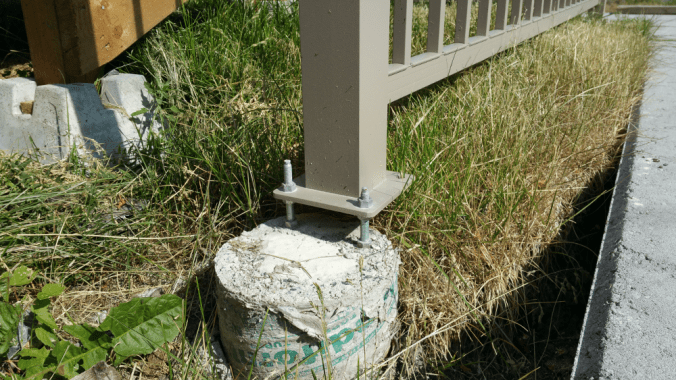
In February, in the middle of a snow storm, yet another crew arrived to install the railing on the retaining wall. It had already snowed quite a bit and they had to excavate the cement pylons they had to bolt the railing to.

RailingYay

Unfortunately, one of them was not placed properly.

railingfail

Stable as hell

With regard to the garden, I planted the raised bed Phil built for me last year.

gardenplanted

The transplanted hops vice and clematis seem to be happy.

hps

clematis

Now if I could only get around to weeding . . . 😦

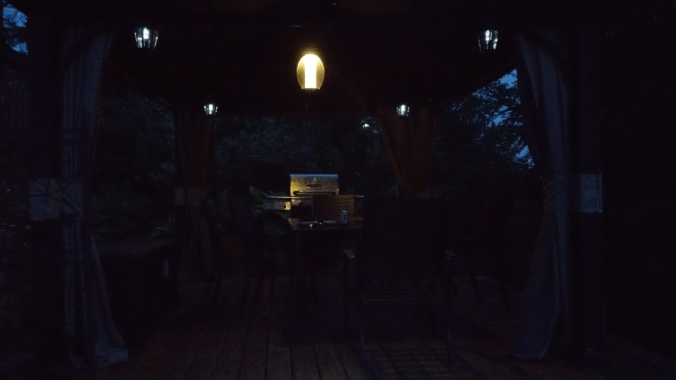
Phil has now added solar power to our gazebo.

WorkinOnTheLectrics

So we can work outside, even after sunset. Summer office: accomplishment unlocked!

GazeboAtNight

And that is this writer’s life.

I’ll be back in a bit with the latest Ad Astra reportage.