Character sketches part 3: Dairragh McKillian

Previously of work in progress: Character sketches Part 1: Ferathainn Devlin and Character sketches part 2: Eoghan MacDubghall.

In the beginning …

Dairragh was pretty much what he is now, a young lord, but originally, he too, fell in love with my heroine.

You could have called Initiate of Stone Everyone Loves Ferathainn 🙂  Eoghan loved her, Dairragh loved her, even the character that became Khaleal (more on him and some of the other antagonists next week) loved her.  It was terrible. You’ll remember I was seventeen when I first came up with the idea.

Back then, after the monk left her to become the Kas’Hadden, Dairragh came into Ferathainn’s life and their fiery conflict turned to love, but she couldn’t quite get the kindly monk out of her mind.  At that time, there was completely different climax in the King’s City, what I’ve since renamed Drychtensart.

Instead of the potential Kas’Hadden (Eoghan’s brother Callum) being executed for heresy at the start of the novel, Eoghan as the Kas’Hadden is captured by Kane’s army and publically executed at the end.  Dairragh and Ferathainn try to save the Kas’Hadden, but Dairragh only manages to get in the way of the executioner’s axe, an enchanted thing, and die along with Eoghan.

Kane kept the souls of those he vanquished that version of the story, much like a voudoun priest keeps his fetishes.  Ferathainn escaped and had to try to figure out how to get the souls of Eoghan and Dairragh out of Kane’s collection of enchanted artifacts.

Enter Khaleal, who remorseful, repentant, and tragically in love with Fer (yes, this is why I changed this whole sequence of events … too saccharine) sneaks into Kane’s soul chamber and retrieves the two artifacts for Ferathainn to prove his switch to her side is genuine.

In the epic battle that originally ended the novel, both artifacts end up broken, and Khaleal makes the decision to house both lost souls until they can somehow be restored to human form.

Like Ferathainn’s original story line with trauma heaped on top of trauma, it was too much.  Moving forward, it would be too confusing, and the three-person spiritual chimera was too contrived.

How he evolved

First, I decided that Dairraigh couldn’t be a legitimate love interest for Ferathainn.  That didn’t mean I couldn’t play …

Thanks to a course I took on Renaissance Romance at the University of Windsor, I got an idea.  One feature of the pastoral romance was two siblings, separated from birth, discover each other again, and usually through a romantic near-miss.

So I decided that Ferathainn and Dairragh would grow attached to one another, only to discover that they were brother and sister.  Then to ratchet up the drama, I made Fer his half sister, fathered by his mortal enemy.

Halthyon Morrhynd (again more on him next week with my villainous gallery) is the author of every tragic event in Dairragh’s life, as he understands it.  Because Halthyon is a mage/sourceror (more on my magic system in a future world-building post), Dairragh has a hatred for everything having to do with magick, and when he first meets Ferathainn, he sees her performing magick.  This hatred also gives a little more pop to their story line going forward.

Love is a sub-plot/theme in my novel, and I decided that Dairragh needed a partner other than Ferathainn.  This gave rise to the people that became the anogeni, the hidden people.  When Halthyon, in the service of the Black King (another of my villains) destroys Dairragh’s home and gives Dairragh a wound that will kill him, the anogeni find him, restore him, and shelter him through Vedranya, the season of storms (again, part of a future world-building post).

One of their number, Shia, is his chief caretaker, and tries to teach him the anogeni way.  Because she is both his healer and teacher, Dairragh falls in love with Shia, but he doesn’t realize it until later.  Why not?  Because the anogeni are tiny people, and the physical impossibility of a complete relationship prevents him from seriously entertaining one.  This changes though.

The Sketch

Name: Dairragh McKillian of Gryphonskeep

Nickname: Dair

Birth date/place: 22 years ago in Kirksea

Character role: Secondary protagonist

Age: 22

Race: Tellurin (Eiran)

Eye colour: Dark blue

Hair colour/style: Black

Build (height/weight):  6’, athletic, 180 lbs

Skin tone:  Caucasian, but tans well

Style of dress: breeches and hose, tunics, as a young lord, he can afford his own armour, coat of arms: gold Gryphon rampant on a red field.

Characteristics/mannerisms: Grinds his teeth when irritated.  Anger management issues. Has an unbridled hatred for magi.

Personality traits: Stubborn and wilful.  Innate sense of nobility and the obligations of his class.  Values family and history.  By virtue of his station, he believes he is always right and he doesn’t realize he’s being self absorbed.  Frequently acts impulsively but is lucky.  All of this hiding a devastating insecurity.

Background: Dairragh is a descendent of the de Corvus line, and thus a person of power, but he hates magick and resists this part of his inheritance.  He is related to Ferathainn, the original Kas’Hadden, and Raven Margrove (who is actually his cousin, Nicolas de Corvus).

Dairragh is the only son of Killian and Aline.  He was born on the family estate of Tulach Daire (oak hill) for which Dairragh was named.  The neighbouring estate is Cúas (the den) and Eamon O’Faolin fostered Dairragh periodically at their other estate in Drychtensart while Killian fought for his right to Gryphonskeep. Killian’s father, Adair, did not think Killian deserving of the privilege of lordship or care of the Gryphons.

Dairragh was brought up as a noble knowing all of the privileges of his class.  His mother was from the Parimi lands and his parents’ marriage was arranged.  Aline never loved Killian and after Dairragh was born, she refused to attempt to have another child.

When Dairragh was still a child, she had an affair with a visiting mage (Halthyon Morrhynd) and became pregnant.  Rather than face Killian’s rage, she fled, found her way to Hartsgrove where she gave birth, then abandoned the child (Ferathainn) and returned to Gryphonskeep never speaking of what had happened.

This is when Killian became embittered and turned to abusing his son verbally and physically.  Aline withdrew and except for court occasions, drank herself into oblivion.

When Dairragh was 12 years old, Morrhynd returned and Aline willingly left Killian after years of misery following the sourceror’s last visit.  Killian became enraged, declared all-out war on Morrhynd and tried to retrieve Aline, who he thought of as his property.  He brought his young son with him to teach Dairragh about his obligations.  Morrhynd appeared to have holed up in an old fort with Aline, but when Killian breached the building, he only discovered Aline, dead.  Actually, it was the young Dairragh who first found his mother’s corpse.

This event entrenched Dairragh’s hatred of magi.

Dairragh loves the Gryphons.  They are his solace and he takes great pride in caring for and training them. Dairragh is an accomplished warrior, archer, and jouster.  He has competed in and won several tournaments.  He has also defended Gryphonskeep and its lands against bandits and other threats.

Dairragh looks forward to the day when Killian will cede lordship to him, but Killian continually finds ways to undermine Dairragh’s accomplishments and worth, and denies his son his inheritance.

In reality, Killian fears that Dairragh will be killed and he will lose his only heir.  He also fears that his son will prove to be more worthy than he of Gryphonskeep and its responsibilities.  Aline always loved the boy more than him, and the Gryphons respond to him better as well.  He doesn’t believe that Dairragh should get anything without a struggle.  Nothing won easily will be held dearly.

Internal conflicts: Dairragh is full of pride and a sense of self-importance that hide his deep insecurities about his worth.  He has to overcome this before he can care enough about others to become a true hero.

Shia and the anogeni try to overcome Dairragh’s hatred of magick and magi because only by learning to use the weapons of his enemy can Dairragh defeat him.  Dairragh is stubborn, however, and old enmities die hard.

When he first meets Ferathainn and realizes she is a mage, he hates her by virtue of her talent.  Eventually he comes to respect her talent, and begins to feel affection for her.  His growing affection becomes confused with lust, but when Dairragh learns that Ferathainn is actually his half-sister, he is thrown into guilt over his inadvertent but incestuous desires and has to find some way to deal with his feelings of hatred for Halthyon.  Ferathainn is his sister and the only family he has left, but she is also the daughter of his sworn enemy.

External conflicts:  The physical injuries that Halthyon gives him at the destruction of Gryphonskeep.

Vedranya.

Halthyon wants to humiliate Dairragh and destroy him.

The Black King and Yllel seek to kill Dairragh because he is part of the force working to destroy them.

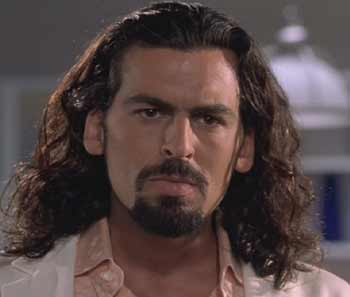
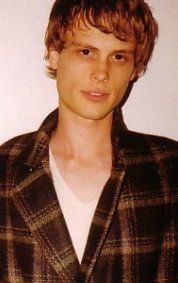
What Dairragh might look like

Again, my drawings of Dairragh are incomplete and I’m not satisfied with them.

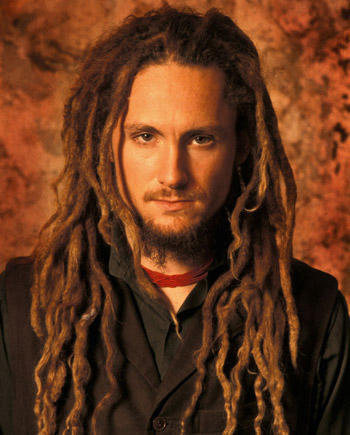
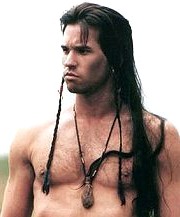
My early inspiration for Dairragh was that character of Madmartigan, as portrayed by Val Kilmer in Willow (one of my favourite movies of all time).  Just give him a beard.

Which brings me to my second exemplar: Colin Farrell.  Dairragh is my world’s version of Irish after all.

That will give you an idea of Dairragh.

Next week: The Villainous Gallery

Until then, my friends, good luck and good writing!

CanWrite! The Canadian Authors Association 2011 Conference

May 2-6, 2011.

Yes, I finally did it.  I managed to do something entirely nourishing to my writer’s soul.

I’d determined that I wanted to go to at least one conference week-long workshop last year and when the announcement went out in November 2010, I signed up right away.  Barbara Kyle, one of the workshop presenters, was also offering 20-page critiques for a nominal fee.  Again, I was in.

My next challenge was how to pay for the venture.  I applied for a Northern Arts Grant for professional development from the Ontario Arts Council, but was not accepted.  So, credit it was.  As far as conferences go, the CAA conference wasn’t expensive.  Even with my day job, I don’t make enough money to drop a thou and not feel it.  Still, it was time and long past that I made a substantial investment in my creative self.

Throughout February, March, and April the CAA conference organizers held little writing contests to get participants in the creative frame of mind.  I submitted to two of the three and though I didn’t even manage an honourable mention, they were interesting exercises and did serve to build a lovely feeling of anticipation.

I made my leave request at work as soon as I could, but operational requirements made it seems unlikely that it would be approved.  As the date of the conference approached, I began to worry that I’d have to withdraw.

Then my father passed away, April 9, 2011 and thoughts of the conference vanished.  For the week previous, Mom, a family friend, and I took turns watching vigil.  Dad had originally gone into the hospital March 18, 2010, and though he never recovered sufficiently to come home, his final illness and his ensuing struggle were completely unexpected.  Needless to say, Mom and I were devastated.

To paraphrase Forrest Gump: that’s all I have to say about that.

In the dizzying days following, my leave was miraculously approved.  Now the conference had a second purpose: I needed to get away and do something that did not involve Dad, his funeral arrangements, or my mom’s uncertain financial situation, all of which were consuming my life in large, ragged mouthfuls.

The drive to Grand Bend from Sudbury, though long, was relaxing.  There’s some beautiful country in Bruce and Gray counties, and now, there are lovely windmills and solar panels dotting the landscape.  I don’t understand the public resistance to wind and solar.  They’re some of the cleanest, greenest sources of energy around, and I didn’t find them ugly at all.  I rather thought them graceful, alien guardians, standing sentinel over the people and the land.  In any case, I arrived at the Pinedale Motor Inn in time for the evening meet and greet, and welcome barbeque.

I discovered that that year’s conference was a departure from previous years.  It was set up as a writers’ retreat with workshops and events, but with the afternoons off to enjoy the town and to write.  No maddened dash to attend competing workshops, this.  Never having attended any conference before, I didn’t have anything to compare it to, but it seemed like exactly what I needed.

I won a bottle of wine in a raffle.  We were off to a good start

The first workshop presenter was Sandy Plewis.  Her session was highly interactive with lots of writing exercises, but she depended heavily on secondary sources in her lectures.  She seemed pleasantly surprised at the willingness of the conference attendees to dig deep and write.  There was not a still pen in the house when it came time to complete an exercise.

Then came time for my critique with Barbara Kyle.

Globally, she was complementary.  My characters were interesting, their conflicts dynamic and immediate, but then, as the critique commenced, the shortcomings emerged: the pacing was too fast, my scenes lacked a sense of place, and I didn’t go deep enough into my characters’ hearts and minds.  And I was too subtle.  While I got a lot of good advice from Barbara, by the end of it, I was dizzy, hardly able to breathe.  I think it was a panic attack.  I wasn’t able to think about things clearly until much later in the day.

Barbara’s workshops, one based on The Writer’s Journey by Christopher Vogler, and the other on her own experiences as a first draft survivor, were illuminating.  Though not heavy on the writing, they were professional, and informative.  I had a revelation.

I’d read Vogler’s book, and its inspiration, Joseph Campbell’s The Hero’s Journey.  The guardian at the gates has been a repeated part of my development as a writer, and my past experiences with those guardians informed my inner critic, the biggest, baddest guardian of them all.  That’s what happened in the critique session.  Though intellectually, I knew that Barbara was giving me exactly what I needed to head into the next revision of my novel, to make it stronger, and better, emotionally, every negative that emerged seemed a confirmation of my worthlessness.

So … I confessed.  Spastically and awkwardly–which is the only way I can confess the deeply embarrassing–I told everyone about my struggle.

That afternoon, Lightning Strikes, a series of mini-workshops, took place, and in the evening, at the Mock Awards Ceremony, I received the “Best Attempt to Make Us Cry” award.

Even the annual general meeting was interesting.  As a professional member, I had a vote.

Overall, the CAA conference was a very rewarding experience, and one I hope to repeat.

Conferences can be fertile experiences.  Have you made a breakthrough at one?  New friends?  Networked connections?

The Windsor years and what they really taught me

Last time on My history as a so-called writer: I found awesomeness at Laurentian University 🙂

I should have just kept writing.   

Unfortunately, I was still insecure about my craft and all of my friends were either heading to teachers’ college, or graduate school, or had already left.  So I thought it was the thing to do, something that had to be done to show that I had “the chops.”

Still living at the mercy of events, I applied to UVic, UNB, and Windsor.  Victoria rejected me outright, New Brunswick said that they would accept me to their academic program, but not to the creative one, but Windsor said they’d take me, so that’s where I went.

Phil was still completing his degree in computer science at Laurentian, so I was on my own.  We took a trip down in August apartment hunting and I signed a lease for a year for a room in a house that was within a five-minute walk of the campus.

I started off filled with hope, but struggled.  My courses in research and methodology, the Pre-Raphealites, and the new Canadian writers were great, but early Canadian women writers was a bomb and because my primary interest was in writing genre, the creative writing part of things did not go very well either.

I even tried to resurrect pieces of the novel idea I conceived of at Guelph, but a very dim view was taken of my fantasy.

I was nearly shamed away from my novel.  It wasn’t worthy.  I wasn’t worthy.  I kept on being asked questions like, “You have this character smoking.  You know that tobacco wasn’t discovered until Europeans reached the New World, right?”  It was all about historical detail.  But my fantasy world isn’t this world, and its history has little to nothing in common with the real world.  “But you just can’t go picking and choosing what you want from history …”  Why not?  Seriously.  What’s to say that I have to write my fantasy like a historical novel?  If I wanted to write historical fiction, then I would.  But I don’t.  (At least not right now.  I have this idea though …)

Therein lay the difficulty.  Submitting two to five pages of my novel at a time wasn’t allowing anyone to really get into the story.  Things would just get to a point where they were developing into something interesting, and then everyone would have to wait until the next week.  Momentum was lost and most of my classmates felt nothing but contempt for my chosen genre.

A lot of comments focused on the impossibility of what I was writing.  “She couldn’t survive what happened to her.”  “That defied the laws of physics.”  My characters are heroes in the epic sense, though.  Their survival hinged on the fantastic nature of their gifts and talents.  They have to be “bigger than life” in order to merit their place in the overall plot.  And magic does defy physics.  Actually, my magick has its own physics (more on that in a future world-building post).

Fantasy, especially the high, epic fantasy that I like to write, is all about the impossible.  I wasn’t trying to straddle the improbable but plausible line that defines most science fiction.  (Although I have an idea or two in that direction as well …)

I tried other stories and genres:  A YA fantasy about a girl whose figments turn out to be real; a post apocalyptic tale featuring a male protagonist; poetry; more traditionally literary short stories.  With the exception of my poetry, my work was largely panned.

My classmate, Laurie Smith, got me involved in the Wayzgoose reading series and some of my poetry was published in the Wayzgoose anthology.  I became editor of Generations, the student-published poetry anthology, and tried my hand at presenting a paper at the ACCCSAL conference (speculative fiction).  So it wasn’t a complete bust.

I have to admit though, with respect to the idea that would become Initiate of Stone, that my characters had no character.  They were merely vehicles to move the plot, which was also evolving at the time.  Theme was also a work in progress.  Still, by the time I was finished at Windsor, or rather by the time Windsor was finished with me, I was well and truly wounded.

My advisor at the time, Alistair MacLeod, did not hide his dismay regarding my choices, and to his credit, I’m sure he was doing his best to guide and support me.  He praised my poetry, and I’m certain that if I’d chosen to move in that direction, we would have gotten along swimmingly.  As it was, the presentation of the work I chose to do, confused him at best, and disappointed him, in the most tragic of senses, at worst.

He was a mentor, a writerly father figure, and his dismay was hard to take.  I was still tender then, and I retreated in defeat.

I’ve talked a lot about teachers, the good, the bad, and the ugly.  You may get the idea that I dislike them, but I don’t.  I’ve had as many positive and supportive teachers as I’ve had teachers that just didn’t understand me, and it’s a matter of timing and circumstances as anything else.

What I took away from my experience at Windsor, though it took me years to discover, is that a teacher’s job is to teach.  The teacher may not agree with the way in which the student wants to apply their knowledge and experience, but that should not be the issue.  Even if the teacher believes that the student is only setting themselves up for failure, it is not the teacher’s responsibility, or even right, to deny the experience of that failure to the student.

Instead, what the teacher should do is his or her best to impart the skills that will enable the student to meet that failure and learn from it, rather than being crippled by it.  If the teacher has such strong reservations that he or she feels that they can honestly not discharge their duty to the student, then she or he should refer the student to someone who can.

It’s not too much to ask.

Mind you, the student should stand up for herself and demand the help she needs.  I still wasn’t very good at confrontation and fled at every turn.  What happened at Windsor was my fault more than anyone else’s.  I have to take responsibility for my poor choices.

I took a year off and once again tried to sort things out, but I was badly damaged.  I worked at both the Huntington and Cambrian College libraries and subsequently became unemployed.  I was entering contests again though and won several, in short fiction and in poetry.  I participated in more readings, and more writers’ groups.

With Kim Fahner, I embarked on what might have been a foolish enterprise: a poetry journal.  The aptly named … like lemmings … only lasted 2 years.  The name was more about the editors than about the poetry, but I’m sure you get the idea.  Kim and I moved on to bigger and better things after that.  It was brilliant while it lasted though.

Then Dani Harris, a former student of mine (I was a Graduate Assistant at Windsor—doesn’t every grad student teach?) let me know that there was a new professor in the English department, Di Brandt.  With Dani’s encouragement, herself and excellent poet, I registered for another year and determined that this time, I would succeed.

I found a new mentor, but I still couldn’t bring myself to trust her fully.  My experiences in writing to that point had only taught me that editors, friends, and teachers couldn’t be trusted with my work.  They’d also taught me that the stories I wanted to tell weren’t the stories that should be shared with anyone.

So I compromised and chose stories that I thought I could tell, that I thought would be accepted.  That was my problem though and not something that I would overcome for some time.  My stories were all of young women finding their way by means of dream, and spiritual quest, and damn good friends.

The one risk was a story that did cross the line and tread into the dreadful world of fantasy.  Initially presenting with obsessive-compulsive disorder and insomnia, my protagonist developed precognitive dreams and telekinesis.  It was the one risk I couldn’t refuse to take.

I wrapped the collection up in shamanism and called it Whispers in the Dark.

Di Brandt was the teacher I needed .  She encouraged me and saw me through to the successful completion of my master’s degree.  For that, I will be forever grateful.

As you might be able to guess, my next great teacher in life was Di Brandt.  With her assistance, I conquered my fears, defended my thesis, and completed that chapter of my life.  I also met Miriam Toews, a friend of Di’s and author of the Governor General’s Award-winning A Complicated Kindness.

Was there a time when you cut and ran?  Did you rally and fight back?  What did you learn from the experience?

Character Sketches Part 2: Eoghan MacDubghall

This is a continuation of my character sketches for my work in progress, Ascension, Book 1: Initiate of Stone.

Last week’s was: Character Sketches Part 1: Ferathainn Devlin

How Eoghan began …

Originally, when Ferathainn was named Rain, and went through half a dozen tumultuous life events, Eoghan was a nameless monk who found the blinded and wounded girl and nursed her to health again, weathering a toxic pregnancy and subsequent abortion in the process.  He fell in love with her, but she never saw him before he was called away by the goddess to become her champion/avatar.

Then I gave him the name of Arastian.  At that time, he was a grown man in his late twenties, and there were some cradle-robbing inferences that I wasn’t comfortable with.

Eventually, when I finally researched and chose Ferathainn’s name, I also decided on the Scottish version (or one of them in any case) of Ewen, child of the Yew.  I’m an unapologetic Celtophile!  (Especially after reading Diana Gabaldon’s Outlander series.)  He became a character younger than Ferathainn, and his love for her completely unknown to her, because she never regains consciousness while in his care.  I had to put a few more roadblocks in their way.

Now he’s a postulant monk, not even tonsured (achieved by the painful process of plucking, which he dreads) and at risk of being turned out of the Monastery of Aurayene as any time, a particular cruelty in a world where the season that equates to winter is actually a deadly season of storms.  He becomes Auraya’s Kas’Hadden, her hammer of light in another cruel twist.

Eoghan’s brother Callum was to become Kas’Hadden before him, but Yllel, the villain of the novel, conspires to have him executed for heresy before this can happen.  Auraya conserves the remnants on Cal’s spirit at the Well of Souls and when Eoghan reaches her, she forges the Kas’Hadden from Eoghan, incorporating Cal’s qualities, and a few other choice bits.

The goddess has to subdue Eoghan because he has qualities that she does not want in her champion, namely his love for Ferathainn, and basically traps him inside the fleshy prison of her avatar.  So he’s repressed and imprisoned, and it’s painful.  That’s the kind of goddess Auraya can be …

Eoghan’s story line is much more dynamic than Ferathainn’s, an imbalance I am striving to address in my next revision.  He is one of my favourite characters, though.  He has to be: he’s Fer’s love interest 🙂

The Sketch:

Name: Eoghan MacDubghall

Nickname:  none but he becomes the Kas’Hadden

Birth date/place:  14 years ago, Aurayene

Character role:  Secondary protagonist

Age: 14 years

Race: Tellurin (Alban)

Eye colour:  hazel, later blue

Hair colour/style:  Strawberry blonde, wildly curly.  This doesn’t really change.

Build (height/weight):  5’ 4”, slight, not muscular.  When he becomes Kas’Hadden, 8’ + and extremely well-muscled, an Adonis.

Skin tone:  pale and freckled, later golden.

Style of dress:  robes, cassock.  As the Kas’Hadden, hardly anything 🙂

Characteristics/mannerisms: none

Personality traits:  Desperately afraid of everything.  Self effacing to the point of having little personality of his own.

Background:  Born eighteen years the junior of two brothers to a spiritually devout public servant and his wife, Eoghan was largely ignored by his father and never knew his mother who died shortly after giving birth to him.  His father saw Eoghan as the means of his beloved wife’s demise.  His older brother Callum was the favourite, the one on whom all their father’s hopes depended.  Initially Callum hated Eoghan as well, tried to smother the baby, but couldn’t go through with it.  Surprisingly, Eoghan was the means by which Callum was able to heal from the wound of his mother’s death.

Callum became a soldier at a young age and was quickly inducted into the Sanctori but when their father died, Callum took holy orders.  Eoghan came with him as a ward of the Faithful initially, and early signs pointed to him following his brother into the priesthood.  He proved a fair illuminator, but asked too many questions for the comfort of his teachers.

Eoghan has been alternately ignored and protected throughout his life.  He is incredibly naïve and Callum’s execution nearly destroys his faith, but the war coming so swiftly on the heels of Callum’s death, Eoghan has no time to internalize his loss.  Callum was more a father to Eoghan than their biological one.  Eoghan is lost in every sense when Auraya calls upon him.

Ferathainn represents his only chance to find himself and choose what he wants to do with his life.

Internal conflicts: He’s been so ignored/protected/controlled he has no idea who he is or what he wants to do with his life.  When Auraya turns him into the Kas’Hadden, Eoghan finally has the physical power and presence to support his growing internal convictions but is prevented from exercising it on his own behalf.

External conflicts:  Auraya wants to use Eoghan to defeat Yllel and bring her word back to the people of Tellurin.  Yllel wants to destroy him as one of the few beings who could oppose the god’s escape.

Auraya.  To keep the Kas’Hadden compliant, she suppresses Eoghan’s personality.

Ferathainn can’t return Eoghan’s love because of her trauma, besides, he belongs to Auraya and she demands his total devotion.

Dairragh doesn’t trust Eoghan and doesn’t believe in the Kas’Hadden.  He can’t deny how useful the behemoth can be in battle, but isn’t sure what to make of him.

Eoghan attempts to protect Ferathainn from Khaleal, though she proves not to need his protection.

What Eoghan might look like:

I don’t have a drawing of Eoghan.  Sadly, I’m not very good at drawing the male figure.  So pictures will have to do.

When the novel begins, Eoghan is fourteen and hasn’t really hit his first growth spurt yet.  He starts to grow a sparse ‘stache and a few chin hairs that might optimistically be called a beard.  He’s got this unruly bird’s nest of strawberry blonde curls and a plague of freckles.  He’s a skinny, book-fed boy.

Though the hair colour and freckles are absent, I thought of a young Matthew Gray Gubler as a suitable physical analogue.

When he becomes the Kas’Hadden, he’s more like Chris Hemsworth (ala Thor) but has the physical dimensions of the Hulk.

And that is Eoghan.

Next week: Dairragh.

Ta-ta for now, my writerly friends!

Words in the Wilderness

July 23-29, 2010.

This conference was the darling of the Sudbury Hypergraphic Society.  While I did not attend all the events, the workshop with Marie Bilodeau and Jennifer Rouse Barbeau was great.  Hosted at Music and Film in Motion, the session was an intimate affair with wonderful insights into process and what it takes to get published.  Jennifer was about to have her first novel, Swampy Jo, published through Your Scrivener Press.

Marie in particular intrigued me with how she broke into publishing and how hard she had to work to get there.  Starting off with success in e-books, Marie’s first novel, Princess of Light, was so successful that the publisher decided to move it to their print line.  The only condition was that she had to have the remaining two novels in her trilogy written and ready for editing ASAP.

Princess was published February 29, 2009 and the second novel, Warrior of Darkness, was released in July of the same year.  Sorceress of Shadows came out in April of 2010, which will give you an idea of how quickly the work had to be done.  Marie front-loaded the work and still managed to write a phenomenally successful series.  One of her secrets: when necessary, she retreated to a local convent to focus on the task of writing.

I’ve since “friended” Marie on Facebook and follow her blog and adventures.  She’s published two more novels, Destiny’s Blood and Destiny’s Fall.  The latter is just out in March (see Amazon for details) from Dragon Moon Press.

Recently, she wrote that she had another date with “giant Jesus.”  This was a reference to another personal writing retreat she had planned at the convent.

When she got there though, she discovered the convent secularized, and dubbed it the no-longer-convent convent.

Have you discovered anyone through a conference or workshop who inspired you?

Finding awesomeness at Laurentian University

It was a brave new world and I had a newfound dedication to my studies.

Phil didn’t turn out to be a distraction at all, but facilitated my work with his support, and by providing me with a computer on which to write my many essays.  Soon I was spending a lot of time at his place, locked up in the basement with his 286.  I had a computer too, thanks to one of my correspondence courses, but it wasn’t even that powerful.  Seriously.  My mind boggles when I try to remember what life was like back then.

In any event, my renewed academic career was full of B’s, B+’s, A-‘s, and A’s.  I started entering writing contests … and won third place in one.  I wrote a column for Lambda, the Laurentian University Student Newspaper.  My essays began to be featured in the English Literature Society’s annual academic conference, and a couple were recognized by the English department as among the best of the year.  I entered the President’s Award Essay Writing Contest and received and honourable mention.  I also participated in a colloquium on the future of the university.

Enter great teacher of my life number three, Dr. Susan Dobra.  She was from California and ended up returning there after a few years.  While she was at LU, I considered her to be my most significant influence and one of the reasons why I excelled.

Unfortunately, my appreciation of her approached the stalker-ish.  I do hope she’ll forgive me 🙂

Another reason was Dr. Hoyt Greeson, with whom I studied Old English and Chaucer.  I and several of my fellow students joined him on a road trip to Kalamazoo, MI for an academic conference in medieval literature.  It was a great experience to be exposed to the theses and dissertations being written by some of the best and brightest in the field.

A third positive influence and support was Dr. Laurence Steven.  Through him, I entered a program whereby I became a writing assistant.  I essentially taught the composition portion of the first year English literature survey course for a couple of years.  Yes, as an undergrad.  I also tutored through the Writing Across the Curriculum Program.  Laurie was my advisor for my honours thesis project as well, which received the departmental award for best honours project that year.

Honestly, I can’t think of any professor I had at LU that wasn’t a great influence on me.  There was one I didn’t see eye to eye with, but I still benefitted from his class.

I also gained a couple of special friends on the way, Yana and Kim.  Yana was (and remains) a wunderkind.  Yana knew what she wanted from the first: to be a teacher.  Everything she did was focused on that goal and she was a brilliant student.  She also had an interest in writing science fiction.  She was president of the English Literature Society the year I joined.  Through Yana, I started working at the Huntington music library.  It was a student job that would see me through several years.

Kim is a poet and in many ways, a kindred spirit.  We were TA’s and tutors together.

All of us participated in several ELS events including a particularly memorable poetry sweatshop in competition with the professors.  Together we had some grand adventures, becoming groupies of Great Big Sea and following them around the province for a summer.

With Yana, I took karate lessons, and for myself, I joined the Bel Canto Chorus.  Creativity is fed in different ways.

Phil proposed, and we were married July 15, 1994.

Margaret, though she had moved to Port Elgin with her spouse, continued to keep in touch and keep tabs on my creative efforts.  She invited me down to Port Elgin for a workshop with Susanna Kearsley, author of the recently published Mariana and winner of the Catherine Cookson Award.

I took a creative writing course with Dr. John Riddell–Siobhan’s father; don’t you love synchronicity?–and had one of my stories published in an anthology as a result.  I started participating in writers’ groups and became ELS president in my last year of study.  I wrote a short article for Slin Roller magazine.  Thanks to my short story prize and publication, I was invited to write a science fiction story for the flagship issue of Parsec Magazine.  By the time I graduated cum laude in 1995, I was on my way.

Focus is a wonderful thing.  Sometimes it doesn’t happen in school, but at work, or at home.  When you have a particular goal in mind, it’s amazing what you can accomplish.  When and where did the pieces of your creative puzzle first come together in awesomeness?

Character sketches part 1: Ferathainn Devlin

Warning: this is a long post!

Last time on Work in progress: I’d discussed the starting point for world-building.  For me, character leads to story, leads to world.

So for the next bit

I’m going to share some of my character sketches.  Most of this won’t appear in the novel per se.  It’s mostly back story, but you’ll see how the plots and sub-plots evolved from my characters.

The seed of Fer

When I started my hand-written draft all those years ago (egad), in that first spiral-bound notebook (which I still have, thank you very much), the character and novel were both called Rain.  I’ve mentioned a bit about this in my various draft discussions.

She was born in the rain on the eve of what I then called storm season.  Also, her key incident (see K.M. Weiland’s post regarding the difference between the inciting and key incidents here), the destruction of her village, death of her loved ones, and rape, all occur in the rain.  So it was a metaphor for her plot and transformation.

Initially, I had a lot more going on with her.  Her trauma also included being blinded by a random lightning strike, being impregnated, and subsequently aborting.  Looking over those early notes, I realized that it was a bit much.  I brought the amount of drama back to what was still a fairly loud roar, and moved forward with that.

In future reviews, I changed her name to Ryane, and then had her choose another name for herself after the devastation of her village by rearranging the letters: Rayne.  Though I thought it was clever at the time, and that name stayed with the character through a number of abortive attempts to work on the project, but it wasn’t until after I picked up the bits and pieces of what might become a manuscript that I started researching names and decided on Ferathainn, one of several Irish words for rain.  That’s when she really started to come together for me.

The sketch

Name: Ferathainn Devlin

Nickname: Fer

Birth Date/Place: Almost 16 years ago in Hartsgrove, freetown of Tellurin

Character Role: Protagonist

Age: 15

Race: Tellurin … actually half-eleph, but she looks Tellurin and has no idea she was fostered/adopted

Eye colour: Green

Hair colour/style: Long, wavy, red.  Often tied back/braided.  After she receives the broken spiral brand on her forehead, she cuts her hair so that she has a thick fringe of bang to hide it.

Build: Tall, slim, but toned.  5’ 10”, 140 lbs.

Skin tone: Pale with freckles that multiply in the sun.

Style of dress:  Simple dresses with shifts beneath, sometimes with hose to accommodate her training in the kishida with Oak.

Characteristics/mannerisms: Plays her fingers about her mouth in thought.  Feels her teeth through the skin.  Chews her lips.

Personality traits:  Single-minded, stubborn.  Loves to learn and find new experiences.  Enjoys the feeling of accomplishment, and the praise that accompanies it.  Physical, active, but backed by intelligence and long years of training in the Agrothe magick disciplines.  Restrained by that same training, naïve, unworldly. She is eager for initiation because she knows she is capable of more than what Master Aeldred lets her do.  Raised Faithful and obsessed by the state of her soul.  She takes liberties that she can justify, but feels terrible guilt afterward.  Otherwise plagued by same issues and insecurities as all young women: men/marriage/sex/children, wanting to find her own identity/way, break free of her training and conservative upbringing, defy destiny …

Background:  Raised by Devlin Singer (Brythoni), bard, who settled down when he met his beloved Selene (heritage unknown) who was in turn raised by the eleph of Hartsgrove when her family was killed by bandits, a seer.

Devlin is fair-skinned and brown-haired man of medium build and with dark blue eyes.  Selene has black hair and brown eyes.  She is petite and doll-like.  Fer bears little resemblance to either.

Ferathainn’s birth mother is actually Aline of Gryphonskeep (nee de Corvus).  She had an affair with Halthyon Morrhynd and fled her husband’s displeasure when he discovered she was pregnant.  She found her way to Hartsgrove about the time of Ferathainn’s birth but would not say anything of who she was or why she had come.  After Ferathainn was born, Aline ran away and returned to Gryphonskeep. She never spoke of the child’s fate.

Aline is Parimi and is the parent that Ferathainn received her colouring and appearance from.  She is a woman of commanding presence: the flaming red hair, the flashing green eyes.  She descends from the de Corvus line, from whom the first Kas’Hadden was chosen.  Talent for magick runs strong in her family.

Halthyon is eleph and aside from her talent, she has inherited nothing from him.  She looks almost entirely Tellurin.

At Ferathainn’s birth, the eleph could not see her destiny (Ritual of Shir’authe).  Leaf fell in love with Ferathainn at once, saw his astara (soul-lights) in her eyes.  This freaks Selene out.  Willow was disturbed by the infant’s undecipherable fate.  Aeldred was able to sense her potential and determined to watch her.

Early in her childhood (just over 3 yrs), Ferathainn was precocious in the extreme.  She spoke with the wind, animals, and plants.  It was apparent that this was not the imaginary play of other children but a genuine communion.  She seemed to understand things other children, even eleph children, could not grasp.  It was at this time that she was dedicated to Aeldred, an elderly Tellurin Agrothe mage.

Aeldred is Brythoni, but descended from the Saxon.  He is in his seventies but even he has forgotten exactly how old he is.  He is a little soft tending to the portly.  Wild white hair and beard that he rarely pays attention to.  He is unkempt in general in that endearing, bumbling professor kind of way.  He has dedicated his life to research.  He knows about the sourcerous past of the magi, but is reluctant to expose Ferathainn to the more radical teachings of the sourcerors.  As he trains her, he fears what she might be able to do, what she might become, and withholds this vital knowledge from her.  He does not tell her how extraordinary her talents are.

Later, (approx. 11 yrs) Ferathainn was betrothed to Leaf.  She comments on the ‘funny lights’ she sees in his eyes and he practically faints 🙂  Tellurin aren’t supposed to see the astara.

Her life is largely proscribed by her training until The Black King’s army devastates Hartsgrove.

She learned Devlin’s talent for music and loves to sing and dance.

One of her rebellions was to get Oak to teach her kishida.

Devlin dotes on her.

Selene is more of a friend/big sister than a mother.

Aeldred is more of a parent than either of them, and that’s saying something 🙂

Ferathainn has one younger half-sister, Aislinn, who is daughter of Devlin and Willow.  Devlin and Selene are still devoted to each other.  Selene had foreseen that Aislinn would be an important leader and bridge between Tellurin and Eleph communities and consented to the liaison. Also, Selene and Devlin were unable to have children of their own, which was why they were so happy when Fer was abandoned in Hartsgrove. Devlin still craved and child of his own blood.

Internal conflicts:  Fer’s need for revenge, fostered by Yllel, drives her to track down and confront Khaleal, who she sees as the author of her tragedy.  Her preoccupation with sin grows as the number and severity of her transgressions does.  Ferathainn has been protected and restricted by her training all her life.  She has to find her inner power and unlock her true abilities to defeat The Black King.

External conflicts:  The twisted god Yllel seeks to subvert Ferathainn to his cause, or failing that, to destroy her because he sees her as a powerful piece on his mother’s side of their cosmic game of strata (chess).

Khaleal, as soul-slave to Yllel must attempt to destroy Ferathainn even though he knows she is the key to freeing his people of Yllel’s tyranny.

Dairragh of Gryphonskeep hates Ferathainn because she is a mage.  As his world is shaken, that conflict transforms into what he thinks is love.  Then he learns that she is his half-sister and her father, his mortal enemy.

Eoghan falls in love with Ferathainn but serves Auraya, who proves to be a jealous mistress.

Halthyon seems to serve Yllel and The Black King, but wants to find the child he’s never known.  She is the only person he considers worthy to be at his side when he ascends to godhood.

Vedranya, the season of storms.

What I think Fer looks like

This is my first attempt at sketching her, and I’ll have to warn that it’s unfinished.  Hardly any shading or detail, no inking to define the lines, and no colour (I like Prismacolor pencils, and blending them with turpentine when I really go at it).  It’s a basic pencil sketch, so as I thought, it didn’t really come out in the scan very well, but you get the idea (and no, Margaret, those aren’t flaming turds in her hands – she’s levitating stones).

When I’d finished the drawing and had a look at it, I immediately thought of two actresses: Scarlet Johansen and Angelina Jolie.

Now I’m not saying that Fer has to look like this, only that this was the image that emerged when I tried to draw her.  And now you know why I didn’t pursue a career in art 😛

Some people might think this a strange way to start world-building, but my process (so far) starts with my characters.

Let me know what you think and if this is of any value to you.

Brian Henry, “Writing and Revising” Workshop

I first heard of Brian Henry a number of years ago.  I honestly can’t remember where, but I might have been the Sudbury Writers’ Guild.  At the time, I had to travel to North Bay to attend one of his workshops, and I attended two.

The first focused on the publishing industry, how it worked, from query, through slush pile, agents, Canadian vs. American pub houses, all the eventual way to publication.  There were a lot of eye-opening stats that day and it was my first introduction to the world of publishing.  At the time, I hadn’t even finished my first draft though, so I knew I wasn’t ready to start sending off letters yet.

The next workshop was on characterization.  Different topic, different insights.  That trip, I took my mom along for the ride.  She went shopping, and I went to the workshop.

Then finally, we got the Quick Brown Fox to come to Sudz 🙂

“Writing and Revising,” offered May 30, 2010 in Sudbury was the third Brian Henry workshop I attended.  It was very informative and well worth the nominal fee.

Brian talked about the difference between revision and editing, and the relative time and place for each given your writing process.  We shared our stories for a quick and dirty critique, and some of the participants were able to get one on one guidance after the workshop itself was formally over.

Brian has been a book editor, writer, and creative writing instructor for more than 25 years. He teaches creative writing at Ryerson University and George Brown College. He also leads weekly creative writing courses in Mississauga, Oakville and Burlington and conducts weekend workshops throughout Ontario. He has helped many of his students become published. 

Check out his Blog: Quick Brown Fox, for more information on his workshops, contests, calls for submissions, student writing, publishing and agent news.  QBF is one of the most popular blogs for writers in Canada.

Have you participated in a Brian Henry workshop or writing course?  Or maybe you have someone like Brian in your area of the world?

Hiatus

The last summer I went to the University of Guelph, I got a job videotaping horse shows: an opportunity that presented itself.  I traveled to Ottawa, Edmonton, and Southampton, New York.  In between trips, I edited the videos for sale.  I enjoyed the technical nature of the job.  It was something different from anything I’d done before.

While I was down in New York, my father became ill and went into the hospital.  My mom decided not to tell me until after I returned home.

After what seemed a great start at Guelph, I faltered.  My second serious relationship ended as a result of the third.  I know: it was evil, and I’m sorry for all the pain I caused everyone involved, but it just happened.  Lame excuse, but it’s true.

That was the kind of life I led, or followed, in those days.  I let things happen, or not.  There was no thought that I had a role to play in directing events, making choices.  Evil and pain were my legacy because I did nothing to stop them from happening.  If an opportunity presented itself, I would go with it.  I was a passive observer.  I lived like a victim.  I had to sort things out but I didn’t know where to start.

So I turned my attention back to my crisis-in-waiting.  What did I really want to do and could I afford it?  The specter of the starving artist loomed.  So I got a job at Coles, moved to Toronto, and started working through things.

After a few months, I quit Coles.  You’d have thought I’d really love it there.  I thought that too, but it wasn’t to be.  My parting with Coles resulted from irreconcilable differences bred of personality conflict and my own passivity. No surprise there.

A data-entry job at a food importing company was next and a move from Downsview to High Park.  Another few months went by and I moved to Mississauga.  I got a second, part time job at a veterinary clinic, ended up quitting the data entry job, and worked at the clinic full time.  When I was a kid, one of my aspirations was to be a veterinarian and I was sure that I would one day own a farm.  So the clinic seemed perfect.  It was.  I’ve honestly never felt happier working anywhere else.

I broke up with boyfriend number three, but couldn’t afford to move out.  It was awkward, but I worked evenings and he worked days.  We moved around each other, wounded and wounding.

To stay out of the house as much as I could, I started taking swimming lessons, eventually culminating in becoming a certified lifeguard.  I biked and walked everywhere.  In short, I lost a lot of weight.  I was never healthier.  I took a correspondence course in creative writing, tried to learn French, and signed up for high school science courses that I’d managed to skip at Lockerby.  I got my wisdom teeth removed.  Then I started looking at next steps.

I considered returning to Guelph, going to another university to finish my degree, or doing something completely different and becoming a tradesperson (there was a new incentive grant for women in the trades at the time).

I looked at becoming a veterinary technician (hence the high school science courses).  Ultimately though, I didn’t have the financial resources to stay in Mississauga (or anywhere else) on my own and so moved home to Sudbury and back in with my parents.  Laurentian it was.  English degree it was.  My plans were set by circumstances again, but this time, I had a goal: my intention was to complete my degree and to focus on becoming the best writer I could be.

Of course, as soon as I made that determination, I met the man that would become my husband.  So much for plans 🙂

Lost your way? Stanton Peak, Derbyshire

Lost your way? Stanton Peak, Derbyshire (Photo credit: Thomas Tolkien)

Everyone gets lost on the way.  It’s part of the process.

World-building: Where do you start?

This is a sample constructed-world as seen fro...

Confession time

I’m a pantser.  I write through first, and restructure later, but I do extensive mapping using my trusty bulletin board, and as I’m getting to know the inner workings of Microsoft Word better, I’m learning to use headings to organize my chapters and sections, making outline view a useful tool too.  I have Office 2007 right now, so that’s the best I can do.  When I have blocked some time to learn more about it, I intend to use a master document to further organize my novel.  I’ll probably start using OneNote to organize a lot of my research, world-building, character sketches, and other resources.  More on that in the future.

Process, process, process

Where to start, indeed?  Really, this all depends on how you write and what your process is.  If you’ve been reading Writerly Goodness, you know my process is organic and holistic.  Some writers might see that as a cop-out, an excuse for a sloppy and ill-defined (dare I say undisciplined?) process.  Really, it’s process as a way of life.

Life = process

That demands a lot of dedication, organization, awareness, and the ability to think, not only on your feet, but sitting, laying down, at work, watching TV, eating …  In short, it means thinking all the time.

Plot leads to setting

If you’re a plot-based writer, that is, if you start with the story, then that will be your jumping off point for your world-building.

Example:

Hard-boiled detective?  Then you’ll have to create that milieu, and that means research.  Add Hammett and Chandler to your reading list, watch the classics of the movie genre, and then once you’ve got the flavour, go for the meat.  What time will you set your story in?  Just because the genre evolved in the 1920’s and 30’s doesn’t mean you have to restrict yourself.  As long as you can evoke the feeling of the hard-boiled detective, you can play.  William Gibson plays elements of the hard-boiled into some of his science fiction.

Once you have your setting, then you have direction.  Research the heck out of it.  Dream about it.  Start mining your life.  Have you ever done or seen anything that is distinctively “hard-boiled”?  Chances are, if you’re attracted to the genre, there’s a reason.  Dig.  You can find it.

But that’s where you’d start, in the Writerly Goodness universe 🙂

Character leads to plot/setting/theme (sometimes simultaneously)

If you’re a character-based writer though, it’s a little tougher.  You write the character, or characters, first, and the story emerges from them.  Sometimes, you don’t even know where or when the story will be set when you start out.

That’s the way it is for me.

If the story is the plot-based writer’s place to start, then character is the character-based writer’s place to start.

Do character sketches, written ones, and maybe actual sketches, if you’re so talented.  If not, find pictures of actors that might fit the bill.  Have them fully developed as people: their back-stories, their personal quirks, their convictions and beliefs.  Invite your writers’ group, or just some writer friends over for coffee, and have them quiz you on your characters, quick-fire style (it’s in the post, about half-way through).  And, of course, keep writing in the meantime.  Only once your characters are real people to you will their stories start to emerge and direct your plot.  Only once you have a developed plot, will your setting and themes become apparent.  Only then will you be able to truly start developing your world.

You may have some ideas when you begin to write, and by all means, start your research as soon as possible.  If you’re going for a contemporary setting, or a historical one, immerse yourself in the time or place.  It might inform your writing as you go and help you develop your setting with crystalline clarity.  If you’re trying to create a truly original fantasy or science fiction milieu, however, those details might have to wait for you to discover them through writing.  The best you may be able to do at the outset is read in your chosen genre.  If nothing else, do that.

Other options

Ultimately, how you write will determine where and when you start to build your world.  Plot- and character-based writers aren’t the only kinds either.  They’re the only kinds I can provide any guidance for, however.  If you’re another kind of writer, then go with your strengths.  Does your theme emerge first?  Or maybe you can’t write in a world that you don’t know and start off with the world first.  It’s all good.  The point is that no matter what you write, you have to put your characters and their stories in a time and a place and you have to know that world as intimately as you know your characters and plot.  It’s the only way to roll 🙂

Coming up

In the next weeks, I propose to post some of my character sketches and the plot lines that developed from them, along with pictures (though I have started to draw some of them, I’m not finished and they wouldn’t come through in a scan well … also, they’re not very good).

In the future, I’ll move on to other aspects of world-building, including a number of print resources on the subject.

Are you a pantser, or a plotter?  Are you a plot-based, or a character-based writer?  Are you something else entirely?  Where do you start in your world building?  Please, comment, like, share!