The cities of Initiate of Stone

World building is winding down.  After this post, I’ll probably have one more about the languages of Tellurin, and another to cover some of the odds and sods I haven’t described elsewhere.  Following that, there will be a final post on world-building resources.

Cities, towns, villages, etc.

I’ll start with Hartsgrove, Ferathainn’s village.  Situated west of the mountains, Hartsgrove is one of many free towns, or free holds.  Except for the Parimi, Haldane, and Espanic lands, which are proper provinces, most of the people who live in the west are clustered into such communities.

The village proper contains The Silver Swan, Willow’s public house, which is a structure half built, and half shaped from a massive oak.  In the back rooms, she brews her beer and ferments her wine.  Her distillery is off-site, for safety’s sake.  The Swan is the closest thing Hartsgrove has to a town hall.  It’s where most community business and assemblies are held.

A small stable, blacksmith, and a builder complete the village’s services.  There is a mill down by the Chance River, built to withstand the seasonal floods, and with a mill-wheel that can be raised and lowered given the water level.

The rest of the village, set well back from the river, consists of families that work on the farms in the surrounding countryside to earn their share of the harvest.  Willow’s orchards and fields (behind The Swan) are tended only by her and her brothers, though they recruit assistance for the harvest.  Even Fer does her share during the sowing and reaping periods.

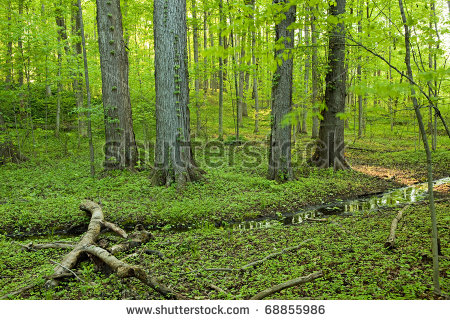
Hartsgrove is just north of the Deep Forest and many of the trees around the village are ancient.  Think about pictures you might have seen of century trees.  The eleph have shaped their homes from these.

North of the village is a sacred grove, planted hundreds of years before.  It’s where the name of the village derives.  That’s where all of the seasonal festivals are held.  They’re mostly communal affairs, as Hartsgrove isn’t big enough to rate a priest.  They have to petition one to be sent from one of the larger centres for important events like marriages.

Selene and Aeldred share the responsibility of the physical health of both animals and people.

Hartsgrove sends annual tributes to Aurayene, Drychtensart, and Gryphonskeep in the form of food and Willow’s excellent brews.  There is a fair demand for The Swan’s beer, wine, and whiskey.  These might be the village’s only export.

There is no wall.  Only ones made of stone can withstand Vedranya, and there is no quarry nearby.  There is rarely any need of defence, and the men of the village, with Aeldred’s magickal support, are more than equal to the few bandits who choose to try their luck.

Aurayene is a sprawling city state founded by the Parimi.  It is the capitol of Parime, and the spiritual centre of Tellurin.  The Archbishop, the highest ranking prelate in the land, makes his home there, and the Monastery of Aurayene is the biggest of its kind, taking up fully one third of the city’s area.

The Archbishop’s compound and tower are palatial.  Not only the compound, but the city as well, are guarded by massive stone walls.

Aurayene is one of the few cities to have survived the Cataclysm, though only barely.  When the western coast sheered away from Tellurin, Aurayene stood on the very brink.  In succeeding generations, they adapted to their inconvenient perch atop a cliff that dropped several hundred feet to the Jagged Sea below. 

Miners and stone masons excavated The Long Stair, which descended through the stone beneath the city to the floating mass of docks that formed the port below.  A lift was also constructed to convey cargo up the cliff face to the city.

The Chance and the Aurayene Rivers flow respectively south and north of the city, cascading in incredible waterfalls to the sea below.  The land around Aurayene is mostly plain, though the coastal mountains, Les Bras d’Auraya, surround it.

Riversway is essentially a mercantile centre on the Aurayene River a day’s ride out of Aurayene.  Because goods coming into Aurayene from the port side have to be hauled up the cliff, and the city is so well developed, there’s not a lot of space, literal or figurative, to bundle things off to specific destinations.

Riversway serves as the place where shipments are sent in bulk, to be divided and repackaged for shipping further up the Aurayene, or by land into the continent.

Gryphonskeep is on the north shore of the Aurayene River.  Originally built by a discontented Alban lord (Murdo Christie)  who’d left the Island Kingdoms before the Cataclysm, the keep earned its name and reputation by virtue of several gryphon fledglings that the lord managed to capture on his journey through the mountains.

The keep was built for defence with thick walls and multiple sets of doors.  Christie was jealous of his new prize and distinction, and unwilling to lose either.

The aerie tower was built to simulate the gryphons’ mountainous home with broad balconies at the half-way mark and the top level allow the gryphons access.  During Vedranya, these are covered with massive wooden “shutters.”  The gryphons would much rather be up in the mountains, safe above the storms, but they like to humour their Tellurin caretakers.

Gryphonskeep has come into the hands of many lords over the years.  It is both a desirable reward—who wouldn’t want to be the Gryphonskeeper?—and a kind of back-handed compliment—who wants to be exiled to the western wilds?

The west of Tellurin is considered a barbarous and lawless land.  Few families have been eager to assume the burden when they could be living a life of relative comfort in the civilized east.

Killian’s father held Gryphonskeep before him, but his disreputable behaviour and abuse of the noble beasts caused him to be stripped of the honour.  Killian had to fight to prove his right and worthiness to hold Gryphonskeep.  Dairragh might be the first third generation Gryphonskeeper, if he can regain the honour.

Aumenburg is a small village nestled in a valley of the Great Ring Mountains southwest of Kriegstaff.  The mountains are Saxon land.  It is ruined by the time Ferathainn and Dairragh reach it, having been ravaged by Kane’s army and then abandoned to the storms.

Like Hartgrove, it has a grove.  Unlike Hartsgrove’s, Aumenburg’s grove has been forgotten and left to the wild things.  It also happens to be the site of a great sourcerous battle and the resting place of Jareth’s amulet.

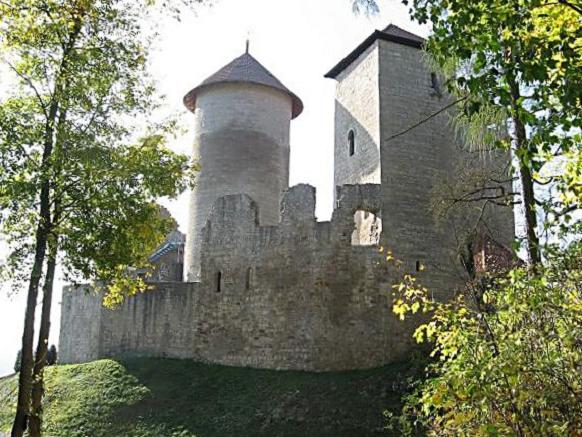
Finally, there are five mountain keeps that guard the passes through the mountains.  These were built by the Saxon in the days when defence, or at least provision for travelers and protection from Vedranya, were deemed necessary.  All five keeps were constructed in much the same manner; all tall, rectangular, utilitarian structures built out of the mountains themselves.  Each was built on top of caverns which served as storage and dungeons, the foundations of each keep reaching deep into the stone.

Each has an outer baily, or commons area, and an inner fortification.

That’s it for tonight.  Have a wonderful weekend everyone!

The peregrine and all that followed

A.K.A inspiration, happiness, desire, Buddhist philosophy, and semiotic journeys

The peregrine

This morning, as I walked my dog, we neared a series of well-manicured cedars … and something flew out of them.  It looked about pigeon-sized, but it didn’t fly like a pigeon.  I like watching birds, okay?  I know what pigeon-flight looks like.  I know what it sounds like too, the rhythmic pumping of the wings that seems to push a little sigh with each down-thrust.

Pigeons don’t “kree” either.

This happened fast and I noticed most of it peripherally, but my interest was piqued, and the motion drew my eye to a nearby rooftop where a peregrine falcon was just landing. I saw the markings on its tail feathers and wing tips, and when it turned, I saw the pale breast, its feathery “pants.”

I mock you with my feathery pants.

It was beautiful, perfect even.

The words were out before I even knew I’d spoken: thank you.  The world shifted around me slightly.  My day was made.  Gratitude can do that to you.

I let Nuala sniff about for a bit.  She hadn’t noticed the peregrine, so I was able to watch.  It bobbed its head, assessing the threat.  I figured we must have disturbed its breakfast, that it downed something tasty and was having at in between the cedars.

So we moved on and let the peregrine get back to business.

I know we have peregrines in Sudbury.  In the past, they’ve nested at the University and of some of the buildings down town, but it’s not often I get to see one, and rare that I see one so intimately.

It got me thinking of several things.  In no particular order, they are:

There’s a poem in this

In my Thursday poetry posts, I often write a few words about the inspiration for the poem.  When I see something like the peregrine, and it touches me, usually there’s a poem in the moment.

If the moment is fleeting, I have to get it down, and quick, but if it has some staying power, the moment has to rattle around in my head for a few days, maybe a few weeks, gathering images and words like a mental tumbleweed until it gets so weighed down it can’t move anymore.  Then it’s time to write.

That’s what’s happening now.  Wee little tumbleweed, rolling around in my skull … 🙂

Happiness

The thing that made the world shift around me, that made me utter thanks, it feels like a “ping.”  It makes me take notice.

Moments of happiness and gratitude are all around you.  You experience them all the time, every day.  Pay attention.  It really does make the rest of the madness of life easier to put into perspective.

I don’t want to sound all hokey, but there’s sacred in those pings.

Desire

Which got me thinking about want.  A writer-friend posted to Facebook last week that she’d enjoy writing so much more if she wasn’t so invested in the whole publication thing.

I didn’t want to preach, so I didn’t comment, but what I wanted to write was: then stop worrying about publishing.  Write.  Act with purpose.  Continue submitting, by all means, but don’t hang your hopes on publication.  Persistence and practice pay off.  If you’re not enjoying it anymore, then you shouldn’t be doing it.  Take a break.  Give yourself a chance to remember why you love writing, why you really don’t want to do anything else.  Find your passion again and just write.  When passion fuels your efforts, you will write amazing things.  Shop those amazing things around and someone will accept them.  But stop wanting.  Just be a writer.  Write.

Another writer-friend posted this on Facebook today:

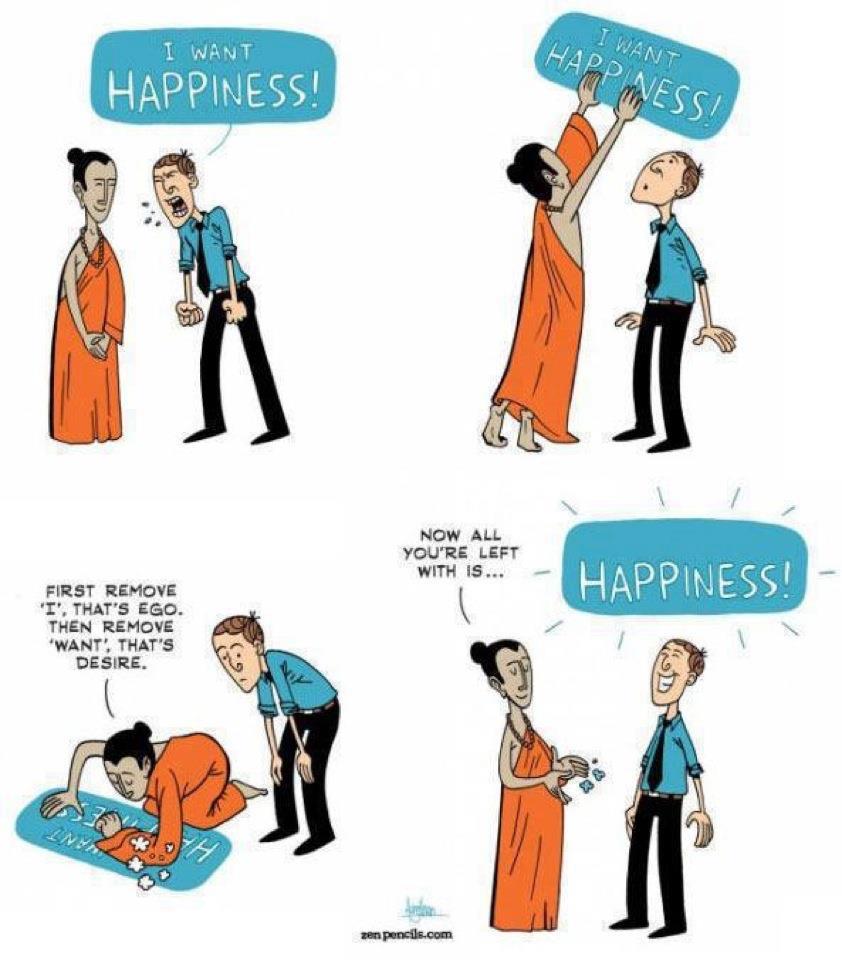
Take the “I want” out of anything, and you’ll find the happy.  It doesn’t come easily all the time, but if you can manage it even occasionally, you’ll be a happier person.  It’s this whole wibbley-wobbley, timey-wimey thing … No, that’s Doctor Who.  Sorry, obsession of mine 🙂

Really, it’s Buddhist philosophy

I read the Bhagavad-Gita not long ago, and that’s the central message of the text: stop wanting.  Stop desiring.  Be in the moment.  Act with conviction.

See the beauty, the power, and the terror (or the Krishna, if you’re a Buddhist) in everything.  It’s all connected.

Which brings me back to the peregrine.  Isn’t it a lovely little circle?

Oh, and something else

Peregrination.  Isn’t’ that a lovely word?  It means to take a journey, a pilgrimage.  Isn’t that what all of us writers do?

It’s all a wonderful semiotic mess 🙂

More insight into the mind of Mel.  Terrified yet?  Where has your mind been going lately?  Has it been going there without you?  How do your mental peregrinations influence your creativity, your art?  Do tell.

“What if” Fairy Tale Madness Blogfest, Part 2

Now, it isn’t really a fairy tale, so I don’t even know if it will be accepted on that basis alone, but Washington Irving‘s “The Legend of Sleepy Hollow” is a wonderful American short story, and one of my favourites.  It has the feel of a fairy tale to me, so to heck with it.  Caution, meet wind 🙂

Team Plot Twist

What if Katrina turned out to be totally vapid, and Ichabod couldn’t stand her family?  What if the only way he could extricate himself from this sticky mess was to fake his own death?  What if his perfect partner in crime was also his rival?

Please enjoy.

The heartless to the headless

An apparently headless Brom bent to extend his hand from horseback.

After clearing away broken bits of pumpkin and discarding his now-broken spectacles, Ichabod accepted the proffered assistance.

“You’re certain you won’t change your mind?” Brom asked.

“No, no,” said Ichabod, considering the book he’d clung to during the attack. “Katrina’s yours.  I only had to experience her family tonight to know I couldn’t countenance their relation.  It confirmed my suspicions.  Though her beauty affects me, a fickle-hearted girl like that could never make me happy.”

“You’re speaking of my bride-to-be!” Brom shrugged his head up through his cloak, his hair so awry it revealed a bald patch.  Ichabod stifled a laugh. “Watch it Ichy, or I might have to use this.”

“Put the sword away, Brom.  You’ve won.  I’ll be out of town before dawn.  You’ve nothing to fear.  You and Katrina shall be deliriously happy I should think.  I wish you nothing but the best, and several strapping, young boys such as yourself.”

Brom’s considerable brow furrowed for a moment as if trying to decide whether Ichabod was waxing sincere or sarcastic, then with a shake of his head he gave over, pulled his cloak back up over his head, and said, “You’re a strange man, and a fool to think you’d be suited to a place like Sleepy Hollow.  We’ll be as well-rid of you as you are of us.”

“Just so,” said Ichabod. “Thank you, Brom.”

“Fare well.”

“Be sure you’re well-seen tonight.”

As an answer, Brom pulled another pie-pumpkin from his saddlebag and threw at Ichabod’s feet.  Ichabod didn’t move.  The man knew his business right enough.

As he turned to fetch his donkey, Ichabod threw the book, unfinished, but not worth the effort, into the road to complete the picture.

“Rest in peace, Ichabod.”

300 words

What do you think?

“What if” Fairy Tale Madness Blogfest Part 1

Sorry to have missed a day on my blogging schedule, and a poetry day at that, but if was for a good reason.  A colleague, after 42 years of dedicated service, and service excellence, is retiring.  Her last day at work was today, but the BEA Hive took her out for dinner last night.  It was several hours of wonderful chat, memory-sharing, food and drink.  Ah, yes … there was much drinking 🙂

But so much for the excuses, and on to tonight’s post: I’m throwing my hat in the ring, the fairy ring at  that!

“What if” Fairy Tale Maddness Blogfest

So this post will tell you a bit about the blogfest, and you can join in up until 11:59 pm tonight, so get crackin’!

Part 2 will be my submission.

Onto the details.  The following is verbatim from Cassie Mae’s post (linked above).

WHAT IF?
Fairytale Madness BlogFest!
AUGUST 13th – 17th          
Have you noticed that by changing one detail; one event, one character trait, one thought…you can completely alter the rest of the story?For this bloghop we are exploring “What If?”
Not only do we want it to be fun, but it will hopefully be a fun writing exercise and make for some great reading during the hop!

To enter:
Think of your favorite “well known” fairytale and ask “What If…!”
Then, pick one of these four categories: (be sure to mention which category you’re joining, during your blog post!)

·       Best Plot Twist
·       Best Love Story
·       Best Tragedy
·       Best Comic Relief
 
Finally, write a scene(s) illustrating a new detail of the fabled fairy tale that changes our perspective.
To recap,
Is it a plot twist? (Cinderella gets knocked up by the Carriage Driver…)
An unknown romance that comes to light? (Snow White dumps the Prince for Grumpy…)
A tragic loss occurs? (The Three Little Pigs are too late to save their house…)

The wolf blows down the straw house in a 1904 ...

The wolf blows down the straw house in a 1904 adaptation of the fairy tale Three Little Pigs This is one one of the less intelligent pigs.. (Photo credit: Wikipedia)

A little comic relief? (Hansel and Gretel win a trip on Euro Rail, sponsored in part by M&M’s…)
Whatever the change…It’s limited only by your imagination – but please keep it PG-13 😉
Other Rules:
·       Post your story during the week of August 13 to 17.
·       Flash Fiction – 300 WORD MAX. (You don’t have to tell the whole story in three hundred words. Pick what works to illustrate your point.)

Got the flavour?  If you want to submit, the link is also on Cassie Mae’s post.

Good luck to all!  It’s been a fun challenge 🙂

Three great books on self-editing

(A.K.A. more writing-book porn!)

Since I started serious writing practice and got down to the business of trying to turn my idea into a publishable work, self-editing has been an obsession of mine.  I started out with a good grounding (2 degrees in English), but soon learned that there is always room for improvement.  Always and forever.

When the publishing boom of the 80s and early 90s changed directions, agents and editors state one principle requirement: write a damn good book, and write it well.

Here are, in no particular order, three books that have helped me immensely.  Just ask my Author Salon critique group, I am the queen of nitery-pickery (I’m not sure why I choose to write it like that, but I suspect it might have to do with the character of Rockery Hud-Peck from The Fintstonesthat’s just how my brain rolls).

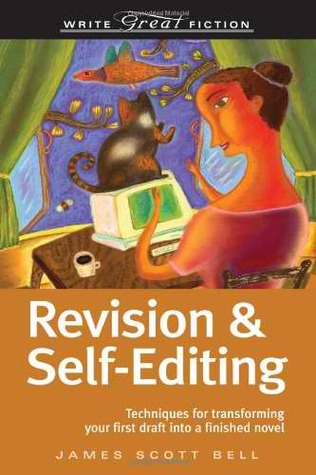
1. Revision & Self-Editing: Techniques for transforming your first draft into a finished novel by James Scott Bell (The Write Great Fictions Series, Writer’s Digest Books, Cincinnati, OH, 2008).

Bell divides his book between self-editing and revision, which he states are two separate processes.  They are 🙂

In his introduction, he references Browne and King’s Self-editing for Fiction Writers: How to edit yourself into print, another of my selections (see below), as well as a slew of writing gurus ranging from Brenda Ueland to Natalie Goldberg and Ray Bradbury.

Bell begins each section by presenting his philosophy of the task, then proceeds through self-editing with various chapters on each aspect of the work (character, plot, POV, etc.), asking probing questions along the way to get the writer deeper into their novel, and offering exercises to assist with the understanding of the element at hand as well as its relevance in self-editing.

When he gets to revision, it’s more about process than elements and analysis, but Bell is equally insightful in his discussion.

Bell is a skilled author and editor.  He writes from his experience in self-editing.  This perspective is what sets my first pick apart from the others.

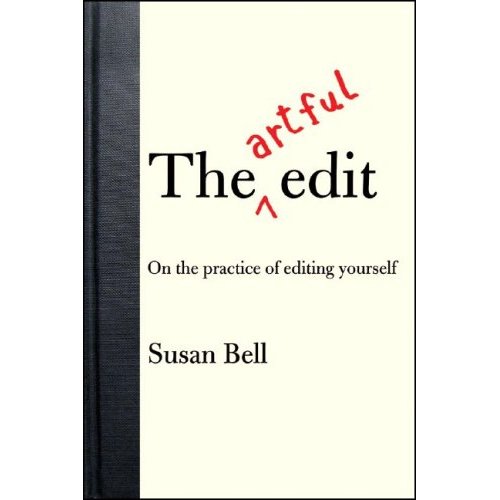
2. The artful edit: On the practice of editing yourself by Susan Bell (Norton, New York, 2007).

Susan Bell is a veteran editor and author, but her authority and perspective derive from the former role.

She breaks the self-editing task into Macro and Micro phases, again, providing examples, checklists, and exercises to deepen understanding. Then Bell offers what she calls her Master Class, provided in the form of experts in different creative fields (photographer, film, etc.) and what each can teach writers about how to make their story come alive.

Finally, she provides an overview of the evolution of editing, fascinating in itself.

Bell applies investigative zeal to her book, and it offers unique insight into the world or authors and editors, their relationships, where one begins and the other ends, and what the writer can do to become both.

3. Self-editing for Fiction Writers: How to edit yourself into print by Renni Browne and Dave King (Second Edition, William Morrow, New York, 2004).

First published in 1994 by HarperCollins, Self-editing for Fiction Writers is seen by many as one of the definitive works on the subject.

As with the James Scott Bell’s book, Browne and King’s breaks the task of self editing into its elements (characterization, dialogue, voice, etc.) devoting a chapter to each with examples and exercises.

One thing that I appreciate is the first chapter: Show and Tell (emphasis mine).  The point is made, and I fully agree, that while the writer should endeavour to show, that there are some places in your novel where telling is not only appropriate, but necessary.  It is the skilled writer who knows the difference and knows what technique should go where.

I also enjoyed the collaborative tone of the book.  When the authority is identified by “we” and not “I,” something rhetorical and clever happens: readers begin to feel that they are a part of the illustrious editorial team that wrote this book.

It’s an inclusive way of writing that empowers reading-writers to believe in their ability to self-edit.  The doors of the country club have opened, my friends, and we have all been invited in for drinks 🙂

The Wordsmith Studio Goodreads group is currently reading this book and it’s been a wonderful opportunity for me to get reacquainted with some old friends.

I recommend all three books highly (not to show favouritism or anything).

Do you have any books on self-editing that you would recommend?  Share their titles and maybe a few choice words of review in the comments so everyone can benefit from your experience 🙂

Writerly Goodness is calling it a night.

What does everyone else in Tellurin believe?

5 religions

Last week, I wrote about the two main religions of the Tellurin (humans): The Faithful, and the Holy Mother Church (HMC).  But what does everyone else in Tellurin believe?

You didn’t think I was going to stop at two, did you?

Well, I’m not.  But I’m not going to go into great gaudy detail about them either.  In the process, you’ll learn a little more about the various inhabitants of Tellurin.

Other Tellurin religions/belief systems

While the Parimi, Haldane, Espanic, Island Kingdoms, Saxon, Sami, and Skaldic all believe to a greater or lesser extend in Auraya and espouse The Faithful religion (some distinctively coloured by their own pagan belief systems), and the Caldone alone believe in the HMC, there are still other Tellurin cultures that believe in neither.

The Nubiin espouse a faith based in the divinity of their ruler, or Osire, and resulting cult of death.  The Osire (a man or woman) is tied to the land, responsible for the weather and tides that provide for a fruitful growing season in a relatively arid region.  Prosperity in the form of abundant crops and livestock result in a long rule, the opposite can result in a short one.

When an Osire ascends, work begins on his or her funerary monument.  The relative greatness of that monument and the treasures enclosed with the deceased is tied to the length of their rule.  Sound familiar?  It should.  The Nubiin are based losely on the Egyptian culture.

In the wake of the Cataclysm, and the advent of the devastating storms of Vedranya, the Nubiin faith was shaken.  If the Osire held no power over the storms, how could they be considered divine?  For nearly a hundred suns, the Nubiin struggled, even adopting a bastardized form of The Faithful religion for a while, but eventually, they returned to their traditions, rationalizing Vedranya as the cost of their prosperity otherwise.

The Hussar of the plains believe that the gods exist, but that they have no interest in what happens in Tellurin.  They believe in the power of a good horse, the strength in their limbs, and the pleasures of a life honourably lived.  They have an ethical code rather than a religion per se.

The Shooksa-Nai of the north-western region of Tellurin still live in a tribal fashion and have an animistic belief system, that is they believe in the spirits of things.  Their shaman are their spiritual leaders, healers, and advisors.  The Shanzu of the Deep Forest are similar.

A word about those pagan belief systems I mentioned off the top.  They relate to the first gods, the akhis.  Most revolve around the lord of the land (Zaidesakhi) and the lady of the waters (Augesahki).  Sacred groves were often consecrated to them.

Non-Tellurin religions

The okante (think orcs) territories are just south of the Shooksa-Nai and they too are a tribal, animistic people, and were largely peaceful until Yllel co-opted them into soul-slavery.  Now they live in fear of the mad god and do his bidding in the hope of saving their people from his wrath.

The krean (think trolls) are a seafaring people and revere the oceans and weather as their deities.  This has its roots in the akhis as well, Augesakhi and Freyesakhi.  Like the okante, they have been enslaved by Yllel and live in a similar fear of him.

The grunden (ogres), who live in the mountains, and blinsies (goblins), who live in the Deep Forest and love to harras the Shanzu, have no religion, but are also enslaved to Yllel.

The anogeni, as I’ve written in the past, were once the hands of Zaidesakhi, the fingers of Augesakhi.  The hidden people are special.  Though they’ve lost both “parents” they live in the belief that they will return to their children.  They have no true religion, because they know the true nature of the gods.  They do not require a structured religious practice as such.

They not only believe in the spirits of things, they actually study them and know them as friends.  There are twelve plants whose spirits have proven especially powerful: the ashkiwine.  It is through their relationships with the spirits that the anogeni practice their form of magic.

Because of their relationship to the akhis, they also know the spirit of the world, which they call the anoashki, the great mystery.  He is their grandfather, and they serve his purpose, one of the primary goals of which is to resurrect the fallen akhis.

Though the anogeni we meet in Initiate of Stone live in the earth, there are other groups of the anogeni that make their homes in the great trees, and in the oceans.  These last are an aquatic form of the anogeni, but they don’t have fish-tails 🙂

Another interesting thing about the anogeni is that they hold the memories of their ancestors, are born with them in fact.  As a result, they have a complex system of prophecies based on these memories and the patterns they have seen in them.  These prophecies and the anoashki guide them.

The dwergen, similarly, have no structured religion.  Dwergesakhi still lives in the heart of the earth, still speaks to them, and they know him well.  A self-evident god requires no faith.  Dwergesakhi is their creator, though, and as such they offer him respect and will do his bidding unquestioningly, as any good children might.

The eleph, being from Elphindar, are a little different.  Elphindar has no gods, but the eleph still revere the kaides esse, or the powers that be.  They believe in a kind of clock-maker, something beyond their understanding that created the universe, but then left the experiment to tick itself out in the fullness of time.  Like the Hussar, they have an ethical code by which they live.

When the eleph first arrived to Tellurin, Auremon came to them to try to make amends.  They were startled that the kaides esse of this new world took corporeal form and that they intervened in the affairs of mortals.  Since he confessed his role in their eviction from Elphindar and his inability to restore them, the eleph had no use for Auremon, and rebuffed him.

Not long afterward, the eleph encountered Yllel, when the mad god attempted to enslave them.  Yllel could not trick them, however, and this encounter only served to entrench the eleph enmity of the Tellurin gods and the people who worshiped them.

Finally, the favrard espoused an intricate system of ritual and discipline that did not focus on one god, but on all of them, past and present, known and unknown.  When Yllel enslaved them, he made them abandon their spirituality.  Some attempt to cling to their past, but Yllel punishes them for it.  The favrard are Yllel’s special pets, and one of the few peoples that he can possess.  The tortures he can inflict from within are fearsome indeed.

With this, we’re almost at the end of my world-building epic.  Next week, I’ll talk about some of the other distinctive features of Tellurin, some of the cities, keeps, towns, and villages that figure in Initiate of Stone, as well as a few odds and sods.

I hope you’ve enjoyed hearing about Tellurin and the characters in my novel.

I’m Writerly Goodness, circling three times and settling down for a nice sleep.  Until next week!

Building your writing resume: three points to consider

This topic has come up in a peripheral way on Wordsmith Studio: As an unpublished, or even as a not-recently-published author, what can you do to bolster your writing resume?  I say peripheral, because the actual question asked was whether it was worthwhile to enter contests because many of the entry fees are expensive/potentially prohibitive.  I believe the question was posed in the context of accruing publishing credits, however, and that’s when I started to think about this topic in earnest.

So for better or worse, here are my thoughts on the subject in the context of my personal experience.

1. Contests

Contests can be fun.  They can inspire you, particularly if they have a theme you can latch onto, and the deadline always helps to motivate.  The issue for me is that many contests in literary magazines, whether for poetry or prose, carry with them entry fees, and some of these can be as much as $40 (!) for a single entry.  If that entry is a single poem (not epic, they usually have line limits), or a 2000 word or fewer short story, you really have to weigh the benefits of paying someone to consider your work, which already carries with it a labour cost in author-hours spent writing/revising.

Food for thought: Value your work.  How much do you think it cost to write?  Even at minimum wage per hour (and I’d advise a higher value than that) it’s probably more than the entry fee.  How much are you willing to pay to have your work published?  In the beginning, we may all have to pay for this consideration, but it’s important to remember that unless you have a really good day-job, you’re going to reach the point of diminishing returns sooner than later.

Yes, you can write off the entry fees on your taxes if you claim your writing as self-employment, and yes, you often get a year’s subscription to the magazine or journal, which you can declare as income on your taxes as well, but you have to consider the relative cost for benefit.

For example: If you’re paying a $25 entry fee to receive and annual subscription worth $15 or $20, this may not be in your best interest.  Sure, you may stand to win $500 if you place first in the contest, but if the magazine or journal holding the contest is well-known, you’re going to be up against some stiff competition.  Take the possible purse out of the equation and work through your numbers again.  If you don’t win, or even place, will this still be a good investment for you?

Contests are sometimes a way for a magazine or journal to generate some fresh material, gain new subscribers, or refill the enterprise’s dwindling coffers.  If you like the journal and want to support them, consider a paid subscription and simply submit to them according to their submission specifications (see below) to see if you can get published by other means.

Further, most magazines and journals that hold contests receive so many entries that their judges cannot possibly comment, even in general terms, on the quality/suitability of your work.  Entering a contest may be a good experience, but if you’re aiming to get critical feedback, it’s not your best bet.

Note: The concerns for poetry are a little different than for prose, at least here in Canada.  A poet can rarely make even a meagre income from their work unless they self-publish, and even then, the costs of producing the anthology often outweigh the profits derived from sales.  A best-seller in terms of poetry might be 500 – 1000 copies and the poet often has to go on the road (or start up a YouTube or podcast channel to promote their work) to give public readings and drum up interest in their work.  In my experience, poets write for the love of poetry.  They’re not aiming to make money from the endeavour.  The fact of publication is often worth the cost, whatever it happens to be, and most poets are gainfully employed in other, though sometimes related professions, to offset the costs associated with their calling.

My advice: Look for contests that have low or no entry fees.  They do exist.

2. Calls for submission

Which brings us to our next consideration: calls for submissions.  Most magazines and journals do have their criteria for submission posted on their Web sites.  Occasionally, periodicals, or even publishers wishing to put out an anthology will have a themed call.

Like the contests listed above, themed calls can be fun and often for the same reasons (theme, deadline, etc.).  One consideration that you should keep in mind is the potential for resubmission.  If the theme is too specific or narrow, the story or poem produced thereby may not be suitable for submission elsewhere, unless another publisher is interested in Animal Bollywood, or Japanese Steampunk.

Note: Follow the submission guidelines carefully.  Many publications weed out submissions that are not perfectly aligned with their criteria, particularly the more popular or well-known ones that are flooded with the work of hopeful authors.

Some magazines close their submissions once they’ve received what they deem to be “enough.”  Usually, this has to do with their publication schedule.

For example: A quarterly (four times per year or every three months) that publishes three to four short stories per issue might close their submissions after receiving eighteen to twenty stories (a year’s worth plus a few back-ups) that they deem suitable for publication.

This can happen in any genre (poetry or fiction) or any genre within fiction or poetry (SF, fantasy, romance, mystery, etc.).  This only reinforces the importance of looking up the submission guidelines for whatever magazine or journal you choose to submit to.  If you rely on annual print publications to plan your submission strategy, this is especially important.  The periodical’s or publisher’s situation could have changed since the guide was produced.

Remuneration: These terms can also be found on most magazine’s or journal’s Web sites.  Often, for fiction, it will be a sliding scale of cents per word depending on the length of the story.  It may be a flat fee per poem.  Some journals, particularly poetry or literary journals, will only offer contributor copies, or a year’s subscription.  Once again, as with the contest entry fees, weigh the benefits of publication.

A note regarding online publications: Online publications may not offer contributor copies either (because there is no print version), and if relatively new, may not be able to pay much, if anything.  If they are established enough to have advertising income they may provide remuneration.  Once more, read carefully.

In most cases, it will be rare that a piece of creative writing submitted in response to a call will receive detailed commentary. Once again, it’s a matter of numbers.  If you had to read a hundred short stories, would you be able to give each one individual attention?  We’d all like to say that we would, but I think the reality is that after ten or so, we’d all admit to a certain amount of exhaustion.  And to be fair, why give commentary to a handful, when everyone deserves the same consideration?  This is why most publications will not go this particular extra mile.

If you do receive a few comments or pointers: excellent!  It means that your submission was good enough to merit some extra time and attention.  If the commentary is specific, take heed and use it to your best advantage.  If it’s simply complementary, keep it, and try not to use it as an excuse not to edit and revise before submitting the piece to another venue.

3. Resources

One of the most popular series of guides is the Writer’s Digest series: Writer’s Market, Novel & Short Story Writer’s Market, etc.  I might recommend a subscription to the Writers Market.com service, which will have resources/listings updated in real time and on a regular basis.

For Canadians there is The Canadian Writer’s Market, but I’ve found that WD has been getting better and better at keeping their Canadian listings up-to-date.  This may be a good resource for those dedicated to publishing in Canada.  It comes out less frequently than WD, and so checking out the individual Web sites of publishers and publications becomes very important.

While the Interwebz can provide a plethora of resources, I’ll recommend Duotrope as an excellent starting point.  The service is currently looking for donations to remain in operation as a free resource.  If you’ve used the service and found value in it, seriously consider donating.

That’s all the Alchemy Ink Writerly Goodness has for this week!

Until next time!

Speaking of speaking to the spirits

English: Religious symbols from the top nine o...

English: Religious symbols from the top nine organised faiths of the world according to Major world religions From left to right: 1st Row: Christian Cross, Jewish Star of David, Hindu Aumkar 2nd Row: Islamic Star and crescent, Buddhist Wheel of Dharma, Shinto Torii 3rd Row: Sikh Khanda, Bahá’í star, Jain Ahimsa Symbol (Photo credit: Wikipedia)

A.K.A. Religion and spirituality in Tellurin, part 1

After last week’s lovely vacation from worldbuilding … it’s ba-ack 🙂  If you recall, last instalment, I talked about the specifics of how the magick works.  Part of that dealt with the nature of Ferathainn’s talent: her ability to communicate with the spirits of things.  We’re going to take that metaphor in a different direction this week.

So I’ve already covered the gods, and given a basic rundown of the history of Tellurin.  What’s left to say about the religions?  A fair amount 🙂

The two main religions in Tellurin, The Faithful and The Holy Mother Church are based on Auraya.

Once upon a time, on the eastern coast of Tellurin, the Parimi, Espanic, and the Haldane peoples lived in harmony with the Caldone.  Though all from tribal origins, all but the Caldone had settled into stable, agrarian territories that grew into allied provinces.

The Haldane were great artists and philosophers.  Their main tenet was to live every day to its fullest, to be joyful in the moment, and to follow their bliss.  This led them to strive for excellence in whatever profession they pursued.

The Parimi were of a similar disposition, but they were epicures verging on hedonism (eat, drink, and make love today, for tomorrow, you may die).

The Espanic expressed their philosophy in a different way.  They were great engineers, navigators, and scientists.

All Tellurin knew of the gods, but there was no codified religion yet.

In those days, Auraya, Auremon, and Tryella were active in the affairs of the Tellurin.  Auremon and Tryella weren’t interested in thanks or recognition, however.  Their efforts were altruistic.  Auraya loved the adoration and her partner and daughter were more than happy to let her take credit for their good deeds.

One of the Haldane began to collect tales of divine providence and intervention, and wrote them down.  He signed each story, The Faithful Scribe.  This collection became the Kas’Khoudum, or book of light.

The Parimi took these writings, and developed the set of practices that became The Faithful religion.  Mostly, they gathered at the full and new moons to share tales of wonder, to sing songs about them and to recite poetry based on the tales.  They shared food and drink.  In short, it was a big party that made everyone in attendance happy.  The Haldane and Espanic took to this form of gathering like bees to pollen.

Word of The Faithful gatherings spread beyond the borders of it home provinces and others began to adopt those practices.

The Cadone, however, were still largely a tribal culture.  Though they had cities, these were military strongholds and training centres.  They raided and attacked their neighbours, taking the conquered people as slaves.  When they observed The Faithful gatherings among their slaves, they thought it was pure debauchery and the Kas’Khoudum, a work of heresy.

Their Auraya was a warrior queen, champion of the bold and fearless.  They had established The Holy Mother Church in her name as an administrative branch of their great armies.  They determined that The Faithful had to be stamped out.

Though they drove the Parimi, Haldane, and Espanic peoples from their homelands and pursued them across the continent, Auraya intervened and chose one of The Faithful, Alain de Corvus, to be her Kas’Hadden, or hammer of light.

He saved the refugee peoples, turned back the Caldone, and the Parimi, Haldane, and Espanic settled peacefully on the western coast of Tellurin.

Over time, the religion of The Faithful became ritualized and the practice less joyful.

Yllel, trying to influence The Faithful for his own nefarious purpose created his own book, the Rada’Khoudum, or book of darkness (misleadingly translated as the book against darkness).  This was a book of ceremony and ritual, including a number of spells that when used, would actually bind and drain Auraya’s power, eventually weakening her.

After the Cataclysm, Yllel directed his soul-slaves to place the Rada’Khoudum into the hands of the surviving Faithful.  The Rada’Khoudum became the basis of modern Faithful practice and the Kas’Khoudum became a pleasant book of incredible tales, eventually laying forgotten and gathering dust on a shelf in the Great Library at Aurayene.

It might be helpful to think of The Faithful in the time of Initiate of Stone as analogous to the High Anglican Church in its early days, when multiple sects of Christianity were emerging and religious persecution was rife.

Think of the Holy Mother Church as Christianity in the time of the crusades, except that their collective target is any religion that is not HMC, magi, and any people not Tellurin.  They’ve been waiting and planning for years to execute their holy war.

Next week: The other religions of Tellurin.  You didn’t think I’d stop with two, did you?

Have a great long weekend!

Writerly Goodness, signing off.

The things you learn when you look into your family tree

Or … the duty of a bard

This week, I thought I’d write a little bit about genealogy.  I’m not going to post any of my family trees (I have three, though they’re incomplete and slightly out of date) … I’m just going to write about the wonderful things you can learn when you do a bit of digging.

The first is this: genealogy is one of the duties of the bard.

Whether you think of a bard as a bard, or filidh, or ollamh, a bard wasn’t just a collector of tales, a memorizer of songs and poems, but they also held the responsibility to guard the family history and bloodlines.  They were scholars, doctors, law-givers, and just darned cool, and as a writer, I feel that I have some connection to that tradition, and some responsibility for the history of my family.

I’m a Celtophile, and unabashedly so (hence the interest in filidh and ollamhs), but the family I can trace is Finnish.  Yes, Marttila is a Finnish name.  You can generally tell because of the three consonants together.  That, or the double vowels (e.g. Saarinen) are pretty clear give-aways.

The larger family name in my genealogy is Wiirtanen.  There is a large Finnish community in the Sudbury area, many of them coming from the Long Lake area of town and the Pennala subdivision there.  That’s where the Wiirtanens settled.

One of my Wiirtanen relatives still lives out at Beaver Lake, a bit of a drive out of town.  He’s a trapper and owns a farm.  Other Finnish families moved into town around Lake Nepawin (Maki Avenue was named after one of them) and there have been a few books published on the Finnish roots of Sudbury.

A number of years ago, a genealogist visited me out of the blue.  I sat with him for a few hours in an afternoon and he taught me a few things about my family, which happened to be part of his family tree, which is why he looked me up.

In Finland, at the beginning of the last century (give or take a few years) families gave up their names, and took on the names of the farms or cities where they worked.

There’s a city in Finland called Marttila.  My uncle Walter and aunt Margaret visited it years ago.  Here’s a wee map and the city’s crest from their Web site:

Notice the image on the crest: It’s St. Martin of Tours cutting his cloak in half to give to a beggar.  So Marttila roughly translates to St. Martin, not a particularly Finnish icon, but at least I know where my family name comes from.

So I started keeping a few files on my family tree.

Something else I did was to look into the kalevala, the national epic poem of Finland.  It’s a creation myth, set of legends, and features magicians and the mystical sampo, which could be, among other things, an analogy for an instrument that could track the precession of the stars.

It’s no wonder I’m into the fantasy 🙂

My mother was adopted and has no interest in looking into her family, so I’m kind of stumped there, though she tells me that she was Irish, something my grandfather liked to tease her with.  So maybe there’s a reason, I’m so enamoured of all things gaelic.

Have you delved into your genealogy?  What did you discover?

The endless, stuttering, intermittent draft

As promised, I’m taking a break from worldbuilding, itself a fairly endless task, to talk about my most recent draft.

Officially, this is number six (oh gawd, will I ever be finished?) but I’ve actually been through the MS once, and now I’m editing in fits and starts between critiquing and platform-building, and working.

I’m so tired, I feel like I’m sleepwalking.  With my somnabulant history, maybe I am …

I started honing number six in January when I joined my critique group on Author Salon.  The focus, at first, was my profile, which only featured about six pages of my writing, plus a short synopsis, hook line, conflict statement, protagonist, antagonist, and other character sketches, unique world, climax and denouement.

I still haven’t got the hang of it.

In February, AS announced their first Showcase, and I submitted my bits and pieces, only to be advised that my novel was far too long to be considered.  This happened at the same time that my original blog, labbydog, was hacked.

Faced with two fairly substantial pieces of bad news, I was initially paralyzed.  As I cobbled together my online life, I tried to figure out how I was going to compress a 250,000 word novel into 110,000 words (the AS upper limit).  I sat in a stunned boggle for days trying to think of what I could cut without sacrificing the story.

When my mind stopped spinning long enough to have a coherent thought, I realized the solution was simple, and had been staring me in the face the whole time: cut the bloody thing in half, revise, and edit down from there.  It was a far less daunting task that the one I was considering, and eminently doable.

So I cut, and went through the whole thing, tweaking as I went.  My mid-point was actually a little more than half-way through the original MS and even after that first review, I was still at 150,000 words.

In March, I also posted my first 50 pages to the AS critique group.  Well it was supposed to be the first 50 pages, but mine was close to 90.  The feedback I got was great, but meant that I would have to rewrite a fair chunk of my first act.  I started thinking about how I was going to do that.

Then life got a bit crazy.  March 14 would have been my dad’s 71st birthday, followed in quick succession by the anniversary of his death and funeral in April.  I wanted the world to stop at that point, but the crazy continued with some unexpected kudos at work and a new position in May.

At that point, I was just struggling to keep up, treading water and taking big gulps of air while the waves washed over me.  I know I was overwhelmed.  I knew it even then, I just didn’t have the time to feel it.  I didn’t work on my novel for the entire month of May.

Since then, I’ve conquered the rewrite, revised 30 pages out of the first part of Initiate of Stone, and just recently returned to the critiquing world.

So I haven’t finished this strange draft yet.  I have to work through the three remaining parts of the novel and cut the words/pages to the point where IoS is a streamlined machine, within the AS word limits, and hopefully suitable for a future AS Showcase.

I also have to revise my profile (again) to try and reflect the unique angle my novel presents.  This is a challenge, because IoS is a straight up, traditional fantasy.

What this process has taught me so far:

  • Life continues to happen while you’re making other plans.  It doesn’t stop because you want or even need it to.  The good and the bad crop up at the most inconvenient times and you just have to deal, take care of yourself, and stop worrying about what everyone else thinks.
  • Balance is the thing.  Time and project management skills come to the fore when you’re under stress.  Do what you can and don’t feel guilty.  It is enough.  You are enough.  All will be well.
  • Don’t stop writing.  Even though I wasn’t working on my novel, I was still writing, critiquing, and blogging.  Return to the words every day, and they will reward you every time.
  • Have a plan, or, if the plan you have isn’t working, change it up.  You can be the most meticulously organized person in the world, and something will always happen that sets everything awry.  It’s not a failure unless you quit.  Sometimes you just have to angle into the wind a bit more to keep sailing in a straight line 🙂
  • Write what you want to write, but then you have to find a way to make the concept of your novel interesting to an agent or publisher.  I’m still working on this one.

Will let you know how it goes.

A wee side note here: I’ve started using the super-cool journal my friend Margaret gave me for Christmas.  Embossed leather cover with a nifty semi-precious stone embedded in the leather, home-made, recycled paper laced into the cover.  I even have a refill that I can lace in when I’ve used up all of these pages.

Isn’t it just the coolest writer-gift ever?  I think so.

How is your creative project going?