A life sentence with mortal punctuation: part 3

Last week: A near-death experience thanks to a narsty case of tonsillitis and some ripped stitches.

And now …

Friend wars

I had some friends before school, through Sunday School and swimming lessons, but they lived farther away from me than my mom would let me walk on my own, so I never got to see them outside certain structured activities.

There were also the children of my parents’ friends, but they moved away before I could develop much of an attachment, or hold any memories of them.  For a brief time, the family across the street had children my age, but they too, soon moved away.  Kindergarten was a bit of a blur, but I do remember some of the children I met there: Ronnie-Moe, whose Dad was a fireman, Mytie (I think that was how she spelled it), Paul, and a few others, but these were classmates, not friends per se.

For the most part, I was a happy child.  I was socially inept though.  Not really good at making friends or keeping them.  I compensated for this by being a little different.  I lived in my head a lot.  My teachers called it daydreaming and distraction.

I was also a giggle-puss.  I laughed at the drop of a hat, not only when I found something funny, but also when anything embarrassed me, frightened me, or made me angry.  Laughter was my catch-all reaction, because if other kids thought I was making some kind of joke, usually at my own expense and not theirs, they wouldn’t hate me outright.  They all thought I was weird though, and that didn’t earn me any friends.

My worst childhood crime was being a story-teller (read liar).  For show and tell, I’d make things up.  There was one particularly embarrassing stretch where I was really into cats and desperately wished I could have one.  I couldn’t though, so I made up stray cats that I’d take in and care of for a few days before they ran away.

Often, I wish this inclination had been harnessed earlier, that some kind teacher would have recognized in me the storyteller (not the story-teller, teller of tales, or liar) and helped me turn it in a different direction, but that didn’t happen until grade three.

Sir Ken Robinson

Sir Ken Robinson (Photo credit: eschipul)

I was just a creative kid with insufficient outlet within class to exercise my (even then) considerable abilities.  Last year, I discovered Sir Ken Robinson’s incredible TED Talk, “Do Schools Kill Creativity?”  It validated much of what I’d already figured out on my own.

So I was happy.  But lonely.

Then a young mother with twins (fraternal-brother and sister) my age moved into the apartment up the road from me.  When she saw that I walked to school, she asked my mom if we could all walk to school together.  So the girl, let’s call her Diana, became my first “friend.”

Soon, another young pedestrian joined our little gaggle.  She lived a few blocks further on, but we were all heading in the same direction, so I figured it was fine for her to join us.  Let’s call her Mary.  Diana got territorial, though.  I was her friend first.

Mary was small and thin.  I’m not sure why, but nobody much liked her in grade one.  I was her friend though, and when Diana started acting up, it became problematic.  Diana got physical and she had a temper.  She’d scream and push and punch.

Her behaviour toward Mary bothered me, and at one recess, as Diana was wailing away at me, rather ineffectually, after having pushed Mary down, I had enough.  I grabbed her arms and pinned her against the wall of the school so she couldn’t punch anymore.

I like to think I said something clever like “You don’t own me,” or “I don’t belong to you,” but I probably squeaked out a lame “I’m not your friend,” or just “stop it.”

Diana was in tears, frustrated that she couldn’t bully her way out of the situation.  I wasn’t small, or weak.  I think a teacher intervened, but the outcome was that Diana wasn’t my friend anymore.  She stopped walking to school with me, but Mary was now my BFF.  I’d defended her.  We became inseparable.

Mary was pretty much my only friend through grades one and two.  We’d walk to and from school every day.  Mary came over to play and we went to each other’s birthday parties.

I defended her again one winter from the attentions of a boy.  Of course, I had no clue that his shoving her around and making her cry meant that he liked her.  I just saw him as another bully, so I got into my first fist fight.  He clocked me good on the jaw, but I got my own licks in.  He didn’t bother Mary in front of me again, though.

Mary continued to be a small, thin child, and so to exert her power, she got devious.  She’d argue with me over nothing, routinely “breaking up” with me and then making up the next day as a means of keeping “drama” in our friendship.  When she came over to play at marbles, she decided to make things interesting, no longer content with claiming pretty marbles, by having each of us put up toys as a wager.  She liked to bend the rules in her favour too.  I was content to let her win when the stakes weren’t high but that stopped once I started losing toys.

First, I stopped playing marbles with her, then eventually, I stopped having her over to play altogether.  Mary’s friendship was exhausting.

In grade three, another single mother moved into the apartment up the street.  She had a daughter named Margaret.  No pseudonyms here.  Margaret’s still my BFF though she lives several hours away and most of our conversations are held over FB chat or by email.

While Margaret lived up the street, there was another girl who was interested in putting on talent shows and the like.  There were implications of bullying there too, but nothing that I witnessed.  Also, the other girl was much larger than I and I wouldn’t have been able to do anything about it, but things blew over before long.

Margaret’s Mom moved into a duplex, but it was still within walking distance.  Margaret was fun and funny.  We went to movies together, at first with parents in tow.  She had budgies and a hamster.  Margaret was also a big reader, something I hadn’t latched onto yet.

Mary got a little jealous at that point, but because I was already in the process of separating myself from her, the drama wasn’t as bad as it could have been.

In grade three, my parents got me my first pet, a dog I named Friskey because of her behaviour.  The dog book said to name your puppy according to what it did.  I did what the book said 🙂  I was so excited about my new pet, that I wrote a one-page report about her.  It wasn’t required for class, but when my teacher learned that I’d done it, she encouraged me to read it aloud.

That was the year I started reading and writing.

It was also the first year that cliques developed in the class.  Margaret was popular.  Me, not so much.  I was a tag-along at best.

Grade four was worse.  Years later, when I saw the movie “Heathers,” I could so relate.

Cover of "Heathers - 20th High School Reu...

Cover via Amazon

The Heathers of our school had other names, but they were no less manipulative or cruel, even though they were in elementary school.  I got into trouble a lot that year because of the drama between the cliques.  I think that was the summer I was grounded from seeing Margaret.

I also wrote a play for the Christmas pageant that year.  That didn’t help my popularity either.

Being alone wasn’t a problem for me.  I enjoyed being alone.  Envy was an issue, though.  Without thinking about why, I wanted to be in a clique.  I wanted to be popular.  Failing that, I wanted Margaret to be my friend to the exclusion of others.  When my desires were thwarted, I started to take my frustration out on Margaret, as Diana had on me.  Though it was to a much lesser degree (not that it excuses anything), I’d become the bully I’d previously defended others against.

In grade five, I was the first girl to hit puberty, or at least that’s the way it felt.  My growing breasts became a topic of discussion and ridicule in the change room as were my hairy legs.

The traits I exhibited in grade one had developed and changed over the years.  I now cultivated an air of “weirdo.”  To combat the change room taunting, I tried to claim my glorious boobage, a difficult thing to do when I felt that it was one of the things that made me a freak in the eyes of others.  It only served to cement my strange reputation.

Since grade three, I’d been writing little stories and I kept them in exercise books.  I had wild dreams and shared them with Margaret at recess.  I was a terrible storyteller, though, all rambling and out of order.  I know there were days when Margaret just wanted me to shut up or to get to the point, but I only realized the relative quality of my verbal diarrhoea after the fact.  Sorry Margaret.

When grade six arrived, the friend wars had settled down to a large extent, but there were still a few hard feelings that had to be resolved.

Mary, who’d still been in my life, but to a much lesser extent, made overtures to “bury the hatchet” between us.  She behaved like a real friend for the first time in years and when, after a short while, she asked to see my notebook of stories, I lent it to her.

She used most of a bottle of White-Out on it to obliterate my words.

After that, with the exception of Margaret, I was almost happy to be otherwise friendless.  New cliques formed, included Margaret, and I was again a hanger-on, just so I could remain in Margaret’s circle.  We were still BFFs, but we were also growing up, and apart.

The other members of the clique didn’t like me, and no wonder.  My laugh had become a hyena’s, and I routinely introduced myself in the following manner: Hi, I’m Mel.  I’m weird.  Just to get that out of the way.

I didn’t want any more friends.  Except for Margaret, I’d learned that friends just wanted to prove that they were better than you, to hurt you, and take you down in some way.  It wasn’t a problem with Margaret because she was always the better person in our friendship.  At least I stopped hitting her.  Sorry again, my friend.

Though I stopped sharing my stories even with Margaret, my creativity continued to be an albatross.  This might have been the skewed way I saw things in those days, but it felt true.

Following the friend wars, my self-confidence was shot.  Even in grade three, an off-hand comment could reduce me to tears.  I fled from conflict.  What happened to the girl who held Diana flailing arms and told her to stop?  I couldn’t stand up for anyone anymore, least of all myself.

These were the seeds sown that in later years would take root as depression.

If you haven’t yet, watch Shane Koyczan’s excellent “To this Day.”

Visit The Bully Project.  Watch the movie.

And last week, I saw an awesome documentary on Global’s Currents.  It’s from 2007, but it’s still relevant.  Erin Thomson’s The Bully’s Mark.

Did you have friend wars in the past?  Were you in a clique, or a hanger-on?  Were you a victim of bullying, or a bully?  Both?  How did it shape the person you would become?  How did it affect your creative development?  What lessons did you take away from the experience?  This is an important issue.  Please share if you feel you can.

Next week: Tummy troubles: Appendicitis and my second brush with death.

Caturday Quickies: The Very Inspiring Blog Award

Vikki Thompson nominated me for the Very Inspiring Blog Award!

Very Inspiring Blogger Award

It’s so nice to be recognized by your peers!

So without further ado, here are my seven deadlies:

  1. I’m a scorpio.
  2. I was born on Hallowe’en.  Yes, you can say it … I’m a witch 🙂
  3. I received my Master of Arts in English Literature and Creative Writing in 1999 from the University of Windsor.  Certain of my professors are probably cringing right now!
  4. I play the lottery in the vain hope of winning one day and being able to retire early.  I did say it was a vain hope, didn’t I?
  5. I used to play MMO’s (massively multi-player online role-playing games, for those of you not in the know).  In reverse order: Champions, WOW, Free Realms, Atlantica, City of Heroes/Villains, EverQuest, Asheron’s Call, Ultima Online.  Never hard core.
  6. Similarly, I used to play pen and paper RPG’s, but though the experience may have fed my creativity, I would never write a book based on any of my gaming sessions.
  7. I listen to music when I write, from Kate Bush to Lacuna Coil, Crosby, stills, Nash, and Young to 3 Doors Down.  Occasionally, I pull out the Eddas, Berlioz, or the Carmina Burana 😉

And my seven virtuous nominees:

I know some of you have been nominated before, so you don’t have to go through the process if you don’t want to.  Just want you wonder ladies to know how your online efforts inspire me 🙂

Tomorrow:  A life sentence with mortal punctuation continues with … the friends wars!

Caturday Quickies

Caturday Quickies: Pupdate

Since the last time I blogged about my dear Nuala, we’ve had two veterinary appointments.  The first was on February 14, a month after the surgery.  I ferried Nu out to the Valley for her appointment with Dr. Hoscheit.

At that time, I was informed that Nu was doing well and that I could begin to walk her again.  Ten minutes, twice a day to start, graduating to twenty minutes, twice a day, then thirty, then a return to full activity.

Well, since she started having her difficulties, I’d cut Nu’s activity to a single twenty minute walk in the morning.  So I figured I’d just return to that activity and that we’d gradually reintroduce her to the stairs at my mom’s place, and hopping up of the bed and couch again.

We also started adding glucosamine to her food.  It’s stinky (green-lipped mussel extract) and she loves it.  Isn’t it funny/sad/wonderful how our pets can disappoint us so, just by being themselves?

I’ve always thought it odd that while dogs have these amazing olfactory powers, that it makes the smelly stuff more attractive (barf, poo, dead animals, unidentifiable fungus, other disgusting stuff).

It’s a dog rule, I guess.  Stinky = yum!  And I love Nu, even if she occasionally has poo-mouth.  I just don’t let her kiss me 😛

This past week, Phil and I took our pup to her regular vet, Dr. Wilkinson.  Dr. Hoscheit retired from his practice at the end of February.  We were lucky to get Nhappypupu in before he left.

So post-operative blood work was ordered, the sample taken, and we decided to take Nu off the Metacam to see how she would manage.  She has a lot of arthritis in her knee.  A lot.  So we’re going to wait and see.

So basically, life is kind of back to normal at the Marttila-Minaker household.

We’re happy to have our girl back to her usual antics.


Caturday Quickies

Caturday Quickies: Susan McMaster Workshop

Susan McMaster

Susan McMaster (Photo credit: pesbo)

When I originally indicated that I was going to change my blogging schedule to weekends only, one of my online writing friends commented on how wonderful the idea was of a ‘flurry of posts’ on the weekend.

I’ve been posting fairly consistently on the weekends since, but I realized that I have a few things to catch up on.  So this weekend, though the weather is sunny and cold here in the Sudz, I’m creating my own mini storm of blog posts.

Who is Susan McMaster?

Susan McMaster is a past-president of the League of Canadian Poets, poet, and spoken word artist.  She’s given a workshop in the north before, and this time, I decided to partake.

The Sudbury Writers’ Guild had enough funds in its coffers to pay Susan’s fee for the afternoon workshop and to secure space at the newly rebuilt south end branch of the Sudbury Public Library.

The theme of the workshop was Writing through the Emotions.

Susan gave a brief introduction and offered up a couple of samples of her work and the work of other poets to illustrate.  Breath and space seemed to be the key elements to evoking emotion in poetry, and so, when Susan gave us our writing assignment, I was expecting something a little different.

For the first part, we weren’t to write a single word.  Instead, we were to map out what we were going to write in terms of beats.  Long, flowing sentences would be represented by lines and short, curt sentences and breaths by carets.

Though I think several of us (fiction writers, in particular) struggled with the concept, we all dove in with enthusiasm and gave it our best.

Afterward, we had the opportunity to read from either our work of the afternoon, or something that we had brought with us.

Though only two and a half hours, the workshop was interesting and gave me a different way to look at my writing that I hadn’t considered before.

Six questions with Brian Braden

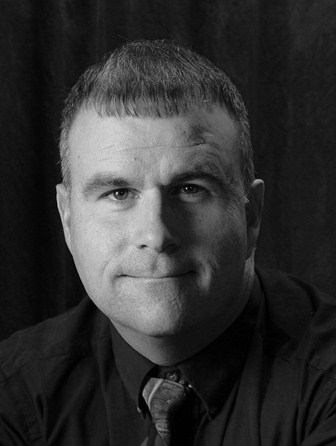
Brian BradenBrian Braden is a retired military officer and has been a corporate executive, an intelligence officer, a combat helicopter pilot, and a freelance columnist. His articles have been featured in a variety of defense magazines and websites. He is also a founder, editor and writer for Underground Book Reviews. His debut novel, Black Sea Gods, is the first installment of an epic fantasy series.

___________________________________________________________________________________

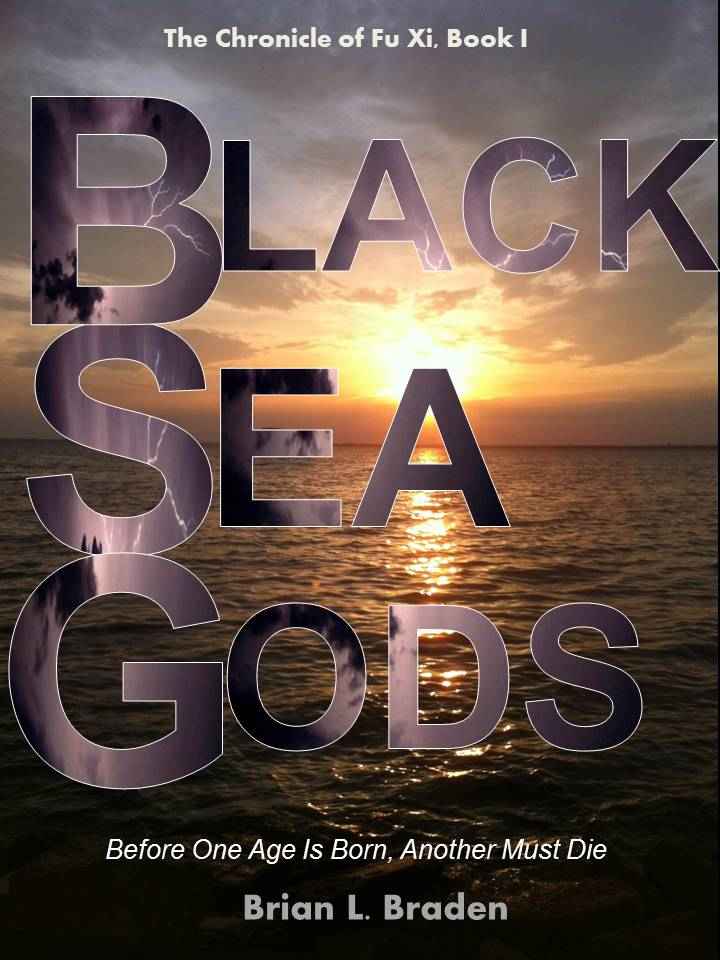
Welcome to Writerly Goodness, Brian!  I’m so happy to have you here to celebrate the launch your new book, Black Sea Gods: Chronicle of Fu Xi on February 18, 2013.

We first met on Author Salon just over a year ago, in the then-beginning Epic Fantasy group. Since then, your work has changed and grown, and I feel privileged to have been one of your beta-readers.

Congratulations on sharing BSG with the world 🙂

WG: How long have you been writing, Brian?  When did the bug first bite, and when did you know that writing was what you wanted to do?

BLB: First, thanks for inviting me to Writerly Goodness.  Back in 2008 I wrote a letter to a major US defense magazine on a military topic.  The editor actually called me and asked me to turn the letter into a column and he’d pay me. Paid for my opinion? I was in heaven. Then I did another column and then another. Well, one day editors changed and my columnist days were over. But I was fully bit by the writing bug by then. I wanted to write, so I switched to fiction.  I published a little novelette called Carson’s Love to test the self-publishing waters and never looked back

WG: I know you’ve written about this many times, but what was the idea that became BSG and where did it come from?

BLB: It came from several inspirations, but primarily from a photo of an ancient mummy dug-up in a faraway land. The man’s face was amazingly preserved, as was his clothing. I wanted to know more about this person, but archeologist knew very little about him. I imagined who he was and what his life was like. After a while I decided to write his story, but I needed a cultural mythology to build upon. That’s when I stumbled upon Dr. John Colarusso’s book Nart Sagas From the Caucasus, a compilation of myths almost lost to history. I put the myths to the man and combined it with some related Chinese mythology and BLACK SEA GODS was born.

WG: I love process!  Can you give my readers any insight into yours over the course of writing BSG?

BLB: The short answer: My core process is I start with a climax and a character and build the rest of the story around those two elements. My long answer: I started out on a website called Review Fuse, where other writers could read my chapters as I posted them. Not long after I started posting chapters I began collaborating with Amy Biddle, who was working on her first novel The Atheist Prayer (due out soon by Perfect Edge Books).  We joined forces and started critiquing each other’s books one chapter at a time. We soon expanded our circle to two other talented writers – Katie French (The Breeders) and Kimberly Shurshen (Itsy Bitsy Spider and Hush). Over a year, one chapter at a time, we dissected each other work until we had complete novels. I liked this approach because it made each chapter a tighter package. That was phase one. Then I spent another year or so with writers at Author Salon doing deep edits, mostly involving shortening the book and reworking it using a six-act/two goal writing template. Then I sent it to an editor, who was a tremendous help. Finally, I involved beta-readers, most of who came to me from fantasy author Michael Manning’s pool of devoted fans.  So, it was a four-stage process spanning almost  three years: one-at-a time chapter builds with  external critiques from trusted colleagues, deep “whole manuscript” edits from other writers, a professional editor, and finally, beta-readers.

WG: What have you learned from writing BSG, and how has it changed you as a writer?

BLB: It taught me I can write a novel. Hey, that’s something, right? It taught me to trust my gut and don’t let the idea of become a writer get in the way of being a writer. This past year taught me how to organize my manuscript and how to structure it.

WG: When you started writing BSG, you had your eyes on traditional publishing.  When did that change and why did you opt for Amazon?

BLB:  My decision didn’t come all at once, but was influenced by several factors. First, as a writer for Underground Book Reviews I’ve read amazing indie books and saw indie authors build huge readerships.  I kept seeing friends, talented authors, succeed in the wild west of indie publication.  If they can do it, I can do it.  Second, as I’ve learned more about the traditional publishing industry the more I realized how highly unlikely Black Sea Gods was going to be picked up. It’s too far out of what industry professionals are looking for, what they consider “hot,” or “marketable.” The feedback I received from several agents and publishers was they liked the story but didn’t know where BSG would fit in their line. My only real hope would be to warp the story into something more compatible with the current market, and therefore make it something unrecognizable. I wanted to tell the story my way. I’m comfortable with that.

I went with Amazon’s Kindle Direct exclusively for the first 90 days to initially keep things simple, take advantage of their marketing leverage, and incorporate a “rolling debut.”  In three months I’ll debut on Nook, and then Smashswords, etc. Each debut is a marketing opportunity, a chance to burst fresh on the scene and carry the accolades/reviews from the previous tier forward.

WG: I know you started your personal blog in the last year as well.  What has your experience in blogging been like and how do you think it will contribute to your success as an author?

BLB: Blogging … I haven’t cracked that nut yet. As it stands now, I have very little faith in my personal blog to sustain or launch my writing career. Blogs are jealous creatures, they demand gobs of time and attention in order to love you back just a little bit. I’m afraid I haven’t given my blog enough of that TLC;  however, I’ve developed a small, but loyal following and, over the next 90 days, I’ll be offering  free copies of BSG from time to timeBlack Sea Gods: Chronicle of  Fu Xi as part of my marketing campaign.  The first promotion started yesterday and ran for 24 hours.

If there has been one platform that has been good to me it’s Underground Book Reviews. The response to the indie book e-zine has been overwhelming. I would not have been as well positioned as I am now to launch an indie writing career without it.

Thanks for a great interview Brian!

A life sentence with mortal punctuation: part 2

Last week: An early encounter with death.

The year I had my tonsils out

Tonsillitis is hell.  The true infection, the one that leaves your four-year-old self screaming, the monster pain in your ears reaching back into your brain, your throat, latching on with needle-like claws, and shredding.

I remember that.

I remember trying to lie still on my side on the couch while Mom administered oil-based ear medication into my ears, one after the other.  This would hopefully happen before the screaming started, was intended to pre-empt it.   I’d squirm and whine while the medication slowly dripped into my ears, swallowed doses of liquid antibiotics and Tempra (a liquid painkiller for children).

I remember once heading out in the car with my parents and maternal grandparents.  I’m not sure whether it was just for a picnic, or if it was a day trip to a camp site, but it was a ways out of town.  Mom hadn’t thought to bring my medication and just to spite her, my tonsillitis decided to act up.  Big time.

Mom and Nanny (I had to have a different name for this other older lady who wasn’t the same as Grandma, my paternal grandmother) tried to calm me down in the back seat, but I was howling by the time we reached our destination and we couldn’t stay.  I had to be returned home and dosed.

It quickly became apparent that surgery was in order.  Though this was the time during which doctors tried not to perform tonsillectomies, my situation was serious enough that everyone felt there was no other choice.

I don’t remember anything about the surgery itself.  I believe it went off without a hitch.  After the operation, all seemed well, and I returned home enjoying ice cream, popsicles, and TLC.

In the middle of the night, I woke, coughing, had trouble breathing, the air moving in and out of me with a rattling slurp, the sound of milk bubbling through a straw.  The next cough shot a black spatter onto my pyjamas and sheets.  I couldn’t summon the breath to call for my mom right away, my first attempt emerged a thready burble.

Each stuttering breath and cough produced a little more noise, until I was shouting, “Mom!

The light switch flicked on, momentarily blinding me, but one look at the blood and I yelled again, despite the jagged burning in my throat, tried to crawl back from it, but it followed.  I was covered in blood.

My stitches had burst.

A frantic ride to the hospital and the doctor ordered me back into surgery and my parents were ordered out of the examination room, the male nurse assuring them that he could handle getting the intravenous inserted.

He sent Mom away.  It was abandonment, pure and simple.  A four-year old doesn’t distinguish between her parents leaving her and her parents being forced to leave her.

Worse, the nurse tried to stab me.  I showed him.

Mom and Dad were brought back in, allowed to hold my hand, held my legs down, while the newly bandaged nurse taped my arm to a block of wood and did his worst.  In the moment, I hated my parents for that, for letting the nurse hurt me.

I didn’t die, but I came close.

I don’t remember any of the iconic images typical of near-death experiences (NDEs).  No long tunnels.  No doorways of brilliant light.  No voices of lost loved ones calling to me.  No angels; no voice of God.

The road back from that second surgery was a long one.  I’d ingested so much blood, I became incontinent in the most embarrassing way, my family doctor plucked clots of blood out of my ears, and nothing, not even ice cream, tasted good for weeks.  More courses of liquid antibiotics followed, which stained my teeth indelibly and made me self-conscious for years.

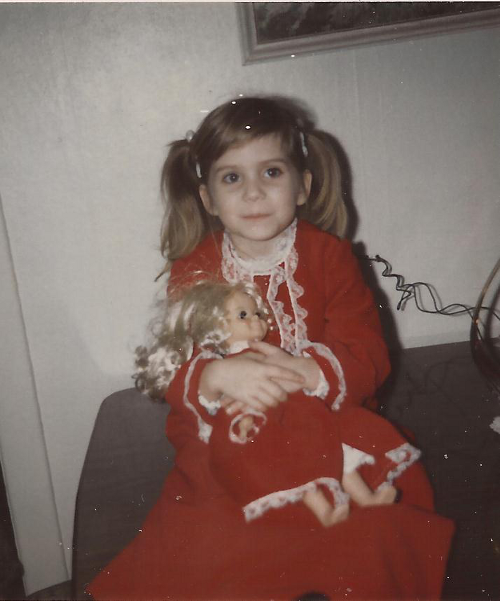
I have a picture of myself right after the surgery, pale, skinny.  It was Christmas, but I couldn’t smile.

Mellie after the operation

Mellie after the operation

What’s stayed with me the most was the dream.

My first night home after the second surgery, I dreamed of my bed, empty.  The cheery yellow and white striped flannel sheets, the blue wool blanket turned down, the dark wood frame with the toy cupboard built in.  Just the bed in a kind of spot light, the rest of the room dark.  The image of the bed receded into the darkness and finally disappeared.

The feeling that I woke up with was that I had died, not that I really understood what that meant, but that I had ceased to exist and that the world I woke up in was a new one.  I had a new life, too.  A second chance.

Now, I’d say that I dreamed of one of those moments at which the infinite iterations of parallel universes converge.  I turned left.  The sensation was profound.

I started to have nightmares about falling, or being abandoned, that troubled me for years,

Deutsch: Engel holt die Seele eines Sterbenden

Deutsch: Engel holt die Seele eines Sterbenden (Photo credit: Wikipedia)

and am firmly convinced that I had spontaneous out-of-body experiences (OBEs) at night.  During the latter, I felt like a helium balloon in a wind storm, flung, sometimes painfully, to the furthest reaches of my tether but always yanked back.  The ‘string’ was attached to my navel.

Try an experiment for me.  Poke your finger into your belly-button.  Press in hard and wriggle it around.  That will give you some idea what having a string attached to it and being hauled around by it feels like.

I’ve heard that the navel is supposed to be an erogenous zone (thanks for that one, Dr. Oz).  Sadly, I’ve never found that to be true.  It’s always been a slightly disturbing feeling for me.  I figure that’s just me.  My wiring isn’t quite what other people might feel is normal.  I’m cool with that.

I’ve written a short story about this experience for my thesis called “Tonsillitis Blues.”  I’ve written short fiction and poetry about it.

This experience is still in me and claws its way out from time to time, like it has today.

Next week, I’ll be delving into the period of my life that I refer to as ‘friend wars.’  These were my first experiences of bullying.  I think I did pretty well, even though I had no idea what it was I was dealing with.  This was also the period when I developed my first defenses against bullying, several of which resulted in my further isolation, and one of which meant that I became a bully myself.

I see the ‘friend war’ years as the time when my predisposition to depression was first anchored in my psyche.  It destroyed my self-confidence.

Have any of you had a non-traditional near-death experience?  A youthful trauma that resulted in years of nightmares?  How about out-of-body experiences?  When were you able to understand what happened to you and how it affected you?  What creativity has emerged from these experiences?

I’ll be posting my interview with Brian Braden shortly.

Talk to you soon!

Writer-tech: Dropbox on Wordsmith Studio

Please go see my post on Wordsmith Studio: Writer-tech: Dropbox.

Image representing Dropbox as depicted in Crun...

Image via CrunchBase

Wordsmith Studio is a wonderful collective of writers that began through Robert Lee Brewer‘s April Platform Challenge last year.

Thanks to Lara Britt for inviting me into the designers group and encouraging my more active participation it the collective.

Hope you enjoy!

Writerly Goodness, signing off from Timmins, Ontario 🙂

The next chapter: update February 17, 2013

Just a brief catch-up here on what’s been happening.  Brief, because what’s been happening = not much 😛

This week, I put my second original short story of the year, “Beneath the Foundations” in the can and submitted to the Sword and Mythos anthology.  I’m not optimistic because the story that bubbled up was not along the lines that the editor said she was looking for.

The editor was looking for aboriginal (not just NA, but Australian, etc.) northern Africa, Arab, Indian, or Asian settings, female protagonists, and in general, a new spin on the old Cthulian genre.

BtF is medieval European, specifically England during the time that King Alfred was ousted

English: Statue of King Alfred in Wantage, England

English: Statue of King Alfred in Wantage, England (Photo credit: Wikipedia)

by the Danes and was gathering his forces to retake Wessex and Mersea.  Adric, the protagonist, is male, though he is a little person, and by that I don’t mean that he was a pixie, but short of stature.

He’s bought by a Danish lord, Ofded, as a sapper along with several other boys from St. Jerome’s. Proper miners supervise the expendable boys in the endeavour.  Alfred’s supposedly harbouring in Castle Sark,  and Ofded wants to get the credit for his capture.

The story is about what Adric finds beneath the foundations and the horror that ensues.

So I’ll have to wait and see.  Typically, I don’t think much about my stories after I send them off.  I list them in my submissions table and mark off the result when it eventually comes in, or not, as the case may be.

Next up, I’ll be revising a couple of stories for submission to Tesseracts 17.  I haven’t quite decided which one I want to send in yet.  The deadline for that is February 28, for those of you who would like to submit.  Check out the guidelines.

I haven’t had a lot of time to work on Gerod and the Lions, and haven’t gotten back to Initiate of Stone yet.  I have a busy time coming up for the day job, and I have to pick and choose.

This week coming, I’m out of town for a training gig, and then again, after one week at home, I’ll be travelling again for more training delivery and my attempt at certification.  I don’t think it will be reasonable for me to return to IoS until after the next few weeks.

In March, when I dive back into my project, revising for beta-reader feedback (and yes, I will be asking a broad cross section of friends RL and online for their assistance) I will also be working on revising another, fairly long, short story for the next Writers of the Future (April 1) and a new short story (idea hasn’t cropped up yet) for In Places Between (April 4).

I’ve submitted to WotF before, and was pleased to receive an honourable mention certificate, but it’s hard to know how one would do in such a popular arena.  Again, I’ll encourage those of you who are working on your own stories to submit.

Also this week, I submitted some work to my critique group and am largely caught up.

Next weekend, when I return from training, I’m going to be attending a poetry workshop and I actually have some poetry to take with me.  My poet friend, Kim Fahner, graciously offered to have a look and I hope to have the few revisions she suggested ready.

I hope to submit some of my poetry to various journals, but I’m not so much into the poetry these days, so if anything this may be something that has to go by the wayside for now.  I definitely want to submit a poem to the League of Canadian Poets National Poetry Month Blog, and have a few options for online submissions that might suit.

Upcoming for the blog, I’m going to try my hand at submitting a post to Wordsmith Studio, another pupdate (Nu had her check up this past week, but I won’t have the time to commit it to the blog this weekend), I’m going to continue my new series, A life sentence, with mortal punctuation, I hope to have an interview with my friend, Brian Braden, about his new book, Black Sea Gods, and will likely blog about the training, the poetry workshop, and anything else my life offers up for sacrifice 🙂  Writerly Goodness

That’s it for now.

Good words at y’all!  Writerly Goodness, signing off.

A life sentence with mortal punctuation: part 1

First: A note about memory, frame, and fiction

I have my memories, but as I get older, I don’t know that the biological hard drive that is my brain hasn’t been corrupted, that the memories reflect the reality that was, or reality as I want it to be.

My memories have also been informed by family stories and sometimes the latter influence the former, so again, I can never be certain of their veracity.

Thinking about this, I remember the academic and theoretical concept of “frames” from my undergraduate studies, now also more than 20 years in my past.  Everyone has their own frame of reference, influenced by their experiences and education, family and individuated world view.

Even if one attempts to be completely truthful, one’s truth can run counter to reality.

The writer cannot express anything but through the filter of their frame.  In this sense, all written work, whether scientific, academic, journalistic, historical, or honestly fictive, has in it the element of fiction.  It cannot help but be influenced by the frame of the writer.

Mathematics may be the only purely objective writing, but even there, unknowns and chaos creep in and beg interpretation.

This is just my opinion, but I wanted to get it out there as a way of saying that even though I write from memory and experience, I am writing a story.  It is my story, but not having time travel at my disposal, I cannot say that this story, based on real life events, is any more “real” than a movie based on the true story of X.

How it all began (yes, I’m really going there)

So, it’s October, 1969, and my mother, nine months pregnant, walks to her regular doctor’s appointment.  Her doctor’s office was at the top of Regent Street hill, and for those of you who don’t live in Sudbury, that’s a really big hill, of San Fransiscan dimensions, even.

The doctor enters the exam room and says, “I didn’t expect to see you.  I thought you’d have your baby by now.”  My mom shrugs and says that everything’s going fine, “but,” she says, “I’ve been having these really strange cramps all day.”

After a brief assessment, the doctor tells her to call her husband and get over to the hospital post-hasty: “You’re in labour, woman!”

My mom’s never been the kind to thrust the agony of my birthing at me.  I don’t know how long she was in labour or how painful it was.  I just know that it was the first, and only, occasion when my maternal grandmother, sober her entire life with that notable exception, got stinking drunk 🙂

Early memories

The only things I remember from my infancy are images.  Moments.  The colourful, plastic Fischer-Price mobile that hung above my crib; a tin, battery-operated locomotive; and this memory, which became a poem:

infant crawls

mother says she was crawling by six months and walking
by eighteen. situate her chronologically as you wish
any month and day in 1970.
reaches linoleum and drags
legs forward.  pivots onto buttocks.
suddenly sees black shoes and white tights,
spill of turquoise dress over thighs.
a contemporary picture reveals the dress in question.
shirred bodice, empire waist, short sleeves poofed and gently
cinched around chubby arms.  her hair is short and blonde, lovingly
held in place by two plastic pink barrettes in the shape of bows.  her baby
teeth are coming in.
fridge holds her attention for a moment.  then something moves
—brown shoes—ma ma.
though she was beginning to speak, her words were
carefully articulated.  not mama, but ma ma; syllables
spat out, exhaled along with breath.
low like this, ma ma is brown shoes and white-pink
calves.  ma ma is also round-white-pink, brown curly, and
long-white-pink ticklers, but they are all ma ma.  they all smell
of comfort.
the brown shoes were around for years, with large, square,
brass-toned buckles.  nylon-sheathed legs above them truncated by
fall of blue dress: straight, simple, homemade, with short sleeves.
horn-rimmed glasses frame hazel eyes and permed, dyed hair.  mother’s
smile was shy and kind.
chubby arms lift hands to grasp.  frustratingly ma ma seems to be between
wriggling grabbers, but cannot be touched.  “ma,” she says, and “ma.”  two
world-shaking clomps later, the long-white-pink lifters bring her up to the
round-white-pink ma ma and pudgy fingers tangle in curly brown.
this is my memory.  i do not ask my mother if she
shares it.

©2012 Melanie Marttila

infant crawls era Mel

‘Dis be me 🙂

Something I don’t remember

My maternal grandmother had a massive heart attack that required a multiple by-pass (not sure how many, just that they had to take the vessels from her leg).  In the wake of the ordeal, she was in a kind of fugue state, conscious, but not talking, not interacting.

My mom was allowed to bring me in to the intensive care unit.  Normally, a baby wouldn’t be permitted, but it was thought that either it was time to say final goodbyes, or that I might somehow remind my grandmother that she had a reason to live.

Fortunately, the latter happened.  My name was the first word she uttered in days.  I have no idea how old I was when that happened.  It’s funny sometimes the affect we have on others, whether we know it or not.

My grandmother was given a dim prognosis: months perhaps.  She lived to see me graduate high school and did not pass away until I was in university.  More on that in a later post in this series.

Grandpa

My first encounter with the spectre of death was the passing of my paternal grandfather.  When I was three, my grandfather was up on his carport roof, shovelling snow, and had a massive heart attack.  I was carefully sheltered from the event.

That year, the local television station broadcast “The Santa Show” which read children’s letters to Santa on the air.  The big Christmas news Santa reported that year was that Rudolph was sick and might not make his annual flight.  In trying to explain the situation to me, Mom told me that Grandpa was in the hospital.

“With Rudolph?” I asked.  Yes, with Rudolph, she said.

Only days later (I think), I was set to play in the snow while my father climbed up to clear that same carport roof.  The job had to be completed.  As he descended, the ladder slipped on the ice, and he fell, calling to my toddler self for help.

Understandably, I thought Daddy was being silly.  Patiently, through his pain, he convinced me, who’d never gone anywhere alone in my brief life, to go to the next-door neighbour for help.  I was frightened out of my wee gourd and Dad had to keep encouraging me to keep going.

Neither of us knew, entangled in our own drama, that Grandpa had died.

I only know this because my mother told me: Grandpa was a man of few words.  He loved to garden, and grew straw flowers so he could engage in dried flower arranging in the winters.  When he watched me, he sat in his chair, often reading the paper, and let me play quietly with his Salada tea figurines.  I still have the wolf.  It sits on my bookshelf along with other memorabilia.

I hardly had the opportunity to get to know him and he was gone.  Dad ended up with a fractured pelvis and was in the hospital over the holidays.

Truthfully, neither event had much of an impact on me, though I always thought that I’d let Dad down when he fell, not that I could have done more than I did, being three and all.  I got used to not having Grandpa around, and life went on.

I think that when you’re very young, death can’t be understood.  It’s therefore far easier to accept.  Absence becomes the new normal.  There’s no introspection or grief, and the grief of others is equally beyond understanding.

Perhaps these early experiences do have a lasting effect.  Maybe the trauma lies dormant, only to surface at a later date and hijack our lives.  For all the time I’ve spent examining my life, I can’t say.  I don’t feel any connection between these early experiences and the person I became.

What about the stories of your lives?  Do you have a memory of a death from your early years?  How did you react, or not?  Can you connect the experience to some trait or tendency that you embody today?  Have any of your early memories inspired your creative work?

Next week:  My first near-death experience and what came of it.

Until then, writerly peeps.  In the meantime, mine your memories for creative gold 🙂

Six questions with Lara Schiffbauer

Lara SchiffbauerLara Schiffbauer is a writer, licensed clinical social worker, mother of two, wife of one, and a stubborn optimist. She loves Star Wars, Lego people, science, everyday magic, and to laugh.  You can connect with Lara through Twitter, Facebook, Goodreads, or on her website. Her debut novel, Finding Meara, will be available in March, 2013.

_______________________________________________________________________________

Welcome to Writerly Goodness, Lara!  Thank you for taking the time to answer these few questions for my readers.  I have to say that since we met through Robert Lee Brewer’s April Platform Challenge last year that I’ve been following your progress with Finding Meara with rapt attention 🙂  As I approach the end of revisions on my own work in progress, the decisions you’ve made are informing my process and plans moving forward.

Without further ado:

WG: When did you begin to write and what was the moment you knew that writing was the path you wanted/needed to pursue?

LAS: I’d like to first say think you so much for having me over today! The Platform Challenge was a wonderful opportunity to get to meet so many lovely writer-types—like you! I’m honored you find my path to publication informative and inspiring!

I enjoyed writing my whole life, but I didn’t think about writing for other people’s enjoyment until five years ago. I hadn’t been creative in any way for about ten years, and wanted to regain the spark. My children were toddlers, and I work full-time, so a return to writing fit the best. Since I’m a goal-oriented kind of person, I decided to not just write, but write with the goal of getting it read by people other than my family.

WG: What was the idea that became Finding Meara and how long have you been working on the novel?

LAS: I’ve worked with children in a social worker/therapist role for over ten years. The seed for Finding Meara rose out of the need to have some justice for abused and mistreated children. The story evolved into an urban fantasy about a young woman who, in a case of mistaken identity, ends up in a magical world where she must rescue her newfound half-sister before their sadistic father can sacrifice either in his quest for immortality and unrestrained power. As her world is turned inside out, she is forced to put other’s needs before her own, and discovers herself in the process. I’ve been working on it for about two years.

WG: I’m a process geek and I love to hear about how other writers approach their craft.  Can you give us some insight in to how you do that thing you do 🙂 ?

LAS: Lots of trial and error! I have learned that if I want to write with any speed, I have to know where the characters are going. With Finding Meara, I’d plot out a few chapters at a time, which allowed flexibility as well. I started another book, Age of Stars, which I plotted out completely. By doing that, I realized that I didn’t like the story and will be re-plotting it, once I get the first draft of the next book in the Adven Realm adventures done.  So, no pantsing for me, but any hybrid of outlining seems to work all right.

WG: I remember that you tried the traditional publishing route. What was your experience with querying and why did you choose to self-publish?

LAS: It didn’t take me long to change my mind. I pitched Finding Meara to Lou Anders of Pyr Books at the Pikes Peak Writer’s Conference in April 2012 and sent out eight-ish query letters over the summer, before deciding (around August 2012) that Finding Meara is a unique enough animal that traditional publishing probably wouldn’t want it. I love the story and want other people to have access to it, in case they might love it too, and so decided to self-publish.

WG: What platform(s) did you choose and why?

LAS: Interesting question! My platforms fall into two categories: those I have had and used for a while and those I’ve created due to releasing Finding Meara.

I’ve been blogging for a little over two years, and use Facebook to connect to writer friends. I enjoy Pinterest personally, but do have some boards for the three books I’ve got going on it. I like Twitter, but lately I’m lucky to get on a couple of times a week.

In January I created a Facebook Author Page, a Goodreads Author Page and my website, which has links to all my social media spots. I just recently opened a Wattpad account because I am releasing two chapters of Finding Meara a week there until its release.

I’m not one of those people who have created a social media empire, with hundreds of followers on any given platform. I do sincerely appreciate every person who has ever decided to follow along with my journey, and have been absolutely blessed by getting to meet and become friends with some amazing, supportive people. I’ll take those types of relationships over numbers any day!

I chose to create a Facebook Author page because it provides an opportunity to interact with the international community. E-reader use in other countries is on the rise and I’m hoping through Facebook I’ll have a way to develop the writer/reader relationship. I opened a Goodreads page and a Wattpad page because they offer a way to interact with readers. So much social media seems to be directed toward other writers, and while writers read, there are tons of readers in the world who don’t go hang around the writer water-cooler.

WG: Is there anything else that you’d like to share with regard to Finding Meara?Finding Meara Cover

LAS: As I mentioned above, I have a Finding Meara Sneak Peek going on at Wattpad leading up to the release. I wish I could give a firm date of release, but I’m still tweaking for an exact date. It will be in March, though, and if anyone wants up to date information regarding the release, I would encourage them to follow me on Facebook or my blog, as I will post the date as soon as I know. On release weekend, Finding Meara will cost a full $0.00, so if you like the story on Wattpad you will be able to finish it for free. There will also be a giveaway on Goodreads post-release.

Thank you so much, Melanie, for offering me this opportunity to share my story!

________________________________________________________________________________

Lara, thank you for being so generous with your time and experience.

If you have any questions for Lara, please write them in the comments, and as always, I encourage you to like, share, comment, and follow (the blog equivalent of the writer’s think, do, create, be!).

Have a good one, my writerly peeps!  Until next time! *waves*