The next chapter: April 2014 update

The Next ChapterIf March was a little weird, April was a whole lot weird.

Lemme ‘splain.

I abandoned the thought of keeping to any kind of “schedule” with regard to my writing. At the end of last month, I had drafts for Apprentice of Wind and Figments completed, or so I thought.

So you’ll understand my surprise when I went to print off Figments, that I hadn’t, in fact, finished it. A few hundred words fixed that up, but boy was I embarrassed.

Then, once I had AoW and Figments printed, I heard Initiate of Stone calling my name. Even though I haven’t heard back from all my betas yet, I needed to do a little work on IoS.

I just finished reading Roz Morris’s first Nail Your Novel, and before that, I read Victoria Mixon’s Art and Craft of Story. I wanted to do a combination approach with each draft, using Roz’s form of beat sheet and Victoria’s holographic structure.

With IoS, I had previously eliminated a POV character. Now I’ve decided to remove her entirely and give the specifics of her plotline to other POV characters. It was something others had recommended and I resisted. I guess I just needed time and space away from the ms to realize the truth.

And it wasn’t half so difficult (read fraught) as I thought it would be.

So I knew that I would not be doing a lot with regard to “new words” in April because I’d mostly be focusing on working with my printed drafts and most of the new work would be on my blog.

Then I edited a couple of stories for submission, but the net new words for that was just over three hundred.

Once again, I find myself surprised.

April's word count

I am still eternally grateful to Jamie Raintree for this fabulous tool

Total word count for the month: 11, 612 (!), 10,930 of that from blogging alone.

Amaze-face.

Mind you, I have been blogging all those juicy sessions from Ad Astra. It’s transcription, but it counts.

Here’s the round up for the year so far:

Month Total Blog Initiate of Stone Apprentice of Wind Figments Gerod and the Lions Short Stories
January 11,532 7,114 0 2,781 207 821 609
February 9,789 6,303 0 47 308 1,296 1,835
March 10,781 8,193 0 333 1,488 312 455
April 11,612 10,930 0 0 381 0 301

So this has been an interesting month, and the next few promise to be as well.

I won’t be actively querying until I have revisions done on IoS, so that’s on hold, again, too.

I did receive my contributors’ copy of Sulphur IV, the literary journal of Laurentian University. I have three poems in there. The CV has been updated.

The Sudbury Writers’ Guild, with its slick new web site, is moving forward with its anthology, so I’ve set aside some work for that.

I made a decision at the end of March. I’d been an associate member of the League of Canadian Poets since 1999, but I’d never gone to its annual conference or AGM. So I decided this year not to renew my membership and instead invest in SF Canada and the Canadian Science Fiction and Fantasy Association (home of the Auroras).

It’s been interesting so far.

As far as what’s coming up, Baen Books has a short fiction contest, and I’ve just become aware that Lightspeed has an open reading period for Women Destroy Fantasy.

So there you are.

Progress continues to be made.

How is your writing life going?

Ad Astra, day 3 (finally): Science in Urban Fantasy

Panellists: Shirley Meier; Alyx (A.M.) Dellamonica; James Alan Gardner; Dennis Lee

SM: I write fantasy and science fiction.

AD: Science fiction with an ecoscience bent.

DL: I recently coauthored a science fiction book with Mercedes Lackey.

Q: How do you reconcile fantasy with real world science?

SM: In Dead Girl Walking, zombies are a part of the world. My protagonist wants to be an astronaut. How do you hide your essential nature (rigorous medical testing). Does she have the “rot” stuff?

JAG: Urban fantasy is contemporary-ish. Can, or should, magic be explained? Charles de Lint doesn’t explain his magic, it’s wondrous. What is the attitude toward magic in your novels? Is it threatening, or saving?

DL: Magic is an underlying, mysterious thing for me, but it follows the rules of science, the laws of thermodynamics. My mage does magic by completing complex equations in her head.

SM: Most people accept our technology as magical. Flick a switch and you have light. Push a button and you can communicate with people all over the world.

JAG: Magic and technology are not indistinguishable. In urban fantasy and superhero subgenres, 1% have “bought” immortality. The blue collar class has lucked into it somehow. It’s wish fulfillment. Neil de Grasse Tyson says that you don’t have to “believe” in science. It works for everybody. In fantasy, you often have to be “the right” person. The one. Anyone can learn science.

AD: Access to science is privileged too, though.

SM: Barbara Hambly’s editor wouldn’t buy one of her books because it was written in terms of fantasy. The science wasn’t explained.

AD: What about Thor? Marvel’s tried to explain that all of Asgardian magic is, in fact science, but it’s not explained either. What about Pern? Lord Valentine’s Castle?

SM: Dracula was born out of the fear of women’s power of creation and “blood magic.” People are as afraid of science or nature as they are of the supernatural.

JAG: They are placed side-by-side, too. The virus zombie vs. the raised, Vodoun zombie. There’s a story from the set of Star Trek: The Next Generation, where the writer’s would put in a placeholder: Jeordy – tech. This would be the cue for the researcher to come up with some kind of plausible explanation for what science had apparently just made happen.

SM: With NCIS, it’s the same thing. Their placeholder is: Abby – technobabble.

DL: The project I’ve been working on has been a Google Docs collaboration. Each author has a specialization and lends their expertise to the project. Pharmacology, molecular biology, etc.

JAG: Peter Watt asked the question, “At what point is your bafflegab authentic enough?”

DL: It has to be grounded in something real.

JAG: Orson Scott Card says that there are three questions the reader shouldn’t ask: Huh? So what? and Who cares?

SM: When did we stop trusting “once upon a time”?

AD: Are there better branches of science that fit better with fantasy?

SM: The so-called “soft” sciences: sociology, anthropology, political science.

JAG: In my latest novel, I have four young protagonists, a physicist, a chemist, a biologist, and a geologist. All of them are “supers.”

SM: Is the increasing prevalence of autism evolutionary? It’s one of the questions that intrigues me. I inherited the history library of a professor friend of mine. It’s an excellent resource for steampunk. The science in steampunk needs to be shown, not explained.

DL: One of my characters is a geomancer, so she has to have math and physics.

SM: Look at Dresden. Magic is the realm of the guy in the basement with a hockey stick wand. Magic has a cost. Science does not.

DL: Science has to have a cost.

AD: Why? I want to write magic that works and has no cost.

SM: Then we have the problem of Superman.

Q: Does is come down to the transfer of energy? The way I see it, once that’s broken, so is the science.

JAG: Iron Man breaks science all the time.

Q: Do you explain it?

SM: You have to sell it, make it believable.

DL: Serve the story.

JAG: Like the faster than light in Star Wars; you either buy it, or you don’t. You can’t keep technology a secret.

Q: What about explaining the force in terms of “midichlorians”?

JAG: Midichlorians doesn’t really explain anything.

SM: Is A Wrinkle in Time science fiction, or fantasy?

Q: Or the technomages from Babylon 5?

SM: And we’re back to the Superman problem. Read A Canticle for Leibowitz. There is science beside the new church and its radiation saints.

JAG: Ultimately, you have to serve your story the best way you can.

Sundog snippets: Roz Morris online workshop, part the second

So. In case you missed last month’s post, the @M2the5th Google Plus community has had the privilege of Roz Morris’s expertise for monthly online workshops.

Yesterday’s was entirely on Twitter as the participants requested.

Here’s the storify for your edification.

May workshop storify

Next month’s will be on Saturday, June 7, 2014, on Twitter, using the hashtag #mto5. If you want to know more about how to participate in a Tweet chat, please read this post. If you want to find out even more, please join the G+ community linked above.

Ad Astra, day 2 (yes, still): What makes a great villain?

Panel: Ada Hoffmann, Matt Moore, Rob St. Martin, Thomas Gofton

AH: I write short stories and other things.

MM: Science fiction and horror writer.

RSM: Author of three horror, three urban fantasy, and five steampunk novels.

TG: Film producer, actor, and editor. Heroes are no fun to play.

RSM: Do villains drive the plot? What makes a great villain?

AH: The villain opposes the hero, but in some way, is secretly like the hero.

MM: A good villain is someone readers want to know more about.

RSM: The villain is the active force in the novel. The hero is reactive. Nobody thinks they are a villain. Villains are the heroes of their stories.

MM: Villains can be forces of nature, like Jaws or the T-Rex in Jurasic Park.

TG: It’s great when heroes have to dip into their inner darkness to defeat the villain. A great villain inspires fear. Mordred, for example.

RSM: The villain should instil fear in the reader. What will happen if the villain wins?

TG: Sometimes a villain never gets comeuppance. There was one character in The Messenger who was an absolute prick, but he gets off Scott-free.

MM: Think of great villains, like Hannibal Lector, or the Joker. They are completely foreign to the audience, fascinating. The universe is not necessarily just. It has no morality. It’s realistic.

TG: In terms of comics, the DC villains are cool while the heroes suck. In Marvel comics, it’s less black and white. Xerxes from 300 is a great villain, too.

Q: What traits do you choose?

MM: Look at some of your favourite villains, Beloque from Indiana Jones, or Hans Gruber from Die Hard. Pair your hero and villain, give them opposing character arcs. Everybody wants something. If the hero and villain want the same thing, but for different reasons, it gets interesting. Villains should be larger than life.

RSM: Hannibal is a monster, but he’s so charming. His relationship with Starling is what draws us in. Lestat was originally a villain, but he became the hero in later Anne Rice novels.

Q: What are your thoughts on moral greyness? For example, the monster as hero, the human as villain?

RSM: Look at King Kong, or Godzilla.

MM: After 9/11, everything became grey. Can the villain rehabilitate? Sideshow Bob from The Simpsons is a great example and a redemption story.

AH: Work out your novel’s morality.

MM: Alfred Bester from Babylon 5 was a fascinating character study. I’d like to point out that every human villain we’ve discussed so far has been a man. What about women villains?

A brief discussion ensued about the stereotypes of women villains, Disney’s wicked stepmothers and witches, which led into a discussion of some truly awesome women villains, but I must confess I became so engrossed by the discussion, I forgot to take notes (!) Now, a month later, I can’t remember what was said 😦

Mea culpa. I have c.r.a.f.t. disease: can’t remember an f-ing thing 😉 I’m too young for this shit.

If any of the panellists care to weigh in, please comment and fill in the gaps.

Other than that, if you, my dear readers, have some examples of absolutely fabulous, or terrifying, women villains, please share.

Caturday Quickies: Pupdate

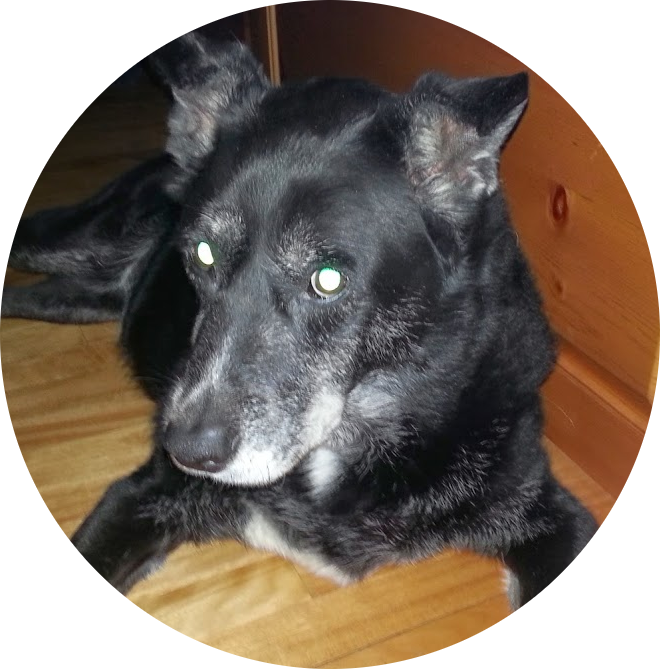
A true quickie for you here: Nuala’s doing well.

Her vet appointment on April 29th wasn’t a glowing review, but everyone who’s seen Nu in the last week has commented on how much better she seems.

Her meds were adjusted, no more oral antibiotics, renewed ear washing, and we have another appointment on May 13, 2014.

Will tell you more when there’s more to tell.

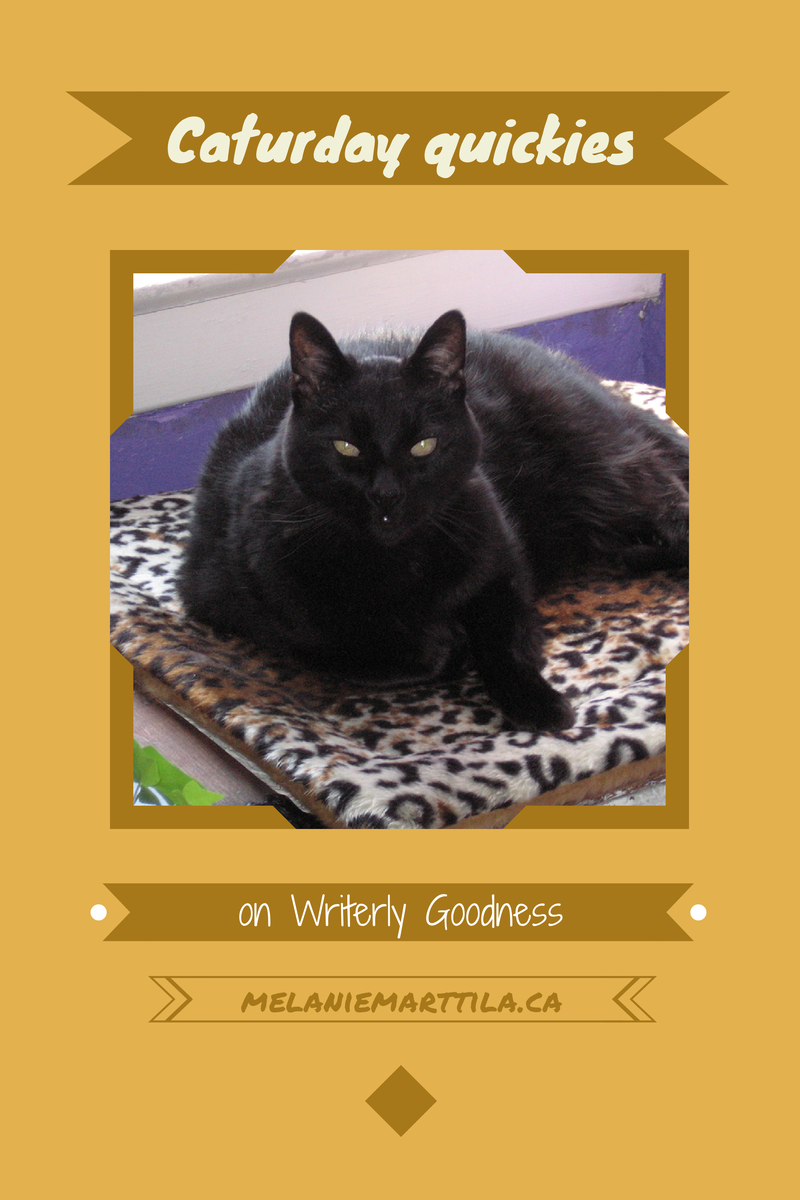
My Sweetpea

See the new light in my eyes? (lasers on–full stun)

Caturday Quickies

Thoughty Thursday: Things that made me go hmmmm on the Interwebz April 20-26, 2014

Thoughty Thursday

This week is video heavy. I think it just reflects my state of mind. Make of that what you will. *sits in corner drooling*

The ideal length for everything online from Buffer.

Hootsuite’s Game of Social Thrones.

Lindsey Stirling’s new video, Shatter Me, featuring Lzzy Hale of Halestorm.

Four Cats (as in Caterpillar heavy machines) playing Jenga from Boing Boing.

Cats + water = epic fun.

The 2013 Barkley dog family Subaru commercials. Giving the goggies equal time.

Thoughy? Meh. Inspirational? Not so much. Entertaining? I sure hope so 🙂

Every once in a while, you have to succumb to the brain candy.

Tipsday: Writerly Goodness found on the interwebz April 20-26, 2014

TipsdayLinking has won the day, if not the poll.

Got yourself a Franken-draft? There may be hope. Dianne K. Salerni on Writer Unboxed.

K.M. Weiland’s Creating Stunning Character Arcs series, part 10: The Midpoint.

9 tips to entice readers to your author blog from Anne R. Allen.

Everybody Arcs! How it all comes down to character. Kristen Lamb.

Carly Watters with 6 reasons you need an agent now more than ever.

12 realizations every writer must come to from 12 Most.

The Atlantic. The appeal of science fiction. A.K.A. why do people look down at the genre of Orwell and Atwood?

Is literary fiction just good marketing? The Guardian. More on the literary/genre debate.

Time. 21 women authors you should be reading.

And that’s it this week. Linking certainly makes for a shorter post!

Ad Astra Day 2: When an editor is not an editor

Panel: Anne Groell; Max Turner; Michael Matheson; Karen Dales

AG: I’m executive editor at Penguin Random House (A.K.A. Random Penguin) working with high profile clients such as George R.R. Martin and Connie Willis.

MT: Author and freelance editor.

MM: I’m editor for ChiZine’s book imprint and I do some freelance work on the side.

KD: I’m an author, creative writing teacher, and more recently, a freelance editor. What’s the biggest misconception writers have about editors?

AG: People don’t think editors edit anymore. I have to love a book if I take it on. I may read it as many as fifteen times in the editing process. I really have to love it.

MT: Stephen King says in his On Writing that he edits once, and the book is ready. This is not what usually happens for most writers. When I submitted my manuscript, I assumed it would come back heavily marked up with specific direction. This did not happen either. I had submitted a 160k word draft and was told there was an 80k word story hidden in it. I was asked to cut 60k words. The book is the intellectual property of the author. Editors won’t muck around in it. Their aim is to help the author turn the novel into the best book it can be. It’s a very hands off process.

MM: Good editing is completely invisible. There are different types of editing: the substantive, which is global and concerned with structural issues. Does the book work? Then, there’s line editing. This is a closer look at consistencies and story logic. Finally, there is copyediting. At this stage, when large chunks of the text will not be disappearing, errors are covered, line by line.

KD: You have to be careful with self-publishing. With ebooks, unqualified editors make for a poor product. A good freelance editor will ask for a sample of your writing first. They have to like it. You have to be able to trust them with your work.

AG: I’ve sent out 20-35 page editing letters in the past. That’s love.

MT: Are established authors edited as thoroughly as newer authors?

AG: They are if their editor is good.

KD: I know of a New York Times Best Selling Author who’s next book in a series was not picked up by the publisher. She decided to self-publish and did not opt for a qualified editor. The book she self-published was not comparable to the others in the series. (Mel’s note: I think the word actually used was crap.)

AG: If you’re my client, you may not like my solutions, but you have to concede that this particular aspect of your novel isn’t working. We can talk about other solutions, but what isn’t working has to change. Bottom line.

KD: Fact-checking is critical. I edited a SF time-travel novel set in renaissance London. One of the main settings used was the Tower of London. Not all of the building existed at the time. I asked the author to do more thorough research. Then the manuscript was submitted indicating that there were balconies on the White Tower. This was again, not the case. I sent it back a second time. This may be an extreme example, but even he improved and now he’s one of my favourite people to work with.

MM: Do not depend on Wikipedia for your research.

MT: You have to be willing to do as much work on the research as you are willing to work on revisions and rewrites.

MM: Editors are not inviolable. Stick to the heart of your story. Defend it if you need to.

KD: With another book I was working on, the author wanted to send the manuscript to her uncle, who turned out to be Jack Whyte. Jack edited extensively, but he edited to the way he wrote. He threatened the author’s voice. I had to step in and defend her work.

AG: We are champions for our authors.

Q: What is the value of beta readers?

AG: It can be helpful. You have to trust them, though. They have to be objective and they should have some expertise in what you’re writing.

KD: “I like that” is not constructive. The best beta readers are not going to be your family or friends.

MT: Asking your friend to beta-read for you isn’t fair. They feel obliged to like your work.

(Mel’s note: Margaret and Kim, sorry if you feel this way. I do not expect you to feed my vanity. I do trust you and will take direction.)

MM: If you hire an independent editor, never ask them to edit multiple versions of you manuscript. You’ll never earn back what you pay them.

Q: What should an author look for when hiring and independent editor and how much should you expect to pay?

KD: Look for education, a degree in a related field, experience, and ask for references. Most editors will ask for $1.50 to $2 per word or a maximum number of pages.

MM: Some also charge a flat rate.

MT: Get the recommendation of a writer you trust. Every writer has a shelf of “learning novels.” If you read early Bradbury, you can see the difference between that work and his more mature novels.

KD: Trunk novels can be rewritten, though.

Q: As an editor, how do you improve?

AG: Learn to cut. The two Connie Willis novels Black Out and All Clear originally came to my desk as a 300k word draft.

MM: Work as a slush reader or apprentice at a publisher.

KD: Work as an assistant editor.

MM: You learn to establish a collaborative relationship with your authors.

MT: What happens when you establish that relationship and they then hand in crap?

AG: It’s horrible.

And that’s it for the session.

There are only three more sessions for me to transcribe and then I’ll write a wee wrap up piece.

Overall, Ad Astra was well worth the trip. It will probably be one of my staple conventions from here on out.

Book review of Nail Your Novel by Roz Morris

Once again, this is a bit overdue. I finished reading the first of Roz’s NYN series last month, but my crazy life has run away with me again. I’ve had to pick and choose what I’m posting about.

First, a word about what’s coming up next weekend and how you can take part

Next weekend, on May 3, 2014, the Google Plus community @M2the5th will be holding its second online writing workshop with Roz. We’ll be starting out on Twitter with a Tweet chat and then moving to a Google Plus video call.

I posted previously on starting out with Tweet chats, for those who need a primer.

I’m not an expert with Google Plus video calls yet, but if you have a laptop with a camera and mic built in, or a desktop with an inexpensive camera and mic (I have a combo unit from Microsoft that works wonderfully) and a GooglePlus account, you can join in the fun.

All you have to do in Google Plus to prepare is download the hangout application, which doesn’t take long (depending on your connection speed). I like Google Plus for this kind of thing, because it’s user friendly and fairly intuitive. You don’t have to jump through a bunch of technical hoops to get started.

So if you want to take part, forward your name to either Lori Sailiata, or Amy Pabalan in the Twitter chat. One of them will be wrangling the hangout crowd and sending out invitations to join. Once you’ve received your invitation, simply accept, and your video feed should show up in the filmstrip section at the bottom of the hangout window.

Roz reports that she’s had to use Chrome as her browser for the best result, but I’m using Firefox and I haven’t had any difficulties yet. *seeks wood upon which to knock*

The review

What Amazon says:

Nail Your NovelNail Your Novel: Why Writers Abandon Books and How You Can Draft, Fix and Finish With Confidence

‘This book should be used as a text in writing courses’

‘There are shedloads of books on how to write novels, and a lot of them are longer and considerably less useful’

‘I wish I’d had this book a long time ago’

‘The author has a proven track record as a writer of fiction, as opposed to writers of “how to write” books’

Are you writing a novel? Do you want to make sure you finish? Will you get lost and fizzle out? Will you spend more time reading about how to write than actually getting the words down?

Most books on novel-writing will make you read hundreds of pages about character arcs, inciting incidents, heroes’ journeys. It’s great to know that – but while you’re reading about it you’re not writing your book.

And what these books don’t tell you is how to use this learning and get the job done.

Nail Your Novel is a writing buddy – and mentor – in a book.

In 10 easy steps it will tell you:
*how to shape your big idea and make a novel out of it
*how to do your research and how to use it
*how to organise your time.
*how to plot and build characters
*when you’re going to hit problems and what to do about them
*how to write on the days you don’t feel inspired
*how to reread what you’ve written and polish it.

Along the way, Thumbnail Notes give tutorials about storytelling and storycraft – strictly when you need them. The author has written nearly a dozen novels that have made it into print – and this is how she did it.

You don’t even need to read the whole book before you get started. You read a section, then do as it says. And, once you’re finally satisfied, Nail Your Novel will tell you how to sell it to publishers and agents.

You’ve dreamed of writing a novel. Don’t procrastinate with another theory book. Don’t launch in, get stuck and throw your hard work in a drawer. Nail your novel.

My thoughts:

I’ve been reading writing craft books for years. In fact, one could say that I’m a writing craft book junkie. Yes, the support group will be starting shortly.

My approach in reading these books is to adopt those parts of the writer’s process that make sense to me and my ever-evolving process. I cherry pick, experiment, and incorporate as appropriate.

I would characterize Roz’s approach as organic, that is, her plotting activities arise naturally from the journaling, research, and gestation that most writers will normally engage in as a preparation to actual writing.

Her version of plotting will appeal to the avid pantser and her “gamification,” albeit non-technological, of structuring and plot-fixing activities will motivate even the most spreadsheet-phobic of writers. Having said that, plotting-oriented, or technophile writers will also find lots of tips and tricks to adapt for their use.

The techniques in Nail Your Novel can be used not only from the inception of your novel, but the writer can also engage in the process at later stages of novel writing. Having entered into Roz’s methodology with already drafted novels, I’m working through her beat sheet activity, adapting it to my own use as I prepare for future revision.

Roz even has activities to prepare the writer for querying or self-publication, whichever path the author chooses to pursue.

I’ve also felt validated in several instances as bits and pieces of my existing process appear in slightly different forms throughout Nail Your Novel.

For all the excellent content, Nail Your Novel is also a relatively quick read, well-organized, and easy to understand. Roz gets right to the heart of the matter and encourages reading writers to get their hands dirty, metaphorically speaking.

Her writing style embodies what she asks writers to strive for: clear, informative, and entertaining. Roz doesn’t waste a word.

Roz’s book receives my highest recommendation. It’s on my virtual writer’s shelf beside Ursula K. LeGuin’s, Jane Yolen’s, Donald Maass’s, and K.M. Weiland’s craft writing books and I’m sure I’ll be referring to it often.

My rating:

5 out of 5 stars.

About the author:Roz Morris

Roz Morris has nearly two decades of experience writing novels and helping floundering authors find their way. She is a senior book doctor for a major literary consultancy in London, writes fiction under her own name and has ghostwritten bestselling fiction for high-profile writers with major publishers, including Random House, Puffin, and Mammoth.

Ad Astra day 2: Unleashing your creativity

Panel: Karina Sumner-Smith; Alyx Harvey; Judith Hayman; Leslie Hudson; Sally Headford

SH: If you walk into a grade one class and ask, “who can sing?” everybody raises their hands. Ask, “who can dance?” and the same thing happens. By the time they get to grade six, children have learned the standards and expectations. Only a few of them raise their hands then.

JH: Take risks. Make mistakes. No one will know the difference.

SH: How do the writers on the panel deal with those standards and expectations?

KSS: I have groups of people who read my work at various stages. There are readers for the roughdrafts, then later, beta readers. You have to have a terrifying level of trust in your readers. Seek out your “perfect” reader.

LH: If someone says, “you suck,” it can shut you down. How do you deal with that?

KSS: Chocolate and wine.

LH: We are our own worst critics. The worst are the notes I leave for myself.

Q: As a visual artist, I have to be able to evaluate a piece on its own terms. I benefit most from honest, constructive, criticism. What do you prefer?

KSS: Sometimes I need people to be honest. When I’m feeling vulnerable, I need comfort and tea.

SH: When you get to a low point, what do you do?

LH: Walk the dogs.

KSS: Five-minute dance party.

SH: I need oxygen.

JH: I need repetitive tasks. I’m on the autistic spectrum.

LH: Napping is awesome. You fall asleep and an idea comes to you in your dreams.

KSS: I find creativity breeds creativity.

LH: I’ve gotten into mandalas in a big way. I like needlepoint. Or reasearch.

JH: We’re all a little bit insane. When we enter flow, it’s a sacred space.

SH: I think of it as an alternate reality where creativity exists.

JH: I enter into my creative space with visualization.

LH: You have to protect your creative time.

JH: My day job is easier. It’s structured. At home, it’s different, more challenging.

AH: A day job takes a big chunk out of your day.

Q: Do any of you find you have to make yourself create?

LH: Absolutely. Sometimes you have to tell yourself to sit down and write, honey.

AH: Yes. Do the work.

LH: Sometimes pressure is good. Deadlines motivate.

Q: Do you find having a creative community or space helps?

JH: February Album Writing Month. FAWM. I participate every year.

KSS: NaNoWriMo.

Q: When do you sleep?

SH: It’s incredibly important.

KSS: In your day job, deadlines dictate what you do. I’ve read a health study in which people who get one hour less sleep per night over a seven day period were found to perform worse than people who were drunk. Health studies are fun.

SH: The current work environment is terrible. Multitasking is a myth.

KSS: One in one hundred people can actually multitask. Odd are, it’s not you.

AH: Where do you get your inspiration from?

JH: Everywhere.

KSS: Compost. One day my blender broke and I thought, what if society was built around items that worked on magic instead of electricity, and they all started breaking?

AH: I love my I-pad. If I see something, I snap it.

SH: Too many things can get in the way. If you don’t have a way to capture your ideas, you’ll lose them.

KSS: You can use prompts, or themes.

LH: You train yourself to notice things.

JH: Folklore is the basis for my current song-a-week project.

Q: Is creativity about finding ways to work around our disabilities?

SH: Creativity is part of human culture. It’s part of our history.

JH: Creativity is a process, not a product.

AH: Enjoy the process!

LH: People think that if you’re an artist you have to be miserable. Or that there’s a link between creativity and mental illness. Schizophrenia. Bi-polar.

JH: When I’m feeling manic, creativity is a saving grace.

Q: How do you deal with falling short of your vision?

AH: Let it come out the way it wants. If you force it, your won’t be a s successful.

KSS: If you don’t like it, you can always do it over. Accept it if it’s part of your process.

And that was it.

I have to note, in case you find some of these sessions ending abruptly, that many of them ran to the last second and only broke up when the next group entered the room. Thank you’s and closing remarks were often lost in the shuffle.

More coming tomorrow.

Off to watch Orphan Black now. Clone club!