Brian Henry workshop, Sudbury, March 22, 2014

Brian HenryThis afternoon, I attended my fifth Brian Henry workshop.

This one, the third held in Sudbury and hosted by the Sudbury Writers’ Guild, was on “How to make your stories dramatic.”

These workshops are Brian’s bread and butter, so without giving too much of the content away, here are my notes:

  • The scene is the basic building block of your story.
  • There are two kinds: the dialogue-based scene, and the action-based scene.
  • Every scene must have a plot-related point. It must answer the question, “so what?”
  • Push and pull. The push is the point of view (POV) character’s need. The pull is what the pursuit of the need leads to (promise, twist, decision, new threat, etc.).
  • Your characters must be interesting. They should be unique, have their own interests, passions, a quirk, backstory (dole it out gradually). If two characters are similar, shoot one.
  • Readers, sadly, do not remember names.
  • Your protagonist should be a good “tour guide.”
  • Every character has her or his own agenda (the scene’s push). It’s better if they are at odds with one another.
  • Pick your scenes carefully. Show the important stuff. Tell the rest.
  • Don’t get to the point too quickly.
  • Scene = hook, hook, and hook.
  • Ford Madox Ford, “No speech of a character should reply directly to another character.”
  • Dialogue shouldn’t be smooth.
  • An action scene consists of set up, action, and wind down.
  • Set up = setting, background, tone, suspense.
  • Action = plot, character, relationships.
  • Wind down = the result, new information, what is gained or lost.
  • Dialogue is important, even in action scenes.
  • Make sure it feels exotic (most people don’t spend a lot of time fighting, in chase scenes, etc.)
  • Use internal monologue to your scene’s best advantage. No long-winded explanations.
  • You need to have some kind of surprise.
  • Have more than one thing going on at any one time.

We went through a few examples of dramatic scenes, one from Lawrence Block, one from George R. R. Martin, and one from Bernard Cornwell to look at the variations and interplay of action and dialogue. We also completed a writing exercise, for which I chose a scene (to that point unwritten) from Gerod and the Lions.

Since I’m always trying to learn and improve upon my craft, the workshop brought up a number of bits and pieces that I’ve learned over the years.

Emily Dickenson wrote, “Tell all the truth, but tell it slant.”

Last fall at the Surrey International Writers’ Conference, I attended a Diana Gabaldon session where she shared her technique of driving a scene forward by raising questions in the reader, but delaying the answers for as long as possible.

I just finished reading Victoria A. Mixon’s The Art and Craft of Story, in which she describes “holographic structure.” This takes the basic three act structure of hook, development, and climax and breaks it down.

The hook consists of the hook and the first conflict, the development includes (at least) two more conflicts, and the climax consists of the faux resolution and climax.

In fact, breaking it down even further, each of these six elements contains its own six elements.

Thus, the hook part of the hook section contains its own hook, (at least) three conflicts, faux resolution, and climax, as does each of the remaining parts.

If this seems confusing, please read Victoria’s book. She explains it at much more length and much more clearly than I do.

Suffice it to say that the ultimate breakdown is at the scene level, and each scene, in keeping with its overall purpose within the story, has its own hook, three conflicts, faux resolution, and climax.

That’s all the insightful I have for you today, my writerly peeps.

Until next time.

My first twitterview as host (with Jamie Raintree, for @M2the5th)

Last night, I hosted an @M2the5th Twitterview with Jamie Raintree, author of women’s fiction.

I was a little nervous, but it was a blast!

For those of you who missed it, here’s the link to the Storify: http://storify.com/LaraBrittWrites/mto5-author-twitterview-jamie-raintree (lovingly created by Lori).

You can get an idea about what a twitterview involves and how much fun it can be.  The point of a twitterview? To help the twitterviewee engage her audience, promote her work, and develop her online platform. I hope we managed to do all of the above for Jamie last night.

I would never have survived without the support and assistance of Lori and Amy, the @M2the5th dream team. They have the twittervew down to a science. It’s awesome to have professionals on your side.

Here’s a little bit about Jamie:

She lives with her husband of 7 years and is a stay-at-home-mom (SAHM) of two daughters.

She started writing fan fiction in middle school and finished her first novel length manuscript during NaNoWriMo 2008. She’s been hooked on writing since.

What interests Jamie: the strength and depth of the female spirit, who we fall in love with and why, what tears us apart, what little things can help make love last.

Jamie also has a YouTube channel and has produced two videos: one discusses balance in your day – how she balances her creative life and her family responsibilities; the other discusses happiness in the context of what inspires her to write. Jamie has promised there will be more to come.

Here’s how you can keep in touch with Jamie online:

Now that Jamie has an agent, we’ll be eagerly awaiting her first traditionally published novel! No pressure, dear 😉

Jamie Raintree

Review of Lifeform Three by Roz Morris

I subscribe to Roz Morris’s newsletter, and when she announced that her second novel, Lifeform Three, was about to be published, and that she would pass along free ebooks for honest reviews, I jumped on the opportunity.

I am a slow reader these days, but Lifeform Three has carried me along fairly briskly, and I have to say I loved it. LOVED.

What Amazon says

Lifeform Three‘Beautifully written; meaningful; top-drawer storytelling in the tradition of Atwood and Bradbury’ League of Extraordinary Authors

Misty woods; abandoned towns; secrets in the landscape; a forbidden life by night; the scent of bygone days; a past that lies below the surface; and a door in a dream that seems to hold the answers.

Paftoo is a ‘bod’; made to serve. He is a groundsman on the last remaining countryside estate, once known as Harkaway Hall — now a theme park. Paftoo holds scattered memories of the old days, but they are regularly deleted to keep him productive.

When he starts to have dreams of the Lost Lands’ past and his cherished connection with Lifeform Three, Paftoo is propelled into a nocturnal battle to reclaim his memories, his former companions and his soul.

Includes an appendix of suggested questions for reading groups.

‘An extraordinary novel in the tradition of the great old school literary sci-fi’ – NYT bestselling author Joni Rodgers

My thoughts

Welcome to the Lost Lands of Harkaway Hall, intrepid guests! The Lost Lands is one of the last nature conservancies in the world. See life forms in their natural habitats. Like them, even name them if you wish. Our helpful bods will sing and dance for you when they’re not keeping the Lost Lands in pristine condition. Want a rainbow? Our bods will make it happen.

Roz Morris has created a wonderful fable with Lifeform Three. The protagonist is one of the aforementioned bods, or robots, but there’s something different about him.

While the other bods desire nothing more than to redo, or clean, racking up scores as if poovering (vacuuming animal waste from the lawns) was a video game, Paftoo has other likes, ones that he must keep secret.

Paftoo (all the redo bods are paf-number, and while it’s never stated in the novel, paf could be an initialism standing for personal automation form or something similar), does not shut down at night like the other redo bods. He dreams. He also has memories that fight their way back into Paftoo’s consciousness despite sharing.

Sharing is a form of bod maintenance and the other bods crave it like a drug while Paftoo fears sharing will rob him of what he holds most dear: his memories of riding a life form three, a horse, his horse, Storm.

Morris asks questions with her tale: what makes us different, unique? Does being unique mean that we can never truly be part of a community? What happens when our uniqueness is threatened? What happens if our memories are taken from us? Can enforced conformity change who we are?

There are other issues woven through the tapestry, as well: what happens if humanity’s waste of natural resources continues unchecked? What if nature becomes a commodity, a property to be bought and sold, tailored to the tastes of its users? It is said that history is written by the victors of battle, but what if those victors are corporate heads, rewriting history continually based on what will sell best?

Lifeform Three is a tasty novel, reminiscent (for me) of the works of Ursula K. le Guin, or Sherri S. Tepper.

My highest recommendation.

My rating

5 out of 5 stars.

About the authorRoz Morris

Roz Morris’s fiction has sold more than 4 million copies worldwide, although you won’t have seen her name on the covers as she ghostwrote for high-profile authors. She is now writing acclaimed fiction under her own name. She is a writer, journalist, fiction editor and the author of the Nail Your Novel series for writers. Her first novel under her real name was My Memories of a Future Life.

Six questions with Renny deGroot

I recently made Renny’s acquaintance (formally) at a meeting of the Sudbury Writers’ Guild.

She let us know that she had recently published her first historical novel, Family Business.  Another Sudbury Writer? W00t! Of course, I had to ask for an interview 🙂

______________________________________________________________________
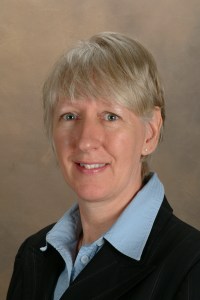
Renny deGroot

Renny deGroot

Renny deGroot is a first generation Canadian of Dutch parents. She is a published poet and song lyricist, with Family Business being her debut novel. She studied English Literature at Trent University. Her strong Dutch roots continue to influence her while the love of her Canadian homeland with its beauty and freedom, flavours all that she does.

Renny lives in rural Ontario with her Great Pyrenees, Chocolate Lab and very old tabby cat.”

My parents were somewhat ‘citizens of the world’. My mother lived in England for a period after the war, before moving to Indonesia where she met my father (who was there with the Dutch military). They immigrated to Nova Scotia (where I was born) before settling in Ontario. This spirit of adventure influenced their three children (of whom I am the youngest). I’ve lived in Ireland, hung out in the south of France for a bit and  go ‘back’ to the Netherlands regularly to spend time with family and soak up my heritage, before always coming back with a sigh of relief, to the best and most beautiful place in the world – Canada.

_______________________________________________________________________

WG: Welcome to Writerly Goodness, Renny!

RdG: Thank you! I’m really pleased and honoured that you’ve invited me to participate.

WG: How did you come to the writing life? Give us the origin story of Renny deGroot, author 🙂

RdG: I’ve always felt artistic pulls. While my sister was sent to Brownies and my brother to Navy cadets, I was sent to art classes. Unfortunately my drawing skill set didn’t live up to my desire, so I turned to writing as an outlet. As a teenager I wrote the usual angst-ridden poetry, some of which found their way into community newsletters and school yearbooks (my mother was a faithful ‘sender-outer’ of my pieces J ). Lots of encouragement at home and from great English teachers drove me to take creative writing classes and work on my degree in English Literature.

WG: What inspired Family Business?

RdG: Well, simply put – family stories. One evening a couple of years ago I was visiting my family in the Netherlands. My uncle Jan (the youngest of my father’s six siblings) and his wife, Marja, were telling me of a certain situation with my great grandmother, and when he finished I said: ‘wow – there’s a book in that.’ My uncle looked sceptical, but they are such a great support and when I really started writing the story they did everything they could to help me with background, details and encouragement. Of course, it isn’t at all intended to accurately represent the family thing – it just was the starting point – as you say – the inspiration.

The end result is a story about a young man who struggles to learn the meaning of freedom amidst family conflict during the depression years and World War II German occupation in the Netherlands. The notion of freedom on a macro level (for a nation, race, community) and a micro level (our own individual right to choose and determine our path) is timeless and a topic that I’m passionate about. When I’m not writing, I manage an Irish tenor (http://jimmycartonband.com). Being so immersed in the Irish culture and music has been a huge contributing influence on my interest in the topic of freedom.

I’ve read that every writer could come up with ten stories based on family stuff, and I believe it. I don’t know if I just happen to have a quirky family, but I know that there’s inspiration for a few more still sitting there waiting to be harvested.

WG: And what about your new work in progress?

RdG: The working title is After Paris and it opens in spring of 1916 in Paris. World War I changed the world forever and, like Family Business, it isn’t a war story, but I’m interested in how people manage the massive changes that come into their lives both during and after these huge events. The role of women changed with WWI, for some more than others. I’m also very interested in personal development – emotional vs. intellectual. These are some of the things I want to look at, but of course rolled up into a great story.

WG: I love when writers talk about their process 🙂 Would you care to share a part of yours?

RdG: I can get pretty distracted so I need to set targets for myself – generally a page count per session and I tell myself I won’t finish for the day until I’ve done three pages or five pages, or whatever is realistic based on where I am. The beginning is the hardest so if I can get two pages done, I’m satisfied. I generally go through several pots of tea before the day is done.

After that, I love writing outside. I have a large screened-in deck and a pond with a waterfall. I’m surrounded by trees – so I am most productive when I sit out there with the sound of the wind in the trees and the music of the waterfall in the background. I’m afraid I’m less productive in winter, but do enjoy being by the fire, either reading for background, or doing a bit of writing.

When I’m in the groove, I don’t worry about grammar or phrasing too much. I want to get the story down and then I go back to start the revisions and editing. With Family Business I edited the finished story several times before hiring a professional editor and then we worked together for three full rounds. It was a great learning experience and of course I’ll incorporate those lessons into the writing of After Paris.

WG: You have a lovely Web page. Are you active on social media? What role has “platform” played in getting your work published?

RdG: I’m afraid I’m not great with the technology side of things and am learning as I go along. I guess I have to admit that I’ve only just set up a Facebook page – on the tenth anniversary of Facebook, I accept it’s here to stay, so I’ve climbed aboard, albeit somewhat reluctantly. I am more comfortable with the website for sure. That gives me the opportunity to give reign to my creativity and I see it as a spot , not just to provide information for fans, but to really interact in a virtual ‘book club’ environment. My book is for sale via my website, so it’s handy for that as well of course. Publishing and book buying/selling is a whole different world than it was, even five years ago. Amazon.com and other on-line retailers have opened up the world to make it accessible to writers like myself, who probably wouldn’t get the attention of large traditional publishing houses, and have done a great service to the reading world – as people can choose for themselves what grabs them versus having their tastes steered by the large publishers.

WG: What’s coming up for Renny deGroot and Family Business?

RdG: I am really excited about the next few months. It’s such a long process to get a book published that I feel like I’ve stepped away from Family Business for a while as I’ve become more involved with the outlining, research (including a trip to Paris last summer!) and writing of After Paris. It means putting Paris on hold for a bit, but I’m happy to be ‘back with the Meijer family.’ I have the official Book Launch in Toronto on March 1st at a wonderful downtown spot called The Hothouse Café. It’ll be an afternoon of wine, food, music and of course a reading and book signing. After that I’ll be doing a launch tour which I’m still firming up, but will certainly include Sudbury in early April, and various other spots in Ontario (looking at Port Perry, Bowmanville, and Mississauga, with more spots in Toronto, Brampton and Brantford to start with.) Then, in the summer I’ll be looking at the Maritimes – definitely Nova Scotia and New Brunswick and probably Newfoundland.

I’ll be updating my website regularly on the ‘Events’ tab, as well as Facebook – so I hope that your readers will join me, and even suggest other places that might like to host a book signing. I’m open to ideas. One idea that I really like is participating in small ‘house-readings’. I’ve been to a couple of house concerts (I first saw/heard the Good Lovelies at a house concert) and I think it’s a perfect setting for a book reading/signing/discussion. I’m really excited about these events as I get to travel, meet people and share some opportunities for storytelling.

WG: Thanks for a wonderful interview, Renny. Break a pencil in your future writing endeavours!

______________________________________________________________________

Family Business

Family Business

About Family Business:

Set in the Netherlands against the backdrop of the Great Depression and through World War II, Family Business follows the story of Agatha Meijer and her sons, André and Johan, as they build their textile business, a business Agatha is determined her sons will carry on, regardless of their own desires. Family tension comes to a head when the boys each take a stand, sending all their lives spinning in directions none of them would have ever anticipated, and making each of them question the true meaning of loyalty, love, and freedom.

For sale at:

http://rennydegroot.com (Canadian customers who would like a print copy)

http://www.amazon.com/Family-Business-Renny-deGroot/dp/1494233231/ (U.S. customers who would like a print copy)

https://www.smashwords.com/books/view/401486 (eBook)

Various other Amazon affiliates also have the print copy available for international customers (.co, .UK, .fr, etc.).

Also – Amazon.com will sell to customers in Canada, but as it comes from the U.S., shipping is much more expensive – so better to buy through the rennydegroot.com website.

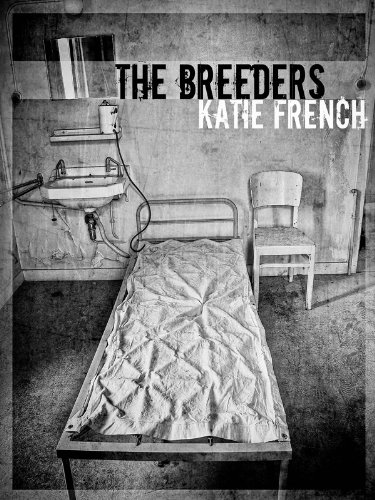
Book review of The Breeders by Katie Lynn French

I’d picked up The Breeders a couple of years ago when author Katie French and I were both involved in Author Salon.

She was one of the first people to leave the group and strike out on her own.

What Amazon says:

The Breeders

The Breeders

“When the Breeders come for ya, there ain’t no escape. They strap ya to a bed and all ya hear is the thud of your heart and the cries of your friends as they wheel ya down to hell. Then the doctors come. You squeeze your eyes shut and pray you can forget. But ya never do.”

Sixteen-year-old Riley Meemick is one of the world’s last free girls. When Riley was born, her mother escaped the Breeders, the group of doctors using cruel experiments to bolster the dwindling human race. Her parents do everything possible to keep her from their clutches—moving from one desolate farm after another to escape the Breeders’ long reach. The Breeders control everything- the local war lords, the remaining factories, the fuel. They have unchecked power in this lawless society. And they’re hunting Riley.

When the local Sheriff abducts the adult members of her family and hands her mother over to the Breeders, Riley and her eight-year-old brother, Ethan, hiding in a shelter, are left to starve. Then Clay arrives, the handsome gunslinger who seems determined to help to make up for past sins. The problem is Clay thinks Riley is a bender—a genderless mutation, neither male nor female. As Riley’s affection for Clay grows she wonders can she trust Clay with her secret and risk her freedom?

The three embark on a journey across the scarred remains of New Mexico—escaping the Riders who use human sacrifice to appease their Good Mother, various men scrambling for luck, and a deranged lone survivor of a plague. When Riley is forced into the Breeder’s hospital, she learns the horrible fate of her mother—a fate she’ll share unless she can find a way out.

My thoughts:

The novel opens in medias res, and the reader experiences first hand the dangerous world into which Riley has been born.

Her family’s farm is under attack and Riley must hide away in a storm cellar to avoid capture. The men responsible for the attack are armed and outnumber the farm’s defenders. If they get their hands on any of the women who could give birth to a healthy child, they’ll be sold to the Breeders.

Riley doesn’t really know who the Breeders are or what they’re capable of, but she believes the stories of her mother and auntie, and lives in constant fear for her safety and liberty.

A series of unfortunate events leads to the death of her step-father, Arn, who protected the family from the ravages of desperate men.

French keeps the pacing fast and the action fresh, rarely letting up on the throttle. The sense of danger established in the opening scene never lets up, even after the denouement, preparing the reader for the sequel.

The romantic subplot is deftly handled and the author offers some refreshing twists that pit Riley’s conflicting needs against one another.

The only dissatisfying bit was one character’s changing allegiance. While French is careful to plant the seeds of dissention in the good doctor’s speech and actions, the indications that he disagrees with his rich and powerful employer aren’t enough to make his sudden departure and support of Riley convincing.

His weasel-like behaviour only makes me think that he will betray Riley, and I found myself disappointed that Riley didn’t give any indication she sees it coming.

The Breeders is an excellent first novel and I’ve already purchased French’s second book, The Believers.

This YA dystopian paints a picture of scientific advancement gone wrong and its unexpected consequences. In a future in which boy babies far outnumber the girls, a working uterus becomes a treasure beyond value and a commodity worth killing for.

The “haves” are those that control the breeding program. Everyone else is a “have not” living in a wild-west world of testosterone-fuelled posturing and perpetual gang wars where women and children become both the ultimate victims and the ultimate heroes.

My rating:

4 out of 5 stars.

Coming up on Writerly Goodness:

An update on my television addiction and whether the series I’ve started to watch have offered any gems of Writerly Goodness; an update on the Sudbury Writers’ Guild critique sessions and other SWG changes; more book reviews and author interviews; a discussion of what I learned from the facilitating virtual classes course I’m taking; a monthly next chapter update on the writing biz, and any other things apropos of nothing as they occur 😉

Six questions with Jane Ann McLachlan

I “met” Jane Ann through a wonderful online collective, Wordsmith Studio, following Robert Lee Brewer’s April Platform Challenge of 2012.

Though I knew that many of us were writers, I had no idea Jane Ann was working on a science fiction novel. Last fall, she was even up in Sudbury, giving a reading at the Sudbury Public Library, which, because I was out of town, I had to miss.

I also had to miss her Twitterview with mutual friend Lori Sailiata for Hawaii Content Management (#HiCM), though I read the Storify afterward 🙂

Now that her novel is coming out in instalments, I decided I simply had to find out more about this virtual friend and fellow Canadian author.

Without further ado, here she is: Jane Ann McLachlan!

________________________________________________________________________

Jane Ann McLachlan

Jane Ann McLachlan

Hi Melanie. We’ll have to meet when I’m in Sudbury in September for Cinefest. My parents were both originally northern Ontarians, although I was born in Toronto and grew up in Newmarket, a small town near Toronto, Canada. I taught at Conestoga College until a few years ago, when I decided to write full-time, although I still teach a couple of evening courses a year. I have written two college textbooks, published by Pearson/Prentice Hall, a science fiction e-book on Amazon called Walls of Wind http://www.amazon.com/dp/B00HNXOG98 , and my collection of short stories, Connections, which came out last fall, published by Pandora Press.  My website is http://www.janeannmclachlan.com

________________________________________________________________________

WG: Welcome to Writerly Goodness, Jane Ann!

You are a writer of diverse talents. You’ve written two textbooks on professional ethics, a collection of inspirational short stories, and now a science fiction novel. I also understand you write historical fiction as well. How do all of your writerly personae intermingle, or do they?

JAM: I read extensively and enjoy a lot of different genres, so writing in different genres feels natural to me. But it didn’t always. I had to learn to accept the genre a story idea came to me in. I started writing science fiction, which I have always read, when I heard of a medieval superstition that really grabbed my imagination. An editor at Tor loved the idea, and liked my writing, and seriously considered it. He didn’t buy the book, but he gave me some excellent advice—he told me to re-write it as a medieval novel. I had to do a lot of research and reading in that genre (at that time I’d only read a few historical fiction authors) before I felt qualified to write historical fiction, but I’m pleased with the result. The Sorrow Stone is currently on offer with my agent. I guess I’m not a quick learner, because about the same time, I went through a traumatic event, and I tried to write it up as fiction. But it just kept dying on the page, until I gave in and wrote it as memoir. Impact: A Memoir of PTSD is now also with my agent. Now, I listen to the story and let it tell me which genre it needs to be written in.

WG: What is the origin story of J.A. McLachlan, author?

JAM: When people ask me, what made you start writing? I say, “I learned to read.” The first story I remember writing was a picture book, way back when that’s what I was still reading. It was about a pony, and I remember practicing for months to learn how to draw a horse. After that, I switched to poetry. I have a number of poems about dogs and horses my mom saved. They rhyme and they scan, but I wasn’t into very deep themes at age 8. 🙂

WG: Focusing on your fiction, what attracts you to each of the genres you write in (inspirational, historical, and speculative)?

JAM: I like a good story, with intriguing characters that are changed by their experiences in the novel, and an interesting “high concept” theme. Moral and philosophical quandaries really interest me, as well as a plot that keeps me guessing. These elements can be found in many genres.

WG: I’m a total process geek. I love to find out how people work their art and craft. Would you care to share anything about your writing process?

JAM: I need complete silence when I write, and NO interruptions. I write best when I’m all alone at home for hours, and I write on a laptop that is not connected to the internet (I have a separate computer in another room for that.) I start with a rough outline and let the characters alter it as I go. I would like to be a total plotter—that’s how I wrote my textbooks, with a very detailed outline for every chapter—but fiction, like life, just doesn’t work that way.  Stuff happens, and you have to adapt. Fiction (and life) can be a pain that way. 🙂

WG: With respect to Walls of Wind, why have you opted for publication in instalments?

JAM: It’s all about knowing your market. E-books do better in novella form, at low prices, for a number of reasons. It seems most people who read e-books like something they can read fairly quickly. If they want more, they’ll buy the next one. And since I’m an unknown author, readers are more willing to try me out if it’s not going to cost them much in time or money— Walls of Wind Part I is 4 chapters long and sells for .99c. I want people to be able to try it, because Walls of Wind is the best thing I’ve written, and I’m pretty confident anyone who likes science fiction and reads Part I will want to read the rest. Oh, and the link is:  http://www.amazon.com/dp/B00HNXOG98

But here’s an offer for your readers. Right now, book reviews of Walls of Wind are worth more to me than royalties, so anyone who will write a review on Amazon or GoodReads (or best of all, on both) for me—whatever they think of the book—I’d be happy to send them Part I for free. Just email me at:  jamclachlan@golden.net

WG: What’s next for you?

JAM: Right now, I’m editing Part III of Walls of Wind —Part II goes live on Feb. 1; Part III on March 1; and the complete trilogy, for those who want a longer read, in e-book form and in print, will be available on April 2. I’m also currently setting up a number of talks and readings in the US and Canada for Connections and will be doing the same for Walls of Wind when I have the print book. And while all that is going on, I have my next historical fiction novel—which takes place during the Third Crusade—AND a YA science fiction novel, both hollering around in my head trying to get out, so I’ll be writing them this year.

Thanks for a great interview and break a pencil in your future writing endeavours!

____________________________________________________________________

About Walls of Wind:

Walls of Wind, Part II

Walls of Wind, Part II

What if males and females were completely different species from each other?

Walls of Wind explores this question and its ramifications on a world in which males and females are two different, equally intelligent species: Ghen and Bria. They are interdependent and reproductively symbiotic, although physically, emotionally and mentally they have little in common. Or so they believe, until their city-state is threatened by increasing internal conflict and a terrifying external predator that has invaded the forests beyond their walls. A handful of Ghen and Bria struggle desperately to find a solution before their civilization is destroyed.

Walls of Wind combines anthropological speculation with the tragedy, suspense and triumph of individual characters who struggle to overcome external threats as well as their own internal fears and prejudices.

Read Part I of Walls of Wind: http://www.amazon.com/dp/B00HNXOG98  Look for Part II on February 1st, 2014.

Caturday Quickies: John R. Cameron book signing at the Fromagerie Elgin Jan 13, 2014

I posted my wee interview with John back in November.

He’s kept in touch with me through Facebook and let me know when his signings were. Though I had to miss his Coles appearance, I wanted to get out a meet John face-to-face at some point.

Last Monday was my day.

John at the Fromagerie

John at the Fromagerie

John set up in the Fromagerie Elgin from 5:30 to 7 pm to sell and sign copies of The Second Lives of Honest Men.

We chatted for a bit about social media and self-publishing.

Six questions with Sarah Lashbrook

I met Sarah back in the summer at a book signing in the local Chapters. I immediately approached her about doing an interview, and of course, I bought her book!

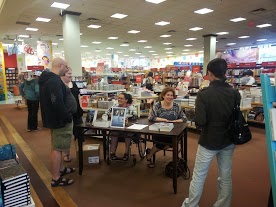
The book signing at Chapters (Sarah’s on the left, chatting up some friends)

Without further ado:

Sarah Lashbrook has been writing since the early age of 12, when she wrote her first letter to the star of Days of Our Lives, inquiring about a writing career on the popular Soap Opera. Inspired by television, Sarah continued to pursue a life of writing, gaining her first recognition when she graduated high school with top English marks and won a National scholarship worth $15,000, from Global Television. Sarah chose the Journalism Program at Humber College, and after the three year course ended she furthered her education with a post-grad course in Writing, Directing, and Producing, for Television.

WG: You state that you started writing at the age of 12 with a letter to Days of Our Lives. Writing for television was clearly your inspiration, but what was it about television that drew you to writing?

SL: Hmmm good question. The idea of entertaining people always appealed to me. The thought that with a simple twist here and there to the English language – you could cause a reaction in someone that is very deep and personal. Whether it be laughter, tears, anger, or total joy…the appeal of causing the reaction was always one I wanted to be able to provoke. Back as a child, I had more access to television than books, so that is probably why my love started with that medium.

WG: What was your first published/aired piece and what did you learn from the experience?

SL: My first published piece – well I had two in one paper – the first was a newspaper profile article on Margaret Atwood, and the Second was an interview with Bobby Hull on fighting in the NHL. Both were in our school newspaper. My first aired piece was with CTV – I had written, filmed, and edited 6 family stories for the Easter Seals Telethon. Both times thrilled me to bits. I must admit – I still get quite giddy when I see my name attached to anything written – in print or on aired. It is a rush.

WG: How have your degree and experience in journalism contributed to writing Where the Stream and the Creek Collide?

SL: Well, I guess the quick answer is it helped me to formulate what I wanted to say in smaller doses. Which helps you be concise and to the point when needed. I can break down a large sentence into mere words if I need to. Besides that – it has helped me greatly in knowing how to research a topic. I am comfortable in searching for printed information as well as reading stats, which are two very handy skills to have. It also has helped me in regards to being able to find the people I need to interview, asking them the tough questions, and deciphering the information they give me. I have room for improvement on these skills of course but would not be as strong at them as I am now – if it weren’t for my background in journalism.

WG: Your protagonist, Sadie Coleman, is a paraplegic but her story seems very different from yours. Why did you decide to write a paraplegic protagonist, and what of your experience contributed to who Sadie is?

SL: I always wanted to write a book or books where my main character had a disability but the story wasn’t necessarily about that. I didn’t want it to be a service piece for those who aren’t in wheelchairs. I just wanted a related character for those who seem to lack just that in literary works. I know I have never read a fiction piece where a good main character was in a wheelchair…only non-fiction. I started out with a main character being paraplegic because that is what I know. I am paraplegic…I thought for this first book – I should make it a bit easier on myself.

Sadie has a lot of my qualities and experiences even though our stories are quite different. Those qualities and experiences though are mine. Maybe someday I will share but for now – they stay my secret with Sadie. I will tell you though – that after I wrote the book – I did find out that the name Sadie is a form of the name Sarah. Very strange coincidence.

WG: When you were ready to publish, did you query or seek an agent? What was that process like, and how did you end up with Spire Publishing?

SL: I did think about approaching an agent but from everything I read and from experiences of other writers around me – I decided that that wasn’t an approach I wanted to take at this time. It was advised to me to just get published. That once the first book was out there and published – all sorts of new doors would open up. And it was true.

Spire Publishing was the third place I approached. I felt strongly at first about staying true to my Northern Ontario roots and so approached a publisher in the Sault first – they said they would consider it with a few changes. I was too stubborn at the time to make those changes…and am still confortable with that decision.

The second place I approached was a publisher here in Sudbury – but unfortunately I sent it right when Canada Post had its strike – and I never heard back from them – only by email saying that they were not getting any posts. By the time the strike ended – I had already chosen Spire and was in the publishing process. I am very happy with my choice. Philip and his team have been fantastic to work with.

WG: What’s next for Sarah Lashbrook, author?

SL: Wow…what is next? A few things actually. I am working on my next novel – working title is Missing Link. It is a story of love, betrayal, pain, and happiness between two women but has a nice little organized crime twist – quite fun to write.

Also, very recently, I was approached by the fabulous director Shirley Cheechoo, who read my book, and asked if I would write a screenplay off of Where The Stream And Creek Collide. She said she would like to direct it as a film. I am so blown away and honoured with this. I have chills. So, before I finish my novel, I will be writing a screenplay from the last book.

Thanks for a fabulous interview, Sarah!  Break a pencil in your future writing endeavours!

Where the Stream and the Creek Collide

Where the Stream and the Creek Collide

For 23 year old Sadie Coleman, the last year of college will be anything but kind. Not long after arriving at College to begin her last year as a Resident Assistant, Sadie finds out that she will be spending the entire employment with the assiduous task of monitoring last year’s rogue, Jack DeGraff. But Jack may not be Sadie’s only problem. She may also be forced to come to terms with her past. Six years prior, Sadie was involved in a terrible attack that killed her mother and left her a paraplegic. When Jack’s antics become too much to handle, her endless efforts to set up her father fail, her boyfriend bails, and her friend and boss become a little too close to her and the situation, things start to unravel. Sadie realizes just how damaged she is. That she has injury far beyond the physical.

Mark Leslie workshop with the Sudbury Writers’ Guild

This past Thursday, November 28, Mark Lefebvre of Kobo, who writes under the pen name Mark Leslie, conducted a workshop on self-publishing for the Sudbury Writers’ guild.

Mark spoke a bit about his experience with self-publishing first.

Mark Leslie

Mark Leslie with members of the SWG and Barnaby

His horror short story collection, One Hand Screaming, was published using Lightning Source (now Spark) from Ingram.

For his anthology Campus Chills, Mark and his friend Steve formed Stark Publishing (Steve + Mark). They used the Espresso Book Machine, which got its name because in the time it takes to make an espresso, the machine could produce a book.

At the time, Mark was working for a university book store and convinced the store to invest in the machine. He made the venture a paying one, producing all kinds of books for various groups in the university and surrounding community.

Mark is also an editor, editing North of Sixty, and Tesseracts Sixteen.

More recently, he compiled stories with background research for Haunted Hamilton and Spooky Sudbury, which he co-authored with Sudbury journalist Jenny Jelen. Both books were published with Dundurn Press in Hamilton.

One of the things to keep in mind is that traditional publishing can get you into places that you could never get into alone, for example, Costco.

Now Mark works for Kobo (which is just an anagram of book, by the way).

Why authors choose to self-publish

  • For the new author, it’s a way to break in to traditional publishing, make a mark, get noticed.
  • For mid-list writers, it’s most often used to resurrect their backlist. As copyright returns to authors, they format for self-publication and keep their work in circulation longer than their traditional publisher were willing to.
  • For the NYTBS author, self-publishing offers control.

In general, self publishing offers higher royalties and faster payouts than traditional publishing.

Epub format is the industry standard.

Mobi is the Amazon standard.

Self-publishing is good for long-form journalism. (Mel’s note: we had a fair discussion of this. For those who don’t know what long-form journalism is, it is the full version of the article with bonus research materials. The print article may be a thousand or so words. The long-form version may be five or ten thousand. Think academic essay, but more accessible.)

It’s also good for publishing collections of short stories. If the stories have already been published elsewhere, then it can be seen as a kind of validation or pre-screening, and the collection may have a ready audience.

Services:

  • Kobo
  • Kindle
  • Nook
  • iBooks
  • Smashwords

Kobo started out with Reading Life for their ereaders, and then developed Writing Life for their authors. The Kobo dashboard allows the author to see stats, earnings, and sales figures globally at a glance. (Mel’s note: Hugh Howey used, liked, and promoted Kobo Writing Life.)

You can format your work in Word or OfficeLibre (formerly Open Office). Use Sigil, or Calibre to tweak formatting, and Kobo even has a native WYSIWYG editor which will be familiar to WordPress users.

Follow the formatting instructions of your chosen platform carefully.

A word on DRM: it only hurts paying customers.

Branding

It’s not just about your name.

Mark takes his skeleton, Barnaby, on the road with him wherever he goes. He puts a t-shirt on Barnaby and sets him up outside the bookstore. People wandering by sit down and have their pictures taken, post them on social media. It’s free publicity.

Vistaprint is a great source for promotional materials. Pens, mugs, and t-shirts are just some of the swag you can buy to give away and promote your work.

KDP and KDP select

KDP select is Kindle’s exclusivity line. You can only publish with KDP select, no one else. You can only price books for free on KDP select, but only for five days out of every ninety.

You can work around it. Just publish using KDP and also on other services. Price the book for free on Smashwords or elsewhere, and Amazon will price match if one of your fans reports the competitor pricing.

Diversifying is better. Get your work out there and into the hands, or ereaders, of your fans. Let them choose the service.

Price is a verb

$2.99 seems to be the sweet spot (right now). The lower you set your price point, the more your royalties will be reduced.

You have to know who your audience is.

$1.99 seems to be the price point of doom. Currently, no one knows why.

$.99 is good, as are $3.99 and $4.99.

Authors can experiment. One author change the price of her ebooks from $4.99 to $5.99 and saw sales across all platforms except Kindle increase slightly. Kindle sale went down initially, but within two weeks, they levelled out again and all was well.

The two biggest complaints from marketing about ebooks are:

The cover sucks; and

It’s priced too low.

Free can work as a gateway to a backlist.

It’s a wrap!

There is so much more to the Surrey International Writers’ Conference (SiWC) than I wrote about.

Yes, there were a tonne (that’s metric, eh?) of sessions that I couldn’t get to, everything from self-publishing, to social media and platform maintenance, from screenwriting to non-fiction sessions, and marketing sessions.

And yes, I may have mentioned things like the blue pencil and pitch sessions with the agents. Those keen on these could sign up for multiple sessions.

There was a professional photographer there to take head shots as well.

Where would I fit it all in?

But I didn’t mention the Master classes that preceded the conference. They required an extra fee, but I hear they were well worth it.

I didn’t mention Michael Slade’s Theatre of the Macabre, in which Anne Perry, Jack Whyte, Diana Gabaldon, and KC Dyer did a dramatic reading of Edgar Allan Poe’s “The Tell-tale Heart,” replete with music and sound effects.

I didn’t mention the book fair, author signing, or writing group get-together.

I didn’t mention the excellent food served at the lunches and dinners.

I didn’t mention the annual tradition of Jack Whyte singing the Hippopotamus Song.

Really, this is a conference you need to put on your writer’s bucket list.

We’re all time travellers

Since British Columbia is three hours behind the Eastern Time zone, I thought I would experience jet lag. I did, but not until I returned.

While I was in Surrey, I typically stayed up late to check on social media and do a bit of transcription of the notes I’d taken during the day. Although I stayed up until about 11 pm (2 am, my time) I woke up every morning around 5 am. Again, I used the time to prepare for the day and get in a little transcription.

When I flew back, I did so by the “red-eye” flight. It departed Vancouver at 10:30 pm. I tried to sleep on the way back, but I should have spent some money on one of those neck cushions. I woke up every hour or so and attempted to ease the pain in my neck and find a more comfortable position to sleep in.

When I finally got home, after an early morning layover in Toronto, the connector to Sudbury, and a hectic shuttle ride back to town, it was about 10:30 in the morning.

Needless to say, I spent a good portion of that day in bed 😉

I thought about time zones and jet lag again the following weekend when Daylight Saving Time ended. I’ve described the time change as self-imposed jet-lag, and I’ve never agreed with the continued practice. While it’s not so bad in the fall, it’s murder in the spring when we lose an hour again.

Really, though we can’t leap forward or back, we’re all time travellers. We all travel through time as we wake, work, eat, and sleep our way through life.

It was a philosophical moment 😛

Thanks for following my reportage of the conference, and I will be getting back to my regularly scheduled ramblings forthwith.