Thoughty Thursday: Things that made me go hmmmm on the interwebz, Oct 25-31, 2020

This is your last opportunity to get your mental corn popping until December. Enjoy!

Paulina Jayne Isaac explains where Amy Coney Barrett stands on upcoming important SCOTUS topics. Important for understanding how her influence will affect various marginalized and racialized people. Bustle

Breonna Taylor grand jurors say that Louisville police actions before her death were negligent and criminal. Apparently neither murder nor manslaughter were even on the table. NBC News

Tim Elfrink: Texas cop who killed Jonathan Price, a Black “pillar of the community” charged with murder. The Washington Post

John Philip Santos reveals the secret history of the Texas Rangers. Mass murder of Indigenous and Mexican peoples and bounty hunting escaped slaves were part of their assigned duties. Texas Monthly

Josh Wood introduces us to the US police department that hired social workers. The Guardian


Arne Delfs and Raymond Colitt: Merkel imposes toughest German restrictions since the lockdown. Bloomberg

Sophie Lewis reports that even Vladimir Putin is instituting a national mask mandate. CBS News

Rebecca Sohn reports that covid-19 patients are developing “brain fog,” but what does that mean? Mashable

Lina Zeldovich: what bats can teach us about coronavirus immunity. JSTOR Daily


Just because Halloween was last week doesn’t mean you have to stop with the spooky!

Jill Beatty considers Vardø’s witch trials: the evil north. An oldie-but-goodie? The Norwegian American

Tai Gooden reveals the history (both pure and evil) of the Ouija board. Also, check out the linked video on the Fox sisters. Nerdist

The editors at JSTOR Daily curate a list of Halloween-related articles. Perfect for this time of year!

Henri, le chat noir. L’haunting

Here are some spooky musical suggestions from the New York Public Library.

Emily Zarka presents modern zombies, a rebirth. Monstrum | PBS Storied

The Bakemono Zukishi “Monster” scrolls (18th – 19th centuries). Let these weirdos inspire your own twisted creations. The Public Domain Review

SciShow considers what Earth’s next supercontinent might look like.

NASA’s Stratospheric Observatory for Infrared Astronomy (SOFIA) finds water on the moon.

SciShow Space news also features the lunar water discovery.

Thanks for stopping by. I hope you took away something to inspire your next creative project.

I will not be abandoning you entirely in November. I’ll have weekly updates on the progress of my NaNo project.

Until my next update, be well and stay safe, be kind, and stay strong. The world needs your stories.

Tipsday: Writerly Goodness found on the interwebz, Oct 25-31, 2020

Welcome to the first—and last—tipsday of November! Load up on informal writerly learnings and I’ll see you in December. ‘Cause NaNoWriMo.

Black and Indigenous lives matter. All lives cannot matter until Black and Indigenous lives matter.

Wear your masks. Maintain physical distance. Get your flu shot. We are firmly in the second wave and the situation is getting steadily worse. We all have to pull together to survive and protect each other until a vaccine is available.

Kim Bullock explains why writers need rooms of their own. Later in the week, Barbara O’Neal distinguishes between using memory vs. backstory. Writer Unboxed

K.M. Weiland: the midpoint as the swivel of your novel’s linked structure. Helping Writers Become Authors

Janice Hardy shares six steps to creating a great character. Fiction University

Susan DeFreitas says, don’t hold out for publishing to make you feel seen. Pursue this goal instead. Jane Friedman

The Karen trope, explained. The Take

And then, the witch trope, explained. The Take

Tasha Seegmiller: how do your characters love? Later in the week, Eldred Bird offers some tips for upping your “what if” game. Then, Laurie Schnebly Campbell explains why we love (and resent) alpha males. Writers in the Storm

Gilbert Bassey offers four ways to fix a boring story. Writers Helping Writers

Helen J. Darling wants you to reconnect with your values if you’re feeling stuck. Then, Pamela Taylor helps you create authentic details in historical medicine. Later in the week, Gabriela Pereira interviews Laura Jamison about writing the ensemble cast. Then Sara Farmer interviews Linda Olson. DIY MFA

Shaelin reviews structuring your novel with Dan Harman’s plot embryo. Reedsy

And then, she looks at the traditional three act structure. Reedsy

Jami Gold gives some thought to world building on an epic scale.

Oren Ashkenazi analyzes the mixed climaxes of Marvel’s phase three, part 1. Mythcreants

Kristen Lamb explains why some stories fall apart and fail to hook readers (spoilers: it’s story structure).

Summer H. Paulus offers some insight into the origins of Halloween and its traditions. Fantasy Faction

Tricia Ennis reveals the strange, difficult history of queer coding. SyFy

Aja Romano explains how voice actors are fighting to change an industry that renders them invisible. Vox

Disney’s new content warnings on classic animation featuring racist characters. BBC

Thank you for visiting, and I hope you found something to support your current work in progress.

Until Thursday, be well and stay safe!

The next chapter: October 2020 update

October has ended. NaNoWriMo has begun. This year has been temporally bizarre. Covid time moves both slower and faster than normal time. Months have passed at a snail’s pace, and then I blink and the next month is gone.

Black and Indigenous lives matter. All lives cannot matter until Black and Indigenous lives matter. Marcellis Stinnette and Jonathan Price were killed by police in October. The RCMP has refused to protect Mi’kmaw fishers and their rights.

I’m so afraid for what will happen, not just in the US, but also to countries and economies all over the world if Trump gets in for a second term. Not a little of my anxiety these days is due to this election.

Pandemic Life

Worldwide, we’re in the second wave. Numbers of infections are exceeding those seen in the spring in many countries are increasing restrictions. While I understand that people are tired, if we don’t recommit to reasonable restrictions like wearing masks in public, maintaining physical distance, washing your hands, and getting your flu shot, governments will have no choice but to implement lockdowns again.

It’s not about inconveniencing you. It’s not about violating your civil liberties. It’s about protecting other people. It’s about preventing the spread of disease.

Do your part.

The month in writing

Having finally finished my rewrite of Reality Bomb in September, I’d hoped to map things out and revise by the end of October. Once again, my ambitions exceeded my capabilities.

I didn’t finish mapping the story until October 20th. When I got to work on revisions, it wasn’t too bad. With eleven days left on the month, I set the goal of revising 30,000 words. I managed 24,714 words, or 82%. I’ve not just been cutting words, I’ve been rewriting whole sections again, so this is not bad. This is also the first month I’ve posted substantial revision numbers all year.

For NaNoWriMo this year, I’m doing the rebel thing again and I’m hoping to revise the remaining 60,000 (and a bit) words. I’ve already cut over 2,000 words from the over 120,000-word draft. I’m hopeful that I’ll be able to tighten everything up and end up with a 90,000-word story that I can present to my critique group. I’m sure there will be further revisions, but this is my short-term goal.

Thanks in part to these long monthly updates, I once again outstripped my blogging goal by 174%. I wrote 6,532 words of my 3,750-word goal.

I also drafted most of my next Speculation column for DIY MFA. I managed to write 840 word of my 1,000-word goal, or 84%.

Overall, I wrote 155% of my writing goal of 4,750 words.

Also, my poem “Visiting Endymion” was published in Polar Borealis 16.

Filling the well

My family did get together for a low-key Thanksgiving at my Mom’s. Even though there were just five of us, we had more than enough food to send everyone home with leftovers.

For my birthday, Phil ordered sushi, I had wine, and we watched a seasonally appropriate movie (more on that, below). I’m a level 51 human now. I still behave like I’m a kid 😛

Virtual event-wise, I started the month with the launch of Ariel Gordon’s Tree Talk on the 1st. On the second, I attended a Carl Brandon Society lecture by Desi authors called Our Literary Mothers.

On the 6th, I attended a talk with Waubgeshig Rice and Eden Robinson in anticipation of the CBC series Trickster, based on Robinson’s books. It’s awesome. You need to watch it. CBC Gem.

I signed up for a series of webinars from Free Expressions. So far, I’ve attended a couple of Donald Maass lectures/workshops, and a Lisa Cron presentation on story and the brain.

I also registered for Surry International Writers’ Conference (SiWC) online, which combined their usual weekend offering with the Writing Excuses virtual retreat. I have to admit that I hit peak zoom saturation on Saturday night, but the recorded sessions will be available for a month for registered attendees. I’ll catch up.

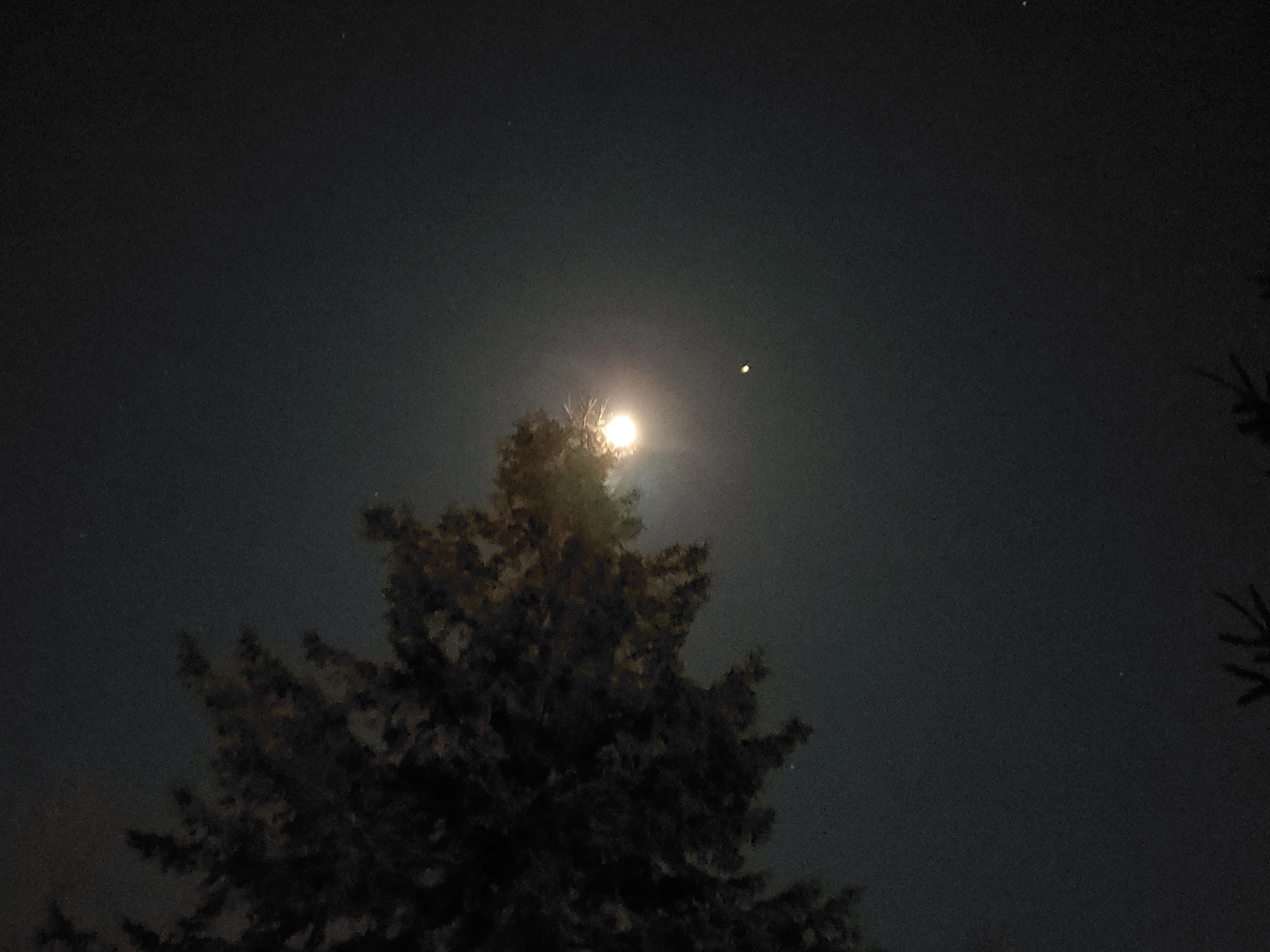
Almost full/blue/hunter’s moon

What I’ve been watching and reading

In the viewing category, the month started off on a lowish note.

We finished Wizards: Tales of Arcadia. It wasn’t as good as Three Below, but it was okay and a better interpretation of Arthurian legend than Cursed.

Season two of The New Legends of Monkey was fun, but dumb. It doesn’t pretend to be anything else.

We watched The Boys, season two, and it was awesome and bloody and surprising, but Lucy traumatized me.

Lovecraft Country blew my freaking mind. I’ve seen some less than stellar reviews, but Phil and I loved it.

Utopia was good as well. I enjoyed it more than Phil, but I think what got him was the lack of resolution. Every plot line ended on a cliffhanger. I’m more comfortable with this than Phil is.

We also watched two movies. The Old Guard was good, but fairly standard and somewhat predictable. Zombieland Double Tap was as delightful a romp as the first one.

Reading-wise, I finished Jade City by Fonda Lee. I’ve been diversifying my reading and quite enjoyed the Asian-based fantasy world. The characters were fabulous.

Then, I backfilled a gap with Sabriel by Garth Nix. I quite liked the world of the Abhorsen.

I consumed Harrow the Ninth, Tamsyn Muir’s follow up to Gideon the Ninth. I went in prepared for the second person narrative, the apparent retconning of many of the events of the first book, and the lack of Gideon’s exquisitely kiss-my-ass voice. There is a point to it. Trust me. The second novel is as much a mystery as the first and part of the delight is trying to figure out what the hell is going on. The pay off is worth it, though the ending still leaves a lot of questions unanswered. Loved.

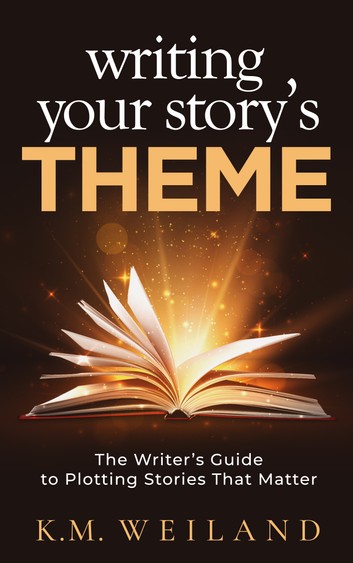
I also read K.M. Weiland’s Writing Your Story’s Theme. You may have noticed my book review 🙂 Yes, I’m A K.M. fangirl, but her analysis is on the mark and she has a way of making theme accessible to the reader without too much brain twisting.

I finished off the month with Alice Munro’s Runaway. There are only two standalone stories in this collection and the rest are linked in two groups. The title tale is chilling.

And that was the month in this writer’s life.

Just a reminder, I won’t be doing curation for most of the month of November. There is just one each of tipsday and thoughty Thursday, and then I’ll be devoting most of my time to RB revisions/NaNo. Of course, I hope to provide you with a weekly update on my revision progress.

Until tipsday, be well and stay safe, be kind, and stay strong. The world needs your stories.

Thoughty Thursday: Things that made me go hmmmm on the interwebz, Oct 18-24, 2020

It is time, once again, to get your mental corn popping.

Catharine Tunney: Indigenous services minister calls raid on Nova Scotia fishing facilities and assault on the Mi’kmaw people. CBC

Brandon Young and Allan April: southwest Nova Scotia lobster pound destroyed by fire, one man hospitalized with life-threatening injuries. CTV News

Gimba Kakanda takes you inside the protests taking on police brutality in Nigeria. Time

Brando Simeo Starkey explains respectability politics and how a flawed conversation sabotages Black lives. Also called tone policing. From 2016. Yet again, these conversations are not new. The Undefeated

Ken Miller: Tulsa digs again for the victims of the 1921 race massacre. Associated Press

Michael A Fletcher reveals the results of a poll: Black Americans see a healthcare system infected by racism. National Geographic


Janelle Randazza lists eight covid-friendly ways to hand out candy this Halloween. Reviewed

Amanda Woytus: does virtual learning work for every student? Spoilers: It depends on how the lesson is delivered and whether the learner has any special needs. JSTOR Daily


Amy Alipio takes us inside the fortress known as “Dracula’s Castle.National Geographic

Reese Oxner reports that Colorado fire grows 100,000 acres in a day and hits Rocky Mountain National Park. NPR

Andrew Liszewski reports that Impossible Foods is now developing a plant-based alternative to cow’s milk. Gizmodo

Jan Hoffman and Katie Benner: Purdue Pharma pleads guilty to criminal charges for opioid sales. The New York Times

SciShow Space explains how to find dark matter with a billion pendulums.

Denise Chow: scientists clock the fastest interval of time in “zeptoseconds.” NBC News

Michael Walsh shares a map that shows every country’s most famous mythical creature. Nerdist

Thank you for visiting, and I hope you take away something to inspire your next creative project.

This weekend, I hope to get my next chapter update done before NaNoWriMo hits. Also, while I should get next week’s curation scheduled as well, those will be the last until December 8th. I will, however, post my progress, weekly. This year, as last, I will be a NaNo Rebel, because I will be working on the revisions for Reality Bomb. I’m focusing on getting a project completed before moving on to the next, these days, and I’m not at all ashamed to say that this year has thrown my writing for a loop.

It takes the time it takes.

Until the weekend, then, be well and stay safe, be kind, and stay strong. The world needs your stories!

Tipsday: Writerly Goodness found on the interwebz, Oct 18-24, 2020

Another week, another batch of informal writerly learnings 🙂

Black and Indigenous lives matter. All lives cannot matter until Black and Indigenous lives matter.

Wear your masks. Maintain physical distance if you can’t. Get you flu shot. We have to take care of each other if we’re going to get through this.

Janice Hardy provides an easy way to find your protagonist’s goal. Fiction University

Becca Puglisi wonders, is compassion fatigue is relevant for your characters? Then, Barbara Linn Probst considers dead and undead darlings. Writers in the Storm

Just in time for Halloween, Jenna Moreci shares her favourite monster tropes in fiction.

And then, Emily Zarka looks at the influence of the Romero zombie. Monstrum | PBS Storied

Finally, The Take considers the final girl trope.

Laura Highcove helps you use your writer’s intuition intentionally. Then, Bronwen Fleetwood considers age categories and wonders who’s being served by them. Later in the week, Gabriela Pereira interviews Carol VanDenHende about book marketing for busy writers. Savannah Cordova shares five bits of writing advice that actually work. DIY MFA

It has come to my attention that you don’t all love Birds of Prey. Cold Crash Pictures

Dave King says, don’t mess with Mama Nature. Then, Kathleen McCleary advises us about writing an ensemble: can we be a pod? Writer Unboxed

Lisa Hall-Wilson explains what you can learn from rhetorical questions in your manuscript. Writer Helping Writers

Nathan Bransford: your writing matters.

Elizabeth McGowan spent nearly two decades writing and revising her book. She finally found a publisher. Jane Friedman

Chris Winkle has some advice for writers using incantations in their magic systems. Then, Oren Ashkenazi explains how Red Rising flubs class conflict. Mythcreants

Freytag’s pyramid: the five-act structure, explained. Reedsy

Kathleen Rooney explains how Frank London Brown’s Trumbull Park exposed the brutal legacy of segregation. JSTOR Daily

Dustin Nelson: these are the words that were added to the dictionary the year you were born. Thrillist

Lydia Dishman shares six covid-19 terms that would have made no sense in January. Fast Company

Waubgeshig Rice explains how to engage online (as a writer). Open Book

Thanks for stopping by. I hope you found something to support your current work in progress (or your upcoming NaNoWriMo).

Until Thursday, be well and stay safe!

Thoughty Thursday: Things that made me go hmmmm on the interwebz, Oct 11-17, 2020

We’re heading toward the weekend. Fortify yourself for the final stretch and get your mental corn popping.

BLM and pandemic-related items grouped for your convenience.

Grace Hauck wonders whether you’re celebrating Columbus Day or Indigenous Peoples’ Day, and then makes the case for the 14 States honoring Native American history and culture. USA Today

Renée Gokey shares five ways to celebrate Indigenous Peoples’ Day. Just because the day is past doesn’t mean you can’t keep celebrating. The Smithsonian Magazine

Reed Abelson and Abby Goodnough explain what would happen if the Supreme Court ends Obamacare (AKA the Affordable Care Act). Most of these negative outcomes will disproportionately affect marginalized populations. The New York Times

Amelia Thomson-DeVeaux, Nathaniel Rakich and Likhitha Butchireddygari explain why it’s so rare for police officers to face legal consequences for their misconduct. FiveThirtyEight

David Lammy: climate justice cannot happen without racial justice. TED

Juan Michael Porter II writes about racism and profiling on Katahdin: “We didn’t expect to see you.” Outdoors

Emily Cataneo provides a brief history of the women’s KKK. JSTOR Daily

Jess Romeo: the Taínos refused to grow food and the Spanish starved. Environmental racism in colonial times and its lasting effects. JSTOR Daily

Jedediah Purdy: environmentalism’s racist history. The New Yorker


Doha Madani reports that Johnson & Johnson pauses clinical trials for covid-19 vaccine due to participant’s illness. NBC News

Helen Branswell and Ed Silverman present seven looming questions about the rollout of a covid-19 vaccine. Stat

Ed Cara reports that an international WHO trial finds no benefit from remdesivir and other drugs in treating covid-19. Gizmodo

Jessica Wong: as school boards blend in-person and virtual classes, criticism emerges for the hybrid model. CBC

Jenny G. Zhang: coronavirus panic buys into racist ideas of how Chinese people eat. Eater

Olga Khazan explains how to tell if socializing indoors is safe. The Atlantic


Bob Berman says to watch the skies for Mars—it won’t be this close and bright again until 2035. The Farmer’s Almanac

Tour of asteroid Bennu. NASA Goddard

Marina Koren announces that NASA has finally made a toilet for women. The Atlantic

Livia Gershon: fossilized footprints found in New Mexico track traveler with toddler in tow. The Smithsonian Magazine

Emily Zarka: the origins of the zombie from Haiti to the US. Monstrum | PBS Storied

Ernie Smith explains why the plastic packaging you hate so much is still here. Vice

Ed Stoddard: the chinchillas and the gold mine. UnDark

Emma Stoye shares her favorite science-related photos of the month, including a covid-sniffing spaniel named Floki. Nature

Thank you for visiting and I hope you took away something to inspire your next creative project.

Until next tipsday, be well and stay safe, be kind, and stay strong. The world needs your stories.

Tipsday: Writerly Goodness found on the interwebz, Oct 11-17, 2020

Another week, another collection of informal writerly goodness.

Black and Indigenous lives matter. All lives cannot matter until Black and Indigenous lives matter.

Wear your masks. Maintain physical distance when you can’t. Wash your hands. Get your flu shot as soon as you can.

K. Tempest Bradford: World Fantasy, the convention that keeps on failing. The lack of diversity on panels and lack of a properly enforced anti-harassment policy have been ongoing for the better part of a decade and organizers are reluctant to admit there are problems, let alone take action on them.

Princess Weekes breaks down true womanhood and black girlhood in media. Melina Pendulum

Jeanette the Writer: yes, there are different types of English. Later in the week, Jeremy Hance explains how he decided to write a memoir about his hilarious mental illness. Then, Ambre Leffler offers five ways to be kind to your eyes. DIY MFA

K.M. Weiland explores the link between the first and second pinch points. Helping Writers Become Authors

Shaelin shares five fantasy tropes to avoid, be careful with, or embrace. Reedsy

Lori Freeland details the five key elements to layering your scene. Later in the week, Jenny Hansen lists the five fears that spook most writers. Writers in the Storm

Janice Hardy explains the difference between a first page that hooks and a novel that hooks. Fiction University

Jim Dempsey wants you to ground your characters with all five senses. Then, Barbara Linn Probst wonders, what is your story about, anyway? Word, phrase, sentence, equation. Later in the week, Anne Greenwood Brown explains how to communicate without words. Writer Unboxed

Alli Sinclair is asking the right questions with character interviews. Writers Helping Writers

Nancy Stohlman extols the benefits of writing flash fiction. Jane Friedman

Chris Winkle shares lessons from the exposition of Crescent City. Then, Oren Ashkenazi lists six signs your story is about the wrong character. Mythcreants

The setting of a story: what is it and how to write it. Reedsy

Thanks for stopping by. I hope you found something to support your current work in progress.

Until Thursday, be well and stay safe, my writerly friends!

Book review: Writing Your Story’s Theme, by K.M. Weiland

K.M. Weiland has helped you to outline your novel, structure your novel, and create your character arcs. Now, she completes the “holy trinity” of craft with Writing Your Story’s Theme.

What is theme and how can you identify it in your story? How does theme relate to story structure (plot) and character arc? Why should every character and subplot reflect or enhance your theme? How can theme help you to outline your novel? How is theme related to but distinct from message and how can you keep your theme from reading as too preachy or on-the-nose?

As with all of Weiland’s craft books, Writing Your Story’s Theme is meticulously researched and full of insights the author gained through her own writing practice. There are additional resources to help you dig deeper into the topic in the appendices at the end.

If you’re a fan of Weiland’s craft books, you need to pick this one up. If this is your first of Weiland’s writing books, it will leave you wanting to complete your library (and you should—they’re that good). Weiland’s writing advice is accessible and consistent with her blog, podcast, and other craft books. If the pattern holds, Weiland will likely have a workbook coming in the next year.

I always have “lightbulb” moments when I read one of Weiland’s craft books and Writing Your Story’s Theme was no exception.

My highest recommendation.

Thoughty Thursday: Things that made me go hmmmm on the interwebz, Oct 4-10, 2020

Welcome to thoughty Thursday, the curation that pops your mental corn 🙂

BLM-related posts and pandemic-related posts separated out for your convenience. Educating yourself is the least you can do.

Mako Fitts Ward examines the power of the intersectional protest image. JSTOR Daily

Jennifer Schuessler: Mellon Foundation to spend $250 million to reimagine monuments. The New York Times

Maya King hopes the Democrats don’t lose the battle over voter suppression. Politico

Kim Gallon: the Black press and disinformation on Facebook. JSTOR Daily

What is the QAnon conspiracy theory? CBS News

Janice Gassam Asare cites five reasons the “pipeline problem” is a myth. 2018. Again, these aren’t new issues. Forbes

John Paul Tasker reports on Annamie Paul’s historic election as the first Black [+Jewish+woman] leader of the Green Party [or any Canadian political party, for that matter]. CBC


Maan Alhmidi: teachers are concerned for their health and the quality of education as they deal with the challenges of the pandemic. The Globe and Mail

Kalyn Belsha says that teaching in-person and virtually at the same time is an instructional nightmare. ChalkBeat

How do pandemics end? BBC

Becky Little explains “mask slackers” and “deadly” spit: the 1918 flu campaigns to shame people into following the new rules. History

Sara Chodosh: it’s never been more important to get your flu shot. Popular Science

Lydia Wheeler: covid “long-haulers” ask who pays when sickness just won’t end. Bloomberg Law


Simi lists 30 signs of soul exhaustion. Medical News

What causes panic attacks and how can you prevent them? Cindy J. Aaronson TED-Ed

Nell GreenfieldBoyce and Madeline K. Sofia: the Nobels overwhelmingly go to white men—this year’s prize for medicine was no exception. NPR

Joel Achenbach reports that Andrea Ghez is among the winners of the Nobel Prize in physics for her work on black holes. The Washington Post

Dr. Becky delves into the work done to earn that Nobel.

Nell GreenfieldBoyce and Mark Katkov cover the Nobel Prize for Chemistry win for Emmanuelle Charpentier and Jennifer A. Doudna for their genome editing research. NPR

And … the 2020 Nobel Peace Prize goes to the World Food Program. Adela Suliman for NBC News.

Olivia Rosane shares a video of a meteoroid bouncing off Earth’s atmosphere. EcoWatch

Rory Sullivan and Sharon Braithwaite report that scientists have found intact brain cells in a man killed in Vesuvius eruption nearly 2,000 years ago. CNN

These 100-million-year-old microbes are still alive. (I think I shared an article on this a few weeks ago …) SciShow

Hedy Phillips: yep, just like humans, dogs can give blood. More than half my life ago, I worked in an emergency veterinarian clinic. They kept two blood donor cats on site and assessed surrendered or stray dogs (animal control was the next building over) for blood donor suitability. SugarPop

Thank you for visiting. I hope you found something to inspire your next creative project.

Until next tipsday, be well and stay safe, be kind, and stay strong. The world needs your stories!

Tipsday: Writerly Goodness found on the interwebz, Oct 4-10, 2020

Now that we’ve entered month seven of the pandemic, we have to balance self-care with medical compliance. Be kind to yourself and nurture your creativity with some informal writerly learnings.

Black and Indigenous lives matter. All lives cannot matter until Black and Indigenous lives matter.

Wear your masks. Maintain physical distance. Get your flu shot as soon as you can. Sacrifice now (and really, it’s not that much of a sacrifice) will mean that fewer people have to contract covid-19 and fewer people have to die from it. Compliance is not a violation of your rights. It is respect for your fellow human beings.

Princess Weekes critiques Antebellum and movies about slavery in general. Melina Pendulum

Abigail K. Perry does another Story Grid scene analysis: Harry Potter and the Deathly Hollows. Erin Tyler shares five tips for writing about family dynamics. DIY MFA

Joanna Penn interviews K.M. Weiland about outlining your novel and filling the well. The Creative Penn

Over on Helping Writers Become Authors, K.M. points out the link between your story’s first and third plot points.

Jenna Moreci shares her top ten tips for killing off characters.

Janice Hardy shows you what makes a good beginning (if you’re struggling with yours). Then, she explains what makes a good middle (beware of getting stuck in the mud). Fiction University

Leslie Vedder shares three tips for cutting your word count (without giving your whole story the axe). Jane Friedman

If you’re not sure about NaNoWriMo, Shaelin looks at the pros and cons. Reedsy

Therese Walsh: the edge of now, and its gift for writers. Then, Donald Maass discusses timeless endings. Kathryn Craft lists five ways paragraphing supports story. Writer Unboxed

The girly girl trope, explained. The Take

Chris Winkle lists five signs your story is classist. Then, Oren Ashkenazi analyzes the Star Trek series finales, from worst to best. Mythcreants

Jill Bearup explains why a corset stopping a knife strike (ala Enola Holmes) is plausible.

Words with lost meanings (AKA that word you keep using. I don’t think is means what you think it means). Merriam-Webster

Petra Mayer: amidst global troubles, the MacArthur “Genius” Grant winners provoke and inspire, including N.K. Jemisin, Jacqueline Woodson, and Christina Rivera Garza. NPR

Emma Reynolds reports that the 2020 Nobel Prize for literature awarded to Louise Glück. CNN

Thank you for stopping by. I hope you took away something to support your current work in progress.

Until Thursday, be well and stay safe, my writerly friends.