More randomness from which creative connections might arise

Good afternoon!

I wanted to post these ramblings separately from my post regarding the Luminaries reading.

The power of an awesome haircut

I have to set this one up a bit. A number of years ago, the best stylist I’d ever had moved out of our area of town.  I made the attempt to support her by traveling out of my way, but life got increasingly hectic, and I just couldn’t keep it up.  I went to one of the local places, but the one good stylist there went on maternity leave, and then always seemed occupied when I went in for a trim.

Last year, I decided to get “chunky” bangs.  This was fine, until this year and several haircuts later, each by a different person, I decided that I wanted to grow them out.

I have no pictures of this hairy period, but I looked like hell.  My two increasingly lengthy chunks flipped out and looked like a couple of fuzzy horns.  I knew only time and patience would fix it and determined to wait the horrible hair out.

Then, a few weeks ago, my mom told me that Diane (the awesome stylist) had sold her business, and set up in her basement, once again in the south end of Sudbury.

At the time, I was overwhelmed at work and at home and not in the take action mood.  This past week, however, I worked a lot at “letting go” all of those things over which I have no control.  It’s been a very good week.  So yesterday, I made an appointment with Diane.

I knew it would life a weight from my shoulders–long hair is surprisingly heavy and you never realize just how heavy until it’s cut away–but I had no idea how good it would feel, and how lovely the result.

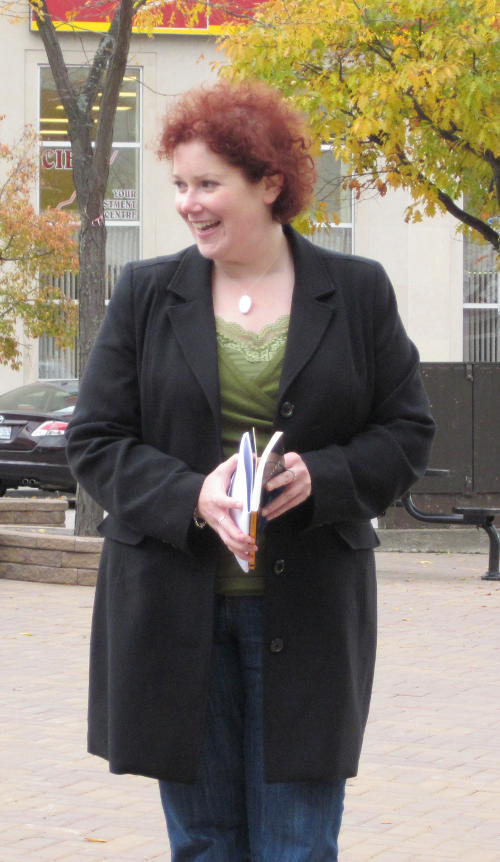
This was the result 🙂

Diane is a consummate professional.  She knows her business and she doesn’t mess around.  She asks, like all stylists, what you want, but then she sets to and you’re in her hands.

Those hands are skillful.  They inspire confidence.  Every snip is purposeful, and she really approaches a haircut as a piece of art.  It was wonderful to be able to trust someone so completely for a while.

The result was two inches shorter, layered artfully, and Diane even straightened my hair, something I never take the time to do myself.  It felt considerably lighter too.

Really, it was just what I needed, even though I didn’t know it.  Funny how that happens.

Mel is happy.

Ghost Rider: Spirit of Vengeance and Larry Crowne

Mentioned last night when I logged off that I was going to watch Ghost Rider: Spirit of Vengeance and I have to say that I was disappointed.

Though more faithful to the comic (Ghost Rider can come out in the day), the story wasn’t all that compelling.  Nicholas Cage was looking very much like he didn’t want to be there, and his transformation sequences were entirely too drawn out.  With respect to that, he ended up sounding half the time like his character Big Daddy, from Kick-Ass, in my opinion, a much better character and performance, and something that hearkens back to some of his early, quirky roles.

I like the quirky.

Fast forward to this morning and Larry Crowne.  While I missed the beginning, I was immediately on board with Tom Hanks and his portrayal of a middle-aged man having to start over.

I loved the characters.  Julia Roberts as the long-suffering college teacher and spouse of a porn-addicted writer, so-called, was awesome.  Unfortunately, the chemistry between the two leads left something to be desired.  Hanks often ended up looking at Roberts like she was insane.

Still, I enjoyed it a lot more than the second Ghost Rider.

The sounds of fall

This morning wasn’t a quiet Sunday morning.  It’s rarely quiet around here: I live on a busy street corner where a lot of traffic passes.

But this morning, I was struck by the sounds of fall.  In the Carolina Poplars across the street, chickadees and tardy starlings chirped and chittered.  I listened to the leaves falling.  It was amazing.  Over the noise of the traffic and the sound of the birds, I could hear each leaf fall onto the bed of them at the foot of each tree.

Last night was the first night that the temperature fell below zero (degrees celsius) so even though the wind was still, the leaves were falling.  Time has come.

Today, I finally gave over and put the furnace on.  Tomorrow, the winter clothes come out of storage and the tank tops go into hibernation until spring and the Hallowe’en door decoration comes out.  Tomorrow is also our (Canadian) Thanksgiving dinner.  Looking forward to some time with family.

Look for my post on the LUminaries reading series later today.

TTFN!

October submit-o-rama and other randomness

Hey there!

I’ve joined Khara House‘s October Submit-o-rama!

In the lovely Khara’s own words:

There are five unique challenges for you to choose from to participate in the Submit-O-Rama! Click on the links below to pick your flavor of the month!

The “Basic” Challenge
The “Uber” Challenge
The “Alpha” Challenge
The “Name Game” Challenge
The “Choose Your Rules” Challenge

Of course, you know I went for the “choose your own rules” challenge.  I’m going for one submission per week and I’ve just made my first one: a short story to Tesseracts 17.  The deadline’s not until February 2013, but I wanted to get this submission done early.  this will be my fourth try at a Tesseracts anthology, and last year I received a very encouraging (not being sarcastic) rejection letter from Mark Leslie, who I got to meet in person this past week (more on that to come).

It’s not too late if you want to join in the fun.  Just go to Khara’s blog, Our Lost Jungle, click on the Submit-o-rama page, and follow the destructions from there.  She has forums set up too.  You can also join Khara’s Facebook event page for ongoing updates from the participants.

Some of them are going for the gusto.  Join in on the fun!

The blog schedule changes again

In fact, if you look at my blog now, you might notice that there’s no blogging schedule in evidence.  I’m going to be posting as I can and as I have things to blog about.  This may mean a blog or more in a day and it might mean days or weeks when I don’t blog at all.  I’ve decided that I’m good with that.  I’m hoping that you will be too.

Right now, I have to work on my novel, and I’m trying to restructure and simplify my life so that I can do that.

What’s coming

Having said that, I’m going to be blogging on a fairly regular basis for the next couple of weeks.

  • Tomorrow, I’ll post about the first LUminaries reading series at Laurentian University on the power of popular fiction;
  • On Tuesday, I’ll be posting  my first guest blog by fellow Sudbury Writers’ Guild author John Rice;
  • Before Thursday, I hope to be posting my first author interview with Scott Overton;
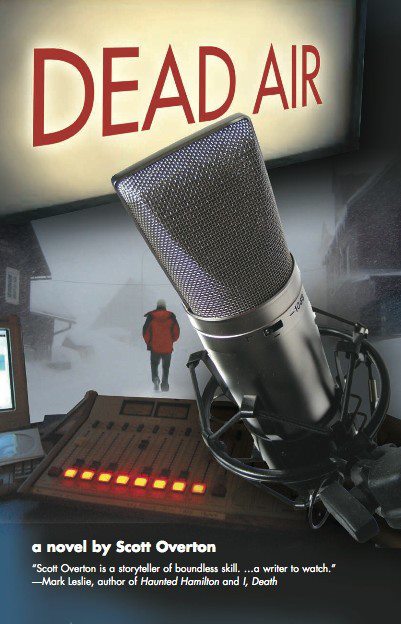
  • After Thursday, I’ll be blogging the launch of Scott’s novel Dead Air; and
  • In the future, I’ll be blogging about the progression/completion of Dan Blank’s Platform-building course, more submit-o-rama madness ( I hope), my experience at the Algonkian Writers’ Conference, interviewing my friend Kim Fahner about her upcoming book of poetry, and her book launch.

From the learning mutt side of my brain will be:

  • In-person meetings (for virtual teams) as a vehicle for professional development;
  • The Business Expertise Forum experience from a presenter’s perspective;
  • Striving for certification;
  • Business Writing Made easy in action; and
  • Managing transitions – will the course meet expectations?

As you can see, there will be lots of Writerly Goodness to come.

Something apropos of nothing

As the sun rises later each morning and until the snow falls, I’m faced with a dog-walking conundrum.  If Nuala (das pooch) chooses to unburden herself on a lawn that is not flooded by streetlight, how does a proper pup-mom find, let alone extract the odious package?

I was thinking of that semi-annual problem on Friday morning and reminded of a friend, Stacey, who has moved to the States.  When she lived in Sudbury, we walked our dogs together, and discussed this very issue.

Though she was devoted to cancer research, and still is, we both thought that it would be great if some enterprising researcher were to invent some kind of additive (innert and harmless to the animal) that when added to a dog’s food would make their feces phosphoresce to aid in the timely and efficient removal of such materials incumbent upon all responsible dog owners.

Any keen researchers interested in taking up the challenge?  I’m just sayin’ …

The randomness of Writerly Goodness is heading off to watch Ghost Rider: Spirit of Vengeance.

Good words at ya, my friends.

100 thousand poets for change in North Bay, September 29, 2012

Please note: this post originally appeared as a guest post on John Rice’s Keeper of the Sword blog on October 3, 2012.

It was a grey autumn day when I set off for North Bay.  Then I picked up Kim Fahner, and the journey became a poetic road trip of epic proportions 🙂  Talked craft, poetry, fiction, blogging, social media, and Doctor Who!

Kim brought me back a gift from her recent trip to Ireland: Leanne O’Sullivan’s Cailleach: The Hag of Beara.  Lovely book.  Saving it for the weekend 🙂

The drive was blessedly uneventful and we arrived early enough to have lunch before the event started.

On the way back to the park for the reading, we were greeted by Father Forrest.  The White Water Gallery’s Youth Arts Initiative created puppets this summer.

Father Forrest was one of them and he stopped by the reading later on in the afternoon.

We walked on to the park where the poets and audience were already gathered.

Though the organizers, Kevin smith and Natalie Wilson had brought a PA system there wasn’t an outlet to power it.

Still, Kevin introduced the event and got underway promptly, explaining a little of the background of 100 Thousand Poets for Change.

100 Thousand Poets for Change was initially conceived by Michael Rothenberg and Terri Carrion in March, 2011, as a worldwide set of events to take place simultaneously on September 24, 2011. Literary event organizers volunteered to host associated events in their own cities or schools. ~Wikipedia

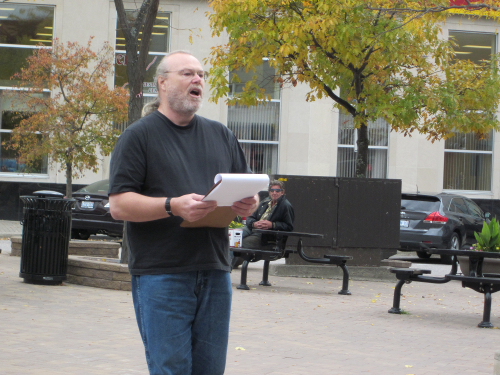
The first reader of the North Bay event was Laurie Kruk, professor at Nipissing University and author of Theories of the World, Loving the Alien, and the soon to be released, My Mother Never Told Stories.

She read several selections from her new book of poetry.

I was the next poet to read and only chose a couple of poems: “Manitou Sky” and Relatively Speaking.”

I started my set with a post on Jezebel regarding a Sikh woman and her response to what seemed a malicious picture posted as a critique on her appearance.  It was my way of commenting on how social media can be an avenue for positive change.

I finished my reading by offering some advice from Kristen Lamb in this season of political frenzy on how writers really change the world.

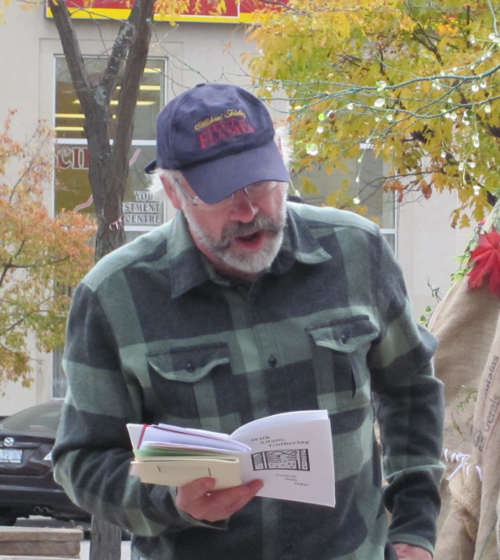
Following my set was Tim Robertson, poet and aphorist, that is, writer of aphorisms.

He started the session with a series of witticisms and then read a couple of his longer poems.

After Tim’s reading was a brief intermission where poets mingled and chatted.  I took a few moments to reacquaint myself with Natalie, with whom I’d contributed to NEOVerse, and Laurie, with whom I’d read on several occasions during my more active poet years.

The second half of the afternoon session began with Christine Charette, artist and poet.  Father Forrest visited at this point and remained around for her set.

Christine’s poetry has as its heart the issues of womanhood and motherhood and it did speak to the theme of change.

Denis Stokes read next.  He’s taught English in high school and at Nipissing University, and published poetry in print and online.  Denis’s poetry was definitely the poetry of Northern Ontario, evocative of its sights and sounds in the context of family and change.

Then Doyali Farah Islam took the stage, er, cobblestones 🙂  She published her first book of poetry, Yusuf and the Lotus Flower, in October of 2011.

Doyali is definitely influenced by Rumi, and her poetry brought a bit of the sacred to the assembly.

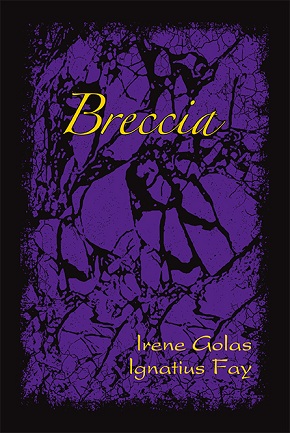
The last poet of the afternoon session was my friend, Kim Fahner, English teacher, and author of You must imagine the cold here and Braille on water.  Her new book of poetry, The Narcoleptic Madonna is due out this fall.

Kim is a great reader who interacts with her audience with humour and self-conscious grace.  Kim read from her new work.

Afterward, the poets mingled again.  Business cards and books were exchanged.  Though there was an evening session where Ken Stange, Kevin, and Natalie would be reading, Kim and I had to toddle off.  Nonetheless, I understand the evening reading at the Cornerstone Cafe was a great one, and the North Bay edition of the 100 thousand poets for change event a success.

And then, after a fortifying pumpkin spice chai latte at Twiggs, we were on the road again, chatting more about the day, poetry, creativity, and again, the fabulous Dr. who 🙂  David Tennant is one of Kim’s secret husbands, don’t you know.

The day ended with a lovely supper at Verdiccio’s where I had the chance to use the coupon I’d won on Facebook this summer.

All was ‘write’ with the world 🙂

For more information, please see the 100 Thousand Poets for Change North Bay Facebook page, or the Web page, graciously hosted by Ken Stange.

Fairy tales, Snow White and the Huntsman, and Mirror, Mirror

Once more, I find myself a day late and a dollar short, but for good reason.  Last night, I attended the Sudbury Writers’ Guild meeting and caught up with my fellow writers in arms 🙂

A lot is happening up here in the north.  Matthew Del Papa published Green Eyes through Capreol, a collection of short stories based on life in the railway town.  Scott Overton had one of his short stories accepted into the recently published Tesseracts 16, will have his first book, Dead Air, launched October 11, 2012, and next week, he will take part in the LUminaries reading series at Laurentian University along with Mark Leslie and John Forrest presenting on the topic “The Power of Popular Fiction.”

Several members are nearing completion of their various works in progress (yay!) and the Guild is moving forward on an anthology of northern writers.

Exciting creative times in Sudz!

____________________________________________________

Last week, I was a little out of sorts.  My response to stress seems to be to heap more of the deadly stuff on until my overwrought brain insists on a break.  Thanks to the kind comments of my writer friends, I embarked on a dedicated weekend of relaxation, and as part of that, I watched a couple of movies: Snow White and the Huntsman, and Mirror, Mirror.

In the beginning

Both movies are based on the fairy tale of Snow White.  Now the original story is much the same as the one most of us have become familiar with through Disney.  With a few subtle differences.

A young queen, desperate to have a child, sits spinning at her wheel.  She looks out through the ebon-wood frame of the window, onto a snowy field.  So distracted, she pricks her finger and three drops of her blood fall.  In that moment she wishes for a child black as ebony, white as snow, red as blood.

She has the child, but dies in childbirth.  The king remarries a vain woman who owns a magic mirror.  As the child grows in beauty, the new queen grows jealous and orders her huntsman to murder the girl.  The huntsman, touched by her beauty, cannot kill her, and she runs into the woods.

The huntsman figures the girl will be killed by wild animals in any case and shoots a deer with his bow, taking its innards (not just heart) to present the queen.  In the meantime, Snow finds her way to the home of the dwarfs and they allow her to stay if she will cook and clean for them.

The queen learns from her mirror that Snow still lives, and the artefact is so kind as to tell her where.  So she disguises herself and visits the dwarfs’ home while they are away working.  First, she gives snow a lace collar that once tied around the girl’s throat, chokes her.  The dwarfs return and remove the collar, restoring Snow.

They warn the girl not to receive strangers but the naive thing does so twice more, once to be poisoned by a comb placed in her hair, which the dwarfs also remove, and then to be poisoned by an apple, a mouthful of which lodges in her throat.

The dwarfs cannot revive her this last time, and determine to encase her body in a glass coffin.  As they transport the coffin to a mountain top, a traveling prince literally runs into them, upsetting the coffin, and dislodging the poisoned apple.

The prince announces he will marry Snow and invites everyone in the land.  The queen, preparing to attend the great feast and not knowing the identity of the bride, checks once more in her magic mirror, and is told once again that Snow White and not she is the fairest in the land.  The mirror neglects to tell her where Snow is this time, however, and she goes to the wedding still ignorant.

At the feast, the queen and her treachery are exposed and she is presented with a pair of iron shoes that have been heated in the fire.  She must dance until she dies.

Clarissa Pinkola Estes, in her anthology of the Tales of the Brothers Grimm, writes:

A tale invites the psyches to dream upon something that seems familiar, yet often finds its origins in a far away time.  In entertaining the tales, listeners are re-envisioning the meanings of them, “reading with the heart” these important metaphoric guidances about the life of the soul.

As my recent foray into Fairy tale blogging madness will attest, fairy tales have an enduring fascination.  Snow White has been given homage in many novels and movies as a result.

Snow White and the Huntsman

This movie is quite faithful to the original fairy tale at the outset, but then takes a radical departure.

**Warning: Spoiler alert!**

Snow White & the Huntsman

Snow White & the Huntsman (Photo credit: Ludie Cochrane)

The queen, a fearsome sorceress who drinks the life force of beautiful maidens to remain young and beautiful, murders the king and keeps Snow White a prisoner for ten years while the country grows desolate around them.

When Snow White escapes into the dark forest, where she has no power, the queen recruits a huntsman and binds him with the promise that she will resurrect his dead wife if he will kill Snow White.

In the forest, Snow meets the dwarfs, who have fallen on hard times.  The huntsman finds Snow White, but Snow convinces him that the queen has deceived him and that they will both die if he takes her back to the queen.

They flee with the dwarfs, through various adventures, and joined by Snow’s childhood playmate, the son of a neighbouring duke, they defeat the queen’s brother and his men.  The queen, however disguises herself as the duke’s son and offers Snow the fateful apple.

When she is revived, Snow convinces the Duke to go to war against the queen and in a final confrontation, a Snow that appears more like Joan of Arc than a fairy tale princess, kills the queen.

What I liked about it:

  • The queen.  She was a brilliant villain, made more complex by a back story of abuse and tragedy, and more creepy by implications of incest with her brother.
  • The dwarfs.  They were a mystical, gruff bunch.  Bob Hoskins was fantastic 🙂
  • The lord of the forest.  At one point, the group enter fairy lands, and the lord of the forest blesses Snow.  It was a scene reminiscent of Princess Mononoke, with the lord of the forest appearing as a giant white stag with gloriously branching antlers, though I much preferred Myazaki’s Puff ‘n’ Fresh-like head rattlers to Huntsman’s eerie fairies that crawled out of the bodies of animals.
  • The scarred women.  To protect themselves from the queen’s predations, the widowed and orphaned women of the land scar their faces.
  • The awakening kiss.  Though it is the duke’s son who loves Snow, his kiss does not awaken her.  It is the huntsman’s kiss that proves to be the kiss of true love, but not because he loves Snow.  It is a kiss born of his sorrow for failing Snow as he failed his wife before.  I liked that a lot.
  • The ending.  Snow White, having defeated the queen and reclaimed her kingdom, sits on the throne, no man by her side, not the duke’s son, and not the huntsman.
  • The song.  Breath of life by Florence + the Machine is awesome!

What I didn’t like:

  • Some of the plot points were too convenient.

Why keep Snow White a prisoner?  The queen could have just killed her, or better still, take the girl’s life force to maintain her beauty.  It’s only when the mirror reveals to her (ten years on) that Snow’s heart will keep her forever young that she thinks to do anything with her rival.  Why did the mirror wait so long to tell her?
The queen has no power in the dark forest, so she recruits the huntsman, but she still sends her brother in after Snow.  Why didn’t she just send her brother in the first place?
The duke’s son gets himself recruited to the queen’s brother’s hunting party, but when they find Snow, he’s more concerned about maintaining his cover than in helping her.

  • The fairies creeped me out.
  • Snow is innocent and pure.  It’s that purity that allows her to defeat the queen, but for the final battle, she’s done up in plate mail.  It promises bad-assery that Snow fails to fulfill.  The queen tosses her around like a rag doll and she only succeeds in killing the queen because she’s lucky.

Mirror, Mirror

Mirror, Mirror, from the outset, seemed a movie that didn’t know what it was trying to accomplish.  It starts with the queen, narrating her own story in a British accent, which she doesn’t maintain.

There are moments in it that are potentially dark, but they are overwhelmed by the silly.

In this revision of the fairy tale, Snow is merely locked away while the queen fritters away her money on parties and trying to look young.  She is advised by a maid to go out and have a look at the kingdom herself.  Snow is horrified by the poverty she sees.

When the prince comes on the scene, the queen settles on him as a means to continue her wastrel ways.

The prince, however, has fallen in love with Snow (who rescued him after the bandit dwarfs left him hanging), so the queen decides to get rid of her, sending her chief boot-licker out to do the job.  That part is faithful to the fairy tale.  The boot-licker is unable to kill Snow, but leaves her to the beast that lives in the forest and shows the queen some organ meats that were left in the kitchen.

The dwarfs are highwaymen in this version.  They rob the prince twice, and in keeping with the fairy tale, permit Snow to stay with them if she cooks and cleans for them.

As the queen tries to seduce the prince, Snow becomes a highwayman herself, insisting that the dwarfs return the money they steal to the townspeople to whom it truly belongs.

The queen eventually sends “the beast” out after Snow and the beast turns out to be her father.  Snow breaks the enchantment, marries the prince, and when the queen sneaks into the wedding feast and offers Snow the gift of an apple, Snow sees her for what she is, and refuses to be fooled.

What I liked:

  • The mirror.  In this version, the mirror is a kind of portal to another place where the queen communes with the mirror, which is herself.  Kinda nifty.
  • Snow as a highwayman.  She delivers on the kick-ass, though not terribly convincingly.
  • The beast/the king.  It was Sean Bean!  He got to live, for once!

What I didn’t like:

  • The queen.  Shallow and careless.
  • The prince.  He’s depicted as a doofus from the beginning and totally unworthy of Snow.
  • The dwarfs.  Though they’re thieves, they run around on stilts and do circus stunts.
  • The potion.  In the queen’s attempt to seduce the prince she gives him a potion without first examining what it is.  It turns out to be puppy love.  More doofus action for the prince.
  • The puppets.  The queen sends marionettes after Snow and the dwarfs.  Lame foes and once Snow sees their strings, she easily cuts them and saves everyone.
  • The Bollywood production at the end.  Totally misplaced.
  • The soundtrack.  Very traditional orchestral stuff.  Probably very good, but easily ignored given the ridiculousness of the movie.

Takeaways

  1. Villains that have a reason to be villainous and who do truly terrible things as a result are always better than purely selfish divas.
  2. In the same vein, flawed heroes are better than the goody-two-shoes, but …
  3. Heroes need to be heroes.  No doofaci (the plural of doofus, don’t ya know?) need apply.
  4. Convenient plot points will always be noticed and called out by the faithful reader.
  5. Go for the subtle twist.  The kiss of true love doesn’t necessarily mean what you think it means.
  6. The trails that your characters go through have to be dangerous, dire, challenging.  If no one is truly in danger, the reader won’t care.
  7. Even minor characters can be awesome: the scarred women.
  8. If in doubt, borrow from Anime before going to Bollywood for inspiration 😉
  9. Similarly, go for the quirky new artist rather than the traditional soundtrack for inspiration.
  10. Your story doesn’t have to end with a kiss, or even a relationship beyond mutual respect.

Have you seen any movies lately that got you thinking?  Do you watch movies for plot?  Learn anything about your craft in the process?

Writerly Goodness must hit the hay.  Reading at the 100 thousand poets for change event in North Bay tomorrow!  And you know I’m going to blog about that 🙂

Four learning-related resources that have come my way recently

After two weeks out of town, I have a couple days off.  So this week the learning mutt is sharing some of the interesting stuff she found on the interwebz 🙂

The first two come from my friend BrainySmurf courtesy of her blog Connecting the Dots.

Brainy’s a MOOCer, that is, she participates in massively open online courses.  Through her most recent set of them (I think 4 at last count), she’s come across Susan Cain and her site: The Power of Introverts.

Now I’m essentially an introvert, though I work in an industry that has me talking to people all the time, facilitating courses, and the like.  I dislike “putting myself out there” and “being on.”  Really, what I want to do is work independently with words (just let me design courses and give me the time to finish them properly!), and of course, write.  My true preference would be to write all the time, holed up in my wee garret, but I know that after the writing comes the promotion and I have to be super “on” for that.

Susan Cain - Quiet - The Power Of Introverts

Susan Cain – Quiet – The Power Of Introverts (Photo credit: k-ideas)

What this means is that I have to find my power as an introvert and learn how to use my innate and learned talents and skills to their best effect in an extroverted world.

Last week I mentioned Susan’s book Quiet: The Power of Introverts in a World That Can’t Stop Talking. It’s definitely on my reading list.

Last year, Brainy also mentioned Gretchen Rubin and her book The Happiness Project.  This week, I saw Gretchen on Canada AM promoting her new book Happier at Home.  Gretchen also came up during the platform-building course I’m participating in with Dan Blank of We Grow Media.  She was cited as an excellent example of platform-building, self-promotion, and book marketing.

PBS @ SXSW 2010 / Gretchen Rubin

PBS @ SXSW 2010 / Gretchen Rubin (Photo credit: PBS PressRoom)

When I first saw Brainy’s post on Gretchen, I wasn’t caught.  I was happy and didn’t really need any advice in the area, or so I thought.  Now I’m reconsidering my position.

A recent crisis in self-confidence has forced me to face the fact that I’m not currently happy.  Stress, mostly self-imposed, has me out on a limb and trying to look at myself in a mirror at the same time.  Tricky business that.

I’m thinking that I have to take another look at The Happiness Project.

Clark Quinn (the Quinnovator) noted on his blog learnets this week that Learning Design isn’t for the Wimpy.

ID isn’t easy.  We’ve been given some content, and it’s not just about being good little IDs and taking what they give us and designing instruction from it.  We could do it, but it would be a disaster (in this case, that’s what we’re working from, a too-rote too-knowledge-dump course.  And it’s too often what I’ve seen done, and it’s wrong.

Instructional design, or ID is what I aspire to do.  I write courses now, but it’s not really ID in the sense that Clark’s talking about.  There’s no consultation, there’s no conversation, there’s no back-and forth.  So far, I’ve only been writing courses on topic in which I’m considered the expert.  I can only write what I think a learner would need to know.  Being self-taught in most of these topics means that I’m writing courses for learners like myself, but I know that not everyone has the predisposition to learning that I do.

I try to work in what I think other learners will like and relate to, but it’s all through my own filters, and ultimately, that’s not good design.

Harold Jarche

Harold Jarche (Photo credit: Harold Jarche)

Which brings me to my next find: Harold Jarche.  He’s the champion of personal knowledge management, or PKM, and his latest post on Life in Perpetual Beta talks about how PKM can work to foster innovation within an organization.

In an organization where everyone is practising PKM, the chances for more connections increases. Innovation is not so much about having ideas, as making more and better connections.

PKM is something else I aspire to (hence the learning mutt), but it’s really only possible in my workplace at the advisory level or higher, and not many of us have hopped on the bandwagon so the sharing community isn’t huge.

Right now, it’s a problem without a resolution.  I have the solution, but not the internal platform to promote it.  I don’t have a lot of authority and all I can really do at this point is lead by example and talk it up every chance I get.

I set up a SharePoint site for the training team last year focused on professional development, but I was the only one using it.  I eventually stopped updating and promoting the site.  A bit of a defeat that, but perhaps someday I’ll be able to get back to it.  Not being a part of the training team anymore kind of throws a monkey wrench into those gears.

That’s it for this week.  Feel free to follow Brainy, Clark, or Harold.  They really are excellent resources in the learning and development field.

Also feel free to share any learning resources that you’ve found recently in the comments below.

Resistance is futile … or is it?

This has been a rough week, the second of two spent out of town for the day job.  I’m exhausted, feeling ill, and I seem to be getting a lot of bad news, or rather I’m taking the news (in itself, neither bad nor good, just news) I’m receiving rather poorly.  I know, that’s my problem, not yours, but I’m sharing anyway in the hope that someone out there might benefit from my momentary struggles.

On a side note, I was moved to join Alex J. Cavanaugh’s Insecure Writers’ Support Group, but the sign up page does not appear to exist at the moment (!)  Yes, it’s been that kind of week.

This goes back to the issue of having, or in my case lacking, thick skin.  When I blogged about this originally, I wrote that having thick skin was kind of like being brave.  Being brave doesn’t mean you’re fearless, it means that you act despite your fear.  Having thick skin doesn’t mean shrugging off criticism or refusing to be affected by it.  Having thick skin means that you have to find a way to view criticism objectively, find a way to accept what you can, compromise where necessary, stick to your guns on what you believe is truly essential, justify your position, and write on.

That’s where I’m having trouble this week, and I think I just need some time to get some objective distance.

So what was the news?  The biggie was the illness of a friend.  The specifics I won’t get into because they’re not mine to share.  Needless to say, it was a bit of a blow.  Perhaps it was more of a trigger.

It’s coloured everything else I’ve done, and all the feedback I’ve received, this week: my coursework, my day job, and especially my writing.  What would otherwise be constructive criticism (taken in stride), or even compliments, have taken on a significantly more subversive tone.

Fraud, the sub-text whispers …

writer's block - crushed and crumpled paper on...

writer’s block – crushed and crumpled paper on notepad (Photo credit: photosteve101)

Why?  I’m blocked.  For the first time in years I can’t write a sentence without rewriting it five times.  Even then, I delete half of what I’ve written (the equivalent of the old-timey writer crumpling up sheet after sheet of paper as they emerge from the typewriter) and try to come up with something that has meaning.

For five years, I’ve written every day.  I’ve returned to the words and they haven’t failed me.  Until this week.  I’m hitting a crisis point, truly overwhelmed, and clueless as to how to proceed.  Surely this means that epiphany can’t be far away?

What I really think is that my old frenemy, depression, is starting to rear its ugly head again.  And yes, it’s my head, so I can call it ugly if I want.

Time to count my blessings:

  1. My health.
  2. My husband (wonderful man – unlimited hugs).
  3. My mom (amazing woman).
  4. My friends (all of them, a blessing in my life).  I have to note a couple of specifics here: Margaret, out of the blue, sent me a card because we’d shared emails of woe; Kim put a quote of mine on her forthcoming book cover (wonderful poet! I’m so honoured!).
  5. My work friends.  More specifics: Monica, dealing with some heavy personal issues of her own, saved our training bacon this week; the training team – most of us got together last night for a lovely evening out and lots of laughter and hugs were shared; my manager commended the training team for our superb work and dedication.
  6. My dog.  Has to be said: unconditional love and sweetness.  Panacea 🙂
  7. My critique group, honest and tough, but very supportive.  They help me become a better writer.
  8. The Wordsmith Studio community, sources of great ideas and resources, chats (though I don’t get to participate as often as I’d like), and networking.
  9. My classmates and our instructor: encouraging and informative.  Another virtual community in the making.

I’ll work my way through this rough patch.  The way is not yet clear, but with all of the above help, how can I not succeed?  Sometimes we just need a reminder.  Life is good, folks, for all that it seems otherwise.

Is anyone else out there fighting the good fight?  What do you do to remain positive?  Any tips and tricks to share?

Getting smart with SMART Board

Back in April, I posted about a gift I received back in May of 2010: a SMART Board.  Now I never did a dedicated post about what became of that wee gift.

English: A Smartboard

English: A Smartboard (Photo credit: Wikipedia)

In March of 2011, my then brand-new manager started an initiative.  She wanted the training team firmly in the 21st century, designing and delivering elearning.  Unfortunately, that was also about the time that my father passed away, and though I was considered the expert in  SMART Board, I only had time to complete part of the training course before I was off on leave.

My colleague completed the course for me, created a video segment for it, and delivered it, not only to our fellow trainers, but also to the regional learning governance committee, and at the business expertise forum.

The result: we received, as a team, a service excellence award for the project.

Getting even smarter with SMART Board

Fast forward a few months, and riding close on the heels of that success, it was determined that additional training should be delivered.  In person training.  Not only to our fellow advisors and consultants, but also to managers and other individuals in need of additional tools to present and conduct meetings.

Plus, there would be additional workshops to be held at this years’ business expertise forum.

Reunited for this next project, my colleague and I reworked the training, which was previously delivered as a combination of self-study and virtual delivery, into a 1-day, in class session.  The idea was that to cement the learning, hands-on application would be required, and lots of it.

Today was the first of two sessions, and though things were a little rough, we’ve received some very positive feedback.  I’m relieved.

Bumps on the road

Earlier in the summer, I was notified by the updating utility that Notebook, the software that accompanies the SMART Board, needed to be updated, so I dutifully put in my ticket with the techies, and was promptly updated to the wonderful Notebook 11 🙂

I realized that this was a major change that would necessitate the rewriting of the package.  Unfortunately, I wasn’t able to dedicate any time to the SMART Board until early August.  At that time, I booked a room, set up the SMART Board, and started playing again.  I also took scads of screen shots 🙂

The rest of August was spent re-writing the training package, given the new version of Notebook.  Dates were set, the course entered into our learning management system, invitations to participants were sent, and another ticket was submitted to the technical team to install Notebook 11 onto all the computers in the training room.

Pre-course assignments, including the participants’ guide, were sent out and submitted by the participants.

Then, last week, when I returned home after being out of town for the Managing Transitions training for trainers, I received a note that the computers were all updated … to Notebook 10.7.

Essentially, all the work that I had done on the revisions was a waste.  That was Friday, and I was on the road Monday morning to come down and set up the room prior to training.

There wouldn’t be time to work on anything.

Further, the versions of Notebook installed on the participant computers were all trial versions, and missing a few key elements.  This meant that some of the parts of the program that we were demonstrating could not be accessed by the participants at their desks.

That was a bit frustrating.

Nothing like rambling on for five minutes about this really cool feature when one of your participants pipes up and says, “where are you?  I can’t find that Icon.”  Then you realize that they’re missing something that it would really have been nice if they had.

Chameleons by any other name

So, as facilitators, we adapt on the fly, to a greater or lesser extent, and to more or less success.  Again, it seems we managed well, and that everyone got what they needed out of it.

It’s just frustrating.

I would have liked to have had more time to complete a proper facilitators’ guide.  I would have liked to have had the most up-to-date version of the software available to the participants.

As the song says, though, you can’t always get what you want 🙂

I guess all of this speaks to my perfectionism.  I’ll deal with good enough, and not stress over it (I’ve learned to let go of things at work), but I can’t help but think how much more successful the package could be.

There are so many things that I’ve done in the last couple of years that have been good enough, and that I’d love to have time to get back to and revise/update/complete.

Happy Dog

Happy Dog (Photo credit: jmckind)

How are things going in your work lives?  Are you too, plagued by persistently frustrated perfectionism?  How have you addressed the issue?  Is being able to let go enough?  Is good enough really enough?

Let me know!

The learning mutt, signing off 🙂

On virtual homework and the reading of books

Dan Blank of We Grow Media

So here we are in week two of We Grow Media’s Build Your Author Platform course.

Week one was about developing focus, and I think I did pretty well.  As I mentioned a few weeks ago in my post about Michael Hyatt’s Life Plan document, I’ve done a lot of thinking about my life and what I want out of it.  It wasn’t difficult for me to put into words my plans for my creative life.

This week, it’s going to be a little more challenging.  I have to figure out my writerly identity and brand.  I know what I’ve said about myself on this blog and elsewhere, but this week’s assignment will have me digging deeper.

I have this morbid image floating about in my head …  See, a garden spade is pretty sharp, and I can imagine that digging into my tender heart and mind being a bit painful.

One benefit is that my name is pretty unique, and since I’ve bought my domain and all my SoMe is in my name, my blog, Twitter, Facebook account, LinkedIn account, etc. appear at the top of the results in most search engines.  And if my blog isn’t up there, then one of my poetry books, NEOVerse is.  So that’s a win.

I’ll have to let you know how the branding exercises go.  I’m not a tooter of my own horn.  It makes me squirm, actually.  Hence the painfully-sharp-spade-phobia.

On introversion

I’m an introvert, though I work in an industry that has me putting myself “out there” as a trainer.  My friend, Brainy (pseudonym) had this to say about introversion on her blog this week:

Other people in my work environment likely see me as fairly extroverted because I am very outspoken and I address individuals and groups quite confidently when sharing the expertise that I have accumulated in recent years.  I do a lot of online coaching and desktop sharing with collaborative technology but it’s usually one-on-one now.  I can only sustain the energy required for the group stuff once in awhile and with considerable advance preparation.

I can relate.

She also recommends Susan Cain’s Quiet: The Power of Introverts in a World that Can’t Stop Talking.  It’s on my reading list.

What else I’ve been reading lately

Last month, I finished Suzanne Collins’s The Hunger Games.  I’d had the trilogy since last year when I saw the movie with a couple of friends who had both read the whole series and loved it.  More recently, I was urged to take the plunge for two more reasons: 1) my mom had just read the series and also loved it, and 2) Larry Brooks’s eleven-part analysis of the first book on his Storyfix blog (more on that in a moment).

I too, loved the book.  Having seen the movie, read Brooks’s analysis, and a few other reviews/articles on the novel, I was well aware of the plot and events of the novel.  But spoilers never spoil a book for me.  When I know the major plot points, I only enjoy the book more.  I read to improve my craft.

Collins’s prose is clean, her POV engaging, and her craft extraordinary.  Damned.  Good.  Book.

Mind you, I think I might be the last person on the face of the earth to read The Hunger Games 🙂

Brooks’s analysis of the book also lead me to read his: Story Engineering.  I did get a lot out of his book, but it was despite the author’s ethos.  Brooks comes on a little strong for my liking, and I truly resent having anyone shake a virtual finger at me.

For more of my thoughts on this writing craft book, please check out my review on Goodreads.

Ethos, for those who may not know, is the author’s personality as it comes through in print.

My undergrad was in rhetoric, so I’m pretty adept at reading past ethos.  It’s a good thing too, because Brooks does have some great information to share and I have already implemented some of his lessons.  I do get it.  I’m just not fond of how Brooks got his message out.

Currently, I’m reading Diana Gabaldon’s The Scottish Prisoner, which I’m enjoying quite a bit (though not as much as the main novels in the Outlander series), and A Medieval Miscellany.

Will let you know how all of that goes.

Right now, Writerly Goodness needs a wee bit of rest.  A new work-day awaits!  Egad …

On the road again … or managing life’s transitions

I don’t mind traveling for work, for all that it puts a cramp in my writing life.

This week, I’m attending the training for trainers on Managing Transitions, the change management course that two of my colleagues developed for staff this year.

My employer has embarked on a business transformation strategy and a lot of our staff are being affected.  Even more are feeling the pinch of budget cuts.

Enter Managing Transitions, a course designed to offer insight into and tools to manage change in your professional life.

A colleague and myself drove to Toronto from Sudbury this morning to attend.  Today was the first half-day of class.

A couple of the critical learnings of the day:

  • change is the event; transition is the process.
  • change is often beyond our control, but our reaction to it and attitude toward it never are.
Deutsch: Viktor Frankl

Deutsch: Viktor Frankl (Photo credit: Wikipedia)

It’s the whole Viktor Frankl thing.  You know Viktor Frankl?  Author of Man’s Search for Meaning?  Essentially, he was a prisoner in a Nazi death camp during WWII.  He survived the horrors, but only by making the critical realization that the only thing he could control in his dire circumstances was himself.

Now that’s a very simplistic take on his philosophy, but if it’s piqued your interest at all, pick up his book and read more about it.  See if you agree.  Don’t take my word for it.

Now few of us these days encounter changes that are so drastic or life-changing as Frankl’s, but it can still happen.  On a day like today, I think back to 9/11, and though it’s been eleven years since the tragedy, it’s one of those defining moments in history.  Everyone remembers where they were when they first heard that dreadful bit of news.

Tribute in Light, 9/11/03

Tribute in Light, 9/11/03 (Photo credit: Brendan Loy)

Me? I was having coffee with my parents before heading off to work.  The morning show that was on the TV was pre-empted by the special news report.  I watched what they would show of it on national TV.  It was surreal.  Disturbing.  Inconceivable.

Another bit of learning from today’s session: it doesn’t matter how relatively big or small the change appears, the effect it has is directly related to how the individual experiencing the change perceives it.

So I’m here for another day and a half, then travel home again Thursday afternoon.

Will likely give you an update on this course when I deliver it at some point in the future.

In other news

Does your CEO tweet?  Does it matter?  Nick Charney calls shenanigans on ‘the 1.3 trillion price of not tweeting at work.’

What ‘open’ means to me.  New on Connecting the Dots.

Just a couple of things of interest in the virtual working world of Mel.

Thanks for stopping by!

The learning mutt needs to sleep if she’s ever going to get up in time for the course tomorrow!

Nine (plus) world building resources

Open any book on writing fantasy or science fiction and you’ll find a section on world building.

Cover of "The Craft of Writing Science Fi...

Cover via Amazon

Four cases in point:

Bova writes a section on “Background in Science Fiction” in which he discusses the uses of background (back story and world building elements), offers a complete short story as an example, and then practical suggestions on how to apply the techniques he’s discussed in the context of the story.  Bova makes reference to the greats of SF (Bradbury, Niven) as well as to literary works to round out his advice.

Card also has a chapter on “World Creation” which he summarizes thusly:

How to build, populate, and dramatize a credible, inviting world that readers will want to share with you.

Kinda speaks for itself, doesn’t it?

Killian writes a chapter on “Creating Your Fictional World,” including the following topics: A symbolic reason; A sense of what is natural; Parallel worlds; and Fantasy worlds.

Gerrold’s book contains several chapters on world building: Setting the stage; To build a world; Detailing the world; Building aliens; Believability; and Fantasy worlds.

Once again, every book on writing SF or Fantasy will include a section on world building in one form or another.  The more you read about it, the more you learn and the better you get at this whole world-building thing.

Books specifically about world building

I’m going to start with a book by fellow Canadian Authors Association member, Sandra Stewart.  She offers workshops in world building based on this publication.  Go check out her site for more information, or to get a copy of her World-building Workshop Workbook.

Sandra’s philosophy is to build from the micro to the macro and she gets into all the details from arts and entertainment, through calendar, to war and wizards.  She covers common pitfalls too.

Three more from Writer’s Digest:

If you’re interested in creating planets and star systems, this is the book for you.  In fact, I’d recommend the whole of the Science Fiction Writing Series, which delves in-depth into Space Travel and Time Travel among other subjects.

Ochoa and Osier cover some topics, like space stations, spaceships, civilizations, and other technological jumping-off points that some of the other writers don’t treat in quite the same way.

Contributors include Terry Brooks and Sherrilyn Kenyon.  As detailed as the above references are regarding the creating of a science fiction world/universe, this book is just as thorough with respect to the creation of a fantasy world.  It covers law and commerce, costume, myths and legends, and castles among other topics.  It’s a great starting point for research.

And finally:

Though this book might more appropriately belong in the books on writing SF and Fantasy (above), Scott fills more than half of it, pp 27-120, with various aspects of world building.  Like Stewart’s World-Building Workshop Workbook, I’d recommend Scott’s book because it offers a woman’s perspective on the techniques of world-building.  Further, Scott was Harvard-educated, which makes her perspective even more unique.  Her apology, “A brief defense of Science fiction, or why does someone who went to Harvard write this stuff anyway?” is both a humorous and insightful look at how SF is really a way to deal with our essential discomfort about change.

If I’d wanted to go tub-diving in my basement storage, I could have come up with half a dozen more books to recommend, but it takes something really special to make me dare the Rubbermaid jungle 🙂  Yes, I’m a book-addict.  Ask my husband, and if you do, have a beer ready for him to cry into!

Do you have any books on or containing sections of world-building that you’d recommend?  Share in the comments so everyone can benefit!

As a friend of mine says … heading for Bedfordshire.