Ad Astra 2015 day 1: Science fiction for a young adult audience

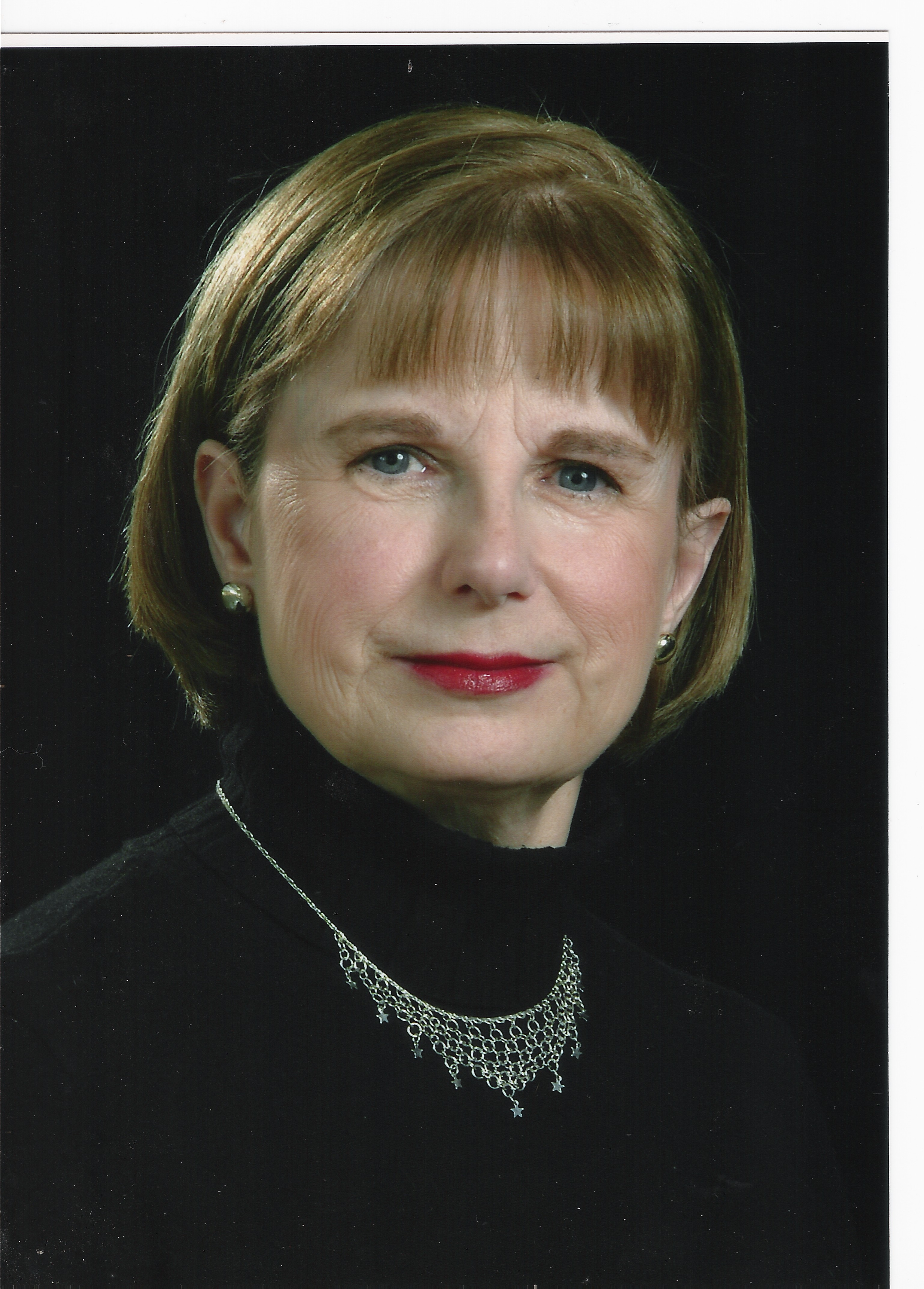
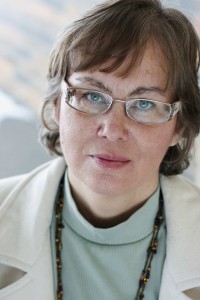
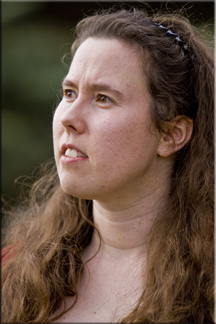
Panelists: E.K. Johnston, Charlene Challenger, Leah Bobet, Jane Ann McLachlan

YA SF panel

Having just been in a session, Leah was a tad late . . .

JAM: Has fantasy done a better job reaching the YA audience? Who is the audience for YA SF?

LB: There’s the problem right there. Is YA about and geared to young adult readers, or do readers just find their ways to it? Adult authors will write YA SF to “convert” younger readers. That’s a bad reason to write YA SF.

EKJ: Girls are starting to look for science fiction in the YA section.

LB: It’s really YA novels that are paranormal at the core. Authors are starting to cater to YA readers bored with standard paranormal.

JAM: Who are the readers of YA? There are a lot of adults who are looking for, perhaps, a simpler plot or a more youthful protagonist.

LB: I wouldn’t trash readers.

Mel’s note: There was a bit of awkweird at that point. Leah confessed to a lack of sleep but continued to make her point. For the record, Jane Ann’s remark wasn’t intended as a slight to readers of YA of any age, nor was it intended as a slight to the authors of YA, of whom she is one.

EKJ: One of the things that YA does well is include something for readers of all ages.

CC: I remembered being intimidated by SF as a kid. Star Trek: The Next Generation made is accessible. [SF] elevates the human condition.

EKJ: It asks the important questions.

LB: SF is no longer about showing your geek pass card. It’s rooted in outsider culture.

JAM: Are there more female protagonists in YA SF? What does this say about the authors? The readers?

LB: Traditionally, SF has had a massive issue with sexism and misogyny.

Q: Would genre crossing novels find readers in YA?

EKJ: Maybe. That’s the charm of YA. It encompasses all genres. It would probably be an easier environment to break through with a cross-genre book.

Q: What makes for a good YA novel?

EKJ: The pacing is faster, length is a little shorter than the average novel in the adult category. The story doesn’t make them feel bad for being a teenager.

LB: In 2014, the biggest trend was adult readers, particularly women readers, reading YA. As a result, the YA market became huge. Advances were five times the advances in other categories. Publishers had the budget dollars for editing and promotion.

EKJ: Check out Midwinterblood by Marcus Sedgwick.

JAM: Most YA share common themes: leaving home, dystopia, romance, authentication. Most are written in first person, present tense.

EKJ: Second person is rare, but it can be mind-blowing when done well. Fan fiction is a great way to learn the conventions and break them at the same time.

LB: Understand the conversation you’re entering.

JAM: What’s the difference between YA and adult fiction?

EKJ: Flexibility is the key. The main differences are the age of the protagonist and the age of the reader.

CC: The YA journey is outward. The adult journey is inward.

LB: It’s the reading culture. Adult SF is the classic authors like Asimov and Heinlein. It’s not accessible to new readers.

LAM: There is accessible adult SF. The Time Traveller’s Wife is an example, but is it really SF? Young adult is distinguished, in my opinion, by the intensity of emotion and its sense of optimism.

And our time was up.


I’m going to have to defer my next chapter post until tomorrow. I’ve had a couple of evenings out, I have full-tum syndrome (sleepy) and it’s late.

Until tomorrow, be well.

Review of The Occasional Diamond Thief by Jane Ann McLachlan

What Amazon says:

On his deathbed, Kia’s father discloses a secret to her alone: a magnificent and unique diamond he has been hiding for years. Fearing he stole it, she too keeps it secret. She learns it comes from the distant colonized planet of Malem, where her father caught the illness that eventually killed him. Now she is even more convinced he stole it, as it is illegal for any off-worlder to possess a Malemese diamond. When 16-yr-old Kia is training to be a translator, she is co-opted by a series of events into travelling as a translator to Malem. Using her skill in languages – and another skill she picked up after her father’s death, the skill of picking locks – she unravels the secret of the mysterious gem and learns what she must do to set things right: return the diamond to its original owner. But how will she find out who that is when no one can know that she, an off-worlder, has a Malemese diamond? And how can she bear to part with this last link to her father?
Kia is quirky, with an ironic sense of humour and a loner. Her sidekick, Agatha, is hopeless in languages and naive to the point of idiocy in Kia’s opinion, but possesses the wisdom and compassion Kia needs.

The Occasional Diamond Thief

My thoughts:

The Occasional Diamond Thief is a fabulous adventure, but it also offers thoughts and feels for readers of all ages.

In The Occasional Diamond Thief, McLachlan’s protagonist, Kia, learns the truth about herself by learning the truth about others.

Kia is the youngest of three children. Her father, a space ship’s captain and merchant, returns from a trip to another planet with the illness that eventually kills him. He is secretive and haunted, but Kia wants his love and approval.

She believes her facility with languages will accomplish this and so learns the difficult Malemese. Unfortunately, hearing the language worsens her father’s condition.

Kia is also at odds with her mother, who is strictly religious and seems to resent Kia’s connection to her husband through the language of Malem. In an attempt to protect both spouse and child, Kia’s mother forbids the speaking of Malemese in the house.

When her father dies, Kia is with him, and he commends to her an incredible diamond. Determined to solve the mystery of the gem, but escape her mother’s oppressive grief, Kia applies to become a translator. Independence is a challenge, and Kia must turn to thievery to support her life as a student.

She gets caught, and as a consequence is sent to Malem as a language teacher for the Select who assisted her in the theft. Once there, Kia must solve the mystery of the diamond, risking her life and that of the Select, uncovering a conspiracy that has its roots in the highest levels of Malemese society.

Kia believes her mother harsh, but learns that she was only trying to protect the ones she loved. Kia believes her father is a thief, but learns that it was his compassion that placed the diamond in his custody. Kia believes the Select and her order, the O.U.B. are attempting to manipulate her, but discovers that they are only trying to make it possible for Kia to right old wrongs. Kia believes the Malemese people to be cold and barbaric, but experiences their capacity to love first hand and fights to free them from a fearful legacy.

McLachlan has created a simple, but compelling universe that doesn’t strain credibility and serves as the perfect backdrop for Kia’s journey. She even weaves in a sweet love interest that proves to have his own secrets. Woven into the overall plot are mystery and thriller elements that will keep readers turning pages.

McLachlan’s novel is reminiscent of Madeline L’engle and Ursula K. LeGuin’s young adult fiction.

My highest recommendation.

My rating:

5 out of 5 stars.

Jane Ann McLachlanAbout the author:

Jane Ann McLachlan is the author of a short story collection, CONNECTIONS, published by Pandora Press, and two textbooks on Professional Ethics, published by Pearson-Prentice Hall. She has a Science Fiction novel, Walls of Wind, on Amazon under her pen name, J.A. McLachlan, and a second science fiction novel, The Occasional Diamond Thief, coming out on Dec. 2, 2014. She is a professor at Conestoga College in Kitchener, and lives with her husband and daughter in Waterloo, Ontario. Her goal is to write and publish the kind of stories you hate to finish reading.

http://www.janeannmclachlan.com/

WWC 2014, Day 3: Querying your YA novel

Panellists: Jacqueline Guest, Danielle L. Jensen, Jessica Corra, Shawn L. Bird, Karen Bass

Jacqueline GuestDanielle L. JensenQ: Do you query a trilogy?

DJ: It depends on your genre. Some say your novel has to be a standalone, but I’ve been successful querying a trilogy.

JC: It’s okay to mention that your novel has series potential, but you can go too far with this. I was once queried with a nine book series. That was too much.

SB: It’s good to know the career potential of the author, though.

DJ: Focus on one book in your query.

JC: It’s a business letter.

KB: It’s your pitch. Three sentences. Short, punchy, and pithy.

JC: Think about the backbone of your book. That’s your through line.

JG: You’re not selling to a reader. You’re selling to an agent or publisher. Don’t tease.

SB: The basic structure of a query letter is three paragraphs: pitch, comps, and bio.

JC: You need to mention genre, word count, and title.

DJ: You Jessica Corracould write: I am seeking representation for TITLE, a GENRE novel, complete at LENGTH (in thousands of words, rounded to the nearest thousand). I actually got my agent through a logline contest for Ms. Snark.

JC: Sometimes you don’t need an agent, though.

KB: Small Canadian publishers, no. Big publishers or genres, yes. Anything in the States, yes.

DJ: I’d die without my agent. She takes care of things

like foreign riShawn L. Birdghts. It really depends on your skill set.

SB: Sometimes, it depends on the agent.

DJ: I’d recommend Query Tracker.

JC: Jim Butcher proposes this formula for youKaren Bassr log line: *WHEN SOMETHING HAPPENS*, *YOUR PROTAGONIST* *PURSUES A GOAL,* but will he succeed when *ANTAGONIST PROVIDES OPPOSITION*?

JG: Spell check, for God’s sake. You have two sentences to hook an agent or editor.

DJ: Your first five to ten pages must be perfect.

JC: We know you’re human, though. We’ll overlook something small.

JG: There are lots of library books that will help you.

DJ: Online critique groups can help as well.

Q: How do I know the agent is reputable?

DJ: Writer Beware, Preditors & Editors, and Absolute Write are three sites where you can check out questionable agents, agencies, or scams. If you post on social media or forums, don’t bitch about being rejected.

Q: How many queries do you receive and how many of those do you read?

JC: We have readers, so I don’t see them all, but everyone I receive, I read.

Q: You’ve published several books. Do you still slave over your letters?

JG: Yes. Every time.

WWC 2014, Day 2: YA and the tough stuff

Panellists: Kimberly Gould, David Laderoute, Aviva Bel’Harold, Michell Plested

Kimberly GouldDavid LaderouteAviva Bel'Harold


Michell PlestedQ: What language do you use?

DL: Keep your audience in mind.

MP: Look at Harry Potter. The Dursleys made him live under the stairs. That’s abuse, but it was painted realistically.

DL: Neil Gaiman thought of using homeless characters in Neverwhere, but reconsidered.

MP: Whatever you choose to portray, it can’t be gratuitous. The character and the character’s circumstances have to be essential to the story.

Q: Is there a difference between the Canadian and American YA market? I was at a Kelley Armstrong session and she said that the only thing you don’t include is boring.

AB: I don’t notice a difference myself.

DL: Some publishers may ask you to eliminate the profanity in either country. That’s okay, you’re saving words. I know kids swear, but we write dialogue that simulates reality. Real world dialogue would sound horrible.

Q: Don’t readers need to see themselves on the page, though?

MP: Yes, but a book that ends hopelessly is dissatisfying.

AB: Most teens want hope.

MP: No one wants to end up homeless, addicted, or any of the other hard things we write about. They want to know there’s a way out.

Q: Beyond a sense of belonging, do you offer solutions in your novels?

AB: Don’t set out to write a novel with a message. It can come off heavy-handed.

KG: Present options in your novel, not right and wrong.

DL: Solutions are facile. Even young readers see through that.

MP: If you offer a solution, it shouldn’t be easy. If your character is smart and capable, they’ll keep trying. The struggle is the thing.

Q: Horrible things are still happening in the world. Should we show people responding?

MP: The character may be too close to the situation to understand it, but the reader should be able to pick up on it (dramatic irony).

KG: Perspective or point of view (POV) is basic storytelling. Be honest to your story. Make it true.

DL: You can write about difficult situations. There are two books, It’s kind of a funny story by Ned Vizzini, and Thirteen Reasons Why by Jay Asher that treat teen suicide respectfully. What about the topics of child slavery, child soldiers, or gangs? These are issues that should be addressed.

MP: It’s not writing the story that’s difficult, but resolving myself to writing it. The Boy Scouts are a recruiting ground for child soldiers, but how do you write about that? It’s an inherently hopeless situation.

AB: Abuse victims have similar “unseen” problems. I couldn’t address them myself. I don’t have the experience or context to do it justice.

MP: It comes down to passion. If you’re passionate about something, then write it. Don’t write it because it’s a “cool” or “hot button” topic.

Q: There are books that address difficult issues out there. Deborah Ellis writes about the third world in her books and Sharon McKay tackles child soldiers.

AB: How do we bring these subjects to our readers with sensitivity?

MP: In one of my books, I address bullying. One of the characters is a foster child and the protagonist doesn’t understand. The story is about coming to that understanding and learning compassion.

AB: I think one of the problems is that we can write great books, but kids are reading less. We have to get them back and get them reading.

DL: Can we kill characters in YA?

AB: It’s life. We should not shy away from it.

KG: You have to be careful, though. Kill the right character for the right reason. Think of The Bridge to Terabithia by Katherine Paterson.

AB: There could be a backlash. Consider Veronica Roth and the Divergent Series.

DL: Ultimately, it has to have meaning. It has to serve the story.


Next week: Querying your YA novel.

See you on Tipsday! Now, I’m off to NaNo-land 🙂