The next chapter

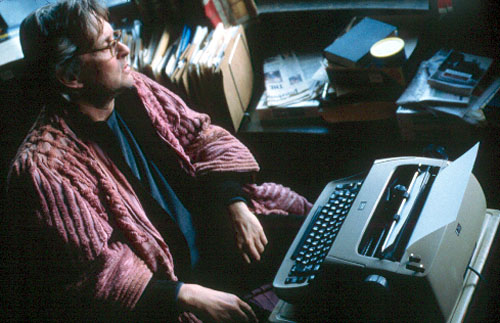
Have desk, will write

Have desk, will write (Photo credit: Bright Meadow)

Today, I’m going to share some of what’s happening next with my work in progress (WIP).

Early in the life of Writerly Goodness, I blogged regularly about my WIP, from its origins, through various drafts, to the lessons the whole process taught me.  I also blogged my character sketches and world-building fairly extensively.  I’ve been a little quiet on the subject in recent months however.

The reason for this is that I have been focusing on the revision of my latest draft, and in keeping with my reasonable and malleable goals for the new year, I have now finished that work (to the degree I am currently able) and have sent my manuscript for a content edit.

This is scary.

Why?  Because it means that I’m taking this whole process seriously.  I’m getting closer to perfecting Initiate of Stone for submission and/or publication.

Given the responses I’ve gotten from various writerly authority figures in my early life, my internal editor is very well-versed in the whole “what the hell do you think you’re doing/you can’t write/your ideas are crap/your writing is puerile/you’ll never make it” brand of advice.  I’ve had to tame that beast and try to get over it.

But … there’s still this voice in my head that says: “but what if this investment (the content edit) backfires?”  What if the result is the confirmation of all my worst fears and neuroses?

I can’t think about that.  So, while I wait to hear back from the editor, I’m moving on.

What’s up, buttercup?

First, I’m going to make a few submissions of short stories.

I’m revising one for submission to an SF magazine, which I will have to do this weekend.

I’m going to participate in a few flash fiction challenges.

I’m also going to aim for a couple of anthology submissions:

  • Sword and Mythos – January 15-February 15, 2013
  • Tesseracts 17 – February 28, 2013
  • Plus, I’m going to keep my eye out for the open reading period for Fearful Symmetries.  I don’t know if I’ll have anything appropriate for the publication, but I’ll certainly give it a try.

Second, I’m going to move on to a new novel.  As of my last writing on the subject, I hadn’t decided what.  The logical next step would be the second novel in the Ascension series, Apprentice of Wind.  I’m thinking that something completely different might be in order though.

So just to give me a complete break from Ferathainn for a while, I’m going to tackle Gerod and the Lions.  I’m just going to leave you with the title for now and I’ll let you know how it goes 🙂

Finally, I’m getting back to work on my critiquing.  I’ve been inactive on this front for a while, again because I’ve been focusing on my novel, but I’m waaaaaay overdue in this department and I have to get back into it.

This will have to wait one more week, in the event, because I’m traveling for the day-job again.  My apologies to my peers.  Zombie Mel will return from the land of the critiquing dead, just not quite yet.

Set yourself up for success

The deal here is that if you are progressing on one project, but not actively working on it,

St. Augustine writing, revising, and re-writin...

St. Augustine writing, revising, and re-writing: Sandro Botticelli’s St. Augustine in His Cell (Photo credit: Wikipedia)

you may need to pick something else up.  Take on a new challenge.  Keep honing your craft.  Get over your bad self.

Now this is not something you might just choose to do while waiting to hear back from your beta-readers or an editor.  You could be querying, or trying to get your self-publishing ducks in a row.  Keep in touch with your creativity.  A writer writes above all else.

Some people may think that juggling projects is a bad idea.  They want to see one project through from beginning to end and believe that they can’t divide their attention with another novel.

There are going to be those fallow times though, and I’m not just talking about those times when you have to “get distance” from your novel between drafts, when you might want to do something non-writing related (I’ve done home reno projects, or some other form of artistic expression for this, drawing, pottery, or taking part in a play).

I’m not talking about keeping your creative reserves replenished with reading and movies and creative dates either.

I’m talking about those times when you’re waiting.  Fill up those fallow times with new creative projects so you don’t stall out entirely.  Don’t let your muse get lazy.  Keep him, her, or it, active and healthy.

This is just my opinion.  In no way am I suggesting that this approach is the only one.  It’s just the strategy that I’m using, and that I’ve seen other successful authors use.

How do you fill up your fallow times?  How do you manage your writing projects?  Do you work multiple ones at the same time, or focus on a single project until it’s completed?  Do share 🙂

Resolve not to resolve

(A.K.A. Just make reasonable goals and reach them!)

New Years Resolutions (1/52)

New Years Resolutions (1/52) (Photo credit: lucidtech)

This is the time of year when everyone starts off fresh and hopeful and makes a bunch of promises to themselves without first considering whether they really want to keep them or not.

My advice is to take a step back and give this whole resolution thing some careful consideration.

First, try not to get caught up in the whole resolution furor and just make SMART (more on this in a bit) goals that you can actually achieve.

Review these goals periodically and change them if you need to.

That’s what irks me about resolutions.  For many, they hold the impression of being set in stone.  As human beings, we change, so will our goals.  Be flexible and make adjustments where necessary.  Shit happens.  Put another way, life is what happens to you while you’re busy making other plans.

If you abandon your expensive gym membership after three months and fail to lose twenty pounds by June, then, like as not, either the goal you set for yourself was unrealistic, or something happened to make the goal unrealistic to pursue in the way you first imagined.

I set goals all the time, sometimes they change and sometimes they don’t work out the way I planned.  So I change course, adjust my expectations, and set more goals.  Goals are healthy and shouldn’t just be reserved for January 1.

This year, resolve not to resolve 🙂

Step one: think about it

The first step, as always, is to give your goals some consideration.  Do you really want to achieve them?  Are you setting a goal because of external factors?

Take the “lose twenty pounds by June 1st” goal, something a lot of people list in their resolutions, sometimes every year.  Are you truly invested in making this happen?  Are you only doing it because your stepsister called you fat at Christmas dinner?  Are you happy at what others might consider twenty pounds overweight?  Do you feel healthy?  Do you otherwise conduct yourself in a healthy manner?

Once you’ve determined whether you really want to do this, think about ways that you might be able to make this happen, and how you can make the goal easier to achieve.

An expensive gym membership may not be the best choice given your circumstances.

It might be better to enlist your friends and family in the project, get a support system gathered around you.  Often, when you put your goals “out there” in concrete form, that is, you tell people what you want to do and why, it’s less acceptable to renege on the deal.

In this case, you can tell your family that you want to begin to eat healthier and get their support (yes, Mom, we’ll eat fish three times a week with you and we’ll try soy if we can have a day off on the weekend to indulge our collective red meat/fat/sweet cravings).  Tell your friends to help you make wise choices at the restaurant without making you feel bad in the process.  Tell your mom that while you think her roast of beef with Yorkshire pudding is drool-worthy, that this year you might want to try some Cornish hens and green veggies for your birthday dinner instead.  It’s the little things that add up to goals achieved over time.

Is there something that you can buy that’s not expensive and will still facilitate your achievement of your goal?  For example, maybe you know that a full, sweaty workout is not for you, but that you could commit to walking every day.  So buy yourself some properly-fitted walking shoes, maybe some clothes that will make walking in inclement weather less unpleasant.  Perhaps you could buy yourself a simple journal to diarize your eating habits and emotional responses to food.

Recognize when you start seeing or feeling results and give yourself a reward.  Maybe by March, with your reasonable eating and exercise plan, you’ve lost eight to ten pounds.  Celebrate by getting some clothes in a smaller size.

Think that you feel pumped enough to up your game?  Maybe now’s the time to buy a well-fitted pair of running shoes and see when the members of the local Running Room are starting their next beginners class.  Save the marathon for next year.  There are always more goals you can set in your future.  Leave room for them, work up to them gradually.

Setting and achieving goals is a continual process, not a “Ding! I win!” moment.  If you’re not invested in the goal, if the wish to attain it does not come from within, and if you fail to plan for success, then, as the saying goes, you’ve only planned to fail.  Then again, planning the hell out of something can be overrated …

Back to that SMART thing

Smart goals

Smart goals (Photo credit: shaggy359)

So SMART is an acronym which stands for Specific, Measurable, Attainable, Relevant, and Timely.  While the acronym is drawn from project and time management in a business context, it can be applied to personal projects as well.

I’ll let you explore making SMART goals on your own, if you’re so inclined.  Just Google it, and you’ll see how much is out there.

Some people benefit from a well-structured approach.  Some people don’t.  This is why the thinking part comes first.  You have to know yourself well enough to know what approach you’ll respond best to.

Advice from better minds than mine

Dean Wesley Smith wrote an excellent series on goal-setting in writing over November and December:

Here’s the ever-amusing but always on-target, Chuck Wendig’s ruminations on the topic:

Writer’s Digest has a few thoughts on the topic as well.

Finally, for those whose 2013 includes a new novel:

If you follow any blogs whatsoever, you will find lots of advice on goal-setting.  Research is a good idea, but always, think about it for a bit.  You don’t want to adopt someone else’s methods or techniques blindly.  That’s one of my biggest takeaways from 2012.

Whether it’s with respect to platform development, writing, blogging, weight loss, or any other aspect of your life, to thine own self be true.

Now … what you’ve all been waiting for … drum roll please …

Mel’s resolutions reasonable and malleable goals

My goals are largely determined by my life circumstances and as my life is quite chaotic right now, my goals need to be adjusted periodically because … well, shit happens.

Personal:

First, I’ll tell you what I’m not going to do 🙂

Though it would be nice to lose some weight, I feel pretty good and I am happy with my overall health, so, though it may be a disappointment to some, I will not be quitting smoking, becoming a workout maniac, or going on some fad diet that will only make me miserable.

What I will do:

  • Walk more (not specific or measurable because any gain in this area will satisfy me).  I used to walk a lot, like 60-75 km per week.  I’d walk Nuala in the morning, walk home from work in the evening, go for longer walks on Saturdays, and hikes in the bush on Sundays.  I even jogged for a few years.  When my dad went in the hospital in 2010, I stopped walking home and started walking to the hospital to visit him after work in stead.  When he was admitted to the Nursing home, I stopped walking so that I could get home and drive out to visit him with my mom.  When he passed away, I really didn’t feel much like walking at all.  Last year, Nuala developed arthritis and now she has an ACL injury and that’s curtailed some of the morning walks.  I do want to start walking more though, and I have purchased a new set of waterproof boots to make the decision to walk home after work in the winter easier, but I’ve found, since I’ve hit 40, that my tolerance for inclement weather has definitely decreased.  I’ve also got a referral from my doctor to get my orthotics updated, so that will also help.
  • Continue to eat sensibly.
  • Start massage therapy.  My colleagues at work rave about this, and I can only hope that it will help me as well.
  • Continue to accept and love myself as I am.
  • Take care of myself, my husband, my mom, and my dog.
  • Be the best friend I can be.

Professionally (day-job):

I’ve recently been advised that my acting assignment will be extended to June, with a further potential extension to September.  So, given that … I aim to:

  • Continue to learn and master the duties of my position.
  • Achieve my training certification.
  • Learn to become as a leaf in the wind.  This is important.  With all the change occurring at work these days, I never know what’s going on and half the time, events are not stable until after they’re already in motion.  Even then, cancellations are possible.  I fully understand my limitations and commit to do the best I can within those restrictions.  That’s all I can promise and I’m good with that.  We’ll see if my manager is good with that too 🙂

Professionally (writing life):

  • Finish my current edit of Initiate of Stone (I’m nearly there, at long last).
  • Send my MS for a professional content edit.
  • Start on a new novel (haven’t decided yet which one).
  • Submit to anthologies and calls for submissions of interest to me throughout the year.
  • Revise IoS given the content edit.
  • Share out to select beta-readers.
  • Submit first three chapters to the agent who indicated her interest at the pitch conference I attended.
  • Submit the entire revised MS to the editor who indicated his interest.
  • Revise based on beta-reader response.
  • Recommit to my online critique group.
  • Continue to read widely on a variety of subjects and across genres.
  • Participate in Khara House’s I ❤ my blog challenge.  I’ve struggled in recent months with consistency on my blog and I think this is just what I need to get me back up and running.
  • Set up a newsletter via mailchimp when my followers reach 100 (I’m at 85 right now).  This will be quarterly to begin with.
  • Consider a redesign of the blog and (gasp) a hosting service.  Yup.  Thinking about it.  Bears more thought however.  Still shy after last February’s hacking bite.
  • Go on a few writing dates.  Trying to negotiate this with a writing friend, but already have the first “big” one set: Susan McMaster poetry workshop in February.  Yay!

And I think that about covers it.  Notice that I don’t have time frames on any of these goals.  Life/chaos/shit happens, remember?  This is a trick I learned from participant-centered training.  An agenda that does not have time limitations allows for flexibility and adjustment on the fly.

A lot of this will be blogged in coming months, so I’ll keep you up to date on my progress.

What goals have you set for the coming year?  If you call them resolutions, I won’t mind, but please, do share!

The Right to Write

As part of the Wordsmith Studio Goodreads group, I have been reading Julia Cameron’s The Right to Write.  I think I’ve fallen in love 🙂

Cover of "The Right to Write: An Invitati...

Cover via Amazon

Julia’s philosophy of writing is something that I’ve aspired to for years and I think that I’ll be referring to her book for some time.  The book has an organic quality to it that I admire.

What follows are the gems I mined from Cameron’s book, and all the credit for them must, of course, go to the author.

Gems:

Introduction
“Writing has for thirty plus years been my constant companion, my lover, my friend, my job, my passion, and what I do with myself and the world I live in.  Writing is how, and it sometimes seems why, I do my life.”
“Our ‘writing life’ … cannot be separated from our life as a whole.”
“… writing is a powerful form of prayer and meditation, connecting us both to our own insights and to a higher and deeper level of inner guidance …”

Begin

“It’s a luxury to be in the mood to write.”
“… writing is like a good pair of pyjamas …”

Let yourself write

“We have an incredible amount of mystery, mystique, and pure bunk around exactly what [becoming a writer] means.”
“When we just let ourselves write, we get it ‘right.’”

Let yourself listen

“Writing is about getting something down, not about thinking something up.”

The time lie

“The myth that we must have ‘time’—more time—in order to create is a myth that keeps us from using the time we do have.”

Laying track

“For the first time, I gave myself emotional permission to do rough drafts and for those drafts to be, well, rough.”
“Writing—and this is the big secret—wants to be written.”

Bad writing

“Bad writing—when it’s good—is like New York street pizza.  Sometimes it’s a little too crusty.  Sometimes it’s a little soggy, but the tang is undeniable.  It has flavor.  Spice.  Juice.”

This writing life

“I have crawled out of lovers’ beds to sneak off and write.”

“There is a great happiness in letting myself write.  I don’t always do it well, or need to, but I do need to do it.”
“Writing is alchemy.”

Mood

“All of us have a sex drive.  All of us have a drive to write.”
“Writing may be an art, but it is certainly a craft.  It is a simple and workable thing that can be as steady and reliable as a chore—does that ruin the romance?”

Drama

“Keep the drama on the page.”
“Keeping the drama on the page is ruthless, enlightened self-interest.”

The wall of infamy

“… I advocate writing for revenge.  I advocate writing ‘to show them.’  You turn the dross of your disappointments into the gold of accomplishment.”

Valuing our experience

“Seeking to value ourselves, we look to others for assurance.  If what we are doing threatens them, they cannot give it.  If what we envision is larger than they can see, they cannot give support for what it is we are doing.”
“Valuing our experience is not narcissism.  It is not endless self-involvement.  It is, rather, the act of paying active witness to ourselves and to our world.”

Specificity

“One thing at a time, one thought, one word at a time.  That is how a writing life is built.”
“Detail allows us to communicate precisely what we mean.”

Body of experience

“Because we think of writing as something disembodied and cerebral, because we ‘think’ of writing rather than notice that what we do with it is meet or encounter it, we seldom realize that writing, like all art, is embodied experience.”
“True knowledge, authentic knowledge, is something deeper than the mind entertains.”

The well

“Writing is what we make from the broth of our experience.  If we lead a rich and varied life, we will have a rich and varied stock of ingredients from which to draw …”
“Sanity in writing means acknowledging that we are an creative ecosystem and that without fresh inflow and steady outflow the pond of our inner resources can grow stagnant and stale.”

Sketching

“If I see or hear the impulse to put in a tree, I put it in the landscape of what I am writing … the writing itself knows when and how and where it will use it.”
“‘It’s a sort of lucid dreaming where I carry the idea of the story and the Universe delivers to me bits and pieces as I need them.’”

Loneliness

“Not writing is the lonely thing.  Not writing creates self-obsession.  Self-obsession blocks connection with others … with the self.  Writing is like an inner compass.  We check in and we get our bearings.”

Witness

“What writing brings to life is clarity and tenderness.  Writing, we witness ourselves.”

“Why don’t we do it in the road?”

“People who write from discipline … take the risk of trying to write from the least open and imaginative part of themselves, the part of them that punches a time clock instead of taking flights of fancy.”

Connection

“Writing is a way not only to metabolize life but to alchemize it as well.  It is a way to transform what happens to us into our own life experience.  It is a way to move from passive to active.  We may still be the victims of circumstance, but by our understanding of those circumstances we place events within the ongoing context of our own life, that is, the life we ‘own.’”

Being an open channel

“When writing dominates a life, relationships suffer—and not coincidentally, so does the writing.”
“Although we seldom talk about it in these terms, writing is a means of prayer.  It connects us to the invisible world.”

Integrating

“The root of the word ‘integration’ is the smaller word ‘integer,’ which means ‘whole.’  Too often, racing through life, we become the ‘hole,’ not ‘whole.’”

Credibility

“Based on the idea that writing is product, not process, the credibility attack wants to know just what credits you’ve amassed lately.  The mere act of writing, the fact of which makes you a writer, counts for nothing with this monster.”

Place

“The accumulation of details, the willingness to be specific and precise, the willingness to ‘place’ a piece of writing accurately in context—all of these things make for writing that a reader can connect to.”

Happiness

“It is my belief that writing is a way to bless and to multiply out blessings.”
“Writing is a form of cherishing.”

Making it

“The universe is not, to my eye, a cruel and capricious place.  I believe that our desire to write is a deep-seated human need to communicate and that it is answered by an equally powerful human drive to be communicated to.  In other words, for every writer there is a reader—or many readers.”

Honesty

“Writing is about honesty.  It is amost impossible to be hinest and boring at the same time.”

Vulnerability

“Vulnerability in writing is the enemy of grandiosity … of pomposity.  It is the enemy of posturing; the enemy of denial … Vulnerability is writing health, and health—as I can assure you—can be a scary-feeling experience for some of us.”
“Vulnerability, which is honesty’s shy younger sister, is the part of ourselves that renders un capable of great art, art that enters and explores the heart.”

Dailiness

“Writing is the act of motion.  Writing is the commitment to move forward, not to stew in our own juices, to become whatever it is that we are becoming.”
“Reality happens in daily doses.  Life lived a day at a time is life made much of.”

Voice

“Writing from the body—dropping down into the well of your experience and sounding out how you feel—ultimately yields a body of work.  We say that a voice is full-bodied without realizing that this is a literal phrase: when we write from our gut rather than from our head we acquire the same resonance that a singer does when the breath comes from the diaphragm rather than high up in the chest.”

Form versus formula

“… joie de vivre, … kick-in-the-pants power comes when we allow form to triumph over formula.  In other words, when we trust that writing ‘live’ has a real and valid life to it.”

Footwork

“It is a spiritual maxim that God never closes one door without opening another.  It is a spiritual joke that while this may be true, the hallway in between is murder.  When we are ‘stuck’ in our writing lives, it is usually because we are clinging to a situation that has outlived its usefulness to us or we are unwilling to explore a new risk that we sense we really must take.”

Practice

“Practice means what it says: writing is something to be done over and over, something that improves through the repetitive doing but that needs not be done perfectly. … Consistency is the key to mastering the instrument that is you.”

Containment

“Showing our writing to hostile or undiscerning readers is like lending money to people with terrible fiscal pasts.  We will not be repaid as we wish.”
“We must write from love and we must choose those to read us who read from love: the love of words.”

Sound

“We talk about the writing voice but seldom about the importance of literal sounds in the sound it makes.”
We talk about music in writing but we seldom focus on the music all around us.”

I would live to write, but …

“We want official validation that we are ‘really’ writers.  The truth is, we need to give that permission, that validation, ourselves.”

Driving

“I have a drive to write and I do drive to write. … the art of writing devours images and … if I am going to write deeply, frequently, and well, I must keep my inner pond of images very well stocked.  When I want to restock my images, I get behind the wheel of my car.”

Roots

“… writing benefits from other commitments.  Writing responds well to some gentle scheduling.  A day job not only promotes solvency, it promotes creativity as well.”

ESP

“It is my belief that all of us are naturally intuitive and that writing opens an inner spiritual doorway that gives us access to information both personally and professionally that serves us well.  I call this information ‘guidance’ …”

Cheap tricks

“… the part of me that writes in young, vulnerable, and easily swayed. … I use a lot of cheap tricks to bribe my writer into production.”

Stakes

“In writing, stakes are a question of clarity and empathy.  As writers, we must make it very clear what our characters stand to lose or gain so that our readers, encountering these stakes, can feel empathy and care about the outcome.”

Procrastination

“Writers procrastinate so that when they finally get to writing, they can get past the censor.”

Into the water

Julia’s prescription of morning pages, a narrative time line, and cups.  You’ll have to read the book to find out what these are.

The right to write

“To be truly human, we all have the right to make art.  We all have the right to write.”

These are only a few of the gems I could have plucked out for you, and all of them are of a similar nature.  If you are inspired or intrigued in any way by these, go grab the book.  Go on now!  Give yourself a lovely gift for Christmas.  Or suggest it to a loved one.

Cameron includes exercises at the end of each chapter and it forms a kind of writer’s rehab.  The Right to Write is, if nothing else, Cameron’s attempt to heal the injured and encourage the aspiring writer.

Resistance is futile … or is it?

This has been a rough week, the second of two spent out of town for the day job.  I’m exhausted, feeling ill, and I seem to be getting a lot of bad news, or rather I’m taking the news (in itself, neither bad nor good, just news) I’m receiving rather poorly.  I know, that’s my problem, not yours, but I’m sharing anyway in the hope that someone out there might benefit from my momentary struggles.

On a side note, I was moved to join Alex J. Cavanaugh’s Insecure Writers’ Support Group, but the sign up page does not appear to exist at the moment (!)  Yes, it’s been that kind of week.

This goes back to the issue of having, or in my case lacking, thick skin.  When I blogged about this originally, I wrote that having thick skin was kind of like being brave.  Being brave doesn’t mean you’re fearless, it means that you act despite your fear.  Having thick skin doesn’t mean shrugging off criticism or refusing to be affected by it.  Having thick skin means that you have to find a way to view criticism objectively, find a way to accept what you can, compromise where necessary, stick to your guns on what you believe is truly essential, justify your position, and write on.

That’s where I’m having trouble this week, and I think I just need some time to get some objective distance.

So what was the news?  The biggie was the illness of a friend.  The specifics I won’t get into because they’re not mine to share.  Needless to say, it was a bit of a blow.  Perhaps it was more of a trigger.

It’s coloured everything else I’ve done, and all the feedback I’ve received, this week: my coursework, my day job, and especially my writing.  What would otherwise be constructive criticism (taken in stride), or even compliments, have taken on a significantly more subversive tone.

Fraud, the sub-text whispers …

writer's block - crushed and crumpled paper on...

writer’s block – crushed and crumpled paper on notepad (Photo credit: photosteve101)

Why?  I’m blocked.  For the first time in years I can’t write a sentence without rewriting it five times.  Even then, I delete half of what I’ve written (the equivalent of the old-timey writer crumpling up sheet after sheet of paper as they emerge from the typewriter) and try to come up with something that has meaning.

For five years, I’ve written every day.  I’ve returned to the words and they haven’t failed me.  Until this week.  I’m hitting a crisis point, truly overwhelmed, and clueless as to how to proceed.  Surely this means that epiphany can’t be far away?

What I really think is that my old frenemy, depression, is starting to rear its ugly head again.  And yes, it’s my head, so I can call it ugly if I want.

Time to count my blessings:

  1. My health.
  2. My husband (wonderful man – unlimited hugs).
  3. My mom (amazing woman).
  4. My friends (all of them, a blessing in my life).  I have to note a couple of specifics here: Margaret, out of the blue, sent me a card because we’d shared emails of woe; Kim put a quote of mine on her forthcoming book cover (wonderful poet! I’m so honoured!).
  5. My work friends.  More specifics: Monica, dealing with some heavy personal issues of her own, saved our training bacon this week; the training team – most of us got together last night for a lovely evening out and lots of laughter and hugs were shared; my manager commended the training team for our superb work and dedication.
  6. My dog.  Has to be said: unconditional love and sweetness.  Panacea 🙂
  7. My critique group, honest and tough, but very supportive.  They help me become a better writer.
  8. The Wordsmith Studio community, sources of great ideas and resources, chats (though I don’t get to participate as often as I’d like), and networking.
  9. My classmates and our instructor: encouraging and informative.  Another virtual community in the making.

I’ll work my way through this rough patch.  The way is not yet clear, but with all of the above help, how can I not succeed?  Sometimes we just need a reminder.  Life is good, folks, for all that it seems otherwise.

Is anyone else out there fighting the good fight?  What do you do to remain positive?  Any tips and tricks to share?

Ten things I’ve learned from giving and receiving critique

You may remember from previous posts, that I’m part of an online critique group in Author Salon.  It’s intense.  AS does not want thin-skinned writers who wither and whine, nor do they want wimpy critiquers.  They have stringent guidelines and templates to follow.  The questions to answer make you think critically, analyze, dig deep, and justify every comment.

It’s hard as hell, but it’s also teh awesome (misspelling intentional) 🙂

I’m not going to blog about finding a critique group, group dynamics, or any of that stuff.  I’m just focusing in on what I’ve learned from being on both ends of the process.

I’ll start on the giving end, and really, the way to think about a critique is that you are not just giving one, but gifting one.   I’m not saying I’m all that and a bag of chips, but if you do the job well, and put your heart and soul into it, you’re giving your absolute best to your partners.  You’re giving them a gift.  It takes me forever to do what I think is a good job, and I’m still not great at it.  I apologize at some point in every one, because ultimately, it’s just my opinion.

And away we go!

Five things I’ve learned from giving critique

  1. Be honest.  If you like what you’ve read, great, but don’t stop there.  Figure out why you like it and explain your thinking honestly to your partners.  If you don’t like something that you’ve read, that’s fine too, but you can’t leave it there.  Figure out why it bothers you and articulate those thoughts honestly to your partners.
  2. Be specific.   Rather than writing, “S/he needs to figure this out sooner,” again, explain it in detailed and concrete terms.  So, “The character you’ve written is smart and thinks on her feet (you may want to summarize an example from the piece).  You’ve placed several clues in his/her way (again detail the clues) but she’s/he’s not picking up on them.  Your protagonist needs to be at least as smart as the reader.  Have him/her connect the dots along with the reader.  It will be a more immersive/engaging experience.”
  3. Be reflective.  One thing I discovered almost immediately is that as I started analyzing the work of others I figured out a few things about my own writing.  Make notes to carry back to your own work in revision.
  4. Be consistent.  This is about bringing your A game every time.  Feeling tired/uninspired?  Write through it anyway.  The words will come just like they do when you’re writing your novel.  You can always edit out the unintelligible crap later 🙂
  5. Be better.  The more you critique, the better you get, the deeper you can go, the more articulate you can be about why a certain change will improve your partner’s work.

Five things I’ve learned from receiving critique

  1. Be grateful.  If you’ve given your best, expect that your partners have done the same.  Thank them for all their hard work.
  2. Be receptive.  You won’t like everything your partners tell you about the weaknesses in your work.  Get out of your own way and consider every point.  Then …
  3. Be selective.  You don’t have to enact every change your partners recommend.  In doing that, you’ll try to please everyone and end up pleasing no one.  But …
  4. Be critical.  If you choose not to accept the blood, sweat, and tears that is the advice of your partners, then start digging again.  Find the compelling reason that this won’t work in your novel.  Defend your decision, but don’t get defensive.  Finally …
  5. Be honest (redux).  There comes a time when all your justifications and refutations fall apart into the random collection of words that they are and you have to admit that you still have work to do.  You could see this as a defeat, but I’d rather reframe it as an epiphany.  When you finally understand what needs to be done and can see how to do it, the way forward will appear as a glowing path through the darkness.  It won’t be easy.  It never is, but if you keep the path in sight and walk it faithfully, it will lead you to a better novel.

Do you have any critiquing experiences to share?  What have you learned from them?

Like, comment share, subscribe!

Writerly Goodness, signing off.  Good writing to you all!

Back-pedalling and moving forward

For the last several weeks I’ve been regaling y’all with character sketches, the creation story, and the divine history of Tellurin leading up to the beginning of my novel.  I just wanted to take a few moments to remind everyone of the overarching reason I’m doing this: world building.

As I mentioned long ago at the outset of this long, grand adventure, I’m a pantser.  That means I write by the seat of my pants.  I start with a character in a situation and writer to see how he or she will get her- or himself out of it.

I’ve recently finished Stephen King’s On Writing and was pleased to read about his process, that it too, starts with situation.  I have to have characters first, but it was gratifying to know what kind of company I’m in 🙂

The world evolves out of that process.  It’s not like I finish my first draft and say to myself, “now I must build my world.”  The world emerges from what I write.  I often take notes and research as I go.  I’ve also had wacky ideas and dreams all my life (and a stack of journals to go with them).  Sometimes, as I write, I think, hey, this idea would work perfectly for that aspect of the world.

Once I’ve finished that first draft, I refer to my journals, lists of links from internet research, the non-fiction I’ve read that relates to my setting, and aggregate documents from all of these bits and pieces.  Plotting and structure do inform my writing, they just don’t define it.

Now that I’ve reminded everyone why we’re all here, I’ll get on with the meat of this week’s post:

A geo-political history of Tellurin, part 1

When the Tellurin were first created/evolved, they were very much like innocent children.  The land and the sea and the air spoke to them.  The elemental creatures were their friends, and they could even understand the animals to a limited degree.

It depended on what animals and elements the akhis used to create people as to what the outcome was.  Experiments with boars led to the okante, jackals became the bakath, lizards produced blinsies, basilisks became krean, gorillas became grunden, and chimpanzees became Tellurin (humans).  Monkeys were also the basis for the dwergen, dwergini, the favrard, selkies and merpeople, but they were each combined with other animals.  The dwergen resulted from added badger, dwergini from added mole, the favrard from added cougar, selkies from added seal and merpeople from added dolphin.  The anogeni of Zaidesahki were created from a small nocturnal tree shrew.  Some of the people had elemental affinities too: dwergen to earth and fire, dwergini to earth and air, the favrard to air and fire, the selkies to water and earth, the merpeople to water and air, and the anogeni to earth and water.

On land, civilization began to form around the river valleys and deltas, as it often does.  For the Tellurin, organization was tribal to begin with.  There were tribes all over the main continent, in every region, adapted to every climate.  The greatest concentration of the population was on the south-eastern part of the continent where the weather was temperate and the conditions for growing food were optimal.  Large amounts of natural resources were also readily available in the area.  There the great Nubiin and Haldani civilizations developed.

They grew parallel, but with opposite philosophies.  The Nubiin were by and large a cult of death.  There were many great sourcerors among their people and inevitably their king, or osire was one.  Sourcerous battle often decided a dynasty, a new king taking by force what he wanted from the old.  Poison was a secondary art and assassins became numerous as well.

The poisonous creatures were milked for the venom and then that was in turn placed in the victim’s food or drink.  Disease was also “harvested” in the form of sputum or pus and secretly administered to the victim.

Though the osire often did have the ability to influence the weather, they soon discovered it was far less bothersome to develop a technology to serve the people’s needs rather than to sourcerously supply the solution.  Irrigation and plumbing were their first developments.  Seaworthy ships were their next, and architecture appeared to be their finest endeavour.

They began trade and to a lesser extent conquest with the help of their ships.  They quickly lost interest in defeating other people and chose instead to elevate themselves and ensure their superiority through lasting intellectual accomplishments and grandiose monuments.

They built great observatories with which to study the stars.  The temples of kings turned into their tombs as one dynasty succeeded the next.  Their sourcerors were great sophisticates and had developed elaborate rituals and ceremonies even before the Agrothe came into being.  Elaborate but effective.  They used order as a way to exert pressure on source, to make it more powerful.  Through their investigations, they had discovered a Way Between the Worlds but were unable to open it in order to pass through.  It was their theory that when they died, their soul and source passed through the Way and onto another life.

Funerary monuments were begun in the year the osire came into ascension (like a star) and continued as long as he (and sometimes his family) were able to hang onto the throne.  At the osire’s death, ceremonies would ensue for days seeing the soul into the next life.  The whole life of the Nubiin people began to focus on death in one form or another.

The Haldani, on the other hand, were adherents to the cult of life.  Anything that enhanced their experience, food, drink, sex, play, sports, became a way of celebrating life.  They were a society of epicureans and hedonists, and quickly fell in to decadence.  Their leaders were corpulent and corrupt.

The warlike Caldoni tribes that wandered the area saw the decadence and over the course of sunspans developed a plan to conquer the Haldani.  Though each tribe had its leader, all the leaders recognised Alexander as their Tigernos, or chieftain.  It was his ambition that carried the Caldoni into the very heart of the Haldani lands and gave them conquest. Eventually, the Caldoni did the same to the Espanic, but though they tried to conquer the other nations of the region, they were never wholly successful.

The Caldoni kept all the best of the Haldani culture, their art and technology, but brought order to the rest.  Except for the common troops that they were forced to kill, the Caldoni kept their Tellurin destruction to the nobles of their foe.  In the end, many lower and middle class Haldani survived and were allowed to flourish and even keep their own ways if they so chose, under close scrutiny though.

To the north of these two great cultures were the Espanic (until they were conquered), Parimi and Saxon territories.  These retained much of their tribal nature and were considered “primitive” by their neighbours to the south.

Still further to the north were the Hussari, the great horse clans.

The coastal islands to the east were home to the Brythoni, Eiran, Alban, and Cymric people.  These were called the Island Kingdoms. Though closely related, they all had distinct languages and cultures, very rich for the small geographic area they covered.  Sourcery was as varied among these people.

Moving inland, the marshy areas of the northern coast were home to the Sami.  The Sami were fierce warriors and sourcerors owing to the harsh conditions in which they lived.

Next to them were the Skalding who lived among the treacherous fjords that topped the Northern Spine of the mountains.  The Skalding were pirates and highwaymen, taking what they wanted from other people.

The mountains themselves were only sparsely populated by itinerant tribes that overseasoned in the foothills and caves, moving back into the mountains when the weather warmed in Shoudranya.

To the west of the mountains, the population remained sparse.

In the north were the tribes of the Shooksa-Nai and in the Deep Forest of the south were the Saanzu, but both of these groups remain insular and are still not integrated into Tellurin society.

When the religion of Auraya spread through out the land, each country adopted the practice in its own way.  Two of the most reverent cultures were the Caldoni and the Parimi.  Fervour was so great among them that they sought to unify the rest of Tellurin under their own vision of the goddess.

Thus began the religious wars.  There was much burning and heresy and bloodshed and in the end, the Parimi fled the superior forces of the Caldoni who threatened to wipe them out. The Haldani and Espanic remnants, seeking to overthrow their conquerors, sided with the Parimi against them, and were forced to flee along with their allies.

The Caldoni pursued them over the mountains and to the very coast of the continent before they were finally stopped. Auraya was fond of the Parimi and at this time supported them, adopting their religion, the Faithful, as her preferred religion. She raised one of them, Alain de Corvus, as the first Kas’Hadden.

It was the Kas’Hadden who turned the tide of battle against the Caldoni. They were stubborn, however, and when they chose to remain in the area, harassing the Parimi, Haldani, and Espanic, Auraya descended, turned them back to the east, and told them never to return, on pain of death.  To this day, the Caldoni believe that this apparition was not the goddess, but some trick of the Parimi.

Since that time, though they have been friendly to all outward appearances, the Caldoni have been plotting to eradicate the Parimi and the Faithful, which has become the predominant religion of Tellurin in the time of IoS.

I hope to redraw the crappy map I’ve made of Tellurin in the near future to give you a better idea of how I see the world.

Challenges become opportunities: The Author Salon Experience

Back in December, I joined Author Salon on the advice of one of the people I consider to be my writing mentors, Barbara Kyle.

Initially, I had no clue what I was getting myself into.

My first mistake was not reading anything before I signed up, so when I was presented with a profile to fill out, I dove right in.  Little did I know that there was an art to this …  I did read the AS step-by-step guide, belatedly, but I still had no clue what I was doing.

I set up my profile to the best of my ability, sounded off in the Shout Out Forum, and then posted a call for peers in the In Production I Forum group that seemed to suit me best: Fantasy, Urban Fantasy, Horror, and Speculative Fiction.

The initial group that formed was small, but dedicated.  We started off by critiquing each other’s profiles.

Now, this may not seem particularly important work, but part of the AS process is that professional editors and agents peruse the site from time to time.  Ultimately, the author’s profile will be a marketing tool to those same agents and editors, so it is a critical piece of the AS puzzle.

It’s as important as perfecting your “pitch” or logline, as important as writing a knock-their-socks-off query letter, in short, the AS profile is as important as it gets.

I’ve been at a bit of a disadvantage because I’ve not yet attended a conference where I’ve had the opportunity to “pitch” my concept to agents.  I haven’t started shopping my novel yet, and so I really don’t have any experience crafting a query or synopsis.  I really don’t have an idea about what a hook line should be and how it differs from a conflict statement.  But I’m learning …  and I have to learn fast.

I thought I knew at least one thing going in: even if you have a series planned, the novel must function as a stand-alone, but it seems that everyone else in my critique group is using the fact that they have a series planned as a selling point.  So now I’m fairly convinced that I know nothing, and am approaching the whole process tabula rasa.

One question posed to me was, “why mention your day-job?”  The point was that the information should only be included in the event that it lends to the topic you write about, like a retired police officer writing mysteries/police procedurals.  I’d like to address that here.

As a learning and development professional, I write courses.  Certainly, it’s a completely different beast than a novel, but writing is writing and any practice reinforces skill.  It develops my rhetorical skills to direct my writing to a particular audience with a particular purpose in mind.

Also, as a corporate trainer, I have presentation skills.  It’s a good marketing point and while it may not be on the top of every agent’s list of skills an author must have, it may be an asset that tips the scales in my favour.

I’m more likely to be comfortable in an interview situation, doing public readings, and participating in workshops or conferences on a panel.  I’m tech-friendly, if not tech-savvy, as the result of my work.  I could easily put out YouTube videos or podcasts regarding craft, or reading of my work (in fact, it’s something on my list of things to do for my platform).  I could even parlay my skills into delivering Webinars or tutorials.

Finally, it was my learning and development day-job that got me back into learning-as-lifestyle.  Mutant learning, social learning, independent research, call it what you want, it’s what I need to ramp up my profile and my writing as presented on AS and attract the attention of agents and editors.  I started developing my online platform as a writer thanks to my work in L&D.

What I learned about Initiate of Stone in the first go-round:

  • It was too long;
  • It was too complex:
  • I’m too wordy; and
  • I’m not very good at seeing the redundancies in my own work.

Then, in January, all of my critique partners left In Production I and were promoted to Editor Suite.  Most of them had attended an Algonkian Conference which acted as their respective invitations to AS.  They all received personal notification to move along.  I thought I was left behind.

So I started over with a new call for peers and waited.  Eventually the administrators realized that there was some kind of miscommunication and offered a clarification.  I was promoted to Editor Suite after all!  My relief was immense.

My new critique group in Editor Suite included all of my old friends, plus a couple new ones.

The first order of business was to start over with the profile critiques, and when that was done, we moved onto critique our first acts.  AS calls them the first 50 pages, but I prefer to call it the first act because it’s actually the first 50 -100 pp, depending on where your first major plot point falls.

What I’ve learned from the critique of the first act:

  • My first major plot point takes too long to arrive;
  • The story line for my protagonist needs to be seriously amped up;
  • I still suck at the profile stuff (that’s part of what I’m working on next);
  • I may be wordy, but given my chosen genre, epic fantasy, it works, overall.

Along the way, there was this thing called the Showcase.  AS reps would be showing a foreshortened version of our profile to industry experts and seeing if they could get any interest.  The call went out about the time that the former version of this blog was hacked and there was a little confusion while I reordered my electronic life.  The server on which my blog was hosted at the time was also my email server …

Got that mess sorted, but even though the Showcase went on until May, IoS did not get a single nod.  Almost everyone else in my critique group, however, got at least one, and many received multiple expressions of interest.  I’m very happy for my peers, but really disappointed in/for myself.  This just speaks, once again, to the importance of the AS profile in the overall process.

What I’ve done or am doing as a result of all this:

  1. Cut my novel in half.  The former mid-way point is now the climax and I still have to cut about 40k words.  I don’t know how this will turn out, but I’m willing to work at it until it’s fabulous 🙂 ;
  2. Rewriting Ferathainn’s story/plot line;
  3. Revamping my profile;
  4. I’ve applied for, was accepted to, and have registered for Algonkian’s New York Comes to Niagara conference in October.  If nothing else, I’ll learn how to get my profile together there.

So we’ll see where this all takes me.  The AS journey has been fraught and fun and incredibly hard work so far.

That’s it for this week bubbies!  Gotta get working on my WIP!

For my science fiction writer friends, I want to post links to Robert Sawyer’s two-part January interview with William Gibson:

Also check out Robert’s TedXManitoba lecture:

Are you part of an online critique group?  What have you learned from the process?  How is it changing your creative life?

Do you dress for success?

If you’ve been reading Writerly Goodness for any length of time, then you’ll know that I’m fascinated by process, my own and others’.  I love to find out how other creative people do what they do, their sets of rules and their arcane rituals.  On Facebook, I often share the tips and tricks I find on my blogly ramblings, and secretly, I take a certain perverse pleasure in how many of those rules I break, and how many guidelines I defy.

Writerly Goodness aspires to the transgressive, but only rarely does she manage the faithful leap such actions require.

In May of 2011, I attended the Canadian Authors Association’s CanWrite! Conference.  Workshop host Barbara Kyle offered many writing tips, but the one that stays in my mind is this: dress for success.

Why?  I suppose it’s because I don’t, but more on that in a bit.

Barbara stated that when she got up in the morning, she was always careful to dress appropriately, as if for work: business casual.  She said that this practice honoured her work and her as its creator.  Dressing for work meant that she was serious about her writing, that she wasn’t taking anything for granted, and that she wasn’t going to waste anyone’s time, not hers, not her readers’, and certainly not her agent’s, editor’s, or publisher’s.

I agree that one should dress appropriately for one’s work, but to me, that depends entirely on what your work and life is like.  Let me ‘splain …

Writing is Barbara’s second career, after a successful first career as an actress.  She stopped acting to become an author and made the decision to write full time.  The temptation for someone in that position would be to become part of the pyjama patrol, roll out of bed, and stumble to the computer.  Barbara worked hard at her first career and knew the value of discipline, however; she knew that the slovenly writer’s life was not for her.

I don’t have that luxury.  I have to work and I have to dress appropriately for work.  When I get home of an evening, it’s actually part of my ritual to dress down for my writing.  Phil and I call this transforming into ‘comfort woman’ 🙂

I need to shed one professional self to become another, and my professional writer wants to be comfortable.

Right now, I’m in my shortie penguin pj’s, and damn, do I feel good!  You might have the urge to equate me to Michael Douglas’s character in Wonder Boys who wore the same bedraggled housecoat to write in every day … and discovered he was hideously blocked!  That would be a mistake.

I have a reason to dress as I do when I write.  That in no way means that I am any less diligent or devoted to my craft.  It simply means that my definition of appropriate dress is different.  So I’m comfortable saying that I still dress for success.

Process is different for every writer.  That’s why I find it so fascinating.

What about you?  How do you dress for success?  What does that mean for you?

Words in the Wilderness

July 23-29, 2010.

This conference was the darling of the Sudbury Hypergraphic Society.  While I did not attend all the events, the workshop with Marie Bilodeau and Jennifer Rouse Barbeau was great.  Hosted at Music and Film in Motion, the session was an intimate affair with wonderful insights into process and what it takes to get published.  Jennifer was about to have her first novel, Swampy Jo, published through Your Scrivener Press.

Marie in particular intrigued me with how she broke into publishing and how hard she had to work to get there.  Starting off with success in e-books, Marie’s first novel, Princess of Light, was so successful that the publisher decided to move it to their print line.  The only condition was that she had to have the remaining two novels in her trilogy written and ready for editing ASAP.

Princess was published February 29, 2009 and the second novel, Warrior of Darkness, was released in July of the same year.  Sorceress of Shadows came out in April of 2010, which will give you an idea of how quickly the work had to be done.  Marie front-loaded the work and still managed to write a phenomenally successful series.  One of her secrets: when necessary, she retreated to a local convent to focus on the task of writing.

I’ve since “friended” Marie on Facebook and follow her blog and adventures.  She’s published two more novels, Destiny’s Blood and Destiny’s Fall.  The latter is just out in March (see Amazon for details) from Dragon Moon Press.

Recently, she wrote that she had another date with “giant Jesus.”  This was a reference to another personal writing retreat she had planned at the convent.

When she got there though, she discovered the convent secularized, and dubbed it the no-longer-convent convent.

Have you discovered anyone through a conference or workshop who inspired you?

I failed the test

Back in December, Robert J. Sawyer shared this: http://www.rinkworks.com/fnovel/

Rinkworks warns the following:

Ever since J.R.R. Tolkien and C.S. Lewis created the worlds of Middle Earth and Narnia, it seems like every windbag off the street thinks he can write great, original fantasy, too. The problem is that most of this “great, original fantasy” is actually poor, derivative fantasy. Frankly, we’re sick of it, so we’ve compiled a list of rip-off tip-offs in the form of an exam. We think anybody considering writing a fantasy novel should be required to take this exam first. Answering “yes” to any one question results in failure and means that the prospective novel should be abandoned at once.

The problem is … I answered yes more than once.

Specifically:

4. Is your story about a young character who comes of age, gains great power, and defeats the supreme bad guy?

Well, it’s about three young characters, two who “come of age” and one who just figures out what his damage is, spanks his inner moppet and gets on with it, all three of whom have roles to play in the defeat of the dark god Yllel, and his sourcerous servant Kane.

12. Does “a forgetful wizard” describe any of the characters in your novel?

Yes, Aeldred is dithering and occasionally confused, but he is the exception and considerably younger than most of the magickal movers and shakers in my novel.  Plus, he’s not even close to being a main character.

21. How about “a half-elf torn between his human and elven heritage”?

That would be Aislinn, actually and she’s not torn so much between the two peoples as derided and feared by both because she is the first child born of a Tellurin (my version of humans) and an eleph (my version of elves).  She’s actually going to be pivotal in uniting the two peoples.

39. Does your novel contain orcs, elves, dwarves, or halflings?

Actually, all of the above.  I’ve changed the names slightly and given them different origins.  My orcs are called okante and are peaceful tribes-people who generally live in harmony with the Tellurin tribes of the north.  They’re only drawn in as villains because Yllel tricks them into soul-slavery.  My elves, as mentioned above, are called eleph and they come from a different world.  One of my gods tries to do something good, but ends up tearing a hole in the world and sucking half the population of Elphindar into Tellurin before the gap can be closed.  The eleph are not pleased.  Dwarves are called dwergen, and are the children of the elemental Gods of earth and fire.  Rather than halflings, I have gnomes I call dwergini and they are the children of earth and air.  Neither race is terribly differentiated from their fantastic forefathers, but they’re certainly not dour and I try not to make them overtly stereotypical.

Enough of the justification, but I can tell you that I was not a little disconcerted by saying yes even those four times.

Fantasy Forest

Fantasy Forest (Photo credit: ozjimbob)

Then, in January, Author Salon posted this for the benefit of the Fantasy and YA Fantasy peer groups, two of the more active in the AS fold: http://www.authorsalon.com/page/general/fantasytropes/

Again, I shook in my metaphorical boots because my story is fairly littered with orcs, trolls (which I call krean), ogres (the gunden), etc.  Will renaming be sufficient?  It’s not like any of them play a significant role, but they are there in their standard and stereotypical glory.

I started questioning the value of my novel in a serious and neurotic way.  Then I sat back and tried to put things into perspective.  My story is not “about” any of these tropes, save perhaps for my protagonists coming of age, finding power, and defeating the big bad.  Renaming will likely be sufficient in most cases.  I don’t have to throw the baby out with the bath water.

I almost failed another one

AS says it wants thick-skinned writers.  Though I do tend to take some criticism more to heart, or react poorly to some of their advice (largely because I think that it’s being posted because someone has looked at my work and though poorly of it, even though I “know” I’m not that important to anyone), I’m learning to understand being thick-skinned in the same way I understand being courageous.  Being brave doesn’t mean that you’re not afraid; being brave means that you act despite your fear and try not to let it limit you.  I’m taking the same, long view of being thick-skinned.  It doesn’t mean that my confidence isn’t shaken; it means that even when it is, I get my shit together and soldier on.

Then Rachelle Gardner posted this in March:

http://www.rachellegardner.com/2012/03/do-you-have-a-thick-skin/

It’s good to know that agents feel the same way us writers do sometimes 🙂

Writing well is the best revenge 🙂

Then I came across a very helpful blog post:

http://www.writersdigest.com/whats-new/writing-rules-10-experts-take-on-the-writers-rulebook?et_mid=538945&rid=3085641

I’ve always aspired to be transgressive; sometimes in a good way, and sometimes not so much.  I think ultimately, I have to focus on writing the best novel I can, so that when I do break the rules, I’ll be forgiven.  It is easier to ask forgiveness than permission, right?  It’s such a relief to know that I can write my way out of the corner I seem to be getting scrunched into.

Coming up on Writerly Goodness

In future posts, I want to get a bit into the background of the novel, stuff that won’t necessarily be in it, but all of the window dressing I developed so that my world would work fairly consistently.  Stuff like cosmology, the historical timeline leading up to the novel, religion, the way magic works, my various peoples and their origins (in more detail than above), naming conventions, and some of the unique things about Tellurin.  In other words, I’m going to write about world-building.  Have any interest in that?

What are your feelings about tropes and their use/overuse?  Would you fail Rinkworks’ test?  What about the Author Salon article?  Does it give you pause?

If you liked this post, feel free to use the “like” or sharing buttons below.  Or, you may consider subscribing via email, or RSS feed (there are links below each post, or on right side menu on my home page).

Until next week!