The next chapter: July 2013 update

Just a few words here about my writing life of late.

I am continuing to revise Initiate of Stone, but at least once a week, I can’t seem to get to it after all my other responsibilities.  Then sometimes I make a choice.  This past Tuesday, for example, I chose to go to North Bay rather than taming my daily dose of the intewebz or write.  Though it was well worth it, I still felt odd not writing.

It’s an addiction now.  Healthy, but an addiction nonetheless 😉

Acceptances

Since my last update, I’ve received some good news.  The Atomy picked up two of my poems, Enhance will be accepting one of my photographs (wow!), and most recently, Sulphur will be accepting three of my poems for its next issue.

I received my contract from On Spec and am waiting to hear from their content editor on next steps (still so excited about this!).

I’ve submitted a couple of flash fiction pieces, but they’re both fairly recent stories and may need to mature (read, to be edited) before they find a home.

Writers of the Future wasn’t fond of “The Gabriel” but I have yet to recieve my personalized response.

Still waiting to hear about a few short story submissions from April, May, and June.

Oh, and I almost forgot.  I submitted the first bit of a story to Erin Brady too, and I’m curious to find out what will come of that 🙂

Just as I was linking those publications, above, I noticed that Enhance has a call out for that flashy fiction stuff!  Go see!

Conferences

This year’s CanWrite! was a success.  I certainly hope everyone got a lot of good information out of my CanWrite! blog posts.

Since I’m now a member of the program committee, which includes responsibility for the conference and the CAA literary awards, I’ll probably have some news forthcoming about next year’s conference in the future.  Watch this space 🙂

I’ve had to make a decision about When Worlds Collide in Calgary.  Though I would love to go and the line up looks great (Patricia Briggs, Robert J. Sawyer, and Angela Ackerman will be among the guests), I just can’t afford it.

The conference fee is reasonable in the extreme, but it’s the air fare and accommodation that make the event costly.  Domestic flights are quite expensive. I had my eye set on Surrey this year, so I think I’m going to stick with that conference and go to WWC next year.  I only have enough Avion points to take 2 trips anyway and one is already spoken for (a friend’s pre-wedding party) so there you have it 🙂

There’s a writing contest associated with Surrey too, so I’ll probably aim to submit something for that as well.

It’s good to keep the creative opportunities lined up and ready to rock.

Writerly Goodness

What’s everyone working on these days?  I’d love to hear from you about your creative projects!

CanWrite! 2013: The arrival

Though events and sessions weren’t scheduled to get under way until June 13, strictly speaking, I’m pretty keen to show up and get ready.  I need a little time to rev up and get in the social way of things.  Any conference is pretty much a social marathon for however many days it lasts.  I have to work up to it.

My home for the week

My home for the week

Orillia is a little over three hours away from Sudbury.  I took the full day off on the 12th and relaxed for the morning, picked up my rental car, packed, and got underway just shy of 2 pm.

CanWrite! was hosted this year, as last, by the Orillia campus of Lakehead University.  It is a small campus, but it is a fairly recent construction.  I checked in, unpacked, and collapsed for a few minutes before heading out to my fend-for-yourself supper, returning in time to attend the welcome reception.

At the reception, I reconnected with some old acquaintances and made some new ones.  Among the old were Jake Hogeterp, who heads the virtual branch, Matt Bin, the prez, poet-on-demand, Jean Kay, Lamont Mackay of The Cooking Ladies, and Anita Purcell, our tireless Jacqueline-of-all-trades.  Among the new, Jennie Chabon and Kathleen Schmitt from BC and John McDonell from Nova Scotia.

Though I thought I was heading back to my room early, it was after ten by the time I made it up, and nearly midnight by the time I’d checked my precious social media (SoMe) and powered down for the evening.

The creative writing circles

Each morning of the first three days started off after breakfast with writing circles.  Either poetry or creative writing could be chosen.  Of course, I went for the creative writing.

The first morning, Ruth Walker led the session.  The second and third days were led by Sue Reynolds.

I’m not going to go into detail about these sessions, as the writing done is always intensely personal, but great material was produced all three days by all the participants.

I got some work done on some missing pieces of Initiate of Stone while I was there and that, along with some bits that might produce good stories, made the circles worthwhile for me.

Ruth was new to me, but I’d met Sue before.  I went to the University of Guelph with her sister, Sandy, and then I met her and her partner James last year at the Algonkian conference.

Other bits and pieces

Initially, I was a little concerned.  I could find no information on the Lakehead U site that would tell me what kind of internet would be available.  I’d hoped to try Tweeting some of the sessions.

When I checked in, I was advised that wifi was limited to the common areas of the residence building and required a password, but that I would be able to “plug in” up in my room.

In my room, I looked for a network cable, but couldn’t find one.  It took the kindness of Jean Kay to reveal the secret: the cable was coiled up and tucked into the base of the telephone.

So one problem solved, but the next day, when I attended the first panel discussion, I discovered that there was no signal in the academic building at all.  Bummer.

The food proved very good and was one of the consistent positives of the conference.

The rooms were nice, but the beds were a little harder than was comfortable.  Such is residence life.

Tomorrow, I’ll begin to document the panels and sessions for you.

Until then *waves*

Six questions with Anthony Armstrong

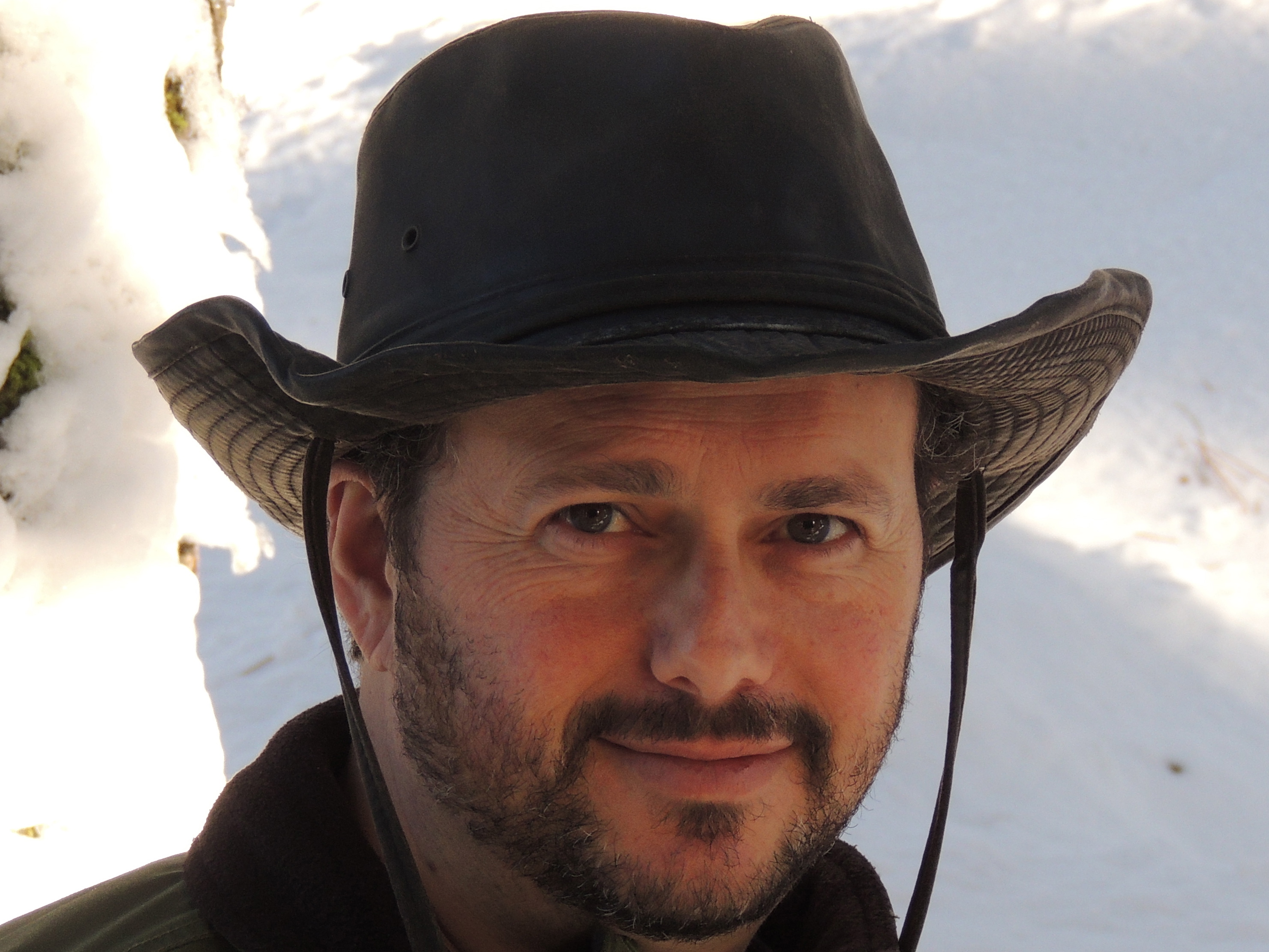
Tony Armstrong

Photo by Jana Armstrong (used with permission)

Find out more about Tony by visiting his web site: www.anthonyarmstrong.ca

___________________________________________________________________________________

I first met Tony through our mutual friend, Kim Fahner.  He’d been one of her teachers, and she credited Tony for setting her on the writer’s path.

Tony is an award-winning author of short stories, a published poet, spoken word performer, and photographer.  I may have missed a few things in there.  This man does a lot of creative work, all of it excellent.

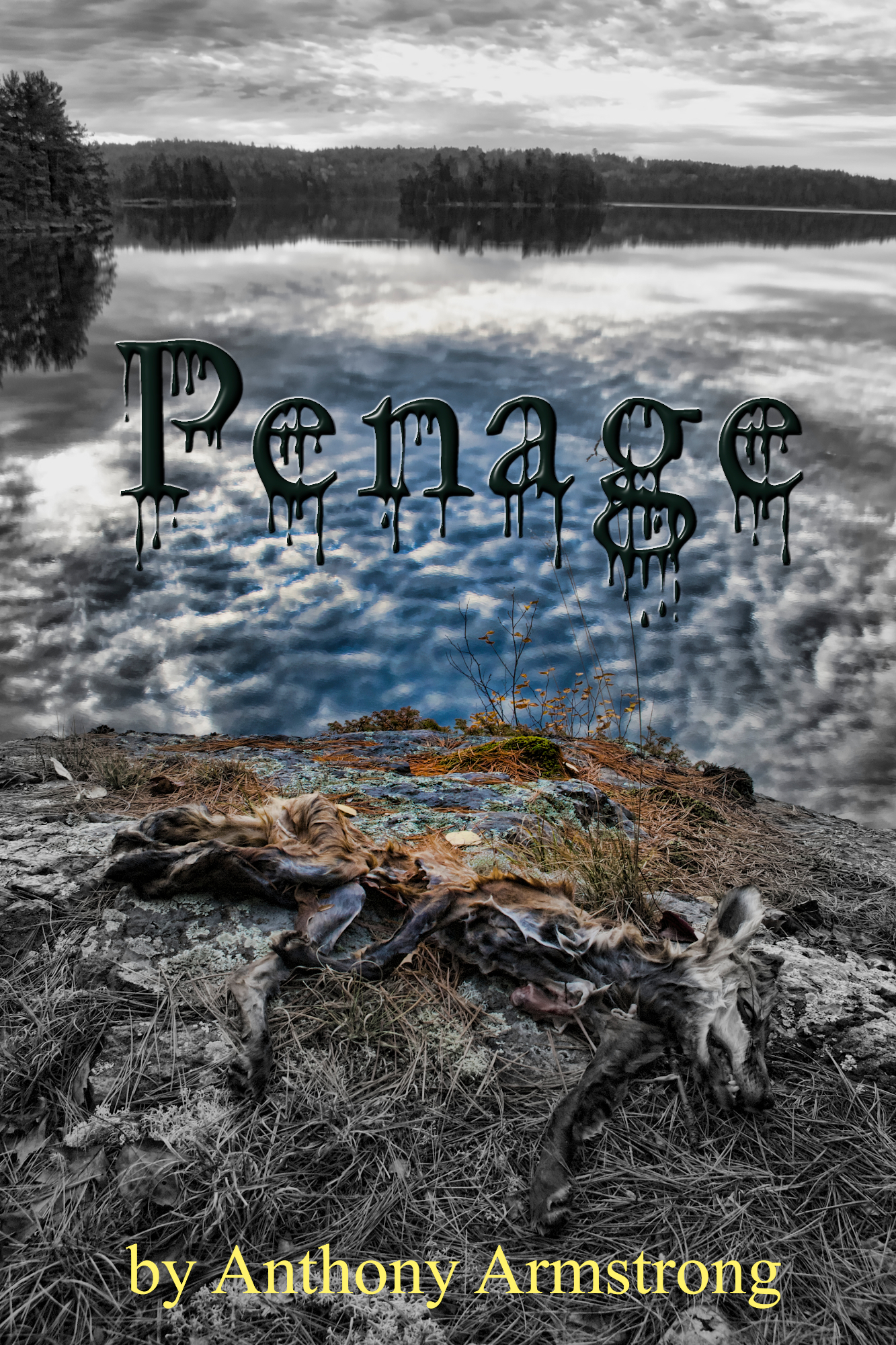
Now he’s published his first horror novel Penage.

Welcome, Tony!

WG: When did you first start writing, and when did you know that you were a writer?

AA: I realized the power of words when I was a boy and my father would tell us marvellous fantasy adventure stories at bedtime. In elementary school, I could amuse people with silly verse. My grade seven teacher read a poem I wrote and called me a communist. In high school I began writing for personal solace and satisfaction. But it was not until I was about twenty that I wrote anything that contained a poetic perception.

WG: You work in different genres and forms. How is each different, and what do you like best about each?

AA: Poems and short stories exist as completed entities before I record them. They seem to be whole when I bump into them, but I will do some mental editing before writing them down. The novel Penage was different in the sense that it was in progress for a long time, but it did seem to have its own existence. It flowed out of itself. Things I wrote down one night had a significance that became clear to me nights later as the story revealed itself.

WG: You were a teacher for many years.  How has that part of your career played into your writing, or was it the other way around?

AA: Sometimes my enthusiasm for literature was evident when I was in the classroom, but schools are the antithesis of a creative environment. Teachers and students are carried along by institutional inertia.

WG: When and how did the idea for Penage first strike you and how long did it take to bring your project to fruition?

AA: Judy and I have a small piece of land on the shore of Lake Penage. It was given to us by Judy’s parents. My father-in-law told me about a plane crash near our camp. He also told me about retrieving a frustrated fisherman’s lost gear. I was disappointed when electricity came to our area of the lake. All these events and a what if perspective blended together in my mind without much effort from me, and a horror novel was born. I wrote the story at camp over twenty years ago. During June and half of July, I would write for two or three hours beneath a propane light after everyone else went to bed. In the morning I would read the results to Judy. In July, my brother-in-law, who also had a camp on Lake Penage, died suddenly. I was staggered by his passing and can’t remember exactly when I got back to writing the story. Some time later, I did get back to my routine and finished Penage. It was not until this year that the original work got a serious editing by Ignatius Fay and me. The ebook is the final product.

WG: I’m a big process geek.  Would you mind sharing something about your process as a writer?

AA: I am not a process geek. I am even reluctant to emphasize the role of the writer. I feel more like a recording secretary. I bump into ideas and record them. I think this is especially true of my poetry. I perceive something and write it down. I am not responsible for what I perceive any more than I am responsible for what I hear or smell.

WG: What’s coming up next for you?

AA: A print version of Penage is in the works. I am toying with the idea of a short story collection. When I bump into poetic perceptions of godless spirituality (I hate the word spirituality), I record them. I may look for an opportunity to present them publicly in the future.

Thanks for this opportunity.

Thanks for a great interview, Tony.  Best wishes for your future creative endeavours.

______________________________________________________________________________

Penage is the story of Madison Green, a man with a violent, possessive personality. His distrust of others leads to his having too many x-rays. He pilots a plane that is struck by lightning—twice. The lightning and the overdose of radiation transform him into a physical and psychological beast. The plane crashes into Lake Penage, and the beast lives secretly in its waters for many years. The remains of the plane are his prized possessions, and when they are disturbed and displaced, unwanted contact with human beings becomes inevitable.

As the beast searches for its possessions, its anger increases. It secretes an ooze that

Penage Cover

Photo by Anthony Armstrong (used with permission) Graphics by Ignatius Fay

protects what is his but destroys almost anything else it makes contact with. As the beast reacquires his possessions he comes to see himself as master of the lake; he comes to think of himself as Penage.

Even some of those who encounter the beast doubt its existence, and any public suggestion of its presence brings ridicule. A drunk, a school teacher, a widow, a marina owner, and a truck driver are forced to deal with the beast. Facing the beast means facing danger, terror, and death.

Penage is available at Kobo, the itunes bookstore, Smashwords, the Sony ebook store, and most major ebook sellers. Smashwords will have the lowest price:  https://www.smashwords.com/books/view/318759

May submit-o-rama was a bust :(

I got side-tracked, in a marvellous way, but still side-tracked, by courses.

May Submit-o-rama ChoiceI know myself and my limits.  Further, I’m focusing on fiction at this time versus verse, so I opted for the Choose your own Challenge category, and set my goal, as I had back in October, at one submission per week.

At the time, I was working on two short stories for submission May 31, 2013, and so I thought maybe a couple of flash fiction pieces, or something equally non-angst-inducing and I’d be able to make it.  If necessary, I could polish up some of my older, unpublished poems and see what I could do, but then the learning opportunities came knocking, and I knew I wouldn’t have time to do more than the two stories.

Last week, the deadline on one of the submissions I had planned was extended, and frankly, I was glad. Being out of town for training derailed my writing plans.  So in the end, I submitted one short story in the entire month of May.

It was an original, though, so at least it counted toward Kasie Whitener’s Just Write short story challenge (13 original stories in 2013).  Unfortunately, it was April’s original 😛

I participated, but I don’t think that it could be considered a success.

I’m remarkably okay with that though.  I’ve got my fingers into so much right now, that something had to give.

Other perceived failures

I’d submitted a guest post that was to have gone live sometime in April but my colleague’s even more hectic schedule intervened.  There was some hope that the post might have been rescheduled in May, but the month has passed and it looks like it won’t see the light of day any time soon.  It’s only the second guest post I’ve submitted.  It’s also the second that didn’t pan out.

An interview that I arranged recently also seems to have fallen through.

Why it’s all good

There’s a saying that if you aren’t failing, that you aren’t doing enough to stretch yourself.

I agree with that, so long as the individual who perceives their actions as failure can put the attempt in a positive frame.  Otherwise, it can weigh on the soul.

My perspective: so long as you’ve tried your level best, you’ve upheld your part of the bargain.

I put my best effort into everything that I do, or try.  I can feel satisfied with that and I learn something important every time.  At the end of the day, it is enough.  I am enough.

Are you failing upward?  Have you had some perceived failures recently that have left you questioning yourself?  How have you overcome the negative and turned it into a positive?

Do share.  I’d love to hear what y’all have been up to 🙂

How my life sentence with mortal punctuation has informed my writing

A.K.A. The period at the end of this series 🙂

I’ll preface this bit by saying that I don’t think I’m unique among writers in this respect.  In fact, I think every writer works, at core, with and through the same issues.  This past week, I read (and shared) a great interview with Chuck Wendig in which he talks about (among much other awesome) the themes that crop up in his work.  Surprise, surprise, death and family rank prominently.

In this morning’s The Sunday Edition with Michael Enright, one of the Canadian greats (with whom I was privileged to work, even though he didn’t like my genre/subject matter) Alistair MacLeod, mentioned the same influences and themes.

Think of just about any author you’re reading or have enjoyed, and I think you’ll find death and family cropping up: Rowling’s Potter books were all about death and the search for family despite its omnipresence; Martin’s Song of Fire and Ice is about a number of families and he keeps on killing off prominent members 😉 (note here: in this context, what is politics, but family drama writ large on the world stage?); Collins’s Hunger Games = Death/Family; Gabaldon’s novels are a series of time travelling family sagas and death plays a prominent role.

I could go on, but I won’t.  Search your own shelves/ereaders to find your own examples.

What’s unique about me is my story, my life, and I hope that translates to my characters so that even though the theme may be familar, the way that it is expressed through my characters and stories is something just a little different.

Death

Death finds its way into a lot of my stories in different ways:

In my first published short story, “Chlorophyll and Corruption” (which is probably the prologue to a YA sci-fi), my protagonist first saves his brother from being pushed out of their atmospheric containment bubble, then must flee an impending supernova. “For a Change” (which I have subsequently rewritten as “The Gabriel” and may yet become a sci-fi novel) my protagonist’s reaction to a world of sterile Transmat immortals is to attempt suicide, repeatedly.

In “Fox Fur,” my protagonist is trying to deal with the death of her parents by means of various encounters with foxes.  “Dead Issue,” is about a young woman who makes a personal discovery at a family funeral.

“Tonsillitis Blues” from my 1999 MA Thesis, Whispers in the Dark, is an interpretation of my adult exploration of the near-death experience prompted by my tonsillectomy trauma.  The protagonist of “Fool’s Journey” (subsequently rewritten as “A Terrible Thing” and likely a YA paranormal novel), another story from the same collection, attempts suicide because she can’t deal with the visions of danger and death she’s been gifted with.

Even my poetry is liberally sprinkled with death.

Ferathainn, the protagonist of Initiate of Stone, experiences the deaths of her best friend,

English: Colored version of the ancient Mesopo...

English: Colored version of the ancient Mesopotamian eight-pointed star symbol of the goddess Ishtar (Inana/Inanna), representing the planet Venus as morning or evening star. (Version not enclosed within a surrounding circle) Polski: Kolorowa wersja symbolu ze starożytnej Mezopotamii, ośmioramiennej gwiazdy Bogini Isztar (Inany/Inanny), reprezentujacej planetę Wenus jako poranną lub zachodnią gwiazdę. (Photo credit: Wikipedia)

fiancé, and father, and subsequently dies herself attempting to exact revenge.  She undergoes an Inanna-inspired journey into the underworld to reclaim herself and her will to live.  Eoghan witnesses the execution of his brother for heresy and when the goddess Auraya calls him to become her champion, or Kas’Hadden (hammer of light), he experiences an assassination of personality at her hands.  Dairragh, deeply affected by the death of his mother years earlier, inadvertently triggers the destruction of his home and the death of his father.  He succumbs to his wounds and is resurrected and set on a shamanic path by the mysterious anogeni.

I won’t get into the protagonists of my other unpublished works, but death and its impact are recurring themes.

Death is the period of every life sentence and so it is a universal.  Few readers will fail to be engaged by various explorations of death and its impact on those left behind.  Thrillers and mysteries are built around it and are two of the most popular genres in publishing today.

Family

Likewise, everyone has a family.  Even the only child who has chosen not to have children of her own (like me) has parents and understands the pull of the complicated legacy handed down to them.

In my, admittedly small, family, women proved to be the peace-makers, sacrificial lambs, care-takers, bread-winners, and all around protagonists of the story.

My maternal grandfather was an alcoholic and a womanizer.  He and my grandmother were unable to have children and adopted my mother and aunt.  My grandmother worked in a textile mill during the depression and worked for most of her life until her first major heart-attack forced her into early retirement.

On my father’s side, my grandfather died at a relatively young age because of heart failure and my grandmother was an entrepreneur.  I still meet people in Sudbury who hear my name and ask if it was my grandmother who owned Marttila Sewing Centre.  Yup.  That was her.  She remained fiercely independent until stroke and cancer eventually took her life.

My father was always an ill man and though he was the bread winner for most of his life, it was my mother who held the family together, getting her high school diploma and driver’s licence in her forty’s and starting a new career as a ward clerk in the hospital when my father had his breakdown.  My mother was the one who cared for her parents and my father until their respective deaths.  Though she doesn’t have to, she still takes care of me.

It’s no wonder then, that my work focuses primarily on strong female characters.

Incidentally, here are a couple of posts I came across this week from Marcy Kennedy on strong and likeable female characters.

I had trouble for many years writing strong and likeable men because that was an archetype largely absent from my experience.  I found my way to that eventually, though, because of Phil, and because I learned to recognize the good qualities in the men in my life and expand those into heroic proportions.

Everyone is a mix.  My paternal grandmother may have been a business woman, but she was a poor fiscal manager, and tried too hard to curry favour with the well-to-do women of Sudbury (read sycophantic).  She first promised my mom inheritance of her business, then rescinded the offer and sold the business to a third party.  I think this was because she was too embarrassed to let my mom see what a shambles she’d made of things.

Though family dynamics run through all of my stories and novels, I’ll just present one example, from IoS, because it’s going to take a while to break down for you 😉

Ferathainn’s family in IoS is complex.  Her parents, Selene and Devlin, can’t have children and adopted Fer when she was abandoned by a bedraggled, but clearly noble, woman who refused to speak and ran away before she could be made to explain anything.

Devlin, feeling the need of a child of his blood, fathered Fer’s half-sister Aislinn, with Willow, a family friend and eleph (read elf).  Willow is misanthropic and makes her living as a brew-master and owner of the local public house.  She readily gave Aislinn into Selene and Devlin’s care.

Aislinn is obviously a half-breed, and largely reviled by the Tellurin (human) villagers of Hartsgrove as a freak. She is destined to become a bridge between the eleph and Tellurin peoples, however, by virtue of her heritage.

When Selene and Devlin adopted Fer, the resident eleph, Willow and her brothers Oak and Leaf, invited the new family and Aeldred, the local mage, to a Shir’Authe.  The Shir’Authe foretells the destiny of the child in eleph culture.  At the ceremony, none of the eleph can see anything about Fer’s future, but Leaf sees his spirit-lights, or astara, in the baby’s eyes (if you’re an Elf Quester, this is recognition, if you’re a Meyers fan, it’s imprinting).  This is bizarre enough, because only eleph are supposed to bond with one another in this way.

Selene, understandably, freaks out, but Leaf promises never to act on this deep spiritual attraction unless Fer somehow miraculously sees her astara in his eyes, or otherwise returns his feelings once she is gown.

Aeldred senses a wild and powerful magickal talent in the infant.  He fears that he will not be able to control the child and that she will become a rogue mage.  She has the potential to wreak havoc on their world and her talents will be much sought after, by moral and immoral authorities, both magickal and political.

In an attempt to minimize Fer’s potentially negative impact, he merely tells the others that she has talent and that he will remain in Hartgrove to become her teacher.  He further tells them that Fer’s parents are powerful, but immoral, people and that they must protect the child in the event that either one, or both blood parents, come seeking her.

He gets everyone to agree to a magickal binding.  None of them will be able to speak of the circumstances of Fer’s birth or of her coming to Hartsgrove until the girl comes of age.  By then, Aeldred hopes that he will have thoroughly indoctrinated Fer in the disciplines of the Agrothe magicks and that he will therefore be able to control her chaotic potential and prevent her from doing harm.

In truth, Fer’s parents are Aline of Gryphonskeep and Halthyon, an eleph mage, or kaidin. Aline is descended from the de Corvus family and magick flows through the bloodline.  The original Kas’Hadden was a de Corvus, so the power of the gods has been passed down to Fer.  Aline is married to Killian of Gryphonskeep and mother to Dairragh (dun, dun, dun!).

Halthyon is one of those rogue magi that Aeldred worries about.  He has extended his lifespan far beyond the already lengthy eleph standard.  His goal is to accumulate magickal power (by draining it from others as he kills them) and to ascend to godhood (in the process of which he intends to kill the existing gods of Tellurin).

Halthyon is unable to extract the child’s location from Aline and subsequently kills her in the attempt.  He wants to find his child because he considers her the only person worthy of ascending with him.  In order to do that, Fer must become a god-killer as well.

Okaaaaaay.  So there, in a convoluted nutshell is the familial basis of the plot of not only

English: St. Etheldreda's Churchyard - Family ...

English: St. Etheldreda’s Churchyard – Family Plot with Snowdrops (Photo credit: Wikipedia)

IoS, but the ensuing novels in the series, which I have called Ascension.  You can see why I identify the book in the epic fantasy genre 😀

Family is an endlessly intriguing Gordian knot to unravel and I think you can see where I have mined my tapestry to create Fer’s.

It’s all variations on two essential themes.

How have your life experiences contributed to your creative work?  Do death and family inform your stories?  Do you have a family-plot?

I’d love to hear from you!

Here ends the series that was A life sentence with mortal punctuation.  I hope you have enjoyed it, and found it to be useful in your creative pursuits.

Coming soon: I’ll have a book review for Laura Howard’s The Forgotten Ones, and hopefully a couple of author interviews to throw your way.  I’ll definitely share my experience in Margie Lawson’s  A deep editing guide to making your openings pop course, and in Marcy Kennedy’s Crafting your logline and pitch workshop next weekend.  There might even be some Pupdates and Next Chapters in there.

Writer tech: Converting from WordPress.com to WordPress.org

In my continuing indecision regarding whether to make the leap to WordPress.org or not, I’ve been doing some research.  Gemma Hawdon has graciously consented to let me post our conversation.  I’m sure it will be as enlightening for you as it was for me.

____________________________________________________________________________

How long were you blogging on WordPress.com before you decided to make the move?

I was only blogging for 6 weeks before I decided to swap to self-hosted WordPress.

What kind of research did you do and what were your considerations?

I started by talking to a few friends who had already taken the plunge into self-hosted blogging. I was lucky to have one friend in particular, Caroline of http://presentimperfection.com – a marketing and communications strategist – she was extremely helpful.  I think it’s important to seek the opinions of others and to have someone you can turn to for help.

I also read information provided on the WordPress site: http://en.support.wordpress.com/com-vs-org/.

Another helpful article was this one by Problogger: http://www.problogger.net/archives/2012/03/04/wordpress-com-or-wordpress-org-which-ones-right-for-you/

In terms of considerations, I wanted to find out which version was more suitable from a long-term point of view. Although a complete beginner, I didn’t like the thought of wasting time and effort building a blog that might restrict me in the future.

What made you decide to take the plunge?

In the end it was the flexibility of self-hosted WordPress (WordPress.org) in terms of wider choice of custom themes and the ability to increase functionality of the blog through plugins (i.e. to enhance SEO, email newsletters etc.) I wanted to build something that I would have full control over creatively and (if in the future I’m lucky enough!) commercially. Have I actually utilized many of these options yet? Absolutely not! I’m a little lost to be honest, finding my feet, tepidly…

Are you with a hosting “farm” where you’re largely in charge of everything, or do you subscribe to a hosting service where they have people who can help you with technical questions?

To be honest, I’m not entirely sure what a hosting farm is! But yes, I am pretty much in charge of everything (terrifying). I chose to host with hostgator.com – who were recommended to me because they have a solid reputation and competitive pricing. I have the Hatchling plan which is only $3.96 p/m unlimited disk space (you can upgrade at any stage). This plan also offers 24×7 technical support.

Mel’s note: If you have technical support, it’s not a farm 😉

From what you mentioned, there are good and bad points about the move.  What are they and what would you do differently if you had the chance?

The main shock after swapping to WordPress.org was the terror of suddenly feeling completely alone! WordPress.com takes care of everything for you. You feel part of a community because they publish your posts across Reader. When I switched to self-hosted I lost a huge chunk of traffic. Previously, I was gaining 5-10 new followers each week – that has fizzled out to 1 if I’m lucky!! Plus it’s amazing how encouraging those simple ‘likes’ can be – you get none of that with WordPress.org.

To help me transfer, I used a friend of a friend because he was incredibly cheap and he did a great job, but initially I lost all of my followers. I had to contact WordPress in the end and they transferred them across for me, but it took several weeks. In the meantime, I had to post from both platforms. I think If I had to do it again I would use WordPress’ own guided transfers – they cost $129 USD.

I’m still feeling lost on the technical side of things. With WordPress.org you’re the one responsible for stopping spam, for creating and maintaining backups and for updating versions of software. I haven’t taken full advantage of the creative freedom yet because it would mean paying someone to build a logo and banner and I can’t justify that right now; however, I’m learning about new things each day and certainly making progress.

One thing that is working for me is having a Feedblitz icon on my site. Feedblitz allows subscribers to view all of their blogs on the one page (a little like WordPress Reader). Followers who subscribe through this software are generally savvy Internet users and bloggers themselves.

I have to keep reminding myself that I’ve only been blogging for 5 months and it takes time and effort to build a solid following. However, I do feel as though I’m finally making progress. I’m rising in the ranks of Google and Twitter and my traffic is increasing! More than anything, I enjoy the creativity of what I’m doing and the fact that I’m the boss of something that is completely mine.

I think it’s important to figure out what you want from your blog and you’re reasons for blogging before you decide which WordPress version to go with.  For me, the benefits of starting with WordPress.com allowed me to experiment before investing any money. I gained an insight into how people responded to my voice and writing and whether there was a demand for my topic or not.

In the end, I think WordPress.org is better for the long-term if you want to build a blog that is completely yours, which you have full control over – no limitations.

I hope this is of some help – Thanks Melanie for your questions – Happy Blogging!

So what do you say, blogophiles?  Will Gemma’s expereince be helpful to you?  I’ll certainly benefit!

I’d love to hear what you have to say.

____________________________________________________________________________

Gemma Hawdon

Gemma Hawdon

Gemma Hawdon lives in Melbourne, Australia with her husband, two children, one dog and a couple of rabbits. Having always worked in marketing prior to having children, she turned her attention to writing about 4 years ago and has never looked back! Gemma has published articles in parenting magazines across Australia including Melbourne & Sydney Child and Parenting Express and dabbles in writing ghost-articles for extra income, but her most passionate project is the children’s fantasy she is writing which she never seems to get the time to complete! Gemma is also responsible for running the administration and finances for their family-run business in the building industry.

Gemma’s blog, topoftheslushpile.com, documents the challenges, highs and lows of writing a book and getting it ready to tackle the competitive publishing industry.

Six questions with Alon Shalev

Alon ShalevAlon Shalev writes social justice-themed novels and YA epic fantasy. He swears there is a connection. His latest books include: Unwanted Heroes, At The Walls Of Galbrieth, and The First Decree. Alon tweets as@alonshalevsf and @elfwriter.

_________________________________________________________

Welcome to Writerly Goodness, Alon!  Thank you for taking the time to answer a few questions for my readers.  I must say that I’ve been following you with great interest since we “met” through Author Salon and I became aware of your progress through last year’s Amazon Breakthrough Novel Award (ABNA).

WG: I know you’ve probably written a lot about this, but I must ask about your experience with the ABNA.  Some of my friends have expressed interest in the competition (or entered) and I’m sure they would love to know about the process of getting to the quarterfinals and how it contributed to your success with At the Walls of Galbrieth.

AS: I think ABNA is an amazing opportunity even if you do not win. It pushes you to finish and polish a manuscript, and prepare what is essentially your media kit. I have reached the quarterfinals with three different books and enjoyed the tension around it (I had my acceptance speech all worked out!). When you reach the quarterfinals, experienced people in the industry critique your novel. It can be tough, but you do learn a lot. Finally, there are many agents trolling the competition, so it is an effective way to avoid the depressing slush piles.

WG: Now The First Decree, the second novel in your Wycaan Master series has been published.  How was writing the second novel in your series different from the first and what did it teach you about yourself as a writer?

AS: The most significant difference is allowing for a story arc that gives a satisfying climax, but also extends tendrils into the next book. In fact, there is a similarity at the beginning, because you want to bring the reader who has not read your first book (or read it a while ago) up to speed without imparting a huge information dump or giving away too much from the first book. I found this very challenging and had a number of friends critique this aspect in order to find the right balance.

What I love most about writing a series is that I can really develop my characters. They have time to grow up and mature. Outside of writing, I am a devoted father (which is what got me writing epic fantasy in the first place) and work with college students. So I realize that I am imbuing this love for seeing young people grow and develop into my writing and, I think, only a series can allow for this.

WG: How did Seanchai’s story begin for you and how did it evolve? 

AS: Every summer, my family goes camping for two weeks in Northern California. After we had set up camp, my sons (then 11 and 7) went off to explore the campground and I whipped out my laptop. They soon returned and objected to me writing during family time and this was the compromise we reached. During the two subsequent years, I wrote The First Decree and Ashbar, and read a couple of chapters each night either around the fire or snuggled in my tent.

I realized that many aspects of Seanchai are a mix of both sons, and perhaps how I would like them to turn out.  My fears that I will not be there for them one day plays out as Seanchai is denied a parent or mentor so many times. But there is also the desire to cultivate deep friendships, which I believe is central to the values that both boys have, as well as dealing with teenage romance and pressure.

All my characters are now part of my family. When I killed one off, I cried. When I edited that chapter several times, I cried…several times! I often imagine conversations with them, counselling and encouraging them, as I strive to do for my sons.

WG: I’m a big process geek.  Would you share something about your writing process? 

AS: I am not a good person to ask. I plunge in and trust the creative juices. I usually finish a 100,000-word manuscript (a rough draft full of mistakes) in three months, writing an hour a day and more on weekends. I keep a contents page for myself to track chapters and a characters page where I add physical traits or history. I also have ongoing plot notes that are threads between chapters and stories. This is written at the bottom of the chapter I am writing and I cut and paste on from word doc to word doc and erase an idea after it is included.

In terms of workspace, my desk is in the kitchen and I can write on the train, bus, anywhere. Once the idea is there, everything flows. It is a truly exhilarating experience. My family would probably tell you that I am a bit crazy when in the creative process. If I do not have the time to write I can become somewhat cranky and have a propensity to talk about little else. I am constantly worrying about my characters and the danger or emotional turmoil that I put them in.

WG: I’ve been told by industry experts that traditional fantasy is a hard sell in today’s market.  Did you find this to be true and what are your thoughts on the genre’s continuing potential? 

AS: My marketing guru is John Locke (the author) and I am fastidiously following his business model. He says it is better to have a smaller, clearly defined target audience, than a larger, less identifiable one. I have more problems placing my social justice-themed novels than fantasy.

Fantasy readers are passionate, fun, social and happy to share opinions. They are on line and engaging their peers all the time. In addition, every movie – Lord of the Rings, Eragon, Hobbit, Harry Potter, Oz, Jack and the Giant Slayer – brings waves of new and eager readers. Parents, who want to encourage their children to read, will buy them the books that reflect these movies. As long as these movies are being produced, as long as there are great authors writing quality stories, I think the future is bright and I am thrilled to be a part of it.

WG: What’s coming up for you and The First Decree?

AS: Following John Locke’s model, I am very focused on writing and publishing. Ashbar – the third book in the series is scheduled to come out in the fall. I will finish writing Book 4 during the summer and then spend the rest of the year editing it before turning it over to my editors.

The new marketing reality is that we are in an age of instant gratification. You finish Book 1 and if you enjoy it you want the next and you want it now! How smart were Amazon with their 1-Click? There is so much social media that to keep your readers waiting a year for a book is dangerous if your name doesn’t end in Brooks, Salvatore etc.  The First Decree

Meanwhile, I continue to build my online platform through my weekly blog (www.elfwriter.com) and twitter (@elfwriter – 22,000+ followers). I spend a fair amount of time here and on Facebook (and just getting into Goodreads), and I truly love the interaction with fellow writers, readers and fantasy fans.

Thanks for sharing your time and expertise, Alon.  All the best for your future writing endeavours!

Thank you, Mel, for this opportunity.

The next chapter: Diving back in

The last of my caturday quickies is a bit of an update on the work in progress (WIP) and other writing projects I’m tackling these days.

I revised my short story “A Terrible Thing” for Tesseracts 17 and submitted that on February 27, just one day before the deadline (!)  I submitted a short story back in October for the competition, but was not successful at that time, though the rejection letter was of the very encouraging variety (please send us something else).  I followed the editors’ advice, and ATT is sufficiently different from the story I submitted last fall that I hope it will tickle some fancies 🙂

I also submitted a poem for the League of Canadian Poets’ National Poetry Month blog: “peregrine.”  I’ll link through when it’s posted.

In related news, I forwarded an opportunity to my friend, Kim Fahner, a couple of months ago, and she, in turn, asked her publisher to submit her poetry collection, The Narcoleptic Madonna, to the powers that be.  The result?  Kim will be participating in the Battle of the Bards at Harbourfront Centre April 3rd!

It’s inspired me to think more seriously about submitting some of my poetry to various publications.  We’ll see where that leads.

As of today, I’ll be diving back in to Initiate of Stone and the next set of revisions.  I’ll also be revising “The Michael” for the Writers of the Future competition and working on a new story, “Way Station,”  (which the Retro Suites inspired) for In places between.

Finally, after my bout of training fury and certification regret, I’ll be catching up with my critiquing crew.

I never did work further on Gerod and the Lions.  I am hoping that I got far enough into it that I’ll be able to pick up the threads when the time comes.

A not so pleasant writing-related task that I’ll be picking up shortly, is collecting all my various financial bits and pieces and submitting my taxes.  I claim writing as self-employment on my income tax.  My lack of recent publishing success is a bit of a concern, but it’s certainly not for lack of effort 🙂  Do you think auditors would accept this blog as evidence of my industry? 😉

Writerly Goodness

Writerly Goodness

What’s been happening in your writerly lives lately, my friends?  Are you writing “hard”?

What’s coming: I’ll continue my series, A life sentence with mortal punctuation, tomorrow, and in the future, I hope to have an interview with Amazon Breakthrough Novelist Award 2012 quarter-finalist Alon Shalev regarding his writing life and the second book in the Wycaan Master Series, The First Decree.

Caturday Quickies: Susan McMaster Workshop

Susan McMaster

Susan McMaster (Photo credit: pesbo)

When I originally indicated that I was going to change my blogging schedule to weekends only, one of my online writing friends commented on how wonderful the idea was of a ‘flurry of posts’ on the weekend.

I’ve been posting fairly consistently on the weekends since, but I realized that I have a few things to catch up on.  So this weekend, though the weather is sunny and cold here in the Sudz, I’m creating my own mini storm of blog posts.

Who is Susan McMaster?

Susan McMaster is a past-president of the League of Canadian Poets, poet, and spoken word artist.  She’s given a workshop in the north before, and this time, I decided to partake.

The Sudbury Writers’ Guild had enough funds in its coffers to pay Susan’s fee for the afternoon workshop and to secure space at the newly rebuilt south end branch of the Sudbury Public Library.

The theme of the workshop was Writing through the Emotions.

Susan gave a brief introduction and offered up a couple of samples of her work and the work of other poets to illustrate.  Breath and space seemed to be the key elements to evoking emotion in poetry, and so, when Susan gave us our writing assignment, I was expecting something a little different.

For the first part, we weren’t to write a single word.  Instead, we were to map out what we were going to write in terms of beats.  Long, flowing sentences would be represented by lines and short, curt sentences and breaths by carets.

Though I think several of us (fiction writers, in particular) struggled with the concept, we all dove in with enthusiasm and gave it our best.

Afterward, we had the opportunity to read from either our work of the afternoon, or something that we had brought with us.

Though only two and a half hours, the workshop was interesting and gave me a different way to look at my writing that I hadn’t considered before.

A life sentence with mortal punctuation: part 1

First: A note about memory, frame, and fiction

I have my memories, but as I get older, I don’t know that the biological hard drive that is my brain hasn’t been corrupted, that the memories reflect the reality that was, or reality as I want it to be.

My memories have also been informed by family stories and sometimes the latter influence the former, so again, I can never be certain of their veracity.

Thinking about this, I remember the academic and theoretical concept of “frames” from my undergraduate studies, now also more than 20 years in my past.  Everyone has their own frame of reference, influenced by their experiences and education, family and individuated world view.

Even if one attempts to be completely truthful, one’s truth can run counter to reality.

The writer cannot express anything but through the filter of their frame.  In this sense, all written work, whether scientific, academic, journalistic, historical, or honestly fictive, has in it the element of fiction.  It cannot help but be influenced by the frame of the writer.

Mathematics may be the only purely objective writing, but even there, unknowns and chaos creep in and beg interpretation.

This is just my opinion, but I wanted to get it out there as a way of saying that even though I write from memory and experience, I am writing a story.  It is my story, but not having time travel at my disposal, I cannot say that this story, based on real life events, is any more “real” than a movie based on the true story of X.

How it all began (yes, I’m really going there)

So, it’s October, 1969, and my mother, nine months pregnant, walks to her regular doctor’s appointment.  Her doctor’s office was at the top of Regent Street hill, and for those of you who don’t live in Sudbury, that’s a really big hill, of San Fransiscan dimensions, even.

The doctor enters the exam room and says, “I didn’t expect to see you.  I thought you’d have your baby by now.”  My mom shrugs and says that everything’s going fine, “but,” she says, “I’ve been having these really strange cramps all day.”

After a brief assessment, the doctor tells her to call her husband and get over to the hospital post-hasty: “You’re in labour, woman!”

My mom’s never been the kind to thrust the agony of my birthing at me.  I don’t know how long she was in labour or how painful it was.  I just know that it was the first, and only, occasion when my maternal grandmother, sober her entire life with that notable exception, got stinking drunk 🙂

Early memories

The only things I remember from my infancy are images.  Moments.  The colourful, plastic Fischer-Price mobile that hung above my crib; a tin, battery-operated locomotive; and this memory, which became a poem:

infant crawls

mother says she was crawling by six months and walking
by eighteen. situate her chronologically as you wish
any month and day in 1970.
reaches linoleum and drags
legs forward.  pivots onto buttocks.
suddenly sees black shoes and white tights,
spill of turquoise dress over thighs.
a contemporary picture reveals the dress in question.
shirred bodice, empire waist, short sleeves poofed and gently
cinched around chubby arms.  her hair is short and blonde, lovingly
held in place by two plastic pink barrettes in the shape of bows.  her baby
teeth are coming in.
fridge holds her attention for a moment.  then something moves
—brown shoes—ma ma.
though she was beginning to speak, her words were
carefully articulated.  not mama, but ma ma; syllables
spat out, exhaled along with breath.
low like this, ma ma is brown shoes and white-pink
calves.  ma ma is also round-white-pink, brown curly, and
long-white-pink ticklers, but they are all ma ma.  they all smell
of comfort.
the brown shoes were around for years, with large, square,
brass-toned buckles.  nylon-sheathed legs above them truncated by
fall of blue dress: straight, simple, homemade, with short sleeves.
horn-rimmed glasses frame hazel eyes and permed, dyed hair.  mother’s
smile was shy and kind.
chubby arms lift hands to grasp.  frustratingly ma ma seems to be between
wriggling grabbers, but cannot be touched.  “ma,” she says, and “ma.”  two
world-shaking clomps later, the long-white-pink lifters bring her up to the
round-white-pink ma ma and pudgy fingers tangle in curly brown.
this is my memory.  i do not ask my mother if she
shares it.

©2012 Melanie Marttila

infant crawls era Mel

‘Dis be me 🙂

Something I don’t remember

My maternal grandmother had a massive heart attack that required a multiple by-pass (not sure how many, just that they had to take the vessels from her leg).  In the wake of the ordeal, she was in a kind of fugue state, conscious, but not talking, not interacting.

My mom was allowed to bring me in to the intensive care unit.  Normally, a baby wouldn’t be permitted, but it was thought that either it was time to say final goodbyes, or that I might somehow remind my grandmother that she had a reason to live.

Fortunately, the latter happened.  My name was the first word she uttered in days.  I have no idea how old I was when that happened.  It’s funny sometimes the affect we have on others, whether we know it or not.

My grandmother was given a dim prognosis: months perhaps.  She lived to see me graduate high school and did not pass away until I was in university.  More on that in a later post in this series.

Grandpa

My first encounter with the spectre of death was the passing of my paternal grandfather.  When I was three, my grandfather was up on his carport roof, shovelling snow, and had a massive heart attack.  I was carefully sheltered from the event.

That year, the local television station broadcast “The Santa Show” which read children’s letters to Santa on the air.  The big Christmas news Santa reported that year was that Rudolph was sick and might not make his annual flight.  In trying to explain the situation to me, Mom told me that Grandpa was in the hospital.

“With Rudolph?” I asked.  Yes, with Rudolph, she said.

Only days later (I think), I was set to play in the snow while my father climbed up to clear that same carport roof.  The job had to be completed.  As he descended, the ladder slipped on the ice, and he fell, calling to my toddler self for help.

Understandably, I thought Daddy was being silly.  Patiently, through his pain, he convinced me, who’d never gone anywhere alone in my brief life, to go to the next-door neighbour for help.  I was frightened out of my wee gourd and Dad had to keep encouraging me to keep going.

Neither of us knew, entangled in our own drama, that Grandpa had died.

I only know this because my mother told me: Grandpa was a man of few words.  He loved to garden, and grew straw flowers so he could engage in dried flower arranging in the winters.  When he watched me, he sat in his chair, often reading the paper, and let me play quietly with his Salada tea figurines.  I still have the wolf.  It sits on my bookshelf along with other memorabilia.

I hardly had the opportunity to get to know him and he was gone.  Dad ended up with a fractured pelvis and was in the hospital over the holidays.

Truthfully, neither event had much of an impact on me, though I always thought that I’d let Dad down when he fell, not that I could have done more than I did, being three and all.  I got used to not having Grandpa around, and life went on.

I think that when you’re very young, death can’t be understood.  It’s therefore far easier to accept.  Absence becomes the new normal.  There’s no introspection or grief, and the grief of others is equally beyond understanding.

Perhaps these early experiences do have a lasting effect.  Maybe the trauma lies dormant, only to surface at a later date and hijack our lives.  For all the time I’ve spent examining my life, I can’t say.  I don’t feel any connection between these early experiences and the person I became.

What about the stories of your lives?  Do you have a memory of a death from your early years?  How did you react, or not?  Can you connect the experience to some trait or tendency that you embody today?  Have any of your early memories inspired your creative work?

Next week:  My first near-death experience and what came of it.

Until then, writerly peeps.  In the meantime, mine your memories for creative gold 🙂