Tipsday: Writerly Goodness found on the interwebz, Aug 10-16, 2014

Here we go in 3 . . . 2 . . . 1!

K.M. Weiland’s blog tour continues on the Writer.ly community with the ten commandments of reading like a writer.

And on Darcy Pattison’s Fiction Notes with four types of villains.

Here’s Katie’s regular Sunday post with podcast: How to figure out what your character’s arc should be.

Finally, her Wednesday vlog: Characters or ciphers? Which are you casting in your story?

MJ Bush collects 99 essential quotes on character creation. Each entry cited and linked for further reference.

Sarah Callender posts about rumination frustration on Writer Unboxed.

Lisa Cron explains how to get what you need out of a famous author’s talk. Very useful for conferences, conventions, and literary festivals.

And . . . forgetful Mel forgot to catch up on the couple of posts I couldn’t link two Tipsdays ago when WU was experiencing some technical difficulties. So here they are now: David Corbett on the tyranny of motive, and Jane Kisacky on the many dreams of writing.

Becca Puglisi ponders, what makes a good blurb? on Writers Helping Writers.

Jami Gold guests on Anne R. Allen’s blog: Everything you need to know about giving and receiving feedback on your WIP.

Then, Jami had to follow up on her blog with the beta reading worksheet.

Jami also posted on characters both strong and vulnerable.

Bronwyn Hemus of Standoutbooks explains why showing and telling is not an either/or proposition, but a matter of how and when.

Here’s Amy Shojai’s entry in the writing process blog hop: Why I write what I write.

Barbara Geiger’s confessions of an ex-there-are-no-rules-writer.

Rebecca T. Dickson tells us all the crap someone should have told us writers by now.

Julian Friedmann on the mystery of storytelling. TEDxEaling.


Open Culture shares Jane Austen’s unusual editing method.

Fifteen scientists share their favourite science fiction novels and movies. The Huffington Post Science.

As a friend of mine would say, that’s a shite-load of Writerly Goodness.

Enjoy, my friends 🙂

Tipsday

Tipsday: Writerly Goodness found on the interwebz, Aug 3-9, 2014

Anne R. Allen explores the good and bad of critique groups.

What’s the most important relationship in your story? K.M. Weiland explores how focusing on this aspect of your story could improve it.

Then Katie continued her blog tour on Janice Hardy’s Fiction University, on finding your character’s breaking point.

And then she continued the tour on Procrastiwriter with, What Jane Eyre can teach us about mind-blowing heroines.

Opening lines (and scenes) are some of the most difficult to write. K.M. Weiland has some suggestions for you in her post about Most Common Writing Mistakes: Boring opening lines. Podcast link included.

SF author Veronica Sicoe writes about opening line madness. See, everyone struggles.

MJ Bush guests on Writers Helping Writers (Angela Ackerman and Becca Puglisi) on the problem of overly self-aware protagonists.

Then she posted about inner conflict on WritingGeekery.

Casting your novel may seem like frivolous fun, but Fantasy Faction offers five ways it can help improve your story.

Stuck on a scene? Janice Hardy gamifies the work of sorting through scene outcomes on Fiction University.

QueryQuagmire (on Tumblr) offers ten things writers should keep in mind before diving into revisions.

Porter Anderson shares Hugh Howey’s ten counterintuitive tips for self-publishers on Publishing Perspectives.

The Canada Council has denied operational funding to On Spec. Susan MacGregor, On Spec editor and author, explains the situation and offers some options to help. On Spec is a Canadian institution in speculative fiction, and the quality of their fiction, editing, and production, is excellent.

I know this first hand. My SF short story “Downtime” will be appearing in the fall 2014 issue, and Barb Galler-Smith, the editor with whom I worked, was very professional. That the magazine is excellent is not just my opinion, though. On Spec is an award nominated, and award winning publication.

Their Patreon account has now been set up. Go to the On Spec web site for more information.

Why Fifty Shades of Grey has bondage all wrong. Tickld.

Forgotten Dr. Seuss stories and other news from Poets & Writers.

Mashable offers up their list of 22 summer reads.

Ten SF novels that will make you more passionate about science, from io9.

Ursula K. LeGuin talks to Michael Cunningham about genre, gender, and broadening fiction on ElectricLit.

Billy Collins shares two dog poems in this brief TED talk.


Wow! That’s a lot of Writerly Goodness.

Enjoy, folks 🙂

Tipsday

Tipsday: Writerly Goodness found on the interwebz July 27-Aug 2, 2014

Sorry for the late-ish post. Had to go to Yin practice tonight. Yoga was beginning to think I abandoned her 😉

Roz Morris started her Masterclass for The Guardian. This is the first post in her daily reporting on the queries arising from hre students. Catch all of her snapshots. She’s got a clever bunch there.

Part 3 of K.M. Weiland’s negative character arc series: The negative character arc in the third act. Surprise, surprise!

And here’s more Katie, guest-posting on Angela Ackerman and Becca Puglisi’s Writers Helping Writers. Five important ways to use symbolism in your story is part of Katie’s ongoing blog tour in honour of her new book: Jane Eyre: Writer’s Digest Annotated Classics. It’s the last day to enter her giveaway! Go get ‘em writing tigers 🙂

And . . . Katie’s Wednesday vlogs return with foreshadowing’s number one job in your story. Welcome back, vlogs! We missed you!

Writer Unboxed is experiencing some technical difficulties so The Tyranny of Motive and The Many Dreams of Writing will have to wait until next week.

Shennandoah Diaz writes about three ways to save your backstory from the cutting room floor on the There are No Rules blog at Writer’s Digest.

Laura Drake shares her tale of tragedy and triumph on Writers in the Storm.

Edits, Editors, Editing. Ruth Harris explores the secret weapon of every successful writer on Anne R. Allen’s blog.

Elif Shafak’s TED talk on the politics of story.

Quentin Cooper asks the question, why is science fiction so hard to define, on the BBC’s Future blog.

Crawford Killian looks at three SF&F writers who break the mould in The Tyee.

21 books that changed science fiction and fantasy forever from io9.

Electric Lit shares a lovely list of supernatural collective nouns. Anyone for a fondle of unicorns (I thought that was a blessing)?

CNN Travel features the world’s coolest bookstores. Ok . . . gotta sop up the drool here.

Enjoy the Writerly Goodness, my peeps. See y’all Thursday.

Tipsday

Tipsday: Writerly Goodness found on the interwebz, July 20-26, 2014

Angela Ackerman details her encounter with copyright infringement on Writers Helping Writers. This is serious stuff.

I’ve had other writerly friends who’ve noticed their books have been pirated and if you’ve been following Angela on FB, you probably know that she’s encountered that too.

There’s a mode of thought on the interwebz that says pirating is not your enemy. If people like your book so much they steal it, then it will likely convert to more readers.

I think that argument is fundamentally flawed. Chuck Wendig spoke to this quite eloquently a few months ago, here, here, and here.

What if people are stealing your work and trying to make money off it illegally by selling it and pocketing the profits? For a self-published author, the book is her livelihood. Even for the traditionally published, what money he might have seen from a legitimate sale, disappears. It’s wrong.

And the readers who buy these pirated copies may not even know that their money is not going to the author. That’s doubly wrong. Theft, deceit, and fraud? That’s jail time people.

But as Chuck said, it’s not just about the money. An author (or authors) slaved over that book for months, if not years. It’s their intellectual property (IP). It’s their blood, sweat, and tears.

Don’t pirate books. Don’t do it.

<end rant>

Onward, to more light-hearted material.

M.M. Finck posts on Women Writers, Women’s Books about the querying process and why it’s not just about the query. Thanks to Jamie Raintree (see below) for bringing this to my attention.

Anthony Metivier guest-blogged about how to mine your dreams for story gold on Writers Helping Writers.

Bringing a strong vision to your fiction, by Laura K. Cowan, for Writer Unboxed.

Jamie Raintree asks, how far do we follow our dreams? Since we’ve become acquainted, Jamie’s acquired an agent and is now working on a second novel. I love watching her journey unfold.

Here’s Janice Hardy’s guest post for Anne R. Allen’s blog about how not to start a novel.

Veronica Sicoe follows up last week’s post on how she structures her novels with this one on how she brainstorms an idea into a working concept.

K.M. Weiland continues her negative character arc series with part 2: The negative character arc in the second act.

Whether you’re considering hiring a ghost writer, or becoming one, this post by Roz Morris will answer your questions.

Four reasons to use dramatic irony from Writers Write.

Chuck Wendig gets a mention again for sharing this i09 post about Snowpiercer and its fascinating influence. Yes, it’s a South Korean movie based on a French graphic novel, but it’s still great storytelling.

Xia Jia shares her thoughts on what makes Chinese science fiction, Chinese on Tor.com. Translated by Ken Liu. It’s interesting socio-political stuff.

And if your to-be-read (TBR) pile isn’t big enough yet, here is some recommended reading from TED.

Flavorwire presents the 35 writers who run the literary internet.

As a follow-up to my last week’s posting of the CanLit song, here’s every Canadian novel ever. It’s kind of true. And funny. The Toast.

And that’s it for this week, folks.

Thanks for following, sharing, and all the good stuff you do.

Tipsday

Tipsday: Writerly Goodness found on the interwebz July 13-19, 2014

A cavalcade of creative coolness. Just for you.

The July 2014 author earnings report. For those who haven’t already read it.

Anne R. Allen defines traditional publishing and offers some perspective on what’s happening with the Big Five in this changing publishing world.

Carly Watters points out the biggest query letter mistake.

Jamie Raintree writes about what we can and can’t control in the business of writing.

In which Veronica Sicoe shares her method for planning a novel.

The negative character arc series begins. K.M. Weiland.

And moar Katie: What if your antagonist is right?

MJ Bush guest posts on Writers Helping Writers. Three steps to deepening your character with anger.

Reverse engineering your character arc with Jami Gold.

Roz Morris diagnoses and prescribes treatment for a writer’s ailment: The plot hole.

Kristen Lamb discusses the seven deadly sins (and a few virtues) of prologues.

The BookBaby blog asks, are you more creative writing by hand or typing?

Brainpickings features Leonard Cohen on creativity, hard work, and perseverance. Excerpted from Paul Zollo’s Songwriters on Song-writing.

How SF writers predicted the conflict in the Ukraine and how they’re trying to stop it. Slate.

David Brin shared this SF story by E.M. Forster (written in 1909): The Machine Stops.

Grammar Girl, Mignon Fogarty shares ten words whose pronunciation has changed over the years.

Everybody and their dog’s pet hamster has been sharing this around the interwebz ‘cause Weird Al is just so brilliant 🙂


And Kari Maaren sings a lovely little song about CanLit 🙂


Enjoy, my writerly peeps 🙂

Tipsday

Review of Jane Eyre: Writer’s Digest Annotated Classics by K.M. Weiland

I read Charlotte Brontë’s Jane Eyre for the first time when I was in high school. At the time, though I enjoyed it, I wasn’t yet reading with the critical mind of an author. I wasn’t reading for craft.

The second time I encountered Jane Eyre, I was in university and, having read it before, it was one of the books I set aside from my massive stack of reading. I managed well enough in the course and placed the book on my shelf.

Years later, I read the book a second time. Though I was a writer, and published, it was as a poet, and again, I read for enjoyment rather than for craft.

Now, I read for craft and I find I mentally dissect books as I read them. I don’t mind knowing the ending, and in fact, I often flip forward in a book. Rather than spoil the reading experience, knowing the climax allows me to see more clearly where the author has foreshadowed events.

I can see the structure of a novel like a glowing thread. Here is the hook, the inciting incident, the first major plot point. Reading for craft is more enjoyable for me than reading for pleasure.

It’s like daily writing practice. Once you start down the path, it’s hard to stop, and, after a while, you no longer want to.

K.M. Weiland and her blog, Helping writers become authors, have been instrumental in my development as a reading writer.

You could say I’m a groupie, if there is such a thing. It’s a bit more than being a fan. I share nearly all of Katie’s posts. I want all my writer friends to benefit from her insight and technique.

So, of course, when Katie emailed me and asked if I would mind reading and reviewing her upcoming book, Jane Eyre, annotated with an eye to technique I instantly agreed.

Onto the review . . .


What Amazon says:
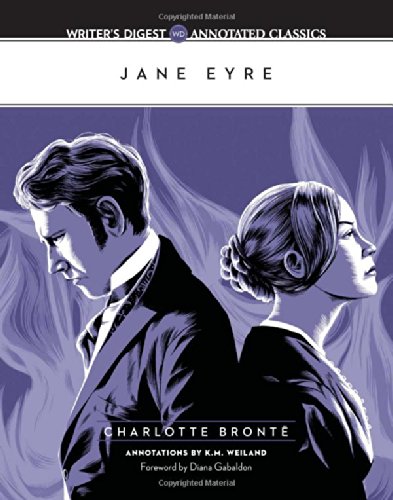
AnnJaneEyreCover

“I am no bird; and no net ensnares me; I am a free human being with an independent will…”

One of the most sweeping and enduring novels in English literature, Charlotte Brontë’s Jane Eyre has become a beloved classic and a must-read for fans of period romance. Filled with memorable characters, witty dialogue, emotional scenes, social commentary, and intriguing twists, Brontë’s novel, written in 1847, still has much to teach writers about crafting exceptional stories.

As part of the Writer’s Digest Annotated Classics series, this edition of Jane Eyre features hundreds of insightful annotations from writing instructor and author K.M. Weiland. Explore the craft and technique of Jane Eyre through the lens of a writer, and learn why and how Brontë made the choices she did while writing her iconic novel. The techniques learned from the annotations and accompanying study guide will aid in the crafting of your own celebrated works of fiction.

My thoughts:

I’ve read Jane Eyre a couple of times, once in high school and once in university, but I’ve never read it as a writer.

Weiland’s annotations were an eye-opener.

Initially, I considered a couple of what I saw as lapses on Weiland’s part to be creative or editorial decisions, and there is an element of that present. What I was amazed to discover is that Weiland’s annotative decisions are artful, or perhaps I should say crafty, in a way I never expected.

Very quickly, her annotations have the effect of tuning the reading writer’s eye to Brontë’s creativity and craft. The reader begins to pick out additional examples of the same techniques as they occur, and may even, as I did, page back through the book to see where Brontë employed the same technique in the past and to what effect.

Jane Eyre: Writer’s Digest Annotated Classics is not only a writing craft book, but an instructional manual on how to read critically, as a writer.

Under Weiland’s ever-gentle guidance, the reading writer learns that analyzing a text for craft does not have to be a negative experience nor even an academic one.

Those of us who suffered through textual dissection in university will be grateful to Weiland for showing us, in the best authorial sense, that analysis can be fun, and even exciting, as our minds race back to our own works-in-progress to apply lessons learned.

On that subject, the worksheets in the back are, in my opinion, worth the price of the book. Covering setting, character development, structure, indeed, every aspect of writing a novel, Weiland asks questions, assigns tasks, and refers back to Brontë’s work if we need a little help figuring out how to apply the technique in our writing.

This is a top-notch writing craft book and a spectacular start to a new series for Writer’s Digest. Diana Gabaldon’s introduction doesn’t hurt either 😉

My highest recommendation.

My rating:

Five out of five stars.

About the Author:
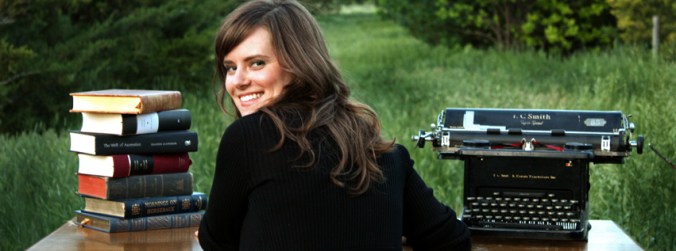
KMWeilandLooking-Back

K.M. Weiland is the internationally published author of the Amazon bestsellers Outlining Your Novel and Structuring Your Novel, as well as the western A Man Called Outlaw, the medieval epic Behold the Dawn, and the fantasy Dreamlander. When she’s not making things up, she’s busy mentoring other authors through her award-winning blog HelpingWritersBecomeAuthors.com.

Tipsday: Writerly Goodness found on the interwebz July 6-12, 2014

Not a huge whack this week folks, but what there is, is all quality 🙂

Most common writing mistakes with K.M. Weiland. This week, one dimensional conflict.

Janice Hardy discusses character development.

Roz Morris demonstrates her beat sheet technique with Ray Bradbury’s Fahrenheit 451.

Anne R. Allen lists twelve dumb things writers do to sidetrack our success.

The ever-awesome Robin LaFevers writes about the crushing weight of expectations on Writer Unboxed.

Lisa Cron writes about how writers have the powah on Writer Unboxed.

Carly Watters reveals three signs that you’re past the form letter rejection stage.

Writer’s Relief presents the joy of gerunds.

Did you need even moar books to read? I didn’t think so. Still, here’s The Millions’ book preview for the second half of 2014.

Eight things you should know about Diana Gabaldon’s Outlander series from the Barnes & Noble book blog.

A review of the two volume Robert Heinlein biography from Barnes & Noble Reviews.

Enjoy!

Tipsday

Tipsday: Writerly Goodness found on the interwebz, June 29-July 5, 2014

Heading off to yoga shortly, so getting this week’s offerings up all hasty like.

Despite the title, K.M. Weiland offers writers some comfort: Why every story you write is a guaranteed failure.

C.H. Griffin posts about what Firefly can teach us about writing. Love Joss Whedon and Firefly, so this geek was caught at the title 😉

Infuse your fiction with Donald Maass on Writer Unboxed.

Ruth Harris blew me away with all of these writerly resources, many of them free!

Neuromarketing advises us to forget the fold. Interesting news for those of us who have usually posted loooong.

Roz Morris counsels a young aspirant about what path she should take to become a writer. This is good advice for anyone considering taking a course, workshop, or degree to bolster their “qualifications.”

The CBC’s list of the 100 novels that make us proud to be Canadian.

Brainpickings presents the greatest books of all time, as voted by 125 famous authors.

Why people in the 19th century thought reading fiction was bad for you. The Huffington Post.

A TED Ed video on the art of metaphor by Jane Hirshfield.

Four lessons in creativity from Julie Burstein. A TED Talk.

And that she be it.

Tipsday

Tipsday: Writerly Goodness found on the interwebz June 22-28, 2014

Happy Canada Day, writerly peeps!

Red-Maple-Leaf-for-Canada-Day

Publishing news of the week: Writer’s Digest dumps Author Solutions. What David Gaughran thinks of the move.

Roz Morris explains how to write from an outline and still be creative. My subtitle: How to bend it like Morris 😉

The third and final instalment of K.M. Weiland’s flat character arc series: The flat character arc in the third act.

MJ Bush wrote a guest post for Writers Helping Writers on how regret can deepen your character’s arc.

Training your internal editor with Mary Robinette Kowal.

Writers, what do you fear? Dan Blank offers some compelling thoughts on how to deal on Writer Unboxed.

66 facts you may not have known about the English language from The Huffington Post.

John Vorhaus lets his wordy whimsy out to play on Writer Unboxed.

14 pieces of brilliant short fiction from Art.Mic.

Five hundred fairy tales discovered in Germany, brought to you by The Guardian. I can’t wait to get into these!

See you on Thoughty Thursday!

Tipsday

Tipsday: Writerly Goodness found on the interwebz June 15-21, 2014

There’s a little bit of everything this week. A little craft advice, some blogging tips, love for the word nerds and the book worms, writerly brain science, and a couple of thoughtful pieces about women in fiction and making it in the world of fandom.

Part two of K.M. Weiland’s how to write a flat character arc series.

Later in the week, Cathy Yardley wrote a guest post for Katie: Six tips to outline your novel faster.

Jan O’Hara discusses McKee’s four tips on writing a BIG story on Writer Unboxed.

Anne R. Allen’s blogging essentials for authors.

In related news, Roz Morris answers the question, how much time should an author spend blogging and building websites?

10 words that started out as errors from Grammar Girl, Mignon Fogarty.

Moar wordnerdery from ideas.ted.com: 20 words that used to mean something completely different.

24 quotes that will inspire you to write more from Buzzfeed.

Also from Buzzfeed, 37 books every creative person should read.

Back with ideas.ted.com, six science fiction and fantasy books for the app generation.

Benedict Cumberbatch reads Kurt Vonnegut’s letter to McCarthy after the burning of (among other books) Slaughterhouse Five.


I just saw Lisa Cron tweet about this NY Times article: This is your brain on writing, by Carl Zimmer.

Tasha Robinson’s post on The Dissolve, We’re losing all our strong female characters to Trinity Syndrome, caused a bit of a furor on the SFCanada listserv, and elsewhere on the interwebz.

Jim C. Hines shares his Continuum guest of honour speech. It’s kick-ass. Then again, Jim’s good at that kind of thing 😉

Enjoy, my writerly peeps.

Tipsday