Character sketches part 3: Dairragh McKillian

Previously of work in progress: Character sketches Part 1: Ferathainn Devlin and Character sketches part 2: Eoghan MacDubghall.

In the beginning …

Dairragh was pretty much what he is now, a young lord, but originally, he too, fell in love with my heroine.

You could have called Initiate of Stone Everyone Loves Ferathainn 🙂  Eoghan loved her, Dairragh loved her, even the character that became Khaleal (more on him and some of the other antagonists next week) loved her.  It was terrible. You’ll remember I was seventeen when I first came up with the idea.

Back then, after the monk left her to become the Kas’Hadden, Dairragh came into Ferathainn’s life and their fiery conflict turned to love, but she couldn’t quite get the kindly monk out of her mind.  At that time, there was completely different climax in the King’s City, what I’ve since renamed Drychtensart.

Instead of the potential Kas’Hadden (Eoghan’s brother Callum) being executed for heresy at the start of the novel, Eoghan as the Kas’Hadden is captured by Kane’s army and publically executed at the end.  Dairragh and Ferathainn try to save the Kas’Hadden, but Dairragh only manages to get in the way of the executioner’s axe, an enchanted thing, and die along with Eoghan.

Kane kept the souls of those he vanquished that version of the story, much like a voudoun priest keeps his fetishes.  Ferathainn escaped and had to try to figure out how to get the souls of Eoghan and Dairragh out of Kane’s collection of enchanted artifacts.

Enter Khaleal, who remorseful, repentant, and tragically in love with Fer (yes, this is why I changed this whole sequence of events … too saccharine) sneaks into Kane’s soul chamber and retrieves the two artifacts for Ferathainn to prove his switch to her side is genuine.

In the epic battle that originally ended the novel, both artifacts end up broken, and Khaleal makes the decision to house both lost souls until they can somehow be restored to human form.

Like Ferathainn’s original story line with trauma heaped on top of trauma, it was too much.  Moving forward, it would be too confusing, and the three-person spiritual chimera was too contrived.

How he evolved

First, I decided that Dairraigh couldn’t be a legitimate love interest for Ferathainn.  That didn’t mean I couldn’t play …

Thanks to a course I took on Renaissance Romance at the University of Windsor, I got an idea.  One feature of the pastoral romance was two siblings, separated from birth, discover each other again, and usually through a romantic near-miss.

So I decided that Ferathainn and Dairragh would grow attached to one another, only to discover that they were brother and sister.  Then to ratchet up the drama, I made Fer his half sister, fathered by his mortal enemy.

Halthyon Morrhynd (again more on him next week with my villainous gallery) is the author of every tragic event in Dairragh’s life, as he understands it.  Because Halthyon is a mage/sourceror (more on my magic system in a future world-building post), Dairragh has a hatred for everything having to do with magick, and when he first meets Ferathainn, he sees her performing magick.  This hatred also gives a little more pop to their story line going forward.

Love is a sub-plot/theme in my novel, and I decided that Dairragh needed a partner other than Ferathainn.  This gave rise to the people that became the anogeni, the hidden people.  When Halthyon, in the service of the Black King (another of my villains) destroys Dairragh’s home and gives Dairragh a wound that will kill him, the anogeni find him, restore him, and shelter him through Vedranya, the season of storms (again, part of a future world-building post).

One of their number, Shia, is his chief caretaker, and tries to teach him the anogeni way.  Because she is both his healer and teacher, Dairragh falls in love with Shia, but he doesn’t realize it until later.  Why not?  Because the anogeni are tiny people, and the physical impossibility of a complete relationship prevents him from seriously entertaining one.  This changes though.

The Sketch

Name: Dairragh McKillian of Gryphonskeep

Nickname: Dair

Birth date/place: 22 years ago in Kirksea

Character role: Secondary protagonist

Age: 22

Race: Tellurin (Eiran)

Eye colour: Dark blue

Hair colour/style: Black

Build (height/weight):  6’, athletic, 180 lbs

Skin tone:  Caucasian, but tans well

Style of dress: breeches and hose, tunics, as a young lord, he can afford his own armour, coat of arms: gold Gryphon rampant on a red field.

Characteristics/mannerisms: Grinds his teeth when irritated.  Anger management issues. Has an unbridled hatred for magi.

Personality traits: Stubborn and wilful.  Innate sense of nobility and the obligations of his class.  Values family and history.  By virtue of his station, he believes he is always right and he doesn’t realize he’s being self absorbed.  Frequently acts impulsively but is lucky.  All of this hiding a devastating insecurity.

Background: Dairragh is a descendent of the de Corvus line, and thus a person of power, but he hates magick and resists this part of his inheritance.  He is related to Ferathainn, the original Kas’Hadden, and Raven Margrove (who is actually his cousin, Nicolas de Corvus).

Dairragh is the only son of Killian and Aline.  He was born on the family estate of Tulach Daire (oak hill) for which Dairragh was named.  The neighbouring estate is Cúas (the den) and Eamon O’Faolin fostered Dairragh periodically at their other estate in Drychtensart while Killian fought for his right to Gryphonskeep. Killian’s father, Adair, did not think Killian deserving of the privilege of lordship or care of the Gryphons.

Dairragh was brought up as a noble knowing all of the privileges of his class.  His mother was from the Parimi lands and his parents’ marriage was arranged.  Aline never loved Killian and after Dairragh was born, she refused to attempt to have another child.

When Dairragh was still a child, she had an affair with a visiting mage (Halthyon Morrhynd) and became pregnant.  Rather than face Killian’s rage, she fled, found her way to Hartsgrove where she gave birth, then abandoned the child (Ferathainn) and returned to Gryphonskeep never speaking of what had happened.

This is when Killian became embittered and turned to abusing his son verbally and physically.  Aline withdrew and except for court occasions, drank herself into oblivion.

When Dairragh was 12 years old, Morrhynd returned and Aline willingly left Killian after years of misery following the sourceror’s last visit.  Killian became enraged, declared all-out war on Morrhynd and tried to retrieve Aline, who he thought of as his property.  He brought his young son with him to teach Dairragh about his obligations.  Morrhynd appeared to have holed up in an old fort with Aline, but when Killian breached the building, he only discovered Aline, dead.  Actually, it was the young Dairragh who first found his mother’s corpse.

This event entrenched Dairragh’s hatred of magi.

Dairragh loves the Gryphons.  They are his solace and he takes great pride in caring for and training them. Dairragh is an accomplished warrior, archer, and jouster.  He has competed in and won several tournaments.  He has also defended Gryphonskeep and its lands against bandits and other threats.

Dairragh looks forward to the day when Killian will cede lordship to him, but Killian continually finds ways to undermine Dairragh’s accomplishments and worth, and denies his son his inheritance.

In reality, Killian fears that Dairragh will be killed and he will lose his only heir.  He also fears that his son will prove to be more worthy than he of Gryphonskeep and its responsibilities.  Aline always loved the boy more than him, and the Gryphons respond to him better as well.  He doesn’t believe that Dairragh should get anything without a struggle.  Nothing won easily will be held dearly.

Internal conflicts: Dairragh is full of pride and a sense of self-importance that hide his deep insecurities about his worth.  He has to overcome this before he can care enough about others to become a true hero.

Shia and the anogeni try to overcome Dairragh’s hatred of magick and magi because only by learning to use the weapons of his enemy can Dairragh defeat him.  Dairragh is stubborn, however, and old enmities die hard.

When he first meets Ferathainn and realizes she is a mage, he hates her by virtue of her talent.  Eventually he comes to respect her talent, and begins to feel affection for her.  His growing affection becomes confused with lust, but when Dairragh learns that Ferathainn is actually his half-sister, he is thrown into guilt over his inadvertent but incestuous desires and has to find some way to deal with his feelings of hatred for Halthyon.  Ferathainn is his sister and the only family he has left, but she is also the daughter of his sworn enemy.

External conflicts:  The physical injuries that Halthyon gives him at the destruction of Gryphonskeep.

Vedranya.

Halthyon wants to humiliate Dairragh and destroy him.

The Black King and Yllel seek to kill Dairragh because he is part of the force working to destroy them.

What Dairragh might look like

Again, my drawings of Dairragh are incomplete and I’m not satisfied with them.

My early inspiration for Dairragh was that character of Madmartigan, as portrayed by Val Kilmer in Willow (one of my favourite movies of all time).  Just give him a beard.
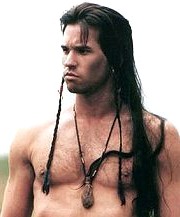
Which brings me to my second exemplar: Colin Farrell.  Dairragh is my world’s version of Irish after all.

That will give you an idea of Dairragh.

Next week: The Villainous Gallery

Until then, my friends, good luck and good writing!

World-building: Where do you start?

This is a sample constructed-world as seen fro...

Confession time

I’m a pantser.  I write through first, and restructure later, but I do extensive mapping using my trusty bulletin board, and as I’m getting to know the inner workings of Microsoft Word better, I’m learning to use headings to organize my chapters and sections, making outline view a useful tool too.  I have Office 2007 right now, so that’s the best I can do.  When I have blocked some time to learn more about it, I intend to use a master document to further organize my novel.  I’ll probably start using OneNote to organize a lot of my research, world-building, character sketches, and other resources.  More on that in the future.

Process, process, process

Where to start, indeed?  Really, this all depends on how you write and what your process is.  If you’ve been reading Writerly Goodness, you know my process is organic and holistic.  Some writers might see that as a cop-out, an excuse for a sloppy and ill-defined (dare I say undisciplined?) process.  Really, it’s process as a way of life.

Life = process

That demands a lot of dedication, organization, awareness, and the ability to think, not only on your feet, but sitting, laying down, at work, watching TV, eating …  In short, it means thinking all the time.

Plot leads to setting

If you’re a plot-based writer, that is, if you start with the story, then that will be your jumping off point for your world-building.

Example:

Hard-boiled detective?  Then you’ll have to create that milieu, and that means research.  Add Hammett and Chandler to your reading list, watch the classics of the movie genre, and then once you’ve got the flavour, go for the meat.  What time will you set your story in?  Just because the genre evolved in the 1920’s and 30’s doesn’t mean you have to restrict yourself.  As long as you can evoke the feeling of the hard-boiled detective, you can play.  William Gibson plays elements of the hard-boiled into some of his science fiction.

Once you have your setting, then you have direction.  Research the heck out of it.  Dream about it.  Start mining your life.  Have you ever done or seen anything that is distinctively “hard-boiled”?  Chances are, if you’re attracted to the genre, there’s a reason.  Dig.  You can find it.

But that’s where you’d start, in the Writerly Goodness universe 🙂

Character leads to plot/setting/theme (sometimes simultaneously)

If you’re a character-based writer though, it’s a little tougher.  You write the character, or characters, first, and the story emerges from them.  Sometimes, you don’t even know where or when the story will be set when you start out.

That’s the way it is for me.

If the story is the plot-based writer’s place to start, then character is the character-based writer’s place to start.

Do character sketches, written ones, and maybe actual sketches, if you’re so talented.  If not, find pictures of actors that might fit the bill.  Have them fully developed as people: their back-stories, their personal quirks, their convictions and beliefs.  Invite your writers’ group, or just some writer friends over for coffee, and have them quiz you on your characters, quick-fire style (it’s in the post, about half-way through).  And, of course, keep writing in the meantime.  Only once your characters are real people to you will their stories start to emerge and direct your plot.  Only once you have a developed plot, will your setting and themes become apparent.  Only then will you be able to truly start developing your world.

You may have some ideas when you begin to write, and by all means, start your research as soon as possible.  If you’re going for a contemporary setting, or a historical one, immerse yourself in the time or place.  It might inform your writing as you go and help you develop your setting with crystalline clarity.  If you’re trying to create a truly original fantasy or science fiction milieu, however, those details might have to wait for you to discover them through writing.  The best you may be able to do at the outset is read in your chosen genre.  If nothing else, do that.

Other options

Ultimately, how you write will determine where and when you start to build your world.  Plot- and character-based writers aren’t the only kinds either.  They’re the only kinds I can provide any guidance for, however.  If you’re another kind of writer, then go with your strengths.  Does your theme emerge first?  Or maybe you can’t write in a world that you don’t know and start off with the world first.  It’s all good.  The point is that no matter what you write, you have to put your characters and their stories in a time and a place and you have to know that world as intimately as you know your characters and plot.  It’s the only way to roll 🙂

Coming up

In the next weeks, I propose to post some of my character sketches and the plot lines that developed from them, along with pictures (though I have started to draw some of them, I’m not finished and they wouldn’t come through in a scan well … also, they’re not very good).

In the future, I’ll move on to other aspects of world-building, including a number of print resources on the subject.

Are you a pantser, or a plotter?  Are you a plot-based, or a character-based writer?  Are you something else entirely?  Where do you start in your world building?  Please, comment, like, share!

I failed the test

Back in December, Robert J. Sawyer shared this: http://www.rinkworks.com/fnovel/

Rinkworks warns the following:

Ever since J.R.R. Tolkien and C.S. Lewis created the worlds of Middle Earth and Narnia, it seems like every windbag off the street thinks he can write great, original fantasy, too. The problem is that most of this “great, original fantasy” is actually poor, derivative fantasy. Frankly, we’re sick of it, so we’ve compiled a list of rip-off tip-offs in the form of an exam. We think anybody considering writing a fantasy novel should be required to take this exam first. Answering “yes” to any one question results in failure and means that the prospective novel should be abandoned at once.

The problem is … I answered yes more than once.

Specifically:

4. Is your story about a young character who comes of age, gains great power, and defeats the supreme bad guy?

Well, it’s about three young characters, two who “come of age” and one who just figures out what his damage is, spanks his inner moppet and gets on with it, all three of whom have roles to play in the defeat of the dark god Yllel, and his sourcerous servant Kane.

12. Does “a forgetful wizard” describe any of the characters in your novel?

Yes, Aeldred is dithering and occasionally confused, but he is the exception and considerably younger than most of the magickal movers and shakers in my novel.  Plus, he’s not even close to being a main character.

21. How about “a half-elf torn between his human and elven heritage”?

That would be Aislinn, actually and she’s not torn so much between the two peoples as derided and feared by both because she is the first child born of a Tellurin (my version of humans) and an eleph (my version of elves).  She’s actually going to be pivotal in uniting the two peoples.

39. Does your novel contain orcs, elves, dwarves, or halflings?

Actually, all of the above.  I’ve changed the names slightly and given them different origins.  My orcs are called okante and are peaceful tribes-people who generally live in harmony with the Tellurin tribes of the north.  They’re only drawn in as villains because Yllel tricks them into soul-slavery.  My elves, as mentioned above, are called eleph and they come from a different world.  One of my gods tries to do something good, but ends up tearing a hole in the world and sucking half the population of Elphindar into Tellurin before the gap can be closed.  The eleph are not pleased.  Dwarves are called dwergen, and are the children of the elemental Gods of earth and fire.  Rather than halflings, I have gnomes I call dwergini and they are the children of earth and air.  Neither race is terribly differentiated from their fantastic forefathers, but they’re certainly not dour and I try not to make them overtly stereotypical.

Enough of the justification, but I can tell you that I was not a little disconcerted by saying yes even those four times.

Fantasy Forest

Fantasy Forest (Photo credit: ozjimbob)

Then, in January, Author Salon posted this for the benefit of the Fantasy and YA Fantasy peer groups, two of the more active in the AS fold: http://www.authorsalon.com/page/general/fantasytropes/

Again, I shook in my metaphorical boots because my story is fairly littered with orcs, trolls (which I call krean), ogres (the gunden), etc.  Will renaming be sufficient?  It’s not like any of them play a significant role, but they are there in their standard and stereotypical glory.

I started questioning the value of my novel in a serious and neurotic way.  Then I sat back and tried to put things into perspective.  My story is not “about” any of these tropes, save perhaps for my protagonists coming of age, finding power, and defeating the big bad.  Renaming will likely be sufficient in most cases.  I don’t have to throw the baby out with the bath water.

I almost failed another one

AS says it wants thick-skinned writers.  Though I do tend to take some criticism more to heart, or react poorly to some of their advice (largely because I think that it’s being posted because someone has looked at my work and though poorly of it, even though I “know” I’m not that important to anyone), I’m learning to understand being thick-skinned in the same way I understand being courageous.  Being brave doesn’t mean that you’re not afraid; being brave means that you act despite your fear and try not to let it limit you.  I’m taking the same, long view of being thick-skinned.  It doesn’t mean that my confidence isn’t shaken; it means that even when it is, I get my shit together and soldier on.

Then Rachelle Gardner posted this in March:

http://www.rachellegardner.com/2012/03/do-you-have-a-thick-skin/

It’s good to know that agents feel the same way us writers do sometimes 🙂

Writing well is the best revenge 🙂

Then I came across a very helpful blog post:

http://www.writersdigest.com/whats-new/writing-rules-10-experts-take-on-the-writers-rulebook?et_mid=538945&rid=3085641

I’ve always aspired to be transgressive; sometimes in a good way, and sometimes not so much.  I think ultimately, I have to focus on writing the best novel I can, so that when I do break the rules, I’ll be forgiven.  It is easier to ask forgiveness than permission, right?  It’s such a relief to know that I can write my way out of the corner I seem to be getting scrunched into.

Coming up on Writerly Goodness

In future posts, I want to get a bit into the background of the novel, stuff that won’t necessarily be in it, but all of the window dressing I developed so that my world would work fairly consistently.  Stuff like cosmology, the historical timeline leading up to the novel, religion, the way magic works, my various peoples and their origins (in more detail than above), naming conventions, and some of the unique things about Tellurin.  In other words, I’m going to write about world-building.  Have any interest in that?

What are your feelings about tropes and their use/overuse?  Would you fail Rinkworks’ test?  What about the Author Salon article?  Does it give you pause?

If you liked this post, feel free to use the “like” or sharing buttons below.  Or, you may consider subscribing via email, or RSS feed (there are links below each post, or on right side menu on my home page).

Until next week!

Will the third draft be the charm?

Nope.

I finished the second draft in September 2009 and devoted some time to writing other things.  I entered a few contests, but was unsuccessful.  In December, I printed everything out and began to reread, make notes, and chart things out as before.  I invested in a bulletin board, pinned all my bits of paper to it this time and had a really good look at the structure.  The puzzle still wasn’t together in the right way.

More changes.

Without the prologue and the framing pieces, nearly 100 pages disappeared from the manuscript.  Third time through, I cut mercilessly, and though I also wrote considerably to add to the novel, the net reduction was over 300 pages.  I was now below the 1000 page mark, an accomplishment in itself.

Finished in October of 2010, I was feeling fairly good about this draft.  Once again, I turned my attention toward writing other things and once again submitted a few short stories. Unsuccessfully.

I decided that I would attend the 2011 CAA CanWrite! conference and booked a 20 page manuscript evaluation.  Though the conference wasn’t until May, I started reading and making notes all over again.  This time, I played with POV.

I had the first two chapters revised by the time the conference came around.

What I learned:

  • If the changes that occur as you revise are substantial, then you still have work to do.
  • The value of a bulletin board for structural rework is immense.
  • Always have backups of the work.
  • Prologues and framing pieces are about telling.  Consider carefully.

Books on editing that have been helpful:

Fusion: An Ekphrastic Experiment

July 1, 2009.

In light of the Willisville Mountain Project and the Cross-Pollination Series, the Sudbury Writers’ Guild decided to try their collective hand at ekphrasis.  For the curious:  Ekphrasis is the graphic, often dramatic interpretation of a work of art, thank you Wikipedia.

I became interested in ekphrasis in graduate school during a course on the Rossetti’s.  Dante Gabriel Rossetti was founder and member of the Pre-Raphealite Brotherhood and their paintings frequently feature poetry either in the artwork itself or as part of the frame.  The verse typically described the subject of the painting. So when I had a chance to participate in something similar, I jumped at the chance.  While not true ekphrasis, the Fusion project was nonetheless interesting and fun to participate in.

Essentially, writers and artists pair up and create a composite work of writing and art.  The written work can be either prose or poetry, and the visual component, while usually painting or photography, could be anything.  In our group’s case, quiting, stained glass, and a place setting of tea and cookies on china were included in the mix.  Each interested writer from the Guild paired up with an area artist in January of 2009 with the goal of having a composite work assembled by July 1st.

My partner in crime was Robert Luopa, fine arts teacher at Espanola High School.  You might say that what we worked on was the reverse of ekphrasis.

Due to our limited ability to get together and work in a truly collaborative fashion, Robert felt that creating a painting based on one of my unpublished pieces of poetry might work out better.  I sent him a likely selection of suspects and he chose “Fire and Ice.”  From there, I described the original inspiration for the poem and Robert then when out and took some pictures.  He drew up some concept sketches and we further discussed the eventual form of the final painting.  In addition to presenting the poem with the painting, I used one of Robert’s photos and Gimp‘ed it into a background for the poem.

The Fusion Project was first displayed at Art Berries and Jazz in Espanola July 1, 2009 and then was displayed a second time at the Sudbury Theatre Centre for the month of August 2009.

Have you ever collaborated with another artist?  It doesn’t have to be ekphrastic in nature.  My poet-friend Kim Fahner had one of her poems set to music.  Some people have their stories turned into short films.  It’s good to get out of your own art-form sometimes.  I’ve found it offers respite and perspective.  What did you learn from your creative experiment?

Draft two and what it taught me

I printed out and read through my first draft.  It was painful.  I made notes all over it and as I went, made additional notes on scrap paper.  Afterward, I physically mapped out my next revision.  At that point, it was just a bunch of pieces of paper floating around like a free-form puzzle on the table.  I looked for the pattern, made sense of it, and put the papers in ordered groups.

My scrap paper novel map

My scrap paper novel map

I revisited all of my previous work: the character sketches, plot sketches, and timeline.  The title changed again, finally to Initiate of Stone.  This emerged from the text itself, organically, the way I like it.

There were a number of metaphors and events that related to the earth element: taking shelter in caves and underground, the hidden people, who have a special skill with shaping the stone, whose father was the elemental spirit of the continent, now entombed in the mountains awaiting rebirth and acting as a kind of gatekeeper to the otherworld at the Well of Souls, the seal that must be broken to free the dark god is buried beneath the desert sands.

I decided to reinforce the theme and add to the images.  I made even more notes for all the changes I wanted to make and dove back into writing.

I wrote more, started playing with the prologue, nearly 50 pages on its own.  Each chapter now had a framing piece about the world, its history, and other things that I thought I couldn’t bring out in the story but wanted to share.  Characters developed further, names changed, existing plot lines developed, and new plot lines evolved.

I started sharing this revision out to select readers.  In retrospect, it was too early, but I got some excellent feedback from Scott Overton, then president of the SWG.

Part-way through, I abandoned the preface pieces, and decided that the prologue, though important for me to have written, was largely cut-worthy.  I redacted whole sections and added new ones.  I rearranged their order to make more sense with the timeline.

This time, the draft was close to 1200 pages.  I’d done a lot of cutting, so this was a surprise.

What I learned:

  • Step away from the novel between drafts.  You need figurative “space” to approach it fresh.
  • It’s okay to murder your darlings, especially if you keep previous drafts stored on your computer and backed up onto CD.  That way, you haven’t done away with them altogether.
  • Physical mapping is liberating.  Being able to see the structure of your novel, and to play with it, is extremely helpful.  It’s like putting a puzzle together.  Some pieces may seem similar, but they only fit together in one way.  Looking at the story in its concrete representation can help you to find the best fit.
  • Sometimes, you write things that don’t make sense, and you don’t see it until revision.  That doesn’t necessarily mean that to have to throw them out.  If there was a reason that you wrote it, try to figure out what the core intention was.  Don’t put too much intellectual pressure on it or you risk forcing it the wrong way, but if you realize why it was important to write it in the first place, that will give you the key to revising the section in a way that improves your story.

What has your revision process taught you?

The first draft

Last time on Work in progress: I finally found a way to wedge my butt in the chair!

I wrote through, just like Nino said.

In the years previous, I’d tried a number of different tactics: outlining, character sketches, plotlines for the major characters, world building, timeline, research.  None of it got me writing … like writing.

I’d always heard that if you want to write, then write.  I’d even said it to students.  It’s true, but you have to be ready to see the truth, to accept it fully, and live it.  After years of struggling with my inner critic, informed as it was with all of my weaknesses and doubts, all my past experiences … I finally got it.  I finally wrote.

I’d never gotten past the first hundred pages before.  They were written and rewritten many times, but I’d never gotten past them.  This time, I tried a new strategy: ctrl-g 🙂  I’d note the page I stopped on, and went right to it the next day.  Starting from the beginning every day merely trapped me in an endless loop of editing.  Another authorial truism: the work is never finished, only abandoned.  The first draft isn’t the time to tweak and fine-tune, it’s the time to get the words out.

By September of 2008, I’d written my way to 1000 pages.  It was scary, and exhilarating.  Then it was called Initiate of Wind.  As a reward, I treated myself to a writing workshop with Sue Harrison at the W.O.W Retreat in Bruce Mines.  Loved it, loved it, loved it!  Watch Authorial name dropping for my post on the lovely Sue 🙂

I’d started out writing the novel as I’d intended, changing point of view in sections, cycling between the major characters.  Then, some of the plot points started to change as I wrote.  New sections wanted to be included.  New characters.  Toward the end, I was working on fumes and dropped all the fancy stuff.  The last three chapters were written in the same p.o.v.  I just got the words out.  All of them, good or bad, were out.

That year, I went as "The Sander" for Hallowe'en

My refractory period was the renovation of my office.  Five weeks of nothing but physical work: demolition, insulation, vapor barrier, mudding, sanding, painting, floor refinishing, and furnishing.

At the end of it, I had a room of my own.  An office.  A place to write.  I think that helped me to keep at the writing too, but by then, I’d been writing every day for two years, so I guess the office was a kind of reward too.

A room with a view, no less

Then it was back to real life, back to work, and back to writing.

What I learned: Write.  The first draft is no place for revision.  Write.  Commit to your relationship with your creativity, and you will go back to it, every day.  Write.  Just write.

Have you completed the first draft of a novel?  What did it teach you and how did you feel?  What did you do to reward yourself/celebrate?

Have you ever heard of “Pencil Box”?

I was seven years old, in grade three, and my parents got me my first puppy.  I named her Friskey.  My first piece of creative writing was about my dog.  It was unsolicited, but I was allowed, no encouraged, to read it to the class.

You may have the distinct impression from some of my earlier posts, that I’m not fond of school or teachers.  Some of the greatest creative difficulties and nartiest guardians at the gates I’ve faced have been thanks, in part, to various schools and teachers, but teachers have also been some of the greatest guides and mentors in my creative life as well.

Some of my best friends are teachers or professors and I know that they struggle to be among the best in their field.  Though I’m a corporate trainer, I’m a teacher too, and so I will not paint all teachers with the same brush.  Just like people, there are good teachers and bad ones.

The influence of great teachers:

We all have at least one teacher in our past that was important to our development as a person, if not as a writer.  I’ve been lucky enough to have several.

The first great teacher in my life was Mrs. Debbie Arnold.  She was the one who encouraged my early creative efforts in grade three.  She also advised my parents to enroll me in voice lessons as the result of my enthusiastic performance in her music class.

Though professional voice lessons were too expensive, I auditioned for and was accepted into the church choir.  I was also enrolled in an after school piano class.  We didn’t have a piano though, and that caused a few difficulties.  I wasn’t keen on the instructor either, and dropped out before long.

Then there was Siobhan Riddell.  She was an amazing artist even then, though I don’t

This book cover was one of Siobhan’s pieces.

think she was in high school yet.  She and a group of her classmates had made story books and they came into our class to show us.  Hers was a fairy tale and I loved it.

Siobhan’s story was my call to adventure.  In the wake of that revelation, I started drawing characters, super heroines and the like, but what are characters without stories?  So I started writing little stories to go along with them.

I’d been watching CBC’s “Pencil Box” every Saturday.  They featured stories submitted by their young viewers which they dramatized on air.  It was awesome.  That was my first literary submission.  I must confess that while I still have the letter acknowledging the receipt of my story, I never did find out whether it was produced.  My great aunt Florence swore she saw it, but “Pencil Box” went out of production that year and I never did.

Years later in university, I made an enquiry with the CBC, but short of my going down to their archives and finding the dear little thing myself, the costs of paying someone to search for it were prohibitive.  I’ve never gotten back to it.  I don’t even know if those particular archives still exist.

Who was your first great teacher and what influence did he or she have in your life?  Who or what was our first inspiration?  Your first creative effort?  Your first submission?  How did that turn out for you and where did that experience lead you?

What got me going again

Last time on work-in-progress:

In an environment rich in creativity and ideas, I started to write my first novel.  When I left that environment, I abandoned the project … sort of.

The thing is that those two spiral-bound notebooks full of my scribbling, typewritten pages full of corrector tape, and the few scattered dot matrix print-outs, never really left me. The novel was called Rain then, after the main character.  As the title might tell you, my idea started with my protagonist.  The story was hers, and all about her journey.  All the other characters grew out of her story.

Over the next years, I tried refining my opening paragraphs.  I worked on a prologue, and a couple of pivotal scenes.  I wanted scope, breadth, space.  I felt I had to develop my world and my characters kind of got lost in the shuffle.

I enrolled in a creative writing course by correspondence and received my first computer as a part of that deal.  In between writing assignments, I worked at my novel again.  It was in fits and starts though, no dedicated time.  I wasn’t really sure what I wanted to do with the story and where I wanted it to go.  The name changed to Rayne.  Could that count as progress?

After some soul searching about what I wanted to do with my life, I decided to complete the bachelor’s degree I started at the University of Guelph.  I chose Laurentian University in Sudbury, and felt that focusing on an English degree would be my best bet.  My ambition was to become the best writer I could be.  I’d turn the academic world to my purpose.

My writing improved substantially during my years at LU and workshops like Susanna Kearsley‘s gave me a boost.  So too, did my slew of writing successes: a contest win; a short story written for the premiere issue of Parsec Magazine; a regular column in Llambda (LU’s student newspaper); an article in Slin Roller Magazine.  It never translated into my opus though.

I made another fateful (and ultimately foolish) decision to pursue my education by completing a master’s degree in English literature and creative writing at the University of Windsor.  Though I trotted out my novel (and other novel ideas) there, because my chosen genre was fantasy, my work was disparaged.  After leaving discouraged, and returning to complete my degree with a thesis composed of vaguely literary short stories framed by the shamanic journey, I felt defeated rather than victorious, and couldn’t look at my novel for a long time.

After Windsor, I had some modest success in other creative endeavors: poetry and short stories.  Every once in a while, though, I’d have to pull out the old notes.  Once I got my lap top computer, things took off a little more.

By the time I’d joined the Sudbury Writers’ Guild in 2004, and attended Rosemary Aubert‘s workshop in 2005, I’d closed in on the fifty-page mark (oft-revised and agonized over).  I still wasn’t writing every day though.  I just couldn’t get my butt wedged firmly enough in the chair.  There was always something else that needed to be done first.

Then came Nino Ricci.  One of the SWG had met him and managed to arrange for him to come to Sudbury.  It was to be a weekend of workshopping our stories/novels/poetry.  In the course of the workshop, Nino talked about his own development as a writer, his years at York University, and his own challenges with his thesis advisor.  From that weekend, I learned that perseverance and passion win out.  I also knew that I had a long way to go on my novel, but the only way I could get there would be to write it.

Writing

Writing (Photo credit: J. Paxon Reyes)

Another thing Nino said that settled in was that his first drafts, at least at that time, were written to get his ideas out.  Sometimes the next draft was completely different.  Sometimes, he didn’t even refer to the first.  I’d heard the message many times over the years that first drafts didn’t have to be perfect, or even particularly well-written.  First drafts have to be written, though.  I finally understood.

I started writing every day and was amazed at how easy it was.  I made a commitment, a decision.  I was finally taking control of my creative life.  The initial goal was simply to write.  Once my practice was consistent and the habit ingrained, I aimed for a page a day, then two.

I emailed Nino after the workshop to thank him for the opportunity and to let him know the influence he’d had on my creative life.  Always gracious, Nino wrote back with some kind words of his own.

Even though I had a full time job by this time, I kept at it, and two years later, I’d finished my first draft.

How did you start writing your novel?  Was it a focused effort, or did you struggle?  Did mentors appear to guide you, or were you confronted by guardians at the gates?

Why spoilers are good for writers

River Song (Doctor Who)

River Song (Doctor Who) (Photo credit: Wikipedia)

Spoilers!
~~River Song, Doctor Who

So I was driving back from Ottawa last fall, listening to DNTO, on which there was a brief feature about spoilers.

The issue was people who skipped to the end of the novel they were reading.  Clare Lawlor was firmly of the opinion that reading the end of a book before you got there was a bad thing.  A study showed, however, that people generally enjoy a book more if they know the ending …

I immediately thought how I’ve never been bothered by knowing the end, whether of a

Cover of "The Sixth Sense (Collector's Ed...

Cover via Amazon

book, in a movie, or anything else.  I regularly read the ending of a book.  When someone innocently disclosed the twist at the end of the Sixth Sense, I still went to see the movie, and I still thoroughly enjoyed it.

I wondered why that was, and the answer slowly surfaced: even if I know the ending, I still enjoy reading the book because I like to find out how the story goes.  I’ve been doing it for years.

When I travel, I have my starting point and destination in mind.  Knowing where I’m going allows me to enjoy the journey.  The same goes for a book.  If I know where the author is headed, then I can get into the mechanics of the novel more.  As a writer, that’s where my enjoyment in reading comes from: finding out how the writer got from point A to point B.

So here’s my tip for writers: read the ending, if you can bear to, and then read the book.  As a writer, you’ll start seeing where the author has planted clues to the ending, how the plot has been structured, and how the protagonist goes from beginning to end.  It will save you some time if your habit is to read once for enjoyment, and then to reread for analysis.

You may balk at the thought, but trust me, spoilers are great for writers.

If you do give it a try, please let me know how it goes.  Are spoilers good or bad for you?