How my life sentence with mortal punctuation has informed my writing

A.K.A. The period at the end of this series 🙂

I’ll preface this bit by saying that I don’t think I’m unique among writers in this respect.  In fact, I think every writer works, at core, with and through the same issues.  This past week, I read (and shared) a great interview with Chuck Wendig in which he talks about (among much other awesome) the themes that crop up in his work.  Surprise, surprise, death and family rank prominently.

In this morning’s The Sunday Edition with Michael Enright, one of the Canadian greats (with whom I was privileged to work, even though he didn’t like my genre/subject matter) Alistair MacLeod, mentioned the same influences and themes.

Think of just about any author you’re reading or have enjoyed, and I think you’ll find death and family cropping up: Rowling’s Potter books were all about death and the search for family despite its omnipresence; Martin’s Song of Fire and Ice is about a number of families and he keeps on killing off prominent members 😉 (note here: in this context, what is politics, but family drama writ large on the world stage?); Collins’s Hunger Games = Death/Family; Gabaldon’s novels are a series of time travelling family sagas and death plays a prominent role.

I could go on, but I won’t.  Search your own shelves/ereaders to find your own examples.

What’s unique about me is my story, my life, and I hope that translates to my characters so that even though the theme may be familar, the way that it is expressed through my characters and stories is something just a little different.

Death

Death finds its way into a lot of my stories in different ways:

In my first published short story, “Chlorophyll and Corruption” (which is probably the prologue to a YA sci-fi), my protagonist first saves his brother from being pushed out of their atmospheric containment bubble, then must flee an impending supernova. “For a Change” (which I have subsequently rewritten as “The Gabriel” and may yet become a sci-fi novel) my protagonist’s reaction to a world of sterile Transmat immortals is to attempt suicide, repeatedly.

In “Fox Fur,” my protagonist is trying to deal with the death of her parents by means of various encounters with foxes.  “Dead Issue,” is about a young woman who makes a personal discovery at a family funeral.

“Tonsillitis Blues” from my 1999 MA Thesis, Whispers in the Dark, is an interpretation of my adult exploration of the near-death experience prompted by my tonsillectomy trauma.  The protagonist of “Fool’s Journey” (subsequently rewritten as “A Terrible Thing” and likely a YA paranormal novel), another story from the same collection, attempts suicide because she can’t deal with the visions of danger and death she’s been gifted with.

Even my poetry is liberally sprinkled with death.

Ferathainn, the protagonist of Initiate of Stone, experiences the deaths of her best friend,

English: Colored version of the ancient Mesopo...

English: Colored version of the ancient Mesopotamian eight-pointed star symbol of the goddess Ishtar (Inana/Inanna), representing the planet Venus as morning or evening star. (Version not enclosed within a surrounding circle) Polski: Kolorowa wersja symbolu ze staroĆŒytnej Mezopotamii, oƛmioramiennej gwiazdy Bogini Isztar (Inany/Inanny), reprezentujacej planetę Wenus jako poranną lub zachodnią gwiazdę. (Photo credit: Wikipedia)

fiancĂ©, and father, and subsequently dies herself attempting to exact revenge.  She undergoes an Inanna-inspired journey into the underworld to reclaim herself and her will to live.  Eoghan witnesses the execution of his brother for heresy and when the goddess Auraya calls him to become her champion, or Kas’Hadden (hammer of light), he experiences an assassination of personality at her hands.  Dairragh, deeply affected by the death of his mother years earlier, inadvertently triggers the destruction of his home and the death of his father.  He succumbs to his wounds and is resurrected and set on a shamanic path by the mysterious anogeni.

I won’t get into the protagonists of my other unpublished works, but death and its impact are recurring themes.

Death is the period of every life sentence and so it is a universal.  Few readers will fail to be engaged by various explorations of death and its impact on those left behind.  Thrillers and mysteries are built around it and are two of the most popular genres in publishing today.

Family

Likewise, everyone has a family.  Even the only child who has chosen not to have children of her own (like me) has parents and understands the pull of the complicated legacy handed down to them.

In my, admittedly small, family, women proved to be the peace-makers, sacrificial lambs, care-takers, bread-winners, and all around protagonists of the story.

My maternal grandfather was an alcoholic and a womanizer.  He and my grandmother were unable to have children and adopted my mother and aunt.  My grandmother worked in a textile mill during the depression and worked for most of her life until her first major heart-attack forced her into early retirement.

On my father’s side, my grandfather died at a relatively young age because of heart failure and my grandmother was an entrepreneur.  I still meet people in Sudbury who hear my name and ask if it was my grandmother who owned Marttila Sewing Centre.  Yup.  That was her.  She remained fiercely independent until stroke and cancer eventually took her life.

My father was always an ill man and though he was the bread winner for most of his life, it was my mother who held the family together, getting her high school diploma and driver’s licence in her forty’s and starting a new career as a ward clerk in the hospital when my father had his breakdown.  My mother was the one who cared for her parents and my father until their respective deaths.  Though she doesn’t have to, she still takes care of me.

It’s no wonder then, that my work focuses primarily on strong female characters.

Incidentally, here are a couple of posts I came across this week from Marcy Kennedy on strong and likeable female characters.

I had trouble for many years writing strong and likeable men because that was an archetype largely absent from my experience.  I found my way to that eventually, though, because of Phil, and because I learned to recognize the good qualities in the men in my life and expand those into heroic proportions.

Everyone is a mix.  My paternal grandmother may have been a business woman, but she was a poor fiscal manager, and tried too hard to curry favour with the well-to-do women of Sudbury (read sycophantic).  She first promised my mom inheritance of her business, then rescinded the offer and sold the business to a third party.  I think this was because she was too embarrassed to let my mom see what a shambles she’d made of things.

Though family dynamics run through all of my stories and novels, I’ll just present one example, from IoS, because it’s going to take a while to break down for you 😉

Ferathainn’s family in IoS is complex.  Her parents, Selene and Devlin, can’t have children and adopted Fer when she was abandoned by a bedraggled, but clearly noble, woman who refused to speak and ran away before she could be made to explain anything.

Devlin, feeling the need of a child of his blood, fathered Fer’s half-sister Aislinn, with Willow, a family friend and eleph (read elf).  Willow is misanthropic and makes her living as a brew-master and owner of the local public house.  She readily gave Aislinn into Selene and Devlin’s care.

Aislinn is obviously a half-breed, and largely reviled by the Tellurin (human) villagers of Hartsgrove as a freak. She is destined to become a bridge between the eleph and Tellurin peoples, however, by virtue of her heritage.

When Selene and Devlin adopted Fer, the resident eleph, Willow and her brothers Oak and Leaf, invited the new family and Aeldred, the local mage, to a Shir’Authe.  The Shir’Authe foretells the destiny of the child in eleph culture.  At the ceremony, none of the eleph can see anything about Fer’s future, but Leaf sees his spirit-lights, or astara, in the baby’s eyes (if you’re an Elf Quester, this is recognition, if you’re a Meyers fan, it’s imprinting).  This is bizarre enough, because only eleph are supposed to bond with one another in this way.

Selene, understandably, freaks out, but Leaf promises never to act on this deep spiritual attraction unless Fer somehow miraculously sees her astara in his eyes, or otherwise returns his feelings once she is gown.

Aeldred senses a wild and powerful magickal talent in the infant.  He fears that he will not be able to control the child and that she will become a rogue mage.  She has the potential to wreak havoc on their world and her talents will be much sought after, by moral and immoral authorities, both magickal and political.

In an attempt to minimize Fer’s potentially negative impact, he merely tells the others that she has talent and that he will remain in Hartgrove to become her teacher.  He further tells them that Fer’s parents are powerful, but immoral, people and that they must protect the child in the event that either one, or both blood parents, come seeking her.

He gets everyone to agree to a magickal binding.  None of them will be able to speak of the circumstances of Fer’s birth or of her coming to Hartsgrove until the girl comes of age.  By then, Aeldred hopes that he will have thoroughly indoctrinated Fer in the disciplines of the Agrothe magicks and that he will therefore be able to control her chaotic potential and prevent her from doing harm.

In truth, Fer’s parents are Aline of Gryphonskeep and Halthyon, an eleph mage, or kaidin. Aline is descended from the de Corvus family and magick flows through the bloodline.  The original Kas’Hadden was a de Corvus, so the power of the gods has been passed down to Fer.  Aline is married to Killian of Gryphonskeep and mother to Dairragh (dun, dun, dun!).

Halthyon is one of those rogue magi that Aeldred worries about.  He has extended his lifespan far beyond the already lengthy eleph standard.  His goal is to accumulate magickal power (by draining it from others as he kills them) and to ascend to godhood (in the process of which he intends to kill the existing gods of Tellurin).

Halthyon is unable to extract the child’s location from Aline and subsequently kills her in the attempt.  He wants to find his child because he considers her the only person worthy of ascending with him.  In order to do that, Fer must become a god-killer as well.

Okaaaaaay.  So there, in a convoluted nutshell is the familial basis of the plot of not only

English: St. Etheldreda's Churchyard - Family ...

English: St. Etheldreda’s Churchyard – Family Plot with Snowdrops (Photo credit: Wikipedia)

IoS, but the ensuing novels in the series, which I have called Ascension.  You can see why I identify the book in the epic fantasy genre 😀

Family is an endlessly intriguing Gordian knot to unravel and I think you can see where I have mined my tapestry to create Fer’s.

It’s all variations on two essential themes.

How have your life experiences contributed to your creative work?  Do death and family inform your stories?  Do you have a family-plot?

I’d love to hear from you!

Here ends the series that was A life sentence with mortal punctuation.  I hope you have enjoyed it, and found it to be useful in your creative pursuits.

Coming soon: I’ll have a book review for Laura Howard’s The Forgotten Ones, and hopefully a couple of author interviews to throw your way.  I’ll definitely share my experience in Margie Lawson’s  A deep editing guide to making your openings pop course, and in Marcy Kennedy’s Crafting your logline and pitch workshop next weekend.  There might even be some Pupdates and Next Chapters in there.

The Next Chapter: Progress by inches (and bounds)

It’s been a while since I’ve posted about my progress, or lack thereof, on my writing.

Initiate of Stone

I’ve been struggling to rewrite my first chapter.  I’ve now made progress, after writing, and rewriting it several times.  I really had to go back and decide what it was necessary to accomplish in my opening chapter.

A short list:

  • Introduce my protagonist – Ferathainn, or Fer, is fifteen, and her coming of age is in two moons, at the next goddess festival, Sestaya.  She wants to become an Agrothe mage, and will be the first girl to do so in a very long time, but she chafes under the tutelage of her master, Aeldred.  Fer has been studying from the moment she wakes to the moment she sleeps (except festival days) with Master Aeldred for 12 turnings of the sun through the seasons, but it’s all been mundane. He’s forbidden her from using her innate talent, to speak with the spirits, or souls, of animals, plants, elements, and perhaps even people, like he controls who the spirits speak to …  Fer desperately wants to be initiated so she can start using her talent and learning “real” magick.  She knows she’s capable of more than what Master Aeldred permits her to do.  The process is long and demanding, though, and she will have to make sacrifices.  She loves Leaf, the eleph finiris, or song master, and will marry him on Sestaya as well.  She sees her astara, or soul-lights, in his eyes, something that only the eleph are supposed to see.  She’s not so sure about children, though they seem to be the natural consequence of marriage.  She’s just been so long separated from other girls her age by her studies that she wants something that everyone else takes for granted.  Fer worries that love, marriage, and family will be the sacrifices that she will have to make to become a mage.  She’s determined to have at least love in addition to the solitary life of a mage.
  • The “normal” world – Hartsgrove, Fer’s village, is a “free town” and the eleph and people of Tellurin live side-by-side in relative peace.  It’s an agrarian village that sends tributes to the surrounding, larger, towns and cities to show fealty and secure support in times of need.  The predominant religion is worship of the Goddess Auraya, creatrix of Tellurin.  Every year the season of Vedranya brings deadly storms to besiege the land.  This has been the way of things since the Cataclysm, two centuries before, changed the face of Tellurin and reduced much of Tellurin civilization to rubble.  Fer lives in a small, but sturdy cottage, with her mother and father, Selene and Devlin, a seer and a bard respectively, and her younger half-sister, Aislinn.  She has never left Hartsgrove.
  • Hook the reader – What’s the root cause of Fer’s resentment of her master, the man who could grant her wish to become a mage?  Why does he want to keep her from using her talent?
  • Ask a question (that needs to be answered by the end of the novel) – What is the secret Master Aeldred feared so much he magickally bound Fer’s friends and family to silence?
  • Foreshadow the inciting event – An earth elemental, or nomi, tells Fer the secret is a potentially deadly one though it cannot more than hint at the nature of the secret; she must be strong to face the trials to come.

So I’m slowly working my way through the list without dumping too much backstory or world building on the reader.  Beginnings, why are you so hard?

Some links about beginnings:

On a whim, I’ve signed up for Margie Lawson’s course, A Deep Editing Guide to Making Your Openings Pop, starting May 6, 2013.  She focuses on psycho-linguistic and rhetorical techniques to improve your writing.  My undergrad was focused on rhetoric and I love psychology, linguistics, and brain science, so this looks like it’s right up my alley.  Will let you know how it goes.

I might do the crazy and send my beginning (when I’m more or less happy with it) to Ray Rhamey’s Flogging the Quill to see if it passes his test.  Stay tuned.

Short Stories and poetry

Well, so far, I’ve kept up with Kasie Whitener’s Just Write short story challenge.  I’ve written a completely new short story for each of January, February, and March.  I’m a little behind in April, and may opt for flash fiction to make up the short fall.

The short story that I revised and sent to On Spec in January has been accepted (!)  I am very (like !!!!!!!!!!!!!!!!!!!!!!!!!!!!!!!!!!!!!!!!!!!!) excited about this, even though I know that it won’t be in print until sometime next year.  I’m looking forward to working with their editorial team to whip “Downtime” into shape.

“Beneath the Foundations (original story #2),” my attempt at medieval Cthulian for Sword and Mythos was rejected.

“A Terrible Thing” was rejected by the editors of Tesseracts 17.

It’s too early to have heard back from either Writers of the Future, to whom I sent “The Gabriel,” or In Places Between, to which I submitted “Molly Finder (original short story #3).”

There wasn’t room for my poem “peregrine” on the League of Canadian Poets National Poetry Month blog, but I have subsequently submitted that poem plus two more, “contain you” and “infant crawls,” to Sulphur.

From last year’s submissions, I learned that my submission to Mark Leslie’s Spooky Sudbury will be included in the publication, and my poem, “north of thule” was included in the fabulous Sopphey Vance’s Enhance no. 11.  It’s been a good month (and a bit) for happy dancing!

I’m going to work on something flashy this week to round out April’s short story quota, and set to work on another original for May in hopes of garnering some attention in the Rannu Fund competition.May Submit-o-rama Choice

I’ve joined Khara House’s May submit-o-rama and have committed to 1 submission per week in the Choose Your Own Challenge category.  Rannu will make up only one of those, so I’ll have to get my arse moving on identifying other submission opportunities (!)

Critiquing

Actually finished the BIG critique for my online group and am working on a review of the first 100 pages of another online critique buddy.

Have only three people left to critique for the Sudbury Writers’ Guild before I’m caught up with them.  We’re trying to get our stories and poetry together for an anthology.  I put forward “A Terrible Thing” and “Old Crow,” another short story of mine that was rejected by Tyche Books last year (Masked Mosaic anthology).  It looks like “Old Crow” might be salvageable as a short story, but that “A Terrible Thing,” as editors have said—and I’ve thought—in the past, is really a novel in the making.

Conferences

A local effort, Wordstock, will be happening June 7 and 8 at the Sudbury Theatre Centre.  This is the first year for the event, and the organizers are hoping to build on what they hope to be this year’s success.  The SWG has a block of time for readings.

I’ve registered for the Canadian Authors Association CanWrite! conference in Orillia, June 12-16, and booked my room in the Orillia campus of Lakehead University.

I’m still waffling about When Worlds Collide August 9-11.  The registration fee is reasonable in the extreme, but I still have to bear the cost of the flight and accommodation.

One reason I’m waffling is because I want to go to the Surrey International Writers’ Conference this year (Oct 25-27).  Domestic flights are sooooo expensive.  Right now, a return to either Calgary or Vancouver for the conference dates is showing as over $1000.  It may be an either/or kind of thing for me.  Or I might just cash in my Avion or Aeroplan points for one or the other flight.  That’s an idea!  Thanks for letting me suss that one out online 😛

I think that’s all the conferencing I can take for this year.  Next year, I hope to add some fancons like Ad Astra.  We’ll see how the financial situation sits.  And my various air rewards plan balances 🙂

Other stuff

Taxes done and refund received 🙂

Am still putting off the decision to move to WordPress.org.  I think I just need some dedicated time to devote to research and reflection.

Hope all is well with you and your writing lives.

I’d love to hear from you about your latest literary adventures!

Tonight’s viewing line-up: Doctor Who and Orphan Black!

Tomorrow, I’ll share my thoughts on happiness and how my experiences have influenced my writing in the final instalment of a life sentence with mortal punctuation.

Six questions with Alon Shalev

Alon ShalevAlon Shalev writes social justice-themed novels and YA epic fantasy. He swears there is a connection. His latest books include: Unwanted Heroes, At The Walls Of Galbrieth, and The First Decree. Alon tweets as@alonshalevsf and @elfwriter.

_________________________________________________________

Welcome to Writerly Goodness, Alon!  Thank you for taking the time to answer a few questions for my readers.  I must say that I’ve been following you with great interest since we “met” through Author Salon and I became aware of your progress through last year’s Amazon Breakthrough Novel Award (ABNA).

WG: I know you’ve probably written a lot about this, but I must ask about your experience with the ABNA.  Some of my friends have expressed interest in the competition (or entered) and I’m sure they would love to know about the process of getting to the quarterfinals and how it contributed to your success with At the Walls of Galbrieth.

AS: I think ABNA is an amazing opportunity even if you do not win. It pushes you to finish and polish a manuscript, and prepare what is essentially your media kit. I have reached the quarterfinals with three different books and enjoyed the tension around it (I had my acceptance speech all worked out!). When you reach the quarterfinals, experienced people in the industry critique your novel. It can be tough, but you do learn a lot. Finally, there are many agents trolling the competition, so it is an effective way to avoid the depressing slush piles.

WG: Now The First Decree, the second novel in your Wycaan Master series has been published.  How was writing the second novel in your series different from the first and what did it teach you about yourself as a writer?

AS: The most significant difference is allowing for a story arc that gives a satisfying climax, but also extends tendrils into the next book. In fact, there is a similarity at the beginning, because you want to bring the reader who has not read your first book (or read it a while ago) up to speed without imparting a huge information dump or giving away too much from the first book. I found this very challenging and had a number of friends critique this aspect in order to find the right balance.

What I love most about writing a series is that I can really develop my characters. They have time to grow up and mature. Outside of writing, I am a devoted father (which is what got me writing epic fantasy in the first place) and work with college students. So I realize that I am imbuing this love for seeing young people grow and develop into my writing and, I think, only a series can allow for this.

WG: How did Seanchai’s story begin for you and how did it evolve? 

AS: Every summer, my family goes camping for two weeks in Northern California. After we had set up camp, my sons (then 11 and 7) went off to explore the campground and I whipped out my laptop. They soon returned and objected to me writing during family time and this was the compromise we reached. During the two subsequent years, I wrote The First Decree and Ashbar, and read a couple of chapters each night either around the fire or snuggled in my tent.

I realized that many aspects of Seanchai are a mix of both sons, and perhaps how I would like them to turn out.  My fears that I will not be there for them one day plays out as Seanchai is denied a parent or mentor so many times. But there is also the desire to cultivate deep friendships, which I believe is central to the values that both boys have, as well as dealing with teenage romance and pressure.

All my characters are now part of my family. When I killed one off, I cried. When I edited that chapter several times, I cried
several times! I often imagine conversations with them, counselling and encouraging them, as I strive to do for my sons.

WG: I’m a big process geek.  Would you share something about your writing process? 

AS: I am not a good person to ask. I plunge in and trust the creative juices. I usually finish a 100,000-word manuscript (a rough draft full of mistakes) in three months, writing an hour a day and more on weekends. I keep a contents page for myself to track chapters and a characters page where I add physical traits or history. I also have ongoing plot notes that are threads between chapters and stories. This is written at the bottom of the chapter I am writing and I cut and paste on from word doc to word doc and erase an idea after it is included.

In terms of workspace, my desk is in the kitchen and I can write on the train, bus, anywhere. Once the idea is there, everything flows. It is a truly exhilarating experience. My family would probably tell you that I am a bit crazy when in the creative process. If I do not have the time to write I can become somewhat cranky and have a propensity to talk about little else. I am constantly worrying about my characters and the danger or emotional turmoil that I put them in.

WG: I’ve been told by industry experts that traditional fantasy is a hard sell in today’s market.  Did you find this to be true and what are your thoughts on the genre’s continuing potential? 

AS: My marketing guru is John Locke (the author) and I am fastidiously following his business model. He says it is better to have a smaller, clearly defined target audience, than a larger, less identifiable one. I have more problems placing my social justice-themed novels than fantasy.

Fantasy readers are passionate, fun, social and happy to share opinions. They are on line and engaging their peers all the time. In addition, every movie – Lord of the Rings, Eragon, Hobbit, Harry Potter, Oz, Jack and the Giant Slayer – brings waves of new and eager readers. Parents, who want to encourage their children to read, will buy them the books that reflect these movies. As long as these movies are being produced, as long as there are great authors writing quality stories, I think the future is bright and I am thrilled to be a part of it.

WG: What’s coming up for you and The First Decree?

AS: Following John Locke’s model, I am very focused on writing and publishing. Ashbar – the third book in the series is scheduled to come out in the fall. I will finish writing Book 4 during the summer and then spend the rest of the year editing it before turning it over to my editors.

The new marketing reality is that we are in an age of instant gratification. You finish Book 1 and if you enjoy it you want the next and you want it now! How smart were Amazon with their 1-Click? There is so much social media that to keep your readers waiting a year for a book is dangerous if your name doesn’t end in Brooks, Salvatore etc.  The First Decree

Meanwhile, I continue to build my online platform through my weekly blog (www.elfwriter.com) and twitter (@elfwriter – 22,000+ followers). I spend a fair amount of time here and on Facebook (and just getting into Goodreads), and I truly love the interaction with fellow writers, readers and fantasy fans.

Thanks for sharing your time and expertise, Alon.  All the best for your future writing endeavours!

Thank you, Mel, for this opportunity.

A life sentence with mortal punctuation: part 3

Last week: A near-death experience thanks to a narsty case of tonsillitis and some ripped stitches.

And now …

Friend wars

I had some friends before school, through Sunday School and swimming lessons, but they lived farther away from me than my mom would let me walk on my own, so I never got to see them outside certain structured activities.

There were also the children of my parents’ friends, but they moved away before I could develop much of an attachment, or hold any memories of them.  For a brief time, the family across the street had children my age, but they too, soon moved away.  Kindergarten was a bit of a blur, but I do remember some of the children I met there: Ronnie-Moe, whose Dad was a fireman, Mytie (I think that was how she spelled it), Paul, and a few others, but these were classmates, not friends per se.

For the most part, I was a happy child.  I was socially inept though.  Not really good at making friends or keeping them.  I compensated for this by being a little different.  I lived in my head a lot.  My teachers called it daydreaming and distraction.

I was also a giggle-puss.  I laughed at the drop of a hat, not only when I found something funny, but also when anything embarrassed me, frightened me, or made me angry.  Laughter was my catch-all reaction, because if other kids thought I was making some kind of joke, usually at my own expense and not theirs, they wouldn’t hate me outright.  They all thought I was weird though, and that didn’t earn me any friends.

My worst childhood crime was being a story-teller (read liar).  For show and tell, I’d make things up.  There was one particularly embarrassing stretch where I was really into cats and desperately wished I could have one.  I couldn’t though, so I made up stray cats that I’d take in and care of for a few days before they ran away.

Often, I wish this inclination had been harnessed earlier, that some kind teacher would have recognized in me the storyteller (not the story-teller, teller of tales, or liar) and helped me turn it in a different direction, but that didn’t happen until grade three.

Sir Ken Robinson

Sir Ken Robinson (Photo credit: eschipul)

I was just a creative kid with insufficient outlet within class to exercise my (even then) considerable abilities.  Last year, I discovered Sir Ken Robinson’s incredible TED Talk, “Do Schools Kill Creativity?”  It validated much of what I’d already figured out on my own.

So I was happy.  But lonely.

Then a young mother with twins (fraternal-brother and sister) my age moved into the apartment up the road from me.  When she saw that I walked to school, she asked my mom if we could all walk to school together.  So the girl, let’s call her Diana, became my first “friend.”

Soon, another young pedestrian joined our little gaggle.  She lived a few blocks further on, but we were all heading in the same direction, so I figured it was fine for her to join us.  Let’s call her Mary.  Diana got territorial, though.  I was her friend first.

Mary was small and thin.  I’m not sure why, but nobody much liked her in grade one.  I was her friend though, and when Diana started acting up, it became problematic.  Diana got physical and she had a temper.  She’d scream and push and punch.

Her behaviour toward Mary bothered me, and at one recess, as Diana was wailing away at me, rather ineffectually, after having pushed Mary down, I had enough.  I grabbed her arms and pinned her against the wall of the school so she couldn’t punch anymore.

I like to think I said something clever like “You don’t own me,” or “I don’t belong to you,” but I probably squeaked out a lame “I’m not your friend,” or just “stop it.”

Diana was in tears, frustrated that she couldn’t bully her way out of the situation.  I wasn’t small, or weak.  I think a teacher intervened, but the outcome was that Diana wasn’t my friend anymore.  She stopped walking to school with me, but Mary was now my BFF.  I’d defended her.  We became inseparable.

Mary was pretty much my only friend through grades one and two.  We’d walk to and from school every day.  Mary came over to play and we went to each other’s birthday parties.

I defended her again one winter from the attentions of a boy.  Of course, I had no clue that his shoving her around and making her cry meant that he liked her.  I just saw him as another bully, so I got into my first fist fight.  He clocked me good on the jaw, but I got my own licks in.  He didn’t bother Mary in front of me again, though.

Mary continued to be a small, thin child, and so to exert her power, she got devious.  She’d argue with me over nothing, routinely “breaking up” with me and then making up the next day as a means of keeping “drama” in our friendship.  When she came over to play at marbles, she decided to make things interesting, no longer content with claiming pretty marbles, by having each of us put up toys as a wager.  She liked to bend the rules in her favour too.  I was content to let her win when the stakes weren’t high but that stopped once I started losing toys.

First, I stopped playing marbles with her, then eventually, I stopped having her over to play altogether.  Mary’s friendship was exhausting.

In grade three, another single mother moved into the apartment up the street.  She had a daughter named Margaret.  No pseudonyms here.  Margaret’s still my BFF though she lives several hours away and most of our conversations are held over FB chat or by email.

While Margaret lived up the street, there was another girl who was interested in putting on talent shows and the like.  There were implications of bullying there too, but nothing that I witnessed.  Also, the other girl was much larger than I and I wouldn’t have been able to do anything about it, but things blew over before long.

Margaret’s Mom moved into a duplex, but it was still within walking distance.  Margaret was fun and funny.  We went to movies together, at first with parents in tow.  She had budgies and a hamster.  Margaret was also a big reader, something I hadn’t latched onto yet.

Mary got a little jealous at that point, but because I was already in the process of separating myself from her, the drama wasn’t as bad as it could have been.

In grade three, my parents got me my first pet, a dog I named Friskey because of her behaviour.  The dog book said to name your puppy according to what it did.  I did what the book said 🙂  I was so excited about my new pet, that I wrote a one-page report about her.  It wasn’t required for class, but when my teacher learned that I’d done it, she encouraged me to read it aloud.

That was the year I started reading and writing.

It was also the first year that cliques developed in the class.  Margaret was popular.  Me, not so much.  I was a tag-along at best.

Grade four was worse.  Years later, when I saw the movie “Heathers,” I could so relate.

Cover of "Heathers - 20th High School Reu...

Cover via Amazon

The Heathers of our school had other names, but they were no less manipulative or cruel, even though they were in elementary school.  I got into trouble a lot that year because of the drama between the cliques.  I think that was the summer I was grounded from seeing Margaret.

I also wrote a play for the Christmas pageant that year.  That didn’t help my popularity either.

Being alone wasn’t a problem for me.  I enjoyed being alone.  Envy was an issue, though.  Without thinking about why, I wanted to be in a clique.  I wanted to be popular.  Failing that, I wanted Margaret to be my friend to the exclusion of others.  When my desires were thwarted, I started to take my frustration out on Margaret, as Diana had on me.  Though it was to a much lesser degree (not that it excuses anything), I’d become the bully I’d previously defended others against.

In grade five, I was the first girl to hit puberty, or at least that’s the way it felt.  My growing breasts became a topic of discussion and ridicule in the change room as were my hairy legs.

The traits I exhibited in grade one had developed and changed over the years.  I now cultivated an air of “weirdo.”  To combat the change room taunting, I tried to claim my glorious boobage, a difficult thing to do when I felt that it was one of the things that made me a freak in the eyes of others.  It only served to cement my strange reputation.

Since grade three, I’d been writing little stories and I kept them in exercise books.  I had wild dreams and shared them with Margaret at recess.  I was a terrible storyteller, though, all rambling and out of order.  I know there were days when Margaret just wanted me to shut up or to get to the point, but I only realized the relative quality of my verbal diarrhoea after the fact.  Sorry Margaret.

When grade six arrived, the friend wars had settled down to a large extent, but there were still a few hard feelings that had to be resolved.

Mary, who’d still been in my life, but to a much lesser extent, made overtures to “bury the hatchet” between us.  She behaved like a real friend for the first time in years and when, after a short while, she asked to see my notebook of stories, I lent it to her.

She used most of a bottle of White-Out on it to obliterate my words.

After that, with the exception of Margaret, I was almost happy to be otherwise friendless.  New cliques formed, included Margaret, and I was again a hanger-on, just so I could remain in Margaret’s circle.  We were still BFFs, but we were also growing up, and apart.

The other members of the clique didn’t like me, and no wonder.  My laugh had become a hyena’s, and I routinely introduced myself in the following manner: Hi, I’m Mel.  I’m weird.  Just to get that out of the way.

I didn’t want any more friends.  Except for Margaret, I’d learned that friends just wanted to prove that they were better than you, to hurt you, and take you down in some way.  It wasn’t a problem with Margaret because she was always the better person in our friendship.  At least I stopped hitting her.  Sorry again, my friend.

Though I stopped sharing my stories even with Margaret, my creativity continued to be an albatross.  This might have been the skewed way I saw things in those days, but it felt true.

Following the friend wars, my self-confidence was shot.  Even in grade three, an off-hand comment could reduce me to tears.  I fled from conflict.  What happened to the girl who held Diana flailing arms and told her to stop?  I couldn’t stand up for anyone anymore, least of all myself.

These were the seeds sown that in later years would take root as depression.

If you haven’t yet, watch Shane Koyczan’s excellent “To this Day.”

Visit The Bully Project.  Watch the movie.

And last week, I saw an awesome documentary on Global’s Currents.  It’s from 2007, but it’s still relevant.  Erin Thomson’s The Bully’s Mark.

Did you have friend wars in the past?  Were you in a clique, or a hanger-on?  Were you a victim of bullying, or a bully?  Both?  How did it shape the person you would become?  How did it affect your creative development?  What lessons did you take away from the experience?  This is an important issue.  Please share if you feel you can.

Next week: Tummy troubles: Appendicitis and my second brush with death.

The next chapter: update February 17, 2013

Just a brief catch-up here on what’s been happening.  Brief, because what’s been happening = not much 😛

This week, I put my second original short story of the year, “Beneath the Foundations” in the can and submitted to the Sword and Mythos anthology.  I’m not optimistic because the story that bubbled up was not along the lines that the editor said she was looking for.

The editor was looking for aboriginal (not just NA, but Australian, etc.) northern Africa, Arab, Indian, or Asian settings, female protagonists, and in general, a new spin on the old Cthulian genre.

BtF is medieval European, specifically England during the time that King Alfred was ousted

English: Statue of King Alfred in Wantage, England

English: Statue of King Alfred in Wantage, England (Photo credit: Wikipedia)

by the Danes and was gathering his forces to retake Wessex and Mersea.  Adric, the protagonist, is male, though he is a little person, and by that I don’t mean that he was a pixie, but short of stature.

He’s bought by a Danish lord, Ofded, as a sapper along with several other boys from St. Jerome’s. Proper miners supervise the expendable boys in the endeavour.  Alfred’s supposedly harbouring in Castle Sark,  and Ofded wants to get the credit for his capture.

The story is about what Adric finds beneath the foundations and the horror that ensues.

So I’ll have to wait and see.  Typically, I don’t think much about my stories after I send them off.  I list them in my submissions table and mark off the result when it eventually comes in, or not, as the case may be.

Next up, I’ll be revising a couple of stories for submission to Tesseracts 17.  I haven’t quite decided which one I want to send in yet.  The deadline for that is February 28, for those of you who would like to submit.  Check out the guidelines.

I haven’t had a lot of time to work on Gerod and the Lions, and haven’t gotten back to Initiate of Stone yet.  I have a busy time coming up for the day job, and I have to pick and choose.

This week coming, I’m out of town for a training gig, and then again, after one week at home, I’ll be travelling again for more training delivery and my attempt at certification.  I don’t think it will be reasonable for me to return to IoS until after the next few weeks.

In March, when I dive back into my project, revising for beta-reader feedback (and yes, I will be asking a broad cross section of friends RL and online for their assistance) I will also be working on revising another, fairly long, short story for the next Writers of the Future (April 1) and a new short story (idea hasn’t cropped up yet) for In Places Between (April 4).

I’ve submitted to WotF before, and was pleased to receive an honourable mention certificate, but it’s hard to know how one would do in such a popular arena.  Again, I’ll encourage those of you who are working on your own stories to submit.

Also this week, I submitted some work to my critique group and am largely caught up.

Next weekend, when I return from training, I’m going to be attending a poetry workshop and I actually have some poetry to take with me.  My poet friend, Kim Fahner, graciously offered to have a look and I hope to have the few revisions she suggested ready.

I hope to submit some of my poetry to various journals, but I’m not so much into the poetry these days, so if anything this may be something that has to go by the wayside for now.  I definitely want to submit a poem to the League of Canadian Poets National Poetry Month Blog, and have a few options for online submissions that might suit.

Upcoming for the blog, I’m going to try my hand at submitting a post to Wordsmith Studio, another pupdate (Nu had her check up this past week, but I won’t have the time to commit it to the blog this weekend), I’m going to continue my new series, A life sentence, with mortal punctuation, I hope to have an interview with my friend, Brian Braden, about his new book, Black Sea Gods, and will likely blog about the training, the poetry workshop, and anything else my life offers up for sacrifice 🙂  Writerly Goodness

That’s it for now.

Good words at y’all!  Writerly Goodness, signing off.

Resistance is futile … or is it?

This has been a rough week, the second of two spent out of town for the day job.  I’m exhausted, feeling ill, and I seem to be getting a lot of bad news, or rather I’m taking the news (in itself, neither bad nor good, just news) I’m receiving rather poorly.  I know, that’s my problem, not yours, but I’m sharing anyway in the hope that someone out there might benefit from my momentary struggles.

On a side note, I was moved to join Alex J. Cavanaugh’s Insecure Writers’ Support Group, but the sign up page does not appear to exist at the moment (!)  Yes, it’s been that kind of week.

This goes back to the issue of having, or in my case lacking, thick skin.  When I blogged about this originally, I wrote that having thick skin was kind of like being brave.  Being brave doesn’t mean you’re fearless, it means that you act despite your fear.  Having thick skin doesn’t mean shrugging off criticism or refusing to be affected by it.  Having thick skin means that you have to find a way to view criticism objectively, find a way to accept what you can, compromise where necessary, stick to your guns on what you believe is truly essential, justify your position, and write on.

That’s where I’m having trouble this week, and I think I just need some time to get some objective distance.

So what was the news?  The biggie was the illness of a friend.  The specifics I won’t get into because they’re not mine to share.  Needless to say, it was a bit of a blow.  Perhaps it was more of a trigger.

It’s coloured everything else I’ve done, and all the feedback I’ve received, this week: my coursework, my day job, and especially my writing.  What would otherwise be constructive criticism (taken in stride), or even compliments, have taken on a significantly more subversive tone.

Fraud, the sub-text whispers …

writer's block - crushed and crumpled paper on...

writer’s block – crushed and crumpled paper on notepad (Photo credit: photosteve101)

Why?  I’m blocked.  For the first time in years I can’t write a sentence without rewriting it five times.  Even then, I delete half of what I’ve written (the equivalent of the old-timey writer crumpling up sheet after sheet of paper as they emerge from the typewriter) and try to come up with something that has meaning.

For five years, I’ve written every day.  I’ve returned to the words and they haven’t failed me.  Until this week.  I’m hitting a crisis point, truly overwhelmed, and clueless as to how to proceed.  Surely this means that epiphany can’t be far away?

What I really think is that my old frenemy, depression, is starting to rear its ugly head again.  And yes, it’s my head, so I can call it ugly if I want.

Time to count my blessings:

  1. My health.
  2. My husband (wonderful man – unlimited hugs).
  3. My mom (amazing woman).
  4. My friends (all of them, a blessing in my life).  I have to note a couple of specifics here: Margaret, out of the blue, sent me a card because we’d shared emails of woe; Kim put a quote of mine on her forthcoming book cover (wonderful poet! I’m so honoured!).
  5. My work friends.  More specifics: Monica, dealing with some heavy personal issues of her own, saved our training bacon this week; the training team – most of us got together last night for a lovely evening out and lots of laughter and hugs were shared; my manager commended the training team for our superb work and dedication.
  6. My dog.  Has to be said: unconditional love and sweetness.  Panacea 🙂
  7. My critique group, honest and tough, but very supportive.  They help me become a better writer.
  8. The Wordsmith Studio community, sources of great ideas and resources, chats (though I don’t get to participate as often as I’d like), and networking.
  9. My classmates and our instructor: encouraging and informative.  Another virtual community in the making.

I’ll work my way through this rough patch.  The way is not yet clear, but with all of the above help, how can I not succeed?  Sometimes we just need a reminder.  Life is good, folks, for all that it seems otherwise.

Is anyone else out there fighting the good fight?  What do you do to remain positive?  Any tips and tricks to share?

Where my fascination with language got me

I’ve always loved language.  Well, except in high school when, though I was good at it, I couldn’t wait until grade eleven when French class would not longer be a requirement.  I think that had more to do with my overall dislike of high school rather than any particular issues I might have had with learning French.

In university though, my favourite courses were Old English, Chaucer, and the History of the Language.  I think I had a crush on my OE professor just because of the passion he had for his subject.  He worked up a sweat during his lectures, so enraptured was he with the poetic forms.

I also took Latin for a semester in university and enjoyed that considerably as well.  Plus, during one of my contract jobs at Laurentian, I enrolled in conversational French.  See, I don’t hate it; it’s simply that I have no family and few friends who speak French.  Every time I learn a few things, they quickly fall away from disuse.

More recently, I downloaded a few Oxford lectures from I-Tunes University on Tolkien, and in particular, the linguistic basis for his languages in the Lord of the Rings trilogy.  He based his elvish language, in part, on Finnish 🙂  I think I might have mentioned my Finnish heritage once or twice?

Then there’s my husband, Phil.  He started to teach himself Japanese a few years ago, and more recently took some lessons in Chinese through one of the Y’s temporary employees in the Newcomers’ Centre.

Finally, there’s my own fascination with all things Celtic.

So I’m sure it’s hardly surprising that in writing my novel and developing my world, that I’d spend some time on my languages and that a little bit of everything got thrown into the mix.

The old language

This is the language that we might equate with proto-European, a language that we have no way to trace or understand except in its influence on the languages that developed from it.  This is the language that the Tellurin first spoke when communicating with each other, Auraya, and the akhis.

It only survives in the traditional names of the seasons and festivals, the names of the moons, weeks, and days.  It is also the language that the magi use in their rituals, though much of it has been bastardized since there is no written record of the language.

It’s also related to the language of the anogeni, but I’ll get to that in a bit.

I listed all of these, purely made up words, in my world info post.  I’ll just offer a couple of examples for clarification.  “-staya” is the suffix I chose to mean celebration of.  The prefixes combine to explain what celebration.  Kiestaya is the awakening; Anestaya, the engendering, and so on.  “-dranya” means the season of.  Thus, Shoudranya is the season of spring forth; Zaidranya, the season of the baked earth (though most people remember it as the season of the hot sun), etc.

The names of the moons are based on a rudimentary numbering system and you’ll notice the European influence there.

The days of the week are derived from the names of the akhis, which are also words from the old language.  “-akhi” means the spirit of. So Zaidesakhi is the spirit of the earth; Augesakhi, the spirit of the waters, and so forth.

The anogeni language

The anogeni were the special children of Zaidesakhi and Augesakhi.  They never communicated with anyone else and have lived in isolation, so it shouldn’t be surprising that while their language has some words in common with the old language, that it also has many of its own terms.

For their language, some of the words are made up, but others derive from some research into native languages, Ojibwe, Cree, and Oji-Cree, which are all slightly different.  Some Finnish and Japanese influences crept in here too.

Here’s a brief list of some of the words and phrases in anogeni:

  • mejni – eat
  • bizan – be still
  • hine – nothing
  • kabec – wait
  • gajachi – Tellurin (the pale people)
  • dimanzo – sight maker
  • oni – why
  • neesaimeno – prophecy
  • dimanzine – journey (shamanic)
  • mudashkiwine – bad medicine
  • namadiwine – bad thinking
  • bagan – if you/could you
  • gadga – explain, help understand, the ano understand through love
  • nimawe – contents
  • gadashki – love the greatest of the medicines
  • baska – head
  • gada – heart
  • onu mina – little teacher (f)
  • onen mina – little teacher, master (m)
  • no ashkida gadashki – there is no power greater than love
  • sagan nebawin – sword dancing
  • Ashki-Na – Grandmother, Auraya
  • Ashki-An – Auremon
  • Ashki-Nisa – Tryella
  • Namad-Ashki – Yllel, the destroyer
  • anzi – let’s go
  • anzi an dabo – let’s go to the one
  • ish nibi – she tries
  • ni – I am
  • gadana – thank you/I love you (they mean the same thing to the ano)
  • Anoashki – the great mystery (the spirit of the world)

Here is a list of the ashkiwine, or medicines:

agenewa – tea of three herbs; tadawa – cactus; swinnis – mushroom; yudana – woody herb; nabanda – tea again – cleansing; bishido – leafy herb; keshwara – nut (like nutmeg); angali – ground to a paste – placed in the cheek (stains the mouth); guryami – desiccated leaves easily powdered; shouba – like tobacco; nindaya – mushrooms again; gagini – seeds – crushed and held under the tongue.

To find out what they all do, you’ll have to wait for the book 🙂

The eleph language

Latin, Finnish, Japanese, and stuff I just made up.

Here’s another list:

  • finiris – Songmaster
  • sulonis – Dreamsinger
  • kaidin – sourceror/mage
  • damnasca – crazy one
  • shuriah – unwanteds
  • kishida – eleph kata
  • kishan – eleph martial arts
  • kishan-roh – the art of the sword
  • kishani – warrior
  • Felias es durithan – destiny is near
  • Felias es turia – what is your destiny? (formal)
  • Felias mariel es offiri portel – My destiny is to open the way (formal)
  • Tu kolue – I’ll kill you
  • Felarah, dalin – greetings sister
  • astaru – soul mate
  • astara – soul lights
  • umbriel – the shadow court
  • arbraith – special talent with the trees
  • norai, singular noraia – healer, healers
  • anathas – the Council of Elders
  • ardait – bastard
  • Ardai-rhone – the Destroyer – Yllel
  • rhanda – army (rhanda umbrielis)
  • kunia – queen (kunia umbrielis) (kunia me)
  • kaides esse – the powers that be
  • no te agi, astaru me – worry not, home of my soul

So that’s all of the original(ish) languages in Tellurin.  So far.

Next week: world building resources.  I’m certainly no authority.  You don’t have to do what I did, or do it in the way that I did it.  I just like to share 🙂

Have a fantabulous long weekend everyone!

Writerly Goodness, signing off.

The cities of Initiate of Stone

World building is winding down.  After this post, I’ll probably have one more about the languages of Tellurin, and another to cover some of the odds and sods I haven’t described elsewhere.  Following that, there will be a final post on world-building resources.

Cities, towns, villages, etc.

I’ll start with Hartsgrove, Ferathainn’s village.  Situated west of the mountains, Hartsgrove is one of many free towns, or free holds.  Except for the Parimi, Haldane, and Espanic lands, which are proper provinces, most of the people who live in the west are clustered into such communities.

The village proper contains The Silver Swan, Willow’s public house, which is a structure half built, and half shaped from a massive oak.  In the back rooms, she brews her beer and ferments her wine.  Her distillery is off-site, for safety’s sake.  The Swan is the closest thing Hartsgrove has to a town hall.  It’s where most community business and assemblies are held.

A small stable, blacksmith, and a builder complete the village’s services.  There is a mill down by the Chance River, built to withstand the seasonal floods, and with a mill-wheel that can be raised and lowered given the water level.

The rest of the village, set well back from the river, consists of families that work on the farms in the surrounding countryside to earn their share of the harvest.  Willow’s orchards and fields (behind The Swan) are tended only by her and her brothers, though they recruit assistance for the harvest.  Even Fer does her share during the sowing and reaping periods.

Hartsgrove is just north of the Deep Forest and many of the trees around the village are ancient.  Think about pictures you might have seen of century trees.  The eleph have shaped their homes from these.

North of the village is a sacred grove, planted hundreds of years before.  It’s where the name of the village derives.  That’s where all of the seasonal festivals are held.  They’re mostly communal affairs, as Hartsgrove isn’t big enough to rate a priest.  They have to petition one to be sent from one of the larger centres for important events like marriages.

Selene and Aeldred share the responsibility of the physical health of both animals and people.

Hartsgrove sends annual tributes to Aurayene, Drychtensart, and Gryphonskeep in the form of food and Willow’s excellent brews.  There is a fair demand for The Swan’s beer, wine, and whiskey.  These might be the village’s only export.

There is no wall.  Only ones made of stone can withstand Vedranya, and there is no quarry nearby.  There is rarely any need of defence, and the men of the village, with Aeldred’s magickal support, are more than equal to the few bandits who choose to try their luck.

Aurayene is a sprawling city state founded by the Parimi.  It is the capitol of Parime, and the spiritual centre of Tellurin.  The Archbishop, the highest ranking prelate in the land, makes his home there, and the Monastery of Aurayene is the biggest of its kind, taking up fully one third of the city’s area.

The Archbishop’s compound and tower are palatial.  Not only the compound, but the city as well, are guarded by massive stone walls.

Aurayene is one of the few cities to have survived the Cataclysm, though only barely.  When the western coast sheered away from Tellurin, Aurayene stood on the very brink.  In succeeding generations, they adapted to their inconvenient perch atop a cliff that dropped several hundred feet to the Jagged Sea below. 

Miners and stone masons excavated The Long Stair, which descended through the stone beneath the city to the floating mass of docks that formed the port below.  A lift was also constructed to convey cargo up the cliff face to the city.

The Chance and the Aurayene Rivers flow respectively south and north of the city, cascading in incredible waterfalls to the sea below.  The land around Aurayene is mostly plain, though the coastal mountains, Les Bras d’Auraya, surround it.

Riversway is essentially a mercantile centre on the Aurayene River a day’s ride out of Aurayene.  Because goods coming into Aurayene from the port side have to be hauled up the cliff, and the city is so well developed, there’s not a lot of space, literal or figurative, to bundle things off to specific destinations.

Riversway serves as the place where shipments are sent in bulk, to be divided and repackaged for shipping further up the Aurayene, or by land into the continent.

Gryphonskeep is on the north shore of the Aurayene River.  Originally built by a discontented Alban lord (Murdo Christie)  who’d left the Island Kingdoms before the Cataclysm, the keep earned its name and reputation by virtue of several gryphon fledglings that the lord managed to capture on his journey through the mountains.

The keep was built for defence with thick walls and multiple sets of doors.  Christie was jealous of his new prize and distinction, and unwilling to lose either.

The aerie tower was built to simulate the gryphons’ mountainous home with broad balconies at the half-way mark and the top level allow the gryphons access.  During Vedranya, these are covered with massive wooden “shutters.”  The gryphons would much rather be up in the mountains, safe above the storms, but they like to humour their Tellurin caretakers.

Gryphonskeep has come into the hands of many lords over the years.  It is both a desirable reward—who wouldn’t want to be the Gryphonskeeper?—and a kind of back-handed compliment—who wants to be exiled to the western wilds?

The west of Tellurin is considered a barbarous and lawless land.  Few families have been eager to assume the burden when they could be living a life of relative comfort in the civilized east.

Killian’s father held Gryphonskeep before him, but his disreputable behaviour and abuse of the noble beasts caused him to be stripped of the honour.  Killian had to fight to prove his right and worthiness to hold Gryphonskeep.  Dairragh might be the first third generation Gryphonskeeper, if he can regain the honour.

Aumenburg is a small village nestled in a valley of the Great Ring Mountains southwest of Kriegstaff.  The mountains are Saxon land.  It is ruined by the time Ferathainn and Dairragh reach it, having been ravaged by Kane’s army and then abandoned to the storms.

Like Hartgrove, it has a grove.  Unlike Hartsgrove’s, Aumenburg’s grove has been forgotten and left to the wild things.  It also happens to be the site of a great sourcerous battle and the resting place of Jareth’s amulet.

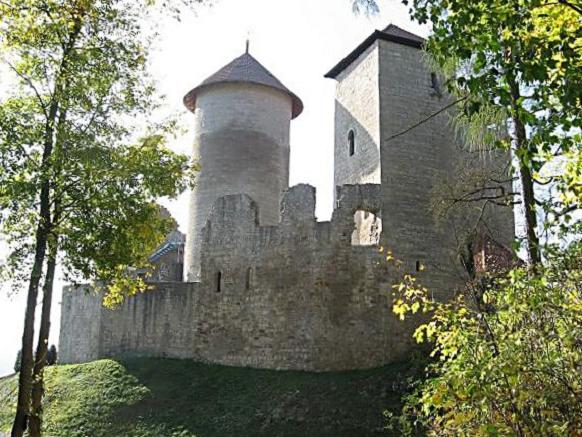
Finally, there are five mountain keeps that guard the passes through the mountains.  These were built by the Saxon in the days when defence, or at least provision for travelers and protection from Vedranya, were deemed necessary.  All five keeps were constructed in much the same manner; all tall, rectangular, utilitarian structures built out of the mountains themselves.  Each was built on top of caverns which served as storage and dungeons, the foundations of each keep reaching deep into the stone.

Each has an outer baily, or commons area, and an inner fortification.

That’s it for tonight.  Have a wonderful weekend everyone!

What does everyone else in Tellurin believe?

5 religions

Last week, I wrote about the two main religions of the Tellurin (humans): The Faithful, and the Holy Mother Church (HMC).  But what does everyone else in Tellurin believe?

You didn’t think I was going to stop at two, did you?

Well, I’m not.  But I’m not going to go into great gaudy detail about them either.  In the process, you’ll learn a little more about the various inhabitants of Tellurin.

Other Tellurin religions/belief systems

While the Parimi, Haldane, Espanic, Island Kingdoms, Saxon, Sami, and Skaldic all believe to a greater or lesser extend in Auraya and espouse The Faithful religion (some distinctively coloured by their own pagan belief systems), and the Caldone alone believe in the HMC, there are still other Tellurin cultures that believe in neither.

The Nubiin espouse a faith based in the divinity of their ruler, or Osire, and resulting cult of death.  The Osire (a man or woman) is tied to the land, responsible for the weather and tides that provide for a fruitful growing season in a relatively arid region.  Prosperity in the form of abundant crops and livestock result in a long rule, the opposite can result in a short one.

When an Osire ascends, work begins on his or her funerary monument.  The relative greatness of that monument and the treasures enclosed with the deceased is tied to the length of their rule.  Sound familiar?  It should.  The Nubiin are based losely on the Egyptian culture.

In the wake of the Cataclysm, and the advent of the devastating storms of Vedranya, the Nubiin faith was shaken.  If the Osire held no power over the storms, how could they be considered divine?  For nearly a hundred suns, the Nubiin struggled, even adopting a bastardized form of The Faithful religion for a while, but eventually, they returned to their traditions, rationalizing Vedranya as the cost of their prosperity otherwise.

The Hussar of the plains believe that the gods exist, but that they have no interest in what happens in Tellurin.  They believe in the power of a good horse, the strength in their limbs, and the pleasures of a life honourably lived.  They have an ethical code rather than a religion per se.

The Shooksa-Nai of the north-western region of Tellurin still live in a tribal fashion and have an animistic belief system, that is they believe in the spirits of things.  Their shaman are their spiritual leaders, healers, and advisors.  The Shanzu of the Deep Forest are similar.

A word about those pagan belief systems I mentioned off the top.  They relate to the first gods, the akhis.  Most revolve around the lord of the land (Zaidesakhi) and the lady of the waters (Augesahki).  Sacred groves were often consecrated to them.

Non-Tellurin religions

The okante (think orcs) territories are just south of the Shooksa-Nai and they too are a tribal, animistic people, and were largely peaceful until Yllel co-opted them into soul-slavery.  Now they live in fear of the mad god and do his bidding in the hope of saving their people from his wrath.

The krean (think trolls) are a seafaring people and revere the oceans and weather as their deities.  This has its roots in the akhis as well, Augesakhi and Freyesakhi.  Like the okante, they have been enslaved by Yllel and live in a similar fear of him.

The grunden (ogres), who live in the mountains, and blinsies (goblins), who live in the Deep Forest and love to harras the Shanzu, have no religion, but are also enslaved to Yllel.

The anogeni, as I’ve written in the past, were once the hands of Zaidesakhi, the fingers of Augesakhi.  The hidden people are special.  Though they’ve lost both “parents” they live in the belief that they will return to their children.  They have no true religion, because they know the true nature of the gods.  They do not require a structured religious practice as such.

They not only believe in the spirits of things, they actually study them and know them as friends.  There are twelve plants whose spirits have proven especially powerful: the ashkiwine.  It is through their relationships with the spirits that the anogeni practice their form of magic.

Because of their relationship to the akhis, they also know the spirit of the world, which they call the anoashki, the great mystery.  He is their grandfather, and they serve his purpose, one of the primary goals of which is to resurrect the fallen akhis.

Though the anogeni we meet in Initiate of Stone live in the earth, there are other groups of the anogeni that make their homes in the great trees, and in the oceans.  These last are an aquatic form of the anogeni, but they don’t have fish-tails 🙂

Another interesting thing about the anogeni is that they hold the memories of their ancestors, are born with them in fact.  As a result, they have a complex system of prophecies based on these memories and the patterns they have seen in them.  These prophecies and the anoashki guide them.

The dwergen, similarly, have no structured religion.  Dwergesakhi still lives in the heart of the earth, still speaks to them, and they know him well.  A self-evident god requires no faith.  Dwergesakhi is their creator, though, and as such they offer him respect and will do his bidding unquestioningly, as any good children might.

The eleph, being from Elphindar, are a little different.  Elphindar has no gods, but the eleph still revere the kaides esse, or the powers that be.  They believe in a kind of clock-maker, something beyond their understanding that created the universe, but then left the experiment to tick itself out in the fullness of time.  Like the Hussar, they have an ethical code by which they live.

When the eleph first arrived to Tellurin, Auremon came to them to try to make amends.  They were startled that the kaides esse of this new world took corporeal form and that they intervened in the affairs of mortals.  Since he confessed his role in their eviction from Elphindar and his inability to restore them, the eleph had no use for Auremon, and rebuffed him.

Not long afterward, the eleph encountered Yllel, when the mad god attempted to enslave them.  Yllel could not trick them, however, and this encounter only served to entrench the eleph enmity of the Tellurin gods and the people who worshiped them.

Finally, the favrard espoused an intricate system of ritual and discipline that did not focus on one god, but on all of them, past and present, known and unknown.  When Yllel enslaved them, he made them abandon their spirituality.  Some attempt to cling to their past, but Yllel punishes them for it.  The favrard are Yllel’s special pets, and one of the few peoples that he can possess.  The tortures he can inflict from within are fearsome indeed.

With this, we’re almost at the end of my world-building epic.  Next week, I’ll talk about some of the other distinctive features of Tellurin, some of the cities, keeps, towns, and villages that figure in Initiate of Stone, as well as a few odds and sods.

I hope you’ve enjoyed hearing about Tellurin and the characters in my novel.

I’m Writerly Goodness, circling three times and settling down for a nice sleep.  Until next week!

Speaking of speaking to the spirits

English: Religious symbols from the top nine o...

English: Religious symbols from the top nine organised faiths of the world according to Major world religions From left to right: 1st Row: Christian Cross, Jewish Star of David, Hindu Aumkar 2nd Row: Islamic Star and crescent, Buddhist Wheel of Dharma, Shinto Torii 3rd Row: Sikh Khanda, BahĂĄ’Ă­ star, Jain Ahimsa Symbol (Photo credit: Wikipedia)

A.K.A. Religion and spirituality in Tellurin, part 1

After last week’s lovely vacation from worldbuilding … it’s ba-ack 🙂  If you recall, last instalment, I talked about the specifics of how the magick works.  Part of that dealt with the nature of Ferathainn’s talent: her ability to communicate with the spirits of things.  We’re going to take that metaphor in a different direction this week.

So I’ve already covered the gods, and given a basic rundown of the history of Tellurin.  What’s left to say about the religions?  A fair amount 🙂

The two main religions in Tellurin, The Faithful and The Holy Mother Church are based on Auraya.

Once upon a time, on the eastern coast of Tellurin, the Parimi, Espanic, and the Haldane peoples lived in harmony with the Caldone.  Though all from tribal origins, all but the Caldone had settled into stable, agrarian territories that grew into allied provinces.

The Haldane were great artists and philosophers.  Their main tenet was to live every day to its fullest, to be joyful in the moment, and to follow their bliss.  This led them to strive for excellence in whatever profession they pursued.

The Parimi were of a similar disposition, but they were epicures verging on hedonism (eat, drink, and make love today, for tomorrow, you may die).

The Espanic expressed their philosophy in a different way.  They were great engineers, navigators, and scientists.

All Tellurin knew of the gods, but there was no codified religion yet.

In those days, Auraya, Auremon, and Tryella were active in the affairs of the Tellurin.  Auremon and Tryella weren’t interested in thanks or recognition, however.  Their efforts were altruistic.  Auraya loved the adoration and her partner and daughter were more than happy to let her take credit for their good deeds.

One of the Haldane began to collect tales of divine providence and intervention, and wrote them down.  He signed each story, The Faithful Scribe.  This collection became the Kas’Khoudum, or book of light.

The Parimi took these writings, and developed the set of practices that became The Faithful religion.  Mostly, they gathered at the full and new moons to share tales of wonder, to sing songs about them and to recite poetry based on the tales.  They shared food and drink.  In short, it was a big party that made everyone in attendance happy.  The Haldane and Espanic took to this form of gathering like bees to pollen.

Word of The Faithful gatherings spread beyond the borders of it home provinces and others began to adopt those practices.

The Cadone, however, were still largely a tribal culture.  Though they had cities, these were military strongholds and training centres.  They raided and attacked their neighbours, taking the conquered people as slaves.  When they observed The Faithful gatherings among their slaves, they thought it was pure debauchery and the Kas’Khoudum, a work of heresy.

Their Auraya was a warrior queen, champion of the bold and fearless.  They had established The Holy Mother Church in her name as an administrative branch of their great armies.  They determined that The Faithful had to be stamped out.

Though they drove the Parimi, Haldane, and Espanic peoples from their homelands and pursued them across the continent, Auraya intervened and chose one of The Faithful, Alain de Corvus, to be her Kas’Hadden, or hammer of light.

He saved the refugee peoples, turned back the Caldone, and the Parimi, Haldane, and Espanic settled peacefully on the western coast of Tellurin.

Over time, the religion of The Faithful became ritualized and the practice less joyful.

Yllel, trying to influence The Faithful for his own nefarious purpose created his own book, the Rada’Khoudum, or book of darkness (misleadingly translated as the book against darkness).  This was a book of ceremony and ritual, including a number of spells that when used, would actually bind and drain Auraya’s power, eventually weakening her.

After the Cataclysm, Yllel directed his soul-slaves to place the Rada’Khoudum into the hands of the surviving Faithful.  The Rada’Khoudum became the basis of modern Faithful practice and the Kas’Khoudum became a pleasant book of incredible tales, eventually laying forgotten and gathering dust on a shelf in the Great Library at Aurayene.

It might be helpful to think of The Faithful in the time of Initiate of Stone as analogous to the High Anglican Church in its early days, when multiple sects of Christianity were emerging and religious persecution was rife.

Think of the Holy Mother Church as Christianity in the time of the crusades, except that their collective target is any religion that is not HMC, magi, and any people not Tellurin.  They’ve been waiting and planning for years to execute their holy war.

Next week: The other religions of Tellurin.  You didn’t think I’d stop with two, did you?

Have a great long weekend!

Writerly Goodness, signing off.