Sundog snippet: Miscellaneous stuff

‘Cause we all need miscellaneous stuff. Am I right?

The acting consultant position ended, I returned to my substantive position for two blissful weeks, and now I’m on leave.

My main writing-related goal was to prepare and send off my query package, but I’m behind (no surprise there). I’m still finishing up the latest round of revisions, but I hope to have them done soon(ish).

I’ve also offered to help a couple of visiting writers set up workshops while they’re in town over the next several weeks.

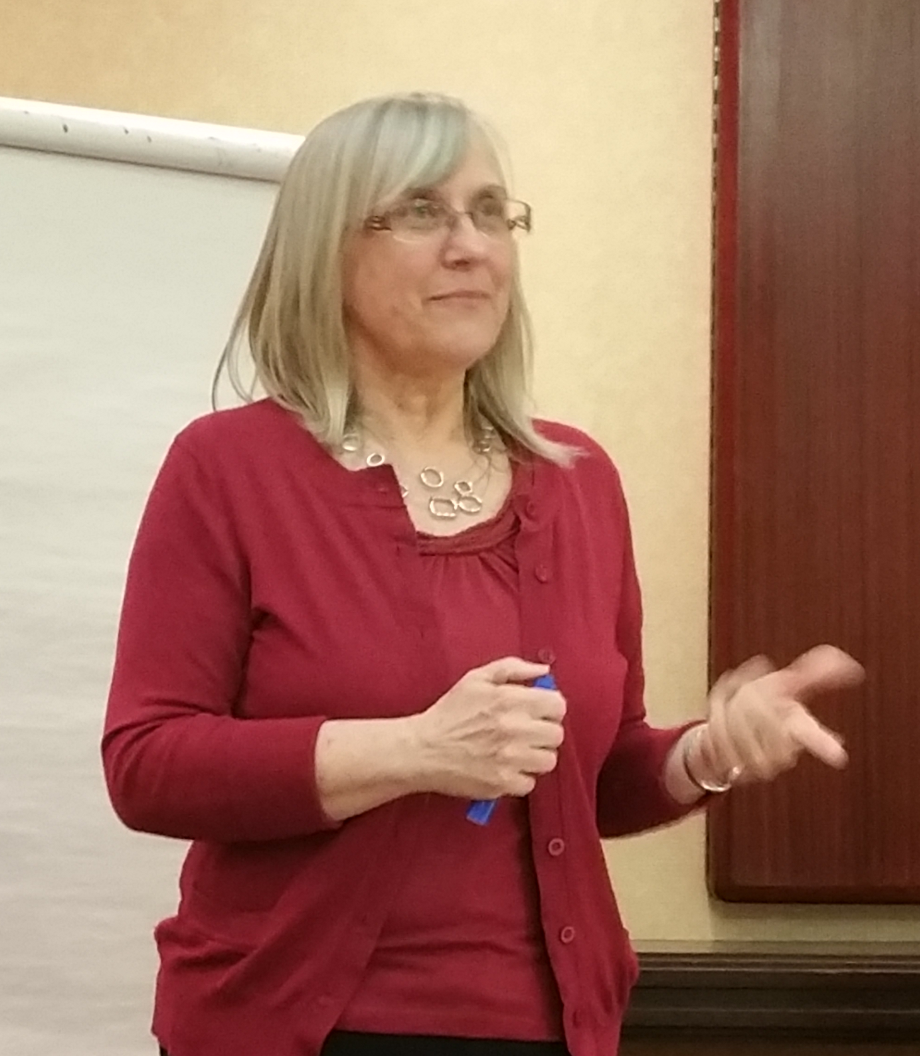
Jane Ann McLachlan will be up for the weekend of May 30 and 31. She’ll be doing a book signing at Chapters from 2-4 pm on the Saturday afternoon and then, on the Sunday, from 1:30-3:30 pm at the Older Adult Centre (in the YMCA on Durham), she’ll be delivering a workshop on Crafting the Contemporary Genre Novel.

JAMcLachlan

I’ll save the second workshop and event details for my monthly update.

Other than that, I’m going to conduct a bit of spring cleaning around the house, and hopefully get a couple of long-outstanding projects done.

The rainbows!Not as impressive as the real thing

I’ve cleaned up my office, including the windows and my variety of prisms in the window. Though the pictures don’t do it justice, I now have rainbows dancing about the room as soon as the sun comes around. They even shine down the hall and into the kitchen 🙂

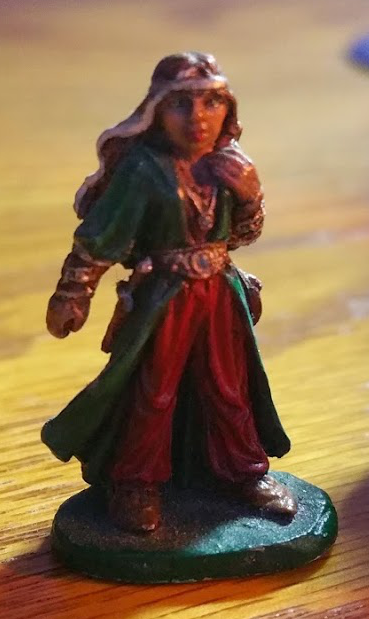
Guardians of the DeskMy druid

Just thought I’d show you the few things I have on my desk. The gargoyle is there to chase away distractions. The miniature is a hold over from my gaming days. This was my druid. I painted her myself, replete with ink washes, dry-brushing, and enough lacquer to protect her for over twenty years 😉

HeartShapedStone

Phil and I found this heart shaped rock in the back yard. I don’t know why, but I like it. So it’s on my desk.

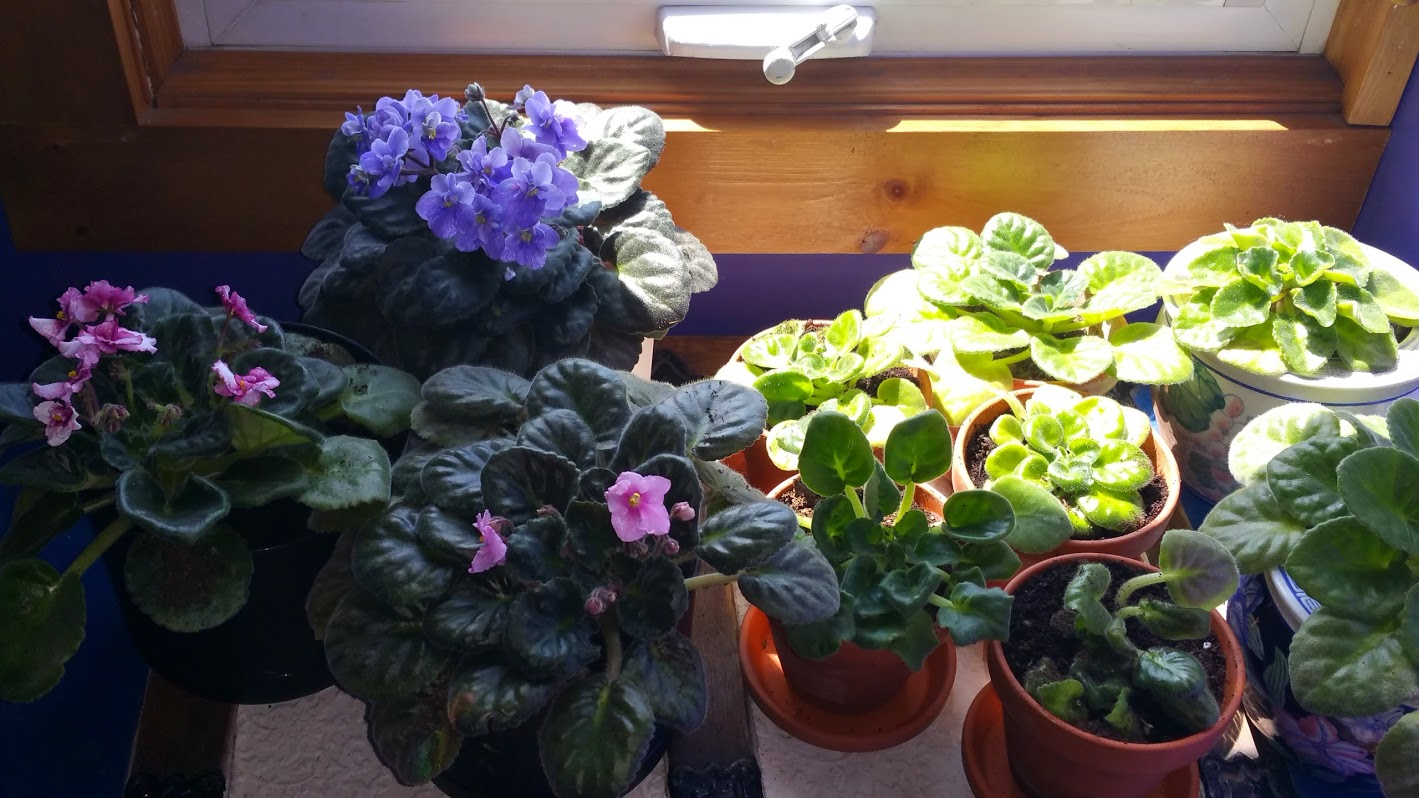
I also have to have plants. My African violets appear to be happy. This year, I’ve added an orchid to the mix and it seems to like the spot, too.

violetsorchid

I’ve decided not to travel for this batch of leave, since the true purpose of it is to rest and rejuvenate so I can return to work and not feel that it’s the last place I want to be.

The driveway and yard are still a mess. The remediation of Regent Street has begun (soil and sod, prepping the storm drains for the final layer of pavement) but since our property requires some extensive work, a few things have had to be organized first.

We’re supposed to have a sewer line inspection done in the near future. The city engineer visited and suggested that in might be more economical to insert a “sleeve” into the old sewer pipe than to dig it up and replace it. We’re hoping that’s possible, but will have to wait on the results of the video inspection.

The retaining wall has to be finished, the railing erected, and our front entry rebuilt. Even though they’d taken the old set of stairs and moved them into the back yard, we can’t use them again. The bottom step would lead people off the end of the retaining wall (!)

The new steps will run around the corner of the house and into what is now a garden. I’ll have to find a new place for all my plants.

Depending on whether we can get away with an insert into the sewer pipe, or have to dig up and replace the line, we my have enough money to ask the sub-contractor who builds the front stairs to build the side entry as well. If not, we may rebuild it ourselves, but we wouldn’t be looking forward to the work.

The drive will be repaved when the retaining wall is finished.

So there are a number of dominoes that have to fall into place for things to actually proceed.

In the back yard, Phil has dismantled the old front steps and, along with the pressure-treated lumber salvaged from my mom’s deck replacement last year, he’ll be using the bits and pieces to enclose our patio, back fill with stone and gravel, and we’ll finally get to use the space again.

I’m so looking forward to having my summer office again. I didn’t get to use it at all last year.

I’ll be moving the plants from the garden by the house into the gardens around the patio. Now that the birches have been removed, there’s enough sun for the plants to thrive.

Bucket has now . . . kicked the bucket. The repairs necessary to keep her on the road were beyond Phil and we made the decision to count his purchase as a poor investment and cut our losses.

A farewell to bucketBuh-bye, la!

He is, of course, on the hunt for a new(er) truck, but will wait to see how much we might be investing in the sewer pipe lining/replacement before we commit to spending more.

Nuala is doing well. We continue to take her in for the occasional glucose curve, but her diabetes seems to be managed, and her other health issues well in hand. She just turned 10 this year.

NualaMay

And that’s about all I can tell you about this writer’s life at the moment.

Sundog snippet

Ad Astra 2015 day 1: Arrival and Julie Czerneda workshop

The Ad Astra 2015 reportage starts now!

This year, I managed to find the Sheraton without too much difficulty (yay me). I can be Google Maps challenged at the most inconvenient times, especially when GM wants to send me on the 407 (I am toll route averse) or tells me to pull a u-turn when I don’t see the need for it 😛

Still, I just—just—got checked in to my room in time to run back down and into the workshop.

Julie Czerneda’s workshop was entitled It only hurts when I write: Destroying your story gremlins.

After a brief round of introductions, we got to work. Julie asked us to work in pairs and assigned us a series of writing tasks. The focus on the workshop was to solve the gremlins that many writers experience. The main gremlin was the blank page, or not knowing what to write/how to come up with story ideas.*

  1. Using a grid, storyboard a plot with a beginning, middle, and end (plot emphasis).
  2. Using a grid and a character card prompt, storyboard a plot with a beginning, middle, and an end (character emphasis).

After each exercise, each group shared the results of their efforts.

There was a brief break and then we reconvened for the second half of the workshop.

In the second half, Julie handed out a story worksheet to each pair. We were to fill out the worksheet with the following information: Story idea, Protagonist, Setting, Type of story, Format of story, Readership for this story, and what Feeling we wanted the reader to respond with.

Once the worksheet was completed, Julie handed out cards that added completely random items to the story. My partner and I received these three: What this story needs is a cat; Add an hilarious death; and Rewrite as a comedy.

Considering that I’d elected to fill out the worksheet using my main WIP, Initiate of Stone, a darkish epic fantasy, the cards actually threw three rather large wrenches into the gears.

The point of these wrenches was to concretely prove that we can change our stories, sometimes to good effect, on a dime and at the request of someone else. It teaches you to relinquish control, release from attachment, and may serve you well if/when an editor wants you to make changes your story.

It was a bit of a light bulb moment for me. I learned that I had, to a degree, achieved a certain amount of detachment from IoS. It’s a novel, not one of my vital organs.

Though I think if anyone actually asked me to rewrite IoS as a comedy, I would refuse. Categorically, even.

Overall, it was an enjoyable workshop.

Julie Czerneda

*I walked into the workshop thinking that we were going to be working with our actual story gremlins, as in the problems we are experiencing with our WIPs. It took me a few minutes to get over my disappointment that I was not going to get help with the opening of IoS. I was motivated, as ever, to learn, though, and so I did 🙂

There you have it.

Next week: Deconstructing tropes 🙂 Yes, we had all the fun! Really. I like this kind of thing 🙂

Bits and pieces

A.K.A. catching up on a bunch of stuff.

First of all, happy Valentine’s Day, to all of you lovely people out there!

Work

They say you’re not learning unless you’re failing. I must be learning BIG TIME at work these days.

That’s all I’m going to day about that.

Spirit

On February 1st, St. Brigid’s Day, or Imbolc, I attended Wooing the Soul, a day-long workshop and storytelling session intended to help women connect with their inner goddess. I enjoyed the storytelling, which was based on The Wooing of Etain. We danced, we sang, we invoked the spirit of Brigid, saint and goddess, and we shared food and experience.

I reconnected with a few friends whose circles I’ve moved away from in the past years.

While it was a good day, I found it was a bit long. I kept finding myself thinking, I could be writing, which is, incidentally, how I connect with my inner goddess. It’s a problem I have. Instead of talking about something, or listening to others talk about it, I’d rather be doing it 😛

I won’t write more about the day because others have done a better job than I could, namely, my friend Kim Fahner on her Republic of Poetry blog, and the facilitator herself, Ann Kathleen McLaughlin, on her blog, SophiAwakens.

Training of a different sort

On February 3rd, I delivered a workshop on getting published for the Northern Initiative for Social Action (NISA) as part of their Arts Intensive art education week.

I haven’t delivered a creative workshop in some time and I was looking forward to it. I’d love the opportunity to do more of these in the future. *hint, hint, universe*

I was far more nervous than I usually am before a training gig, which is to say I was a bit of a wreck, but the class was an intimate group.

The workshop was only two hours, and I had trouble keeping things on track, because the training I deliver for work is rarely less than a day. It wasn’t too bad, however, as the class was largely not at the querying stage yet, so the fact that I wasn’t able to discuss that aspect of getting published at length wasn’t a huge issue.

I also shared my notes and PowerPoint after the class, so everyone received all the bits I wasn’t able to discuss at length in the class.

I’m quite happy with how things turned out.

There are always lessons learned attached to any learning event, though, and I’ve got those tucked away for next time 🙂

The writing life

In writing news, I received my second rejection of a short story this year. I try to take the view that I am one more rejection closer to ‘yes,’ but honestly, things that been going so poorly in general of late that it’s been a little difficult to maintain a positive outlook.

Still, I continue to forge ahead with writing, revising, and submitting. It’s what we writers do.

Pupdate

Nuala had another glucose curve back in January and the result is that we increased her insulin by four units a day and tried reducing her prednisone.

The former is working well (we think) but we had to resume her previous dosage of pred as her ears were beginning to close up again.

Otherwise, our pup-child is doing well and we’ll return to the vet in March for another glucose curve and general checkup.

A clarification on the dream thing

I just wanted to be clear that I have ‘normal’ dreams, too.

The other night, for example, I dreamed that my sister-in-law invited herself over to our house for a sleepover, which was to take place, at her request, in the storage area of our unfinished basement, which barely has room for us to stand or move around in, let alone three adults and camping gear—oh, didn’t I mention, the sleepover was actually a camp-out, in the middle of one of the coldest winters we’ve had recently, in an uninsulated basement with a drafty window . . .

I’ve also had work-related dreams in which the office has moved into a shopping mall and I’m there, after hours, with Phil, moving my own office furniture. I’m wearing a power suit, have short, dark hair, and I’m skinny in that way only women who spend several hours a day working out are skinny. But I’m still me. No one else is there.

Or, I’ve dreamed that my boss gets a promotion, and she invites me along for the ride, literally, as she’s boarding a Lear jet and I’ve been summoned to the runway on the assumption that, of course, I’ll want to drop everything and go.

Inside the jet, she lounges like Cleopatra, a platoon of virile, young military men seeing to her every desire. I wish her well and get the heck out of Dodge, happy to have escaped the ‘trap.’ Oh yes. Hellish trap, that would be . . .

I’ve had stress dreams, falling dreams, chase dreams, abandonment dreams, and nightmares I’m not going to repeat, because, while they are all perfectly clear in my memory, I don’t want to feed those particular beasts.

It’s just those rare few per year that are well developed stories in their own rights that have little, if anything, to do with my waking life.

Just so you know. I’m mostly normal. Mostly (she says in a voice like Newt’s in Aliens).

So that’s it for this week. My mom’s coming over for supper in a bit, and then I’m going to throw my hat in the ring of another writing contest.

Break a pencil in all of your creative endeavours this week!

Muse-inks

Something awesome and dreaming up new story ideas . . . literally

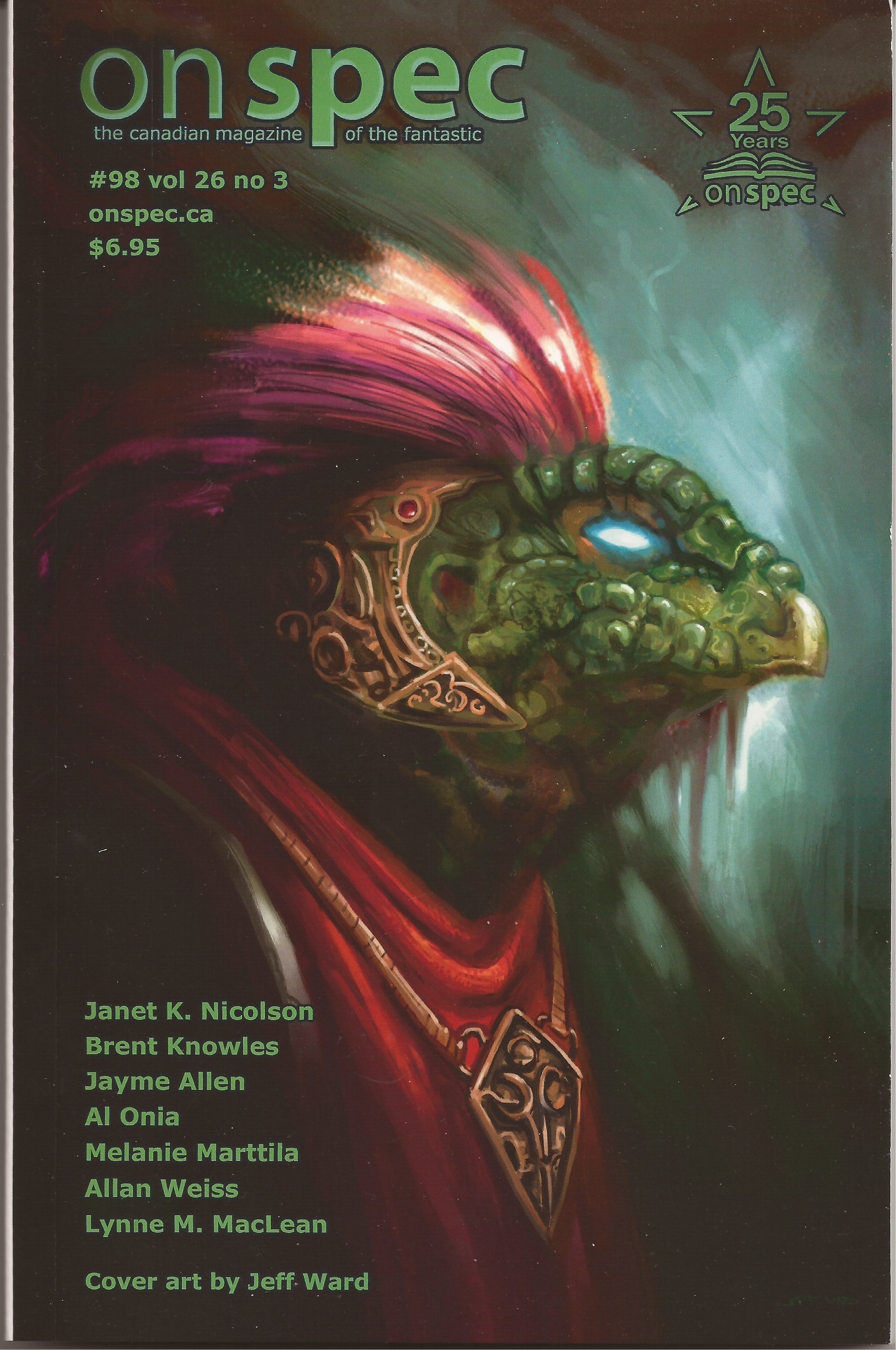
Earlier in the week, a friend of mine posted to Facebook that he’d received his copy of the Fall 2014 issue of On Spec—with my short story, “Downtime,” in it!

On Spec Fall 2014

Woohoo! See—that’s my actual name on the cover!

Further, my friend (also an SF writer, incidentally) said he liked it 😀

Heck, my mom was enthusiastic about it. You would expect that, but my mom would tell me if she didn’t like it.

I brought one of my precious copies with me to work, and my coworkers said they’d have to buy copies and get me to sign.

I have yet to convince Phil to read it. He will or he won’t and I’m cool with that. I’m just curious to see what Mr. Science makes of my science fiction-y self. To be honest, he hasn’t read anything I’ve written, and he’s only heard my poetry because he was kind of obligated to be at the book launch.

Of course, I read my “love” poems, the ones he’d inspired, and that embarrassed him. Maybe that’s why he’s so gun shy of my fiction . . . Trust me, dear, my fiction is not based in real life to any recognizable extent.

In any case, to any of you who live in Canada and are interested in seeing my story, you should be able to find it at your local Chapters, or your local indie shop.

For those of you outside of Canada, please visit On Spec’s web site to find out how you might be able to get your wee mitts on some of the best SF&F in Canada.

If you like speculative fiction, you might consider a subscription.

Gettin’ dreamy with it

For those of you who haven’t been following me for very long, one of my main answers to the question, where do you get your ideas? is, from my dreams, of course.

Although it doesn’t happen very often now that I’m an adult with a full time job and stress (tends to mess up my sleep), I dream in story. There are ususally one or two really good ones a year, but I’ll dream partly formed stories an additional four to six times a year.

I’m not going to tell you the content of my dream, per se, except that it’s a new adult science fiction romance (didn’t see that coming, did you—I didn’t see it coming) and the working title would be The Reality Bomb.

I’ll probably slot it in for 2015’s NaNoWriMo and let things ruminate for most of the year.

That’s what happened with Marushka. Though her story is a YA urban fantasy/fairy tale retelling, I dreamed her up January 1, 2014. TRB was a dream of January 4, 2015.

There was another dream, which I’ll call Bright and Far Away that was a space opera story with military elements, but that one didn’t grab me as firmly as either Marushka or TRB.

So dreams coming true. It’s a theme.

Tomorrow, I’ll be wooing my soul (more on that in a future post) and Tuesday, I’ll be delivering a workshop. This is a good time for creative Mellie.

How have your creative lives been going?

The Next Chapter: December 2014 update and a year in the writerly life

Janus has two heads so he can look back and ahead. Plus, you really can’t make meaningful progress unless you take some time to reflect on your accomplishments and understand where your journey has brought you to this point.

Let’s start with December, shall we?

In the wake of NaNoWriMo, I needed a wee respite from the purely creative writing. I kept up with my regular blog posts and caught up on a few things that happened in November that I had set aside posting about because of the aforementioned NaNo.

I returned to Marushka after a few days, though, because the force is strong in this one 😉 Also, I have to finish my shit (Wendigism).

Toward the end of the month, though, I wanted to get another short fiction submission revised and sent.

December 2014 writing progress

So at the end of the month, I’d written a total of 15,167 words, 8,812 of them on the blog, 6,234 on Marushka, and 121 on the short story.

What about 2014?

It was a good year, I think.

Since it was the first year I tracked my writerly output, I really have nothing to compare it to, but I know I’ve written more words in this year than I did in 2013 or any year before that.

The highlights:

“The Broken Places” was published in Bastion Science Fiction Magazine in its June issue.

“On the Ferry” won second place in the In Places Between contest.

“Downtime” will be in the fall 2014 issue of On Spec Magazine. The issue hasn’t come out yet (long story short—please subscribe or support them on their Patreon page), but I’m still pleased as punch.

I have writerly income to report on my tax return for the second year in a row!

I’ve put “The Broken Places” and “Downtime” in the short story category in the Auroras. It’s my first year doing this kind of thing, so we’ll see how it goes.

Overall, I submitted six short stories for publication. This is fewer than in past years, but given my greater focus on my larger projects, I’m happy with this.

I attended Ad Astra, CanWrite!, and When Words Collide conferences, and workshops by Brian Henry and The Humber School for Writers.

In 2014, I have written:

  • 110,361 words on this blog
  • 34,589 words on Marushka
  • 21,464 words on Gerod and the Lions
  • 3,521 words of short fiction
  • 3,161 words on Apprentice of Wind
  • 2,384 words on Figments
  • Total: 175,480

2014 Summary

That’s a fuckload of words. Sorry. I felt the profanity appropriate.

Plus, I mapped out and reverse engineered both IoS and Figments, and revised some of IoS.

I am still eternally grateful to Jamie Raintree for her wonderful Excel spreadsheet. This year’s has enough project slots that I don’t have to modify it 🙂 Also, it appears to have a way to track drafting and revisions. I’m excited to see how it works out.

For the second year in a row, the most popular posts on my blog have been those I wrote back in 2012. Dress for Success has been consistently popular. I didn’t think a post about writing in my pyjamas would have been so compelling. Go figure.

Eight Metaphors for Persistence . . . is also a heavily viewed post. I appreciate that a bit more because it was the first post on this iteration of the blog and spoke to how I picked up the pieces after being hacked.

Still, I would like to see some of my book reviews, or conference reportage posts, rank higher.

My overall views on the blog went down from last year. In 2013 I filled the Sydney Opera House five times. In 2014 I only filled it four times.

I take all this with a grain of salt, however, as the number of my followers through WordPress has only grown and at 373, I’m closing in on 400 followers. That’s not bad for three years of blogging when I don’t have a book to sell.

Those who receive my posts via email, or who can read them through WordPress may not be counted because they haven’t actually visited the site.

Personally, as long as you’re enjoying what you read, I’m good. I’m a fan of the slow build.

What’s ahead for 2015?

I’ve you’ve read me for any length of time, you’ll know I don’t go in for resolutions. I set goals and manage my projects on an ongoing basis, sometimes re-evaluating and adjusting my goals to account for the dreaded scope creep 🙂

That’s all stuff I learned from the project management I have to do for work. It’s also similar to the dreaded underwear creep (damnit, not another wedgie).

In all seriousness, I intend to revise and submit several more short stories throughout the year. I also intend to write a few new ones.

I intend to finish my first drafts of Marushka (goal length approximately 76,000 words) and GatL (goal length approximately 50,000 words). I can manage this at a pace of about 5,000 words a month. I’ll finish Marushka first, because it’s where my head is at the moment, and then return to work on GatL afterward.

I will revise IoS and finally (FINALLY) start querying. This is so long overdue, I can’t even. Can’t. Even.

I will move onto revisions of Figments once I start querying IoS.

I will map and reverse engineer AoW and probably Marushka.

I don’t think I’ll be able to manage much more than that for the bulk of the year.

I will again engage in the NaNoWriMo Challenge, even though I will be working through the month of November. I was very pleased with the 2014 results, even though it wasn’t a “win,” per se.

For financial reasons, I’m going to stay close to home this year with conferences and conventions. Most likely Ad Astra and Can-Con.

My big expense, professional development-wise, will be a writing retreat in the summer (if I can swing the leave from work—summer’s a peak time and it’s always a big deal), also local.

I’m facilitating my first writing workshop in years in February. You know I’ll be blogging that one 🙂

And the rest will be based on opportunities as they come my way.

I like preparing my Tipsday and Thoughty Thursday curation posts on the weekend for easier distribution (and more writing time) through the week.

Aside from that, the bloggage will come out of my writerly life, as it usually does.

I have one more post to go before the night is over.

See you shortly 🙂

The Next Chapter

How to get published

Once again, here’s some November catch up displaced by other priorities.

On November 6th and 7th, I travelled down to Humber College in Etobicoke (Toronto) to attend the How to get published workshop Hosted by Cythia Good and Jennifer Murray.

Humber Shcool For Writers Lakeshore Campus

About the presenters: Cynthia Good is the former president and publisher of Penguin Canada and current director of Humber’s Creative Book Publishing program. Jennifer Murray is the former director of marketing at Penguin and vice-president, marketing at Kids Can Press.

As with any of my transcribed sessions, discretion is advised. I fully acknowledge my humanity and there may be errors. If you see any, please be kind enough to let me know so I can make corrections, post-hasty.


You can’t make a living creative writing alone. (Mel’s note: It is possible to make a living writing, even in Canada. I know several people who do it, but it usually involves a fair amount of risk that most of us are not prepared to take. Do not lose heart if it is your goal to quit your day job. You just have to plan carefully and understand what level of risk you are comfortable with. As ever, do your research. /end rant)

It’s a brave new publishing world since the advent of digital publishing.

Publishing used to be a paternal system. Now it’s more like a partnership. Much more business and marketing knowledge is required of the average writer.

There have been a few big sea changes in the publishing world.

Two years ago Random House and Penguin merged (Mel’s note: officially, it’s Penguin Random House, or P/RH, but I still like Random Penguin). It’s a 51% to 49% balance of the controlling interest in the company and a shift from primarily German to primarily English oversight.

More recently, HarperCollins (HC) announced that it would be shutting down its Canadian distribution centre. This will mean the layoff of 120 people including the former president of sales, distribution, and administrative finance.

What does this mean for HC? They bought Harlequin last year. Another merger of sorts.

Another recent bit of news is that the government has disallowed new foreign publishers to set up operations in Canada. This is affecting Simon & Schuster (S&S) and their imprints, resulting in the departure of several key employees.

A Canadian publishing company that started up eight months ago may not be able to make it in this increasingly hostile publishing environment.

Will we see a HC and S&S merger?

The thing about mergers is that in order to support their infrastructure, publishers depend on authors whose sales will finance that support. Midlist authors are being dropped. Fewer chances are being taken on new authors.

These authors are going to small and boutique Canadian publishing houses.

In Canada, a bestseller is about 5,000 copies. Really, if you take into consideration returns, the print run should be anywhere from 7,500 to 10,000 copies and at least 5,000 of those must sell. 5,000 is the break-even point.

Why go for a traditional deal?

If you write non-fiction, there’s still money for public speaking. Though marketing and promotional budgets are disappearing, there is still some money to be had.

Traditional publishers are also branching out into digital. Hazlitt is an online magazine put out by RH.

They’re also getting into providing author services. Author Portal, through RH again, is much like Kobo Writing Life and offers similar metrics. Penguin bought Author Solutions (Mel’s note: BOO!) because selling author services ala carte is more lucrative.

Marketshare by format (Canada)

  • 18% ebook (24% in the US)
  • 58% paperback
  • 24% hardcover

Booknet keeps the statistics and only publishers and booksellers have access to that.

Ebooks have hit a plateau and are expected to hold. Pricing is not expected to hold, however.

Scribd, through HC, is billed as the Netflix for books. Amazon also offers a subscription-based service (Kindle Unlimited) whereby you can loan unlimited material.

In general, Amazon sells ebooks at a low price. Print prices are also falling.

Publishers in Canada can’t compete and can’t survive without government grants.

Three years back, in the battle between what was then the Big 6 and Amazon resulted in an Amazon win.

In part, it comes down to discoverability. How do readers find their books?

The traditional path between author and reader: author -> agent -> publisher -> distributor -> bookseller -> reader.

Now authors can go directly to the reader.

There are also book apps. Apps based on popular books. No one is making money on boo apps yet.

E.L. James’s success led to trends in erotica. Young adult and new adult are still strong categories.

Wattpad is a Canadian company and you can post your novels on there, chapter by chapter, for free. You can get great reader feedback that way. There are no stats currently on how releasing material on Wattpad may affect sales of ebooks or print books later on.

Of the Big 5 publishers, Canadian authors have access to three:

  • P/RH – both still take submissions seperately for the main publisher and all imprints. RH has Vintage, DoubleDay, Knopf, McClelland and Stewart, Tundra, etc. Penguin’s imprints include Viking, Allan Lane, Hamish-Hamilton. Collectively, they publish 100-150 books annually.
  • HarperCollins, which has recently acquired Harlequin.
  • Simon & Schuster, though they are, as mentioned, in the midst of transition.

There’s also Scholastic. They’re US-based, but Canadian authors can access them.

Small or independent publishers

  • Dundurn in Hamilton. Their focus in on history. They are in growth mode.
  • ECW publishes everything.
  • ChiZine is a niche publisher of horror.
  • Bundoran and Edge Science Fiction and Fantasy.

Micropublishers, or boutique publishers

  • Biblioasis
  • Gaspereau
  • Freehand
  • Goose Lane
  • Pedlar Press
  • Bookthing
  • Tightrope
  • Insomniac
  • Mansfield
  • Groundwood
  • Pyjama Press
  • Second Story

How do you choose?

If you aim for a big publisher, you will usually get a better deal.

With smaller houses, you get more attention and they will take more risks on new authors. Smaller presses are more agile and have specialties.

Editors

It’s a matter of match-making. The editor needs to make money for their publisher. They have a lot to read and a lot of work to do for their current clients.

Make sure your first page is memorable.

A well-written book with excellent sales can make an editor’s career. They receive bonuses based on sales, awards, and word-of-mouth (reviews). They usually have “stables” of writers.

They curate their authors’ best work.

Agents

Do you need one? For the big publishers, yes. The best way to get an agent is to get a publisher (ironic, isn’t it?).

You can approach editors directly. They’re always looking for new authors.

Think about why you want an agent. They can offer:

  • Emotional support
  • Editorial support
  • Career counselling
  • Access to big publishers
  • The ability to negotiate a good deal
  • Contract review
  • Interpretation of your royalty statements
  • The ability to negotiate for marketing budget or cover input
  • Advice on next books

For all this (sometimes more, sometimes less) they get 15% of every sale. Foreign rights, television, movies, audio, etc. (all subrights) generally demand 20%.

Agencies:

  • Westwood Creative Artists
  • Cooke Agency
  • Transatlantic Literary (primarily children’s)
  • Anne McDermid
  • Helen Heller (commercial)
  • Rights Factory (experimental/literary)
  • Rick Broadhead (practical/non-fiction)
  • PS Literary
  • Beverley Slopen

Always check the agency’s submission guidelines.

Other resources that might give you additional information on agents are the Association of Canadian Publishers and the Writers’ Union of Canada.

Make sure that your manuscript (ms) is complete and polished. N.B. Non-fiction should be queried with a proposal.

Why might you not want an agent?

  • Control over your career
  • Direct relationship with editor or publisher

A Baker’s Dozen (things to do before you query)

  1. Perfect your manuscript
  2. Get feedback
  3. Attend writers’ workshops and courses
  4. Hire an editor (freelance). N.B. Humber is launching its own Publishing Services.
  5. Submit to journals and magazines
  6. Research and submit to competitions
  7. Attend conferences or conventions
  8. Volunteer for or attend literary festivals like Word on the Street (WotS)
  9. Read
  10. Get to know local bookstores and librarians
  11. Have a presence on the internet
  12. Be prepared to give it away.
  13. Learn everything you can about publishing (Publishers Weekly, Quill & Quire)

Preparing to write your query

Research your comparatives/competition. Market research.

Be professional.

Submit to multiple agencies. Have your A list, your B list, etc. It’s also good to identify what you’re not interested in.

Have a strategy.

Query letters

Start with the story. Make it compelling. Get to the facts (word count, genre, etc.) at the end.

  • Introductory paragraph – if you have met or been referred to the agent. If not, show your research. Why do you think you’ll be a good fit?
  • Pitch/short synopsis – be as interesting as possible. Don’t give away the ending.
  • Comparables – be realistic.
  • Biographical info – keep it relevant.
  • Closing.

Agents will not appreciate it if you do not state the word count, call your book a “fiction novel,” use poor spelling, and/or poor grammar.

Self-publishing

This is not new. Virginia Woolf and Walt Whitman self-published.

Keep in mind that for every Hugh Howey there are thousands of self-published wannabes. Only 400 out of every 1.5 million books published sell more than 100 copies.

Consider your motivation. You may be:

  • An oft-rejected writer (this doesn’t necessarily mean your book is badly written, but consider the possibility)
  • Someone who wants to establish credibility
  • Someone who wants to help others
  • Disappointed with traditional publishing
  • Interested in establishing a legacy

If you self-publish print books, you generally need as many as 2,000 books for distribution.

Advantages

  • Certainty/total control
  • Speed to publishing
  • Increased income

Disadvantages

  • Up-front costs
  • No advances
  • Time consuming
  • Marketing and promotion are entirely on you
  • Distribution
  • Liability
  • Access to prizes and grants

Terry Fallis states he spent $1,400 for editorial review, cover layout and $2,000 for additional editing.

Use Wattpad to get reader feedback.

Use Kickstarter or Indie-go-go to fund your publication.

Check out James Altucher’s blog. Start with this post on Publishing 3.0.

Be prepared to become an authorpreneur.

Consider partner publishing with a company like Iguana Books.


As I said at the outset, my notes are not complete. I can’t write down everything said in the course of a day and a half. We also wrote query letters and critiqued them in class, as well as learning how an agent sells your book to a publisher. We also went over non-fiction book proposals, which I chose not to share with you here. There was a lot I couldn’t include.

That was the first day and a half. The last half of the second day was given over to Jennifer Murray to discuss marketing and promotion.

I’m sorry, but I didn’t take notes for the marketing piece.

You’ll have to register for the next session if you want to find out about that 😉 I’d recommend it if you’re in the Toronto area.

And that’s it for Writerly Goodness tonight. Toddling off to Bedfordshire.

CanWrite! 2014: Writing fantasy with Kelley Armstrong, June 20

I took a little break last week because of the blog tour and interview with Mat, but I’m back and ready to proceed with moar CanWrite! 2014 reportage.

I’ve been interested in Kelley for years, ever since I first heard Brian Henry’s story of how he helped hook Kelley up with her agent, effectively launching her career. Kelley’s version of the tale appears later in the workshop, so I won’t spoil it.

Everybody loves a good origin story 🙂

Kelley ArmstrongKelley was a dynamic speaker, hardly ever keeping still long enough for me to snap a decent picture. I won’t torture either you or her with my attempts. Suffice it to say that by the time my phone camera took the shot, she was in mid-speech. So here, instead, is the promo pic she gave the CAA to post on the conference page.


Kelley also likes to sit on desks as she holds forth.

Overall, I found her workshop a fascinating one. She frequently asked a question of the class and had us share our expertise, as a good facilitator should (corporate trainer kudos, Kelley!).

Without further ado, here are my notes from the workshop.


What is fantasy?

Set in an alternate reality; featuring non-human characters; plausible impossibility (Mel’s note: this was my offering. It’s from Brian Aldiss’s Trillion Year Spree.); mystical elements.

What about sub-genres of fantasy?

Steampunk (think Gail Carriger); urban fantasy (what Kelley writes); epic or high fantasy (Tolkien); contemporary; paranormal romance; speculative fiction; magical realism (Alice Hoffman’s Practical Magic).

On writing rules.

There are rules for grammar, spelling, syntax, etc., but with regard to writing a fantasy novel, there are no rules, only guidelines. Following them can definitely improve your chances of being published, but we worry too much about rules.

Don’t worry about the market. Let’s look at an example of a sub-genre that has long been considered flooded.

Current market research reveals that with regard to vampire novels in the last eighteen months there have been:

  • Eighteen deals for new series or standalone titles;
  • Fourteen extensions of current series;
  • Three novels from established novelists in other genres; and
  • One debut.

The “Big Five” are still buying vampire novels. Movies and television series are still being made from these books as well.

Who are the Big Five?

  • Penguin Random House (imprint – DAW)
  • MacMillian
  • Simon & Schuster
  • HarperCollins
  • Hachette (imprints – Little Brown, Hyperion)

All of the Big Five have their imprints. You can publish different books with different imprints.

<Kelley took a few minutes to review her most recently published novels and which imprint and parent publisher each was produced by.>

Bitten was the fourth novel I’d written. The three previous were, a novel about a private investigator (Mel’s note: my notes indicate PI, but it could be something else. My apologies to Kelley if I got this wrong), a traditional fantasy, and a Harlequin Romance, written for their Intrigue line.

Never write to the market. Write what you want to write. If it’s good, it will find an audience.

It takes, on average, about two years for a novel to be published.

Research is important, even in fantasy. Research your setting, history, weapons and armour, etc. Even if your world is a created one, there’s probably something in the real one it was based on.

Here’s how I define a few terms:

Myths have to do with the gods, demigods, avatars, or other similar beings. Folklore relates to fairies and other fantastic races of creatures. Each culture has its own. Legends are real people doing amazing things, generally blown out of proportion after years of retelling.

Can you “break” a myth and retell it in an original way?

Worldbuilding is all about research. You have to have rules and you have to be consistent with them. Or you have to create a convincing “in-world” reason for the rule to be broken.

Part of my research for one of my novels was In the Sleep Room by Anne Collins, a book about sleep deprivation experiments. I also looked into MK Ultra and other military experiments as well. For those who don’t know, MK Ultra was a program that attempted to create an assassin like The Manchurian Candidate.

Urban fantasy usually deals with some form of sub-culture.

How to write your way out of a corner (A.K.A. break your own rules).

First, you have to acknowledge the issue. Then, there are four ways out of your bind:

  • The magical whatnot – a mystical device that will supersede the rules.
  • The lost spell, ritual, or other knowledge – ditto.
  • A new or expanded power – caution: do not use often.
  • Mea culpa – just take responsibility for the “mistake.”

Be careful with these. If the solution to your magical bind sticks around, it can cause trouble for your story in the future (think the transporter as used in Star Trek: The Next Generation). You also don’t want your protagonist becoming too god-like. The easy fix can become a crutch.

Do not give any unnecessary details. If you explain too much, you are bound by the new rules you’ve created. Cover your ass.

How do I know another writer hasn’t already done “this”?

Don’t worry about it. There are no new stories, only new ways of telling them.

What’s the difference between high concept and low concept?

Every agent and editor will have a different definition of this. Sometimes it’s a matter of originality. It’s all in the execution. High concept usually involves global stakes. Low concept is more personal.

<We were then assigned the task of coming up with a concept statement, or logline, for our current works-in-progress. We shared them and critiqued them. Kelley came up with some very inventive ways to rewrite these offerings for greater impact.

The floor was then opened to questions.>

Q: How are you so prolific?

When I got my first deal, my novel was accepted on the condition that I could produce the second novel in the series—as of that time not written—in a very short timeframe. The publisher wanted to release them one after the other.

I was working in the IT field at the time, and though it was a big deal financially, I talked it over with my husband and he said go for it. I also had one young child and was expecting my second. It was a very scary time.

Everyone pitched in to make sure my life didn’t fall apart while I was taking this risk. My sister, who was conveniently in search of a job, became my business manager. When I had enough money, I paid for a housekeeper.

Value your time. Would you rather be doing laundry, or writing your next novel?

Now my kids are helping out too. It’s a family affair.

Q: How did you get your agent?

I’d been writing for a while, in the evenings and on weekends, while I worked. I took a workshop with a man named Brian Henry, and I asked him where I should submit my latest novel (Bitten). He read it for me and called me up one evening to discuss options.

He said, “Helen Heller would love this.” I gulped. Helen Heller? And then Brian continued, “I just can’t tell her what it’s about.”

Later, Brian told me about his conversation with Helen. He’d known her from his work in the publishing industry and he called her up.

“Helen, I have this fabulous new novel that you would just love.”

“What’s it about?”

“Werewolves.”

“Werewolves? If it was anyone but you, Brian . . .”

She read it, however reluctantly, but she loved it and she agreed to sign me as a client.

<The rest, as they say, is history.>

CanWrite! 2014: How to be your own editor with Farzana Doctor June 19

Farzana DoctorThat’s Dr. Farzana Doctor 😉

Learning to edit your work is learning to know when to let go. Maybe that’s what this workshop should be called: Let it go.

This is what I do. You don’t have to do what I do. Do what works for you in your process, but I hope you’ll find some interesting tips and techniques you can incorporate into your process.

First, a couple of definitions:

  • Prose editing is fine tuning: Spelling, grammar, syntax, usage.
  • Revision is substantive, structural, plot-related.

To start the editing process, you must have a completed piece of writing.

What was your intention in writing the piece? That core intention will guide you in the editing process.

Plan the process

Prose editing checklist:

  • Overused or repetitive words. First identify them. Everyone has her or his words. Then, use find and replace to address them.
  • Useless words (Mel’s note: also called zero words, because you can remove them from the sentence without changing the meaning of it) such as, just, only, that, actually, etc.. If you’re not sure what useless words are, Google it.
  • Grammar tics. Again every writer has a weakness. (Mel’s note: mine is commas. I either use too many or too few.)
  • Passive language. Examples: The biscuit was eaten by the dog (the dog ate the biscuit). She was jumping up and down (she jumped up and down).
  • Telling versus showing. Telling has its place, but avoid it where possible. Check your use of adverbs, adjectives, and clichés. These are often signs that you are telling, rather than showing.
  • Dialogue. Tags – do you need them, or would an action beat be better? Do all of your characters sound the same? Said is just fine. Read it out loud to see if it “sounds” right.
  • I start with editing first, because I find it easier. Some writers may not want to do this because it may mean too many wasted words when the revision stage is reached. Editing first works for me.

Revision checklist:

  • Where does the story begin? Is it too early, too late, is there enough action, conflict?
  • The protagonist. What does he want? What prevents him from getting it?
  • Other characters. If you can take her out of the story and not alter it, she should go. Every character should serve the story. Every character should be real, have a background, desires and frustrations of her own.
  • Keep track of plot and subplots. Structure.
  • Description. Is there too much or not enough?
  • Flashbacks. Do they stall the story?
  • Is the ending satisfying? Is it a resting place?

How to do it:

  • Focus. No distractions. Space. Set time, page number, or word count goals.
  • Separate new writing from editing and revision. Could be different times of the day, or different days.
  • Revision iteratively. Editing as you’re going. Must always make progress, however. S.J. Rozan’s method of Iterative Revision – Bookbaby. Start with previous day’s work, and then move on. It’s like a progressive spiral.
  • Change perspective. Step away. Change your font. Read aloud. Print it out. Draw maps. Pretend you are a reader.
  • Create a visual outline. Literally cut and paste your scenes and chapters.
  • Write a synopsis or jacket copy. Write a logline or tagline. Write a poem. Find your theme.

Asking for feedback

  • Who will you ask?
  • When is the best time to obtain a critique?
  • Be specific about what you want/need.
  • Stay general. When did you stall, get bored, get lost?
  • Receive your critiques without resistance. Set it aside. Decide what rings true. Ask for clarification (do not defend).

The rest of the workshop was spent reading and responding to the participants’ works-in-progress.


I must admit, I haven’t thought of purposefully editing first. I have edited too early before, and regretted spending all that time fixing scenes and even chapters that I would eventually delete. For me, I would think that revising first makes more sense.

Similarly, iterative revision doesn’t work for me. I get caught in an endless loop of going further and further back. It doesn’t prime the pump for me, it engages my inner editor too early in the writing process and stalls me.

Overall, I found Farzana’s workshop informative and practical.

I hope that you, too, will find something useful that you can use in your daily practice.

Sundog snippets: Roz Morris online workshop, part the second

So. In case you missed last month’s post, the @M2the5th Google Plus community has had the privilege of Roz Morris’s expertise for monthly online workshops.

Yesterday’s was entirely on Twitter as the participants requested.

Here’s the storify for your edification.

May workshop storify

Next month’s will be on Saturday, June 7, 2014, on Twitter, using the hashtag #mto5. If you want to know more about how to participate in a Tweet chat, please read this post. If you want to find out even more, please join the G+ community linked above.

Brian Henry workshop, Sudbury, March 22, 2014

Brian HenryThis afternoon, I attended my fifth Brian Henry workshop.

This one, the third held in Sudbury and hosted by the Sudbury Writers’ Guild, was on “How to make your stories dramatic.”

These workshops are Brian’s bread and butter, so without giving too much of the content away, here are my notes:

  • The scene is the basic building block of your story.
  • There are two kinds: the dialogue-based scene, and the action-based scene.
  • Every scene must have a plot-related point. It must answer the question, “so what?”
  • Push and pull. The push is the point of view (POV) character’s need. The pull is what the pursuit of the need leads to (promise, twist, decision, new threat, etc.).
  • Your characters must be interesting. They should be unique, have their own interests, passions, a quirk, backstory (dole it out gradually). If two characters are similar, shoot one.
  • Readers, sadly, do not remember names.
  • Your protagonist should be a good “tour guide.”
  • Every character has her or his own agenda (the scene’s push). It’s better if they are at odds with one another.
  • Pick your scenes carefully. Show the important stuff. Tell the rest.
  • Don’t get to the point too quickly.
  • Scene = hook, hook, and hook.
  • Ford Madox Ford, “No speech of a character should reply directly to another character.”
  • Dialogue shouldn’t be smooth.
  • An action scene consists of set up, action, and wind down.
  • Set up = setting, background, tone, suspense.
  • Action = plot, character, relationships.
  • Wind down = the result, new information, what is gained or lost.
  • Dialogue is important, even in action scenes.
  • Make sure it feels exotic (most people don’t spend a lot of time fighting, in chase scenes, etc.)
  • Use internal monologue to your scene’s best advantage. No long-winded explanations.
  • You need to have some kind of surprise.
  • Have more than one thing going on at any one time.

We went through a few examples of dramatic scenes, one from Lawrence Block, one from George R. R. Martin, and one from Bernard Cornwell to look at the variations and interplay of action and dialogue. We also completed a writing exercise, for which I chose a scene (to that point unwritten) from Gerod and the Lions.

Since I’m always trying to learn and improve upon my craft, the workshop brought up a number of bits and pieces that I’ve learned over the years.

Emily Dickenson wrote, “Tell all the truth, but tell it slant.”

Last fall at the Surrey International Writers’ Conference, I attended a Diana Gabaldon session where she shared her technique of driving a scene forward by raising questions in the reader, but delaying the answers for as long as possible.

I just finished reading Victoria A. Mixon’s The Art and Craft of Story, in which she describes “holographic structure.” This takes the basic three act structure of hook, development, and climax and breaks it down.

The hook consists of the hook and the first conflict, the development includes (at least) two more conflicts, and the climax consists of the faux resolution and climax.

In fact, breaking it down even further, each of these six elements contains its own six elements.

Thus, the hook part of the hook section contains its own hook, (at least) three conflicts, faux resolution, and climax, as does each of the remaining parts.

If this seems confusing, please read Victoria’s book. She explains it at much more length and much more clearly than I do.

Suffice it to say that the ultimate breakdown is at the scene level, and each scene, in keeping with its overall purpose within the story, has its own hook, three conflicts, faux resolution, and climax.

That’s all the insightful I have for you today, my writerly peeps.

Until next time.