My first SciFi Saturday: Killing with Kindness

Hi there.

Trying something different today.  A new acquaintance, Melanie Fountain, has her own publishing company: Fountain Blue Publishing.  In conjunction, FBP has a blog.  You should have a look and see what you think.

The blog encourages guest bloggage and has several opportunities to keep your writerly chops in shape.  One is SciFi Saturday.

So I’m giving it a try.

____________________________________________________________________________

Killing with Kindness

The boots don’t fit.  Far from being small, I’ve had to wrap my feet in strips of cloth to keep them on at all, but the wrappings have come loose and bunched up around my ankles and the arches of my feet, possibly the most uncomfortable places they could be.  Every fold and wrinkle has become the occasion for a blister, or a pressure sore.

The persistent rains have made it worse, turned the inner surface of the leather into sandpaper.  Every inch of skin on my body has pruned.  Much longer, and we’ll all have to start worrying about fungus and infection.  Not that we don’t already have worse to contend with.

We can’t stop though.  There’s no shelter out here on the wide plains that would hold twenty people.  We haven’t come across a town with standing buildings in days.

Besides, if we stop, the Radios—the radioactive people—will catch up.  As slow as we’re moving, their mutations slow the Radios even more.  As long as we keep moving, we’ll be okay.  If we stop, we’ll all die.

It’s not that the Radios want us dead.  I think they’re just looking for friends, family, mates, but their long exposure and adaptation to the radioactivity that’s killed just about everything else on the planet has changed them, and not just physically.  I don’t think they understand that the very thing that saved them will kill the rest of us.

When the shelter doors opened a month ago, the curious Radios flooded in, and though we were preparing to leave, and more than a little horrified by their melted and tumour-riddled appearance, we were curious ourselves as to what had become of the human race on the surface.

The constant pain they lived in had made them kind and amiable sorts, willing to help and learn in exchange for food and warmth.  The shelter’s reserves were almost used up, though.  That’s why the doors opened.  Though there could be no certainty, the scientists had given us as much time as they could to wait out the worst of the fallout and nuclear winter.  For better or worse, we would have to see if we could survive on the surface.

The Radios set up housekeeping though, and at first, we didn’t have the heart to leave them.

Within days of the Radios’ arrival, the children and the elderly became ill, over half our scant population.  Too late we realized that the people from the surface were still strongly radioactive.  How they survived to reproduce, we could only speculate, but now the entire shelter was contaminated and we didn’t have enough anti-radiation medication to save everyone who already showed signs of sickness.

Half of those who remained healthy eschewed the drugs, chose to stay and die with their loved ones.  The rest of us took the medication and fled.

If the Radios would only give up, but here on the prairies, we can still see them on the horizon, following like a bunch of forelorn puppydogs, just trying to bring their friends back home.

Now we’re all getting sick from mutated viruses and exposure that the anti-rad drugs are no proof against.

One way or the other, it’s going to end soon.

I don’t know where we’re going, but we’re almost there.

_____________________________________________________________________________

This was actually something I wrote for the Canadian Authors Association Virtual Branch Given Line flash fiction contest.  I’m trying to break the epic novel-writer’s mojo and see if I can get a proper short story written one of these days.  A friend suggested flash fiction as the fix.

We’ll see how this goes.

Let me know what you think.
 

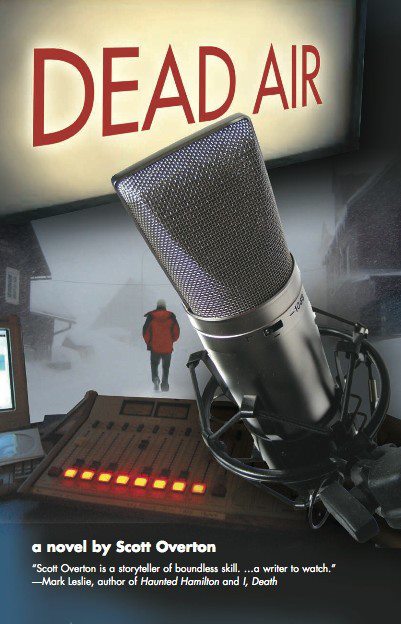
Shivering yet? Seasonal chill? No, it’s just Dead Air

An interview with Scott Overton.

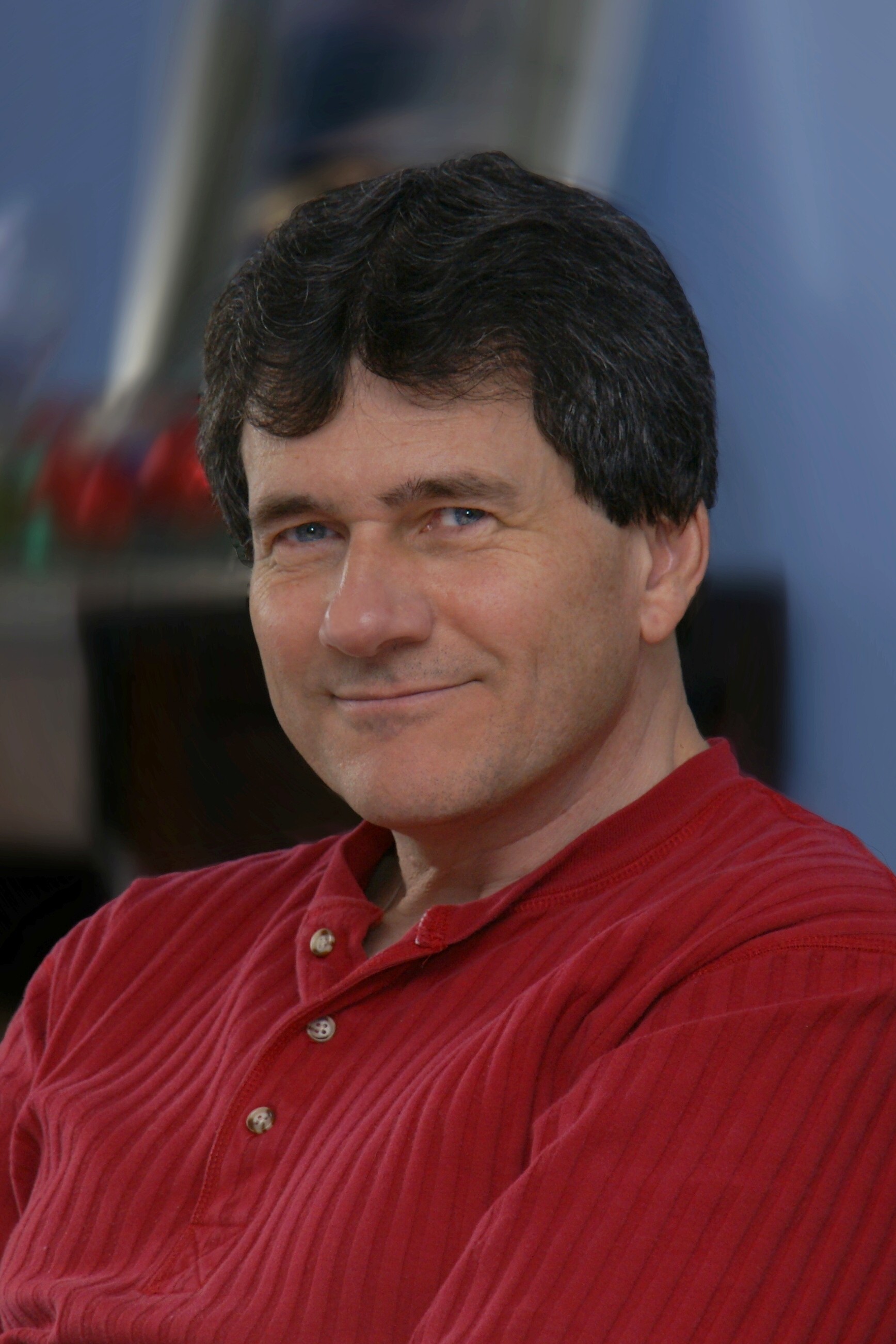
Scott Overton is a radio morning man on Rewind 103.9 FM in Ontario, Canada, who blames his off-kilter perspective on years of lost sleep from waking at 4:00am. His short fiction has been published in magazines including On Spec and Neo-opsis, and the anthologies Tesseracts Sixteen, and Canadian Tales of the Fantastic, among others. His first novel Dead Air (a mystery/thriller) is now available from Scrivener Press, while several SF novels are looking for good homes in the publishing industry. When not writing, Scott’s passions include scuba diving and a couple of collector cars, in which he hopes to someday find enough story inspiration to make them tax deductible.

Scott’s webpage is www.scottoverton.ca

An interview with Scott Overton.

Scott Overton is a radio morning man on Rewind 103.9 FM in Ontario, Canada, who blames his off-kilter perspective on years of lost sleep from waking at 4:00am. His short fiction has been published in magazines including On Spec and Neo-opsis, and the anthologies Tesseracts Sixteen, and Canadian Tales of the Fantastic, among others. His first novel Dead Air (a mystery/thriller) is now available from Scrivener Press, while several SF novels are looking for good homes in the publishing industry. When not writing, Scott’s passions include scuba diving and a couple of collector cars, in which he hopes to someday find enough story inspiration to make them tax deductible.

Scott’s webpage is www.scottoverton.ca

_______________________________________________________________________

Thank you, Scott, for taking the time to visit Writerly Goodness in advance of Dead Air’s launch on October 11, 2012 (Living with Lakes Centre, Laurentian University – be there or be … oblong).  I’m very pleased to have you with me, if virtually.

WG: For those of my readers who may not know what your novel is about, could you give them a brief synopsis?

Scott: Sure. It’s about a radio morning man named Lee Garrett who makes a joke on the radio about a neo-Nazi gang and a few days later he finds a death threat left for him. Then a series of incidents of mischief and vandalism turns into outright attempts on his life. Someone wants him dead, and he doesn’t know who or why.

WG: Where did the idea for Dead Air come from?

Scott: I’m a morning radio broadcaster myself, and I was struck by the vulnerability of even small-scale celebrities. People think they know us, but we don’t know them. And it’s very easy to make an enemy without meaning to, or even knowing that you have. I also wanted to explore how an ordinary person would try to cope with such a devastating threat (as opposed to some Hollywood hero who’d just get a gun and blow the bad guys away).

WG: Writing process is a personal interest of mine.  Would you be able to speak to your process in writing Dead Air?

Scott: It took at least five years to write the first version of Dead Air because I was working full-time and was involved in quite a bit of charity work. I worked on it whenever I could: evenings, weekends, and vacation time, but was impossible for me to stick to a routine because of my other commitments. Fortunately I have an upstairs room that became my study and interruptions were discouraged (even when I was hogging the family’s only computer!)

My writing habits are better now, though I still can’t tolerate any distractions or listen to music. I don’t know how writers can do that and still feel the rhythm of their words.

WG: Dead Air is a thriller, but you’ve had a fair amount of recent publishing success in another genre.  If readers would like to find more of your work, where would they look?

Scott: Everything else I’ve written would be considered science fiction or fantasy, though often with thriller elements. I’ve been fortunate to have seven short stories published and, as a Canadian, I’m particularly proud to have been published in the two top Canadian SF magazines, On Spec (twice) and Neo-opsis, as well as the quintessential Canadian SF anthology series, Tesseracts (I have a story in the latest edition, Tesseracts Sixteen). So I feel like that’s the Triple Crown of SF in our country. Now I really hope I can get my SF novels published.

WG: How did you first start writing?

Scott: I’ve been writing stories ever since I was a child, and briefly tried to write full-time in my twenties, but couldn’t stick with it long enough to break in. I’ve always been determined to become a published author, so when I came up with the concept for Dead Air I just went for it, and I’ve been writing consistently ever since.

WG: Getting back to Dead Air, how did you get your contract with Laurence Steven of Your Scrivener Press?

Scott: I’ve always had a lot of respect for the quality of the manuscripts he chooses and the books he produces. My friend and mentor, Sudbury author Sean Costello, spoke highly of his own experience working with Laurence. Scrivener Press is also a recommender for the Ontario Arts Council’s Writers Reserve grants. I applied for a grant to rewrite Dead Air, Laurence recommended it to the OAC, and when the MS was ready I submitted it to Laurence. I didn’t get his answer for about six months, but he says that was because he was trying to work out the timing of the publication. He’s a busy guy.

WG: Finally, aside from your launch on October 11, are there any other upcoming events you’d like to promote, and where can readers purchase your book?

Scott: I’m sure I’ll be doing more readings and book signings at Chapters and places like that, but nothing has been scheduled yet. The book is available directly from Scrivener Press (though the web site’s a little behind on the direct purchase linkage), and I understand it’s now in stock at Chapters in Sudbury and likely Coles, too. Online it can be ordered through Amazon and Chapters-Indigo.

Scott, thanks for joining me 🙂

________________________________________________________________________

Don’t miss the launch of Scott Overton’s thriller Dead Air! Thursday, October 11, 2012, at the Vale Living with Lakes Centre, 6:30-9:30 pm: free admission and refreshments. (Scott will be reading from the book at 8 pm.) More info at http://www.scrivenerpress.com/default.asp?id=580


Nine (plus) world building resources

Open any book on writing fantasy or science fiction and you’ll find a section on world building.

Cover of "The Craft of Writing Science Fi...

Cover via Amazon

Four cases in point:

Bova writes a section on “Background in Science Fiction” in which he discusses the uses of background (back story and world building elements), offers a complete short story as an example, and then practical suggestions on how to apply the techniques he’s discussed in the context of the story.  Bova makes reference to the greats of SF (Bradbury, Niven) as well as to literary works to round out his advice.

Card also has a chapter on “World Creation” which he summarizes thusly:

How to build, populate, and dramatize a credible, inviting world that readers will want to share with you.

Kinda speaks for itself, doesn’t it?

Killian writes a chapter on “Creating Your Fictional World,” including the following topics: A symbolic reason; A sense of what is natural; Parallel worlds; and Fantasy worlds.

Gerrold’s book contains several chapters on world building: Setting the stage; To build a world; Detailing the world; Building aliens; Believability; and Fantasy worlds.

Once again, every book on writing SF or Fantasy will include a section on world building in one form or another.  The more you read about it, the more you learn and the better you get at this whole world-building thing.

Books specifically about world building

I’m going to start with a book by fellow Canadian Authors Association member, Sandra Stewart.  She offers workshops in world building based on this publication.  Go check out her site for more information, or to get a copy of her World-building Workshop Workbook.

Sandra’s philosophy is to build from the micro to the macro and she gets into all the details from arts and entertainment, through calendar, to war and wizards.  She covers common pitfalls too.

Three more from Writer’s Digest:

If you’re interested in creating planets and star systems, this is the book for you.  In fact, I’d recommend the whole of the Science Fiction Writing Series, which delves in-depth into Space Travel and Time Travel among other subjects.

Ochoa and Osier cover some topics, like space stations, spaceships, civilizations, and other technological jumping-off points that some of the other writers don’t treat in quite the same way.

Contributors include Terry Brooks and Sherrilyn Kenyon.  As detailed as the above references are regarding the creating of a science fiction world/universe, this book is just as thorough with respect to the creation of a fantasy world.  It covers law and commerce, costume, myths and legends, and castles among other topics.  It’s a great starting point for research.

And finally:

Though this book might more appropriately belong in the books on writing SF and Fantasy (above), Scott fills more than half of it, pp 27-120, with various aspects of world building.  Like Stewart’s World-Building Workshop Workbook, I’d recommend Scott’s book because it offers a woman’s perspective on the techniques of world-building.  Further, Scott was Harvard-educated, which makes her perspective even more unique.  Her apology, “A brief defense of Science fiction, or why does someone who went to Harvard write this stuff anyway?” is both a humorous and insightful look at how SF is really a way to deal with our essential discomfort about change.

If I’d wanted to go tub-diving in my basement storage, I could have come up with half a dozen more books to recommend, but it takes something really special to make me dare the Rubbermaid jungle 🙂  Yes, I’m a book-addict.  Ask my husband, and if you do, have a beer ready for him to cry into!

Do you have any books on or containing sections of world-building that you’d recommend?  Share in the comments so everyone can benefit!

As a friend of mine says … heading for Bedfordshire.