Getting back into the swing of things…until the swing breaks.
Life in general
Even though we’ve had another lovely stretch of warm weather through September, I’ve given up on the idea of swimming this year, for several reasons.
- My swimsuit. I haven’t bought a new one since I lost weight and it’s baggy. Baggy enough that it would probably fall off my shoulders while I swim (!) I definitely need a new one but haven’t gotten around to sourcing one yet. Speedo designs have also changed a lot over the years and I’m not sure what would suit—lol—me now.
- My rituals in the covid endemic age. Because I continue to work full time, and devote a good portion of the rest of my time to writing, I’m finding it challenging to fit a swim in. I really struggle in the mornings and don’t think I could get up any earlier to swim then, and after work, I often don’t have the spoons to do something that isn’t writing. I’ll have to give it some thought before next June.
- I’m far enough away from a beach that it would take a half hour to an hour to walk (depending on which one I go to) there and back, or I’d have to take my car, and there may not be enough parking, particularly on hot summer days. It’s another time sink and ritual adjustment that I have to account for.
Friday the 13th wasn’t kind. My mom was feeling poorly enough that she asked me to call 911 for her after work. After a 20-hour odyssey in the waiting room (during which she did not sleep, eat, or drink anything), seeing a doctor, tests, and a CAT scan, she was observed overnight. In the morning (Sunday) the surgeon called, recommending surgery. I agreed and laparoscopic surgery to repair/remove a bowel obstruction proceeded that afternoon.
So, I had to put a few things on hold.
If you’ve been reading my blog for a few years, you may remember that Mom had a similar surgery in November 2020. It was why we went with the option of an ambulance and agreed with the surgery when it was recommended. The illness that preceded it was familiar.
She was in the hospital until the following Thursday (Sept. 19) when Phil brought her home and life started its slow return to normal.
Work is still a source of stress. Transitioning to a new team is not easy, and doing it in the summer, when vacations mean that half your team is away, just makes it more difficult. I’m starting to get a handle on the projects and hope to feel like I’m making headway soon.
I’m pretty sure I’ve tipped the scales toward burnout.
The month in writing
I focused primarily on the climactic chapter of Reality Bomb when I could, but it eventually became apparent that words were not wording.
I was supposed to meet with Suzy once on the 18th, but Mom’s surgery forced me to postpone.
On September 1st, there was a flurry of activity for the anthology I’ve been included in. For most of August, I’ve been quietly reviewing proofs and the draft contract. On the 1st, I reviewed and signed my contract and reviewed and approved final proofs.
I’ll let you know more when I can. It’s kind of killing me not to be able to share the news.
On the 24th, my Sudbury Writers’ Guild member page went live.
And on the 25th, three of my poems appeared in The /tεmz/ Review! Trauma cluster I, II, and III can be read online. Please be advised that TCIII includes mentions of suicidal ideation. The whole tryptich is dark, so be aware if you choose to read. Take care of yourselves, y’all!
I met with my Dispatches writing group on the 3rd. Always good to catch up and share with writer friends. But then, because Mom, I had to withdraw from the next round of submissions and critiques.
I received another lovely review of The Art of Floating from Ramblings on my Bookshelves on the 11th. So, so grateful for each reader and every review that comes in!
The Wordstock annual general meeting was on the 11th, followed immediately by the Wordstock 2024 lineup announcement and open mic night. There are so many stellar authors in the lineup: Alicia Elliot, Drew Hayden Taylor, Hollay Ghadery, Danielle Daniel, Yvonne Blomer, Ariel Gordon…and the list goes on!
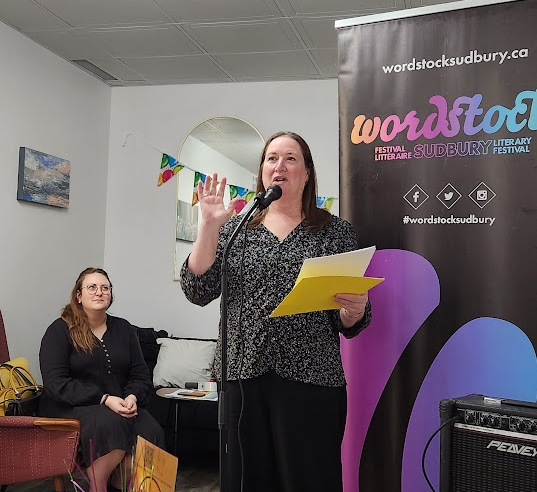
I’m honoured to be in the Poetry Primer session on Friday, November 1st from 5:30 to 6:30 pm with Kelsey Borgford, moderated by Poet Laureate Alex Tétreault. If you’re in the Sudbury area in November, please come out to Place des Arts and take part in Wordstock 2024!
Here’s the link to the Wordstock website where you can look at all the author biographies, download the schedule-at-a-glance, and buy tickets 🙂
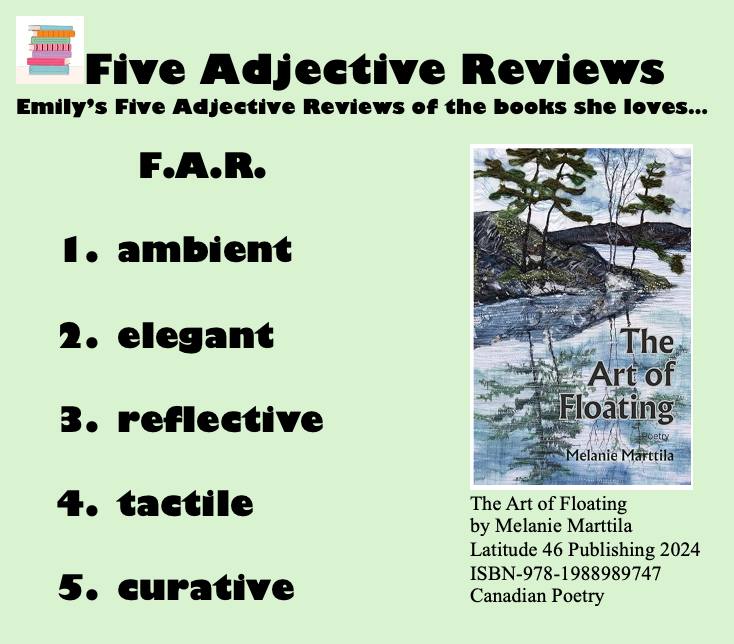
On the 19th, Emily De Angelis featured The Art of Floating in one of her five adjective reviews (on Facebook, Instagram, and Threads). She took a break over the summer, but otherwise Emily posts one of these charming, brief reviews every Friday.
In writing business, the SF Canada board met on the 24th. It was a brief, productive meeting.
Filling the well
The new Hazel moon in Virgo was on the 2nd, which was also Labour Day.
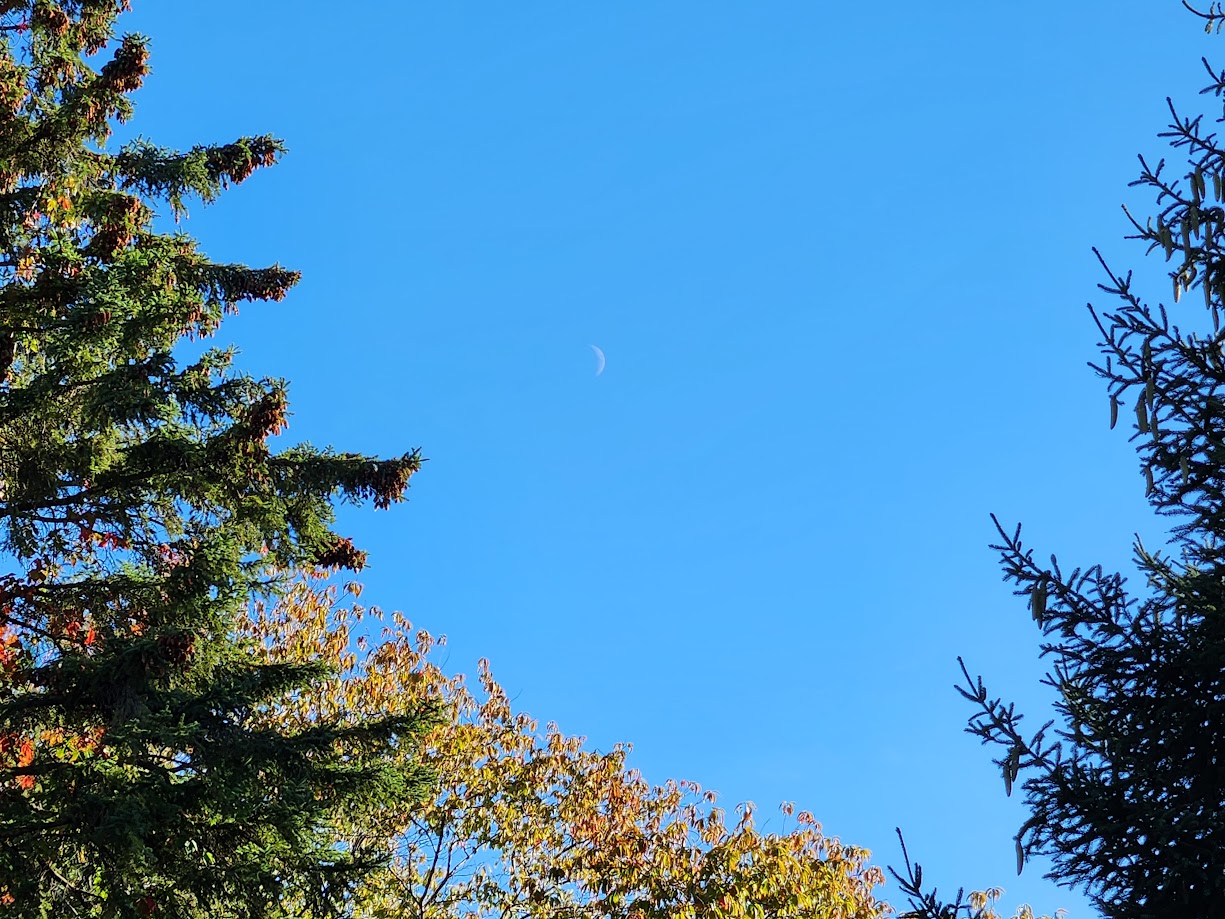
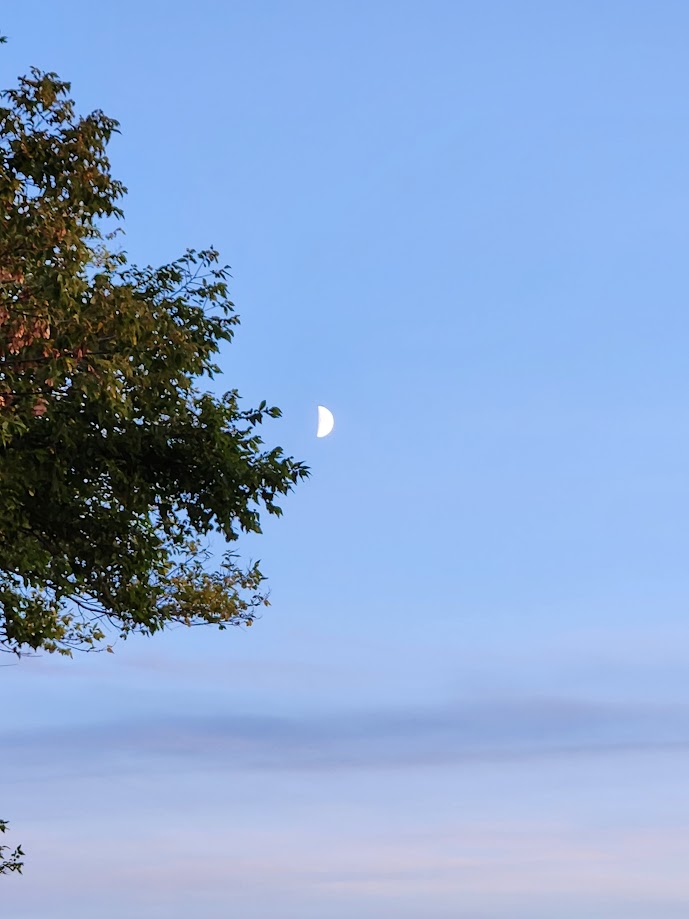
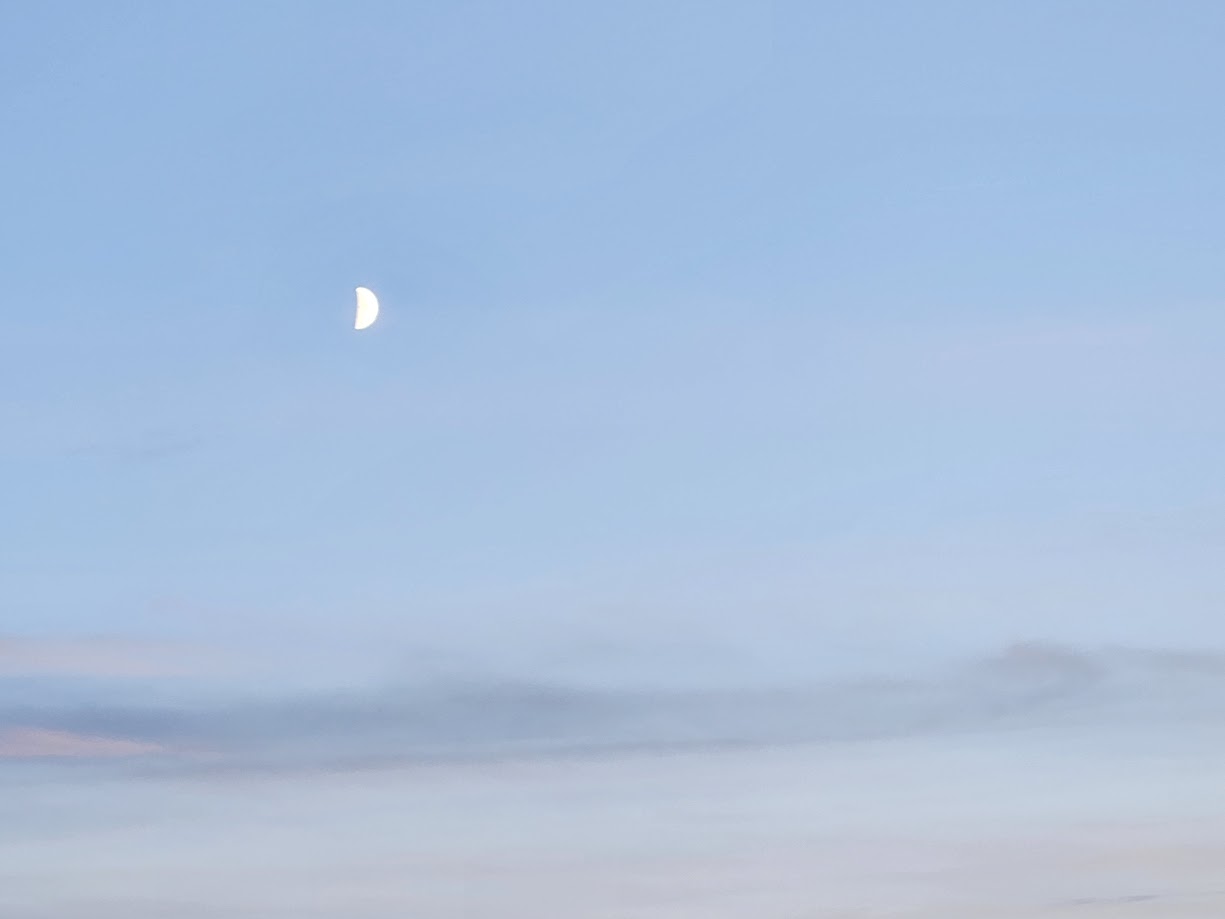
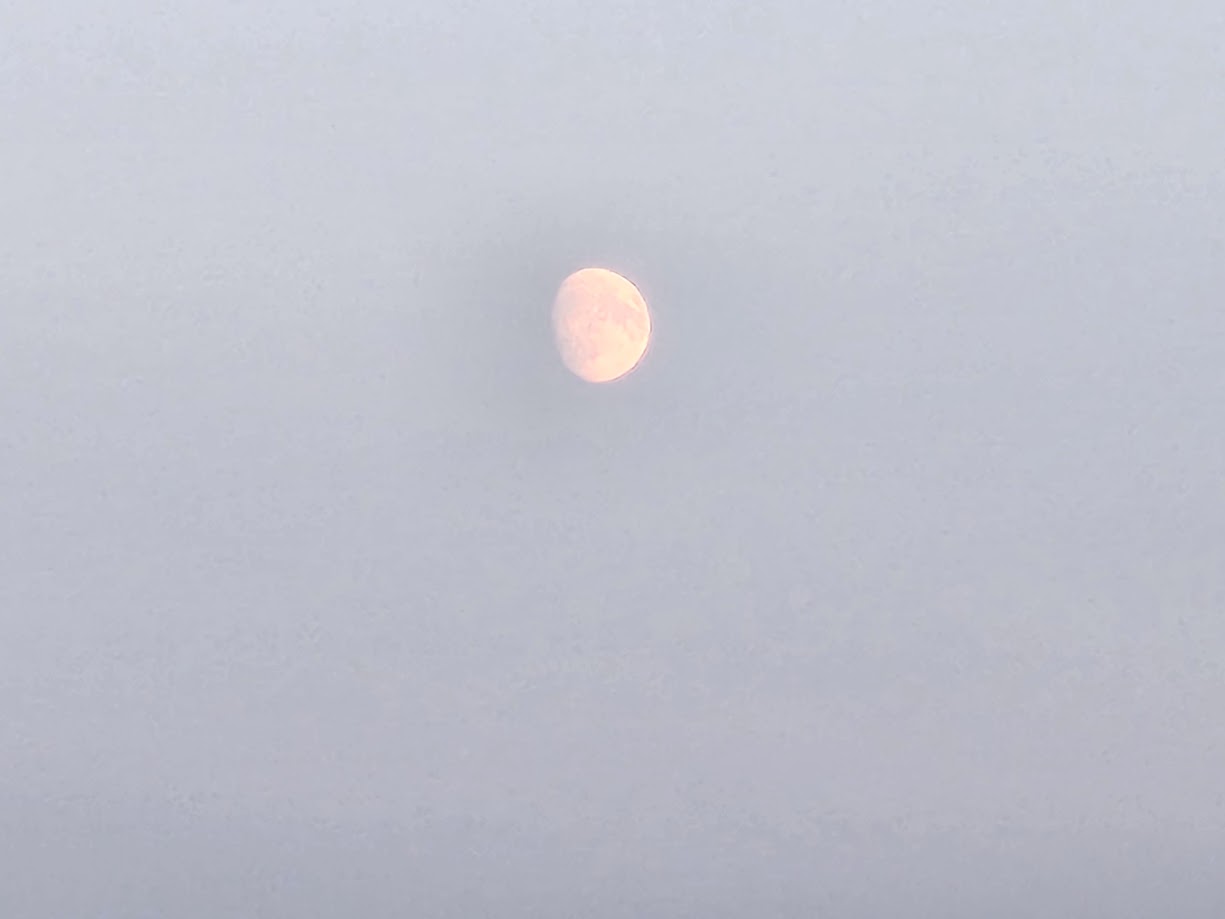
The full Corn/Leaves Changing Colour moon in Pisces and partial lunar eclipse was on the 17th. I watched the Time & Date coverage of the eclipse in various parts of the world where the eclipse was more pronounced and walked to the window to watch the wee nibble of shadow on the moon here. The moon was distinctly orange in the days leading up to the full.

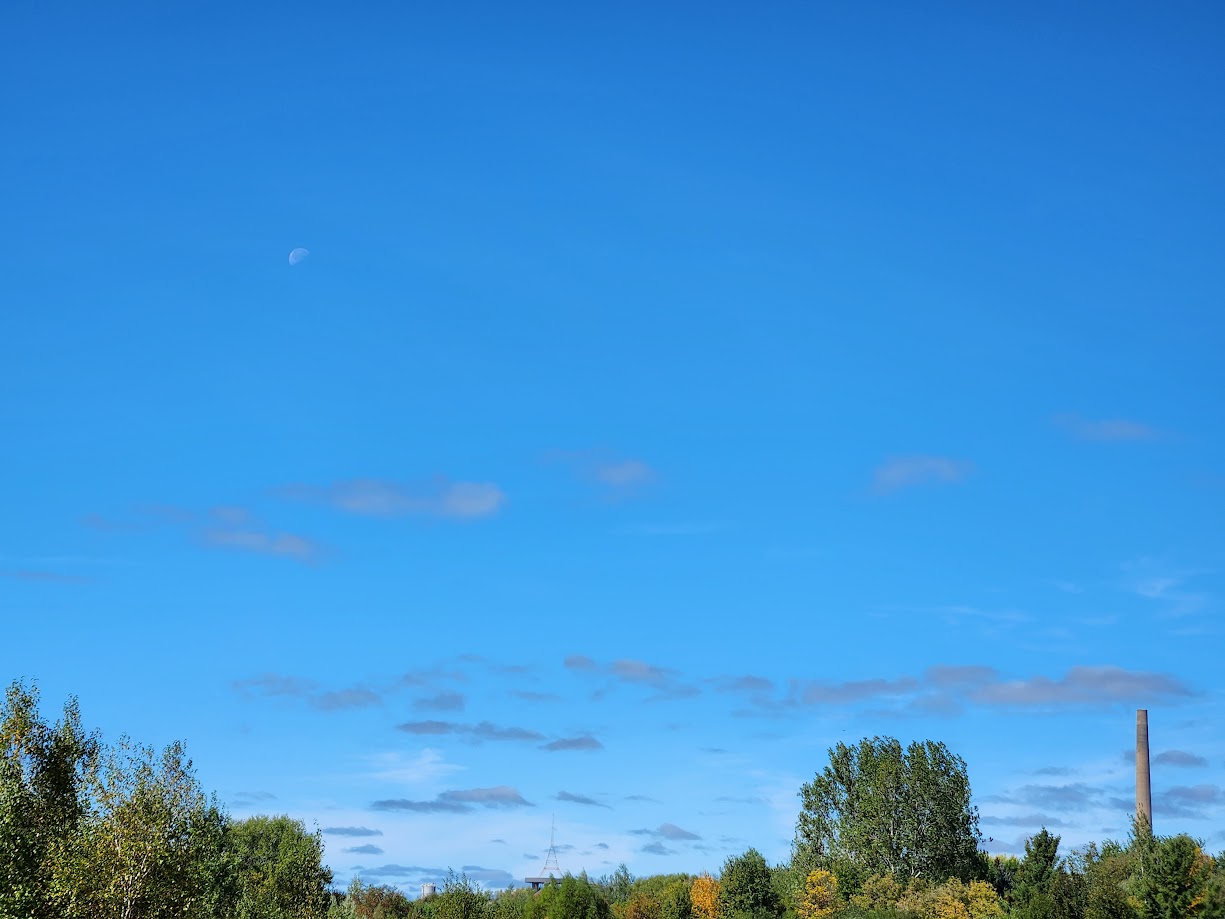
And the autumnal equinox fell on the 22nd this year. I did my usual altar-lighting and contemplated the changing of the seasons.
Writing-related events started to ramp up again. I’d signed up for that series of Odyssey workshops last month and they continued through September. I also signed up for several Clarion West Workshops. And there were several book launches and events to attend.
On the 8th, I attended the Odyssey workshop “Point of View” with Paul Park. Solid writerly learnings.
On the 10th, I attended “playing with Perspective” with David Ly, a poetry workshop through the League of Canadian Poets. Since it was during the workday, I audited, but the workshop was verra interesting. I’ll have to work through it on my own time.
That same night was “Avoiding Common Science Pitfalls in Your SF with Ashley Christine, the first of the Clarion workshops I signed up for. Lots of science-y fact checking for worldbuilding and plotting.
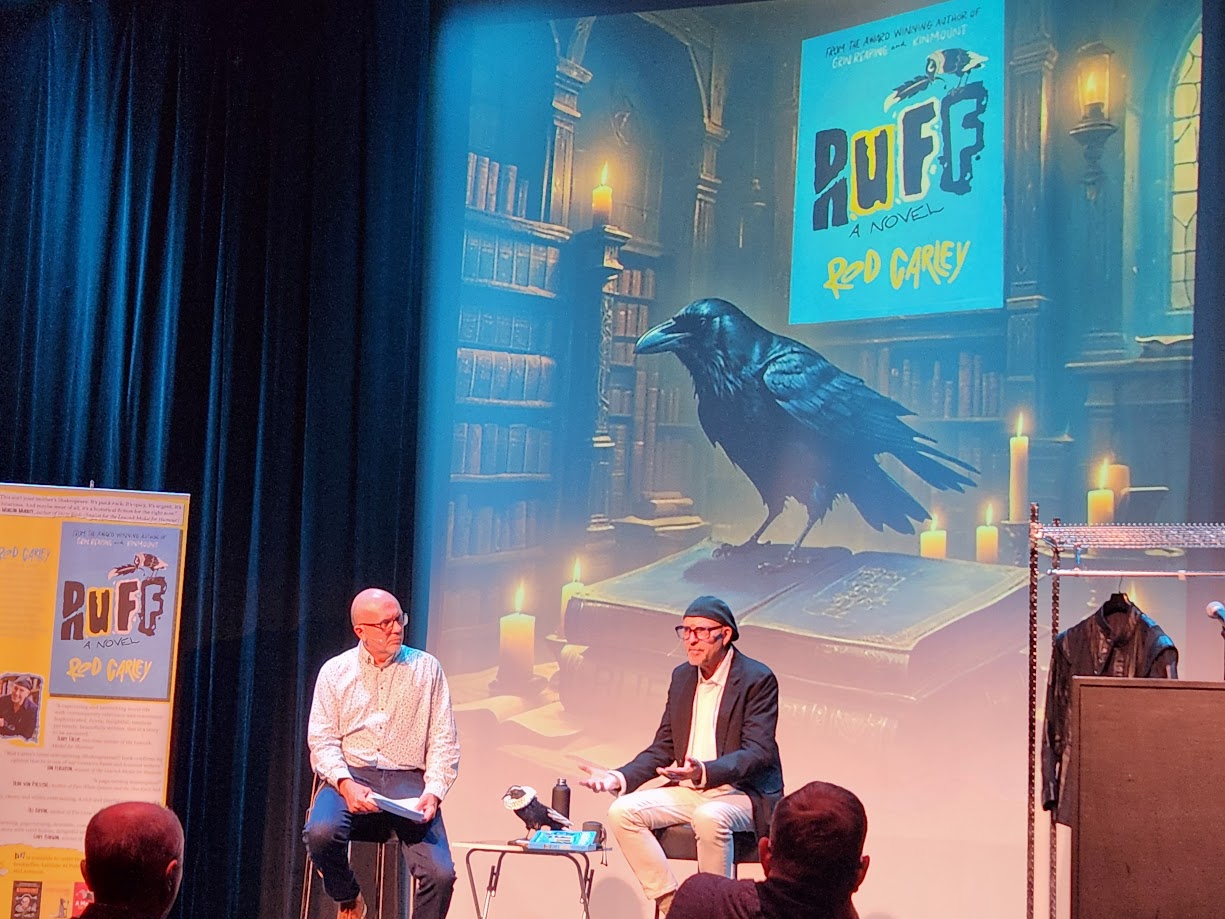
Then, on the 12th, Rod Carley launched his latest novel, Ruff, at Place des Arts. It was lovely to meet Rod in person (we’ve only ever interacted online).
The 13th through the 15th was the DIY MFA Author Life Summit. Because that was also when my mom had her surgery, I just watched the sessions I was most interested in.
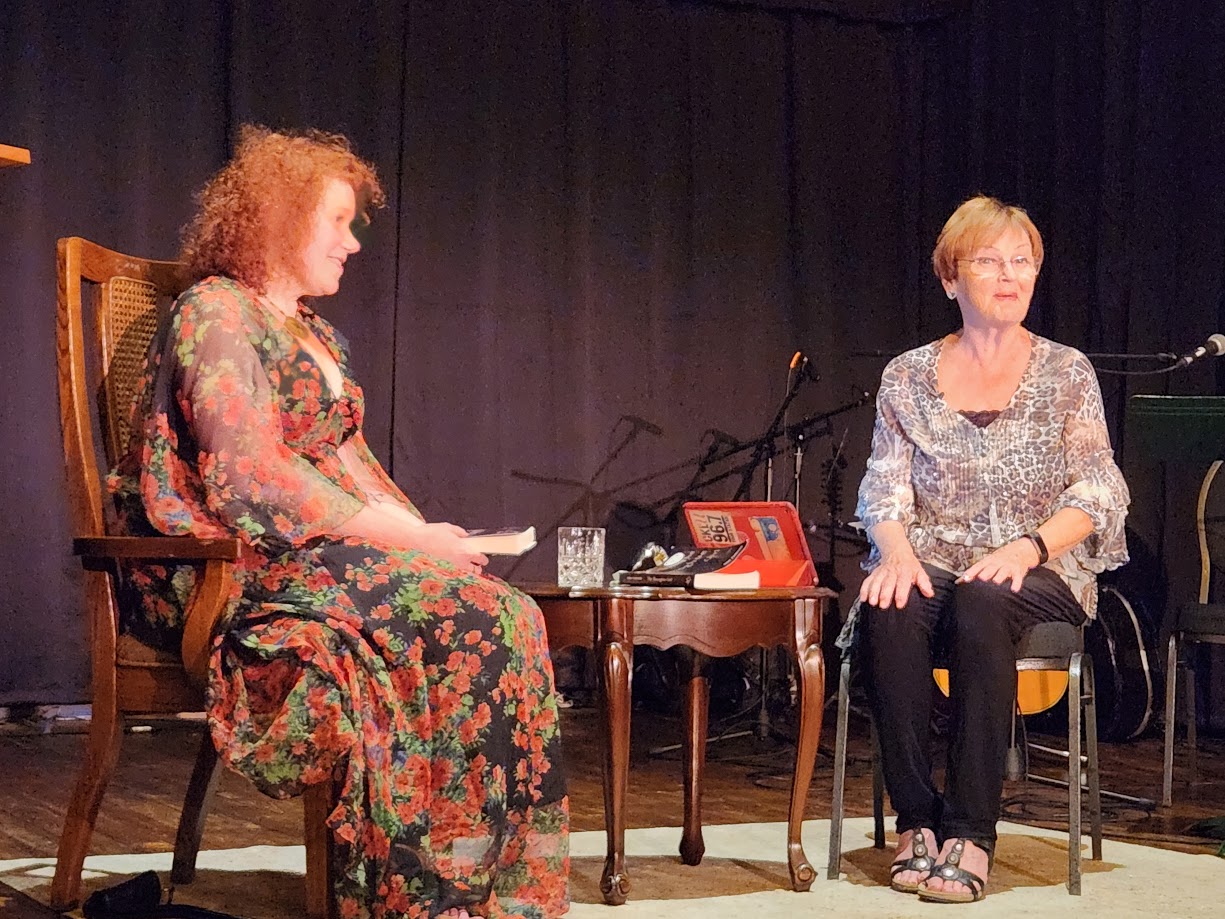
The next week, on the 19th, Kim Fahner launched her debut historical novel, The Donoghue Girl. Kim’s launches are always events. She invites musician friends to play, sings a couple of Irish songs, and then does a reading or two. This time, she asked Judi Straughan to interview her and livestreamed the event for out-of-town friends and fans. Her dress was absolutely gorgeous. Fabulous night!
That weekend, I attended the virtual launch of Sara Letourneau’s debut poetry collection, Wild Gardens. Sara was a contributor to DIY MFA at the same time I was, and she was also one of the book coaches I considered before deciding on Suzy. I wanted to support a fellow debut poet.
The same evening, I attended the 2024 Anne Szumigalski Lecture, “Call and Response,” presented by Titilope Sonuga. Amazing presentation!
On the 22nd, Terese Mason Pierre presented the Clarion West Workshop “Discovering Speculative Poetry.” Loved! Generated some great ideas.
On the 27th was “Molecular Description” with Escher McDonell-Maulsby. I have to watch the session again. It. Was. Stellar!
Then, on the 28th, I attended an all-day virtual retreat, “All About Fantasy” presented by Bianca Marais and featuring lectures and workshops by authors Tomi Adeyemi, Amber Chen, and Andrea Hairston, agents Mary C. Moore and Elizabeth Hitti, and editor Saana Ali-Virani. There was so much writerly goodness going on, it’s another event I have to watch again.
Finally, on the 29th, I attended “The Business of Writing” with Arly Sorg, another Odyssey workshop. Excellent.
In non-writerly events, I attended “The Wisdom of the Witch” with Phyllis Curott. I have two of her books on witchcraft and was curious to hear her present. It was a good presentation and guided ritual.
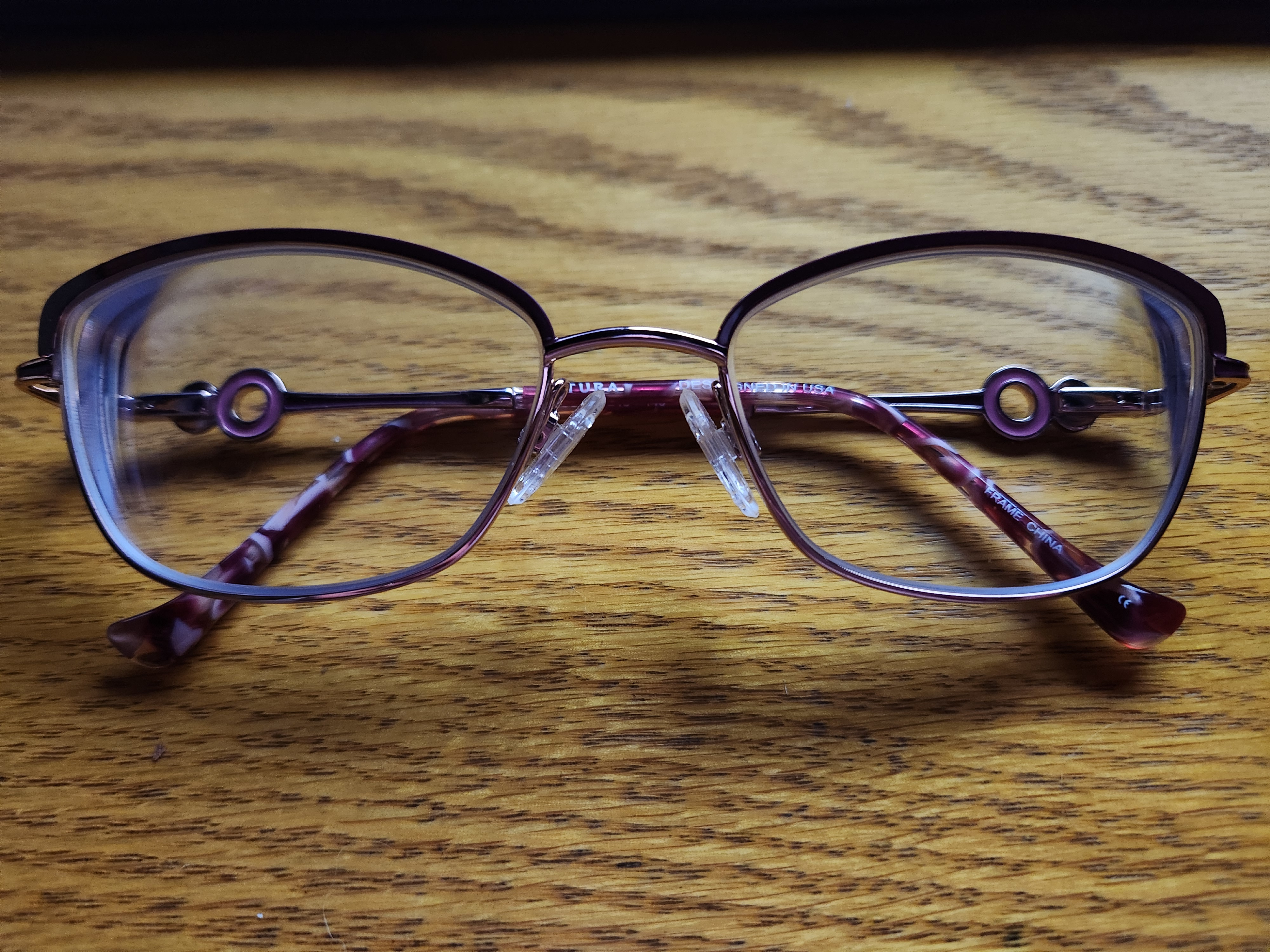
On the 3rd, I picked up my new orthotics and glasses. It’s so nice to be more comfortable walking again and to be able to see better. I did need a tweak in my prescription.
What I’m watching and reading
I finally watched Furiosa: A Mad Max Saga (Crave). It was fine, and I did enjoy the performances, but overall, it suffered from the same issue many prequels fall prey to: viewers know where the story is heading. And while it was interesting to see Furiosa’s backstory, it really had little impact on the events of Mad Max: Fury Road. I really didn’t see the point of it. If they were books, I’d almost say combine the two, interweaving the past and present timelines, but I guess that wouldn’t have worked as well as a movie.
Phil and I zoomed through KAOS (Netflix). It’s an alternate reality in which the Greek gods still exist and what we think of as mythic stories play out in the modern day. Zeus (Jeff Goldblum) is obsessed with his prophecy—the Fates give everyone a prophecy at their birth—and is getting increasingly unstable. Hera and Poseidon are having an affair, Hades and Persephone are having a rough go (spoilers, if I tell you with what), most of Zeus’s children aren’t speaking to him except for Dionysus, who wants to do more than party all the time, and Prometheus has a plan, having to do with his own prophecy, to get out of his eternal punishment.
Enter the mortals. Eurydice, “Riddy,” is falling out of love with Orpheus, the rock star who obsesses over her as his muse. When Riddy dies and Orpheus is determined to rescue her from the Underworld, you think you know how the story goes (but you’d be wrong). Caeneus died but cannot enter The Frame. He must work in the Underworld until he earns his right to cross over. He and Riddy discover a conspiracy and begin to fall in love, as the dead do. Ariadne, “Ari,” has lived with the burden of having killed her twin Glaucus in their infancy. Riddy, Caeneus, and Ari all have critical roles to play in bringing about Zeus’s prophecy, freeing Prometheus, and bringing about the downfall of the gods.
This just touches the surface. It was an amazing show with awesome actors and ended on a cliffhanger. Phil and I are hoping Netflix doesn’t cancel the series, as they have with so many others we’ve loved (RIP Lockwood and Co. and Dead Boy Detective Agency).
Then, I finished watching Dark Matter (Apple TV) based on the novel by Blake Crouch that I read last month. So, here is the comparison I promised, and be warned [HERE BE SPOILERS]. Avoid if you want to read the book or watch the series without the benefit on my completely biased opinion 🙂
The plot is roughly the same between the novel and the series. Jason Dessen, college professor of physics, lives in Chicago with his wife Daniela, and their son, Charlie. After celebrating his neuroscientist friend Ryan’s win of a prestigious science award, he is abducted and drugged, waking up in what looks like a laboratory medical facility. Eventually, he figures out that he is in another world in which he decided to pursue the development of a prototype he once created, the Cube, which allowed a particle to exist and be observed in superposition without collapsing its waveform into one state or the other. The Cube has become the Box, which allows people to exist in superposition and choose the state, in this case world, they want to exist in. He realizes that this world’s Jason (forthwith called Jason2) regretted his decision not to marry Daniela and have Charlie.
Jason escapes with the lab’s psychiatrist, Amanda, and the two journey through multiple harrowing worlds before they figure out how the Box works. Amanda leaves Jason, and after a period of despair, Jason finally finds his world. But hundreds of Jasons have come into being in the Box, with every decision made and every world visited. And they’ve all come to Jason’s world seeking to reclaim their family from Jason2. What ensues is a farcical thrill-ride in which Jason avoids being killed by his numerous other selves, convinces Daniela and Charlie that he is their “real” Jason, escapes to a remote and unoccupied vacation home where Jason2 and a gang of his other selves track him down, manages to kill Jason2, and kill or avoid the rest of his others, returns to Chicago and the Box, where hundreds of other Jasons wait. There is more fighting, but most of the Jasons just want Daniela and Charlie to be safe and happy and make it possible for protagonist Jason to escape into the box with his family.
The first difference is that, in the novel, Daniela notices that there is something different about Jason, but it’s all good. He’s a more attentive husband and father. So, when protagonist Jason returns at the end of the novel, Daniela and Charlie illogically and immediately trust him.
The series fixes this in several ways. First, series-Charlie has a twin, Max, who died shortly after they were born. Every year, the family hold a memorial for Max. Jason2 misses this significant observance because he’s off trying to bilk an old friend out of millions by showing him how the Box works and sending him on his way. Then, Charlie has a severe allergy to nuts and Jason2 gives him ice cream with nuts in it, setting off anaphylactic shock. And Jason2 doesn’t know how to use Charlie’s EpiPen.
After this, Daniela grows suspicious and confides in Ryan. Ryan discovers that Jason2 somehow has a drug that Ryan is secretly developing. He confronts Jason2, who kind of confesses and takes Ryan into the Box, trapping him in another world. Jason2 then seals the Box in concrete (also filling another plot hole from the novel, where Jason2 leaves the Box open and unprotected throughout) to keep anyone he’s sent into its quantum maze from returning to this world. But when Jason2 becomes a suspect in Ryan’s disappearance, he breaks the concrete, finds another world’s Ryan and brings him back to halt the investigation.
Whew! This is already a lot.
In the novel, Amanda sneaks off while Jason sleeps, leaving him a note. Is the series, they visit a world that is a utopia compared to ours and she decides to stay.
In the novel, Jason2 tracks Jason and his family to the remote vacation home where they are hiding, changes clothes with Jason, and then Daniela and Charlie show up to witness their fight to the death (but who’s the real Jason?!). In the series, Jason2 is held hostage by another of the Jasons and learns what the other Jasons have suffered because of him. He still tracks Jason to the vacation home, but he does it to make up for the wrong that he’s done, gifting Jason with the means to use the Box to escape to another world with Daniela and Charlie. He also gives them Max’s ashes to take with them. Then, he stays behind to deal with the other Jasons.
Finally, the series provides a better denouement. Ryan is in Amanda’s utopian world, and they meet. Jason’s billionaire friend is having the time of his life, and we see Jason and his family enter another world, but we don’t know which one, though the light shining through the door seems to imply that it is the same utopian world Amanda chose to stay in.
By now, you’ve probably deduced that I liked the series better than the novel. Sometimes, an adaptation—if the author of the novel is involved—can provide opportunities for the author to make the changes they wished they’d been able to make before the novel was published. Or the adaptation demands changes that improve the story. [Here endeth the spoilers!]
Next, I finished the first season of Shogun (Disney +). I honestly can’t remember much of the original mini-series starring Richard Chamberlain and I never read the book, but I enjoyed this series. The actors were excellent. And I didn’t even mind the tactful absence of subtitles in the first few episodes. Suitably epic.
I watched Inside Out 2 when it was released on Disney +. Charming, sweet story about what happens when Riley hits puberty and a whole group of new emotions take over. The principle takeaway is that emotions don’t get to determine who Riley will be. It’s a lesson that Joy and Anxiety both have to learn.
My first book of the month was a The Great Courses and Audible Original collaboration. Victorian Animals in Literature and Culture by Deborah Morse considers the works of Anna Sewell (Black Beauty), Margaret Marshall Sanders (Beautiful Joe), Virginia Woolf (Flush), Beatrix Potter, Sir Arthur Connan Doyle, and Ernest Thomas Seaton. Morse brings the conversation into the 21st century with a discussion of Karen Joy Fowler’s We Are All Completely Beside Ourselves. The book includes discussion not only of animal welfare and rights, but also slavery, disability, social justice, and more. I was impressed and touched. An excellent listen.
Then, I finished reading The Stones of Burren Bay by Emily De Angelis. Loved! Norie (short for Honoria) can only bear witness as her beloved grandmother dies. When her father—always angling for a way to make money—wants to sell the antique artist’s box her grandmother left to her, Norrie protests. Unfortunately, he doesn’t tell her until he’s driving Norie and her mother to meet the buyer, and the resulting argument leads to a car fiery crash that kills her father and seriously injures Norie and her mother.
Of course, Norie blames herself. Norie’s journey is one of spiritual healing and reconciliation that takes place in a lovely lighthouse museum on Manitoulin Island among people who become Norie’s new “found” family. A second timeline runs through the novel in reverse chronological order detailing Oonagh’s journey from Ireland to the same Manitoulin lighthouse where her father was to be keeper and the fire that takes her life. Yes, I know the author, but I would have loved the book every bit as much even if I didn’t. Highly recommend.
Next, I read Mirrored Heavens, the third book in the Between Earth and Sky series by Rebecca Roanhorse. This is one of those books that to say anything of the plot automatically means spoilers. So, I won’t get into it except in very general terms. Serapio now rules Tova, but enemies are amassing on two fronts to take back the city. Xiala returns to Teek and has to defeat a warlord come to enslave her people. Naranpa travels north to a fabled graveyard that may be the key to mastering her powers as the sun god’s avatar and saving Tova from a fiery fate. Shifting alliances, political intrigue, betrayal, and sorcery. All the good things. Loved, though I did want a better ending for Naranpa. Just saying.
Then, I listened to A Beginner’s Guide to Numerology by Joy Woodward. I first encountered numerology years ago when I read Linda Goodman’s Star Signs. Goodman focused on Chaldean/Hebrew numerology, however. Woodward presents Ptolemaic numerology, and it’s a more straightforward, but more complex system of divination. I rediscovered an old special interest and had fun calculating various numbers. Since it’s all basic addition, it’s super easy.
Next, I read The Book of Elsewhere by Keanu Reeves and China Miéville. I hadn’t read a Miéville novel yet, though they’re on my TBR list. Not having read the BRZRKR comics on which the novel’s based, I wasn’t familiar with the specific context, though I do know of other series that deal with immortal warriors.
These day’s, he’s simply known as B but, over the aeons of his existence, he’s been called Unute, and Death. This last is pertinent, because he does tend to go into a true berserk rage, which even his allies can’t escape. It’s gotten so bad that some of his black-ops colleagues have attempted to kill him. And that was before a shadowy cabal actively began to subvert them. When one of his dead (like half-his-head-blown-off dead) colleagues comes back to life, it starts a whole series of events that culminate in a confrontation between B and the children of other gods. It was a great, if challenging read.
My next listen was Susan Cain’s Audible Original, Seven Steps to a Quiet Life. Narrated by the author, this was a short and sweet look at life, finding your purpose, moving through difficult life events and grief, seeking oneness, and having compassion for your fellow beings. Lovely.
And that was the month in this writer’s life.
Until next month, be well and stay safe; be kind and stay strong. The world needs your stories!
 Always Looking Up