Tipsday: Writerly Goodness found on the interwebz, June 14-20, 2015

Another wonderful week for Writerly Goodness!

What’s the key event and how is it different from the inciting incident and the first plot point? I know I still forget the distinctions. K.M. Weiland’s Helping Writers Become Authors.

And here’s Katie’s Wednesday vlog: How to write a riveting characteristic moment.

Roz Morris shares her experience with repetitive stress injury (RSI).

Kassandra Lamb guests on Jami Gold’s blog: Nine psychology myths you need to avoid.

Tips on picking up the pace from Rebecca LuElla Miller.

Learn about the magic systems of Brandon Sanderson. Tor.com.

Five ways first contact could turn into an epic fail. Veronica Sicoe.

Neil Gaiman offers his thoughts on why stories last. (w/ Podcast) BrainPickings.

Liz Bourke ponders how we speak of strong female characters. This post refers to others I’ve shared in past weeks and takes it in a slightly different direction. Very interesting. Tor.com.

How can you keep readers from hating your characters? Jody Hedlund.

Beth Revis posts on Janice Hardy’s Fiction University: How do you know you’re ready to publish? Agent Carly Watters of P.S. Literary wrote on the same topic last week 🙂

Dave King explores our motivations for writing. Writer Unboxed.

Kameron Hurley asks, why are we self-publishing? Locus.

Porter Anderson takes a look at Hugh Howey’s promotion of self-publishing and what it really means in the context of the continually evolving publishing industry. Thought Catalog.

Related: Nielsen Book’s latest results indicate that self-publishing is more like traditional publishing. Publishing perspectives.

Amazon changes its terms for KDP select. The Digital Reader.

Why I teach diverse literature. The Toast.

What librarians wish we knew about how to use a library. i09.

Authors share the places that inspire them. FlavorWire.

Ten books you should read before you see the movie. The Huffington Post.

Mark Twain’s advice to little girls. BrainPickings.

This is fun 🙂 Classic novels with clickbait titles. BuzzFeed.

BuzzFeed shares 22 book-themed gifts for readers.

Watch the Scooby Doo crew’s fashion evolve through the last century. i09.

The first set photos of the new all-female Ghostbusters! i09.

Mike Hale states that Game of Thrones the series is going the way of Lost . . . What do you think? The New York Times.

Here are Charlie Jane Anders’s suggestions about how to fix Game of Thrones. Is it even possible? i09.

How Terry Dresbach’s costumes bring history to life on Outlander. Variety.

Orphan Black’s season finale: history yet to be written. It was awesome (IMO). The Wall Street Journal.

See you Thursday 🙂

Tipsday

Tipsday: Writerly Goodness found on the interwebz, March 15-21, 2015

K.M. Weiland introduces the Story Structure Database, and excellent new resource for writers. You can contribute to it, too!

Roz Morris shares how writer’s block became an opportunity.

Anne R. Allen shares ten social marketing no-no’s.

Jamie Raintree shares her experience in finding her agent on Thinking through our fingers.

Shawn Coyne explains his second draft that is not a draft theory on Steven Pressfield’s blog.

Janice Hardy’s month-long revision workshop continues with day 15: clean up description and stage direction.

Christine Frazier offers lessons for writers from her analysis of The Dark Knight. The Better Novel Project.

Porter Anderson offers Amish Tripathi’s Shiva series for our consideration on Writer Unboxed.

The series of representation on SFF guest posts on Jim C. Hines’s blog continues with Sarah Chorn’s discussion of disability in SFF.

Need some visual inspiration? Here’s the Fantastical Women site featuring lots of fantasy art by women artists. Gorgeous!

Canva shares this list of 40 books on creativity. When I die, I suspect it will be because I was crushed by my pile of unread books (!)

18 perfect short stories. i09.

Fast Company presents an infographic on banned books and some of the reasons they were banned.

SF Signal interviews Tanya Huff.

Lightspeed interviews Patrick Rothfuss.

What happens when a fundamentalist Christian marries an atheist author? Sally McBride guest posts on WarpWorld.

Now there are some consumable readables! Nom-a-nom-a-nom . . .

See you Thursday!

Tipsday

Tipsday: Writerly Goodness found on the interwebz, Dec 21-27, 2014

K.M. Weiland offers beta readers a guide.

Sarah Lovett of DIY MFA shares the reasons why you need to start a writers’ group or critique circle.

What traditional publishing learned in 2014. Kristine Kathryn Rusch.

Town hall debate: what every literary writer needs to know about the digital disruption. Hosted by Porter Anderson and featuring (among others) Jane Friedman. The focus may be on literary writers, but this is informative for all writers. Vimeo.

Steven Pinker, author of Sense of Style: The thinking person’s guide to writing in the 21st century, interviewed by the CBC’s Anna Maria Tremonti.

Steven Pressfield on his “overnight” success.

Giving yourself the gift of writing, by Barbara O’Neal.

Madeline L’Engle on creativity, hope, getting unstuck, and how studying science enriches art. Brainpickings.

This kid’s theory about The Princess Bride is AWESOME!

The ancient origins of modern science fiction tropes. Blastr.

Words that used to be considered poor English that are now accepted. Gives you a little perspective on your current grammar bug-a-boos, doesn’t it? Mental Floss.

Hope you have fun tomorrow night!

Tipsday

Tipsday: Writerly Goodness found on the interwebz, Aug 3-9, 2014

Anne R. Allen explores the good and bad of critique groups.

What’s the most important relationship in your story? K.M. Weiland explores how focusing on this aspect of your story could improve it.

Then Katie continued her blog tour on Janice Hardy’s Fiction University, on finding your character’s breaking point.

And then she continued the tour on Procrastiwriter with, What Jane Eyre can teach us about mind-blowing heroines.

Opening lines (and scenes) are some of the most difficult to write. K.M. Weiland has some suggestions for you in her post about Most Common Writing Mistakes: Boring opening lines. Podcast link included.

SF author Veronica Sicoe writes about opening line madness. See, everyone struggles.

MJ Bush guests on Writers Helping Writers (Angela Ackerman and Becca Puglisi) on the problem of overly self-aware protagonists.

Then she posted about inner conflict on WritingGeekery.

Casting your novel may seem like frivolous fun, but Fantasy Faction offers five ways it can help improve your story.

Stuck on a scene? Janice Hardy gamifies the work of sorting through scene outcomes on Fiction University.

QueryQuagmire (on Tumblr) offers ten things writers should keep in mind before diving into revisions.

Porter Anderson shares Hugh Howey’s ten counterintuitive tips for self-publishers on Publishing Perspectives.

The Canada Council has denied operational funding to On Spec. Susan MacGregor, On Spec editor and author, explains the situation and offers some options to help. On Spec is a Canadian institution in speculative fiction, and the quality of their fiction, editing, and production, is excellent.

I know this first hand. My SF short story “Downtime” will be appearing in the fall 2014 issue, and Barb Galler-Smith, the editor with whom I worked, was very professional. That the magazine is excellent is not just my opinion, though. On Spec is an award nominated, and award winning publication.

Their Patreon account has now been set up. Go to the On Spec web site for more information.

Why Fifty Shades of Grey has bondage all wrong. Tickld.

Forgotten Dr. Seuss stories and other news from Poets & Writers.

Mashable offers up their list of 22 summer reads.

Ten SF novels that will make you more passionate about science, from io9.

Ursula K. LeGuin talks to Michael Cunningham about genre, gender, and broadening fiction on ElectricLit.

Billy Collins shares two dog poems in this brief TED talk.


Wow! That’s a lot of Writerly Goodness.

Enjoy, folks 🙂

Tipsday

Two approaches to novel structure I recommend you check out!

I’m no expert with regard to writing a novel.  Admittedly, I’m still revising my first one, and while I’ve had some modest success with my poetry and short stories, I’m a complete n00b when it comes to the mechanics of the novel.  I’m learning as I go and I’ll share these bumbling lessons in my Work in Progress category, but for this week’s Alchemy Ink, I thought I’d do a little curating.

In the past couple of weeks, I’ve come across two of approaches that attracted me and that I intend to follow through to their blogging conclusions.

Why did I gravitate to these two writing bloggers?

The short answer is that I’m floundering.  I’m working with a peer group in Author Salon and part of that entails the presentation of my project in a formatted profile.  I’ve never queried an agent before, never participated in a pitch slam, or in a workshop that focuses on developing a pitch, hook, synopsis, or any of the other components of the profile.

In recent weeks, both the critiques of my peers and the advice of AS staff have brought several things to my attention:

  • My synopsis misses the mark.  The synopsis we’re asked to produce for the AS profile must be between 200 and 300 words and so is what’s been described to me as the short synopsis.  This is something that might fit into a query letter and could be analogous to the blurb on the back of a book.  The specific form still escapes me at the moment.
  • My hook line doesn’t ‘hook.’
  • My conflict statement isn’t well-defined.  My plot is very complicated and I can’t seem to distil everything into a concise, yet clear statement that addresses internal, interpersonal, and plot level conflicts.
  • I didn’t have a series title, and the title of the novel didn’t resonate with most of my readers.  This is still in flux.  I’ve chosen a series title and changed the working title of the novel, but there were reasons that I chose the original.  I won’t go into those here, but at least one peer thinks the original was better.
  • My original novel was far too long.  I’ve had to cut it in half and that’s changed a whole whack of things.  When initially confronted with this, I was defensive, and unwilling to move, but after my initial panic, I recognized that I didn’t have to take the scorched earth policy and destroy what was a 295,000 word opus.  So I’ve chosen to break the novel up, using the mid-point as the new climax and am editing down from there to a neat 110,000 words.
  • My climax and denouement are not well defined.  This owes to the above re-envisioning of my novel.  Reworking a mid-point to a climax has brought with it its own challenges.

Other issues have become apparent to me in the process:

  • My protagonist’s story arc is not dynamic in its early stages.  There’s a lot of internal conflict, and some interpersonal, but not much that relates overtly to the plot.  It all relates to the larger story arc, but that doesn’t become apparent until later on in the novel.
  • There’s a lot of disembodiment going on.  This is a tough one.  I can fix the POV issues that contribute to some of this, but dream/out of body experiences and shamanic journeying are central to the story.  I’ll have to let this incubate for a while and write through some of the possibilities.

I’m going to need some help working through all of this.

So what are the two approaches already?

Karen Woodward and the Starburst method

I caught on to Woodward with Part 3 and backtracked through her blog posts from there.  There are ten parts/steps to the process, so I’m going to be following Woodward through them from here on out.

Part 1 entails creating a one sentence description of your story.  This equates to what, in screenwriting circles, is called a log line, or what AS is calling the hook line.  That alone made my Writerly Goodness ears perk up (Didn’t know my authorial alter ego was a dog?  Take a look at the site mascot 😛 ).

Part 2 takes that one sentence and creates from it a five sentence paragraph.  This might make a zippy short synopsis.  Woodward discusses the three act structure here as well, another takeaway from the screenwriting world that has been successfully applied to novel writing.

Part 3 expands each sentence into its own paragraph.  By now, I think I have a decent idea of where the Starburst method is heading, but I’m still curious enough to follow through with it and see where it leads me.

K.M. Weiland and the Secrets of Story Structure

Late to the party with Weiland as well, I didn’t pick up on her series until part three, and was reminded of it this week when Porter Anderson reposted a link to part five in this week’s edition of Jane Friedman’s Writing on the Ether.

Why I like Weiland’s approach

What struck me immediately was that Weiland’s secrets are both organic in nature, having emerged from her own process and experience, and very clear.  Ideas and insight started to pop as soon as I read her first post.

Part 1 answers the question: Why should authors care?  It made complete sense to me.

Part 2 deals with the hook in its story structure form as opposed to the hook line that AS wants.   Still, the way Weiland describes the hook offers insight into what (perhaps) should and shouldn’t be present in a hook line.  It’s the question that the protagonist, and therefore the reader, needs to answer.  For the writer, it propels the plot; for the protagonist, it sets her feet on the hero’s journey; and for the reader, it keeps him or her reading until the question is answered.
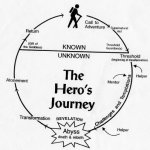
Part 3 covers the first act.  How do you introduce your characters, the setting, and the plot stakes?

Part 4 defines and illustrates the first plot point.  What is the first major plot point and how does it differ from the inciting incident and the key event?

Part 5 goes into more detail with regard to the inciting incident and the key event.  At each stage, Weiland uses the same set of examples to illustrate what she’s talking about and solidifies the takeaways in point form at the end of her posts.  Excellent blogging form 🙂

These last three together are important factors to consider in writing the first part of your novel, what AS calls your “First 50 Pages,” but admits could be as many as 100 pages.  This is also part of what’s critiqued  in the AS process and something I may have to rewrite substantially.

I’ll summarize by reiterating my invitation to check out both of these blogs.

Have you come across any excellent online resources regarding novel or story structure?  Please share!