The next chapter: April 2026 update

The waiting game and existing in uncertainty.
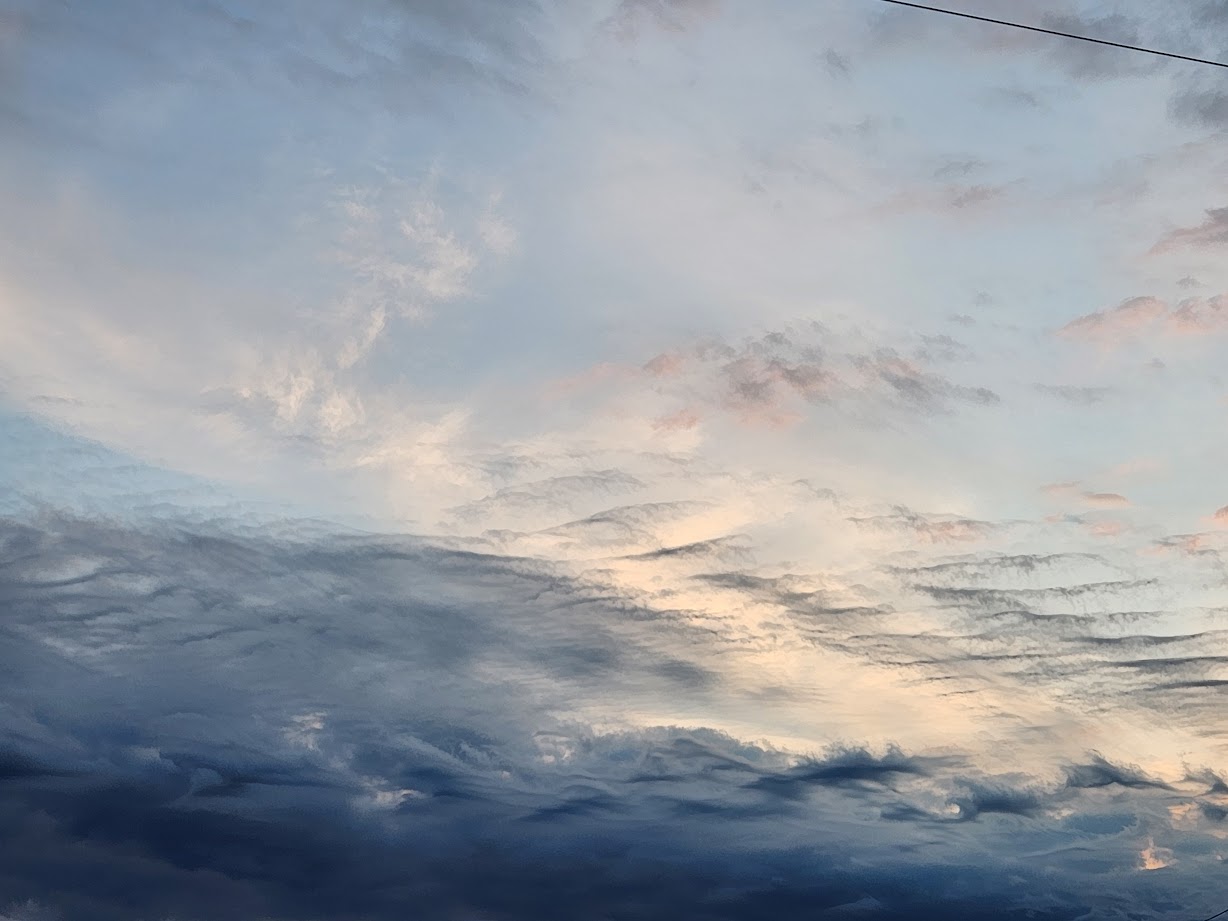
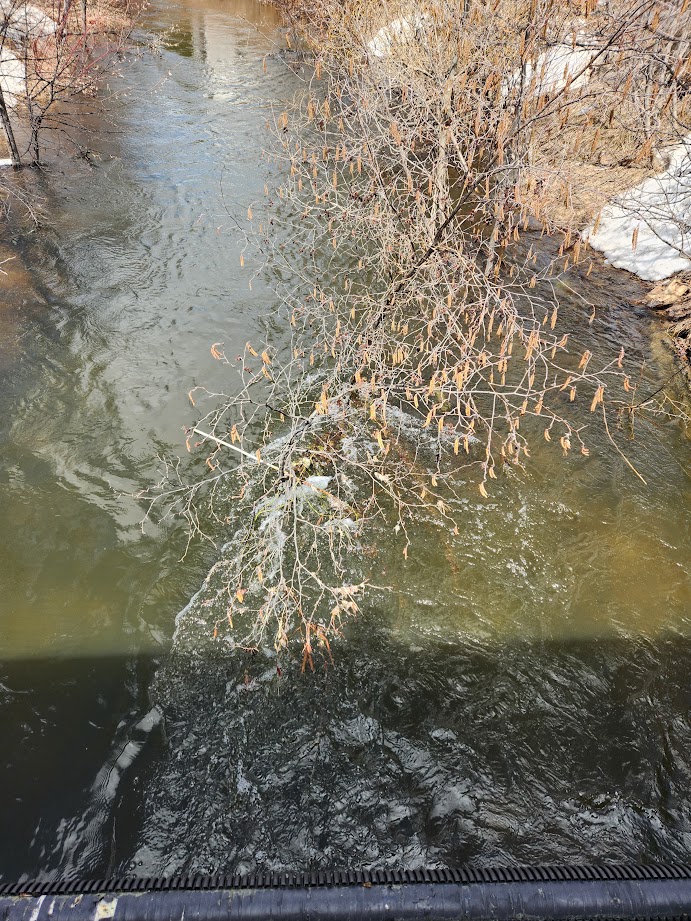
A dynamic sky that looks like the ocean.

Life in general

As April started, I was deep in the well of uncertainty. Essentially, it’s where I dwell until I get the letter indicating my departure date.

But the Artemis II mission provided welcome hope and distraction. I watched the NASA livestreams every day. Just seeing these four people, including one Canadian, one woman, and one Black man, work together and express true wonder and joy in their jobs was a balm to my worn spirit.

Then, on the 7th, Trump’s social media posted his announcement that “a whole civilization will die tonight.” The only way he could have done that was with nuclear weapons. With Trump’s increasingly erratic behaviour, no one could say for sure what he’d do.

The next day, he postponed his Armageddon by two weeks. A ceasefire was facilitated by Pakistan. But while the lists of demands on both sides were tentatively accepted, subject to negotiation, Israel’s refusal to stop attacking Lebannon threatened to put an end to both negotiations and the ceasefire.

Under pressure, Netanyahu authorized direct talks with Lebannon to disarm Hezbollah militants but insisted there was no ceasefire. The two nations have been at war since 1948.

There was a lot of back and forth — negotiations are back on, no, they’re not, the US is blockading the Strait of Hormuz — so much so that I stopped trying to keep track.

Other things happened, and I kept up with those through Heather Cox Richardson (on YouTube), to whom I’ll refer you if you want to find out more. The ceasefire was due to end May 1st.

At work, my team lead departed and my team was left without supervision. Not really, other team leads stepped in, but it meant that I could (and was) be assigned work from multiple people at any given time. After two days of putting out fires and diverting to “side quests,” I was extra dysregulated and in need of a break.

Then, a week full of appointments and a meeting with my director to discuss whether I wanted to abandon the voluntary departure program and opt into the newly-minted early retirement incentive had me further dysregulated. But I managed as I put my workload back in order and took my time.

In the last days of April, all fires put out and mysteries solved, I got back to what was supposed to be my “A” project and things started to settle.

The month in writing

The first decision I made was to set aside work on the two short stories that have been languishing since the beginning of the year. Both stories aren’t quite “right” yet and the solutions to their respective problems haven’t emerged. I realized that this was a form of procrastination.

So, I got back to Reality Bomb because solutions to that story’s problems have been bouncing around in my head since January. It’s time to implement them.

And I hoped to catch up on a couple of reviews that I’d been sitting with. They’re both for poetry collections and I’ve felt like a bit of a fraud in that arena. I only have the one collection out myself and both collections are deep and intricate, and I worry that I won’t do them justice. I have to set those concerns aside, as well. It’s another form of procrastination.

But then, a new publishing opportunity and deadline opened up, and had to think about which story had the potential to fit the submission guidelines.

After only a few days, I lapsed into inactivity again, though. I’m still so dysregulated … I can’t even.

On April 1st, I was River Street Writing’s first poet in their 2026 National Poetry Month promotion.
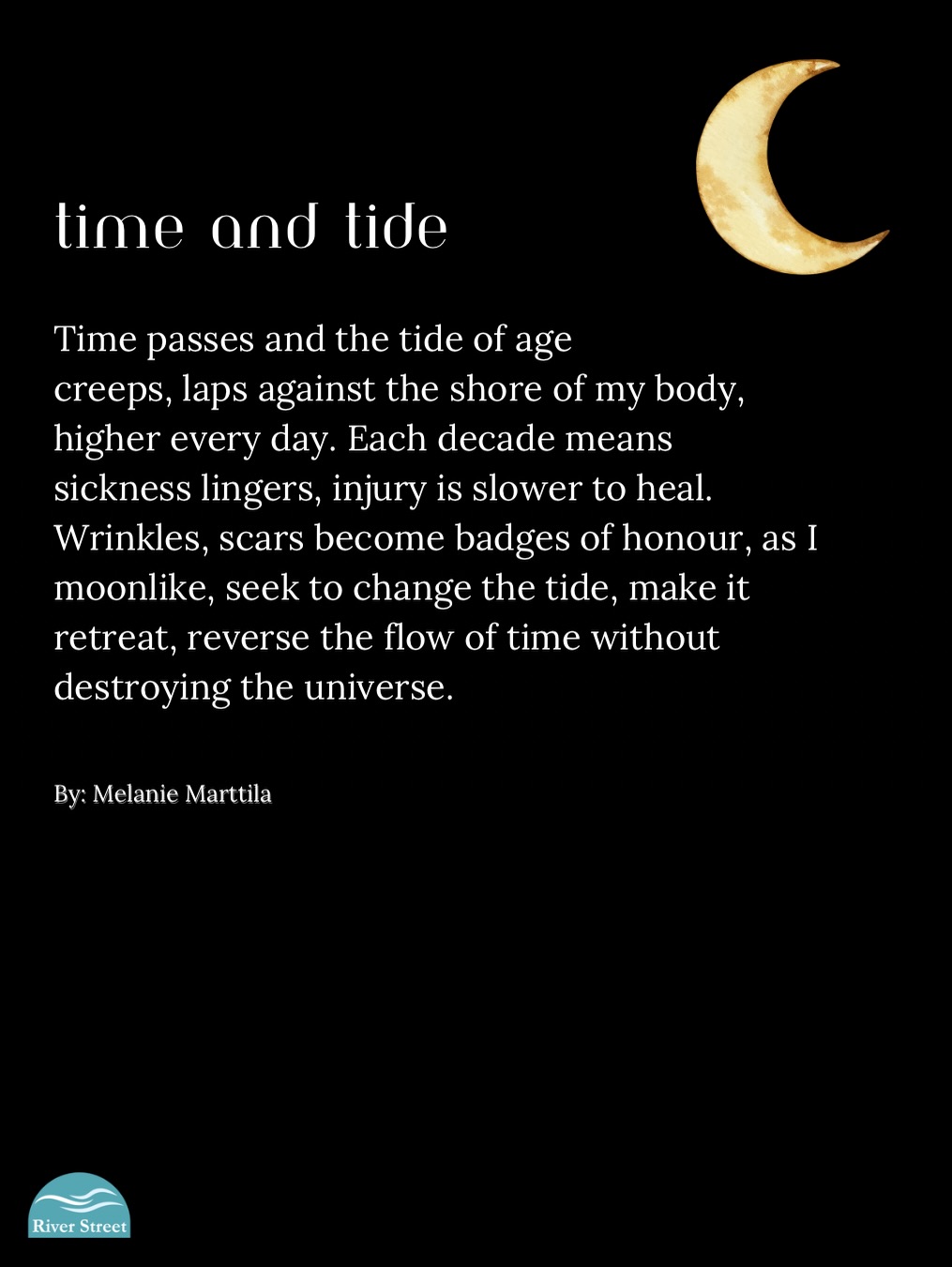
The River Street Writing National Poetry Month promo for "time and tide."

Then, on the 3rd, Murgatroyd Monaghan posted a promo for the Neurodiverses poetry showcase.
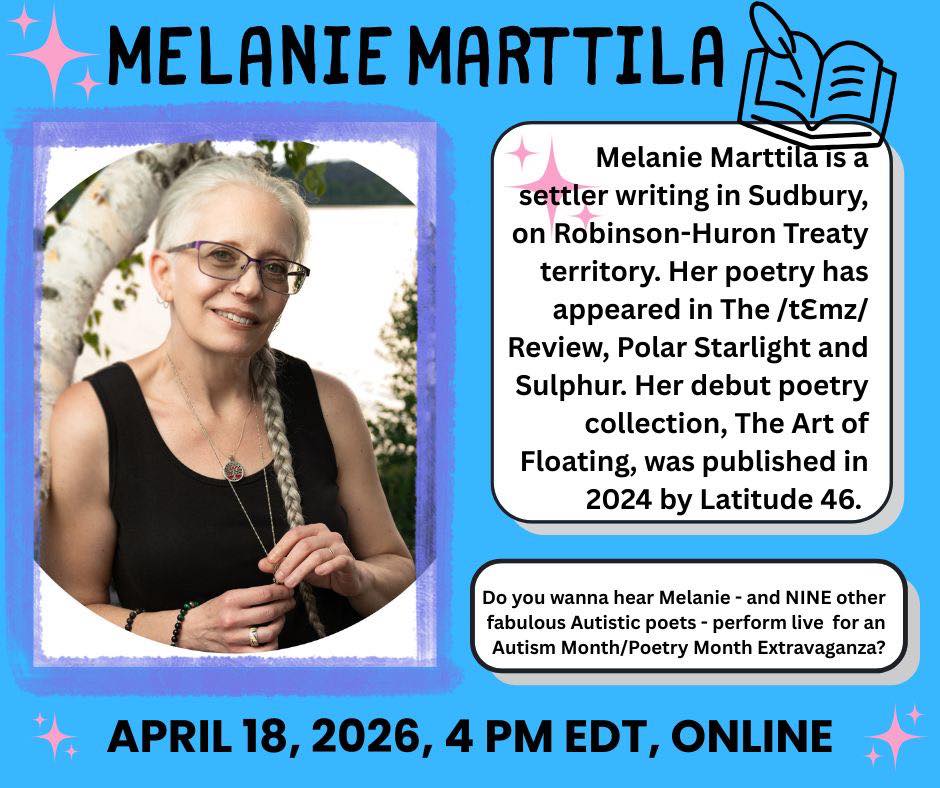
The Neurodiverses promo.

On the 4th, I received a set of interview questions for the Sustainability vs. Ambition blog series Nina Munteanu is doing for Reality Skimming. I set to, despite my fraud-like feelings at the prospect.

My review of A.L. Jensen’s (AKA Liisa Kovala’s) Hygge and Homicide was published in The Seaboard Review of Books on the 6th.
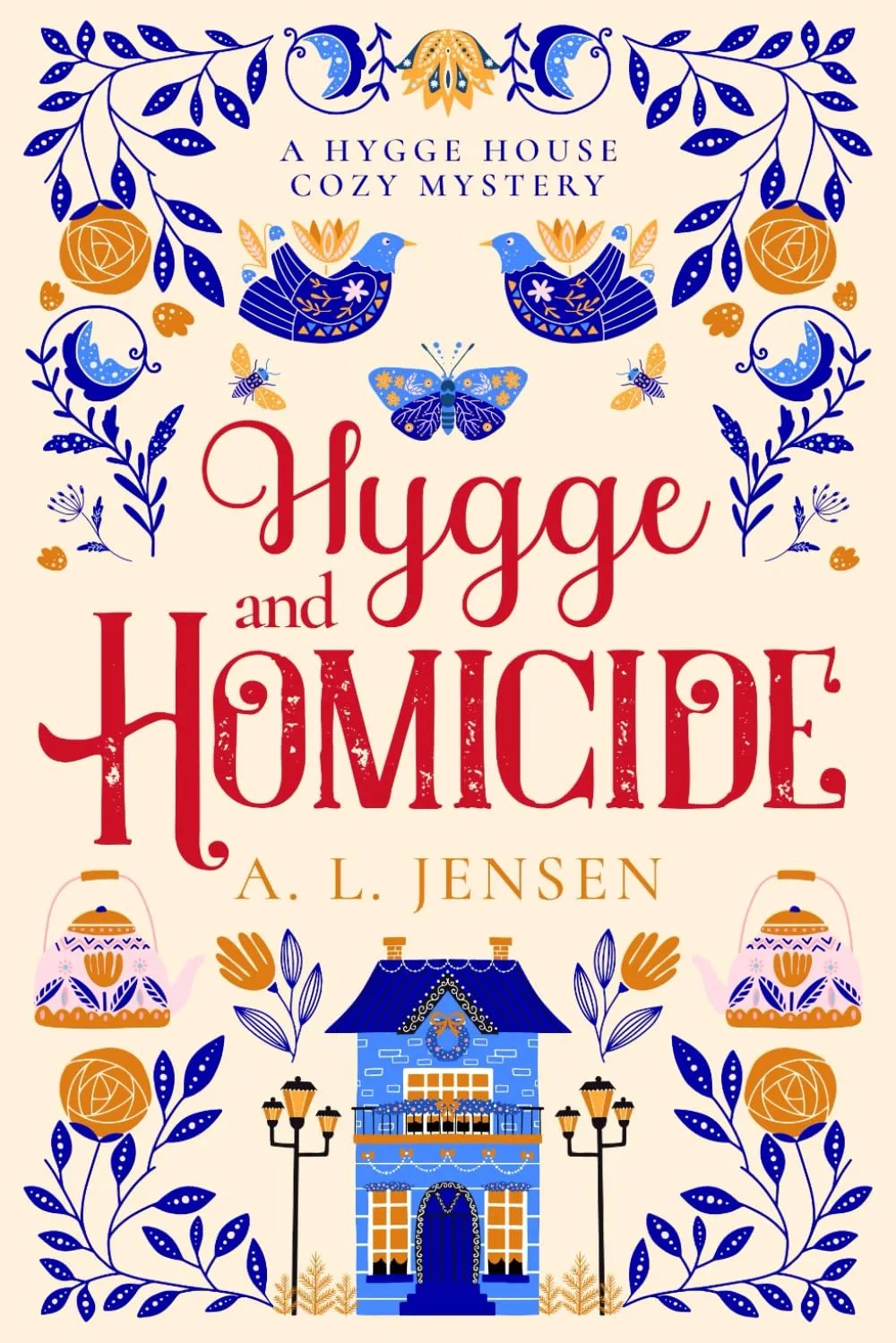
The cover of Hyyge and Homicide by A.L. Jensen.

A rejection for the flash fiction piece I submitted early last month came in on the 7th. Though I’m disappointed, I really like the story and am already thinking about other opportunities.

My publisher, Latitude 46, promoted their poetry backlist for National Poetry Month, and The Art of Floating received its promo on the 7th. They even tied my moon poems into the Artemis II mission! Adored!

My interview with Emily Andrews for her CKLU radio show was on the 11th. I had a lot of fun chatting with Emily. I’m looking forward to the broadcast!

Also on the 11th, I received notification that I had not been selected for the shortlist of the contest I submitted to last month. Again, I like the story, but it’s not my typical SFF subject matter. It’s going to be a challenge to place it elsewhere.

And I participated in Neurodiverses: A National Autism/National Poetry Month showcase on the 18th. It was a fabulous, intimate event, and I got to read some of my more recent autism poems.

Filling the well

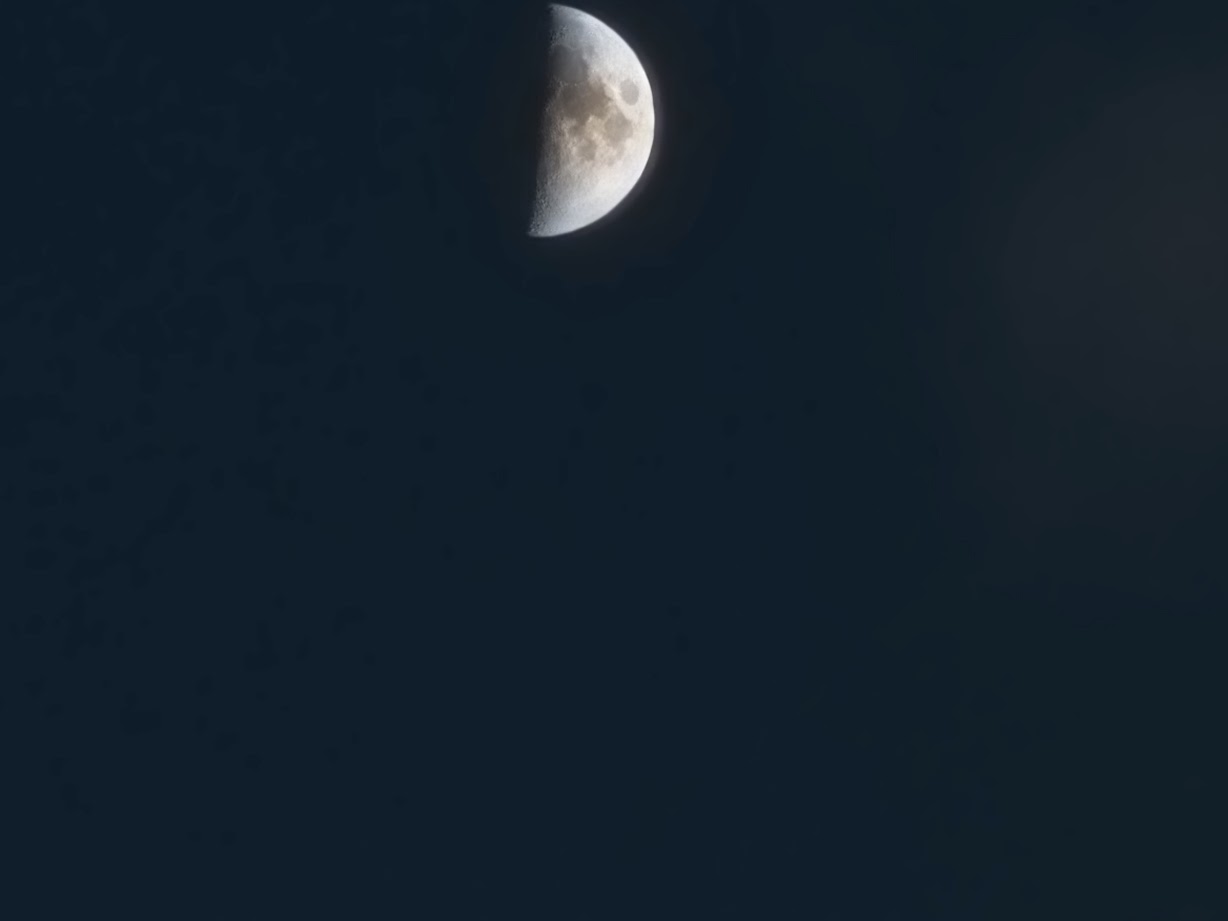
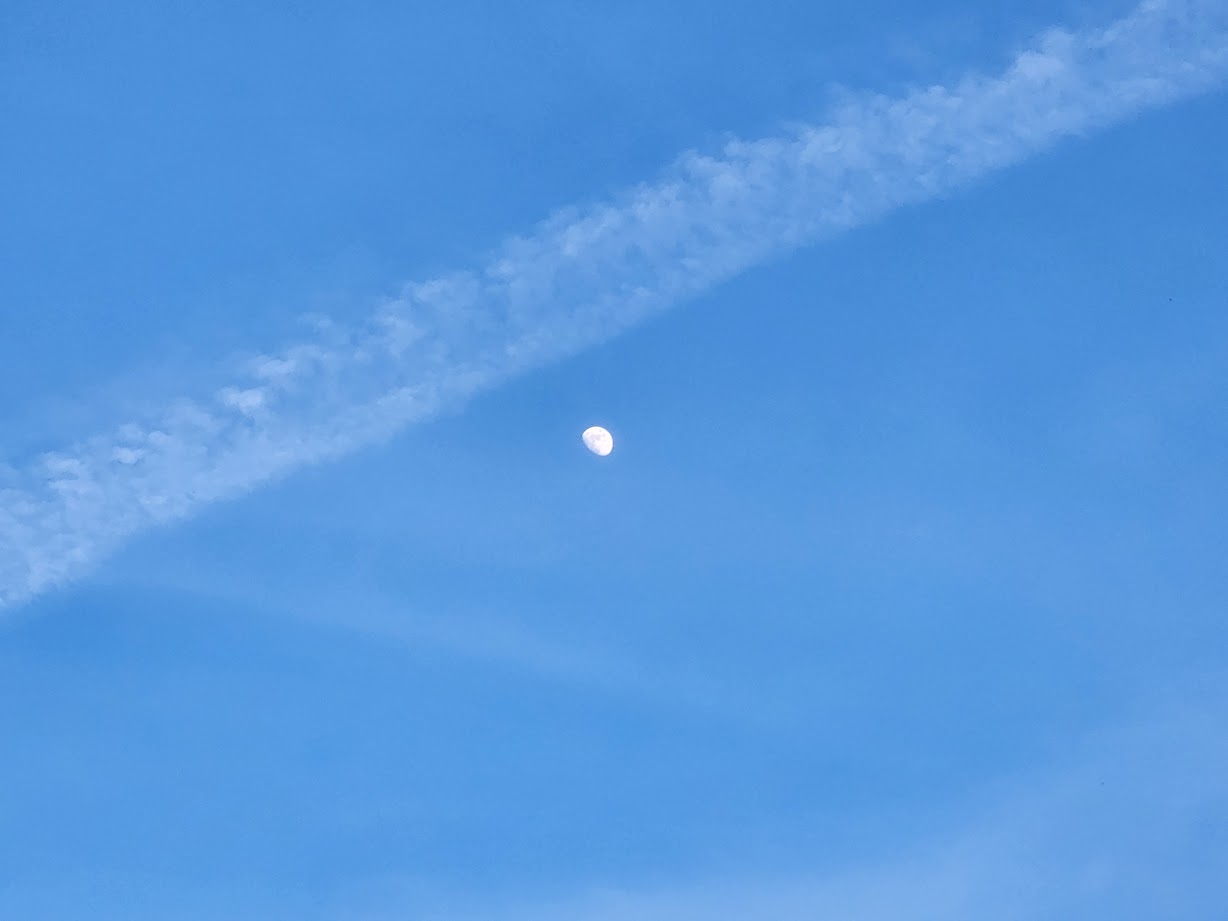
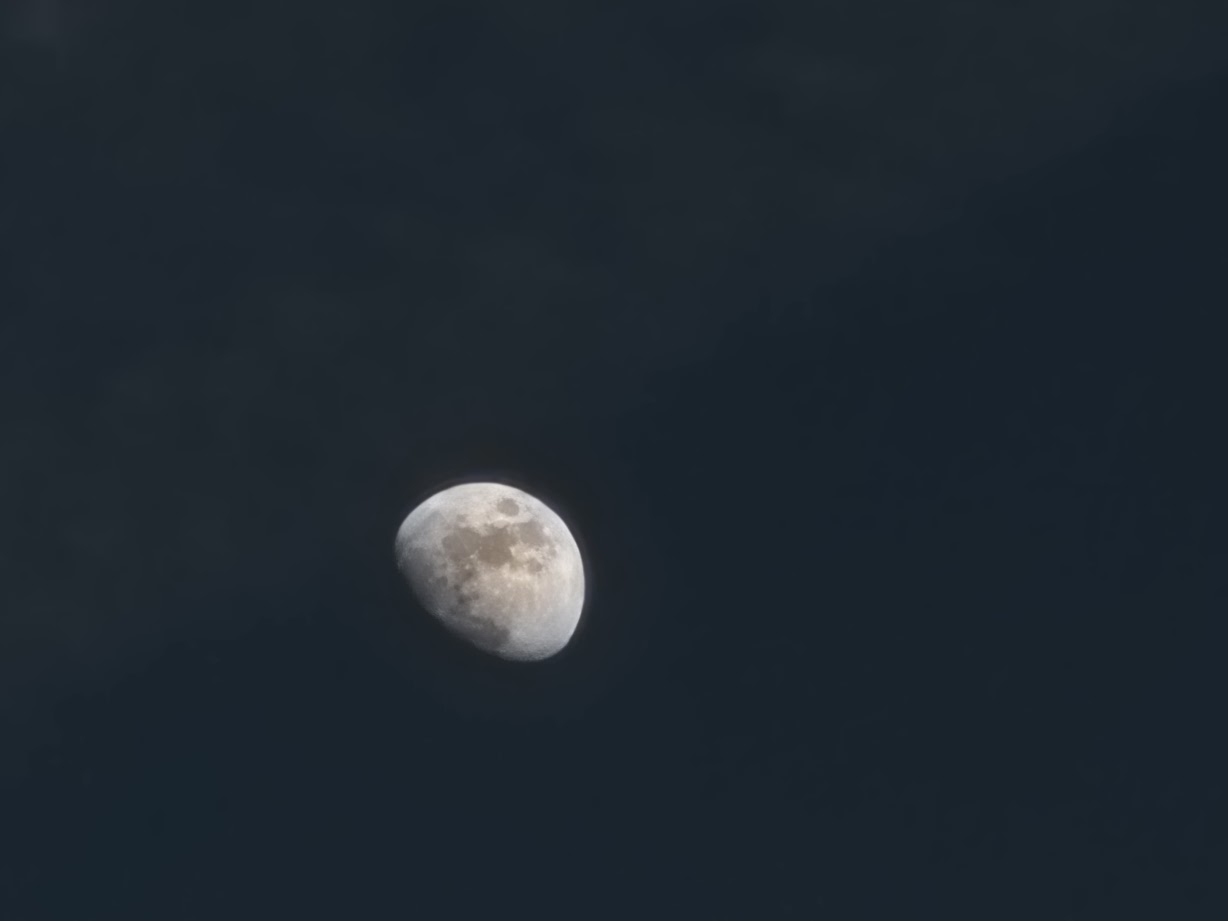
The full sugaring moon in Libra was on the first, also April Fool’s Day, on which I was grateful to escape the bulk of jokes and pranks.

The Easter long weekend followed, and my small family eschewed a stressful celebration this year, opting instead to celebrate my sister-in-law’s birthday (April 6th) at our favourite restaurant.

The new alder moon in Aries was on the 17th.

And it’s the triumphant return of MOON pictures!

In writing-related events, I signed up for K.M. Weiland’s “Ego-Driven vs. Soul-Driven Character Arcs” course on the 1st. She’s starting a new story school and because I’ve been a newsletter subscriber, I received early notification. I love what Katie’s doing with story structure and character arcs these days.

I also signed up for her next course, “The Villain as an Aspect of the Hero’s Psyche,” on the 15th. I had the option to watch the replay. This course played into the idea of the villain being the hero’s shadow, and delved into the negative archetypal aspects of the character archetypes.

Can-Con Virtual was on the 18th. But because of work-related dysregulation and the Neurodiverses poetry reading, I decided to catch these on replay.

And I finished the month off with The FOLD online from April 26th to 29th. Again, as I was working, I chose to pace myself and watch the sessions I was interested in later.

Also on the 26th, I signed up for “How to get out of burnout and back to creating” with Gauri Yardi. This course was a referral/recommendation from Golden May. It was an excellent session, and Gauri has a lot of experience addressing burnout.

On the 28th, I signed up for a presentation on “The Queen of Wands: Fairy Lore in the Tarot” with Sara & Brittany of the Carterhaugh School. Being a tarot fan myself, I wanted to see what they had to say about the intersection of fairytales and tarot.

Finally, Kisten Keiffer offered a mini-course called “The 7-minute Method.” It was about challenging resistance and getting back to creating.

I’m seeing a theme with all these courses. Functional burnout for the win!


I registered for intermediate Finnish through the Sudbury Finnish School. Lessons started April 13th and will continue for eight weeks.

Because of a conflict, I selected a different night to attend my support group this month. Good Company met on the 16th and the topic was hormonal changes and menopause. It was great!

My massage therapist was injured back in January, but she informed me late last month that she was fully recovered and taking clients again. My first scheduled massage of the year was on the 22nd. I missed her SO much! Apparently, I’ve been carrying ALL my stress in my neck (!)

I took my mom to her doctor’s appointment on the 23rd. I’m going to accompany her to these in the future, so I can better provide for her care.

My next therapy session was on the 24th. I lied last month. There were still two value domains to explore and we managed them in addition to my monthly brain dump.

Torvi’s monthly touch up was on the 25th. The groomer suggested that we try a full bath again. I don’t think she knows what she’s asking for.

Finally, on the 30th, I made an appointment with my orthodontist to have my retainer assessed. I’ve been feeling some pressure on my teeth and was concerned that maybe I’d need to have it replaced. Not so. The retainer is fine. It just needed a little adjustment, I was out of the office in 15 minutes, and there was no charge.

And then I went out to a family birthday (2-in-1) at a local restaurant. Good evening. Tasty food. Still had to recover after. Yes, even fun stuff costs spoons.

What I’m watching and reading

The first series I finished watching in April was the second season of The Artful Dodger (Disney +). At the end of the first season, Jack was arrested just as he was about to operate on Belle’s heart (!) Fortunately, he was allowed to operate, though off-screen, as the second season picks up months later, with Belle fully recovered and Jack in prison. Fagin arranges to Jack’s conditional release and immediate embroils his former apprentice in his latest scheme. But Jack isn’t the only one drawn in. Belle’s sister Fanny turns out to be a deft hand at forgery. Medically, there is a serial killer on the loose who removes their victims’ organs (of course, Jack is under suspicion), and Jack and Belle must work first to discover the cause of an outbreak of cholera, and then to find a cure for it. Though the season ends with both medical mysteries solved and Belle and Jack firmly reunited, Fagin’s desperate play to fake his own suicide has backfired on him and he comes to in his own coffin, buried alive by his crew. I assume this means a season three is in the works, though no official announcement has been made yet.

Then, I watched Wicked for Good (Prime). I have not read MacGuire’s book, nor have I seen the musical (I know). Despite that, I enjoyed the conclusion to the tale and the ultimately hopeful ending. I know it would have meant an even longer movie, but I would have appreciated seeing more of Dorothy’s journey (most of which happened off-stage or in shadow play or only looking at her back) and a bit more about Fiyero’s transformation and role in Dorothy’s adventures.

Next, I finished watching the second season of High Potential (CTV/ABC). Morgan and Karadec solve a bunch more cases, relying on Morgan’s HP intellect, Morgan and captain Wagner get close, and the search for Morgan’s missing husband Roman takes a series of increasingly dark turns. The finale blows up several relationships and leaves one life hanging in the balance. I continue to enjoy this series.

I finished watching the second season of Cross (Prime). Alex Cross is conflicted this season as he pursues Luz, a virtuous serial killer taking down the Billionaire tech-bros whose experimental treatments killed her mother and who use children as slave labour in their labs and factories. A solid second season.

Then, I watched the second season of The Pitt (HBO Max/Crave). This series has consistently been one of the best I’ve seen in recent years. It has a truly diverse cast (looking at you, Dr. King) and every character has their own arc that weaves its way through the chaos of patients in the emergency department. This season is centred around Dr. Rabinovitch (Robbie) as he prepares to leave on a three-month sabbatical/motorcycle pilgrimage once he finishes an apocryphal Fourth of July dayshift in the ED. A systems outage and the detention of one of their own by ICE officers are just the tip of the iceberg. The season centres on mental health and asking for help and finding healthy ways to deal with the stress. Superb!

Phil and I finished watching the fourth season of Invincible (Prime). This one’s a heavy season. In the first episodes, almost every enemy from past seasons returns to challenge Mark and the other heroes. Eve gets pregnant and it wreaks havoc with her powers, but before she can tell Mark, Nolan and Allan show up and recruit Mark to help them kill the remaining Viltrumites. Of course, Oliver has to go, too. And it gets bloody. In a desperate final effort, Nolan, Mark, and Thaedus burrow through the Viltrum home world and destroy it, but there are still 37 Viltrumites left alive. Mark and Oliver and even Nolan almost die multiple times. Mark, plagued by PTSD, makes a fateful deal, and Allan, who has become the leader of the Coallition after Thaedus’ death, is asked to commit genocide. A bloody, but compelling season. Looking forward to season 5!

Next, I finished season three of Shrinking (Apple TV). Everything changes this season! Alice graduates and leaves for college! Louis moves on! Paul retires and moves away! Brian and Charlie welcome their baby! Derek has a heart attack, and he and Liz apply tough love with their son. Sean gets the job of his dreams and moves out of Jimmy’s pool house. Gaby suffers a professional and personal setback and does a reverse ninja proposal! And Jimmy? He tries dating Sofi, but everything implodes when his dad comes to visit. But Paul “Jimmy’s” Jimmy at the last minute before he leaves. How will Jimmy fare now that half his support system is gone? That’s what next season is about (I think). Excellent!

Finally, I finished watching the first, short (9 episodes, not necessarily short in terms of streaming series, but most networks are still producing between 19 and 22 a season) season of RJ Decker (ABC/CTV). RJ was a photojournalist until he beat up a kid who stole his camera. The kid’s sister testifies against him and he’s sentenced to prison. Upon his release, he starts up a PI business in south Florida with the help of his ex-wife, a journalist, her wife, a cop, a fellow ex-con and bartender, and the woman who sent him to prison. The series is based on the novel Double Whammy by Carl Hiaasen and was entertaining. ABC has not decided about renewal … yet.


My first read of April was The Book of Interruptions by Khashayar “Kess” Mohammadi. These poems meet at the intersection of war, immigration, sexuality, history, and the crossroads of Perso-Islamic and Western philosophy. Like Margo Lapierre’s Ajar, it’s taking me some time to let Khashayar’s poetry find a home in me. Heady and heavy stuff.

Then, I finished listening to Popular Tales from the Norse, translated by George Webbe Dasent. All the favourites are here and, oddly, at the end, several Anansi tales are thrown in (?) I always enjoy folktales and fairy tales, regardless.

Next, I listened to the Audible Original/Great Courses collaboration Self-Care Strategies: Nourish to Flourish by Katie McDonald. In 15 lessons covering everything from work to spirituality, McDonald provides foundational practices that go beyond getting a mani and pedi at the spa. I do most of what she suggests already, and some of what she advised reminded me of the values work I’ve been engaged in with my therapist.

Then, I finished reading Freya Marske’s A Marvellous Light. Young and cash-strapped baronet Robin Blythe feels fortunate to have been assigned to a minor government post. He soon learns that he’s been named liaison to a secret magical society he never suspected existed. Edwin Courcey walks into Robin’s office expecting to find his predecessor, Reggie, and is distressed to learn he’s missing. When Robin is cursed and begins to have visions of the future, he reluctantly turns to Edwin—the only magician he knows—in an attempt to gain relief from the wracking curse and find the artefact the mysterious people who cursed him seem to want and think is in his possession. Together, they uncover a plot that threatens every magician in the British Isles. And not unexpectedly, they also uncover romantic feelings for each other, risky in this alternate Edwardian setting. Excellent!

Next, I read One Day Everyone Will Have Always Been Against This by Omar El Akkad. It’s a devastating book that indicts the systems we live within, where liberals are more likely to be centrists, or even conservatives in disguise; where genocide is a word best not spoken; where politics trumps basic human values. Between reflections on the world and how it’s changed since October 7, 2023, El Akkad recounts his own emigration, his initial belief that the west was better than the country of his birth, his development as a journalist and author, and his disillusionment beginning with the attacks of 9/11. This book is both his Dear John and a fuck you to the west and its systems of oppression. The book’s title was taken from the author’s tweet of October 25th, 2023: “One day, when it’s safe, when there’s no personal downside to calling a thing what it is, when it’s too late to hold anyone accountable, everyone will have always been against this.”

I listened to T. Kingfisher’s Paladin’s Strength. I’d listened to the first in the series, Paladin’s Grace, last year and adored it. Istvahn is a paladin of the dead god the Saint of Steel and a berserker without divine guidance. He’s on a mission tracking the smooth men, a supernatural threat, across the continent. On the way, he meets Sister Clara, who’s on a mission of her own — to rescue her sisters, who were abducted after their convent was burned. They team up to accomplish both their goals, but Clara has a secret she’s loathe to reveal, even to the paladin she’s falling in love with. I just love, love, love T. Kingfisher’s novels!

So, of course, I listened to Paladin’s Hope next. Galen is another of the dead Saint of Steel’s paladins, now working for the Temple of the Rat. The death of the Saint left him with PTSD and night terrors in which he relives the chaos that followed his god’s death. No one can touch him when he’s trapped in his night terrors as he is deep in the battle tide and strikes out at anyone nearby. He’s come to terms with the fact that he’ll always be alone, except for his fellow paladins, who are the only people he feels safe around. Piper is a lich-doctor (read coroner) who determines the cause of death for the Rat’s lawyers and the city guard. When gnole constable Earstripe draws Piper’s attention to the latest in a series of mangled bodies washed ashore, the investigation takes all three of them into an ancient maze of deathtraps. As they struggle to survive, secrets are revealed, including the secrets of the heart.

Next, I finished reading Yield by Jaime Forsythe. This long poem dives into the experience of postpartum depression to which one has no choice but to yield. Presented against the backdrop of the Maritime coast, the metaphors are oceanic, reaching back to the amniotic fluid in which we all first learn to swim, and forward to a time when the postpartum veil is lifted. Liminality and the juxtaposition of states play out in couplets. A gorgeous collection.

Finally, I brought myself up to date with the Saint of Steel series by listening to Paladin’s Faith by T. Kingfisher. Margeurite Florain, an operative (read spy) returns after her appearance in book one of the series as Grace’s best friend. She is currently being hunted by her former employer, the Red Sail, and comes to the Temple of the Rat for help. Bishop Beartongue provides her with two paladins, Shane and Wren, to support her mission of finding an artificer who has made a machine that will extract salt from seawater, breaking the monopoly the Red Sail has on the market.

Shane trained for years to become a paladin of the Dreaming God, but he was never chosen. When the battle tide took him, Shane became a paladin of the Saint of Steel, but when that god died (or was he murdered?) it left a hole in Shane’s soul he’s been desperately trying to fill with good deeds since. He’d willingly die to protect Margeurite. It’s what he’s for, after all. Wren is short and doesn’t look like a paladin at all. Her preferred weapon is an axe. The three of them head to the Court of Smoke and then fall prey to an odd demonic cult in their quest to find the artificer and bring her safely back to the Rat. These books are so fun to read. Just my speed, these days.

And that was the month in this writer’s life.

Until next month, be well and stay safe; be kind and stay strong. The world needs your stories!
The next chapter: A month in the writerly life. https://melaniemarttila.ca

I acknowledge with respect that I am in Robinson-Huron Treaty territory, that the land from which I write is the traditional territory of the Anishinaabe and home of Atikameksheng Anishnawbek and Wahnapitae First Nation.
Cover reveal and pre-order link — New Short Fiction!

I’m soo excited to finally be able to announce this!

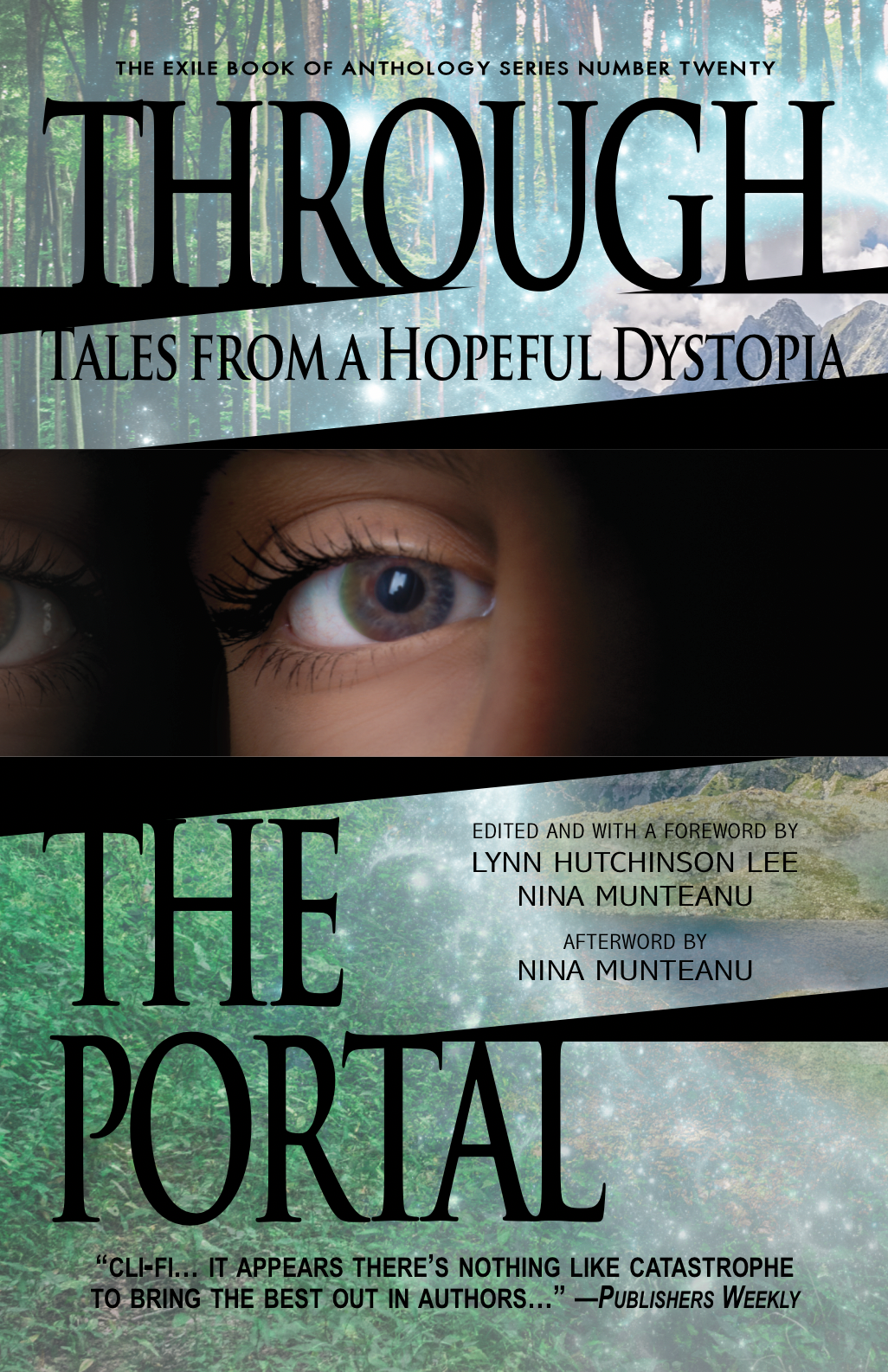
Last year, my short story “The Beekeeper” was accepted by co-editors Lynn Hutchinson Lee and Nina Munteanu for their Exile Editions anthology Through the Portal: Tales from a Hopeful Dystopia!

It’s available now through the Exile Editions website (linked in the title above) for pre-order at a 15% discount until the official launch date on December 31st, 2024!

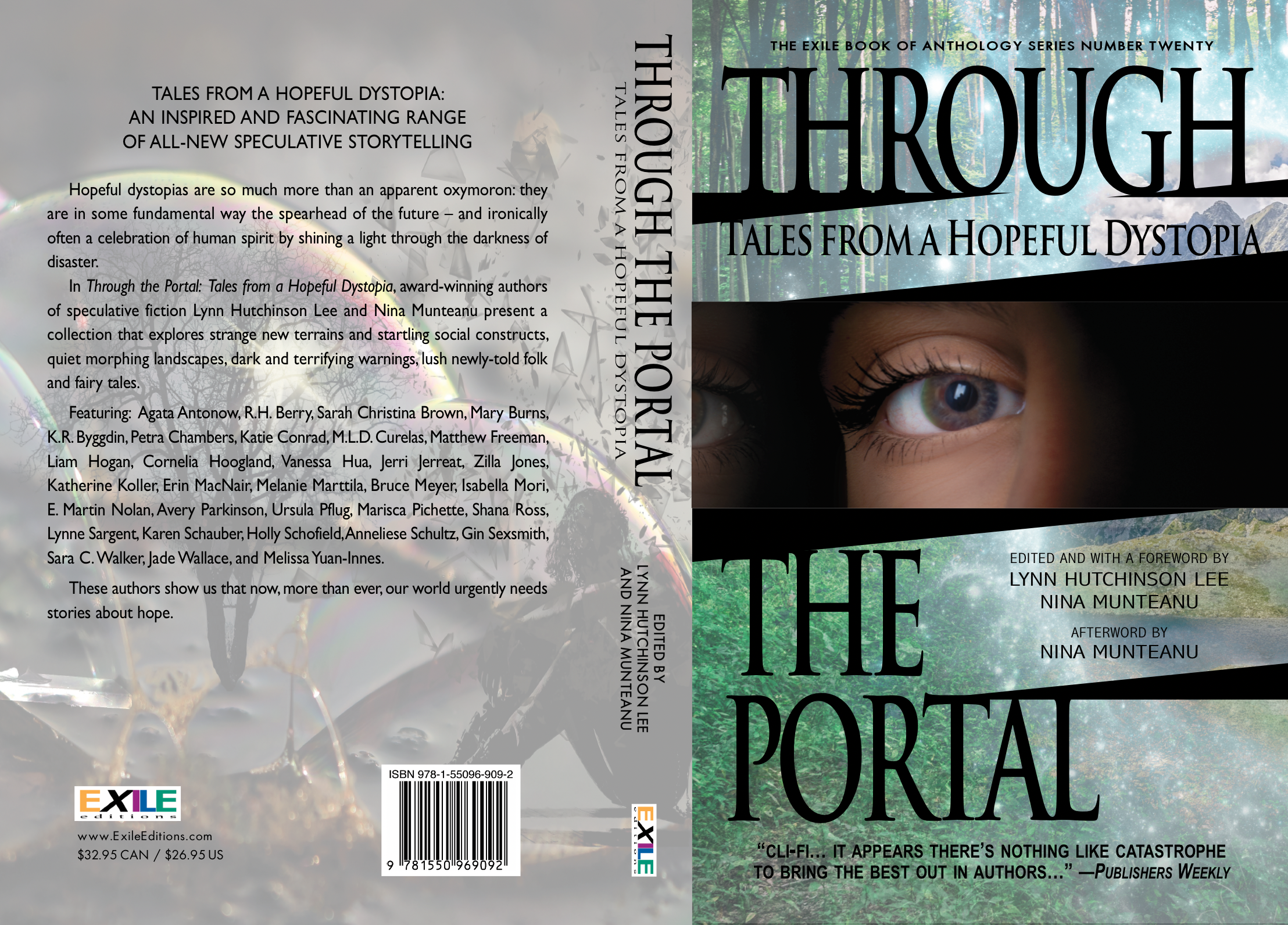
Just look at this lovely cover:

Cover of Through the Portal: Tales from a Hopeful Dystopia.
Full cover (front and back) of Through the Portal: Tales from a Hopeful Dystopia.

Hopeful dystopias are so much more than an apparent oxymoron: they are in some fundamental way the spearhead of the future – and ironically often a celebration of human spirit by shining a light through the darkness of disaster. In Through the Portal: Tales from a Hopeful Dystopia, award-winning authors of speculative fiction Lynn Hutchinson Lee and Nina Munteanu present a collection that explores strange new terrains and startling social constructs, quiet morphing landscapes, dark and terrifying warnings, lush newly-told folk and fairy tales.

This is a fascinating collection of all-new, modern-day speculative storytelling, with insightful “Tales from a Hopeful Dystopia” featuring Agata Antonow, Sarah Christina Brown, Mary Burns, K.R. Byggdin, Petra Chambers, Katie Conrad, M.L.D. Curelas, Matthew Freeman, R. Haven, Liam Hogan, Cornelia Hoogland, Vanessa Hua, Jerri Jerreat, Zilla Jones, Katherine Koller, Erin MacNair, Melanie Marttila, Bruce Meyer, Isabella Mori, E. Martin Nolan, Avery Parkinson, Ursula Pflug, Marisca Pichette, Shana Ross, Lynne Sargent, Karen Schauber, Holly Schofield, Anneliese Schultz, Gin Sexsmith, Sara C. Walker, Jade Wallace, and Melissa Yuan-Innes.These authors show us that now, more than ever, our world urgently needs stories about hope.

So thrilled for this next publication and to be sharing the table of contents with so many fabulous author friends!

Tipsday: Informal writerly learnings, April 10-16, 2022

Welcome to tipsday, your opportunity to stock up on informal writerly learnings.

Ann Marie Nieves: book PR & marketing questions answered, part VII. Jim Dempsey wants you to exploit your hero’s flaws. Then, Kathleen McCleary is getting over it. Kathryn Crafts says foreshadowing is a revision skill to love. Later in the week, Desmond Hall drops some more writerly wisdom on us. Writer Unboxed

Shaelin shares seven ways to level up your writing process. Reedsy

K.M. Weiland shares 14 tips for dealing with the passage of time in a story. Helping Writers Become Authors

Lisa Norman introduces us to the magic of World Anvil. Then, Monica Corwin suggests eight ways to stay open to story. Jenny Hansen: the extraordinary blessings of asking for help. Writers in the Storm

Have humans always feared sharks? Monstrum | PBS Storied

Jane explains why so many blogs and newsletters aren’t worth the writer’s effort. Then, Lisa Cooper Ellison explains how to gracefully leave your writing group. Jane Friedman

Sue Coletta: what is rhythmic writing? Emily Young shares six tips for writing compelling action scenes. Writers Helping Writers

Crafting as a magic system. Tale Foundry

Abigail K. Perry poses seven questions to ask about your first chapter. Then, Gabriela Pereira interviews Claire Stanford about character development in literary fiction. Angela Yeh wants you to embrace your inner poet-activist! Then, Lewis Jorstad suggests five secondary character arcs to strengthen your cast. Later in the week, Linda Dahl explains how to inject humor to relive narrative tension. DIY MFA

The Heather trope and why we’re so obsessed with her. The Take

Story beats: the key to line-by-line writing. Morality genre: altruism stories of redemption, punishment, and testing. Performance genre: stories about sports, music, business, and art. Four Core Framework: the foundational elements of storytelling. Story Grid

How to write realistic male characters. Jenna Moreci

Tiffany Yates Martin explains how writers Liz Fenton and Lisa Steinke survive. Fox Print Editorial

Chris Winkle says the best characters eat their spinach—and their candy. Illustrated by Bunny. Then, Oren Ashkenazi critiques five inexplicable planets from Star Trek. Mythcreants

The three planes of story and creating causal connections. A very personal literary theory. Shaelin Writes

Kristen Lamb warns that bloated writing makes readers sick.

Nina Munteanu shares example steps for keeping a nature journal.

Anne Delaney examines chronemics and the nonverbal language of time. JSTOR Daily

Thank you for spending some time with me. I hope you took away something to support your current work in progress.

Until Thursday, be well and stay safe!

Tipsday: Informal writerly learnings, Jan 30-Feb 5, 2022

Was it a monumental Monday for you? Well, now it’s time to reward yourself with some informal writerly learnings.

Anita Ramirez concludes her writerly journey with a couple of revelations. Then, Angela Yeh is finding nourishment and joy in daily life through the spirit of haiku. Eliza Jane Brazier explains how to write better by not writing. Then, Heather Campbell shares five sneaky ways perfectionism sabotages your writing. DIY MFA

The existential dystopias of Arcane and Squid Game. Hello, Future Me

Tessa Barbosa presents an introvert’s guide to a public online presence. Donald Maass: back story versus the past. Keith Cronin gets an unexpected gift from covid. Then, Rheea Mukherjee is writing with depression. Writer Unboxed

Rape revenge and Promising Young Woman: realism vs. catharsis. Melina Pendulum

K.M. Weiland explains what conflict in fiction really is and why it’s important to plot. Helping Writers Become Authors

What is white room syndrome? Reedsy

Shannon A. Thompson: yes, writers need to hear the hard truths, but warnings can go too far. Then, Eric Newton discusses making difficult decisions about the work left behind when a writer dies. Joe Ponepinto explains how to use telling details to connect description to character. Jane Friedman

Why are cats mythology’s most popular creatures? Fate & Fabled | PBS Storied

Diana Clark wonders how much research is enough. Then, Eldred Bird is building a better villain. Ellen Buikema continues her explorations of sensual writing: using the power of taste in your writing. Writers in the Storm

Why the disabled villain trope is so offensive. The Take

September C. Fawkes shares six cheats to “tell” well (when it’s warranted). Writers Helping Writers

Chris Winkle lists nine personality clashes for character conflicts. Then, Oren Ashkenazi explains why tossing in calamity won’t make your story exciting. Mythcreants

How writers revise: the relentless resilience of Ruta Sepetys. Fox Print Editorial

Point of view: definition and examples for the narrative path. Story Grid

How Disney commodifies culture – Southeast Asians roast Raya and the Last Dragon, part 1. Long, but well worth your while. Xiran Jay Zhao

And part 2:

Part three … yet to come.

Nina Munteanu touts the benefits of expressive writing: the journal writer.

Susan DeFreitas shares the lessons learned during her year of reading every Ursula K. Le Guin novel. Literary Hub

Weike Wang: notes on work. “There’s a masochistic pride to overworking. How heavy a workload can I truly handle? How many plates can I keep in the air?” The New Yorker

Ena Alvarado: animal teachers and Marie de France. JSTOR Daily

Thanks for hanging out with me. I hope you found something to support your current work in progress.

Until Thursday, be well and stay safe.

Tipsday: Informal writerly learnings, Jan 16-22, 2022

It’s the last tipsday of January 2022. Get your informal writerly learnings to see you through the week.

Disha Walia is debunking myths about speculative fiction. Then, Ambre Dawn Leffler suggests you bring coziness to winter writing with hygge. Pamela Taylor shows you where to start with historical fiction. Then, Barb Geiger says, no really. Show. Don’t tell. DIY MFA

The pretty girl trope. The Take

Katey Schultz is getting off the hamster wheel. Then, Jan O’Hara shares what her pup taught her about writing. Dave King reveals how to learn to write. Then, Barbara Linn Probst is finding the path to authenticity. Porter Anderson explores the inevitable näiveté of the past. Writer Unboxed

10 tips for writing strong dialogue. Reedsy

Harrison Demchick explains the roles of causality and plot structure in literary fiction. Then, Jane shows you how to plan and host worthwhile online events. Jane Friedman

Ellen Brock explains how to write the status quo in your novel.

Lisa Hall-Wilson reveals how to use physical pain to show a character’s past trauma. Then, Michelle Barker shows you how self-editing can take your novel to the next stage. Writers Helping Writers

Is there any hope for the Netflix adaptation of Avatar: The Last Airbender? Hello, Future Me

Angela Ackerman says that if you want your characters to stand out, give them a skill. Then, Lynette M. Burrows shares the things she wishes she knew before she published (part 1). Jenny Hansen shares two aha-moments that boosted her writing confidence. Writers in the Storm

Erica Brozovsky asks, is swearing good for your brain? Otherwords | PBS Storied

Chris Winkle helps you outline a short story in seven steps. Then, Oren Ashkenazi explains how Sanderson bungled culture in Way of Kings. Mythcreants

Dune: why do people even like this book? Tale Foundry

Kristen Lamb examines the relation between branding and attention: busy brains in a busy world.

Angie Hodapp discusses kishōtenketsu and non-western story structures. Pub Rants

The gaslit Disney Princess. The Take

Nina Munteanu: when we burn books

Natalie Zutter says that there are no heroes or villains in Station Eleven, just fans. Tor.com

Reeves Wiedeman delves into the mystery of the spine collector. Vulture

Thank you for visiting, and I hope you took away something to support your current work in progress.

Until Thursday, be well and stay safe, my writerly friends.

Tipsday: Informal writerly learnings, Dec 19-25, 2021

Ack! It’s the last tipsday of 2021! Where did the year go?

E.J. Wenstrom suggests three author platform resolutions for 2022. Then, Sara Farmer shares her favorite children’s mysteries (so far). J.L. Torres offers a masterclass in short fiction, voice, and opening lines. Then, Carol Van Den Hende considers five 2021 book cover trends. DIY MFA

Tim Hickson shares the seven stories that changed his life. Hello, Future Me

Lisa Norman lists nine keys to being media ready. Then, Ellen Buikema explains how to use sound to make your writing memorable. Writers in the Storm

Tom Scott walked into a bar … and then I threw him out a window. Jill Bearup

Vaughn Roycroft: joy to the (writerly) world! Then, Kelsey Allagood says, keep making art, even if the world is ending. Kasey LeBlanc explains how not to miss the forest for the trees: appreciating the long and winding writing road (and its many detours, pitfalls, and stumbles). Then, Erika Liodice shares the 3-2-1 rule for protecting your work in progress. Natalie Hart recommends you give the gift of a good book gush. Writer Unboxed

Dynamic vs. static characters, and why you need both. Reedsy

Susan DeFreitas wonders, what makes a story feel like a story? Jane Friedman

Chris Winkle shares lessons from the vague writing of The Remnant Chronicles. Then, Oren Ashkenazi analyzes five movies that audiences loved but critics hated. Mythcreants

Chuck Wendig offers his thoughts on The Matrix: Resurrections, or the conversations art has with itself. Terribleminds

Santa’s cruel fairy tale cousin, the demon of frost. Tale Foundry

Nina Munteanu explains why you should keep a journal.

Hua Hsu considers the revolutionary writing of bell hooks. The New Yorker

Emma Cline unpacks Joan Didion’s specific vision. The New Yorker

Toniann Fernandez: Jeremy O. Harris and Samuel Delaney in conversation. The Paris Review

Beginnings at the End of Love: Rebecca West’s Extraordinary Love Letter to H.G. Wells in the Wake of Heartbreak. The Marginalian

Julia Métraux wonders if Trinity’s the real hero of The Matrix. JSTOR Daily

Thank you for stopping by, and I hope you found something to support your current work in progress.

Until Thursday, be well and stay safe!

Tipsday: Informal writerly learnings, Dec 12-18, 2021

You’ve made it through Monday. Reward yourself with some informal writerly learnings 🙂

Richelle Lyn is discovering the art of book coaching. Then, Gabriela Pereira interviews Sacha Black about crafting your side characters. Amanda Polick reveals three ways the holidays can revive your book. Then Kerry Chaput delves into HERstory, the woman’s side of history. Melanie Moyer recommends five sci-fi books about humans creating artificial intelligence. DIY MFA

Princess Weekes explains why we keep retelling Persephone’s story. Melina Pendulum

K.M. Weiland examines the two halves of the climactic moment. Helping Writers Become Authors

Christina Delay wants you to use awe to spark creativity. Then, Lucy V. Hay explains how to write a compelling antihero. Writers Helping Writers

What are foil characters? Reedsy

Jenny Hansen shares the dreams and confessions of a disorganized writer. Then, Lynette M. Burrows offers 35 tips to a healthier writer you in 2022. Lori Freeland returns with to comma, or not to comma (part 2). Writers in the Storm

Joanna Penn interviews Lisa Cron about Story or Die. The Creative Penn

Elizabeth S. Craig: common mistakes that pull readers out of stories.

Emily Zarka reveals the origins of Krampus, the yuletide monster. Monstrum | PBS Storied

Jim Dempsey sees the future in stories. Then, Barbara Linn Probst takes a closer look at trusting the reader. Porter Anderson gets provocative about chaos, coherence, and the dream of a narrative. Writer Unboxed

Kimberly Fernando provides seven steps for tackling a revise and resubmit (R&R). Jane Friedman

Chris Winkle presents six archetypes for sidekicks. Then, Oren Ashkenazi explains how Martha Wells fell into some toxic tropes: building the Raksura.  Mythcreants

The good girl trope—why women can’t win. The Take

Angie Hodapp discusses reactive goals vs. proactive goals. Pub Rants

Nina Munteanu: the Witch’s Hat and other fungi tales.

Rebecca Nicholson interviews Carrie-Anne Moss: “There was a scene in the first Matrix with me in stilettos. I could barely stand straight.” The Guardian

Inverse interviews Shohreh Aghdashloo about Chrisjen Avasarala and the final season of The Expanse.

Minyvonne Burke and Michelle Garcia: acclaimed author and activist bell hooks dies at 69. NBC News

Cassie Da Costa hails the second coming of Octavia E. Butler. Vanity Fair

Vincent Schilling announces that Reservation Dogs [loved it!] nominated for a Golden Globe. Indian Country Today

Thank you for stopping by, and I hope you took away something to support your current work in progress.

Happy solstice and cool yule, to those (like me) who celebrate!

Until Thursday, be well and stay safe, my writerly friends!

Tipsday: Writerly Goodness found on the interwebz, Aug 15-21, 2021

You’ve made it through Monday! Reward yourself with some informal writerly learnings 🙂

Vaughn Roycroft is living with unpublished characters. Then, Barbara O’Neal is finding the particular. Barbara Linn Probst considers writing: is it an art, identity, or profession? Why not all three? Later in the week, Porter Anderson gets provocative about flights of self-censorship. Then, Kelsey Allagood explains how creation myths affect character motivation. Writer Unboxed

Princess Weekes explains how true crime reveals the corruption and failures of the legal system. Melina Pendulum

K.M. Weiland explains why you should always identify your characters, pronto. Helping Writers Become Authors

Jane (herself) says, the value of book distribution is often misunderstood by authors. Then, Tiffany Yates Martin shares the secret to a tight, propulsive plot: the want, the action, the shift. Sangeeta Mehta interviews agents Michelle Brower and Jennifer Chen Tran about whether you should publish with a small press. Jane Friedman

Related: E.J. Wenstrom shares what she’s learned in six years of small press publishing. Elizabeth Spann Craig

Story structures: In medias res. Reedsy

Melinda VanLone offers some advice for branding a series. Then, Lisa Norman lists seven things every author website needs. Miffie Seideman offers some helpful advice on writing about drugs: Fentanyl 101. Writers in the Storm

Andrea Turrentine shares two key factors in successfully outlining stories. Live, Write, Thrive

Rayne Hall lists 11 reasons you should submit your short stories to anthologies. Then, Janice Hardy wonders, why ask why? Because your readers will. Bonnie Randall considers the risks and rewards of uncommon narrative structures. Fiction University

Nathan Bransford advises what to cut when your book is too long. Nathan Bransford

Seven-point story structure. Reedsy

Ambre Dawn Lefler wants you to be a conference guru. Then, Susan Francis Morris explains how writing helped her live life after trauma. Later in the week, LA Bourgeois offers five ways to trick yourself into writing. DIY MFA

E.J. Wenstrom explains why we need ADHD representation in fiction. Terribleminds

Christina Delay is breaking free. Writers Helping Writers

Chris Winkle: what do writers need to describe? Then, Oren Ashkenazi analyzes five characters with the wrong skill set. Mythcreants

Why it’s time to write out the nag. The Take

Angie Hodapp introduces us to the trinity of premise, plot, and prose. What happens when one is missing? Then, Kristin Nelson shares 14 reasons why agenting is harder now than it was 20 years ago. Pub Rants

Nina Munteanu: to boldly go where no human has gone before ….

Rebecca Thomas explores Mi’kmaw language in poetry collection: I Place you into the Fire. CBC’s The Next Chapter

Vicky Qiao reports that Ojibway journalist and author Tanya Talaga to write three new nonfiction books. The first will be published in 2023. CBC

Thank you for taking the time to visit. I hope you took away something to support your current work in progress.

Until Thursday, be well and stay safe, my writerly friends!

Thoughty Thursday: Things that made me go hmmmm on the interwebz, April 25-May 1, 2021

Let’s get your mental corn popping, shall we?

Alanna Durkin Richer and Lindsay Whitehurst: 1 verdict, and then 6 police killings across America in 24 hours. Associated Press

Ibram X. Kendi: compliance will not save me. The Atlantic

Judas and the Black Messiah, Explained – Self-Preservation Won’t Save You. The Take

Chi Luu: how being polite with the police can backfire. JSTOR Daily

Mimi Fox Melton and Karla Monterosso: if you want a truly equitable workplace, get over your fear of conflict. Fast Company

Michael Luo relates the forgotten history of the purging of Chinese from America. The New Yorker

Ryan Lenora Brown: Séverine Autesserre has seen peacekeeping fail. Here’s her advice on getting it right. Christian Science Monitor

I Kissed a Girl: the messy legacy of a queerbait hit. Melina Pendulum

Matthew Wills: eighteenth-century spies in the European silk industry. JSTOR Daily

Rachael Stephen shares some tools for soothing and survival.

Oliver Burkeman explores the idea of the clockwork universe: is free will an illusion? The Guardian

Gordon Johnston highlights the pink supermoon April 26 and celestial events over the next month. NASA Solar System Exploration

April’s “pink” supermoon around the world—in pictures. The Guardian

Calla Cofield: astronomers release new all-sky map of the Milky Way. NASA

Nina Munteanu wants you to watch Borealis.

Kate Kellaway interviews tree whisperer, Suzanne Simard: “They get along, they listen—they’re attuned.” The Guardian

Guy Kawasaki has a conversation about conservation with Dr. Jane Goodall. Remarkable People Podcast

Sophia Quaglia reports that scientists find a way to remove polluting micro-plastics with bacteria. The Guardian

Royce Kurmelov explains how solar power continues to shock the world. The Guardian

Communication while dreaming. SciShow Psych

Tessa Vikander: beavers chew through a 4.5-inch-thick tube, disrupting power to 900 BC customers. CTV

Thank you for taking the time to visit, and I hope you took away something to inspire a future creative project.

Until next tipsday, be well and stay safe, be kind, and stay strong. The world needs your stories!

Thoughty Thursday: Things that made me go hmmmm on the interwebz, 21-27, 2021

No April fools today! Just an opportunity to get your mental corn popping.

Illinois becomes the first city to offer Black residents reparations. Associated Press

Kim Barker, Mike Baker, and Ali Watkins: in city after city, police mishandled Black Lives Matter protests. The New York Times

Ashawnta Jackson explains how Mary Fields became “Stagecoach Mary.” JSTOR Daily

Lawrence Hurley: SCOTUS expands the ability to sue police for excessive force. Reuters

Related: Jacob Blake file excessive force lawsuit against officer who shot him in the back. CBS News

Whittney Evans reports that Virginia becomes the first southern state to repeal the death penalty. NPR

Li Zhou: the Atlanta shootings can’t be divorced from racism and misogyny. Vox

Kareem Fahim reports that Erdogan pulls Turkey out of European treaty aimed at protecting women from violence. The Washington Post

Nahal Toosi: US, UK, EU, and Canada announce sanctions on China for Uighur genocide. Politico

This is why we can’t have nice things. Real conspiracies. Veritasium

Ian Austen highlights Winnipeg’s new showcase and meeting place for Inuit art and artists. The New York Times

The history of throwing shade. The Take

Anne Lacaton and Jean-Philippe Vassal win a humble prize for architecture. Christian Science Monitor 

Breakthroughs in artificial wombs and growing heart valves. SciShow News

Jenny Stevens offers some big vagina energy: the return of the Sheela na gig. The Guardian

The biggest lie about nuclear energy. ASAP Science

In honour of World Water Day, Nina Munteanu writes about water protectors.

“Our biggest challenge? Lack of imagination: the scientists turning the desert green. Steve Rose for The Guardian.

Stuart Clark: Elsa-d mission to clean up space debris set for launch. The Guardian

Robin George Andrews: scientists spot a “space hurricane” for the first time. National Geographic

Thank you for taking the time to visit, and I hope you took away something to inspire your next creative project.

This weekend, I should be posting my March next chapter update.

Until then, be well and stay safe, my writerly friends!