The next chapter: August 2024 update

Starting a new position at the day job—is a change really as good as a rest?
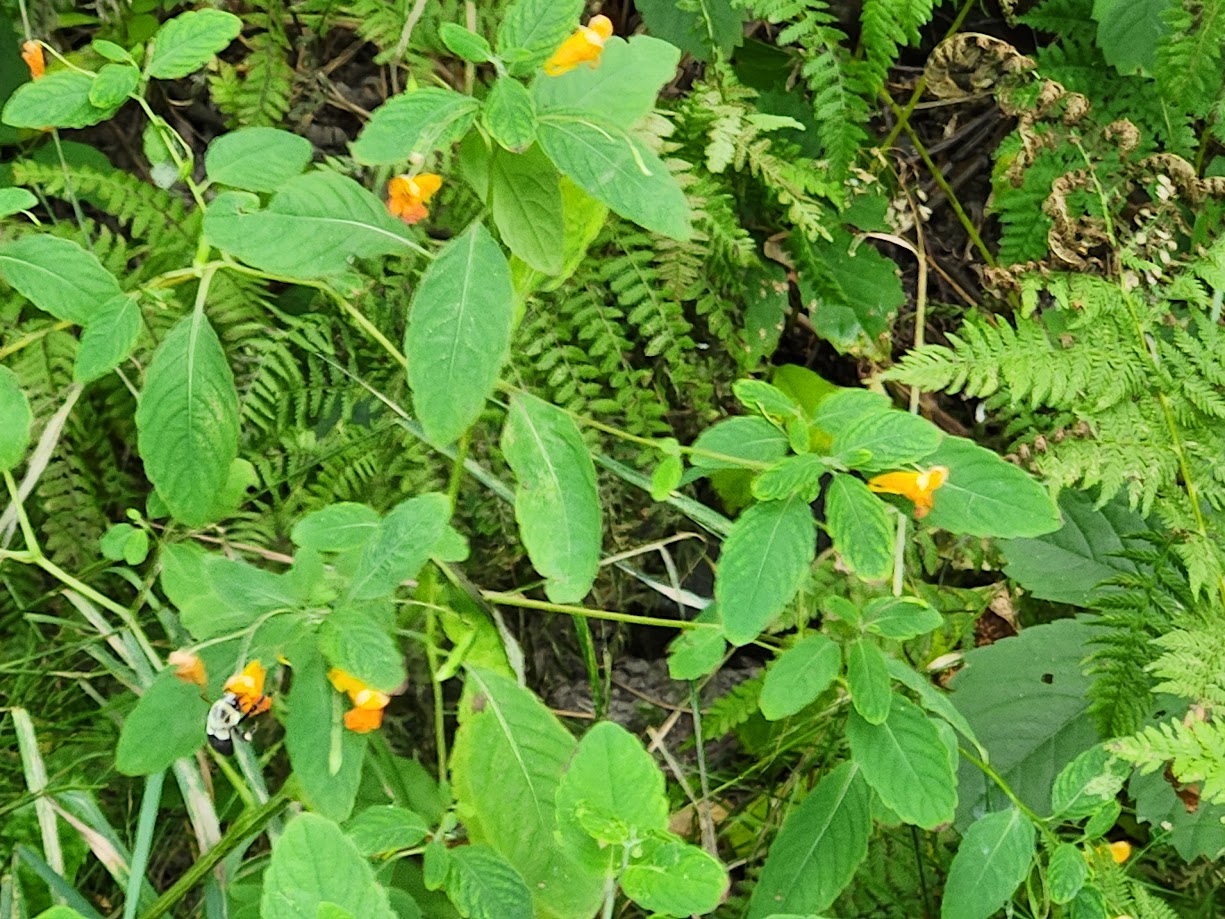
A bee in the jewelweed.

Life in general

The month started with another heat wave (our fourth?) and it was so hard just dealing with the heat.

After the humidex reaches 36 Celsius, the air is the same temperature as your body. There’s no way for you to cool down. You just sit and sweat to no avail. And then heat edema swells your hands and feet to the point where you can’t remove jewelry or fit comfortably into your shoes.

The only respite is the portable AC unit in the bedroom but, even at full power, it struggles to get the temperature below 20 Celsius. And the relief is temporary because, even with all the windows open and all the ceiling fans on, the coolish (often still 20 Celsius or above) night air can’t bring the inside temperature below 24 Celsius and you emerge from the (comfortable, if not cool) bedroom into a wall of heat.

Fortunately, after the 4th, the weather, while still hot, moderated, and the evenings got cooler with the slow reduction of daylight hours. We had to use the AC a few more times, and there was another spell of heat toward the end of the month, but it’s been a lovely month, overall.

Despite the heat, I’ve really been enjoying this summer. I’ve been wanting to go swimming since I took that dip in Lake Simcoe in June but haven’t made it to the beach yet. Dang autistic inertia.

On the 6th, I started my new position on a new team. It was a bit of a chaotic first week with a new working group, and an urgent assignment, but I kept my head and made sure to regulate. My new team lead is on vacation for the month, so I’m helping out with other projects, much like I was in the last month on my former team.

I’m learning that my new team is a little bit of chaos in general, and all the projects we’re tackling are subject to change with no defined timelines. I’m going to have to get used to tolerating ambiguity.

The month in writing

With the enforced break/disruption last month, I was eager to get back to Reality Bomb. I’m in sight of the finish line and it’s so frustrating not to be crossing it!

I met with Suzy on the 29th. It was a lot of the same issues that I mentioned last month. Revision that Suzy hasn’t seen necessitating explanation. The need to either add action to or compress slow scenes. But now I’m moving onto the climax (!) and feeling nervous.

I also continued to work on a CNF piece for an anthology call and submitted some more poetry.

The rejections on last month’s poetry submissions began to roll in as well.

But … I received notification of an acceptance on August 28th! W00t! Will share on social media when I can 🙂

The Dispatches writing group met on the 6th. It was lovely to chat with like-minded Canadian authors and discuss our work.

On the 8th, a video I’d recorded for the periodicities virtual reading series was posted to YouTube. It won’t be posted to the journal’s site until there are five of us, so that will have to wait for a bit, but if you want a sneak peek (and to critique my crappy captioning skills), just toddle on over here.

Over the weekend of the 10th and 11th, I cleared out a whole pile of email. I entered a couple of poetry contests, reviewed a story proof, submitted The Art of Floating to the Canadian Authors Association’s Online Member Book Catalogue, and submitted the first two pages of RB to Pulp Literature’s First Page Cage.

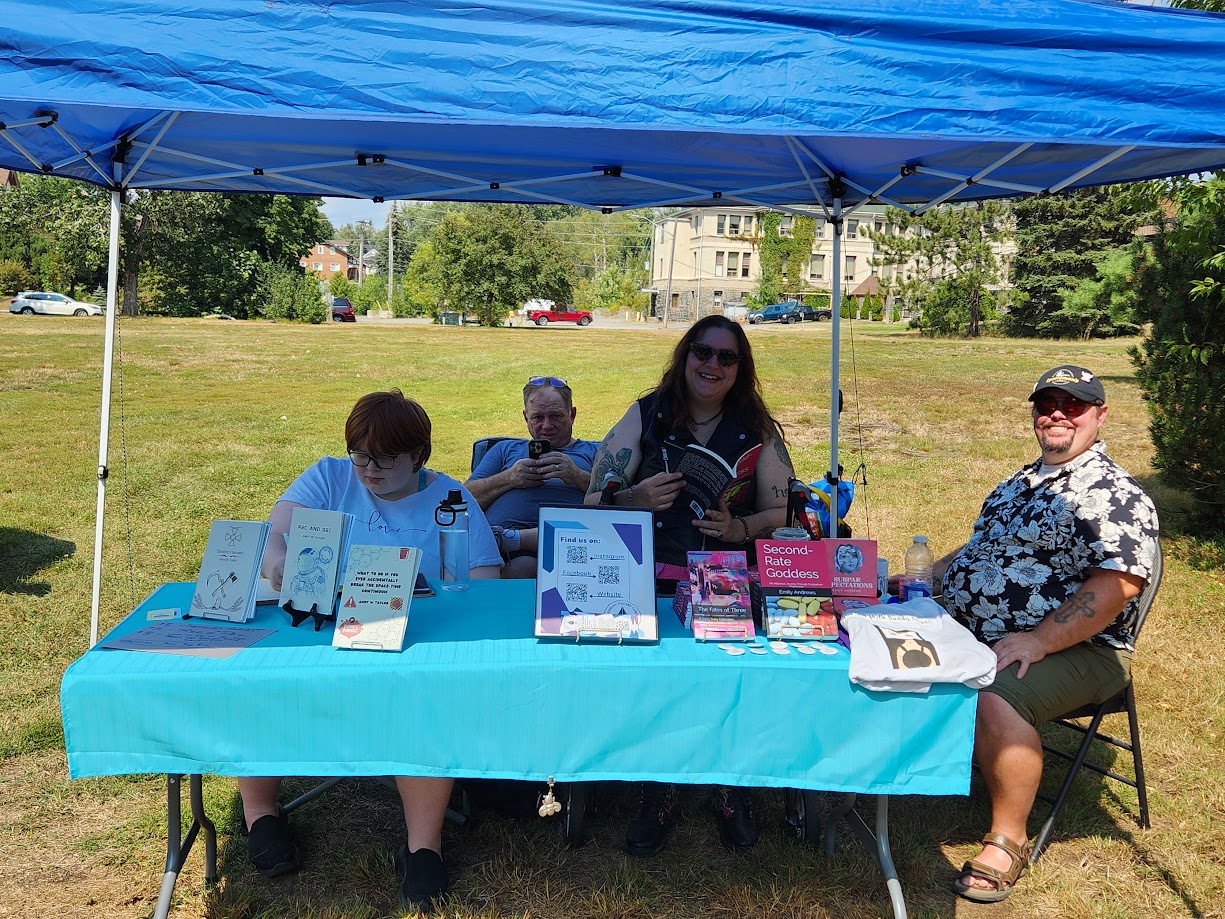
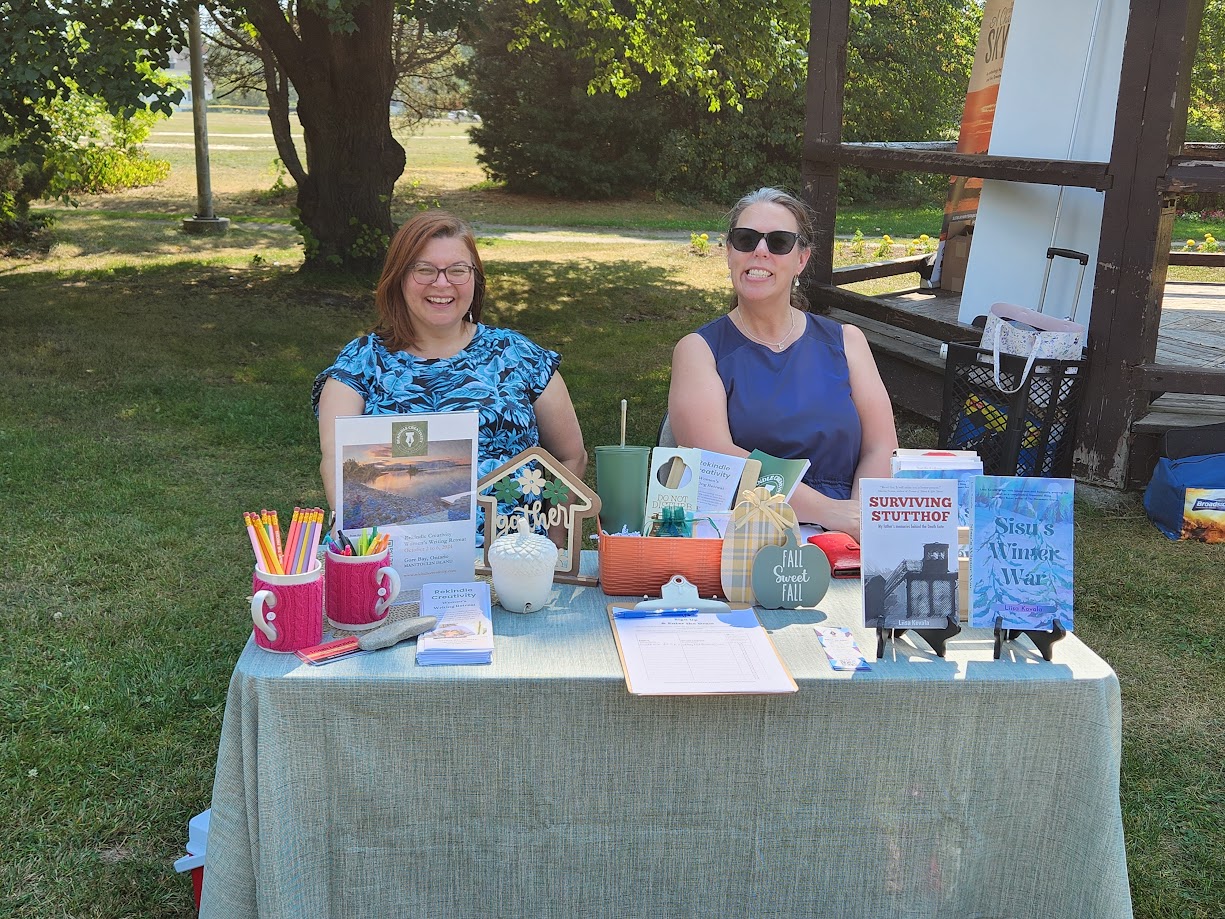
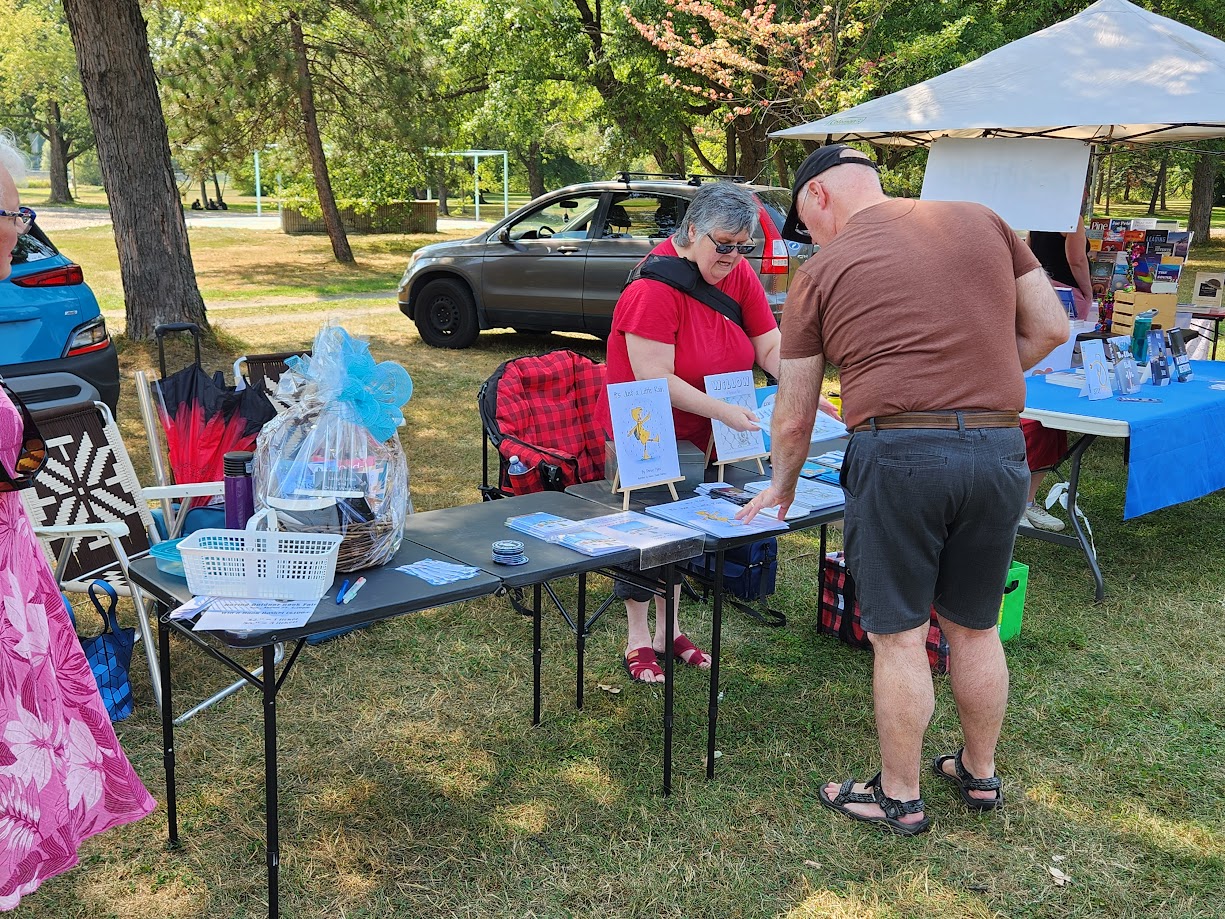
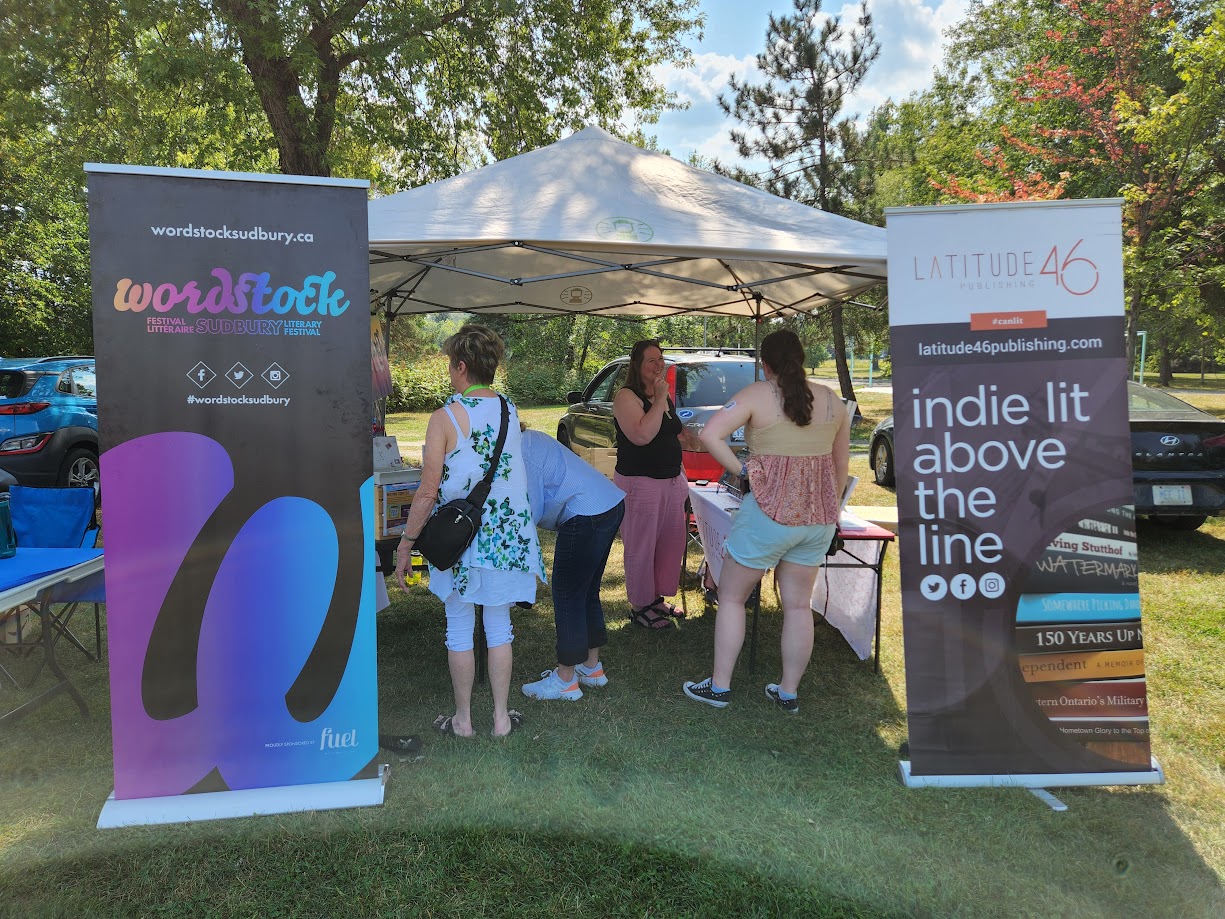
My big event of the month was the Second Annual Greater Sudbury Roving Outdoor Book Fair on Sunday August 25th from 2 to 5 pm at the Copper Cliff Complex Gazebo. It was a hawt afternoon, but I purchased a table and sunshade. I should have thought to bring some cold water or pop, but I’ll know better next time. I read some of my poetry, listened to others read (and sing!) and generally enjoyed myself.
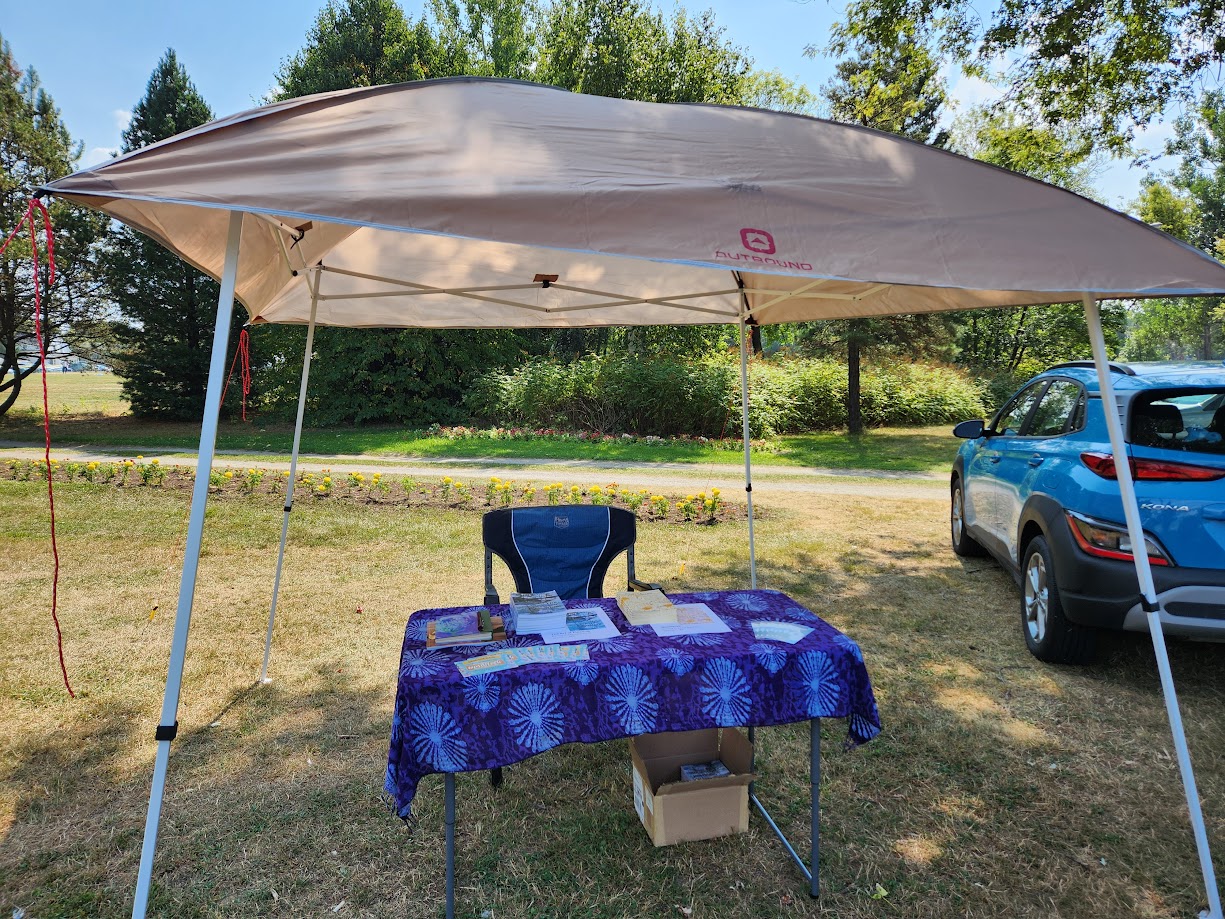
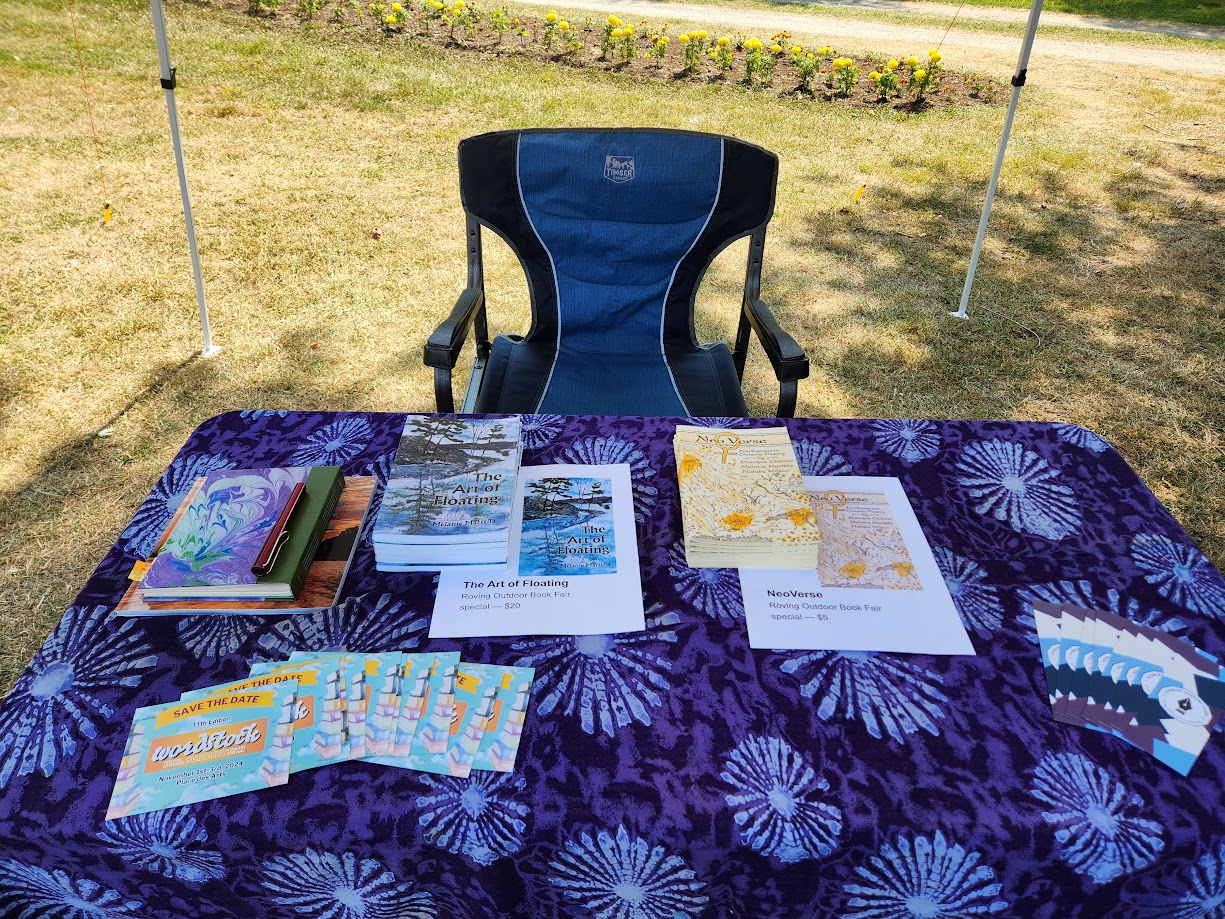
While I didn’t move any copies of The Art of Floating, I did sell two NeoVerse, which basically allowed me to break even given the participation fee but not considering the outlay for the table and sunshade. I’m sure I’ll make use of those at future events.

On the 28th, I was advised that my entry in the CAA Online Member Book Catalogue was live.

I did some administrivia for the SF Canada board on the 1st and set up a PO Box for professional writing-related things (like my Substack newsletter, which requires an address displayed in every issue).

Filling the well

Lughnassadh was on the 1st. Unfortunately, the heat prevented me from lighting up my altar until the weather cooled. Candles produce a surprising amount of heat (!).
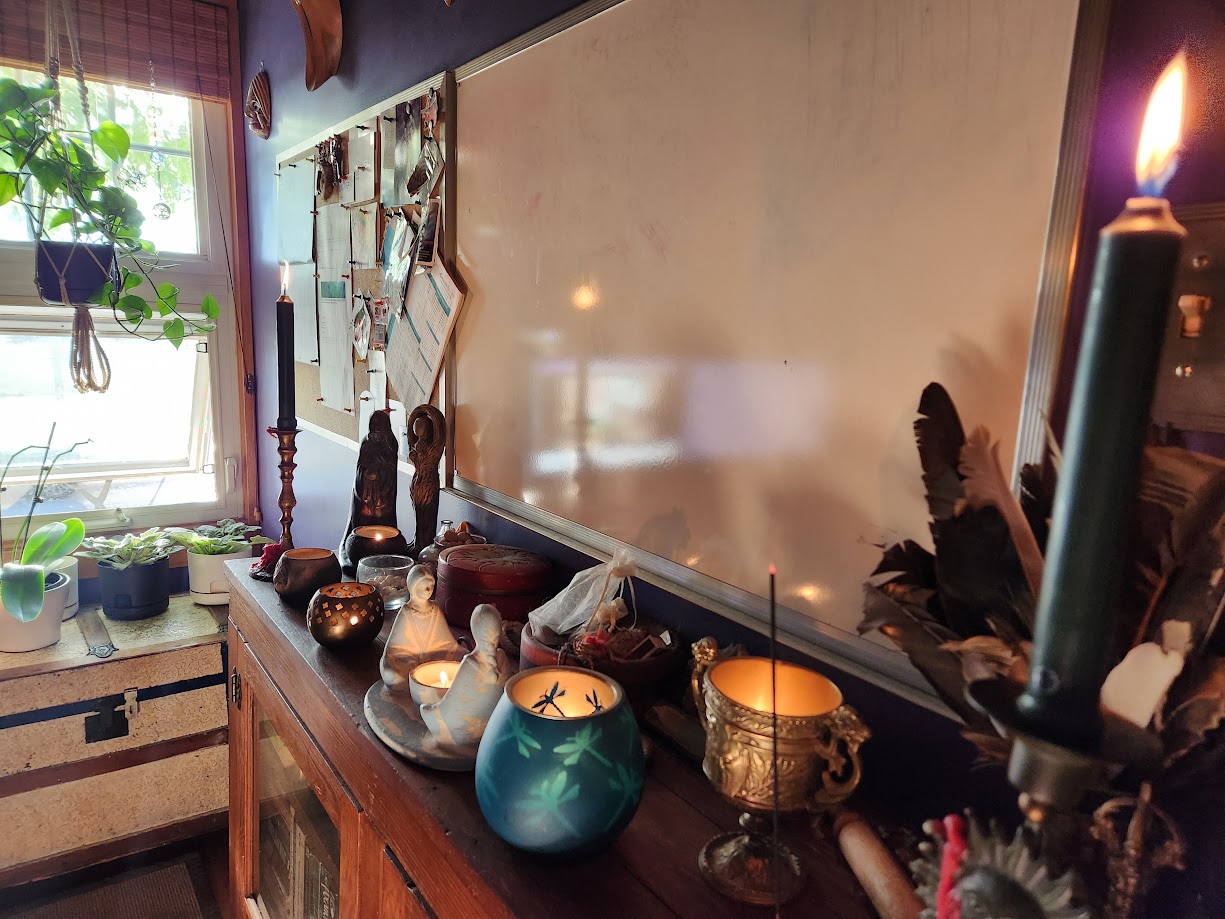
My lughnassadh altar.

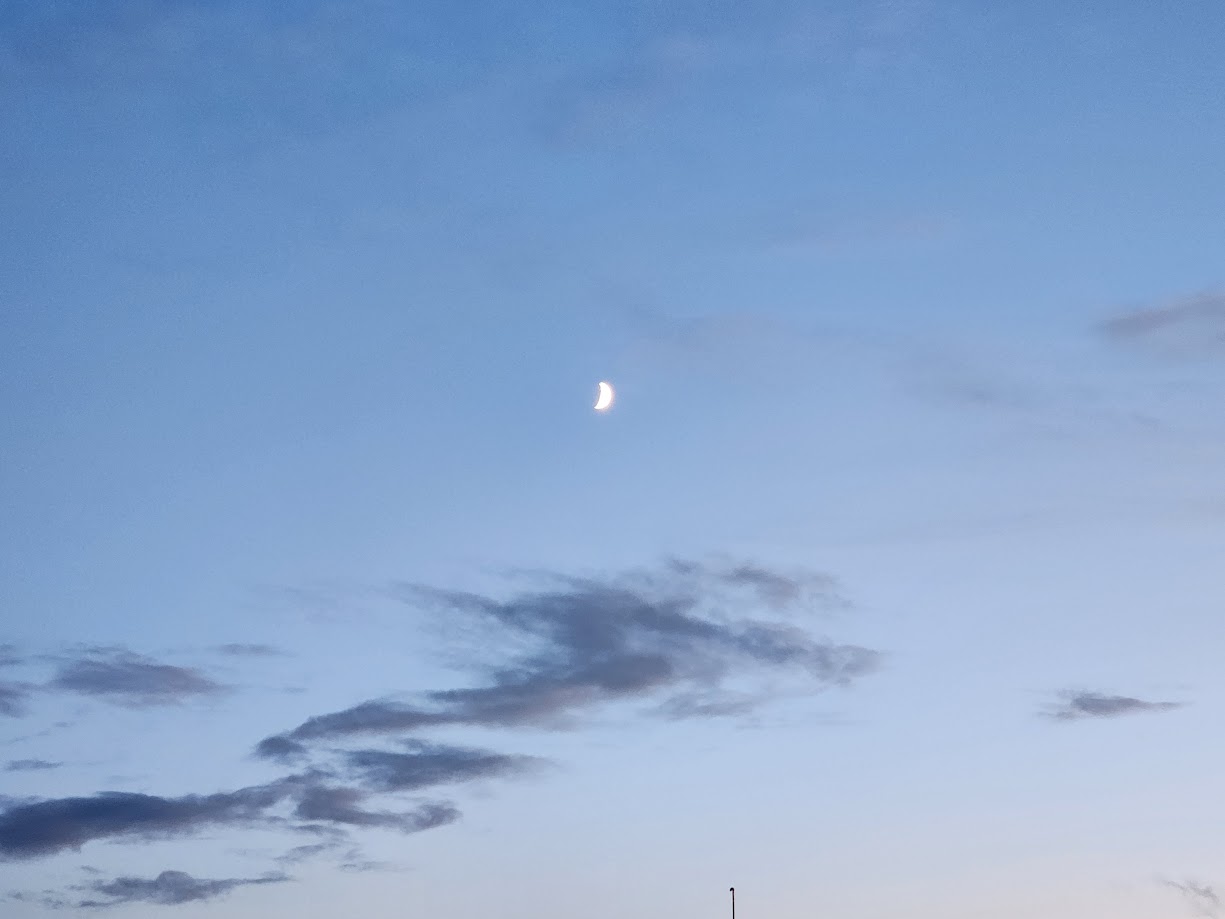
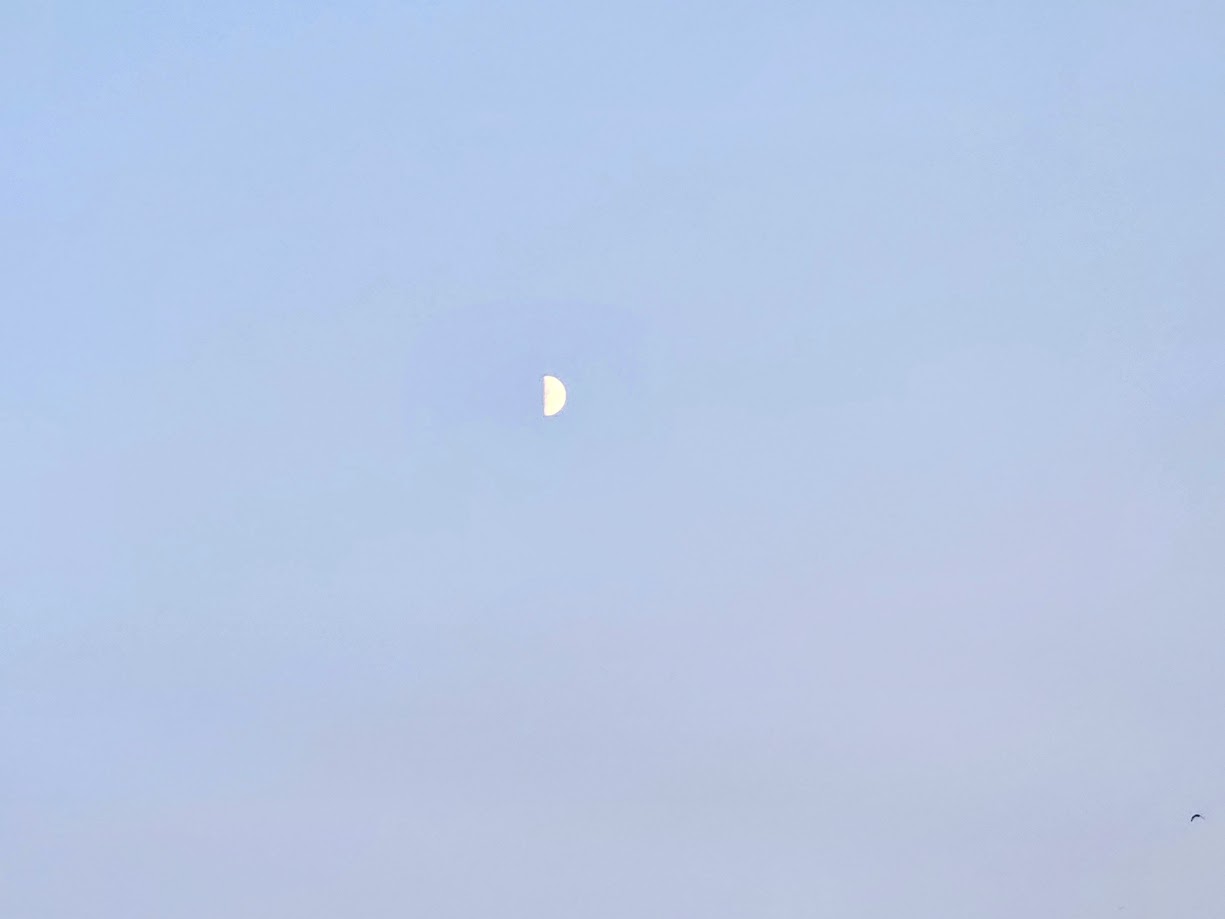
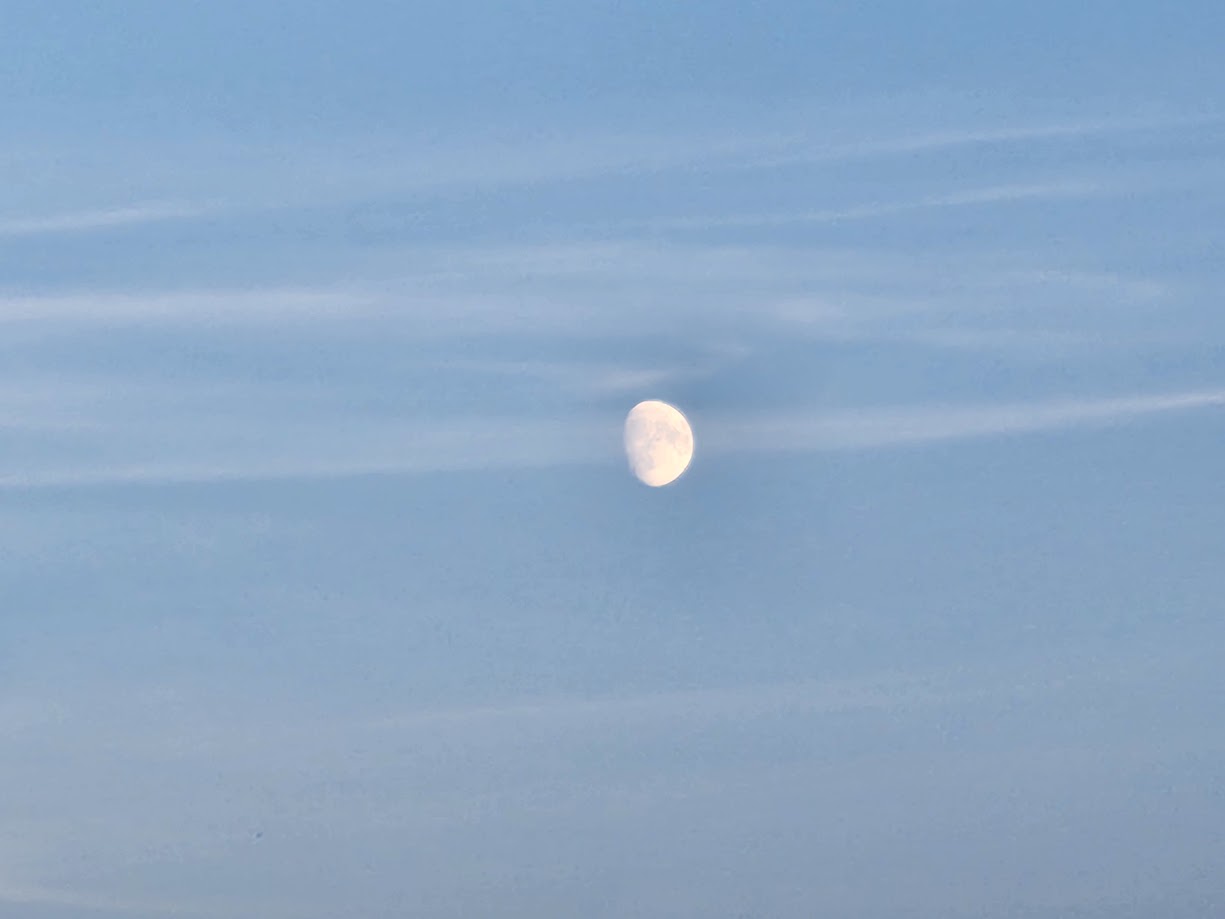
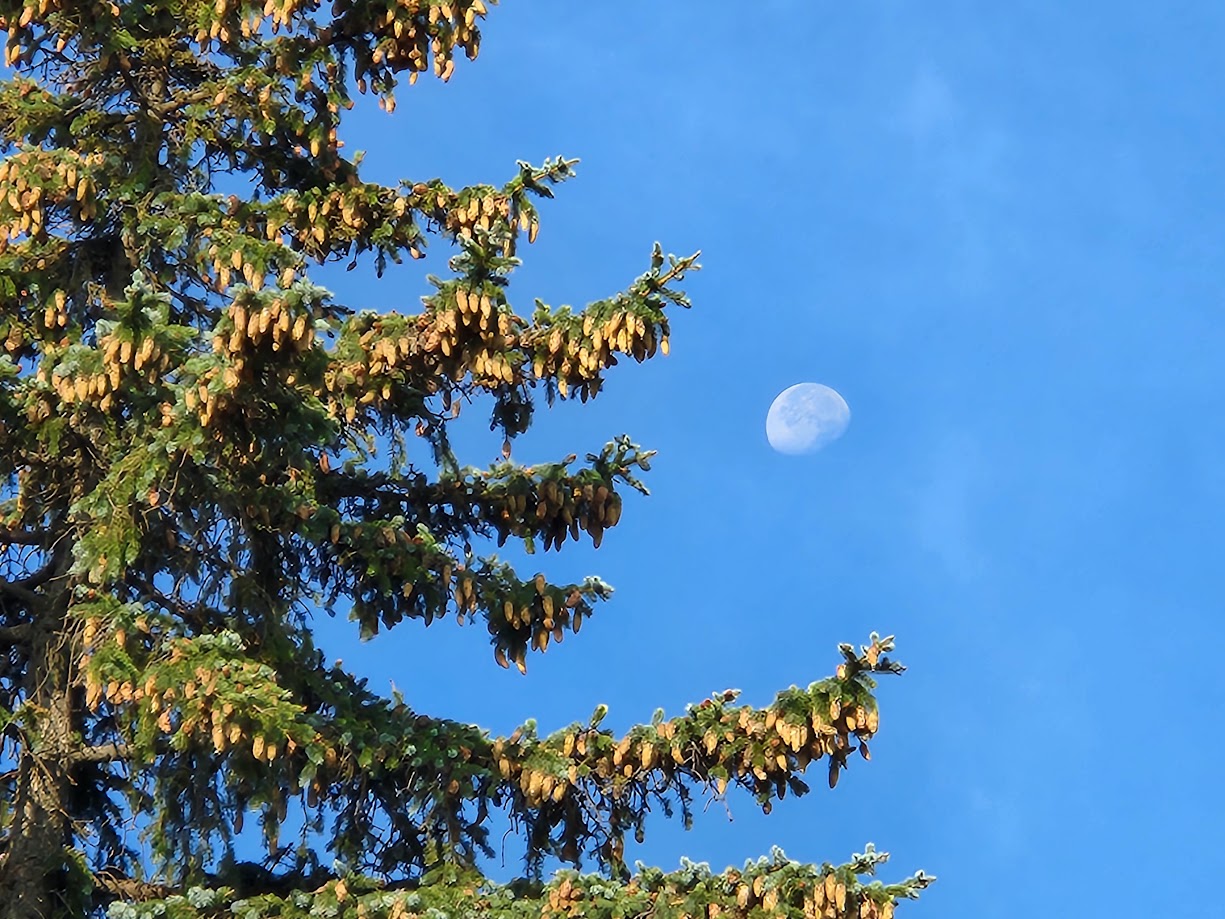
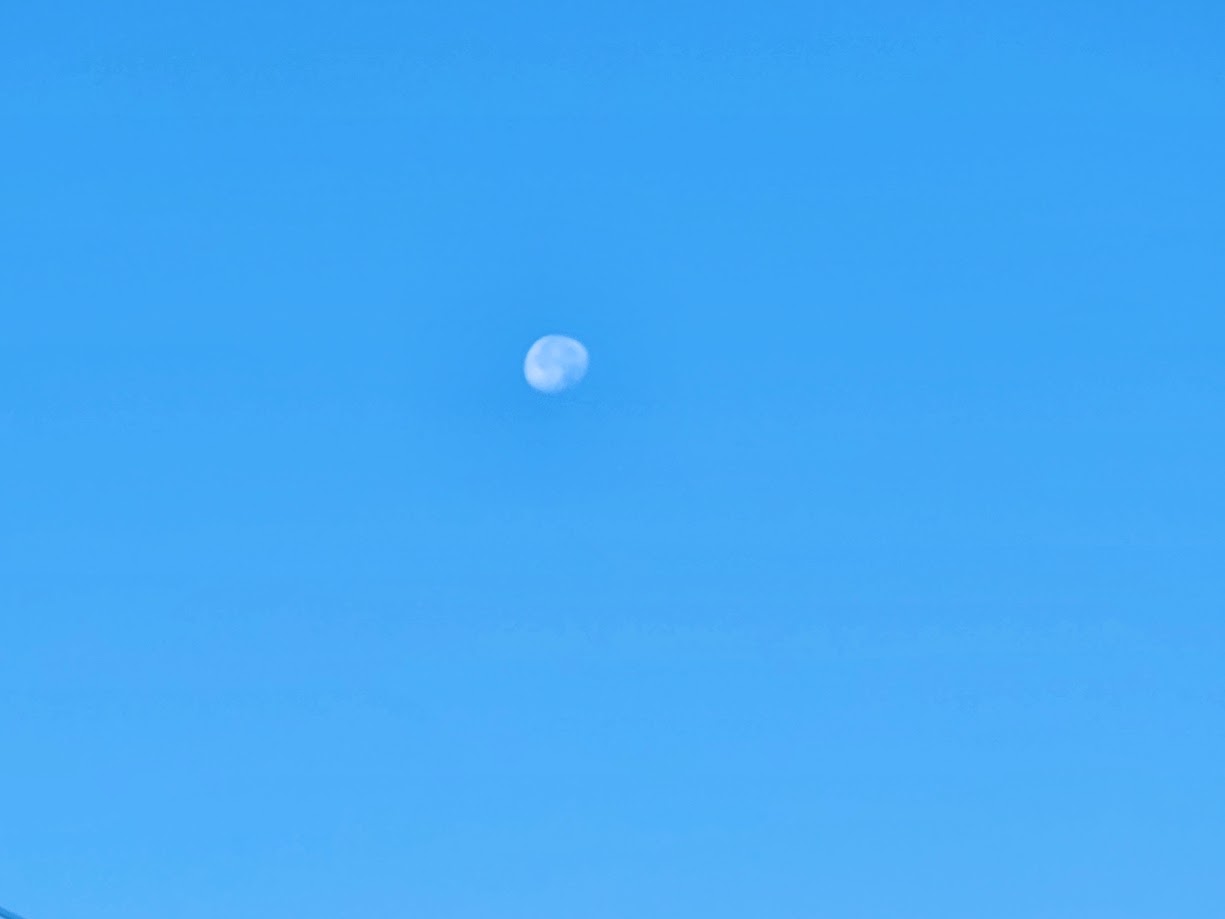
The new Holly moon was on the 4th. I was doing a good job in July of tracking the waxing moon in the afternoons (in pictures), and then the waning, but the sun was so bright and the sky so clear, there was no chance for me to track the moon a week out from the new.
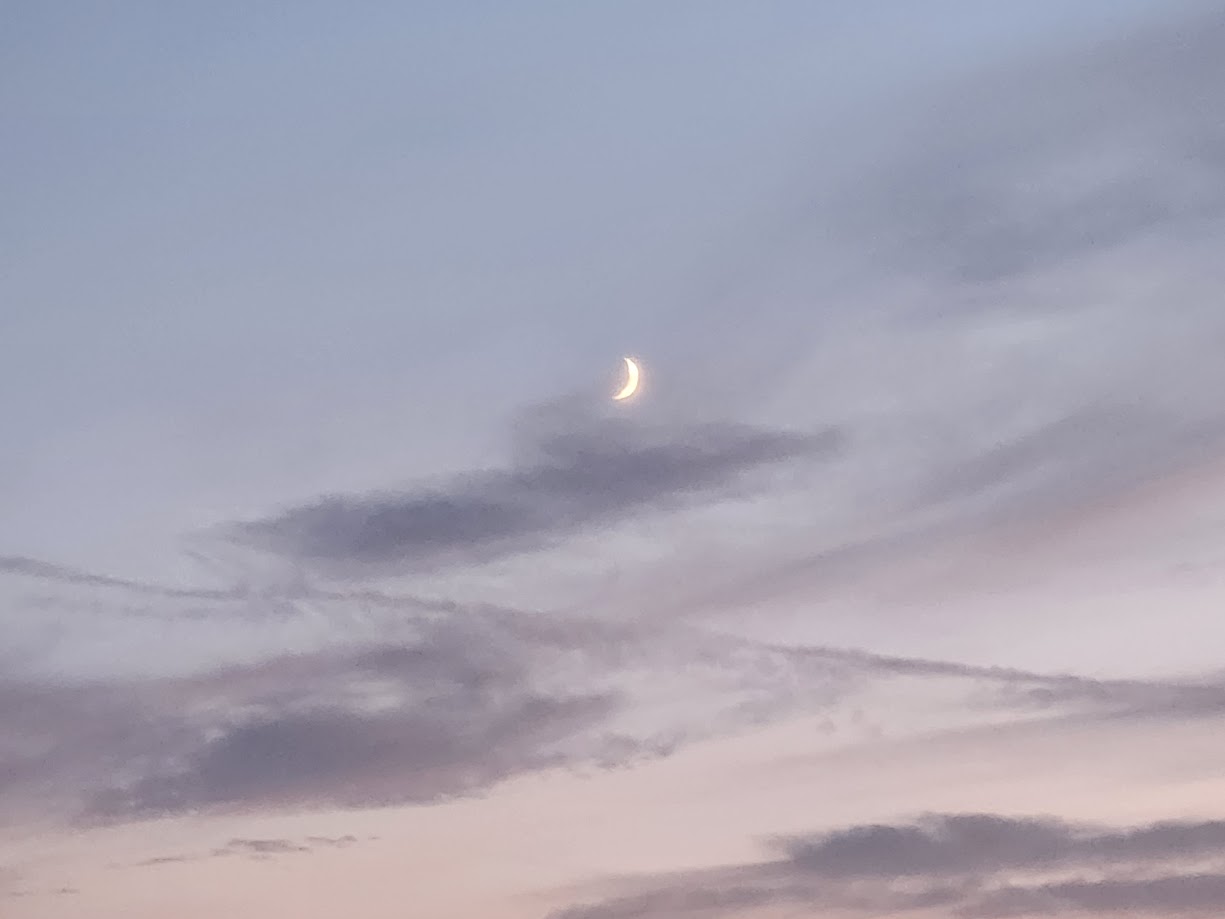

I kept up the waxing picture trend in August until a sting of rainy days leading up to the full Sturgeon/Ricing moon on the 19th.

Writing events were super light this month, for which I was grateful.

The League of Canadian Poets (LCP) Member Appreciation Week open mic took place on the 8th.

I signed up for an Authors Publish webinar with Emily Harstone about querying and publishing on the 14th. It was during the day, and I watched the replay.

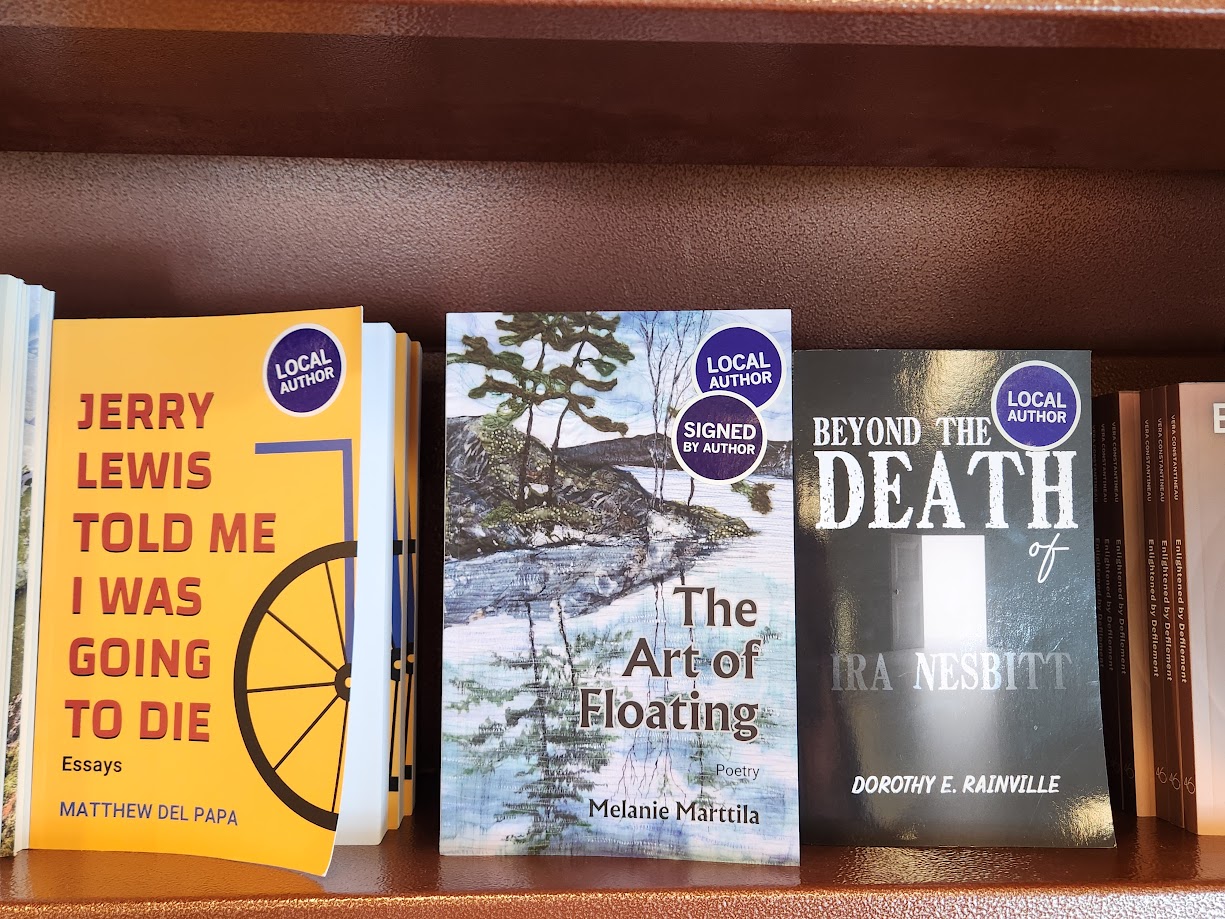
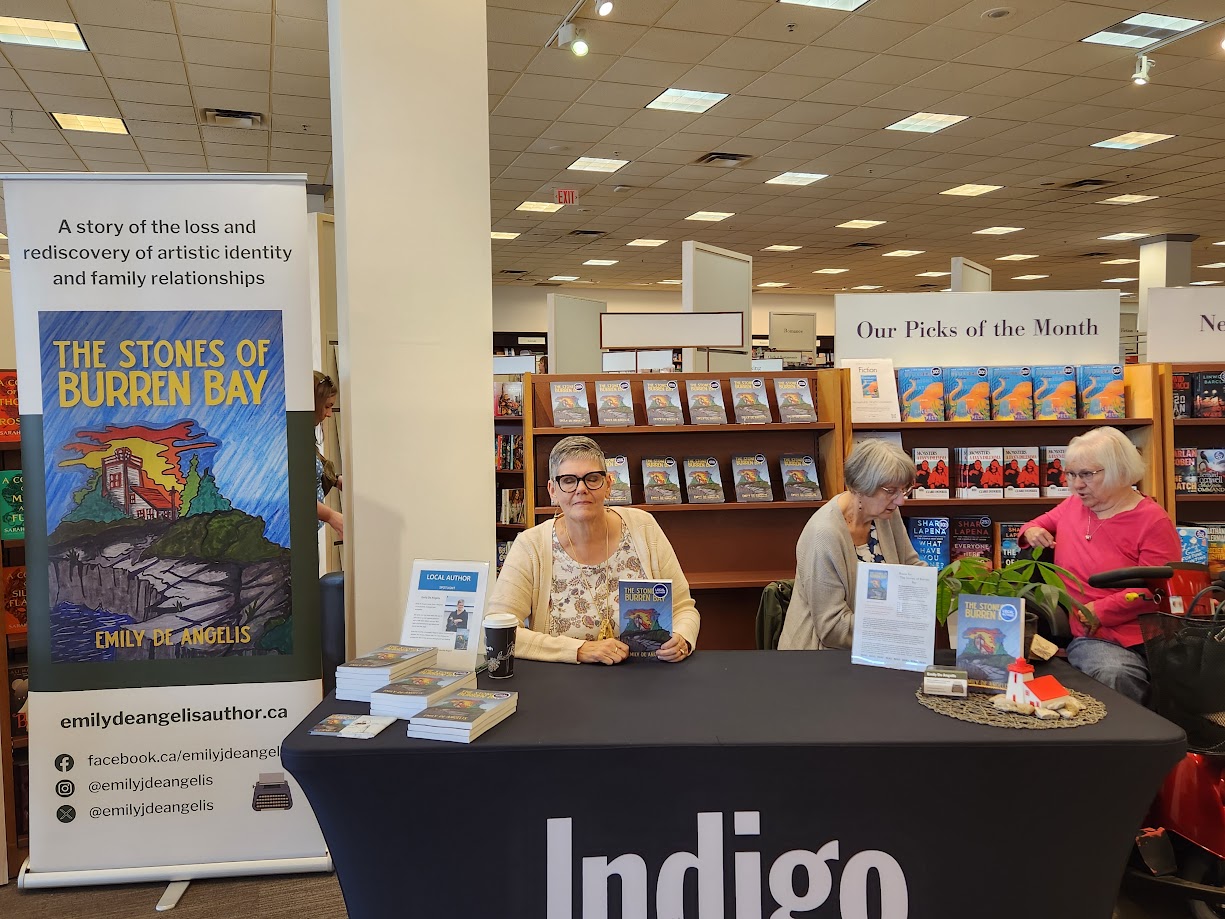
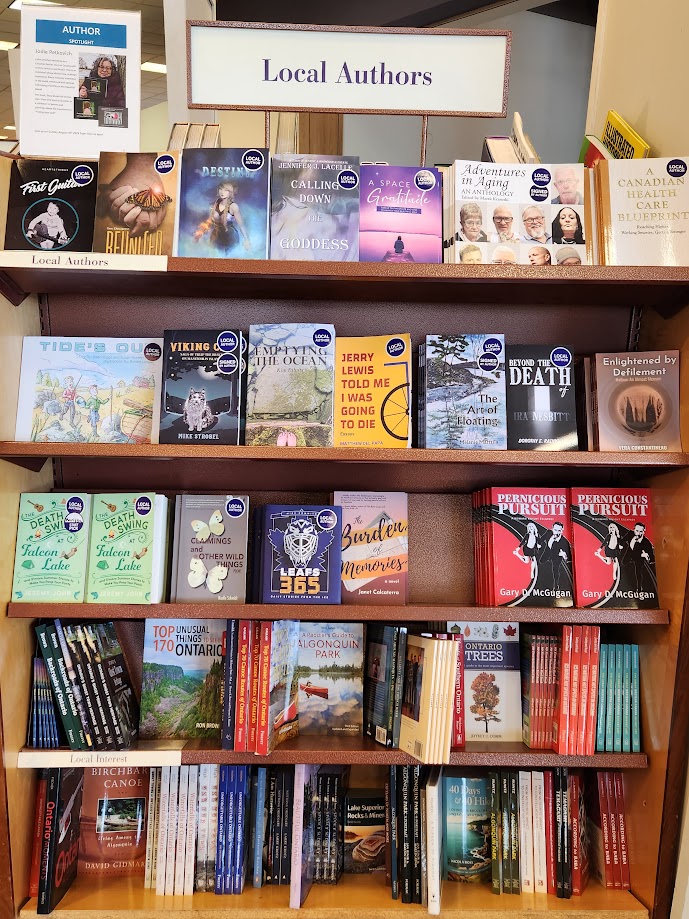
I went out to visit Emily De Angelis at her book signing at Chapters on the 17th. I’d already bought the book and had it signed at her Launch but, having had my own signing experience, I wanted to show my support. And I got a chance to see the rearranged store and their lovely new local authors’ shelf.
And, since I’ve applied for Your Personal Odyssey every year since its inception, I was able to sign up for a series of YPO Workshops, the first of which took place on the 18th. It was good and even referenced some of my favourite K.M. Weiland posts.

And I attended the virtual launch of Contemporary Verse 2 (CV2) on the 29th. One of my Dispatches writing group members read her poem from the issue.

In non-writing events, there was a CAMH session on Sleep and Mental Health: REM Sleep Disorders on the 15th. It made me wonder if I have an REM disorder, because I have had various parasomnias throughout my life.

In personal care, I saw my optometrist for my bi-annual eye exam on the 23rd. I’ve been looking over or under my glasses (or taking them off altogether) when reading. So, I have a new prescription and I’m getting new frames. They’re something a little different for me (i.e., not purple).

And I had my orthotics assessed on the 27th. In the spring, I noticed some uneven wear in my shoes. I got new ones, but the discomfort I felt in my feet never went away. So, I’m getting new orthotics, too.

I took Torvi for her last Furminator of the summer on the 2nd. She’s pretty much done with the major shed of the year. This last was just to help her feel more comfortable in the heat of the summer.

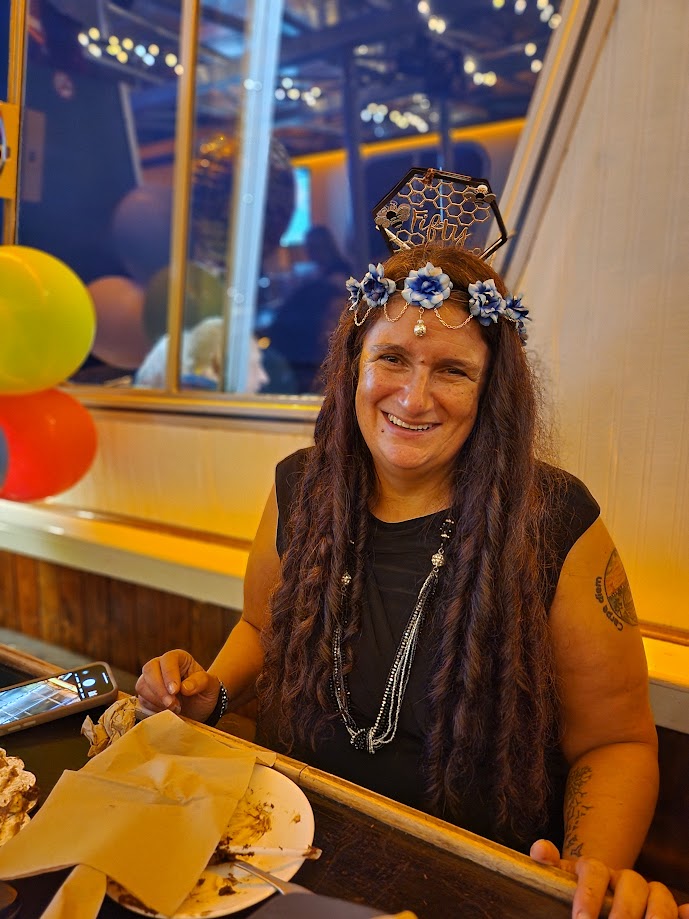
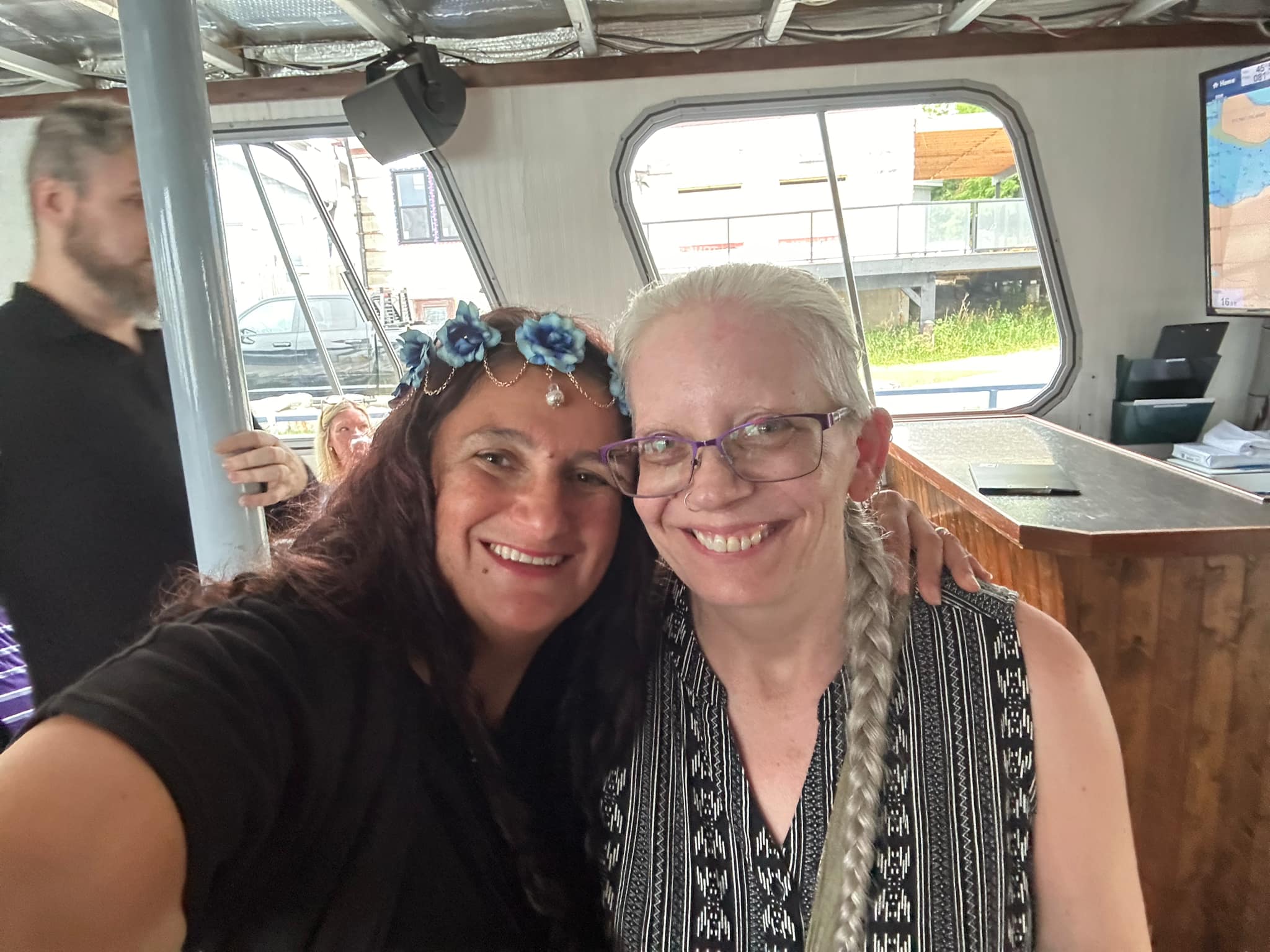
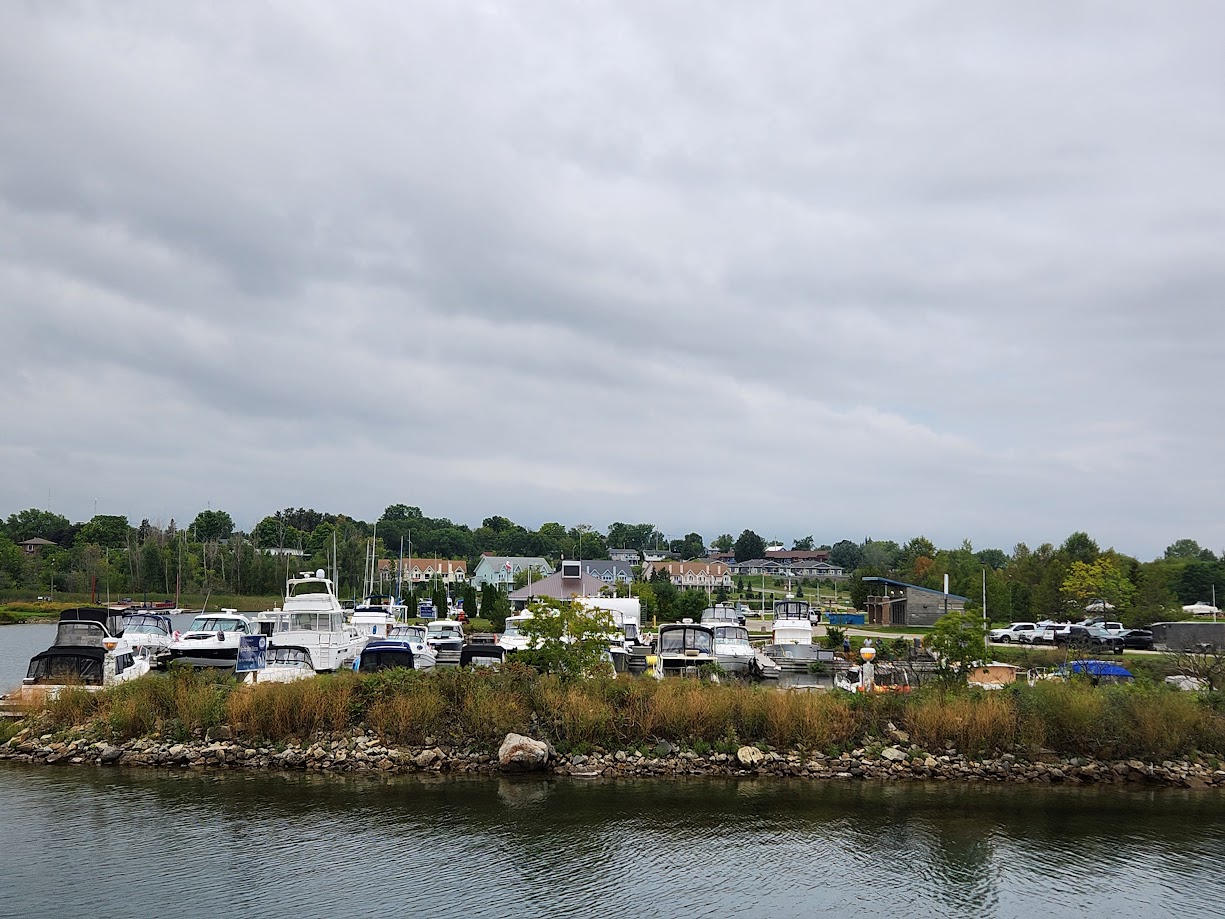
And I attended a friend’s 50th birthday cruise on the 30th. It was a lovely evening.
What I’m watching and reading

I watched the second season of House of the Dragon (HBO). This just reminds me how much I enjoyed the early seasons of Game of Thrones. Loved. After Luke’s brutal death at the end of season 1, I was expecting things to escalate. Still, I was shocked by Blood and Cheese (and felt so sorry for Cheese’s poor wee terrier), wigged out by Daemon’s visions in Harrenhal, horrified by all the dragon carnage, and left both eager and dreading what the next season brings.

Then, I finished Cloak and Dagger (Disney +). I’d wanted to see the series when it originally aired, but ABC Spark was not available to us at the time. So, I watched the two seasons when it was added to Disney + (along with al the other Marvel TV and Netflix series). Not what I remember from the comics, but it wasn’t too bad.

On the recommendation of a friend, I watched The Ministry of Ungentlemanly Warfare (Amazon). Based on Operation Postmaster, the movie fictionalizes an unauthorized operation to disrupt German U-Boat supply lines, which would allow American troops to join the war in Europe. Fun action. Very entertaining. A Guy Ritchie jam, if you have any feelings about that.

Then, Phil and I watched the fourth and final season of The Umbrella Academy (Netflix). The season was short (only 6 episodes) and I wondered how they were going to pick up from the end of last season, when the ‘brollies had all lost their powers. Unfortunately, they found a box of random stuff from other timelines, including a full jar of “marigold,” the substance that endowed them with their powers in the first place. There was a lot of random happening in this season.

And I can’t say that the ending was satisfactory. Yes, the release of the marigold into the world set everything on the road to annihilation, but it would have been nice to have a resolution that didn’t erase the main characters, and therefore the point of watching the show in the first place. It was very much “and then they woke up.” The wee marigolds under the tree were no consolation.

Next, I finished the latest season of Bridgerton (Netflix). I enjoyed Penelope’s arc finding love with Colin while having to navigate the whole Lady Whistledown mess (the harm she’s caused, principally). But I found the writers tried to cram too much into this season and felt that if they cut some of the subplots (e.g., Benedict’s experimentation with bisexuality, while there was nothing wrong with it, contributed nothing to the larger story) they could have focused more on developing the main stories.

The last episode felt rushed. In one inspired move, Penelope rescues her family from the loss of their title, foils Cressida’s attempt to blackmail her, mollifies Queen Charlotte, and comes out to everyone as Lady Whistledown—at her sisters’ ball. There is an ending montage with a time jump at the end of which we see the three nee Featherington babies, Penelope’s the only boy (and therefore heir to the rescued title). It could have used two more episodes, or the pruning of unnecessary subplots, or both, to tie everything up neatly.

Then, I watched the first season of Orphan Black: Echoes (AMC). I was happy to see Krysten Ritter in another series, and the premise seemed promising: a woman wakes up with no memory of who she is, escapes the apartment she’s been locked into, and discovers it’s a set within a huge industrial space. Exploring further, she encounters a vat of goo out of which a body surfaces. She runs. I would too.

But then, it’s revealed that the scientist who developed the biotechnology to print viable human clones is none other than Kira Manning, daughter of Sarah Manning, the protagonist of the original Orphan Black. And why does she do it? Because she’s trying to recreate her wife, who died of Alzheimer’s. After what she’d been through as a child, she should have known better. The series even hangs a lampshade on it. Multiple times. And I was like, come on.

The first season ended with episode seven in a series of cliffhangers, and I thought, this isn’t the end, is it? But it was. A second season hasn’t yet been approved, but if AMC can greenlight a second season of The Mayfair Witches, they can greenlight a second season of OB:E. I’m just saying.

Next, I watched both seasons of We Are Lady Parts (Amazon/Stack TV). Loved! A three-piece punk band of Muslim women seek a lead guitarist. Amina is a young guitarist who makes a living teaching lessons while she finished her degree in biochemistry. It seems a match made in heaven, except Amina has performance anxiety so bad she projectile vomits.

The show was reminiscent of Ms. Marvel, in that Amina, and then the other characters as the series progresses, tend to narrate their lives and internal monologues, sometimes with surreal special effects.

My first read of the month was Dark Matter by Blake Crouch. This is pretty much my ideal comp for RB, but it’s technically too old (2016). I’m hoping that the Apple TV series (which I’m watching now) will be sufficient to keep it relevant.

In the novel, Jason Dessen is happily married, has a son, and teaches physics at a local college. He gave up his research into superposition and his wife gave up her career as an artist, when they married. Jason’s best friend receives a prestigious award for his work in neuroscience and after Jason attends the party, he is abducted at gun point by a masked man, taken to an old warehouse, and drugged.

When he wakes, he’s in some kind of research facility, surrounded by people he doesn’t know, but who seem to know him. Eventually, Jason figures out that he’s in another world where he made the decision to continue his research instead of marrying his wife, and that the version of him from this world, having achieved the pinnacle of his success, regretted that decision and decided to change places.

The book gets wild from there, and I do have a couple of cavils with the climax and denouement, but it’s a very good SF thriller. I’ll do a little side-by-side of the novel and its adaptation once I’ve finished the series.

Then, I returned to Dr. Tim Sharp and his Audible Original series. This one was Habits for Greatness, in which he gleans 30 lessons for greatness from the great philosophers, psychologists, religions, movements, and fictional characters. He then turns them into habits that can be applied in daily life.

My next read was Mercedes Lackey’s Oathblood. Although it’s noted as the third book in the Vows and Honor series, it’s a collection of short stories and one novella (novelette?) about Tarma and Kethry, with contextual notes from the author. The first story is how Tarma and Kethry met and bonded. The next couple of stories were parts of the first two novels (I thought there was something episodic about them). The last stories and novella are further adventures, and the novella is set in Tarma and Kethry’s school—yes, they finally establish one—and features Kethry and Jadric’s growing brood of younglings. Verra enjoyable.

Then, I finished reading Maya Angelou’s I Know Why the Caged Bird Sings. It’s interesting to get to know the lives of the writers you only know from their works. A compelling story, well-written.

Back to Tim Sharp again, this time with Habits for Action, which is all about eliminating your excuses for doing the things you “know you should.” Demand avoidance immediately set in, and I was like, “he’s shoulding all over everyone.” And his strategies are all firmly allistic. Minimal value in this one.

Next, I read Rivers Solomon’s An Unkindness of Ghosts. Again, it feels like a perfect comp title for RB for the neurodivergent protagonist in science fiction. Unfortunately, it’s too old for most agents to consider.

Aster is a neurodivergent biologist and doctor aboard a generation ship headed for “the promised land.” Unfortunately, life on the Matilda resembles that of the antebellum south, and Aster, along with the rest of the residents of the lower decks work as sharecroppers, producing food for the ship, maintenance workers, and any other work the upper decks deem beneath them.

But Aster’s been trying to solve the riddle of her absent mother’s journals and when, with the help of a friend, she begins to decipher them, she learns that there may be a way off the ship…if she can avoid the sovereign’s persecution and a nascent civil war. Excellent.

My next non-fiction read was The Beginner’s Guide to Runes by Josh Simonds. It was interesting. Simonds is a professional psychic who traces his lineage back to the Plantagenets. The guide is comprehensive, including the history and mythology of the runes, how to create your own, the magical uses, throws, spreads, and more. And he finishes up with a list of resources that I’m probably going to check out. One warning, though: the traditional method for creating and some uses for the runes involve blood. It’s optional, but still. If it’s not your thing, just be warned. Though Simonds does recommend using proper medical supplies and having a first aid kit on hand, every mention of the use of blood kind of struck me as weird.

Finally, I read Micaiah Johnson’s Those Beyond the Wall, her sequel to The Space Between Worlds. The first novel was Cara’s story, the traverser who took down the Eldridge Corporation that employed her. This novel is about one of the side characters in the first novel, Devon, daughter of the emperor of the wasteland.

Devon is now Mr. Scales, a mechanic and runner in the current emperor, Nik-Nik’s, service. When her beloved friend dies in a twisted heap in her arms with no apparent cause, Scales sets out to solve the mystery. People in both Ashtown and Wiley City have died in this way, and each blames the other. Now Scales is trying to stop a war, and the possible annihilation of her people as well. There’s a lot more to it, but I will say no more, cause y’all gotta read this. Excellent.

And that was the month in this writer’s life.

Until next month, be well and stay safe; be kind and stay strong. The world needs your stories!
The next chapter: A month in the writerly life
melaniemarttila.ca

Muse-Inks: My day at Graphic-Con and the struggle for balance

Greetings, writerly peoples!

Before I get to the meat of this post, I’ll give you a little update on the writerly happenings of the week.

This past week, there was just one. The Sudbury Writers’ Guild booked a table at Graphic-Con, which was held at the Sudbury Arena, Saturday, June 10th. While it’s not a huge event as comic cons go, it was big for Sudbury.

Fandom was well-represented. There were cosplayers, LARPers, gamers, table top gamers, RPGers, comic fans, art fans, and television and movie fans (Degrassi actors were in attendance). And there were readers.

SWG co-chair, Andy Taylor, committed to be present for the full day as this was our first year booking a table and he wasn’t sure whether it would be worth it or not. Liisa Kovala helped out from opening to noon. I helped out from noon to 6 pm, Clay Campbell walked over after his CKLU radio show and stayed through to 7 pm, Liisa returned to finish off the day and help Andy pack up the table, Kristan Cannon had her own table (right beside the SWG table), and members John Jantunen and Sabine Gorecki stopped by and hung out for a while. It was a team effort 🙂

GraphicCon

Andy took this picture just after Clay (Rincewind) and I arrived and before Liisa left (noonish).

We had on display various books by Guild members, including a few copies of my wee poetry chapbook, NeoVerse. We sold just about one of everything (well, except NeoVerse—I didn’t expect poetry to be a big seller, though there was some interest), sold out of Creepy Capreol, which our other co-chair, Mat del Papa edited, and sold five of the SWG anthology, Sudbury Ink.

Sales weren’t the purpose of our booking the table, however. Reaching out to the writing community in Sudbury was. In that respect, the table was a total success. We had 19 people sign up to find out more about the Guild. We’re going to try to get together in late June for a special meeting for these individuals. If the timing doesn’t work out, we’ll at least send them a copy of our June newsletter to give them an idea of who we are and what we do.

Which leads us to balance

When I got home from Graphic-Con, I was pretty much bushed. Phil had the moms over for BBQ, but afterward, I decided to forgo my usual Saturday post.

Work/home/creative balance is a recurrent issue for me.

As a writer with a day job, I’ve chosen to devote nearly all of my non-work, non-sleep time to writing. Thus, a lot of other things go by the wayside. Physical fitness, family and social events, friends, support of artistic and professional organizations and events. Still. I can’t shut all of that out of my life. So, I try to squeeze it all in. Therein lies the rub.

When I can drag myself out of bed early enough, I do yoga or other exercises in the mornings. When the weather and other commitments permit, I walk home from work. I spend time with Phil and with my mom. I volunteer for the SWG and for the Canadian Authors Association. I try to get out and do something creative and soul-feeding in the community.

I try to get out and garden, or use my summer office. I try to keep the house clean(ish). My standards have fallen significantly in recent years …

I also try to write or revise my novels and short stories daily, keep up with my blog posts, keep up with my commitments to DIY MFA, read, study my craft, improve, attend writing workshops in person or online … and it all takes its toll.

Add to that my persistent issues with depression and anxiety which I must manage carefully, and a myriad of aches and pains that only seem to multiply the older I get, and there are times when I have to step back.

Phil’s supportive. He does the cooking, the groceries, the heavier household chores, and the renovation on his own. He knows my writing time is mine and, except for the odd hug or kiss—we need a fairly steady supply—he leaves me to do my thing. He doesn’t insist on coming along (he hates travelling and would just be miserable) or that I stay home when I have a conference or convention to attend. He listens when I have to blow off some frustration about work or professional obligations. He’s learned, for the most part, not to try to offer solutions. I’m very fortunate.

The heady rush of positive feeling and energy that returns with the sunlight in spring gives way to my first bout of burnout around this time every year. The second battle with burnout usually hits in the fall. This is why I have usually tried to take a self-funded leave from work every 18 months or so, May into June and then October into November.

It’s how I’ve managed my physical and mental health.

It’s been two years now since my last self-funded leave and the continual issues with our pay system at work have meant that I’ve had to defer my plans to take a leave yet again. I won’t be able to manage much longer if I can’t get a leave this fall. I’ve pushed through before, but never longer than two years. I used to work part time when I was in the call centre. That’s probably a better long-term strategy, but this next leave will involve a new pup as well, I don’t have enough leave aside from the self-funded to house train a pup.

I’m hoping that the larger part of our pay issues will be resolved by then and that it will be a possibility. Even if it’s not, I can’t afford not to make the request.

For now, all I can do is take things easy for a few days, give myself a break, and then get back to it.

I’ve been listening to Brené Brown’s The Power of Vulnerability sessions on Audible. Vulnerability is at the core of a satisfying life, of contentment (which is always my goal, not happiness—I’m pretty sure that’s a mythical beast), and of achieving healthy goals. And self-love is at the heart (lol) of vulnerability.

Unfortunately, I’m kind of addicted to shame and I tend to wall myself off from other people so I don’t have to be vulnerable with them, one on one. Everyone else thinks I’m doing great. I’m that high-functioning person living with mental illness. I can simulate vulnerability on this blog because it doesn’t cost me as much as opening up in person can. All the self-hate takes place in private. I operate from a scarcity mindset. There’s never enough time, energy, you name it, and I am certainly never enough.

I know that none of this is true, intellectually. I know time can be managed, found. A healthy lifestyle can provide me with more energy. I can tell my friends and family that they are enough often, but I can rarely turn that compassionate lens on myself.

So I’m going to goof off for a few days, except for the absolutely necessary stuff, like blogging and housework, professional obligations, and, well, the day job. I’m going to try to be present enough to listen and be kind to myself and to others. I’m going to try to enjoy myself.

We’ll see how it goes and I’ll check in with you next weekend after the poetry walk. The post may go up on Sunday again, but that’s just my way of shifting things to give me enough intellectual and emotional space to recover.

In the meantime, be well, be kind, and stay strong.

And I’ll “see” you on Tipsday!

Muse-inks

A life sentence with mortal punctuation: part 8

How did what was supposed to be a mere two-part guest post get to be this huge?  I think it’s what project managers call “scope creep.” 🙂  Essentially, the story demanded something more, and as with many of the things I write, it told me the shape it wanted to be in.

Thanks to everyone who’s stuck with me through this very personal tale.  If it touches you in any way, I encourage you to like, share, comment, or subscribe as your conscience dictates.

I’ll take the opportunity here to remind everyone that while this story is based on my life, that it is filtered through my frame, and is, no more and no less than anything else I write, a story.

Last week: I discussed some of the things that I do to keep the wolf of my depression from the door, or perhaps invite it in, let it curl up by the hearth, and make itself at home.

This week I’m going to pick up the original thread of the tale where I left it.

Those sixteen years

The years during which I was “growing up,” getting a job, and learning how to deal with my depression were largely fallow ones for me creatively.  I got off to a good start in my undergrad years, both at Guelph and at Laurentian, but faltered during my struggle to achieve my master’s degree.

Though my primary poetic publications, NeoVerse and Battle Chant, emerged around the time that I finally received my graduate degree, I found it difficult to continue writing.  A handful of scattered publications in poetry and a short-lived foray into publishing weren’t enough to validate my still-fragile writer’s ego.

I’ve never had a thick skin.

As I slowly worked through my issues, however, I started to realize that writing wasn’t something I did or didn’t do.  It’s something I am.  My inability to commit to the writing life on a regular basis made me question my calling.  If I couldn’t write, how could I call myself a writer?  Maybe it was time to throw in the towel and commit to a life without magic.

The sheer impossibility of that thought told me that writing was what I was meant to do.  I just had to find my way to it without a map or any orienteering skill whatsoever.

Upon my triumphant return from Windsor and contract jobs interspersed with unemployment, Phil and I decided to get a puppy.  We already had two cats, one a three-legged refugee from my days at the Veterinary Emergency Clinic in Mississauga, the other a sweet-natured black cat that Phil got me for my birthday one year.

Our dependent quadrupeds helped me immensely.  I believe that pets have a lot to teach us about unconditional love and being good people.  My pets are some of the best people I’ve known 😉

I got my full time job with my current employer.  Phil and I got a house and a car.  I made use of my new benefits to get some serious work done on both my body and my mind.  I figured out that medication was not the way to address my feral disease.

My mother was still working, part-time at the local hospital, at home, taking care of my father, who had graduated to a disability pension and therapy, and at the seniors’ residence where my grandfather now lived.

I went out with her to see my grandfather about once a week, and helped her to transport him to his various appointments.  My father began to have issues with his heart, eventually diagnosed as arrhythmia and congestive heart failure.  He got a pace-maker, and a new suite of medications.

Shortly after retiring from the hospital, my mom developed diabetes.  Dad started to fall.  If it happened at home, either Phil or I, or both of us would have to help Mom, because Dad couldn’t get up under his own power and she couldn’t lift him.  If it happened outside home, it generally involved a hospital stay.  Dad was on Cumadin by this time and as a result, even the smallest injury could become serious due to the complications of the medication.

Then my dog died

ZoeIt wasn’t something sudden.  Zoe developed hemangiosarcoma and though we caught it early, the vet wasn’t able to catch it all with surgery and internal lavage.

The issue with this particular type of canine cancer is that it likes vascular areas, that is, places in the body where blood vessels tend to gather, like the spleen and the liver.  Once it takes hold, it disseminates quickly and almost always results in death.

The biopsy taken in the surgery came back malignant.  It would only be a matter of time.  As it turned out, we only bought Zoe a couple of weeks.

At first, it seemed like she was recovering.  Phil and I had taken to sleeping on the futon in the living room so we could be close to her if problems arose.

The morning she woke me at 5 am looking for comfort was her last.

I won’t describe that morning other than to say that I called in sick.  I was devastated.  For the first time, I cried legitimately over the loss of a loved one.

Papa

My maternal grandfather was the only one of my grandparents left alive.  He’d been a hard-core smoker, and alcoholic for most of his life.  When my grandmother passed away, he reacted poorly and within a few months, a fall resulting from TIA, landed him in the hospital.

From there, arrangements were made to move him into a seniors’ residence and for many more years, he lived happily, adjusting to the fact that he couldn’t drive anymore, that he had to go outside the residence to smoke, and that he had to depend on my mother to ration him a few beer on special occasions.

Some irregularities regarding his heart landed him in the hospital and when I got the call at work that I should come to the hospital, I had a bad feeling.  In the time it would take me to get the car, drive to the hospital, find parking, and get to his room, I could walk, so I sped along as quickly as I could, hoping that he would hold on long enough for me to get there.

Turns out he’d already passed away when I got the call.

Papa’s passing wasn’t all that traumatic for me.  He’d lived 94 years despite his addictions and was, so far as I know, happy.  I also felt confident that I had been there for him as much as I could.

I helped Mom settle his estate.  Being able to help her out in that way made another big difference for me.

I received a small inheritance, just enough to invest in my first laptop computer.  That year, I started to get back to my writing and the novel I’d conceived of all those years ago in university.

In another year, Phil and I felt that we could bear the love of another pup.  That was when we got the Nuala-beast.

The butt-in-chair breakthrough

Though I was writing more, I wasn’t writing daily yet.  It wasn’t until Nino Ricci came to town to do a workshop with the Sudbury Writers’ Guild that my head got turned around the right way on that.

It was his sharing of his own guardian tale that helped so much.  Every writer has at least one, that big name, well-established Author who tells you that your work is crap.

The breakthrough was that I could choose not to let the well-meant, but unfortunate words of my guardian keep me from entering the inner sanctum and gaining my prize.

Productive or not, I’ve been writing every day since, and that, as the poet said, has made all the difference.

The diabetic cat

Our little black cat, Thufir (named after the Mentat Thufir Hawat due to his fondness for Thufir Hawat the Mentat Catflashing lights) developed feline diabetes.  Phil and I were surprised because he wasn’t obese or showing any of the other signs, but his blood glucose level didn’t lie.

He was on Metformin for a year and graduated to insulin after that.  I became very adept at taking his blood sugar levels and injecting him daily.  He came to tolerate, if not anticipate his injections, like he knew that they made him feel better.

Once again, however, it was a matter of time.  Eventually, organ failure took out little guy.

I wasn’t sad this loss either.  I’d been the best kitteh-mama I could have been and I knew that I’d done well by him.  I’d kind of made my peace with death by this time.

I’m going to leave things here for now.  The next big event for me was the death of my father, and that’s going to need a post unto itself.

After that, I’m going to delve into my insights into happiness as a result of all I’ve learned and that will be the culmination of the series.

Tomorrow I’m going to be writing the Wordsmith Studio Anniversary post 🙂  What’s that, you ask?  Read and find out, my friends.

Coming soon: I have a few wonderful authors who have agreed to do interviews for little ole me.  Look out in the next few weeks for six questions with fantasy author J. L. Madore, poet Barbara Morrison, and D. J. McIntosh, author of The Witch of Babylon, and the soon-to-be-released The Book of Stolen Tales.

I’m finding all sorts of writerly goodness to share 🙂

100 thousand poets for change in North Bay, September 29, 2012

Please note: this post originally appeared as a guest post on John Rice’s Keeper of the Sword blog on October 3, 2012.

It was a grey autumn day when I set off for North Bay.  Then I picked up Kim Fahner, and the journey became a poetic road trip of epic proportions 🙂  Talked craft, poetry, fiction, blogging, social media, and Doctor Who!

Kim brought me back a gift from her recent trip to Ireland: Leanne O’Sullivan’s Cailleach: The Hag of Beara.  Lovely book.  Saving it for the weekend 🙂

The drive was blessedly uneventful and we arrived early enough to have lunch before the event started.

On the way back to the park for the reading, we were greeted by Father Forrest.  The White Water Gallery’s Youth Arts Initiative created puppets this summer.

Father Forrest was one of them and he stopped by the reading later on in the afternoon.

We walked on to the park where the poets and audience were already gathered.

Though the organizers, Kevin smith and Natalie Wilson had brought a PA system there wasn’t an outlet to power it.

Still, Kevin introduced the event and got underway promptly, explaining a little of the background of 100 Thousand Poets for Change.

100 Thousand Poets for Change was initially conceived by Michael Rothenberg and Terri Carrion in March, 2011, as a worldwide set of events to take place simultaneously on September 24, 2011. Literary event organizers volunteered to host associated events in their own cities or schools. ~Wikipedia

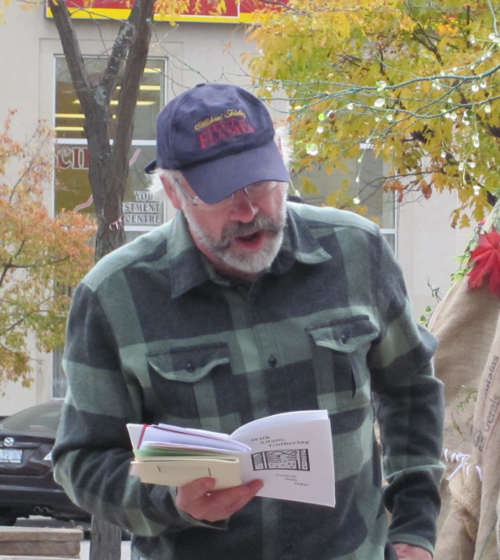
The first reader of the North Bay event was Laurie Kruk, professor at Nipissing University and author of Theories of the World, Loving the Alien, and the soon to be released, My Mother Never Told Stories.

She read several selections from her new book of poetry.

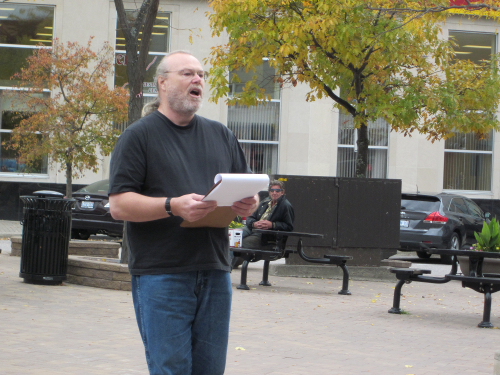
I was the next poet to read and only chose a couple of poems: “Manitou Sky” and Relatively Speaking.”

I started my set with a post on Jezebel regarding a Sikh woman and her response to what seemed a malicious picture posted as a critique on her appearance.  It was my way of commenting on how social media can be an avenue for positive change.

I finished my reading by offering some advice from Kristen Lamb in this season of political frenzy on how writers really change the world.

Following my set was Tim Robertson, poet and aphorist, that is, writer of aphorisms.

He started the session with a series of witticisms and then read a couple of his longer poems.

After Tim’s reading was a brief intermission where poets mingled and chatted.  I took a few moments to reacquaint myself with Natalie, with whom I’d contributed to NEOVerse, and Laurie, with whom I’d read on several occasions during my more active poet years.

The second half of the afternoon session began with Christine Charette, artist and poet.  Father Forrest visited at this point and remained around for her set.

Christine’s poetry has as its heart the issues of womanhood and motherhood and it did speak to the theme of change.

Denis Stokes read next.  He’s taught English in high school and at Nipissing University, and published poetry in print and online.  Denis’s poetry was definitely the poetry of Northern Ontario, evocative of its sights and sounds in the context of family and change.

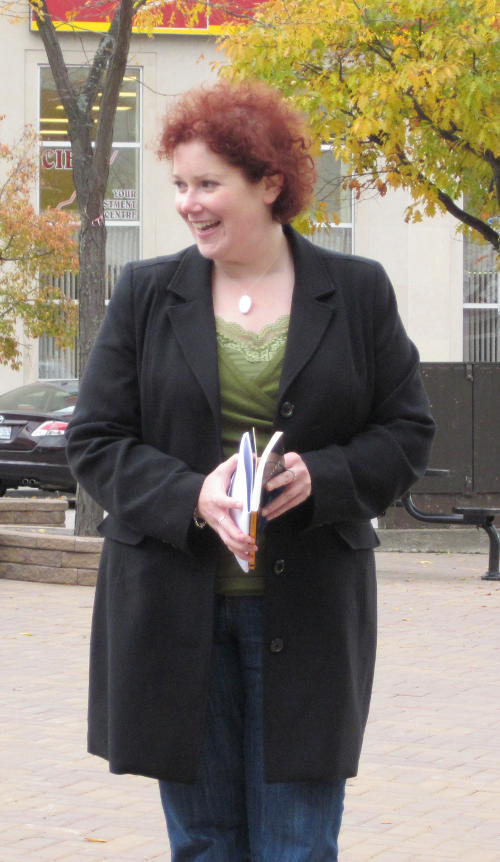
Then Doyali Farah Islam took the stage, er, cobblestones 🙂  She published her first book of poetry, Yusuf and the Lotus Flower, in October of 2011.

Doyali is definitely influenced by Rumi, and her poetry brought a bit of the sacred to the assembly.

The last poet of the afternoon session was my friend, Kim Fahner, English teacher, and author of You must imagine the cold here and Braille on water.  Her new book of poetry, The Narcoleptic Madonna is due out this fall.

Kim is a great reader who interacts with her audience with humour and self-conscious grace.  Kim read from her new work.

Afterward, the poets mingled again.  Business cards and books were exchanged.  Though there was an evening session where Ken Stange, Kevin, and Natalie would be reading, Kim and I had to toddle off.  Nonetheless, I understand the evening reading at the Cornerstone Cafe was a great one, and the North Bay edition of the 100 thousand poets for change event a success.

And then, after a fortifying pumpkin spice chai latte at Twiggs, we were on the road again, chatting more about the day, poetry, creativity, and again, the fabulous Dr. who 🙂  David Tennant is one of Kim’s secret husbands, don’t you know.

The day ended with a lovely supper at Verdiccio’s where I had the chance to use the coupon I’d won on Facebook this summer.

All was ‘write’ with the world 🙂

For more information, please see the 100 Thousand Poets for Change North Bay Facebook page, or the Web page, graciously hosted by Ken Stange.