Writer tech: Converting from WordPress.com to WordPress.org

In my continuing indecision regarding whether to make the leap to WordPress.org or not, I’ve been doing some research.  Gemma Hawdon has graciously consented to let me post our conversation.  I’m sure it will be as enlightening for you as it was for me.

____________________________________________________________________________

How long were you blogging on WordPress.com before you decided to make the move?

I was only blogging for 6 weeks before I decided to swap to self-hosted WordPress.

What kind of research did you do and what were your considerations?

I started by talking to a few friends who had already taken the plunge into self-hosted blogging. I was lucky to have one friend in particular, Caroline of http://presentimperfection.com – a marketing and communications strategist – she was extremely helpful.  I think it’s important to seek the opinions of others and to have someone you can turn to for help.

I also read information provided on the WordPress site: http://en.support.wordpress.com/com-vs-org/.

Another helpful article was this one by Problogger: http://www.problogger.net/archives/2012/03/04/wordpress-com-or-wordpress-org-which-ones-right-for-you/

In terms of considerations, I wanted to find out which version was more suitable from a long-term point of view. Although a complete beginner, I didn’t like the thought of wasting time and effort building a blog that might restrict me in the future.

What made you decide to take the plunge?

In the end it was the flexibility of self-hosted WordPress (WordPress.org) in terms of wider choice of custom themes and the ability to increase functionality of the blog through plugins (i.e. to enhance SEO, email newsletters etc.) I wanted to build something that I would have full control over creatively and (if in the future I’m lucky enough!) commercially. Have I actually utilized many of these options yet? Absolutely not! I’m a little lost to be honest, finding my feet, tepidly…

Are you with a hosting “farm” where you’re largely in charge of everything, or do you subscribe to a hosting service where they have people who can help you with technical questions?

To be honest, I’m not entirely sure what a hosting farm is! But yes, I am pretty much in charge of everything (terrifying). I chose to host with hostgator.com – who were recommended to me because they have a solid reputation and competitive pricing. I have the Hatchling plan which is only $3.96 p/m unlimited disk space (you can upgrade at any stage). This plan also offers 24×7 technical support.

Mel’s note: If you have technical support, it’s not a farm 😉

From what you mentioned, there are good and bad points about the move.  What are they and what would you do differently if you had the chance?

The main shock after swapping to WordPress.org was the terror of suddenly feeling completely alone! WordPress.com takes care of everything for you. You feel part of a community because they publish your posts across Reader. When I switched to self-hosted I lost a huge chunk of traffic. Previously, I was gaining 5-10 new followers each week – that has fizzled out to 1 if I’m lucky!! Plus it’s amazing how encouraging those simple ‘likes’ can be – you get none of that with WordPress.org.

To help me transfer, I used a friend of a friend because he was incredibly cheap and he did a great job, but initially I lost all of my followers. I had to contact WordPress in the end and they transferred them across for me, but it took several weeks. In the meantime, I had to post from both platforms. I think If I had to do it again I would use WordPress’ own guided transfers – they cost $129 USD.

I’m still feeling lost on the technical side of things. With WordPress.org you’re the one responsible for stopping spam, for creating and maintaining backups and for updating versions of software. I haven’t taken full advantage of the creative freedom yet because it would mean paying someone to build a logo and banner and I can’t justify that right now; however, I’m learning about new things each day and certainly making progress.

One thing that is working for me is having a Feedblitz icon on my site. Feedblitz allows subscribers to view all of their blogs on the one page (a little like WordPress Reader). Followers who subscribe through this software are generally savvy Internet users and bloggers themselves.

I have to keep reminding myself that I’ve only been blogging for 5 months and it takes time and effort to build a solid following. However, I do feel as though I’m finally making progress. I’m rising in the ranks of Google and Twitter and my traffic is increasing! More than anything, I enjoy the creativity of what I’m doing and the fact that I’m the boss of something that is completely mine.

I think it’s important to figure out what you want from your blog and you’re reasons for blogging before you decide which WordPress version to go with.  For me, the benefits of starting with WordPress.com allowed me to experiment before investing any money. I gained an insight into how people responded to my voice and writing and whether there was a demand for my topic or not.

In the end, I think WordPress.org is better for the long-term if you want to build a blog that is completely yours, which you have full control over – no limitations.

I hope this is of some help – Thanks Melanie for your questions – Happy Blogging!

So what do you say, blogophiles?  Will Gemma’s expereince be helpful to you?  I’ll certainly benefit!

I’d love to hear what you have to say.

____________________________________________________________________________
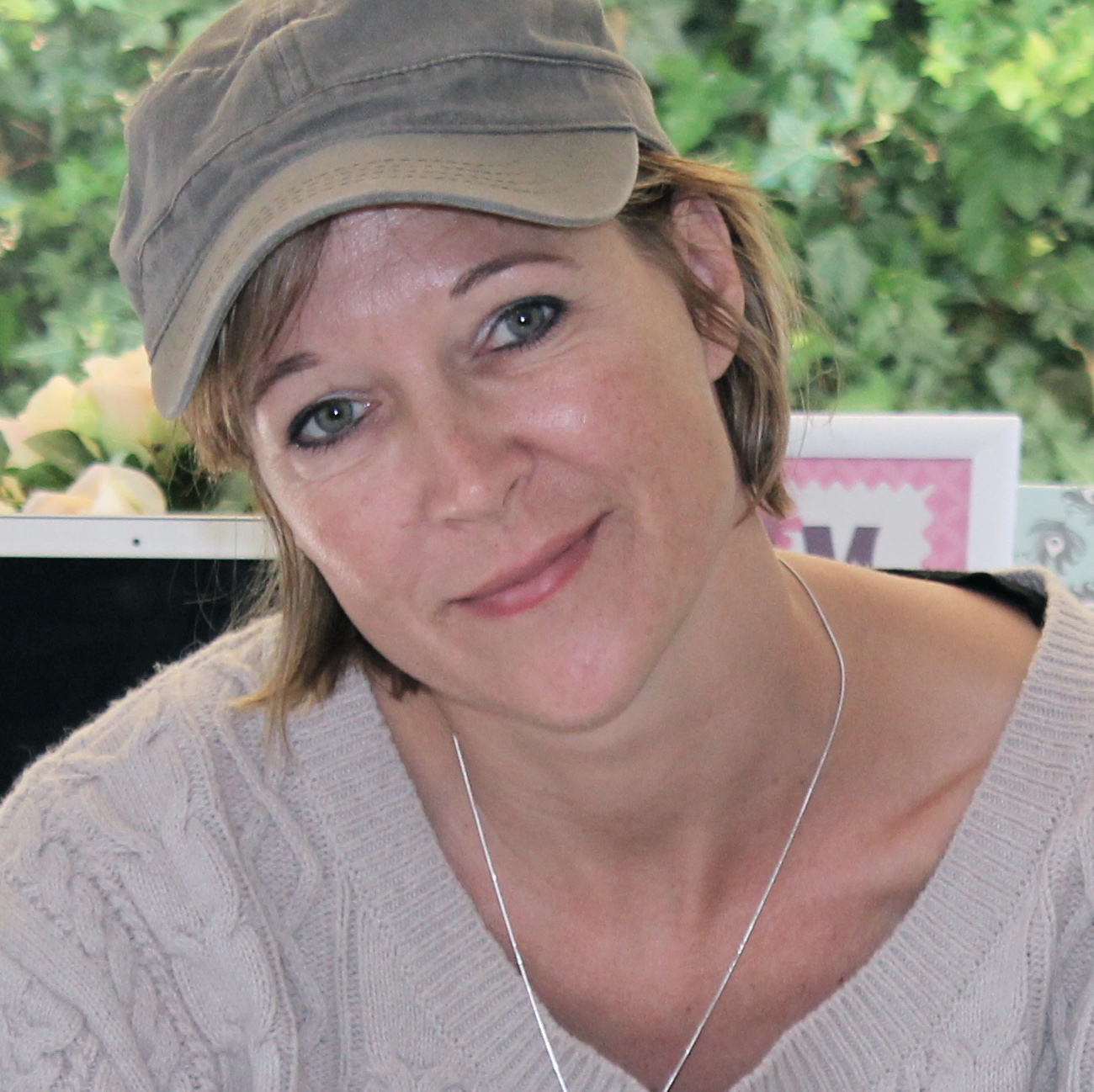
Gemma Hawdon

Gemma Hawdon

Gemma Hawdon lives in Melbourne, Australia with her husband, two children, one dog and a couple of rabbits. Having always worked in marketing prior to having children, she turned her attention to writing about 4 years ago and has never looked back! Gemma has published articles in parenting magazines across Australia including Melbourne & Sydney Child and Parenting Express and dabbles in writing ghost-articles for extra income, but her most passionate project is the children’s fantasy she is writing which she never seems to get the time to complete! Gemma is also responsible for running the administration and finances for their family-run business in the building industry.

Gemma’s blog, topoftheslushpile.com, documents the challenges, highs and lows of writing a book and getting it ready to tackle the competitive publishing industry.
Caturday Quickies: Oh God, not another … Pupdate

My last mini-pupdate was posted March 17th.

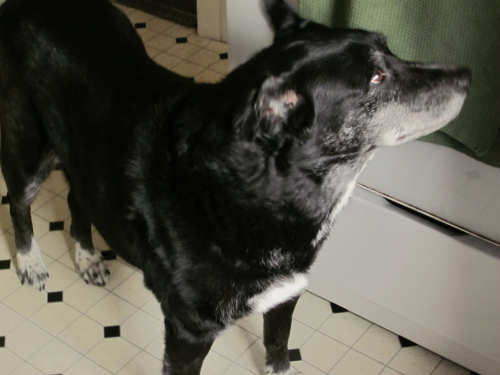
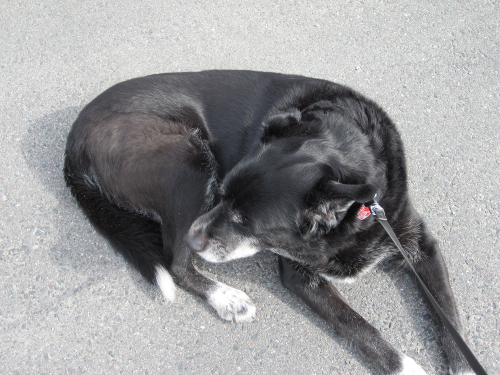
Nuala lounging

Nu lounging on the driveway–her shaved hip is growing in well 🙂

“Let me explain.  No, there is too much.  Let me sum up.”  ~Inigo Montoya, from The Princess Bride

So when last I mentioned her health, Nuala had contracted a urinary tract infection (UTI).  That was addressed with antibiotics, and we would have to go back in 2 weeks’ time to have her urine tested again.  Also at this time, the vet wanted to take another blood sample to see how her liver was recovering after the Metacam.  Her annual exam and shots would be due then as well, so we decided to make a day of it.

While the UTI had cleared up, there was still significant protein in her pee, or proteinuria.  This is an indicator of kidney damage.  Nu’s blood was also analyzed for kidney enzymes, and they were all in perfect balance.  So on one hand, there was evidence of kidney damage, and on the other, there was none.

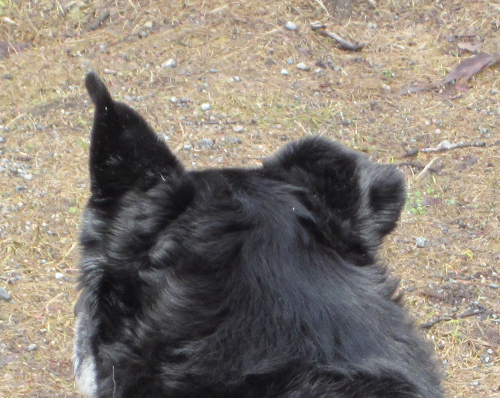
Nuala's aural haematoma

This shot from the back shows her injured ear. It used to be mostly upright, like the other one.

In the meantime, Nu had somehow ruptured one of the blood vessels in her right ear and had developed an aural haematoma.  We had to get some drops for her ears to treat the ongoing inflammation that likely caused her to rupture the vessel with scratching in the first place, but neither draining nor surgery was recommended (too painful).  Her body will take care of the situation on its own in a few weeks, though her wee ear will never be the same.

Other than having a ridiculously fat ear, she’s doing fine.

The vet wanted her in to test her blood pressure (hypertension in dogs can cause proteinuria) and take some abdominal x-rays to see if a growth of some sort, or kidney stones could be detected.

Nothing abnormal turned up on the x-rays.  No stones, no growths.  On her kidnies, anyway.  What the x-rays did reveal was an enlarged liver and spleen (sweet Jesus).

Nu’s blood pressure was elevated and so a course of ACE inhibitors was started.  She’ll likely be on those for the rest of her life, but we’re going back in a month to have everything checked again.  We are also transitioning her to a new food (a specialized kidney diet) and hoping that her food allergies don’t result in the mange-like fur-loss she’s experienced in the past.

More diagnostics were recommended to establish the reason for the liver and spleen enlargement, involving a trip to Newmarket, the closest town equipped to do veterinary ultrasounds.  Alternatively, our vet could perform a laparoscopic procedure and possible biopsy (if required).

Phil and I discussed it, and even though the option of sedation was offered, the travel would be more torture to Nuala than any resolution the ultrasound might reveal.  She HATES the car.  Even laparoscopic procedures are invasive, though minimally so.  We had to decide where we would draw the line.

If there is some infection or tumour causing the enlargement of her organs, there’s little that can be done in either case.  Liver and spleen are pretty important and highly vascular organs and several diseases that affect either usually result in internal bleeding, or disseminated intravascular coagulation (DIC).

We’d already gone through the heartbreak of hemangiosarcoma with our last dog, and though we authorized surgery, it did little for her other than to confirm that her condition was terminal.  Ultimately internal bleeding was the cause of her demise.

Organ failure is another possibility, but there are no transplant programs for pets.

There’s also a chance that whatever condition she has that’s causing the enlargement of her liver and spleen won’t become an issue in her lifetime.  She’s just passed her eighth birthday and most dogs don’t make it very far into their teens.

You might see this as naive optimism, or unnecessarily harsh, but Phil is Mr. Science and he used to work as a laboratory technician for humans.  He’s well-aware of the potential issues and has shared his insights.

Whatcha got there?

Nuala hoping to scam noms from Phil 🙂

Aside from which, Nu is behaving normally.  Other than a little limp, exacerbated by the leg-tugging required to get a good abdominal x-ray, she’s fine.  In this morning’s snow, she was doing her usual pup-angels and seal impression.  She was also scavenging for dirty tissues and all manner of tasty (to her) garbage.  By all accounts, she’s a happy dog.

It would be different if she was experiencing further pain, or other abnormal behaviour.

We’re going to take things a step at a time.  Use the ACE inhibitors and k/d (Hill’s Kidney Diet) for the month and see if they improve her blood pressure and proteinuria.

For us, it’s a matter of quality of life for Nuala.  The ACL injury we had to do something about.  It caused her a great deal of pain and could have caused other injuries and difficulties in the future.  When she sheared a tooth off, oral surgery was a must.  When she lost patches of fur due to a food allergy, hypoallergenic food was the fix.

Now the kidney diet and ACE inhibitors are necessary.  We’re just about at our limit with what we can reasonably do to ensure Nu’s continued, happy existence, though.

Will let you know how all of this pans out.

How are your animal muses doing these days?  I sincerely hope all is well.

Caturday Quickies

Caturday Quickies: A nod to tragedy

Unless you are completely divorced from all forms of communication (and if you’re here, you obviously aren’t) then you know about the tumultuous events of this week in Boston, Massachusetts and West, Texas.

Skyline of Boston. Picture was taken from a wh...

Skyline of Boston. Picture was taken from a whale watching ferry that left from the aquarium dock. It is the Eastern side of the Boston peninsula. (Photo credit: Wikipedia)

Every newscast was focused with laser-like intensity on these two communities this week, hanging on every bit of news, legitimate and otherwise.  Twitter was alive with blow-by-blow descriptions of what was being reported during the man-hunt for and capture of the second of the two Marathon Bombers.

I’m not going to repeat any of that.  It’s not my story to tell.  The news channels are still recapping everything and coming out with additional facts (at last) as they become available in any case.

I know no one who lives in either Boston or West.  I’ve never visited either city.  I have no ties to either.  If it hadn’t dominated network and radio news and social media, I probably wouldn’t have a clue what happened in either place this past week.

It’s a testament to the global village we now live in that people everywhere know about and feel for the victims of the bombers, and the explosion of the fertilizer plant.

I have felt for, been engaged by, and responded to these tragedies in my own small ways, but I can’t continue to do that.

I’m just posting this by way of letting you know that I am not ignorant, or uncaring, but I also need to move on.  As I post about my own trivialities, try not to think poorly of me.

To the people of Boston and West, to the friends and families of the victims, my heart has gone out to you, but I need it back now.

Please see Heather Button’s wonderful love letter to Boston.

And Bolton Carley says: Convert tragedies into brownies.

Both are thoughtful reactions to what’s happened in the past week.  In the end, the best victory is to continue to live your most authentic life, to find a way laugh, and otherwise let the bombers of the world know that you have not given in.

Caturday Quickies

Six questions with Barbara Morrison

Barbara MorrisonBarbara Morrison, who writes under the name B. Morrison, is a poet and writer, a publisher, teacher, and dancer. A few years after graduating with a BA in English, her marriage collapsed and she found herself forced to go on welfare. It is this experience of a world very different from the one in which she grew up that she describes in her memoir, Innocent: Confessions of a Welfare Mother.

She attributes part of her success in escaping poverty to her involvement in the world of traditional dance and music. She performed as a morris dancer for thirty years and continues to be active in the Country Dance and Song Society and several of its affiliates.

Barbara is also the author of a poetry collection, Here at Least, with a second volume, Terrarium, scheduled for 2012. She is currently working on a novel. Barbara has won multiple awards, been invited to speak as a featured author, and been published in magazines such as The Sun, Sin Fronteras, Scribble, and Tiny Lights. She conducts writing workshops and speaks on women’s and poverty-related issues. She is also the owner of a small press and speaks about publishing and marketing. Come by her website for more information.

Barbara’s Monday Morning Books blog is where every week since 2006 she has been sharing insights about writing gleaned from her reading. You can also find her on Twitter where she tweets regularly about poetry and on Facebook. Be sure to visit her GoodReads Author Page and her Amazon Author Page.

____________________________________________________________________________________

I met Barbara through Robert Lee Brewer’s April Platform Challenge last year and am pleased to welcome her to Writerly Goodness.

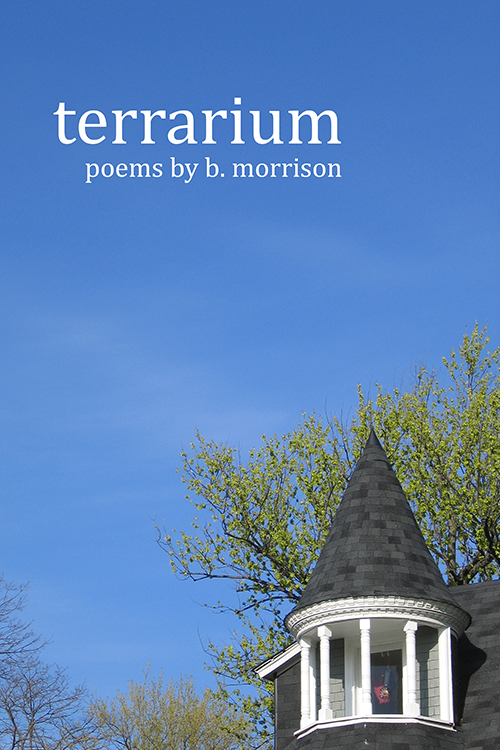
Terrarium will be Barbara’s second collection of poetry and will be published in May 2013.

WG: When did you begin to write poetry and how do your poems come to you?

BM: I began writing poetry in high school and continued through good times and bad, even when I was a single parent working three jobs. Although I’ve also kept a journal, it is in poetry that I seem to have chronicled my life. At first I thought I had to wait for poems to come to me, but after I spent a couple of years making myself write a poem a day, I realized that there would always be something troubling or tickling me, something I wanted to praise or puzzle over.

WG: What is your creative process like?  Do your poems incubate for a while?  Do you edit extensively?  What role does your publisher play in the process?

BM: They often start with a single phrase. Some poems come quickly while others take their time. I then put them away for a while before starting another round of editing. I often repeat this process several times. I self-publish my poetry, but once I put on my publisher’s hat, I might demand further revisions.

WG: Terrarium’s theme revolves around various interpretations of home.  How did this theme evolve for you and how does it reflect the “place” you find yourself in at this point in your life?

BM: I actually started with the theme and deliberately wrote poems around it. I often dream about a particular city. It doesn’t exist in our world, as far as I know, but I could draw you a map of it; the streets and shops and houses are the same whenever I revisit them in dreams. Trying to work out why my unconscious needed to construct and continue to inhabit this place made me wonder how our places, both those we choose and those where we find ourselves, influence who we become. I never meant to stay in the city where I now live, so on some level I continue to feel even after many years that my life here is temporary, which in turn reminds me that our stay on earth is temporary, and I must make the best use of it that I can.

WG: How was assembling Terrarium different from working on your first collection, Here at Least, and what has the experience taught you about yourself as a poet?

BM: With the first collection I agonized over selecting and arranging the poems. I must have changed my mind a thousand times! With Terrarium I was more focused. Also, each of the three sections has a kind of chronology which helped.

WG: Is a launch or reading planned?  Will there be an online component to your promotion?

BM: Yes, I have a book launch party scheduled for 10 May 2013 at The Ivy Bookshop in Terrarium CoverBaltimore, MD. I also have several readings set up; see my website for details. One thing I’ve learned about online promotion is that there is no end to what you can do, so I will pace myself.

WG: What’s coming up next for you?

BM: I’ll be teaching a five-day memoir workshop called Sharing Our Stories at Common Ground on the Hill in July; for more information, see my website http://www.bmorrison.com. I am also working on a novel.

Thank you for sharing your creative journey with us!

Six questions with JL Madore

JL MadoreJL Madore is the writer of fast paced, sexy fantasy and paranormal romance series with heat levels ranging from sizzle to erotic. She is the winner of the Writing Fairy Scholarship for New Writers 2012, a board member of WCDR – the Writers’ Community of Durham Region (a 300+ member writers group focused on developing authors in all aspects of writing), a member of two writing critique groups and a two time student of ‘A Novel Approach’, a yearlong workshop to study the craft of writing novels and hone ideas into working manuscripts.

You can find her at www.jlmadore.ca and on Twitter @jlmadore

____________________________________________________________________________

Welcome to Writerly Goodness, Jenny 🙂

After working together for a short time on an online critique group, I lost touch with Jenny.  I’m so happy that the publication of her novel, Blaze Ignites, was what connected us again.  Congratulations!

WG: When did you first start writing, and when did you know that writing was what you wanted to do, long term?

JLM: Writing actually snuck up on me. I often read about authors who say they ‘knew since they were a kid’ or ‘have been jotting down stories since they could hold a crayon’, but that wasn’t me. My interest actually came about when my husband and I got fed up with the day-to-day and moved our family to Central America for a year. From September 2008 to August 2009 we lived in Llano Grande, Panama. No jobs. No school. Nothing but the four of us on a stunning tropical rainforest property for a solid 12 months. It was during those quiet afternoons, lying in a hammock, reading the one and only novel we brought with us–my daughter’s copy of Stephenie Meyer’s Twilight–that I started to imagine different ways the story could have gone. That lit the fire.

WG: How did Jade’s story first occur to you, and how long did it take you to write your first draft?

JLM: Well, I’ve always been a huge lover of Elves. As a pre-teen I devoured the Elf Quest graphic novels and who isn’t in love with Legolas Greenleaf from Lord of the Rings? I mean, really. When we returned to Ontario in the fall of 2009, I decided to get the story out of my head. Casting Galan was easy and I knew I wanted the protagonist to be a kick-ass female, so Jade had to be able to hold her own. The first draft was written in six months, the only problem was I didn’t know how to write well. I recognized that if I wanted the novel to be any good, I needed to study the craft of writing. After three years of courses, critiques and revisions, Blaze Ignites is ready to hit the public eye.

WG: Are you a pantser, or plotter?  How does that play into your revision and editing process?

JLM: Most definitely a plotter, but not too tightly bound. I write linearly with a general story and loose outline and let the characters adjust things as they go. The funny thing for me was that I saw the big picture story arc for the Survivor Series and kept writing. Before I went back to finalize Blaze, and while I was learning the craft, I’d written the first drafts of the following three books. After that, the editing and revisions just seemed to fall in place.

WG: You’ve gone the self-publishing route.  Were you always set on self-publishing, or did you try for a traditional deal first?  Why did you ultimately choose Lulu?

JLM: I queried traditional agents and publishers over 2012 and although it sounds funny, during that year I received some genuinely supportive rejections. It seemed the industry opinion was that though they liked the story and many commented positively on the voice and humour, ‘Elves won’t sell. The market won’t support a fantasy love story with Elves’.  I disagree. And if I’m wrong, so be it. Galan is an Elf. Decision made, self-publishing it is.

Lulu seemed the most user friendly for a launching platform for me and where I am right now. I’m currently working on uploading to Createspace and others, as well as talking to a printer, but life gets in the way sometimes and it is slow going at the moment.

WG: When did you start building an online platform and how is that supporting your work as a writer?

JLM: My online presence is definitely a work-in-progress. I’m not technically inclined in the slightest, so that side of my writing career is a struggle. I think I probably did everything backwards, but my website, www.jlmadore.ca is only recently up and I tweet when I think I have something worth saying. It’s too early in the game to say how it’s working, but I’m on board for the long haul.

WG: What’s coming up for JL Madore and Jade Glaster?

JLM: The survivors at Haven have many sexy adventures ahead of them: Book 2 – Bruin’s story and Book 3 – Lexi’s story, are being reviewed by critique groups and beta readers, Blaze full page coverwhile Book 4 – Lia’s story is almost finished and waiting in the wings. Currently I have a paranormal erotic/romance series that’s been getting interest from the traditional publishing world, so I’m working on that. I’d love to have a hybrid publishing approach and span both worlds. Fingers crossed.

Thank you for sharing your time and experience with us, Jenny!  Break a pencil with your future writing endeavours 🙂

My pleasure, thank you so much for the opportunity and my best to all your readers.

A year (and a bit) in the life of Writerly Goodness

This post is one in a series of Anniversary posts for Wordsmith Studio (WSS).

What is WSS, you ask?

It’s a group of people who originally bonded through Robert Lee Brewer’s April Platform Challenge last year and who have gone on to create a community online, not only through our blogs, but also through social media (Facebook, Twitter (#WSchat), LinkedIn, G+, Goodreads, Pinterest (sorry, not a pinner, so no link for the group there), and probably a few other places that I don’t know about yet).

Originally the MNINB Challengers, or Not-Bobbers, we slowly evolved into our own collective.

Part way through the year, a group of fabulous people got together to create the Wordsmith Studio site on WordPress.org.  Since December of last year, a number of members have been blogging regularly on the site as well as on their own blogs.

Others have been attracted to WSS who had nothing to do with the original challenge, and others who participated in the challenge have moved on to other projects.

So now you know, and knowing is half the battle Go Joes! 🙂

Prelude to a kiss challenge

One thing that amazed me was the diversity of people who participated in the challenge.  Some of them had been blogging for years already, or had several blogs.  Others, like myself, were new bloggers.  Others still didn’t start blogging and platform building until Robert’s challenge prompted them to.

I actually started my platform building in September of 2011.  I tried Joomla! first, but found it to be less intuitive than I wanted.  Plus, I was posting a blog more than anything else, and couldn’t figure out the proper way to set a blog up on a Joomla! site.  I wasn’t interested in bothering my techie husband, or in paying someone to sort this out for me, so I looked at other options.

In short order, I found WordPress, and gleefully uploaded the software to my self-hosted domain, labbydog.ca, converting all of my content into proper posts for my blog.

I learned as I went, relying heavily on experts such as Robert, Jane Friedman, and Michael Hyatt and the resources to which they referred me.

Then in February of 2012, disaster struck.  My blog was hacked, and our hosting company insisted in a complete wipe.  RIP labbydog.ca.

After playing around further, I decided, gun-shy and tender creative person that I was, to move to WordPress.com.  On Robert’s advice, I’d purchased my domain name, mapped it to WordPress.com and www.melaniemarttila.ca, A.K.A. Writerly Goodness was born.

At first I was merely attempting to recreate my content and was posting 5-6 days a week.

Enter the dragon challenge

I was already following Robert at the time, and when he announced his April Platform Challenge, I jumped onboard.

For a month, I eagerly awaited my daily dose of platform.  I’d been on Facebook since 2007, and had, as part of my amateur platform building program, already joined Twitter, LinkedIn, and G+, so the days in which the challenge task was to set up accounts on these services I had things a little easier.

It’s a good thing too; otherwise, I’d have fallen waaaay behind.

I learned about having a mission statement for my blog, about using a blogging schedule (doesn’t blogging in this sense sound like a colourful euphemism?  What the blog?  Blogging work!), about calls to action, guest blogs (hosting them and proposing them), interviews, tools like Tweetdeck and Hootsuite, hashtags and Twitter chats, mailing list, business cards, newsletters, Goodreads and other kinds of social media.

By the end of the month, I verged on the overwhelmed.

Ch-ch-ch-ch-changes

I cut down on the frequency of my posts.  A new position at work meant that I had even less time and energy to spare for my blog if I wanted to keep up with my novel and other creative writing.

Something I’ve learned is that, as a writer, the writing comes first.  Blogging is a part of that, but if I don’t get my stories, poems, and novels written, submitted, and published, the blog is tantamount to an online journal and practically useless for the purpose of promotion or true platform building.

Now I blog on weekends only, and it’s been working for me, which is the most important thing.  I’ve been getting the writing done and have achieved a greater balance between my professional, creative, and personal lives.

I have several new pages, with links to those of my books that are still available for purchase from the publisher, my blogging schedule (such as it is), an invitation for guest bloggers, awards, and so forth.

I’ve started doing interviews with a number of friends, online and in real life, and was surprised but ultimately pleased when a fantasy writer right here in town contacted me out of the blue on my blog to be interviewed.  It speaks to the unexpected impact that blogging has had on my creative life and the community that I am, however back-asswardly, building 🙂

This post will be my 190th, I have 118 followers through WordPress, and publish my posts to 243 friends on Facebook, 412 followers on Twitter, 112 connections on LinkedIn, and 90 people have included me in their G+ circles.

I’ve participated in a few challenges (October submit-o-rama, I ❤ my blog, and the Just write 2013 short story challenge) and a couple of the Goodreads group craft book discussions.

I’ve posted a grand total of once on the WSS site and am currently waiting to hear from Robert regarding a guest blog on My Name is Not Bob.  **Hint: Look in your spam folder, Robert 🙂

It’s a humble beginning, but I remind myself that platforms take years to build and that until I have something more than a couple of old poetry anthologies to shill, that I’m not likely to have a massive following.  Even then, unless I turn out to be the next big thing for real, I’ll probably only see modest growth.

Next

I’ve been threatening to move to WordPress.org for a while now.  I still haven’t found the time to parse my archives and clean up some of my old posts.  I have to rework some of my images too, since in the early days of my blog, I just did a Google search for my images.  I have to find creative commons equivalents, use my own, or remove them entirely.

Nor have I settled on a new hosting company.  The fear of hack still lives in me and I’m admittedly dragging my feet on this one.

I’m also considering a greater involvement in WSS.  The site is still in evolution and I’m not sure what I can commit to.  Want and need are two entirely different things.  Keeping that distinction in mind will help me stay sane.

What I will do is encourage all of you to visit the Wordsmith Studio site, peruse the wonderful diversity of our members’ sites and blogs (photo bloggers, pet bloggers, health bloggers, poets, fiction writers of all genres, non-fiction writers, publishers, and so much more).  A weekly round up of our anniversary blogs will be posted on the Veranda, so please read on.

Also visit My Name is Not Bob to see some of the lessons learned posts from several of the original challengers.

Many of my online friends have had amazing years, some good, some bad, some demoralizing, and some downright inspiring.  Most of them are far more eloquent than I am.

Consider liking, commenting, sharing or subscribing.  They are teh awesome, with a little awesomesauce on the side 🙂

Happy anniversary WSSers!  Love you all, even if I don’t show it often enough.

A life sentence with mortal punctuation: part 8

How did what was supposed to be a mere two-part guest post get to be this huge?  I think it’s what project managers call “scope creep.” 🙂  Essentially, the story demanded something more, and as with many of the things I write, it told me the shape it wanted to be in.

Thanks to everyone who’s stuck with me through this very personal tale.  If it touches you in any way, I encourage you to like, share, comment, or subscribe as your conscience dictates.

I’ll take the opportunity here to remind everyone that while this story is based on my life, that it is filtered through my frame, and is, no more and no less than anything else I write, a story.

Last week: I discussed some of the things that I do to keep the wolf of my depression from the door, or perhaps invite it in, let it curl up by the hearth, and make itself at home.

This week I’m going to pick up the original thread of the tale where I left it.

Those sixteen years

The years during which I was “growing up,” getting a job, and learning how to deal with my depression were largely fallow ones for me creatively.  I got off to a good start in my undergrad years, both at Guelph and at Laurentian, but faltered during my struggle to achieve my master’s degree.

Though my primary poetic publications, NeoVerse and Battle Chant, emerged around the time that I finally received my graduate degree, I found it difficult to continue writing.  A handful of scattered publications in poetry and a short-lived foray into publishing weren’t enough to validate my still-fragile writer’s ego.

I’ve never had a thick skin.

As I slowly worked through my issues, however, I started to realize that writing wasn’t something I did or didn’t do.  It’s something I am.  My inability to commit to the writing life on a regular basis made me question my calling.  If I couldn’t write, how could I call myself a writer?  Maybe it was time to throw in the towel and commit to a life without magic.

The sheer impossibility of that thought told me that writing was what I was meant to do.  I just had to find my way to it without a map or any orienteering skill whatsoever.

Upon my triumphant return from Windsor and contract jobs interspersed with unemployment, Phil and I decided to get a puppy.  We already had two cats, one a three-legged refugee from my days at the Veterinary Emergency Clinic in Mississauga, the other a sweet-natured black cat that Phil got me for my birthday one year.

Our dependent quadrupeds helped me immensely.  I believe that pets have a lot to teach us about unconditional love and being good people.  My pets are some of the best people I’ve known 😉

I got my full time job with my current employer.  Phil and I got a house and a car.  I made use of my new benefits to get some serious work done on both my body and my mind.  I figured out that medication was not the way to address my feral disease.

My mother was still working, part-time at the local hospital, at home, taking care of my father, who had graduated to a disability pension and therapy, and at the seniors’ residence where my grandfather now lived.

I went out with her to see my grandfather about once a week, and helped her to transport him to his various appointments.  My father began to have issues with his heart, eventually diagnosed as arrhythmia and congestive heart failure.  He got a pace-maker, and a new suite of medications.

Shortly after retiring from the hospital, my mom developed diabetes.  Dad started to fall.  If it happened at home, either Phil or I, or both of us would have to help Mom, because Dad couldn’t get up under his own power and she couldn’t lift him.  If it happened outside home, it generally involved a hospital stay.  Dad was on Cumadin by this time and as a result, even the smallest injury could become serious due to the complications of the medication.

Then my dog died

ZoeIt wasn’t something sudden.  Zoe developed hemangiosarcoma and though we caught it early, the vet wasn’t able to catch it all with surgery and internal lavage.

The issue with this particular type of canine cancer is that it likes vascular areas, that is, places in the body where blood vessels tend to gather, like the spleen and the liver.  Once it takes hold, it disseminates quickly and almost always results in death.

The biopsy taken in the surgery came back malignant.  It would only be a matter of time.  As it turned out, we only bought Zoe a couple of weeks.

At first, it seemed like she was recovering.  Phil and I had taken to sleeping on the futon in the living room so we could be close to her if problems arose.

The morning she woke me at 5 am looking for comfort was her last.

I won’t describe that morning other than to say that I called in sick.  I was devastated.  For the first time, I cried legitimately over the loss of a loved one.

Papa

My maternal grandfather was the only one of my grandparents left alive.  He’d been a hard-core smoker, and alcoholic for most of his life.  When my grandmother passed away, he reacted poorly and within a few months, a fall resulting from TIA, landed him in the hospital.

From there, arrangements were made to move him into a seniors’ residence and for many more years, he lived happily, adjusting to the fact that he couldn’t drive anymore, that he had to go outside the residence to smoke, and that he had to depend on my mother to ration him a few beer on special occasions.

Some irregularities regarding his heart landed him in the hospital and when I got the call at work that I should come to the hospital, I had a bad feeling.  In the time it would take me to get the car, drive to the hospital, find parking, and get to his room, I could walk, so I sped along as quickly as I could, hoping that he would hold on long enough for me to get there.

Turns out he’d already passed away when I got the call.

Papa’s passing wasn’t all that traumatic for me.  He’d lived 94 years despite his addictions and was, so far as I know, happy.  I also felt confident that I had been there for him as much as I could.

I helped Mom settle his estate.  Being able to help her out in that way made another big difference for me.

I received a small inheritance, just enough to invest in my first laptop computer.  That year, I started to get back to my writing and the novel I’d conceived of all those years ago in university.

In another year, Phil and I felt that we could bear the love of another pup.  That was when we got the Nuala-beast.

The butt-in-chair breakthrough

Though I was writing more, I wasn’t writing daily yet.  It wasn’t until Nino Ricci came to town to do a workshop with the Sudbury Writers’ Guild that my head got turned around the right way on that.

It was his sharing of his own guardian tale that helped so much.  Every writer has at least one, that big name, well-established Author who tells you that your work is crap.

The breakthrough was that I could choose not to let the well-meant, but unfortunate words of my guardian keep me from entering the inner sanctum and gaining my prize.

Productive or not, I’ve been writing every day since, and that, as the poet said, has made all the difference.

The diabetic cat

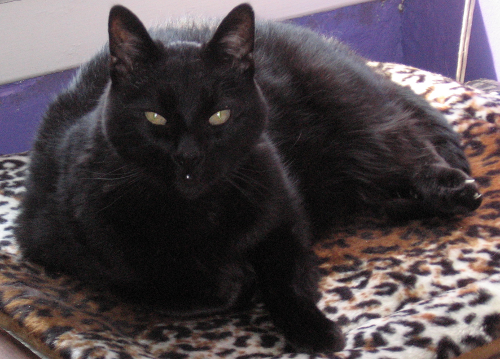
Our little black cat, Thufir (named after the Mentat Thufir Hawat due to his fondness for Thufir Hawat the Mentat Catflashing lights) developed feline diabetes.  Phil and I were surprised because he wasn’t obese or showing any of the other signs, but his blood glucose level didn’t lie.

He was on Metformin for a year and graduated to insulin after that.  I became very adept at taking his blood sugar levels and injecting him daily.  He came to tolerate, if not anticipate his injections, like he knew that they made him feel better.

Once again, however, it was a matter of time.  Eventually, organ failure took out little guy.

I wasn’t sad this loss either.  I’d been the best kitteh-mama I could have been and I knew that I’d done well by him.  I’d kind of made my peace with death by this time.

I’m going to leave things here for now.  The next big event for me was the death of my father, and that’s going to need a post unto itself.

After that, I’m going to delve into my insights into happiness as a result of all I’ve learned and that will be the culmination of the series.

Tomorrow I’m going to be writing the Wordsmith Studio Anniversary post 🙂  What’s that, you ask?  Read and find out, my friends.

Coming soon: I have a few wonderful authors who have agreed to do interviews for little ole me.  Look out in the next few weeks for six questions with fantasy author J. L. Madore, poet Barbara Morrison, and D. J. McIntosh, author of The Witch of Babylon, and the soon-to-be-released The Book of Stolen Tales.

I’m finding all sorts of writerly goodness to share 🙂

A life sentence with mortal punctuation: part 7

Last week: It takes sixteen years, but finally, I see the light.

Sorry this is a bit late.  I was actually WRITING today and I lost track of time.  It’s been a very good day 🙂

So that’s what it’s called

The Way Out, or Suicidal Ideation: George Grie...

The Way Out, or Suicidal Ideation: George Grie, 2007. (Photo credit: Wikipedia)

I learned a new term last week: Ideation.  I didn’t know that those pesky and persistent thoughts of self-harm and violence had an actual name attached to them.  Specifically, it’s called suicidal ideation.

Thanks to a friend for that.

How I deal with my depression

This week, I just wanted to go over a few of my symptoms and the strategies I’ve developed to deal with them.  Some issues I still don’t have under control, but I’ll share how I’m working through them and my progress to date.

What I don’t do

I have chosen not to go through extensive therapy and after the Paxil, I chose not to take any other kinds of medication.  I know people who struggled for years to find the right medication or combination of them to address their symptoms and in some cases, they still become accustomed to a particular dosage or formulation/combination and have to search for and acclimate to new medications.

This takes a lot of time that I have decided I can’t afford to take.

Everything that I do, I do on my own, and I know that for some of you, that will make you uncomfortable.  It may mean for others that I think I know more than you do.  I assure you: I do not.  I only know what works for me and share it in the hope that others will be able to benefit from my experience.

Others still may feel that my depression can’t be that bad if I can manage without talk therapy or psychoanalysis, medications, or a combination of all of the above.  You are welcome to your opinion, but please do not abuse me for holding to mine.

How I learned

When my father had his breakdown, I was scared to death.  I’d heard that depression and other mental illnesses had a genetic component.  If nothing else, it might predispose you to developing the disease, or other diseases yourself.

I started to pay attention to my father and to what my mother said about him.  I started to pay attention to my friends who had other kinds of mental illness, and the behaviours they exhibited.  I started to ask questions about how they dealt with their diseases and to think about whether their strategies would work for me or not.

When I got into my self-help phase, one of the exercises in one of the many books on the subject indicated that you needed to examine your life and the past events that may have contributed to your depression.  I did this in detail, repeatedly.  The greater part of at least one journal is filled with it.

As life went on and I continued to experience symptoms and the fall-out resulting from them, I continued to adapt and refine my strategies.

Having a mental illness of any kind can seem like having another person inside of you.  Have you ever heard one partner say of another, ‘That’s not her talking.  It’s the depression.’?  It can be very true.

As you might do with any other person, adult or child, you have to treat your illness with respect.  You have to take the time to get to know and understand it.

As with anything, mindfulness is the key.  Be aware in the moment and hold the lesson of it close in your heart and mind.

Mellie’s deadlies

  1. Ideation
    I’ll start with this because I already mentioned last week a bit about how I handle these unwelcome thoughts and feelings.  First, acknowledge them.  If you try to ignore them, they’ll only come back more persistently.  Then, accept them.  They are a part of you because they are a part of your illness.  They are thoughts.  You don’t have to act on them and you certainly don’t have to fear them.  Fear will give them power.  You don’t want that.  Finally, thank them.  I’m serious.  They’ve made you aware of something important about you and the nature of your disease.  Once they feel this respect, they will go on their merry way of their own accord.
  2. Exhaustion
    I am tired all the time.  Most days, I feel like I could stay in bed all day.  On the occasional bad day, I might.  My depression is only one cause of this.  Insomnia is another.  Hormones are another.  My malignant hyperthermia (MH) may be yet another cause.  Ultimately, they are likely all connected.  MH is a funny condition.  I’ve read of some people who show symptoms of what used to be called chronic fatigue syndrome, and others who are largely bed-ridden because of their symptoms.  One of my relatives suffers from the much-debated fibromyalgia.  I believe that this may be an affect of the MH.  Regardless of the cause, several things have helped.  Regular sleeping habits.  Because of work, I have to get up at a particular time.  I find that I wake up about this time whether I’m working or not, and whether I choose to stay in bed or not.  I’ve tried sleeping pills for the insomnia and didn’t like their side affects.  I’ve always felt nervous using medication to solve a problem.  Naps don’t work for me.  I used to nap all the time, but if I sleep during the day, I’m more likely to have trouble sleeping at night.  I’ve tried herbal remedies, warm milk, keeping the bedroom dark and quiet, but the thing that seems to help the most is going to bed at a set time and waking up at a set time.  Exercise.  I find that if I’ve exercised, even just walking, at any time during the day, then I’m more likely to fall asleep quickly and sleep through the night.  Getting used to it.  This may seem a little harsh, but you can function when you’re tired.  I do it every day.  I’m very aware of my physical state and I can see the signs of when I’m getting too exhausted.  This will be an individual thing, but it’s important to know your limits and the difference between functional tired and dysfunctional tired.  When I fall into the latter situation, it may well be time for a day off.
  3. Rage
    In general, I’m a laid back person, so laid back, in fact, that sometimes I don’t react in the way people expect.  I never express it, but part of my depression is rage.  This is where some people find talk therapy helpful.  They can unload all the unpleasant baggage they’ve been carrying around and have someone tell then that it’s alright, that it’s normal to have these feelings.  I find this to be similar to ideation, but I substitute my journal for a therapist.  Like a therapist, my journal doesn’t judge.  It just accepts.  I don’t need the reassurance of anyone else.  I know that the rage is one of the effects of my depression.  Journaling my rage allows me to unload in a healthy way and unlike talk therapy I have an artefact that I can refer to.  I can return and examine my thoughts and feelings and see if there’s a pattern.  Because I journal about my dreams, creative ideas, and other everyday events, I can often connect trigger events to my written episodes of rage.  There was a period of several years where I had a lot of rage to vent.  Now, not so much.  I think my journaling has helped me immensely in this regard.
  4. Self-doubt
    This is related to number five, but finds its source more in the friend wars and in the negative experiences I’ve had as a creative person.  Since I’m socially awkward, I can get the feeling that nobody likes me, even though I know this isn’t true.  I try to keep a few central truths in mind.  First, the people in your life are there because they are equipped in some way to handle your shit.  This means that they are true friends and accept you even when you act like an idiot or say something strange or unkind.  They love you regardless.  Trust them.  Have faith in them.  The opinions of people who don’t ‘get it’ are not worth your time or energy.  By and large, I try not to care what people think of me, but I find that, when I look at it objectively, I am generally well-thought-of.  Creatively, I keep in mind that I have been published and not just by one source or in one genre.  Many of the rejections I get are encouraging ones.  I have also claimed my identity as a writer.  I’ve been writing since I was a child and I’ll continue to write until I die.  It’s who I am.  Publication is a wonderful validation, but I don’t need it to feel good about what I do, or to keep doing it every chance I get.  Writing is a healthy addiction.
  5. Self-hatred
    This is the biggie for me and strangely, I’ll spend the fewest words on it.  My version of hell is to be confronted with all the things that I’ve said or done that have hurt someone else.  At heart, I feel that I’m a terrible person and I don’t have to look far to find confirmation of this.  I don’t have to look far to find confirmation of the opposite either.  I have few, but intensely loyal friends, a small, but deeply loving family.  It may sound bizarre to some of you, but I’ve had a string of wonderful pets in my life that have all taught me what it is to love unconditionally.  My self-hatred is born of fear.  Striving for self-love is an act of courage.  I try to be brave every day.
  6. Emotional instability
    Though my crying-at-the-drop-of-a-hat days are long over, I can still be a basket-case from time to time.  Some of this I attribute to hormones.  I first noticed when I was younger and on birth control that my emotional instability was at its worst.  In the years since, I have occasionally had need to go on the pill again for various reasons, and though I’ve tried a number of different formulations, without fail, I become weepy.  Even without artificial hormones, I can still take a maudlin turn at certain points in my cycle.  The early years of my relationship to Phil were the worst.  The smallest things would send me into an ‘end-of-the-world’ funk for days, sometimes weeks, and Phil has confessed to me since that there were times when he thought we wouldn’t make it as a result.  Phil was, in part, my salvation though.  His intelligence stimulated and inspired me, his keen and twisted sense of humour, so like my own, has kept me laughing all these years.  He can make me laugh until my cheeks and stomach are sore, until my eyes tear up.  It’s amazing what a good belly-laugh can do for you.  We have several values in common and I trust him implicitly.  We are the best of friends.  We just happen to be married 😉

Above all, writing has been my best therapist, my best medication, and my best spiritual balm.  It was only when I started to write regularly that I really started to get my emotional house in order.  Much of my journey feeds into my writing and I continue to explore the themes of my life in the pages of my stories and novels.

There is something of me in every one of my characters and often pieces of the people I’ve known and loved.

Have you been able to turn an illness to your favour?  Have you mined your life and experiences for your stories?

This is not the end of the story, though it will be the end of this thread of the tapestry.  Next week I will return to my narrative where I had to leave it to discuss my depression in more depth.  This has been a story within a story that had to reach its conclusion before I could continue.

I hope these stories have served some purpose and will continue to do so.

Good night and I hope everyone had a happy Easter.

Caturday Quickies: What’s the deal with Briefing Notes?

The first time I heard the term ‘briefing note’ was when I was serving on a working group to set up a new unit to handle special enquiries for my business line.  Part of my roll on the working group was to source no-cost training for the unit as we did not have a budget.

Of course, I wasn’t informed of this particular lack of resource until after I’d found and started making arrangements for some fairly cost-intensive training on the subject.

The only free resources I could find were a couple of templates on our intranet.  No examples.

The next time I encountered a briefing note was during an exam for the assessment process that resulted in my current acting assignment as a Business Expertise Consultant (BEC).

I was asked to write one for the exam, and using only those two skimpy templates, I managed to write a briefing note sufficient to pass, and apparently with high marks.

Though the position of BEC includes the responsibility of writing briefing notes, I haven’t been clear on whether the reports, learning plans, proposals, etc. that I’ve been writing for my manager fall into that category.

I had had a course on briefing note writing on my personal learning agreement (PLA) for years, and this past week, I finally got the opportunity to attend.

So what is a briefing note?

A briefing note is a document used, as the name implies, to brief high level executives on various topics for various reasons.

I know that sounds vague, so I’ll give you a few examples to clarify:

  1. A news article appears that discusses a product or service that your business is implementing, but no formal press release has been made.  Executives responsible for that portfolio may need to be briefed on the nature of the coverage to see it there may be any impact, positive or negative, on the product’s or service’s release.
  2. An ongoing project needs to be altered due to unforeseen or uncontrollable issues (read scope creep).  The executive officer will need to be made aware of these changes, though they may have no direct oversight of the project in question.  If it’s under their umbrella, they need to know in the event their superiors, or external partners, ask.
  3. A court case involving your business is ongoing, or an appeal has been launched.  You will have to keep chief executives informed of the progress without weighing them down with a lot of superfluous legal information.

Does that help?

What I learned

  • What I’ve been writing does not fall into the category of briefing notes, though many of these documents serve the same or similar purposes.  What I learned in the one-day course can still be applied to the documents I need to produce.
  • If my unit has to write briefing notes of any description, there should be a set of unit-specific templates and examples on our shared drive (there are not).  I think I may have to see if we can gather some of these together (!).
  • Audience analysis is the single most important factor in writing a briefing note, or any other correspondence to upper management.  You need to know what they need to know.  If you don’t, make sure that someone who is privy to this information reviews your document before you submit it.  For me, this would be my manager.
  • Always think in terms of the absolute minimum that the executive needs to make decisions and otherwise conduct the business.
  • The directors, executive directors, and senior executive directors who might see my communications are a little lower on the totem pole than the chief executives to whom a briefing is generally directed.
  • The difference between an annex and an appendix: an annex is referred to in the body of a briefing note; an appendix is additional information that has not been referenced in the main document.
  • Summaries are optional unless the briefing note exceeds one page, or the summary is required in your unit or business line (which would be reflected in your template set).

Other than that, it’s a matter of using proper business writing principles, plain language,

pen.jpg

pen.jpg (Photo credit: new1mproved)

and impeccable grammar.

I have another tool in my writing arsenal now, something I’ll be able to keep in my back pocket until I need to use it.

Do you have to write briefing notes for your employer?  Will any of the information I shared be of use to you?  I won’t claim to be an expert now, but if you have any questions, I’ll do my best to answer them.  The research will help me to retain what I’ve learned 🙂

A life sentence with mortal punctuation: part 6

Last week: A tumultuous year sets the gears in motion.

This week: Fumbling toward stability

But first …

A recent experience and how it led, in part, to this series

Last year, a co-worker of mine tried to quit smoking by use of a certain, psycho-active cessation medication.  I’d tried it in the past myself and warned him that while my reaction was atypical, that he should be wary.  Initially, he was undeterred, but a few days later, he said he’d had to stop.

He told me that he was in the kitchen, cutting vegetables, and the thought occurred to him how easy it would be to slice his flesh and he had the unsettling desire to find out what that felt like.  That moment frightened him so much he determined to stop taking the medication immediately.

I stood there, listening, and in retrospect my reaction wasn’t what it should have been.  It didn’t even occur to me that other people might not have these thoughts.

Ever since that fateful year when I was seventeen, I’ve never been on a balcony without thinking how easy it would be to climb over it and jump.  I’ve never been on a subway platform without wondering if I could really jump in front of one of the trains.  I think of car accidents (having them or causing them) all the time while I drive.

Often when doing routine tasks like cutting vegetables the unwelcome image of plunging the knife into my stomach—or worse, someone else’s—walks through my head.  I tell these thoughts to keep on walking of course, and to let the door hit their narsty asses on the way out, but the fact is, I have these thoughts so often, I actually thought that they were a normal part of everyone’s mental landscape.

Not so, obviously.

I was never so foolish as to think that my battle with depression was over.  It’s something that will be with me for the rest of my life and these thoughts are a reminder of that.  I’ve learned how to turn them down so they’re just background noise.  I acknowledge them and send them on their various ways.  They have no power over me.  Their work here is done.  Mindfulness restored.

I just got so used to them that I forgot not everyone thinks of self-harm every day.

The fumbling part

It took me until I was 33 or so to really address my depression.  That’s sixteen years.  Some struggle longer, others not so long, and every struggle is different.  This, again, is only my story.

When I left for university, I lucked out and got a room mate who really understood.  She suffered from obsessive-compulsive disorder (OCD), something that she didn’t reveal to me until our second semester together.  She did so by asking me to read a short story.  It was a tactful and creative way of introducing the subject.

After that, we started to communicate through books.  It was a very cool and private way to conduct a friendship, like an exclusive book club.

My roomie saw me through a lot.  She helped me discover my parasomnias (I held conversations, got up, and moved around while asleep), helped me start my first journal to capture these experiences, held me when I broke down recounting my tonsillectomy trauma (there are things that I didn’t and wonn’t share with you), and let me talk until I was hoarse while my second serious relationship disintegrated.

She also helped me to rediscover my passion for writing, something that I will forever be grateful for.

We shared a harrowing ditching of my car on our way up to Elora Mills to visit a friend during a winter snowfall, baked and ate a crust pie (we were crust fans), and opened up our lives to one another.

When I moved away, my roomie told me that she’d started cutting.  On a visit up to Sudbury, I inadvertently broke her OCD with our hectic schedule.  I don’t know if I supported her through either of these transitions.

The Dad detour

In the second summer I was at Guelph, I got myself a job with a video film crew.  The business taped horse shows across Canada and into the US, edited the footage, and sold it to the horsey-set as memento, or training tool.

I was away in Southampton, NY for a couple of weeks and while I was down there, my father had a nervous break-down.  It was set off due to the dismantling of his unit at work and his potential relocation to southern Ontario.

Mom came home from work one day to find him sitting with a knife.

She didn’t tell me any of this when it happened, but only that Dad was fine, in the hospital and that she would fill me in when I visited home in a couple of weeks.

Dad was hospitalized for months and eventually diagnosed with manic-depressive disorder.  From there, he went on long-term disability though his employer’s health plan and eventually applied for Canada Pension Disability.

He never returned to work.

Not quite independence

There was nothing I could do for Mom when I went home.  I was just shocked by the news and returned to Toronto, where I moved in with BF number three and tried to survive.

Though I still saw my old roomie, I was without a constant confidant.  I turned to self-help books in a major way.

I wanted to spank my inner moppet and fast.  I was determined not to end up like Dad.  I feared it might be inevitable though.

Just before Christmas that year, my maternal grandmother passed away.  She’d been on borrowed time since I was a baby when she’d had multiple bypass heart surgery (see: Something I don’t remember).  I was about to start a job, but asked my new employer for a delay in my start date to go home for the funeral and Christmas.

It was surreal.  Once again, I didn’t feel connected to the event.  I couldn’t muster emotion at the appropriate times.  I continued to cry at odd ones, usually when I was alone, which, when you think about it, is the exact wrong time.  It’s like an alcoholic drinking alone, a sign of something wrong.

Really, I was worried about Mom.  She had been primary caregiver for my grandparents for a number of years.  Even though the burden should have been less, it wasn’t really.  She now had Dad to take care of too, and my grandfather was an alcoholic, something kept in check by my grandmother’s presence.

Mom was adamant that I couldn’t do anything to help, though, and so back south I went.

A series of jobs and the crash and burn of my third relationship eventually caused me to re-evaluate my life.  My attempts to find another place to live met with disappointment again and again.  I couldn’t survive alone, working a low-paying job in Toronto, and while I toyed with apprenticeship (masonry was kind of looking interesting for a while), journalism, or radio, or returning to university, my eventual move back to Sudbury decided me on two things:

  1. I was going to complete my degree in English and use that experience to become the best writer I could be, and
  2. I wasn’t going to get into another relationship until I’d sorted my shit out.

Growing up

Of course, I broke my second resolution and was dating Phil (now hubbie) before the summer was out.

Margaret was back in Sudbury too, and with her forever partner by then as well.

I was still not fit partner material, and I don’t know why Phil put up with my neurotic self.  I still became sad and cried often.  I fled from conflict, literally, and on several occasions Phil had to run after me.  If he hadn’t, I’d have retreated completely.

Still, he proposed, I accepted, and we were married the July of my second year at Laurentian.

Things changed again.  Margaret moved to Port Elgin when her husband got a job in the area.  Though I’d made some friends in school, I once more felt bereft.  My roomie from Guelph fell out of touch.  I was still searching.

Academically, I excelled.  Creatively, I was on a roll.  Several prize-winning short stories and poems led to my invitation to write a short story for the first issue of a new magazine.

I graduated cum laude with a concentration in rhetoric, but I still didn’t have any self-confidence.  I decided that I needed a master’s degree before I could be considered a ‘real’ writer.  All of my university friends were moving on to master’s degrees, or teacher’s college.  It just seemed like the thing to do.

Phil was in university now as well, and in order to pursue my degree, we’d have to live apart.  And we did.  For years.

I’ve written about my master’s experience elsewhere.  Here, I will only say that by the end of it, though I achieved my goal, I was beaten down creatively.  Despite having my poetry included in two anthologies and a handful of other journals and publications and despite having completed my thesis, a collection of short stories, I doubted that anything I had to write would have meaning or significance to anyone else.

I returned to Sudbury and a life of contract jobs interspersed with unemployment.  Those were rough years for Phil and I, and I still hadn’t sorted out my issues.  I still lived in fear of becoming like my father, of being as much of a burden to Phil as he was to my mom.

Then, Phil’s sister told me about an opening with her employer, which I applied for and was successful in getting.  Though it is the same employer I continue to work for today, the job was in a much different capacity.  I was working in a call centre.

The work was emotionally draining and I quickly reduced my hours to part-time.  Still, the wage was better than most jobs I could have gotten in Sudbury at the time and the benefits were even better.  Within a year, Phil and I had a house and mortgage, a car and car loan.  We were growing up.

I took advantage of the benefits I had, got a surgery I’d been putting off, braces, and therapy.  The talk therapy was limited by what my plan would pay for.  I hadn’t actually tried to kill myself or anything; I was just trying to figure out how to deal.

I also went on Paxil.

I’ve never been a fan of medication.  I tried all sorts of herbal and vitamin supplements to improve my mood, level of energy, and feeling of well-being.  No combination I’ve tried worked.

The Paxil seemed to work.  It gave me a respite from the anxiety and mood swings, but after a few months, I wanted to get off the drug.  I didn’t want to become dependant.

The withdrawal symptoms were easily the worst I ever experienced and I never want to go through that again.

Though it may not seem like much, it was my decision to get off the Paxil and get in control of my emotional life that was my turning point, not the therapy or the drug itself, nor any of the other, external things I had tried to that point.

I found ways to cope.  I’ll talk about a few of those next week.