The Writing Excuses Retreat, part 4

Part four of the Writing Excuses Retreat (WXR) begins on the morning of Thursday, August 4, 2017, day six of the cruise.

This was our day in St. Petersburg, Russia, and our third port day in a row. In every other port, the tours ranged from three to five hours and there was always the option to take a taxi and wander around on our own if we wished. In St. Petersburg, the tour was all day. In fact, it was two tours with a brief break in between.

The rules were fairly strict in Russia. Our passports would be checked on the way out and on the way in. We would be issued visitor’s visas for the day. We were not, under any circumstances, to leave the tours, as our visas only covered us for the cruise-related excursions. There would be no wandering around St. Petersburg.

It was also an early-rising day. We’d have to get up, get ready, and eat in time to report for our 8 am (ish) departure.

The morning would be spent at Catherine’s Palace. Sweet lord that place is huge, and we only got to see a relatively small part of it. The sprawling courtyard is bounded on all sides by buildings or iron gates. And all that yellow-painted detail? It will eventually be gilded, like the domes.


Catherine’s Palace is part of a city-wide restoration. Scaffolding was erected around several sections of the palace grounds as buildings were repaired and painted, only awaiting the gold leaf.

Inside, it was the same. Every entryway glittered. There were 14 different kinds of wood, imported from all over the world, inlaid in intricate patterns on the floors. And, of course, we had to don booties again to protect the site from plebeian tourist feet.

TheGildening

Just as in the royal reception hall in Copenhagen, each room was designed based on the style in one of the European capitals. There was the Versailles room in red, games rooms, dining rooms, bedrooms, studies, art galleries, and lots of cabinets, painted in toile designs.

And there was the legendary Amber Room, which we were forbidden from photographing (though our tour guide did encourage us to take surreptitious photos at the doors, to and from the room—the babushkas were quick to discipline those who tried, though, so I refrained). Amber is one of Russia’s special resources and it’s considered an extravagance to cover an entire room in the petrified resin.

The Amber Room itself is considered a national treasure and that’s one of the reasons we weren’t to take pictures of it. They don’t want cheap replicas of the room appearing elsewhere.

TheGrounds

After the tour, we were taken out into the palace grounds and took the long way back to the tour bus past what looked like a Roman aqueduct, through the gardens and forested grounds, and one of Catherine’s personal outdoor retreats, or bowers.

On the way back to the pier, we stopped for shopping. The cruise crud I’d contracted had (literally) reached a fever pitch, and I availed myself of whatever over-the-counter remedies I could find. Of course, I bought souvenirs and gifts, as well, but coughing until my chest and gut were sore was getting tiring. Immediate comfort was my chief concern.

SpilledBlood

Forgive the intruding phone strap at the bottom. I’m a terrible photographer.

The afternoon tour took us into St. Petersburg and to the Spilled Blood Cathedral. The cathedral was built on the site of the murder of Emperor Alexander II as a monument to his greatness, by his son, Emperor Alexander III. It took 24 years to build, which, once you see the mosaics inside, is absolutely mind-boggling.

Every inch of the walls, arches, and domes is covered in mosaics. These few pictures will just give you a taste of its magnificence. Really, there are no words.

mosaics3

After the cathedral, we did a walking tour of St. Petersburg, during which we saw Senate Square and the Winter Palace.

Peter the Great wanted to build Russia a capital like Venice, a canal city on the Baltic. Really, Russia needed a naval port, and St. Petersburg served that purpose too, but its true purpose was to be the jewel of the Baltic.

canal

Though there are canals, St. Petersburg never achieved its architect’s dream of becoming a canal city. Every street is lined with grand houses, palaces, though, because all of the Russian nobility moved in and set up house, each family trying to outdo the others in terms of grandeur.

And there was a second shopping stop 🙂

I had time upon my return to devote some time to revision, and then take a cruise crud induced nap.

JasperFforde

That evening, Jasper Fforde delivered his talk on the last 5%, that ineffable quality that most writers lack: magic fairy dust. He promoted a lifestyle of creativity and joie de vivre so that, when we wrote, we couldn’t help but infuse that little something extra into our work. And he was hilarious.

At supper, I sat at Piper and Matthew Drake’s table. They are such an adorable couple, I couldn’t help but do an internal squee. They also had fascinating stories to tell.

Friday was our second day at sea as we sailed at top speed back to Kiel, Germany. The wind became progressively fierce throughout the day, eventually causing the water park and on-deck bar to close. All the deck chairs were stowed and the tables and chairs were crammed up against the rail and Plexiglas wall because the wind was blowing them around the deck. It was our only stormy day and even then, I barely felt the roll of the ship.

At the giant Q&A session, I sought out Thomas Olde Heuvelt, as I’d missed the early part of his presentation, and Emma Newman, because I wanted to get some help with my interminable burnout. Both were extremely helpful.

WXRecords

After lunch, we attended the on-board recording of the Writing Excuses podcasts. The first one featured one of my new friends, Mike Stop Continues.

Then, after another stint of revision, I had to crash. Cruise crud was getting the better of me.

At supper on this final night of the cruise, though I was not scheduled to sit with any of the instructors, there were enough absences, perhaps due to the cruise crud, that I got to sit at Emma and Peter Newman’s table. I think it was my second most enjoyable night (next to dining with the two Sarahs and the two Laurens).

The Newmans gave equal time to everyone at the table and it was the meal at which I learned the most about some of my fellow WXR participants.

Saturday was debarkation day, and so … yes, there was more queuing 😉

Fortunately, the process was handled as efficiently as embarkation and we were back at the Atlantic Hotel in Kiel by noon. Not all the rooms were ready for occupancy, however, and so a group of us gathered out front and His Majesty Dan Wells led us to a local laundromat.

Once everyone got their wash on, we strolled two doors down to a döner restaurant for lunch—yum! The owner had to call in extra staff to help with the crowd (!) Afterward, while we waited for our clothes to dry, Mary and Dan recorded Patreon special episode of the WR podcast. Then, we trouped back to the hotel.

Kiel

After checking in, I spent the afternoon wandering around Kiel’s mall and open market, meeting up with some of my fellow cruisers to head to supper. There was some disagreement over where to go, and we ended up splitting, some choosing a German restaurant, and my group opting for Mexican.

I must say, the German version of Mexican is … interesting.

And that is where my WXR adventure ends.

Next week, my journey to Helsinki, and how I spent my time until WorldCon began.

Until Tipsday, be kind, be well, and stay strong. The world needs your stories!

The Writing Excuses Retreat, part 2

Copenhagen and day at sea

In this instalment, I’m covering days two and three of the Writing Excuses Retreat (WXR) Baltic cruise.

On day two, I was up fairly early, mostly because I hadn’t yet fully adjusted to the time change. Then again, daylight savings messes me up twice a year and the two times I travelled west, I never adjusted to the time change at all. I just got by on a sleep deficit for the week I was in Vancouver and Calgary, respectively.

It was a good thing, though. Day two was our day in Copenhagen and I had a tour to catch.

We went straight to the Little Mermaid. The Little Mermaid has always been one of my favourite Hans Christian Andersen fairy tales. This is probably due to the 1975 animated version narrated by Richard Chamberlain. It was faithful to the tale Andersen popularized, including the attempted murder of the Prince and suicide of the heroine.

LittleMermaid

Of course, I know it’s a terribly misogynist tale that entrenches some vile stereotypes of feminine agency, or the lack thereof. But it’s still one of my favourites.

Fountain

We then stopped at the Fountain of Gefion, the goddess who created Denmark. The Swedish king Gylfi promised her all the land she could plough in a night. She turned her four sons into oxen and the land she ploughed was thrown into the sea to become Denmark. Next to the fountain was the oldest Anglican Church in Denmark.

Christianborg

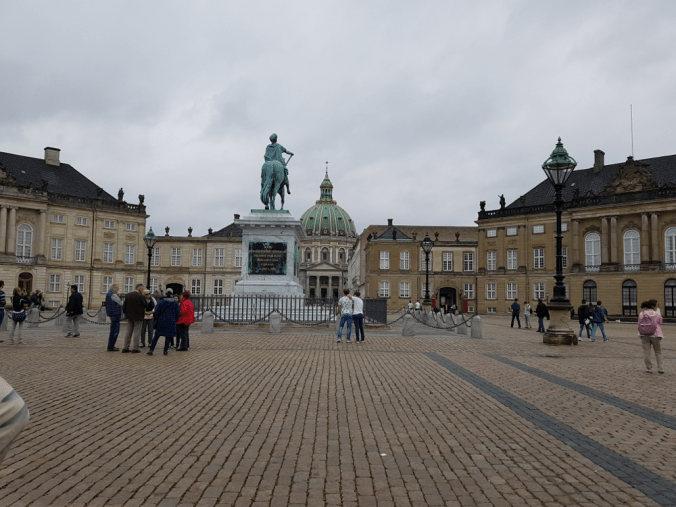
From there, we visited the Christianborg Palace courtyard (our tour did not go inside) and saw the opera house, the canal, and the new incinerator. Our tour guide proudly pointed out that Copenhagen imported garbage to incinerate from all over the EU and that 100% of private residences ran on renewable energy.

canal

Interestingly, the new incinerating facility was built like a mountain and the plan is to have a ski hill on its slope. Denmark is a flat land and citizens have to travel elsewhere to ski.

Next, we toured the royal reception hall. Though once the place of all royal business, the hall is now only used to entertain visiting dignitaries.

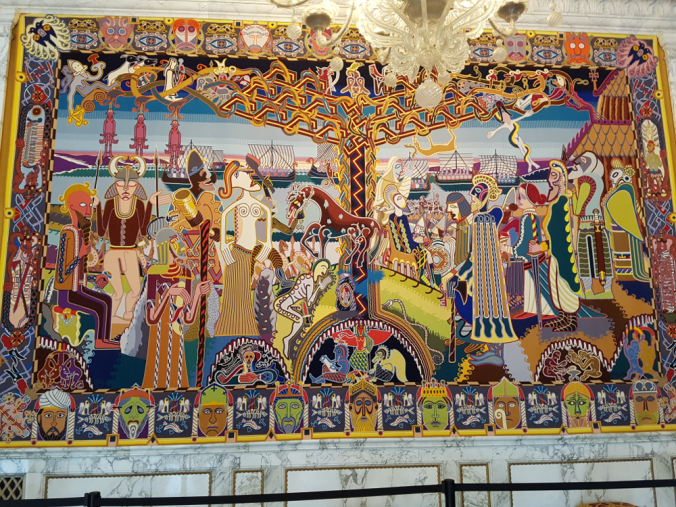
Some intriguing facts about Queen Margrethe: she’s an artist. Under a pseudonym, she illustrated an edition of Tolkien’s Lord of the Rings. She designed one of the carpets in the reception hall. For her 50th birthday in 1990, the queen was presented with 17 surrealist tapestries depicting the history of Denmark.

Tapestry

My picture does not do the tapestries justice. They were breathtaking. My favourite room in the reception hall.

Well, I was rather fond of the library, too.

library

The history of the Danish kings (either Christian or Frederick) reads like Game of Thrones. Our tour guide intimated that George R.R. Martin drew inspiration for some aspects of Westeros from Danish history.

The tour returned to the Fantasia just after noon and I had time to grab lunch before John Berlyne’s presentation on the purpose of an agent.

JohnBerlyne

Then, Aliette de Bodard presented Worldbuilding in the Smallest Parts and it was time for dinner.

That night, I was seated with other attendees, but our table was short one. At the table next to us, one lone participant sat. We asked him over, but he was waiting for his spouse, so two of our table went to join him, instead. And it wasn’t too long before another table of two was asked to join us. Yes, it was musical chairs night, but it was one of the best evening meals I had with the two Sarahs and the two Laurens 🙂

Unfortunately, that was also the night my throat got sore, heralding the cold that was to become known as Cruise Crud. I’m still clearing out the trachea, three weeks later … at the time, I thought it was just the wine and the continual gales of laughter.

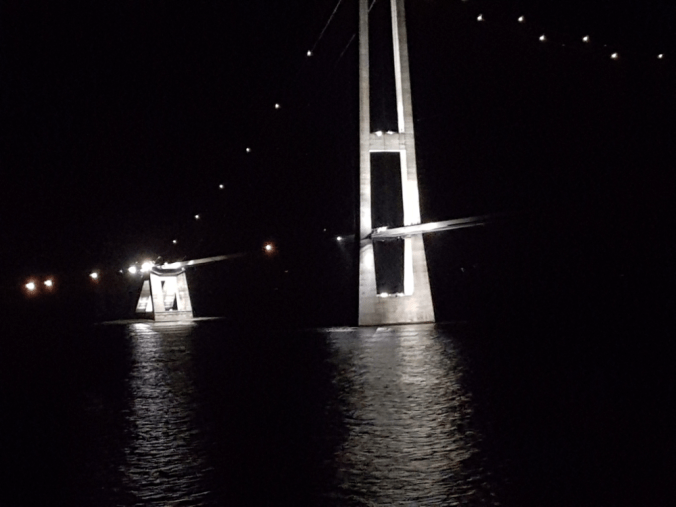
That night, we once more passed under the Øresund bridge, but I didn’t get another picture.

On day three, we crossed the Baltic heading toward Stockholm, Sweden.

I just want to digress for a moment. I’d never been on a ship the size of the Fantasia before. Sure, I spent many summers on my uncle’s houseboat. Yes, I’ve been on ferries like the Toronto Island ferry and the Chi-cheemaun. I was fairly confident that I wouldn’t be sea sick, but I had no clue.

The truth is, I barely felt the ship’s movement. When we departed or approached a pier, yes. The ship had to employ engines on the sides of the ship. There’s not enough pier to glide in like a smaller ship might. So the ship moves parallel and sidles up. That’s when you feel the chop.

So I’m happy to say my constitution did not let me down. In that respect, anyway.

I got to sleep in a bit on day three. Not that I actually did, but I didn’t really have anything to get up early for. Every morning, the instructors gathered for office hours, but I didn’t have any specific questions to ply them with … yet.

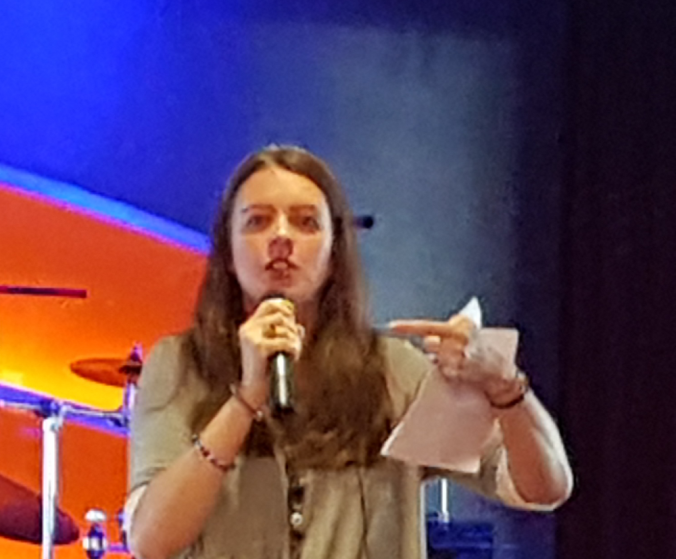
After the breakfast buffet, I headed down to the breakout session. I was group cake, but I’d signed up for the lightning readings in the afternoon and attended Mary Robinette Kowal’s foreshortened How to Present workshop which was squeezed in at the beginning of the breakout session.

MaryRobinetteKowal

Then, I hung out until my one-on-one with Tempest, which was scheduled in the middle of the breakout session. Day three was my first real opportunity to do any writing and the first day I felt like my body had adjusted to being seven hours in the past 😉 I lugged my laptop around with me so I could use what opportunities I could.

WesleyChu

Back to the buffet for lunch, and then it was time for Wesley Chu’s Deep Dive into Action presentation, which was followed by the lightning readings, at which I believe I acquitted myself well.

Afterward, Margaret commented that she wanted to read the novel when it came out. I think I blushed. The reading was from a short story, but I guess that’s just more confirmation that my story ideas tend toward novel-length projects.

There were a lot of interesting pieces and I’m looking forward to reading some of the resulting projects, whether story or novel, as well 🙂

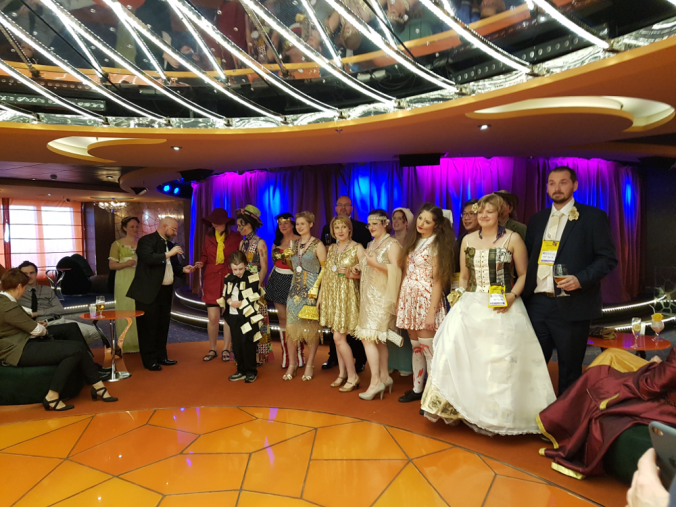
Day three was the evening of the costume contest. I didn’t have room to pack one, but there were some very clever costumes. Ann Tagonist and Professor Tagonist had the pages of a book incorporated into their costumes. One young man was the Excuses Monster, onto which people were invited to write their writing excuses on Post-its and stick them to his cape.

There were a number of flappers and a number of Regency costumes. Waldo and Carmen Santiago made an appearance, as did Nanny Og.

masquerade

That night, I sat at Mary’s table at supper. It was another night of fascinating conversation at which I got to regale the group about my malignant hyperthermia (Google it).

The Cruise Crud was blossoming, so I once again called it a night after supper.

And that’s where I’m going to pause in my tale.

Next weekend, we enter a new month and it will be time for my Next chapter update.

I’ll pick up with our arrival in Stockholm on the weekend of the 9th.

Until my next blog, be well, be kind, and stay strong, my friends 🙂

The Writing Excuses Baltic Cruise, part 1

I’m baaa-aaack!

Did you miss me?

As you might be able to tell from the title of this post, I’ve decided to break up my Writing Excuses Retreat (WXR) experience into parts. There was just too much writerly (and other) goodness going on for me to pack into one post, even in summary.

And that is what I intend to provide for you here: a summary. An event like this really has to be experienced to appreciate the impact it can have on a life. Not just a writer’s life, either. Any life.

I’ve never been outside continental North America before. Simply going to Europe and getting a taste of seven different countries changed me as a person. If you haven’t travelled, I highly recommend it. Even if you think you can’t afford it, save up (preferable), ask for financial assistance, or, if you have the means (i.e. stable employment) and aren’t too far into debt already, commit to some medium term debt and a reasonable strategy for getting out of it. Planning is everything in this last instance.

It was so worth it for me.

As you may remember from my last post, pre-departure, anxiety was having its way with me. I knew once I got in the air, I’d be fine. Once the first plane is boarded, there’s really no turning back. Even my anxiety can’t argue that point.

The journey was nonetheless fraught.

I got up at 5 am, so I could get to the airport by 6:30 and check in to board my flight at 7:30. The usual Skycheck service wasn’t available, but Air Canada checked my baggage (I only had the one, carryon-sized case) at no extra charge.

I arrived at Pearson International at 8:30, retrieved my bag, and had time for a leisurely breakfast. I had time to search out the Iceland Air registration desk and find out when it would open. It turns out that contrary to the general advice to be in the airport three to four hours ahead of your departure time that you can’t even check in or start the security process until two hours before boarding.

Still, I’m glad I gave myself a wide margin. I could have caught the next flight if the first one had been cancelled. I would have had the time to take an Airporter to Pearson, if necessary.

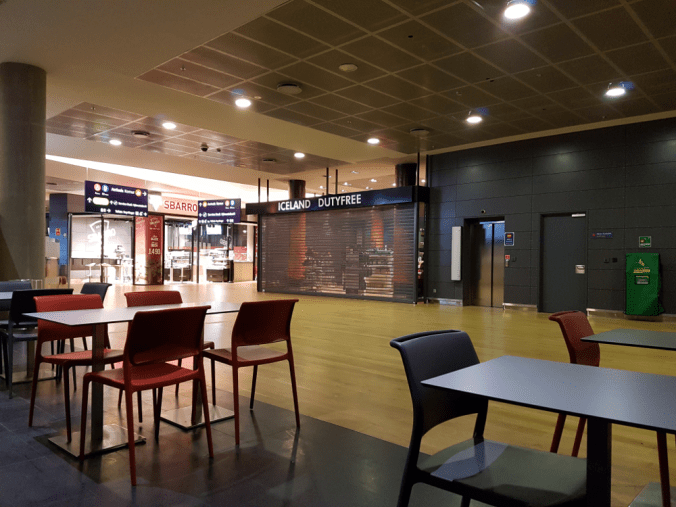
The journey from there was similarly without incident. The eight hour layover in the Reyjavik airport was, if anything, a little boring. I worried a bit about my flight not showing up on the information board until about an hour before departure, but there was no real problem.

KeflavikAt3am

HamburgAirport

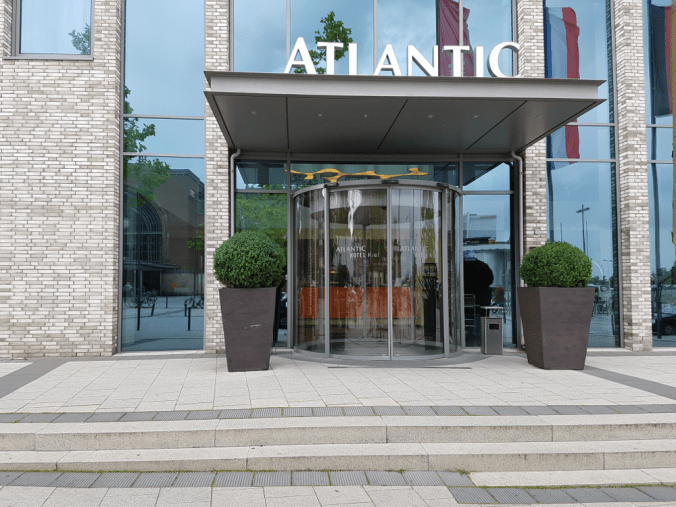
When I landed in Hamburg, I wandered around for a while before I found a group of  WXR cruisers and caught the shuttle to Kiel. I made friends right away on the shuttle (virtual hugs to Margaret Dunlap), while I fought the exhaustion of travel. We arrived at the Atlantic Hotel, checked in, and I met my room mate (more hugs to Becky!).

AtlanticHotelinKiel

I did not nap. I kind of got my second wind in the afternoon and made some more friends (waves at Mike, Oliver, and Alex—Strumpwaffle bonding!), met Mary Robinette Kowal again, Kathy Chung who, in addition to being Security Officer for the cruise, is also the Coordinator for the Surrey International Writers’ Conference (SiWC), and K. Tempest Bradford, with whom I took the spring offering of Writing the Other.

A group of us went to Vapiano, a popular European chain of Italian restaurants, for supper, and then returned to the conference room for the evening orientation session and taping of the Tea and Jeopardy podcast (!) featuring His Majesty, Dan Wells 🙂

At this point, I’d been up for nearly 30 hours, and, after a much-needed shower, I collapsed.

The next morning, after breakfast, there was the embarkation information session, during which we were divided into groups for our first event—a scavenger hunt, we collected our baggage, and prepared to board the MSC Fantasia.

The thing I dislike most about travelling is all the queuing. There are line ups everywhere: to check in, get through security, and to board (for each flight), for the shuttle, and to check in to the hotel. Cruise embarkation was no different.

We were bussed to the pier in shifts, based on our scavenger hunt groups, and, once there, had to relinquish our luggage to the handlers, prepare our boarding documents, and—you guessed it—queue up for embarkation.

It was like an amusement park line. Looooong.

MSCFantasia

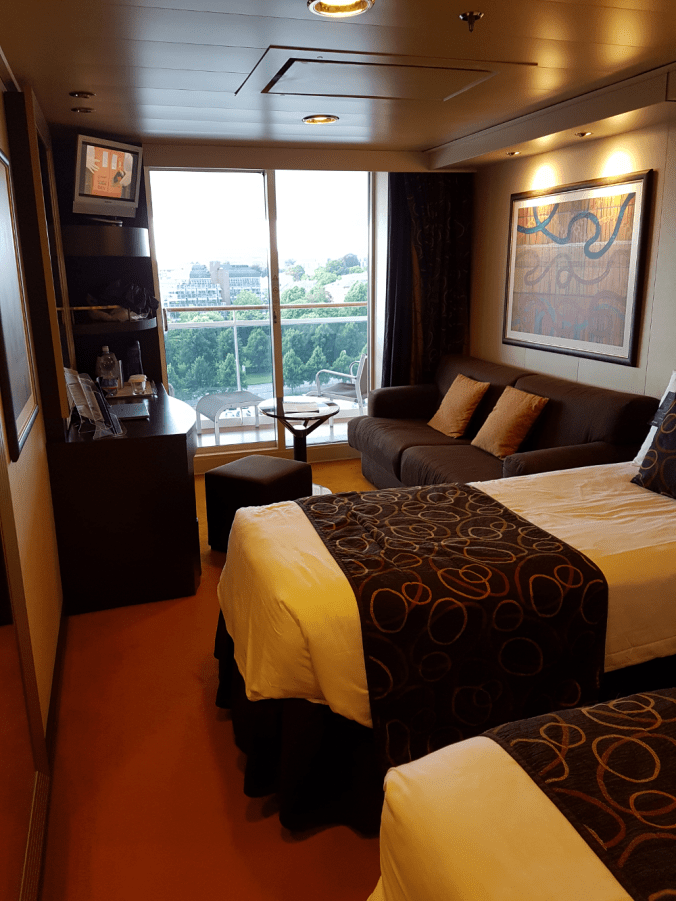
But once aboard, I located my stateroom, outside of which my luggage had been left, got unpacked, and got my credit card registered before it was time to gather for the scavenger hunt.

MyStateroom

WXR instructors hid throughout the ship, and each team had to solve riddles to find them, hopefully ending up in the buffet at the end, in time to have lunch. My group was a little late starting out and we missed the final check-in point, but we had fun solving the riddles and did bond over the experience.

There was an afternoon workshop that I ended up choosing to miss, on writing through distraction. My more pressing need at the time was for some food and I acquainted myself with the buffet 🙂

I had time to sign up for a wi-fi package for the trip before muster, which is the emergency drill for the ship, and returned to my stateroom in time for our departure from Kiel.

FearAndWritingEmmaNewman

That evening, I attended Emma Newman’s (yes, she of Tea and Jeopardy) presentation on Fear and Writing. Mary intentionally organized Emma’s presentation for the first evening, as fear is every writer’s worst enemy. It was hoped that Emma’s presentation would allow us to set appropriate goals for the cruise. I’ll just say that it was brilliant, and one of my favourites of the cruise.

SunsetDay1

At supper, I sat at Howard and Sandra Tayler’s table. It was a great first night getting to know a couple of our hosts, and some of my fellow WXR participants.

Normally, for a cruise, the passengers sit at the same table every night and the serving staff is able to develop a relationship with them. For the WXR cruise, we would be assigned different seating each night at supper so that we could get to know one another better. It made for more difficulty for the serving staff, but a better experience for the retreat’s participants.

Supper that first night was a late sitting (9:30) and by the time I got back to my stateroom, I was just in time to watch the ship (it’s huge—18 storeys I was told) pass under the Øresund bridge between Sweden and Denmark. Other cruisers went to the uppermost deck of the ship to take pictures, but I didn’t have time to get up there (!)

UnderTheBridge

And that’s where I will leave my journey for now.

In my next instalment, I hope to cover Copenhagen and Stockholm. After that, it will be time for my Next Chapter combination update for July and August, and then I’ll continue with my adventure through Tallinn and St. Petersburg. Then, I think I’ll write a couple of posts to cover my Finland adventure and WorldCon, before I turn to other topics.

Tipsday and Thoughty Thursday will resume through to NaNoWriMo when my next blogging hiatus takes place.

Recent events in Charlottesville, Barcelona, and Turku have my heart aching. Still, the battered thing goes out to all of those affected by extremism and terrorism. We can resist, heal, and make a better world.

Until next I post, be well, be kind, and stay strong, my friends. The world needs your stories now, more than ever!

Tipsday: Writerly Goodness found on the interwebz, May 28-June 3, 2017

It’s time for some informal writerly learnings.

The Story Masters workshop James Scott Bell refers to? Yeah. I was there 🙂 Where’s your edge? Writer Unboxed

Cara Black says villains are the architects of your story. Writer Unboxed

Jo Eberhardt shares her experience weaving sub-plots into her story. Writer Unboxed

K.M. Weiland explains how to find your story’s big moments before you outline. Helping Writers Become Authors

Elisabeth Kauffman shares her #1 tip for introverts attending a writing conference. DIY MFA

Laura Highcove: when your why is bigger than your fear. DIY MFA

Christina Delay explains why it’s important to control your survival instinct when it comes to your fiction. Writers in the Storm

Tasha Seegmiller guest posts on Writers in the Storm: enhancing your story through micro and macro setting description.

Writing coach April Bradley says theme is the marrow of your story. Writers Helping Writers

Suzanne Purvis visits Fiction University: how to write a sizzling, scintillating synopsis.

Jami Gold: strong characters come from strong writing.

Kristen Lamb says, when running your race—be content but stay hungry.

Dear writers: a book needs time to cook. Chuck Wendig’s Terribleminds.

If you want to write a book, don’t listen to Stephen Hunter. Foz Meadows, Shattersnipe: malcontent & rainbows.

And here, for your perusal, is the Stephen Hunter article in question: if you want to write a book, write every day, or quit now. Daily Beast

Creative alchemy: experience transformed by imagination with Ursula K. Le Guin and Kristin Kwan on Terri Windling’s Myth & Moor. And here’s more Ursula: the writer as wizard.

Sangeeta Mehta interviews agents Eric Smith and Saba Sulaiman about diversity on Jane Friedman’s blog.

Oren Ashkenazi lists five plausible scenarios for planetary evacuation. Mythcreants

Mary Robinette Kowal shares the highlights of her visit to the SpaceX CRS-11 Cargo Launch NASA social.

The Sunburst Award Longlist has been announced. Think Canadian Nebulas and you’ll be just fine 😉

Laura Miller examines what happens when literary novelists experiment with science fiction. Found this on Twitter with the tweet, when literary authors write science fiction, yet disavow it. Yeah, right? Slate

Charlie Jane Anders confesses: growing up, Wonder Woman was the hero I really wanted to be. Tor.com

And Megan Garber calls Wonder Woman the heroine of the post-truth age. The Atlantic

This is just fun. Why Wonder Woman’s sword can cut through anything. Because science w/ Kyle Hill.


Bryn Elise Sandberg reports the sad news that Sense8 has been cancelled. I gotta go over there and cry, now. The Hollywood Reporter

I hope you found something that you needed.

Come back on Thursday to get a little thoughty in your week.

Be well until then.

tipsday2016

WorldCon 2016: Nifty narrative tricks

Disclaimer: I am not perfect and neither are my notes. If you notice anything that requires clarification or correction, please email me at melanie (dot) marttila (at) gmail (dot) com and I will fix things post-hasty.

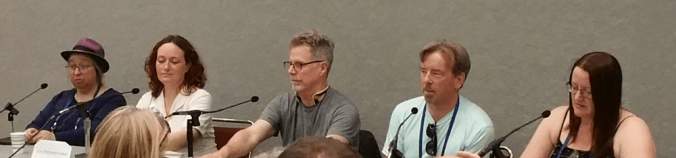
Panellists: Jo Walton, Mary Robinette Kowal, Steven Gould, James Patrick Kelly, Elizabeth Bear (moderator)

nifty

Joined in progress …

EB: It’s not all about creating an engaging character.

MRK: People want the familiar and the strange. So, a familiar emotion with a strange activity, for example.

JPK: Before you write, walk into your character’s room, their car, their locker. In describing these places, you find stuff you can use later in the plot.

JW: Characters are something I could write well before I could do anything else (dialogue, description, etc.) I decide that this is the story I am telling and this is how I’m telling it.

EB: You have to figure out what makes the character someone readers want to spend time with. Give them a goal. Give them agency. Give them something, or someone, to love.

SG: If you want to show how a technology works, show it when it breaks down. Added benefit: it frustrates your character, it’s a setback.

MRK: They need to have a sense of their own competence, or lack thereof.

EB: Add conflict.

MRK: Action is reaction. That’s something from theatre. Map out the easiest path to the character’s goal and then deny it. Conflict is not necessarily a fight scene.

JW: A character desperately needs a bathroom. Everything they say and do will be coloured by this desire. If a character is making dinner, discover everything in the course of that day-to-day action. Including backstory this way becomes seamless. There has to be a sense of jeopardy, but it doesn’t have to be a battle for life and death at every turn.

JPK: You want to have conflict everywhere, but it all has to relate to the plot. Keep an eye on your main conflict. It’s a through line. From the beginning to the middle, it’s a one way door. The same goes for the middle to the climax. There’s no going back.

MRK: The stakes must be personal and specific to the character.

JW: Unless you can make the reader care about the character in jeopardy, it won’t work.

MRK: Focus indicates thought. Everything has its own breath and rhythm. Pacing can be controlled by how long the character’s attention lingers. [Mel’s note: Mary then removed her boots and demonstrated what she was talking about in a tour de force of shoe puppetry. I wanted to take a picture, but couldn’t tear myself away from the spectacle—it was that AWESOME!]

JW: Pacing is one of the strongest indicators of genre.

JPK: When I was at Clarion, they didn’t have the money to make a copy of every story for every participant, so one copy of each was posted in the hall. If you look at a piece of writing and you see solid blocks of text, you probably need to break it up. A story needs to breathe and so does the reader.

JG: I think of it in terms of pixilation, granularity. If you increase the resolution, you increase the pacing.

EB: One common misconception is that starting in medias res means starting with a blood bath. The reader has to care about what happens to you characters.

JPK: Another common failing is not having a denouement.

JG: Being too coy with the reader, or telegraphing everything.

MRK: If you include too much backstory, try getting deeper into the point of view character.

JW: A lack of description results in too much fuzziness. Either the character, or the world, is not in focus.

And that was time.

Next week, I will be writing my first next chapter update of 2017 (yay—crazy Kermit arms) and then I’ll return to WorldCon reportage. And, of course, in the meantime, you can expect more great curation on Tipsday and thoughty Thursday.

Happy Chinese New Year!

And be well until I see you next 🙂

The next chapter: December 2016 update and year in review

My goodness, here we are in 2017 (!) and now it’s time for me to take stock of my year. Did I accomplish what I hoped to at the beginning of the year?

We’ll get back to that in a few.

First, I have to sum up (‘cause there is too much—I live by PB references) December 2016.

I knew when I decided to tackle Wavedancer, the third book in my epic fantasy series, for NaNoWriMo 2016 that I wouldn’t even come close to finishing the draft (it is EPIC fantasy, after all) in November. I was, however, foolish enough to think, initially, at least, that I’d write another 50k words in December and finish the draft by the end of the year.

I should have known better.

This is the fourth year I’ve done NaNo, and my third win. Each year, I enter December in a fog, still half-living in the world of my novel. I work a day job. There’s no way I could keep up the NaNo pace for another whole month.

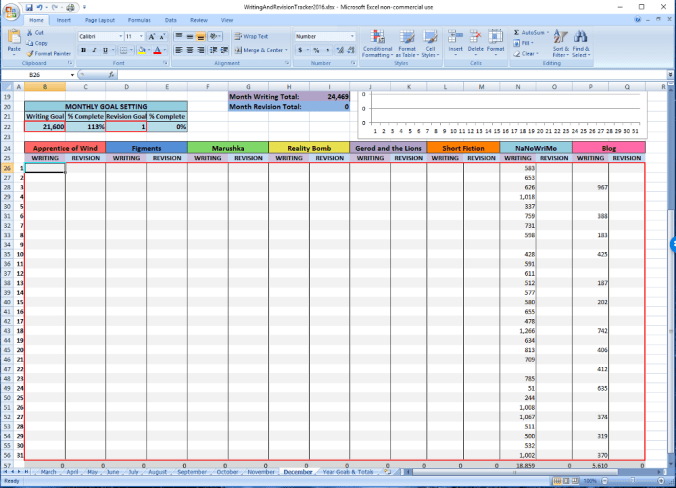
Accordingly, I adjusted my expectations to 500 words a day and, though there were two days I didn’t write at all and a few assorted low-count days in the mix, there were also five days in which I wrote over a thousand words, so it all came out in the wash.

decemberprogress

To be more specific, of the 15,500 word goal for the month, I wrote 18,859 words, exceeding my goal by 3,359 words 🙂

Blogging 5,610 words brought my writing total for the month to 21,600 words.

Not 50k, but not bad at all 🙂

Back to my year-end review.

2016 was the first year that Jamie Raintree incorporated separate columns and totals for revision in her Writing Tracker, now called the Writing & Revision Tracker.

Though I’ve looked back at 2015’s and 2014’s trackers, the totals were skewed because in 2014, I didn’t track my revisions, and in 2015, I was tracking my revisions at one counted word for every two words revised. So there’s no real point in trying to compare.

What I set out to do at the beginning of 2016 was to go through all of my written novels to date and start to revise.

I’m happy to say that I accomplished this goal, but things didn’t go quite as I’d hoped. They never do. Quite.

For most of the novels, it was more of a getting reacquainted with the stories and the characters. I didn’t do a lot of revising, but now that I have the lay of the land, so to speak, the next passes will all be more in-depth.

I already mentioned that, having revised my goals post-NaNo, I did write two thirds of Wavedancer. To be specific, I wrote 71,157 words between November and December, and I will continue in that vein until the draft is done in my estimation.

I continued to query Initiate of Stone, but finally got it through my thick skull that it’s not the best project to use when trying to get a deal. So I’m changing gears and going to prepare another project for querying this year. We’ll see how it goes.

How did all this shape up as far as numbers went?

yearend

Of my 138,100 word writing goal, between all projects, I wrote 169,288 words, or 123%. Considering all the revision I was doing, that’s a lovely total.

With respect to revision, I managed 359,114 words of my 375,000 goal, or about 96%.

Some things happened in the year that I didn’t plan on, however.

Though it didn’t happen until July, I wrote a new piece of short fiction. I hadn’t expected that with my focus on the novels. It was a good surprise 🙂

January through March, I participated in the first offering of the Story Genius course created by Jennie Nash and the story genius herself, Lisa Cron. It was something unexpected, but I couldn’t let the opportunity pass. I had to try to make space for the course in my overall plan for the year and ended up making some poor decisions that didn’t serve me well.

While my experience in the course wasn’t, overall, a positive one, I still love the Story Genius method (and book—go get it!) and I would recommend it highly to anyone who can devote 100% of their time to the work. You will reap the benefits.

I just learned, in the most ego-wrenching way possible, that I cannot learn on someone else’s schedule. Especially while I’m working full time. I also made the decision to use Apprentice of Wind, the second in my epic fantasy series, as the project for my work in the course. Story Genius, in the form I took it, was not intended for novels that are already drafted, or for books other than the first in a series. I understand that strategies and approaches for projects of this type have been developed since.

These issues were entirely of my own creation and should not cast any doubt on the excellence of the course, of Lisa or Jennie, or of their dedicated team of editors.

I signed up for K.M. Weiland’s Character Arcs course through the Digital Freedom Academy. It’s entirely self-paced and Kate has loaded her usual extras into the course materials. Her Creating Character Arcs book also came out in the fall, and I definitely recommend both. I am a fangirl, though.

In August, I signed up for another Nelson Literary Agency course on the first five pages. NLA courses are excellence sources of feedback from professional agents who know what makes a successful submission.

At the end of September, I enrolled in a Mary Robinette Kowal Short Fiction Intensive. Blew my mind.

Finally, as far as courses go, I signed up for a course by Kristen Lamb on writing query letters and synopses.

I also tried my hand at #PitchWars for the first time with Reality Bomb, and while I didn’t make the extremely competitive cut, I did have a positive experience thanks to the team who considered my proposal, Michael Mammay and Dan Koboldt. It’s quite an eye-opener, and I’d recommend it to anyone who wants to test the waters with one of their novels.

It was a lot of fun and another pleasant surprise.

As far as conferences and conventions, I attended Ad Astra, The Canadian Writers’ Summit, and my very first WorldCon last year.

I was also pleased to participate as a panellist at Wordstock Sudbury 2016.

And I had two stories published in the Sudbury Writers’ Guild anthology, Sudbury Ink, which launched in November.

Complicating all that, Phil had some significant health issues to deal with at the beginning of the year (now resolved), and, from August through to November, he renovated our living room after work and on the weekends.

We’re still waiting for the last pieces of furniture to be delivered, and he’ll be working on building wall-to-wall bookshelves, as the weather allows (he’s working in the unheated garage) throughout the winter. Pictures will be forthcoming in a future post.

Looking at all of that written out, I accomplished a helluva lot last year.

I think I’m going to have to ease back a bit in 2017, work smarter instead of harder.

Yeah, that’s the ticket.

What are my plans for 2017?

Well, you know I’m not one for resolutions. I have goals that I work steadily toward and amend as required.

First, I’ve nabbed my copy of Jamie Raintree’s 2017 Writing & Revision tracker. I’m setting up the projects in series this year, and will identify different novels in my Ascension series with different colours so I’ll be able to distinguish them and extract the numbers I need to feed my production geek.

I’ll continue to finish drafting Wavedancer, as I mentioned (way) above. At my current rate, I should be finished by the end of February.

Once drafting is done, I’m going to return to revising. I should be able to get through all of the novels in the course of the year. Again, as I mentioned above, I intend these revisions to be more in depth and to address some of the structural issues, as I see them, in the stories.

I’m going to be working with a coach to get Reality Bomb reworked. It’s something else I’m trying in my quest to improve my craft. My hope is that I’ll be able to query RB later this year.

With the short fiction surprise last year, I’ve actually had another idea I want to work on, and some other ideas for revising a couple of my other stories to improve them. Accordingly, I’ve made some room for these projects in my plan.

For NaNoWriMo, I’m going to tackle the fourth novel in the epic fantasy series, tentatively titled Playing with Fire.

I may also have a new, semi-regular writing gig to tell you about. I don’t want to let the cat out of the proverbial bag yet, but if it materializes, you can be sure I’ll let you know all the tasty deets I can 🙂

I’ve already signed up for the Story Masters Workshop in May. Donald Maass, James Scott Bell, and Christopher Vogler are coming to Toronto. This is a squee-worthy score, in my books. It was another opportunity I couldn’t let pass.

When I heard that the No Excuses cruise was going to be in Europe this year and timed to immediately precede WorldCon in Helsinki, I was seriously considering signing up. Unfortunately some non-writerly priorities make both the cruise and WorldCon impractical. Mellie haz a sad.

In fact, I may not attend any conferences or conventions at all this year. We’ll see how things shape up.

The reason for this dialling back is that Phil, who’s in his 50’s now, wants to proceed with renovations to the kitchen and bathroom this year. Though he will continue to do as much of the work himself as he can, these two projects will require a significant financial investment. And we haven’t paid off the living room renovation yet.

We also want to get another puppy. This will depend on whether my employer sorts out their payroll issues and I can apply for another self-funded leave. I will need the time to train our new dependent, furry quadruped. Again, deets will be forthcoming as I can share them.

On that front, if the payroll issues at work are sorted, I’ll finally see my acting pay from mid-February to the end of September last year, less about a thousand dollars outstanding from my last self-funded leave.

We’ve heard that union negotiations have resulted in an offer, the terms of which look reasonable. If we vote to ratify the new contract, it will mean about two and a half years of retro pay and a signing bonus, again, dependent on when the payroll issues can be sorted.

Our car loan should be paid off in late spring, as well, and so, between it all, we’ll have a little extra money to use to pay down our debts.

Phil got a promotion and raise last year from his employer, so we figure this will be the year to finish the renovations.

As you can see, this is going to be a different kind of year, but I’m hopeful that everything will work out.

Besides, come the end of February, it will be the Chinese Year of the Rooster (I’m a rooster!) and I think the powers that be might finally be aligning in my favour 😉

Here’s to a fabulous and productive 2017 for everyone.

Love and light and loads of good words to you all!

The Next Chapter

Tipsday: Writerly Goodness found on the interwebz, Oct 2-8, 2016

This week was just yummy 🙂

The Wordstock Sudbury 2016 schedule is up 🙂

Prism International interviews George Elliott Clarke, one of our Wordstock guests of honour.

Your #NaNoWriMo prep posts for the week:

Nina Amir guest posts on K.M. Weiland’s Helping writers become authors: how to get up close with your characters.

Chris Saylor guest posts on Marcy Kennedy’s blog: how to punctuate dialogue.

Roz Morris shares her insights on how to write emotions. Nail your novel

Donald Maass looks at four kinds of pace. Writer Unboxed

Joanna Penn: how to find and capture ideas for your novel. The Creative Penn

Janice Hardy guest posts on Writer Unboxed: a ten step guide to plotting a practice novel.

Therese Walsh explores dehumanization in fiction using one of my favourite movies, The Shawshank Redemption. Writer Unboxed

Cathy Yardley: just say yes. Writer Unboxed

Chris Winkle thinks the surprise kiss must go. Why? It’s a matter of consent. Mythcreants

Chuck Wendig offers some good writing (and life) advice: control what you can control. Terribleminds

Later in the week, he shares ten quick story tips to use or discard at your leisure.

Kameron Hurley shares her experience: five years a novelist.

Sarah Waters shares her ten rules of writing fiction. Aerogramme Writing Studio

Last Sunday I spent the day online in a short fiction intensive with Mary Robinette Kowal (!) Here’s one of the resources she shared on critiquing:


Carly Watters offers ten ways to personalize your query letter.

Kristen Lamb: what the dreaded synopsis reveals about our writing.

Anna Davis: how to prepare your submission package. Curtis Brown Creative

Awards news!

Ursula K. Le Guin has stopped writing fiction, but we need her more than ever. Zoë Carpenter for The Nation.

When Steven Musil reported that Amazon was cracking down on incentivized reviews, everyone panicked, until it was clarified that this policy change would not apply to ARCs provided for book review purposes. cnet

Sarah Gailey: why we write about witches. Tor.com

Lisa Rosman: what The Girl on the Train is really about. Signature Reads

Angelica Jade Bastièn says the price of fandom can be too high for women of colour. New Republic

Julia Alexander examines sexism in television in the microcosm of Adult Swim. Polygon

Shane Parrish: what you read changes your brain. Medium

If you can correctly pronounce every word in this poem, you speak English better than 90% of English speakers in the world. I must admit, I flubbed two or three <blushes>. The Poke

Ephrat Livni for Quartz: a linguist’s love letter to profanity and why it’s okay to swear in front of kids.

Dark Horse Comics will be producing the next two seasons of The Legend of Korra in print. Rob Bricken for i09. Moar Korra! Eeeeee!

Evan Narcisse talks to Greg Rucka about the reaction to Wonder Woman’s canon bisexuality. i09

Did you see the premiere of Westworld last Sunday? Here are a few pieces about it.

Michael Bennett Cohn looks at Westworld through the lens of the golem story. The Forward

Can Westworld do for science fiction what Game of Thrones did for fantasy? Charlie Jane Anders for Wired.

I’m watching and enjoying it. Phil, not so much, but then, he did see the original movie (which I haven’t) and he just doesn’t see how the writers can turn it into a series and so he’s closed to the possibilities.

Evan Narcisse explores how Luke Cage uses blackness for i09.

Netflix provides a release date (and teaser) for Iron Fist: March 17, 2017.

Outlander casts Marsali and adult Fergus. Entertainment Weekly

The Doctor Who Christmas special features superheroes (!) plus a wee teaser. Katharine Trendacosta for i09.

See you Thursday!

Tipsday

Tipsday: Writerly Goodness found on the interwebz, Sept 11-17, 2016

Tipsday is chock full of informal writerly learnings!

K.M. Weiland digs into subtext and gives practical examples for how you can identify and apply subtext in your stories. Helping writers become authors

Later in the week, Kate shares more lessons from the MCU: how to choose the right antagonist for your story.

Roz Morris offers an exercise to show how you can shape your tone in your novel. Nail your novel

Vaughn Roycroft discusses the importance of storytelling in turbulent times. Writer Unboxed

Sara Letourneau helps you find the “why” behind your story. DIYMFA

David Corbett helps you fill linguistic holes with some super fun words. Writer Unboxed

Carly Watters shares four ways to write better dialogue.

Jami Gold: when is backstory necessary? Later in the week, Jamie returns with tips on balancing your story elements.

Margie Lawson offers her rule #17: finessing backstory. Writers in the storm

David H. Safford guest posts on Writers Helping Writers with advice on hunting down story holes using a novel journal.

Janice Hardy continues her blog tour on Marcy Kennedy’s blog. Create an editorial map to make revisions easier. This is, incidentally, part of my process 🙂

Karen Woodward explores short story structure.

Gabriela Pereira interviews Jerry Jenkins on DIYMFA radio.

Christine Frazier compares Star Wars: A New Hope and Star Wars: The Force Awakens. The Better Novel Project

Janet Reid shares six reasons she said “no,” recently.

Frances Caballo guest posts on Jane Friedman’s blog. A social media strategy that works: CARE about your readers.

Tim Grahl shares his perspective on the effectiveness of Facebook as a marketing tool for authors.

Authors offer their best writing tips. The Guardian

The Baltimore Sun shares John E. McIntyre’s “trigger warning” from his editing class at Loyola University, Maryland.

Moira Donegan covers the Emily Books Symposium session: what is women’s writing? The Awl

Kerry Gold’s L’affaire Galloway explores the UBC incident in its context and subtext (because there’s so much that hasn’t been stated). The Walrus

Janet Reid shares her thoughts on the difference between racism and using potentially offensive language in context in response to one college’s unequivocal idea of cultural sensitivity.

Mary Robinette Kowal offers a textile metaphor for cultural appropriation.

Jim C. Hines unpacks Lionel Shriver’s speech on cultural appropriation.

And here’s Foz Meadows’ response to Lionel Shriver.

Related (because it occured at the same literary festival): a journalist quotes a writer without permission. Liz Spayd for The New York Times.

Award news! Sunburst Award winners announced!

Literary Hub interviews the Biblioasis Bookstore in Windsor.

Wordstock, Sudbury’s literary festival. Nov 3-5, 2016. CBC

Canadian literati are coming to Sudbury for Wordstock. South Side Story

Last week marked the centenary of Roald Dahl’s birth. Here are a couple of the articles that were posted in tribute.

Shane Koyczan: 152 (audio only)


Wasn’t sure where to put this mixed bit of news. Sad to have lost him, but end-of-life issues are never simple and I honour his right to make this decision. Author W.P. Kinsella ended his life last week under Canada’s new assisted dying legislation. The Guardian

Take a look at Salvador Dali’s paintings of Alice in Wonderland. The Earth Child

Seanan McGuire digs into Pamela Dean’s Tam Lin. Tor.com

Joel Minty offers advice to first-time readers of Steven Erikson’s Gardens of the Moon. Tor.com

Alex Brown reviews the fall 2016 television SFF line up for Tor.com.

Germaine Lussier reports that Disney’s new production of A Wrinkle in Time has its lead. i09

The Curiosity is a fairy tale film about selkies 😀 Germaine Lussier for i09.

Connie Verzak offers some fodder for Droughtlander sufferers. The Daily Record

Hope you enjoyed, my creative friends.

See you on Thursday for some thoughty 🙂

Tipsday

The next chapter: August 2016 update

Let me tell you a story 🙂

Dark season

Over the last couple of years, August has been a bad month for me, emotionally speaking.

I’ve been down. Living with depression, if you do it consciously, means that you can see the signs and take action, or not, whatever is most appropriate for your mental health at the time. Trying to barge through rarely works. For me, anyway.

Last year, I was away from home, delivering training, for two and a half weeks in August. I thought London was a lovely city, and I did enjoy myself to the extent I could—I even went shopping (!) and if you know me, you know I hate shopping of any kind with a passion—but it was too far away for me to go home on the weekends, and I had discovered earlier in the year how much more difficult it was for me to write or blog while travelling. So except for curation, I gave over.

Writing on the road isn’t undoable, and I have put on my big girl panties and done it since (I started NaNoWriMo while travelling last year), but, at the time, I was at a low ebb, and sometimes you have to be kind to yourself.

This year, I went to Kansas City for WorldCon and stayed an extra day or so to visit with a friend who’d moved down there several years ago. More on WorldCon in a bit. The bottom line is that health issues and my introvert nature (exacerbated by my emotional low) conspired to rob the trip of some of its joy.

Remembering what had happened last year, I had even planned for the dog-day doldrums. I figured I’d have the first run-through of all my drafted novels done by August (and I did) and that I would need a little break (and I did).

My plan to turn to other projects, though, didn’t work out as well as I’d thought. I worked on some short fiction, made a few submissions (a rejection from one of which was returned within a week), but I never touched the poetry collection or the non-speculative short fiction collection. I just didn’t have the heart.

I journalled, trying to work out what my plan for the rest of the year would look like and trying to find my way back to what is, for me, normal. I also participated in a Nelson Literary Agency workshop on first pages with Angie Hodapp.

Though the initial review of my first five pages wasn’t horrible, I wanted to try something completely different for the revision, see if the advice of the readers would work. It was a spectacular failure, but I learned a lot from the experience.

You really do have to fail to learn, even if it’s painful 🙂

I’m now delving back into Initiate of Stone, working long hand in a notebook. Sometimes you just have to write it out. I find that writing long hand helps give me the time to examine the words and sentences, and get a fresh perspective.

I can now also disclose that I did not succeed with my application to #PitchWars. Reality Bomb was the project I chose for that experience. I didn’t expect to get in this first year of applying, but one pair of mentors, Michael Mammay and Dan Koboldt, was very supportive. They asked for additional materials, a synopsis and first 50 pages.

Our email exchanges in that first week or so were productive and illuminating for me. I now have some great ideas to return to that manuscript with. So, ultimately, #PitchWars was a win.

This brings me to another realization of why this year has been a difficult one for me.

Last year was the year of almost. I got on several long and short lists in contests, had my work set aside for second readings for anthologies, and while it didn’t result in any publications, the nature of the responses was reassuring. I also had a couple of stories accepted into the Sudbury Writers’ Guild anthology, which should be coming out this fall.

This year, with the exception of #PitchWars, has been the year of no. Form rejections all around, whether from querying or from short fiction submissions. Though I have, to some extent, found a way to turn rejection into a positive, when so many pile up, it becomes disheartening.

You begin to question your worth and skill as a writer, to doubt the kind things that have been said about your work (because there are so few of them, relatively speaking, that they must be the flukes, you reason). You begin to look for those opportunities to confirm your negative bias, blow small faux pas into huge incidents. Reasonable lapses in communication become the occasion for self-blame and recrimination.

Fortunately, since my return from Kansas City, I’ve been coming across the most wonderful articles and posts that have given me the encouragement I’ve needed, some of which you’ll see in this week’s curation. Between that, and the long hand work I’ve been doing on IoS, I’m making my way back to the page.

WorldCon

I’d left with the best of intentions and wanted to practice Gabriela Pereira’s method of networking with a number of authors I’d only ever seen online. In the moment, though, I was so nervous, I basically blathered.

I did get to meet and have a couple of nice, brief chats with Mary Robinette Kowal, met Cat Cambo and Foz Meadows at their Literary Beer sessions (informal chats), but otherwise, I just did my usual and took notes in panel discussions.

I was within three feet of George R.R. Martin, but as he was just coming out of the second of two autographing sessions in which fans lined up for the better part of an hour to see him, I just couldn’t bring myself to be that fan. Instead, I smiled, nodded, and moved on without harassing the poor man.

I had gone to the Tor Party with the intention of meeting John Scalzi, but several people seemed to be running interference and by the time I was able to politely make my excuses, Mr. Scalzi was monopolized by other Tor authors and friends. After that, he turned his attention to his beautiful wife and, again, I could not bring myself to interrupt just to say “hi, and thank you for writing wonderful books.”

Maybe it’s because I’m Canadian, or an introvert, or both, but I just couldn’t.

I’m also a total newb and have no clue with regard to what’s appropriate and what’s not in which context.

The Hugo Awards Ceremonies were wonderful, though, and the sad puppies were soundly trounced.

N.K. Jemesin won best novel for The Fifth Season, Nnedi Okorafor won best novella for Binti, Hao Jingfang and Ken Liu (translator) won best novelette for Folding Beijing, and Neil Gaiman (who wasn’t there in person) had a special message for the sad puppies when he won best graphic story for The Sandman: Overture.

Really, you can just go to the Hugo Awards site and check out all the winners. Diversity was the word of the evening.

It was a great event, but at the end, I felt like I needed a vacation to get over my vacation 🙂

I returned home with a whopping case of imposter’s syndrome, though. I’d met and seen and learned from all of these authors, many of whom I read and respect. Who am I, with my two publications in what the Science Fiction Writers Association (SFWA) considers “token” markets, to think that I can get a traditional deal in a market that’s more competitive than ever?

When I confided my doubts to Phil, his response was that print publishing was on its way to extinction and why would I want that, anyway? So not what I needed to hear, but I forgave him instantly. Though he is very supportive of me and my creative calling, he, like most non-writers, will never understand what it’s like to be in my neurotic wee skull.

But, as I said, I’m surfacing now. I have no further conventions I’ve committed to (having used up my budget for such things) and the only challenge I’ve set for myself is to get through another revision of IoS and Apprentice of Wind before I tackle the third novel in the series for NaNoWriMo.

I still want to get back to the poetry collection and the non-speculative short fiction collection, but neither is a big priority for me at the moment.

I’m taking my time with the short fiction. Some of my stories are actually the seeds of novels. I have to set those aside in their own project folders for the future, and then get on with revising and submitting what I have. Who knows? I may even surprise myself and write some more new stories. It has been known to happen.

In the meantime, I’ve applied for my winter leave at work and am crossing my fingers.

Persistent payroll issues may affect my application for another leave with income averaging. Until things are sorted out, the powers that be may recommend against such special considerations. I may have to defer again until next year.

It won’t be the worst thing that’s ever happened, but Phil and I are ready to look for another furry dependent. I need the five weeks for acclimatization and training. We’d rather it be sooner than later, but we’ll be patient if we must.

Having a new puppy in the spring would probably be more convenient (she says, mentally willing leave approval).

And then there are the renovations to consider, but that’s another post. Probably several 😉

The month in writing

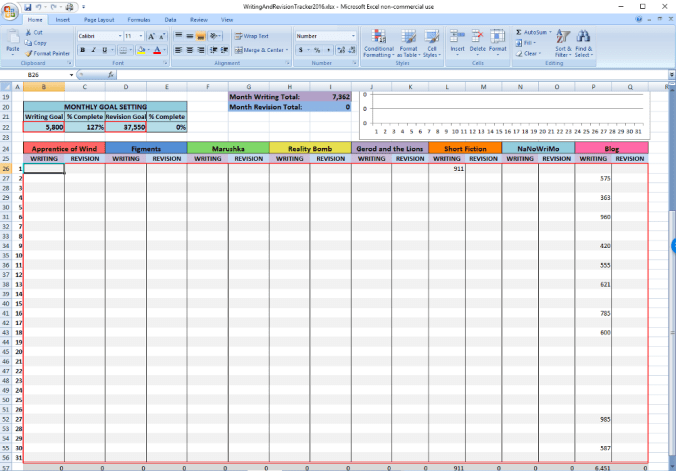
August was sparse as far as writing goes. Aside from the blog, from which I took a vacation for WorldCon, the only writing I did was to finish off the one short story I was working on.

AugustProgress

6,451 words on the blog and 901 words on the short story. 7,362 altogether. That’s literally all she wrote.

I didn’t revise a thing. Fortunately, because I met or exceeded my revision goals in every other month so far this year, I’m not that far behind.

I didn’t count the minor revisions I did to the stories I submitted, or any of the journalling or long hand writing I did.

Besides, I wasn’t anticipating (until part way through the year) that I’d return to IoS, so I don’t have a column for that on my spreadsheet. I could make one. I have the skill, but I don’t want to take the time to do it now. Yes. I know. Lazy Mellie.

I’m getting my mojo back. The writing’s the thing.

Science fiction is the literature of ideas. It is the great “what if?” that leads us into the future. Fantasy is the literature of (im)possibility. It longingly wonders “If only . . .” and whispers in our dreams. I write both and I think I’m pretty damned lucky.

And that’s it until next month.

I hope you’re all experiencing great creative breakthroughs and are satisfied with what you’ve done. In the end, that’s all that matters.

Be well!

The Next Chapter

Tipsday: Writerly Goodness found on the interwebz, Nov 8-14, 2015

I’m a curating machine 🙂

Roz Morris discusses the differences between British, Canadian, and American English and why writers should know when to use each. Nail Your Novel.

Writer tech: How to storyboard in Scrivener. Matt Herron for The Write Practice.

K.M. Weiland offers six steps to create a fantastic narrative voice in her lessons learned from Storming series.

Katie then discusses the easiest character she’s ever had to write.

Lisa Cron gives us the inside story on what grabs readers. Writer Unboxed.

Sophie Masson helps us get the most of mentoring, from both sides of the fence. Writer Unboxed.

Christine Frazier shares ten traits of the mentor archetype on the Better Novel Project.

Kameron Hurley was never in this for the parties.

Then, she wonders if Goodreads ratings correlate to sales.

Next, she reassures us that everything is not awful.

Finally, Kameron explains why having a writing-related day job does not ‘ruin’ you for fiction. Silly rabbits.

Mary Robinette Kowal helps us discern when writer’s block is depression. And when it’s not.

Madeleine Dore shares fifty ways to take care of yourself in the arts. Performing Arts Hub.

Dan Blank discusses the three essential ingredients to creative success. Writer Unboxed.

Building a better world through science fiction: the new utopians. New Republic.

Carly Watters shares fifteen things she’s learned in her five years as an agent.

Declining ebook sales hit home with the big five. Publishers Weekly.

Erin Lindsey is in search of a more nuanced discussion of women and gender in SFF: When Mary Sue failed the Bechdel test. Tor.com.

Margaret Atwood addresses the lack of diversity in fiction: In Tolkien, there are hardly any women at all. The Guardian.

Buffy Ste. Marie recommends eight books she loves. CBC.

Neil Gaiman stops by Buzzfeed to offer writing advice.

100 pieces of writing advice from Chuck Wendig.

The Myers-Briggs types of 101 famous authors. BookRiot.

It’s going to be okay. I did not know this. The Oatmeal.

Judging medieval books by their covers.

Finding Dory’s going to be a-dory-ble 🙂 Space.

Krysten Ritter kicks all the butt as Jessica Jones. i09. <Starts this Friday, guys!>

Tor.com lists all the TV series and movie adaptations of SFF books in the works.

Ima check out SyFy’s new series The Expanse. Tor.com.

Come back next week for more Writerly Goodness.

Tipsday