Book review of Alon Shalev’s At the Walls of Galbrieth

I’ve fallen behind in my reviewing duties, so I’m going to be catching up over the next few weekends.

At the Walls of Galbrieth

At the Walls of Galbrieth

What Amazon says: The young elf desired only to follow in his mother’s footsteps and become a healer, but when the Emperor’s army attacks his village to punish traitors and conscript youth, Seanchai flees to the mountains, seeking safe harbor with an uncle he has never met. He is shocked as many people sacrifice their lives to ensure he reaches a Wycaan Master, an enigmatic woman named Mhari, who can teach him to wield a powerful death-and-life magic that might just free the races of Odessiya. In a world defined by strict racial boundaries, where humans rule, dwarves hide deep underground, and elves are a slave nation, Seanchai must find a way to create friendships and trust, unheard of since the fall of the Wycaan Masters, and reunite the races into an alliance that will bring freedom to all. Sometimes one must choose between his companions and his destiny. Seanchai abhors his ability to kill and, in the friendships he forges, discovers something potentially more powerful than his magic. Friendship, however, can be a double-edged sword.

My rating 4 out of 5 stars.

The book starts off at a fairly quick pace, with Seanchai fleeing his home in the middle of the night to escape the predations of the Emperor’s troops.

While events continue to move quickly throughout the book, Seanchai is not always at the heart of the action, as he trains with his master to unlock his powers.  Alon took a bit of a risk here letting Seanchai’s companions take centre stage for the middle third of the book.

Some readers might be tempted to skim the sections of training if not for a few key transformations that make what might otherwise be monotonous passages startling.

Then Seanchai takes the reins firmly in hand leading up to the climax on the novel and the payoff is satisfying.

I liked the play on Irish tradition (a seanchai is a traditional Irish historian and storyteller, akin to a bard) and pagan practice (wycaan is a variation of the word wiccan, the modern tradition of witchcraft).  His training with his master is distinctively pagan and I appreciated his angle on magic.

For a first YA epic fantasy, AtWoG is a good read.  The novel is well-paced and written in straight-forward language.  Alon has room to learn and grow as an author, and I look forward to the next two books in his series.

Strictly speaking, Alon doesn’t need my help.  At the Walls of Galbrieth was Alon Shaleva quarter finalist in the 2012 Amazon Breakthough Novel Award competition, which led to his getting the novel published that same year.  Alon now has two more books in his series published.  This year, AtWoG won the YA category and was a grand prize finalist in the 2013 Eric Hoffer Book Award.

Alon, who blogs as the Elf Writer, is a staunch supporter of epic fantasy as a viable genre despite what some argue as overused tropes (Tolkien-esque writing, elves, dwarves, etc.).  I also happen to believe in the enduring power of epic or high fantasy and am very pleased that AtWoG has done so well.

Until tomorrow, my writerly friends 🙂

Six questions with Alon Shalev

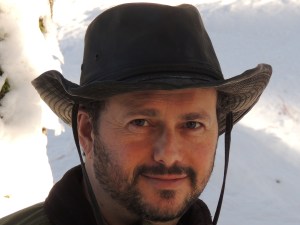
Alon ShalevAlon Shalev writes social justice-themed novels and YA epic fantasy. He swears there is a connection. His latest books include: Unwanted Heroes, At The Walls Of Galbrieth, and The First Decree. Alon tweets as@alonshalevsf and @elfwriter.

_________________________________________________________

Welcome to Writerly Goodness, Alon!  Thank you for taking the time to answer a few questions for my readers.  I must say that I’ve been following you with great interest since we “met” through Author Salon and I became aware of your progress through last year’s Amazon Breakthrough Novel Award (ABNA).

WG: I know you’ve probably written a lot about this, but I must ask about your experience with the ABNA.  Some of my friends have expressed interest in the competition (or entered) and I’m sure they would love to know about the process of getting to the quarterfinals and how it contributed to your success with At the Walls of Galbrieth.

AS: I think ABNA is an amazing opportunity even if you do not win. It pushes you to finish and polish a manuscript, and prepare what is essentially your media kit. I have reached the quarterfinals with three different books and enjoyed the tension around it (I had my acceptance speech all worked out!). When you reach the quarterfinals, experienced people in the industry critique your novel. It can be tough, but you do learn a lot. Finally, there are many agents trolling the competition, so it is an effective way to avoid the depressing slush piles.

WG: Now The First Decree, the second novel in your Wycaan Master series has been published.  How was writing the second novel in your series different from the first and what did it teach you about yourself as a writer?

AS: The most significant difference is allowing for a story arc that gives a satisfying climax, but also extends tendrils into the next book. In fact, there is a similarity at the beginning, because you want to bring the reader who has not read your first book (or read it a while ago) up to speed without imparting a huge information dump or giving away too much from the first book. I found this very challenging and had a number of friends critique this aspect in order to find the right balance.

What I love most about writing a series is that I can really develop my characters. They have time to grow up and mature. Outside of writing, I am a devoted father (which is what got me writing epic fantasy in the first place) and work with college students. So I realize that I am imbuing this love for seeing young people grow and develop into my writing and, I think, only a series can allow for this.

WG: How did Seanchai’s story begin for you and how did it evolve? 

AS: Every summer, my family goes camping for two weeks in Northern California. After we had set up camp, my sons (then 11 and 7) went off to explore the campground and I whipped out my laptop. They soon returned and objected to me writing during family time and this was the compromise we reached. During the two subsequent years, I wrote The First Decree and Ashbar, and read a couple of chapters each night either around the fire or snuggled in my tent.

I realized that many aspects of Seanchai are a mix of both sons, and perhaps how I would like them to turn out.  My fears that I will not be there for them one day plays out as Seanchai is denied a parent or mentor so many times. But there is also the desire to cultivate deep friendships, which I believe is central to the values that both boys have, as well as dealing with teenage romance and pressure.

All my characters are now part of my family. When I killed one off, I cried. When I edited that chapter several times, I cried…several times! I often imagine conversations with them, counselling and encouraging them, as I strive to do for my sons.

WG: I’m a big process geek.  Would you share something about your writing process? 

AS: I am not a good person to ask. I plunge in and trust the creative juices. I usually finish a 100,000-word manuscript (a rough draft full of mistakes) in three months, writing an hour a day and more on weekends. I keep a contents page for myself to track chapters and a characters page where I add physical traits or history. I also have ongoing plot notes that are threads between chapters and stories. This is written at the bottom of the chapter I am writing and I cut and paste on from word doc to word doc and erase an idea after it is included.

In terms of workspace, my desk is in the kitchen and I can write on the train, bus, anywhere. Once the idea is there, everything flows. It is a truly exhilarating experience. My family would probably tell you that I am a bit crazy when in the creative process. If I do not have the time to write I can become somewhat cranky and have a propensity to talk about little else. I am constantly worrying about my characters and the danger or emotional turmoil that I put them in.

WG: I’ve been told by industry experts that traditional fantasy is a hard sell in today’s market.  Did you find this to be true and what are your thoughts on the genre’s continuing potential? 

AS: My marketing guru is John Locke (the author) and I am fastidiously following his business model. He says it is better to have a smaller, clearly defined target audience, than a larger, less identifiable one. I have more problems placing my social justice-themed novels than fantasy.

Fantasy readers are passionate, fun, social and happy to share opinions. They are on line and engaging their peers all the time. In addition, every movie – Lord of the Rings, Eragon, Hobbit, Harry Potter, Oz, Jack and the Giant Slayer – brings waves of new and eager readers. Parents, who want to encourage their children to read, will buy them the books that reflect these movies. As long as these movies are being produced, as long as there are great authors writing quality stories, I think the future is bright and I am thrilled to be a part of it.

WG: What’s coming up for you and The First Decree?

AS: Following John Locke’s model, I am very focused on writing and publishing. Ashbar – the third book in the series is scheduled to come out in the fall. I will finish writing Book 4 during the summer and then spend the rest of the year editing it before turning it over to my editors.

The new marketing reality is that we are in an age of instant gratification. You finish Book 1 and if you enjoy it you want the next and you want it now! How smart were Amazon with their 1-Click? There is so much social media that to keep your readers waiting a year for a book is dangerous if your name doesn’t end in Brooks, Salvatore etc.  The First Decree

Meanwhile, I continue to build my online platform through my weekly blog (www.elfwriter.com) and twitter (@elfwriter – 22,000+ followers). I spend a fair amount of time here and on Facebook (and just getting into Goodreads), and I truly love the interaction with fellow writers, readers and fantasy fans.

Thanks for sharing your time and expertise, Alon.  All the best for your future writing endeavours!

Thank you, Mel, for this opportunity.

I failed the test

Back in December, Robert J. Sawyer shared this: http://www.rinkworks.com/fnovel/

Rinkworks warns the following:

Ever since J.R.R. Tolkien and C.S. Lewis created the worlds of Middle Earth and Narnia, it seems like every windbag off the street thinks he can write great, original fantasy, too. The problem is that most of this “great, original fantasy” is actually poor, derivative fantasy. Frankly, we’re sick of it, so we’ve compiled a list of rip-off tip-offs in the form of an exam. We think anybody considering writing a fantasy novel should be required to take this exam first. Answering “yes” to any one question results in failure and means that the prospective novel should be abandoned at once.

The problem is … I answered yes more than once.

Specifically:

4. Is your story about a young character who comes of age, gains great power, and defeats the supreme bad guy?

Well, it’s about three young characters, two who “come of age” and one who just figures out what his damage is, spanks his inner moppet and gets on with it, all three of whom have roles to play in the defeat of the dark god Yllel, and his sourcerous servant Kane.

12. Does “a forgetful wizard” describe any of the characters in your novel?

Yes, Aeldred is dithering and occasionally confused, but he is the exception and considerably younger than most of the magickal movers and shakers in my novel.  Plus, he’s not even close to being a main character.

21. How about “a half-elf torn between his human and elven heritage”?

That would be Aislinn, actually and she’s not torn so much between the two peoples as derided and feared by both because she is the first child born of a Tellurin (my version of humans) and an eleph (my version of elves).  She’s actually going to be pivotal in uniting the two peoples.

39. Does your novel contain orcs, elves, dwarves, or halflings?

Actually, all of the above.  I’ve changed the names slightly and given them different origins.  My orcs are called okante and are peaceful tribes-people who generally live in harmony with the Tellurin tribes of the north.  They’re only drawn in as villains because Yllel tricks them into soul-slavery.  My elves, as mentioned above, are called eleph and they come from a different world.  One of my gods tries to do something good, but ends up tearing a hole in the world and sucking half the population of Elphindar into Tellurin before the gap can be closed.  The eleph are not pleased.  Dwarves are called dwergen, and are the children of the elemental Gods of earth and fire.  Rather than halflings, I have gnomes I call dwergini and they are the children of earth and air.  Neither race is terribly differentiated from their fantastic forefathers, but they’re certainly not dour and I try not to make them overtly stereotypical.

Enough of the justification, but I can tell you that I was not a little disconcerted by saying yes even those four times.

Fantasy Forest

Fantasy Forest (Photo credit: ozjimbob)

Then, in January, Author Salon posted this for the benefit of the Fantasy and YA Fantasy peer groups, two of the more active in the AS fold: http://www.authorsalon.com/page/general/fantasytropes/

Again, I shook in my metaphorical boots because my story is fairly littered with orcs, trolls (which I call krean), ogres (the gunden), etc.  Will renaming be sufficient?  It’s not like any of them play a significant role, but they are there in their standard and stereotypical glory.

I started questioning the value of my novel in a serious and neurotic way.  Then I sat back and tried to put things into perspective.  My story is not “about” any of these tropes, save perhaps for my protagonists coming of age, finding power, and defeating the big bad.  Renaming will likely be sufficient in most cases.  I don’t have to throw the baby out with the bath water.

I almost failed another one

AS says it wants thick-skinned writers.  Though I do tend to take some criticism more to heart, or react poorly to some of their advice (largely because I think that it’s being posted because someone has looked at my work and though poorly of it, even though I “know” I’m not that important to anyone), I’m learning to understand being thick-skinned in the same way I understand being courageous.  Being brave doesn’t mean that you’re not afraid; being brave means that you act despite your fear and try not to let it limit you.  I’m taking the same, long view of being thick-skinned.  It doesn’t mean that my confidence isn’t shaken; it means that even when it is, I get my shit together and soldier on.

Then Rachelle Gardner posted this in March:

http://www.rachellegardner.com/2012/03/do-you-have-a-thick-skin/

It’s good to know that agents feel the same way us writers do sometimes 🙂

Writing well is the best revenge 🙂

Then I came across a very helpful blog post:

http://www.writersdigest.com/whats-new/writing-rules-10-experts-take-on-the-writers-rulebook?et_mid=538945&rid=3085641

I’ve always aspired to be transgressive; sometimes in a good way, and sometimes not so much.  I think ultimately, I have to focus on writing the best novel I can, so that when I do break the rules, I’ll be forgiven.  It is easier to ask forgiveness than permission, right?  It’s such a relief to know that I can write my way out of the corner I seem to be getting scrunched into.

Coming up on Writerly Goodness

In future posts, I want to get a bit into the background of the novel, stuff that won’t necessarily be in it, but all of the window dressing I developed so that my world would work fairly consistently.  Stuff like cosmology, the historical timeline leading up to the novel, religion, the way magic works, my various peoples and their origins (in more detail than above), naming conventions, and some of the unique things about Tellurin.  In other words, I’m going to write about world-building.  Have any interest in that?

What are your feelings about tropes and their use/overuse?  Would you fail Rinkworks’ test?  What about the Author Salon article?  Does it give you pause?

If you liked this post, feel free to use the “like” or sharing buttons below.  Or, you may consider subscribing via email, or RSS feed (there are links below each post, or on right side menu on my home page).

Until next week!