Tipsday: Informal writerly learnings, March 5-11, 2023

Did you survive Monday after daylight saving? I almost didn’t. Recuperate with some informal writerly learnings 🙂

My favourite DST meme:

Greer Macallister shares five ways to rediscover your writing joy. Then, Tiffany Yates Martin is assuaging the pain of punctuation. Juliet Marillier considers writing home. Next, Kathryn Craft discusses navigating the road from journalist to novelist. Writer Unboxed

Heroes don’t have to be boring. Hello, Future Me

Piper Bayard offers help with writing about recruitment for the intelligence community. Then, Colleen M. Story shares some quick tips to help you avoid five types of writing-related pain. Penny C. Sansevieri reveals five reasons your Amazon ads aren’t drawing in readers. Writers in the Storm

K.M. Weiland explains how to write literary fiction. Helping Writers Become Authors

What is creative writing? Reedsy

Elizabeth Spann Craig discusses newsletters, even if they’re just sent for releases.

The mentor archetype: definition, ten examples, and hot to write. The ally archetype. The hero archetype. Story Grid

A.H. Plotts shares what her DIY writing retreat taught her about her writing practice. Then, Dominique Richardson offers advice on finding alternatives to ableist language. Alison Schaffir wants you to evoke your inner teen. Next, Julie Slaughter suggests five ways to reduce writer anxiety. DIY MFA

How Bloody Mary turns fear into fun. Monstrum | PBS Storied

Kim Catanzarite declaims, to give it away, or not to give it away. Then, Gemma Whelan explains how bad publishers hurt authors. Jane Friedman

Lisa Poisso explains the difference between an editor and a book coach. Thin, Liz Alterman shows you how to ask for book reviews (and why you should). Writers Helping Writers

Create a daily writing practice. Reedsy

Nathan Bransford says, don’t worry about spoilers in a query letter.

Tiffany Yates Martin composes a letter: dear author …. It’s the writerly hug you didn’t know you needed! Fox Print Editorial

Chris Winkle suggests seven easy conflicts for light stories. Then, Oren Ashkenazi analyzes Star Trek’s best antagonistic species. Mythcreants

Thank you for spending some time with me, and I hope you found something to support your current work(s) in progress.

Until Thursday, keep staying safe and well, my writerly friends!

Tipsday: Informal writerly learnings, Oct 16-22, 2022

This is the final tipsday of October (!) Will you NaNoWriMo this year? I am. It will probably be another NaNo rebel combo, though I will be focusing on Alice in Thunderland. It might actually be a novella, though I’m not certain, yet.

In any case, it’s time to get your fill of informal writerly learnings. Enjoy!

Richelle Lyn is teaming up with other solopreneurs. Then, Jeanette the Writer explains what an editor actually does. Stephanie Dethlefs helps you get to know your ideal reader. Later in the week, Ashley Christiano offers five meditations to help you find your writing confidence. DIY MFA

Jan O’Hara discusses journaling and the writer (episode: man versus table saw). Then, Barbara Linn Probst is grappling with the awkward question of “women’s” fiction. Sophie Masson considers food in fiction. Writer Unboxed

Janice Hardy lists five ways dialogue can annoy your readers. Fiction University

K.M. Weiland reveals the nine negative character arcs in the enneagram. Helping Writers Become Authors

This fairy tale is an actual nightmare. Tale Foundry

Becca Puglisi lists the ingredients for a successful story climax. Margie Lawson says, here be monsters: writers beware! Lynette M. Burrows shares seven ways to increase your creativity through workspace design. Writers in the Storm

Jessica Conoley is writing through the impossible. Then, Hattie Fletcher explains how to avoid taking edits too personally. C.S. Lakin helps you use weather to convey mood in fiction. Jane Friedman

On her own site, Susanne shares tips on how to bring setting to life in your fiction. Live, Write Thrive

Marissa Graff suggests five micro-edits to hook readers on your first page. Then, Julie Artz shares her top three world-building pitfalls and how to avoid them. Writers Helping Writers

The Rings of Power has a narrative momentum problem. Like Stories of Old

Nathan Bransford wonders, can you see what is and isn’t on the page?

Tiffany Yates Martin explains how to speak as well as you write (part 2). Fox Print Editorial

Kristen Lamb reveals why we love, hate, and need horror.

Chris Winkle explains why you should consider present tense. Mythcreants

Roz Morris interviews Jessica Bell on making good decisions about cover design. Nail Your Novel

Louise Harnby answers this question: can I place a dialogue tag before the character’s speech?

How to prevent creative burnout as a writer. Reedsy

Hannah McGregor shares how her Harry Potter podcast made her a better scholar. The Walrus

Jeff Beer explains why Marvel’s She-Hulk finale is the best branded content of the year. Fast Company

Michelle Cyca interviews Ann-Marie MacDonald on exile, imagination, and her new gothic ghost story. The Walrus

John Garth explains how J.R.R. Tolkien came to write the stories that were the source material for The Rings of Power. The Smithsonian Magazine

David Routt: HBO’s House of the Dragon was inspired by a real medieval dynastic struggle over a female ruler. The Conversation

Thanks you for spending some time with me, and I hope you took away something to support your current work(s) in progress.

Until Thursday, keep staying safe and well.

Tipsday: Informal writerly learnings, Feb 27-March 5, 2022

Welcome to tipsday, your opportunity to fill up on informal writerly learnings, every Tuesday (if you want more—moar—check out the archives). Enjoy!

Melissa Haas shares leisure learning links for February 2022. Then, Richelle Lyn shares tales of a solopreneur. Gabriela Pereira interviews Gillian McDunn about neurodiversity, family dynamics and cooking in contemporary middle grade fiction. Dana De Greff helps you open doors in your writing. DIY MFA

Tim Hickson focuses on the most important moment in any story. Hello, Future Me

Kim Bullock introduces us to the little library banned book project. Then, Tiffany Yates Martin reviews some words you’re probably using wrong. Donald Maass: theme vs. meaning. Liza Nash Taylor shares the arc of one author and two book launches in five acts: Freytag’s pandemic. Yuvi Zalkow: storytelling and the Hero’s Journey. Writer Unboxed

The myth of heroic masculine purpose. Like Stories of Old

K.M. Weiland shares five red flags that indicate you might need a break from writing. Helping Writers Become Authors

Tiffany Yates Martin wants you to dig deeper than description for more nuanced characters. Then, James R. Preston wants you to get out from behind the keyboard. Writers in the Storm

How to write your novel’s first chapter. Reedsy

Joanna Penn interviews Johnny B. Truant about pivoting on the creative journey. The Creative Penn

Lisa Poisso recommends best practices for working with an independent editor. Then, Becca Puglisi shares some tips for landing a guest-posting gig. Writers Helping Writers

Nathan Bransford wants you to show your characters getting from point a to point b.

Finding your writing process. Shaelin Writes

Jessica Conoley reveals what your writing is training you for. When you change alongside your book: Q&A with Mansi Shah. Jane Friedman

Chris Winkle explains how to write an unhappy ending. Then, Oren Ashkenazi reveals why sequels don’t erase errors in the first book. Mythcreants

Adze: the shapeshifting firefly from West Africa. Monstrum | PBS Storied

Kristen Lamb is creating dimensional characters with personality traits.

Ashawnta Jackson reveals the short but influential run of Ebony and Topaz. JSTOR Daily

Angelarium: The Book of Angels. Tale Foundry

George Saunders helps you overcome uncertainty in writing. Literary Hub

Priya Sidhar wonders, was Brandon Sanderson’s video about burnout relatable? Medium

Unreliable narrators: why we love to be lied to. The Take

Jonathan Thornton provides a readers’ guide to the Finnish weird in translation. More for my TBR list! Tor.com

Leigh Haber interviews Diana Gabaldon about season six of Outlander. Droughtlander ENDED Sunday! Yay! Oprah Daily online

Thank you for taking the time to visit. I hope you found something to support your current work in progress.

Until Thursday, be well and stay safe, my writerly friends!

Tipsday: Writerly Goodness found on the interwebz, July 18-24, 2021

It’s the last tipsday of July? Where the hell has the time gone? And so fast? Ah well, console yourselves with some informal writerly learnings.

Jan O’Hara shares what an unnatural book marketer learned while Marie Kondo-ing her house. Then, Dave King exposes the dangers of editing. Barbara Linn Probst explains what to do when you take a break from your work in progress. Heather Webb says, when the going gets tough, the though get going (in publishing). Late in the week, John J. Kelley offers some tips for when characters meet: close encounters of he initial kind. Writer Unboxed

What is Toph’s character arc? Hello, Future Me

K.M. Weiland: why everyone should write (even if you think you stink). Helping Writers Become Authors

Angela Ackerman promotes writing character descriptions that hook readers. Then, Sudha Balagopal encourages you to flavor your fiction with foreign expressions. Later in the week, Ellen Buikema encourages you to think about why you’ve chosen the road to writing. Writers in the Storm

Copyediting vs. proofreading. Reedsy

Bonnie Randall helps you access deep point of view via description (and a writing exercise). Fiction University

Nathan Brandford wants you to try to separate process from product (outcomes).

Is your book ready for an editor? Reedsy

E.J. Wenstrom shows you how to plan an online book launch. Then, Sara Farmer considers classic girl detectives. Gabriela Pereira interviews Brandie June about character dynamics in a fairy tale retelling. Later in the week, Kim Catanzarite shares five copyediting mistakes you’re probably making (and how to eradicate them). DIY MFA

El Silbón: The Deadly Whistler of the South American Grasslands. Monstrum | PBS Storied

Angie Hodapp shares four ways to create inter-character conflict. Pub Rants

Becca Puglisi helps you figure out whether fight, flight, or freeze is your character’s default response. Writers Helping Writers

Chris Winkle explains how to make large conflicts exciting. Mythcreants

Chimera: mythology’s magical multi-species monster. Tale Foundry

Kathleen Newman-Bremang: it isn’t just Gossip Girl—TV has a major colorism problem. Refinery 29

35 Canadian books to check out this summer. CBC Books

Phil Pirello introduces us to the version of Aliens we never saw. SyFy

Kim Stanley Robinson considers the novel solutions of utopian fiction. The Nation

Davide Tristan: one megahit later, we check in with the creator of Enola Holmes. ABC27

Vicky Qaio reports that Canadian authors C.L. Polk and Silvia Moreno-Garcia among World Fantasy Award finalists. CBC books

Neda Ulaby: when your book publishes in a pandemic. NPR

And that was tipsday. Thanks for taking the time to visit, and I hope you found something to support your current work in progress.

Until Thursday, be well and stay safe, my writerly friends!

Tipsday: Writerly Goodness found on the interwebz, June 6-12, 2021

Another week, another batch of informal writerly learnings 🙂 Get ‘em while they’re hot (and not too old)!

Greer Macallister wonders, can writers still be readers? Then, Jim Dempsey provides a guide to style. Kathleen McCleary says, prove it! Kathryn Craft shows you how to heighten tension with a watcher. David Corbett: on killing 22,000 darlings, part 2. Identifying the dead. Writer Unboxed

This is your brain on language. SciShow Psych

K.M. Weiland covers the flat archetype of the parent in part 18 of her archetypal character arcs series. Helping Writers Become Authors

Susan DeFreitas shares six key strategies for emotionally affecting fiction. Then, J. Michael Straczynsky explains why you can’t sell an idea. Ashleigh Renard is selling books on TikTok, no dancing (or crying) required. Jane Friedman

The lotus blossom stereotype. The Take

Jami Gold helps you avoid “talking heads” and other clichés. Then, Jessica Conoley helps you build your triangle of support with part 2: mentorship. Writers Helping Writers

Colleen M. Story lists five signs you have “writer’s DNA.”  Piper Bayard presents seven character lessons from a real-life heroine. Writers in the Storm

Yes, Virginia, the female gaze exists. The Take

Marina Barakatt examines the value of Lumberjanes. Then, Gabriela Pereira interviews Tasha Suri about crafting conflict in epic fantasy. Later in the week, Elizabeth Sumner Wafler explains how she built her side biz as an editor. Then Rebecca D’Harlingue lists five questions to ask before you write a dual timeline novel. DIY MFA

Kristine Kathryn Rusch continues her fear-based decision-making series with traditional writers.

Chris Winkle explains why we have to let go of meta mysteries. Then, Oren Ashkenazi analyzes five stories with weak stakes. Mythcreants

I tried Harley Quinn’s elevator flip (as one does). Jill Bearup

Sudbury’s Scott Overton writes about an alien artefact found in a northern Ontario lake. CBC

Mike Fleming Jr. reports that N.K. Jemisin’s Broken Earth trilogy lands at Sony TriStar in 7-figure deal; author to adapt. Deadline

Thank you for taking the time to stop by, and I hope you found something to support your current work in progress.

Until Thursday, be well and stay safe!

Tipsday: Writerly Goodness found on the interwebz, Jan 10-16, 2021

Another week, another bunch of informal writerly learnings. Enjoy!

Janice Hardy wonders, is your plot going somewhere readers will follow? Then, Janice offers some guides for using internal conflict that make sense. Fiction University

Brené Brown: Why Your Critics aren’t the Ones Who Count. 99u

Sandra Wendel explains the differences between line editing, copy editing, and proofreading. Jane Friedman

Christina Kaye shows you how to start, build, and grow your email list. Helping Writers Become Authors

Shaelin Bishop demonstrates line editing. Shaelin Writes

Ellen Buikema promotes the value of writing young adult literature. Writers in the Storm

Megan Taylor Morrison shares eight growing pains she had while learning to edit equitably. Elizabeth Spann Craig

Emily Zarka considers the Baba Yaga: the ancient origins of the famous witch. Monstrum | PBS Storied

Jim Dempsey explains what to expect from an editor. Juliet Marillier is writing in wild times. Then, Kathryn Craft presents seven sneaky ways to spotlight story wisdom. Writer Unboxed

Alli Sinclair helps you write better dialogue. Writers Helping Writers

The Simp trope, explained. The Take

Chris Winkle addresses feminists and romance fans: let’s fight our common enemy. Then, Oren Ashkenazi explains how Legendborn created an enthralling love triangle. Mythcreants

The Gold Digger trope, explained. The Take

Judith Herman: eleven words that don’t mean what you think they mean. Mental Floss

Thank you for stopping by, and I hope you found something to support your current work in progress.

Until Thursday, be well and stay safe, my writerly friends!

Tipsday: Writerly Goodness found on the interwebz, May 10-16, 2020

Welcome to week nine of #pandemiclife.

Here in Ontario, the Premiere has authorized some businesses to reopen. Street-facing retail stores that can deliver curb-side service. Veterinarians, groomers, and pet boarding businesses. Essential-adjacent health support services. My mother-in-law will be able to get her housekeeper back—physically distanced, of course. And golf courses. And cottage country (which really doesn’t want to be open, from what I’ve been hearing).

Will we have another spike? Will we have to dial back? I’m maintaining the status quo. Kind of. I’ll be delivering virtual training over the next couple weeks. It’s going to be interesting. And … I’ve already been asked to deliver the next session, which is pretty much back to back, because there aren’t enough trainers who are comfortable with the platform, or even virtual training, to spread out the burden.

There are apparently five such courses to be delivered between now and September. I hesitate to be on the hook for all of them. But this may be my work life, moving forward.

I’ll keep you updated.

In the meantime, please enjoy some informal writerly learnings 🙂

K.M. Weiland uses a brave critique volunteer’s work to discuss seven possible hooks for your opening chapter. Helping Writers Become Authors

K.B. Jensen explains how to throw a virtual book launch using Facebook Live. Then, Chantel Hamilton provides a comprehensive guide to finding, hiring, and working with an editor. Jane Friedman

Shaelin Bishop continues her series on developing a novel with part 4: form, style, and voice. Reedsy

Joanna Penn interviews Larry Brooks about how to develop strong fiction ideas. The Creative Penn

Leanne Sowul touts the power of paying attention. Later in the week, Sarah Fraser lists five signs you’re ready to work with an editor. DIY MFA

Jim Dempsey helps you decide, your words, or your editor’s? Juliet Marillier: consolation or challenge? Kathryn Craft shares eight ways to unblock your scene’s potential. Writer Unboxed

September C. Fawkes explains how plotlines add dimension. Writers Helping Writers

Jami Gold wonders whether breaking the rules is easy or hard.

Jenna Moreci says imposter syndrome sucks, but you don’t.

Nathan Bransford tells you everything authors need to know about dialogue tags.

Aliza Mann explains how to get back on track when all your planning fails. Fiction University

Kristen Lamb wants you to create a story-worthy problem that will captivate an audience.

How the strong black woman trope has evolved. The Take

Barbara Linn Probst lists three motivations to write: artistry, identity, and legacy. Writers in the Storm

Chris Winkle says, no. “Art” does not entitle you to spread harmful messages. Then, Oren Ashkenazi gets facetious with seven musts for dominating a fantasy battle. Mythcreants

Richard Marpole goes for a walk among the trees: a look at forests in myth and media. Fantasy Faction

Esther Jones: science fiction builds resilience in young readers. Phys.org

Simon Winchester: has “run” run amok? It has 645 meanings … so far. NPR

Thanks for stopping by. I hope you’ve taken away something to support your current work in progress (or planning/development of same).

Until Thursday, stay safe and be well, my writerly friends!

Tipsday2019

Tipsday: Writerly Goodness found on the interwebz, July 2-8, 2017

It’s time for your dose on informal writerly learnings 🙂

K.M. Weiland continues her most common writing mistakes series with part 60: flat plots. Helping Writers Become Authors

Later in the week, Kate continues her series on the do’s and don’ts of storytelling according to Marvel with a look at Guardian of the Galaxy, volume 2: how to ace the first act in your sequel.

As a follow up to her last post on critiquing, Jane Friedman helps you recognize patterns in the way you respond to criticism.

Then, Gary Zenker guest posts on DIY MFA: a new approach to critique.

Larry Brooks stops by Writer Unboxed to discuss the big lie about writing compelling fiction.

As a follow up to Larry’s post, Anna Elliott asks, what’s your truth? Writer Unboxed

Donald Maass explores characters light and dark. Writer Unboxed

Parul Macdonald uncovers the world of a literary scout and international rights. Writer Unboxed

Abigail K. Perry joins the DIY MFA team: how to make you character descriptions do double duty.

Stacey B. Woodson shares five writing lessons from thriller master David Morrell. DIY MFA

Gabriela Pereira interviews Sarah Dessen for DIY MFA radio.

Marielle Orff shares five ways to get to know your characters better. DIY MFA

Emily Wenstrom offers some email marketing tips. The Write Life

Jami Gold gives us one simple trick to avoid the opening page infodump.

Janice Hardy continues her birth of a book series with testing the idea. Fiction University

Then, Janice visits Writers in the Storm: what do you want your readers to wonder about?

Chris Winkle covers five more dualities that can replace good and evil. Mythcreants

Bryan Hutchinson explains how to become a prolific writer while holding down a day job. Positive Writer

Sophie Playle: where is your budget for book editing best spent? Liminal Pages

Sarah Fox shares seven things editors wish authors knew. Well Storied

Jeremy Szal shares his tips for writing a successful query letter. Fantasy Faction

Caroline Leavitt: when the writing mentor becomes the mentee. The Millions

Anne Lamott: 12 truths I learned about life and writing. TED Talks

Jarred MGuiness says writing is the only magic he still believes in. TEDxEaling


Folklore Thursday takes a look at how iron became the enemy of the fairy folk.

Shane Koyczan: the weather.


And that is how we Tipsday.

See you on Thursday for some mental corn popping thoughty.

Be well until then!

tipsday2016

Tipsday: Writerly Goodness found on the interwebz, April 9-15, 2017

And it’s been another lovely week for the writerly goodness 🙂

K.M. Weiland shows us how storytelling benefits everyone. Helping Writers Become Authors

Later in the week, Kate points out three ways to choose the right protagonist.

Roz Morris appreciates The Story of Your Life, on which Arrival was based. Nail Your Novel

Then Roz strolls over to Writers Helping Writers: planning the perfect love triangle.

David Corbett: is your character’s face the window to her soul? [Love the URL title: a face to launch a thousand words, or less. Hopefully less.] Writer Unboxed

Sarah Callender zooms in on third person narration. Writer Unboxed

Liz Michalski says, let your subconscious be your guide. Writer Unboxed

Susan Spann advises you how to request a reversion of publishing rights. Writers in the Storm

Jenna Moreci debunks writer’s block:


Bess Cozby shares the tale of how embracing minimalism made her a better (and happier) writer. DIY MFA

Gabriela Pereira interviews Kathleen Audet: finding your authentic image. They even talk semiotics (!) DIY MFA

Kristen Lamb schools us in deep POV: what it is and why readers love it. Later in the week Kristen takes us deeper into deep POV: how to immerse the reader in story.

Janice Hardy: six ways Netflix can make you a better writer. Fiction University

Later in the week Janice posts about how the wrong tone can change your whole novel.

Jami Gold tells you how to analyze your writing habits so you can improve on the bad ones.

Christine Frazier compares the hero with the secret good guy (and explains why every story needs a secret good guy). The Better Novel Project

Alex Segura explores the moments that keep you going as a writer. Terribleminds

Chris Winkle considers the big problem with uncertain endings. Mythcreants

Everyone (well, Chuck Wendig, Jim C. Hines, and Mary Robinette Kowal, anyway) has been writing about this debacle. I’ll just leave K. Tempest Bradford’s take on it here: OdysseyCon and why serial harassers are safe in out community.

Oh, and this: Bianna Wu offers her perspective on sexism and second chances. Jim C. Hines

Lessons from the Screenplay – Creating the ultimate antagonist in The Dark Knight.


The new World Fantasy Award design is revealed.

Helen Pluckrose explains postmodernism and its impact: how French “intellectuals” ruined the west. I have to say I hate postmodernism myself, and it’s probably because I never truly “got” it. Bleargh … AREO Magazine

Kristian Wilson: old books smell like chocolate and coffee according to science. Hey, who am I to argue with science? Bustle

Anna Pitoniak shares the writing lessons she learned as an editor for Random House. Literary Hub

Psyche Z. Ready offers a transgender reading of an ancient folktale. Tiny Donkey

James Whitbrook takes a look at the first Thor: Ragnarok trailer. i09

Brian Raftery shares The Last Jedi official trailer. Wired

Sense8 will be back May 5th!


And Orphan Black’s final season begins in June! Andy Swift for TV Line.

That was your informal writerly learnings for the week.

Come on back on Thursday for some thoughty.

In the meantime, be well.

tipsday2016

Ad Astra 2015, day 2: An agent and a publisher walk into a bar . . . who do you approach first?

Yes, day 2 has finally arrived!

First, a reminder of my disclaimer

These posts are composed of my notes. Often, because of the scheduling, I enter sessions after they’re already in progress. I write by hand, so as I’m writing what I believe to be a salient point, I may miss the next one. I do my best to catch as much as I can, but things will be missed. Also, if, in my haste I recorded something incorrectly, please don’t be shy about coming forward and letting me know. I will correct all errors post-hasty once informed of them.


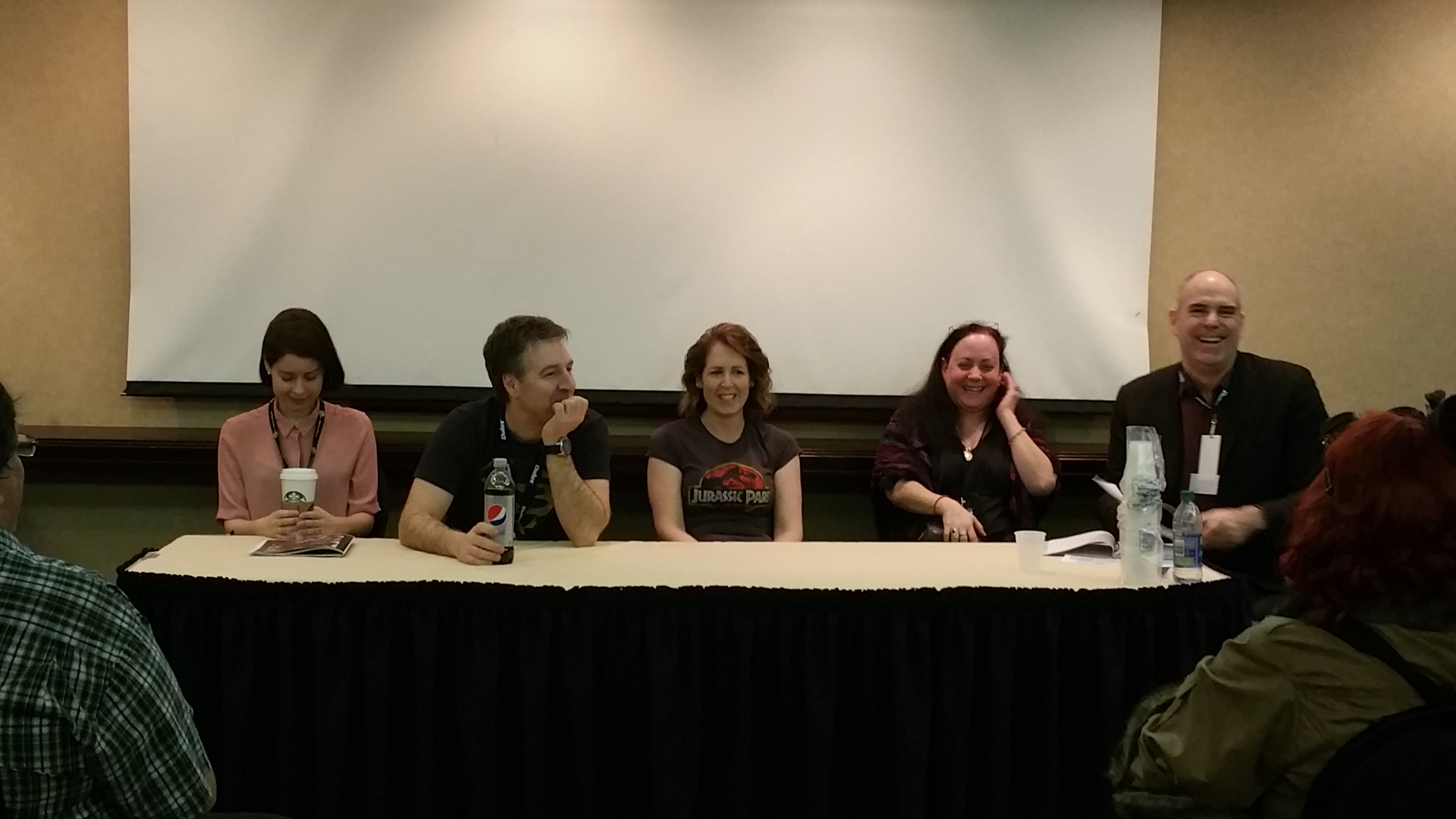
Panellists: Monica Pacheco, Ryan McFadden, Kelley Armstrong, Karen Dales, Mark Leslie
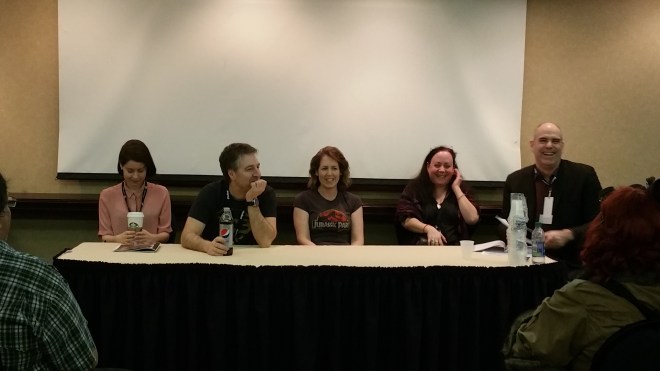
Agent or publisher panel

MP: By the time a book hits the shelves, it’s already 1-2 years old, so to speak. Don’t follow trends. What’s selling now won’t be what’s selling when your novel comes to market.

ML: Is it fair to say that trends are what’s currently selling, plus some kind of twist?

KA: I’ll reiterate: don’t write to trends. There’s no point.

KD: If you focus on what’s hot rather than what you’re passionate about, your readers will detect it. Readers can tell when you’re being disingenuous.

ML: I was at a conference and I pitched my idea for a book without having written it. Dundurn said yes, so I started writing in April. The book was published in October, so that will give you some idea how quickly things can come together.

RM: If I was at the “bar,” I think I’d hit on the other writers. Craft is more important than your ability to sell yourself. Writers will introduce you to their people. Those people can be some very valuable contacts.

KD: I’m working as a freelance editor right now and the way I came by the job was through pitching a publisher. I was talking to an author and asking where I should send my work in progress. The author suggested her publisher. I pitched, and not only was I able to get a contract for my WIP, but I also became an editor for them.

ML: Sometimes I might consider a market inappropriate for me, or a piece inappropriate for the project I’m working on, but for someone else, it may be a perfect fit. I remember working as an editor and having to turn down a great story because it wasn’t suited to the anthology. I recommended that the author submit his story to Writers of the Future. He did, and he won.

MP: We read everything in our slush pile. We’re looking for that gem, and we won’t overlook any submissions.

RM: Networking is everything.

KD: If you’re working with a freelance editor, research them. Develop a relationship. If you’re working with an editor who works with a traditional publisher, it’s different. The money the publisher is willing to invest can change the dynamic.

KA: When you work with an editor for one of the big five houses or their imprints, it’s more important to be aware of what the publisher’s guidelines and preferences are. The individual editor may be gone by the time your book is printed.

ML: What are the differences between Canadian, UK, and US markets?

KD: Canadian and UK publishers are more consistent. In the US, I’m all over the place.

ML: In one instance, the managing editor gave me notes before I even started writing.

KD: The editor has to be an advocate for the author.

KA: Networking, as mentioned, is great, but don’t get sneaky about it. Don’t invite me out to coffee just to get a recommendation, or to ask me to read your manuscript.

KD: Don’t go fishing. Go make friends.

ML: Look at the long game.

MP: So much of the industry is based on relationships.

KA: Don’t do anything electronically that you wouldn’t do in person. Having said that, if someone asks you what you’re working on, be honest. Talk about it positively.

MP: The bottom line is to be professional. Don’t self-denigrate. No scented paper or bribes, please.

Q: Do different publishing houses have different quirks?

ML: Dundurn loves Canadian authors. In fact, you have to be Canadian to be published by Dundurn.

KD: Dark Dragon is interested in good storytelling. They like unique stories and voices.

KA: HarperCollins does amazing covers for their young adult books. Penguin random House is all around great. There was a poll in The Bookseller. Are authors happy with their publishers? The overwhelming response was that they wanted more communication from their publishers. 37% said that if they got an equivalent—not better—offer from another publisher, they’d switch. Subterranean Press is good.

RM: Smaller publishers are better at communicating with their authors. ChiZine, Dragon Moon, and Dark Dragon are like that.

MP: Tor is a dream to work with. Skyhorse Publishing is a good mid-sized, non-fiction publisher. Talos Press is interested in SFF. Simon & Schuster Canada has been very good to Andrew Pyper. They’ve sent him on a national reading tour.


And that was that.

Next week: What happens after acceptance?