The next chapter: June 2014 update

Hey all!

I must say that June was a blockbuster month for me.

It started with the publication of my science fiction short story “The Broken Places” being published in Bastion Science Fiction Magazine. Still so excited about that.

I attended June’s @M2the5th Twitter chat with Roz Morris, focusing on her Nail Your Novel series. I’m learning quite a bit from these, and though we cancelled July’s because, Independence Day, we’ll be getting back to our monthly schedule in August.

A comment on last month’s update had me a little concerned about what my readers might be taking away from these posts. It seems May’s update was taken as a warning about social media. If the warning was timely and helpful, great, but it’s not the message I hoped to convey.

I have now finished reading my ARC of K.M. Weiland’s forthcoming Jane Eyre: Writer’s Digest Annotated Classics. I’ll be posting a review later in the month, so stay tuned for that.

The adjustable desk is working out very well, and I’m now standing for longer between rests. At work, I read a post from a learning and development blogger in which he discussed his experience with his standing desk, which he described as continual fidgeting.

He uses a kitchen stool to take a periodic break from standing and has discovered that he can’t write while standing (!) Thankfully, that hasn’t been my experience.

CanWrite! 2014 was a great time, as usual. I’ve been blogging the panels, sessions, and workshops I’ve attended on a weekly basis.

Another piece of exciting writerly news arrived when I returned home from the conference: another speculative short story, “On the Ferry,” made it into the top ten in the When Words Collide writing contest.

This means I’ll appear in their chapbook anthology, In Places Between, though I’ll have to wait until the conference to find out if I’ve placed. Still. Squee-worthy.

Last month, I had a blogging disruption around the arrival of my desk and spent most of my non-blogging writing time working through Initiate of Stone, all of that work in long hand. Though I completed a lot of work on IoS, I wasn’t able to capture a word count from it.

In last month’s update, I mentioned I would be getting back to countable writing.
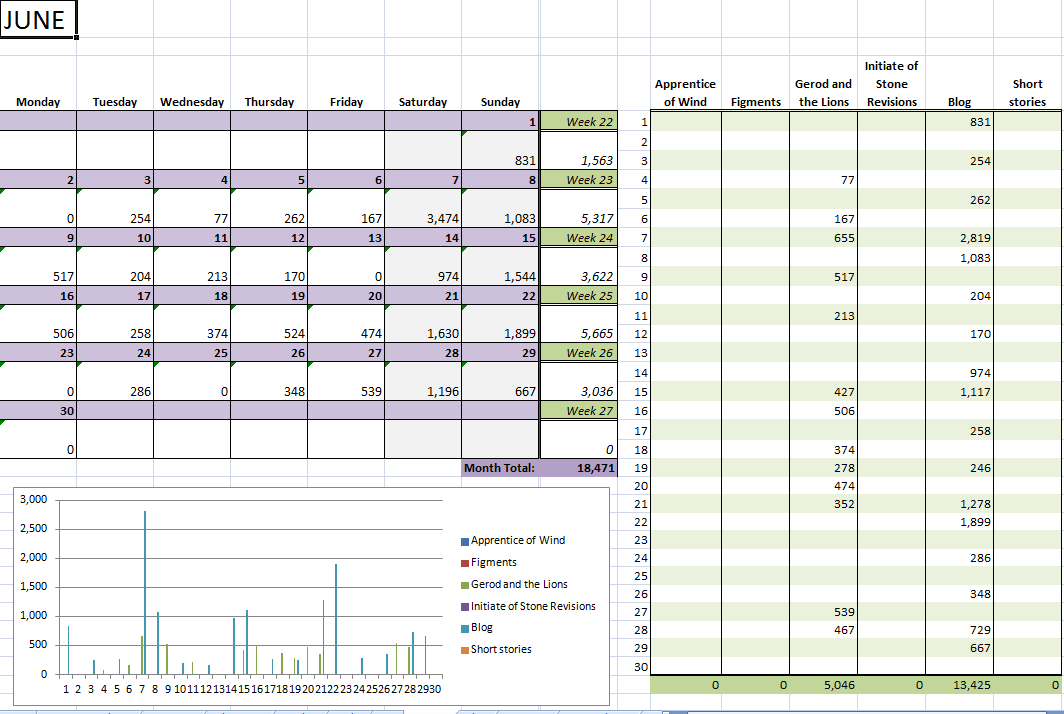
June's writing progress

June’s total word count: 18,471!!!!!

13,425 of those words were on my blog, but 5,046 were written in Gerod and the Lions. I set myself a goal of 5k for the month on that project, and I made it. The draft is now just over 10k words and I’ll have a workable draft by the end of the year 😀

I only just started working on Figments (my NaNo project from last year) as I had worked on IoS last month. In all fairness, I have a little more to do with Figments than I had to do on IoS.

First, I’m mapping it. This is something I picked up from reading Donald Maass’s The Breakout Novelist. For each chapter, I list the title, page count, word count, the first and last lines (both hooks, one to draw the reader into the chapter and the other to propel the reader onward), the purpose of the chapter, in story terms, the internal and external conflicts, and finally, what changes for the story, and for the POV character as a result of the chapter.

These are actually from several separate exercises in Maass’s workbook, but I’ve cobbled them together to create my map. These are like index cards and I can rearrange them as needed when I work on the structure of the story. I can see where I might have to divide longer chapters, and fairly easily pick out plot points, pinch points, reversals, etc.

Once I get the mapping done, I’ll fiddle with Figments’s structure and tighten things up, work through a beat sheet ala Roz Morris, and finally reverse engineer the plot with Victoria Mixon’s holographic structure.

June has taught me that I can’t draft one project and then work by hand on another project simultaneously. I’m going to try alternating and see how that goes.

And that is all the Writerly Goodness I have for you tonight.

How are your works-in-progress coming, my friends?

Coming up this month: An interview with author and editor Mat Del Papa on his new anthology Creepy Capreol, I take another shot at the writing process blog hop, the review of Katie’s book, more CanWrite! reportage, and a couple of poems with creation stories.
The Next Chapter

The next chapter: March 2014 update

The Next ChapterToday was, indeed, a glorious new day. This morning, the sun was shining, the high for the day was predicted to be above zero degrees Celsius (it turned out to be plus six), and Phil made me breakfast—wakey, wakey, eggs and bacey!

Unfortunately, around noon, I threw my back out. Note to self: do not try to dead-lift the over-full laundry basket.

Still, I went out and bought a new pair of sandals (yes, I’m that optimistic—there was much meltage today), spent a Chapters gift card on books, and stocked up on Atlas Mountain Rose, my spring Body Shop scent. My back regretted it, but I went.

Because this month was “heck month,” I did not get as much writing done as I would have liked, and by the time the second week rolled around, I knew I wasn’t going to stick to my schedule.

Truth be told, I’d been feeling a certain tension having to leave one project for another before I’d gotten what I thought needed to be done all along. I used that tension to good effect, however, because when I did return to the project in February, that tension propelled me into the project more quickly.

In March, though, it wasn’t working for me.

Week one was for Apprentice of Wind, the second book of my Ascension series and what I’d been doing so far was cobbling together the pieces I excised from Initiate of Stone with what I had already written for AoW, cutting the scenes and chapters I’d determined I didn’t want to use, and going through to write in the consistencies I’d established in IoS.

I was itching just to get everything together in one document and formatted, though, so I could print it out and read it through, making edit notes as I went. I quickly saw that some chapters would have to be completely rewritten.

In week two, I did move onto Figments, and I did continue to work on editing the draft, but again, at the end of the week, I hadn’t quite finished refining the climax and denouement the way I wanted it.

So in week three, when I had my time off, I finished both compiling and printing out AoW and finishing off Figments. I’ll be printing out the latter tonight 🙂
This past week, I’ve only started reading through AoW and making notes. I haven’t touched Gerod and the Lions at all (though I did work on a scene at Brian Henry’s workshop and counted my handwritten words), and I just finished off the work on the short story I submitted to Bastion at the beginning of the month, but haven’t worked on any short fiction since.

I also have a play I’m working through for a friend, and I haven’t gotten nearly as far through that as I’d like either, but I hope things flow more smoothly this month.

My plan for the coming month will be to focus on AoW and Figments, as well as finishing off my review of the play.

What am I going to do with my novels? I am going to read both of them through and make notes. I’m going to use two approaches to guide me.

The first is Roz Morris’s Nail Your Novel. Without having read her method before, I realize that I’ve kind of found my own way to it. Part of her method is to write out cards for bits and pieces of the story. These cards can then be shuffled and rearranged as required in the process of redrafting.

On these cards are the short form notes for what changes for the plot, the world and the character, first and last lines, that kind of thing.

I’d actually done something like with IoS. Years ago, I’d read Donald Maass’s books on writing, and in one of the workbooks, there were several exercises that I grouped into one document I called a map. For each scene, or chapter, I needed to list the first and last lines, the purpose of the piece, the internal and external conflicts for the point of view character, and what changed for the plot and the character as a result of what occurred in the piece.

So I’ve got some of this done already. For AoW. I’ll have to do the same for Figments.
The other thing I’m going to do is start analyzing both novels in terms of Victoria Mixon’s holographic structure. I tried to explain this technique to someone recently, and really, you have to read Mixon’s Art and Craft of Story to understand it, which I’ll encourage you to do.

Suffice it to say that Mixon takes the three act structure and divides it into six component parts. Each of the six parts then has its own six components. Thus, holographic structure.
I have some work ahead of me 😉

Onto the month’s progress report.

I have to make a correction, first. I discovered an error in the way I had the spreadsheet set up.

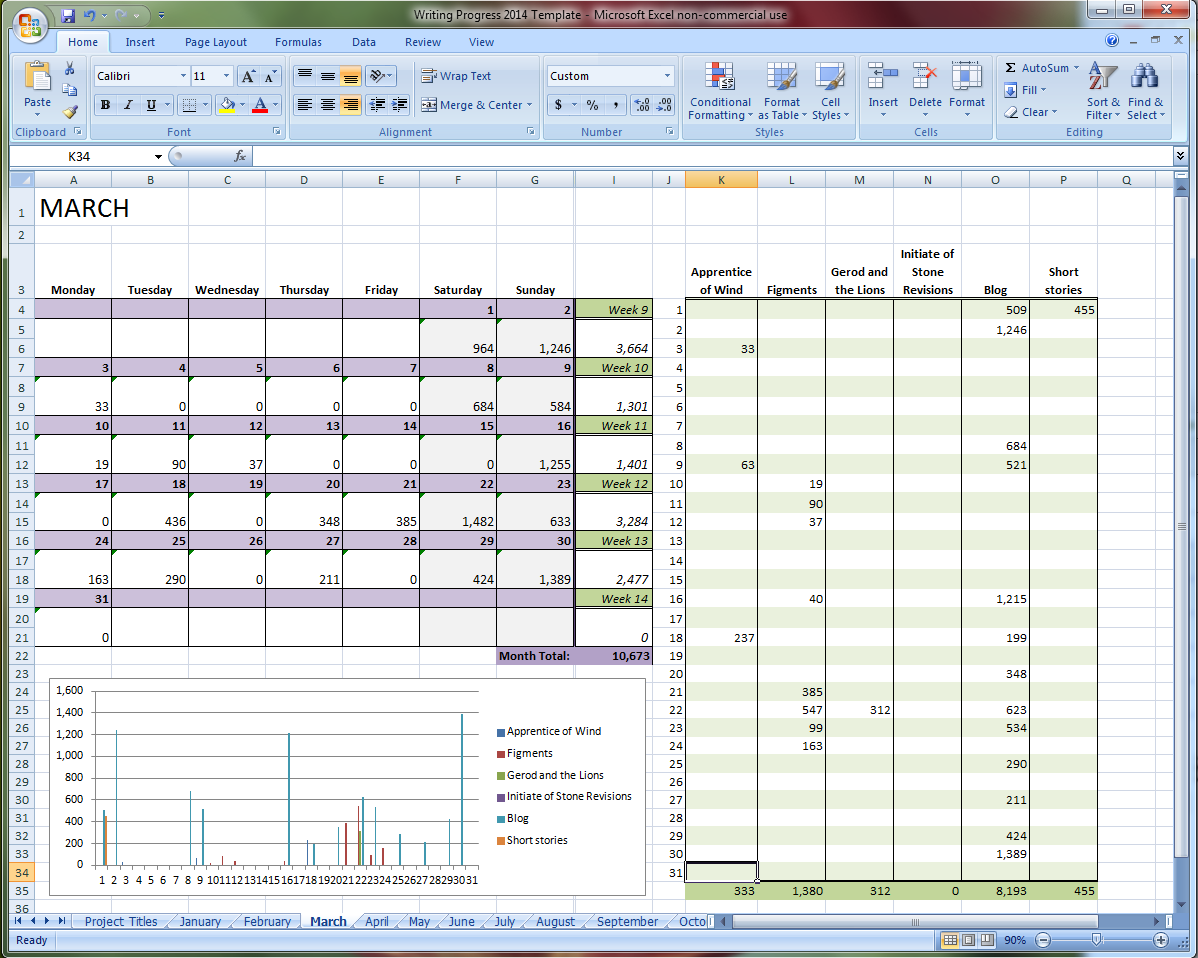
January’s word count total is actually 11,532. February’s should be 9,789.

March’s is 10,673.

March wordcount

How that breaks down:

The blog is once again the lion’s share at 8,193. Next is Figments at 1,380, then short fiction at 455, then AoW at 333, and finally, GatL at 312 words.

So that, my friends, is my month in writing.

I will be taking a trip next weekend, to attend Ad Astra, one of the bigger Canadian SF/F conventions in Toronto. This will be my first year going, but well-known authors like Patricia Briggs and Steven Erikson will be there, as well as Canadian names in the genre like Julie Czerneda and Marie Bilodeau. I’m hoping to make some new connections, or at least some in person ones (I’ve been following Julie and Marie online for years).

The weekend after, I just remembered, I will be attending Renny De Groot’s book launch for Family Business.

Yes, there will be more Writerly Goodness coming your way in April.

I’m off to watch Cosmos with Phil now.

Catch you all on Tipsday!

Some of my favourite books on the craft

Several months ago, I read a post called “Confessions of a Craft Book Junkie.”  I had no choice but to comment, because reading books on the craft of writing is an addiction for me.  I’m always buying more!

I have no idea what brought this issue up for me again, but having thought of it, I’ve decided to share some of my favourite craft books with you, and may you reap their myriad benefits! I don’t care if you get them as ebooks, or from a used book shop.  Just get ‘em 🙂

In the beginning …

There was Natalie GoldbergWriting Down the Bones and Wild Mind were the first two books I read about writing, and they’ve stuck with me through the years.  Goldberg espouses a philosophy of “first thoughts.”  Writing in your journal first thing when you wake up.  Sound like morning pages to you?

Goldberg introduced me to free-writing, and weaves in wonderful exercises for journal writing with Buddhist philosophy.  Monkey mind and wild mind is a concept I come back to again and again.  Monkey mind is the nattering, distracted place in our heads we occupy most of the time. 

Wild mind … well, draw as big a circle as you can on a piece of paper.  Put a wee speck of a dot in the middle of it.  The dot is monkey mind.  The rest of the circle—you guessed it—that’s wild mind, the cosmic consciousness that will endow your writing with greatness.

The key is to let go.  Don’t worry.  Don’t pin all your hopes on the greatness you might achieve.  Just be in the moment and do it.

Word after word

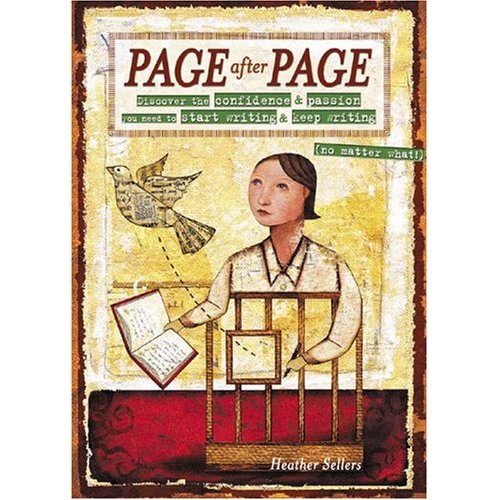
Heather Sellers two books: Page After Page and Chapter After Chapter really changed my writing game.  It was time for some tough love, and Sellers delivered.  She was the first author I read who asked the question: do you want to be a writer, or are you a writer?  She made the distinction very clear.

Wanting to be a writer means that you’re letting things get in the way, making excuses, because the phrase is always followed by the word “but.”

If you are a writer, you write.  You write every day.  You’re dedicated to your craft and you don’t let excuses get in the way.

Sellers also writes about her struggles, how the disapproval of peers and professors affected her, how relationships, good and bad, can influence your work, and how serious life incidents like car crashes and disease can change things forever.

In the end, you can only keep writing, word after word, page after page, and chapter after chapter 🙂

The Maass Oeuvre

Donald Maass is an industry expert and he turned his expertise into several wonderful books.

His first, The Career Novelist, delved into the changing face of the publishing industry.  No longer the land of monster advances, runaway auctions, and multi-book contracts, Maass discussed the kinds of writers, the kinds of agents, the kinds of editors, and publishers that were emerging, how they might survive the new era, and he offered a lot of practical advice about the mathematics of publishing (what do the numbers mean and why should I care?).

In the current market, this book has lost some of its relevance, but I would argue that it is still an important read.  Understanding the changes that led to the current state of publishing offers the reading writer insight.  Learning from history, we hope not to repeat it.

Writing the Breakout Novel gets more into the mechanics of how to write a damn good novel.  Using his personal experience and that of some of his well-known clients, Maass explains what agents and publishers are looking for, and gives the reader tools to achieve their goals.

The Fire in Fiction is more of the same, but deeper.  Maass really asks the writer to dig deep in this one and offers exercises to deepen your understanding of exactly what it is you’re doing.  Analysis.  Critical thinking.  If you’re willing to work for it, Maass tells you how to write a novel that will WOW.

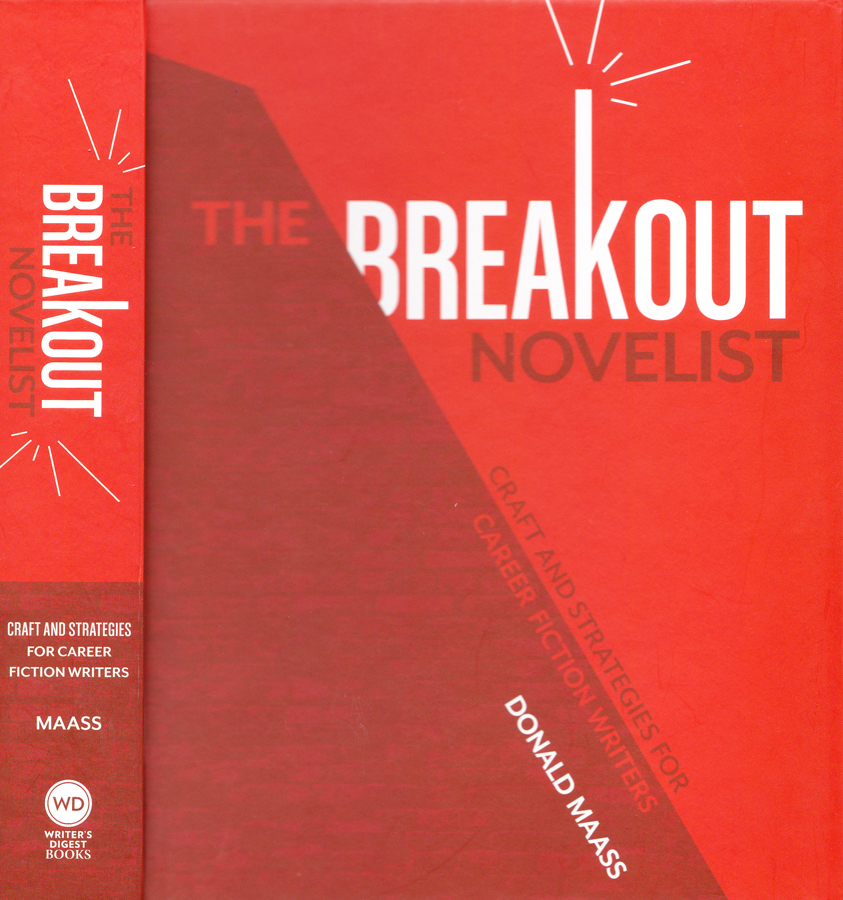
Finally, The Breakout Novelist, Maass’s most recent publication, is more of a workbook and reference than some of his other books.  It combines the best of Writing the Breakout Novel and The Fire in Fiction with extra exercises.  If you’re having trouble with a particular aspect of your novel, flip to that section and start working through the exercises.

Obviously, I’m a fan.

I’ll have more of these coming in future months.  I just thought I’d start with what I think are the best of the best 🙂

What are some of the craft books that you value and why?  How did they speak to you?  And as always, like, comment, share, subscribe!