Tipsday: Writerly Goodness found on the interwebz, March 1-7, 2020

Welcome to the second week of March, the week that starts out with daylight savings time and International Women’s Day, proceeds through the full moon, and ends with Friday the 13th!

You’re going to need some informal writerly learnings to see you through.

Greer Macallister says, instead of promotion, try participation. Nancy Johnson: you had me at the title. Donald Maass: it can’t happen here. Bryn Greenwood can’t decide whether it’s a sophomore slump or derailment. Steven James: they just won’t understand. File in writers is weird. Writer Unboxed

K.M. Weiland: creativity vs. the ego, or, the value of unpublishable stories. Helping Writers Become Authors

James Scott Bell: synopsis writing made easy. Writers Helping Writers

Susanne Cokal lists four reasons to spend time with “bad” books. Jane Friedman

Nathan Bransford: you gotta tell the story. No matter what.

Shaelin offers eleven tips for new writers. I think these work for everyone. If nothing else, they’re good reminders. Reedsy

Jenn Walton explains how to deepen characters by assessing their fears. Sara Farmer introduces us to Jo March’s twisted sisters: the thrillers of Louisa May Alcott. Gabriela Pereira interviews Claire Waller about writing an unlikable but sympathetic protagonist. DIY MFA

Eldred Bird is colouring with words. Writers in the Storm

Kassandra Lamb explains the importance of backstory, or, how the brain connects the present with the past. Then, Janice Hardy shares three reasons your perfectly good scene is boring your readers.  Later in the week, Janice offers tips for showing character motivation. Fiction University

Jenna Moreci discusses the breaking point.

Chris Winkle explains how to describe female characters without degrading them. Then, Oren Ashkenazi recommends five questions to diagnose an overpowered hero. Mythcreants

Robert Lee Brewer extols the virtues of the Oxford, or serial, comma. Writer’s Digest

Sad news for the already small Canadian publishing scene. Bryan Eneas reports on the bankruptcy of Coteau books, closing their doors after 45 years. CBC

Thank you for visiting and I hope you came away with some fabulous resources to support your current work in progress.

Until Thursday, be well, my writerly friends 🙂

Tipsday2019

Tipsday: Writerly Goodness found on the interwebz, Feb 23-29, 2020

March first was lamb-like. I’m hoping for a gentle month. How about you?

Now, it’s time to get your fill of informal writerly learnings.

Tiffany Yates Martin lists ten specific ways to encourage your reader to like your protagonist. Kris Maze shares five steps to becoming a superstar self-editor. Writers in the Storm

Julia Munroe Martin is not above spying … again. Barbara Linn Probst is taking it scene by scene: the “middle level” of writing. Heather Webb tackles the social media meltdown and burnout. Writer Unboxed

K.M. Weiland shares the professional resources she uses for all aspects of writing and publishing processes. Helping Writers Become Authors

Do you need to outline your book? Reedsy

Then, Shaelin recommends how to develop your best writing process. Reedsy

Joanna Penn interviews Barbara Poelle about finding and pitching a literary agent. The Creative Penn

Sarah Chauncey lists five flashback mistakes. Jane Friedman

Nathan Bransford: don’t release the tension.

Manuela Williams shares five tips for writing an author bio that stands out. DIY MFA

Jami Gold explains how to get advice from an editor. Later in the week, she wonders, do our stories have deeper meanings?

Chris Winkle lists the four essentials of an effective character arc. Then, Oren Ashkenazi explains how to use failure in your story. Mythcreants

Thanks for stopping by. I hope you took away something tasty that will support your current work in progress.

Until Thursday, be well!

Tipsday2019

Tipsday: Writerly Goodness found on the interwebz, Feb 16-22, 2020

Here we are in the final week of February. Winter is crawling to its end, the light returns, and so does the hope of spring. Celebrate with some informal writerly learnings 🙂

Tasha Seegmiller: writer, you are separate from your craft. Barbara Linn Probst considers likeable and relatable: why (and how) do they matter? Writers in the Storm

Vaughn Roycroft has a new take on readership. Dave King: the web of writing. Kathleen McCleary has answers to questions about writing. Porter Anderson analyzes the Authors Guild’s 2020 Report. Writer Unboxed

K.M. Weiland has some thoughts on how to be critical of stories in a way that makes a difference. Helping Writers Become Authors

Joanna Penn interviews Aiki Flinthart about writing fight scenes with female characters. The Creative Penn

Christina Delay wants you to fall in love with your second act. Angela Ackerman explains how to build powerful character relationships. Writers Helping Writers

Janice Hardy considers whether to stop and revise or keep writing the first draft. Fiction University

Brenda Joyce Patterson takes a deep dive into libretti. DIY MFA

Nathan Bransford helps you clear out the clutter around your verbs.

How to write character voices. Reedsy

Oren Ashkenazi explains why “but men are objectified, too” doesn’t hold up. Then, Oren lists ten ways to keep the authorities out of your plot. Mythcreants

Jami Gold wonders, what do you do with disappointment?

Robert Lee Brewer explains the difference between metaphor and personification. Writer’s Digest

Kate Knibbs says, the hottest new genre is doomer lit (formerly known as cli-fi). Wired

Charlie Jane Anders believes that to write about the future is to represent the past. Tor.com

Thank you for visiting and I hope you take away something to support your current work in progress.

Until next time, be well!

Tipsday2019

Tipsday: Writerly Goodness found on the interwebz, Feb 2-8, 2020

You’ve survived Monday! Reward yourself with some informal writerly learnings.

Janice Hardy says, author, we have a problem: four plotting tips. Later in the week, Janice is poking dead scenes with a stick. Fiction University

K.M. Weiland shares six steps to create realistic and powerful scene dilemmas. Helping Writers Become Authors

Jami Gold uses an, ahem, moving metaphor to discover what matters in our stories. Then, she wonders, where do you want your story (or career) to go?

Jenna Moreci explains how to tell if you should write a series (and when you shouldn’t).

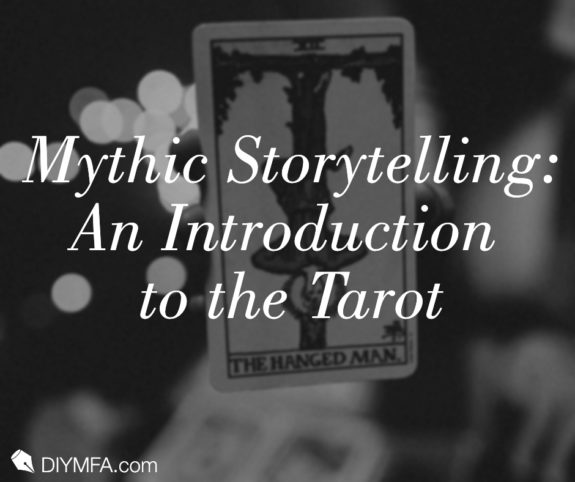
Abigail K. Perry covers James Scott Bell’s final signpost scene: transformation. As one series ends, another begins. The first of my three-part series on the tarot as a tool for mythic storytelling: an introduction to the tarot. DIY MFA

Donald Maass revisits the uncon again: world building for non-SFF writers. Cathy Yardley: your subconscious speaks a different language. ‘Cause tarot (see above)! Writer Unboxed

Meg LaTorre explains how to find critique partners and beta readers. Writers Helping Writers

Kris Spisak advises you to look at these four problem areas when revising. Jane Friedman

Joanna Penn interviews Jennie Nash: would you make a good book coach? The Creative Penn

Chris Winkle explains how storytellers use reactivity and proactivity for effect. Then, Oren Ashkenazi shares seven tricks to improve your minions. Mythcreants

Etuaptmumk: two-eyed seeing. Rebecca Thomas TEDxNSCCWaterfront

Brit Marling: I don’t want to be the strong female lead. The New York Times

Thanks for stopping by. I hope you’re taking away something to help with your current work in progress.

Until Thursday, be well, my writerly friends 🙂

Tipsday2019

Tipsday: Writerly Goodness found on the interwebz, Jan 26-Feb 1, 2020

Welcome February, Imbolc, Groundhog Day, and the return of the light! We’ve made it through the better part of winter. Reward yourself with some informal writerly learnings.

Janice Hardy: things to consider when adding a point of view character. Fiction University

Jenny Hansen shares tips for Word’s track changes features, her favourite editing lifesaver. Kris Maze: when rejection becomes connection. Writers in the Storm

Kim Bullock: the benefits of sensory deprivation for writers. Ann Marie Nieves says, we need more of that. Writer Unboxed

The Take examines the smart girl trope.

Jami Gold helps you build a bridge from story beginning to main conflict. Writers Helping Writers

Over on her own site, Jami Gold wonders what calls for diversity mean for our writing.

Ellen Brock shares her theory of four types of writers (across two spectra). Very intriguing. I’m looking forward to the next videos in the series.

Nathan Bransford shares his plot framework. Then, he explains why protagonists need to be active.

Emily Wenstrom lists her top 2020 social media trends for authors. DIY MFA

Jane Friedman offers her guide to getting the most out of a writing conference.

Juliette Dunn lists six things writers should know about autistic people. Then, Oren Ashkenazi analyzes six overpowered characters and explains how to fix them. Mythcreants

The Lost Words Blessing – The Lost Words. Don’t think this belongs in tipsday? Listen. Just listen. You’ll understand.

Caught up in the details? Stop overthinking and just write. CBC Books

Thank you for visiting. I hope you take away some great supports for your current work in progress.

Until Thursday, be well!

Tipsday2019

Join me over on DIY MFA for my latest Speculations

This time around, I’m starting a new three-part series on using the tarot as a tool for mythic storytelling: an introduction to the tarot.

MythicStorytelling

There’s a wee bit of history and a lot of description. Next time, I’ll look at five tarot books for writers and let you know how they stack up.

While you’re visiting, check out Gabriela’s other great resources for writers, including DIY MFA 101, her flagship course.

Until next time, be well, my writerly friends 🙂

The next chapter: January 2020 update

January saw this writer still in hibernation mode.

The month in writing

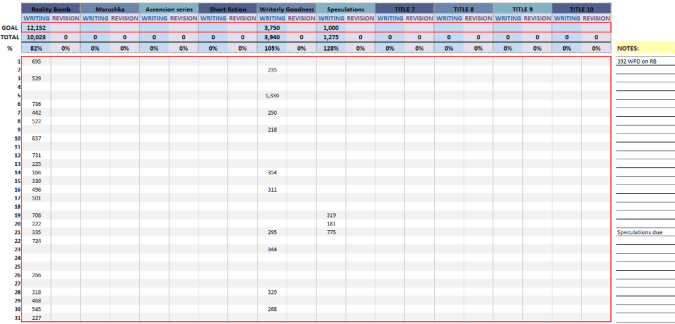
Work continues on the rewrite of Reality Bomb. I changed my ambitious plan from last year, extending the remaining work through to the end of April. This meant a daily goal of 392 words. This was reasonable and very doable … until I came across a snag at the midpoint.

While the story is still science fiction, I’d classify it as soft SF because the character arc focuses on my protagonist coming to terms with her past trauma and forgiving herself for the harm she’s caused others as a result. Once the inciting event occurs, my protagonist is disembodied, which causes its own difficulties (agency), but at the midpoint, she’s in a fairly literal mirror moment as she and her alternate self—two very different personalities trapped in the same body—reach an understanding.

I stopped drafting for a few days, did some brainstorming, and moved on, but I’m still not happy with what’s on the page. I’m going to go back to my revised outline, which I’ve diverged from, as usual, do some more brainstorming, and see if I can’t wrangle the scene back into shape.
Januaryprogress

So, of my 12,152-word goal, I wrote 10,023 words, or 82%. And I’ve had to calculate a new daily writing goal, 420 words per day, to account for the shortfall.

My next Speculations column was due, and I submitted on time with a 1,275-word article, achieving 128% of my 1,000-word goal.

I also exceeded my blogging goal of 3,750 words, writing 3,940 words, or 105% of my goal.

Overall, I wrote 16,902 words of my 15,238-word goal, or 111%. Not bad.

What I’m watching and reading

Phil and I leapt into the latest season of The Expanse. We burned through it and really enjoyed it. All the characters (Bobby! Amos!) got great defining moments. The bill came due for Avansarala, Ashford broke my heart, and we have some great mysteries to solve for the next season.

Without getting spoilery, I’ll say this: The Expanse has now replaced Babylon 5 as Phil’s favourite SF of all time 🙂

Everything else is in progress.

Before I get to my reading in January, I’ve decided that I’m not going to review a book unless I can give it four or five stars. My last review last year was one I owed to the author, but … it was three stars. I liked it. But it was a first novel and while the story was good, there were other problems that made three stars the appropriate rating.

I won’t be dishonest or give a book a great rating just because I know the author. Just know that, moving forward, I’m only going to review books I genuinely love.

In non-fiction, I read three tarot-related books: Mapping the Hero’s Journey with Tarot, by Arwen Lynch, Tarot for Fiction Writers, by Haley Dzuk, and Tarot for the Fiction Writer, by Paula Chaffee Scardamalia. They were all good, but the last was, in my opinion, the best. I’m reading these for my next Speculations column, in which I will be reviewing five tarot for writers books and outlining the value for writers in each. I’ll save my opinions for the column 🙂

I finished Leigh Bardugo’s Shadow and Bone series, reading Siege and Storm, and Ruin and Rising. The series works as a series, but I don’t know that the books work as standalones.

I mentioned when I read Shadow and Bone, that I found the protagonist a bit passive, that is lacking in agency. This issue is solved in the second book, though there are several levels of conspiracy at play, all of which successfully manipulate Alina to the point where the only action she can take in the climax is to use her connection with the Darkling in a strange murder-suicide attempt, which accomplishes neither end and merely defers a final confrontation.

In book three, the best of the series, Alina actively pursues her goals. She leads her ragged band of survivors and friends on a quest to find the third amplifier, which they think is the fire bird. It’s not, and the tragic choice that faces Alina when she learns who the third amplifier is, results in a risky gambit that ultimately fails.

Then, rather than self-sacrifice, the trope both previous books ended with, Alina unwittingly pulls a Buffy (season seven). Buffy acted armed with knowledge and a viable plan to share her power with every potential slayer in the world. Alina reluctantly kills the third amplifier and is stunned when she feels emptied of power rather than filled with it, and then watches as a number of commoners turn into sun-summoners. While she manages to kill the Darkling when he’s distracted, it’s those new sun-summoners who destroy the fold and the volcra.

Alina and Mal do get their happily ever after, reopening the orphanage where they grew up, but to do this, Alina has to relinquish her power and the hope of ever being grisha again. I’m not so sure I’m happy with that ending, even if we’re told Alina and Mal are.

I also read books three and four of Emma Newman’s Split Worlds series All is Fair and A Little Knowledge. Because I’m reading book five now, I’ll save my series review for next month.

Finally, I read the first book in a YA fantasy series that Caroline Sciriha, an author from my critique group published with Castrum Press. Dawn of Purple and Gray is about Shael, who has been raised by a family of potters and has been taught to hide the white hair that would mark her as a Hyllethan. She’s told it was a gift from her mother’s mistress, a Hyllethan princess, but Shael’s family are Inlanders. After a war and political coup, the Hyllethans are their enemies.

When she comes across a wounded messenger who tells her to take his package to the queen and then dies, Shael is drawn into adventure and learns a truth she never suspected.

The story is good. The writing is good. Caroline even created a board game that plays a role in the plot on multiple levels. I found Shael skewed young, even for a YA book, however. It was an enjoyable book and I’ll read the next in series when it comes out, but it didn’t hook me like other books have. Other readers have rated the book more highly than I have, so my opinion is not in the majority.

And that was the month in this writer’s life.

Until next time, be well, be kind, and stay strong. The world needs your stories.
The Next Chapter

Tipsday: Writerly Goodness found on the interwebz, Jan 19-25, 2020

Welcome to tipsday, your source for informal writerly learnings.

Angela Ackerman wonders, does your character’s behaviour make sense? Then, Lisa Hall-Wilson supplies one quick fix for telling in deep point of view. Writers in the Storm

Jan O’Hara explains what cows and writing competence have in common. Dave King had a solution to absent friends. Heather Webb is navigating an evolving writing process: writing on a boat, with a goat. Keith Cronin: on getting it and showing up. Writer Unboxed

K.M. Weiland examines the two different types of lie your character believes. Helping Writers Become Authors

Tim Hickson on writing first person. Hello, Future Me

Christina Kaye explains how to write a killer villain. Jane Friedman

Nathan Bransford shares nine ways to spice up your characters. Later in the week, he wonders, what does it mean to be your “real self” online?

Leanne Sowul wants you to use the power of habit to achieve your goals. Then, Bronwen Fleetwood wonders, should you use pop culture references in MG and YA fiction? Gabriela Pereira interviews Constance Sayers: stitching together multiple timelines. DIY MFA

Agents Sara Megibow wants you to make a list of personal influencers. Fiction University

Jami Gold considers how to make your protagonist more proactive.

How to introduce your characters, part 1. Reedsy

And part 2:

Chris Winkle examines six effective animal companions (including droids and baby Yoda). Then, Oren Ashkenazi critiques eight instances of sexism in The Witcher. Mythcreants

Robert Lee Brewer clarifies when to use canceled and when to use cancelled. Writer’s Digest

And that was tipsday. Thanks for stopping by, and I hope you took away something you need for your current work in progress.

Until Thursday, be well, my writerly friends 🙂

Tipsday2019

Tipsday: Writerly Goodness found on the interwebz, Jan 12-18, 2020

Welcome to tipsday, the place to load up on informal writerly learnings.

Barbara Linn Probst wants a place to write. Kris Maze gives you three reasons to consider readability before you publish. Writers in the Storm

Janice Hardy touts the freedom of writing without chapters. Diana Gabaldon does this too … think Imma try this some time. Then, she shares a simple trick to keep readers turning pages. Fiction University

It was question week on WU! Sophie Masson wonders, what do you save? Then, Jim Dempsey asks, do you really want to be a writer? Natalie Hart: what do people get wrong about you? Jeanne Cavelos extolls the compelling, emotional, complex sentence. Writer Unboxed

K.M. Weiland offers three life-changing rules for finding more writing inspiration this year. Helping Writers Become Authors

Sacha Black shares six steps to setting yourself up financially as a writer in 2020. Writers Helping Writers

Sara Letourneau assigns additional reading on the theme of man and the natural world. Pamela Taylor is celebrating the solstice (a little late, but hey, SOLSTICE). DIY MFA

The Take unpacks the tough woman trope.

Then, Shaelin looks at the manic pixie dream girl trope (which, it turns out, is not a trope at all). Reedsy

Chris Winkle outlines six important differences between filmed and narrated stories. Oren Ashkenazi analyzes five stories where the heroes lack agency. Mythcreants

Robert Lee Brewer considers when to use a while and when to use awhile. Writer’s Digest

Thank you for taking the time to visit and I hope you found it worthwhile 🙂

Until Thursday, be well!

Tipsday2019

Tipsday: Writerly Goodness found on the interwebz, Jan 5-11, 2020

It’s a lovely, sunny Sunday after 20 cm of snow. Please enjoy these informal writerly learnings!

Janice Hardy shares three things to remember when revising from a critique. Later in the week, Janice help you craft hook lines that draw readers in. Fiction University

Christopher Hoffmann: what your dialogue tags say about you. Then, Sangeeta Mehta interviews Jim McCarthy and Paula Munier about what it means to be a full-time author. Finally, Jane herself lists five common story openings you want to avoid—if you can help it. Jane Friedman

Tamar Sloan offers a writer’s roadmap to capturing an unhappy relationship. Writers Helping Writers

Jenna Moreci lists her favourite family tropes.

Nancy Johnson finds a new year brings fresh author envy. “But anticipatory angst is real, if a bit irrational, and I sometimes envy authors who make lists I’m not even eligible for, wondering if my own trajectory will be on par with theirs.” Juliet Marillier wants to be a light in the darkness. What will you use your writerly superpowers for this year? Kathryn Craft is bridging temporal story gaps. David Corbett: wherein we resume our discussion of evil. Writer Unboxed

Jenn Walton hopes you’ll use personality tests to enhance character development. Heather Viera shares five tips for creating a relaxing workspace. DIY MFA

Julie Glover: will your character fight, flee, or freeze? Writers in the Storm

Chris Winkle lists five masquerade explanations and why they’re bad. Then, Oren Ashkenazi points out six military blunders in speculative fiction. Mythcreants

Chuck Wendig blogs at clouds (to make a point about blogging). Terribleminds

Robert Lee Brewer distinguishes between heroes and heros. Writer’s Digest

Hélène Schumacher: is this the most powerful word in the English language? BBC

Georgie Hoole introduces us to Cecil Court: the secret alley full of curious old bookshops. Secret London

Thanks for your time and attention. I hope you came away with something you need for your current work in progress.

Until next time, be well, my writerly friends 🙂

Tipsday2019