Review of Jane Eyre: Writer’s Digest Annotated Classics by K.M. Weiland

I read Charlotte Brontë’s Jane Eyre for the first time when I was in high school. At the time, though I enjoyed it, I wasn’t yet reading with the critical mind of an author. I wasn’t reading for craft.

The second time I encountered Jane Eyre, I was in university and, having read it before, it was one of the books I set aside from my massive stack of reading. I managed well enough in the course and placed the book on my shelf.

Years later, I read the book a second time. Though I was a writer, and published, it was as a poet, and again, I read for enjoyment rather than for craft.

Now, I read for craft and I find I mentally dissect books as I read them. I don’t mind knowing the ending, and in fact, I often flip forward in a book. Rather than spoil the reading experience, knowing the climax allows me to see more clearly where the author has foreshadowed events.

I can see the structure of a novel like a glowing thread. Here is the hook, the inciting incident, the first major plot point. Reading for craft is more enjoyable for me than reading for pleasure.

It’s like daily writing practice. Once you start down the path, it’s hard to stop, and, after a while, you no longer want to.

K.M. Weiland and her blog, Helping writers become authors, have been instrumental in my development as a reading writer.

You could say I’m a groupie, if there is such a thing. It’s a bit more than being a fan. I share nearly all of Katie’s posts. I want all my writer friends to benefit from her insight and technique.

So, of course, when Katie emailed me and asked if I would mind reading and reviewing her upcoming book, Jane Eyre, annotated with an eye to technique I instantly agreed.

Onto the review . . .


What Amazon says:
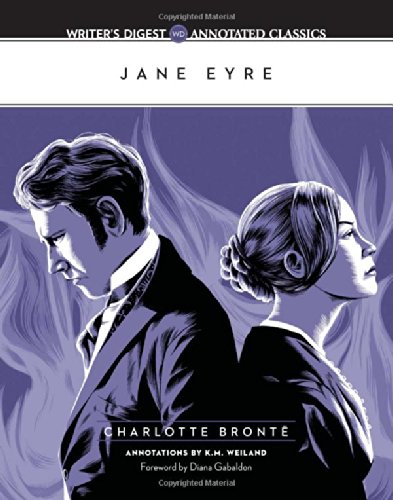
AnnJaneEyreCover

“I am no bird; and no net ensnares me; I am a free human being with an independent will…”

One of the most sweeping and enduring novels in English literature, Charlotte Brontë’s Jane Eyre has become a beloved classic and a must-read for fans of period romance. Filled with memorable characters, witty dialogue, emotional scenes, social commentary, and intriguing twists, Brontë’s novel, written in 1847, still has much to teach writers about crafting exceptional stories.

As part of the Writer’s Digest Annotated Classics series, this edition of Jane Eyre features hundreds of insightful annotations from writing instructor and author K.M. Weiland. Explore the craft and technique of Jane Eyre through the lens of a writer, and learn why and how Brontë made the choices she did while writing her iconic novel. The techniques learned from the annotations and accompanying study guide will aid in the crafting of your own celebrated works of fiction.

My thoughts:

I’ve read Jane Eyre a couple of times, once in high school and once in university, but I’ve never read it as a writer.

Weiland’s annotations were an eye-opener.

Initially, I considered a couple of what I saw as lapses on Weiland’s part to be creative or editorial decisions, and there is an element of that present. What I was amazed to discover is that Weiland’s annotative decisions are artful, or perhaps I should say crafty, in a way I never expected.

Very quickly, her annotations have the effect of tuning the reading writer’s eye to Brontë’s creativity and craft. The reader begins to pick out additional examples of the same techniques as they occur, and may even, as I did, page back through the book to see where Brontë employed the same technique in the past and to what effect.

Jane Eyre: Writer’s Digest Annotated Classics is not only a writing craft book, but an instructional manual on how to read critically, as a writer.

Under Weiland’s ever-gentle guidance, the reading writer learns that analyzing a text for craft does not have to be a negative experience nor even an academic one.

Those of us who suffered through textual dissection in university will be grateful to Weiland for showing us, in the best authorial sense, that analysis can be fun, and even exciting, as our minds race back to our own works-in-progress to apply lessons learned.

On that subject, the worksheets in the back are, in my opinion, worth the price of the book. Covering setting, character development, structure, indeed, every aspect of writing a novel, Weiland asks questions, assigns tasks, and refers back to Brontë’s work if we need a little help figuring out how to apply the technique in our writing.

This is a top-notch writing craft book and a spectacular start to a new series for Writer’s Digest. Diana Gabaldon’s introduction doesn’t hurt either 😉

My highest recommendation.

My rating:

Five out of five stars.

About the Author:

KMWeilandLooking-Back

K.M. Weiland is the internationally published author of the Amazon bestsellers Outlining Your Novel and Structuring Your Novel, as well as the western A Man Called Outlaw, the medieval epic Behold the Dawn, and the fantasy Dreamlander. When she’s not making things up, she’s busy mentoring other authors through her award-winning blog HelpingWritersBecomeAuthors.com.


Tipsday: Writerly Goodness found on the interwebz July 6-12, 2014

Not a huge whack this week folks, but what there is, is all quality 🙂

Most common writing mistakes with K.M. Weiland. This week, one dimensional conflict.

Janice Hardy discusses character development.

Roz Morris demonstrates her beat sheet technique with Ray Bradbury’s Fahrenheit 451.

Anne R. Allen lists twelve dumb things writers do to sidetrack our success.

The ever-awesome Robin LaFevers writes about the crushing weight of expectations on Writer Unboxed.

Lisa Cron writes about how writers have the powah on Writer Unboxed.

Carly Watters reveals three signs that you’re past the form letter rejection stage.

Writer’s Relief presents the joy of gerunds.

Did you need even moar books to read? I didn’t think so. Still, here’s The Millions’ book preview for the second half of 2014.

Eight things you should know about Diana Gabaldon’s Outlander series from the Barnes & Noble book blog.

A review of the two volume Robert Heinlein biography from Barnes & Noble Reviews.

Enjoy!

Tipsday

Brian Henry workshop, Sudbury, March 22, 2014

Brian HenryThis afternoon, I attended my fifth Brian Henry workshop.

This one, the third held in Sudbury and hosted by the Sudbury Writers’ Guild, was on “How to make your stories dramatic.”

These workshops are Brian’s bread and butter, so without giving too much of the content away, here are my notes:

  • The scene is the basic building block of your story.
  • There are two kinds: the dialogue-based scene, and the action-based scene.
  • Every scene must have a plot-related point. It must answer the question, “so what?”
  • Push and pull. The push is the point of view (POV) character’s need. The pull is what the pursuit of the need leads to (promise, twist, decision, new threat, etc.).
  • Your characters must be interesting. They should be unique, have their own interests, passions, a quirk, backstory (dole it out gradually). If two characters are similar, shoot one.
  • Readers, sadly, do not remember names.
  • Your protagonist should be a good “tour guide.”
  • Every character has her or his own agenda (the scene’s push). It’s better if they are at odds with one another.
  • Pick your scenes carefully. Show the important stuff. Tell the rest.
  • Don’t get to the point too quickly.
  • Scene = hook, hook, and hook.
  • Ford Madox Ford, “No speech of a character should reply directly to another character.”
  • Dialogue shouldn’t be smooth.
  • An action scene consists of set up, action, and wind down.
  • Set up = setting, background, tone, suspense.
  • Action = plot, character, relationships.
  • Wind down = the result, new information, what is gained or lost.
  • Dialogue is important, even in action scenes.
  • Make sure it feels exotic (most people don’t spend a lot of time fighting, in chase scenes, etc.)
  • Use internal monologue to your scene’s best advantage. No long-winded explanations.
  • You need to have some kind of surprise.
  • Have more than one thing going on at any one time.

We went through a few examples of dramatic scenes, one from Lawrence Block, one from George R. R. Martin, and one from Bernard Cornwell to look at the variations and interplay of action and dialogue. We also completed a writing exercise, for which I chose a scene (to that point unwritten) from Gerod and the Lions.

Since I’m always trying to learn and improve upon my craft, the workshop brought up a number of bits and pieces that I’ve learned over the years.

Emily Dickenson wrote, “Tell all the truth, but tell it slant.”

Last fall at the Surrey International Writers’ Conference, I attended a Diana Gabaldon session where she shared her technique of driving a scene forward by raising questions in the reader, but delaying the answers for as long as possible.

I just finished reading Victoria A. Mixon’s The Art and Craft of Story, in which she describes “holographic structure.” This takes the basic three act structure of hook, development, and climax and breaks it down.

The hook consists of the hook and the first conflict, the development includes (at least) two more conflicts, and the climax consists of the faux resolution and climax.

In fact, breaking it down even further, each of these six elements contains its own six elements.

Thus, the hook part of the hook section contains its own hook, (at least) three conflicts, faux resolution, and climax, as does each of the remaining parts.

If this seems confusing, please read Victoria’s book. She explains it at much more length and much more clearly than I do.

Suffice it to say that the ultimate breakdown is at the scene level, and each scene, in keeping with its overall purpose within the story, has its own hook, three conflicts, faux resolution, and climax.

That’s all the insightful I have for you today, my writerly peeps.

Until next time.

It’s a wrap!

There is so much more to the Surrey International Writers’ Conference (SiWC) than I wrote about.

Yes, there were a tonne (that’s metric, eh?) of sessions that I couldn’t get to, everything from self-publishing, to social media and platform maintenance, from screenwriting to non-fiction sessions, and marketing sessions.

And yes, I may have mentioned things like the blue pencil and pitch sessions with the agents. Those keen on these could sign up for multiple sessions.

There was a professional photographer there to take head shots as well.

Where would I fit it all in?

But I didn’t mention the Master classes that preceded the conference. They required an extra fee, but I hear they were well worth it.

I didn’t mention Michael Slade’s Theatre of the Macabre, in which Anne Perry, Jack Whyte, Diana Gabaldon, and KC Dyer did a dramatic reading of Edgar Allan Poe’s “The Tell-tale Heart,” replete with music and sound effects.

I didn’t mention the book fair, author signing, or writing group get-together.

I didn’t mention the excellent food served at the lunches and dinners.

I didn’t mention the annual tradition of Jack Whyte singing the Hippopotamus Song.

Really, this is a conference you need to put on your writer’s bucket list.

We’re all time travellers

Since British Columbia is three hours behind the Eastern Time zone, I thought I would experience jet lag. I did, but not until I returned.

While I was in Surrey, I typically stayed up late to check on social media and do a bit of transcription of the notes I’d taken during the day. Although I stayed up until about 11 pm (2 am, my time) I woke up every morning around 5 am. Again, I used the time to prepare for the day and get in a little transcription.

When I flew back, I did so by the “red-eye” flight. It departed Vancouver at 10:30 pm. I tried to sleep on the way back, but I should have spent some money on one of those neck cushions. I woke up every hour or so and attempted to ease the pain in my neck and find a more comfortable position to sleep in.

When I finally got home, after an early morning layover in Toronto, the connector to Sudbury, and a hectic shuttle ride back to town, it was about 10:30 in the morning.

Needless to say, I spent a good portion of that day in bed 😉

I thought about time zones and jet lag again the following weekend when Daylight Saving Time ended. I’ve described the time change as self-imposed jet-lag, and I’ve never agreed with the continued practice. While it’s not so bad in the fall, it’s murder in the spring when we lose an hour again.

Really, though we can’t leap forward or back, we’re all time travellers. We all travel through time as we wake, work, eat, and sleep our way through life.

It was a philosophical moment 😛

Thanks for following my reportage of the conference, and I will be getting back to my regularly scheduled ramblings forthwith.

Bits and pieces: Diana Gabaldon and Jack Whyte

The thing about conferences like SiWC is that you always have a lot of choice. I’ve been blogging the sessions I attended, but at every time slot on every day, there were about ten different sessions I could have gone to. I had to be selective.

Not only that, but everything else you decide to do, such as blue pencil sessions, pitch sessions, or photo sessions, cuts into the time that you could be soaking in the wisdom of authors, agents, and editors.

On Sunday, Oct. 27, I had my blue pencil and pitch sessions back to back in the morning, which meant that I’d have to miss most of Diana Gabaldon’s session on keeping the reader turning pages. After that, I did book a photo shoot with the photographer, which meant that I’d be late for Jack Whyte’s session of rejuvenating your writing.

So what follows is incomplete and necessarily short, but there are still a few great pieces of information to pass along.

Diana Gabaldon: How to make them turn the page

Picture of the author Diana Gabaldon during a ...

Picture of the author Diana Gabaldon during a book signing held in Fergus, Ontario (during the Scottish Festival) on August 11, 2007. (Photo credit: Wikipedia)

When I arrived, Diana was discussing the technique of establishing a series of questions on the page. This was a technique that Diana says she noticed only in retrospect.

The idea is to ask a question at the beginning of a scene, and then build tension through delayed gratification by revealing information in bits and pieces.

She demonstrated by reading a passage from her next book in the Outlander series, In My Own Heart’s Blood. Lord John Grey confesses to Jamie that he’s slept with his wife. The rest of the scene, revealed primarily through action and dialogue answers the big question: will Jamie kill John? by first subverting expectations (Jamie reacts very calmly) and then plays on dramatic irony. When the revelation does arrive for Jamie, he does react as the reader, and John, expect him to, but then the scene ends. We have to read on to find out if John will survive the conversation.

With regard to backstory, Diana says dole it out sparingly. Tell the reader exactly what they need to know, when they need to know it.

It’s a matter of pacing, which is something every writer learns over time.

She was asked if she outlines, and Diana said she never has.

Finally, build on details to reveal character and plot. Use three senses to engage the reader.

Jack Whyte: Rejuvenate your fiction

When I entered, Jack was talking about the goblin.

The goblin is this little voice inside that says, “this isn’t right,” or “your could write this better.” Listen to the goblin.  He’s almost always right.

The search for the right word can drive you mad.

There’s an exercise in Strunk and White’s Elements of Style to rewrite the following quote from Thomas Paine: These are the times that try men’s souls.  Regardless what you do, it’s never the same, nor will it have the same impact.

Comprise means embrace. Nothing can be comprised of.  It’s one of the most misused words in the English language.

Rejuvenating your writing means rejuvenating yourself.

Prune adjectives, adverbs, and tic phrases, not blindly, but selectively.  Ask yourself if it improves your sentence. If yes, keep it, if no, get rid of it.

Communication is the goal of every writer.

When you write dialogue, if you do it well, you shouldn’t need tags. The reader should know who’s speaking and be able to keep track.

Don’t write accents. Use a word or expression, explain it once. That will be enough.

Recommended books: The Art of Fiction – John Gardner; On Writer’s Block – Victoria Nelson

Every writer should read them.

The subconscious mind is an excellent BS detector. Your mind is trying to tell you you’re on the wrong track. That’s the goblin.

Also, because you’ll be spending the better part of your life in it, get a good chair. Get a damn good chair.

Bestseller Banter Panel

First, a wee note: I have embarked on my first NaNoWriMo, and because I had to finish a couple of writing tasks before the end of October, I haven’t been able to blog daily and complete my report of the fabulous Surrey International Writers’ Conference.

I have, so far, managed to make my NaNo quota though (joy!).

And I’m trying to finish up some outstanding critiquing.

So I will post today and tomorrow, but then I will be going on a brief trip to visit a friend for a few days.  I will resume the bloggage after that.  Once I’ve caught up with the SiWC reporting, however, I’m returning to my usual one or two posts on the weekend gig.

_____________________________________________________________________

Picture of the author Diana Gabaldon during a ...

Picture of the author Diana Gabaldon during a book signing held in Fergus, Ontario (during the Scottish Festival) on August 11, 2007. (Photo credit: Wikipedia)

The bestseller banter panel was moderated by Chris (CC) Humphreys and was composed of:  Michael Slade, Diana Gabaldon, Jane Porter, and Susanna Kearsley

Q: What was your first book on the bestseller list?

SK: The Winter Sea made the New York Times bestseller list as an ebook.

JP: Lifetime made a movie of my book Flirting with Forty.

DG: I was away on a book tour for three weeks for Voyager. My husband told me when he picked me up at the airport.  I was too tired to react.  More recently Starz is making an Outlander series.  This is the fourth time Outlander has been optioned.  When the deal was struck, I was sworn to secrecy, but I was attending BEA at the time and word got out.  I ended up telling everyone.

MS: My first novel became a bestseller because of my rep got me up at 3 am to speak

Susanna Kearsley Photo by Ashleigh Bonang

Susanna Kearsley
Photo by Ashleigh Bonang

with the book distributors.  That week, Stephen King’s The Shining hit the shelves as well.  The distributors looked at both books and decided to give top billing to the man who came out to talk to them.  That’s how my book beat out Stephen King’s to become number one in Vancouver.

Q: What pressures did you experience after your books had such great success?

SK: I didn’t feel any pressure from others, but I had something I’d never had to deal with before: deadlines.  It didn’t affect my writing.  I placed pressure on myself, however, to prove that I could get on the bestseller list again. Firebird was on the NYT mass market paperback list.

JP: Producers wanted to make movies of more of my books, but they wanted Flirting with Forty again, and I was writing something else.  I had to get out of a bad deal.  Marketing took over.  They kept asking for changes.

DG: Fans clamour for the next book in the series all the time, but I don’t let it bother me.  My sole duty is to the book.

MS: My first book was written while I was still very busy as a criminal lawyer.  Headhunter was successful and I did feel the pressure to write something at least as good.  I decided to write a thriller set in the rock ‘n’ roll world.  My rep got us tickets to Alice Cooper and he really liked Headhunter.  He invited me to send him my next novel.  I did and he wrote back: I don’t know if this will help.  “This book was terrifying.  I couldn’t put it down.” – Alice Cooper.  That endorsement sold the second book.

Q: Does the thrill remain?

DG: Absolutely.  I get a little thrill every time someone responds positively to my daily lines on Facebook.

CCH: Good reviews become reassuring friends in times of torment.

SK: Every time I finish a manuscript, I print it out and drop it on the table.  There’s something satisfying about the “thump.”  When the finished product arrives, there’s nothing like the smell of a new book.

JP: There were times when I was afraid everything I’d worked for would be taken away from me.  I was a single mother.  I feared being poor.

MS: It used to be that you had a 1 in 20,000 chance of success in publishing.  You never know when you’re going to make it big, or how.

SK: Persistence is the key. Download Headley’s “Anything” and listen to it repeatedly. Flaubert said, “Talent is a long patience…”  You have to think about the long game.

JP: Support is so important.  My ex never understood.  My current partner is a surfer and he feels the same way about the ocean as I do about writing.

DG: I have a fan club, the Ladies of Lallybrock, and they like to get together and have a fabulous time.

Q: Are there any downsides?

SK: I had a stalker.

JP: I received creepy letters from convicts.

Q: Do any of you have to content with JK Rowling’s issue?  She has so many people trying to hand her novels and scripts based on Harry Potter that she has someone who collects them all for her.

DG: I always tell people, sorry, I have an agreement with my publisher.

Q: Do you have a pen name picked out?

SK: No.

JP: Lauren Lyles

DG: No.

MS: Michael Slade is a pen name.  When I was trying to come up with it, I was thinking Declerque.  My wife said, very sensibly, no, you want a name with Biblical significance.  Michael.  Slade gives you some hard-boiled cred.  And so I became Michael Slade.  My wife created Michael Slade, and she knows copyright law.

Research panel

This panel was a question and answer session.

Panelists: Anthony Dalton, Jack Whyte, Anne Perry, Diana Gabaldon, Susanna Kearsley

Q: Is it okay to use unusual names? e.g. in a historical novel set in Poland, the names are strangely spelled and not pronounced how a North American audience would be familiar with.

JW: If it’s appropriate to the historical setting, keep them.

DG: Find out how the names are treated in the time and culture you’re writing about.  e.g. Black Brian, or Mac Dubh.  Use nicknames or short forms.

AP: Are they named by profession, by an attribute?

SK: Have an outsider character learn how to pronounce the name.  Readers will remember after.

Q: How do you organize your research?

DG: I’ll have sticky tabs in the books I use for research and refer to them when necessary.

AP: I do much the same.

SK: I get documents from the archives (note: Susanna Kearsley used to be a museum curator) and organize them into binders, probably because I’m the daughter of an engineer.

AP: I find that most of the research I use in a first draft is later redacted.

JW: I recommend Scrivener (about $40).  It’s excellent for organizing your research, though it does fall down a bit in the final formatting of a manuscript.  Simply export to MS Word.

Q: How do you get translations?

SK: Try French translators, call your local university, see if they have a translation department, etc.

AD: French immersion teachers are also a good resource.

DG: Is it critical to the story?

AP: Don’t tell people what they don’t need to know.

Q: What gets questioned?

DG: Once you are immersed in the time period, you know what is likely to have happened.

AP: Research is often borne out.  In some cases, my educated guesses have later turned out to be correct.

SK: Historians can leave holes – they are bound by facts, or the lack of them.  Writers have to fill in the holes.

JW: Historians cannot speculate.

Q: Would it be okay to spell Welsh phonetically?

SK: Have an outsider character to help interpret.

DG: Language consists of three things: accent, dialect, and idiom.  For the Outlander series, they are conducting Gaelic classes.

AP: In practice, though signs might have Gaelic and English, few people actually speak Gaelic anymore.

JW: Rhythm is important.  Cadence.

AD: I researched an ocean crossing and read three accounts by three London travellers.  They were all different in spelling, etc.

Q: How do you pick out the pertinent bits?

SK: History is curated.  People save what they think is beautiful, or what has value to them.  Go back to the contemporary record, if possible.

The Daughter of TimeJosephine Tey.

Q: What if you’re dealing with several different languages?

DG: You bring in a translator.

SK: You use a dictionary, or you bring in an outsider.

JW: Tarzan of the Apes is an excellent interpretation of what it might be like to teach oneself a language.

SK: Another great example is The 13th Warrior.  There is a campfire scene where the camera pans around the Vikings and Antonio Banderas’s character catches a few words each round until suddenly, he understands what they’re saying.

Q: Who is the most interesting person you’ve researched that you haven’t written about?

AP: Torquemada.

SK: John Thomson.  He almost bankrupted Britain in the 1700s.  He told everyone a different story about what happened.

DG: Joseph Brant.

JW: William Paterson.  Founded the Bank of England and a Panamanian colony for the Scottish.  The colony was blockaded and eventually disappeared, though there is a native group who still paint themselves in tartan patterns.

Q: Whose diary would you like to fictionalize?

JW: Casca, the first man to stab Caesar.

AP: Faucher (?) He had albino genes. French Revolution.  The Butcher of Nantes.

DG: Thomas Paine.

SK: Geoffrey Plantagenet.

AD: Sir John Franklin.

Q: How do you find your research?

JW: Get to know the librarian in charge of the humanities section of your local public or university library, and ingratiate yourself shamelessly.

SK: Google Books.

Q: What are your favourite books to read?

SK: Diana Gabaldon and Nevil Shute.

JW: Roger Zelazny.  Really, it depends on how I feel when I get up in the morning.

AP: G. K. Chesterton’s poetry or crime writers like Michael Connelly.

DG: Celtic crime writers like Ian Rankin and Phil Rickman.

On virtual homework and the reading of books

Dan Blank of We Grow Media

So here we are in week two of We Grow Media’s Build Your Author Platform course.

Week one was about developing focus, and I think I did pretty well.  As I mentioned a few weeks ago in my post about Michael Hyatt’s Life Plan document, I’ve done a lot of thinking about my life and what I want out of it.  It wasn’t difficult for me to put into words my plans for my creative life.

This week, it’s going to be a little more challenging.  I have to figure out my writerly identity and brand.  I know what I’ve said about myself on this blog and elsewhere, but this week’s assignment will have me digging deeper.

I have this morbid image floating about in my head …  See, a garden spade is pretty sharp, and I can imagine that digging into my tender heart and mind being a bit painful.

One benefit is that my name is pretty unique, and since I’ve bought my domain and all my SoMe is in my name, my blog, Twitter, Facebook account, LinkedIn account, etc. appear at the top of the results in most search engines.  And if my blog isn’t up there, then one of my poetry books, NEOVerse is.  So that’s a win.

I’ll have to let you know how the branding exercises go.  I’m not a tooter of my own horn.  It makes me squirm, actually.  Hence the painfully-sharp-spade-phobia.

On introversion

I’m an introvert, though I work in an industry that has me putting myself “out there” as a trainer.  My friend, Brainy (pseudonym) had this to say about introversion on her blog this week:

Other people in my work environment likely see me as fairly extroverted because I am very outspoken and I address individuals and groups quite confidently when sharing the expertise that I have accumulated in recent years.  I do a lot of online coaching and desktop sharing with collaborative technology but it’s usually one-on-one now.  I can only sustain the energy required for the group stuff once in awhile and with considerable advance preparation.

I can relate.

She also recommends Susan Cain’s Quiet: The Power of Introverts in a World that Can’t Stop Talking.  It’s on my reading list.

What else I’ve been reading lately

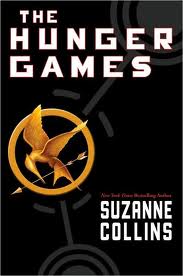
Last month, I finished Suzanne Collins’s The Hunger Games.  I’d had the trilogy since last year when I saw the movie with a couple of friends who had both read the whole series and loved it.  More recently, I was urged to take the plunge for two more reasons: 1) my mom had just read the series and also loved it, and 2) Larry Brooks’s eleven-part analysis of the first book on his Storyfix blog (more on that in a moment).

I too, loved the book.  Having seen the movie, read Brooks’s analysis, and a few other reviews/articles on the novel, I was well aware of the plot and events of the novel.  But spoilers never spoil a book for me.  When I know the major plot points, I only enjoy the book more.  I read to improve my craft.

Collins’s prose is clean, her POV engaging, and her craft extraordinary.  Damned.  Good.  Book.

Mind you, I think I might be the last person on the face of the earth to read The Hunger Games 🙂

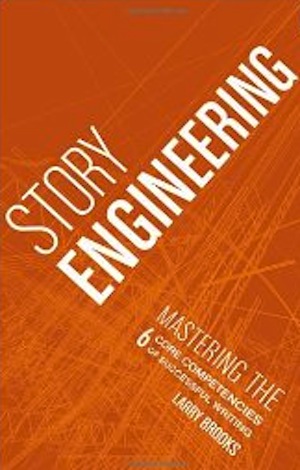
Brooks’s analysis of the book also lead me to read his: Story Engineering.  I did get a lot out of his book, but it was despite the author’s ethos.  Brooks comes on a little strong for my liking, and I truly resent having anyone shake a virtual finger at me.

For more of my thoughts on this writing craft book, please check out my review on Goodreads.

Ethos, for those who may not know, is the author’s personality as it comes through in print.

My undergrad was in rhetoric, so I’m pretty adept at reading past ethos.  It’s a good thing too, because Brooks does have some great information to share and I have already implemented some of his lessons.  I do get it.  I’m just not fond of how Brooks got his message out.

Currently, I’m reading Diana Gabaldon’s The Scottish Prisoner, which I’m enjoying quite a bit (though not as much as the main novels in the Outlander series), and A Medieval Miscellany.

Will let you know how all of that goes.

Right now, Writerly Goodness needs a wee bit of rest.  A new work-day awaits!  Egad …

A virtual tour of Mel’s office

I was inspired to blog this after seeing two similar posts from people in my writers’ learning network (hey professionally I can have a personal learning network, or PLN; why can’t I have a WLN?) Brian Braden, one of my critique partners from Author Salon, and Diana Gabaldon, one of my favourite authors.

I’d intended to do this as a vlog, or video blog, but I haven’t figured out my new tablet sufficiently to do a creditable job.

I’m going to do this a little differently than my compatriots though.  As with everything I blog, there’s a little story to go with this virtual tour.

Starting with the street on which I live.

My intent was to go out and take a picture of the street sign, but someone crashed into the post on which the sign used to hang last year, and while the post has been replaced, the street sign hasn’t.  So Googlemaps is the best I can do.  You can go there yourself and get the street view, but it’s from a few years ago.

But … did you notice anything about the street name?  That’s right!  It’s my last name.  It provides endless entertainment for just about everyone, and then I have to explain: yes, my grandfather bought the property that became Marttila Dr and then subsequently sold the lots to the city, who named the wee street after him.

And it is a wee street.  Please don’t go assuming I’m rich or something.  I don’t “own” the street, nor does anyone in my family.  I own the little house on the corner with the chunk of pre-cambrian shield in the unfinished basement and my mom owns the house next door.  Poor financial decisions on the part of a number of our family (myself included) mean that the house is all I have.

Sure, I’m gainfully employed and so is my husband, but all we have to show for our collective life’s work is a 2 bedroom bungalow on one of the busiest street corners in town.

We’ve made the best of her though, slowly renovating, inside and out.

Before we head inside, I’d like to point out my summer office.

When it’s not insanely hot (like it’s been this year), I’m outside most weekends, days off, and even evenings with my lap top.  If you’ve ever heard that relocating for revision is a effective way of shifting your creative mind out of writing mode and into editor mode, I’m here to tell you it’s abso-frickin’-lutely true.  Works a charm for me at any rate 🙂

Now let’s move into the office itself.

The first thing that every office needs is a door.  Right now, my office door is one of the originals that came with the house and is painted white … over blue … over white … over ?  When I have a significant period of time off, I want to strip the door and polish up the brass handle like I did last year with the door to our bedroom.  So this is what it eventually will look like when I get it done 😀

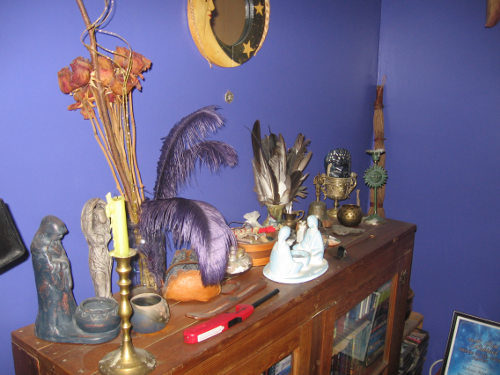
The first thing you see upon entering my office is this. Yes, it’s an altar.  I have distinctively pagan-ish, shamanic leanings.  What you may notice if you look down is that it’s also a bookshelf.  Another one of my stripping and refinishing projects, this cabinet used to hang on the wall of my mother’s  sewing room.  Originally, it was from the local school board.  My grandfather used to work there, and when they dismantled one of the schools, he nabbed this cupboard.  It’s crammed, top to bottom, with paperbacks.

Also, in the lower right corner of the picture, you’ll see my honourable mention from Ron L. Hubbard’s Writers of the Future contest.  Having just refinished the room (down to the studs and rebuilt from there) I’m still reluctant to poke holes in the walls, even for cool stuff like degrees and awards.

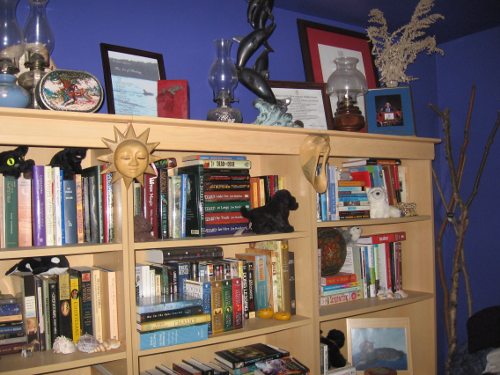
On the far wall are my three additional bookshelves, purchased to harmonize with the massive desk (in a moment, hold your horses …) I inherited from my mother-in-law when she moved about ten years ago.

The first shelf from the left houses historical and spiritual research books.  The bottom row is devoted to books on gardening and herbalism.  The middle shelf is overflowing with fiction I don’t want to store away, or haven’t read yet.  Like the paperback bookshelf, it runs the gamut from fantasy and SF, YA, classics, UF, to mysteries and literary fiction, etc.

The final shelf is populated with a number of my books on the craft.  Interspersed on the shelves are a number of objects I value: artefacts from family and friends, old tins, kerosene lamps, masks, my degrees, my picture from the alumni address I gave a Laurentian University a few years ago, and a couple of framed poems, “Fire and Ice” which was featured in the ekphrastic art project Fusion, and “The Art of Floating,” the poem I wrote for my dad.

The rest of my books are stored in approximately twelve Rubbermaid tubs in the basement.  Yup.  I’m a book addict, and happily so.

In the corner, you will notice three staves.  Actually, it’s one poplar staff, and one birch and one maple stang. All generously donated by the trees in my back yard (resulting from lightning strikes and wind storms).  Another project for the future: stripping the bark from these lovlies and waxing them to preserve.

Now comes the organized chaos I call my desk.

The first picture shows a collection of journals (the ones I write in and the ones I have subscriptions to), a few key reference books including the Guide to Literary Agents and Novel and Short Story Writer’s Market, research DVDs, binders containing three earlier versions of my novel, my BIG binder of AS critique material, my Brother inkjet printer, and various pens, pencils, highlighters, clips, push-pins, and other tools that I make use of at my desk.

The keen observer may notice the ashtray and the wine glass.   Yup.  You caught me.  I’m a vile smoker and I drink wine on occasion.  Once again, unapologetic about it.

The second picture doesn’t look quite so chaotic, but shows the rest of what’s on my desk.  My computer, whatever project I’m currently working on (in this case, Rachel Walsh’s The Last Scribe) underneath which hides my laptop, my colour printer/scanner/copier (currently on the fritz), a couple of my poetry books, my African violets (green things essential), and my i-pod (in the corner, also essential).

Behind my desk, on the wall, are my cork board and white board.  On my first and second revisions (after the draft has been completed) I use these extensively to map out my story and make notes.  As each piece of paper is addressed, it comes down for shredding and as each note is incorporated into the novel, it’s erased.

Right now, the board it just reminding me of outstanding submissions I haven’t heard back about yet, my blogging schedule, and calendar.

And that’s it.  I didn’t clean up on purpose, because I thought I’d let everyone see what I really work like.

So I hope you enjoyed this little tour.  Take comfort in the chaos!  My office is as much a part of my process as a writer as anything else.

What does your office/writing space look like?  How does it reflect your process?

Character Sketches Part 2: Eoghan MacDubghall

This is a continuation of my character sketches for my work in progress, Ascension, Book 1: Initiate of Stone.

Last week’s was: Character Sketches Part 1: Ferathainn Devlin

How Eoghan began …

Originally, when Ferathainn was named Rain, and went through half a dozen tumultuous life events, Eoghan was a nameless monk who found the blinded and wounded girl and nursed her to health again, weathering a toxic pregnancy and subsequent abortion in the process.  He fell in love with her, but she never saw him before he was called away by the goddess to become her champion/avatar.

Then I gave him the name of Arastian.  At that time, he was a grown man in his late twenties, and there were some cradle-robbing inferences that I wasn’t comfortable with.

Eventually, when I finally researched and chose Ferathainn’s name, I also decided on the Scottish version (or one of them in any case) of Ewen, child of the Yew.  I’m an unapologetic Celtophile!  (Especially after reading Diana Gabaldon’s Outlander series.)  He became a character younger than Ferathainn, and his love for her completely unknown to her, because she never regains consciousness while in his care.  I had to put a few more roadblocks in their way.

Now he’s a postulant monk, not even tonsured (achieved by the painful process of plucking, which he dreads) and at risk of being turned out of the Monastery of Aurayene as any time, a particular cruelty in a world where the season that equates to winter is actually a deadly season of storms.  He becomes Auraya’s Kas’Hadden, her hammer of light in another cruel twist.

Eoghan’s brother Callum was to become Kas’Hadden before him, but Yllel, the villain of the novel, conspires to have him executed for heresy before this can happen.  Auraya conserves the remnants on Cal’s spirit at the Well of Souls and when Eoghan reaches her, she forges the Kas’Hadden from Eoghan, incorporating Cal’s qualities, and a few other choice bits.

The goddess has to subdue Eoghan because he has qualities that she does not want in her champion, namely his love for Ferathainn, and basically traps him inside the fleshy prison of her avatar.  So he’s repressed and imprisoned, and it’s painful.  That’s the kind of goddess Auraya can be …

Eoghan’s story line is much more dynamic than Ferathainn’s, an imbalance I am striving to address in my next revision.  He is one of my favourite characters, though.  He has to be: he’s Fer’s love interest 🙂

The Sketch:

Name: Eoghan MacDubghall

Nickname:  none but he becomes the Kas’Hadden

Birth date/place:  14 years ago, Aurayene

Character role:  Secondary protagonist

Age: 14 years

Race: Tellurin (Alban)

Eye colour:  hazel, later blue

Hair colour/style:  Strawberry blonde, wildly curly.  This doesn’t really change.

Build (height/weight):  5’ 4”, slight, not muscular.  When he becomes Kas’Hadden, 8’ + and extremely well-muscled, an Adonis.

Skin tone:  pale and freckled, later golden.

Style of dress:  robes, cassock.  As the Kas’Hadden, hardly anything 🙂

Characteristics/mannerisms: none

Personality traits:  Desperately afraid of everything.  Self effacing to the point of having little personality of his own.

Background:  Born eighteen years the junior of two brothers to a spiritually devout public servant and his wife, Eoghan was largely ignored by his father and never knew his mother who died shortly after giving birth to him.  His father saw Eoghan as the means of his beloved wife’s demise.  His older brother Callum was the favourite, the one on whom all their father’s hopes depended.  Initially Callum hated Eoghan as well, tried to smother the baby, but couldn’t go through with it.  Surprisingly, Eoghan was the means by which Callum was able to heal from the wound of his mother’s death.

Callum became a soldier at a young age and was quickly inducted into the Sanctori but when their father died, Callum took holy orders.  Eoghan came with him as a ward of the Faithful initially, and early signs pointed to him following his brother into the priesthood.  He proved a fair illuminator, but asked too many questions for the comfort of his teachers.

Eoghan has been alternately ignored and protected throughout his life.  He is incredibly naïve and Callum’s execution nearly destroys his faith, but the war coming so swiftly on the heels of Callum’s death, Eoghan has no time to internalize his loss.  Callum was more a father to Eoghan than their biological one.  Eoghan is lost in every sense when Auraya calls upon him.

Ferathainn represents his only chance to find himself and choose what he wants to do with his life.

Internal conflicts: He’s been so ignored/protected/controlled he has no idea who he is or what he wants to do with his life.  When Auraya turns him into the Kas’Hadden, Eoghan finally has the physical power and presence to support his growing internal convictions but is prevented from exercising it on his own behalf.

External conflicts:  Auraya wants to use Eoghan to defeat Yllel and bring her word back to the people of Tellurin.  Yllel wants to destroy him as one of the few beings who could oppose the god’s escape.

Auraya.  To keep the Kas’Hadden compliant, she suppresses Eoghan’s personality.

Ferathainn can’t return Eoghan’s love because of her trauma, besides, he belongs to Auraya and she demands his total devotion.

Dairragh doesn’t trust Eoghan and doesn’t believe in the Kas’Hadden.  He can’t deny how useful the behemoth can be in battle, but isn’t sure what to make of him.

Eoghan attempts to protect Ferathainn from Khaleal, though she proves not to need his protection.

What Eoghan might look like:

I don’t have a drawing of Eoghan.  Sadly, I’m not very good at drawing the male figure.  So pictures will have to do.

When the novel begins, Eoghan is fourteen and hasn’t really hit his first growth spurt yet.  He starts to grow a sparse ‘stache and a few chin hairs that might optimistically be called a beard.  He’s got this unruly bird’s nest of strawberry blonde curls and a plague of freckles.  He’s a skinny, book-fed boy.

Though the hair colour and freckles are absent, I thought of a young Matthew Gray Gubler as a suitable physical analogue.

When he becomes the Kas’Hadden, he’s more like Chris Hemsworth (ala Thor) but has the physical dimensions of the Hulk.

And that is Eoghan.

Next week: Dairragh.

Ta-ta for now, my writerly friends!