Thoughty Thursday: Popping your mental corn, Sept 4-10, 2022

Tomorrow is Friday, and we’re halfway through September (!). Get your mental corn popping in time for the weekend 🙂
Jordan Laird provides a timeline of the Columbus police fatal shooting of Donovan Lewis. The Columbus Dispatch

Jamie Ducharme reports that US medical schools are struggling to overcome centuries of racism in healthcare. Time

Matthew Wills reveals the truth about Isabella Van Wagenen. JSTOR Daily

Lorenzo Tondo and Julian Borger: UN calls for demilitarised zone around Zaporizhzhia nuclear plant. The Guardian

Hanna Arhirova and Yuras Karmanau report that Ukraine claws back territory. Associated Press

China earthquake death count rises to 74 as lockdown anger grows. Associated Press

Two suspects sought for Saskatchewan stabbings now face charges, 10 dead and injured count rises to 18. CBC

Julie Steenhuysen and Jennifer Rigby reveal long covid’s link to suicide: scientists warn of hidden crisis. Reuters

James Gallagher: new malaria vaccine is world-changing, say scientists. BBC

Buckingham Castle announces that Queen Elizabeth II died on September 8, 2022. BBC

Clark Quinn recommends you test and tune your learning solutions. Learnlets

Derek Thompson: your career is just one eighth of your life. The Atlantic

Why you should daydream. Elizabeth Cox | TED-Ed

Simon Lewson explains what Canada’s largest art heist reveals about the art world’s shady side. The Walrus

Manuel Ausloos and Sybille de La Hamaide report that restoration of Notre Dame’s smoke-damaged stained glass begins. Reuters

Maggie Zhou: you’re not scared of failing, you’re scared of succeeding. Refinery 29

Guy Kawasaki interviews Cassie Holmes about applying the science of happiness to life. The Remakable People Podcast

Hasima Khatib tells you how to survive 2022’s third Mercury retrograde starting September 9th. Vogue

Will Sullivan reveals that a lunchbox-sized device is making oxygen on Mars. The Smithsonian Magazine

Donna Lu reports that a new solar-powered invention creates hydrogen fuel from the atmosphere. The Guardian

Scott FaLee explains how changes in length of day affect the brain and subsequent behaviour. UC San Diego

Yvaine Ye reports that embryos with DNA from three people develop normally in first safety study. Nature

Brian Handwerk: the earliest known amputation was performed 31,000 years ago in Borneo. The Smithsonian Magazine

Yvonne Gordon wonders what ancient secrets lie beneath this little-known Irish bog? National Geographic

Bob Yirka reports that over 90% of identifiable trash in the North Pacific Garbage Patch comes from just six countries. And Canada and the US are two of them 😦 Phys.org

Clodagh Kilcoyne and Conor Humphries: Irish nuns bid to turn their convent green. Reuters

True facts: parasitic birds. Ze Frank

How tardigrades bear dehydration. University of Tokyo

Giulia de Amicis presents a fascinating infographic depicting 40 different animal sleep patterns. Visual Capitalist

Thank you for visiting, and I hope you found something to inspire a future creative project.

Until next tipsday, be well and stay safe; be kind and stay strong. The world needs your stories!

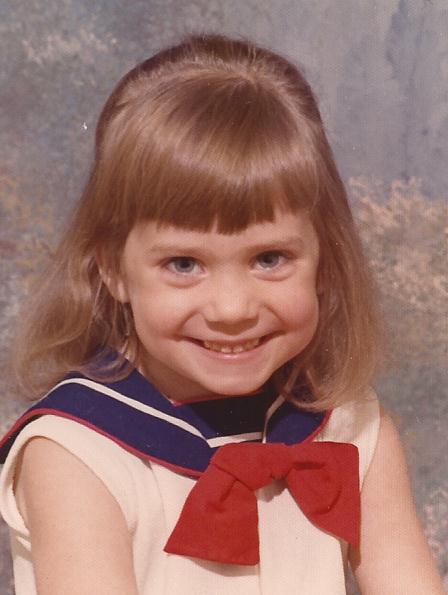
A born storyteller …

Storyteller is just another name for liar.

In grade one, I think all my classmates (and teachers) thought of me as a silly giggler, a liar, and cat-lady-in-training.

I didn’t even know how to write properly yet, so I exercised my creativity by telling my classmates in “show and tell” about the latest stray cat that I picked up on the way home.  They’d always run away after a few days and so I could show the class a different picture from the cat book I’d checked out of the library and tell them that my latest find looked just like that.

Daydreaming was also a preoccupation.  Because my dad had epilepsy, it was thought that I might too and that my habit of totally “zoning out” was actually petit mal seizures.  Later in life, I was formally tested for epilepsy and there was absolutely no sign of it.  I’d just delve so deeply into my fantasy world that there was nothing could tear me away.

If I was born 20 years later, I’d probably have been diagnosed as ADHD and drugged into submission.  As it was, I was “spoken to” and ignored.  I was deemed enthusiastic but disruptive by different teachers for different reasons.

Can you see the mischievious? Just call me “wee devil” 🙂

Really, I was painfully shy, and the giggling was a way of deflecting uncomfortable situations, which meant pretty much everything.  To this day, I still laugh when I offer a thought or suggestion to my colleagues or manager at work.  If it’s too radical, my suggestion can always be dismissed as a joke, right?

The daydreaming-at-inappropriate-times thing stayed with me until my mid-twenties, and then I started to get clever about it.  I’d restrict my mental ramblings to my “alone time” so no one would be put off by my apparent disinterest in whatever it was they were saying.  Now I cultivate solitariness.  As I writer, I have reason to, but as a creative soul, I simply can’t do without.

As for the telling of stories, I’ve always wondered what might have happened if someone had recognized what it was I was trying to express and encouraged me to turn those imaginary powers to something else.  If I’d started writing my dreams and stories down earlier, where might I be today?

Ultimately what-ifs and might-have-beens are only intellectual exercises.  None of us have do-overs.

A few months ago, one of the writers I consider to be a mentor, Barbara Kyle, presented this TED talk (via Volconvo) to her creative network: http://www.volconvo.com/forums/content/226-do-schools-kill-creativity.html

It is 20 minutes well-spent, trust me.  Sir Ken is incredibly funny, but his message is dead serious.  Currently, it is not the business of schools to nurture creativity, but to create useful/functional members of society.  I rather agree with Sir Ken, that only by nurturing the creativity of our children will schools produce truly valuable members of the human community.

I’ve also been disturbed by the resurfacing of the ADHD debate.  Are children being over diagnosed/incorrectly diagnosed?  This debate has been around for decades and it still hasn’t been resolved.

Some food for thought:

Were you a creative child smothered by a school system that didn’t recognize what your “acting out” meant?  How did you come to understand your creativity and who helped you through that sometimes agonized and agonizing process?  Did you ever feel less valued or less intelligent because you were more creative than academic?