Ad Astra 2015 day 2: After acceptance, the fun begins

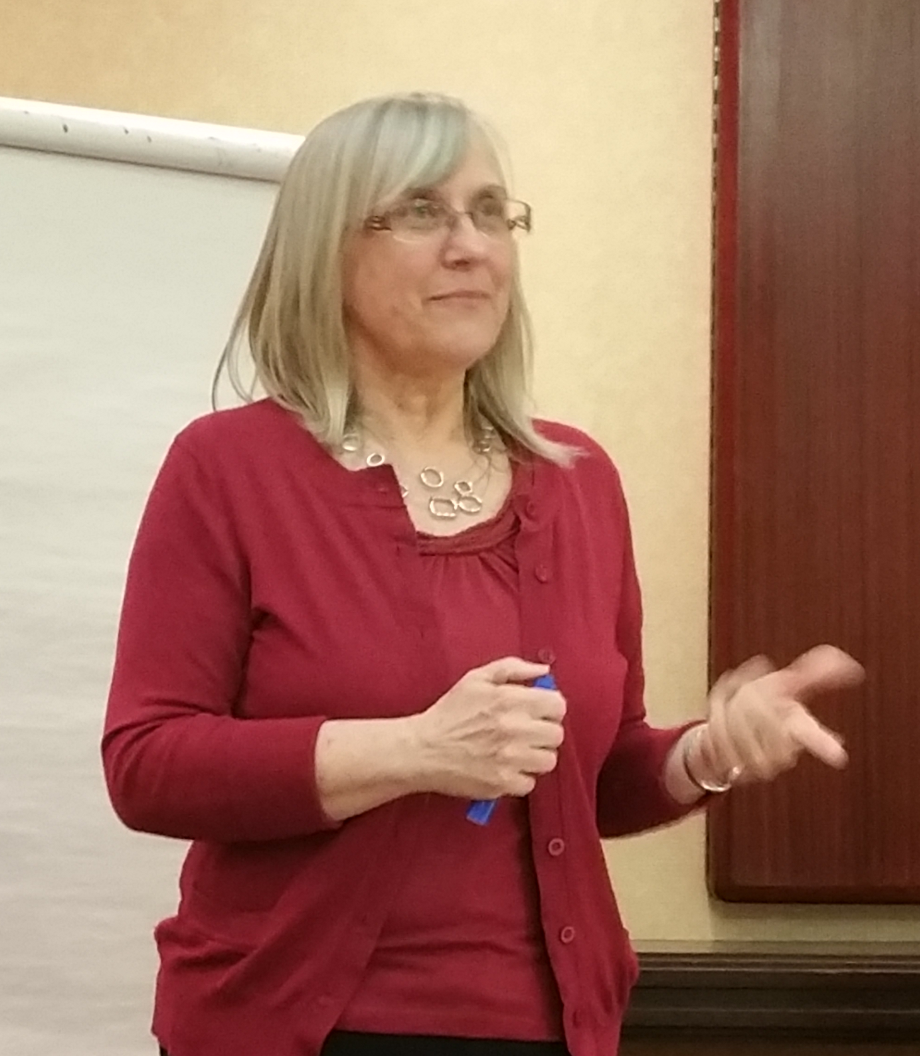
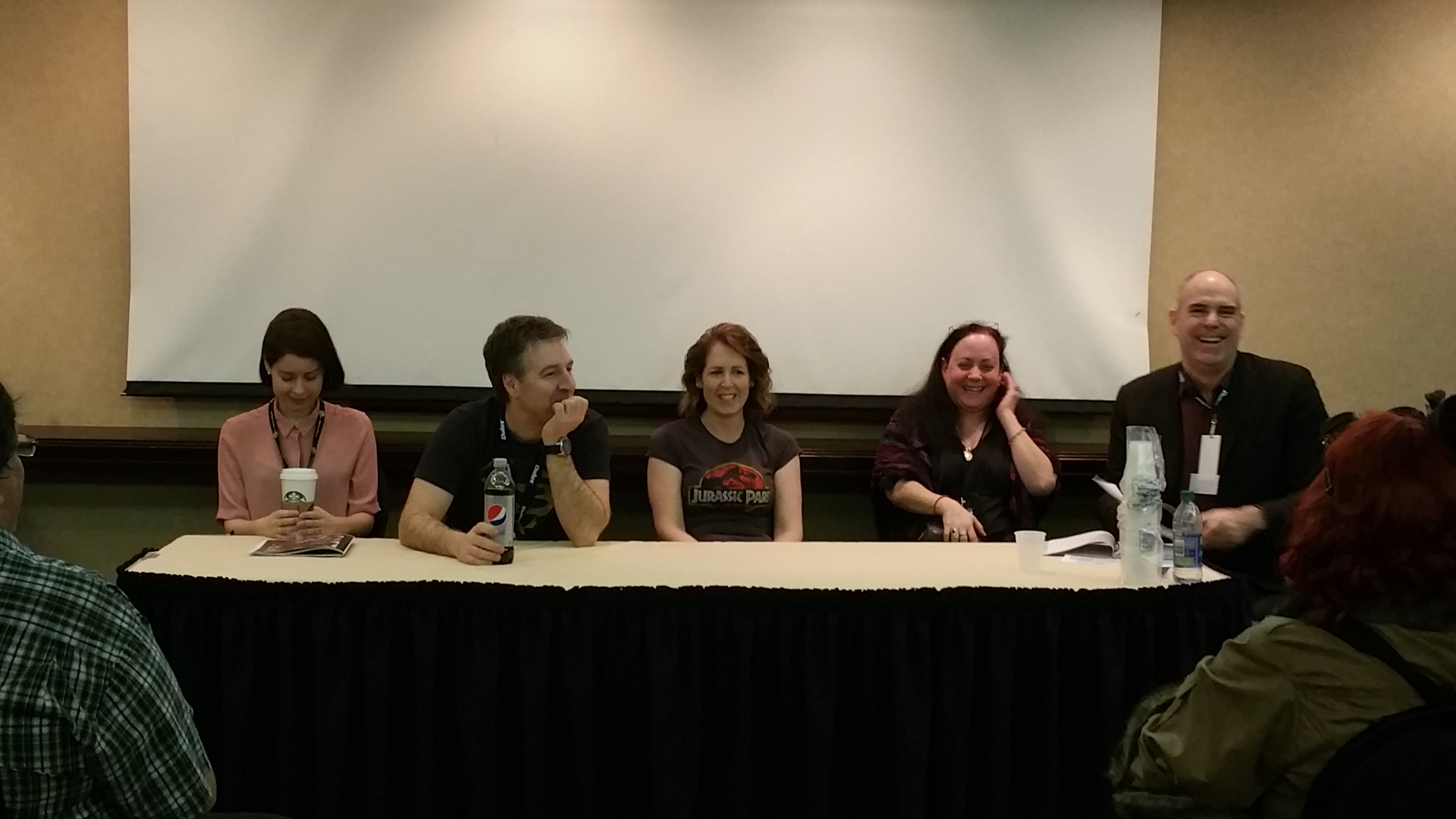
Panellists: Suzanne Church, Arlene F. Marks, Kelley Armstrong, Monica Pacheco, Charles de Lint

After acceptance panel

KA: I was reading at the University of Waterloo, and a question came up that really caught me off guard. That was my biggest challenge: getting used to answering scary questions about my stories.

AFM: I started on the editorial side of the business. When it came to working that process with my own book, what surprised me was the number of times I had to read my book. It’s a test. If you don’t get sick of your book after reading it 20 or 30 times, it’s a good sign.

SC: I’m a rule-follower. When I heard back from my first editor, I got to work making all the requested changes. What I had to learn was that editors aren’t infallible. You have to learn to fight for your work, when necessary. When you hear from an editor for the first time, read a comment, and then take a drink of tequila.

AFM: My first published novel was with Harlequin, the publisher for whom I edited. A fellow editor suggested I write my book, but when I submitted it, an editor was assigned who was a frustrated author. I went through four rewrites without a contract. Eventually, I went over the editor’s head, but that was only possible because I had a 12-year working relationship with Harlequin.

KA: My Canadian publisher sent out advanced reader copies (ARCs) and wanted me to write a couple of articles. I did, but what stuck out was my stance that what I had written was not horror. There was a terrific backlash from other writers of horror.

MP: I was working with an author under contract. Three days before the book was due, her computer crashed. We had to come forward, explain what happened, and ask for an extension.

CdL: The original cover for The Riddle of the Wren was a collage. I thought it was crappy. My editor, Terry Windling, advocated for me and ended up doing the cover for free.

SC: The promotional piece is challenging, too. Start three months before the release.

KA: Just realizing that I had to promote my own book was a shock. I don’t have what it takes for event planning and blogging. The most important thing I learned, though, is to thank your readers.

MP: Publicists are not magicians. Promotional materials can be as much work as writing the novel.

CdL: I agree with Kelley. Connect with your readers. Find common ground. Recommend the books of other authors that they would enjoy.

SC: I talk about hockey more than I talk about writing. One of my surprises was that you have to convince the library database to feature your books so that libraries will pick it up.

AFM: Never underestimate the value of friendships. Come up with cool swag ideas for your supporters.

MP: At one party, we handed out LED flashlights.

KA: Chocolates are bad promotional tools. They get eaten. Give out screen cleaning cloths, bags, pens, useful things. Every time someone picks up the pen you gave them, they’ll be reminded.

AFM: Bookmarks. Leave that shit everywhere.

SC: Wine is expensive, but cool. Everybody loves cake.

CdL: Giving stuff to kids is fun. The more creative you can get, the better. I’ve written songs to go with my books. I had an artist draw pictures of the characters, sign them, and leave them for the fans.


And that was time.

Tomorrow: I’ll be transcribing my notes from Jane Ann McLachlan’s workshop.

Next week: Ad Astra gets uncanny . . . and my Next Chapter update 🙂
Ad Astra 2015, day 2: An agent and a publisher walk into a bar . . . who do you approach first?

Yes, day 2 has finally arrived!

First, a reminder of my disclaimer

These posts are composed of my notes. Often, because of the scheduling, I enter sessions after they’re already in progress. I write by hand, so as I’m writing what I believe to be a salient point, I may miss the next one. I do my best to catch as much as I can, but things will be missed. Also, if, in my haste I recorded something incorrectly, please don’t be shy about coming forward and letting me know. I will correct all errors post-hasty once informed of them.


Panellists: Monica Pacheco, Ryan McFadden, Kelley Armstrong, Karen Dales, Mark Leslie

Agent or publisher panel

MP: By the time a book hits the shelves, it’s already 1-2 years old, so to speak. Don’t follow trends. What’s selling now won’t be what’s selling when your novel comes to market.

ML: Is it fair to say that trends are what’s currently selling, plus some kind of twist?

KA: I’ll reiterate: don’t write to trends. There’s no point.

KD: If you focus on what’s hot rather than what you’re passionate about, your readers will detect it. Readers can tell when you’re being disingenuous.

ML: I was at a conference and I pitched my idea for a book without having written it. Dundurn said yes, so I started writing in April. The book was published in October, so that will give you some idea how quickly things can come together.

RM: If I was at the “bar,” I think I’d hit on the other writers. Craft is more important than your ability to sell yourself. Writers will introduce you to their people. Those people can be some very valuable contacts.

KD: I’m working as a freelance editor right now and the way I came by the job was through pitching a publisher. I was talking to an author and asking where I should send my work in progress. The author suggested her publisher. I pitched, and not only was I able to get a contract for my WIP, but I also became an editor for them.

ML: Sometimes I might consider a market inappropriate for me, or a piece inappropriate for the project I’m working on, but for someone else, it may be a perfect fit. I remember working as an editor and having to turn down a great story because it wasn’t suited to the anthology. I recommended that the author submit his story to Writers of the Future. He did, and he won.

MP: We read everything in our slush pile. We’re looking for that gem, and we won’t overlook any submissions.

RM: Networking is everything.

KD: If you’re working with a freelance editor, research them. Develop a relationship. If you’re working with an editor who works with a traditional publisher, it’s different. The money the publisher is willing to invest can change the dynamic.

KA: When you work with an editor for one of the big five houses or their imprints, it’s more important to be aware of what the publisher’s guidelines and preferences are. The individual editor may be gone by the time your book is printed.

ML: What are the differences between Canadian, UK, and US markets?

KD: Canadian and UK publishers are more consistent. In the US, I’m all over the place.

ML: In one instance, the managing editor gave me notes before I even started writing.

KD: The editor has to be an advocate for the author.

KA: Networking, as mentioned, is great, but don’t get sneaky about it. Don’t invite me out to coffee just to get a recommendation, or to ask me to read your manuscript.

KD: Don’t go fishing. Go make friends.

ML: Look at the long game.

MP: So much of the industry is based on relationships.

KA: Don’t do anything electronically that you wouldn’t do in person. Having said that, if someone asks you what you’re working on, be honest. Talk about it positively.

MP: The bottom line is to be professional. Don’t self-denigrate. No scented paper or bribes, please.

Q: Do different publishing houses have different quirks?

ML: Dundurn loves Canadian authors. In fact, you have to be Canadian to be published by Dundurn.

KD: Dark Dragon is interested in good storytelling. They like unique stories and voices.

KA: HarperCollins does amazing covers for their young adult books. Penguin random House is all around great. There was a poll in The Bookseller. Are authors happy with their publishers? The overwhelming response was that they wanted more communication from their publishers. 37% said that if they got an equivalent—not better—offer from another publisher, they’d switch. Subterranean Press is good.

RM: Smaller publishers are better at communicating with their authors. ChiZine, Dragon Moon, and Dark Dragon are like that.

MP: Tor is a dream to work with. Skyhorse Publishing is a good mid-sized, non-fiction publisher. Talos Press is interested in SFF. Simon & Schuster Canada has been very good to Andrew Pyper. They’ve sent him on a national reading tour.


And that was that.

Next week: What happens after acceptance?

Ad Astra 2015 day 1: Fans, your bread and butter

Panellists: Dennis Lee, Jane Ann McLachlan, Gregory Wilson

JAM: How and when do you acquire fans?

DL: Work with another author who already has them. I was playing City of Heroes and met Mercedes Lackey online. I couldn’t have planned it. Our collaboration started as a podcast. No one wanted to read superhero stories by Mercedes. They were too invested in her fantasy. We had to find voice actors who were willing to work for free. When you offer something for free, people will find you. We also got an opportunity to be a part of the Humble Bundle. We moved 50,000 copies. It’s all about word of mouth and good will.

JAM: Offering something for free is a great method of attracting fans. If you’re working with a publisher, they’ll want to know the number of your followers. You’ll need to know something about marketing.

GW: Draw upon existing groups. I draw on readers of my existing publications, the audience for my show on Twitch about story and narrative in games, and I have a speculative fiction podcast for which I’ve interviewed a number of well known science fiction and fantasy authors. You have to make the connection between where you are, where you existing fan bases are, and where you want to be.

JAM: Once you have fans, how do you keep them?

GW: You have to write more and get better. You have to continually interact with your fans and be able to seek out feedback without being irritating. Respond to your comments.

DL: I agree. In my case, I was part of a group of four authors working collaboratively. We set up social media accounts in our characters’ names and we interact with our fans in character. Sometimes we get provocative.

JAM: Write well and interact. If you wait until you’re ready, publishers won’t beat down your door. Take too long between books (posts and events) and your readers will forget about you. At the same time, you shouldn’t write so fast that you compromise quality. Start a newsletter. Build an email list. Value your fans. Fans like books. Friends value authors.

DL: Mercedes and her husband interact differently with their fans than they do with friends.

JAM: How do you encourage your fans to spread the word? I’d have a light touch. No one wants to be manipulated or told what to do.

DL: It’s hard to ask. We don’t. We assume that if they like what they’re reading, the fans will talk it up without our having to ask. Be polite.

GW: I’m happy to ask. But it’s an ask, not a tell or a manipulation. Fans will spread the word if they want to. Sometimes they need to know that the effort is appreciated, though.


And that was the last session of day 1.

Next week, I’ll move on to the day 2 sessions with “And agent and an editor walk into a bar . . .” Of course, I’ll be back with Tipsday and Thoughty Thursday as well, and if I get off my bloggish butt I might have another Wordsmith Studio homecoming post about what I’m reading these days.

Thank you for reading.

Stay tuned and be well.

Ad Astra 2015 day 1: The beldam, the hag, and the hedgewitch: Witches in popular culture

Panelists: Derek Newman-Stille, Kate Story, Karen Dales, and Gail Z. Martin

GZM: How has the trope of the witch been used in the past?

KS: In the European tradition, witches were evil. We have a countercultural fascination with them.

GZM: That might depend on your point of view.

KD: The roots of the word witch are from the Anglo Saxon wicce/wicca. It means wise. The vilification of witches came about as a result of the Inquisition and the malleum malificarum (the witches hammer). Disney’s portrayals of witches have cemented the pejorative image witches have.

GZM: Every village had a hedgewitch. Someone wise, who knew about herbs, could deliver a baby, and so forth.

KD: Hereditary witches are still around today.

DNS: In Greek and Roman times, the practitioners were mostly men. They used curse tablets and imported Egyptian and Jewish words.

KS: Nnedi Okorafor writes about witches in her young adult novels. In Nigeria, there are actual witch camps.

GZM: Voodoun and Hoodoo, though they started in similar ways, are very different traditions. Santeria, too, started with the mystification of Catholic saints and ritual.

KS: One of the lenses we’re looking through is the appeal of the witch to young people. It’s the attraction of the unseen, ghosts, supernatural abilities; it’s the longing to see and work with these things.

KD: Llewellyn publications has seen a massive uptake in sales of their informational magic books. In Toronto, we have four occult shops. Young women are attracted to wiccan practice thanks to shows like Charmed and Buffy the Vampire Slayer (Willow). The attraction is the ability to have a personal relationship with the divine without an intermediary.

GZM: The young protagonist may not even know what’s happening to them.

DNS: There’s actually an organization called the Harry Potter Alliance and they are activists. They do good for a lot of different people in a lot of different situations.

GZM: In Bewitched, the curses the witches made were all to Hecate. The Kathryn Kurtz novel Lammas Night was based on true events.

KD: Sir Terry Pratchett went to the Pan-European Convention to conduct research for his novels.

GZM: Butcher’s Dresden was not an evil character, but, because he was taught by an unscrupulous master, he suffered repercussions for decades afterward.

DNS: We love delving into the darker aspects of the witch. Look at “Dark Willow” from Buffy, and Stephen King’s Carrie.

GZM: A character can find an ouija board and an old book and suddenly there are unforeseen consequences.

DNS: It plays into political conservatism. If you experiment, bad things will happen to you. Essentially, it’s fear of knowledge.

GZM: You have to take responsibility for your actions.

KD: In The Mummy, the characters are told not to read the book. She reads it anyway and releases the mummy.

KS: A little knowledge is a dangerous thing.

Q: Do you find in fictional depictions that it’s the girls who are called to the dark side? Boys seem to get away with anything.

KD: Maybe the guys can handle it and the girls can’t? I’d argue that’s societal bias and not necessarily accurate.

GZM: Our culture is still struggling with women who have power. In reality, there are just as many foolish boys as there are foolish girls.

DNS: Knowledge is still forbidden to women in many ways. In fiction, it’s often a traumatic event that triggers the emergence of power. It reflects institutionalized abuse.

GZM: In Norse culture, it’s okay for women to have power.

KD: In Celtic legends the king could only assume power—and keep it—by virtue of having ritualized sex with the goddess, or her representative.

KS: There’s a South African contemporary dancer who has recently revealed that he is from a long line of shaman. That’s how he channels his dance.

DNS: The curse tablets I mentioned earlier were meant to harness Cthonic powers (under the earth). England is a particularly rich source because they used lead tablets which were then rolled. These have lasted much longer that their stone equivalents. They were stabbed with nails to enact the curse.


And that was my short hand for what was a lively discussion of witches in various popular media 🙂

Ad Astra 2015 day 1: Science fiction for a young adult audience

Panelists: E.K. Johnston, Charlene Challenger, Leah Bobet, Jane Ann McLachlan

YA SF panel

Having just been in a session, Leah was a tad late . . .

JAM: Has fantasy done a better job reaching the YA audience? Who is the audience for YA SF?

LB: There’s the problem right there. Is YA about and geared to young adult readers, or do readers just find their ways to it? Adult authors will write YA SF to “convert” younger readers. That’s a bad reason to write YA SF.

EKJ: Girls are starting to look for science fiction in the YA section.

LB: It’s really YA novels that are paranormal at the core. Authors are starting to cater to YA readers bored with standard paranormal.

JAM: Who are the readers of YA? There are a lot of adults who are looking for, perhaps, a simpler plot or a more youthful protagonist.

LB: I wouldn’t trash readers.

Mel’s note: There was a bit of awkweird at that point. Leah confessed to a lack of sleep but continued to make her point. For the record, Jane Ann’s remark wasn’t intended as a slight to readers of YA of any age, nor was it intended as a slight to the authors of YA, of whom she is one.

EKJ: One of the things that YA does well is include something for readers of all ages.

CC: I remembered being intimidated by SF as a kid. Star Trek: The Next Generation made is accessible. [SF] elevates the human condition.

EKJ: It asks the important questions.

LB: SF is no longer about showing your geek pass card. It’s rooted in outsider culture.

JAM: Are there more female protagonists in YA SF? What does this say about the authors? The readers?

LB: Traditionally, SF has had a massive issue with sexism and misogyny.

Q: Would genre crossing novels find readers in YA?

EKJ: Maybe. That’s the charm of YA. It encompasses all genres. It would probably be an easier environment to break through with a cross-genre book.

Q: What makes for a good YA novel?

EKJ: The pacing is faster, length is a little shorter than the average novel in the adult category. The story doesn’t make them feel bad for being a teenager.

LB: In 2014, the biggest trend was adult readers, particularly women readers, reading YA. As a result, the YA market became huge. Advances were five times the advances in other categories. Publishers had the budget dollars for editing and promotion.

EKJ: Check out Midwinterblood by Marcus Sedgwick.

JAM: Most YA share common themes: leaving home, dystopia, romance, authentication. Most are written in first person, present tense.

EKJ: Second person is rare, but it can be mind-blowing when done well. Fan fiction is a great way to learn the conventions and break them at the same time.

LB: Understand the conversation you’re entering.

JAM: What’s the difference between YA and adult fiction?

EKJ: Flexibility is the key. The main differences are the age of the protagonist and the age of the reader.

CC: The YA journey is outward. The adult journey is inward.

LB: It’s the reading culture. Adult SF is the classic authors like Asimov and Heinlein. It’s not accessible to new readers.

LAM: There is accessible adult SF. The Time Traveller’s Wife is an example, but is it really SF? Young adult is distinguished, in my opinion, by the intensity of emotion and its sense of optimism.

And our time was up.


I’m going to have to defer my next chapter post until tomorrow. I’ve had a couple of evenings out, I have full-tum syndrome (sleepy) and it’s late.

Until tomorrow, be well.

Ad Astra 2015 day 1: Arrival and Julie Czerneda workshop

The Ad Astra 2015 reportage starts now!

This year, I managed to find the Sheraton without too much difficulty (yay me). I can be Google Maps challenged at the most inconvenient times, especially when GM wants to send me on the 407 (I am toll route averse) or tells me to pull a u-turn when I don’t see the need for it 😛

Still, I just—just—got checked in to my room in time to run back down and into the workshop.

Julie Czerneda’s workshop was entitled It only hurts when I write: Destroying your story gremlins.

After a brief round of introductions, we got to work. Julie asked us to work in pairs and assigned us a series of writing tasks. The focus on the workshop was to solve the gremlins that many writers experience. The main gremlin was the blank page, or not knowing what to write/how to come up with story ideas.*

  1. Using a grid, storyboard a plot with a beginning, middle, and end (plot emphasis).
  2. Using a grid and a character card prompt, storyboard a plot with a beginning, middle, and an end (character emphasis).

After each exercise, each group shared the results of their efforts.

There was a brief break and then we reconvened for the second half of the workshop.

In the second half, Julie handed out a story worksheet to each pair. We were to fill out the worksheet with the following information: Story idea, Protagonist, Setting, Type of story, Format of story, Readership for this story, and what Feeling we wanted the reader to respond with.

Once the worksheet was completed, Julie handed out cards that added completely random items to the story. My partner and I received these three: What this story needs is a cat; Add an hilarious death; and Rewrite as a comedy.

Considering that I’d elected to fill out the worksheet using my main WIP, Initiate of Stone, a darkish epic fantasy, the cards actually threw three rather large wrenches into the gears.

The point of these wrenches was to concretely prove that we can change our stories, sometimes to good effect, on a dime and at the request of someone else. It teaches you to relinquish control, release from attachment, and may serve you well if/when an editor wants you to make changes your story.

It was a bit of a light bulb moment for me. I learned that I had, to a degree, achieved a certain amount of detachment from IoS. It’s a novel, not one of my vital organs.

Though I think if anyone actually asked me to rewrite IoS as a comedy, I would refuse. Categorically, even.

Overall, it was an enjoyable workshop.

Julie Czerneda

*I walked into the workshop thinking that we were going to be working with our actual story gremlins, as in the problems we are experiencing with our WIPs. It took me a few minutes to get over my disappointment that I was not going to get help with the opening of IoS. I was motivated, as ever, to learn, though, and so I did 🙂

There you have it.

Next week: Deconstructing tropes 🙂 Yes, we had all the fun! Really. I like this kind of thing 🙂

The next chapter: March 2015 update

Last month, I wrote about how I was reprioritizing my life because I’d made the realization that pouring all my creative energy into the day-job was not making me happy. It wasn’t getting me any closer to my goals as a writer, either.

I started March out, work-wise, by applying for my self-funded leave and putting in my vacation requests for the first two quarters of the 2015-16 fiscal (to the end of September). I started expressing my opinion (which, of course, did me no favours, professionally) and reframing my experience with the perspective my wee revelation had provided me.

A series of serendipitous learning opportunities came my way, many of them concerned with following one’s dreams, or finding one’s calling. Funny how these things happen when we really need them to.

As I write this post, I’m listening to Michael Hyatt’s podcast on the Disciplined Pursuit of Less. This month’s newsletter from Katie Weiland included a piece on her “spring cleaning” of her subscriptions and social media. She was doing this to reclaim writing time from potentially wasteful or distracting electronic practices.

Having said all that, I was burned out by the time March rolled around. Last fall, when I had originally intended to take my self-funded leave but decided to defer it, I said that I was a little toasty around the edges, but that I’d probably be able to hold out until the spring.

That was before this acting consultancy.

Truthfully, I was burnt before the end of January. Part-way through February, I stopped revising Initiate of Stone and then I stopped drafting Marushka.

With IoS, I had to shift back into drafting mode to rewrite a chapter that was completely altered by my decision to remove a character from the novel. I was blocked, essentially, as I tried to write around the hole I’d decided to make in my plot. I didn’t stop writing per se, but I was having trouble finding my way out of the maze.

I made several abortive attempts to redraft the chapter in Word (which I didn’t count), but ultimately found that drafting by hand (which I also do not count) was much more effective. Once I had the chapter mapped and pieces of it written out, I was able to regain my momentum and complete the new chapter in Word.

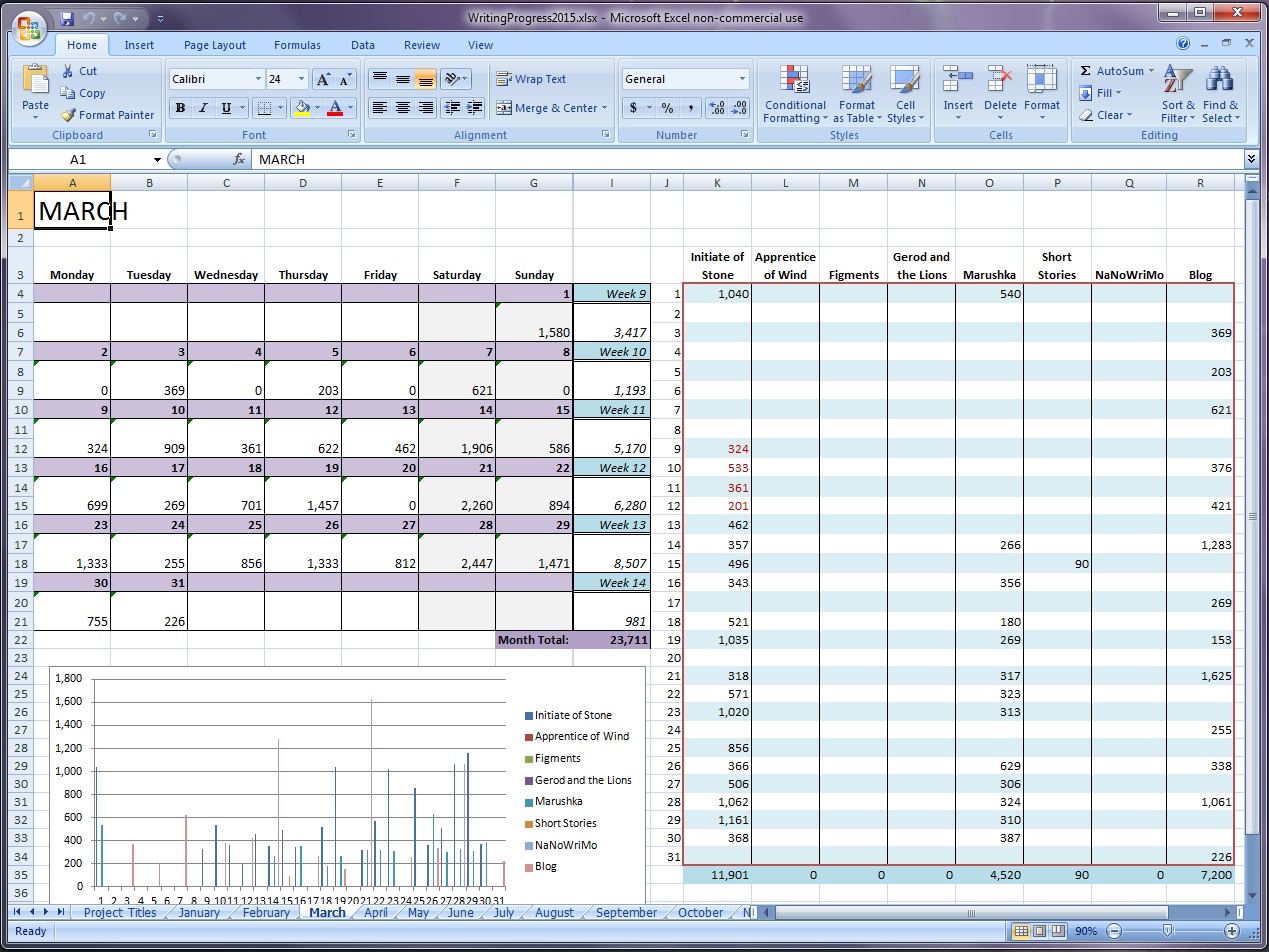
Shifting gears with IoS meant that I didn’t have the drafting mojo going for Marushka. By looking at my spreadsheets, I can see clearly that when I stopped revising IoS, about a week later, I stopped drafting Marushka. Once I got back on track with IoS (the word counts recorded in red), again, about a week later, I was able to pick up with the drafting of Marushka again.

So, clearly, while it is possible for me to work on multiple projects at once, I definitely have to be working on them in different phases (drafting vs. revising). I’ve also realized that with the exception of the blog and some short stories, that the limit of my focus with regard to multiple novel-length projects is two.

Interestingly enough, I’m getting close to the end of drafting Marushka. I’ll be short of my 75k goal for the draft, but I’m okay with that. So far what seems to be my evolving pattern is to draft short, rewrite long, and revise/edit to goal length. Will let you know if this new piece of my process puzzle proves to be effective in the long run.

After my staggered, two-week disruptions in IoS and Marushka respectively, I got back on track for the rest of the month.

Judging for the Friends of the Merril contest continues. Originally, when I was notified that my story made the long-list, I was also advised that judging would be complete by March 31st. On March 31st, a post was released on the site indicating that deliberations continued.

I have a 25% chance of placing. The delay is a little nerve-wracking, but I’m trying to remain positive. It means I have some tough competition, but that we’re all in the same quality boat.

I also spiffed up three short stories, including the one I submitted to the FotM contest, and sent them off for consideration in the Sudbury Writers’ Guild anthology.

I’d wanted to revise my longer short story for submission to a magazine, but didn’t have the energy or focus to spare.

I did, however, submit my short story “The Broken Places,” which was published in Bastion last year, for consideration in the Imaginarium anthology. It’s a year’s best anthology put out by ChiZine Publications. It’s a long shot, but I can’t win if I don’t play 😉 So sayeth the lottery gods.

Now, at the beginning of April, and with a long weekend to enjoy, I’ve decided that I’m taking a breather. I’m still burnt, and trying to work all day and then come home and write all night is making things worse.

I have a writing sample to prepare for my workshop with Julie Czerneda and Ad Astra next weekend. So . . . I’m being evil and burning through Avatar on Netflix 🙂

This past week, I walked home from work. Once. I’m still sore. Mellie is out of shape. So I’m going to get back on track with regard to that. My goal is to walk home from work three evenings a week. It’s about five kilometres and takes about an hour. I have a number of books on Audible ready for the purpose.

There are a couple of anthologies that I’d like to write stories for in April, but I’m not sure if I’m going to manage them. My main goal is to complete this round of revision on IoS and my draft of Marushka. Anything else is gravy. Not saying that I’m purposefully disregarding these anthologies; I like gravy, but I’m also aware of my limitations, now more than ever.

Once that’s done, I’m going to shift gears again with IoS and get into query mode and I’ll then be completing my draft of Gerod and the Lions.

Those are my goals for the intermediate future.

Now to take a look at my progress for the month:

March Writing Progress

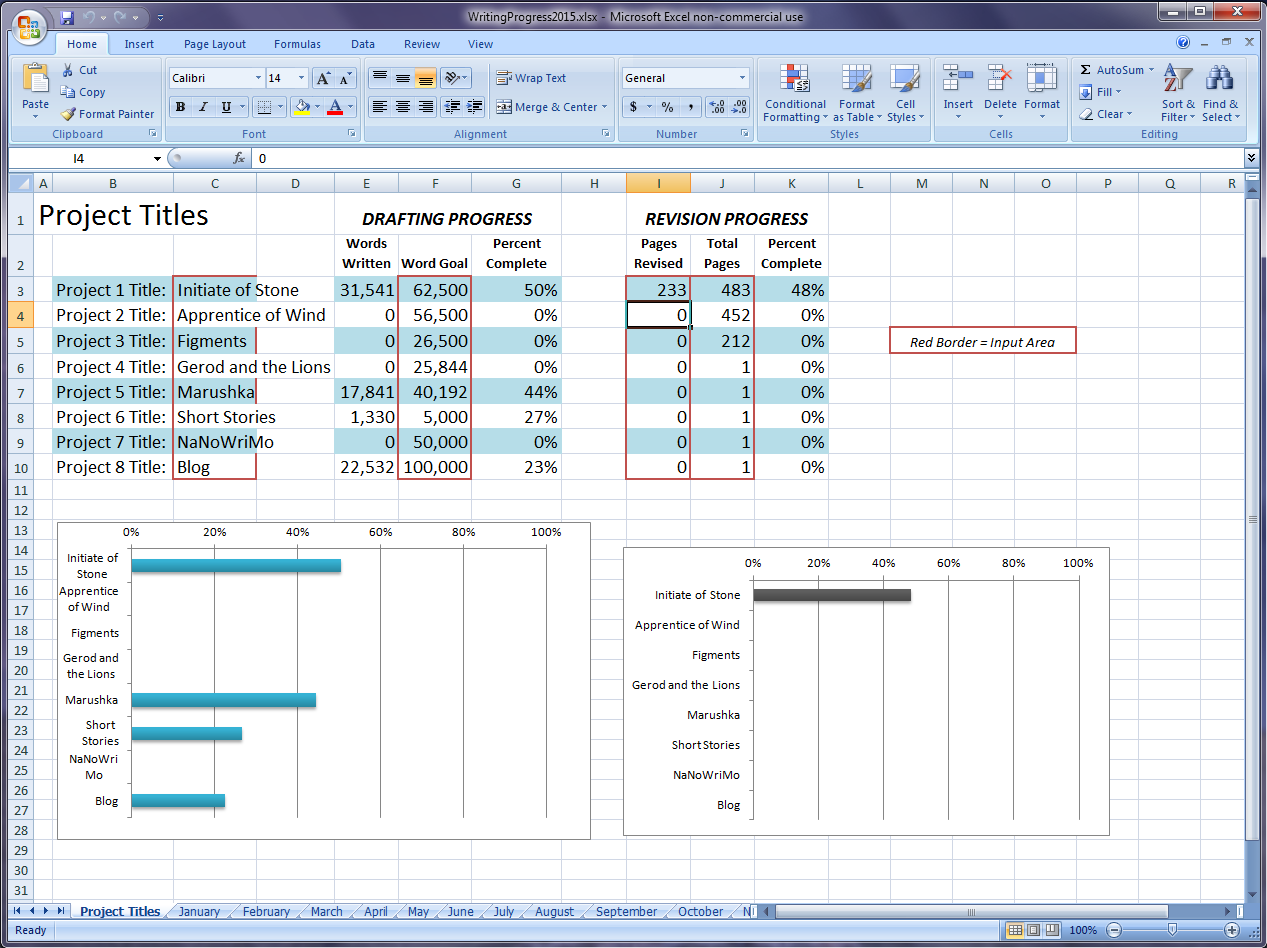
IoS Revisions (remember these are half counts, except for the new chapter in red, which were all new words): 11,901 words. Compare this with 11,851 in February, and 7,789 in January. I’m at the 50% mark of the novel.

Bloggage: 7,200 words. This has held more or less steady with 6,676 words in February and 8,432 words in January. I’m at 23% of my annual goal, which is more or less where I expected to be for March (one quarter through the year).

Drafting Marushka: 4,520 words in March; 3,859 in February; and my blow-me-away 9,462 in January. I’m at 44% of my drafting goal. I might make 60% by the time the story is finished.

Short stories: 90 words in March; 1,206 in February; and 34 in January. I’m at 27% of my goal for the year which is good.

Totals: 23,711 for March; 23,592 for February; 25,717 for January.

March Summary

So there we are.

Progress is, as ever, being made.

Now, season 3 of Avatar is calling, and Bitten this evening.

Have a lovely Easter, everyone.

See you on Tipdsay!

The Next Chapter

CanWrite! 2014 wrap post

It’s been a month and a bit of me posting on the weekends, but here we are, at last, at the end of the CanWrite! run.

The CAA Literary Awards Gala

This was held the night of Saturday, June 21st.

The night previous, we’d heard several of the nominees read from their works. All were excellent.

Here’s a post about the award winners.

Mariatu Kamara and Susan McClellandThe highlight of the evening was Keynote speaker, Mariatu Kamara, who, along with Susan McClelland, wrote her harrowing story of survival, resilience, and hope.

Of course, I picked up a copy of the book, The Bite of the Mango, and got it signed by the authors.

It was a night of wonderful stories shared and writerly camaraderie.

Other stuff that happened

The CanWrite! conferences are set up with all sorts of interesting activities.

On Thursday, Friday, and Saturday mornings, there were meditation sessions (which I did not attend), yoga sessions (which I did), and writers’ circles in fiction, poetry, and non-fiction (which I attended last year, but not this), pitch sessions (which I did not participate in), photo sessions (which I participated in last year, but not this), and walking tours (which I opted out of).

In the evenings on Thursday and Friday, there were readings with open mic segments. I read at both, but since the reading time was capped at three minutes, I did not read much 😉

There were workshops on Wednesday, one on fiction, one on poetry, and one on non-fiction. I had initially signed up for the fiction one, but the facilitator had to cancel.

On Wednesday night, there was a wine and cheese reception.

There were also two to four other sessions or workshops held each of Thursday, Friday, and Saturday afternoons which I could not attend without benefit of a time turner 🙂

Finally, there was the book fair. You know what I did there, don’t you?

CanWrite! book purchases

It’s an addiction

Thoughts on conferences and conventions

This brings me to preparing to attend a conference.

First, as with everything else that has to do with writing, you have to do your research.

What kind of conference or convention is it? I’ve attended three CanWrite! Conferences, an Algonkian Pitch conference, the Surrey International Writers’ Conference, an Ad Astra convention, and will be attending When Words Collide next weekend. All of them have been different.

Some conferences are set up as a kind of writers’ retreat with swaths of time for independent writing, group work (by genre – and here I’m talking poetry, fiction, non-fiction, and plays/screenplays), individual assessment (usually by the group facilitator), and social/networking opportunities (dinners, readings, etc.).

Pitch conferences focus almost exclusively on the pitch sessions, with all other workshops serving to prepare the pitchers and their pitches for their sessions.

Most conferences are set up with one-hour or two-hour sessions throughout the day and evening with short breaks in between to address biological imperatives like bathroom visitations and snack purchases. Each time slot will have multiple options for the attendee and reviewing the program ahead of time is of paramount importance. These conferences will also have pitch sessions (for an extra cost), blue pencil sessions (for an extra cost), photo sessions (extra cost), readings, and other social events. There will often be some kind of buffet, or gala dinner. Keynote speakers will be featured after meals, and there will be book launches/signings, after-hours parties, book fairs, and so forth. These are the writerly smorgasbords/marathons that you will have to navigate carefully to avoid utter exhaustion.

Conventions take the conference model and add even more geekery to the mix with LEGO salons, costume balls/masquerades, anime theatres, arts lounges, vendors, astronomy sessions, readings, and karaoke. The convention sessions are primarily panels, however, and not focused workshops, though workshops may be offered for an extra cost. The big reception or gala/keynote dinner will often also be an extra cost.

Conferences are usually expensive, with a fee in the hundreds of dollars. Conventions are nominally priced, but all the extras are on a pay per participate basis. Accommodation and transportation are always additional costs.

Mel’s tips for travel and accommodation: use hotel and travel rewards programs to lessen these expenses, where possible.

So, do your research, decide what you want to do, and go prepared. Most conferences and conventions will have their programs online months in advance, so you can plan what to attend and budget for the experience.

So, CanWrite! is a wrap, just in time for WWC 🙂

Today’s second post will have to be deferred until next weekend. I’m heading out to my sister-in-law’s shortly for a family BBQ.

Have a fabulous weekend, everyone!

Ad Astra 2014: It’s a wrap!

Doctor Who Welcomes You

The TARDIS and a Dalek formed the welcoming committee

I’ve been blogging this puppy for a month and a half now (!)

There was so much more to Ad Astra than the awesome sessions, though. There was so much that I couldn’t take part in.

I mentioned waaaaay back in my first post that there was Klingon Karaoke (not karaoke in Klingon, though that might be cool …). There was an anime lounge with various series and movies running all three days of the convention, an art room, a Lego room, the book store, author readings, and signings.

Also, for every session I attended, there were, like six others. There was astronomy in the parking lot at night, the masquerade, gaming sessions, Consuite events, and book launches by various SF/F publishers.

And there was the Guest of Honour brunch, which I foolishly chose not to purchase a ticket for (hey, it was my first time, I didn’t know it would be so awesome).

If I thought it was possible, I could have stayed up for the entire three days and done something different every hour.

What I did do (aside from the sessions)

I attended readings by Patricia Briggs, Julie Czerneda, Marie Bilodeau, Matt Moore, and Dennis Lee.

Patricia Briggs

Patricia Briggs

Julie Czerneda

Julie Czerneda

I bought (way too many) books and got some of them signed by the authors.

I bought a couple pieces of jewellery and a t-shirt.

Had a tonne of fun.

Not bad.

Think I’m going back next year 🙂

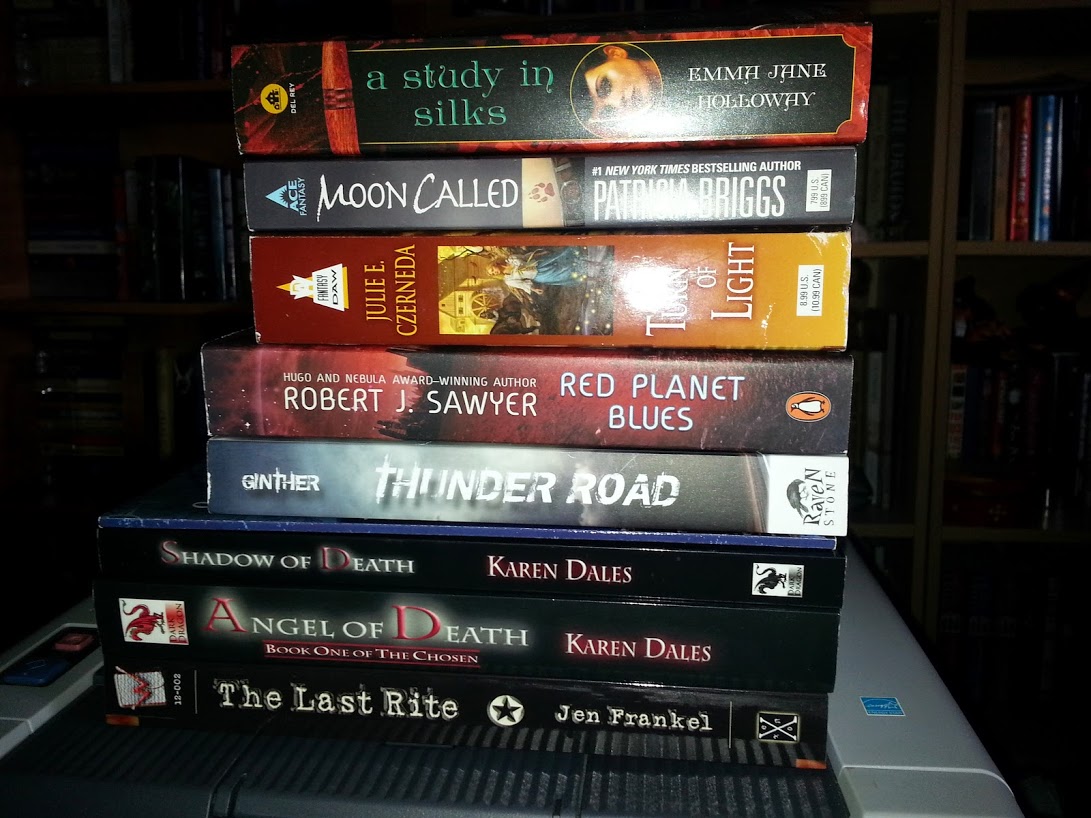
The book haul

The book haul

What about you? Have you attended any conventions or conferences recently?

Ad Astra 2014 day 3: Biotech, identity, and personal freedom

Panellists: Alison Sinclair; Shirley Meier

SM: Everyone is terrified of the loss of control. We use plague zombies to explain our fear. Dracula was about the fear of women’s power and blood magic. One of our biggest fears in biotechnology. There are a couple of good TED talks on the subject (Mel’s note: I found this one and this other one). Chemotherapy can be delivered directly to the tumour.

AS: Spider Robinson wrote about electrodes implanted in the pleasure centre of the brain. In the Star Trek: The Next Generation episode, “Crossroads,” the Federation becomes a dystopia. The Borg are biological machines. In Star Trek: Voyager, 7 of 9 and Hugh explore these ideas.

SM: The essential questions are: Who am I? Who owns my thoughts?

Q: In Brave New World, what was horrifying then is common place now. People fear science. What’s the positive side of biotechnology?

SM: In my books, MOM (the medical override module) is corrupted. Technology is what saves people, frees them from the villain, Prime. Pets are modified into true companions. Of course, then you have the issue of old age, disease, and how you can justify putting the dog down. They rejuvenate animals, mammals specifically.

Q: What about clones? Currently they age rapidly to the age of the animal they were cloned from.

AS: Medical technology is always advancing. Right now, they’re working on cloning the heart. The brain is still too much of a mystery. Is it ethical to “treat” mental illness? How does the process impinge on personal freedom?

SM: Heart surgeons have noticed personality changes after bypass surgery. There is a distinctive decrease in, or complete loss of, empathy.

Q: Who should be afraid of biotechnology? Who will suffer?

SM: We add to our knowledge; we don’t replace it. The old doesn’t disappear. Norms shift.

Q: Do you have statistics regarding the percentage of personality change in heart transplant patients?

SM: It was in a Smithsonian Magazine article. The percentage isn’t certain. They’re not even sure why it happens. It might be a drug interaction.

Q: If we look at biotechnology rationally, our fear is relatively low. Irrational fear is automatically high, however. People forget our own criminal predisposition.

SM: Look at the military. They have drills for the nuclear fighter jets frequently. They have to make sure that all is in readiness in case the worst happens. They don’t run in these drills. They walk slowly. If the jets take off, the world will probably end. The ground crew is assessed. If they don’t react appropriately, they will be removed. When we write SF, we are troubleshooting. What if? Utopias are boring. Consider the controversy over stem cells.

AS: But what about the cost? We need to invest in quality control. In our society, who can afford it? In Speed of Dark by Elizabeth Moon, the main character is autistic and offered a cure. Who chooses?

Q: What do you consider “you”?

AS: My mother has Alzheimer’s. Her personality hasn’t changed yet, but layers of memory get stripped off.

SM: Treatment is not the same as a cure. It makes illness tolerable. There’s a loss of dignity in Alzheimer’s that’s difficult to deal with. In the early stages, patients can be mistakenly addressed as if they are in the advanced stages. They don’t need that.

Q: There’s a tension between internal and external identity. Who we are vs. who others think we are. Is it the same person? I’m thinking of Heinlein’s Puppet Masters.

AS: Do we have a problem with free will?

SM: Yes. Our monsters steal our free will. Truth, justice, and the American way vs. the New World Order.

Q: What about mind control?

SM: Noam Chomsky’s Manufacturing Consent is a fascinating look at mind control and possession in our society.

AS: There’s also a struggle between personal and medical personhood.

SM: Why do things not work? We’re essentially monkeys. Would you give a monkey “the button”?

AS: Technology both reinforces and subverts existing power structures.

And that is the last session I attended at Ad Astra this year.

I’ll save the wrap post for next weekend.

In the meantime, have a fabulous weekend, my writerly peeps. I’ll be back on Tuesday with my regular Tipsday curation.