The next chapter: November 2025 update

Rebooting …

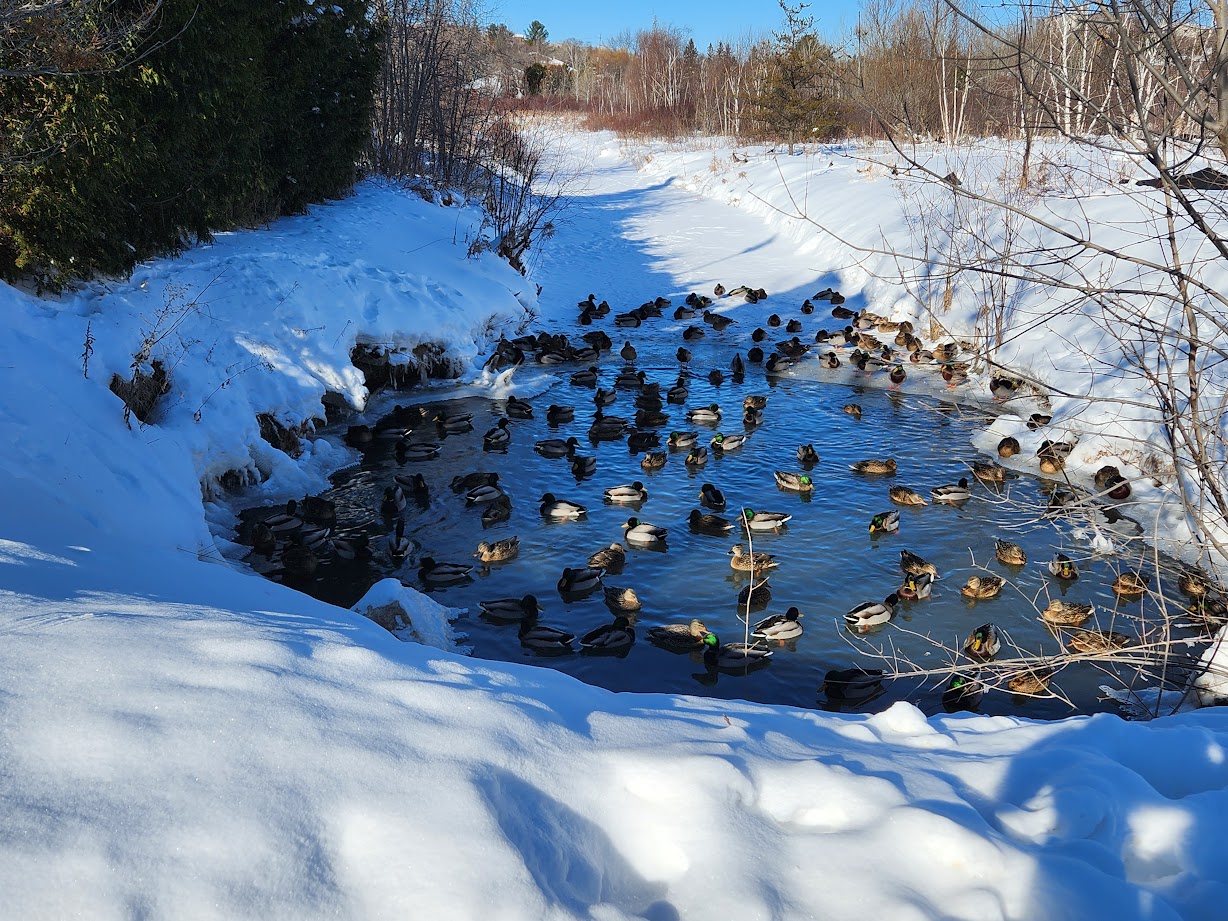
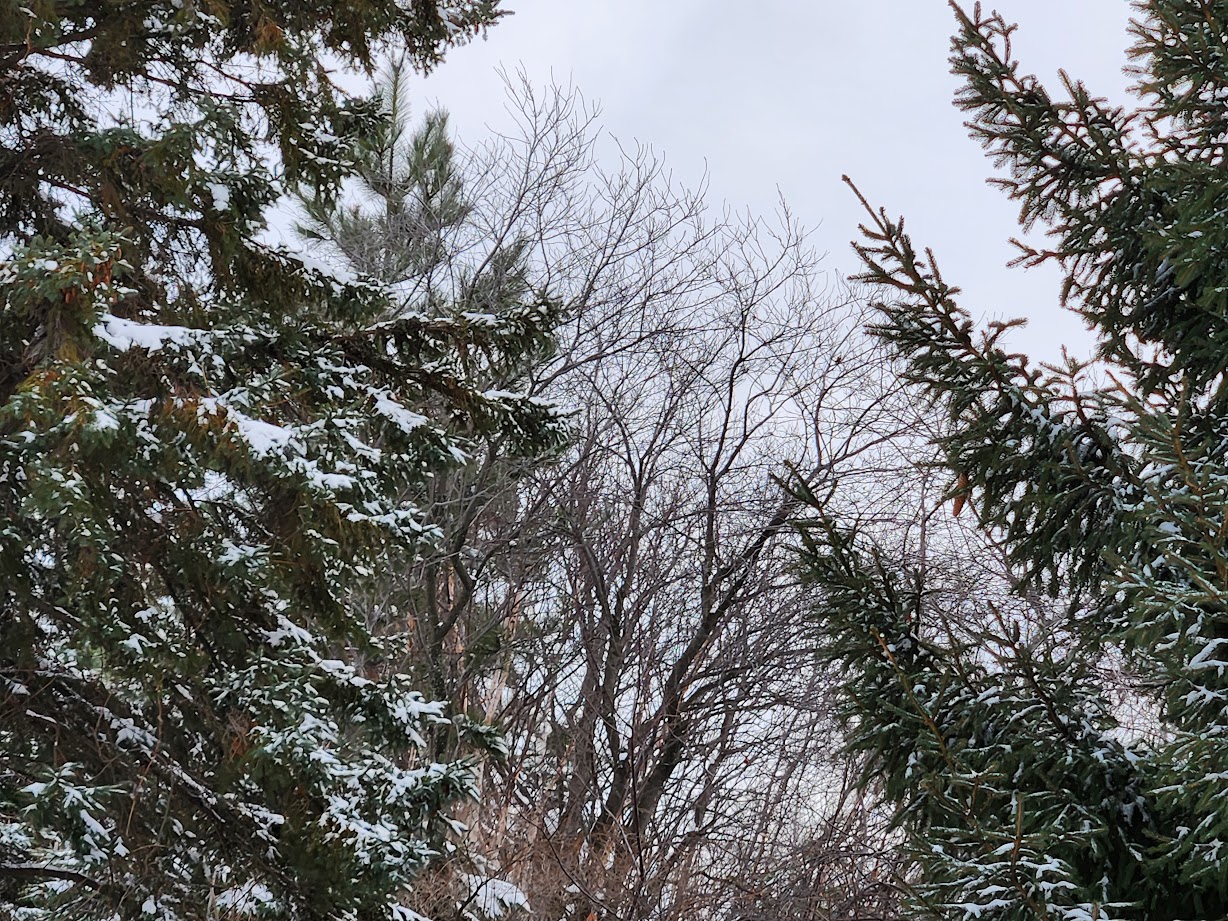
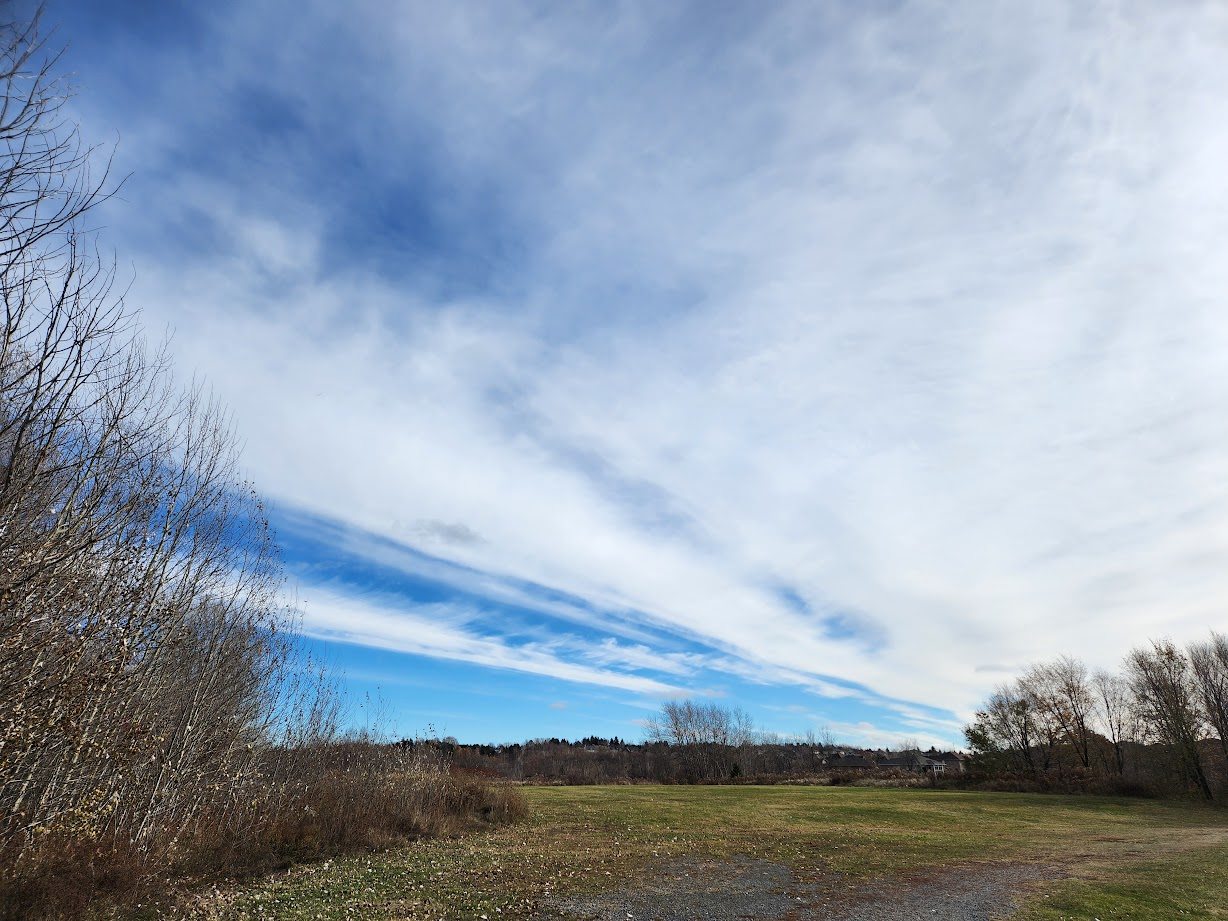
Picture of a stand of birch trees.

Life in general

What follows may seem like a middle-aged white woman whinging about first world problems, but, you know, I’m learning to listen to my body and honour what it’s telling me. Even small disruptions can dysregulate me, and I hope that sharing my experience will help one of my neurokin validate theirs.

Life isn’t always one crisis after another, even if the world in general seems to be burning down around us.

Now that my travel and writerly events over the last couple of months were over, November started with the return to standard time, which messes me up for a couple of weeks (at least). This happens regardless of whether we “gain” or “lose” an hour.

Occasionally, some politician talks about eliminating the time change, but the various governments and powers that be can never agree on whether to stick with standard time or daylight saving time, and the agreement of one government depends upon the agreement of all the others. So, Ontario won’t repeal DST unless Quebec and the States with which it trades also agree. If one state or province refuses, the proposition is dead.

And now, with Canada’s provincial trade barriers potentially coming down, there may be more domestic players to take into consideration. Even though Saskatchewan has never been on DST. It is to sigh.

Though I’d been using a neti-pot twice a day throughout the year and started taking Ryaltris (also twice a day) since the beginning of September, it became clear in the early days of November that I would be sick for at least part of my month off. I increased the frequency of Cold FX and Emergen-C, planning for the worst but hoping for better.

On the 3rd, I received an invitation to interview for the new Intake Team our directorate was creating on the 7th. It was only a half hour, but I did my best, geeking out about learning and development and my passion to align with the new vision for our department. They said they wanted to make decisions fairly quickly, but as of the end of November, I still hadn’t heard.

Nor had I heard whether I would be one of the many employees to be cut, as per the recently passed budget.

Living on tenterhooks about both situations.

No sooner had I started to recover from the time change than I had my double vaccination of flu and COVID shots. Look, I don’t plan these things, and I think it would be difficult to try to predict my reaction to any given set of vaccinations. They change formulation for both every year. Vaccinations were a thing on my to-do list, and I made the earliest convenient appointment the pharmacy had. It just turned out it was on the 12th.

Besides, other than a day or so of soreness, I’d never had a bad reaction in the past.

Folks, I’ve never had such a bad reaction. This year’s Moderna resulted in two days of Advil-surpassing pain and feeling like utter crap. And, of course, my sinuses ramped up toward infection with the tell-tale post-blow squeal, headaches, and — joy — cough.

I didn’t recover from the soreness and general feeling like crap until the following weekend, though the sinus symptoms persisted throughout the month.

For most of November, daytime temperatures were above zero degrees Celsius, so the various dustings of snow we received melted the next day or were washed away by rain. On the 29th, however, the daytime temperature remained below zero and so the snow stayed. The dusting we received on the 29th wasn’t impressive, but the snow that followed on the 30th required Phil to use the snow blower. And the city ploughs emerged, though they didn’t touch the side streets.

Wonderful things: In the last days of November, I remembered my dreams for almost a week! Nothing story-generating, but weird and fun, nonetheless. And I got a non-dream, super-cool idea for The Fenwoman’s Tale that will make the story SO much better. When I get back to it.

The month in writing

The early days of November were a mess.

Even though I returned from the Writing on the Rocks retreat inspired and ready to devote some time to my writing … I didn’t … (?)

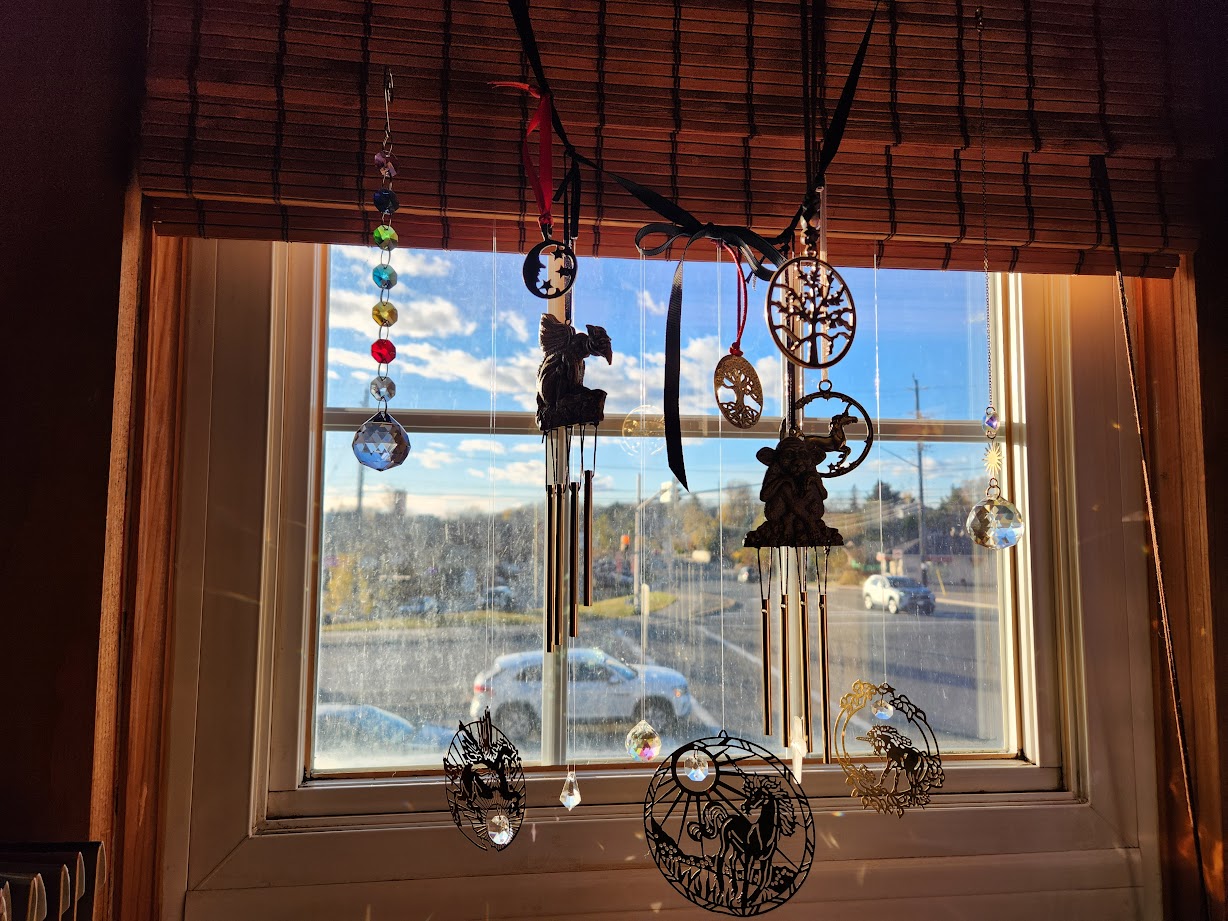
Instead, for some reason, my ND brain decided to start cleaning/reorganizing my office (!) I cleaned out all the candle glass (i.e. the containers candles come in) that had been sitting around my office for a year +, cleaned all the essential oil bottles that had been sitting around for at least as long, cleaned almost all of the glass (hurricane lamps, bowls, jars, etc.) in my office (I always find 1 or two containers I forgot afterward), and removed the prisms from their suction cups in my window and strung them up on a ribbon. I also cut back one of my 2 pothos plants because it was losing leaves at a rapid rate, a sure sign it was pot bound.

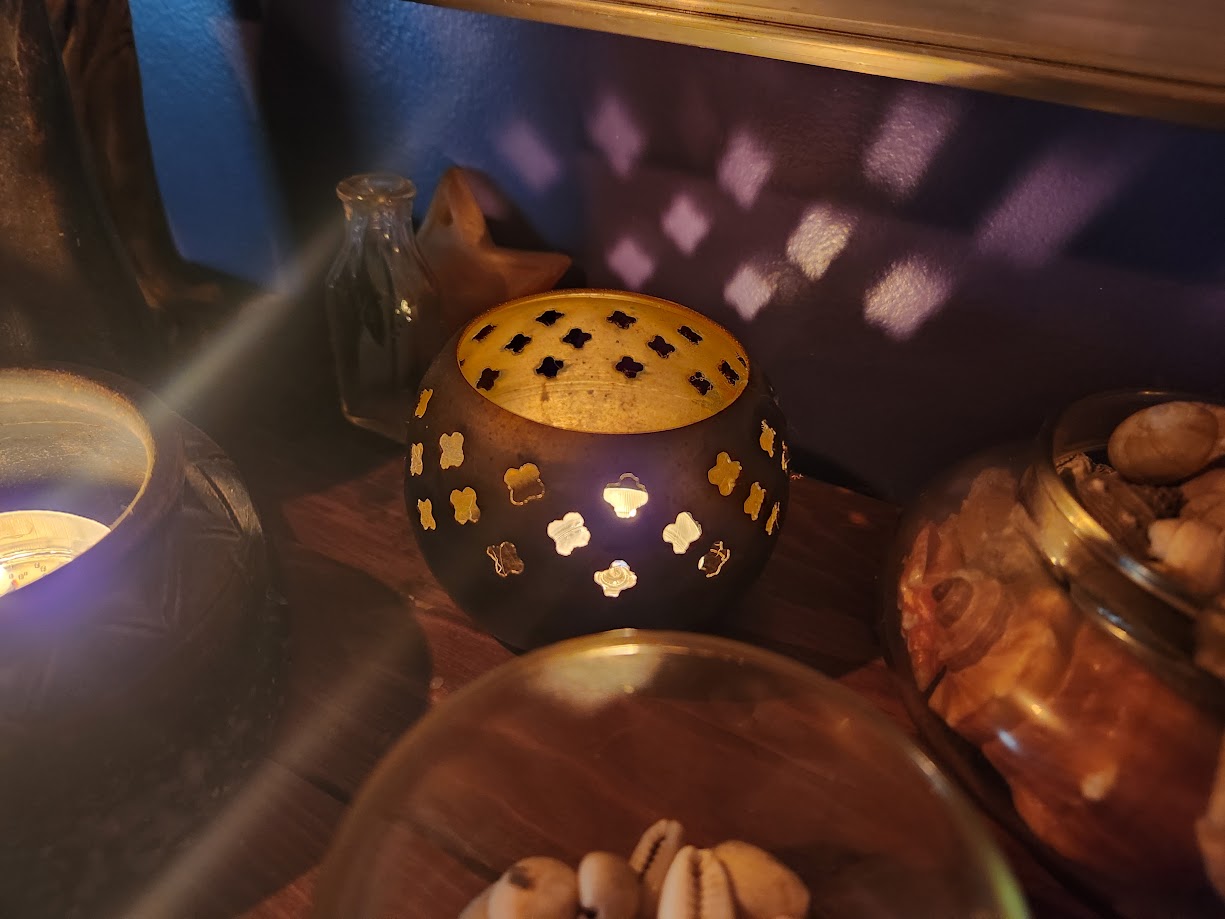
My assembly of suncatchers, crystals, and wind chimes.

And then, I realized I was prioritizing the wrong things and returned to writing tasks. This was, in part, why I was late posting about Can-Con, the retreat, and didn’t publish my last update/newsletter until mid-November.

After I took care of those writerly tasks, I finished an overdue review and got back to cutting Reality Bomb down to size.

All of this in the middle of major dysregulation due to the time change and double vaccination and sinusitis. Yay, brain!

By the 23rd, I finished my second cutting pass. The total word counts currently stands at 115,661. I only managed to cut 2,345 words. But progress is progress.

Then, I returned my attention to my office clean up.

Which … I did not do.

My body and brain demanded REST and I had to obey. I did pull up a couple of older short stories and started to rework them. And I was mulling the next round of RB cuts, including a rewrite of the first chapter, in the back of my mind.

My review of Like Water for Weary Souls by Liisa Kovala came out in The Seaboard Review of Books on the 12th.

The cover of Like Water for Weary Souls.

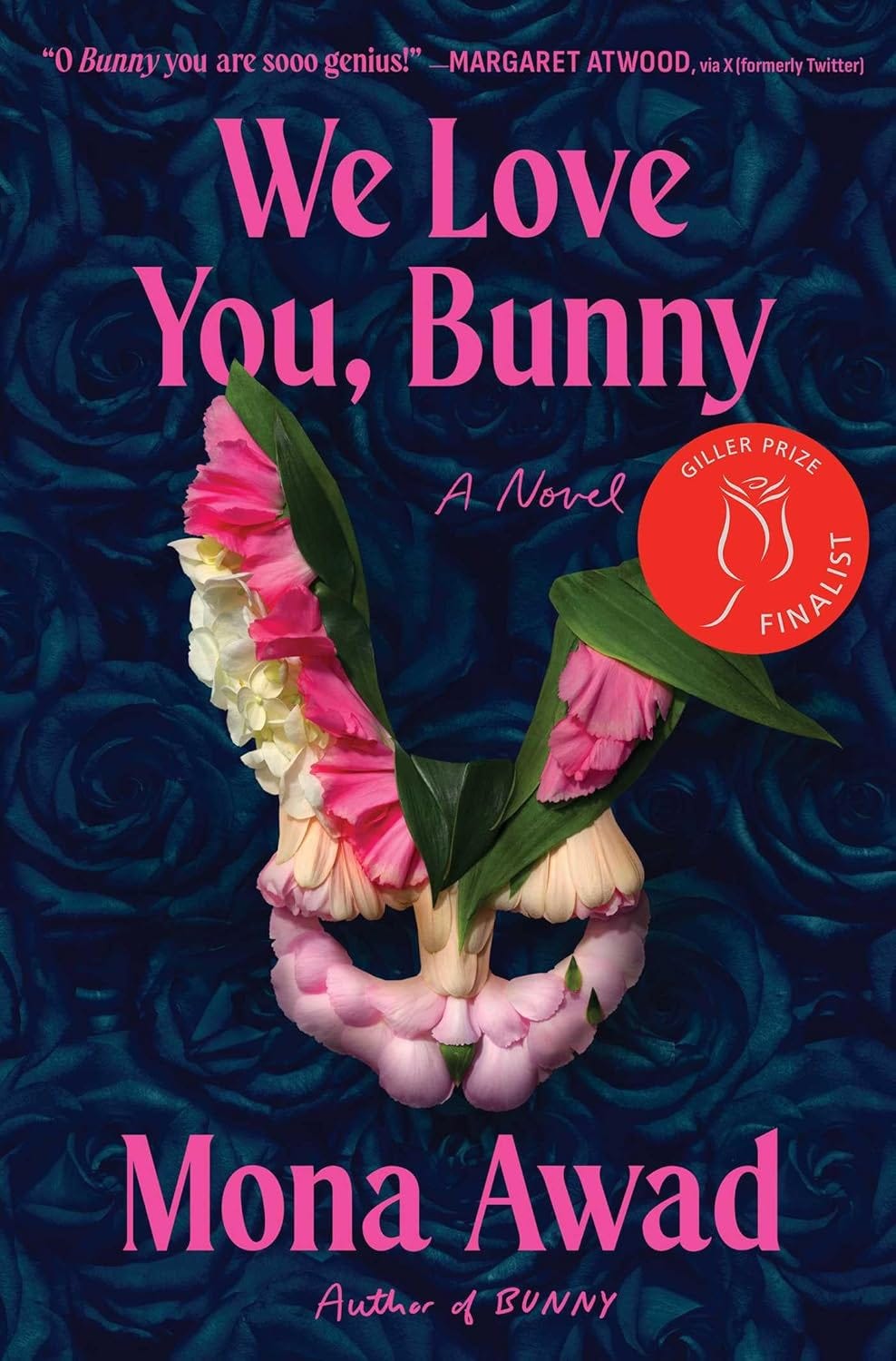
My review of Mona Awad’s We Love You, Bunny was released into the wild by The Seaboard Review of Books on the 19th.

The cover of We Love You, Bunny.

The final SF Canada board meeting of the year (before our AGM) was on the 24th. We’re a friendly bunch and everything was decided fairly quickly. We’re a go for a December 14th AGM.

Filling the well

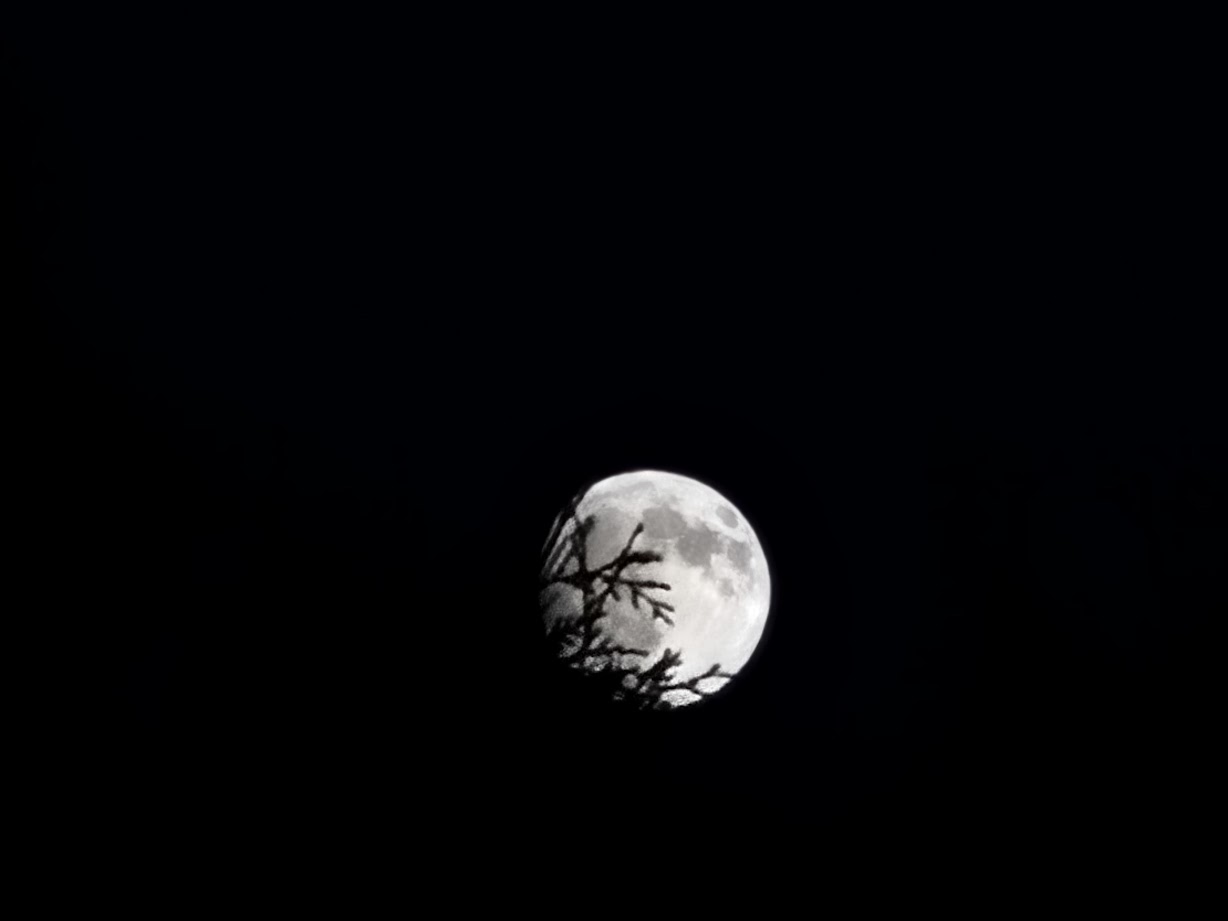
The full freezing moon in Taurus was on the 5th. It was a rainy day.

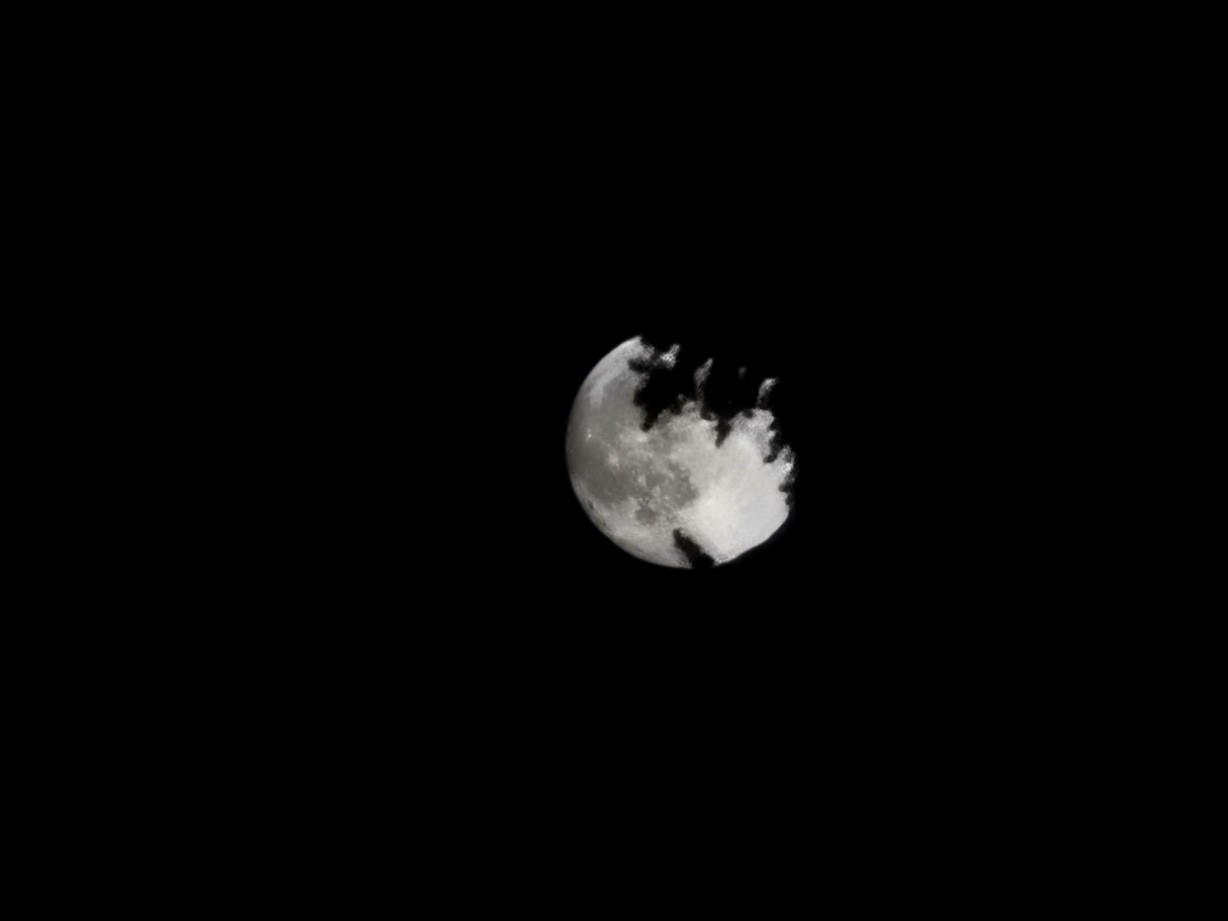
I think I’ve finally figured out how to take a good moon photo with my phone! At maximum zoom, this weird grid appears in the corner, and when you focus on the moon, the surrounding sky darkens. When you take the picture, the sky turns black, and the details of the moon come out. Some new feature on my phone. Yay!

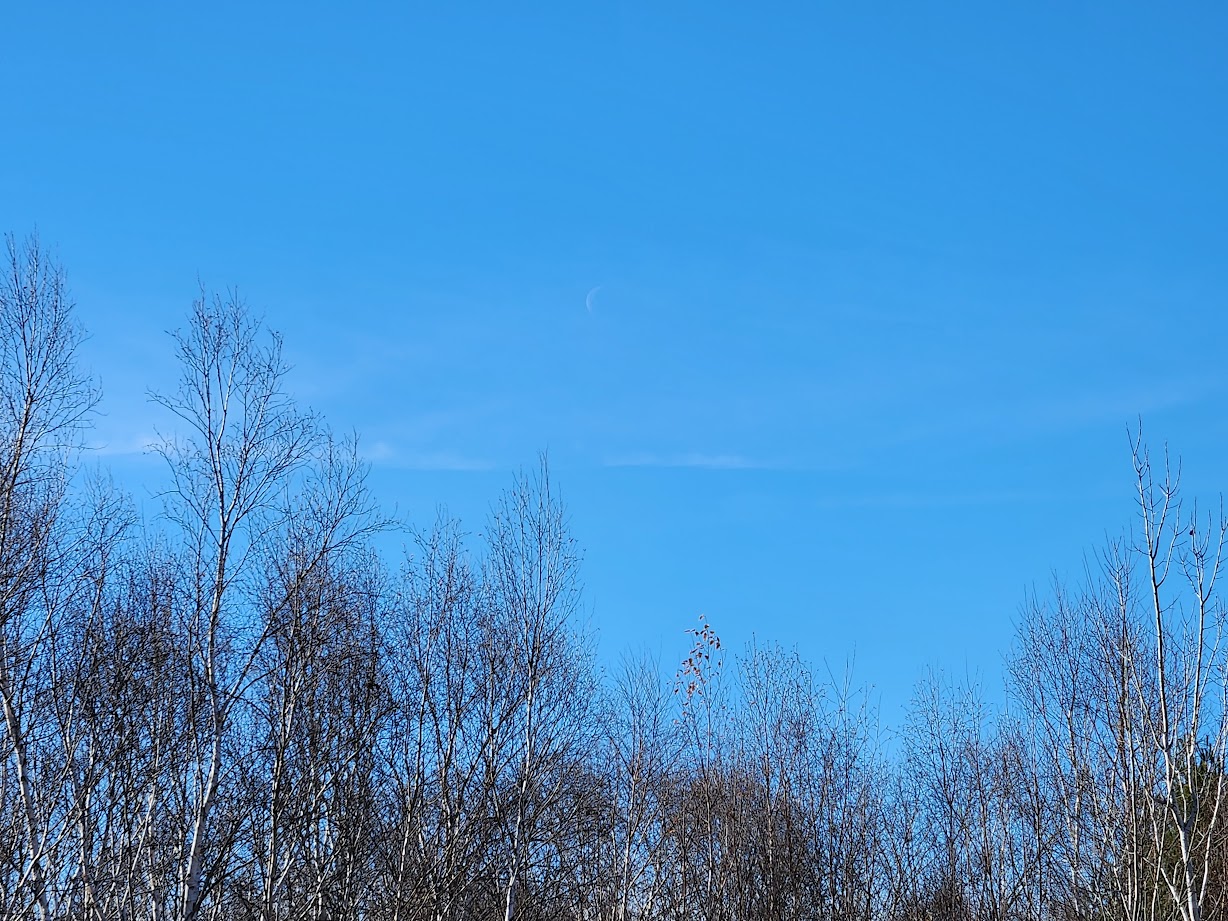
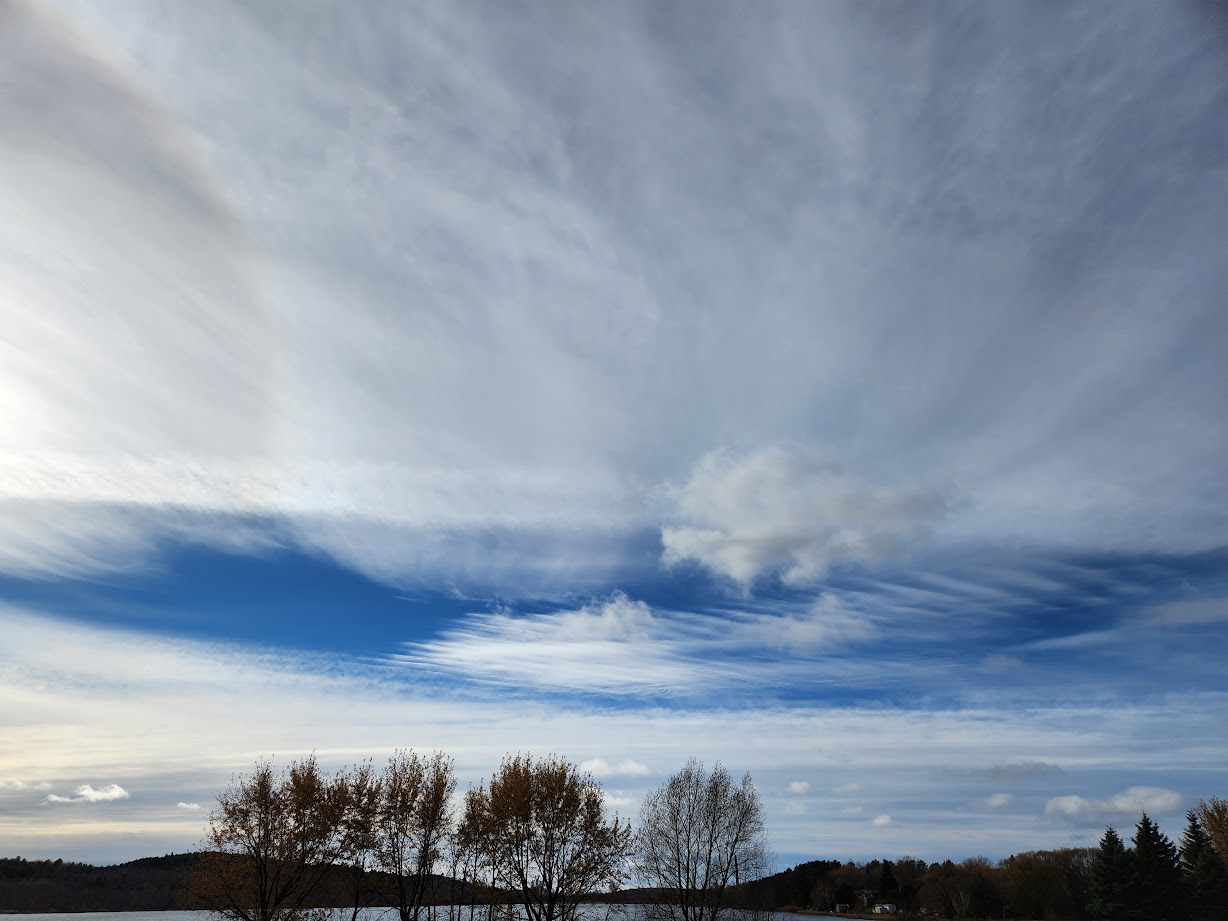
After the full, the days alternated. One overcast and possibly raining, the next blue skies filled with sky floof that obscured the waning moon, wherever she was.

Picture of the first quarterish moon.

The new ivy moon in Scorpio was on the 20th.

After the new, the sky was consistently cloudy. Also, we were entering the dark times, and my second dog walk of the day was inevitably after sunset.

I attended the virtual launch of The Pollination Field by Kim Fahner on the 5th. It was a great event co-hosted by Alice Major. Great conversation, great questions, and great poetry. I’m looking forward to the in-person launch in the spring!

Unmasking through our writing with Murgatroyd Monaghan continued Thursday afternoons through November. It’s been a fabulous journey of self-discovery and affirmation. I would highly recommend it to any ND creative folk who want to create/define a process unique to them.

On the 8th, I attended Books Today: Creativity, Monetization, and the Publishing World with Andrea J. Lee, Sam Hiyate, and Katie Curtin. Interesting, although it ended up being a sales pitch for a course they were offering.

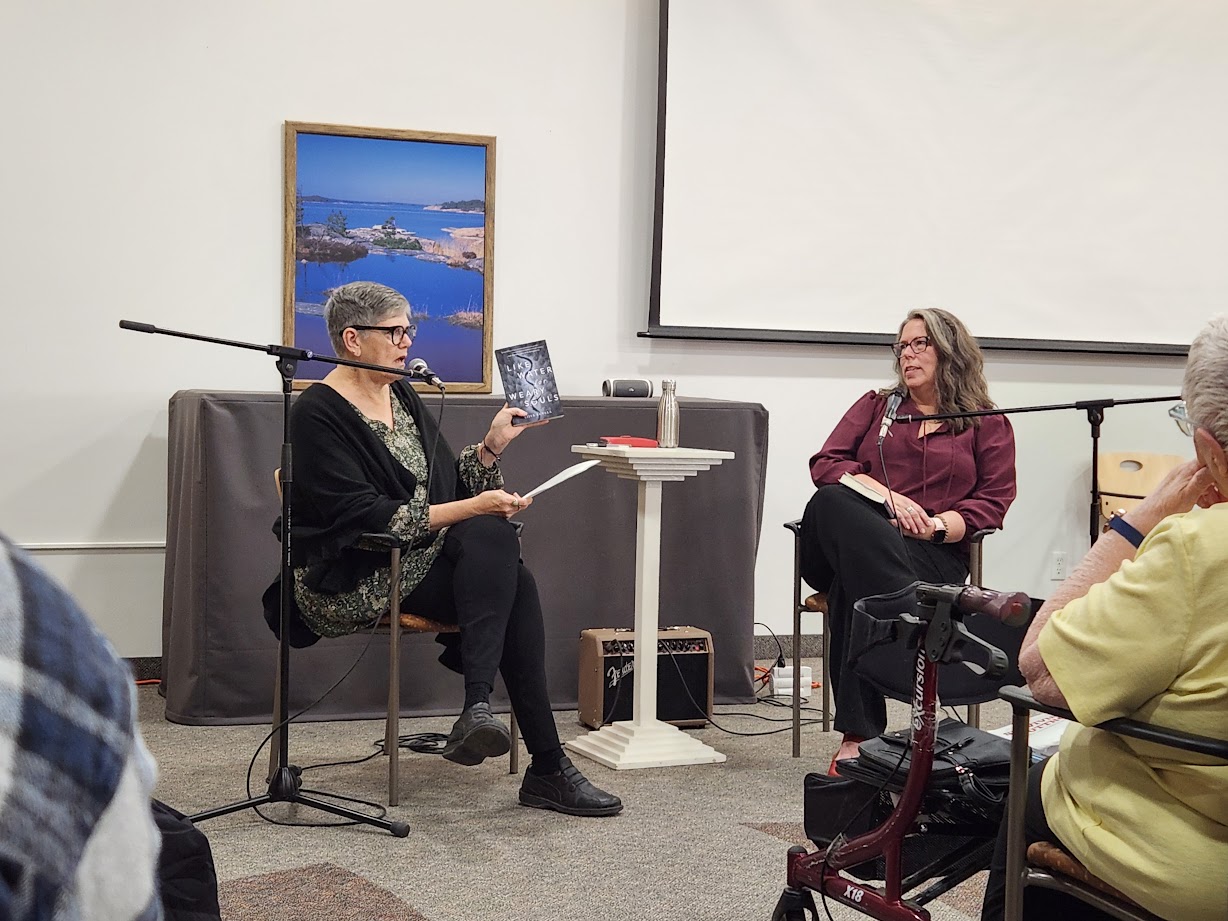
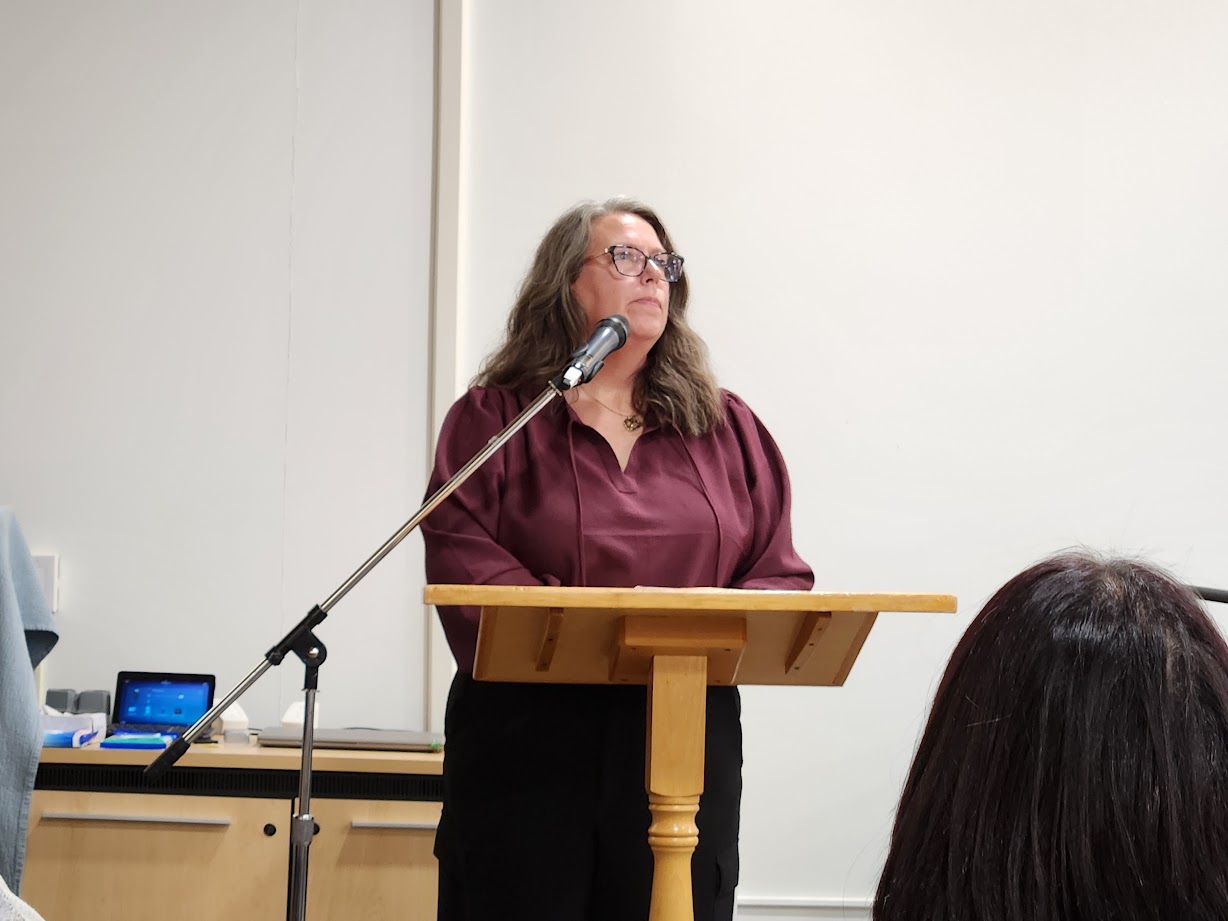
I attended the in-person book launch of Liisa Kovala’s Like Water for Weary Souls on the 9th. I had a little trouble getting where I needed to go because there was construction at the 2nd Avenue entrance to Finlandia Koti, and I hadn’t been there since my great aunt was a resident … a long time ago. After being ranted at and threatened by the site foreman (I assumed) he finally told me where I needed to go, and it turns out I arrived just at the interview and reading were getting underway. I love Liisa’s book and wanted to support her. She and Emily De Angelis had a great conversation, and I got to chat with a few friends at the reception. Kahvi oli vahvaa, ja pulla oli hyvää!

The Clarion West workshop Revision: Turning Writing into Art Using Craft Analyses & the Reverse Outline with Naseem Jamnia took place on the 13th and the 20th. It was a great session, combining reading like an author with the reverse outline (outlining after first draft completion). Very in my wheelhouse as I tend to be a discovery writer (or pantser) no matter how I try to outline.

I enjoyed a lovely visit with friends from out of town on the 8th. Our visits always tend to feel short, given we have so much to catch up on, but we had a great time.

I skipped my support group meeting on the 26th to attend my mother-in-law’s birthday party at a local restaurant. Fabulous food and family festivity! Of course, I had to REST afterward.

My leave with income averaging continued through to the 28th. I didn’t accomplish much aside from relaxing and resetting.

I had my semi-annual (soon to be tri-annual) dentist’s appointment on the 4th. My insurance finally approved additional “units” of descaling for me after years of my dentist’s office applying for additional coverage. So now, I have a better chance of staying on top of the staining my teeth are prone to.

On the 10th, I had my next session with my therapist. Mostly, it was decompressing about the month past, but we’re going to get back to values next time.

On the 12th, I got my flu and COVID shots. I already told you how that went.

What I’m watching and reading

The first series I finished watching in November was a comfort rewatch of Gargoyles (Disney +). This series was a favourite, and the animation was done by Nelvana, a Canadian company. I watched the whole series when it originally aired (1994 -7). I appreciated the multiple mythologies used to develop the series, and I fell in love with Goliath (I’m definitely not ashamed to say). Keith David has the most amazing voice.

I’ll refer you to the Wikipedia entry, so you can think about whether you’d like to go down the Gargoyles rabbit hole.

I had no idea that Diane Duane and Peter Morwood were on the writing staff in season 2! Now I love the series even more.

Then, I watched the first season of Alien Earth (Disney +). Having finished another Noah Hawley series (Legion) not long ago, I was prepared for some weirdness. Overall, I enjoyed the series, but there are a lot of unanswered questions. FX hasn’t greenlit a second season yet, but Hawley has said that the series is intended to be 5 seasons. It’s supposedly the highest rated offering in the Alien franchise, so we’ll see.

Set after Alien: Romulus but before the events of the original Alien movie, Alien: Earth follows 6 terminally ill children as their consciousnesses are uploaded into synthetic bodies by Boy Kavalier, trillionaire CEO of the Prodigy Corporation. Shortly after their uploading, the “Lost Boys” as the hybrids are known, Wendy, Slightly, Curly, Smee, Nibs, and Toodles are sent to the crash site of the Maginot, a Weyland-Yutani ship. Because of their synthetic bodies, Boy figures they will not be targeted by the alien payload. While they do recover the aliens, including the title creature, Weyland-Yutani wants them back, and shenanigans ensue. As you may have surmised, Peter Pan is the framing metaphor for the series.

Next, I finished the first season of Chief of War (Apple TV +). Jason Momoa executive produced and starred in his latest passion project, relating the struggle to unify Hawai’i under Kamehameha I. Set at the end of the 18th century when the four major kingdoms of the Hawaiian Islands were in a state of war: Hawaiʻi, Maui, Oʻahu, and Kauaʻi, the series follows Kaʻiana (Momoa), a warrior chief (aliʻi) of Kauaʻi. Picked up by a British ship when he falls off a cliff and is presumed dead, Ka’iana experiences the world outside of Hawai’i and returns with a shipload of guns. They had cultural advisors in every department to ensure authenticity and to present these historical events with as much accuracy as possible. Most of the dialogue is in Hawai’ian, so make sure you have captioning on. An amazing epic about a culture I’ve had the curious for.

Then, I watched Fantastic Four: First Steps (Disney +). I liked it. A friend had just watched it and said it felt like an incomplete story. It wasn’t an origin story (they took care of that in the opening montage), but I also felt it was merely the beginning of a bigger story, which conforms to the subtitle, first steps, and to the postscript advising that the Fantastic Four would return in Avengers: Doomsday. Add to that the post-credit scene in the Thunderbolts*, and it’s very much giving “to be continued …” vibes. For all that, I did enjoy the story and how Sue Storm and Shalla Bal end up being the best characters of the bunch. And the family dynamics were great. The F4 really demonstrate how a healthy family interacts. There are a lot of other reviews and analysis videos out there, so you can peruse those if you wish. For me, Thunderbolts* is still the standout Marvel movie of the last few years, though.

Next, I finished the second season of Hazbin Hotel (Prime). The first season culminated in the ascension of Serpentous/Sir Pentous. In this season, Charlie struggles to spread the good news that redemption is possible while Vox undermines her at every turn and foments war with heaven. Musicals aren’t my favourite, but the songs are bangers (!) And I love the animation style.

I finished watching season five of Only Murders in the Building (Disney +). Lester the doorman was found dead at the end of last season, and then Oliver gets tangled up with a second corpse in the dry cleaner’s next door. The main suspects are four of the richest people in the world, who sabotage the podcast to keep their secrets off air. And one of them buys the Arconia and kicks everyone out to build New York’s first casino (!) It felt for a moment like this would be the final season, but the gang sorted things out. Also, an old frenemy of Mabel’s shows up to complicate things, the board wants to have a robot doorman, and Charles is involved in a drug study. A slightly different tone to the season, but very fun. The murder setting up next season is killer.

Then, because Amazon snagged the rights, I watched both seasons of Helluva Boss (Prime). Blitzo (pronounced Blitz — the O is silent), an imp raised in the circus, goes independent as an adult, after having made a deal with goetia prince Stolas (to whom he was once “sold” as a playmate) to obtain a book that facilitates travel to the mortal realm in return for sexual favours. Yes, this is an adult animated series. Blitzo founds IMP (immediate murder professionals) offering his team’s services to kill mortals at the request of various of hell’s denizens. Blitzo’s team consists of Millie and Moxxie, passionate partners as well as assassins, and Loona, Blitzo’s adopted daughter and hellhound.

This is the background against which the real story — that of love between deeply damaged people — plays out. The main romance is between Blitzo and Stolas. Stolas, trapped in a loveless, arranged marriage, falls deeply for Blitzo. He loves his daughter, Octavia (Via) but, not having had loving parents himself, he cannot show Via affection in a healthy way. Blitzo loves Stolas, too, but feels unworthy of love because of his own upbringing. Other relationships — Millie and Moxxie, Ozzy and Fizzie — compare and contrast, while Blitzo’s relationship with Loona plays against Stolas’ relationship with Via. Amazingly complex for an animated series. Absolutely loved it.


My first listen of the month was Hex Around and Find Out by Molly Harper, the second in her Moonshadow Cove series. This cozy paranormal romance focuses on middle sister Coral (Cora) Seaworth. All three Seaworth sisters have lived in isolation after the deaths of their parents. They’ve had to figure everything out on their own, including that they are fae fin folk as well as witches charged with the tasks of managing the ghosts of Starfall Point and guarding the egg of a kelpie (AKA the Loch Ness Monster AKA a seahorse-dragon). Cora’s the quiet one who’d rather curl up with a book, but when she runs into charming but shiftless Igor (Iggy) Galinsky, it’s not long before irritation turns into infatuation. When Iggy is shot in the ass with a tranquilizer dart, Cora has no choice but to take him to Moonshadow Cove … and keep him there until they can be sure he’s not going to spill the magical beans. Another fun, lighthearted read.

Next, I finished reading Under the Whispering Door by TJ Klune. Wallace is a lawyer and, if we’re being honest, a jerk. When he dies of a heart attack and Mei reaps him at his funeral, he’s desperate to return to the corporate hamster wheel. He has work to do! Instead, he’s taken to the Charron’s Crossing Tea Shop, where Hugo, the owner and ferryman, promises to help him cross over. The ghosts of Nelson, Hugo’s grandfather, and Apollo, Hugo’s dog provide no end of irritation to the newly deceased Wallace. Complicating Wallace’s journey of undead self-discovery are husks (remnants of ghosts who refuse to cross over and wander the world outside the tea shop), charlatan psychics, grieving mothers, and the most terrifying being of all, The Manager. Another lovely, and loving, Klune novel.

So, of course, having read a couple of cozy (or cozy-adjacent), paranormal romances, I headed for the epic grimdark romantasy of Danielle L. Jensen’s The Tempest Blade, the sixth in the Bridge Kingdom series. It’s not out yet in print but Audible released the audiobook early.

This is the second novel of Ahnna’s story. At the end of book five, though Ahnna and James have fallen in love, Ahnna learns that James is part of a plot to claim the Bridge for Harendell, and Ahnna is framed for the brutal murder of King Edward, James’ father. She flees and he pursues her, swearing bloody vengeance. The previous couples — Lara and Aren of Ithicana, and Zarrah and Keris of Valcotta — all have POV chapters in this book. Lara and Keris’ sister Zarhina has ceded to a democracy in Meridrina, but there’s still the rulership/governance of Amarid and Cardiff to settle. Though the ending felt pretty definitive, which may indicate that this 6th book is the last in the series, I’d think the author would want to ensure all the countries of her world are established with passionate couples that have been through literal hell for one another. Cardiff and Amarid have yet to be explored in detail, and Cardiff has an interesting, witchy culture to delve into. I guess we’ll see when the print book comes out next March.

Then I read Tobias S. Buckell’s The Executioness. Tana’s father is an Executioner, given the task of beheading those who use magic, causing the irrepressible and poisonous bramble to grow. But he’s dying when the call comes from the Jolly Mayor that his services are needed, and because her husband is useless and she needs to feed her family, Tana takes up her father’s axe, dons his hood, and goes to do his duty, in a move reminiscent of Mulan. And like Mulan, Tana is caught up in war when raiders burn her village and abduct her sons. Immediately, she sets out to rescue them. Buckell writes Tana’s grief and rage well.

Next, I finished reading The Book of Life by Deborah Harkness. When Matthew and Diana return to the present, it’s to find that Emily has been murdered. The Congregation’s been up to their old tricks and though the witch responsible is removed, the de Clairmonts still have formidable obstacles to overcome if they want their happily ever after. Like rescinding the Covenant, which prohibits “inter-species” marriage, which Diana and Matthew are in violation of. Like Benjamin, the son Matthew abandoned, who now wants to possess Diana and her children. And like finally finding the Book of Life and restoring its pages so that the riddles of blood rage and weavers can finally be solved. A satisfying conclusion to the All Souls trilogy.

Then, I listened to The Quantum Labyrinth: How Richard Feynman and John Wheeler Revolutionized Time and Reality by Paul Halpern. This fascinating biography documents the development of Feynman and Wheeler’s academic and personal relationship. Over the years, nearly every great mind in physics becomes a part of the story from Einstein and Bohr, through Oppenheimer (both men participated in The Manhattan Project), to Thorne. It’s as much history as it is biography and science book. Fascinating.

I listened to J.M. Barrie’s Peter Pan, having been prompted by Alien: Earth (see above). I hadn’t actually read it before, and it was interesting to compare the ominous narration of Boy Kavalier with the original text. Mother’s “cleaning up” their children’s minds after they’ve fallen asleep. Peter “culling” the lost boys from time to time. More interesting was the narrator’s overt critique of Mrs. Darling as a bad mother because she was kind to her children. Mr. Darling’s outright incompetence is given a pass. There’s a lot in this children’s book that bears examination.

Next, I listened to American Fairy Tales by L. Frank Baum. Originally published in syndication (much like Dickens published much of his fiction) following the publication of The Wonderful Wizard of Oz, the twelve stories in this collection include knooks, ryls, and other fairies, how the king of the polar bears loses and then recovers his pelt, a beetle that grants the poor woman who saves him with a pump that produces gold, a storefront mannikin that comes to life, a young cowboy who lassoes Father Time, and other entertaining tales. Many of the stories offer somewhat clumsy morals at their conclusion, however.

Then, I listened to John Wiswell’s Someone You Can Build a Nest In. Sheshesen is a shapeshifting monster just trying to survive and avoid the human monster hunters who killed her mother. When one of those hunters, Catharsis Wolfire, disturbs her hibernation, Shesheshen has no choice but to defend herself. Though she kills Catharsis, the other two monster hunters with him escape. Again, Shesheshen must pursue them if she hopes to protect her home and privacy. They’ll come back and bring even more hunters with them. But Shesheshen is exposed during her investigation in the local town and, like many a monster before her, she is pursued by an angry mob and falls off a cliff, it is thought, to her death.

A kind woman named Homily nurses Shesheshen back to health and the two begin to bond. Distressingly, Shesheshen’s eggs have decided that Homily would make a most suitable nest and Shesheshen is conflicted. Explore the bond they share or implant her eggs and lose Homily forever? Things get even more complicated when Shesheshen learns that Homily is a Wolfire, and her family has dedicated themselves to killing the shapeshifting monster who cursed them years ago, who is apparently Shesheshen, and she has no memory of cursing anyone. A fabulous novel with a series of truly surprising twists. And Shesheshen is autistic-coded! Hear me out. I’ve often felt like and alien or, yes, a monster. I related to Shesheshen HARD.

And that was the month in this writer’s life.

Until next month, be well and stay safe; be kind and stay strong. The world needs your stories!

The next chapter: A month in the writerly life. https://melaniemarttila.ca

I acknowledge with respect that I am in Robinson-Huron Treaty territory, that the land from which I write is the traditional territory of the Anishinaabe and home of Atikameksheng Anishnawbek and Wahnapitae First Nation.

The next chapter: March 2025 update

The sh*t has officially hit the fan.

Picture of a dynamic winter sunset.

Life in general

Tariffs in March! And now April! 25%! Make that 50%! No! 250%! I’m trying not to get drawn into the black hole-like news cycle, but it’s hard. It’s everywhere on every social media feed, on the radio, on the television. I’m trying to engage selectively and still respect my need not to be completely dysregulated by trashfire 2025. It’s a challenging balance to strike.

Interestingly Premiere Ford got Trump to back down after imposing counter tariffs on energy supply. I can’t keep up. Then again, I really don’t want to.

But Phil keeps me informed.

There are signs things might be imploding, thanks to brave journalists and grass-roots resistance, and interesting statements coming from behind party lines saying the Orange Menace is “off book.”

The Canadian armed forces are running exercises and one of Trudeau’s last acts as Prime Minister was to commission new warships to be built, providing a domestic market for our steel. Will it be enough to replace what will be lost to the tariff war? Probably not, but it will be enough to keep people working.

Mark Carney became our new Prime Minister on the 14th and immediately repealed the carbon tax, essentially removing Pollievre’s main campaign platform. He’s also strengthening ties with the EU.

And now a federal election is being called. Things are moving so fast.

Daylight saving time arrived and, as per usual, my body’s still living on standard time. I’m messed up for at least 2 weeks. EVERY. GD. TIME.

DST Princess Bride meme
My favourite DST/Princess Bride meme.

But shit at work is getting done. I’m just trying to get one thing done at a time, move onto the next thing, and not freak out. This too, is hard.

The month in writing

I finished this draft of Reality Bomb on March 2nd! Cue the Snoopy happy dance/flailing Kermit arms/what have you. But the draft now stands at 122,616 words. It’s a step up (or down, depending on your perspective) from the 124,527 words the last draft was, but it’s still too big. So, there’s more work in my future. There always is.

My final meeting with Suzy was on the 6th. I’d had a dysregulating day at work and was open about it. Still the meeting got me focusing on my work-in-progress and not the umpteen-million things waiting to be done at work. So, it was good.

Now to take a break from RB proper, I’m turning to my query and synopsis. I’ll use those to guide my next passes. I want to cut back to 110k, if not 100k, though I doubt I’ll be able to manage the latter. We’ll see.

I’m writing poetry here and there as well.

Definitely emerging from my winter cave.

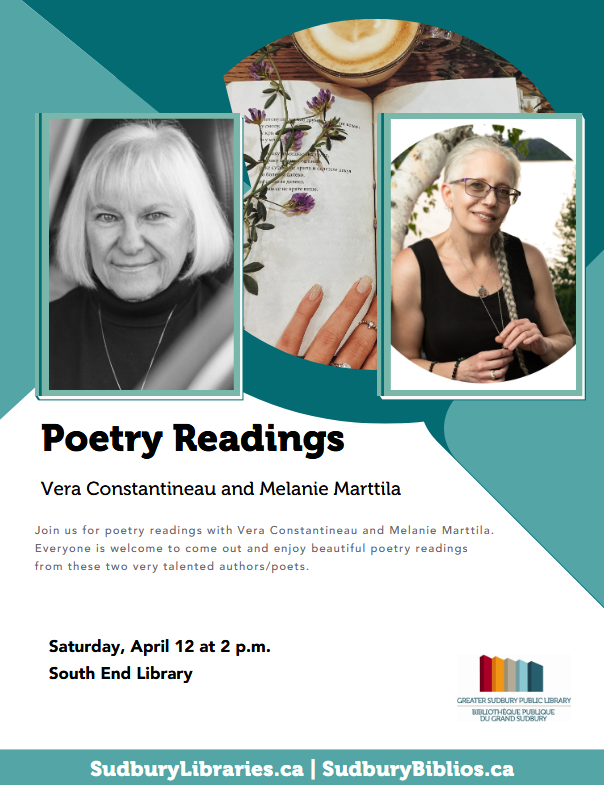
Got a poetry reading together with another local poet, Vera Constantineau at the South End branch of the Greater Sudbury Public Library on April 12th at 2 pm.

Poster for a poetry reading with Vera Constantineau and Melanie Marttila at the Greater Sudbury Public Library South End branch April 12, 2025 at 2 pm.

Reached out to another local author about informal mentoring. Will connect with her sometime in April as well.

Finally, I’m starting to write reviews. My first one, on Lisa Timpf’s Cats and Dogs in Space, went up on Amazing Stories online on March 24th.

In writerly business, the first SF Canada quarterly board meeting of 2025 was on the 31st.

Filling the well

The full suckerfish moon in Virgo and blood moon eclipse was on the 14th. I didn’t stay up late enough to see the eclipse but did a guided meditation.

Spring arrived on the 20th. Lit up my altar and thought about the snow melting.

And the new ash moon and partial solar eclipse in Aries was on the 29th. Did another short, guided meditation.

I’ve been playing hide and seek with the moon, lately. If it hasn’t been completely overcast, what clouds there are make the lady hard to find. Often, I can’t get a good view until after dark and I still can’t take a decent nighttime photo with my phone to save my life. I hope things will improve now that the season is changing.

In writerly events, I attended Navigating Publishing Today with Mark Leslie Lefebvre and Suzy Vadori on the 7th. It was a fabulous session that became a fabulous Show, Don’t Tell podcast episode!

Later that same day, I attended a Canada Council for the Arts information session about updates to their programming and submissions system. The changes won’t be taking place until the summer, but things look promising.

The Canada Council annual public meeting was on the 19th.

The first three of four webinars in Cece Lyra’s Starting it Right series were on the 20th, the 27th, and the 30th. If you’ve ever signed up for a Cece Lyra webinar, you know it’s going long. She’s so passionate about writing.

Spring Finnish classes started up on the 17th and will continue for 8 weeks, as per usual. Again, I’m showing improvement.

On the 21st, I attended an Authors Publish webinar on how to get your manuscript submission-ready with Alexandra Leggat.

I attended an information session of the Canada Council’s new Artistic Creation grants on the 26th.

My support group met on the 26th to discuss work-specific accommodations.

I had another blissful week off work from the 17th to the 21st.

What I’m watching and reading

I watched the first season of Cross (Prime). A compelling arc in which Alex Cross deals with the trauma of his wife’s death, tries to protect his family from a stalker, and hunts down a serial killer who modifies his victims to look like famous serial killers of the past. It’s all kinds of creepy, but very good.

Then, I finished watching before (Apple TV +). This psychological horror wasn’t really my cuppa. Billy Crystal plays a child psychologist about to retire after his wife commits suicide (before cancer can do the job). A young boy inexplicably wanders into his house, and he feels an immediate connection. When he later meets the boy at the hospital, he decides to take on one last case. It could be a complex case of transference and countertransference, or there could be something supernatural happening. The ending is ambiguous.

Phil and I finished watching the latest season of Invincible (Prime). Mark deals with having a little brother, but unlike Dawn in Buffy the Vampire Slayer, Oliver has superpowers too, and they manifest while he’s still a kid. It makes things challenging for Debbie, who’s trying to move on from Nolan. Speaking of whom, Allen finally convinces Nolan to break out of the Viltrumite gulag he’s in, but that’s the last we see of him for the season, though he drops a juicy bomb on Allen before their last scene ends. Mark is also trying to deal with the fallout from Angstrom Leavy, whom he thinks he killed. A whole passel of Invincibles from other worlds invade, and then Conquest arrives from Viltrum and kills . . . lots of people. There’s more, but I’ll just leave you with that taste. It’s as bloody as ever, and the last episode sets up at least four major threats for season four.

Next, I watched The Wild Robot (Prime). I laughed. I cried. I did not pee my pants. I swear. A service robot ends up on an uninhabited (by humans) island and tries to fulfill its mission. Seriously, my heart, y’all. Now I shall have to read the book. Watch it! It’s awesome! And just what you need to defrag your hard drive of all the bullshittery happening in the world.

Then, Phil and I watched the end of Silo, season two (Apple TV +). Phil didn’t watch season one with me, and I found it kind of weird when he decided he liked the series partway through season two. It was so good, though. Juliette survives cleaning thanks to her friends in supply and makes her way through a field of corpses to the next silo, which appears to be abandoned and flooded. Back at the original silo, Bernard prepares for the inevitable crisis that follows a survived cleaning. Juliette solves mysteries at the new silo while Bernard recruits Kyle to solve mysteries in the old, while mechanical foments rebellion. The final flashback scene is cryptic, but I’m looking forward to what the next season brings. I’ve only read the first book in the series, so I have some catching up to do.

I also finished the first season of Your Friendly Neighborhood Spider-Man (Disney +). Love the opening with the updated version of the classic 70s Spiderman theme. Almost every character has comics significance and the potential to become a superhero in their own rights. Dr. Connor’s is a woman of colour! It’s also, clearly, a multiverse story. *Mild Spoilers* Ben is not dead, but in prison. There is no Mary-Jane Watson (yet?). Peter’s origin story is original and circular (the events of the first and last episodes converge). So much fun!

Next, I finished watching Interior Chinatown (Disney +). Based on the novel of the same name by Charles Yu. It’s better if you think of it as INT. CHINATOWN. Like a screenplay because that’s very much the way this series is presented. Very meta. Willis Wu works as a waiter in his family’s restaurant, but years ago, his brother disappeared, and he’s been worrying at the mystery ever since. He inserts himself into the police department by delivering takeout, moves through tech guy and translator roles until he’s a detective and reopens his brother’s cold case.

Phil caught part of a few episodes and asked, “Is it intentional, or is this show badly written?” And I forgave him because he didn’t get the premise. I can’t explain things more here without getting all kinds of spoilery. The concept is that intertwined with the story. But the show is worth the initial confusion and clichéd dialogue. Trust me. There’s a moment when you say to yourself, oh . . . so that’s what he’s doing. I recently listened to an interview with Yu on the Our Opinions Are Correct podcast. That’s worth a listen, too.

Then, I finished watching season 2 of The Irrational (CityTV). It remains an interesting twist on the police procedural, focusing on psychologist Alex Mercer and his team of graduate assistants. Sometimes they help the police. Often, they help the FBI or rely on their resources because Alex has an in through his ex-wife Marissa. This season, they were even called in to help NASA. And Alex’s new girlfriend, Rose, is former MI-6 and a professional “fixer.” It’s an intriguing mix of characters and relationships that keeps the mysteries they solve feeling fresh.

Finally, I watched Wicked (Prime) over two nights for spoons reasons. Not having read the book (though I have it . . . somewhere in my TBR pile) or seen the play, I had nothing to compare it to and thoroughly enjoyed it, despite not being terribly fond of musicals. I loved the animal justice subplot. And I will now have to find the novel and move it up in the pile.


My first read of March 2025 was Zen Cho’s Sorcerer to the Crown. This was a delightful alternate historical fantasy. It feels regency, but there are mentions of Napoleon still being in power in France, so Napoleonic? Zacharias Wythe is the new Sorcerer Royal, after his guardian, the previous Sorcerer Royal, dies under mysterious circumstances. Because he’s also an emancipated slave and person of colour, the rest of the Society of Unnatural Philosophers want to find a way to oust him, but Zacharias’ position is dependent upon the acceptance of the previous Sorcerer Royal’s staff and familiar, both of which he has, though no one can claim to have seen the latter . . .

But Zacharias has a mystery to solve, that of Britain’s decreased magic levels, and he is inveighed upon by a friend to deliver a tedious lecture to a witch’s school on the way. At the school, Zacharias sees the horrid way in which women with magical ability are treated, and he meets Prunella Gentleman, a young woman of colour and of most startling ability. Together, they embark upon a mission to change magical education in Britain—and the rest of the world—forever. Chef’s kiss!

Then, I read The Complete and Original Norwegian Folktales of Asbjørnsen and Moe, translated by Tiina Nunnally. Yes, there’s a forward by a certain fantasy author, currently accused of SA, but I glossed over that, disinterested in finding anything useful or clever there. The translator included Asbjørnsen and Moe’s notes, and they were far more entertaining.

These folktales unsurprisingly feature trolls as the main antagonists, often with multiple (5, 10, 15 or 3, 6, 9) heads. Ashlad is frequently the clever young hero, but young girls are also clever heroines. There are talking animals who often beg to be killed (beheaded, these tales are fond of beheading) and assist the protagonist beyond their apparent deaths and sometimes transform into princes after the fact. There are several tales in which the protagonist is forbidden to look into rooms in their guardians’ homes, but that’s where the similarly to Bluebeard ends. Enjoyed this collection quite a bit.

Next, I read Rogue Protocol by Martha Wells, the third Murderbot novella. Murderbot is on its own and gets roped into protecting another band of hapless humans from GrayCris Corp. And they have their own bot, Miki, who is irritating to no end. Murderbot just wants to watch some quality series . . . Excellent!

Then, I read the follow-up to Sorcerer to the Crown, The True Queen by Zen Cho. Muna and Sakti awaken in the surf of Janda Baik, Malaysia with no memory of who they are except that they must be sisters. But they have been cursed and must travel to distant Britain, where Crown Sorceress (minor spoilers for book 1—sorry, not sorry) Prunella Wythe has established a school for young sorceresses. When Sakti is abducted on their way to Britain through the unseen world, though, Muna must try to rescue her sister even though she has no magic. Queer romance abounds. Loved, if possible, even more than book 1!

Then, I listened to the very short audiobook of Cajun Folklore by J.J. Reneaux. Lots of clever characters in these tales. Enjoyed.

I listened to Cat o’ Nine Tales: The Jane Yellowrock Stories by Faith Hunter. It was my first dip into Jane Yellowrock, though these novels have been on my radar for years . . . I’m kind of embarrassed. Jane is a Cherokee woman and skinwalker, bonded to the spirit of Beast, a mountain lion, after an accident involving black magic when she was a child. She’s primarily a vampire hunter but branches out to any supernatural threat. These stories fit in between Hunter’s novels and provide an entertaining and bloody overview of Jane’s adventures and entanglements. Thoroughly enjoyed.

Next, I listened (can you tell most of this was during my week off when listening is the most I can be arsed to do) to the super-short, incredibly hilarious, but still informative Audible Original How to Survive Menopause by Samantha Bee. Basically, a stand-up set, but everything you need to hear if you have ovaries.

Then, I listened to Amal El-Mohtar’s The River Has Roots. This retelling of the Bonny Swans has it all. Grammar as music as magic. A sentient river. Two ancient willows at the edge of the fairy realm. Two sisters whose love defies death. There are several significant departures from the folktale/song it’s based on, but to explain more than I already have will spoil this truly lovely story. It is gentle and kind and everything we need right now. Amazing. LOVED!

My last listen during my week off was The Abolitionists, an Audible Original/The Great Courses collaboration with Professor Kellie Carter Jackson. She covers the origins of the movement, Harper’s Ferry, the civil war, and the underground railroad. Excellent.

Finally, I finished On Writing and Worldbuilding, Volume 1 by Tim Hickson. I’ve been a fan of his YouTube channel, Hello, Future Me for years now, and finally bought all three of his W&W books (to date). They’re based on the craft advice he shares on his channel. I like his philosophy of writing, and I enjoyed the book. It’s now on my craft writing shelf.

And that was the month in this writer’s life.

Until next month, be well and stay safe; be kind and stay strong. The world needs your stories!


I acknowledge with respect that I am in Robinson-Huron Treaty territory, that the land from which I write is the traditional territory of the Anishinaabe and home of Atikameksheng Anishnawbek and Wahnapitae First Nation.

The next chapter: A month in the writerly life. https://melaniemarttila.ca

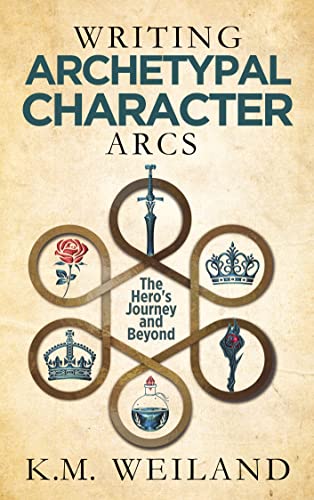
Book review: K.M. Weiland’s Writing Archetypal Character Arcs

What Amazon says:

The Six Transformational Character Arcs of the Human Life

Ready to take your story’s character arcs and themes to the next level? This latest book from veteran writing teacher and story theorist K.M. Weiland ventures far beyond the popular and pervasive Hero’s Journey to explore six important archetypal character arcs, representing key moments of initiation in the human experience:

  • The Maiden
  • The Hero
  • The Queen
  • The King
  • The Crone
  • The Mage

Found in every genre from fantasy to drama to romance to adventure, these transformational stories are the secret of powerhouse fiction—as shown through a wide variety of real-story examples throughout the book.

Writing Archetypal Character Arcs will teach you:

  • The archetypal beats for each of the six journeys
  • Which archetypes are right for your particular story
  • The best way to use archetypes in a series
  • How to choose the right archetypes for supporting characters
  • How to use archetypes to identify your story’s theme

You will also learn how to deepen your stories by implementing shadow archetypes (the negative sides of each positive archetype), resting or “flat” archetypes (the fixed stage between each of the main arcs), and archetypal antagonists (the epic antagonistic forces that oppose each of the positive archetypes in their journeys). The Hero’s Journey is just the beginning.

Learning about archetypal character arcs will change the way you view stories—and life—forever.

My thoughts:

K.M. Weiland has a passion for story structure (Structuring Your Novel) and character arc (Creating Character Arcs). Now, she adds to her writing craft oeuvre with Writing Archetypal Character Arcs.

Her journey began with Joseph Campbell’s Monomyth (The Hero’s Journey) and his discussion of Jungian archetypes in his seminal work, The Hero with a Thousand Faces. But Campbell’s work has always lacked the feminine dimension and anything leading up to or following the Monomyth/Hero’s Journey.

To fill this gap, Weiland has read not only the works of Maureen Murdock, Kim Hudson, and Gail Carriger and their interpretations of the heroine’s journey, but she’s also delved deeply into archetypes at all stages of life’s journey through the works of numerous authors. One look at her list of references at the end of Writing Archetypal Character Arcs will make the craft writing book junkie or academic in you drool.

Though I intend to add a number of these books to my reading list (‘cause I’m a geek), you don’t have to. Weiland has studied and skillfully distilled these works into her book and lays them out for writers in an accessible way.

This is a writing craft book that you will want to buy in print and keep at your desk as a reference. It’s that good.

My Rating:

FIVE STARS!!!!!

Go buy it now, peoples.

You’re welcome.

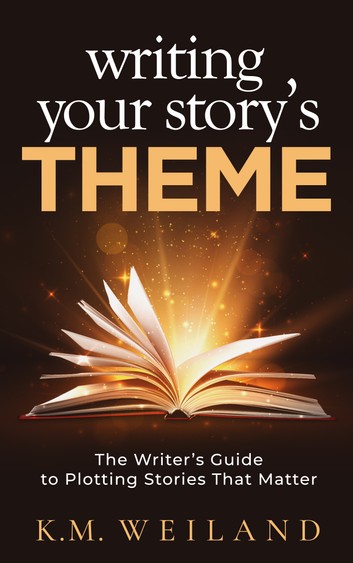
Book review: Writing Your Story’s Theme, by K.M. Weiland

K.M. Weiland has helped you to outline your novel, structure your novel, and create your character arcs. Now, she completes the “holy trinity” of craft with Writing Your Story’s Theme.

What is theme and how can you identify it in your story? How does theme relate to story structure (plot) and character arc? Why should every character and subplot reflect or enhance your theme? How can theme help you to outline your novel? How is theme related to but distinct from message and how can you keep your theme from reading as too preachy or on-the-nose?

As with all of Weiland’s craft books, Writing Your Story’s Theme is meticulously researched and full of insights the author gained through her own writing practice. There are additional resources to help you dig deeper into the topic in the appendices at the end.

If you’re a fan of Weiland’s craft books, you need to pick this one up. If this is your first of Weiland’s writing books, it will leave you wanting to complete your library (and you should—they’re that good). Weiland’s writing advice is accessible and consistent with her blog, podcast, and other craft books. If the pattern holds, Weiland will likely have a workbook coming in the next year.

I always have “lightbulb” moments when I read one of Weiland’s craft books and Writing Your Story’s Theme was no exception.

My highest recommendation.

Review of A Time and a Place by Joe Mahoney

I promised Joe I’d get the review out before the end of the year. I know, I’m cutting it close.

What the publisher says:

Barnabus’ nephew is behaving oddly.

Calling upon Doctor Humphrey for assistance has not been particularly helpful, because the good doctor’s diagnosis of demonic possession is clearly preposterous. Even the demon currently ensconced on the front room couch agrees it’s preposterous. But then, how else to explain the portal to another world through which his nephew and Humphrey have just now disappeared? Barnabus knows their only chance of rescue is for Barnabus J. Wildebear himself to step up and go through that portal.

Thus begins an existential romp across space and time, trampling on Barnabus’ assumptions about causality, freewill, identity, good, and evil. Can Barnabus save his nephew—and incidentally, all of humanity?

My thoughts:

I liked A Time and a Place and there’s a lot to like in Mahoney’s novel. I loved the T’Klee, the race of alien cats (distantly related to felis catus) with opposable thumbs. At one point in his journey, Barnabus inhabits other animals (including a T’Klee) as part of his education and it reminded me of Merlin teaching Wart about the responsibilities of power in T.H. White’s The Sword in the Stone.

At another point, Barbabus uses his new ability to time travel in an attempt to save his wife before she died. Replaying the events of the night again and again, Barnabus fails, no matter what he attempts to change. This trope alludes to Groundhog Day and serves to reinforce the hypothesis that the past protects itself from interference. But then, Barnabus discovers that others have successfully messed with the timeline, throwing him and that hypothesis under the bus.

Unfortunately, Barnabus seems pulled through the events of the story by external forces and lacks the level of agency I like to see in a protagonist. Much of the time he comes across as bewildered. I actually thought B. Wildebear a clever bit of wordplay until the author disabused me of the notion.

A Time and a Place is a complex story and an ambitious novel, but I found that the execution wasn’t quite up to the premise. It’s still an entertaining and worthwhile story and I hope you consider giving this Canadian speculative novel a read over the holidays.

My rating:

Three out of five stars.

ATimeandaPlace

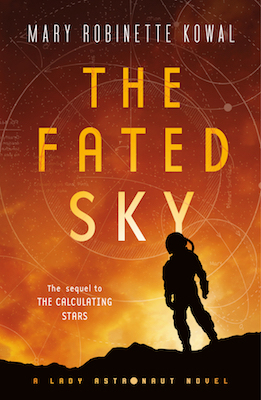
Book review of The Fated Sky by Mary Robinette Kowal

What the publisher says:

TheFatedSkyMary Robinette Kowal continues the grand sweep of alternate history begun in The Calculating Stars, The Fated Sky looks forward to 1961, when mankind is well-established on the moon and looking forward to its next step: journeying to, and eventually colonizing, Mars.
Of course, the noted Lady Astronaut Elma York would like to go, but there’s a lot riding on whoever the International Aerospace Coalition decides to send on this historic—but potentially very dangerous—mission. Could Elma really leave behind her husband and the chance to start a family to spend several years traveling to Mars? And with the Civil Rights movement taking hold all over Earth, will the astronaut pool ever be allowed to catch up, and will these brave men and women of all races be treated equitably when they get there? This gripping look at the real conflicts behind a fantastical space race will put a new spin on our visions of what might have been.

My thoughts:

The Calculating Stars began with the impact of the meteorite. The Fated Sky kicks things into gear with a hostage-taking.

Dr. Elma York, Lady Astronaut and calculator is returning from the moon, a journey that has become routine, when a problem during re-entry sends them off course and into a crash landing. They have to wait for the retrieval crew to find them, but a group of PoC Earth Firsters discover them before the IAC.

Elma manages to diffuse the situation, but the IAC cannot ignore the opportunity to capitalize on the resulting media coverage and places Elma on the first Mars mission, displacing fellow calculator, Helen, who has been training with the rest of the crew for months already.

The rest of the crew resent the substitution and Elma must face the impact her privilege has on the mission. Though she tries to make amends, becoming an ally is not so simple.

Complicating matters, Elma and her husband Nathaniel have to make a decision about their future. If Elma goes to Mars, a round trip that will take years, the chances that they’ll be able to have children upon her return will be greatly reduced. But Mars is Elma’s dream.

Then there’s the Mission’s commander, Stetson Parker, with whom Elma has a complicated history. His misogyny is legendary as is his hatred of Elma. They’ll be in close quarters for the duration of the mission.

And what about Elma’s anxiety? Can she manage it successfully on the journey?

Once they’re underway, though, and beyond the point of return, it becomes apparent that someone is sabotaging the mission.

Kowal has written a wonderful sequel to The Calculating Stars. Her characters continue to be complex and flawed. Even Stetson Parker is not all that he seems. He’s still a horrible person, but he gains dimension. Nathaniel continues to be Elma’s anchor and touchstone and their relationship is an inspiration.

Elma struggles with her limitations and failings, but ultimately, she and her crewmates come together to work the problem and find a solution. Despite the cover, (spoiler warning) Elma doesn’t get to set foot on Mars, but the denouement is no less satisfying for the disappointment.

My rating:

Five out of five stars!

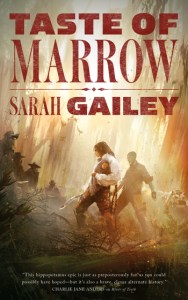
Book review of River of Teeth and Taste of Marrow by Sarah Gailey

I decided to review both of Sarah Gailey’s novellas—currently collected in the volume American Hippo—in one post.

What the publisher says:

River of Teeth:RiverofTeeth

In the early 20th Century, the United States government concocted a plan to import hippopotamuses into the marshlands of Louisiana to be bred and slaughtered as an alternative meat source. This is true.

Other true things about hippos: they are savage, they are fast, and their jaws can snap a man in two.

This was a terrible plan.

Contained within this volume is an 1890s America that might have been: a bayou overrun by feral hippos and mercenary hippo wranglers from around the globe. It is the story of Winslow Houndstooth and his crew. It is the story of their fortunes. It is the story of his revenge.

TasteofMarrowTaste of Marrow:

A few months ago, Winslow Houndstooth put together the damnedest crew of outlaws, assassins, cons, and saboteurs on either side of the Harriet for a history-changing caper. Together they conspired to blow the dam that choked the Mississippi and funnel the hordes of feral hippos contained within downriver, to finally give America back its greatest waterway.

Songs are sung of their exploits, many with a haunting refrain: “And not a soul escaped alive.”

In the aftermath of the Harriet catastrophe, that crew has scattered to the winds. Some hunt the missing lovers they refuse to believe have died. Others band together to protect a precious infant and a peaceful future. All of them struggle with who they’ve become after a long life of theft, murder, deception, and general disinterest in the strictures of the law.

My thoughts:

River of Teeth:

A delightful premise, a diverse cast of characters, and a heckuva lot of interpersonal conflict made this novella an enjoyable read. It’s basically a Mississippian western with hippos. A southern? It’s also a caper plot, something that the characters debate at length, much to the reader’s amusement.

Winslow Houndstooth once had a hippo ranch until it was burned to the ground with his beloved hippos inside and he was forced to leave that idyllic life behind and resume a less reputable one. He’s taken on a commission from the government to blow up the dam that keeps feral hippos trapped in the Mississippi so that the river can be reclaimed for travel and commerce. The owner of a riverboat uses the ferals for his own nefarious ends, however, and he’s not interested in letting Houndstooth and his crew achieve their goal.

And Houndstooth has ulterior motivation: the riverboat owner is also the man responsible for the destruction of his ranch. If he and his crew complete the commission, he can also exact his revenge.

Taste of Marrow:

This novella continues the story of Houndstooth and his crew after the events of River of Teeth. While the dam was destroyed, the chaotic events leading up to that qualified success leave Houndstooth and his crew scattered. Houndstooth is obsessed with finding his lover Hero, denying the possibility that they may be dead. The one crew member with him, Archie, worries for Houndstooth’s sanity.

Meanwhile, Hero travels with Adelia the—retired, she insists—assassin, believing that Houndstooth was blown up along with the dam. With Hero and Adelia is Adelia’s newborn Isabel and when their erstwhile employer kidnaps Isabel to coerce Adelia out of retirement for a very special assassination, it sets Houndstooth and Archie, Hero and Adelia, and the federal Marshall who’s been trying to bring Adelia to justice, on a collision course in Baton Rouge.

My ratings:

Four out of five stars for both!

Book review of What the Wind Brings by Matthew Hughes

What the publisher says:

In the mid 1500s shipwrecked African slaves melded with the indigenous peoples of coastal Ecuador and together they fought the Spanish colonial power to a standstill, to remain independent for centuries.  The story of the people of Esmeraldas is told through the eyes of three characters: Alonso, an escaped slave; Expectation, an a-gender shaman; and Alejandro, a priest on the run from the Inquisition.

With its slipstream elements this novel carries a flavour of South American magical realism tradition into a grand historical epic.  Both sweeping and intimate, it is a delight to read from beginning to end, and we are honoured that Matt has decided to entrust his grand work to us.

Pulp Literature

WhatTheWindBrings

My thoughts:

Hughes is not shy about calling What the Wind Brings his magnum opus. It’s a novel that’s been over twenty years in the making, the author not wanting to publish the work until he felt it was ready to meet the public. That time is here, and Hughes has produced a novel worthy of his ambitions for it.

My favourite character was Expectation, the nigua shaman. They’re an outsider because of their vocation, but even more so because of their gender and identity. None of the other characters quite know what to do with or about Expectation or even what to call them. Accordingly, some characters identify Expectation as she, some as he, and some identify them by their vocation, or, pejoratively as a witch.

Expectation doesn’t care. They know who they are and what they need to do, and they find a way to persevere despite the antagonism of Anton and the other Africans who have taken positions of power within the new community after the shipwreck.

Expectation has a spirit guide, who counsels them in their work. They heal sickness in the community and they, in turn, counsel the community’s leaders.

They’re pivotal to the melding of the Africans, the nigua, and the other tribes eventually brought into the larger Esmeraldas community. Expectation also plays an important role in Alonso’s story arc when they recover Alonso’s lost spirit guide, and in Alejandro’s arc, when they trepan the Trinitarian monk’s skull after a severe head injury endangers his life.

What the Wind Brings is, in my opinion, Expectation’s story. They’re the character that does the most to bring the community together and ensure its continued harmonious survival. While Expectation’s shamanism is the source of the novel’s speculative elements, they also display a healthy scientific curiosity, thinking about the nature of illness and contagion. These ponderings enable Expectation to adapt to other ways of thinking and healing and help them to remain relevant in the changing political structure of the Esmeraldas community.

Hughes writes with candour and compassion about the African slaves, the Ecuadorian indigenous peoples, and even the Portuguese and Spanish colonizers. His characters are, first and foremost, people with relatable fears and goals, flaws and better qualities. He does not shy away from the harm his characters do to one another, purposeful or inadvertent. There is great violence in the novel, but also great moments of compassion and love.

Highly recommended.

My rating:

Four out of five stars.

Book review of The Calculating Stars

What Amazon says:

TheCalculatingStarsOn a cold spring night in 1952, a huge meteorite fell to earth and obliterated much of the east coast of the United States, including Washington D.C. The ensuing climate cataclysm will soon render the earth inhospitable for humanity, as the last such meteorite did for the dinosaurs. This looming threat calls for a radically accelerated effort to colonize space and requires a much larger share of humanity to take part in the process.

Elma York’s experience as a WASP pilot and mathematician earns her a place in the International Aerospace Coalition’s attempts to put man on the moon, as a calculator. But with so many skilled and experienced women pilots and scientists involved with the program, it doesn’t take long before Elma begins to wonder why they can’t go into space, too.

Elma’s drive to become the first Lady Astronaut is so strong that even the most dearly held conventions of society may not stand a chance against her.

My thoughts:

I loved this novel not only for the author’s reimagining of the space program, but for her unflinching examination of gender equality, racism, and mental health, all of which are pivotal to her plot.

Elma York, a calculator and former WASP pilot in the second world war, and her husband, a lead engineer with NACA, witness the meteorite strike that takes out most of the east coast while they are out of town. Their home along with Washington DC and NACA headquarters are destroyed.

The nation’s capital is moved to Kansas where, in the wake of the strike, the first order of business is to convince the newly formed government of the meteorite’s longer-term effects, including rendering Earth inimical to continued human existence. They have to establish colonies off-world to ensure humanity’s survival.

As the new space program, under the oversight of the International Aeronautics Coalition moves forward, forces of opposition in the form of Earth First rise and seek to reallocate all government funding to supporting the meteor refugees and helping to keep Earth sustainable, sometimes violently.

Elma strives to have women included in the space program—the ultimate goal is settlement, is it not?—and inadvertently becomes a celebrity as one of the first “astronettes.” As the Lady Astronaut, she must make public appearances as well as enduring astronaut training while coping with severe social anxiety.

She becomes aware of the discrimination against astronauts of colour and struggles to overcome her embedded prejudices and become an ally for her new friends. The “I” in IAC does stand for international.

Kowal’s characters are complex and flawed, as are the relationships between them. The Yorks are in a committed marriage and their relationship is real and messy and wonderful. The Lindholms have their own different, but no less challenging marriage. Elma’s friendships with the other women astronauts aren’t easy, but they’re stronger for their conflicts. Her relationship with Betty, who is—and always will be—a journalist first, is particularly fraught.

Elma has a complicated history with the lead astronaut, Stetson Parker, who was her CO during the war. He’s misogynist and preyed upon the younger women WASPs. Elma reported him. The fact that he’s once more in a position of authority over her and the rest of the women astronauts causes Elma further problems.

Aside from the initial meteorite hit, there are plane crashes, rocket crashes, natural disasters and action aplenty, just in case you think the above descriptions make The Calculating Stars sound too much like a character study. It’s that, and so much more.

The novel has won the Nebula and Locus awards and tonight, it may win a Hugo.

You don’t have to take my word for it, but I give The Calculating Stars my highest recommendation.

My rating:

Five out of five stars.

Book review of Putting the Science in Fiction

Another overdue review.

What Amazon says:

Science and technology have starring roles in a wide range of genres–science fiction, fantasy, thriller, mystery, and more. Unfortunately, many depictions of technical subjects in literature, film, and television are pure fiction. A basic understanding of biology, physics, engineering, and medicine will help you create more realistic stories that satisfy discerning readers.

This book brings together scientists, physicians, engineers, and other experts to help you:

  • Understand the basic principles of science, technology, and medicine that are frequently featured in fiction.
  • Avoid common pitfalls and misconceptions to ensure technical accuracy.
  • Write realistic and compelling scientific elements that will captivate readers.
  • Brainstorm and develop new science- and technology-based story ideas.

Whether writing about mutant monsters, rogue viruses, giant spaceships, or even murders and espionage, Putting the Science in Fiction will have something to help every writer craft better fiction.

Putting the Science in Fiction collects articles from “Science in Sci-fi, Fact in Fantasy,” Dan Koboldt’s popular blog series for authors and fans of speculative fiction (http://dankoboldt.com/science-in-scifi/). Each article discusses an element of sci-fi or fantasy with an expert in that field. Scientists, engineers, medical professionals, and others share their insights in order to debunk the myths, correct the misconceptions, and offer advice on getting the details right.

PuttingTheScienceInFiction

My thoughts:

I subscribe to Dan Koboldt’s newsletter and refer to his site as a resource for research. When I learned that he was putting some of the essays from his site into a book, I had to buy it. Now I have a great reference on my shelf which is a starting point for research.

The book is divided into sections that cover biomedical topics, including death, genetics (Koboldt’s specialization), neuroscience, wildlife biology, artificial intelligence and other computer-based technology, Earth and the planets of our solar system, astronomy and space flight, and, finally, the future of space travel and exoplanets.

Chuck Wendig writes the foreword, on the advice to write what you know and what it really means (do your research). In his signature playful tone, Wendig clarifies the advice and demonstrates how he’s applied it in his own writing life, finishing by calling Putting the Science in Fiction a great launching pad for essential research.

The contributors themselves write with humour—find out why, as a woman working in a lab, you should never wear thong underwear—and draw on their personal expertise for an enjoyable read. In the chapters addressing space travel, they reveal their geek roots, honouring the books, television shows, and movies that inspired them while at the same time pointing out the technical misconceptions such media promote.

Putting the Science in Fiction is a great reference for any writer’s shelf.

My rating:

Four stars out of five.