Do you dress for success?

If you’ve been reading Writerly Goodness for any length of time, then you’ll know that I’m fascinated by process, my own and others’.  I love to find out how other creative people do what they do, their sets of rules and their arcane rituals.  On Facebook, I often share the tips and tricks I find on my blogly ramblings, and secretly, I take a certain perverse pleasure in how many of those rules I break, and how many guidelines I defy.

Writerly Goodness aspires to the transgressive, but only rarely does she manage the faithful leap such actions require.

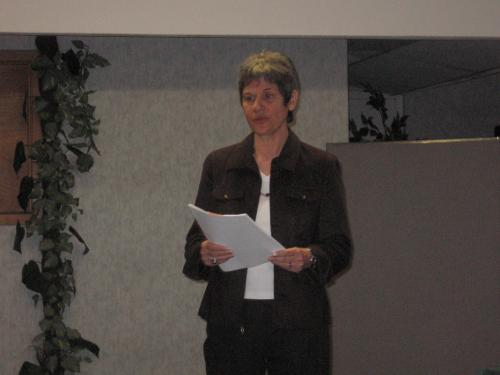
In May of 2011, I attended the Canadian Authors Association’s CanWrite! Conference.  Workshop host Barbara Kyle offered many writing tips, but the one that stays in my mind is this: dress for success.

Why?  I suppose it’s because I don’t, but more on that in a bit.

Barbara stated that when she got up in the morning, she was always careful to dress appropriately, as if for work: business casual.  She said that this practice honoured her work and her as its creator.  Dressing for work meant that she was serious about her writing, that she wasn’t taking anything for granted, and that she wasn’t going to waste anyone’s time, not hers, not her readers’, and certainly not her agent’s, editor’s, or publisher’s.

I agree that one should dress appropriately for one’s work, but to me, that depends entirely on what your work and life is like.  Let me ‘splain …

Writing is Barbara’s second career, after a successful first career as an actress.  She stopped acting to become an author and made the decision to write full time.  The temptation for someone in that position would be to become part of the pyjama patrol, roll out of bed, and stumble to the computer.  Barbara worked hard at her first career and knew the value of discipline, however; she knew that the slovenly writer’s life was not for her.

I don’t have that luxury.  I have to work and I have to dress appropriately for work.  When I get home of an evening, it’s actually part of my ritual to dress down for my writing.  Phil and I call this transforming into ‘comfort woman’ 🙂

I need to shed one professional self to become another, and my professional writer wants to be comfortable.

Right now, I’m in my shortie penguin pj’s, and damn, do I feel good!  You might have the urge to equate me to Michael Douglas’s character in Wonder Boys who wore the same bedraggled housecoat to write in every day … and discovered he was hideously blocked!  That would be a mistake.
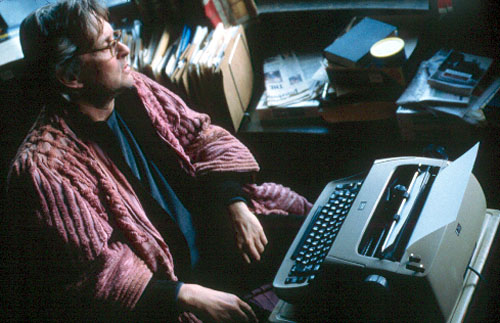
I have a reason to dress as I do when I write.  That in no way means that I am any less diligent or devoted to my craft.  It simply means that my definition of appropriate dress is different.  So I’m comfortable saying that I still dress for success.

Process is different for every writer.  That’s why I find it so fascinating.

What about you?  How do you dress for success?  What does that mean for you?

CanWrite! The Canadian Authors Association 2011 Conference

May 2-6, 2011.

Yes, I finally did it.  I managed to do something entirely nourishing to my writer’s soul.

I’d determined that I wanted to go to at least one conference week-long workshop last year and when the announcement went out in November 2010, I signed up right away.  Barbara Kyle, one of the workshop presenters, was also offering 20-page critiques for a nominal fee.  Again, I was in.

My next challenge was how to pay for the venture.  I applied for a Northern Arts Grant for professional development from the Ontario Arts Council, but was not accepted.  So, credit it was.  As far as conferences go, the CAA conference wasn’t expensive.  Even with my day job, I don’t make enough money to drop a thou and not feel it.  Still, it was time and long past that I made a substantial investment in my creative self.

Throughout February, March, and April the CAA conference organizers held little writing contests to get participants in the creative frame of mind.  I submitted to two of the three and though I didn’t even manage an honourable mention, they were interesting exercises and did serve to build a lovely feeling of anticipation.

I made my leave request at work as soon as I could, but operational requirements made it seems unlikely that it would be approved.  As the date of the conference approached, I began to worry that I’d have to withdraw.

Then my father passed away, April 9, 2011 and thoughts of the conference vanished.  For the week previous, Mom, a family friend, and I took turns watching vigil.  Dad had originally gone into the hospital March 18, 2010, and though he never recovered sufficiently to come home, his final illness and his ensuing struggle were completely unexpected.  Needless to say, Mom and I were devastated.

To paraphrase Forrest Gump: that’s all I have to say about that.

In the dizzying days following, my leave was miraculously approved.  Now the conference had a second purpose: I needed to get away and do something that did not involve Dad, his funeral arrangements, or my mom’s uncertain financial situation, all of which were consuming my life in large, ragged mouthfuls.

The drive to Grand Bend from Sudbury, though long, was relaxing.  There’s some beautiful country in Bruce and Gray counties, and now, there are lovely windmills and solar panels dotting the landscape.  I don’t understand the public resistance to wind and solar.  They’re some of the cleanest, greenest sources of energy around, and I didn’t find them ugly at all.  I rather thought them graceful, alien guardians, standing sentinel over the people and the land.  In any case, I arrived at the Pinedale Motor Inn in time for the evening meet and greet, and welcome barbeque.

I discovered that that year’s conference was a departure from previous years.  It was set up as a writers’ retreat with workshops and events, but with the afternoons off to enjoy the town and to write.  No maddened dash to attend competing workshops, this.  Never having attended any conference before, I didn’t have anything to compare it to, but it seemed like exactly what I needed.

I won a bottle of wine in a raffle.  We were off to a good start

The first workshop presenter was Sandy Plewis.  Her session was highly interactive with lots of writing exercises, but she depended heavily on secondary sources in her lectures.  She seemed pleasantly surprised at the willingness of the conference attendees to dig deep and write.  There was not a still pen in the house when it came time to complete an exercise.

Then came time for my critique with Barbara Kyle.

Globally, she was complementary.  My characters were interesting, their conflicts dynamic and immediate, but then, as the critique commenced, the shortcomings emerged: the pacing was too fast, my scenes lacked a sense of place, and I didn’t go deep enough into my characters’ hearts and minds.  And I was too subtle.  While I got a lot of good advice from Barbara, by the end of it, I was dizzy, hardly able to breathe.  I think it was a panic attack.  I wasn’t able to think about things clearly until much later in the day.

Barbara’s workshops, one based on The Writer’s Journey by Christopher Vogler, and the other on her own experiences as a first draft survivor, were illuminating.  Though not heavy on the writing, they were professional, and informative.  I had a revelation.

I’d read Vogler’s book, and its inspiration, Joseph Campbell’s The Hero’s Journey.  The guardian at the gates has been a repeated part of my development as a writer, and my past experiences with those guardians informed my inner critic, the biggest, baddest guardian of them all.  That’s what happened in the critique session.  Though intellectually, I knew that Barbara was giving me exactly what I needed to head into the next revision of my novel, to make it stronger, and better, emotionally, every negative that emerged seemed a confirmation of my worthlessness.

So … I confessed.  Spastically and awkwardly–which is the only way I can confess the deeply embarrassing–I told everyone about my struggle.

That afternoon, Lightning Strikes, a series of mini-workshops, took place, and in the evening, at the Mock Awards Ceremony, I received the “Best Attempt to Make Us Cry” award.

Even the annual general meeting was interesting.  As a professional member, I had a vote.

Overall, the CAA conference was a very rewarding experience, and one I hope to repeat.

Conferences can be fertile experiences.  Have you made a breakthrough at one?  New friends?  Networked connections?

A born storyteller …

Storyteller is just another name for liar.

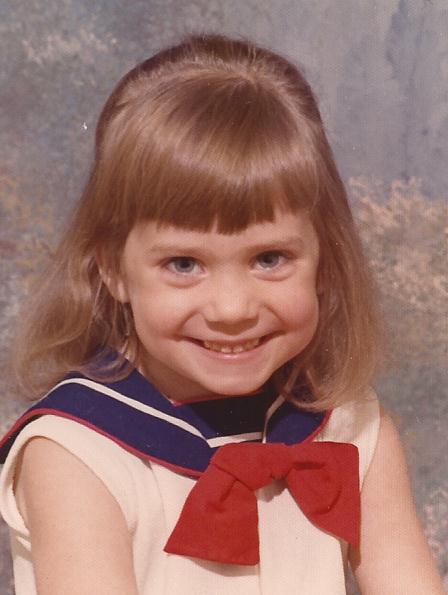
In grade one, I think all my classmates (and teachers) thought of me as a silly giggler, a liar, and cat-lady-in-training.

I didn’t even know how to write properly yet, so I exercised my creativity by telling my classmates in “show and tell” about the latest stray cat that I picked up on the way home.  They’d always run away after a few days and so I could show the class a different picture from the cat book I’d checked out of the library and tell them that my latest find looked just like that.

Daydreaming was also a preoccupation.  Because my dad had epilepsy, it was thought that I might too and that my habit of totally “zoning out” was actually petit mal seizures.  Later in life, I was formally tested for epilepsy and there was absolutely no sign of it.  I’d just delve so deeply into my fantasy world that there was nothing could tear me away.

If I was born 20 years later, I’d probably have been diagnosed as ADHD and drugged into submission.  As it was, I was “spoken to” and ignored.  I was deemed enthusiastic but disruptive by different teachers for different reasons.

Can you see the mischievious? Just call me “wee devil” 🙂

Really, I was painfully shy, and the giggling was a way of deflecting uncomfortable situations, which meant pretty much everything.  To this day, I still laugh when I offer a thought or suggestion to my colleagues or manager at work.  If it’s too radical, my suggestion can always be dismissed as a joke, right?

The daydreaming-at-inappropriate-times thing stayed with me until my mid-twenties, and then I started to get clever about it.  I’d restrict my mental ramblings to my “alone time” so no one would be put off by my apparent disinterest in whatever it was they were saying.  Now I cultivate solitariness.  As I writer, I have reason to, but as a creative soul, I simply can’t do without.

As for the telling of stories, I’ve always wondered what might have happened if someone had recognized what it was I was trying to express and encouraged me to turn those imaginary powers to something else.  If I’d started writing my dreams and stories down earlier, where might I be today?

Ultimately what-ifs and might-have-beens are only intellectual exercises.  None of us have do-overs.

A few months ago, one of the writers I consider to be a mentor, Barbara Kyle, presented this TED talk (via Volconvo) to her creative network: http://www.volconvo.com/forums/content/226-do-schools-kill-creativity.html

It is 20 minutes well-spent, trust me.  Sir Ken is incredibly funny, but his message is dead serious.  Currently, it is not the business of schools to nurture creativity, but to create useful/functional members of society.  I rather agree with Sir Ken, that only by nurturing the creativity of our children will schools produce truly valuable members of the human community.

I’ve also been disturbed by the resurfacing of the ADHD debate.  Are children being over diagnosed/incorrectly diagnosed?  This debate has been around for decades and it still hasn’t been resolved.

Some food for thought:

Were you a creative child smothered by a school system that didn’t recognize what your “acting out” meant?  How did you come to understand your creativity and who helped you through that sometimes agonized and agonizing process?  Did you ever feel less valued or less intelligent because you were more creative than academic?