Review of Walls of Wind by Jane Ann McLachlan

I actually started reading this novel in parts, as it came out earlier this year, before I received the advanced reader copy (ARC) of The Occassional Diamond Thief this past fall. The ARC took precedence, however, and as I generally don’t review anything I haven’t finished and enjoyed, this review had to wait a bit.

Yes, this is another bit of catch up 😉

The Walls of Wind

What Amazon says:

What if males and females were completely different species from each other?
WALLS OF WIND explores this question and its ramifications on a world in which males and females are two equally intelligent sentient species: Ghen and Bria. They are interdependent and reproductively symbiotic, although physically, emotionally and mentally they have little in common. Or so they believe, until their city-state is threatened by increasing internal conflict and a terrifying external predator that has invaded the forests just beyond their walls. A handful of Ghen and Bria struggle desperately to find a solution before their civilization is destroyed.

WALLS OF WIND combines anthropological speculation with the tragedy, suspense and triumph of individual characters who struggle to overcome external threats as well as their own internal fears and prejudices.

My thoughts:

When I started reading The Walls of Wind, I was immediately reminded of Ursula K. Le Guin’s Left Hand of Darkness, which presented an alien race with distinct gender and reproductive attributes.

McLachlan goes further, technically eliminating gender, but biologically linking two species. The unique circumstances of this biology define McLachlan’s world of Wind and form the heart of her story.

Bria and Ghen are very different, and very aware of their differences. One of the walls on Wind that must be broken down is the prejudice that exists between these two quintessentially linked species.

This is where McLachlan’s novel became reminiscent of Sherri S. Tepper for me. Tepper often explores the stratification of human society as it encounters alien worlds and species, or the post-apocalyptic changes that humanity undergoes, usually in terms of divisions along gender lines.

The dynamics between the Bria and the Ghen struck me as similar, but because the two species are effectively gender neutral, McLachlan is able to offer the reader a fresh perspective on the old challenges of equality and compassion.

A terrible secret is another of the walls of Wind that must first be revealed, and then addressed by the Bria and Ghen who have conspired—for the betterment of their peoples—to keep it hidden for generations.

There are love stories that play out through the novel, the generational stories of several families, transgressive acts by various characters that challenged species roles and capabilities, scientific discoveries, and adventures.

At every turn, the centre around which McLachlan’s story turns is the encounter with the other, whether between Bria and Ghen, Ghen and the fearsome Broghen, or Bria and Ghen society and the unknown communities of Bria and Ghen discovered elsewhere on Wind.

There is something for every reader in these pages. The novel is tremendously rewarding, and though tragic, ultimately hopeful.

My rating:

Five out of five stars. Yup. I’m a new fan. Jane Ann is amazing.

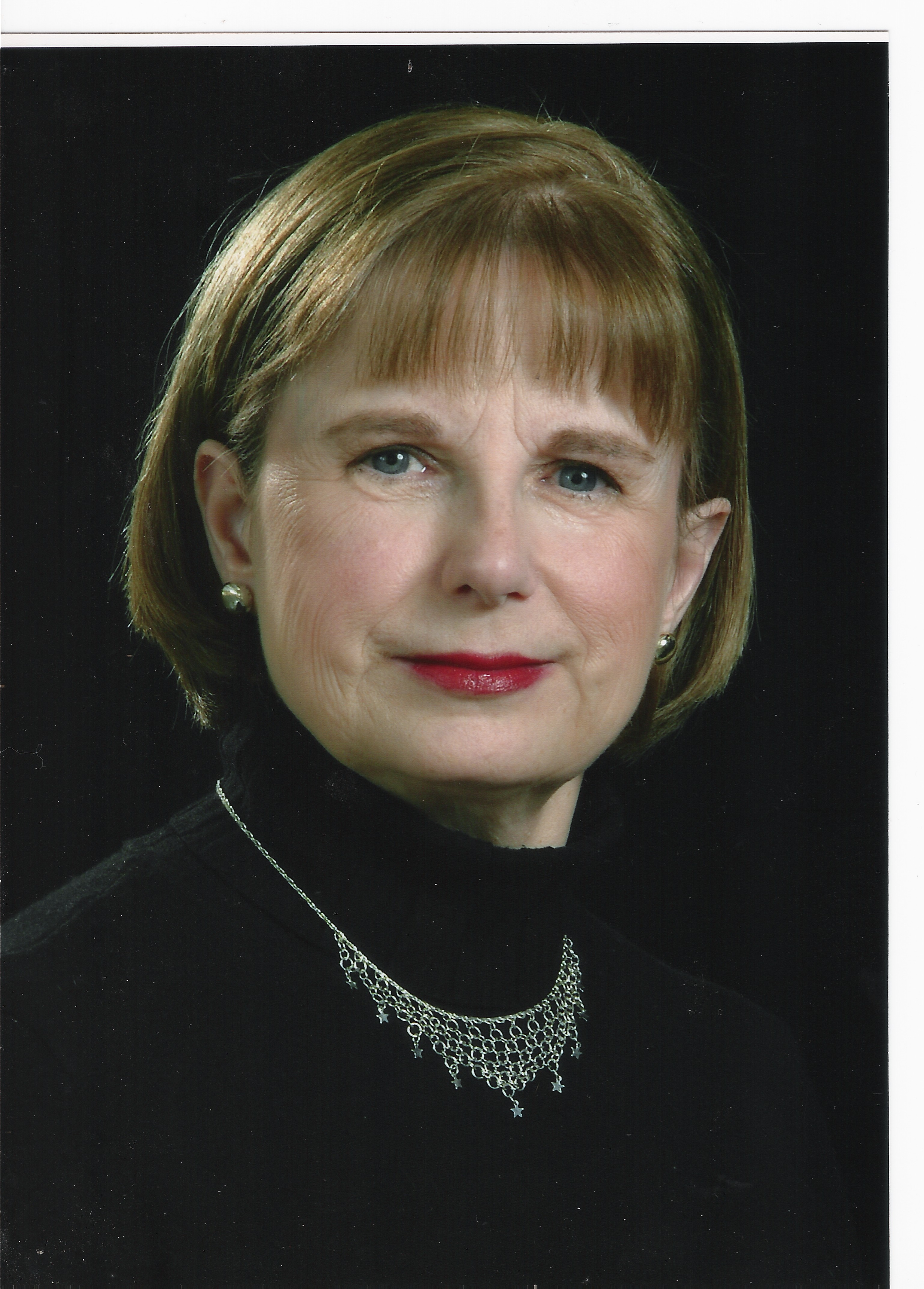
About the author:Jane Ann McLachlan

J.A. McLachlan was born in Toronto, Canada. She is the author of a short story collection, CONNECTIONS, published by Pandora Press and two College textbooks on Professional Ethics, published by Pearson-Prentice Hall. But science fiction is her first love, a genre she has been reading all her life, and The Walls of Wind is her first published Science Fiction novel. She is represented by Carrie Pestritto at Prospect Agency.

Robert J. Sawyer reviewed The Walls of Wind and had this to say:
“Look out, C. J. Cherryh! Step aside, Hal Clement! There’s a new master of truly alien SF, and her name is J.A. McLachlan. THE WALLS OF WIND is doubtless THE debut novel of the year.”
— Robert J. Sawyer, Hugo Award-winning science fiction author

You can learn more about J.A. McLachlan and her books on her website at: http://www.janeannmclachlan.com

Connect with Jane Ann on Facebook: https://www.facebook.com/janeann.mclachlan

Ad Astra day 2: Unleashing your creativity

Panel: Karina Sumner-Smith; Alyx Harvey; Judith Hayman; Leslie Hudson; Sally Headford

SH: If you walk into a grade one class and ask, “who can sing?” everybody raises their hands. Ask, “who can dance?” and the same thing happens. By the time they get to grade six, children have learned the standards and expectations. Only a few of them raise their hands then.

JH: Take risks. Make mistakes. No one will know the difference.

SH: How do the writers on the panel deal with those standards and expectations?

KSS: I have groups of people who read my work at various stages. There are readers for the roughdrafts, then later, beta readers. You have to have a terrifying level of trust in your readers. Seek out your “perfect” reader.

LH: If someone says, “you suck,” it can shut you down. How do you deal with that?

KSS: Chocolate and wine.

LH: We are our own worst critics. The worst are the notes I leave for myself.

Q: As a visual artist, I have to be able to evaluate a piece on its own terms. I benefit most from honest, constructive, criticism. What do you prefer?

KSS: Sometimes I need people to be honest. When I’m feeling vulnerable, I need comfort and tea.

SH: When you get to a low point, what do you do?

LH: Walk the dogs.

KSS: Five-minute dance party.

SH: I need oxygen.

JH: I need repetitive tasks. I’m on the autistic spectrum.

LH: Napping is awesome. You fall asleep and an idea comes to you in your dreams.

KSS: I find creativity breeds creativity.

LH: I’ve gotten into mandalas in a big way. I like needlepoint. Or reasearch.

JH: We’re all a little bit insane. When we enter flow, it’s a sacred space.

SH: I think of it as an alternate reality where creativity exists.

JH: I enter into my creative space with visualization.

LH: You have to protect your creative time.

JH: My day job is easier. It’s structured. At home, it’s different, more challenging.

AH: A day job takes a big chunk out of your day.

Q: Do any of you find you have to make yourself create?

LH: Absolutely. Sometimes you have to tell yourself to sit down and write, honey.

AH: Yes. Do the work.

LH: Sometimes pressure is good. Deadlines motivate.

Q: Do you find having a creative community or space helps?

JH: February Album Writing Month. FAWM. I participate every year.

KSS: NaNoWriMo.

Q: When do you sleep?

SH: It’s incredibly important.

KSS: In your day job, deadlines dictate what you do. I’ve read a health study in which people who get one hour less sleep per night over a seven day period were found to perform worse than people who were drunk. Health studies are fun.

SH: The current work environment is terrible. Multitasking is a myth.

KSS: One in one hundred people can actually multitask. Odd are, it’s not you.

AH: Where do you get your inspiration from?

JH: Everywhere.

KSS: Compost. One day my blender broke and I thought, what if society was built around items that worked on magic instead of electricity, and they all started breaking?

AH: I love my I-pad. If I see something, I snap it.

SH: Too many things can get in the way. If you don’t have a way to capture your ideas, you’ll lose them.

KSS: You can use prompts, or themes.

LH: You train yourself to notice things.

JH: Folklore is the basis for my current song-a-week project.

Q: Is creativity about finding ways to work around our disabilities?

SH: Creativity is part of human culture. It’s part of our history.

JH: Creativity is a process, not a product.

AH: Enjoy the process!

LH: People think that if you’re an artist you have to be miserable. Or that there’s a link between creativity and mental illness. Schizophrenia. Bi-polar.

JH: When I’m feeling manic, creativity is a saving grace.

Q: How do you deal with falling short of your vision?

AH: Let it come out the way it wants. If you force it, your won’t be a s successful.

KSS: If you don’t like it, you can always do it over. Accept it if it’s part of your process.

And that was it.

I have to note, in case you find some of these sessions ending abruptly, that many of them ran to the last second and only broke up when the next group entered the room. Thank you’s and closing remarks were often lost in the shuffle.

More coming tomorrow.

Off to watch Orphan Black now. Clone club!

Caturday Quickies: Susan McMaster Workshop

Susan McMaster

Susan McMaster (Photo credit: pesbo)

When I originally indicated that I was going to change my blogging schedule to weekends only, one of my online writing friends commented on how wonderful the idea was of a ‘flurry of posts’ on the weekend.

I’ve been posting fairly consistently on the weekends since, but I realized that I have a few things to catch up on.  So this weekend, though the weather is sunny and cold here in the Sudz, I’m creating my own mini storm of blog posts.

Who is Susan McMaster?

Susan McMaster is a past-president of the League of Canadian Poets, poet, and spoken word artist.  She’s given a workshop in the north before, and this time, I decided to partake.

The Sudbury Writers’ Guild had enough funds in its coffers to pay Susan’s fee for the afternoon workshop and to secure space at the newly rebuilt south end branch of the Sudbury Public Library.

The theme of the workshop was Writing through the Emotions.

Susan gave a brief introduction and offered up a couple of samples of her work and the work of other poets to illustrate.  Breath and space seemed to be the key elements to evoking emotion in poetry, and so, when Susan gave us our writing assignment, I was expecting something a little different.

For the first part, we weren’t to write a single word.  Instead, we were to map out what we were going to write in terms of beats.  Long, flowing sentences would be represented by lines and short, curt sentences and breaths by carets.

Though I think several of us (fiction writers, in particular) struggled with the concept, we all dove in with enthusiasm and gave it our best.

Afterward, we had the opportunity to read from either our work of the afternoon, or something that we had brought with us.

Though only two and a half hours, the workshop was interesting and gave me a different way to look at my writing that I hadn’t considered before.

Six questions with Brian Braden

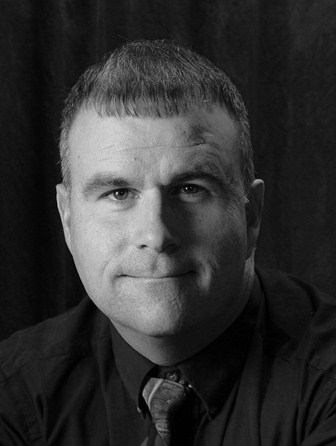
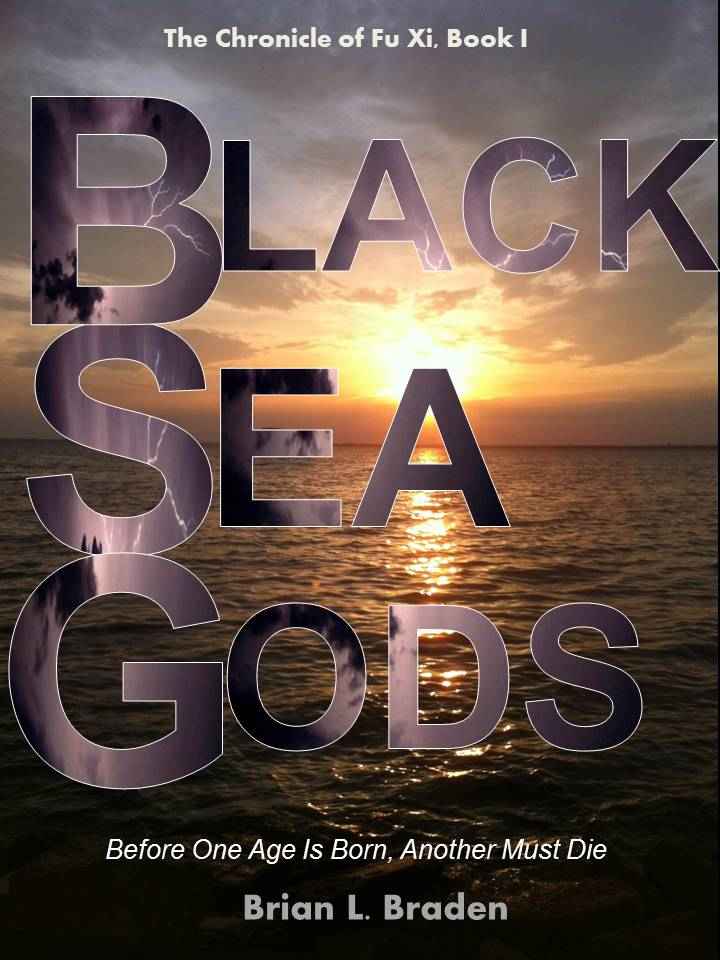
Brian BradenBrian Braden is a retired military officer and has been a corporate executive, an intelligence officer, a combat helicopter pilot, and a freelance columnist. His articles have been featured in a variety of defense magazines and websites. He is also a founder, editor and writer for Underground Book Reviews. His debut novel, Black Sea Gods, is the first installment of an epic fantasy series.

___________________________________________________________________________________

Welcome to Writerly Goodness, Brian!  I’m so happy to have you here to celebrate the launch your new book, Black Sea Gods: Chronicle of Fu Xi on February 18, 2013.

We first met on Author Salon just over a year ago, in the then-beginning Epic Fantasy group. Since then, your work has changed and grown, and I feel privileged to have been one of your beta-readers.

Congratulations on sharing BSG with the world 🙂

WG: How long have you been writing, Brian?  When did the bug first bite, and when did you know that writing was what you wanted to do?

BLB: First, thanks for inviting me to Writerly Goodness.  Back in 2008 I wrote a letter to a major US defense magazine on a military topic.  The editor actually called me and asked me to turn the letter into a column and he’d pay me. Paid for my opinion? I was in heaven. Then I did another column and then another. Well, one day editors changed and my columnist days were over. But I was fully bit by the writing bug by then. I wanted to write, so I switched to fiction.  I published a little novelette called Carson’s Love to test the self-publishing waters and never looked back

WG: I know you’ve written about this many times, but what was the idea that became BSG and where did it come from?

BLB: It came from several inspirations, but primarily from a photo of an ancient mummy dug-up in a faraway land. The man’s face was amazingly preserved, as was his clothing. I wanted to know more about this person, but archeologist knew very little about him. I imagined who he was and what his life was like. After a while I decided to write his story, but I needed a cultural mythology to build upon. That’s when I stumbled upon Dr. John Colarusso’s book Nart Sagas From the Caucasus, a compilation of myths almost lost to history. I put the myths to the man and combined it with some related Chinese mythology and BLACK SEA GODS was born.

WG: I love process!  Can you give my readers any insight into yours over the course of writing BSG?

BLB: The short answer: My core process is I start with a climax and a character and build the rest of the story around those two elements. My long answer: I started out on a website called Review Fuse, where other writers could read my chapters as I posted them. Not long after I started posting chapters I began collaborating with Amy Biddle, who was working on her first novel The Atheist Prayer (due out soon by Perfect Edge Books).  We joined forces and started critiquing each other’s books one chapter at a time. We soon expanded our circle to two other talented writers – Katie French (The Breeders) and Kimberly Shurshen (Itsy Bitsy Spider and Hush). Over a year, one chapter at a time, we dissected each other work until we had complete novels. I liked this approach because it made each chapter a tighter package. That was phase one. Then I spent another year or so with writers at Author Salon doing deep edits, mostly involving shortening the book and reworking it using a six-act/two goal writing template. Then I sent it to an editor, who was a tremendous help. Finally, I involved beta-readers, most of who came to me from fantasy author Michael Manning’s pool of devoted fans.  So, it was a four-stage process spanning almost  three years: one-at-a time chapter builds with  external critiques from trusted colleagues, deep “whole manuscript” edits from other writers, a professional editor, and finally, beta-readers.

WG: What have you learned from writing BSG, and how has it changed you as a writer?

BLB: It taught me I can write a novel. Hey, that’s something, right? It taught me to trust my gut and don’t let the idea of become a writer get in the way of being a writer. This past year taught me how to organize my manuscript and how to structure it.

WG: When you started writing BSG, you had your eyes on traditional publishing.  When did that change and why did you opt for Amazon?

BLB:  My decision didn’t come all at once, but was influenced by several factors. First, as a writer for Underground Book Reviews I’ve read amazing indie books and saw indie authors build huge readerships.  I kept seeing friends, talented authors, succeed in the wild west of indie publication.  If they can do it, I can do it.  Second, as I’ve learned more about the traditional publishing industry the more I realized how highly unlikely Black Sea Gods was going to be picked up. It’s too far out of what industry professionals are looking for, what they consider “hot,” or “marketable.” The feedback I received from several agents and publishers was they liked the story but didn’t know where BSG would fit in their line. My only real hope would be to warp the story into something more compatible with the current market, and therefore make it something unrecognizable. I wanted to tell the story my way. I’m comfortable with that.

I went with Amazon’s Kindle Direct exclusively for the first 90 days to initially keep things simple, take advantage of their marketing leverage, and incorporate a “rolling debut.”  In three months I’ll debut on Nook, and then Smashswords, etc. Each debut is a marketing opportunity, a chance to burst fresh on the scene and carry the accolades/reviews from the previous tier forward.

WG: I know you started your personal blog in the last year as well.  What has your experience in blogging been like and how do you think it will contribute to your success as an author?

BLB: Blogging … I haven’t cracked that nut yet. As it stands now, I have very little faith in my personal blog to sustain or launch my writing career. Blogs are jealous creatures, they demand gobs of time and attention in order to love you back just a little bit. I’m afraid I haven’t given my blog enough of that TLC;  however, I’ve developed a small, but loyal following and, over the next 90 days, I’ll be offering  free copies of BSG from time to timeBlack Sea Gods: Chronicle of  Fu Xi as part of my marketing campaign.  The first promotion started yesterday and ran for 24 hours.

If there has been one platform that has been good to me it’s Underground Book Reviews. The response to the indie book e-zine has been overwhelming. I would not have been as well positioned as I am now to launch an indie writing career without it.

Thanks for a great interview Brian!

Six questions with Lara Schiffbauer

Lara SchiffbauerLara Schiffbauer is a writer, licensed clinical social worker, mother of two, wife of one, and a stubborn optimist. She loves Star Wars, Lego people, science, everyday magic, and to laugh.  You can connect with Lara through Twitter, Facebook, Goodreads, or on her website. Her debut novel, Finding Meara, will be available in March, 2013.

_______________________________________________________________________________

Welcome to Writerly Goodness, Lara!  Thank you for taking the time to answer these few questions for my readers.  I have to say that since we met through Robert Lee Brewer’s April Platform Challenge last year that I’ve been following your progress with Finding Meara with rapt attention 🙂  As I approach the end of revisions on my own work in progress, the decisions you’ve made are informing my process and plans moving forward.

Without further ado:

WG: When did you begin to write and what was the moment you knew that writing was the path you wanted/needed to pursue?

LAS: I’d like to first say think you so much for having me over today! The Platform Challenge was a wonderful opportunity to get to meet so many lovely writer-types—like you! I’m honored you find my path to publication informative and inspiring!

I enjoyed writing my whole life, but I didn’t think about writing for other people’s enjoyment until five years ago. I hadn’t been creative in any way for about ten years, and wanted to regain the spark. My children were toddlers, and I work full-time, so a return to writing fit the best. Since I’m a goal-oriented kind of person, I decided to not just write, but write with the goal of getting it read by people other than my family.

WG: What was the idea that became Finding Meara and how long have you been working on the novel?

LAS: I’ve worked with children in a social worker/therapist role for over ten years. The seed for Finding Meara rose out of the need to have some justice for abused and mistreated children. The story evolved into an urban fantasy about a young woman who, in a case of mistaken identity, ends up in a magical world where she must rescue her newfound half-sister before their sadistic father can sacrifice either in his quest for immortality and unrestrained power. As her world is turned inside out, she is forced to put other’s needs before her own, and discovers herself in the process. I’ve been working on it for about two years.

WG: I’m a process geek and I love to hear about how other writers approach their craft.  Can you give us some insight in to how you do that thing you do 🙂 ?

LAS: Lots of trial and error! I have learned that if I want to write with any speed, I have to know where the characters are going. With Finding Meara, I’d plot out a few chapters at a time, which allowed flexibility as well. I started another book, Age of Stars, which I plotted out completely. By doing that, I realized that I didn’t like the story and will be re-plotting it, once I get the first draft of the next book in the Adven Realm adventures done.  So, no pantsing for me, but any hybrid of outlining seems to work all right.

WG: I remember that you tried the traditional publishing route. What was your experience with querying and why did you choose to self-publish?

LAS: It didn’t take me long to change my mind. I pitched Finding Meara to Lou Anders of Pyr Books at the Pikes Peak Writer’s Conference in April 2012 and sent out eight-ish query letters over the summer, before deciding (around August 2012) that Finding Meara is a unique enough animal that traditional publishing probably wouldn’t want it. I love the story and want other people to have access to it, in case they might love it too, and so decided to self-publish.

WG: What platform(s) did you choose and why?

LAS: Interesting question! My platforms fall into two categories: those I have had and used for a while and those I’ve created due to releasing Finding Meara.

I’ve been blogging for a little over two years, and use Facebook to connect to writer friends. I enjoy Pinterest personally, but do have some boards for the three books I’ve got going on it. I like Twitter, but lately I’m lucky to get on a couple of times a week.

In January I created a Facebook Author Page, a Goodreads Author Page and my website, which has links to all my social media spots. I just recently opened a Wattpad account because I am releasing two chapters of Finding Meara a week there until its release.

I’m not one of those people who have created a social media empire, with hundreds of followers on any given platform. I do sincerely appreciate every person who has ever decided to follow along with my journey, and have been absolutely blessed by getting to meet and become friends with some amazing, supportive people. I’ll take those types of relationships over numbers any day!

I chose to create a Facebook Author page because it provides an opportunity to interact with the international community. E-reader use in other countries is on the rise and I’m hoping through Facebook I’ll have a way to develop the writer/reader relationship. I opened a Goodreads page and a Wattpad page because they offer a way to interact with readers. So much social media seems to be directed toward other writers, and while writers read, there are tons of readers in the world who don’t go hang around the writer water-cooler.

WG: Is there anything else that you’d like to share with regard to Finding Meara?Finding Meara Cover

LAS: As I mentioned above, I have a Finding Meara Sneak Peek going on at Wattpad leading up to the release. I wish I could give a firm date of release, but I’m still tweaking for an exact date. It will be in March, though, and if anyone wants up to date information regarding the release, I would encourage them to follow me on Facebook or my blog, as I will post the date as soon as I know. On release weekend, Finding Meara will cost a full $0.00, so if you like the story on Wattpad you will be able to finish it for free. There will also be a giveaway on Goodreads post-release.

Thank you so much, Melanie, for offering me this opportunity to share my story!

________________________________________________________________________________

Lara, thank you for being so generous with your time and experience.

If you have any questions for Lara, please write them in the comments, and as always, I encourage you to like, share, comment, and follow (the blog equivalent of the writer’s think, do, create, be!).

Have a good one, my writerly peeps!  Until next time! *waves*