CanWrite! 2013: Day 2 agents’ panel

After another morning of creative writing and lunch, conference-goers again gathered in the academic building for the 1 pm Agents’ Panel Discussion.

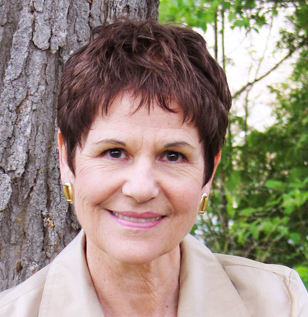
James Dewar acted as moderator for the panel, which consisted of: Sam Hiyate, president of The Rights Factory and Carly Watters, agent at the P.S. Literary Agency.

JD: What are you looking for right now?

CW: Picture books; contemporary YA (thriller/mystery, romance); women’s fiction; upmarket; non-fiction; and multi-media.

SH: New agents are looking for new clients. I’m full up myself, right now, but occasionally I do sign the odd author.  For non-fiction, a platform is essential. Most non-fiction sells on proposal alone.

JD: What can a fiction writer do to obtain representation?

CW: Write an amazing novel.  Platform does not matter.

SH: Debut novelists—sometimes even established ones—can fail to sell.  I like a strong voice, someone who can perform acrobatics with a sentence.

CW: I have a more commercial taste, a Book Club book would appeal to me.

JD: How do you move an “almost there” author to “there”?

SH: I’m a different beast than most agents and will work with the writer to edit the work.  Most agents won’t.  Others will set the writer up with a freelance editor.

CW: I’ll write an edit letter to the writer if the good stuff is REALLY GOOD.  Some books are edited seven times before they are sent to a publisher.  If the writer has the ability to turn their MS around quickly, the chances are better.

SH: My best advice is to find an agent who “gets you.”

JD: What should authors NOT do?

SH: Don’t send your MS in too early.

CW: In a pitch session, do not go through your whole synopsis.

SH: Sometimes the pitch or query can be better than the book.

JD: We’ll open the floor to audience questions (AQ) now.

AQ: Do I need an agent first, or can I approach a publisher directly?

CW: Agent first.  Most larger publishers won’t accept unsolicited manuscripts.

SH: An agent can say “no,” however.  An editor will refer the author to an agent anyway.  Send it and see what happens.

AQ: What does an agent do?

SH: Our job is to create a competitive situation around your book.

AQ: Can you have more than one agent?

SH: We contract exclusively, much like a real estate agent would.  Your book is the property we’re selling.  Our commission is 15% on domestic and 20% on foreign sales.

AQ: In the context of the “Literary Apocalypse” of self- and ebook publishing, do writers even need publishers anymore?

CW: Some agencies have publishing arms, but it gets complicated.

SH: Self-publishing is a new way for agents to discover talent.  Eventually, all the good material gets scooped up by the publishers.  Cases in point: Amanda Hocking, E.L. James, and Hugh Howey.

CW: These are exceptions to the rule.  Agents can’t turn $10k ebook sales into a traditional deal, but if you sell $200k+, that’s different.

SH: In the future, writers will have more control.

AQ: If an author has published a book but is not happy with the rights (terms) is there anything that can be done?

SH: No, if the rights have already been contracted out, that’s it.  Most agents won’t negotiate a bad contract for you, though.  Publishing houses and agencies start out with really talented, committed, and enthusiastic people who are grossly underpaid, for like ten years.  In that time, the ones who can’t maintain their passion leave for greener pastures.  The ones who can, become successful.

The agents’ panel was great, and both Sam and Carly were professional and up front with their insiders’ looks into the publishing world.

Tomorrow: I’ll cover Day 1 and Day 2 evening events, and Day 2 and 3 afternoons with Andrew Pyper and Cordelia Strube.  That will leave the Awards Gala and wrap-up posts.  So three more days, and it’s all over!

Don’t despair, there will be lots more Writerly Goodness coming your way this summer.  Book reviews and hopefully some more author interviews, pupdates (yes, there’s at least one more coming), and updates regarding the backyard office (interesting things afoot there).  I’ll also have some updates on my work in progress and any other conferences or events that I get to.

I will be returning to my weekends-only posting schedule after this week, though.  Blogging every day, though fun for a short period, takes up a lot of writing time (!)  My goal is to have my current revision done before the summer’s out.

Until tomorrow!

CanWrite! 2013: Day 1 publicity and marketing sessions

As promised yesterday, I’m going to talk about the good, bad, and downright ugly.

To start with …

The Good

I’ll start with Vikki Vansickle’s Mapping your Market presentation.

Vikki was enthusiastic, energetic, and clearly loves what she does, on both sides of the board.  Vikki is an author and a marketer, recently moving to Penguin Books (congratulations!).

Vikki has published four middle-grade (MG) novels since 2010.

  • So what do you do when you get published?
  • Celebrate!  Tell EVERYONE.  You never know who your champion will be.  Word of mouth is still king.
  • Do some research (yes, it’s important in marketing too).  How do you find the books you like?  Work outward: How does someone like you in Houston, Whitehorse, or Harrison Hot Springs find the books she likes to read?  That’s where you want to go, to get in front of the wave.
  • Who wants to read your book?  Who needs to read your book?
  • Comparative novels (comps) are critical.  It doesn’t even need to be a novel, as long as it’s in popular culture.  “If you like X, you’ll love XXX!”  “It’s Dirty Dancing without the dirty :)”  “It’s Looking at the Moon meets The Summer I Turned Pretty.”
  • Who is your ideal reader?  Define her in every detail.  Who are your potential readers (again work outward)?
  • Your elevator pitch should be about the length of a Tweet.  You have to tell people what your novel is about in pithy, taut, engaging sentences.
  • Be prepared to wear different hats.
  • Instagram is big with kids.  Facebook’s where their parents are (ew!).
  • Goodreads is great for more mature readers.
  • Writers Cafe (dot) org can help you with critique, beta readers, contests, conferences, etc.
  • Find your niche and identify specialized groups that will help you reach your readers.
  • The Ontario Blog Squad will set up blog tours.  6 blogs.  You create the content.
  • Twitter giveaways.  People love free stuff!  Specify Canada only.  Make sure they enter using a Retweet (RT) and including a hashtag specific to you, your book, or blog.  This helps to spread the word to all of your participant’s followers (and so on, and so on).

The Bad

I won’t tell you the guy’s name, or who he works for, but he’s a publicist.  I thought a publicist would be better spoken, honestly.

His session had some good information, but he was almost too relaxed, too casual.  At times I thought he was bored with the topic.  At times he went off on tangents or mumbled.  He decided to wing it.  He didn’t have a plan.

  • Print ads are not an effective use of funds.
  • Look for web magazines that have “up fronts” (= previews) especially if they have a print tie in.
  • A platform is not essential for fiction writers, but is absolutely key for non-fiction.
  • In fiction, the publisher may work with the writer to build the platform.
  • Build your relationship with your publisher.
  • A P/L or profit /loss sheet may determine what will be expected.  Analysis determines what the most appropriate action or angle may be.
  • Do you have a business or profession related to your book?
  • Books = cultural entertainment product.
  • You have to engage your readership on social media (SoMe).
  • Some publishers spend more $$ on authors than others.  This will be different in the States.
  • If a publicist is assigned, it’s usually for 3 months.  On-shelf promotion (during the initial sales period of the book).
  • Marketing is different for every book.
  • Book trailers are too expensive to be effective.
  • Applications (apps) are even more inefficient and more expensive.

The Downright Ugly

One thing that emerged early on in the session and coloured the remainder of it was that this publicist works for a small imprint of a larger publisher and in non-fiction (politics, sports, world events).  His clients are men and of the imprints authors only a third were women.

He made an off-hand remark about the ladies liking their beach reads.  Fatal mistake when speaking to an audience of 90% women.

To be fair, I have to say that I don’t think the young man realized that he’d just insulted his audience unforgivably.  Even after several women from the audience spoke up and made some very salient points, I’m not sure our publicist got it, or if he did, he was so scared, he didn’t know how to save himself with any grace.

I think it has to do with the publishing environment he works in every day, his mentors, his colleagues.  I think the sexism is so ingrained, so rampant in his sector of the industry, that he wasn’t fully conscious of the prejudices he promoted.

For the remainder of the conference, our publicist was the topic of conversation, and not in a good way.

It immediately brought to mind Chuck Wendig’s posts on sexism and misogyny in publishing.

It’s not a problem that has an easy answer.

Tomorrow: I’ll be moving onto the Day 2 panel and session.

Wordstock Sudbury

Today, I was pleased and privileged to be a part of Wordstock Sudbury, the first of what is hoped to be a biannual literary event.  At the Sudbury Theatre Centre (STC), Wordstock took over the main stage, lounge, and lobby areas for readings, workshops, and the essential selling of books.

If you would like to have a look at the full schedule, it is available on the site linked above.

I attended primarily to support my friend, poet Kim Fahner, and my fellow members of the Sudbury Writers’ Guild (SWG).  I also read the recently revamped opening of my novel.

Kim read with former Sudbury Poet Laureate Roger Nash, and Charlie Smith from Massey, all of them published by Your Scrivener Press (YSP).  The theme of their reading was Home and Away.  Though all three have very distinctive voices, the reading went well and had a seamless feel.  It’s always a pleasure to see such consummate professionals perform their works.

KimFahnerOf course, Kim was fabulous 🙂  She has a way of addressing the audience, slightly self-deprecating yet hilarious, that establishes a relationship.  We feel instantly at home with her, and completely comfortable as she shares pieces of her life in verse.

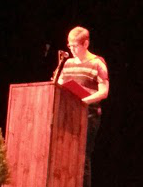
After a brief break, Sudbury Arts Council (SAC) president, Vicky Gilhula took the stage and presented the youth writing contest winners with their prizes.  One young man (forgive me, but I forget his name) came prepared to read and his story, based on his grandfather’s life in Sudbury and his career in the mining industry, was spectacular.  Amazing: a thirteen year old young man had the confidence and presence to bring us to tears.

He was that good.

Next, the SWG took over the auditorium, beginning with Rosanna Batigelli, who read a RosannaBatigellicouple of chapters from her historical novel, La Brigantessa.  The novel’s protagonist takes to a life of a brigand when she is assaulted and forced to leave her home by a tyrannical general.  Rosanna is in the process of revising her novel for publication.

EmilyDeangelisEmily Deangelis read from her middle grade/young adult novel about a young girl who loses her father in a car accident and subsequently experiences supernatural visitations when she is left with her great-aunt in Manitoulin Island’s Meldrum Bay.

Irene Golas read a selection of her poetry and flash fiction.IreneGolas

Tom Leduc read a number of his poems centering on his experience of Sudbury and its mining industry.

MargoLittleMargo Little from Manitoulin Island read some of her works published through projects of the Manitoulin Writers’ Circle including one on the War of 1812 and how the soldiers of the time became enamoured of their muskets, called Brown Betties.

Janice Leuschen, a member of both the SWG and of the JaniceLeuschenProfessional Writers Association of Canada (PWAC) read one of her stories, and Heather Campbell, also a member of PWAC, finished off the session with a discussion of creative non-fiction.

I read just after Margo and just before Janice.  I don’t have any pictures and I’ll reach out to my fellow guildies to share any pictures they may have of me at the event.  It would be a lovely remembrance of the day.  Sincere thanks in advance 🙂

As I mentioned, I read the revised opening of Initiate of Stone; it was my first public presentation and I received some excellent feedback from Kim and Emily.  The technical director of the STC also found me in the lobby and complimented me on my reading.

I have often been told that I have a great voice.  It’s one of the things that helps me both as a corporate trainer and as a writer, a learned skill from my days as a poet, honed by years of practise.  I tend to a literary style, even though I write genre, and the voice creates an appropriately dreamy backdrop for my words.

After the SWG session was over, playwright Matthew Heiti took the stage to host a series of readings from plays in which one friend, Paulette Dahl, was reading from a play by another, mutual friend, Louise Visneskie.

The English Arts Society of Laurentian University also hosted a reading, Heather Campbell hosted a workshop on the creative process, and Roger Nash and Daniel Aubin, Sudbury’s current Poet Laureate read their poetry.

And all of that wasn’t counting the Friday night cabaret, the children’s and young adult programming on the patio, or any of the other workshops and events that I couldn’t attend.

Though attendance was modest, I think that it was a good start.  The hope of the organizers is to grow Wordstock into a full literary festival at a larger venue, or at several venues throughout the city.  I wish them the best and applaud them for this year’s event.

I had a blast 🙂

Six questions with Barbara Kyle

Barbara KyleBarbara Kyle is the author of the acclaimed “Thornleigh” novels Blood Between Queens, The Queen’s Gamble, The Queen’s Captive, The King’s Daughter and The Queen’s Lady which follow a rising middle-class English family through three tumultuous Tudor reigns. She also writes contemporary thrillers, including B.R.A.G. Medallion winner Entrapped. Over 425,000 copies of her books have been sold in seven countries. Barbara has taught writers at the University of Toronto School of Continuing Studies and is known for her dynamic workshops for many writers organizations and conferences. Before becoming an author Barbara enjoyed a twenty-year acting career in television, film, and stage productions in Canada and the U.S. Visit www.barbarakyle.com

_____________________________________________________________________________

I met Barbara a couple of years ago at the Canadian Authors Association’s CanWrite! Conference.  Not only was she an excellent presenter and full of writerly goodness, but she was also generous with her time.  Her critique of what was then my first 20 pages was an eye-opener and she sent me off with a new direction for my novel (which has shifted twice more since, but we don’t need to talk about that here).

Then I started reading her Thornleigh saga and became a fan.

We met up again at the Algonkian conference in Niagara Falls last year, and I’m thrilled Barbara accepted my proposal for an interview.

Her latest novel in the Thornleigh saga, Blood Between Queens is available now.  I would, of course, suggest that you read the rest of the series too.  You’ll be hooked before the end of the first chapter of The Queen’s Lady, I promise.

Welcome, Barbara!

BK: Thanks for inviting me, Melanie, and for your very kind words.

WG: Before The Queen’s Lady was published, you wrote and published three thrillers under a pseudonym.  More recently, your novel entrapped, another thriller, was honoured with the B.R.A.G. Medallion.  You’ve also written screen plays.  What do you enjoy most about writing each genre or form?

BK: The glory of the novel is that the author can get inside a character’s head and heart, can write exactly what the character is thinking and feeling, so the reader gets that precise, deeply-felt emotion, whereas in writing a screenplay you’re limited to just action and dialogue; you’re totally dependent on the actor to convey the layers of emotion. So that’s a huge difference. The wise screenwriter resists the urge to overburden the dialogue with these layers, and leave room for the actor to supply them. (It’s why we pray to have fine actors cast!) On the other hand, when it comes to describing a setting or a character’s appearance, the screenwriter doesn’t have to do a thing, because one second of screen time shows what the novelist must work painstakingly to convey, slaving over paragraphs of description that film shows in a blink. As for what I enjoy about writing historical novels and thrillers respectively, my historicals actually are thrillers. If we define the thriller as having life-and-death stakes, a ticking clock (a crucial deadline), and the protagonist pitted against a powerful antagonist, then all my Thornleigh Saga books are thrillers. Seem it’s my métier.

WG: You are meticulous in your research, something I admire greatly.  When you begin to work on a new novel, do you start with an idea and plot firmly in mind and fill in the blanks with your research, or is your idea/plot general to begin with and informed and shaped by the research you do?

BK: When I start a book I have no plot firmly in mind; usually I have just a character who’s bent on doing something. My new release Blood Between Queens is Book #5 in my Thornleigh Saga, which follows a middle-class family through three Tudor reigns. My plots in these novels are quite complex, and I develop them through several drafts of an outline, which I work on for several months while concurrently doing research,  before I start writing the first draft of the book. When I talk to writers I call the outline a “storyline” because as writers we must never forget that we’re telling a story. For me, the outline is where all the heavy lifting of creation gets done: creating the characters and plot. As for research, I appreciate your compliment about mine being meticulous, because it’s so important to get the bedrock facts right, whether it’s the gate at the Tower of London through which Princess Elizabeth (later Elizabeth I) entered when her half-sister Queen Mary imprisoned her in The Queen’s Captive, or the technical aspects of an Alberta oil company drilling for “sour gas” in Entrapped. Readers love learning when they read fiction, and I love giving them the details.

WG: Owing in part to your extensive research, you’re considered an expert on the Tudors.  You’ve spoken at the University of Toronto and will appear at the Stratford Festival this summer speaking on the subject of the rival queens.  How did these opportunities emerge for you and how are you enjoying this evolution of your career?

BK: I developed my talk “Elizabeth and Mary, Rival Queens: Leadership Lost and Won” for the University of Toronto Lecture Series last winter. It’s about Elizabeth I and her cousin Mary, Queen of Scots, whom Elizabeth beheaded. They are the focus of my new release, Blood Between Queens. I told Vida Engstrand, the wonderful publicist with my publisher, Kensington Books in New York, about the U of T lecture, and she immediately contacted the Stratford Festival, because they were scheduling a production of Schiller’s play “Mary Stuart,” which is about these two famous queens, for their 2013 season. They loved the idea of my talk and invited me to give it as part of their Forum, and to also do a book signing of Blood Between Queens. So, I’ll be doing that on July 10th. I really enjoy speaking about these two queens, whose lives are the stuff of opera. Admission to the talk is free, so if any of your readers would like to attend I’d love to see them. Here’s the link:  https://www.stratfordfestival.ca/forum/speakers.aspx?id=20473

WG: You also conduct workshops and master classes on writing at various conferences and other venues as well as making time for manuscript evaluations.  How do you structure your professional life to make room for everything and still have time to write?

BK: Very carefully! It’s a juggling act. Mostly, I do manuscript evaluations when I’m between books – but that window doesn’t last long because my current three-book contract with Kensington requires me to deliver a new book each year. Still, I truly enjoy teaching emerging writers. Having been one myself, I know how hungry new writers are for guidance from someone who has helpful knowledge about the process. And I love seeing a writer experience a “light bulb” moment from something I’ve taught. That satisfaction is priceless.

WG: You’ve just completed a blog tour in celebration of Blood Between Queens.  How do you find social media has changed the way books are published and promoted?

BK: Social media has become crucial. For one thing, publishers want and expect their authors to be fully engaged with readers and potential readers on Facebook, Twitter, Pinterest etc. and even to blog, if they’re good at it (as you are, Melanie). Readers expect it too. For the author, it requires another chunk of time to maintain these networks, but most of us enjoy doing it. I love Twitter and have “met” many fascinating people there. My Twitter handle, if your readers would like to connect with me there, is @BKyleAuthor. I’ve learned three important lessons about using social media: 1) be yourself; 2) don’t constantly sell your book; 3) give: that is, share information that people truly want and can use, such as writing tips or links to author interviews. The blog tour I’ve just done with Blood Between Queens was beautifully organized by Amy Bruno of Historical Fiction Virtual Book Tours. Here’s the link: http://hfvirtualbooktours.com/bloodbetweenqueensvirtualtour/

Amy lined up fifteen blog hosts who asked for guest posts from me and/or interviews. Several of them also offered a giveaway of the book. The tour lasted three weeks and was a great success, with over 700 people entering one of the giveaways.

WG: Now that the blog tour is over, what is next for you and Blood Between Queens?

BK: Well, it’s only been out for five weeks, so I hope many more readers will be intrigued to pick it up! And I’ve just finished writing the next book in the Thornleigh Saga (Book #6) which carries on Adam Thornleigh’s story where Blood Between Queens left it. I won’t give any spoilers, but I can say that it’s set in 1572 and Adam joins the Dutch rebels who called themselves the Sea Beggars in their real-life fight against their Spanish occupiers. (I liken them to the Resistance in World War II fighting the Nazis.) Now, I’m deep into the research for Book #7. So there are lots more adventures of the Thornleigh family ahead. By the way, each “Thornleigh” story stands alone. To enjoy one book, a reader doesn’t have to have read any of the previous ones.

Thank you for a fascinating interview, Barbara!  All the best in your future writing endeavours 🙂

BK: Thank you, Melanie. I sincerely wish you the same.

_____________________________________________________________________________

Blood Between Queens Synopsis:Blood Between Queens by Barbara Kyle

Following her perilous fall from a throne she’d scarcely owned to begin with, Mary, Queen of Scots, has fled to England, hoping her cousin, Queen Elizabeth, will grant her asylum. But now Mary has her sights on the English crown, and Elizabeth enlists her most trusted subjects to protect it.

Justine Thornleigh is delighting in the thrill of Queen Elizabeth’s visit to her family’s estate when the festivities are cut short by Mary’s arrival. To Justine’s surprise, the Thornleighs appoint her to serve as a spy in Mary’s court. But bearing the guise of a lady-in-waiting is not Justine’s only secret. The weight of her task is doubled by fears of revealing to her fiancé that she is in truth the daughter of his family’s greatest enemy.

Duty-bound, Justine must sacrifice love as she navigates a deadly labyrinth of betrayal that could lead to the end of Elizabeth’s fledgling reign . . .

Praise for Blood Between Queens:

“Fact and fiction are expertly interwoven in this fast-paced saga…exudes authenticity.” – Historical Novel Society

Kyle illuminates the world of queens Mary and Elizabeth, exploring their rivalry from its beginning through the eyes of a young woman torn between loyalty to her queen and a growing friendship with the enemy . . .Kyle knows what historical fiction readers crave.” RT Book Reviews

“A  beautifully written and compelling novel. Again, Barbara Kyle reigns!” – New York Times bestselling author Karen Harper.

May submit-o-rama was a bust :(

I got side-tracked, in a marvellous way, but still side-tracked, by courses.

May Submit-o-rama ChoiceI know myself and my limits.  Further, I’m focusing on fiction at this time versus verse, so I opted for the Choose your own Challenge category, and set my goal, as I had back in October, at one submission per week.

At the time, I was working on two short stories for submission May 31, 2013, and so I thought maybe a couple of flash fiction pieces, or something equally non-angst-inducing and I’d be able to make it.  If necessary, I could polish up some of my older, unpublished poems and see what I could do, but then the learning opportunities came knocking, and I knew I wouldn’t have time to do more than the two stories.

Last week, the deadline on one of the submissions I had planned was extended, and frankly, I was glad. Being out of town for training derailed my writing plans.  So in the end, I submitted one short story in the entire month of May.

It was an original, though, so at least it counted toward Kasie Whitener’s Just Write short story challenge (13 original stories in 2013).  Unfortunately, it was April’s original 😛

I participated, but I don’t think that it could be considered a success.

I’m remarkably okay with that though.  I’ve got my fingers into so much right now, that something had to give.

Other perceived failures

I’d submitted a guest post that was to have gone live sometime in April but my colleague’s even more hectic schedule intervened.  There was some hope that the post might have been rescheduled in May, but the month has passed and it looks like it won’t see the light of day any time soon.  It’s only the second guest post I’ve submitted.  It’s also the second that didn’t pan out.

An interview that I arranged recently also seems to have fallen through.

Why it’s all good

There’s a saying that if you aren’t failing, that you aren’t doing enough to stretch yourself.

I agree with that, so long as the individual who perceives their actions as failure can put the attempt in a positive frame.  Otherwise, it can weigh on the soul.

My perspective: so long as you’ve tried your level best, you’ve upheld your part of the bargain.

I put my best effort into everything that I do, or try.  I can feel satisfied with that and I learn something important every time.  At the end of the day, it is enough.  I am enough.

Are you failing upward?  Have you had some perceived failures recently that have left you questioning yourself?  How have you overcome the negative and turned it into a positive?

Do share.  I’d love to hear what y’all have been up to 🙂

How my life sentence with mortal punctuation has informed my writing

A.K.A. The period at the end of this series 🙂

I’ll preface this bit by saying that I don’t think I’m unique among writers in this respect.  In fact, I think every writer works, at core, with and through the same issues.  This past week, I read (and shared) a great interview with Chuck Wendig in which he talks about (among much other awesome) the themes that crop up in his work.  Surprise, surprise, death and family rank prominently.

In this morning’s The Sunday Edition with Michael Enright, one of the Canadian greats (with whom I was privileged to work, even though he didn’t like my genre/subject matter) Alistair MacLeod, mentioned the same influences and themes.

Think of just about any author you’re reading or have enjoyed, and I think you’ll find death and family cropping up: Rowling’s Potter books were all about death and the search for family despite its omnipresence; Martin’s Song of Fire and Ice is about a number of families and he keeps on killing off prominent members 😉 (note here: in this context, what is politics, but family drama writ large on the world stage?); Collins’s Hunger Games = Death/Family; Gabaldon’s novels are a series of time travelling family sagas and death plays a prominent role.

I could go on, but I won’t.  Search your own shelves/ereaders to find your own examples.

What’s unique about me is my story, my life, and I hope that translates to my characters so that even though the theme may be familar, the way that it is expressed through my characters and stories is something just a little different.

Death

Death finds its way into a lot of my stories in different ways:

In my first published short story, “Chlorophyll and Corruption” (which is probably the prologue to a YA sci-fi), my protagonist first saves his brother from being pushed out of their atmospheric containment bubble, then must flee an impending supernova. “For a Change” (which I have subsequently rewritten as “The Gabriel” and may yet become a sci-fi novel) my protagonist’s reaction to a world of sterile Transmat immortals is to attempt suicide, repeatedly.

In “Fox Fur,” my protagonist is trying to deal with the death of her parents by means of various encounters with foxes.  “Dead Issue,” is about a young woman who makes a personal discovery at a family funeral.

“Tonsillitis Blues” from my 1999 MA Thesis, Whispers in the Dark, is an interpretation of my adult exploration of the near-death experience prompted by my tonsillectomy trauma.  The protagonist of “Fool’s Journey” (subsequently rewritten as “A Terrible Thing” and likely a YA paranormal novel), another story from the same collection, attempts suicide because she can’t deal with the visions of danger and death she’s been gifted with.

Even my poetry is liberally sprinkled with death.

Ferathainn, the protagonist of Initiate of Stone, experiences the deaths of her best friend,

English: Colored version of the ancient Mesopo...

English: Colored version of the ancient Mesopotamian eight-pointed star symbol of the goddess Ishtar (Inana/Inanna), representing the planet Venus as morning or evening star. (Version not enclosed within a surrounding circle) Polski: Kolorowa wersja symbolu ze starożytnej Mezopotamii, ośmioramiennej gwiazdy Bogini Isztar (Inany/Inanny), reprezentujacej planetę Wenus jako poranną lub zachodnią gwiazdę. (Photo credit: Wikipedia)

fiancé, and father, and subsequently dies herself attempting to exact revenge.  She undergoes an Inanna-inspired journey into the underworld to reclaim herself and her will to live.  Eoghan witnesses the execution of his brother for heresy and when the goddess Auraya calls him to become her champion, or Kas’Hadden (hammer of light), he experiences an assassination of personality at her hands.  Dairragh, deeply affected by the death of his mother years earlier, inadvertently triggers the destruction of his home and the death of his father.  He succumbs to his wounds and is resurrected and set on a shamanic path by the mysterious anogeni.

I won’t get into the protagonists of my other unpublished works, but death and its impact are recurring themes.

Death is the period of every life sentence and so it is a universal.  Few readers will fail to be engaged by various explorations of death and its impact on those left behind.  Thrillers and mysteries are built around it and are two of the most popular genres in publishing today.

Family

Likewise, everyone has a family.  Even the only child who has chosen not to have children of her own (like me) has parents and understands the pull of the complicated legacy handed down to them.

In my, admittedly small, family, women proved to be the peace-makers, sacrificial lambs, care-takers, bread-winners, and all around protagonists of the story.

My maternal grandfather was an alcoholic and a womanizer.  He and my grandmother were unable to have children and adopted my mother and aunt.  My grandmother worked in a textile mill during the depression and worked for most of her life until her first major heart-attack forced her into early retirement.

On my father’s side, my grandfather died at a relatively young age because of heart failure and my grandmother was an entrepreneur.  I still meet people in Sudbury who hear my name and ask if it was my grandmother who owned Marttila Sewing Centre.  Yup.  That was her.  She remained fiercely independent until stroke and cancer eventually took her life.

My father was always an ill man and though he was the bread winner for most of his life, it was my mother who held the family together, getting her high school diploma and driver’s licence in her forty’s and starting a new career as a ward clerk in the hospital when my father had his breakdown.  My mother was the one who cared for her parents and my father until their respective deaths.  Though she doesn’t have to, she still takes care of me.

It’s no wonder then, that my work focuses primarily on strong female characters.

Incidentally, here are a couple of posts I came across this week from Marcy Kennedy on strong and likeable female characters.

I had trouble for many years writing strong and likeable men because that was an archetype largely absent from my experience.  I found my way to that eventually, though, because of Phil, and because I learned to recognize the good qualities in the men in my life and expand those into heroic proportions.

Everyone is a mix.  My paternal grandmother may have been a business woman, but she was a poor fiscal manager, and tried too hard to curry favour with the well-to-do women of Sudbury (read sycophantic).  She first promised my mom inheritance of her business, then rescinded the offer and sold the business to a third party.  I think this was because she was too embarrassed to let my mom see what a shambles she’d made of things.

Though family dynamics run through all of my stories and novels, I’ll just present one example, from IoS, because it’s going to take a while to break down for you 😉

Ferathainn’s family in IoS is complex.  Her parents, Selene and Devlin, can’t have children and adopted Fer when she was abandoned by a bedraggled, but clearly noble, woman who refused to speak and ran away before she could be made to explain anything.

Devlin, feeling the need of a child of his blood, fathered Fer’s half-sister Aislinn, with Willow, a family friend and eleph (read elf).  Willow is misanthropic and makes her living as a brew-master and owner of the local public house.  She readily gave Aislinn into Selene and Devlin’s care.

Aislinn is obviously a half-breed, and largely reviled by the Tellurin (human) villagers of Hartsgrove as a freak. She is destined to become a bridge between the eleph and Tellurin peoples, however, by virtue of her heritage.

When Selene and Devlin adopted Fer, the resident eleph, Willow and her brothers Oak and Leaf, invited the new family and Aeldred, the local mage, to a Shir’Authe.  The Shir’Authe foretells the destiny of the child in eleph culture.  At the ceremony, none of the eleph can see anything about Fer’s future, but Leaf sees his spirit-lights, or astara, in the baby’s eyes (if you’re an Elf Quester, this is recognition, if you’re a Meyers fan, it’s imprinting).  This is bizarre enough, because only eleph are supposed to bond with one another in this way.

Selene, understandably, freaks out, but Leaf promises never to act on this deep spiritual attraction unless Fer somehow miraculously sees her astara in his eyes, or otherwise returns his feelings once she is gown.

Aeldred senses a wild and powerful magickal talent in the infant.  He fears that he will not be able to control the child and that she will become a rogue mage.  She has the potential to wreak havoc on their world and her talents will be much sought after, by moral and immoral authorities, both magickal and political.

In an attempt to minimize Fer’s potentially negative impact, he merely tells the others that she has talent and that he will remain in Hartgrove to become her teacher.  He further tells them that Fer’s parents are powerful, but immoral, people and that they must protect the child in the event that either one, or both blood parents, come seeking her.

He gets everyone to agree to a magickal binding.  None of them will be able to speak of the circumstances of Fer’s birth or of her coming to Hartsgrove until the girl comes of age.  By then, Aeldred hopes that he will have thoroughly indoctrinated Fer in the disciplines of the Agrothe magicks and that he will therefore be able to control her chaotic potential and prevent her from doing harm.

In truth, Fer’s parents are Aline of Gryphonskeep and Halthyon, an eleph mage, or kaidin. Aline is descended from the de Corvus family and magick flows through the bloodline.  The original Kas’Hadden was a de Corvus, so the power of the gods has been passed down to Fer.  Aline is married to Killian of Gryphonskeep and mother to Dairragh (dun, dun, dun!).

Halthyon is one of those rogue magi that Aeldred worries about.  He has extended his lifespan far beyond the already lengthy eleph standard.  His goal is to accumulate magickal power (by draining it from others as he kills them) and to ascend to godhood (in the process of which he intends to kill the existing gods of Tellurin).

Halthyon is unable to extract the child’s location from Aline and subsequently kills her in the attempt.  He wants to find his child because he considers her the only person worthy of ascending with him.  In order to do that, Fer must become a god-killer as well.

Okaaaaaay.  So there, in a convoluted nutshell is the familial basis of the plot of not only

English: St. Etheldreda's Churchyard - Family ...

English: St. Etheldreda’s Churchyard – Family Plot with Snowdrops (Photo credit: Wikipedia)

IoS, but the ensuing novels in the series, which I have called Ascension.  You can see why I identify the book in the epic fantasy genre 😀

Family is an endlessly intriguing Gordian knot to unravel and I think you can see where I have mined my tapestry to create Fer’s.

It’s all variations on two essential themes.

How have your life experiences contributed to your creative work?  Do death and family inform your stories?  Do you have a family-plot?

I’d love to hear from you!

Here ends the series that was A life sentence with mortal punctuation.  I hope you have enjoyed it, and found it to be useful in your creative pursuits.

Coming soon: I’ll have a book review for Laura Howard’s The Forgotten Ones, and hopefully a couple of author interviews to throw your way.  I’ll definitely share my experience in Margie Lawson’s  A deep editing guide to making your openings pop course, and in Marcy Kennedy’s Crafting your logline and pitch workshop next weekend.  There might even be some Pupdates and Next Chapters in there.
The Next Chapter: Progress by inches (and bounds)

It’s been a while since I’ve posted about my progress, or lack thereof, on my writing.

Initiate of Stone

I’ve been struggling to rewrite my first chapter.  I’ve now made progress, after writing, and rewriting it several times.  I really had to go back and decide what it was necessary to accomplish in my opening chapter.

A short list:

  • Introduce my protagonist – Ferathainn, or Fer, is fifteen, and her coming of age is in two moons, at the next goddess festival, Sestaya.  She wants to become an Agrothe mage, and will be the first girl to do so in a very long time, but she chafes under the tutelage of her master, Aeldred.  Fer has been studying from the moment she wakes to the moment she sleeps (except festival days) with Master Aeldred for 12 turnings of the sun through the seasons, but it’s all been mundane. He’s forbidden her from using her innate talent, to speak with the spirits, or souls, of animals, plants, elements, and perhaps even people, like he controls who the spirits speak to …  Fer desperately wants to be initiated so she can start using her talent and learning “real” magick.  She knows she’s capable of more than what Master Aeldred permits her to do.  The process is long and demanding, though, and she will have to make sacrifices.  She loves Leaf, the eleph finiris, or song master, and will marry him on Sestaya as well.  She sees her astara, or soul-lights, in his eyes, something that only the eleph are supposed to see.  She’s not so sure about children, though they seem to be the natural consequence of marriage.  She’s just been so long separated from other girls her age by her studies that she wants something that everyone else takes for granted.  Fer worries that love, marriage, and family will be the sacrifices that she will have to make to become a mage.  She’s determined to have at least love in addition to the solitary life of a mage.
  • The “normal” world – Hartsgrove, Fer’s village, is a “free town” and the eleph and people of Tellurin live side-by-side in relative peace.  It’s an agrarian village that sends tributes to the surrounding, larger, towns and cities to show fealty and secure support in times of need.  The predominant religion is worship of the Goddess Auraya, creatrix of Tellurin.  Every year the season of Vedranya brings deadly storms to besiege the land.  This has been the way of things since the Cataclysm, two centuries before, changed the face of Tellurin and reduced much of Tellurin civilization to rubble.  Fer lives in a small, but sturdy cottage, with her mother and father, Selene and Devlin, a seer and a bard respectively, and her younger half-sister, Aislinn.  She has never left Hartsgrove.
  • Hook the reader – What’s the root cause of Fer’s resentment of her master, the man who could grant her wish to become a mage?  Why does he want to keep her from using her talent?
  • Ask a question (that needs to be answered by the end of the novel) – What is the secret Master Aeldred feared so much he magickally bound Fer’s friends and family to silence?
  • Foreshadow the inciting event – An earth elemental, or nomi, tells Fer the secret is a potentially deadly one though it cannot more than hint at the nature of the secret; she must be strong to face the trials to come.

So I’m slowly working my way through the list without dumping too much backstory or world building on the reader.  Beginnings, why are you so hard?

Some links about beginnings:

On a whim, I’ve signed up for Margie Lawson’s course, A Deep Editing Guide to Making Your Openings Pop, starting May 6, 2013.  She focuses on psycho-linguistic and rhetorical techniques to improve your writing.  My undergrad was focused on rhetoric and I love psychology, linguistics, and brain science, so this looks like it’s right up my alley.  Will let you know how it goes.

I might do the crazy and send my beginning (when I’m more or less happy with it) to Ray Rhamey’s Flogging the Quill to see if it passes his test.  Stay tuned.

Short Stories and poetry

Well, so far, I’ve kept up with Kasie Whitener’s Just Write short story challenge.  I’ve written a completely new short story for each of January, February, and March.  I’m a little behind in April, and may opt for flash fiction to make up the short fall.

The short story that I revised and sent to On Spec in January has been accepted (!)  I am very (like !!!!!!!!!!!!!!!!!!!!!!!!!!!!!!!!!!!!!!!!!!!!) excited about this, even though I know that it won’t be in print until sometime next year.  I’m looking forward to working with their editorial team to whip “Downtime” into shape.

“Beneath the Foundations (original story #2),” my attempt at medieval Cthulian for Sword and Mythos was rejected.

“A Terrible Thing” was rejected by the editors of Tesseracts 17.

It’s too early to have heard back from either Writers of the Future, to whom I sent “The Gabriel,” or In Places Between, to which I submitted “Molly Finder (original short story #3).”

There wasn’t room for my poem “peregrine” on the League of Canadian Poets National Poetry Month blog, but I have subsequently submitted that poem plus two more, “contain you” and “infant crawls,” to Sulphur.

From last year’s submissions, I learned that my submission to Mark Leslie’s Spooky Sudbury will be included in the publication, and my poem, “north of thule” was included in the fabulous Sopphey Vance’s Enhance no. 11.  It’s been a good month (and a bit) for happy dancing!

I’m going to work on something flashy this week to round out April’s short story quota, and set to work on another original for May in hopes of garnering some attention in the Rannu Fund competition.May Submit-o-rama Choice

I’ve joined Khara House’s May submit-o-rama and have committed to 1 submission per week in the Choose Your Own Challenge category.  Rannu will make up only one of those, so I’ll have to get my arse moving on identifying other submission opportunities (!)

Critiquing

Actually finished the BIG critique for my online group and am working on a review of the first 100 pages of another online critique buddy.

Have only three people left to critique for the Sudbury Writers’ Guild before I’m caught up with them.  We’re trying to get our stories and poetry together for an anthology.  I put forward “A Terrible Thing” and “Old Crow,” another short story of mine that was rejected by Tyche Books last year (Masked Mosaic anthology).  It looks like “Old Crow” might be salvageable as a short story, but that “A Terrible Thing,” as editors have said—and I’ve thought—in the past, is really a novel in the making.

Conferences

A local effort, Wordstock, will be happening June 7 and 8 at the Sudbury Theatre Centre.  This is the first year for the event, and the organizers are hoping to build on what they hope to be this year’s success.  The SWG has a block of time for readings.

I’ve registered for the Canadian Authors Association CanWrite! conference in Orillia, June 12-16, and booked my room in the Orillia campus of Lakehead University.

I’m still waffling about When Worlds Collide August 9-11.  The registration fee is reasonable in the extreme, but I still have to bear the cost of the flight and accommodation.

One reason I’m waffling is because I want to go to the Surrey International Writers’ Conference this year (Oct 25-27).  Domestic flights are sooooo expensive.  Right now, a return to either Calgary or Vancouver for the conference dates is showing as over $1000.  It may be an either/or kind of thing for me.  Or I might just cash in my Avion or Aeroplan points for one or the other flight.  That’s an idea!  Thanks for letting me suss that one out online 😛

I think that’s all the conferencing I can take for this year.  Next year, I hope to add some fancons like Ad Astra.  We’ll see how the financial situation sits.  And my various air rewards plan balances 🙂

Other stuff

Taxes done and refund received 🙂

Am still putting off the decision to move to WordPress.org.  I think I just need some dedicated time to devote to research and reflection.

Hope all is well with you and your writing lives.

I’d love to hear from you about your latest literary adventures!

Tonight’s viewing line-up: Doctor Who and Orphan Black!

Tomorrow, I’ll share my thoughts on happiness and how my experiences have influenced my writing in the final instalment of a life sentence with mortal punctuation.

Writer tech: Converting from WordPress.com to WordPress.org

In my continuing indecision regarding whether to make the leap to WordPress.org or not, I’ve been doing some research.  Gemma Hawdon has graciously consented to let me post our conversation.  I’m sure it will be as enlightening for you as it was for me.

____________________________________________________________________________

How long were you blogging on WordPress.com before you decided to make the move?

I was only blogging for 6 weeks before I decided to swap to self-hosted WordPress.

What kind of research did you do and what were your considerations?

I started by talking to a few friends who had already taken the plunge into self-hosted blogging. I was lucky to have one friend in particular, Caroline of http://presentimperfection.com – a marketing and communications strategist – she was extremely helpful.  I think it’s important to seek the opinions of others and to have someone you can turn to for help.

I also read information provided on the WordPress site: http://en.support.wordpress.com/com-vs-org/.

Another helpful article was this one by Problogger: http://www.problogger.net/archives/2012/03/04/wordpress-com-or-wordpress-org-which-ones-right-for-you/

In terms of considerations, I wanted to find out which version was more suitable from a long-term point of view. Although a complete beginner, I didn’t like the thought of wasting time and effort building a blog that might restrict me in the future.

What made you decide to take the plunge?

In the end it was the flexibility of self-hosted WordPress (WordPress.org) in terms of wider choice of custom themes and the ability to increase functionality of the blog through plugins (i.e. to enhance SEO, email newsletters etc.) I wanted to build something that I would have full control over creatively and (if in the future I’m lucky enough!) commercially. Have I actually utilized many of these options yet? Absolutely not! I’m a little lost to be honest, finding my feet, tepidly…

Are you with a hosting “farm” where you’re largely in charge of everything, or do you subscribe to a hosting service where they have people who can help you with technical questions?

To be honest, I’m not entirely sure what a hosting farm is! But yes, I am pretty much in charge of everything (terrifying). I chose to host with hostgator.com – who were recommended to me because they have a solid reputation and competitive pricing. I have the Hatchling plan which is only $3.96 p/m unlimited disk space (you can upgrade at any stage). This plan also offers 24×7 technical support.

Mel’s note: If you have technical support, it’s not a farm 😉

From what you mentioned, there are good and bad points about the move.  What are they and what would you do differently if you had the chance?

The main shock after swapping to WordPress.org was the terror of suddenly feeling completely alone! WordPress.com takes care of everything for you. You feel part of a community because they publish your posts across Reader. When I switched to self-hosted I lost a huge chunk of traffic. Previously, I was gaining 5-10 new followers each week – that has fizzled out to 1 if I’m lucky!! Plus it’s amazing how encouraging those simple ‘likes’ can be – you get none of that with WordPress.org.

To help me transfer, I used a friend of a friend because he was incredibly cheap and he did a great job, but initially I lost all of my followers. I had to contact WordPress in the end and they transferred them across for me, but it took several weeks. In the meantime, I had to post from both platforms. I think If I had to do it again I would use WordPress’ own guided transfers – they cost $129 USD.

I’m still feeling lost on the technical side of things. With WordPress.org you’re the one responsible for stopping spam, for creating and maintaining backups and for updating versions of software. I haven’t taken full advantage of the creative freedom yet because it would mean paying someone to build a logo and banner and I can’t justify that right now; however, I’m learning about new things each day and certainly making progress.

One thing that is working for me is having a Feedblitz icon on my site. Feedblitz allows subscribers to view all of their blogs on the one page (a little like WordPress Reader). Followers who subscribe through this software are generally savvy Internet users and bloggers themselves.

I have to keep reminding myself that I’ve only been blogging for 5 months and it takes time and effort to build a solid following. However, I do feel as though I’m finally making progress. I’m rising in the ranks of Google and Twitter and my traffic is increasing! More than anything, I enjoy the creativity of what I’m doing and the fact that I’m the boss of something that is completely mine.

I think it’s important to figure out what you want from your blog and you’re reasons for blogging before you decide which WordPress version to go with.  For me, the benefits of starting with WordPress.com allowed me to experiment before investing any money. I gained an insight into how people responded to my voice and writing and whether there was a demand for my topic or not.

In the end, I think WordPress.org is better for the long-term if you want to build a blog that is completely yours, which you have full control over – no limitations.

I hope this is of some help – Thanks Melanie for your questions – Happy Blogging!

So what do you say, blogophiles?  Will Gemma’s expereince be helpful to you?  I’ll certainly benefit!

I’d love to hear what you have to say.

____________________________________________________________________________

Gemma Hawdon

Gemma Hawdon

Gemma Hawdon lives in Melbourne, Australia with her husband, two children, one dog and a couple of rabbits. Having always worked in marketing prior to having children, she turned her attention to writing about 4 years ago and has never looked back! Gemma has published articles in parenting magazines across Australia including Melbourne & Sydney Child and Parenting Express and dabbles in writing ghost-articles for extra income, but her most passionate project is the children’s fantasy she is writing which she never seems to get the time to complete! Gemma is also responsible for running the administration and finances for their family-run business in the building industry.

Gemma’s blog, topoftheslushpile.com, documents the challenges, highs and lows of writing a book and getting it ready to tackle the competitive publishing industry.

Six questions with Alon Shalev

Alon ShalevAlon Shalev writes social justice-themed novels and YA epic fantasy. He swears there is a connection. His latest books include: Unwanted Heroes, At The Walls Of Galbrieth, and The First Decree. Alon tweets as@alonshalevsf and @elfwriter.

_________________________________________________________

Welcome to Writerly Goodness, Alon!  Thank you for taking the time to answer a few questions for my readers.  I must say that I’ve been following you with great interest since we “met” through Author Salon and I became aware of your progress through last year’s Amazon Breakthrough Novel Award (ABNA).

WG: I know you’ve probably written a lot about this, but I must ask about your experience with the ABNA.  Some of my friends have expressed interest in the competition (or entered) and I’m sure they would love to know about the process of getting to the quarterfinals and how it contributed to your success with At the Walls of Galbrieth.

AS: I think ABNA is an amazing opportunity even if you do not win. It pushes you to finish and polish a manuscript, and prepare what is essentially your media kit. I have reached the quarterfinals with three different books and enjoyed the tension around it (I had my acceptance speech all worked out!). When you reach the quarterfinals, experienced people in the industry critique your novel. It can be tough, but you do learn a lot. Finally, there are many agents trolling the competition, so it is an effective way to avoid the depressing slush piles.

WG: Now The First Decree, the second novel in your Wycaan Master series has been published.  How was writing the second novel in your series different from the first and what did it teach you about yourself as a writer?

AS: The most significant difference is allowing for a story arc that gives a satisfying climax, but also extends tendrils into the next book. In fact, there is a similarity at the beginning, because you want to bring the reader who has not read your first book (or read it a while ago) up to speed without imparting a huge information dump or giving away too much from the first book. I found this very challenging and had a number of friends critique this aspect in order to find the right balance.

What I love most about writing a series is that I can really develop my characters. They have time to grow up and mature. Outside of writing, I am a devoted father (which is what got me writing epic fantasy in the first place) and work with college students. So I realize that I am imbuing this love for seeing young people grow and develop into my writing and, I think, only a series can allow for this.

WG: How did Seanchai’s story begin for you and how did it evolve? 

AS: Every summer, my family goes camping for two weeks in Northern California. After we had set up camp, my sons (then 11 and 7) went off to explore the campground and I whipped out my laptop. They soon returned and objected to me writing during family time and this was the compromise we reached. During the two subsequent years, I wrote The First Decree and Ashbar, and read a couple of chapters each night either around the fire or snuggled in my tent.

I realized that many aspects of Seanchai are a mix of both sons, and perhaps how I would like them to turn out.  My fears that I will not be there for them one day plays out as Seanchai is denied a parent or mentor so many times. But there is also the desire to cultivate deep friendships, which I believe is central to the values that both boys have, as well as dealing with teenage romance and pressure.

All my characters are now part of my family. When I killed one off, I cried. When I edited that chapter several times, I cried…several times! I often imagine conversations with them, counselling and encouraging them, as I strive to do for my sons.

WG: I’m a big process geek.  Would you share something about your writing process? 

AS: I am not a good person to ask. I plunge in and trust the creative juices. I usually finish a 100,000-word manuscript (a rough draft full of mistakes) in three months, writing an hour a day and more on weekends. I keep a contents page for myself to track chapters and a characters page where I add physical traits or history. I also have ongoing plot notes that are threads between chapters and stories. This is written at the bottom of the chapter I am writing and I cut and paste on from word doc to word doc and erase an idea after it is included.

In terms of workspace, my desk is in the kitchen and I can write on the train, bus, anywhere. Once the idea is there, everything flows. It is a truly exhilarating experience. My family would probably tell you that I am a bit crazy when in the creative process. If I do not have the time to write I can become somewhat cranky and have a propensity to talk about little else. I am constantly worrying about my characters and the danger or emotional turmoil that I put them in.

WG: I’ve been told by industry experts that traditional fantasy is a hard sell in today’s market.  Did you find this to be true and what are your thoughts on the genre’s continuing potential? 

AS: My marketing guru is John Locke (the author) and I am fastidiously following his business model. He says it is better to have a smaller, clearly defined target audience, than a larger, less identifiable one. I have more problems placing my social justice-themed novels than fantasy.

Fantasy readers are passionate, fun, social and happy to share opinions. They are on line and engaging their peers all the time. In addition, every movie – Lord of the Rings, Eragon, Hobbit, Harry Potter, Oz, Jack and the Giant Slayer – brings waves of new and eager readers. Parents, who want to encourage their children to read, will buy them the books that reflect these movies. As long as these movies are being produced, as long as there are great authors writing quality stories, I think the future is bright and I am thrilled to be a part of it.

WG: What’s coming up for you and The First Decree?

AS: Following John Locke’s model, I am very focused on writing and publishing. Ashbar – the third book in the series is scheduled to come out in the fall. I will finish writing Book 4 during the summer and then spend the rest of the year editing it before turning it over to my editors.

The new marketing reality is that we are in an age of instant gratification. You finish Book 1 and if you enjoy it you want the next and you want it now! How smart were Amazon with their 1-Click? There is so much social media that to keep your readers waiting a year for a book is dangerous if your name doesn’t end in Brooks, Salvatore etc.  The First Decree

Meanwhile, I continue to build my online platform through my weekly blog (www.elfwriter.com) and twitter (@elfwriter – 22,000+ followers). I spend a fair amount of time here and on Facebook (and just getting into Goodreads), and I truly love the interaction with fellow writers, readers and fantasy fans.

Thanks for sharing your time and expertise, Alon.  All the best for your future writing endeavours!

Thank you, Mel, for this opportunity.

The next chapter: Diving back in

The last of my caturday quickies is a bit of an update on the work in progress (WIP) and other writing projects I’m tackling these days.

I revised my short story “A Terrible Thing” for Tesseracts 17 and submitted that on February 27, just one day before the deadline (!)  I submitted a short story back in October for the competition, but was not successful at that time, though the rejection letter was of the very encouraging variety (please send us something else).  I followed the editors’ advice, and ATT is sufficiently different from the story I submitted last fall that I hope it will tickle some fancies 🙂

I also submitted a poem for the League of Canadian Poets’ National Poetry Month blog: “peregrine.”  I’ll link through when it’s posted.

In related news, I forwarded an opportunity to my friend, Kim Fahner, a couple of months ago, and she, in turn, asked her publisher to submit her poetry collection, The Narcoleptic Madonna, to the powers that be.  The result?  Kim will be participating in the Battle of the Bards at Harbourfront Centre April 3rd!

It’s inspired me to think more seriously about submitting some of my poetry to various publications.  We’ll see where that leads.

As of today, I’ll be diving back in to Initiate of Stone and the next set of revisions.  I’ll also be revising “The Michael” for the Writers of the Future competition and working on a new story, “Way Station,”  (which the Retro Suites inspired) for In places between.

Finally, after my bout of training fury and certification regret, I’ll be catching up with my critiquing crew.

I never did work further on Gerod and the Lions.  I am hoping that I got far enough into it that I’ll be able to pick up the threads when the time comes.

A not so pleasant writing-related task that I’ll be picking up shortly, is collecting all my various financial bits and pieces and submitting my taxes.  I claim writing as self-employment on my income tax.  My lack of recent publishing success is a bit of a concern, but it’s certainly not for lack of effort 🙂  Do you think auditors would accept this blog as evidence of my industry? 😉

Writerly Goodness

Writerly Goodness

What’s been happening in your writerly lives lately, my friends?  Are you writing “hard”?

What’s coming: I’ll continue my series, A life sentence with mortal punctuation, tomorrow, and in the future, I hope to have an interview with Amazon Breakthrough Novelist Award 2012 quarter-finalist Alon Shalev regarding his writing life and the second book in the Wycaan Master Series, The First Decree.