Thoughty Thursday: Popping your mental corn, June 26-July 2, 2022

I’m hoping the early days of summer have been kind to you. Now refresh your brain and get that mental corn popping 🙂

Ashawnta Jackson: race, rock, and breaking barriers. JSTOR Daily

Beth Silvers and Sarah Stewart Holland (of the Pantsuit Politics Podcast) declare that even though Roe is gone. We have to keep fighting. Marie Claire

Roe vs. Wade: law professors break down what happened. The Problem with Jon Stewart

Andréa Becker: as anti-abortion laws pop up across the US, Mexican activists are helping Americans access free abortions. Insider

What does Dirty Dancing have to do with abortion? (A lot, it turns out.) PBS Origins

Yuliya Talmazan, Phil McCausland, and Artem Grudinin report that Russian missile strike hits shopping mall with more than 1,000 people inside, Ukraine says. NBC News

Ukraine secures release of 144 soldiers in biggest prisoner swap of war. Reuters

Amanda Macias: NATO reaches a deal with Turkey to admit Sweden and Finland, secretary-general says. CNBC

Guy Kawasaki interviews Margaret O’Mara about what we can learn from history. The Remarkable People Podcast

Sabrina read 700 years of history to fix her glasses. Answer in Progress

Allie Volpe says emotional exhaustion is real, but your friendships don’t need to suffer. Vox

Clark Quinn: LXD by design. Learnlets

Heidi Ulrichsen: Sudbury arts community gathers for frank talk on STC-YES Theatre merger. Sudbury.com

Related: Mia Jensen reports that theatre board faces criticism over merger. The Sudbury Star

Diana stays overnight in the most remote camp in the world. Physics Girl

Jacqueline Kilikita: here’s the problem with “reef safe” sunscreen. Refinery 29

Annie Proulx thinks swamps can protect us from climate change, if only we let them. The New Yorker

Kieran Mulvaney explains what a carbon footprint is, and how you can measure yours. National Geographic

George Monbiot says there’s a simple way to unite everyone behind climate justice—and it’s within our power. The Guardian

True facts—the beaver. Ze Frank

An eagle snatched a baby hawk … and ended up adopting it. CBC’s “As it happens”

Thanks for stopping by, and I hope you found something to inspire a future creative project.

Until next tipsday, be well and stay safe; be kind and stay strong. The world needs your stories!

Friday evening keynote: Zsuzsi Gartner

Last year, Zsuzsi decided to conduct a radical experiment.  She went off-line, not only withdrawing from social media, but also online banking, her cell phone, texting, and even her computer.

Here’s what she shared with us.

Being a writer, social media can be addictive.  “I’ll check email just one more time” becomes a three hour odyssey down the rabbit hole.  When she realized she was enslaved to email, Zsuzsi decided to do something about it.

So, no email, no texting, no computer, no debit, no nothing.  This took a while to set up.

In the process, she found a few things that promised to help with the project.  The “suicide” app kills your online ID.  Digital Detox blocks your access.  Camp Grounded is an adult summer camp where your tech toys are confiscated upon arrival.

Zsuzsi went through withdrawal.  She started reading a lot more though.  She read Henry James’s short stories, and Portrait of a Lady.  There was clarity in the pure experience of reading.

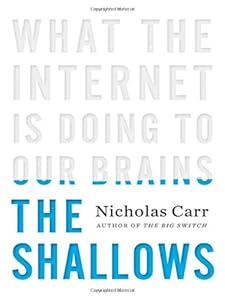
The Shallows: what the internet is doing to our brains Nicholas Carr

Cover of "The Shallows: What the Internet...

Cover via Amazon


Are we sacrificing our ability to read and think deeply?

Maryanne WolfThe Science of the Reading Brain

Is Google Making Us Stupid? (article in The Atlantic, 2008)  – Nicholas Carr.  Maybe not stupid, but lazy.

As a project, she redacted everything in her latest book that she sourced on Google.  Many pages had a quarter or more of the text blacked out.

She tried doing “real” research.  In a library.  With books, articles, and inter-library loan.  She has concerns about kids relying too heavily on Wikipedia and plagiarism in class.

English: An IBM Selectric typewriter, model 71...

English: An IBM Selectric typewriter, model 713 (Selectric I with 11″ writing line), circa 1970. (Photo credit: Wikipedia)

Zsuzsi started using an old IBM Selectric typewriter.  It forces her to think before typing. Nietzsche used a bizarre-looking typewriter and claimed it helped him write better.  “Go online and take a look at it,” she said, and of course, the irony was lost on none of us 😉  Once again ironic, the typewriter was considered the lap top of its time …

Our writing equipment informs our thoughts.  The medium has affected the prose.

Hemingway wrote description in long hand and dialogue on the typewriter.  Annie Proulx and Michael Ondaatje both write long hand.

The Russians are apparently using typewriters to create and send secret messages because there is no electronic footprint.

This experiment helped Zsuzsi engage more deeply with the world.