Six questions with Jennifer J. Chow

Jennifer is one of many online friends I’ve made through Wordsmith Studio.  I’m happy that her novel, The 228 Legacy, is published and that she’s agreed to this interview.

Jennifer J. Chow

Jennifer J. Chow
photo credit Julie Daniels

Jennifer J. Chow, a Chinese-American, married into the Taiwanese culture. The 228 Legacy was inspired by the family stories she heard after viewing photos of a two-million-person human chain commemorating 228. She has traveled multiple times to Taiwan and visited places dedicated to the incident. Her experience with the elderly comes from a gerontology specialization at Cornell University and her geriatric social work experience. You can visit her online at www.jenniferjchow.com, or follow her on Twitter and Facebook.

________________________________________________________________________

WG: Welcome, Jennifer!

Your new website’s tagline is “Asian-American fiction with a geriatric twist.” Your old blog’s was “Fortune cookie wisdom meets an Asian American writer’s life.” How does this change in tagline reflect your evolution as a writer?

JJC: The blog continues to reflect my fortune cookie life and how I’m twisted into the dual selves of my Asian-American identity. Plus, my posts still start off with a Chinese proverb, and the saying is woven into the content. When I evaluated my fiction writing, though, I discovered certain themes coming through. I enjoyed exploring various aspects of the Asian-American experience. Also, many of my stories contained older adult characters as key figures and examined the interplay between different generations, so I added in the “geriatric twist” to my tagline.

WG: How has your work in the geriatric field influenced your writing?

JJC: I’ve heard so many unique and interesting tales from my previous clients. They shared with me their life journeys and provided a lot of inspiration in my own stories. Additionally, I have a strong desire to shed light on the inner workings of people as they age. I also wanted to highlight older characters, individuals who are often caricatured in the arts—or not mentioned at all.

WG: When did the writing bug first bite you? Tell us the origin story of Jennifer J. Chow, author 🙂

JJC: I always wrote as a child, starting with a pencil on lined paper. During a field trip to the Natural History Museum of Los Angeles, I dropped a journal entry without realizing it. Later on, one of my schoolmates picked it up, asking, “What’s this? It reads like a story.” When I grew older, I borrowed my father’s typewriter for writing. I even remember him taking my childhood manuscripts and showing them to his colleagues at work.

WG: When I saw your book, I immediately thought of Amy Tan (The Joy Luck Club). Not that it’s a poor comparison to beg, but how is The 228 Legacy different?

JJC: I would be ecstatic to have my work compared to Amy Tan’s amazing novel. I’d like to defer this answer to a Goodreads member who summed it very well: “When I first described this book to someone (it spanning several generations, the historical context, mother/daughter relationships, immigrant and second-generation Asian American experience) I realized it sounded like I was describing an Amy Tan novel but in fact this book has a unique, American voice – It doesn’t indulge in magical realism of ancient lore or fortune cookie wisdom. Rather, the voice of the characters are immediately recognizable – maybe not extraordinary but are surviving the sometimes extraordinary circumstances surrounding them (whether it be a suffering spouse or parent, or a teenager witnessing abuse, or a military massacre). I learned about some Taiwanese history which as far as I know has never been touched upon in American fiction. But to me this book is fundamentally about caring – our innate need to care and be cared for. There was so much that resonated and that I recognized in these character’s stories. Just a wonderful book that I enjoyed very much.”

WG: How did your experience in the Amazon Breakthrough Novel Award competition contribute to your success as a novelist?

JJC: I think entering the competition gave me more confidence. When I realized that I had made it to the second round, I understood that other people might really be interested in this story. When the contest passed and I started submitting the manuscript to publishers, it also didn’t hurt to mention my experience with the ABNA competition.

WG: What’s next for you and The 228 Legacy?

JJC: I’m hoping that more people will become aware of my book and that readers of all cultural backgrounds will be able to relate to and learn from the book. A specific event I’m looking forward to is my book launch party on Sunday, September 15 at 4pm at Pages bookstore in Manhattan Beach, California. It’ll be a fun celebration of the book’s release, complete with an excerpt, reader testimonials, a raffle, and delicious Taiwanese snacks!

Thanks for a great interview, Jennifer! All the best with your future writing endeavours.

_______________________________________________________________________
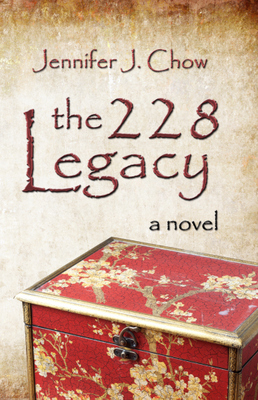
The 228 Legacy

The 228 Legacy

Three generations in an all-female Taiwanese family living near Los Angeles in 1980 are each guarding personal secrets. Grandmother Silk finds out that she has breast cancer, as daughter Lisa loses her job, while pre-teen granddaughter Abbey struggles with a school bully. When Silk’s mysterious past comes out—revealing a shocking historical event that left her widowed—the truth forces the family to reconnect emotionally and battle their problems together.

A novel of cultural identity and long-standing secrets, The 228 Legacy weaves together multigenerational viewpoints, showing how heritage and history can influence individual behavior and family bonds.

“An impressive debut!  Moving, hopeful and triumphant.  A compelling read.” -Jane Porter, national bestselling author of The Good Daughter

Six questions with Alon Shalev

Alon ShalevAlon Shalev writes social justice-themed novels and YA epic fantasy. He swears there is a connection. His latest books include: Unwanted Heroes, At The Walls Of Galbrieth, and The First Decree. Alon tweets as@alonshalevsf and @elfwriter.

_________________________________________________________

Welcome to Writerly Goodness, Alon!  Thank you for taking the time to answer a few questions for my readers.  I must say that I’ve been following you with great interest since we “met” through Author Salon and I became aware of your progress through last year’s Amazon Breakthrough Novel Award (ABNA).

WG: I know you’ve probably written a lot about this, but I must ask about your experience with the ABNA.  Some of my friends have expressed interest in the competition (or entered) and I’m sure they would love to know about the process of getting to the quarterfinals and how it contributed to your success with At the Walls of Galbrieth.

AS: I think ABNA is an amazing opportunity even if you do not win. It pushes you to finish and polish a manuscript, and prepare what is essentially your media kit. I have reached the quarterfinals with three different books and enjoyed the tension around it (I had my acceptance speech all worked out!). When you reach the quarterfinals, experienced people in the industry critique your novel. It can be tough, but you do learn a lot. Finally, there are many agents trolling the competition, so it is an effective way to avoid the depressing slush piles.

WG: Now The First Decree, the second novel in your Wycaan Master series has been published.  How was writing the second novel in your series different from the first and what did it teach you about yourself as a writer?

AS: The most significant difference is allowing for a story arc that gives a satisfying climax, but also extends tendrils into the next book. In fact, there is a similarity at the beginning, because you want to bring the reader who has not read your first book (or read it a while ago) up to speed without imparting a huge information dump or giving away too much from the first book. I found this very challenging and had a number of friends critique this aspect in order to find the right balance.

What I love most about writing a series is that I can really develop my characters. They have time to grow up and mature. Outside of writing, I am a devoted father (which is what got me writing epic fantasy in the first place) and work with college students. So I realize that I am imbuing this love for seeing young people grow and develop into my writing and, I think, only a series can allow for this.

WG: How did Seanchai’s story begin for you and how did it evolve? 

AS: Every summer, my family goes camping for two weeks in Northern California. After we had set up camp, my sons (then 11 and 7) went off to explore the campground and I whipped out my laptop. They soon returned and objected to me writing during family time and this was the compromise we reached. During the two subsequent years, I wrote The First Decree and Ashbar, and read a couple of chapters each night either around the fire or snuggled in my tent.

I realized that many aspects of Seanchai are a mix of both sons, and perhaps how I would like them to turn out.  My fears that I will not be there for them one day plays out as Seanchai is denied a parent or mentor so many times. But there is also the desire to cultivate deep friendships, which I believe is central to the values that both boys have, as well as dealing with teenage romance and pressure.

All my characters are now part of my family. When I killed one off, I cried. When I edited that chapter several times, I cried…several times! I often imagine conversations with them, counselling and encouraging them, as I strive to do for my sons.

WG: I’m a big process geek.  Would you share something about your writing process? 

AS: I am not a good person to ask. I plunge in and trust the creative juices. I usually finish a 100,000-word manuscript (a rough draft full of mistakes) in three months, writing an hour a day and more on weekends. I keep a contents page for myself to track chapters and a characters page where I add physical traits or history. I also have ongoing plot notes that are threads between chapters and stories. This is written at the bottom of the chapter I am writing and I cut and paste on from word doc to word doc and erase an idea after it is included.

In terms of workspace, my desk is in the kitchen and I can write on the train, bus, anywhere. Once the idea is there, everything flows. It is a truly exhilarating experience. My family would probably tell you that I am a bit crazy when in the creative process. If I do not have the time to write I can become somewhat cranky and have a propensity to talk about little else. I am constantly worrying about my characters and the danger or emotional turmoil that I put them in.

WG: I’ve been told by industry experts that traditional fantasy is a hard sell in today’s market.  Did you find this to be true and what are your thoughts on the genre’s continuing potential? 

AS: My marketing guru is John Locke (the author) and I am fastidiously following his business model. He says it is better to have a smaller, clearly defined target audience, than a larger, less identifiable one. I have more problems placing my social justice-themed novels than fantasy.

Fantasy readers are passionate, fun, social and happy to share opinions. They are on line and engaging their peers all the time. In addition, every movie – Lord of the Rings, Eragon, Hobbit, Harry Potter, Oz, Jack and the Giant Slayer – brings waves of new and eager readers. Parents, who want to encourage their children to read, will buy them the books that reflect these movies. As long as these movies are being produced, as long as there are great authors writing quality stories, I think the future is bright and I am thrilled to be a part of it.

WG: What’s coming up for you and The First Decree?

AS: Following John Locke’s model, I am very focused on writing and publishing. Ashbar – the third book in the series is scheduled to come out in the fall. I will finish writing Book 4 during the summer and then spend the rest of the year editing it before turning it over to my editors.

The new marketing reality is that we are in an age of instant gratification. You finish Book 1 and if you enjoy it you want the next and you want it now! How smart were Amazon with their 1-Click? There is so much social media that to keep your readers waiting a year for a book is dangerous if your name doesn’t end in Brooks, Salvatore etc.  The First Decree

Meanwhile, I continue to build my online platform through my weekly blog (www.elfwriter.com) and twitter (@elfwriter – 22,000+ followers). I spend a fair amount of time here and on Facebook (and just getting into Goodreads), and I truly love the interaction with fellow writers, readers and fantasy fans.

Thanks for sharing your time and expertise, Alon.  All the best for your future writing endeavours!

Thank you, Mel, for this opportunity.