The next chapter: August 2015 update

Ok. Let’s just get this out of the way. August sucked for writing.

I had every intention of writing when I was down in London, but I should have kept in mind the lesson I learned back in the spring. Mel + travel to deliver training = no writing.

Well, it wasn’t absolutely zero writing. I revised a short story and submitted it, and I revised my query letter based on feedback from Kristen Nelson (more on this in a bit), but that amounted to very few words.

As I’ve mentioned in other posts, delivering training, though I’m good at it, drains introvert me something fierce. Add that to travel, not feeling well for most of my time away, not being around home to help Mom with her first cataract surgery, and not being around my support system, and you have the perfect storm of non-productivity.

Plus, it was two and a half weeks away. That was a fair chunk of the month. I shouldn’t have been surprised.

Here’s how the month broke down (pun intended):
August progress

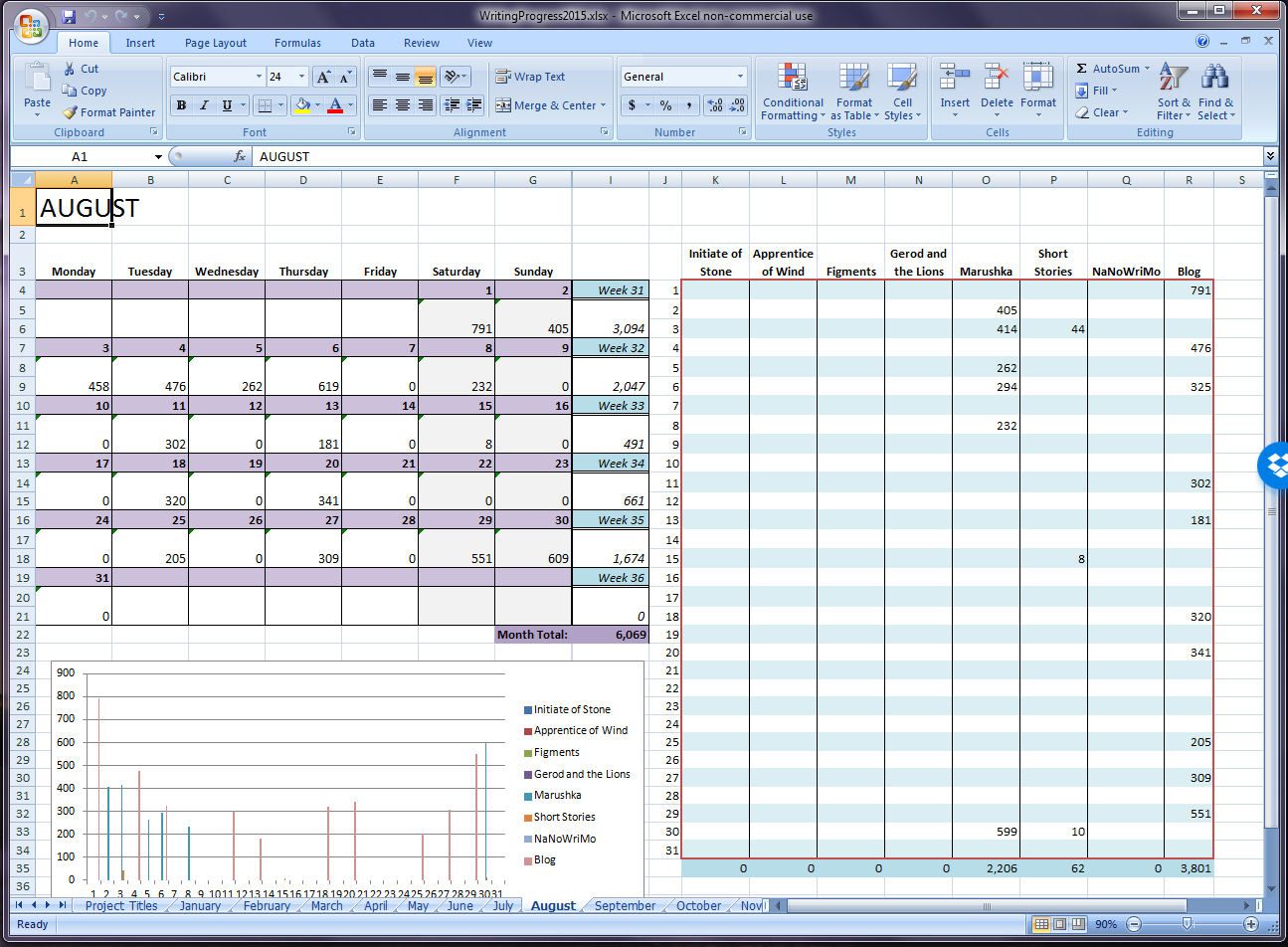
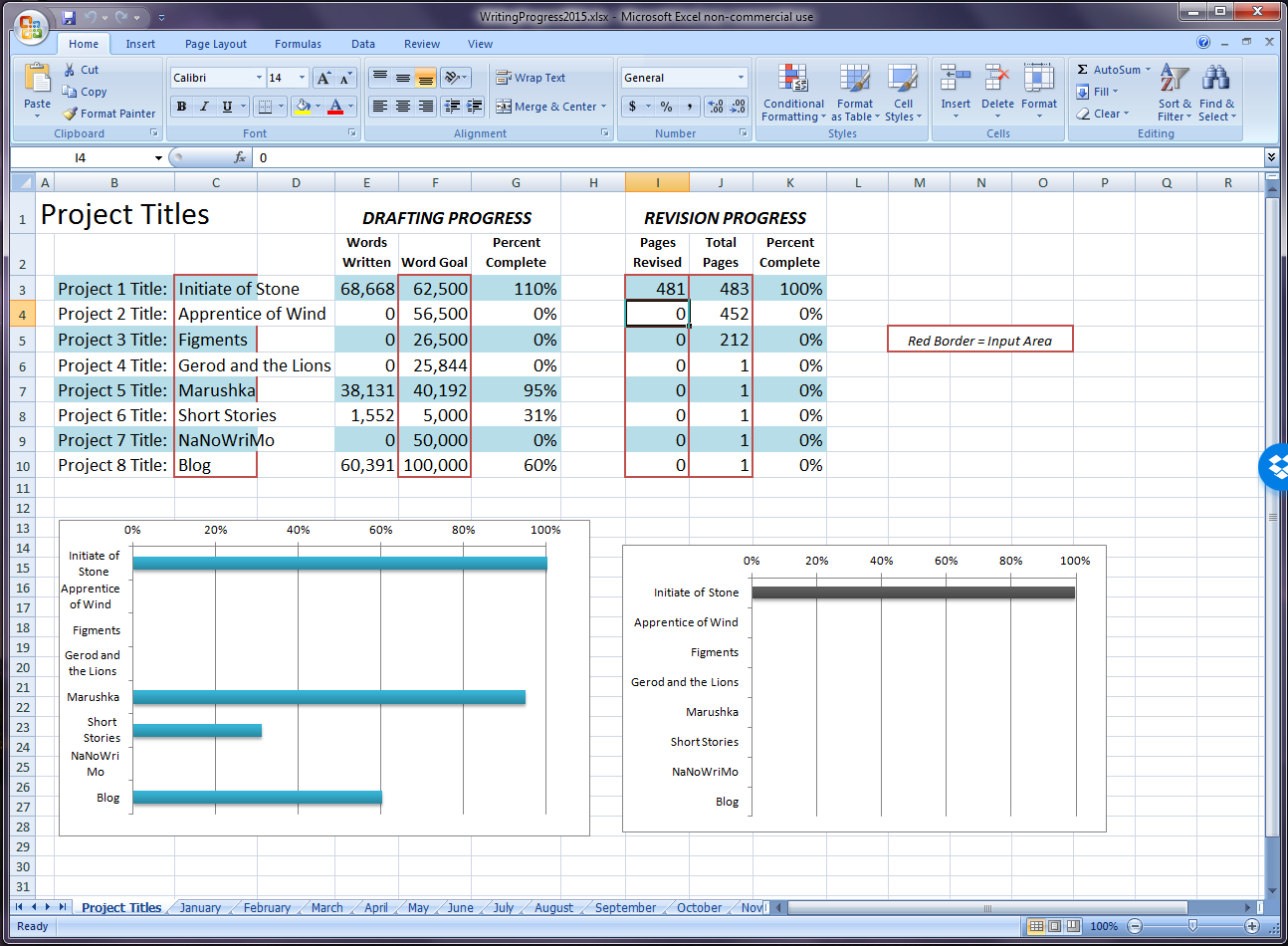
I drafted another 2,206 words on Marushka, but am still not quite at the end. I hope this month will see the end of the draft (at last). I am 95% toward my 75k word total goal for the draft, so that’s something.

I revised 62 words on short stories, only 8 of those while I was down in London. I sent two stories out and received two rejections.

I blogged 3,801 words, and I decided not to blog on the weekends while I was away. Ostensibly, this was to make it easier to write, but I’ve already mentioned how that went.

Total words for the month: 6,069. That’s my lowest monthly total all year.
August Summary

Other stuff I did in August:

When Roz Morris shared HodderScape’s open submission period, I had to submit Initiate of Stone. I’ve had no word, but I’ll definitely fill you in on the results.

Last year, I missed out on Kristin Nelson’s query letter intensive. It was that whole work thing, again. So, this year, I signed up, hoping against hope that my manager would find someone else to go to London in my place. It was not to be.

So I emailed NLA and advised that I would not be able to join the webinar. And Kristin offered to meet with me one-on-one when I got home.

That meeting took place this past Thursday and Kristin gave me some excellent direction.

Kristin was great, and though I think I was still a little fan girlish, I tried to make the most of the opportunity.

Yeah, I get star struck by agents. That’s the kind of geek I am.

So that’s it for my very unproductive month.

Rest assured, I’m back on track and aiming high.
The Next Chapter

Ad Astra 2015, day 2: An agent and a publisher walk into a bar . . . who do you approach first?

Yes, day 2 has finally arrived!

First, a reminder of my disclaimer

These posts are composed of my notes. Often, because of the scheduling, I enter sessions after they’re already in progress. I write by hand, so as I’m writing what I believe to be a salient point, I may miss the next one. I do my best to catch as much as I can, but things will be missed. Also, if, in my haste I recorded something incorrectly, please don’t be shy about coming forward and letting me know. I will correct all errors post-hasty once informed of them.


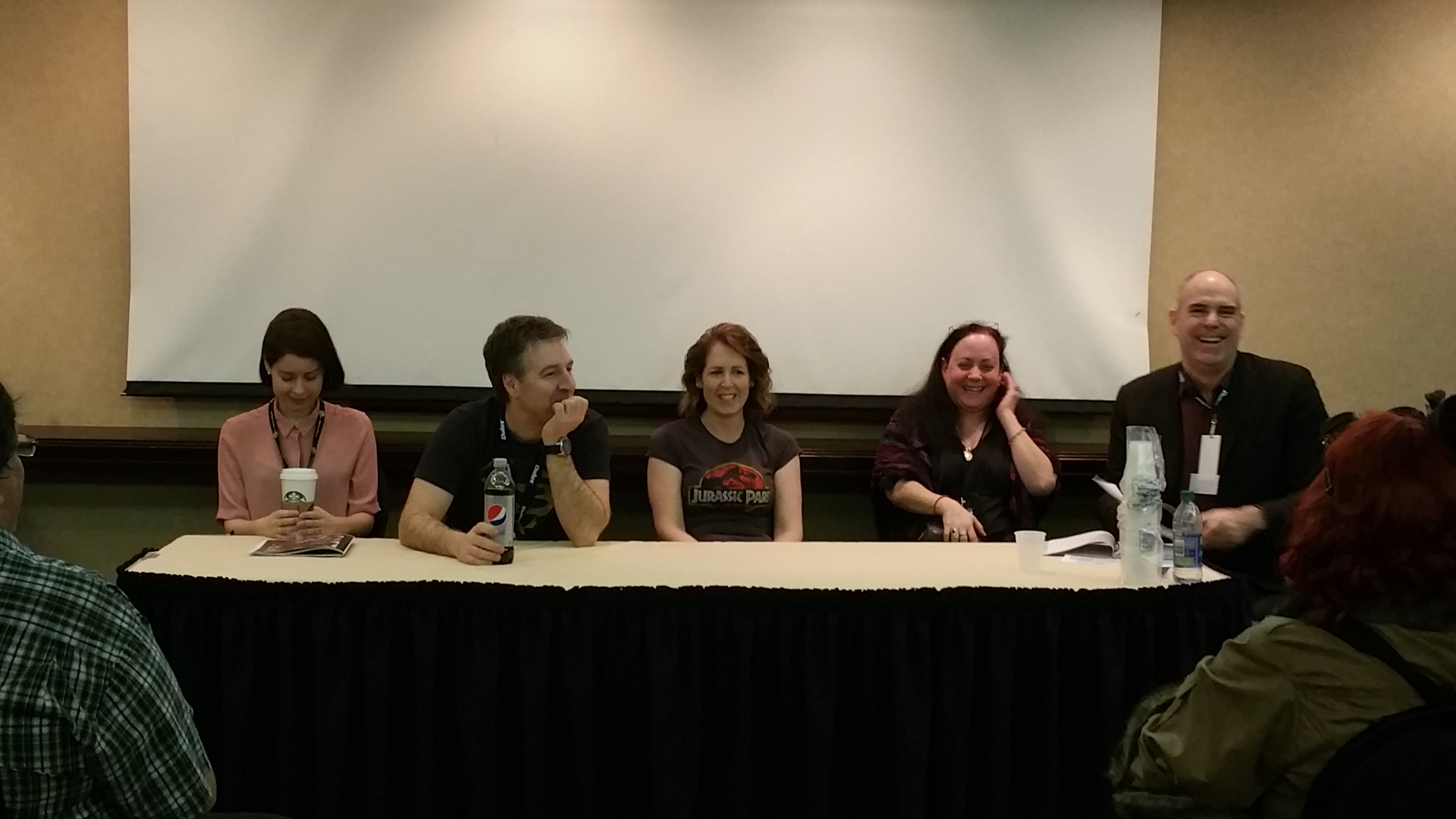
Panellists: Monica Pacheco, Ryan McFadden, Kelley Armstrong, Karen Dales, Mark Leslie

Agent or publisher panel

MP: By the time a book hits the shelves, it’s already 1-2 years old, so to speak. Don’t follow trends. What’s selling now won’t be what’s selling when your novel comes to market.

ML: Is it fair to say that trends are what’s currently selling, plus some kind of twist?

KA: I’ll reiterate: don’t write to trends. There’s no point.

KD: If you focus on what’s hot rather than what you’re passionate about, your readers will detect it. Readers can tell when you’re being disingenuous.

ML: I was at a conference and I pitched my idea for a book without having written it. Dundurn said yes, so I started writing in April. The book was published in October, so that will give you some idea how quickly things can come together.

RM: If I was at the “bar,” I think I’d hit on the other writers. Craft is more important than your ability to sell yourself. Writers will introduce you to their people. Those people can be some very valuable contacts.

KD: I’m working as a freelance editor right now and the way I came by the job was through pitching a publisher. I was talking to an author and asking where I should send my work in progress. The author suggested her publisher. I pitched, and not only was I able to get a contract for my WIP, but I also became an editor for them.

ML: Sometimes I might consider a market inappropriate for me, or a piece inappropriate for the project I’m working on, but for someone else, it may be a perfect fit. I remember working as an editor and having to turn down a great story because it wasn’t suited to the anthology. I recommended that the author submit his story to Writers of the Future. He did, and he won.

MP: We read everything in our slush pile. We’re looking for that gem, and we won’t overlook any submissions.

RM: Networking is everything.

KD: If you’re working with a freelance editor, research them. Develop a relationship. If you’re working with an editor who works with a traditional publisher, it’s different. The money the publisher is willing to invest can change the dynamic.

KA: When you work with an editor for one of the big five houses or their imprints, it’s more important to be aware of what the publisher’s guidelines and preferences are. The individual editor may be gone by the time your book is printed.

ML: What are the differences between Canadian, UK, and US markets?

KD: Canadian and UK publishers are more consistent. In the US, I’m all over the place.

ML: In one instance, the managing editor gave me notes before I even started writing.

KD: The editor has to be an advocate for the author.

KA: Networking, as mentioned, is great, but don’t get sneaky about it. Don’t invite me out to coffee just to get a recommendation, or to ask me to read your manuscript.

KD: Don’t go fishing. Go make friends.

ML: Look at the long game.

MP: So much of the industry is based on relationships.

KA: Don’t do anything electronically that you wouldn’t do in person. Having said that, if someone asks you what you’re working on, be honest. Talk about it positively.

MP: The bottom line is to be professional. Don’t self-denigrate. No scented paper or bribes, please.

Q: Do different publishing houses have different quirks?

ML: Dundurn loves Canadian authors. In fact, you have to be Canadian to be published by Dundurn.

KD: Dark Dragon is interested in good storytelling. They like unique stories and voices.

KA: HarperCollins does amazing covers for their young adult books. Penguin random House is all around great. There was a poll in The Bookseller. Are authors happy with their publishers? The overwhelming response was that they wanted more communication from their publishers. 37% said that if they got an equivalent—not better—offer from another publisher, they’d switch. Subterranean Press is good.

RM: Smaller publishers are better at communicating with their authors. ChiZine, Dragon Moon, and Dark Dragon are like that.

MP: Tor is a dream to work with. Skyhorse Publishing is a good mid-sized, non-fiction publisher. Talos Press is interested in SFF. Simon & Schuster Canada has been very good to Andrew Pyper. They’ve sent him on a national reading tour.


And that was that.

Next week: What happens after acceptance?