Exposing my essentials with the DIYMFA Launch Team

How’s that for a provocative title? As Geroge Takei would say, oh, myyyyyy!

So here was week 12’s prompt:

QOTW 12: What Are Your Essentials?

You don’t need to own every book in the world, but there are some essentials that every writer should have on his or her shelf. Today, I want to know: What are your essentials? What are your go-to “read like a writer” resources?

content_QOTW-12

Okay, and here I defect to another of my writerly mentors, K.M. Weiland. Kate wrote this post back in 2014: the ten commandments of reading like a writer. I’d start there. But then, I’d grab a paperback of Jane Eyre: Writer’s Digest Annotated Classics. You won’t really be able to get the most out of it with the ebook version.

Kate, in analysing and annotating Jane Eyre for WD, shows you how to read like a writer. And, she gives you worksheets and questions, and—well, let’s just say I learned a lot from this book 🙂 I reviewed it, too.

Another a-MA-zing (and yes, you heard the angels singing on that capitalized MA) resource is her Story Structure Database. In each entry, a different novel or movie is analyzed in terms of story structure. Most entries Kate writes herself, but some are submitted by readers. Treasure trove.

And that, my friends, is all you’ll ever need to help you dissect a story with your big, squishy, writer brain.

Essential writing craft books:

Anything by Donald Maass

Anything by Natalie Goldberg

Anything by Ursula K. Le Guin (she’s written a lot about writing—LURVE!)

All the Nail Your Novel books by Roz Morris

Outlining your Novel and Structuring your Novel, plus both workbooks by K.M. Weiland

Page After Page and Chapter After Chapter by Heather Sellers

Take Joy by Jane Yolen

On Writing by Stephen King

The Right to Write by Julia Cameron

Self-editing for Writers by Browne and King

The Artful Edit by Susan Bell

Sometimes the Magic Works by Terry Brooks

Adventures in the Screen Trade and What Lie did I Tell? More Adventures in the Screen Trade by William Goldman

Story by Robert McKee

I think I’d better stop there. I have to confess to being a writing craft book junkie. It’s half of my informal learning on the subject 🙂

As far as novels and stories that I read . . . egads, I have five shelves full in my office alone. You don’t want to know how many Rubbermaid tubs I have in my basement (cause I don’t have room for them anywhere else). And don’t get me started with ebooks.

In short, I read everything. Most of my reading will be in my chosen genre, but even so, I try to alternate YA and adult fantasy, and different sub-genres of fantasy. I read classics, historical fiction, the occasional mystery and even romance novels. I read literary novels, science fiction, and the occasional horror, though I can’t confess to loving that last. I read thrillers, though I don’t enjoy them as much as some of the other genres I read. I’ll read short stories, but again, they don’t tend to be my favourites, at least so far.

I try to learn something from everything I read.

I also do the nutty and read multiple books at once. I’ll even listen to them on Audible while I walk, or work at something non-noisy, like stripping and refinishing stuff. I usually have to pause for the sanding bits, though 😀

I can’t even list my favourite authors anymore without filling a page.

And since I read so much, I have to be selective about the books I review, because I’d really rather be working on my WIPs. You know, day job and all.

So that’s Mellie’s wild world of reading.

See y’all tomorrow! Have a lovely, warm summer night!

Catching up with the DIYMFA Launch Team

Since I was away last weekend, I have a leetle catching up to do. So you get twice the DIYMFA QotW this week.

Let’s start with the week 11 prompt:

QOTW 11: What’s Your Favorite Supporting Character Archetype, and Why?

As you already know, at DIY MFA, we’re big on archetypes. We’ve talked about protagonist archetypes and supporting character archetypes on the site and podcast. We even created our Storytelling Superpower quiz by understanding what different protagonist archetypes want (and how that want drives the story). This week, I want you to turn your attention to the supporting cast. What’s your favorite supporting character archetype and why?
Muse-inks

We’ve established previously that my storytelling superpower is the Protector. All of my protagonists are trying to protect, or save something. Interestingly, I think they all start out as survivors and make the transition to protector. Check out Gabriela’s Storytelling Superpower video series (it’s free!) to find out more 🙂

I’ll approach this by going through each of my WIPs and look at who I’ve written by way of supporting characters. I’ll also limit it to the main supporting characters. For example, my epic fantasy has a lot of characters. It’s the nature of the beast; so I’ll do y’all the favour of not covering all of the supporting cast members.

By the way, I’ve based my assessment on the 12 character archetype system. I know there are a lot more potential archetypes out there, but I, like Gabriela, wanted to keep it simple 😉

Interestingly, these are mostly groupings of three (protagonist + 2 supporting characters). Nice how I managed to get the whole power of three thing without even thinking about it (!) If you want to find out more about the power of three, check out the DIYMFA book, coming soon!

Initiate of Stone/Apprentice of Wind

Protagonist: Ferathainn Devlin. She’s an uninitiated mage from whom war takes everything. She starts out wanting to take revenge on the man she believes to be responsible, but when she realizes there’s more at stake, like, the fate of her world, she has to choose between revenge and sacrifice.

Eoghan: Eoghan doesn’t fit neatly into one archetype. This is because he is physically transformed over the course of the first novel.

He starts out as an innocent, a postulant monk living in a dormitory with a bunch of other orphans, waiting to be called to serve. His much older brother, a priest, is accused of, and executed for, heresy. Eoghan is exiled, and then the goddess Auraya calls him to become her Kas’Hadden, her hammer of light. That’s where the transformation comes in.

On his way, though, fleeing the destruction of war and trying to help the wounded and dying left in the wake of it, he finds Ferathainn, apparently dead. He decides to make her his last stand. He will save her no matter what. And he does, though it involves months of care to nurse her back to health. So he becomes caregiver.

And once Auraya insists, he finally goes to her where she waits, at the Well of Souls, and she transforms him into her holy warrior, her hammer of light. And he becomes a hero/warrior. He has been made to spare his goddess the indignity of murder.

Dairragh: Dairragh transforms, too, though not in the same way as Eoghan. He starts out as the son of an aging lord, eager to prove himself and inherit Gryphonskeep and its lands. He’s been taking care of things in all but name for years now, and is impatient for his father to recognise that he is worthy. He is the ruler without anything to rightly rule.

After Gryphonskeep is destroyed, his father killed, and the gryphons slaughtered, he is taken in by the anogeni, the hidden people, and through their influence, he learns shamanism.

When he meets Ferathainn, Dairragh is becoming the magician.

Figments

Protagonist: Charlene Kalveras (Chas). Chas has been pretty messed up since her father was murdered. Depression and nightmares have yielded to insomnia. When she starts to see things the other kids can’t, she’s worried she’s had some kind of psychotic break. When her figments turn out to be real, though, she discovers a whole other world, and truths about herself and her father that she could never have suspected.

Chas is a protector-mage, an hereditary group of magic-using humans devoted to maintaining balance between Earth and Regnarium (think Plato’s world of ideals mashed up with Jung’s universal unconscious—crazyworld of myth, fairy tale, and, of course, gods).

Ben: Ben is one of Chas’s two best friends. They’ve known each other all their lives. He’s an athlete and a beautiful brown boy who’s smart enough to get by without studying and has developed an unrequited crush on Chas. She’s just been so damaged since her dad was killed, he can’t help himself. He wants to fix things for her.

Though there are shades of the caregiver and lover in there, Ben’s pure everyman. He’s the realist. He keeps Chas grounded.

Finn: The other of Chas’s life-long friends, Finn, might seem to be another everyman. Every person? Whatever, that’s not her. She’s perfectly average, in most respects, but she has a secret fondness for dreams and dream interpretation. Finn also has no internal censor. She says everything she thinks and has to really struggle to be polite sometimes.

When Chas finally reveals what’s happened to her, Finn is on board. She is the creator, the visionary. It’s no surprise to any of them that she has some of the mage-blood in her family, too.

To make the dynamic of the threesome just a little more problematic, Finn’s crushing on Ben, and Chas is aware of the awkeird love triangle but she doesn’t feel anything romantic for Ben and wants nothing more than for Ben to shift his moony gaze to Finn.

Marushka

Protagonist: Marushka. She’s a weirdo, but anyone would be, in her place. Stolen at birth by Baba Yaga (who then ate her mother—shudder), she’s lived in Baba’s sentient hut, Khizhina (literally, hut), all her life. She has no idea how old she is and aside from a few adventures into the normal world to attempt to go to school, or get some books to read, she’s never left Khizhina. Until, that is, Khizhina tells her she has to take Baba Yaga’s place.

Khizhina has mercifully segregated Marushka from her horrid kidnapper/captor, who regularly dines on young, homeless people. Marushka can’t bear the thought of becoming a cannibalistic hag and runs away.

Out in the world, though, she learns she can’t escape her destiny. First, her latent powers begin to express themselves. Second, a patriarchal shadow organisation, bent on destroying goddess-power and subjugating all women for all time, targets Marushka and tries to take her out of the game before she becomes the next Yaga.

She’s socially awkward and doesn’t make friends.

Declan Russell: Declan’s parents decide to foster Marushka. He’s never met anyone like her before and is pretty much instantly smitten. He’s a computer geek/gamer-boy, loves death metal, and is a brown belt in Aikido. His younger sister, Cindy, is the pain in his ass.

In a home invasion and arson (an attack by the shadow org) Declan’s family is killed and only he and Marushka are rescued. Kind of. They’re not allowed to go out, even to the police. Marushka’s birth father, Alex Solomon, who led their rescue, calls it protective custody.

Who the heck is this girl?

He’s the lover.

Yuki Oshiro: Yuki is the Matriarch of the Oshiro family, one of a number of Old Families who have been tasked with the preservation of goddess-power and women’s agency in the world. Her mother actually represents the Oshiros on the Matriarch Council, because boring, and because Yuki would much rather have boots on the ground. She has to be doing something concrete and meaningful. She leaves the political manoeuvring to the Council.

When Marushka suggests a clandestine invasion of the shadow organisation’s stronghold, Yuki can’t resist. Now if they could only dump the kid . . .

Yuki’s another hero/warrior.

This one’s not such a neat grouping. Marushka’s constantly moving, constantly changing circumstances, from Khizhina, to a Children’s Aid Society group home, to foster care, to her (surprise-surprise) birth father’s other family home, and then finally to the Oshiro’s. She doesn’t have a lot of time to make friends, not that she’s any good at it. Declan attaches himself to her, and, after the Russells are killed, Marushka feels responsible for him.

Another attack happens while Marushka and Declan are with the Solomons and after Marushka manages to save them, Yuki, who’s been on patrol, takes them to her family’s home. Yuki’s a bit of an odd duck herself, and so she kind of likes Marushka. That whole goddess thing—bonus. Until Declan proves himself, which he does, she’d as soon turn him over to the CAS.

Reality Bomb

Protagonist: Brenda O’Connell. Brenda is a PhD candidate in physics and astronomy who becomes aware that a fellow candidate, Simon, is attempting to prove that time travel into the past is possible. She tries—and fails—to stop him resulting in the destruction of their reality and the relocation of her consciousness into her alternate self in another reality, nearly a year in the past.

Her alternate self is nothing like her and Brenda has no idea how she’s going to make her situation known to her other self, let alone how she’s going to try to figure out if Simon’s alternate self is heading toward the same disastrous experiment in this world.

B2: This is another weird one. Brenda’s alternate self is in the fashion design program at an art school co-located with Brenda’s university. She’s a cool girl, fashion whore, hard partier, and pretty much everything Brenda’s not, including straight (!)

When Brenda finally is able to make contact, B2’s first reaction is to think she’s insane. Understandably. They fight each other over everything, initially, but eventually come to an uneasy understanding. Brenda can’t do anything without her alternate self.

Over time, they start to influence each other—until disaster happens.

B2 is the explorer/hedonist. Truthfully, Brenda’s a little repressed. She needs B2’s influence.

Morgan Estys: Morgan was the woman Brenda was in love with in her reality. In the alternate world, she’s in the journalism program, and the key to uncovering Simon’s secret lab where he is trying to prove that time travel into the past is possible.

Morgan is the sage.

Gerod and the Lions

Protagonist: Gerod Tucker. Gerod is the youngest boy and the second youngest child of the very large Tucker family. His father, Old John, values strong hands and strong backs, neither of which Gerod possesses. He’s small for his age, not that anyone knows what that is, and makes it his business to try to take care of his family, who all work on Lord Somber’s land and estate. Still, the Tuckers are destitute.

It’s a lean year, and the Child Merchants always come in lean years to buy the ‘surplus’ children of the poor and sell them to the noble families and merchants in the big cities, far away.

Gerod’s been working on a plan, and a hiding place for himself and his little sister, Annabelle, but the Child Merchants come to his village before Gerod is ready, and when Old John sells Annabelle in Gerod’s absence, Gerod chases after the Child Merchants, determined to rescue his sister.

Unfortunately, by himself he can’t fight the large and well-armed Child Merchants. In desperation, he attempts a night rescue, but the cries of the frightened children alert the Child Merchants, sending Gerod running, pell-mell through the woods, into an enormous tent, and right into the paws of a lion.

Maisy: Maisy is the lioness whose enclosure Gerod stumbles into. Prior to her capture in her distant home, Maisy was the queen of her pride, and proud mother of many cubs. A rival fought her and beat her, killing her cubs and driving her out of the pride. She doesn’t mind being in a cage so much. It saves her from having to think about her home and her poor babies . . .

She quite likes this furless cub that fell into her cage. He understands her. He can speak to her. She thinks she’ll keep him.

Maisy is another caregiver, a mother-figure who will actually defend him.

Brawn: Brawn is the lion-tamer of Melchior’s Arcadia of World Oddities. Maisy is his best girl and the one he performs with most for the villagers who come to see them. He also has Tefta and Neruk, but those lionesses belonged to royalty and have never taken well to training. When he sees a boy in the cage with his Maisy, he knows the child must be something special and he’s not disappointed. He brokers a deal between Gerod and Master Melchior. The Arcadia will help Gerod find his sister and get her away from the Child Merchants if Gerod will perform with the lions.

Brawn is a mentor, another kind of caregiver.

So I think the caregivers have it, followed by the hero/warrior.

I wouldn’t say I have a favourite character archetype. As a plantser (combination plotter and pantser), everything starts with the characters for me. I start with my protagonist and the other supporting characters just seem to appear around her or him as the story world forms around them. And then I make bad things happen to them, muwahahahahaha!

I’ll be back in a few with QotW #12!

Tomorrow: Ad Astra 2016 reportage continues with ‘How to get an agent,’ and I’ll have a long overdue post of the home and garden variety 🙂

Guest Blog: Orlando: one Canadian’s perspective, Melanie Marttila

I was encouraged by a blogger friend and fellow Mel to post my thoughts on Orlando. Many thanks to Mel Walsh Jones of Mel’s Madness for the nudge.

Thoughty Thursday: Things that made me go hmmmm on the interwebz, June 12-18, 2016

The tragic news of the week was, of course, the Orlando mass shooting. And all of them are writerly types . . .

CIA undercover. Powerful message.


Will your job go extinct? Janet McFarland lists all the prospects for The Globe and Mail.

An estimated six million Canadians live in isolation. Social researchers are now calling it a hidden epidemic. Andre Picard for the UC Observer.

Forest bathing’ embraces the healing power of trees. CTV News.

Laser technology reveals cities concealed under the earth which would have made up the world’s largest empire in 12th century. The Guardian.

The Heraldic College of Arms includes rules for same sex couples.

13 untranslatable words that reflect the complexity of love. CBC.


A dying star metamorphoses into a butterfly. Phil Plait for Slate.

White curtain auroras over Finland. Design you trust.

The Public Domain Review features the Compendium of Demonology and Magic (c. 1775).

The unbelievable tale of Jesus’ wife. Ariel Sabar for The Atlantic. And for balance, Karen King responds to the unbelievable tale of Jesus’ wife.

It’s all good.

See you on the weekend for some DIYMFA catch-up 🙂

Thoughty Thursday

Tipsday: Writerly Goodness found on the interwebz, June 12-18, 2016

Your writerly goodness for the week.

Most common writing mistakes, part 51: one-dimensional characters. K.M. Weiland. Helping writers become authors. Kate returns with these eight tips for editing other writers’ work while remaining friends. And . . . for the hat trick: grab readers with a multi-faceted characteristic moment.

Writing “linked novels,” a series of standalones sans spoilers. Katy Rose Guest Pryal on Writer Unboxed.

Cassandra Khaw is vexed about voice. Terribleminds.

Kristen Lamb explores using time as a literary device.

Angela Ackerman guest posts on Writers in the Storm: how to deliver critical backstory using setting.

This is where I was last weekend: Mark Medley reports on the Canadian Writers’ Summit. The Globe and Mail.

I’m also a professional member of the CAA, so here are a couple of CWS bits of news relating to the CAA literary awards (which were presented there):

Alexis Daria covers the do’s and don’ts of querying your novel. DIYMFA.

Janet Reid warns against shopping an offer. And over on Query Shark, she posted no, no, and no.

Kameron Hurley engages in some real publishing talk: author expectation and entitlement.

Choosing the best categories for your book sales on Amazon. BookBaby.

Ceridwen Dovey wonders if reading can make you happier. The New Yorker.

Misc Magazine: The future according to women.

The Heroine Bookstore interviews A.M. Dellamonica.

John Glover writes about the life and afterlife of horror fiction on Postscripts to Darkness.

J.K. Rowling’s Harvard commencement speech.


Now it’s time to get writing 🙂

Tipsday

Thoughty Thursday: Things that made me go hmmmm on the interwebz, June 5-11, 2016

The Stanford rape case was all over the interwebz last week, as were the stunned reactions.

Jessica Valenti remembers her life as a sex object. The Guardian.

The rebel virgins and desert mothers who were written out of early Christian history. Alex Mar for Atlas Obscura.

Mallory Ortberg presents gleeful mobs of women murdering men in western art history. The Toast.

Hazel McCallion says, ageism is getting old. The Globe and Mail.

Adam Grant: unless you’re Oprah, ‘be yourself’ is terrible advice. The New York Times.

Teen suicides in Woodstock, Ontario prompt discussion of the effectiveness of anti-bullying programs. CBC’s The Current.

Iona Sharma: ‘A’gailleann’: on language-learning and the decolonisation of the mind. The Toast.

We learn more about our language by listening to the wolves. Holly Root-Gutteridge for Aeon.

John Beckett shares the reasons why he thinks the otherworld is bleeding through. Patheos.

Wow. Look at this self-sustaining community (Now This):


Indigenous communities are teaching scientists about nature. The comment that accompanied this article when shared by a friend: it took them this long to figure it out? Vox.

Gene drive therapy may be used to fight malaria. NPR.

Scientists discover a new cat species roaming Brazil. Monga Bay.

Oh, that’s what those bright spots on Ceres look like. Phil Plait for Slate.

Maryana Kopylova makes these alien toys. Space kittehs! Whatever, they’re cool. Brainberries.

This is Colossal shares Kevin Peterson’s hyperrealistic paintings of children and animals exploring urban remains.

ASAP Thought shares five ways to reduce mental health stigma.


Liz Fosslien and Molly West share six illustrations that show what it’s like in an introvert’s head. Susan Cain’s Quiet Revolution blog.

You’ll feel better at work with these two-minute habits. Robin Madell for The Business Insider.

This makes me happy 🙂 Pharrell Williams offers a masterclass to students at the NYU Clive Davis institute.


And . . . if you like lovely folk harmonies, you’ll want to watch this documentary of Dala’s tour to Alaska.


There is no light without the darkness and no darkness without the light.

Be well until next week.

Thoughty Thursday

Tipsday: Writerly Goodness found on the interwebz, June 5-11, 2016

June already? OMG! Where has the year gone? Oh well, console yourselves with some writerly goodness.

C.S. Lakin explains how writers can bring setting to life through personification. Live, write, thrive.

K.M. Weiland: how to write the perfect plot (in two easy steps). Helping writers become authors.

Chris Ebock teaches us how to develop a great story in three (or four) steps. Fiction University.

Chris Winkle shares seven rules of effective prose. Mythcreants.

All the world’s a book: acting for writers. Allie Larkin on Writer Unboxed.

Write about inner demons without boring your reader into a coma. I love Kristen Lamb’s sense of humour 😀

Chuck Wendig’s inimitable writing advice: what exactly makes a damn good story? Terribleminds. Now when this was shared on the listserv of one of my writing associations, the following was quoted: “A man catches a fish isn’t much of a story, because his problem isn’t a problem.” And responded to: erm, Old Man and the Sea? Moby Dick? Yeah, well. Read it in context.

With Pooh’s demise last year, I’ve been missing the distinct feline voice in writing craft. Welcome Harper Hodges to The Write Practice: Seven steps to write more.

Emily Wenstrom shares some marketing magic with the seven points of contact for authors. DIYMFA.

Janet Reid offers her thoughts on this question: so, how do you know if you’re a good writer?

Susan Spann offers a warning about non-disclosure clauses on Writers in the Storm.

A.J. Hartley: writing people of colour as a white author. Tor.com

Stephen Burt reviews Catherynne M. Valente’s Fairyland series for The New Yorker.

Kim Fahner shares some of the things she learned at the Alice Munroe Festival of the Short Story.

Kameron Hurley shares an excerpt from The Geek Feminist Revolution on the Tor blog: what are you fighting for?

Chimamanda Ngozi Adichie at the Girls Write Now awards ceremony: fuck being likeable. Jezebel.

Dear broke reader: your sense of entitlement is killing me. Sarah Madison.

The British Fantasy Awards shortlists are revealed. The Guardian.

The Sunburst Society releases its 2016 longlist.

Ken MacLeod for Orbit Books: Is science fiction past its sell-by date?

Molly Mcardle interviews Daniel José Older for Brooklyn.

X-rays reveal 1,300 year-old writings inside later book bindings. The Guardian.

The 1,000 year-old manuscript of Beowulf has been digitized and is now available online. Open Culture.

Shakespeare and the supernatural.


Benjamin Dreyer annotates Shirley Jackson’s sublime first paragraph in Hill House. Signature Reads.

Lisa Rosman asks, can a movie about editing be Genius? Signature Reads.

Jamie prepares for the battle of Prestonpans on Outlander. Vanity Fair.

Until next week, cheers!

Tipsday

Ad Astra 2016, day 2: Publishing today—old models, new models, and hybrids

Disclaimer: I’m not perfect and neither are my notes. If you see something that needs correction or clarification, please email me at melanie (dot) marttila (at) gmail (dot) com and I will fix things up, post hasty.

Note: I attended the David G. Hartwell memorial panel first, which was lovely and funny and touching, but not the kind of thing one takes notes about.

PublishingPanel

Panellists: Brett Savory, Sandra Kasturi, Ed Greedwood, Tom Doherty, Mark Leslie

SK: There’s been a lot of change in the industry and some “Chicken Little” doom saying. We’re finding our way.

EG: There are so many options now. Historically, traditional publishing or print self-publishing were the only options for the serious author.

TD: What it’s all about is story. How can we make the story the best it can be? How can we get these stories to the reader? J.W. Campbell was “the” editor for short fiction. Tor now has a novella program. In 1996 we had four hundred and some distributors in the US. Changing models for product wholesalers have meant the loss of book distribution networks. We were back to 1939 for a while. Every pharmacy, airport, and grocery store now has a fiction rack. There’s a lot of competition for the brick and mortar book store, chain or indie. New models for distribution and sales are emerging thanks to the internet.

ML: One of the things I like about digital publishing is that we don’t need three hundred pages bound in cloth.

TD: How do we get new readers? If you don’t or can’t put books where readers are, how do we put a book in their hands? Tor.com reviews movies and television as well as books as a means of attracting readers to the brand.

SK: ChiZine is a small publisher. We have a small publishing budget. HarperCollins used to handle our distribution, but they stopped. If anyone tells you they know the secret to marketing, they’re lying.

ML: You started ChiZine because you wanted to publish the books you wanted to read.

BS: Something like 50 Shades of Gray or The DaVinci Code, we’d like to think we’d stay away from, but if something like that came our way, we’d totally publish it. We need commercial successes so we can fund the outliers.

ML: How does Tor approach it?

TD: You have to have great creative people and you have to let them write what they love. The Gears wrote The People of the Wolf. Their books are archaeology and anthropology, but they’re also speculative fiction in our opinion. Forge focuses on near future science fiction and military thrillers. Science fiction has a pejorative reputation. The classic first contact story can also reveal sociological impact and insight.

SK: We’re fascinated by genre ghettoization, even intra-genre. In our experience, dark fiction isn’t just horror. Dark fiction writers get it out on the page. Writers who keep that darkness inside can get messed up.

ML: Is it all about the story?

EG: The Ed Greenwood Group is not going to compete with Tor, who’ve cornered science fiction and fantasy, or with ChiZine, which is more of a literary press. I wanted to do something I remember from my childhood. I used to fall in love with the setting, the story worlds I discovered through reading, and I created my own stories to go with them. So now I have the Hellmaw universe, which is dark urban fantasy. I have story universes for epic fantasy, space opera, hard science fiction. For each setting, we’re creating music, short fiction, art, novels, and follow up stories (like a coda). We will never let things go out of print. If an author wants to stop writing, or dies, there will always be other authors writing in the milieu. We’re an alternative, not competition.

ML: Is there more collaboration?

EG: The potential is there. Each world has its own lore guardian and art director. Fanfic is not verboten, but a TEGG book is a TEGG book. We’re developing a sandbox area for creators to play in.

ML: Where does a beginning writer fit in?

TD: Tor has been publishing new authors for a long time. Brandon Sanderson’s first book was Elantris. Moshe Feder is his agent. They met at a convention.

SK: ChiZine is open to new writers from August to January through the Writers’ Reserve program. I don’t ever want to be above the slush. There are a lot of talented people out there.

BS: Everything that we published has been edited by one of us. It’s an insane amount of work, but we’re still about 10% of the scale of Tor.

EG: David G. Hartwell chased me for seven years to get my last book. It took seven years to get into print.

TD: We buy more from agents because they screen for us.

SK: I pass on the experimental stuff to Brett.

ML: Kristine Kathryn Rusch and Dean Wesley Smith do the Fiction River Anthologies. I joined their panel for one of them. Each editor comments on each story. It’s amazing to see the variety of reactions. One editor will say, ‘This is the best story.’ The next will say, ‘I couldn’t get past the first page.’ Self-publishing has exploded, but 80% of the industry is still print-based. Publish-on-demand can fill the gap, but there’s no distribution.

SK: It really makes a difference. 90% of our books have had missing information, or misinformation on their Amazon listings. Gemma Files’ Experimental Film was out last fall. Amazon finally has it in pre-order.

EG: Amazon wants to go 100% epublishing, but print is still a thing. They’re saying ‘no’ to 80% of their market. What about outside the US?

SK: One thing epublishing has done for us is that we can re-issue novels where the rights have reverted to the authors.

Q: Publishing has changed over the last fifty years. Attention spans are shortening. Is this why serialized fiction is coming into fashion?

TD: Series have always been important. In a series, the characters become friends. It’s an advantage, but not a necessity. There are stand alones. I have a quarrel with literary fiction. Up to five hundred yers ago, everything that lasted was fantasy. Dickens was reviled for being too popular.

Q: Podcasts and transmedia works, are they the responsibility of the publisher?

SK: We’d love to do all the things, but we can’t. We have to network.

TD: Tor has a contract with NASA because they feel that science fiction brought young people to science. They have a massive education project. We are trying to reach a broader audience.

And that was time.

Next week, I’ll be taking in more writerly goodness at the Canadian Writers’ Summit, so I will be taking a brief blogging vacation. We’ll catch y’all up over the weekend of the 25th/26th when I’ll be presenting my notes from the how to get an agent panel 🙂

Embracing zero

This week’s prompt:

QOTW 10: Embrace Your Zero Moment

The hardest step in your creative development is the “zero moment,” the point where you go from doing nothing to doing something. The distance between the zero moment and being a newbie is far greater than the distance between newbie and pro, yet rarely does anyone celebrate this pivotal, important step.

Today, I want you to celebrate. Think back to your zero moment and do something to celebrate that incredible leap of faith. Maybe your zero moment was ages ago and you’ve forgotten all about it. Maybe you’re in that moment right now. Regardless of where you are on your writing journey, I want you to pause and celebrate that enormous first step that brought you to where you are now.


I’ve actually written about this before, but it’s been a while, so this will be a good refresher.

So . . . I was deep in my agnostic writer phase, post-MA.

What’s an agnostic writer, you ask? Exactly what it sounds like.

The angsty version: I hoped this thing I wanted for myself (writing) was out there, but I didn’t know for sure. I’d written before, fairly regularly, even, but the MA had shaken my faith and self-confidence so much that I had serious doubts as to whether I had what it takes to find it again. What if I wasn’t worthy (as certain people had suggested)?

The funny/grounded version: I couldn’t get my ass to believe in the existence of the chair long enough to sit down and git ‘er done.

I felt the need to write within me, but I also felt fear and the fear was bigger than the need.

It’s not like I didn’t write during this period, but there are only so many times you can rewrite the first fifty pages of a novel. Story ideas stayed largely buried in the pages of my journals. Every time I sat down to write one of them, the words seemed unequal to the task.

It wasn’t the words that were unequal.

I joined the local writing group. I started to attend workshops.

And then, Nino Ricci came to town for a weekend workshop. For those of you who may not know, Nino is a big name, award-winning, Canadian literary author. Part of the weekend was workshopping our stories, the other part was a series of informal talks in which he shared his thoughts on drafting, revision, process, publication, and other aspects of the writing life.

The pivotal moment for me was when he shared his struggles in graduate school when his advisor was a legendary Canadian literary author.

His experience mirrored my own.

I wasn’t alone.

After that workshop, I sat in the chair. I wrote my words. At first, I was happy if I could write anything, even a sentence or two. Some days I faltered, but I worked up to a page a day. Then I wrote two a day.

At the end of a year, I had the first draft of my first novel.

More writing workshops, conferences, online critique groups, and I had a revised draft. I started writing short stories again. I tried NaNoWriMo. I started tracking my writing progress.

Now, I’m a writing machine 🙂 I have six novels drafted and I’m working on revising them. I’m querying my first novel. Two of my science fiction short stories have been published in paying markets.

And it all started with someone sharing his hardship.

That’s why I share my story. If I can help one writer the way Nino Ricci helped me, I am happy to show my tender belly. Every writer has been there. You are not the only one.

Please raise a glass to the zero moment. We each have our journey. It has to start somewhere.

Muse-inks

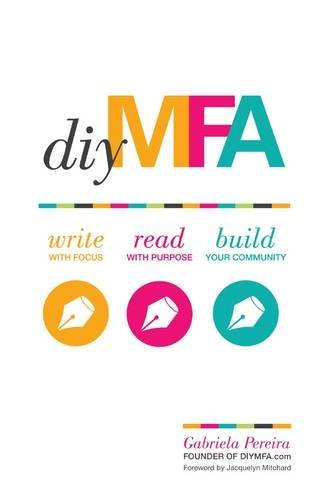
Review of DIYMFA by Gabriela Pereira: What it should have been but never was

What Amazon says:

DIYMFACoverGet the Knowledge Without the College!

You are a writer. You dream of sharing your words with the world, and you’re willing to put in the hard work to achieve success. You may have even considered earning your MFA, but for whatever reason–tuition costs, the time commitment, or other responsibilities–you’ve never been able to do it. Or maybe you’ve been looking for a self-guided approach so you don’t have to go back to school.

This book is for you.

DIY MFA is the do-it-yourself alternative to a Master of Fine Arts in creative writing. By combining the three main components of a traditional MFA–writing, reading, and community–it teaches you how to craft compelling stories, engage your readers, and publish your work.

Inside you’ll learn how to:

  • Set customized goals for writing and learning.
  • Generate ideas on demand.
  • Outline your book from beginning to end.
  • Breathe life into your characters.
  • Master point of view, voice, dialogue, and more.
  • Read with a “writer’s eye” to emulate the techniques of others.
  • Network like a pro, get the most out of writing workshops, and submit your work successfully.

Writing belongs to everyone–not only those who earn a degree. With DIY MFA, you can take charge of your writing, produce high-quality work, get published, and build a writing career.

My thoughts:

Gabriela Pereira was compelled to create DIYMFA, the website, community, course, podcast, and now book, after her disappointing experience with her Master of Fine Arts (MFA) program.

Like Gabriela, I went the route of the Master’s degree, believing that I needed the validation. It was the lie I believed, and it almost ended my writing career before it began.

DIYMFA is what the MFA program should be (or should aspire to be) but never was.

Most MFA programs centre on critique—without teaching the students what it takes to offer and receive constructive feedback—and coaching/mentorship by someone who may or may not even understand their own creative process, let alone be able to articulate it, or guide their mentee to their process and best mode of creative expression without imposing some ideal of “how things should be done.”

Admittedly, MFA programs have matured and improved, but rather than focus what should be a review of an amazing guide to the writing life on an indictment of the graduate institution, I’m going to, in grand rhetorical style, return to the matter at hand (see? Academia has ruined me—ruined!).

Gabriela divides her guide into three sections: write with focus; read with purpose; and build your community.

In the first, she offers a brief, but engaging, examination of all the essential points of craft that writers must master. There is no one way to reach the destination, but a multitude of paths from which writers can choose based on their personal goals and aptitudes. Self-knowledge and self-confidence are the foundations upon which craft is built.

While the reading with purpose section is shorter than the other two, it is no less important. Gabriela emphasizes a balanced approach throughout DIYMFA. All three aspects, writing, reading, and community, are essential to creative development.

Learning to read and analyze the text, not like an academic, but like a writer, is what this second section is all about. We have to learn about craft first and begin to apply it before we can learn to recognize it in the writing of others and extract lessons from that purposeful reading that we can take back to the page.

Finally, in this brave new world of social media, how do we tackle the task of finding our audiences, reaching out to them, and building a community of writerly friends, readers, and fans?

In all aspects of DIYMFA, Gabriela has studied and learned from the best in the industry, and she unpacks these lessons in an accessible and engaging way.

One of the things I enjoyed most about DIYMFA is that Gabriela draws on her statistics background and mathematical bent to offer charts, matrices, and unique visualizations that will help readers and learners find a way into the material she presents.

And, as a self-confessed word nerd, she exercises her talent for acronyms and initialisms, creating fun mnemonics to encapsulate concepts and principles for her writerly audience.

Having sung the praises of DIYMFA as an alternative to a traditional MFA program, I must point out that Gabriela never disparages academia, in fact, traditional programs are pointed out as viable options for the aspiring writer.

What if that writer has economic, domestic, or temporal limitations, though? It is for those writers-in-progress that DIYMFA has been crafted.

DIYMFA earns my highest recommendation.

My rating:

FIVE STARS!

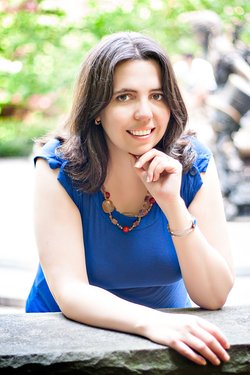
About the author:GabrielaPereira

Gabriela Pereira is the Instigator of DIYMFA.com, the do-it-yourself alternative to a Masters degree in writing. While undercover as an MFA student, she invented a slew of writing tools of her own and developed a new, more effective way for writers to learn their craft. She dubbed it DIY MFA and now her mission is to share it with the world. Teaching at conferences and online, Gabriela has helped hundreds of writers get the MFA experience without going to school. She also hosts DIY MFA Radio, where she recreates the MFA speaker series in podcast form.

Before becoming a writer, Gabriela has done lots of wild and nerdy things like: playing violin at Carnegie Hall, singing madrigals in full Renaissance garb, designing toys for kids ages toddler to tween, and taking applied topology and number theory “just for kicks.” Despite her varied interests, Gabriela’s main passions have always been teaching and design. Now at DIY MFA she can bring these two elements together. Her favorite thing to do is come up with new dastardly plans and innovative resources for writers.

When she’s not teaching or developing new courses, Gabriela loves to write middle grade and teen fiction, with short stories for “grown-ups” thrown in for good measure. A New Yorker born and raised, she lives in NYC with Lawyer-Hubby, Little Man, Lady Bug, and Office Cat.