The Initiate of Stone rogues gallery

Previously on Work in progress:  Character sketches part 1: Ferathainn Devlin; Character sketches part 2: Eoghan MacDubghall; Character sketches part 3: Dairragh McKillian.

So the deal is this: as I started to write, all three of the above emerged as protagonists to one degree or another.  Ferathainn remained my primary protagonist, because it was her story that everything else emerged from, and I intend to adhere to that.

Eoghan and Dairragh were strong supporting characters, though, and I felt I had to provide them with antagonists (antagoni?) of their own.

Originally …

The character that became Khaleal was Ferathainn’s main antagonist.  He was the servant of Kane, who is known as The Black King, but Khaleal was only a servant, and acted wilfully and maliciously in Kane’s service.

The initial origins of the favrard people (they can have viable offspring with Tellurin and are therefore not a separate race/species from my perspective) were that they were created, from time immemorial, to be predatory.  Their genetics are dominant, but they needed a non-favrard to mate with, someone who possesses power, and similar physical traits, to reproduce.

Originally, this was the impetus for his rape of Ferathainn, because she was a suitable subject for the continuance of his people.  It was a biological imperative, and eventually, this seemed to me to be too contrived.

Kane was the mastermind behind the war that Khaleal is a perpetrator of, and he experimented on people.  Initially, this was a purely scientific experimentation: how much weight could a healthy specimen hold before his or her strength gave way and she or he was crushed?  How far could various joints be bent before they broke?  Things like that.  Kane was just plain cruel.

Yllel was originally called Greymon, or known to the peoples of Tellurin as “The Grey Man.”  He was the traditional devil figure and tricked people into selling their souls for various dispensations.  He was always imprisoned to prevent him from harming people/destroying the world, but initially his passion for destruction was mindless.  It just was.  There was no reason for his need to bring the world to ruin.

Eventually, I conceived of a way to bring these three villains together when I thought about the deities of Tellurin and its magick system (yes, they’re both coming in future world-building posts).

For Eoghan, Kane and Yllel (as Greymon) were the people he was assigned to defeat because as the Kas’Hadden, it was his duty to protect the world and fight the people who posed a threat to it.  Khaleal would be an obvious antagonist because of Eoghan’s love for Ferathainn.  He wants to protect her.

When I developed Tellurin’s religious system (also coming in a future post), I realized that organized religion would also be an antagonist for Eoghan.

I gave it form in the personages of Archbishop Hermann Manse and High Inquisitor Alphonse de Naude (which I will not be offering sketches of here).  Later, I also instituted a rival religion for the Faithful, the adherents of the Holy Mother Church, of whom Queen Amalthea became the main antagonistic figure.  She does not appear until the next novel in my series though.

The Fathithful could be equated to Christianity in general.  They share the most in common with High Anglican practice, but there are points of divergence.  The Faithful do not really believe in the existence of the gods, but perpetuate belief for the better governance of the people.

The HMC is more of a political body.  They believe in the gods in the clock-maker sense.  The gods set everything in motion, but the Tellurin are the ones who rule the world on their behalf.  Magick and its practitioners are blasphemous.  The Faithful are blasphemous.  Any people not purely Tellurin are blasphemous.  They are looking to foment holy war.

In thinking about Dairragh and his potential conflicts, I decided to make Halthyon into his primary antagonist.  They have a long and strange association.  As I mentioned in Dairragh’s sketch last week, Halthyon enters Dairragh’s life when he is very young.  The sourceror seduces Aline, Killian’s wife, impregnates her, and then leaves.

Not having any knowledge of where her lover went, Aline eventually runs away when Killian realizes that her baby is not his.  Halthyon returns years later and Aline willingly runs away with him, but he is not interested in her, only the child she bore.  Aline refuses to disclose where she left her baby, and dies at Halthyon’s hand.

Halthyon leaves her body for Killian and Dairragh to discover and disappears again.  When Halthyon returns to Gryphonskeep a third time, it is as the captain of a regiment.  Dairragh recognizes him, and tries to kill the author of his life’s tragedies, but only succeeds in setting off the attack, destroying everything he knows and loves.

Dairragh is also at odds with Killian, who, after his betrayal by Aline and Halthyon, becomes abusive and cruel.

When I decided to make Ferathainn and Dairragh half-brother and sister, I knew Halthyon had to be her father.  That got me thinking about how he could also play the antagonist role for Ferathainn …

Raven Margrove is Dairragh’s cousin (born Nicholas de Corvus), and a minion of Kane’s.  He is the one responsible for the destruction of Aurayene, and he leads the largest company of the Black King’s army.  It is his goal to kill King Romnir Raethe and assume the throne of Tellurin.  Eventually he and Dairragh come into direct conflict, but not in the first novel of the series.

The sketches

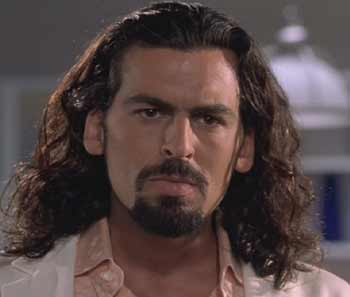
Name:  Khaleal bin Nasir

  • Birth date/place: 30 suns ago

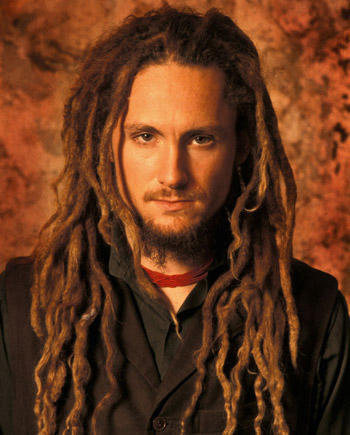
    Think Oded Fehr, but with auburn hair.

  • Character role:  Secondary antagonist
  • Age:  30
  • Race:  favrard
  • Eye colour:  Green
  • Hair colour/style:  Red, long and wild.
  • Build:  Athletic, 6’ 2” 200 lbs
  • Skin tone:  dark, sun-weathered
  • Style of dress: armour, articulated plate and chain
  • Personality traits:  Khaleal is insane.  The dark god Yllel has insinuated himself into his mind as he has done with all favrard since the race sold their collective souls to him.  Khaleal is an honourable man and tries to be true to himself whenever he can, but the near-constant pressure the god can exert on him has unbalanced Khaleal to the point where he no longer has control over his own actions.
  • Background:  Khaleal was raised by his amah, Illiden, in seclusion and had what would be considered a normal childhood until he came of age.
  • At the age of 12, Khaleal felt the first stirrings of Yllel in his mind.  Over the course of the next months, Khaleal was twisted by the dark god until he was driven to seek out and kill his own mother.
  • After that, Khaleal was Yllel’s slave.
  • He harbours the secret wish to free his people from Yllel’s slavery.
  • Internal conflicts:  Insanity/Yllel.  Tortured by the things Yllel forces him to do.  His rape of Fer is what starts to send him over the edge.
  • When he sees Fer, he feels that she will be instrumental in the defeat of Kane, or Yllel, or both.  Why else would Yllel want to subvert her to his purpose?  He determines to use Fer to achieve his goal (the freedom of his people) if he can.
  • External conflicts: The Black King seeks possession of Yllel’s soul contracts and thus control of Khaleal and all his people.  Khaleal sees this as an opportunity.  Kane will certainly be easier to kill than Yllel, and then his people can be free.
  • Ferathainn wants revenge for the slaughter of Hartsgrove and her rape.
  • Eoghan and Dairragh want to kill him for Fer’s sake.
  • Yllel possesses and tortures his slaves frequently.

Name: Kane

  • Nickname: The Black King

    I picture Kane as Marlon Brando/Kurtz from heart of darkness. Just give him black eyes and pale skin, and that’s pretty much Kane.

  • Birth date/place: Thousands of suns ago
  • Character role: Secondary antagonist
  • Age: Kane’s not even certain
  • Race: Once Tellurin, but years of magick abuse and experimentation have turned him into something else.
  • Eye colour: black
  • Hair: None
  • Build: obese, 265 lbs, 5’8”
  • Skin Tone: White, so pale, it’s almost translucent
  • Style of dress: Immaculate, reflective of his self-endowed title: King.
  • Characteristics/mannerisms:  Perpetually nervous, paranoid, physical tics throughout his body.
  • Personality Traits: Methodical, cruel, patient.  Megalomaniac.  Aristocratic.  In modern psychological terms, he’s a psychopath.  Power and its exercise over others is his sole goal and the only thing that can give him any pleasure.  War and physical violence are beneath him, but he will resort to such methods if required.
  • Background: Kane was once Tellurin, became a sourceror, studied hard and learned all that he could, and then became to experiment with the source, extending his life, becoming something that was no longer Tellurin.  He developed the technique of binding to the point of perfection.  Then he began to cultivate an interest in mechanics.  But to what end to use all of his knowledge?  Kane began to quest for something worthy of his new skills.  The domination of Tellurin seemed to be the logical next step.
  • He battled and slew his fellow sourcerors, gathering source enough to sustain himself and his experiments.  Kane spent the next years experimenting on people, creating living weapons from them that were utterly subservient to his will.  He calls them grotesques.  Everyone else calls them abominations.  He made various artefacts and mechanical weapons by enslaving the souls of other sourcerors within them.
  • Eventually, Yllel found the sourceror.  Kane learned of the god’s incarceration, resources, and desire for revenge.  Kane offered to free the dark god in exchange for a piece of the world remaining after Yllel was done with it.
  • Kane’s true ambition is to free Yllel from the void only to trap him in an even more impenetrable prison: the Machine.  The instant that Yllel made his deal, the idea of the Machine rose into Kane’s consciousness.  He knew already from his earlier experiments that machines naturally dampened the flow of the source.  A maze-like Machine that was carefully sealed to control whatever source it contained could effectively imprison Yllel forever.  Or at least as long as the Machine could be maintained and repaired.
  • He fabricated the Machine from his brother’s beloved, Laleina.  He lusted after her, but prefers her ghost in his machine to any physical form of intercourse.
  • He began to create his “army” of misshapen creatures, once Tellurin, eleph, okante, or whatever other basic material came to hand.
  • All he needs now is control of Yllel’s soul contracts.
  • He plans to take control of the soul contracts, then Yllel himself.  He will not just have a small piece of the playground.  Kane will own the entire thing.
  • Internal conflicts: Fear of discovery by Yllel.  As powerful as he is, the god could still kill him.
  • External conflicts: Yllel doesn’t trust him and can kill him if Kane doesn’t watch himself.
  • Ferathainn, Eoghan, and Dairragh all want to stop the war and prevent Kane from freeing Yllel.
  • Once Kane holds the soul contracts, Khaleal will have to kill him to free his people.  Halthyon wishes to kill Kane because he is an aberration.  Halthyon also sees Kane as one of the impediments to his own goals.

Name: Yllel

  • Appearance: currently formless, but he can appear in any form
  • Background: Created by Auraya and Auremon along with Tryella his sister, Yllel is actually a piece of Auraya.  Inadvertently, the goddess instilled in her son all of her worst qualities.  He too, is psychotic.
  • Auraya, Auremon, and Tryella devoted themselves to Tellurin and its people.  Yllel had no such interest and saw their absence as abandonment, then a betrayal.  He killed his father after Auremon relinquished his godhood and became mortal; he killed his sister, Tryella, when Auraya trapped him in the void.  He’s been plotting his escape ever since.
  • Thought is the only way he can affect Tellurin now, but a god’s thoughts carry a great deal of power.  The Way Between the Worlds that leads to his prison must be opened from the outside and for that, he has recruited Kane.  He uses his enslaved peoples to work his will in the world.
  • Yllel’s goal is to escape the void and destroy Tellurin while his mother watches.  This alone might kill her, but he hopes that she survives so that he can do the deed with his own hands.  He hasn’t given much thought to what he will do afterward, but will likely recreate the world in his own twisted image.
  • Lately, he’s been plagued by visions of a girl.  She has power.  Not a god’s power, but more than most Tellurin will ever have.  He wants to possess her, and failing that, he will destroy her.
  • There is no image for Yllel, because he can look like anyone he wants to …

Name: Halthyon Morrhynd

  • Birth date/place: Thousands of suns ago/Elphindar

    I think of Halthyon as a cross between Luke Goss as Nuada in Hellboy 2 and …

  • Character role: Secondary antagonist
  • Age: unknown
  • Race: eleph
  • Eye colour: Ice Blue
  • Hair: Beautiful, luxurious, white hair.  Long and flowing.
  • Build: 6” 160 lbs.  Tall, slim, but very strong, though he rarely uses his physical strength.
  • Skin tone:  Lovely ivory skin protected from the sun.  Perfect complexion.
  • Style of dress: Flowing robes, traditional, elaborate sourceror’s garb.
  • Characteristics/mannerisms:  A flair for the dramatic.  He likes to think he is the director of the lives of others.  He’s taken a particular interest in Dairragh.
  • Personality traits:  Confident, quiet, necessarily cruel.  Halthyon takes some

    Harry Lloyd’s Viserys from Game of Thrones.

    pleasure in the work that he does but not from meaningless cruelty.  He also takes care with everything he does.  Meticulous planner.

  • Background:  Much like Kane, Halthyon is a self-made man.  As a child and bearing a name he has since discarded, he suffered heinous abuse at the hands of his father, Galag, who he suspected also killed his mother.  When Halthyon came into his power, he killed his father and determined that no one would ever be able to abuse him again.  His quest for power was driven by this need.  His history draws him to Dairragh, who has also been abused by his father (though not to the same degree, so there is contempt too).
  • Exiled from Elphindar (after a failed coup attempt), he wandered until he found one of the fabled Ways Between the Worlds.  He used it to travel to Tellurin where he found himself a kaidin, or eleph sourceror, in a world rich in the kaides esse (powers that be), and among a people who had great talent to manipulate those powers.  The Tellurin had already discovered and learned to tap the source.  He studied long and diligently and learned everything he could about sourcery in his new home.  Interestingly, as he taught the Tellurin, the Tellurin taught him.  He too, learned about the battle of the gods and Yllel’s incarceration, but from arcane sources (Halthyon is also a bit of an archaeologist).  He, too, was able to prolong his life sourcerously.  Eleph are already long-lived.  He didn’t have far to go to achieve immortality.  The source of other sourcerors and magi is his primary sustenance.
  • Halthyon was present when Auremon sacrificed his godhood and released his source into the world, permanently rupturing the Ways Between the Worlds.  He watched his people spill over into Tellurin in terror.  He watched them battle with the Tellurin and withdraw into the Deep Forest.  Halthyon watched as Auremon became a great teacher among mankind.  Halthyon watched as Yllel approached his divine father, disguised as a student, and murdered Auremon.  He watched as Yllel slowly gathered his power and then struck out at his grieving mother and sister.
  • Halthyon observed as each act of godly creation or destruction diminished the gods.  He began to study the ancient philosophers, some of whom posited that the Gods would eventually become as mortals, and as mortals became more powerful, they would eventually become gods.
  • Halthyon believes that he is destined to become one of these new gods.
  • He will be rid of Kane, the aberration, take Yllel’s power for himself by using Kane’s Machine to siphon off the dark god’s power, and then he will ascend.
  • Halthyon also suspects that Ferathainn, as his daughter, could become a new god and he wishes to have her by his side.
  • Internal conflicts: Conceited, a bit of a megalomaniac.  Thinks entirely too much of himself.
  • He has to be careful to maintain his deception.  He has to appear a willing and devoted servant of Kane and Yllel.
  • Childhood molestation by his father resulted in Halthyon committing patricide and permanently messed him up.
  • External conflicts:  Dairragh wants revenge.
  • Everyone else believes he is working for Kane to help conquer Tellurin and free Yllel.  When the truth is revealed, however, even Kane and those who see him as an ally will be his enemies.

Name: Raven Margrove (Nicholas de Corvus)

  • Date/Place of birth: 35 suns ago in Aurayene.
  • Appearance: Black hair, brown eyes, otherwise, he and Dairragh could be brothers
  • Background: Raised in a family that was devoutly Faithful (a de Corvus was the first Kas’Hadden to be called), but possessed of magickal talent, Nicholas was torn.  His father and uncle were both magi, but deemed his talent insufficient to develop (truthfully, they found his personality unsuitable—Nicholas would use his power to hurt others).  His mother wanted him to become a priest, but Nicholas wasn’t interested in a life of sacrifice and self-deprivation.  He wanted to be a mage.
  • To fulfil what he believed was his destiny, Nicholas left home and went in search of a master who would be willing to train him.  There were no takers on the continent.  Eventually, he took to the sea and found his way to a barren and desolate island.  There, in the midst of horrible creatures and marvellous inventions, Nicholas found Kane, who promptly agreed to train him to the degree his talent allowed.
  • In return, Nicholas chose a new name, Raven Margrove, and pledged himself to serve the only man who saw fit to grant his fondest wish.
  • In Kane’s service, Raven learned first the necessity of cruelty, and then the love of it.  Kane has made him general of his largest company, and field marshal of the army.  He’s promised Raven the crown in return for his service, and Raven intends to have it.

For the visual, please refer back to my post on Dairragh last week.  They could be brothers.

Next week: The cadre of secondary/supporting characters.

TTFN!  Have a great Victoria Day Weekend everyone!

Character sketches part 3: Dairragh McKillian

Previously of work in progress: Character sketches Part 1: Ferathainn Devlin and Character sketches part 2: Eoghan MacDubghall.

In the beginning …

Dairragh was pretty much what he is now, a young lord, but originally, he too, fell in love with my heroine.

You could have called Initiate of Stone Everyone Loves Ferathainn 🙂  Eoghan loved her, Dairragh loved her, even the character that became Khaleal (more on him and some of the other antagonists next week) loved her.  It was terrible. You’ll remember I was seventeen when I first came up with the idea.

Back then, after the monk left her to become the Kas’Hadden, Dairragh came into Ferathainn’s life and their fiery conflict turned to love, but she couldn’t quite get the kindly monk out of her mind.  At that time, there was completely different climax in the King’s City, what I’ve since renamed Drychtensart.

Instead of the potential Kas’Hadden (Eoghan’s brother Callum) being executed for heresy at the start of the novel, Eoghan as the Kas’Hadden is captured by Kane’s army and publically executed at the end.  Dairragh and Ferathainn try to save the Kas’Hadden, but Dairragh only manages to get in the way of the executioner’s axe, an enchanted thing, and die along with Eoghan.

Kane kept the souls of those he vanquished that version of the story, much like a voudoun priest keeps his fetishes.  Ferathainn escaped and had to try to figure out how to get the souls of Eoghan and Dairragh out of Kane’s collection of enchanted artifacts.

Enter Khaleal, who remorseful, repentant, and tragically in love with Fer (yes, this is why I changed this whole sequence of events … too saccharine) sneaks into Kane’s soul chamber and retrieves the two artifacts for Ferathainn to prove his switch to her side is genuine.

In the epic battle that originally ended the novel, both artifacts end up broken, and Khaleal makes the decision to house both lost souls until they can somehow be restored to human form.

Like Ferathainn’s original story line with trauma heaped on top of trauma, it was too much.  Moving forward, it would be too confusing, and the three-person spiritual chimera was too contrived.

How he evolved

First, I decided that Dairraigh couldn’t be a legitimate love interest for Ferathainn.  That didn’t mean I couldn’t play …

Thanks to a course I took on Renaissance Romance at the University of Windsor, I got an idea.  One feature of the pastoral romance was two siblings, separated from birth, discover each other again, and usually through a romantic near-miss.

So I decided that Ferathainn and Dairragh would grow attached to one another, only to discover that they were brother and sister.  Then to ratchet up the drama, I made Fer his half sister, fathered by his mortal enemy.

Halthyon Morrhynd (again more on him next week with my villainous gallery) is the author of every tragic event in Dairragh’s life, as he understands it.  Because Halthyon is a mage/sourceror (more on my magic system in a future world-building post), Dairragh has a hatred for everything having to do with magick, and when he first meets Ferathainn, he sees her performing magick.  This hatred also gives a little more pop to their story line going forward.

Love is a sub-plot/theme in my novel, and I decided that Dairragh needed a partner other than Ferathainn.  This gave rise to the people that became the anogeni, the hidden people.  When Halthyon, in the service of the Black King (another of my villains) destroys Dairragh’s home and gives Dairragh a wound that will kill him, the anogeni find him, restore him, and shelter him through Vedranya, the season of storms (again, part of a future world-building post).

One of their number, Shia, is his chief caretaker, and tries to teach him the anogeni way.  Because she is both his healer and teacher, Dairragh falls in love with Shia, but he doesn’t realize it until later.  Why not?  Because the anogeni are tiny people, and the physical impossibility of a complete relationship prevents him from seriously entertaining one.  This changes though.

The Sketch

Name: Dairragh McKillian of Gryphonskeep

Nickname: Dair

Birth date/place: 22 years ago in Kirksea

Character role: Secondary protagonist

Age: 22

Race: Tellurin (Eiran)

Eye colour: Dark blue

Hair colour/style: Black

Build (height/weight):  6’, athletic, 180 lbs

Skin tone:  Caucasian, but tans well

Style of dress: breeches and hose, tunics, as a young lord, he can afford his own armour, coat of arms: gold Gryphon rampant on a red field.

Characteristics/mannerisms: Grinds his teeth when irritated.  Anger management issues. Has an unbridled hatred for magi.

Personality traits: Stubborn and wilful.  Innate sense of nobility and the obligations of his class.  Values family and history.  By virtue of his station, he believes he is always right and he doesn’t realize he’s being self absorbed.  Frequently acts impulsively but is lucky.  All of this hiding a devastating insecurity.

Background: Dairragh is a descendent of the de Corvus line, and thus a person of power, but he hates magick and resists this part of his inheritance.  He is related to Ferathainn, the original Kas’Hadden, and Raven Margrove (who is actually his cousin, Nicolas de Corvus).

Dairragh is the only son of Killian and Aline.  He was born on the family estate of Tulach Daire (oak hill) for which Dairragh was named.  The neighbouring estate is Cúas (the den) and Eamon O’Faolin fostered Dairragh periodically at their other estate in Drychtensart while Killian fought for his right to Gryphonskeep. Killian’s father, Adair, did not think Killian deserving of the privilege of lordship or care of the Gryphons.

Dairragh was brought up as a noble knowing all of the privileges of his class.  His mother was from the Parimi lands and his parents’ marriage was arranged.  Aline never loved Killian and after Dairragh was born, she refused to attempt to have another child.

When Dairragh was still a child, she had an affair with a visiting mage (Halthyon Morrhynd) and became pregnant.  Rather than face Killian’s rage, she fled, found her way to Hartsgrove where she gave birth, then abandoned the child (Ferathainn) and returned to Gryphonskeep never speaking of what had happened.

This is when Killian became embittered and turned to abusing his son verbally and physically.  Aline withdrew and except for court occasions, drank herself into oblivion.

When Dairragh was 12 years old, Morrhynd returned and Aline willingly left Killian after years of misery following the sourceror’s last visit.  Killian became enraged, declared all-out war on Morrhynd and tried to retrieve Aline, who he thought of as his property.  He brought his young son with him to teach Dairragh about his obligations.  Morrhynd appeared to have holed up in an old fort with Aline, but when Killian breached the building, he only discovered Aline, dead.  Actually, it was the young Dairragh who first found his mother’s corpse.

This event entrenched Dairragh’s hatred of magi.

Dairragh loves the Gryphons.  They are his solace and he takes great pride in caring for and training them. Dairragh is an accomplished warrior, archer, and jouster.  He has competed in and won several tournaments.  He has also defended Gryphonskeep and its lands against bandits and other threats.

Dairragh looks forward to the day when Killian will cede lordship to him, but Killian continually finds ways to undermine Dairragh’s accomplishments and worth, and denies his son his inheritance.

In reality, Killian fears that Dairragh will be killed and he will lose his only heir.  He also fears that his son will prove to be more worthy than he of Gryphonskeep and its responsibilities.  Aline always loved the boy more than him, and the Gryphons respond to him better as well.  He doesn’t believe that Dairragh should get anything without a struggle.  Nothing won easily will be held dearly.

Internal conflicts: Dairragh is full of pride and a sense of self-importance that hide his deep insecurities about his worth.  He has to overcome this before he can care enough about others to become a true hero.

Shia and the anogeni try to overcome Dairragh’s hatred of magick and magi because only by learning to use the weapons of his enemy can Dairragh defeat him.  Dairragh is stubborn, however, and old enmities die hard.

When he first meets Ferathainn and realizes she is a mage, he hates her by virtue of her talent.  Eventually he comes to respect her talent, and begins to feel affection for her.  His growing affection becomes confused with lust, but when Dairragh learns that Ferathainn is actually his half-sister, he is thrown into guilt over his inadvertent but incestuous desires and has to find some way to deal with his feelings of hatred for Halthyon.  Ferathainn is his sister and the only family he has left, but she is also the daughter of his sworn enemy.

External conflicts:  The physical injuries that Halthyon gives him at the destruction of Gryphonskeep.

Vedranya.

Halthyon wants to humiliate Dairragh and destroy him.

The Black King and Yllel seek to kill Dairragh because he is part of the force working to destroy them.

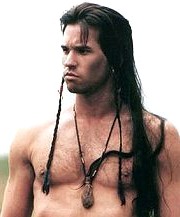
What Dairragh might look like

Again, my drawings of Dairragh are incomplete and I’m not satisfied with them.

My early inspiration for Dairragh was that character of Madmartigan, as portrayed by Val Kilmer in Willow (one of my favourite movies of all time).  Just give him a beard.

Which brings me to my second exemplar: Colin Farrell.  Dairragh is my world’s version of Irish after all.

That will give you an idea of Dairragh.

Next week: The Villainous Gallery

Until then, my friends, good luck and good writing!

Character Sketches Part 2: Eoghan MacDubghall

This is a continuation of my character sketches for my work in progress, Ascension, Book 1: Initiate of Stone.

Last week’s was: Character Sketches Part 1: Ferathainn Devlin

How Eoghan began …

Originally, when Ferathainn was named Rain, and went through half a dozen tumultuous life events, Eoghan was a nameless monk who found the blinded and wounded girl and nursed her to health again, weathering a toxic pregnancy and subsequent abortion in the process.  He fell in love with her, but she never saw him before he was called away by the goddess to become her champion/avatar.

Then I gave him the name of Arastian.  At that time, he was a grown man in his late twenties, and there were some cradle-robbing inferences that I wasn’t comfortable with.

Eventually, when I finally researched and chose Ferathainn’s name, I also decided on the Scottish version (or one of them in any case) of Ewen, child of the Yew.  I’m an unapologetic Celtophile!  (Especially after reading Diana Gabaldon’s Outlander series.)  He became a character younger than Ferathainn, and his love for her completely unknown to her, because she never regains consciousness while in his care.  I had to put a few more roadblocks in their way.

Now he’s a postulant monk, not even tonsured (achieved by the painful process of plucking, which he dreads) and at risk of being turned out of the Monastery of Aurayene as any time, a particular cruelty in a world where the season that equates to winter is actually a deadly season of storms.  He becomes Auraya’s Kas’Hadden, her hammer of light in another cruel twist.

Eoghan’s brother Callum was to become Kas’Hadden before him, but Yllel, the villain of the novel, conspires to have him executed for heresy before this can happen.  Auraya conserves the remnants on Cal’s spirit at the Well of Souls and when Eoghan reaches her, she forges the Kas’Hadden from Eoghan, incorporating Cal’s qualities, and a few other choice bits.

The goddess has to subdue Eoghan because he has qualities that she does not want in her champion, namely his love for Ferathainn, and basically traps him inside the fleshy prison of her avatar.  So he’s repressed and imprisoned, and it’s painful.  That’s the kind of goddess Auraya can be …

Eoghan’s story line is much more dynamic than Ferathainn’s, an imbalance I am striving to address in my next revision.  He is one of my favourite characters, though.  He has to be: he’s Fer’s love interest 🙂

The Sketch:

Name: Eoghan MacDubghall

Nickname:  none but he becomes the Kas’Hadden

Birth date/place:  14 years ago, Aurayene

Character role:  Secondary protagonist

Age: 14 years

Race: Tellurin (Alban)

Eye colour:  hazel, later blue

Hair colour/style:  Strawberry blonde, wildly curly.  This doesn’t really change.

Build (height/weight):  5’ 4”, slight, not muscular.  When he becomes Kas’Hadden, 8’ + and extremely well-muscled, an Adonis.

Skin tone:  pale and freckled, later golden.

Style of dress:  robes, cassock.  As the Kas’Hadden, hardly anything 🙂

Characteristics/mannerisms: none

Personality traits:  Desperately afraid of everything.  Self effacing to the point of having little personality of his own.

Background:  Born eighteen years the junior of two brothers to a spiritually devout public servant and his wife, Eoghan was largely ignored by his father and never knew his mother who died shortly after giving birth to him.  His father saw Eoghan as the means of his beloved wife’s demise.  His older brother Callum was the favourite, the one on whom all their father’s hopes depended.  Initially Callum hated Eoghan as well, tried to smother the baby, but couldn’t go through with it.  Surprisingly, Eoghan was the means by which Callum was able to heal from the wound of his mother’s death.

Callum became a soldier at a young age and was quickly inducted into the Sanctori but when their father died, Callum took holy orders.  Eoghan came with him as a ward of the Faithful initially, and early signs pointed to him following his brother into the priesthood.  He proved a fair illuminator, but asked too many questions for the comfort of his teachers.

Eoghan has been alternately ignored and protected throughout his life.  He is incredibly naïve and Callum’s execution nearly destroys his faith, but the war coming so swiftly on the heels of Callum’s death, Eoghan has no time to internalize his loss.  Callum was more a father to Eoghan than their biological one.  Eoghan is lost in every sense when Auraya calls upon him.

Ferathainn represents his only chance to find himself and choose what he wants to do with his life.

Internal conflicts: He’s been so ignored/protected/controlled he has no idea who he is or what he wants to do with his life.  When Auraya turns him into the Kas’Hadden, Eoghan finally has the physical power and presence to support his growing internal convictions but is prevented from exercising it on his own behalf.

External conflicts:  Auraya wants to use Eoghan to defeat Yllel and bring her word back to the people of Tellurin.  Yllel wants to destroy him as one of the few beings who could oppose the god’s escape.

Auraya.  To keep the Kas’Hadden compliant, she suppresses Eoghan’s personality.

Ferathainn can’t return Eoghan’s love because of her trauma, besides, he belongs to Auraya and she demands his total devotion.

Dairragh doesn’t trust Eoghan and doesn’t believe in the Kas’Hadden.  He can’t deny how useful the behemoth can be in battle, but isn’t sure what to make of him.

Eoghan attempts to protect Ferathainn from Khaleal, though she proves not to need his protection.

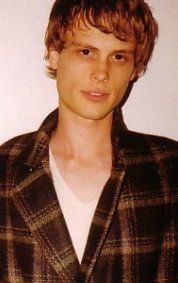
What Eoghan might look like:

I don’t have a drawing of Eoghan.  Sadly, I’m not very good at drawing the male figure.  So pictures will have to do.

When the novel begins, Eoghan is fourteen and hasn’t really hit his first growth spurt yet.  He starts to grow a sparse ‘stache and a few chin hairs that might optimistically be called a beard.  He’s got this unruly bird’s nest of strawberry blonde curls and a plague of freckles.  He’s a skinny, book-fed boy.

Though the hair colour and freckles are absent, I thought of a young Matthew Gray Gubler as a suitable physical analogue.

When he becomes the Kas’Hadden, he’s more like Chris Hemsworth (ala Thor) but has the physical dimensions of the Hulk.

And that is Eoghan.

Next week: Dairragh.

Ta-ta for now, my writerly friends!

Character sketches part 1: Ferathainn Devlin

Warning: this is a long post!

Last time on Work in progress: I’d discussed the starting point for world-building.  For me, character leads to story, leads to world.

So for the next bit

I’m going to share some of my character sketches.  Most of this won’t appear in the novel per se.  It’s mostly back story, but you’ll see how the plots and sub-plots evolved from my characters.

The seed of Fer

When I started my hand-written draft all those years ago (egad), in that first spiral-bound notebook (which I still have, thank you very much), the character and novel were both called Rain.  I’ve mentioned a bit about this in my various draft discussions.

She was born in the rain on the eve of what I then called storm season.  Also, her key incident (see K.M. Weiland’s post regarding the difference between the inciting and key incidents here), the destruction of her village, death of her loved ones, and rape, all occur in the rain.  So it was a metaphor for her plot and transformation.

Initially, I had a lot more going on with her.  Her trauma also included being blinded by a random lightning strike, being impregnated, and subsequently aborting.  Looking over those early notes, I realized that it was a bit much.  I brought the amount of drama back to what was still a fairly loud roar, and moved forward with that.

In future reviews, I changed her name to Ryane, and then had her choose another name for herself after the devastation of her village by rearranging the letters: Rayne.  Though I thought it was clever at the time, and that name stayed with the character through a number of abortive attempts to work on the project, but it wasn’t until after I picked up the bits and pieces of what might become a manuscript that I started researching names and decided on Ferathainn, one of several Irish words for rain.  That’s when she really started to come together for me.

The sketch

Name: Ferathainn Devlin

Nickname: Fer

Birth Date/Place: Almost 16 years ago in Hartsgrove, freetown of Tellurin

Character Role: Protagonist

Age: 15

Race: Tellurin … actually half-eleph, but she looks Tellurin and has no idea she was fostered/adopted

Eye colour: Green

Hair colour/style: Long, wavy, red.  Often tied back/braided.  After she receives the broken spiral brand on her forehead, she cuts her hair so that she has a thick fringe of bang to hide it.

Build: Tall, slim, but toned.  5’ 10”, 140 lbs.

Skin tone: Pale with freckles that multiply in the sun.

Style of dress:  Simple dresses with shifts beneath, sometimes with hose to accommodate her training in the kishida with Oak.

Characteristics/mannerisms: Plays her fingers about her mouth in thought.  Feels her teeth through the skin.  Chews her lips.

Personality traits:  Single-minded, stubborn.  Loves to learn and find new experiences.  Enjoys the feeling of accomplishment, and the praise that accompanies it.  Physical, active, but backed by intelligence and long years of training in the Agrothe magick disciplines.  Restrained by that same training, naïve, unworldly. She is eager for initiation because she knows she is capable of more than what Master Aeldred lets her do.  Raised Faithful and obsessed by the state of her soul.  She takes liberties that she can justify, but feels terrible guilt afterward.  Otherwise plagued by same issues and insecurities as all young women: men/marriage/sex/children, wanting to find her own identity/way, break free of her training and conservative upbringing, defy destiny …

Background:  Raised by Devlin Singer (Brythoni), bard, who settled down when he met his beloved Selene (heritage unknown) who was in turn raised by the eleph of Hartsgrove when her family was killed by bandits, a seer.

Devlin is fair-skinned and brown-haired man of medium build and with dark blue eyes.  Selene has black hair and brown eyes.  She is petite and doll-like.  Fer bears little resemblance to either.

Ferathainn’s birth mother is actually Aline of Gryphonskeep (nee de Corvus).  She had an affair with Halthyon Morrhynd and fled her husband’s displeasure when he discovered she was pregnant.  She found her way to Hartsgrove about the time of Ferathainn’s birth but would not say anything of who she was or why she had come.  After Ferathainn was born, Aline ran away and returned to Gryphonskeep. She never spoke of the child’s fate.

Aline is Parimi and is the parent that Ferathainn received her colouring and appearance from.  She is a woman of commanding presence: the flaming red hair, the flashing green eyes.  She descends from the de Corvus line, from whom the first Kas’Hadden was chosen.  Talent for magick runs strong in her family.

Halthyon is eleph and aside from her talent, she has inherited nothing from him.  She looks almost entirely Tellurin.

At Ferathainn’s birth, the eleph could not see her destiny (Ritual of Shir’authe).  Leaf fell in love with Ferathainn at once, saw his astara (soul-lights) in her eyes.  This freaks Selene out.  Willow was disturbed by the infant’s undecipherable fate.  Aeldred was able to sense her potential and determined to watch her.

Early in her childhood (just over 3 yrs), Ferathainn was precocious in the extreme.  She spoke with the wind, animals, and plants.  It was apparent that this was not the imaginary play of other children but a genuine communion.  She seemed to understand things other children, even eleph children, could not grasp.  It was at this time that she was dedicated to Aeldred, an elderly Tellurin Agrothe mage.

Aeldred is Brythoni, but descended from the Saxon.  He is in his seventies but even he has forgotten exactly how old he is.  He is a little soft tending to the portly.  Wild white hair and beard that he rarely pays attention to.  He is unkempt in general in that endearing, bumbling professor kind of way.  He has dedicated his life to research.  He knows about the sourcerous past of the magi, but is reluctant to expose Ferathainn to the more radical teachings of the sourcerors.  As he trains her, he fears what she might be able to do, what she might become, and withholds this vital knowledge from her.  He does not tell her how extraordinary her talents are.

Later, (approx. 11 yrs) Ferathainn was betrothed to Leaf.  She comments on the ‘funny lights’ she sees in his eyes and he practically faints 🙂  Tellurin aren’t supposed to see the astara.

Her life is largely proscribed by her training until The Black King’s army devastates Hartsgrove.

She learned Devlin’s talent for music and loves to sing and dance.

One of her rebellions was to get Oak to teach her kishida.

Devlin dotes on her.

Selene is more of a friend/big sister than a mother.

Aeldred is more of a parent than either of them, and that’s saying something 🙂

Ferathainn has one younger half-sister, Aislinn, who is daughter of Devlin and Willow.  Devlin and Selene are still devoted to each other.  Selene had foreseen that Aislinn would be an important leader and bridge between Tellurin and Eleph communities and consented to the liaison. Also, Selene and Devlin were unable to have children of their own, which was why they were so happy when Fer was abandoned in Hartsgrove. Devlin still craved and child of his own blood.

Internal conflicts:  Fer’s need for revenge, fostered by Yllel, drives her to track down and confront Khaleal, who she sees as the author of her tragedy.  Her preoccupation with sin grows as the number and severity of her transgressions does.  Ferathainn has been protected and restricted by her training all her life.  She has to find her inner power and unlock her true abilities to defeat The Black King.

External conflicts:  The twisted god Yllel seeks to subvert Ferathainn to his cause, or failing that, to destroy her because he sees her as a powerful piece on his mother’s side of their cosmic game of strata (chess).

Khaleal, as soul-slave to Yllel must attempt to destroy Ferathainn even though he knows she is the key to freeing his people of Yllel’s tyranny.

Dairragh of Gryphonskeep hates Ferathainn because she is a mage.  As his world is shaken, that conflict transforms into what he thinks is love.  Then he learns that she is his half-sister and her father, his mortal enemy.

Eoghan falls in love with Ferathainn but serves Auraya, who proves to be a jealous mistress.

Halthyon seems to serve Yllel and The Black King, but wants to find the child he’s never known.  She is the only person he considers worthy to be at his side when he ascends to godhood.

Vedranya, the season of storms.

What I think Fer looks like

This is my first attempt at sketching her, and I’ll have to warn that it’s unfinished.  Hardly any shading or detail, no inking to define the lines, and no colour (I like Prismacolor pencils, and blending them with turpentine when I really go at it).  It’s a basic pencil sketch, so as I thought, it didn’t really come out in the scan very well, but you get the idea (and no, Margaret, those aren’t flaming turds in her hands – she’s levitating stones).

When I’d finished the drawing and had a look at it, I immediately thought of two actresses: Scarlet Johansen and Angelina Jolie.

Now I’m not saying that Fer has to look like this, only that this was the image that emerged when I tried to draw her.  And now you know why I didn’t pursue a career in art 😛

Some people might think this a strange way to start world-building, but my process (so far) starts with my characters.

Let me know what you think and if this is of any value to you.

World-building: Where do you start?

This is a sample constructed-world as seen fro...

Confession time

I’m a pantser.  I write through first, and restructure later, but I do extensive mapping using my trusty bulletin board, and as I’m getting to know the inner workings of Microsoft Word better, I’m learning to use headings to organize my chapters and sections, making outline view a useful tool too.  I have Office 2007 right now, so that’s the best I can do.  When I have blocked some time to learn more about it, I intend to use a master document to further organize my novel.  I’ll probably start using OneNote to organize a lot of my research, world-building, character sketches, and other resources.  More on that in the future.

Process, process, process

Where to start, indeed?  Really, this all depends on how you write and what your process is.  If you’ve been reading Writerly Goodness, you know my process is organic and holistic.  Some writers might see that as a cop-out, an excuse for a sloppy and ill-defined (dare I say undisciplined?) process.  Really, it’s process as a way of life.

Life = process

That demands a lot of dedication, organization, awareness, and the ability to think, not only on your feet, but sitting, laying down, at work, watching TV, eating …  In short, it means thinking all the time.

Plot leads to setting

If you’re a plot-based writer, that is, if you start with the story, then that will be your jumping off point for your world-building.

Example:

Hard-boiled detective?  Then you’ll have to create that milieu, and that means research.  Add Hammett and Chandler to your reading list, watch the classics of the movie genre, and then once you’ve got the flavour, go for the meat.  What time will you set your story in?  Just because the genre evolved in the 1920’s and 30’s doesn’t mean you have to restrict yourself.  As long as you can evoke the feeling of the hard-boiled detective, you can play.  William Gibson plays elements of the hard-boiled into some of his science fiction.

Once you have your setting, then you have direction.  Research the heck out of it.  Dream about it.  Start mining your life.  Have you ever done or seen anything that is distinctively “hard-boiled”?  Chances are, if you’re attracted to the genre, there’s a reason.  Dig.  You can find it.

But that’s where you’d start, in the Writerly Goodness universe 🙂

Character leads to plot/setting/theme (sometimes simultaneously)

If you’re a character-based writer though, it’s a little tougher.  You write the character, or characters, first, and the story emerges from them.  Sometimes, you don’t even know where or when the story will be set when you start out.

That’s the way it is for me.

If the story is the plot-based writer’s place to start, then character is the character-based writer’s place to start.

Do character sketches, written ones, and maybe actual sketches, if you’re so talented.  If not, find pictures of actors that might fit the bill.  Have them fully developed as people: their back-stories, their personal quirks, their convictions and beliefs.  Invite your writers’ group, or just some writer friends over for coffee, and have them quiz you on your characters, quick-fire style (it’s in the post, about half-way through).  And, of course, keep writing in the meantime.  Only once your characters are real people to you will their stories start to emerge and direct your plot.  Only once you have a developed plot, will your setting and themes become apparent.  Only then will you be able to truly start developing your world.

You may have some ideas when you begin to write, and by all means, start your research as soon as possible.  If you’re going for a contemporary setting, or a historical one, immerse yourself in the time or place.  It might inform your writing as you go and help you develop your setting with crystalline clarity.  If you’re trying to create a truly original fantasy or science fiction milieu, however, those details might have to wait for you to discover them through writing.  The best you may be able to do at the outset is read in your chosen genre.  If nothing else, do that.

Other options

Ultimately, how you write will determine where and when you start to build your world.  Plot- and character-based writers aren’t the only kinds either.  They’re the only kinds I can provide any guidance for, however.  If you’re another kind of writer, then go with your strengths.  Does your theme emerge first?  Or maybe you can’t write in a world that you don’t know and start off with the world first.  It’s all good.  The point is that no matter what you write, you have to put your characters and their stories in a time and a place and you have to know that world as intimately as you know your characters and plot.  It’s the only way to roll 🙂

Coming up

In the next weeks, I propose to post some of my character sketches and the plot lines that developed from them, along with pictures (though I have started to draw some of them, I’m not finished and they wouldn’t come through in a scan well … also, they’re not very good).

In the future, I’ll move on to other aspects of world-building, including a number of print resources on the subject.

Are you a pantser, or a plotter?  Are you a plot-based, or a character-based writer?  Are you something else entirely?  Where do you start in your world building?  Please, comment, like, share!

Will the third draft be the charm?

Nope.

I finished the second draft in September 2009 and devoted some time to writing other things.  I entered a few contests, but was unsuccessful.  In December, I printed everything out and began to reread, make notes, and chart things out as before.  I invested in a bulletin board, pinned all my bits of paper to it this time and had a really good look at the structure.  The puzzle still wasn’t together in the right way.

More changes.

Without the prologue and the framing pieces, nearly 100 pages disappeared from the manuscript.  Third time through, I cut mercilessly, and though I also wrote considerably to add to the novel, the net reduction was over 300 pages.  I was now below the 1000 page mark, an accomplishment in itself.

Finished in October of 2010, I was feeling fairly good about this draft.  Once again, I turned my attention toward writing other things and once again submitted a few short stories. Unsuccessfully.

I decided that I would attend the 2011 CAA CanWrite! conference and booked a 20 page manuscript evaluation.  Though the conference wasn’t until May, I started reading and making notes all over again.  This time, I played with POV.

I had the first two chapters revised by the time the conference came around.

What I learned:

  • If the changes that occur as you revise are substantial, then you still have work to do.
  • The value of a bulletin board for structural rework is immense.
  • Always have backups of the work.
  • Prologues and framing pieces are about telling.  Consider carefully.

Books on editing that have been helpful:

Draft two and what it taught me

I printed out and read through my first draft.  It was painful.  I made notes all over it and as I went, made additional notes on scrap paper.  Afterward, I physically mapped out my next revision.  At that point, it was just a bunch of pieces of paper floating around like a free-form puzzle on the table.  I looked for the pattern, made sense of it, and put the papers in ordered groups.

My scrap paper novel map

My scrap paper novel map

I revisited all of my previous work: the character sketches, plot sketches, and timeline.  The title changed again, finally to Initiate of Stone.  This emerged from the text itself, organically, the way I like it.

There were a number of metaphors and events that related to the earth element: taking shelter in caves and underground, the hidden people, who have a special skill with shaping the stone, whose father was the elemental spirit of the continent, now entombed in the mountains awaiting rebirth and acting as a kind of gatekeeper to the otherworld at the Well of Souls, the seal that must be broken to free the dark god is buried beneath the desert sands.

I decided to reinforce the theme and add to the images.  I made even more notes for all the changes I wanted to make and dove back into writing.

I wrote more, started playing with the prologue, nearly 50 pages on its own.  Each chapter now had a framing piece about the world, its history, and other things that I thought I couldn’t bring out in the story but wanted to share.  Characters developed further, names changed, existing plot lines developed, and new plot lines evolved.

I started sharing this revision out to select readers.  In retrospect, it was too early, but I got some excellent feedback from Scott Overton, then president of the SWG.

Part-way through, I abandoned the preface pieces, and decided that the prologue, though important for me to have written, was largely cut-worthy.  I redacted whole sections and added new ones.  I rearranged their order to make more sense with the timeline.

This time, the draft was close to 1200 pages.  I’d done a lot of cutting, so this was a surprise.

What I learned:

  • Step away from the novel between drafts.  You need figurative “space” to approach it fresh.
  • It’s okay to murder your darlings, especially if you keep previous drafts stored on your computer and backed up onto CD.  That way, you haven’t done away with them altogether.
  • Physical mapping is liberating.  Being able to see the structure of your novel, and to play with it, is extremely helpful.  It’s like putting a puzzle together.  Some pieces may seem similar, but they only fit together in one way.  Looking at the story in its concrete representation can help you to find the best fit.
  • Sometimes, you write things that don’t make sense, and you don’t see it until revision.  That doesn’t necessarily mean that to have to throw them out.  If there was a reason that you wrote it, try to figure out what the core intention was.  Don’t put too much intellectual pressure on it or you risk forcing it the wrong way, but if you realize why it was important to write it in the first place, that will give you the key to revising the section in a way that improves your story.

What has your revision process taught you?

The first draft

Last time on Work in progress: I finally found a way to wedge my butt in the chair!

I wrote through, just like Nino said.

In the years previous, I’d tried a number of different tactics: outlining, character sketches, plotlines for the major characters, world building, timeline, research.  None of it got me writing … like writing.

I’d always heard that if you want to write, then write.  I’d even said it to students.  It’s true, but you have to be ready to see the truth, to accept it fully, and live it.  After years of struggling with my inner critic, informed as it was with all of my weaknesses and doubts, all my past experiences … I finally got it.  I finally wrote.

I’d never gotten past the first hundred pages before.  They were written and rewritten many times, but I’d never gotten past them.  This time, I tried a new strategy: ctrl-g 🙂  I’d note the page I stopped on, and went right to it the next day.  Starting from the beginning every day merely trapped me in an endless loop of editing.  Another authorial truism: the work is never finished, only abandoned.  The first draft isn’t the time to tweak and fine-tune, it’s the time to get the words out.

By September of 2008, I’d written my way to 1000 pages.  It was scary, and exhilarating.  Then it was called Initiate of Wind.  As a reward, I treated myself to a writing workshop with Sue Harrison at the W.O.W Retreat in Bruce Mines.  Loved it, loved it, loved it!  Watch Authorial name dropping for my post on the lovely Sue 🙂

I’d started out writing the novel as I’d intended, changing point of view in sections, cycling between the major characters.  Then, some of the plot points started to change as I wrote.  New sections wanted to be included.  New characters.  Toward the end, I was working on fumes and dropped all the fancy stuff.  The last three chapters were written in the same p.o.v.  I just got the words out.  All of them, good or bad, were out.

That year, I went as "The Sander" for Hallowe'en

My refractory period was the renovation of my office.  Five weeks of nothing but physical work: demolition, insulation, vapor barrier, mudding, sanding, painting, floor refinishing, and furnishing.

At the end of it, I had a room of my own.  An office.  A place to write.  I think that helped me to keep at the writing too, but by then, I’d been writing every day for two years, so I guess the office was a kind of reward too.

A room with a view, no less

Then it was back to real life, back to work, and back to writing.

What I learned: Write.  The first draft is no place for revision.  Write.  Commit to your relationship with your creativity, and you will go back to it, every day.  Write.  Just write.

Have you completed the first draft of a novel?  What did it teach you and how did you feel?  What did you do to reward yourself/celebrate?

What got me going again

Last time on work-in-progress:

In an environment rich in creativity and ideas, I started to write my first novel.  When I left that environment, I abandoned the project … sort of.

The thing is that those two spiral-bound notebooks full of my scribbling, typewritten pages full of corrector tape, and the few scattered dot matrix print-outs, never really left me. The novel was called Rain then, after the main character.  As the title might tell you, my idea started with my protagonist.  The story was hers, and all about her journey.  All the other characters grew out of her story.

Over the next years, I tried refining my opening paragraphs.  I worked on a prologue, and a couple of pivotal scenes.  I wanted scope, breadth, space.  I felt I had to develop my world and my characters kind of got lost in the shuffle.

I enrolled in a creative writing course by correspondence and received my first computer as a part of that deal.  In between writing assignments, I worked at my novel again.  It was in fits and starts though, no dedicated time.  I wasn’t really sure what I wanted to do with the story and where I wanted it to go.  The name changed to Rayne.  Could that count as progress?

After some soul searching about what I wanted to do with my life, I decided to complete the bachelor’s degree I started at the University of Guelph.  I chose Laurentian University in Sudbury, and felt that focusing on an English degree would be my best bet.  My ambition was to become the best writer I could be.  I’d turn the academic world to my purpose.

My writing improved substantially during my years at LU and workshops like Susanna Kearsley‘s gave me a boost.  So too, did my slew of writing successes: a contest win; a short story written for the premiere issue of Parsec Magazine; a regular column in Llambda (LU’s student newspaper); an article in Slin Roller Magazine.  It never translated into my opus though.

I made another fateful (and ultimately foolish) decision to pursue my education by completing a master’s degree in English literature and creative writing at the University of Windsor.  Though I trotted out my novel (and other novel ideas) there, because my chosen genre was fantasy, my work was disparaged.  After leaving discouraged, and returning to complete my degree with a thesis composed of vaguely literary short stories framed by the shamanic journey, I felt defeated rather than victorious, and couldn’t look at my novel for a long time.

After Windsor, I had some modest success in other creative endeavors: poetry and short stories.  Every once in a while, though, I’d have to pull out the old notes.  Once I got my lap top computer, things took off a little more.

By the time I’d joined the Sudbury Writers’ Guild in 2004, and attended Rosemary Aubert‘s workshop in 2005, I’d closed in on the fifty-page mark (oft-revised and agonized over).  I still wasn’t writing every day though.  I just couldn’t get my butt wedged firmly enough in the chair.  There was always something else that needed to be done first.

Then came Nino Ricci.  One of the SWG had met him and managed to arrange for him to come to Sudbury.  It was to be a weekend of workshopping our stories/novels/poetry.  In the course of the workshop, Nino talked about his own development as a writer, his years at York University, and his own challenges with his thesis advisor.  From that weekend, I learned that perseverance and passion win out.  I also knew that I had a long way to go on my novel, but the only way I could get there would be to write it.

Writing

Writing (Photo credit: J. Paxon Reyes)

Another thing Nino said that settled in was that his first drafts, at least at that time, were written to get his ideas out.  Sometimes the next draft was completely different.  Sometimes, he didn’t even refer to the first.  I’d heard the message many times over the years that first drafts didn’t have to be perfect, or even particularly well-written.  First drafts have to be written, though.  I finally understood.

I started writing every day and was amazed at how easy it was.  I made a commitment, a decision.  I was finally taking control of my creative life.  The initial goal was simply to write.  Once my practice was consistent and the habit ingrained, I aimed for a page a day, then two.

I emailed Nino after the workshop to thank him for the opportunity and to let him know the influence he’d had on my creative life.  Always gracious, Nino wrote back with some kind words of his own.

Even though I had a full time job by this time, I kept at it, and two years later, I’d finished my first draft.

How did you start writing your novel?  Was it a focused effort, or did you struggle?  Did mentors appear to guide you, or were you confronted by guardians at the gates?

How it all started

Maid’s Hall: University of Guelph

So there I was, away at university for the second year, and still no idea what I wanted to do.

I’d started September of 1987 as a fine arts major, but after being dismissed as “an illustrator,” I flirted briefly with psychology before changing to music in January 1988.  In the fall of 1988, I had a rather disastrous classical guitar audition for the practical music program involving performance anxiety and was seriously considering English as my major.

I wrote music and book reviews for The Ontarian, the University of Guelph student newspaper, and helped them with layout.  This was the old fashioned layout with waxed prints of the columns that had to be precisely trimmed and placed on the board.  It was work that suited my wall-flower personality.

My roommate, Sandra Reynolds, though floundering similarly, always had more direction than I did and was a steadying influence on me.  Her sister is Susan Lynn Reynolds, who published Strandia in 1992.  She had drawn maps for Guy Gavriel Kay’s first novels.  He continues to be one of my favourite authors.  Sue’s ex, Michael Hale, had just published The Other Child.  Sandy was working on her own story ideas and with all of this creativity bouncing off the walls of our little dorm room I caught the bug to do more than record my dreams.

I’d started keeping a journal the year before, not only to capture my dreams, but also to capture insights I had in my classes.  It was a wonderful time for me intellectually.  Everything seemed to interrelate in the most interesting ways: my English literature survey course, Introduction to Psychology, Anthropology, Biology, the History of the Language and Old English courses.  Chinese Philosophy kind of blew my mind.  Sadly, little of it translated to academic success.  I was rather mediocre.

With all of these thoughts ping-ponging off one another in my head though, ideas started to occur to me, including the idea that would eventually become Ascension: Initiate of Stone.  I started writing notes.

Sandy invited me out to Mike’s place.  It was winter, snowy, and I ditched the car on the way.  A tree was mere inches away from the passenger side of the car and Sandy (!)  We were able to get a tow out of the ditch and made it to Mike’s, though late.  We still managed a lovely evening of creative chat, I got a tour of Mike’s graphics studio, and we made pie.  We all decided that since the crust was the best part, we’d make a crust pie.  It was fantastic.  Through Sandy and Mike, I learned some great techniques for character development.

I’ll share one:

Early in the character development stage, while you’re still getting to know them yourself, get together with some friends/fellow writers and have them ask you random questions about your characters.  Rapid fire.  You’re not to think about the answers, just come up with them and make notes as you go.  The idea is to access the inner writer who already has a handle on your characters and let that voice answer the questions.  The questions could be anything: what colour are his eyes?  What’s her middle name?  What happened when he was three?  What was her grandmother like?  Did he ever experiment sexually?  No question is forbidden.  It’s organic and very effective.  Nothing is written in stone, either.

If, in the course of your writing, some of those answers no longer hold true, or other answers that seem more appropriate present themselves, then the character changes.  Even to be thinking of these questions and answers through the writing process is helpful for your character development and therefore for the work.

Try it.  You may be amazed.

Sandy was taking Children’s Literature with the incredible Jean Little and Jean was bringing a friend into class to talk about her work.  That friend was Welwyn Wilton Katz.  Though she waggled a finger at me for my lack of research, I did get a chance to talk to her and was inspired by the lecture.  Subsequently, I started reading her novels, and became a fan.

By this time, I had one spiral notebook full and another started.  I had an old portable typewriter that I typed my essays on and started to type bits and pieces out in between essays.  I had no confidence however, and declined to show my stories to anyone.

My lack of direction in school eventually reached a crisis point and I decided to take some time off.

How did you get started on your magnum opus?  What or who inspired you?