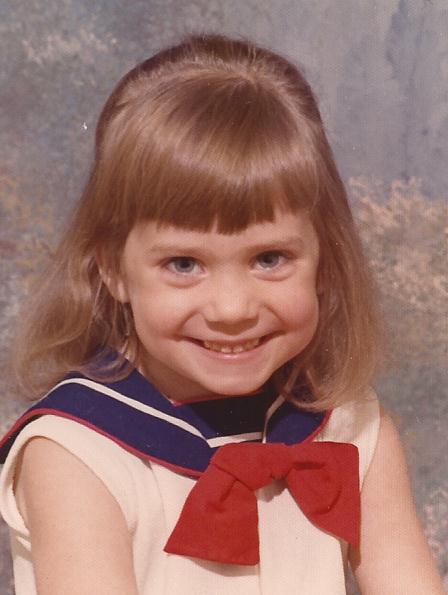
More guardians, more growing up …

I’ve always dreamed very vividly, and in story.  As a child, I was an insomniac, mid-cycle onset.  I’d wake at two or three in the morning and rehearse my dreams until I went back to sleep.  Either that, or tell myself new stories if it wasn’t a dream that woke me.  I told my dream-stories and nightdreams (as opposed to daydreams) to my best friend, Margaret, at lunch and recess.  I dreamed about characters and settings from my favourite television shows and movies: G-Force and Star Wars mostly.

Resources for dreaming and creativity:

I was also big into comics at the time.  Not the typical ones.  I wasn’t fond of the male heroes, and instinctively disliked the groups, in which the women were neither strong, nor independent.  I gravitated toward Wonder Woman, Huntress, Batgirl, and other solo heroines.

Unfortunately, my waking daydreams were also populated by Greg Evigan from “BJ and the Bear,” and Shawn Cassidy from “The Hardy Boys Mysteries.”  For better or worse, Margaret shared in all of that too, and was a regular reader of my stories.

Though I was a huge “Doctor Who” fan, Tom Baker never made it into my dreams, go figure.  More recently though, David Tenant’s made the short-list 🙂

I read C.S. Lewis, Lloyd Alexander, Madeline L’Engle, Zylpha Keatley Snider, and even checked out Pierre Burton‘s The World of OgJoan Aiken, Phyllis Reynolds Naylor, Lois Duncan, and Joan Lowery Nixon joined the list soon after.

Grade six was a rough patch.  Though I’d auditioned and made it into the choir, which was great because I liked to sing, the practices were after school, and one day, I was in an unfortunate situation.  **Those of delicate constitution may want to skip this next part.**  I’d gotten my period, always painful and heavy, even then.  Feeling like crap, and on the verge of bleeding through my clothes, I needed to go home.

My teacher came out into the hall where I was at my locker, preparing to leave, while other students walked the halls and the rest of the choir waited in the room, right next to me, and asked me what I was doing.  “Going home,” I said.  With increased volume, she asked me why.  I tried to tell her that my mom needed me at home.  I wasn’t about to tell her, and everyone else, the real reason.  She berated me for my fickle loyalties and tried to bully me into staying.  I committed to the choir and that meant that I had to be at every practice.  Did I want to be a part of the choir, or not?  Cornered like that, I had no choice.  I quit.  Once again, I was left out of the performance, and the choir, for the rest of the year.

Though I was terribly upset, there was no going back.  I would not be allowed to explain the situation in private.  That wasn’t my teacher’s style.  I wasn’t about to reveal my shame to the class, and wasn’t going to ask my parents to intervene for the same reason.  So I remained embittered for the year.  It was my own fault.  I hadn’t learned the trick of standing up for myself yet.  At the time though, it felt like persecution.

It was another low point on the teacher graph for me.

English: A bottle of Liquid Paper correction fluid

English: A bottle of Liquid Paper correction fluid (Photo credit: Wikipedia)

That same year, someone I thought of as a friend asked to read my stories, and flattered, I consented.  She used an entire bottle of Liquid Paper to obliterate my words.

Another guardian, another lesson: even your friends can’t be trusted.

As you can see, I identify with the hero/heroine’s journey, writer’s journey, or whatever else you’d like to call it.  My guardians have been the defining, or crisis, moments in my creative development.  In that respect, I’m a slow learner.  It took me years to realize that what these people did to me, or to my work, had nothing to do with its value or my own.  I let those formative lessons inform my inner critic (the worst guardian of them all) and it told me that I was worthless.  I believed it for far too long.

So again, I will ask you to share guardian experiences.  Who has put a roadblock in your creative path?  What lessons did you learn?  Did you find a way to overcome your guardians?

Babes in Toyland

As a kid in grade school, I filled Hilroy exercise books with stories.  I had a fascination with new notebooks.  My parents couldn’t keep up with my penchant for paper, so eventually I started pilfering them from school.

The contents of these stolen treasures consisted mostly of horror stories: “The Spooky Hallowe’en Scream Party.”  Yeah, I wasn’t much for the titles back then.

I had one story I called “The Phantom Menace.”  Still have the exercise book and I swear the title was original Mellie.  The story was about a creepy thing that followed a young girl to school, but she escaped before it could catch her.  Wasn’t much for the plotting then either 🙂

When my fourth grade class was looking for something to do for the annual Christmas pageant, I decided that I wanted to write a play.  Based on Disney’s “Babes in Toyland,” it wasn’t original, but it was mine.

The whole situation was a bit fraught.  First, I didn’t take well to my first experience of being edited.  It was never explained to me that anything would have to be changed, or why.  The altered product was simply presented to the class and that was my first look at what my teacher had done to my play.  Understandably, I was upset.  It didn’t matter if the play was improved, I was nine years old.

I’d still like to know why I wasn’t consulted.  A courteous “heads up” might have been nice.  Perhaps the idea of dealing with a nine-year-old writing diva-in-development wasn’t my teacher’s idea of a good time.

It was also decided that I would not be allowed to participate in the play, being the author and all.  It wouldn’t be fair to everyone else.  Still, I was proud of what I’d created, and I believe the play was a success.  After introducing the play, I stood around in the darkened gymnasium with nothing to do.  That kinda sucked.

Hero with a Thousand Faces, Joseph Campbell

Hero with a Thousand Faces, Joseph Campbell

I’m a fan of Christopher Vogler’s The Writer’s Journey, and its antecedent, Joseph Campbell’s The Hero’s with a Thousand Faces.  As creative people, we experience the hero’s journey in our lives.  Interpreting it through Campbell’s lens has allowed me to come to terms with some of my negative experiences.

That grade four play was my first experience with the guardian at the gate.  I learned that editors are not to be trusted, and that if given the chance, they will take your work away from you in all the ways that matter.

I know that this is not true, but to this day I cringe at the thought of giving my work into the hands of others, and when I do, I resist seeing the sense in the recommendations of well-meaning colleagues and mentors.  But I deal, and I return to my work fuelled by the need to improve.

Have you had any formative writing experiences where a “guardian” figure put obstacles in your way?  Have you read Campbell or Vogler, or both?  Is there value in their work for you?

Have you ever heard of “Pencil Box”?

I was seven years old, in grade three, and my parents got me my first puppy.  I named her Friskey.  My first piece of creative writing was about my dog.  It was unsolicited, but I was allowed, no encouraged, to read it to the class.

You may have the distinct impression from some of my earlier posts, that I’m not fond of school or teachers.  Some of the greatest creative difficulties and nartiest guardians at the gates I’ve faced have been thanks, in part, to various schools and teachers, but teachers have also been some of the greatest guides and mentors in my creative life as well.

Some of my best friends are teachers or professors and I know that they struggle to be among the best in their field.  Though I’m a corporate trainer, I’m a teacher too, and so I will not paint all teachers with the same brush.  Just like people, there are good teachers and bad ones.

The influence of great teachers:

We all have at least one teacher in our past that was important to our development as a person, if not as a writer.  I’ve been lucky enough to have several.

The first great teacher in my life was Mrs. Debbie Arnold.  She was the one who encouraged my early creative efforts in grade three.  She also advised my parents to enroll me in voice lessons as the result of my enthusiastic performance in her music class.

Though professional voice lessons were too expensive, I auditioned for and was accepted into the church choir.  I was also enrolled in an after school piano class.  We didn’t have a piano though, and that caused a few difficulties.  I wasn’t keen on the instructor either, and dropped out before long.

Then there was Siobhan Riddell.  She was an amazing artist even then, though I don’t

This book cover was one of Siobhan’s pieces.

think she was in high school yet.  She and a group of her classmates had made story books and they came into our class to show us.  Hers was a fairy tale and I loved it.

Siobhan’s story was my call to adventure.  In the wake of that revelation, I started drawing characters, super heroines and the like, but what are characters without stories?  So I started writing little stories to go along with them.

I’d been watching CBC’s “Pencil Box” every Saturday.  They featured stories submitted by their young viewers which they dramatized on air.  It was awesome.  That was my first literary submission.  I must confess that while I still have the letter acknowledging the receipt of my story, I never did find out whether it was produced.  My great aunt Florence swore she saw it, but “Pencil Box” went out of production that year and I never did.

Years later in university, I made an enquiry with the CBC, but short of my going down to their archives and finding the dear little thing myself, the costs of paying someone to search for it were prohibitive.  I’ve never gotten back to it.  I don’t even know if those particular archives still exist.

Who was your first great teacher and what influence did he or she have in your life?  Who or what was our first inspiration?  Your first creative effort?  Your first submission?  How did that turn out for you and where did that experience lead you?

A born storyteller …

Storyteller is just another name for liar.

In grade one, I think all my classmates (and teachers) thought of me as a silly giggler, a liar, and cat-lady-in-training.

I didn’t even know how to write properly yet, so I exercised my creativity by telling my classmates in “show and tell” about the latest stray cat that I picked up on the way home.  They’d always run away after a few days and so I could show the class a different picture from the cat book I’d checked out of the library and tell them that my latest find looked just like that.

Daydreaming was also a preoccupation.  Because my dad had epilepsy, it was thought that I might too and that my habit of totally “zoning out” was actually petit mal seizures.  Later in life, I was formally tested for epilepsy and there was absolutely no sign of it.  I’d just delve so deeply into my fantasy world that there was nothing could tear me away.

If I was born 20 years later, I’d probably have been diagnosed as ADHD and drugged into submission.  As it was, I was “spoken to” and ignored.  I was deemed enthusiastic but disruptive by different teachers for different reasons.

Can you see the mischievious? Just call me “wee devil” 🙂

Really, I was painfully shy, and the giggling was a way of deflecting uncomfortable situations, which meant pretty much everything.  To this day, I still laugh when I offer a thought or suggestion to my colleagues or manager at work.  If it’s too radical, my suggestion can always be dismissed as a joke, right?

The daydreaming-at-inappropriate-times thing stayed with me until my mid-twenties, and then I started to get clever about it.  I’d restrict my mental ramblings to my “alone time” so no one would be put off by my apparent disinterest in whatever it was they were saying.  Now I cultivate solitariness.  As I writer, I have reason to, but as a creative soul, I simply can’t do without.

As for the telling of stories, I’ve always wondered what might have happened if someone had recognized what it was I was trying to express and encouraged me to turn those imaginary powers to something else.  If I’d started writing my dreams and stories down earlier, where might I be today?

Ultimately what-ifs and might-have-beens are only intellectual exercises.  None of us have do-overs.

A few months ago, one of the writers I consider to be a mentor, Barbara Kyle, presented this TED talk (via Volconvo) to her creative network: http://www.volconvo.com/forums/content/226-do-schools-kill-creativity.html

It is 20 minutes well-spent, trust me.  Sir Ken is incredibly funny, but his message is dead serious.  Currently, it is not the business of schools to nurture creativity, but to create useful/functional members of society.  I rather agree with Sir Ken, that only by nurturing the creativity of our children will schools produce truly valuable members of the human community.

I’ve also been disturbed by the resurfacing of the ADHD debate.  Are children being over diagnosed/incorrectly diagnosed?  This debate has been around for decades and it still hasn’t been resolved.

Some food for thought:

Were you a creative child smothered by a school system that didn’t recognize what your “acting out” meant?  How did you come to understand your creativity and who helped you through that sometimes agonized and agonizing process?  Did you ever feel less valued or less intelligent because you were more creative than academic?

Three Blind Mice

When I was a wee thing, my parents enrolled me in ballet classes.  I think it was because I was such a spirited and energetic girl 🙂

All went well until the first recital.  We were performing “Three Blind Mice.”

I kind of looked like this:

Young Ballerinas, Casa de Cultura, Havana

Young Ballerinas, Casa de Cultura, Havana (Photo credit: travfotos)

I tried to find my old photo in the big box of them I have.  I searched Mom’s collection too, but no luck.  It’ll do …

I was so excited I think I went ballistic, though I honestly don’t remember the specifics.  The instructor had to discipline me, and unfortunately had to do so in front of everyone.  I went from whirling like a dervish to hugging my knees in the corner crying in about two seconds flat.

We were about to go on stage and this wouldn’t do.  Her pep talk wasn’t inspiring, but it straightened me out enough to perform.  After the big night, I told my parents that I didn’t want to dance anymore.

I did do a little bit more later on.  One of the local gymnastics clubs was offering after school classes and I did one or two dance classes that way and about four or five gymnastics classes.  I always liked gymnastics better anyway.

The thing was, I learned a couple of negative things from that first creative challenge:

  1. Teachers are the enemy.
  2. Quitting is easy.

Avoidance of conflict and embarrassment crop up quite a bit in my creative life.  Heck though, I was three at the time.  How in the world was I supposed to know how to handle it?

So why court embarrassment again now, all these years later?  Because when you’re creative (and I think everyone is), you’re usually creative in a whole whack of different ways.  This was just the first way that I manifested my creativity.  I also liked to draw, build things, sing, and I was a fantastic pretender …

So a tip for people who might think they’re “blocked” in whatever creative endeavor they’re currently engaged in: exercise your creativity differently for a while.  It doesn’t have to be anything spectacular; singing in the shower will do.  Or maybe you could dance like a maniac when no one’s around, go see a play or a concert, start a journal, if you’ve never tried, check out an open mic night at a local cafe, or karaoke if you dare, buy a sketch pad from your local grocery or pharmacy and get with the cartoons.

You may find that refocusing your creative mind (or your creative body) will make you wonder why you thought you were blocked in the first place.

What alternate modes of creativity do you engage in?  What do you want to try that you’ve never tried before?  Was there a time in your life when you felt shut down?  What lessons did you learn from that and how did that experience shape you?