Six questions with D. J. McIntosh

DMcintoshD.J. McIntosh’s The Witch of Babylon has been sold in twenty countries, was shortlisted for the Crime Writers Association Debut Dagger Award, and won a Crime Writers of Canada Arthur Ellis Award for best unpublished novel. It was a national bestseller, an Amazon.ca Best Book, and was named one of CNN’s Most Enduring Historical Thrillers. McIntosh is a member of the Canadian Society for Mesopotamian Studies. She is a strong supporter of Reporters Without Borders and the Committee to Protect Journalists. She lives in Toronto.

______________________________________________________________________________

Dorothy is one of the literary friends I’ve made through social media.  I became intrigued by her work with the success of her last novel, The Witch of Babylon.  Now that her second novel, The Book of Stolen Tales, is about to be published, she has graciously consented to this interview on Writerly Goodness.

Welcome, Dorothy!

WG: The Babylon Trilogy features art dealer James Madison and follows his scholarly adventures into the mysteries of the past and how they affect the modern world.  Kirkus Reviews called you “An erudite Dan Brown,” but you mentioned to me that your novels have more in common with the novel of ideas.  Can you elaborate on that statement?

DJM:  I suppose I’m using the phrase in the broadest sense. Thrillers depend on fast paced action, strong narrative and, usually, a compelling central character. I’ve read a lot of professional opinions and blogs that maintain ideas, especially those with a political tone, should be limited or left out entirely. Added to the list of non-starters are detailed descriptions and discourse about theories and ideas. I cut my teeth on the early Victorian novelists who, thankfully, wrote before this advice was imparted. Granted, we can’t call their novels ‘thrillers’ but ‘ideas’ were central to their work. I think of Dickens whose novels amounted to a virtual campaign for social justice and whose characters often symbolized social ideals or failings. Or Thomas Hardy dismayed at the transformation of England’s rural agricultural character into an industry centered world. The idea examined in The Book of Stolen Tales looks at how stories emerge from long ago myths, travel through the ages and are transformed according to the social milieu and mores of the storytellers. I’d love to see a return to novels that celebrate ideas.

WG: What first drew you to Mesopotamian legend and mythology and how did that interest result in the idea for your novel/series?

DJM: I like to write about famous stories and give them a new twist. When I began to think about my first novel, I started with the Book of Genesis, tales that were familiar to most of us. It quickly became evident that many of these stories were based on earlier Mesopotamian myths so I turned to research Mesopotamian history and culture and promptly fell in love with it. At the same time, the Iraq war broke out. Events such as the looting of the Iraq Museum I found both horrifying and gripping. The juxtaposition of this with my research grew into my first novel.

WG: Who or what are your literary influences and how have they contributed to your work?

DJM: I love lyrical writing and would name Anne Michaels (Fugitive Pieces), Cormac McCarthy (All the Pretty Horses), Rawi Hage (De Niro’s Game) and Gil Adamson (The Outlander), among my favourites. For clever plotting and great twists you can’t beat Agatha Christie (The Murder of Roger Ackroyd). And when I started to become serious about beginning a novel, I relied on Andrew Pyper’s Lost Girls. His book taught me so much.

WG: I’m going to take you back in time, because many of my readers aren’t as advanced in their writing careers as you.  When you were trying to find a home for The Witch of Babylon, did you query agents first, or go straight for a publisher?  How long did it take to get a deal?

DJM: When I decided to attempt a novel, I spent a lot of time networking with writers and listened to the many stories about agent and publisher slush piles and rejection letters. So I didn’t circulate my m.s. at all but instead entered the Crime Writers Association (UK) Debut Dagger and was thrilled to learn that “The Witch” was a finalist. The CWA circulates all finalist entries to agents and publishers and soon after I was fortunate to be taken on by a Toronto literary agent.

WG: I’m a process geek.  Could you share something about your writing process, please?

DJM: I’m a strong believer in outlining. Once that is complete I grit my teeth and crank out the first draft. I find this stage excruciating and often there will be whole passages I know very well will be tossed but they’re needed initially just to get a full draft. Then comes working with my editor, who thankfully has a fine appreciation for improving the copy, and we go through many revisions. I really love this stage because it’s here I can fine hone the writing and enrich characters. My books are research intensive and much of the history is also added at the revision stage.

WG: Please share your log line, or promo copy, for The Book of Stolen Tales.  What is the publication date, and what plans do you have for the launch and promotion?

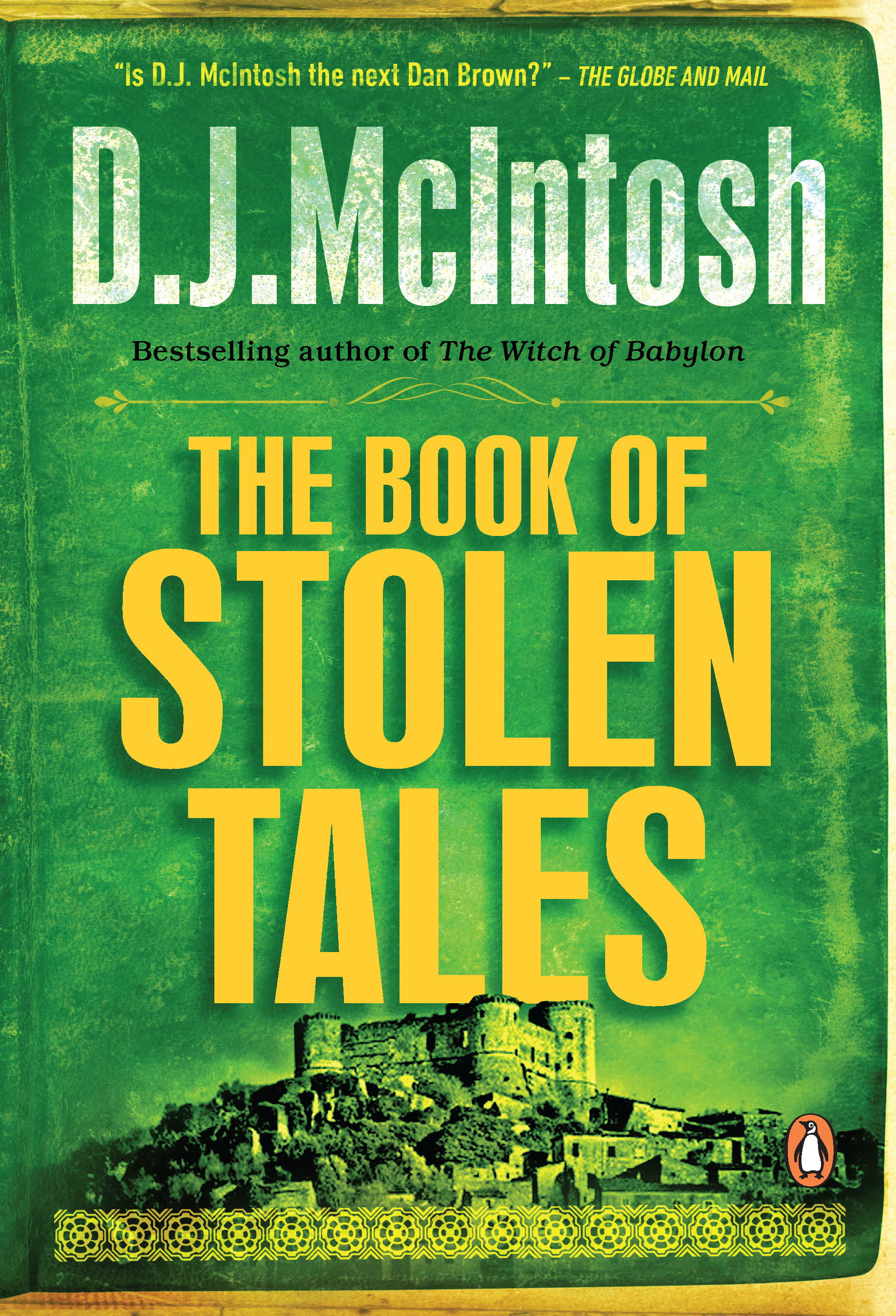
DJM: May 28th!!  We’ve got a great launch planned on the 23rd. A reception at the Carlton cinema in downtown Toronto followed by a private screening of Jean Cocteau’s classic Beauty & The Beast as a counterpart to the theme of The Book of Stolen Tales. Here’s the novel’s description.

“In 2011 D.J. McIntosh took the book world by storm with her debut novel, The Witch of Babylon. Praised for its “stellar research” and “superb writing,” it introduced readers to John Madison, a rakish New York art dealer with a past, who uncovered a fabulous treasure trove of antiquities in the hills outside Baghdad and the truth behind a famous story long believed to be a myth.

In this highly anticipated sequel, John Madison travels to London to purchase at auction a rare seventeenth century Italian book of fairy tales for an anonymous client. Madison is warned about the book’s malevolent history. Before he can deliver it to the buyer, he is robbed by a mysterious man claiming to be the book’s author. When his client disappears and the book’s provenance is questioned, Madison must immerse himself in the world of European artistocracy and rare book collectors. As the dark origins of certain fairy tales appear to come to life, Madison discovers that a well-loved children’s story contains a necromancer’s spell and points to the source of a deadly Mespotamian plague.”

I’ll be promoting the book with some great giveaways – new Kindle, Kobo and Sony e-readers and Amazon and Indigo gift certificates. For the details when the time comes, check out my facebook page:

https://www.facebook.com/pages/DJ-McIntosh/114532351952754?sk=wall

and Twitter page:mcintosh_bookofstolen_pbFront
https://twitter.com/djmcintosh1

WG: Thank you for a fascinating and revealing interview, Dorothy.  All the best for your future writing endeavours.

DJM: Thank you so much for the interview Melanie. I always look forward to your Facebook posts!

WG: For those of you whose interest has been piqued, I encourage you to pick up The Witch of Babylon and read it in advance of The Book of Stolen Tales launch.

Also check Dorothy’s Author page out on Goodreads.

Six questions with Barbara Morrison

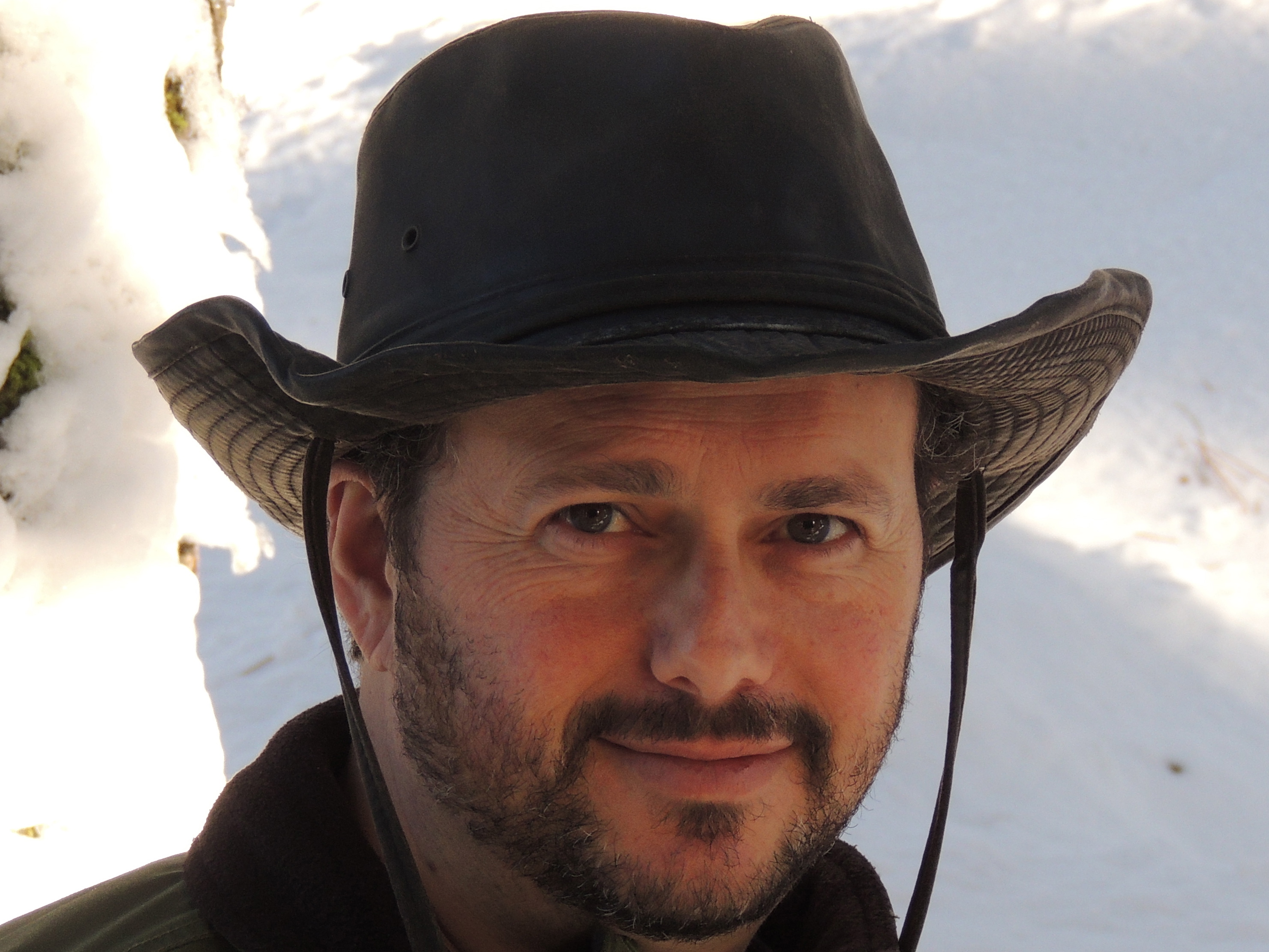
Barbara MorrisonBarbara Morrison, who writes under the name B. Morrison, is a poet and writer, a publisher, teacher, and dancer. A few years after graduating with a BA in English, her marriage collapsed and she found herself forced to go on welfare. It is this experience of a world very different from the one in which she grew up that she describes in her memoir, Innocent: Confessions of a Welfare Mother.

She attributes part of her success in escaping poverty to her involvement in the world of traditional dance and music. She performed as a morris dancer for thirty years and continues to be active in the Country Dance and Song Society and several of its affiliates.

Barbara is also the author of a poetry collection, Here at Least, with a second volume, Terrarium, scheduled for 2012. She is currently working on a novel. Barbara has won multiple awards, been invited to speak as a featured author, and been published in magazines such as The Sun, Sin Fronteras, Scribble, and Tiny Lights. She conducts writing workshops and speaks on women’s and poverty-related issues. She is also the owner of a small press and speaks about publishing and marketing. Come by her website for more information.

Barbara’s Monday Morning Books blog is where every week since 2006 she has been sharing insights about writing gleaned from her reading. You can also find her on Twitter where she tweets regularly about poetry and on Facebook. Be sure to visit her GoodReads Author Page and her Amazon Author Page.

____________________________________________________________________________________

I met Barbara through Robert Lee Brewer’s April Platform Challenge last year and am pleased to welcome her to Writerly Goodness.

Terrarium will be Barbara’s second collection of poetry and will be published in May 2013.

WG: When did you begin to write poetry and how do your poems come to you?

BM: I began writing poetry in high school and continued through good times and bad, even when I was a single parent working three jobs. Although I’ve also kept a journal, it is in poetry that I seem to have chronicled my life. At first I thought I had to wait for poems to come to me, but after I spent a couple of years making myself write a poem a day, I realized that there would always be something troubling or tickling me, something I wanted to praise or puzzle over.

WG: What is your creative process like?  Do your poems incubate for a while?  Do you edit extensively?  What role does your publisher play in the process?

BM: They often start with a single phrase. Some poems come quickly while others take their time. I then put them away for a while before starting another round of editing. I often repeat this process several times. I self-publish my poetry, but once I put on my publisher’s hat, I might demand further revisions.

WG: Terrarium’s theme revolves around various interpretations of home.  How did this theme evolve for you and how does it reflect the “place” you find yourself in at this point in your life?

BM: I actually started with the theme and deliberately wrote poems around it. I often dream about a particular city. It doesn’t exist in our world, as far as I know, but I could draw you a map of it; the streets and shops and houses are the same whenever I revisit them in dreams. Trying to work out why my unconscious needed to construct and continue to inhabit this place made me wonder how our places, both those we choose and those where we find ourselves, influence who we become. I never meant to stay in the city where I now live, so on some level I continue to feel even after many years that my life here is temporary, which in turn reminds me that our stay on earth is temporary, and I must make the best use of it that I can.

WG: How was assembling Terrarium different from working on your first collection, Here at Least, and what has the experience taught you about yourself as a poet?

BM: With the first collection I agonized over selecting and arranging the poems. I must have changed my mind a thousand times! With Terrarium I was more focused. Also, each of the three sections has a kind of chronology which helped.

WG: Is a launch or reading planned?  Will there be an online component to your promotion?

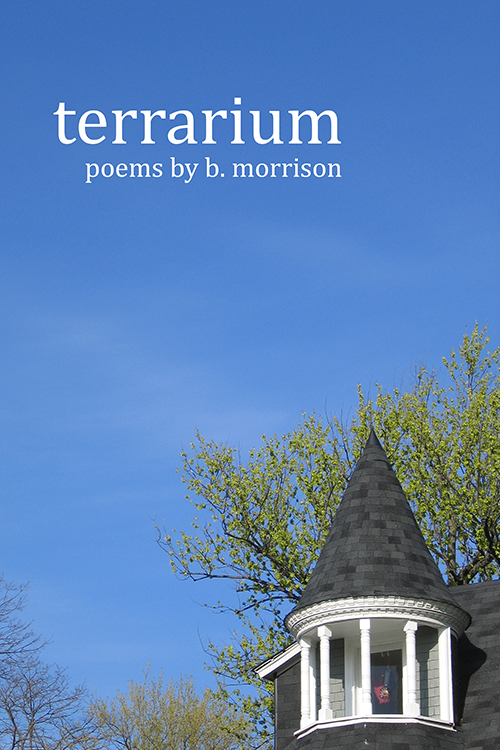
BM: Yes, I have a book launch party scheduled for 10 May 2013 at The Ivy Bookshop in Terrarium CoverBaltimore, MD. I also have several readings set up; see my website for details. One thing I’ve learned about online promotion is that there is no end to what you can do, so I will pace myself.

WG: What’s coming up next for you?

BM: I’ll be teaching a five-day memoir workshop called Sharing Our Stories at Common Ground on the Hill in July; for more information, see my website http://www.bmorrison.com. I am also working on a novel.

Thank you for sharing your creative journey with us!

Six questions with JL Madore

JL MadoreJL Madore is the writer of fast paced, sexy fantasy and paranormal romance series with heat levels ranging from sizzle to erotic. She is the winner of the Writing Fairy Scholarship for New Writers 2012, a board member of WCDR – the Writers’ Community of Durham Region (a 300+ member writers group focused on developing authors in all aspects of writing), a member of two writing critique groups and a two time student of ‘A Novel Approach’, a yearlong workshop to study the craft of writing novels and hone ideas into working manuscripts.

You can find her at www.jlmadore.ca and on Twitter @jlmadore

____________________________________________________________________________

Welcome to Writerly Goodness, Jenny 🙂

After working together for a short time on an online critique group, I lost touch with Jenny.  I’m so happy that the publication of her novel, Blaze Ignites, was what connected us again.  Congratulations!

WG: When did you first start writing, and when did you know that writing was what you wanted to do, long term?

JLM: Writing actually snuck up on me. I often read about authors who say they ‘knew since they were a kid’ or ‘have been jotting down stories since they could hold a crayon’, but that wasn’t me. My interest actually came about when my husband and I got fed up with the day-to-day and moved our family to Central America for a year. From September 2008 to August 2009 we lived in Llano Grande, Panama. No jobs. No school. Nothing but the four of us on a stunning tropical rainforest property for a solid 12 months. It was during those quiet afternoons, lying in a hammock, reading the one and only novel we brought with us–my daughter’s copy of Stephenie Meyer’s Twilight–that I started to imagine different ways the story could have gone. That lit the fire.

WG: How did Jade’s story first occur to you, and how long did it take you to write your first draft?

JLM: Well, I’ve always been a huge lover of Elves. As a pre-teen I devoured the Elf Quest graphic novels and who isn’t in love with Legolas Greenleaf from Lord of the Rings? I mean, really. When we returned to Ontario in the fall of 2009, I decided to get the story out of my head. Casting Galan was easy and I knew I wanted the protagonist to be a kick-ass female, so Jade had to be able to hold her own. The first draft was written in six months, the only problem was I didn’t know how to write well. I recognized that if I wanted the novel to be any good, I needed to study the craft of writing. After three years of courses, critiques and revisions, Blaze Ignites is ready to hit the public eye.

WG: Are you a pantser, or plotter?  How does that play into your revision and editing process?

JLM: Most definitely a plotter, but not too tightly bound. I write linearly with a general story and loose outline and let the characters adjust things as they go. The funny thing for me was that I saw the big picture story arc for the Survivor Series and kept writing. Before I went back to finalize Blaze, and while I was learning the craft, I’d written the first drafts of the following three books. After that, the editing and revisions just seemed to fall in place.

WG: You’ve gone the self-publishing route.  Were you always set on self-publishing, or did you try for a traditional deal first?  Why did you ultimately choose Lulu?

JLM: I queried traditional agents and publishers over 2012 and although it sounds funny, during that year I received some genuinely supportive rejections. It seemed the industry opinion was that though they liked the story and many commented positively on the voice and humour, ‘Elves won’t sell. The market won’t support a fantasy love story with Elves’.  I disagree. And if I’m wrong, so be it. Galan is an Elf. Decision made, self-publishing it is.

Lulu seemed the most user friendly for a launching platform for me and where I am right now. I’m currently working on uploading to Createspace and others, as well as talking to a printer, but life gets in the way sometimes and it is slow going at the moment.

WG: When did you start building an online platform and how is that supporting your work as a writer?

JLM: My online presence is definitely a work-in-progress. I’m not technically inclined in the slightest, so that side of my writing career is a struggle. I think I probably did everything backwards, but my website, www.jlmadore.ca is only recently up and I tweet when I think I have something worth saying. It’s too early in the game to say how it’s working, but I’m on board for the long haul.

WG: What’s coming up for JL Madore and Jade Glaster?

JLM: The survivors at Haven have many sexy adventures ahead of them: Book 2 – Bruin’s story and Book 3 – Lexi’s story, are being reviewed by critique groups and beta readers, Blaze full page coverwhile Book 4 – Lia’s story is almost finished and waiting in the wings. Currently I have a paranormal erotic/romance series that’s been getting interest from the traditional publishing world, so I’m working on that. I’d love to have a hybrid publishing approach and span both worlds. Fingers crossed.

Thank you for sharing your time and experience with us, Jenny!  Break a pencil with your future writing endeavours 🙂

My pleasure, thank you so much for the opportunity and my best to all your readers.

Caturday Quickies: The Sulphur III launch reading

Last night, I attended the launch reading for Sulphur, Laurentian University’s Literary Journal, issue III.

Natalie and Kevin

Natalie and Kevin

I’d been invited by 100 thousand poets for change alums Natalie and Kevin.  Natalie had a couple of poems accepted to the journal.

Also in attendance were Kim Fahner (in support of a published colleague) and Louise and Paulette, two of my former collaborators on the Battle Chant project.  Paulette also had a poem in the issue.

The event took place at The Little Montreal in downtown Sudbury and featured many lovely

Paulette and Louise

Paulette and Louise

poets and a selection from a play, another publishing first for Sulphur.

It was a lovely evening and I enjoyed reconnecting with my fellow writers.  Though Tom Leduc was there as a representative of the Sudbury Writers’ Guild, several others who had been published in Sulphur III were absent, which was regrettable.

Me and Kim with Paulette and Louise

Me and Kim with Paulette and Louise

Thinkin’ thoughts

There was a little discussion about the relative merits of the arts community in Sudbury, and frankly, I think it’s doing just fine.  It could be better promoted, certainly, but I don’t think there’s anything wrong with it, per se.

It’s long been held that Sudbury, essentially a blue collar town, doesn’t appreciate its artists.  Can I call shenanigans on that one?

There are artistic enclaves all over town: several centered on out institutions of higher learning, the Theatre Centre, several other community theatres, our small presses, the Art Gallery of Sudbury, the Sudbury Arts Council, the Sudbury Public Library, institutions like the Townehouse Tavern, and organizations like the Sudbury Writers’ Guild and the Sudbury Hypergraphic Society.  Several area high schools also produce excellent writers, musicians, and artists every year.

The concern is that many of these organizations, institutions, businesses, and services become insular over time.  When I sat down with Hally Willmott last weekend, she hadn’t been aware of the SWG or that there were any writers groups in town.

It’s not that we don’t talk to one another, attend each others’ various events, or try to cross-promote.  It’s certainly not that none of us have established web presences or hold community events like readings, workshops, concerts, art shows, or plays.  I know that each party does its best to advertise its presence and services and to promote any special events through various media, both traditional and online.

What the heck is it then?  Why doesn’t Sudbury claim its artists and arts community proudly?  I have no idea.

For the average Sudburian, it comes down to participation.  You get what you give.  You have the arts community you help to create.

You must, of course, take this with a grain (or handful) of salt as it comes from someone who hardly makes it out to SWG meetings and is very far behind in her critiquing duties for her guildies.

I say none of this to disparage current efforts, which I know are significant, or any of the organizations or businesses, which I know are doing the best they can.  Ultimately, I have no solution, but I wanted to highlight what some consider a problem in the hope of provoking thoughtful consideration of the matter.

Got thoughts?  By all means, share ‘em!

Six questions with Hally Willmott

Hally WillmottHally was born in Sudbury, Ontario, Canada. She is a Police Officer with the Greater Sudbury Police Service. Hally enjoys reading both fiction and non-fiction. She is a self-proclaimed writer of all things imaginative (both poetry and novels). She also believes that if you put your mind to it, you can accomplish anything!

She met her forever partner Jerry, and married him thirteen years ago. Together, they have accomplished the greatest feat, being blessed with two gifts from God, their sons Jacob and Jordan.

Between working full time, being a wife and mother, Hally finds the time to write when her kids go to bed, when Jerry’s at work or when their new puppy Jersey decides to wake her up every morning around five a.m.

She and her family enjoy long summer nights by the campfire and cold winter nights snuggled up watching movies in their home.

In 2009, Hally had an idea to write a novel. The idea for Awakenings came to her in a dream, the first in a series of four.

_________________________________________________________________________________

I was amazed, and I have to say, a little freaked out when Hally reached out to me last week through my blog.  I had no idea that Writerly Goodness had that kind of influence or good will.  Ultimately, I’m flattered and grateful and very pleased to have made the acquaintance of another local writer of fantasy fiction.  A soon-to-be-published writer at that (yay)!

I think that’s what I’m most thankful for: that Writerly Goodness is creating a community and communicating to it in a meaningful way.

Since we live in the same city, I was able to meet with Hally this past weekend and we shared some of our writing ups and downs.

Now I feel privileged to share some of that with you.

Thank you for taking time out of your busy schedule to answer a few questions for me (and my readers).  Welcome to Writerly Goodness, Hally 🙂

HW:  Thank you for having me 🙂

WG: You mention in your bio (above) that the idea for Awakenings came to you in a dream.  Was it a single scene, or the story writ large, and how did you hang onto it long enough to get Jacey’s story down?

HW:   The actual part which outlined my main character Jacey Adison was only a flash.  Once I started telling Jacey’s story she pretty much took over and to this day is still writing it.

WG: For those who may not be aware, what is Awakenings about?

HW:  No matter how many times sixteen-year old Jacey Adison’s parents tell her they must move, she has never questioned their lifestyle. Until now. When Jacey was two, her parents fled the protection of their birthplace, the mystical dimension of Nemele. Leaving was the only solution her parents believed might allow them to keep their family together and alive.

The Adisons have been running from a sect of iniquitous beings from Nemele who covet Jacey. Her parents have repressed their adversaries’ relentless tracking efforts by not utilizing their own mystical powers. They have chosen to conceal themselves within the only realm they knew they’d be able to survive. They are living under their self-imposed powerless sanctions on Earth, which constitutes the nineteenth nation of Nemele.

Her parents have never revealed their true identities to Jacey, consequently keeping her true lineage and unique birthright from her. Jacey’s family has pretended to be non-magical humans as a ploy to prevent an ancient omnipotent entity from killing more innocent beings in its relentless quest to possess Jacey.

Born as an anomaly, Jacey possesses rare abilities that both virtuous and corrupt entities seek to use as their own. Should either side prevail, Jacey may be the saviour or downfall of every world within Nemele’s domains. Blindly thrust into life and death situations, Jacey learns of her true powers within her dreaming and conscious states.

WG: How long did it take you to write Awakenings?  Now the unpleasant second half of that question: how long has it taken you to edit?

HW:  Awakenings took me just under a year to write from start to finish.   ‘Awakenings’ is now in its final stage of edit through Limitless Publishing.

WG: You went through quite a journey to find your publisher.  Would you mind sharing some of that adventure?

HW:  Initially when I wrote it, I had only planned on writing a novel and saying hey I finished it!  It wasn’t until I received positive feedback from some ghost readers that I even thought of having it published.  Because I was green when it came to the publishing world, I thought hey – why not?  Can’t be that hard…can it?  Well, after at least one hundred rejections from both publishing houses and agents I finally got one YES – And that’s all it takes 😉

WG: Now for the introspective question: how do you keep everything balanced and find time for work, family, and writing?

HW:  I’ve never been one to do something half heartedly.  So, sometimes others facets of my life may take a back burner while I focus on something else.  I have to say I have an EXTREMELY supportive family.  Without them and God I would have never been able to get to where I am today.

WG: What’s coming up next for Hally Willmott, Author?

HW:  The cover reveal for my first novel is on Wednesday the 20th of March 2013, and ‘Awakenings’ is set to be released in late May early June 2013.  I’m excited about the release of my debut novel and I will be actively promoting its success over the next while.

Thanks again, Hally, and the best of luck with your future writing endeavours!  Knock our readerly socks off 🙂

Six questions with Alon Shalev

Alon ShalevAlon Shalev writes social justice-themed novels and YA epic fantasy. He swears there is a connection. His latest books include: Unwanted Heroes, At The Walls Of Galbrieth, and The First Decree. Alon tweets as@alonshalevsf and @elfwriter.

_________________________________________________________

Welcome to Writerly Goodness, Alon!  Thank you for taking the time to answer a few questions for my readers.  I must say that I’ve been following you with great interest since we “met” through Author Salon and I became aware of your progress through last year’s Amazon Breakthrough Novel Award (ABNA).

WG: I know you’ve probably written a lot about this, but I must ask about your experience with the ABNA.  Some of my friends have expressed interest in the competition (or entered) and I’m sure they would love to know about the process of getting to the quarterfinals and how it contributed to your success with At the Walls of Galbrieth.

AS: I think ABNA is an amazing opportunity even if you do not win. It pushes you to finish and polish a manuscript, and prepare what is essentially your media kit. I have reached the quarterfinals with three different books and enjoyed the tension around it (I had my acceptance speech all worked out!). When you reach the quarterfinals, experienced people in the industry critique your novel. It can be tough, but you do learn a lot. Finally, there are many agents trolling the competition, so it is an effective way to avoid the depressing slush piles.

WG: Now The First Decree, the second novel in your Wycaan Master series has been published.  How was writing the second novel in your series different from the first and what did it teach you about yourself as a writer?

AS: The most significant difference is allowing for a story arc that gives a satisfying climax, but also extends tendrils into the next book. In fact, there is a similarity at the beginning, because you want to bring the reader who has not read your first book (or read it a while ago) up to speed without imparting a huge information dump or giving away too much from the first book. I found this very challenging and had a number of friends critique this aspect in order to find the right balance.

What I love most about writing a series is that I can really develop my characters. They have time to grow up and mature. Outside of writing, I am a devoted father (which is what got me writing epic fantasy in the first place) and work with college students. So I realize that I am imbuing this love for seeing young people grow and develop into my writing and, I think, only a series can allow for this.

WG: How did Seanchai’s story begin for you and how did it evolve? 

AS: Every summer, my family goes camping for two weeks in Northern California. After we had set up camp, my sons (then 11 and 7) went off to explore the campground and I whipped out my laptop. They soon returned and objected to me writing during family time and this was the compromise we reached. During the two subsequent years, I wrote The First Decree and Ashbar, and read a couple of chapters each night either around the fire or snuggled in my tent.

I realized that many aspects of Seanchai are a mix of both sons, and perhaps how I would like them to turn out.  My fears that I will not be there for them one day plays out as Seanchai is denied a parent or mentor so many times. But there is also the desire to cultivate deep friendships, which I believe is central to the values that both boys have, as well as dealing with teenage romance and pressure.

All my characters are now part of my family. When I killed one off, I cried. When I edited that chapter several times, I cried…several times! I often imagine conversations with them, counselling and encouraging them, as I strive to do for my sons.

WG: I’m a big process geek.  Would you share something about your writing process? 

AS: I am not a good person to ask. I plunge in and trust the creative juices. I usually finish a 100,000-word manuscript (a rough draft full of mistakes) in three months, writing an hour a day and more on weekends. I keep a contents page for myself to track chapters and a characters page where I add physical traits or history. I also have ongoing plot notes that are threads between chapters and stories. This is written at the bottom of the chapter I am writing and I cut and paste on from word doc to word doc and erase an idea after it is included.

In terms of workspace, my desk is in the kitchen and I can write on the train, bus, anywhere. Once the idea is there, everything flows. It is a truly exhilarating experience. My family would probably tell you that I am a bit crazy when in the creative process. If I do not have the time to write I can become somewhat cranky and have a propensity to talk about little else. I am constantly worrying about my characters and the danger or emotional turmoil that I put them in.

WG: I’ve been told by industry experts that traditional fantasy is a hard sell in today’s market.  Did you find this to be true and what are your thoughts on the genre’s continuing potential? 

AS: My marketing guru is John Locke (the author) and I am fastidiously following his business model. He says it is better to have a smaller, clearly defined target audience, than a larger, less identifiable one. I have more problems placing my social justice-themed novels than fantasy.

Fantasy readers are passionate, fun, social and happy to share opinions. They are on line and engaging their peers all the time. In addition, every movie – Lord of the Rings, Eragon, Hobbit, Harry Potter, Oz, Jack and the Giant Slayer – brings waves of new and eager readers. Parents, who want to encourage their children to read, will buy them the books that reflect these movies. As long as these movies are being produced, as long as there are great authors writing quality stories, I think the future is bright and I am thrilled to be a part of it.

WG: What’s coming up for you and The First Decree?

AS: Following John Locke’s model, I am very focused on writing and publishing. Ashbar – the third book in the series is scheduled to come out in the fall. I will finish writing Book 4 during the summer and then spend the rest of the year editing it before turning it over to my editors.

The new marketing reality is that we are in an age of instant gratification. You finish Book 1 and if you enjoy it you want the next and you want it now! How smart were Amazon with their 1-Click? There is so much social media that to keep your readers waiting a year for a book is dangerous if your name doesn’t end in Brooks, Salvatore etc.  The First Decree

Meanwhile, I continue to build my online platform through my weekly blog (www.elfwriter.com) and twitter (@elfwriter – 22,000+ followers). I spend a fair amount of time here and on Facebook (and just getting into Goodreads), and I truly love the interaction with fellow writers, readers and fantasy fans.

Thanks for sharing your time and expertise, Alon.  All the best for your future writing endeavours!

Thank you, Mel, for this opportunity.

Caturday Quickies: Susan McMaster Workshop

Susan McMaster

Susan McMaster (Photo credit: pesbo)

When I originally indicated that I was going to change my blogging schedule to weekends only, one of my online writing friends commented on how wonderful the idea was of a ‘flurry of posts’ on the weekend.

I’ve been posting fairly consistently on the weekends since, but I realized that I have a few things to catch up on.  So this weekend, though the weather is sunny and cold here in the Sudz, I’m creating my own mini storm of blog posts.

Who is Susan McMaster?

Susan McMaster is a past-president of the League of Canadian Poets, poet, and spoken word artist.  She’s given a workshop in the north before, and this time, I decided to partake.

The Sudbury Writers’ Guild had enough funds in its coffers to pay Susan’s fee for the afternoon workshop and to secure space at the newly rebuilt south end branch of the Sudbury Public Library.

The theme of the workshop was Writing through the Emotions.

Susan gave a brief introduction and offered up a couple of samples of her work and the work of other poets to illustrate.  Breath and space seemed to be the key elements to evoking emotion in poetry, and so, when Susan gave us our writing assignment, I was expecting something a little different.

For the first part, we weren’t to write a single word.  Instead, we were to map out what we were going to write in terms of beats.  Long, flowing sentences would be represented by lines and short, curt sentences and breaths by carets.

Though I think several of us (fiction writers, in particular) struggled with the concept, we all dove in with enthusiasm and gave it our best.

Afterward, we had the opportunity to read from either our work of the afternoon, or something that we had brought with us.

Though only two and a half hours, the workshop was interesting and gave me a different way to look at my writing that I hadn’t considered before.

Six questions with Brian Braden

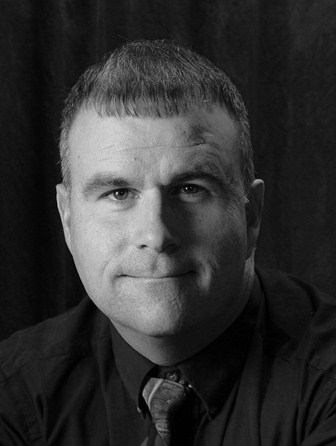
Brian BradenBrian Braden is a retired military officer and has been a corporate executive, an intelligence officer, a combat helicopter pilot, and a freelance columnist. His articles have been featured in a variety of defense magazines and websites. He is also a founder, editor and writer for Underground Book Reviews. His debut novel, Black Sea Gods, is the first installment of an epic fantasy series.

___________________________________________________________________________________

Welcome to Writerly Goodness, Brian!  I’m so happy to have you here to celebrate the launch your new book, Black Sea Gods: Chronicle of Fu Xi on February 18, 2013.

We first met on Author Salon just over a year ago, in the then-beginning Epic Fantasy group. Since then, your work has changed and grown, and I feel privileged to have been one of your beta-readers.

Congratulations on sharing BSG with the world 🙂

WG: How long have you been writing, Brian?  When did the bug first bite, and when did you know that writing was what you wanted to do?

BLB: First, thanks for inviting me to Writerly Goodness.  Back in 2008 I wrote a letter to a major US defense magazine on a military topic.  The editor actually called me and asked me to turn the letter into a column and he’d pay me. Paid for my opinion? I was in heaven. Then I did another column and then another. Well, one day editors changed and my columnist days were over. But I was fully bit by the writing bug by then. I wanted to write, so I switched to fiction.  I published a little novelette called Carson’s Love to test the self-publishing waters and never looked back

WG: I know you’ve written about this many times, but what was the idea that became BSG and where did it come from?

BLB: It came from several inspirations, but primarily from a photo of an ancient mummy dug-up in a faraway land. The man’s face was amazingly preserved, as was his clothing. I wanted to know more about this person, but archeologist knew very little about him. I imagined who he was and what his life was like. After a while I decided to write his story, but I needed a cultural mythology to build upon. That’s when I stumbled upon Dr. John Colarusso’s book Nart Sagas From the Caucasus, a compilation of myths almost lost to history. I put the myths to the man and combined it with some related Chinese mythology and BLACK SEA GODS was born.

WG: I love process!  Can you give my readers any insight into yours over the course of writing BSG?

BLB: The short answer: My core process is I start with a climax and a character and build the rest of the story around those two elements. My long answer: I started out on a website called Review Fuse, where other writers could read my chapters as I posted them. Not long after I started posting chapters I began collaborating with Amy Biddle, who was working on her first novel The Atheist Prayer (due out soon by Perfect Edge Books).  We joined forces and started critiquing each other’s books one chapter at a time. We soon expanded our circle to two other talented writers – Katie French (The Breeders) and Kimberly Shurshen (Itsy Bitsy Spider and Hush). Over a year, one chapter at a time, we dissected each other work until we had complete novels. I liked this approach because it made each chapter a tighter package. That was phase one. Then I spent another year or so with writers at Author Salon doing deep edits, mostly involving shortening the book and reworking it using a six-act/two goal writing template. Then I sent it to an editor, who was a tremendous help. Finally, I involved beta-readers, most of who came to me from fantasy author Michael Manning’s pool of devoted fans.  So, it was a four-stage process spanning almost  three years: one-at-a time chapter builds with  external critiques from trusted colleagues, deep “whole manuscript” edits from other writers, a professional editor, and finally, beta-readers.

WG: What have you learned from writing BSG, and how has it changed you as a writer?

BLB: It taught me I can write a novel. Hey, that’s something, right? It taught me to trust my gut and don’t let the idea of become a writer get in the way of being a writer. This past year taught me how to organize my manuscript and how to structure it.

WG: When you started writing BSG, you had your eyes on traditional publishing.  When did that change and why did you opt for Amazon?

BLB:  My decision didn’t come all at once, but was influenced by several factors. First, as a writer for Underground Book Reviews I’ve read amazing indie books and saw indie authors build huge readerships.  I kept seeing friends, talented authors, succeed in the wild west of indie publication.  If they can do it, I can do it.  Second, as I’ve learned more about the traditional publishing industry the more I realized how highly unlikely Black Sea Gods was going to be picked up. It’s too far out of what industry professionals are looking for, what they consider “hot,” or “marketable.” The feedback I received from several agents and publishers was they liked the story but didn’t know where BSG would fit in their line. My only real hope would be to warp the story into something more compatible with the current market, and therefore make it something unrecognizable. I wanted to tell the story my way. I’m comfortable with that.

I went with Amazon’s Kindle Direct exclusively for the first 90 days to initially keep things simple, take advantage of their marketing leverage, and incorporate a “rolling debut.”  In three months I’ll debut on Nook, and then Smashswords, etc. Each debut is a marketing opportunity, a chance to burst fresh on the scene and carry the accolades/reviews from the previous tier forward.

WG: I know you started your personal blog in the last year as well.  What has your experience in blogging been like and how do you think it will contribute to your success as an author?

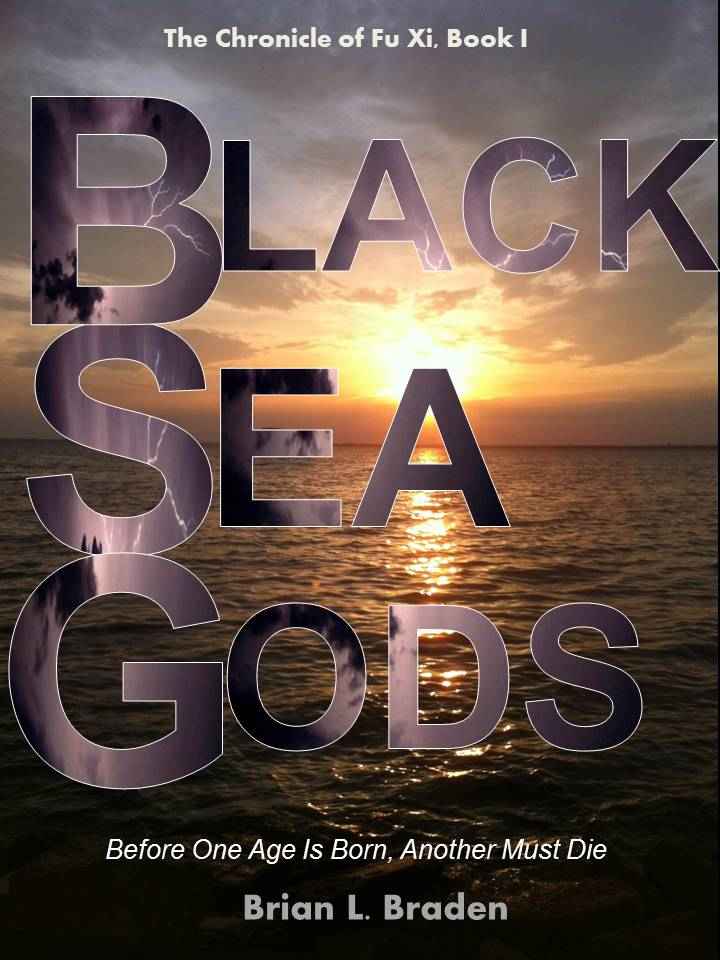
BLB: Blogging … I haven’t cracked that nut yet. As it stands now, I have very little faith in my personal blog to sustain or launch my writing career. Blogs are jealous creatures, they demand gobs of time and attention in order to love you back just a little bit. I’m afraid I haven’t given my blog enough of that TLC;  however, I’ve developed a small, but loyal following and, over the next 90 days, I’ll be offering  free copies of BSG from time to timeBlack Sea Gods: Chronicle of  Fu Xi as part of my marketing campaign.  The first promotion started yesterday and ran for 24 hours.

If there has been one platform that has been good to me it’s Underground Book Reviews. The response to the indie book e-zine has been overwhelming. I would not have been as well positioned as I am now to launch an indie writing career without it.

Thanks for a great interview Brian!

Six questions with Lara Schiffbauer

Lara SchiffbauerLara Schiffbauer is a writer, licensed clinical social worker, mother of two, wife of one, and a stubborn optimist. She loves Star Wars, Lego people, science, everyday magic, and to laugh.  You can connect with Lara through Twitter, Facebook, Goodreads, or on her website. Her debut novel, Finding Meara, will be available in March, 2013.

_______________________________________________________________________________

Welcome to Writerly Goodness, Lara!  Thank you for taking the time to answer these few questions for my readers.  I have to say that since we met through Robert Lee Brewer’s April Platform Challenge last year that I’ve been following your progress with Finding Meara with rapt attention 🙂  As I approach the end of revisions on my own work in progress, the decisions you’ve made are informing my process and plans moving forward.

Without further ado:

WG: When did you begin to write and what was the moment you knew that writing was the path you wanted/needed to pursue?

LAS: I’d like to first say think you so much for having me over today! The Platform Challenge was a wonderful opportunity to get to meet so many lovely writer-types—like you! I’m honored you find my path to publication informative and inspiring!

I enjoyed writing my whole life, but I didn’t think about writing for other people’s enjoyment until five years ago. I hadn’t been creative in any way for about ten years, and wanted to regain the spark. My children were toddlers, and I work full-time, so a return to writing fit the best. Since I’m a goal-oriented kind of person, I decided to not just write, but write with the goal of getting it read by people other than my family.

WG: What was the idea that became Finding Meara and how long have you been working on the novel?

LAS: I’ve worked with children in a social worker/therapist role for over ten years. The seed for Finding Meara rose out of the need to have some justice for abused and mistreated children. The story evolved into an urban fantasy about a young woman who, in a case of mistaken identity, ends up in a magical world where she must rescue her newfound half-sister before their sadistic father can sacrifice either in his quest for immortality and unrestrained power. As her world is turned inside out, she is forced to put other’s needs before her own, and discovers herself in the process. I’ve been working on it for about two years.

WG: I’m a process geek and I love to hear about how other writers approach their craft.  Can you give us some insight in to how you do that thing you do 🙂 ?

LAS: Lots of trial and error! I have learned that if I want to write with any speed, I have to know where the characters are going. With Finding Meara, I’d plot out a few chapters at a time, which allowed flexibility as well. I started another book, Age of Stars, which I plotted out completely. By doing that, I realized that I didn’t like the story and will be re-plotting it, once I get the first draft of the next book in the Adven Realm adventures done.  So, no pantsing for me, but any hybrid of outlining seems to work all right.

WG: I remember that you tried the traditional publishing route. What was your experience with querying and why did you choose to self-publish?

LAS: It didn’t take me long to change my mind. I pitched Finding Meara to Lou Anders of Pyr Books at the Pikes Peak Writer’s Conference in April 2012 and sent out eight-ish query letters over the summer, before deciding (around August 2012) that Finding Meara is a unique enough animal that traditional publishing probably wouldn’t want it. I love the story and want other people to have access to it, in case they might love it too, and so decided to self-publish.

WG: What platform(s) did you choose and why?

LAS: Interesting question! My platforms fall into two categories: those I have had and used for a while and those I’ve created due to releasing Finding Meara.

I’ve been blogging for a little over two years, and use Facebook to connect to writer friends. I enjoy Pinterest personally, but do have some boards for the three books I’ve got going on it. I like Twitter, but lately I’m lucky to get on a couple of times a week.

In January I created a Facebook Author Page, a Goodreads Author Page and my website, which has links to all my social media spots. I just recently opened a Wattpad account because I am releasing two chapters of Finding Meara a week there until its release.

I’m not one of those people who have created a social media empire, with hundreds of followers on any given platform. I do sincerely appreciate every person who has ever decided to follow along with my journey, and have been absolutely blessed by getting to meet and become friends with some amazing, supportive people. I’ll take those types of relationships over numbers any day!

I chose to create a Facebook Author page because it provides an opportunity to interact with the international community. E-reader use in other countries is on the rise and I’m hoping through Facebook I’ll have a way to develop the writer/reader relationship. I opened a Goodreads page and a Wattpad page because they offer a way to interact with readers. So much social media seems to be directed toward other writers, and while writers read, there are tons of readers in the world who don’t go hang around the writer water-cooler.

WG: Is there anything else that you’d like to share with regard to Finding Meara?Finding Meara Cover

LAS: As I mentioned above, I have a Finding Meara Sneak Peek going on at Wattpad leading up to the release. I wish I could give a firm date of release, but I’m still tweaking for an exact date. It will be in March, though, and if anyone wants up to date information regarding the release, I would encourage them to follow me on Facebook or my blog, as I will post the date as soon as I know. On release weekend, Finding Meara will cost a full $0.00, so if you like the story on Wattpad you will be able to finish it for free. There will also be a giveaway on Goodreads post-release.

Thank you so much, Melanie, for offering me this opportunity to share my story!

________________________________________________________________________________

Lara, thank you for being so generous with your time and experience.

If you have any questions for Lara, please write them in the comments, and as always, I encourage you to like, share, comment, and follow (the blog equivalent of the writer’s think, do, create, be!).

Have a good one, my writerly peeps!  Until next time! *waves*

The Forgotten Ones cover reveal blitz and five questions with Laura Conant Howard

Title: The Forgotten Ones

Author: Laura Howard

Genre: NA Paranormal Fantasy Romance

Expected release date: May 15, 2013

Age Group: New Adult

Cover Designer: Stephanie Mooney

Book Description:

Allison O’Malley just graduated from college. Her life’s plan is to get a job and take care of her schizophrenic mother. She doesn’t have room for friends or even Ethan, who clearly wants more.

When Allison’s long-lost father shows up, he claims he can bring her mother back from the dark place her mind has sent her. He reveals legends of a race of people long forgotten, the Tuatha de Danaan, along with the truth about why he abandoned her mother.

Share on Facebook and/or Twitter and you could win a $50 Amazon (or B&N) Gift card!

a Rafflecopter giveaway

____________________________________________________________________________

Five questions with Laura Conant Howard

First of all, welcome to Writerly Goodness, Laura, and thank you for the opportunity to share your experience with my readers 🙂

1. I’m an unapologetic Celtophile and as such, I was immediately drawn to the premise of The Forgotten Ones.  What draws you to that tradition and who have your literary influences been?

LCH: Growing up, my Irish grandmother was a big influence in the way I saw the world. Then I married an Irish man, which deepened my love for all things Irish. My biggest influences have been Juliet Marillier, Holly Black, and so many more.

2. When and how did the inspiration for your novel strike?

LCH: This book started out quite different than it has turned out. I started writing it as a contemporary romance, but my love for paranormal worked it’s way in. At first I thought I’d base it on post-Christian faerie stories aka Seelie vs Unseelie. I have seen those done many times, so I decided to try going further back in the history of Ireland to when the Tuatha de Danaan were said to rule.

3. I’m also a process geek.  I love it when writers share this aspect of their craft.  What was your process in writing The Forgotten Ones?

LCH: This has been a very unorthodox process, I guess. I started it by writing for myself. I have started and stopped it many times over the past 3 and 1/2 years. But, the characters have stayed with me and I knew when the time was right, the story would be done.

4. What did your novel teach you about yourself as a writer?

LCH: That I need to just write what’s in my head and edit later. This has been very difficult for me, and probably for most writers. Accepting that the first draft isn’t going to be great took a long time for me to come to terms with.

5. What will be happening between now and May 15, 2013?  Flog the writerly goodness that is The Forgotten Ones 🙂

LCH: In two days I’m sending it in to my editor. I have two more revisions planned at this point. The goal is to have Advanced Copies ready by late April, and I have book blog tours in the works.

Well thanks again, Laura 🙂  It’s been a pleasure.  I’m looking foward to May!

Now everyone, hop on over to Finding Bliss, Facebook, Twitter, and Goodreads and get likin’ 🙂